Singsing Waterfall, Lovina: How to Visit

You hear the falls before you see them. I came up the back road from Lovina on a rented Honda Scoopy, the smell of wet jungle thick after a morning shower, kecak frogs ringing from somewhere in the rice fields below. Five kilometres inland, past two warungs and a slumbering temple dog, the road dips and the engine drops to a whisper, and underneath it there it is: a soft hiss, the kind that sounds like tape static, then a drumming as I get closer. That is Singsing. Lovina sits down at sea level and most travellers don’t bother climbing the back roads to find it, which is exactly why you should.

This is not a guide written from a tour brochure. So here is how to get to Singsing Waterfall without paying the inflated tour-driver price, what to actually expect when you arrive, and which combinations make it worth a half-day rather than a quick stop.

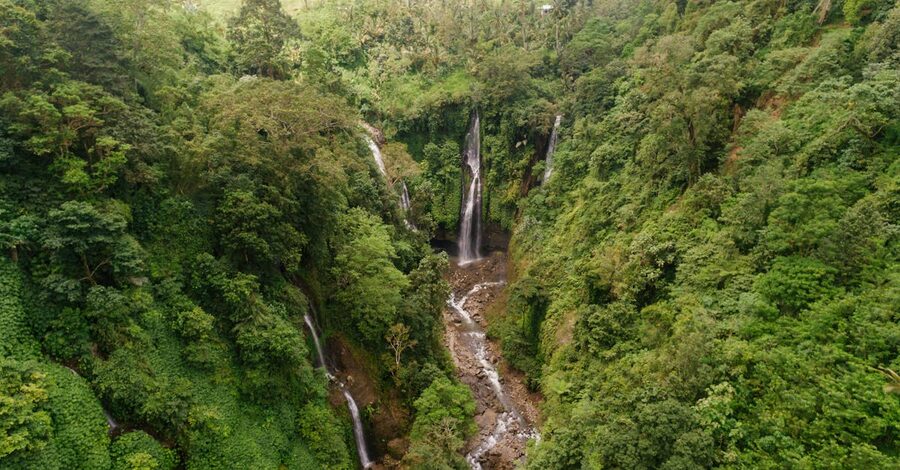
Cascading waterfall in a north Bali jungle valley
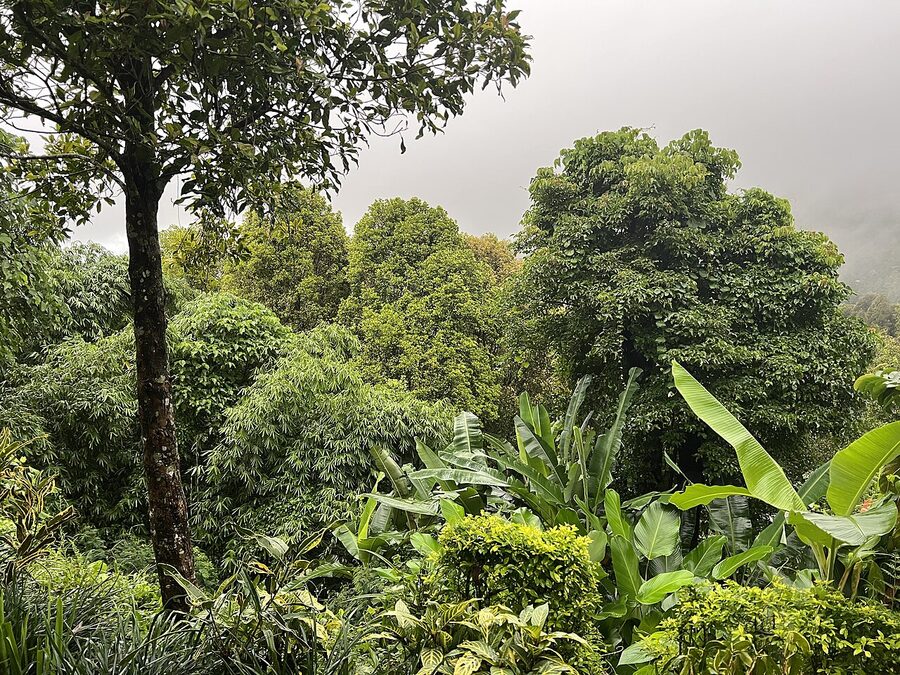
The interior of Buleleng regency is wetter, greener, and far quieter than the south of the island. Singsing sits in a forested hill like this one, about five kilometres inland from Lovina.

Where Singsing actually is

Singsing Waterfall sits in Banjar sub-district of Buleleng regency, on Bali’s north coast, roughly five kilometres west of Lovina along the main Singaraja-Seririt road. The signed turn-off (Jalan Singsing) climbs about another kilometre south through the village of Temukus to a small parking area at the trailhead. If you punch “Singsing Waterfall” into Google Maps you will get there, just be aware there is a totally different “Singsing” near Tabanan in the south, so triple-check that the pin sits in Buleleng before you set off. The pin you want shows the GPS coordinates roughly 8°11′ S, 115°00′ E. If your map app puts you in Tabanan, you’ve got the wrong one.

The falls themselves are two cascades about a hundred metres apart, each maybe twelve metres high. Locals call the first one Singsing 1 and the upper one Singsing 2. Some maps and signs spell it “Sing Sing” as two words, others “Singsing” as one. I am going with “Singsing” throughout because that is how Google Maps and the Buleleng regency tourism office spell it. If you’ve only got time for one, the lower fall is easier and prettier in dry season; the upper one is bigger and worth the extra slog if it’s been raining.

Getting there without overpaying

A rider on a scooter in front of green Bali rice fields
Hire a scooter in Lovina for around Rp 70,000 a day (about $4.50) and you can ride to the falls in fifteen minutes. A driver from south Bali will quote you twenty times that for a return trip.

From Lovina (the cheap, sensible option)

If you are already staying in Lovina or Singaraja, this is a non-issue. Rent a scooter for the day, almost every guesthouse in Lovina has one or knows someone who does. Expect to pay roughly Rp 70,000 to Rp 100,000 per day (about $4.50 to $6.30) for a basic Honda Scoopy or Vario, plus around Rp 20,000 of petrol from a Pertamini roadside seller. The ride from central Lovina is fifteen minutes if you go gently. Take the main coast road west toward Seririt, pass the big Krisna souvenir hangar, look for the brown tourism sign on the inland side, and turn left up the lane to Temukus. The road is paved the whole way.

If you don’t want to drive yourself, a local ojek (motorbike taxi) from Lovina will run you maybe Rp 50,000 to Rp 75,000 each way. Tell them to wait, agree the return price up front, and you’ve got a three-hour outing for under Rp 200,000. Grab and Gojek work patchily this far north of Denpasar; don’t count on them.

From south Bali (Kuta, Seminyak, Canggu, Ubud)

This is where it gets expensive. You are looking at three to three and a half hours by car each way, depending on traffic and whether you go over the mountains via Bedugul or around the long coast road through Tabanan. A private driver for the day will quote Rp 700,000 to Rp 1,200,000 (around $44 to $76), which is reasonable filling a back seat with three friends and combining stops. Poor value for one waterfall.

Real advice: don’t come north for Singsing alone. Build it into a Lovina overnight (the dolphin tour the next morning justifies the bed), or skip Singsing and visit a closer south-Bali waterfall like Tegenungan or Tibumana from Ubud.

The day-tour combo trap

Tour operators in Kuta and Seminyak sell “North Bali Waterfall Tour” packages bundling Singsing with Sekumpul, Gitgit, the Banjar hot springs, and a dolphin breakfast for around Rp 850,000 per person. The value depends on how many waterfalls you actually want in one day. Two is plenty. Four becomes a tour-bus march. Ask up front what entrance fees aren’t included, and what time the pickup is (a 5 a.m. pickup is brutal).

Entrance fees, parking, and the donation question

There is officially no entrance fee at Singsing Waterfall, which makes it one of the cheapest falls on the island and one reason it stays uncrowded. What you actually pay:

  • Parking, around Rp 5,000 (about $0.30) for a scooter, slightly more for a car. Cash to the attendant in the small kiosk at the trailhead.
  • An informal “donation” of Rp 10,000 to Rp 20,000 if a local volunteer is at the path entrance maintaining the trail. This goes to the village banjar, the community council, and pays for keeping the trail clear and the rubbish picked up. I always pay it.
  • A guide, optional, around Rp 50,000 to Rp 100,000 if you want one to take you up to the upper fall. I have done it both ways. With a guide is safer in wet season, alone is fine in dry season if you have decent shoes and pay attention.

One charge that is not part of the falls but applies to being on Bali at all: the Bali tourism levy (officially Pungutan Wisatawan Asing, foreign tourist levy), introduced 14 February 2024. Every foreign visitor pays Rp 150,000 (about $10) per visit, ideally before arrival via lovebali.baliprov.go.id. You get a QR code by email. Domestic tourists are exempt. It does not directly affect the cost of the falls but it is a real cost that did not exist a few years ago.

The trail to Singsing 1 (the lower fall)

A walking trail through dense Bali greenery
The path down to the lower fall is short but slick after rain. Wear actual shoes, not flip-flops.

From the parking area, the path is signposted in faded paint to the right of the small bale banjar (the village’s open-walled community pavilion). You walk past a couple of warungs, then drop into a forested gully on a stepped path of dark volcanic stone. It is steep in two short sections and slippery in three more. Total walking time, ten to fifteen minutes downhill.

The first thing that hits you, before the fall comes into view, is the noise gradient. You go from frogs and chickens at the top to a thudding white roar at the bottom in maybe four minutes. Then a turn in the path opens out and Singsing 1 is right in front of you: a narrow plume off a black basalt cliff face, falling into a pool the colour of green tea. The pool is not as pristine as Instagram filters suggest. The colour comes from minerals (some say mild sulphur, in keeping with the geothermal area around Banjar), and there is usually a film of leaves and pollen on the surface. I would still swim in it. I have. It’s fine.

Better than the swim is sitting on a flat rock and just listening for fifteen minutes. I came at 8 a.m. on a Tuesday and had the place entirely to myself for forty minutes. By 10 a.m. it was busier, by noon there were maybe twelve people. Mornings are the right call.

The trail to Singsing 2 (the upper fall)

Up from the lower pool, the path continues. This is the part most day-trippers skip. It is a steeper track that takes another fifteen to twenty minutes uphill and a final scramble over wet rocks to a taller fall set in a tighter amphitheatre of jungle. The pool at the base is deeper and better for an actual swim, around chest height in the middle.

The path here is harder and the warning is real. After recent rain, the rocks are like wet glass and there are sections where a slip would mean a long, ugly fall. This is where I would take the local guide, and where the Rp 50,000 is well spent. If the upper fall has dried to a trickle in late August and September, turn back at the lower one.

When to go

Bali has two seasons, wet (roughly November to March) and dry (April to October). Each has tradeoffs at Singsing.

  • End of wet season, late February to early April: maximum water volume, both falls full, pools deep, jungle electric green. Slippery but manageable.
  • Early dry season, May and June: still good flow, much drier path, fewer mosquitoes. The best overall window.
  • Peak dry season, July to early September: lower flow, especially at Singsing 2 which can become a thin trickle. Lower pool still swimmable. Singsing stays quieter than south Bali falls because so few tourists make it up here.
  • Wet season, December and January: storms and a real risk of the path closing. Check with your guesthouse the morning of.

For time of day, the answer is always early. Be at the parking area by 8 a.m., at the lower fall by 8.15, swim before 9, hike the upper fall before 10. From mid-morning the light drops behind the cliff and the trickle of European tourists picks up.

What to bring

This is a short walk and a small fall, not a serious trek, but the basics matter:

  • Shoes with grip. Not flip-flops. Old running shoes you do not mind getting wet are perfect.
  • A dry bag or zip-loc for your phone. You will get spray on you near both falls.
  • Swimwear under your clothes, plus a sarong or quick-dry towel. No proper changing rooms.
  • At least a litre of water per person.
  • Small notes for parking, the donation, and a cold drink at the warung at the top on the way back.
  • Mosquito repellent in wet season.
  • A small bag for your own rubbish. The path is clean because visitors carry their plastic out.

The touts at the entrance, and what to actually say

The most annoying part of Singsing is not the trail. It is the small group of self-appointed “guides” hanging around the parking area trying to upsell. The opening line is usually that the path is “very dangerous” and you “must take a guide” for both falls. The path is not very dangerous to the lower fall. You do not have to take a guide if you have any hiking experience.

What works: a polite tidak, terima kasih (no, thank you), a smile, and continue walking. If you genuinely want a guide for the upper fall, agree the price up front, around Rp 50,000 to Rp 75,000 for both falls. If you do not want one, you are not being rude by saying no. Pay the parking attendant and the trail-maintenance volunteer regardless. Skipping the guide is fine. Skipping parking is mean.

Photography notes

You are shooting in deep shade in a tight gully, so the rules are different from a beach or rice-terrace shoot. Morning light between about 8 and 10 is when a thin shaft of sun reaches the lower pool through the canopy. Lock your white balance manually, the auto setting in tropical shade tends to go too cool. For long-exposure silky-water shots you will need an ND filter. Phone cameras handle this scene surprisingly well now, just step back from the spray. The classic shot is the lower fall framed by the overhanging vines on the right. The cliché shot is a person in swimwear standing in the middle of the pool.

Food and water before and after

There is no proper restaurant at Singsing itself. The two warungs at the trailhead sell bottled water, packaged snacks, instant noodles, and cold soft drinks. Useful, but not lunch.

Eat in Lovina before or after. Warung Bu Ana on the main road serves some of the best satay on this stretch of coast and a plate of nasi campur (mixed rice with three or four small dishes) for around Rp 25,000. La Costa Beach Lounge in central Lovina does ikan bakar (grilled fish) for Rp 80,000 to Rp 120,000, fresh from the dawn catch. For a cheap and proudly unspecial meal, any small warung along Jalan Raya Lovina will plate you up nasi goreng for Rp 20,000 to Rp 30,000 and the kind of sambal that makes you sweat a bit.

What to combine Singsing with

Singsing on its own takes about ninety minutes including the walk down and back. To make a real morning or half-day out of it, pair it with one or two of these. All are within a fifteen-minute drive.

Banjar Hot Springs (Air Panas Banjar)

Entrance to Banjar Hot Springs in north Bali, with souvenir stalls and visitors
The entrance to Banjar Hot Springs is humble, but the three terraced pools fed by carved dragon-mouth spouts are worth the small price. Bring a dry change of clothes. Photo by Jorge Lascar / Wikimedia Commons (CC BY-SA 2.0)

Ten minutes by scooter from Singsing, in the hills behind the village of Banjar, sit three terraced pools fed by mineral-rich, lukewarm sulphur water that pours out of carved stone dragon mouths. Entrance is around Rp 20,000 to Rp 30,000 for foreigners, depending on season. The water is not screaming hot, more bath-warm, but the smell of the sulphur and the sound of the carved dragons is fantastic. Locals come for the supposed skin-healing properties. Get there before noon, after that it fills up with bus tours.

If you want to follow the local way, some of the older Balinese still do a kind of melukat (a Hindu purification ritual) at hot or cool springs in this region. The ritual is not performed at Banjar specifically, but the sense that water is sacred and not just for swimming runs through every local interaction with these places. Be quiet and respectful. There is more on those traditions in our piece on Bali’s Hindu religion.

Brahma Vihara Arama Buddhist Monastery

Buddha statue at Brahma Vihara Arama monastery in Banjar, Bali
Brahma Vihara Arama is the largest Buddhist temple complex on Hindu-majority Bali. Sarong required, no entrance fee, donation expected. Photo by Eric Bajart / Wikimedia Commons (CC BY-SA 3.0)

Five minutes from the hot springs and tucked into a hillside above the village of Banjar Tegehe is the largest Buddhist temple complex in overwhelmingly Hindu Bali, Brahma Vihara Arama. Built in the 1970s, it includes a small replica of Borobudur, a meditation pavilion that is sometimes used for retreats, and gardens you can wander through quietly for an hour. Sarong is required at the entrance, they lend you one. There is no formal entrance fee but there is a donation box and Rp 20,000 to Rp 50,000 is expected.

It is genuinely tranquil and a good cultural counterpoint to a morning of waterfall and water. If you have any interest in the layered religious history of north Bali, an hour here will tell you more than a guidebook. For a wider read on what you are walking through, see our culture section.

Munduk and the Melanting / Banyumala falls

A tall waterfall in the jungle near Munduk, north Bali
If Singsing is the warm-up, Munduk is the main event. About thirty minutes uphill from Lovina, the cooler highland air alone is worth the drive. Photo by jmhullot / Wikimedia Commons (CC BY 3.0)

If Singsing left you wanting more waterfall, drive thirty minutes uphill into the cool highlands of Munduk and you have a string of bigger, more dramatic falls. Melanting and Munduk Tutub waterfalls are the easiest to reach, both around Rp 20,000 entrance, both involving a fifteen to twenty minute walk down and back. Banyumala Twin Waterfalls, slightly further, is one of the most photographed falls in north Bali for good reason. Sekumpul, about an hour east, is the biggest fall on the island at around 80 metres, but the trek down is steep enough that I would treat it as its own day trip rather than a Singsing add-on.

The Munduk drive is also worth doing for itself. You climb out of coastal heat into clove and coffee plantations, the air drops five degrees, and you pass two of the three holy lakes (Tamblingan and Buyan) on the way back if you loop south. There is more on north Bali nature trips in our beaches and nature section.

Lovina the night before, or the morning after

Sunset over a calm Lovina beach, north Bali
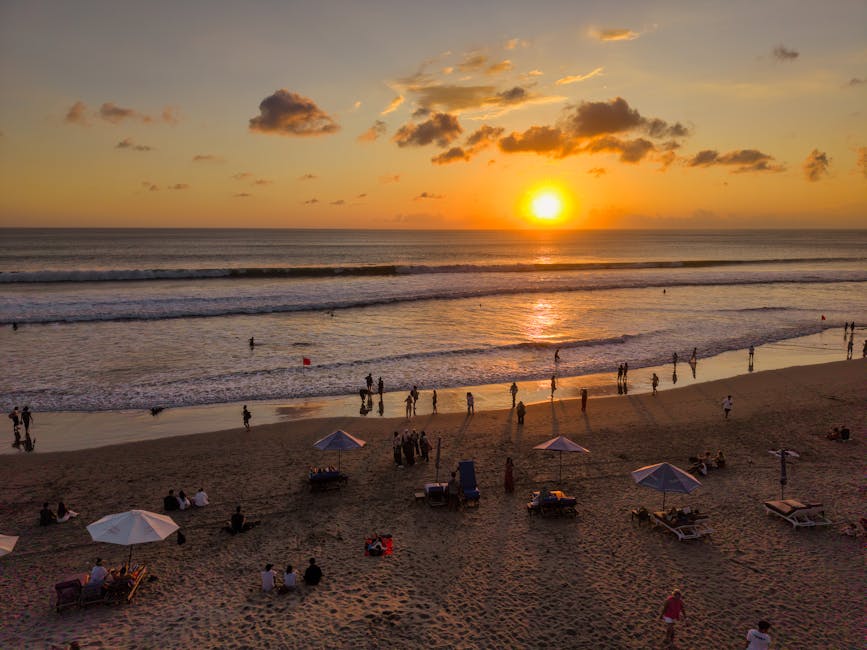
Lovina sunsets are quieter than the south coast equivalents, no beach clubs and no thumping bass. Photo by ind1go / Wikimedia Commons (CC BY 2.0)

The case for staying a night in Lovina is partly the falls and partly the dolphins. Lovina has a jukung (traditional outrigger fishing boat) tradition of dawn dolphin tours. The spectacle gets criticised online as too chaotic, with too many boats chasing the same pod, but early in the season (March, April, May) and mid-week, it is calm and lovely. A shared boat costs around Rp 100,000 per person, a private one Rp 200,000 to Rp 250,000 for up to four. Departure is 6 a.m. sharp from the beach in front of the dolphin statue. Back on the sand by 9 a.m.

Hotels in Lovina range from cheap (Suka Suka Homestay, around Rp 250,000 with breakfast) through mid-range (Lovina Beach Resort, Bagus Beach Resort, around Rp 700,000 to Rp 1,200,000) up to The Damai at around Rp 3,000,000. The owner at Suka Suka brings you tea in the morning and tells you which warungs to go to.

Dolphins, not just for show

Dolphins jumping near a Lovina jukung boat at sunrise
Early in shoulder season the dolphin pods are smaller and the boats fewer. Mid-week is calmer than weekends.

Three things to know. The dolphins are wild, sometimes you see fifty in a pod, sometimes none, treat it as a sunrise boat ride that occasionally features cetaceans. Push back politely if your skipper races other boats to chase a pod, responsible operators hold position. The boats are open-air outriggers and the temperature drops in dry season, bring a fleece. I forgot once and did not forget twice.

The Tugu Belanda detour for history nerds

If you walk past the upper fall and continue uphill on Jalan Singsing for another twenty minutes (or drive it), you reach the Tugu Belanda, a roughly fifteen-metre white obelisk built by the Dutch colonial administration to commemorate the soldiers who died in the Banjar war of 1868. The original obelisk was destroyed in the 1950s as an Indonesian nationalist statement, then rebuilt in 1992 as a record of Balinese resistance rather than Dutch glory. There are no plaques in English. Worth the half-hour if you read Indonesian or use a phone translator. If not, you are not missing the falls.

Things people get wrong about Singsing

  • “There is a Rp 50,000 entrance fee.” There is not. There is parking and an optional donation. If anyone charges Rp 50,000 to enter, you are being scammed by an opportunist.
  • “It is the most beautiful waterfall in Bali.” It isn’t. It’s a small, pretty, accessible waterfall that’s good for a quiet morning. If you’ve only got one day for waterfalls and you’re coming from the south, drive to Sekumpul or Banyumala instead.
  • “You need a 4×4 to get there.” You need a scooter or a normal car. The road is paved.

A practical itinerary if you only have one morning

One morning in north Bali, starting from a Lovina hotel:

  • 5.45 a.m.: walk five minutes to the dolphin statue.
  • 6.00 a.m.: dolphin tour departs. About two hours on the water.
  • 8.15 a.m.: back on the beach, breakfast at the hotel.
  • 9.30 a.m.: ride fifteen minutes to Singsing. Park, hike, swim.
  • 11.00 a.m.: ride ten minutes to Banjar Hot Springs.
  • 12.30 p.m.: ride five minutes to Brahma Vihara Arama.
  • 1.45 p.m.: back to Lovina, lunch at La Costa or Warung Bu Ana.
  • 3.00 p.m.: nap. You earned it.

That is aggressive, and you will have seen dolphins, two waterfalls, a hot springs, and a Buddhist temple by the time south Bali tourists are finishing breakfast. For the relaxed version, drop the temple or the hot springs, add a slow lunch.

Stop if

Skip Singsing if you’ve only got three days in Bali and you’re based in the south; the maths doesn’t work. Skip it in heavy December storms, the trail genuinely closes sometimes. And skip the upper fall if you are travelling with small kids or have any knee issue, the lower one is enough.

Otherwise, set a 6 a.m. alarm in Lovina, eat a banana, hire a scooter, and go. The road is short, the parking is cheap, the falls are quiet, and that combination is harder to find on Bali than it used to be. For more on what to do in this part of the island, see our things to do section.

The History of Nasi Goreng (And Where to Eat It in Bali)

Just before dawn on 17 August 1945, in a Japanese admiral’s house on what is now Jalan Imam Bonjol in Jakarta, three men sat down to eat nasi goreng (Indonesian fried rice). Sukarno, Mohammad Hatta and Ahmad Soebardjo had been up most of the night drafting the proclamation that would declare Indonesia independent from Dutch rule. It was the fasting month of Ramadan, and the plate in front of them was sahur (the meal eaten before sunrise, before the day’s fast begins). A few hours later, Sukarno would walk out and read the proclamation aloud. Indonesia would be a country. The dish on his plate that morning is the same one I order from a kaki lima cart in a Sanur back-gang for Rp 25,000 (about $1.60), and the same one a beach club in Seminyak will charge me Rp 165,000 for, and it has more history packed into a wok than most national flags.

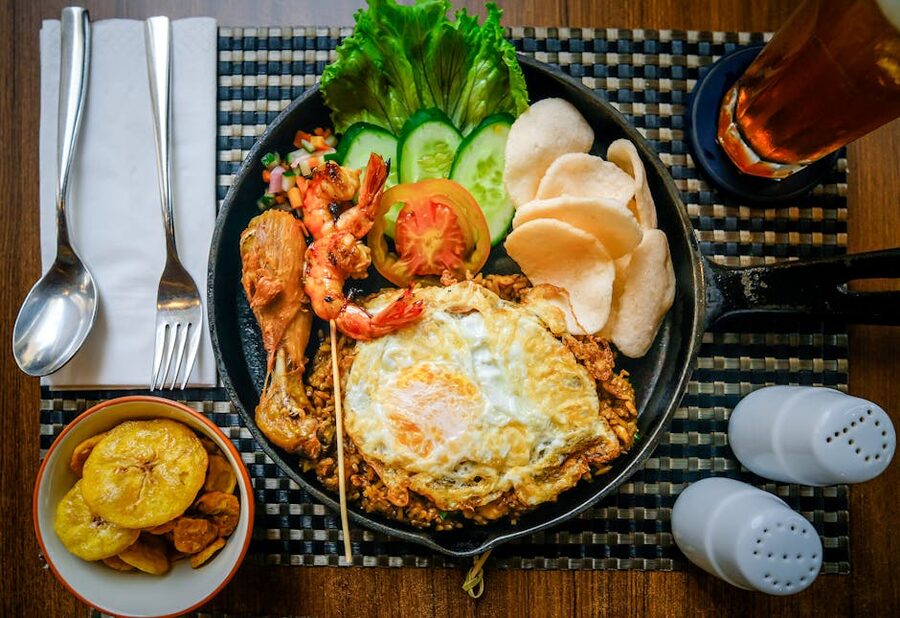
Nasi goreng with chicken, shrimp, sliced cucumber, tomato, kerupuk and a fried egg in a cast iron skillet, Jakarta style
Standard warung-style nasi goreng with the works: chicken, shrimp, kerupuk, cucumber, sambal, fried egg on top. This is the istimewa version, meaning the one with the egg.

This article is mostly history because nasi goreng deserves it. Indonesia made it the national dish in 2018, CNN’s readers voted it the second most delicious food on earth in 2011 (behind Padang’s rendang, in case you were wondering), and there are at least 104 documented regional variants according to a Gadjah Mada University food researcher. None of that is a recipe. If you want a recipe, fifty thousand bloggers have you covered. What you probably haven’t read is the actual story of how leftover rice from a 10th-century Hokkien trader’s pot turned into a dish that gets served at state dinners, drafted independence proclamations, and now sits on every Bali menu from Kuta beach shacks to the Mandapa. So let’s get into it. Then I’ll tell you the only thing that actually matters about eating it in Bali, which is where to go and what to ask for.

Fried Rice Before It Was Indonesian

Nasi goreng is, structurally, a Chinese dish. That isn’t controversial; the Wikipedia entry says so, every Indonesian food historian I read says so, and the technique that makes it work, fast stir-frying in a Chinese carbon-steel wok, comes from the Ming dynasty. The wok itself, the high-heat method, and the principle that you should never throw away cooked rice all arrived in the Indonesian archipelago with Chinese traders.

Tomato and egg sizzling in a black carbon steel wok over an outdoor stove with steam rising
The wok is the unsung hero of nasi goreng. Without that thin, conductive carbon steel and the screaming heat it can hold, you don’t get the smoky wok hei flavour that makes the dish work.

The trade route is the part that often gets glossed over. Chinese maritime expansion really kicked off during the Tang dynasty, between the 7th and 10th centuries CE, when ships out of Guangzhou and later Quanzhou started running regular routes to ports across Java, Sumatra, the Malay Peninsula, Borneo, the southern Philippines and what is now Vietnam. By the time the Srivijaya empire was at its peak around the 10th century, trade between China and the Indonesian archipelago was a permanent feature of the region. It intensified again under the Majapahit empire in the 15th century. Chinese traders weren’t just dropping off ceramics and silk and sailing home; they were settling. Hokkien, Cantonese, Hakka and Teochew communities planted themselves in port cities like Batavia (the Dutch name for what is now Jakarta), Semarang, Medan, Malacca, Penang, Singapore and Manila. They built temples, they ran businesses, and crucially for our purposes, they cooked.

Among the dishes they brought were stir-fried noodles (which became mie goreng), dumplings, stir-fried vegetables, and fried rice. Soy sauce came with them too, dating back to 2nd-century CE China; without that ingredient, you don’t get the dark base note that anchors the flavour of nasi goreng to this day. But the most important thing the Hokkien settlers introduced, in my opinion, was a cultural attitude: don’t throw away cooked food. In Chinese custom, food waste is taboo, and refrigeration didn’t exist. So the night’s leftover rice was reheated for breakfast the next morning. Frying it was the safest way to do that in a tropical climate, because the high heat kills the dangerous bacteria that grow on cooked rice at room temperature. (This, incidentally, is why your overnight rice from the warung never makes you sick. The wok takes care of it.)

That practice of frying yesterday’s rice for breakfast is the seed crystal. Local cooks watched it, adapted it, and started doing it themselves. From there it had a thousand years to evolve.

The First Written Mention, and a Theory Nobody Likes

The earliest written reference to fried rice in the Indonesian archipelago appears in Serat Centhini, an enormous early-19th-century Javanese encyclopedia of stories, customs and recipes compiled in the court of Surakarta. The dish there is called sekul goreng (the Javanese term for fried rice). According to the food historian Harry Nazarudin, the sekul goreng in Serat Centhini isn’t quite what we eat today. It uses no soy sauce, and it’s served as one component of a larger meal rather than a dish on its own. The closest modern equivalent is the gagrak Sundanese style of fried rice, which leans savoury rather than sweet.

A farmer in a conical hat carrying harvested rice stalks across a paddy field in Java
Rice from Java, where the dish was first written down. The Serat Centhini mention from the early 1800s is our earliest hard evidence in writing.

That early form of fried rice still tracks with the Chinese-origin story. But there’s a counter-theory, and it’s worth taking seriously because the academic who proposed it, Fadly Rahman of Padjajaran University, is one of the most respected food historians in Indonesia. Rahman argues that there isn’t actually any hard evidence nasi goreng is native to Indonesia, and that one branch of it might descend not from Chinese fried rice but from Middle Eastern pilaf, the rice cooked in seasoned broth that you find from Iran across to North Africa.

The exhibit Rahman points to is nasi goreng kambing, the Betawi (Jakarta) variant made with mutton or goat. Kambing nasi goreng uses minyak samin, which is ghee, and a heavy hit of warm spices: cardamom, cumin, cloves. Those are pilaf ingredients. They’re the same combination that Arab traders, who had a long presence in coastal Java and Sumatra, would have cooked at home. The Betawi neighbourhood of Tanah Abang has had an Arab-Indonesian community for centuries, and that’s exactly where you find the best kambing nasi goreng in Jakarta. It’s a clean line. Whether you accept the full pilaf-origin theory or just see kambing as a parallel Arab branch on a mostly Chinese tree, the point stands: nasi goreng is layered. Pinning it on one origin culture flattens what actually happened.

Local Adaptation, and the Sauce That Changed Everything

The dish became Indonesian, properly, when local cooks added kecap manis, a syrupy sweet soy sauce thick with palm sugar. Soy sauce has been in Asia since the Han dynasty in 2nd-century China, and it travelled with Chinese migration. But Indonesians took the basic salty soy and dosed it with palm sugar (gula aren from the sugar palm or gula jawa from coconut palm, depending on the region) until it ran like molasses. That’s the ingredient that gives nasi goreng its colour, its sticky texture, and the smoky-sweet caramel note when it hits a hot wok. Without kecap manis the dish is basically Chinese fried rice with extra chilli. With it, you have something the rest of Asia recognises as not theirs.

Two bottles of ABC brand Indonesian soy sauce, the red label sweet kecap manis on the left and the green label salty kecap asin on the right
ABC kecap manis on the left, kecap asin on the right. The sweet one is what does the heavy lifting. Caramelises on the wok and gives the rice that dark, sticky coat. Photo: Jdmtdktdht / CC BY-SA 3.0 (via Wikimedia Commons)

The other Indonesian addition was the seasoning paste, what’s called bumbu. The basic bumbu for nasi goreng is shallot, garlic, candlenut, fresh chilli and shrimp paste (terasi in Indonesian, belacan in Malay), pounded together in a stone mortar. That last ingredient is the one most non-Indonesians never quite expect. Terasi smells aggressive when raw. Cooked into hot oil at the start of the stir-fry, it transforms into a deep, oceany umami that you can’t get any other way. It’s the third pillar, after the wok-fried rice and the kecap manis, of what makes a Javanese nasi goreng taste the way it tastes. Skip the terasi and you’ve made fried rice, not nasi goreng.

By the 19th century, colonial-era records from European visitors describe fried rice as a daily staple in Javanese and Malay households. Children ate it for breakfast. Workers ate it on the way to the fields. Vendors carried it on shoulder poles down the streets of Batavia. By the early 20th century, Dutch-Indonesian cookbooks were including recipes for it. The dish had stopped being a Chinese loan and become Indonesian property.

Colonial Documentation: 1918 and 1925

The first time nasi goreng shows up in mainstream Indonesian literature is 1918, in Student Hidjo by Marco Kartodikromo, a serial novel that ran in the Sinar Hindia newspaper. The dish is mentioned matter-of-factly as part of daily life. By that point, Marco was a journalist agitating for Indonesian nationalism and writing in Malay rather than Dutch, so the mention itself is a small political act. Nasi goreng was an everyday Indonesian thing, not a colonial import. Putting it on the page in a Malay-language newspaper marked it as part of an Indies identity that was distinct from the Dutch one.

Seven years later, in 1925, a Dutch household cookbook called Groot Nieuw Volledig Oost Indisch Kookboek (“Great New Complete East Indian Cookbook”) came out in The Hague. It included a recipe for nasi goreng. Dutch families in the Indies had been eating Indonesian food for decades, often cooked by babu (Indonesian household staff). What the cookbook did was send those recipes back to the Netherlands. By the 1930s a recognisably Dutch-Indonesian version of the dish was being eaten in Amsterdam dining rooms.

Black and white archival photo of a Dutch family seated at a table in colonial Java being served by an Indonesian waiter
A Dutch family in the colonial Indies, served by an Indonesian household worker. The rijsttafel, literally rice table, was the staged colonial banquet that introduced Indonesian dishes to the Dutch palate. Photo: F.W.M. Kerchman, Tropenmuseum / CC BY-SA 3.0 (via Wikimedia Commons)

The Dutch took the dish further than just adopting it. They invented their own version, often made with butter and bacon or other pork at the base, which is the standard recipe in older Indo-Dutch cookbooks even now. And then there’s the nasischijf, which is the kind of detail you find in food history that you can’t make up: a deep-fried croquette, breadcrumbed on the outside, filled with nasi goreng, sold in Dutch fast-food shops as a snack alongside the famous frikandel. It’s nasi goreng turned into a fish-and-chip-shop item. There is also a song, Geef Mij Maar Nasi Goreng (“Just Give Me Nasi Goreng”), recorded in 1979 by the Indo-Dutch performer Wieteke van Dort under the stage name Tante Lien. It’s a sentimental number about Indo-Dutch repatriates in the Netherlands missing the food they grew up on. It still gets played on Dutch oldies stations.

How the Dish Travelled Outside Asia

Three diaspora routes took nasi goreng beyond Indonesia, all of them tied to colonial movement of people.

The first goes to Sri Lanka, where the Sri Lankan Malay community brought a version of the dish in the 18th and 19th centuries. The Sri Lankan Malays are descendants of Malay-speaking soldiers and exiles brought to Ceylon by the Dutch when they ruled both Sri Lanka and the Indonesian archipelago. They settled, kept their language and food, and the result is a Sri Lankan nasi goreng (Sinhala: නාසි ගොරේන්) that’s a little different: it leans more on oyster sauce, uses ginger more aggressively, and gets garnished with a sliced omelette on top.

The second goes to Suriname, in South America, where the Dutch ran a colonial plantation economy. Between 1890 and 1939, around 33,000 Javanese contract workers were shipped to Suriname to work the sugar fields after the abolition of slavery. They stayed. Their descendants are still there, and Surinamese-Javanese culture is one of the strongest threads in the country today. Surinamese nasi goreng is its own thing now: the rice is often cooked separately from the meat, served with moksi meti (a mixed roast of pork, chicken and Chinese-style red pork), and accompanied by atjar (pickled vegetables) and bakabana (fried plantain). The dish is so embedded that in Suriname, the word nasi on a menu just means fried rice; you don’t need to say goreng.

The third route, the Netherlands, came after Indonesian independence. When the Dutch lost their colony in 1949, around 300,000 Indo-Dutch (people of mixed Dutch-Indonesian ancestry) repatriated to the Netherlands over the following decade. They opened restaurants. They taught their Dutch neighbours how to cook with shallot and chilli and kecap manis. Today every Dutch supermarket sells bottled boemboe (the bumbu paste in pre-made form) and frozen nasi goreng in foil trays, and a substantial chunk of Dutch take-away is what Dutch people call “Chinees-Indisch”, the slightly Cantonese-influenced Indonesian food that the Dutch consider a national comfort cuisine. In Flanders, “nasi goreng” is now a generic term for any fried rice. The dish has been so thoroughly absorbed that most Dutch people don’t think of it as foreign any more.

17 August 1945: The Sahur That Made a Country

Back to that opening scene, because it deserves more space. By August 1945, Japan had occupied Indonesia for three and a half years. The Allied surrender came on 15 August. Indonesian nationalists who had been waiting for exactly this moment moved fast. On the night of the 16th, a group of younger revolutionaries kidnapped Sukarno and Hatta and took them to Rengasdengklok, west of Jakarta, to pressure them into declaring independence before the Allied forces returned to reinstall the Dutch. By late evening, after negotiation, the leaders were brought back to Jakarta, to the residence of Vice-Admiral Tadashi Maeda, a Japanese naval officer who had been quietly sympathetic to Indonesian independence. They worked through the early hours of 17 August on the proclamation text.

Black and white photograph of Sukarno at a microphone reading the Indonesian proclamation of independence in 1945, surrounded by associates
Sukarno reading the proclamation of independence on the morning of 17 August 1945. He had eaten nasi goreng for sahur a few hours earlier.

It was Ramadan. The men were fasting. The meal eaten before dawn, before the fast resumes, is sahur, and what they ate that night, according to multiple Indonesian historical accounts, was nasi goreng. Sukarno reportedly said the dish was made by Maeda’s household staff. By dawn the proclamation was finished. A few hours later Sukarno read it from the porch of his home on Jalan Pegangsaan Timur 56. The republic was born. There is no national myth about that morning’s plate of food in the way Americans have a myth about Washington’s cherry tree, but it’s the kind of detail that ought to be on a coin somewhere.

From the New York World’s Fair to a National Dish

After independence, Sukarno used food strategically. At the 1964 New York World’s Fair, the Indonesian pavilion ran an “Indonesian Theater Restaurant” where visitors were introduced to nasi goreng, sate, gado-gado and a handful of other dishes the new government wanted Americans to associate with the country. Howard Palfrey Jones, the US ambassador to Indonesia during Sukarno’s later years, wrote in his memoir Indonesia: The Possible Dream that the nasi goreng cooked by Hartini, one of Sukarno’s wives, was the best he had ever tasted. (Hartini was famously a strong cook. The detail about her nasi goreng has become a kind of soft trivia in Indonesian foodie circles.)

Through the 1970s and 80s, nasi goreng became the de facto national dish in everything but name. Every Indonesian household made it. Every Indonesian restaurant overseas put it on the menu. Bumbu brands in the supermarket sold pre-made nasi goreng paste in sachets, so you could throw together a passable version in five minutes. Convenience stores started selling frozen microwave versions. By the time CNN International ran an online poll in 2011 asking 35,000 readers to vote on the world’s 50 most delicious foods, nasi goreng came in at number two, behind Padang’s rendang. It also placed Indonesia at number one and number two on the same list, which not even France can claim.

In 2018, the Indonesian government finally made it official. The Ministry of Tourism designated five national dishes: rendang, sate, soto, gado-gado, and nasi goreng. Five was the number; nasi goreng was on the list. There are 17,000 islands in Indonesia and at least 800 ethnic groups, so picking five dishes was a political exercise as much as a culinary one. That nasi goreng made it tells you how universal the dish has become. Whether you’re Acehnese in the far north of Sumatra or Papuan in the far east, you grew up eating it.

Diplomasi Nasi Goreng

The dish has its own political vocabulary now. Diplomasi nasi goreng, “nasi goreng diplomacy”, refers to a meeting where political opponents are softened up over a plate of fried rice. The phrase was popularised by Megawati Sukarnoputri (Sukarno’s daughter, herself a former president) in July 2019, when she invited her old rival Prabowo Subianto to her house for dinner. They had just fought a bitter election campaign against each other. She fed him nasi goreng. After the meeting she was quoted saying, with characteristic dryness, that “fortunately for women politicians, there is a tool for melting men’s hearts, which is called nasi goreng politics, which turns out to be effective.” It became a national meme. The dish that fed Sukarno in 1945 was now feeding his daughter’s political reconciliation seventy-four years later. You can read this as cute, or as continuity, or as Indonesian politicians being unusually self-aware about food symbolism. I read it as all three.

104 Variants, and Why You’ll Eat Different Versions in Different Places

According to Dwi Larasatie, a culinary expert at Gadjah Mada University, there are 104 documented types of nasi goreng across Indonesia. Of those, 36 have a clearly traceable region of origin and 59 are considered “developed” variants where the lineage is too tangled to trace. The remaining 9 use base ingredients that aren’t even strictly rice (some include noodles, barley, or corn). Java alone has 20 sub-styles, from west to east: Sundanese, Betawi, Semarangan, Yogyanese, East Javanese, and so on.

A plate of nasi goreng kampung village style with rice, kerupuk, fried egg and sliced cucumber on patterned paper
Nasi goreng kampung, the no-frills village version. Rice, kecap, salt, pepper, an egg, kerupuk on the side. This is what most warungs serve when you don’t specify. Photo: Supardisahabu / CC BY-SA 4.0 (via Wikimedia Commons)

A handful are worth knowing if you’re going to eat your way around Indonesia. Nasi goreng Jawa is the default most travellers encounter: sweet from kecap manis, mid-spicy, fried egg on top. Nasi goreng Sunda, from West Java, is more savoury and less sweet, with a stronger hit of garlic and shallot. Nasi goreng Betawi is the Jakarta version, often served as kambing with goat or mutton, ghee, and the warm-spice profile that points back to Arab-Indonesian influence. Nasi goreng merah, “red fried rice”, comes from Makassar in South Sulawesi: no kecap manis at all, the colour and flavour from tomato and chilli sauce. Eastern Indonesia generally goes red rather than brown. Nasi goreng kampung, “village fried rice”, leans Malaysian now but has roots across the archipelago: anchovies (ikan bilis), water spinach, shrimp paste, smoky and aggressive. And nasi goreng pete, made with petai stinky beans, is the variant you don’t start with unless you already know you like the bean.

Cross the border and you find more. Malaysian nasi goreng branches into belacan (heavy on shrimp paste), kunyit (turmeric-yellow), mamak (Indian-Muslim with curry spices), and Pattaya below. Singaporean hawker centres serve a sambal-driven Malay version, a soy-driven Chinese version, and a curry-spiced Indian-Muslim version, often metres apart in the same food court. Bruneian nasi goreng includes versions made with belutak (a traditional beef sausage) and one called pulau Brunei, “floating fried rice”, plated to look like an island in a sea of sauce.

Nasi goreng pattaya, a parcel of fried rice wrapped in a thin omelette and drizzled with chilli sauce, served on a white plate
Nasi goreng Pattaya: the rice wrapped in a thin omelette like a savoury crepe. Mostly a Malaysian thing, common at mamak shops in Kuala Lumpur and Penang.

The point is that there is no single nasi goreng. Every region has improvised on the basic structure: pre-cooked rice, hot oil, bumbu, kecap or its substitute, protein, accompaniments. Indonesians sometimes call it the most “democratic” dish for that reason: no rigid recipe, you do what you want.

The Anatomy of a Plate

So what is on a standard plate of nasi goreng when you order one? Strip it down and you get four layers.

The base is day-old rice. Fresh rice is too wet; it clumps in the wok and turns mushy. Yesterday’s rice has dried out enough to take the heat without falling apart. Most warungs cook a giant pot of rice in the morning, eat it through the day, and the leftovers become the next morning’s nasi goreng. This is also why home-cooked nasi goreng often tastes better than restaurant versions: it’s the actual leftover-rice principle in action.

The flavour layer is the bumbu, ground at the start, fried in oil until aromatic, plus kecap manis added near the end so it caramelises against the wok rather than burning. Get those two right and you’ve got nasi goreng.

The protein is whatever is around. Shredded chicken, prawns, beef strips, salted fish (ikan asin), Spam-like luncheon meat in some versions, just a fried egg in the cheapest form. The dish absorbs whatever you have.

A patterned bowl of nasi goreng topped with a sunny side up egg, prawn crackers and pickled vegetables, viewed from directly above
The fried egg on top is so standard it has its own naming convention. Add an egg and the dish becomes nasi goreng istimewa, special. Most warungs charge a few thousand rupiah extra for it.

And the toppings: krupuk (rice or prawn crackers, sometimes the colourful red and green ones, always added at the end so they stay crisp), bawang goreng (deep-fried shallots scattered on top), sliced cucumber and tomato for freshness, acar (vinegar-pickled cucumber, carrot and shallot), and a fried egg either scrambled into the rice or slapped on top sunny-side up. The egg-on-top version has its own name: nasi goreng istimewa, “special” nasi goreng. If a warung menu lists nasi goreng at Rp 25,000 and nasi goreng istimewa at Rp 28,000, the only difference is the egg.

You’ll also be asked, at any decent warung, two questions. Pedas? “Spicy?” The expected answer is some version of “ya” (yes), with optional levels: sedikit (a little), sedang (medium), pedas (hot), pedas banget (extremely hot). Don’t say no unless you actually mean it. A nasi goreng with no chilli is missing one of its main notes. The cook will use proportional amounts of fresh red cabai (chilli) or sambal paste accordingly. The second question: Telur ceplok atau telur dadar? “Egg sunny-side up or omelette-style?” Sunny-side up is the more common request, and the runny yolk doubles as a sauce. Omelette-folded is dryer but easier to eat with a spoon.

Where to Eat Nasi Goreng in Bali

The practical part is short. Nasi goreng is on every restaurant menu in Bali, and the price spread is wider than almost any dish I can think of: Rp 20,000 (~$1.30) at a kaki lima cart and Rp 220,000 (~$14) at a five-star hotel for, broadly, the same food. What you pay for is the chair. I’m naming areas and types of place rather than specific warungs, because warungs close, change owners, get rediscovered by Instagram and become unbearable, then become quietly good again. The pattern is what matters. (For more on the Bali food scene, our Food and Drink section is where to dig in.)

Kaki Lima Carts in Residential Gangs

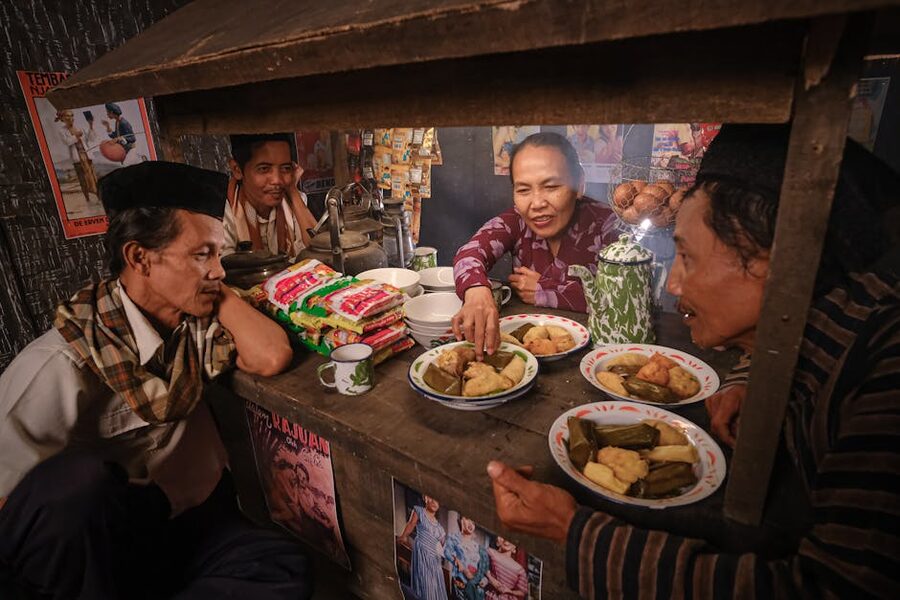
A group of friends eating at a small Indonesian warung at night with food packets stacked on the wooden counter
The kaki lima cart at the end of a residential gang is the cheapest, often the best version. The vendor cooks each plate to order; you eat squatting on a plastic stool.

Kaki lima means “five legs”: three from the vendor’s wooden cart and two from the cook. The carts roll into residential gang (back lanes) in the late afternoon, the cook fires up a portable wok over a gas burner, and you eat standing or on a plastic stool. Nasi goreng telur (with egg) runs Rp 20,000-30,000 (~$1.30-2.00). The food is excellent because the volume is high and nobody is trying to impress anyone. Look for clusters of locals on plastic stools; that’s the signal. Strong areas: Sanur back-gangs around Jalan Danau Tamblingan and the smaller lanes inland; Denpasar proper, especially Jalan Hayam Wuruk and Jalan Diponegoro after dark; Ubud’s residential edges, fifteen minutes’ walk from the central market; and Canggu’s quieter side roads off Jalan Batu Bolong toward Berawa.

Warung Lunches and Family Restaurants

A glass-fronted warung counter in Bali with rows of metal trays of Indonesian food kept warm under a fluorescent light
The classic Bali warung: a glass case of pre-cooked dishes plus a wok in the back making the fried items to order. Nasi goreng is always on the menu.

One tier up is a proper warung with tables, family-run, kitchen often visible. Prices run Rp 25,000-45,000 (~$1.60-2.90). The ones that take it seriously cook each plate to order in a separate wok; if they pull a portion from a pre-made tray it’s fine but not great. Strong areas: Ubud, where the rice-belt position means rice culture runs deep, especially the warungs around Tegallalang and Penestanan; Sidemen, where the east-Bali rice valley has basically no tourist pressure (Rp 25k nasi goreng with a Mount Agung view); Munduk and the Lovina villages in the far north (after a morning at the Singsing waterfalls outside Lovina, the warungs back in town do a Rp 30k version that beats anything in Seminyak); and Amed, on the east coast, where the seafood-leaning version with prawns from the morning catch is the right call.

Beach Grills in Jimbaran

Jimbaran is the dedicated stop for seafood-driven nasi goreng. The beach grills along Muaya and Kedonganan buy off the morning fishing boats, then grill prawns, squid, snapper and clams over coconut-shell coals through the evening. Order nasi goreng seafood or udang (prawn) for the heavy prawn-loaded version with smoky char from the grill kitchen. Rp 65,000-120,000 (~$4-7.50), more with grilled fish on the side. Feet in the sand at sunset, plastic chairs, queue of taxis at the entrance. Touristy, but the food is good and the ritual is the point.

Hotel Restaurants and Beach Clubs

Every hotel in Bali has nasi goreng on the menu, and price scales with the room rate. A Rp 65,000 (~$4) plate at a mid-range Sanur or Ubud hotel is almost always good and often great. The Rp 120-180k versions at four-star resorts are usually fine, sometimes excellent. The Rp 200k-plus versions at beach clubs and luxury hotels (Potato Head, Ku De Ta, Mandapa, COMO) are paying for the chair and the cocktail you’ll order alongside. I’ll say the quiet bit out loud: nasi goreng at a Seminyak rooftop or a Canggu beach club costs Rp 150-220k (~$9.50-14) and, honestly, isn’t better than the Rp 35k Sanur warung version. The plating is fancier, the garnish includes some microgreen that has nothing to do with Indonesian food, and you pay for the view. That’s fine if you went for the view. If you went for the nasi goreng, you’re in the wrong place.

A smiling Indonesian street vendor grilling sate skewers over hot coals at a Bali market stall
The street vendor cooking to order, late afternoon, plastic stools out. The setup I genuinely look for. The fact that it’s also the cheapest is a happy accident.

The best plate of nasi goreng I’ve ever had in Bali was Rp 22,000 from a kaki lima cart on a side road in Sanur at 10:30 p.m., eaten standing up because the stools were full. The rice had wok hei. The egg was running. The sambal made my eyes water in a way that felt diagnostic. The dish is also woven into daily life beyond the eating: plates of it set out as banten offerings on temple steps during festivals, smoke from kitchens in the lanes around Balinese Hindu ceremonies, leftovers in the kitchen at dawn after a Galungan family lunch. (Our Culture section goes deeper into the practices.) Treat it accordingly.

One Last Thing

If you only remember one piece of advice from this whole article, make it this: order it istimewa, with the egg on top, and ask for it pedas sedang, medium-spicy, the first time. Then adjust up or down depending on what shows up. If the cook seems pleased that you asked, you’re at the right warung. If they look bored, walk to the next one. The dish is too old and too good to settle for the wrong version of it.