The Best Restaurants in Sanur, Ranked by What’s Worth the Price
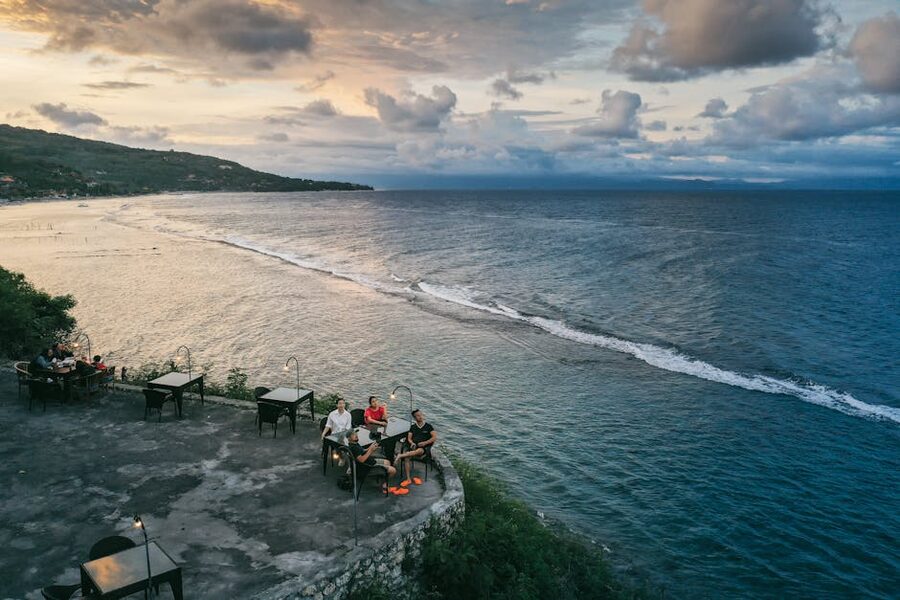
Sunset dining on a restaurant patio overlooking the sea

If you have one dinner in Sanur, book Three Monkeys. If you have two, add Massimo for the carbonara and the gelato out front. If you have a week, here’s the rest of the catalogue, ranked by what’s actually worth the price. I’ve eaten my way along Jalan Danau Tamblingan more times than I can count, and Sanur quietly does food better than anyone expects from the calmer end of south Bali. The street is short, the choices are plenty, and the prices are nothing like Seminyak.

Sunset dining at a beachfront restaurant in Sanur, Bali
Sunset on the Sanur boardwalk. Tables on the sand fill from 5pm; the inside seats stay open longer.

A note before we start. The original Bianco Restaurant that lent its name to this URL doesn’t appear in any current Sanur dining guide and has no live website I can find. If you turned up looking for it, treat it as closed and pick from this list instead. Sanur has gained more than it has lost on this front, especially since the new ICON Bali mall pulled L’Osteria and Curry Traders into town. The food scene here in 2026 is the strongest it has ever been.

How to read this guide

I’ve sorted everything by tier, not by alphabet. Three Monkeys, Massimo, and a couple of resort-restaurant picks sit at the top because they earn the booking. The mid-tier covers the beachfront spots where you’ll spend most evenings. The casual tier is where I eat when I’m not in the mood to dress up. Real prices in IDR with USD in brackets the first time, then IDR only. Reservations matter at the top tier in high season; you can wing it almost everywhere else.

One thing I learned the hard way. The Sanur sunset window runs about 5:30pm to 7pm and every beachfront table fills in that hour. Book ahead or eat at 8pm. The food is the same; the wait isn’t.

The top tier: book these in advance

Three Monkeys Sanur

Diner at a Sanur restaurant table, Bali
The booth seats at Three Monkeys go first; the koi-pond tables go second. Either is a win.

The icon. Three Monkeys on Jl. Danau Tamblingan is the one restaurant in Sanur that everyone agrees on. The original Three Monkeys is in Ubud (since 2000); the Sanur outpost opened in a beautiful tropical-modern courtyard with koi ponds and water features and has been packed ever since. The kitchen does Mediterranean and modern Indonesian, both done seriously. Open daily 11am to 11pm.

What to order. The duck confit (a long-running favourite), the lamb shank, the seafood linguine, and any of the rotating fish specials. The Indonesian side of the menu is genuinely good too, not the token Western-friendly nasi goreng you get at most fusion places. Mains run about Rp 180k to Rp 350k (about $11 to $22), starters Rp 80k to Rp 140k. A bottle of decent Indonesian wine is around Rp 450k, imported wines climb fast.

What matters. Book two or three days ahead in season for sunset; a week ahead at Christmas and New Year. The booth seats at the back are quieter than the courtyard tables. They’re also one of the few Sanur restaurants that handles a fussy table well, I’ve watched a kid order plain pasta with butter and the kitchen sent it out without a sigh.

Massimo Italian Restaurant

Fresh handmade Italian pasta on a board
Massimo makes the pasta in-house. The carbonara is the giveaway dish for whether an Italian restaurant in Bali is the real thing.

Sanur has the largest long-resident Italian community in Bali, which is why it has so many Italian restaurants and why one of them, Massimo, has been in the same spot on Jl. Danau Tamblingan since 1996. Chef Massimo Sacco is from southern Italy. The pasta is made in-house; the gluten-free menu is a separate full menu, not a sad afterthought; and the gelato counter at the front is the best in Sanur and arguably the best in south Bali.

Order the carbonara (Rp 95k), the seafood linguine, the pizza only if you must, and the homemade gnocchi when it’s on the specials board. Skip the imported steaks unless you’re feeling flush. After dinner, walk to the gelato counter and try the stracciatella, the pistachio, and whatever the daily special is. A scoop is around Rp 30k; four small scoops in a cup is Rp 30k to Rp 40k and feels indecently cheap for the quality.

Open 9am to 11pm daily, last orders 10:30pm. The dining room books up at 7pm so come at 6 or 8:30. If you only want gelato, the counter has its own queue at the front and you can grab a cone without sitting down.

The Restaurant at Tandjung Sari

Traditional Balinese pavilion at a beach resort, Bali
Tandjung Sari’s pavilions sit straight on the sand. The rijsttafel is for two people but it’s plenty for three.

For a date night that earns the spend, eat at the on-site restaurant of Tandjung Sari, one of Sanur’s oldest and most loved hotels. The dining tables are scattered across the sandy bay under huge palms, the lighting is candle and lantern, and the menu is modern Indonesian done with care. The signature is the rijsttafel, the colonial-era rice table, a feast for two with about a dozen small dishes around a central pile of rice. It’s about Rp 750k for two, which is a lot for Sanur but the most memorable Indonesian meal you’ll have on the trip.

If you don’t want the full feast, the nasi campur (mixed rice plate) is around Rp 165k and gives you the same flavours in one plate. Book ahead, outside guests are welcome but the tables on the sand go first. Sunset reservations on Friday and Saturday are gone two weeks out in July and August.

The mid-tier beachfront: book once, walk in twice

Soul on the Beach

People walking along the Sanur beach path, Bali
Sindhu Beach, where Soul on the Beach has tables on both sides of the boardwalk. The sand-side tables are worth the wait.

If I had to pick one beachfront restaurant for daily use, it’d be Soul on the Beach at Sindhu. Tables sit on both sides of the boardwalk; the sand-side ones are the prize. It opens at 7am for breakfast and runs all day, which matters in Sanur because most beachfront places don’t really get going until lunch. The breakfast deal is Rp 60k for coffee and a croissant or egg muffin, cheaper than most Canggu cafes for a much better view.

The menu is loose Mediterranean: tapas plates, pizza, pasta, salads, a big seafood section, and a few decent local dishes for when you want a nasi goreng without leaving the beach. Happy hour runs 4 to 7pm with cheap cocktails and house wines, which is when the place fills up. Mains land Rp 110k to Rp 220k. They have showers and towels for guests, so you can swim before dinner without a guilt trip. Book for sunset; lunch and breakfast are walk-in.

Moreno

Beachfront restaurant table with sea view
Moreno’s covered terrace stays cool through the afternoon. Patatas bravas with the pesto chicken sandwich is the easy lunch.

Three doors down, Moreno is the slightly more grown-up sibling of Soul. Same beach, slightly more careful cooking, and a covered terrace that’s actually cool during the heat of the day. Mediterranean and Italian crossover menu, patatas bravas (worth ordering twice), big sandwiches with proper bread, handmade pasta with truffle carbonara, and a hanging-rib-eye thing on a skewer that comes with a little bit of theatre. Mains Rp 130k to Rp 280k.

I’d come here for a long lunch when you don’t want to sit in direct sun. Open 7:30am to 10pm daily on Jl. Segara Ayu 42, just back from the beach.

L’Osteria at ICON Bali

Wood-fired pizza on a wooden paddle
L’Osteria’s tiramisu is the best in Sanur. The pumpkin and sausage risotto is the dish that kept me coming back.

The Italian-tavern chain L’Osteria opened a Sanur outpost in front of the new ICON Bali mall in 2024, right on the beachfront. Stone walls, low wooden beams, a terrace facing the water, and a kitchen that takes Italian food more seriously than most Bali Italian spots. The pumpkin-and-sausage risotto, the ragù arancini, and the homemade gnocchi alla Sorrentina are the picks. The tiramisu is genuinely the best in Sanur. Mains Rp 130k to Rp 250k.

One catch. It can feel slightly mall-like in the entrance area because of where it sits. Once you’re on the beachfront terrace it doesn’t matter. Walk past the front and ask for an outdoor table.

Costa Beach Restaurant

Silhouettes on Sanur beach at sunset, Bali
Costa is the most-Instagrammed restaurant in Sanur. The food is genuinely good, but go for the daytime drinks if photos matter to you.

The number-one ranked Sanur restaurant on TripAdvisor (TripAdvisor rankings are an imperfect signal but the local consensus tracks) is Costa, sometimes called Costa by Monsta. It’s the Insta-perfect beachfront spot in Sanur, bleached wood, white linen, hammocks, a curved bar, with a Mediterranean and Italian fusion menu and pricing that sits at the higher end of the mid-tier. The truffle burger, the seafood pasta, and the cocktails are the right orders. Mains Rp 150k to Rp 300k, cocktails Rp 130k.

It earns the rank, but the food itself isn’t a level above Soul or Moreno. You’re paying for the look, the service polish, and the feeling of having booked the right table. If aesthetics matter to your trip, book a sunset slot. If you just want dinner, the food is the same at lunch and the photos are better.

The atmospheric picks: pick by mood, not menu

Café Smörgås, the Scandinavian holdout

Tropical breakfast spread at a Bali cafe
Smörgås does the only proper open-faced sandwich in south Bali. The cinnamon buns sell out by 11am.

Sanur has a long Scandinavian community alongside the Italian one. The most visible expression of that is Café Smörgås, which has been doing proper Scandi café food in Sanur for two decades. It’s the only place in Bali I know of where you can order a proper smørrebrød (the Danish open sandwich) on rye, with herring or pickled salmon or beetroot, and have it taste right. The cinnamon buns, the cardamom buns, and the chocolate cake are all baked on site. Breakfast and lunch only, closes around 4pm.

It’s not a date-night place. It’s a 9am-after-the-beach-walk place. Coffee is good, the orange juice is fresh, and there’s a small patio at the back that’s quieter than the main room. Plates Rp 65k to Rp 130k. Cash and card both fine.

Genius Cafe, the digital-nomad lunch spot

Traditional Balinese jukung at Sanur beach
Genius Cafe sits straight on Mertasari Beach, the southernmost end of Sanur. Quieter than Sindhu and the parking lot is paid (Rp 5k).

If you’ve spent time in Canggu, you’ll recognise the format. Genius Cafe on Mertasari Beach is Sanur’s answer to the laptop-and-smoothie-bowl scene, a beachfront café with strong Wi-Fi, sit-up bar tables for working, a healthy-leaning menu (poke bowls, açai bowls, smoothies, big salads, plus burgers and pasta for the unconverted), and a constant rotation of yoga, sound bath, and breathwork events through the week.

It’s the only Sanur café I’d actually open a laptop at. Mains Rp 90k to Rp 160k, smoothies Rp 65k. Open 7am to 11pm. Mertasari is the southern beach in Sanur, less crowded than Sindhu or Segara, with paid parking (Rp 5k for the day). The cafe sits inside a small shoreline strip; you’ll spot the white signage from the boardwalk.

Fisherman’s Club at Andaz Bali

Grilled fish on a charcoal barbecue
Fisherman’s Club at Andaz does the cleanest charcoal-grilled fish in Sanur. The set lunch is the value play.

If you’re staying somewhere else and want a hotel-restaurant experience without the chain feel, Fisherman’s Club at Andaz Bali is the pick. It’s gated, beachfront, set inside the lush Andaz garden, and does a clean Italian-leaning seafood menu with a charcoal grill out front. Wooden boat-shaped private dining cabanas if you want to splurge; long communal teak tables otherwise. The grilled snapper, the seafood platter, and the negronis are the right call.

It’s pricier than the boardwalk spots, mains Rp 200k to Rp 400k, the seafood platter is around Rp 850k for two, but the set lunch (around Rp 350k for three courses including a glass of wine) is a value-for-money play. Open 11:30am to 11pm; happy hour 3 to 5pm. Reservation recommended for sunset, walk-in fine for lunch. The gated area also means no boardwalk dogs, which makes a difference for some travellers.

For the broader story on luxury hotel restaurants in Bali, see the rundown at Bali luxury hotels, the Oberoi’s restaurant in Seminyak is the closest equivalent at a higher price point.

Casual but worth it

Shotgun Social, craft beer, NYC pizza, family-friendly

Aerial view of Sanur stone pier, Bali
Shotgun Social isn’t on the beach; it’s a few blocks inland with an open-air beer garden. The play area keeps kids happy until adults are done.

Shotgun Social is Sanur’s craft-beer taproom and one of the few places in Bali doing local craft beer at scale. The beer list rotates through Stark, Kura Kura, Bali Brewing and a few imports, pints around Rp 70k to Rp 95k. The food is loose American: NYC-style pizza by the slice or whole pie, mac and cheese croquettes, fried chicken sandwiches, tacos. Pizza is the order. The pumpkin-and-sausage slice is the sleeper hit.

It’s a family-friendly venue with a kids’ play area, which is why you see actual local families eating here on Sundays. Live music two or three nights a week, weekly traditional Balinese dance for the kids on Tuesdays, and a quiz night that’s better attended than you’d guess. Open afternoons through late evening; it gets busy on event nights, so check their schedule.

Curry Traders, bold spice and gin cocktails

Tropical cocktail at sunset on a beach
Curry Traders does British-Colonial-themed gin cocktails. The water bubble shots are a gimmick that works.

The Sanur outpost of Curry Traders opened in 2023 after the original built a name in Nusa Lembongan. It’s a stylish, dim, slightly-theatrical Indian-Sri Lankan-Southeast Asian fusion spot with a gin-heavy cocktail list and a knack for sharing plates. The butter chicken is good, the spicy gunpowder potatoes are very good, and the lamb biryani for two is the right call when you’re properly hungry.

The fun stuff is the small plates: water bubble shots (savoury pastries with a mint-sauce shooter), crispy pastry cigars served in a cigar box, and a paneer dish that arrives smoking. Mains Rp 140k to Rp 280k, cocktails Rp 130k to Rp 170k. Book ahead on weekends.

Jepun Sanur, pan-Asian for groups

Grilled chicken with rice and sambal, Indonesian style
Jepun’s beef rendang is the order. The Joglo building means there’s almost always live music in the evening.

If you’re with a group of mixed eaters, Jepun is the easy answer. It’s a converted Joglo (Javanese teak pavilion) with a wide pan-Asian menu, Indonesian classics like nasi goreng, soto ayam (chicken soup) and beef rendang, plus Pad Thai, Indian curries, dim sum, burgers, pastas, and chicken parma for the cousin who only eats chicken parma. The Indonesian dishes are the strength; the pulled pork pancakes are a sleeper hit.

It always has a fun atmosphere with live music or a band a few nights a week. Mains Rp 95k to Rp 180k. Walk-in usually fine; book if you’re more than four people.

The Fire Station, Sunday roast in a humid country

Beach gazebo at sunrise, Sanur Bali
The Fire Station’s Sunday roast lands on the table at lunchtime. Skip it on a humid day; book it on a cool one.

The Fire Station is Sanur’s only proper British gastropub and the only place I’d seriously recommend a Sunday roast in a 30-degree country. They do chicken, lamb, beef, and pork, with proper homemade Yorkshire puddings, red-wine gravy, and roast veg. The truffle cauliflower cheese is the must-add. Sunday roast lunch is around Rp 195k and you have to book.

The rest of the week the menu is pub classics, fish and chips, burgers, pies, plus a few curries and a steak. Sport on the screens for whoever needs it. It’s not the food I’d come to Bali for, but on a rainy afternoon at the end of a two-week trip, sometimes you really do want a roast and a pint.

Cheap and excellent: the warung route

Nasi campur platter at a Bali warung with vegetables, rice, and sambal
A nasi campur plate at a Sanur warung. Rp 40k for the kind of meal a beachfront restaurant charges Rp 165k for.

Restaurants are where Sanur shows off. Warungs are where it shows up. The full warung scene is its own thing, and I’ve written it up separately, see where locals eat in Sanur for the deep dive on Warung Mak Beng, Warung Wardani, the Sindhu night market, and the rest. Two quick mentions for the restaurant guide:

Warung Kecil on Jl. Duyung 1 is a great option for a quick Indonesian plate near the beach. Slightly more Western-leaning Indonesian, pick what you want from the counter, served with rice. Plates around Rp 35k to Rp 55k. Open 8am to 10pm.

Warung Umago hidden among Sanur’s quiet rice fields (yes, Sanur still has rice fields back from the beach) is a recent discovery. Small, simple Balinese menu, chicken teriyaki rice bowl is around Rp 35k and incredibly good value. Proper barista coffee, terrace views over the rice. Worth the moped ride if you want a slow late lunch.

For a deeper dive on the dish that defines Indonesian cooking, including where to eat the best version in Bali, see the history of nasi goreng.

Breakfast and coffee

Daily Baguette

Tropical drink at a Bali cafe, Indonesia
Daily Baguette runs two locations in Sanur. The Jl. Danau Tamblingan branch is bigger and has more bread.

The number one breakfast spot in Sanur, and I’ll fight anyone who says otherwise. Daily Baguette is a French bakery with two Sanur branches (one inside ICON Bali, one on Jl. Danau Tamblingan) doing properly good croissants, pain au chocolat, baguettes, and a small all-day breakfast menu. Avo on toast plus a coffee plus a pastry costs about Rp 75k, under $5 for the kind of breakfast that’s Rp 180k at the boardwalk cafés.

The Jl. Danau Tamblingan branch is the bigger one and has the full bread shelf, which matters if you want to grab a baguette to take back to your villa. Open from 7am.

Le Croissant

Smaller, slightly pricier, and very good waffles. Worth a stop if you’re eating eggs Benedict and don’t want to wait in a Daily Baguette queue. Pastries are excellent. Smoothie bowls are decent.

Sala Bistro & Coffee

The vegan-and-lactose-friendly café with a quietly excellent farmer’s omelette. Pet-friendly, big-windowed, fills by 9am. Flat white Rp 35k; the smoked-salmon omelette is Rp 115k. Good first stop after a morning beach walk on Jl. Danau Tamblingan.

Genius Cafe (again)

Already covered above, but their breakfast bowls are also excellent and worth flagging here. The early-morning yoga class plus breakfast combo is a Sanur classic.

The Sanur gelato situation

Gelato cones at an Italian-style gelateria
Sanur is the gelato capital of south Bali. Massimo is the original; Gaya is the strongest competitor.

Because of that long Italian community, Sanur quietly has the best gelato in south Bali. The two you should care about:

Massimo Gelato on Jl. Danau Tamblingan 228, the front-of-restaurant counter at Massimo. Made daily, traditional flavours done correctly, and the queue moves fast even when it looks long. Stracciatella, pistachio, and the daily seasonal flavour are the right picks. Rp 30k a scoop, Rp 30k for four small scoops in a cup.

Gaya Gelato Trattoria on Jl. Danau Tamblingan 192. Smaller branch of the Gaya chain. The hazelnut and the chocolate are the giveaway flavours; both are excellent. Open until 11:30pm if you want a late dessert walk along the boardwalk.

One avoidable mistake. The hotel-pool ice cream stalls inside the bigger Sanur resorts charge Rp 80k for what is essentially industrial gelato. Walk five minutes to Massimo or Gaya instead.

What’s worth skipping

I’ll keep this short. The big-name Italian and steakhouse chains inside the new ICON Bali mall are mostly fine, but they’re priced like Seminyak and they’re not what Sanur is for. The hotel beach clubs have great views but the food is two notches below what the same money buys you at Three Monkeys or Massimo.

And a flag for closures. Char Ming was a long-running Asian fine-dining favourite on Jl. Danau Tamblingan and gets recommended in older guides. It closed several years ago, multiple Sanur forum threads from January 2026 confirm this. Sand Beach Bar & Restaurant at the ICON Bali beachfront also announced its closure on Facebook in 2025. Bianco Restaurant, the original namesake of this URL, doesn’t appear in any current Sanur dining guide and has no live presence, assume closed unless you can verify otherwise. If you spot any of these names in older blog rankings, treat the rest of that article as outdated too.

How much should dinner cost in Sanur?

Sanur Beach with traditional Balinese gazebo
Sanur stays cheaper than Seminyak across the board. The Italian community has kept import prices reasonable, especially for wine.

Quick price-band reference for planning a week of dinners:

  • Warung dinner: Rp 25,000 to Rp 65,000 per person, drinks extra (Bintang Rp 25k). Mak Beng’s set is Rp 50k. You’ll eat well.
  • Mid-range beachfront restaurant: Rp 150,000 to Rp 350,000 per person with one drink. Soul on the Beach, Moreno, L’Osteria, Massimo all sit here. The Sanur sweet spot.
  • Top-tier restaurant: Rp 400,000 to Rp 700,000 per person with wine. Three Monkeys, Tandjung Sari, Costa, Fisherman’s Club. Bookable special-occasion territory.
  • Cocktails: Rp 110,000 to Rp 170,000 at the mid-tier; Rp 90,000 at happy hour; Rp 35,000 to Rp 50,000 at warung-adjacent beach bars.
  • Coffee: Rp 30,000 to Rp 45,000 at any decent café. Rp 15,000 if you’re in a warung.

Card payments are accepted at every restaurant in this guide. Most warungs are cash only or QR via QRIS. ATMs are easy to find on Jl. Danau Tamblingan; pick the BCA, Mandiri or BNI ones over the standalone money-changer machines. (For more on managing money in Bali, the broader site has a food and drink section and there’s a separate guide to why Sanur works on the second Bali trip.)

Sanur restaurant booking, what actually matters

Morning at Sanur Beach with traditional jukungs at sunrise, Bali
Sanur’s beach faces east, so sunrise is the show. Sunset dining still works, the light over the boardwalk is gorgeous around 6pm. Photo: Danangtrihartanto / CC BY-SA 4.0 (via Wikimedia Commons)

A few things I’ve learned the hard way about getting tables in Sanur:

Book Three Monkeys, Massimo and Tandjung Sari at least two days ahead in season. Their websites have direct booking forms. Three Monkeys also takes WhatsApp bookings if you’re already in country, they reply fast. Costa takes online bookings via their site. For everywhere else, walk-in usually works at lunch and around 8pm; the gap is the 5:30pm to 7pm sunset window.

For sunset, request a beachfront table specifically. Most restaurants have indoor seating that nobody wants in the evening. If the host says “all sunset tables are taken” but offers an inside table, it’s worth asking what time the next beachfront slot opens up, sometimes there’s a 6pm and an 8pm seating and you’ve just missed the 6pm.

Sanur is not Seminyak. Most restaurants close their kitchens around 10pm or 10:30pm. If you want late food, you’re looking at Massimo (10:30pm), Three Monkeys (10:30pm), Genius Cafe (11pm), or one of the warungs that runs late around the night market.

Tip 5 to 10 percent if there’s no service charge on the bill. Most mid-tier and top-tier places add a 10 percent service charge plus 11 percent tax, the bill makes this clear. At warungs and at the cheaper cafés, leave round change or a small note.

For the broader area context, what to do during the day before dinner, where to walk, where to swim, see Sanur, Bali: why the slow coast wins on the second trip. The eating is the third or fourth thing I love about Sanur, and it’s the single thing that’s improved the most in the last five years.

The short version

Silhouette at Sanur sunrise with traditional pavilions, Bali
Sunrise from the boardwalk near Sindhu. The breakfast spots open at 7am; the best ones (Daily Baguette, Sala) fill by 9.

One dinner: Three Monkeys. Two dinners: add Massimo. Three: add Tandjung Sari for the rijsttafel. Four: a Soul on the Beach sunset and a Curry Traders late dinner. Five and beyond: walk Jl. Danau Tamblingan in the early evening, stop at any place where the queue is people who look like they live in Sanur, and you’ll be fine. The street is honest. It tells you what’s good.

Skip the things people will tell you to do that aren’t worth it. Don’t book the highest-priced hotel restaurant for dinner unless you’re staying there, you’re paying for the resort, not the food. Don’t go to a beachfront restaurant in heavy rain if there’s no proper shelter; the boardwalk floods. And if Bianco Restaurant is what brought you here, save the money you’d have spent and split it between dinner at Three Monkeys and gelato at Massimo. You’ll come out ahead.

Where Locals Eat in Sanur

Skip the beachfront restaurants. The best food in Sanur is being served from gas burners on plastic tables in lanes you’ll never find on Instagram, and you can eat better there for Rp 35,000 (about $2.20) than you will at most of the boardwalk places for ten times that.

I learned this the slow way. First trip, I ate every dinner on the sand because that’s what the hotel concierge pointed at. Six months later I was renting a room two blocks back from the beach off Jl. Danau Tamblingan and the Balinese family next door pretty much fed me for two weeks. Their daughter ran a tiny warung (small family-owned eatery) at the front of the compound. Nasi campur, fish soup if her uncle landed something that morning, kopi tubruk strong enough to bend a spoon. I have not been able to take Sanur’s beach restaurants seriously since.

Local diners gathering around a wooden warung counter in Sanur Bali
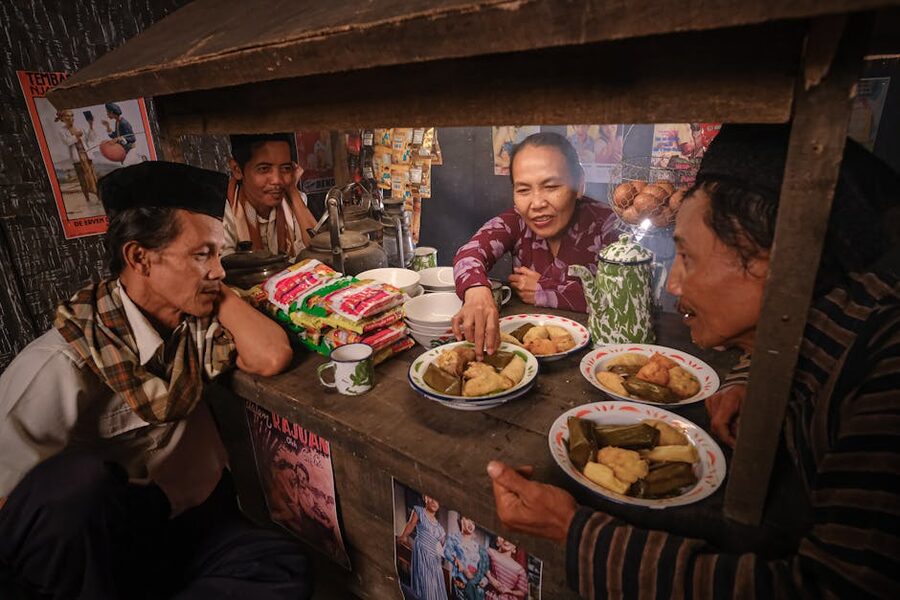
This is what a real warung looks like inside. Plastic stool, wooden counter, a few packets of snacks, and someone’s mum cooking out the back.

This guide is the catalogue I wish someone had handed me on day one. Where to actually eat in Sanur for under Rp 65k. The legendary places that earn the queue. The Indonesian non-Balinese cuisines worth seeking out. And the small skill of reading a warung from the outside so you can pick a good one anywhere on the island, not just here.

What Counts as a Warung (and What Doesn’t)

The word gets used loosely in Sanur because it’s good marketing. A “warung” name signals casual, local, cheap. So you’ll see Warung This and Warung That on places with air conditioning, English menus in five languages, and a Rp 180k pizza on the back page. Those are restaurants with a costume on. Useful, sometimes excellent, but not what we’re talking about here.

A real warung is small, family-run, mostly serving the people who live in the neighbourhood. The food is cooked once a day, displayed at the front, and reheated to order. There’s no menu in English because there’s no menu at all. You point at what looks good. The price for a generous plate sits between Rp 25,000 and Rp 65,000 depending on what you load it with. You pay in cash at the end and the change (the kembali) is yours.

Stacked white bowls of pre-cooked Indonesian dishes at a warung display counter
The cooked-once-a-day pile. If it’s mostly empty by 1 p.m. you’ve found a good one. If it’s still full at 3 p.m., walk on.

Most warungs run on trust. You eat, then you settle up. In a busy one the ibu (the mother running the place) will somehow remember exactly what you had even if you sat there for an hour. Tip: don’t try to game it. Pay what she asks. The total will be low.

Reading a Warung From the Outside

Before you walk in anywhere, read the place. The skill takes about three days to develop and saves you from a hundred bad meals across an island like Bali. There’s more on the wider quality-and-safety question in our Bali health guide, but the warung-specific signals are simple.

The queue is the menu. If there are five locals waiting at noon, the food is fresh and worth the wait. If you’re the only person in there at 1 p.m. on a weekday, something is off. Sanur runs on a lunch rhythm. Local Balinese eat hot food between 11 a.m. and 1.30 p.m., not at 7 p.m. like a Western restaurant, so a quiet warung at 12.45 p.m. is a quiet warung for a reason.

Look at who’s eating. Indonesian construction workers, security guys in uniform, scooter drivers in helmets, women on lunch break from the salon next door. That’s the seal. If everyone inside is on a phone in English, you’re in a Bali-themed cafe.

Locals chatting and drinking at a small Indonesian warung kopi
Even when the food’s gone, locals stay for the coffee and gossip. A warung is half kitchen, half village hall.

Look for the wok. If there’s an ibu in the back actively cooking, flame on, smell of garlic and shallot frying in coconut oil, the food is being made fresh. If everything is wrapped in cellophane and sitting cold in a glass case, it’s been there since breakfast. The cellophane warungs are fine for a wrapped portion to take to the beach. They are not where you sit down.

Check the sambal. Every warung makes its own. Ask for it on the side, taste a tiny dab on rice. If it’s flat, the kitchen is tired. If it punches you in the face with chilli, garlic, and lime, the rest of the food will be good too. The sambal is the kitchen’s signature in a way that nothing else is.

The Sanur Warung You Have to Eat At

If you only do one of these in Sanur, do this one.

Warung Mak Beng

Open since 1941, Mak Beng is the warung version of an institution. One dish. They serve a single set: ikan goreng (deep-fried fish, usually snapper or trevally), a bowl of sup ikan (clear fish-head soup with green papaya and lemongrass), white rice, and a small dish of incendiary sambal. That’s it. There is no menu choice. You sit down, you get the set, you eat. Indonesia’s official tourism board lists it among the country’s iconic warungs and the queue at lunch makes the case. The official site still bills it as kuliner legendaris Sanur sejak 1941 (legendary Sanur cuisine since 1941) and runs the same one-dish formula it always has.

Crispy whole fried fish served with rice and red sambal on a white plate
Roughly the Mak Beng plate. Crispy fried fish, rice, sambal that fights back. Eat the fish with your fingers, the way the locals do.

Address: Jl. Hang Tuah No.45, Sanur Kaja, near the boat ramp at the north end of Sanur beach. They open around 10 a.m. and close when they sell out, which on a busy day is around 2 p.m. The set runs roughly Rp 50,000 a person. Cash only. No reservation. Get there by 11.30 a.m. on a weekday or 11 a.m. on a Sunday or you will be eating elsewhere.

Three things to know. First: the fish is whole, head on. The cheek is the best bite. Second: drink the soup. People skip it because they came for the fish, but the broth is the point: fishbones, lemongrass, lime, papaya, and a small handful of fried shallots on top. Third: brown rice is now an option for an extra few thousand rupiah. Get it. The white rice is fine but the brown rice with that broth is a different meal.

Warung Blanjong and the Pura Blanjong Connection

Down at the south end of Sanur, near the small temple compound that holds the Blanjong pillar, there’s a warung that took its name from the temple and built its reputation on the kind of generous Balinese plate that explains why people come back to Sanur for years. Warung Blanjong sits at Jl. Danau Poso No.78 in Sanur Kauh, the slightly quieter southern half of the area, a short walk from where the locals queue at the morning market.

The shrine at Pura Blanjong temple compound in Sanur Kauh
The Pura Blanjong shrine. The compound also protects the Belanjong pillar, dated to 914 CE, the oldest dated written record on Bali. A short walk from the warung that took its name. Photo by DayakSibiriak / Wikimedia Commons (CC BY-SA 4.0)

The signature here is nasi campur Bali, mixed rice with a rotating cast of sides: shredded chicken in spices, urap vegetables with grated coconut, a piece of fried fish, sometimes a skewer of sate lilit, always sambal. They also do a barracuda fish that comes out fresh from the coast and chicken sate that gets quietly recommended in Sanur expat groups more than the menu suggests. A meal for two with drinks lands around Rp 250,000-330,000. That’s higher than the Rp 25-35k street warungs, lower than anywhere on the boardwalk. The middle tier in Sanur is well covered and Blanjong sits at the better end of it.

The location is part of the appeal. The Pura Blanjong compound, two minutes’ walk away, holds the Belanjong pillar, a stone pillar with an inscription dated 4 February 914 CE that is the oldest dated written record found on Bali, in a mix of Old Balinese and Sanskrit (the issuing king was Sri Kesari Warmadewa). There’s more on the religious context in our guide to Balinese Hinduism, but the practical version is: do the temple, then walk over for lunch. It’s the rare moment in Sanur where two pieces of the area line up cleanly.

The Local-Eat Staples

Below the icons there’s a deeper bench. These are the warungs people who actually live in Sanur put on rotation, the ones that don’t trend on TikTok and never will.

Warung Krishna

Vegetarian Balinese on Jl. Kutat Lestari No.4, in the residential streets back from the beach. Banana-leaf plates, small but well-done menu, the kind of place where you eat tempe (fermented soybean cake) and remember why people get evangelical about it. Around Rp 30-40k for a generous plate, plus Rp 5k for an iced tea. Closed on Sundays, sometimes Mondays. Phone ahead during ceremonies because the family closes for upacara without warning. If you’ve eaten the bland tofu-and-tempe at every cafe in Ubud, eat here and recalibrate.

A spread of Indonesian dishes on a warung counter ready for lunch
Local warungs cook everything in the morning and pile it up like this. By 2 p.m. the best dishes are gone. Eat early.

Warung Wardani

An institution for Balinese rijsttafel-style lunch. They bring you a tray with a dozen small dishes and you pay for what you finish. Originally a Denpasar place that opened a Sanur outpost. Get there at noon, leave at 1 p.m., and you’ll have eaten more variety than a tasting menu would give you for a fifth of the price. The crispy duck (bebek goreng) is the order if you see it on the tray.

Warung Pregina

Balinese specialties in a small open-walled room off Jl. Danau Tamblingan. Their ayam betutu (slow-cooked spiced chicken wrapped in banana leaf) is the dish. They do it properly, eight hours of cooking, the meat falling off the bone, the spice paste deep and complex. Order it ahead if you can; they only make a few a day and walk-in misses out. Higher end of the warung tier, Rp 60-90k for the betutu set.

Warung Khas Sanur and Warung Murah Lestari

The two cheap-and-reliable options for when you just need a feed and don’t care about a story. Khas Sanur sits on the back lanes off Jl. Danau Tamblingan, low-key, big portions, locals everywhere. Murah Lestari is what the name says (murah means cheap, lestari means lasting), and the prices have not moved much in years. Around Rp 25-35k for a full plate, including a glass of warm tea. These are not destination meals; they are the warungs you eat at on the third Tuesday of a long stay.

Plate of Balinese nasi campur with rice, satay, vegetables and sambal
Standard nasi campur at a Sanur warung. Rice in the middle, four or five sides, a small mound of sambal. Costs less than a coffee on the boardwalk.

Pondok Bali

Down at the south end past Mertasari, popular with families from Sanur Kauh and the Renon office crowd at lunch. Big covered eating area, fans, a long counter of pre-cooked dishes. Their ayam goreng with sambal matah is what to point at. Not photogenic, very good.

Indonesian, Not Balinese

Bali gets talked about as if Balinese food were the only Indonesian cuisine that mattered, which would surprise the rest of the country. Sanur has a few good non-Balinese Indonesian warungs that are worth a meal each.

Warung Padang Sanur

Padang food comes from West Sumatra. The format is the warung equivalent of dim sum: dishes are cooked in the morning, stacked in plates in the front window, and brought to your table when you sit down. You eat what you want, and you only pay for what you actually take. The signature is rendang (beef slow-cooked in coconut and spices for hours until it’s almost dry), but the green chilli sauce, the curried jackfruit, the salted egg, the fried lung, the spicy potato all earn their place too. Rp 40-65k for a proper plate.

Window display of stacked Padang food plates at a Masakan Padang warung
The Padang window. Pick what looks good through the glass before you sit down. They’ll only charge you for what ends up on your plate.

Etiquette note: at a Padang place, dishing the food onto your rice with the spoon they bring is fine, but don’t double-dip the spoon between dishes. And the place tends to be Muslim-run, so dress slightly less beach-bum than you can elsewhere. There’s more on respectful local eating in the Wikipedia entry on Padang cuisine if you want a deeper read.

Soto Banjar Sanur

Soto banjar is a chicken-and-rice-noodle soup from South Kalimantan with a clear broth, a small handful of perkedel (potato fritters), boiled egg, and a squeeze of lime. It’s a breakfast dish in Banjarmasin and works just as well at 9 a.m. in Sanur if you want to skip the hotel buffet. The Sanur version is found at a small warung on Jl. Danau Tamblingan with a sign in Bahasa, no English, a few plastic chairs, and exactly one specialty. Rp 30-35k for a bowl. Look for the queue of motorbike taxi drivers having coffee outside.

Warung Jawa Moro Seneng

Javanese home cooking on Jl. Danau Poso, open 24 hours, ridiculously cheap. Half-curries, fried tempe, omelettes, vegetable stews, fried chicken. You pay 15-30k for a generous plate and leave full. The atmosphere is roadside-pavement; you eat at long tables in the open air. This is where the office workers from Renon eat lunch when they’re in Sanur, and where backpackers eat dinner when they’ve worked out that the beach restaurants are robbery.

Coffee and Breakfast Warungs

The morning warungs are a separate category and worth knowing. A proper warung kopi doesn’t really do food beyond a few snacks: pisang goreng (banana fritters), kue-kue (small cakes), maybe a packet of nasi kuning wrapped in banana leaf. The point is the coffee and the chat.

A small glass of strong Balinese coffee served on a tray
Kopi tubruk done the right way: grounds at the bottom of the glass, no milk, optional sugar. Wait two minutes for the grounds to settle before you sip. Photo by David Bacon / Wikimedia Commons (CC BY 2.0)

The thing to ask for is kopi tubruk. Coarse-ground robusta, hot water poured over the top, sugar optional, no filter. The grounds settle to the bottom of the glass after a couple of minutes. Sip the top three-quarters, leave the sludge. It’s strong and a little bitter and exactly what you want at 7 a.m. before a day on the beach. It costs about Rp 8-12k.

For an actual breakfast, the Indonesian standard is nasi kuning (turmeric rice with a few sides) wrapped in banana leaf, about Rp 15-20k from a stall, eaten standing or on a plastic stool. Or bubur ayam (chicken rice porridge) for around Rp 18-25k, which is both a breakfast and a hangover cure depending on how the night went. Both are sold from carts and small warungs around the morning market, before 9 a.m. and gone by 10.

The Wider Sanur Warung Map

Sanur runs north-south for about five kilometres. Each section has its own cluster of warungs, and which one you walk to depends mostly on where you’re staying. Worth knowing the rough layout if you’re picking accommodation; we go into the area in more depth in our Sanur area guide.

Morning view of Sanur Beach Bali with fishing boats on the shoreline
Morning at Sanur Beach. Most of the good warungs sit a block or two back from this. Walk inland, not along the boardwalk. Photo by Danangtrihartanto / Wikimedia Commons (CC BY-SA 4.0)

North Sanur (around Jl. Hang Tuah and the boat ramp)

Mak Beng anchors this end. The Padang warungs on Jl. Hang Tuah stay open into the night for the Nusa Penida boat crews. Soto, mie ayam carts roll out around 6 p.m. Stay here if you want to be near the Lembongan boat in the morning and don’t mind a slightly busier feel.

Sindhu and central Sanur (Jl. Danau Tamblingan and its back gangs)

The dense middle. Most of the spa-stay accommodation is here. Pregina, Khas Sanur, Murah Lestari, Soto Banjar are all in the gangs (the small lanes) running off Jl. Danau Tamblingan. Don’t eat on Tamblingan itself; walk into a gang and find the hand-painted sign half-buried in bougainvillea.

Sanur Kauh / Blanjong (south end)

Warung Blanjong, Pondok Bali, the Pura Blanjong compound. Quieter, more residential. Good if you’re staying at a homestay rather than a hotel. The walk from the south to the north end is about an hour along the beach path or fifteen minutes on a Gojek scooter.

Mertasari and Renon-adjacent

Past the south end of the beach path, where Sanur bleeds into the Renon office district. The warungs here serve the lunchtime office crowd: efficient, cheap, no English needed. If you find a place packed with men in batik shirts at 12.15 p.m., sit down.

Beyond the Plate: Sate, Sambal, and the Dishes That Define Balinese Warung Cooking

A few dishes show up at almost every proper warung, and knowing what to look for helps you order without a menu.

Nasi Campur Bali

The point-and-eat dish. Rice in the middle, a rotating cast of sides on top: shredded chicken, urap vegetables, a small piece of sate lilit, a piece of fried fish, sambal matah. Every warung does it differently. The ratio is the kitchen’s signature. Locals order it more often than tourists do.

A plate of nasi campur from a warung in Ubud showing varied sides over rice
A more elaborate nasi campur from up in Ubud. Sanur warungs serve a slightly simpler version, but the principle is the same. Photo by Vyacheslav Argenberg / Wikimedia Commons (CC BY 4.0)

Nasi Goreng

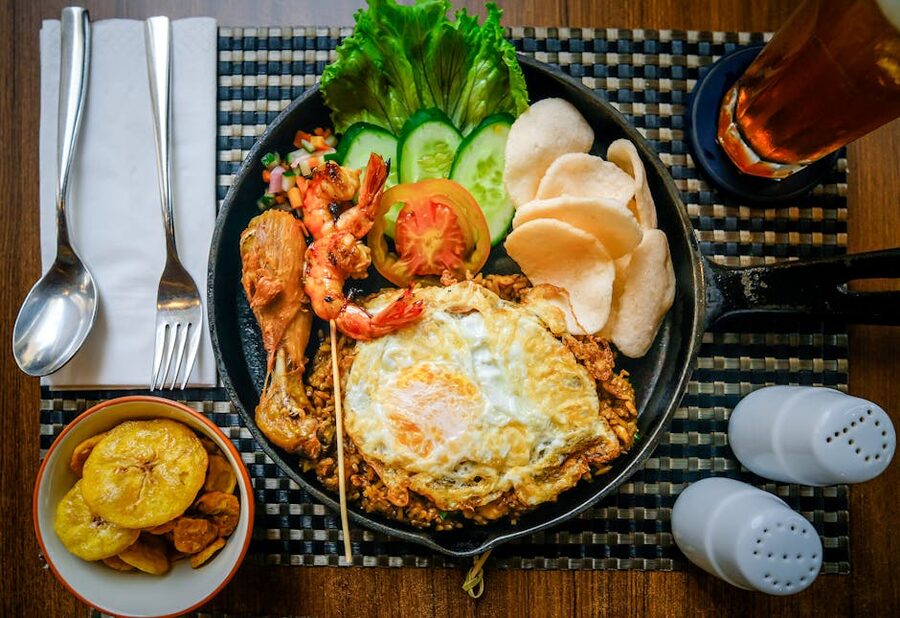
The fried rice you have probably already had on a hotel breakfast buffet, but at a warung it’s a different dish. Wok-charred, with kecap manis (sweet soy), a fried egg on top, and a few krupuk (prawn crackers) on the side. Rp 25-35k. Our deeper dive on the dish, including its surprising history, lives at our nasi goreng story.

Sate Lilit

Balinese satay, distinct from the more common sate ayam. Minced fish or chicken mixed with grated coconut, kaffir lime leaf, and spices, then wrapped around a flat bamboo or lemongrass stick rather than threaded on a thin skewer. Grilled over coconut husks. The good stuff has a warm spice complexity you don’t get from the peanut-sauce satay versions in Western menus.

Bali sate lilit on lemongrass sticks served with rice and chilli garnishes
Sate lilit done properly, on lemongrass sticks. The lemongrass perfumes the meat as it grills. Photo by Kresnanta / Wikimedia Commons (CC BY-SA 4.0)

Sate Ayam

The classic skewered chicken with peanut sauce. Less Balinese, more Indonesian-generic, but every warung has a version. Look for one being grilled fresh over charcoal; the warungs that hold pre-grilled skewers in a warmer never quite get there.

Indonesian sate skewers cooking over charcoal at a warung grill
Charcoal-grilled sate. The grill smell three blocks away is half the reason you walk in.

Sambal

Not one thing, but a whole family. Sambal matah is the Balinese style: raw shallot, lemongrass, kaffir lime, chilli, all chopped fine and bound with a hot oil. Sambal terasi has fermented shrimp paste in it; it’s intense and divisive. Sambal kecap is for satay, sweet and salty with chilli. Most warungs make at least matah and one cooked sambal.

A small white bowl of spicy Indonesian sambal with a wedge of lime
Always taste the sambal before you order. Flat sambal means flat food.

Ikan Goreng

Whole fish, deep-fried, head on, served with rice and a green sambal. Often part of the Mak Beng-style fish set, but also turns up at any warung near the beach. Eat it with your fingers.

Whole fried fish served with rice and red sambal at an Indonesian warung
The basic fish-and-rice plate at a beachside warung. The sambal does most of the work; the fish is the canvas.

Warung Etiquette, Briefly

None of this is hard. Most of it is what you’d do anywhere small and personal.

Sit down first. Most warungs have you take a stool, then someone comes over. If there’s a counter with the day’s food on it, walk over and point at the dishes you want. Hold up a finger for one portion, two for two. If you want it spicy, say pedas; if not, tidak pedas. Always works. Saying terima kasih (thank you) when the food arrives gets a smile, even if your accent is appalling.

Eat with your right hand if you’re going local. Indonesia treats the left as unclean, and using it to pass food or pay is a small but real rudeness. A spoon and fork is fine if you prefer. Pay at the end. Cash. Small notes. Rp 50,000 and Rp 20,000 notes are your friends; trying to break a Rp 100,000 note for a Rp 35k meal at lunch rush will get you a polite shrug while she goes hunting for change.

Don’t tip in the way you would in a Western restaurant. A small rounding-up, like paying Rp 40,000 for a Rp 35,000 meal and waving off the change, is welcome. Adding 10 or 15 percent is awkward and slightly insulting because the price wasn’t a request for negotiation.

Take your shoes off if it feels like you’re walking into a room rather than a shop. Some warungs are run out of someone’s family compound and the eating area is technically inside the home. The give-away is a low step up and a row of sandals at the threshold.

Is Warung Food Safe?

Mostly yes, with the same caveats that apply to any street food anywhere in the tropics. The risk isn’t the food, it’s the water it was washed in and the ice it was served with. Stick to hot dishes that are cooked through, skip raw salads at small places, and ask for drinks without ice if you’re nervous. Bottled drinks, tea brewed with boiling water, and freshly made coffee are all fine.

The single best protection is the same signal you used to pick the warung: high turnover. Food that’s been sitting at room temperature for six hours is a roll of the dice; food that’s just come off the wok is not. Eat at the lunch rush and you have already cut the risk in half. There’s more on Bali belly and how to handle it in our Bali health guide.

Traditional jukung outrigger boat resting on Sanur beach at low tide
The Sanur jukung crews bring in the fish that ends up at Mak Beng and the smaller fish-soup warungs at the north end. Eating local means eating what came in this morning.

The Real Reason This Matters

Sanur is not Canggu. It’s slower, older, more residential, and the people who live here have eaten at the same warungs for two generations. Walking in and ordering badly is fine, you’ll still eat well. But pay attention for a week and you’ll start noticing things: that the ibu at Krishna remembers you ordered no-spicy last time, that the Padang plates rearrange every day, that the kopi guy on Hang Tuah opens at 5.30 a.m. for the boat crews. None of that turns up in a TripAdvisor review and none of it is on the menus on Jl. Danau Tamblingan.

For everything else Sanur (the beachfront restaurant tier, the date-night spots, the upmarket Italian and Asian fine-dining places that share the area with the warungs), see our companion restaurant guide to Sanur. It’s the other half of the same story. And if you want the wider food and drink writing across the rest of the island, that’s where to go next.

Sunset over Sanur Beach Bali with a beach hut silhouette on the sand
Sanur sunset, looking west off the beach. The boardwalk restaurants want you watching this with a Rp 250k cocktail in your hand. The warungs want you to come in once it’s dark and the kitchen’s still going.

End of the day, the test for whether you’ve actually eaten in Sanur isn’t whether you tried the famous places. It’s whether the woman behind the counter at one warung (any warung, even a small one in a side street with a hand-painted sign) has started to recognise you when you walk in. That happens about day four if you do this right, and it’s the only piece of Sanur that the resorts can’t sell you.

Where to Drink Coffee in Bali: A Local’s Cafe Guide by Area (2026)

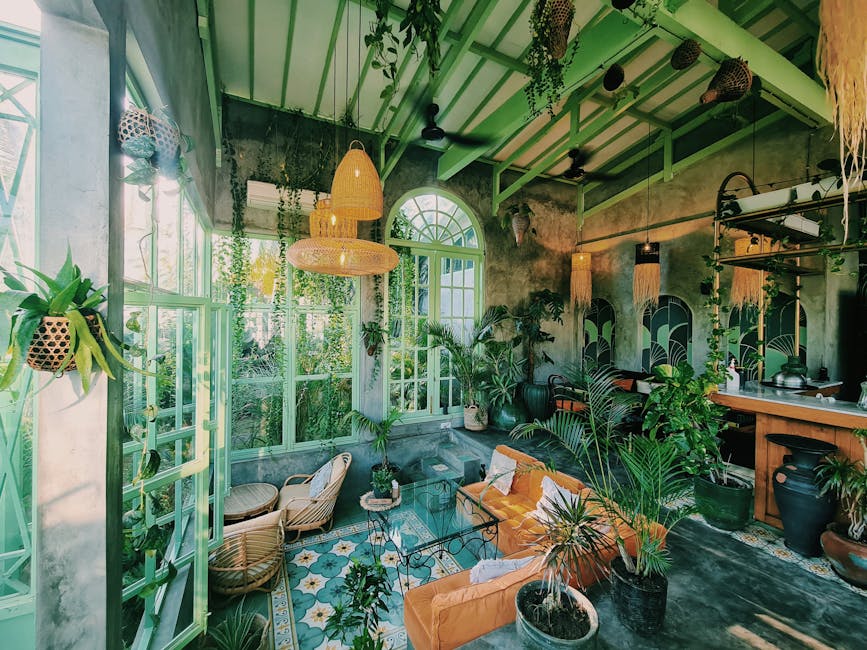
Bali cafe interior with green decor and vintage furniture

A Rp 35,000 (about $2.20) third-wave flat white at Crate Cafe in Canggu, served by a barista who could win a regional championship and probably has. A Rp 8,000 ($0.50) kopi tubruk (Indonesian-style coffee where the grounds sit at the bottom of the cup) at the warung next to the petrol station in Sidemen, served in a glass that has been washed in the same water for a decade. Both are coffee in Bali. Both deserve a place in your day. The trick is knowing when each one is the right call, which cafes across the island are worth the markup, and which ones are charging Seminyak rates for Seminyak vibes and not much else.

Bali cafe interior with green decor and vintage furniture
The mid-tier brunch cafe template you find across Canggu and Seminyak: hanging plants, mismatched lounge furniture, concrete-and-greenery palette.

I have been drinking coffee in Bali, on and off, for six years. I have queued at Crate Cafe at 9 a.m. with a hundred laptops in front of me. I have ordered the wrong drink at Seniman in Ubud and been gently corrected by a barista who took it personally. I have paid Rp 5,000 for a glass of kopi panas (hot coffee) on a plastic stool in Amlapura while watching a man fix a moped engine with a hammer. None of these were a mistake. This is the catalogue, by area, with prices that are not made up and opinions that are.

The Quick Answer If You Just Want a Recommendation

If you are spending one day in Canggu and want to know where to go, the answer is Crate Cafe for the scene, Milu by Nook for the food, and Quince for the rooftop. If you have one morning in Seminyak, go to Revolver Espresso. In Sanur, walk Jalan Danau Tamblingan and pick the one that is least packed. Skip the beach clubs that call themselves cafes and charge Rp 250,000 for a flat white. They are not cafes. They are nightclubs that open at breakfast and have a price problem.

If you want the longer version, with the cafe-by-area breakdown, the wifi reality, and a real read on which places justify the markup over the warung kopi at the gas station, keep reading.

How Bali Got Here: The Specialty-Coffee Story

Traditional coffee bean roasting at a Bali coffee plantation
Traditional clay-pot bean roasting at a Bali coffee plantation. The growing and roasting traditions are old; the third-wave cafe layer on top is recent. Photo: Rennytan / CC BY-SA 4.0 (via Wikimedia Commons)

Indonesia has been growing coffee since the Dutch colonial era. The country sits in the top four global producers most years, and the beans you drink in a Canggu cafe today are almost always Indonesian: Kintamani Arabica from up near Mount Batur, Toraja from Sulawesi, Aceh Gayo from Sumatra, Java from East Java. The growing was always there. The cafes are newer.

The Bali specialty-coffee scene as you experience it now started building around 2012. That is when Revolver Espresso opened in Seminyak, when Seniman Coffee Studio launched its Ubud roastery, and when Australian baristas started arriving in serious numbers. By 2014 the picture had shifted. Anomali Coffee, Senchamps, Karana, and the wave of in-house roasters made specialty espresso a normal thing in Bali, not an Australian-import novelty. Hungry Bird in Canggu, founded 2013 by Indonesian Aeropress champion Edo, still roasts on-site and remains one of the most respected names on the island. Expat Roasters opened in 2017 in Petitenget and now sources 95 percent of their beans from within 40 km of the roastery.

Roasted coffee beans close-up showing texture and color
Roasted beans up close. The in-house roasting that started arriving in Bali around 2014 is now standard at any cafe charging more than Rp 30,000 for an espresso.

The third wave is real here. So is the price gap. A flat white at a third-wave cafe in Canggu runs Rp 35,000 to Rp 45,000. The same flat white at the international hotel buffet costs Rp 65,000. The same drink in a strict sense, kopi susu (coffee with sweet condensed milk), at the warung next to your homestay costs Rp 8,000 to Rp 15,000. None of these is wrong. They are different products. Coffee at the warung is fuel and conversation. Coffee at Hungry Bird is a craft drink with a single-origin tasting note. You pick which one you want at which moment.

What Is Kopi Tubruk and Should You Drink It

Kopi tubruk served with mendoan tempeh fritters
The Rp 12,000 morning: a glass of kopi tubruk and a plate of mendoan (battered tempeh fritters) with bird’s-eye chillies on the side. Photo: Hersy ardianty a / CC BY-SA 4.0 (via Wikimedia Commons)

Yes. Drink it. Kopi tubruk is the traditional Indonesian preparation where coarsely ground robusta or arabica is brewed straight in the glass with hot water and a generous spoon of sugar, the grounds settling at the bottom. You wait two minutes, you drink the top two-thirds, you stop before you hit the silt. It tastes like a strong, sweet, slightly muddy filter coffee. It is the standard pour at any warung, any roadside coffee shack, any village ceremony. A glass costs Rp 5,000 to Rp 12,000. You will see Balinese men and women drinking it at 6 a.m. before work, at 10 a.m. with a snack, at 3 p.m. as a break. There is no wrong time.

If you want the full local version, ask for kopi tubruk Bali or kopi panas pakai gula (hot coffee with sugar). If you want it without sugar, say tanpa gula; this will surprise the warung owner, but they will accommodate. Do not expect microfoam. Do not expect a tasting note. Do expect to feel slightly more awake and slightly more part of the place, which is what coffee at the warung is actually for. Pair it with a piece of jaja Bali (sweet rice cake) or a banana fritter and you have spent Rp 15,000 on a small pleasure.

Sanur: The Quiet Cafe Scene

Sanur Beach at low tide
Sanur Beach at low tide. The reef breakers keep the water flat all day, which is part of why the cafe scene here skews calm and second-trip rather than party-and-laptop.

Sanur gets written off as a retiree town with a flat beach, which is true and also misses the point. The cafe scene here is calmer than Canggu, less polished than Seminyak, and skewed toward the wellness-and-yoga crowd that has been coming to Sanur since the 1990s. The strip along Jalan Danau Tamblingan is where you find most of the indie spots. For the area context, my full Sanur guide covers where to stay, the beach access, and why the second-trip crowd ends up here.

Genius Cafe (Mertasari Beach)

This is the digital-nomad anchor for Sanur, sitting right on Mertasari Beach at the southern end of the Sanur strip. Open 7 a.m. to 10 p.m. daily. Two locations now: original Sanur, plus a Gianyar coast outpost (their website has the current menu and event calendar). The Sanur space mixes a covered cafe with garden seating and a few tables actually on the sand. Wifi is genuinely fast (300+ Mbps when I tested last visit). Coffee runs Rp 35,000 to Rp 45,000, breakfast bowls and bao buns Rp 60,000 to Rp 95,000, mains Rp 75,000 to Rp 130,000.

Charming gazebo overlooking the calm sea at Sanur Bali
The classic Sanur beach gazebo silhouette at sunrise. Genius has tables on the sand close to setups like this, which is the actual reason to come here over a Canggu cafe.

The reason to come here over a Canggu cafe is that you can actually see the ocean while you work, which sounds obvious but is not the case at Crate. Parking is Rp 2,000. Walk about five minutes from the parking area through the beach access. It gets full from 9 a.m. on weekdays and full-full on Sundays when the Bali expat brunch crowd arrives, so come before 8:30 if you want a table near the water.

Manik Organik

Vegetarian since they opened, on Jalan Danau Tamblingan 85 in central Sanur. This is the cooking-class cafe, the yoga-studio cafe, the place where the menu has more turmeric on it than coffee. Drinks Rp 30,000 to Rp 55,000, mains Rp 65,000 to Rp 110,000. The kitchen does an Indonesian thali plate that is good value at Rp 95,000. They also run a 3-hour cooking class for around Rp 600,000 per person if you want to take the warung style home with you. Open from 7 a.m. The crowd skews older, so you will not be queuing behind influencers. Wifi works for emails, not for video calls.

Healthy green smoothie bowl topped with almonds and seeds
The wellness-bowl staple at Manik Organik and Soul Garden: blended greens, flaked almonds, sunflower seeds, optional drizzle of nut butter. Add Rp 15,000 for chia.

Soul Garden Cafe

Tucked back from Jalan Danau Tamblingan with garden seating and a quieter vibe than Genius. Plant-based menu, healthy bowls, smoothies, decent flat whites at Rp 35,000. The reason to come here over Genius is the calm. There are no laptops banned, but there are also fewer people staring at them. Open daily 7 a.m. to 9 p.m. Mains Rp 70,000 to Rp 120,000. Solid breakfast option that does not feel like sitting inside an open-plan office.

Croissants and bakery pastries at a Bali cafe
The pastry case is now a feature at most Sanur cafes. Croissants run Rp 25,000 to Rp 40,000 depending on whether the kitchen lays the butter in-house or buys frozen.

Bonsai Cafe (Closed)

Mention this one because anyone who came to Sanur before about 2012 remembers it. Bonsai Cafe sat right on Sanur beach near where Hattons Wine and the icon Sands restaurant now sit. The original draw was an extraordinary collection of bonsai trees, more than 1,000 of them, set around the seating area, plus a basic Indonesian-and-international menu. It closed years ago and the space has been redeveloped. If you are looking for it on a map and finding nothing, that is why. The closest current equivalent on the beach is Sands and the new Sands Beach Club, which is more restaurant than cafe and pricier. For a cafe that captures some of the old Bonsai laid-back-on-the-sand feel, walk south to Genius.

Aerial view of Sanur stone pier and turquoise water
The Sanur stone pier from above. The old Bonsai Cafe site sat just inland from views like this, which is part of what made it worth missing.

Seminyak: The Established Scene

Modern cafe interior with industrial design elements
The polished Seminyak cafe template: polished concrete, exposed wood ceiling, La Marzocco at the bar, and one statement plant per square metre.

Seminyak was the first area in Bali where the third-wave cafe scene took root, and it still has the highest concentration of legacy spots. Petitenget, the road that runs from Seminyak Square up toward Canggu, is the densest stretch. Prices are 10 to 20 percent above what you pay in Canggu. The scene is more polished, more dressed-up, less laptop-friendly.

Revolver Espresso

This is the icon. Opened in 2012 in a tiny space on Gang Kayu Aya off Jalan Kayu Aya, now expanded to six venues across the south (the full venue list is on the Revolver Bali site). The original Seminyak hatch is still there and still does the best espresso in the area. House-roasted beans, a solid all-day food menu (the breakfast roll is famously good), and a bar that does cocktails after 5 p.m. Coffee Rp 35,000 to Rp 50,000, mains Rp 95,000 to Rp 165,000. Cash and card both work. Wifi exists but is throttled at lunch. Get there before 9 a.m. on weekends or expect to stand outside until a table opens up.

Espresso pouring from a Sanremo machine into cups
A double pull on a Sanremo, the same general setup Revolver has been running since 2012. The bar at the original hatch on Gang Kayu Aya still pulls the best espresso in Seminyak.

If the original is full, walk to the Revolver HQ in Umalas instead. Larger space, fewer tourists, same coffee.

Sisterfields

The Australian-cafe imported wholesale to Seminyak. Open 7 a.m. to 9 p.m. daily, on Jalan Kayu Cendana (current hours and menu on sisterfieldsbali.com). The smashed avocado on whole-wheat sourdough is legitimately one of the best plates in Seminyak at Rp 110,000. Coffee is good but not better than Revolver. The reason to come here is the brunch menu and the consistency. They have been running the same kitchen for over a decade and it shows. They take reservations, which matters in Seminyak.

Avocado toast with fresh tomato and seed toppings
The Sisterfields smashed avocado on whole-wheat sourdough at Rp 110,000. Tomato, feta, chilli oil, and a poached egg if you ask. The benchmark Bali brunch plate.

Watercress Seminyak

Smaller, calmer, more local than Sisterfields. On Jalan Batu Belig. Coffee Rp 35,000 to Rp 45,000, brunch Rp 75,000 to Rp 130,000. Smashed pumpkin, banana French toast, the standard Bali brunch list done well. The garden seating is the move. Open 7 a.m. to 10 p.m. They also have a Canggu sister location that I cover below.

Sea Circus

The fun one. Bright graphics on the outside, fish tacos inside, a vibe that leans more bar-restaurant than cafe but the morning coffee is solid. Jalan Kayu Aya. Mains Rp 95,000 to Rp 175,000. Great if you want a meal, less ideal if you just want espresso and a quiet hour with a book.

Common Grounds

The cafe inside The Common Hotel. Open to non-guests. Decent coffee, low-key crowd, useful when the rest of Seminyak is heaving and you need somewhere quieter. Coffee Rp 35,000 to Rp 50,000, breakfast Rp 65,000 to Rp 110,000. Good fallback option, not a destination.

Canggu: The Densest Cafe Scene on the Island

Canggu beach at low tide
Canggu beach with the small temple shrine on the rock outcrop. Five minutes inland from this stretch is the densest cafe corridor on the island.

Johnny Africa, who lived in Canggu for five months during the pandemic, claims the area has the highest concentration of cafes per capita of anywhere in the world. Having spent serious time in coffee cities like Melbourne and Lisbon, I think he might be right. The corridor that runs through Berawa, central Canggu, and Pererenan has more cafes than any human can visit in a week. Prices are slightly cheaper than Seminyak, slightly more expensive than Sanur, and the food menus are bigger because everyone here is trying to outdo everyone else.

Crate Cafe

The one with the line. Opened 2014 on Jalan Canggu Padang Linjong (the venue gallery on lifescrate.com shows what the space actually looks like), now famous as the original digital-nomad-with-a-MacBook cafe in Canggu. Open 7 a.m. to 11 p.m. The brekkie menu runs all day. Coffee Rp 30,000 to Rp 45,000, breakfast bowls and avo toast Rp 75,000 to Rp 110,000, mains Rp 95,000 to Rp 140,000. Wifi exists and is fine for emails, but the actual policy is that you cannot stay all day at one table. They turn over.

Stylish cafe interior in Indonesia featuring modern decor and lush greenery
Indoor seating mid-morning before the lunch rush. The Canggu cafe formula: open kitchen, polished concrete bar, statement greenery, baristas in matching aprons.

The real read on Crate: the food is good, the coffee is good, the scene is the actual product. You are paying Rp 95,000 for an avocado toast you could get for Rp 55,000 next door because Crate is where the Instagram crowd ends up and you want to see and be seen. If that does not appeal, eat next door at Cinta Cafe and have your coffee at Crate. If it does appeal, go with it. The line is real but moves fast.

Milu by Nook

The food is the reason here, not the coffee. Sister to the well-known Nook in Berawa, this is the larger and more polished of the two, on Jalan Subak Sari with rice paddy views from the back tables. Open 7 a.m. to 10 p.m. The breakfast menu is one of the best in Canggu, the Mediterranean breakfast plate at Rp 110,000 is genuinely worth the money. Coffee runs Rp 35,000 to Rp 50,000. Get there at 8 a.m. or expect to wait. They take reservations for groups of 4+ which is useful.

Hungry Bird Coffee

The barista cafe. Opened in 2013, founded by Edo (Indonesian Aeropress Champion 2013), now roasts on-site and supplies several other Canggu cafes including Miel. On Jalan Raya Semat. The coffee is the best in Canggu, and that is not a controversial opinion among people who actually know coffee. They serve nine Indonesian and three international single origins on rotation, plus the house espresso. A V60 pourover runs Rp 50,000 to Rp 75,000 depending on the bean. Espresso drinks Rp 30,000 to Rp 45,000. Food menu is small but solid; the nasi goreng is excellent (and the warung version, covered in my nasi goreng deep dive, is a different and equally legitimate animal).

Hand brewing coffee with a pour-over method
The V60 pourover ritual. Hungry Bird runs nine Indonesian and three international single origins on rotation; the bean of the day is chalked up at the bar.

If you have one cafe morning in Canggu and you actually care about coffee as a craft drink, this is the one.

The Loft

The work-from-cafe cafe. Three floors on Jalan Batu Bolong, with the top deck open to the air and a strict-ish no-laptops-after-noon policy on the ground floor (the upper floors are fine all day). Coffee Rp 30,000 to Rp 40,000, food Rp 65,000 to Rp 110,000. The thing that makes The Loft work is reliable wifi and air conditioning that actually works. Both are not a given in Canggu.

Quince

The rooftop. Jalan Pantai Berawa. Open 7 a.m. to 11 p.m. The downstairs is a competent cafe, the upstairs has an open-air rooftop with sunset views. Coffee Rp 35,000 to Rp 50,000, mains Rp 110,000 to Rp 175,000. This is one of the only cafes in Canggu that converts cleanly into a sundowner spot. Order an espresso at 4 p.m. and stay for a Negroni at 6 p.m.

Rooftop cafe with natural decor and comfortable seating
An open-air rooftop with rattan seating and palm-fringed views. The Quince template, perfect for the espresso-at-4 to Negroni-at-6 handoff.

Ours

A newer addition on Jalan Batu Mejan. Plant-based, well-lit, the kind of space where everything is photogenic by accident. Coffee Rp 35,000 to Rp 45,000, bowls Rp 75,000 to Rp 95,000. A more serene alternative to Crate when you want the brunch but not the queue.

Givings

The newest of the Berawa wave. Espresso bar at the front, larger seating and a kitchen at the back. Coffee Rp 30,000 to Rp 45,000, brunch Rp 75,000 to Rp 110,000. Good fallback.

Watercress Canggu

The Canggu sibling of the Seminyak Watercress. Larger, leafier, slightly busier. Same menu, same prices, less of the dressed-up Seminyak crowd. On Jalan Pantai Batu Mejan.

A Light Touch on Ubud (the Other Cafe Capital)

Ubud has its own cafe scene, big enough to deserve its own treatment. Seniman Coffee Studio (the third-wave anchor founded 2012), Anomali Coffee, Suka Espresso, Cafe Vespa, plus the wellness-bowl giants like Sayuri, Watercress Ubud, Kismet, and Atman. I have written that one out properly in the Ubud cafes guide; if you are heading to Ubud, start there.

The shorthand: Seniman for the coffee craft, Suka Espresso for the bigger food menu, Hujan Locale for an evening Indonesian dinner that is really worth it, and Cafe Vespa if you want a calmer space with rice paddy views.

The Bukit, Uluwatu, Jimbaran: Surf-Adjacent Coffee

Down on the Bukit peninsula, the cafe scene is sparser and skews toward the surf crowd. Suka Espresso Uluwatu (sister to the Ubud original) is the best general-purpose cafe in Uluwatu, on Jalan Labuansait. Coffee Rp 35,000 to Rp 50,000, breakfast Rp 75,000 to Rp 130,000. There is also a Bull Coffee branch in Jimbaran for the airport-area crowd, which serves a serviceable piccolo across from the InterContinental. The Bukit is not the place to come for coffee. It is the place to surf, eat fish at Jimbaran beach, and drink a coconut at Single Fin. Coffee is incidental.

Kuta and Legian: The Budget Side

Kuta gets dismissed for traffic and tourist-trap restaurants, but you can drink decent coffee here for less. The Bali Bakery franchise in Legian does Rp 28,000 lattes and Rp 45,000 breakfasts that are entirely fine. Madeleine in Kuta has decent flat whites for Rp 30,000. The Poppies Lane area has several small Aussie-style cafes that are not destination spots but get you a coffee for Rp 25,000 to Rp 35,000 in a setting that is more pleasant than the main Kuta strip. For the full Poppies area context (and why staying there is still legitimate on a budget), my Poppies Lane Kuta guide covers it.

The plain take on Kuta cafes: there are no third-wave anchors here. If you want craft coffee, drive 20 minutes to Seminyak. If you want a serviceable flat white and a banana smoothie, Kuta will not let you down.

The Warung Coffee Counterpoint

Friends at a traditional Indonesian warung enjoying snacks
The Rp 8,000 morning version of the Bali coffee scene. Plastic stools, glass of kopi tubruk, plate of gorengan (fried snacks) on banana leaf. No password needed.

I would be doing you a disservice if I left this article without saying clearly: some of the best coffee experiences I have had in Bali have been at warungs that do not have a wifi password, do not roast in-house, do not have an Instagram account, and charge Rp 8,000 for a glass of kopi tubruk.

The warung in Sidemen run by an old man called Pak Wayan, where you sit on a plastic stool and watch chickens cross the road. The kopi panas at the back of the wet market in Klungkung at 5 a.m. when nobody is awake yet. The kopi susu at the bus terminal in Denpasar where the driver gives you the milk-in-the-coffee version for Rp 12,000 and asks where you are from. None of this involves a third-wave bean. All of it involves the right amount of caffeine and the kind of place that does not exist anywhere else.

You do not have to choose between the two. You can have your Rp 35,000 flat white at Crate and your Rp 8,000 kopi tubruk at the warung and both can be excellent coffee for what they are. The problem is not the price gap. The problem is when the third-wave cafe makes you forget that the warung version exists, and then you spend three weeks in Bali drinking only Australian-roaster espresso and missing what the place actually tastes like.

The Wifi Reality (Read This Before You Plan a Workday)

The single biggest source of digital-nomad frustration in Bali is wifi that looks fast and is not. Here is the actual situation:

Cafes with genuinely fast and reliable wifi: Genius Cafe Sanur, The Loft Canggu (upper floors), Hungry Bird Canggu, Givings, BWork co-working spaces, and most of the dedicated coworks (Outpost, Tropical Nomad, Dojo). These are the places where you can do a video call without your face freezing.

Cafes with wifi that is fine for emails but will let you down on a video call: Crate Cafe, Milu by Nook, Watercress (both locations), Sisterfields, Common Grounds, Sea Circus, Quince, Manik Organik, Soul Garden, most of Ubud.

Cafes with a no-laptops-during-lunch policy: Crate, The Loft (ground floor), Revolver Seminyak (informal but enforced, they will turn the wifi off between noon and 2 p.m. if the cafe is full). The cue is when you see all the laptops disappear at noon. If they stay gone past 2 p.m., that cafe has the policy.

Cafes where the wifi password is on the menu: nearly every cafe in Canggu and Seminyak. Just ask. The barista will give you the password without asking what you are working on.

Hotels that beat any cafe wifi: if you are staying somewhere with serious wifi (most Como, Mandapa, the Oberoi properties, the four-star international chains), the wifi at your hotel will be faster than any cafe. Use the cafe for the food and atmosphere, take the call in your room.

How to Find a Cafe That Actually Works

Five practical rules from years of doing this wrong:

1. Walk in and look for laptops. If the cafe is half-full of people working, the wifi is good and the staff are used to it. If there are no laptops, either the cafe banned them or the wifi is not worth using. Both are useful information.

2. Check the lunch crowd at 1 p.m. If all the laptops are gone, that is the wifi-on-block lunch policy enforced. Come back at 2 p.m. and the laptops will be back.

3. Order food, not just coffee. Cafes in Canggu and Seminyak make their margin on the food. Sitting on a Rp 35,000 flat white for three hours while the lunch rush wants your table will get you the cold-stare treatment. Order an avo toast or a smoothie bowl and you have bought yourself the seat.

4. Avoid the rooftop and the beach club at coffee hours. They are not cafes. They are venues that serve coffee while gearing up for cocktails. The coffee will be fine. The price will be triple what you pay at a real cafe and the staff will not care about it.

5. Use Google Maps photos, not Instagram. Instagram shots of Bali cafes are heavily filtered and shot at the one good corner of the place. Google Maps photos are taken by random visitors and show the actual seating, the actual lighting, and the actual queue. If the queue in the Google photos looks long, it will be long when you go.

Prices, Tipping, and How to Pay

Standard Canggu and Seminyak cafe prices in 2026: espresso Rp 25,000 to Rp 30,000, flat white Rp 35,000 to Rp 45,000, smoothie bowl Rp 70,000 to Rp 95,000, avocado toast Rp 75,000 to Rp 110,000, mains Rp 95,000 to Rp 175,000. Sanur runs about 10 to 15 percent below this. Ubud is similar to Canggu. Kuta is about 25 to 35 percent below.

Service charge of 10 percent and government tax of 11 percent are added at most third-wave cafes (so a Rp 35,000 flat white becomes about Rp 42,400 after tax). At the warung you pay the price on the menu and that is it. Tipping is not expected at warungs and is appreciated at cafes; round up to the nearest Rp 10,000 or leave the change. Card payment works at all the named cafes above. Most accept QRIS (the Indonesian QR-pay system) which is what every Balinese pays with. Cash works everywhere; small notes are useful at warungs, less so at cafes.

Cafe-Hopping Routes That Actually Work

If you want to do a coffee crawl across Bali in a day, here are three routes that work logistically:

The Canggu route (half-day): Start at Hungry Bird at 8 a.m. for the V60 pourover. Walk or scooter 5 minutes to Milu by Nook for breakfast at 9. Espresso at Quince at 11 a.m. Lunch at Watercress Canggu at 1 p.m. Total damage about Rp 350,000 per person and you have hit four of the best cafes in the area.

The Seminyak route (half-day): Revolver original at 8 a.m. for breakfast and the espresso. Walk to Watercress Seminyak at 11 a.m. for a second coffee in the garden. Sisterfields at 1 p.m. for the smashed avocado plate. About Rp 380,000 per person.

The Sanur slow route (full morning): Bali coffee at the warung next to your homestay at 7 a.m. for Rp 8,000. Walk Mertasari beach. Genius Cafe at 9 a.m. for breakfast on the sand. Manik Organik for lunch at 12:30. About Rp 250,000 per person and you have done a slow morning in the calmest part of south Bali. For where to base yourself for this kind of day, check the where-to-stay options across the island.

What Time of Day to Go

The right time at any popular Bali cafe is one hour before it stops being empty. For Crate, that is 8 a.m. For Hungry Bird, 8:30. For Milu by Nook on a weekend, 7:30 a.m. or you wait. For Sisterfields, 8 a.m. or after 2 p.m. For Genius Cafe, before 9 a.m. or after 4 p.m. The peak hours at Bali cafes are 9 a.m. to 1 p.m. and again from 5 p.m. to 8 p.m. Outside those windows the cafe is yours.

Sundays are different. The expat brunch crowd takes over the popular cafes from 9 a.m. onwards and does not leave until 2 p.m. If you want a quiet Sunday morning, go before 8 a.m. or skip Sunday entirely and do your cafe day on a Tuesday.

Should You Visit a Coffee Plantation

The classic Bali tour stop is the Kintamani coffee plantation, where you taste the famous (and notorious) kopi luwak: coffee beans that have passed through a civet’s digestive tract before being roasted. The taste is different and slightly cleaner than standard kopi tubruk. The ethical issue is real: most luwak operations cage the civets in poor conditions, force-feed them coffee cherries, and stress them into producing year-round. Wild luwak coffee is rare and expensive. The tour-bus version is almost always caged.

If you want to see how Indonesian coffee is grown, go up to Munduk in the highlands instead. The plantations there grow Arabica without the luwak gimmick, the views are better, and you can do the visit as part of a longer northern Bali trip. My Munduk guide covers what to do up there. The Munduk Moding plantation runs cafe-and-coffee-tasting tours that are straightforward and do not involve caged animals.

The Verdict, By Trip Type

If you are a digital nomad here for a month: base in Canggu, work from The Loft and Hungry Bird, do brunches at Milu by Nook and Quince, and take a slow weekend in Sanur at Genius Cafe.

If you are a coffee enthusiast here for a week: Hungry Bird in Canggu, Seniman Coffee Studio in Ubud, Revolver in Seminyak, Expat Roasters in Petitenget. Plus Paper Hills in Kintamani if you can spare the day for a Mount Batur trip; the cafe sits right above the volcano and serves Expat Roasters beans.

If you are here for two weeks doing the standard south Bali loop: one cafe per area is plenty. Revolver in Seminyak, Crate or Milu in Canggu, Genius in Sanur, Seniman in Ubud, Suka Espresso in Uluwatu. That covers the bases without spending your trip in cafes.

If you have one day in Bali: drink a Rp 8,000 kopi tubruk at the warung next to your hotel in the morning, do whatever else you came to Bali for during the day, and have one third-wave flat white in the afternoon at the cafe closest to where you are staying. You will not have done a Bali coffee tour. You will have had two coffees that tell you what the island actually drinks.

For a full sense of how the cafe scene fits with the rest of the food I rate on the island, the food and drink section has the warung-and-restaurant counterpart. Sambal matah on the way out the door.

The Best Cafes in Ubud, Bali

The first time I drank a flat white in Ubud, it was 8 a.m. on Jalan Suweta, the queue for green juice at Juice Ja Cafe was four deep, and a kebaya-clad ibu across the road was placing a fresh canang sari (a small palm-leaf offering) on the pavement outside her warung. The barista at the cafe two doors down, who I’d later learn used to roast at Seniman, pulled the shot, steamed the milk to that exact silky 60 degrees, and slid it across the counter. Rp 38,000. About $2.40. The same drink, made by a less skilled person, with worse beans, on a worse machine, would cost me the equivalent of $7 in Sydney.

A flat white with latte art served in a cup at an Ubud cafe in the morning
The third-wave flat white in Ubud is consistently better than what I get at home, and roughly a third of the price. 8 a.m. is the sweet spot before the cafes fill.

That’s Ubud cafe culture in one swallow. World-class coffee, ridiculously fair prices, served in spaces built around rice paddies and gardens and old Balinese compound walls. This is the catalogue of where I actually go, what I order, and which of these places are worth your time and which I now drive past. I’ve ranked the top five at the end by the only thing that matters: what you came to Ubud to do.

So what about Juice Ja Cafe?

A row of cold-press juices in glass bottles at an Ubud cafe
Juice Ja’s cleanse program runs five to seven days. They deliver if you’re staying out of the centre.

Yes, it’s still open. Address is Jalan Suweta No.49, Ubud 80571, hours 8 a.m. to 11 p.m. daily, and as of my last visit in early 2026 there are 523 reviews on TripAdvisor sitting at 4.5 stars and a Travelers’ Choice badge. Cash only. Free parking off the street, which in Ubud is rarer than you’d think.

What I order: the cold-press green juice (Rp 45,000), the mung bean burger if I’m hungry, and the Leningrad black tea with the chocolate cake if it’s late. The juice is the point. They run their own organic farm just outside Ubud and a five-day juice cleanse is one of the cheaper ones on the island at roughly Rp 1.4 million for the program with daily delivery. If you’ve never done a juice fast before and want to try one without the wellness-resort markup, this is the place.

The food is hit and miss. The juices, the burgers, and the Indonesian dishes (the nasi goreng, fried rice, was once called the best one a visiting reviewer had ever had) are reliable. I’ve had distracted service when there were two other tables in the room, and I’ve had a hot strawberry tart that I still think about. So go for the juice and the cake, treat the rest as a bonus, and read on, because Juice Ja is one entry in a much bigger list.

The price of a coffee in Ubud (so you don’t get fleeced)

A cappuccino with latte art in a white cup at an Ubud specialty coffee bar
If your flat white costs more than Rp 50k, you’re in a tourist tax bracket. Walk five minutes.

Bali is cheap. It’s also been getting steadily less cheap since the 2024 tourism levy and the post-pandemic price reset. Here is what I actually pay across Ubud cafes in 2026, taken from real menus and crossed against what other Bali long-stayers report:

  • Espresso: Rp 18,000 to 30,000 (about $1.10 to $1.85)
  • Cappuccino or piccolo: Rp 25,000 to 40,000
  • Flat white: Rp 30,000 to 50,000 (the Rp 50k mark is the line; over that you’re paying for the view)
  • Cold-press juice (single 250ml): Rp 35,000 to 55,000
  • Smoothie bowl: Rp 60,000 to 95,000
  • Avocado toast or eggs benedict: Rp 60,000 to 110,000
  • Pancakes or proper brunch plate: Rp 70,000 to 150,000

For context, a kopi tubruk (Indonesian black coffee, grounds and all, served in a glass) at the warung next to my homestay was Rp 8,000. The same caffeine, very different ritual. If you’re settling in for the morning with a laptop, fine, pay the third-wave premium. If you just need a hit of caffeine and you’re walking past a warung kopi (small Indonesian coffee shop), drink there. Both belong in your day.

Specialty coffee: where the third-wave crowd actually drinks

Coffee beans being roasted in a commercial coffee roaster at an Ubud roastery
Indonesia is one of the largest coffee-producing countries on the planet. Most of what you drink at the third-wave cafes here is grown in Bali, Sumatra, or Sulawesi.

This is the heart of the Ubud cafe scene and the reason I keep coming back. Indonesia produces an absurd amount of coffee, and Bali in particular grows arabica in Kintamani and on the slopes around Mount Batur. The third-wave scene was built by Australian baristas who set up shop here from about 2010 onwards and trained Indonesian staff to a level that you simply do not see in most countries that grow coffee.

Seniman Coffee Studio

Coffee beans being hand-roasted at a Bali coffee plantation
Seniman roasts in-house and runs a retail shop and barista workshop across the street from the cafe. Photo: Jorge Lascar / CC BY 2.0 (via Wikimedia Commons)

If you only have time for one specialty coffee in Ubud, this is it. Seniman Coffee Studio opened in 2012 on Jalan Sri Wedari (No. 5), and “seniman” means “artist” in Indonesian, which is the right word for what they do. They roast their own beans in-house, run a retail store and a roastery across the street, and you can sit on a swinging stool at the counter watching the baristas pull shot after shot.

I order the espresso and piccolo flight (Rp 75,000 last I checked) and a Japanese-style iced filter coffee brewed with their Karana line, which is sourced from Kintamani. The juicy berry notes come through cleanest in the cold brew. They also sell home roasters and gift boxes of three smaller bags if your suitcase is small, which mine usually is. Take the workshop with one of their senior baristas if you’re staying more than a week and care about coffee at all.

Anomali Coffee

Roasting coffee beans over an open flame in Bali
Anomali serves only Indonesian beans, sourced from across the archipelago. Try a flight if you want a tour of the country in espresso form.

Anomali sits on Jalan Raya Ubud at No. 88 and dates back to 2007, which makes it one of the older specialty roasters in the country. They’ve grown to ten cafes across Indonesia. The Ubud branch has a terrace out front for the heat-acclimatised and an air-conditioned interior for the rest of us. I usually order a piccolo brewed with their Bali Ulian beans and pay around Rp 35,000.

Anomali’s pitch is that everything they serve was grown in Indonesia. The single-origin menu changes with the harvest. If you want to taste the difference between Aceh, Bali, Toraja, and Java in one sitting, they’ll happily set you up with a flight. The latte art is consistent and the staff actually know the beans they’re pouring, which is not always the case at cafes that style themselves as third-wave.

Suka Espresso (Ubud)

Two flat white coffees with cookies on a wooden table at an Ubud cafe
Suka’s house blend is made with Indonesian beans and pulls a chocolate-and-caramel flat white. Order the cookie if there’s one left.

Suka started in Uluwatu, then expanded to Canggu and Berawa and finally landed in Ubud at Jalan Raya Pengosekan No. 108. The Ubud branch is a two-floor cafe in the south end of town, walkable from the Monkey Forest in about 12 minutes. It gets busy at brunch and the brunch envy is real because the food coming out of that kitchen is excellent. I usually only have time for the piccolo (Rp 32,000) and one of the chocolate chip cookies, but the avocado on toast (Rp 75,000) and the breakfast plates are worth a longer stop.

The house blend is Indonesian and pulls with chocolate and caramel notes that hold up in milk drinks. If you don’t like fruity, fermented coffee and just want something that tastes like coffee should, Suka is the safer bet than the lighter-roast houses.

F.R.E.A.K. Coffee

F.R.E.A.K. is a small, cosy spot at Jalan Hanoman No. 19, easy to walk to from anywhere in central Ubud. The name stands for Fresh Roasted Enak Arabica from Kintamani. Enak means “delicious” in Indonesian. Kintamani is Bali’s primary coffee-growing region, on the slopes of Mount Batur about 90 minutes north. The team focuses on a farm-to-cup story and will happily walk you through the supply chain if you ask. The piccolo is reliable. The space is tight, so it’s not a laptop cafe, more a 30-minute pause cafe.

Pison Coffee

A vintage cafe interior in Ubud with greenery and patterned tile floor
Pison’s south-Ubud branch sits over a rice paddy. Get the patio table if you can; the view does most of the work.

Pison sits on Jalan Hanoman No. 10X, on the south side of central Ubud. The patio looks straight out over a small green rice paddy and the indoor seating mixes traditional Balinese architecture with a sleek espresso bar. The all-day menu is solid. They do a house special with avocado and chocolate syrup, which I have not been brave enough to order. The nitro cold brew has decent fruity notes and is the right thing on a 32-degree day, which is most of them.

Cafe Vespa and the small-shop scene

Cafe Vespa is a tiny place on the south side of central Ubud, scooter-themed in a way that should be naff and somehow isn’t, with a short menu and a single excellent espresso machine. It seats maybe twelve. Use it as a quick stop on a walk. There are dozens of cafes in this category in Ubud, places that don’t make the listicles because they only seat a handful of people, and they’re often the ones with the most consistent coffee. Ubud Coffee Roastery on Jalan Goutama Selatan is another in this category, with six single-origins on pourover at any one time and bags of retail beans to take home.

Healthy bowls and plant-based: the Ubud cliche done well

A vibrant smoothie bowl topped with fresh fruit and seeds at an Ubud cafe
The Ubud smoothie bowl is real and it is good. The Rp 80k mark is fair for a properly assembled one.

Yes, Ubud is the smoothie-bowl capital of the planet and the vegan scene here is genuinely strong. I’m not a vegan, but I eat at vegan cafes here regularly because the food is good, the produce is local, and the desserts are surprisingly addictive. Here are the ones worth crossing town for.

Sayuri Healing Food

An acai smoothie bowl with fresh fruit served at an Ubud plant-based cafe
Sayuri’s raw vegan dessert counter is the part I keep returning for. The carrot cake is unreal.

Sayuri is the long-running vegan and raw-food anchor of the scene. Address is Jalan Sukma Kesuma No. 2, walking distance from the Yoga Barn. The cafe has indoor seating in a slightly chaotic layout (benches, cross-legged platform at the back) and a calmer outdoor courtyard. They run cooking classes, raw food teacher training, and a permaculture programme on the side. The menu is enormous. I come for coffee and the dessert counter, and the raw vegan cheesecake genuinely beats any non-vegan one I’ve had in Bali. The mains run Rp 75,000 to 130,000.

Watercress Ubud

Watercress on Jalan Gootama is the brunch end of the spectrum: avocado toast (around Rp 90,000), eggs benedict, smoked salmon plates, smoothie bowls. Not strictly vegan but with a strong plant-based menu. The space is light, the wifi works, and the breakfast crowd actually turns over. Service is fast for Ubud, which is a real compliment.

Kismet

Kismet is a wellness-leaning cafe and yoga shala on Jalan Gootama Selatan, owned by a longtime Ubud resident, with a menu that leans Mediterranean. Hummus plates, mezze, and one of the better falafel wraps in town for around Rp 85,000. The downstairs is cafe, the upstairs hosts yoga and sound healing. If your day involves both lunch and a movement class, this is the most efficient way to combine them.

Atman Kafe

Atman is a quieter, less Instagram-famous spot at Jalan Hanoman near the south end. Long Indian-influenced menu with a thali plate (Rp 95,000) that is the best thali in Ubud and several plates I haven’t seen anywhere else on the island. Cushion seating. Slow service in a good way. A long lunch here is the right choice on a hot day.

Zest Ubud

A relaxed group of guests at a tropical Ubud cafe surrounded by indoor plants
Zest’s no-shoes policy is real. Leave them at the door, take a cushion, settle in for at least two hours.

Zest is the most photographed vegan cafe in Ubud and one of the most quietly opinionated. Up the hill in Penestanan with a sweeping view down over the town and rice fields, no shoes inside, a tree growing through the centre of the room, and rattan everywhere. The crowd is the whole Ubud spectrum: yoga teachers, digital nomads, families on holiday, the occasional vegan podcaster doing a recording. The food is genuinely good. The passionfruit cheesecake is the dessert I tell people to order. I’m not vegan and I still sometimes come here for dinner.

Brunch and breakfast: where to eat before noon

Avocado toast at an Ubud brunch cafe
Ubud avocado toast in 2026 is rarely under Rp 75k. The avocado is good. Pay the premium or order a Balinese breakfast at a warung instead.

If you want a long, leisurely breakfast and don’t want to do it back at your homestay, this is the cluster I send people to. Ubud is an unusually strong breakfast town because so many residents work on cafe schedules, so the kitchens are properly running by 8 a.m.

Milk and Madu

Milk and Madu started in Canggu and the Ubud branch is at Jalan Suweta No. 3, right in the centre near the Royal Palace. Floor-to-ceiling windows, high ceilings, a kitchen that genuinely turns out one of the better smoothie bowls on the island (Rp 85,000). The annoying part: there is no scooter parking nearby and it gets packed by 9 a.m. Get there at 7:30 if you want a window table. Open 7 a.m. to 10 p.m.

BGS Ubud

A modern, plant-filled Bali cafe interior used by Ubud digital nomads
BGS does coffee properly and not much else. Don’t come hungry, do come for an early espresso.

BGS is the Canggu surf-cafe institution that opened a Penestanan branch on the ridge above central Ubud. The Bali coffee scene treats this place like an institution and they earn it: clean Scandinavian-modern space, an outdoor raised seating area, and some of the most reliably pulled coffee I’ve had in Bali. There is no proper food, only basic pastries, so come for the coffee and go elsewhere for breakfast. Open 7:30 a.m. to 8 p.m. daily.

Home Cafe Ubud

Home Cafe is the Russian-themed chain that grew out of Canggu. There are two outlets in Ubud, one in the centre and one slightly out (Jl. Sri Wedari area). Both are spacious and Bali-styled and good for a long brunch with a group. They serve syrniki (Eastern European cottage-cheese pancakes) which is on more Ubud menus than you’d guess because the Russian and Ukrainian community here is large. I find Home’s syrniki slightly underwhelming for the price (Rp 110,000), but the brunch plates are reliable. Open until 11 p.m., which is unusually late for a cafe.

Moon by Sun

Moon by Sun is the western brunch sister of Sun Sun Warung, one of the better dinner spots in central Ubud. Plenty of seating, comfortable sofas with side tables for laptops, and a row of single seats overlooking the street that I always go for. It does both breakfast and dinner properly, and runs taco nights and burger nights in the evening. Get there before noon if you want to actually work.

Cafes with a real rice-paddy view (and the ones to skip)

A view across Tegalalang rice paddies near Ubud
The morning hours in the rice paddies are the best ones. Cafes that open at 8 are missing the show.

The rice-paddy cafe is the Ubud Instagram cliche and roughly half the time the rice paddy in question is a postage-stamp view between two roads. These are the ones where the view actually delivers.

Huma Cafe by Goldmine

Aerial view of the Ubud rice terraces from a cafe deck
Huma sits in proper rice fields about 15 minutes north of central Ubud, no traffic, no tour buses. Worth the scooter ride.

Huma is about 15 minutes north of central Ubud near Tegallalang on Jalan Cinta. It’s the quintessential Bali rice-field cafe done properly: outdoor deck, paddies on three sides, no mass tourism (because Tegalalang’s main viewpoint is doing all the work). Open 8 a.m. to 10 p.m. The 8 a.m. opening is my one complaint, because the morning light over rice paddies hits at 6:30 to 7:30 and Huma misses it. Coffee and brunch prices are mid-range for Ubud (mains around Rp 110,000). Come for late breakfast or early dinner; the deck is best at sunset.

Keliki Coffee

Keliki is on a ridge in Tegallalang on Jalan RSI Markandya II, with a view down into the Bali jungle rather than rice fields. Small space, comfortable bar chairs facing out, and plugs at the counter for laptop work. The morning coffee and juice is what I order. Open 10 a.m. to 7 p.m., which means it’s not a sunrise option, but the late-morning to mid-afternoon window with the jungle below you is one of the better cafe experiences on the island.

Rusters Cafe and Bakery

A cafe deck overlooking a tropical Ubud landscape
Rusters is one of the few cafes worth sitting at past 5 p.m. The deck faces west into the rice fields.

Rusters sits in front of a proper rice paddy off Jalan Penestanan, far enough from central Ubud that you avoid the worst of the daytime traffic. It has both a cafe and a bakery, both with ample seating. The view from the cafe is the rice fields directly. It’s also one of the few Ubud cafes worth coming to at sunset because the outdoor deck faces west, which means you get the palm trees and rice fields silhouetted against the sky. Stay for a coffee and shift to a beer when the sun drops.

The ones to skip

Tegalalang rice terraces near Ubud as seen from a viewing platform
The Tegalalang viewpoint earns the photos. The cafes lining the road in are mostly trading on a much smaller version of the same view. Photo: Freddy eduardo / CC BY-SA 4.0 (via Wikimedia Commons)

I’m not going to name names, but a fair chunk of the rice-paddy cafes you see on Instagram are essentially a Rp 95,000 smoothie bowl, a Rp 50,000 latte, and a 30 cm strip of green between two service roads with the camera angled carefully. If the cafe is on the main Ubud Tegalalang road and there’s a tour bus parked outside, the view inside is going to be smaller than the photo promised. Drive the extra 15 minutes to Huma or out to Jatiluwih if you want the real thing. Sari Organik in the Subak Sok Wayah area was the original of the genre and is now permanently closed; if you see it in an old guide, it’s gone.

Working from cafes: the digital-nomad reality

A digital nomad working from a laptop at an Ubud cafe with a coffee
The cafe with the best wifi often isn’t the one with the best coffee. You usually need two cafes per day.

Ubud has a real remote-work population now and the cafe scene has reorganised around it. Some cafes welcome laptops, some don’t, some welcome them but cut the wifi at noon to push lunch turnover. Here is what actually works.

Mudra

Mudra is the most obvious nomad anchor in central Ubud and the only place I’ll consistently sit for four to six hours. They have great wifi, table sharing is openly encouraged, the food and drinks are good (the matcha latte is one of the better ones in Ubud at Rp 55,000), and the social density is unusually high. There is always something happening: handpan lessons, ecstatic dance afterparties, open mic nights. If you need deep focus this is not the place. If you want to write blog posts, get out of your homestay, and meet other nomads, you’ve found the spot.

Chandra Cafe

Chandra is connected to the Radiantly Alive Yoga Studio. Soft music, sofas, plug-equipped tables, an open front that lets natural light flood in. It’s calmer than Mudra and the wifi is reliable. The vegan dessert menu is genuinely tempting; you will end up eating your way through the menu. A good middle option between Mudra’s energy and a hotel desk.

Tucky

Tucky is a small inside, air-conditioned cafe (which in Ubud is its own selling point in March when humidity is at 90 percent). Coffee and breakfast are both solid. Because the space is small, I avoid setting up here at peak hours; mid-morning to lunch is fine. If you have a 2-hour deep-focus block to do, this is the right room.

Eightea Bali

Eightea is on the Sweet Orange Trail just outside Ubud off Jalan Raya Ubud, a 15-minute walk through the rice paddies to reach. It’s not the most convenient cafe in Ubud and the wifi is unreliable, but if you want to read, journal, or do email-only work in actual peace, this is one of the few spots that delivers it. I come here in the morning to read more than I come to work.

The dish anchors: Tukies, Locavore To Go, and the small specialists

A counter of fresh pastries at an Ubud cafe bakery
Ubud’s bakery shelves are unreasonably good. Stop at the counter even if you didn’t plan to.

Some cafes in Ubud are not cafes you sit at. They’re a counter you walk up to, get one specific thing, and walk out. These are the ones I always tell people to try.

Tukies Coconut Shop

Tukies is a small chain that does one thing: fresh young coconut, drilled, served with a spoon, and (the move) blended into a coconut shake with house-made coconut ice cream for around Rp 40,000. The original is on Jalan Raya Ubud. There are now branches across Bali. On a 33-degree afternoon walking back from the Monkey Forest, this is exactly what you want.

Locavore To Go

Locavore was Ubud’s most acclaimed restaurant for years. Locavore To Go is the more accessible counter-and-deli sister, where they sell their own bread, pastries, sandwiches, and ready-to-eat plates. The kombucha is excellent. The croissants and danishes are the closest thing to a proper European bakery I’ve found in Bali, and the fact that you can put together a takeaway picnic of charcuterie, cheese, bread, and a bottle of wine for under Rp 350,000 is the best deal in Ubud for what you actually get. This is where I go for proper takeaway food.

Hujan Locale

Hujan Locale is technically a restaurant, not a cafe, but the lunch hours are when it earns its place on this list. The cuisine is Indonesian done with proper technique and presentation: Balinese, Javanese, and other regional dishes plated like the kitchen takes them seriously. The lunch set is around Rp 195,000 for two courses and is one of the better-value sit-down meals in Ubud. The front room doubles as a casual cafe before noon. If you want to eat your way through Indonesian regional food in an air-conditioned space, this is where to do it.

The Elephant

The Elephant is a vegetarian and vegan restaurant just out of central Ubud near the Tjampuhan Hotel, with a deck that overlooks the Wos river valley. The view is the genuine article (proper jungle drop, not a postage stamp). The menu is creative vegan food, not just plates of greens. Mains run Rp 95,000 to 145,000. Best at sunset.

Coffee: where it actually comes from

A Balinese man hand-roasting coffee beans in a traditional kitchen
Hand-roasting kopi over a wood fire is still done in the highland villages around Kintamani. The flavour is wildly different from anything in a third-wave cafe.

One reason the Ubud cafe scene punches so far above its weight is that the coffee is grown an hour up the road. Bali’s coffee comes mostly from Kintamani, on the slopes of Mount Batur, where the volcanic soil and altitude (around 1,200 to 1,500 metres) produce a clean, slightly fruity arabica. Indonesia as a whole is the fourth-largest coffee producer on the planet, with Sumatra producing the famous Mandheling and Gayo, Sulawesi producing Toraja, and Java producing the namesake bean.

Kopi luwak coffee samples at a Bali coffee plantation
Kopi luwak is a tourist trap nine times out of ten. The animals at most plantations are caged. Skip it.

A note on kopi luwak, the famous “civet coffee” sold across Bali. The original concept was wild civets eating coffee cherries and the partially-digested beans being collected from the forest floor. The reality at most Bali coffee plantations advertised to tourists is caged civets being force-fed coffee cherries in tiny cages for a tourism photo and an inflated coffee price. Don’t drink it. The coffee at Seniman or Anomali is better and you’re not paying for animal cruelty.

A kopi luwak plantation in Bali set up for tourist visits
The “coffee plantation tour” along the Tegalalang road is mostly a sales funnel for overpriced tea and luwak coffee. Photo: Stunip / CC BY-SA 4.0 (via Wikimedia Commons)

If you want to see real coffee farming, drive to the Munduk area in the north and visit one of the working plantations there. The Munduk highlands have real farms doing real coffee, and the contrast with the Tegalalang tourist circuit is instructive. For more context on regional Balinese food and the warung scene that sits alongside the cafes, you can also read about where to eat the best nasi goreng on the island, which is the dish I default to for any meal under Rp 30,000.

Ubud cafe culture in context: temples, traffic, and the morning offering

Houses over the Tukad ravine in Ubud, a key part of the town's geography
Ubud is built into a ravine system. The cafes on the western ridge in Penestanan have the views; the ones in the centre have the traffic. Photo: Jakub Halun / CC BY-SA 4.0 (via Wikimedia Commons)

Ubud is a real Balinese town with active Hindu temples and daily ceremonies happening alongside the cafe scene. The morning canang sari offerings sit on cafe doorsteps right next to the chalkboard with the day’s specialty drink. If a procession comes down the road and stops the traffic, the cafes pause too. This is the part of Ubud cafe culture that the listicles miss: the cafe is sitting inside an active Balinese village, not outside it.

Practical bits. Traffic in central Ubud is bad from about 9 a.m. to 7 p.m. The single best way to cafe-hop is on a scooter (Rp 70,000 a day, 5,000 baht/day fine if you don’t have an international permit and get caught at a checkpoint, the law is being enforced harder since 2024). The second best way is to walk; the centre is small. Grab and Gojek work but the centre often has surge and slow pickup. Most cafes accept cards now, but the small ones (and Juice Ja) are still cash only.

If you’re staying outside central Ubud, Penestanan in the west and Pengosekan in the south are the two cafe-dense neighbourhoods with the least traffic. I much prefer staying in either to staying in the centre itself. The relevant comparison from the coast: the Sanur cafe scene is calmer and more beach-resort, Canggu is denser and more surf-and-nomad, and the broader island indie cafe scene stretches well beyond Ubud, with sister branches of Suka, BGS, Watercress, and Milk and Madu in multiple areas. If you’re tracing the cafe culture across Bali I cover that in the island-wide indie cafe guide.

Where to stay if you actually want the cafe scene

Rice fields just outside Ubud
Stay in Penestanan or Pengosekan if you want to walk to cafes through rice paddies, not down a traffic-choked main road. Photo: Jakub Halun / CC BY-SA 4.0 (via Wikimedia Commons)

You don’t need to stay in central Ubud to enjoy the cafe scene. In fact you’ll have a better time slightly out. Two areas to consider:

  • Penestanan, on the ridge to the west. Walking distance to BGS, Sayuri, Zest, and a string of small cafes. Quieter at night. Most of the long-term nomads I know live here.
  • Pengosekan, on the south side toward the Monkey Forest. Walking distance to Suka, Watercress, Pison, F.R.E.A.K. The Yoga Barn is here. Less hippie than Penestanan, more brunch crowd.

Central Ubud near Jalan Suweta and the Royal Palace gets you closest to Juice Ja, Milk and Madu, and the dance-performance evenings, but the traffic and noise are real. Find the breakdown of where to stay in different parts of Bali if you’re trying to choose between Ubud and the coast for a longer trip.

The editor’s top five (by what you actually want from your day)

A paddy field outside Ubud, the setting for the best cafes in town
The Ubud cafe scene is one of the genuine reasons to stay here for more than three days. Pace yourself.

If I had to send someone to one cafe in Ubud for a specific reason, here’s where they’d go:

  1. For a single best coffee: Seniman Coffee Studio. Order the espresso and piccolo flight, then a Japanese-style iced filter. Buy the beans on the way out.
  2. For a long laptop day: Mudra in central Ubud. Stay 4 hours, eat lunch, meet people. Or Chandra if you need quieter focus.
  3. For one cold-press juice and a juice cleanse to take home: Juice Ja Cafe on Jalan Suweta. Five-day cleanse, daily delivery, no wellness-resort markup.
  4. For the rice-paddy view that delivers: Huma by Goldmine north of central Ubud. Get there for late breakfast and stay until the deck catches the afternoon light. Rusters at sunset.
  5. For the vegan dessert that converts the non-vegans: Sayuri Healing Food’s raw vegan cheesecake, or Zest’s passionfruit cheesecake if you want the view too.

One more rule of mine after years of doing this: a third cafe in a single day is one too many. Two excellent ones plus a long lunch somewhere with proper food beats three rushed flat whites. The Ubud cafe scene rewards slowness, which is convenient because there’s no other speed Ubud will let you operate at anyway.

The History of Nasi Goreng (And Where to Eat It in Bali)

Just before dawn on 17 August 1945, in a Japanese admiral’s house on what is now Jalan Imam Bonjol in Jakarta, three men sat down to eat nasi goreng (Indonesian fried rice). Sukarno, Mohammad Hatta and Ahmad Soebardjo had been up most of the night drafting the proclamation that would declare Indonesia independent from Dutch rule. It was the fasting month of Ramadan, and the plate in front of them was sahur (the meal eaten before sunrise, before the day’s fast begins). A few hours later, Sukarno would walk out and read the proclamation aloud. Indonesia would be a country. The dish on his plate that morning is the same one I order from a kaki lima cart in a Sanur back-gang for Rp 25,000 (about $1.60), and the same one a beach club in Seminyak will charge me Rp 165,000 for, and it has more history packed into a wok than most national flags.

Nasi goreng with chicken, shrimp, sliced cucumber, tomato, kerupuk and a fried egg in a cast iron skillet, Jakarta style
Standard warung-style nasi goreng with the works: chicken, shrimp, kerupuk, cucumber, sambal, fried egg on top. This is the istimewa version, meaning the one with the egg.

This article is mostly history because nasi goreng deserves it. Indonesia made it the national dish in 2018, CNN’s readers voted it the second most delicious food on earth in 2011 (behind Padang’s rendang, in case you were wondering), and there are at least 104 documented regional variants according to a Gadjah Mada University food researcher. None of that is a recipe. If you want a recipe, fifty thousand bloggers have you covered. What you probably haven’t read is the actual story of how leftover rice from a 10th-century Hokkien trader’s pot turned into a dish that gets served at state dinners, drafted independence proclamations, and now sits on every Bali menu from Kuta beach shacks to the Mandapa. So let’s get into it. Then I’ll tell you the only thing that actually matters about eating it in Bali, which is where to go and what to ask for.

Fried Rice Before It Was Indonesian

Nasi goreng is, structurally, a Chinese dish. That isn’t controversial; the Wikipedia entry says so, every Indonesian food historian I read says so, and the technique that makes it work, fast stir-frying in a Chinese carbon-steel wok, comes from the Ming dynasty. The wok itself, the high-heat method, and the principle that you should never throw away cooked rice all arrived in the Indonesian archipelago with Chinese traders.

Tomato and egg sizzling in a black carbon steel wok over an outdoor stove with steam rising
The wok is the unsung hero of nasi goreng. Without that thin, conductive carbon steel and the screaming heat it can hold, you don’t get the smoky wok hei flavour that makes the dish work.

The trade route is the part that often gets glossed over. Chinese maritime expansion really kicked off during the Tang dynasty, between the 7th and 10th centuries CE, when ships out of Guangzhou and later Quanzhou started running regular routes to ports across Java, Sumatra, the Malay Peninsula, Borneo, the southern Philippines and what is now Vietnam. By the time the Srivijaya empire was at its peak around the 10th century, trade between China and the Indonesian archipelago was a permanent feature of the region. It intensified again under the Majapahit empire in the 15th century. Chinese traders weren’t just dropping off ceramics and silk and sailing home; they were settling. Hokkien, Cantonese, Hakka and Teochew communities planted themselves in port cities like Batavia (the Dutch name for what is now Jakarta), Semarang, Medan, Malacca, Penang, Singapore and Manila. They built temples, they ran businesses, and crucially for our purposes, they cooked.

Among the dishes they brought were stir-fried noodles (which became mie goreng), dumplings, stir-fried vegetables, and fried rice. Soy sauce came with them too, dating back to 2nd-century CE China; without that ingredient, you don’t get the dark base note that anchors the flavour of nasi goreng to this day. But the most important thing the Hokkien settlers introduced, in my opinion, was a cultural attitude: don’t throw away cooked food. In Chinese custom, food waste is taboo, and refrigeration didn’t exist. So the night’s leftover rice was reheated for breakfast the next morning. Frying it was the safest way to do that in a tropical climate, because the high heat kills the dangerous bacteria that grow on cooked rice at room temperature. (This, incidentally, is why your overnight rice from the warung never makes you sick. The wok takes care of it.)

That practice of frying yesterday’s rice for breakfast is the seed crystal. Local cooks watched it, adapted it, and started doing it themselves. From there it had a thousand years to evolve.

The First Written Mention, and a Theory Nobody Likes

The earliest written reference to fried rice in the Indonesian archipelago appears in Serat Centhini, an enormous early-19th-century Javanese encyclopedia of stories, customs and recipes compiled in the court of Surakarta. The dish there is called sekul goreng (the Javanese term for fried rice). According to the food historian Harry Nazarudin, the sekul goreng in Serat Centhini isn’t quite what we eat today. It uses no soy sauce, and it’s served as one component of a larger meal rather than a dish on its own. The closest modern equivalent is the gagrak Sundanese style of fried rice, which leans savoury rather than sweet.

A farmer in a conical hat carrying harvested rice stalks across a paddy field in Java
Rice from Java, where the dish was first written down. The Serat Centhini mention from the early 1800s is our earliest hard evidence in writing.

That early form of fried rice still tracks with the Chinese-origin story. But there’s a counter-theory, and it’s worth taking seriously because the academic who proposed it, Fadly Rahman of Padjajaran University, is one of the most respected food historians in Indonesia. Rahman argues that there isn’t actually any hard evidence nasi goreng is native to Indonesia, and that one branch of it might descend not from Chinese fried rice but from Middle Eastern pilaf, the rice cooked in seasoned broth that you find from Iran across to North Africa.

The exhibit Rahman points to is nasi goreng kambing, the Betawi (Jakarta) variant made with mutton or goat. Kambing nasi goreng uses minyak samin, which is ghee, and a heavy hit of warm spices: cardamom, cumin, cloves. Those are pilaf ingredients. They’re the same combination that Arab traders, who had a long presence in coastal Java and Sumatra, would have cooked at home. The Betawi neighbourhood of Tanah Abang has had an Arab-Indonesian community for centuries, and that’s exactly where you find the best kambing nasi goreng in Jakarta. It’s a clean line. Whether you accept the full pilaf-origin theory or just see kambing as a parallel Arab branch on a mostly Chinese tree, the point stands: nasi goreng is layered. Pinning it on one origin culture flattens what actually happened.

Local Adaptation, and the Sauce That Changed Everything

The dish became Indonesian, properly, when local cooks added kecap manis, a syrupy sweet soy sauce thick with palm sugar. Soy sauce has been in Asia since the Han dynasty in 2nd-century China, and it travelled with Chinese migration. But Indonesians took the basic salty soy and dosed it with palm sugar (gula aren from the sugar palm or gula jawa from coconut palm, depending on the region) until it ran like molasses. That’s the ingredient that gives nasi goreng its colour, its sticky texture, and the smoky-sweet caramel note when it hits a hot wok. Without kecap manis the dish is basically Chinese fried rice with extra chilli. With it, you have something the rest of Asia recognises as not theirs.

Two bottles of ABC brand Indonesian soy sauce, the red label sweet kecap manis on the left and the green label salty kecap asin on the right
ABC kecap manis on the left, kecap asin on the right. The sweet one is what does the heavy lifting. Caramelises on the wok and gives the rice that dark, sticky coat. Photo: Jdmtdktdht / CC BY-SA 3.0 (via Wikimedia Commons)

The other Indonesian addition was the seasoning paste, what’s called bumbu. The basic bumbu for nasi goreng is shallot, garlic, candlenut, fresh chilli and shrimp paste (terasi in Indonesian, belacan in Malay), pounded together in a stone mortar. That last ingredient is the one most non-Indonesians never quite expect. Terasi smells aggressive when raw. Cooked into hot oil at the start of the stir-fry, it transforms into a deep, oceany umami that you can’t get any other way. It’s the third pillar, after the wok-fried rice and the kecap manis, of what makes a Javanese nasi goreng taste the way it tastes. Skip the terasi and you’ve made fried rice, not nasi goreng.

By the 19th century, colonial-era records from European visitors describe fried rice as a daily staple in Javanese and Malay households. Children ate it for breakfast. Workers ate it on the way to the fields. Vendors carried it on shoulder poles down the streets of Batavia. By the early 20th century, Dutch-Indonesian cookbooks were including recipes for it. The dish had stopped being a Chinese loan and become Indonesian property.

Colonial Documentation: 1918 and 1925

The first time nasi goreng shows up in mainstream Indonesian literature is 1918, in Student Hidjo by Marco Kartodikromo, a serial novel that ran in the Sinar Hindia newspaper. The dish is mentioned matter-of-factly as part of daily life. By that point, Marco was a journalist agitating for Indonesian nationalism and writing in Malay rather than Dutch, so the mention itself is a small political act. Nasi goreng was an everyday Indonesian thing, not a colonial import. Putting it on the page in a Malay-language newspaper marked it as part of an Indies identity that was distinct from the Dutch one.

Seven years later, in 1925, a Dutch household cookbook called Groot Nieuw Volledig Oost Indisch Kookboek (“Great New Complete East Indian Cookbook”) came out in The Hague. It included a recipe for nasi goreng. Dutch families in the Indies had been eating Indonesian food for decades, often cooked by babu (Indonesian household staff). What the cookbook did was send those recipes back to the Netherlands. By the 1930s a recognisably Dutch-Indonesian version of the dish was being eaten in Amsterdam dining rooms.

Black and white archival photo of a Dutch family seated at a table in colonial Java being served by an Indonesian waiter
A Dutch family in the colonial Indies, served by an Indonesian household worker. The rijsttafel, literally rice table, was the staged colonial banquet that introduced Indonesian dishes to the Dutch palate. Photo: F.W.M. Kerchman, Tropenmuseum / CC BY-SA 3.0 (via Wikimedia Commons)

The Dutch took the dish further than just adopting it. They invented their own version, often made with butter and bacon or other pork at the base, which is the standard recipe in older Indo-Dutch cookbooks even now. And then there’s the nasischijf, which is the kind of detail you find in food history that you can’t make up: a deep-fried croquette, breadcrumbed on the outside, filled with nasi goreng, sold in Dutch fast-food shops as a snack alongside the famous frikandel. It’s nasi goreng turned into a fish-and-chip-shop item. There is also a song, Geef Mij Maar Nasi Goreng (“Just Give Me Nasi Goreng”), recorded in 1979 by the Indo-Dutch performer Wieteke van Dort under the stage name Tante Lien. It’s a sentimental number about Indo-Dutch repatriates in the Netherlands missing the food they grew up on. It still gets played on Dutch oldies stations.

How the Dish Travelled Outside Asia

Three diaspora routes took nasi goreng beyond Indonesia, all of them tied to colonial movement of people.

The first goes to Sri Lanka, where the Sri Lankan Malay community brought a version of the dish in the 18th and 19th centuries. The Sri Lankan Malays are descendants of Malay-speaking soldiers and exiles brought to Ceylon by the Dutch when they ruled both Sri Lanka and the Indonesian archipelago. They settled, kept their language and food, and the result is a Sri Lankan nasi goreng (Sinhala: නාසි ගොරේන්) that’s a little different: it leans more on oyster sauce, uses ginger more aggressively, and gets garnished with a sliced omelette on top.

The second goes to Suriname, in South America, where the Dutch ran a colonial plantation economy. Between 1890 and 1939, around 33,000 Javanese contract workers were shipped to Suriname to work the sugar fields after the abolition of slavery. They stayed. Their descendants are still there, and Surinamese-Javanese culture is one of the strongest threads in the country today. Surinamese nasi goreng is its own thing now: the rice is often cooked separately from the meat, served with moksi meti (a mixed roast of pork, chicken and Chinese-style red pork), and accompanied by atjar (pickled vegetables) and bakabana (fried plantain). The dish is so embedded that in Suriname, the word nasi on a menu just means fried rice; you don’t need to say goreng.

The third route, the Netherlands, came after Indonesian independence. When the Dutch lost their colony in 1949, around 300,000 Indo-Dutch (people of mixed Dutch-Indonesian ancestry) repatriated to the Netherlands over the following decade. They opened restaurants. They taught their Dutch neighbours how to cook with shallot and chilli and kecap manis. Today every Dutch supermarket sells bottled boemboe (the bumbu paste in pre-made form) and frozen nasi goreng in foil trays, and a substantial chunk of Dutch take-away is what Dutch people call “Chinees-Indisch”, the slightly Cantonese-influenced Indonesian food that the Dutch consider a national comfort cuisine. In Flanders, “nasi goreng” is now a generic term for any fried rice. The dish has been so thoroughly absorbed that most Dutch people don’t think of it as foreign any more.

17 August 1945: The Sahur That Made a Country

Back to that opening scene, because it deserves more space. By August 1945, Japan had occupied Indonesia for three and a half years. The Allied surrender came on 15 August. Indonesian nationalists who had been waiting for exactly this moment moved fast. On the night of the 16th, a group of younger revolutionaries kidnapped Sukarno and Hatta and took them to Rengasdengklok, west of Jakarta, to pressure them into declaring independence before the Allied forces returned to reinstall the Dutch. By late evening, after negotiation, the leaders were brought back to Jakarta, to the residence of Vice-Admiral Tadashi Maeda, a Japanese naval officer who had been quietly sympathetic to Indonesian independence. They worked through the early hours of 17 August on the proclamation text.

Black and white photograph of Sukarno at a microphone reading the Indonesian proclamation of independence in 1945, surrounded by associates
Sukarno reading the proclamation of independence on the morning of 17 August 1945. He had eaten nasi goreng for sahur a few hours earlier.

It was Ramadan. The men were fasting. The meal eaten before dawn, before the fast resumes, is sahur, and what they ate that night, according to multiple Indonesian historical accounts, was nasi goreng. Sukarno reportedly said the dish was made by Maeda’s household staff. By dawn the proclamation was finished. A few hours later Sukarno read it from the porch of his home on Jalan Pegangsaan Timur 56. The republic was born. There is no national myth about that morning’s plate of food in the way Americans have a myth about Washington’s cherry tree, but it’s the kind of detail that ought to be on a coin somewhere.

From the New York World’s Fair to a National Dish

After independence, Sukarno used food strategically. At the 1964 New York World’s Fair, the Indonesian pavilion ran an “Indonesian Theater Restaurant” where visitors were introduced to nasi goreng, sate, gado-gado and a handful of other dishes the new government wanted Americans to associate with the country. Howard Palfrey Jones, the US ambassador to Indonesia during Sukarno’s later years, wrote in his memoir Indonesia: The Possible Dream that the nasi goreng cooked by Hartini, one of Sukarno’s wives, was the best he had ever tasted. (Hartini was famously a strong cook. The detail about her nasi goreng has become a kind of soft trivia in Indonesian foodie circles.)

Through the 1970s and 80s, nasi goreng became the de facto national dish in everything but name. Every Indonesian household made it. Every Indonesian restaurant overseas put it on the menu. Bumbu brands in the supermarket sold pre-made nasi goreng paste in sachets, so you could throw together a passable version in five minutes. Convenience stores started selling frozen microwave versions. By the time CNN International ran an online poll in 2011 asking 35,000 readers to vote on the world’s 50 most delicious foods, nasi goreng came in at number two, behind Padang’s rendang. It also placed Indonesia at number one and number two on the same list, which not even France can claim.

In 2018, the Indonesian government finally made it official. The Ministry of Tourism designated five national dishes: rendang, sate, soto, gado-gado, and nasi goreng. Five was the number; nasi goreng was on the list. There are 17,000 islands in Indonesia and at least 800 ethnic groups, so picking five dishes was a political exercise as much as a culinary one. That nasi goreng made it tells you how universal the dish has become. Whether you’re Acehnese in the far north of Sumatra or Papuan in the far east, you grew up eating it.

Diplomasi Nasi Goreng

The dish has its own political vocabulary now. Diplomasi nasi goreng, “nasi goreng diplomacy”, refers to a meeting where political opponents are softened up over a plate of fried rice. The phrase was popularised by Megawati Sukarnoputri (Sukarno’s daughter, herself a former president) in July 2019, when she invited her old rival Prabowo Subianto to her house for dinner. They had just fought a bitter election campaign against each other. She fed him nasi goreng. After the meeting she was quoted saying, with characteristic dryness, that “fortunately for women politicians, there is a tool for melting men’s hearts, which is called nasi goreng politics, which turns out to be effective.” It became a national meme. The dish that fed Sukarno in 1945 was now feeding his daughter’s political reconciliation seventy-four years later. You can read this as cute, or as continuity, or as Indonesian politicians being unusually self-aware about food symbolism. I read it as all three.

104 Variants, and Why You’ll Eat Different Versions in Different Places

According to Dwi Larasatie, a culinary expert at Gadjah Mada University, there are 104 documented types of nasi goreng across Indonesia. Of those, 36 have a clearly traceable region of origin and 59 are considered “developed” variants where the lineage is too tangled to trace. The remaining 9 use base ingredients that aren’t even strictly rice (some include noodles, barley, or corn). Java alone has 20 sub-styles, from west to east: Sundanese, Betawi, Semarangan, Yogyanese, East Javanese, and so on.

A plate of nasi goreng kampung village style with rice, kerupuk, fried egg and sliced cucumber on patterned paper
Nasi goreng kampung, the no-frills village version. Rice, kecap, salt, pepper, an egg, kerupuk on the side. This is what most warungs serve when you don’t specify. Photo: Supardisahabu / CC BY-SA 4.0 (via Wikimedia Commons)

A handful are worth knowing if you’re going to eat your way around Indonesia. Nasi goreng Jawa is the default most travellers encounter: sweet from kecap manis, mid-spicy, fried egg on top. Nasi goreng Sunda, from West Java, is more savoury and less sweet, with a stronger hit of garlic and shallot. Nasi goreng Betawi is the Jakarta version, often served as kambing with goat or mutton, ghee, and the warm-spice profile that points back to Arab-Indonesian influence. Nasi goreng merah, “red fried rice”, comes from Makassar in South Sulawesi: no kecap manis at all, the colour and flavour from tomato and chilli sauce. Eastern Indonesia generally goes red rather than brown. Nasi goreng kampung, “village fried rice”, leans Malaysian now but has roots across the archipelago: anchovies (ikan bilis), water spinach, shrimp paste, smoky and aggressive. And nasi goreng pete, made with petai stinky beans, is the variant you don’t start with unless you already know you like the bean.

Cross the border and you find more. Malaysian nasi goreng branches into belacan (heavy on shrimp paste), kunyit (turmeric-yellow), mamak (Indian-Muslim with curry spices), and Pattaya below. Singaporean hawker centres serve a sambal-driven Malay version, a soy-driven Chinese version, and a curry-spiced Indian-Muslim version, often metres apart in the same food court. Bruneian nasi goreng includes versions made with belutak (a traditional beef sausage) and one called pulau Brunei, “floating fried rice”, plated to look like an island in a sea of sauce.

Nasi goreng pattaya, a parcel of fried rice wrapped in a thin omelette and drizzled with chilli sauce, served on a white plate
Nasi goreng Pattaya: the rice wrapped in a thin omelette like a savoury crepe. Mostly a Malaysian thing, common at mamak shops in Kuala Lumpur and Penang.

The point is that there is no single nasi goreng. Every region has improvised on the basic structure: pre-cooked rice, hot oil, bumbu, kecap or its substitute, protein, accompaniments. Indonesians sometimes call it the most “democratic” dish for that reason: no rigid recipe, you do what you want.

The Anatomy of a Plate

So what is on a standard plate of nasi goreng when you order one? Strip it down and you get four layers.

The base is day-old rice. Fresh rice is too wet; it clumps in the wok and turns mushy. Yesterday’s rice has dried out enough to take the heat without falling apart. Most warungs cook a giant pot of rice in the morning, eat it through the day, and the leftovers become the next morning’s nasi goreng. This is also why home-cooked nasi goreng often tastes better than restaurant versions: it’s the actual leftover-rice principle in action.

The flavour layer is the bumbu, ground at the start, fried in oil until aromatic, plus kecap manis added near the end so it caramelises against the wok rather than burning. Get those two right and you’ve got nasi goreng.

The protein is whatever is around. Shredded chicken, prawns, beef strips, salted fish (ikan asin), Spam-like luncheon meat in some versions, just a fried egg in the cheapest form. The dish absorbs whatever you have.

A patterned bowl of nasi goreng topped with a sunny side up egg, prawn crackers and pickled vegetables, viewed from directly above
The fried egg on top is so standard it has its own naming convention. Add an egg and the dish becomes nasi goreng istimewa, special. Most warungs charge a few thousand rupiah extra for it.

And the toppings: krupuk (rice or prawn crackers, sometimes the colourful red and green ones, always added at the end so they stay crisp), bawang goreng (deep-fried shallots scattered on top), sliced cucumber and tomato for freshness, acar (vinegar-pickled cucumber, carrot and shallot), and a fried egg either scrambled into the rice or slapped on top sunny-side up. The egg-on-top version has its own name: nasi goreng istimewa, “special” nasi goreng. If a warung menu lists nasi goreng at Rp 25,000 and nasi goreng istimewa at Rp 28,000, the only difference is the egg.

You’ll also be asked, at any decent warung, two questions. Pedas? “Spicy?” The expected answer is some version of “ya” (yes), with optional levels: sedikit (a little), sedang (medium), pedas (hot), pedas banget (extremely hot). Don’t say no unless you actually mean it. A nasi goreng with no chilli is missing one of its main notes. The cook will use proportional amounts of fresh red cabai (chilli) or sambal paste accordingly. The second question: Telur ceplok atau telur dadar? “Egg sunny-side up or omelette-style?” Sunny-side up is the more common request, and the runny yolk doubles as a sauce. Omelette-folded is dryer but easier to eat with a spoon.

Where to Eat Nasi Goreng in Bali

The practical part is short. Nasi goreng is on every restaurant menu in Bali, and the price spread is wider than almost any dish I can think of: Rp 20,000 (~$1.30) at a kaki lima cart and Rp 220,000 (~$14) at a five-star hotel for, broadly, the same food. What you pay for is the chair. I’m naming areas and types of place rather than specific warungs, because warungs close, change owners, get rediscovered by Instagram and become unbearable, then become quietly good again. The pattern is what matters. (For more on the Bali food scene, our Food and Drink section is where to dig in.)

Kaki Lima Carts in Residential Gangs

A group of friends eating at a small Indonesian warung at night with food packets stacked on the wooden counter
The kaki lima cart at the end of a residential gang is the cheapest, often the best version. The vendor cooks each plate to order; you eat squatting on a plastic stool.

Kaki lima means “five legs”: three from the vendor’s wooden cart and two from the cook. The carts roll into residential gang (back lanes) in the late afternoon, the cook fires up a portable wok over a gas burner, and you eat standing or on a plastic stool. Nasi goreng telur (with egg) runs Rp 20,000-30,000 (~$1.30-2.00). The food is excellent because the volume is high and nobody is trying to impress anyone. Look for clusters of locals on plastic stools; that’s the signal. Strong areas: Sanur back-gangs around Jalan Danau Tamblingan and the smaller lanes inland; Denpasar proper, especially Jalan Hayam Wuruk and Jalan Diponegoro after dark; Ubud’s residential edges, fifteen minutes’ walk from the central market; and Canggu’s quieter side roads off Jalan Batu Bolong toward Berawa.

Warung Lunches and Family Restaurants

A glass-fronted warung counter in Bali with rows of metal trays of Indonesian food kept warm under a fluorescent light
The classic Bali warung: a glass case of pre-cooked dishes plus a wok in the back making the fried items to order. Nasi goreng is always on the menu.

One tier up is a proper warung with tables, family-run, kitchen often visible. Prices run Rp 25,000-45,000 (~$1.60-2.90). The ones that take it seriously cook each plate to order in a separate wok; if they pull a portion from a pre-made tray it’s fine but not great. Strong areas: Ubud, where the rice-belt position means rice culture runs deep, especially the warungs around Tegallalang and Penestanan; Sidemen, where the east-Bali rice valley has basically no tourist pressure (Rp 25k nasi goreng with a Mount Agung view); Munduk and the Lovina villages in the far north (after a morning at the Singsing waterfalls outside Lovina, the warungs back in town do a Rp 30k version that beats anything in Seminyak); and Amed, on the east coast, where the seafood-leaning version with prawns from the morning catch is the right call.

Beach Grills in Jimbaran

Jimbaran is the dedicated stop for seafood-driven nasi goreng. The beach grills along Muaya and Kedonganan buy off the morning fishing boats, then grill prawns, squid, snapper and clams over coconut-shell coals through the evening. Order nasi goreng seafood or udang (prawn) for the heavy prawn-loaded version with smoky char from the grill kitchen. Rp 65,000-120,000 (~$4-7.50), more with grilled fish on the side. Feet in the sand at sunset, plastic chairs, queue of taxis at the entrance. Touristy, but the food is good and the ritual is the point.

Hotel Restaurants and Beach Clubs

Every hotel in Bali has nasi goreng on the menu, and price scales with the room rate. A Rp 65,000 (~$4) plate at a mid-range Sanur or Ubud hotel is almost always good and often great. The Rp 120-180k versions at four-star resorts are usually fine, sometimes excellent. The Rp 200k-plus versions at beach clubs and luxury hotels (Potato Head, Ku De Ta, Mandapa, COMO) are paying for the chair and the cocktail you’ll order alongside. I’ll say the quiet bit out loud: nasi goreng at a Seminyak rooftop or a Canggu beach club costs Rp 150-220k (~$9.50-14) and, honestly, isn’t better than the Rp 35k Sanur warung version. The plating is fancier, the garnish includes some microgreen that has nothing to do with Indonesian food, and you pay for the view. That’s fine if you went for the view. If you went for the nasi goreng, you’re in the wrong place.

A smiling Indonesian street vendor grilling sate skewers over hot coals at a Bali market stall
The street vendor cooking to order, late afternoon, plastic stools out. The setup I genuinely look for. The fact that it’s also the cheapest is a happy accident.

The best plate of nasi goreng I’ve ever had in Bali was Rp 22,000 from a kaki lima cart on a side road in Sanur at 10:30 p.m., eaten standing up because the stools were full. The rice had wok hei. The egg was running. The sambal made my eyes water in a way that felt diagnostic. The dish is also woven into daily life beyond the eating: plates of it set out as banten offerings on temple steps during festivals, smoke from kitchens in the lanes around Balinese Hindu ceremonies, leftovers in the kitchen at dawn after a Galungan family lunch. (Our Culture section goes deeper into the practices.) Treat it accordingly.

One Last Thing

If you only remember one piece of advice from this whole article, make it this: order it istimewa, with the egg on top, and ask for it pedas sedang, medium-spicy, the first time. Then adjust up or down depending on what shows up. If the cook seems pleased that you asked, you’re at the right warung. If they look bored, walk to the next one. The dish is too old and too good to settle for the wrong version of it.