
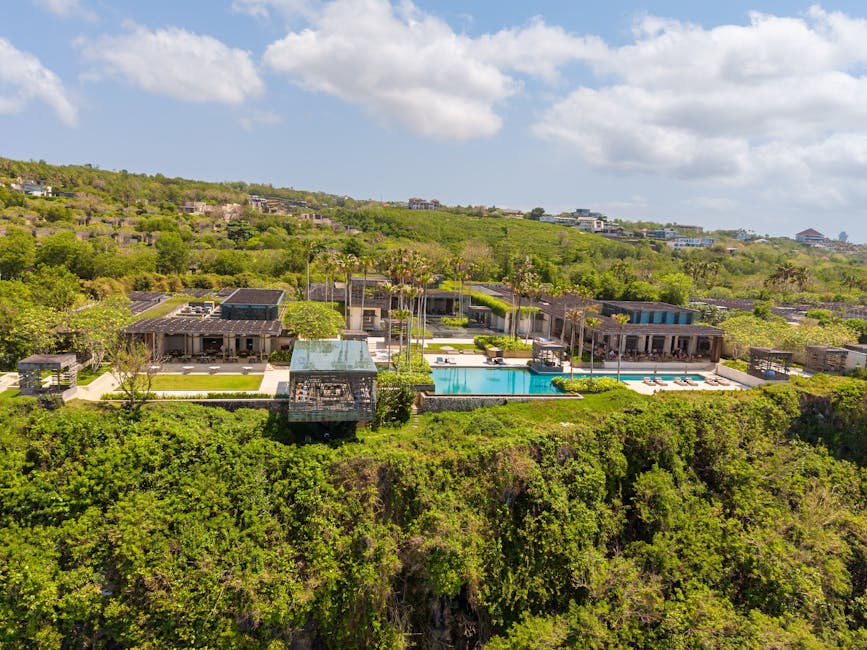
Bali Luxury Hotels: The Top Tier Ranked by What’s Worth the Price
The doorman at The Oberoi Seminyak wears a sarong and a pressed white jacket, and when my taxi pulled up at half past eleven on a humid Tuesday night, he opened the door, took my bag, said my name back to me before I had given it, and offered a cold towel scented with frangipani. I had been on a plane for fourteen hours. I was sweaty, cranky, slightly wobbly on the cocktails. He did not register any of this. He just walked me past the koi pond to a low pavilion where a lady with a clipboard and a kebaya did the check-in standing up, no counter between us, while a gentleman behind her brought ginger tea in a small ceramic cup. The whole thing took maybe four minutes. I was in a lanai cottage with the doors open to the sound of the surf by midnight. That is what eight hundred and fifty US dollars a night buys you in Bali, and once you have felt it, the rest of this article makes more sense.
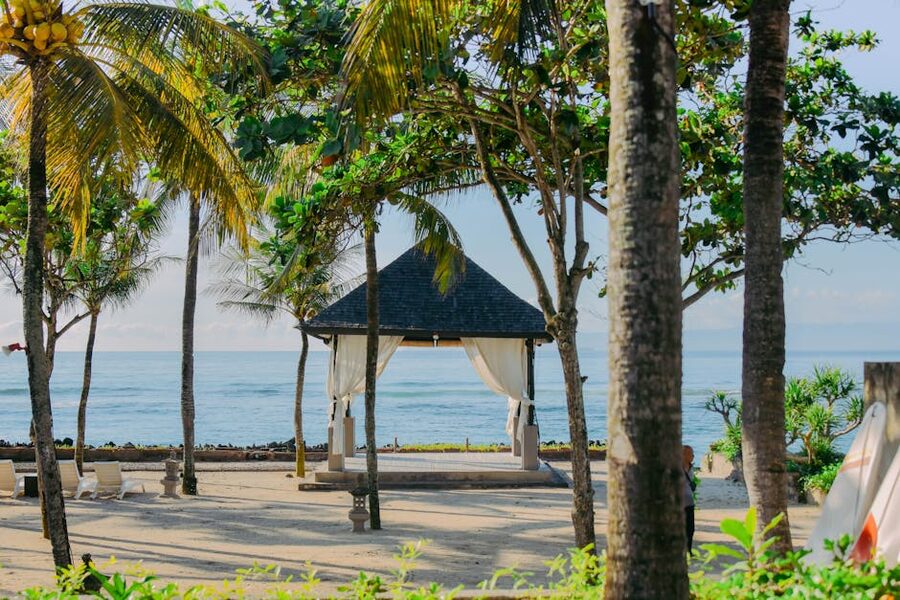
A thatched beachfront pavilion in Seminyak. The Oberoi has had this view since 1971.
The contrast is the point. A Rp 350,000 (about $22) homestay in Penestanan with a host family, frangipani on your pillow, and the morning canang sari (the small palm-leaf offerings Balinese Hindus place on doorways at dawn) at the gate, delivers a different but equally valid Bali. Price is not the same as quality. Eight hundred dollars is not better than thirty dollars; it just buys a very specific thing. What it buys is what this guide is about. I have stayed at, eaten in, or walked the grounds of every property below, ranked by what they actually deliver against what they cost. The Oberoi anchors the list because it more or less invented luxury hospitality in Bali in 1971, when the rest of Seminyak was still rice fields and a fishing path. Everything else on this catalogue exists because the Oberoi proved a market existed.
In This Article
- Why this list is not the usual press-trip roundup
- The Oberoi Seminyak: where the catalogue starts
- What you actually book
- What justifies the cost
- Ubud: where the river-villa luxury lives
- Mandapa, a Ritz-Carlton Reserve: the gold standard
- COMO Shambhala Estate: the wellness pilgrimage
- Four Seasons Resort Bali at Sayan: the suspension-bridge entrance
- Capella Ubud: tented villas, properly
- COMO Uma Ubud: entry-luxury that does not feel like entry
- Bisma Eight: boutique mid-luxury in central Ubud
- Seminyak and the south Bali coast
- Alila Seminyak: modern beachfront alternative to the Oberoi
- Karma Kandara: the cliffside option south of the airport
- Jimbaran: the bay where the seafood grills happen
- Four Seasons Resort Bali at Jimbaran Bay: the village layout
- Belmond Jimbaran Puri: the smaller, more intimate alternative
- Nusa Dua: the corporate enclave (mostly skippable)
- The St Regis Bali Resort: the lagoon-pool option
- The Mulia and Mulia Villas: marble and scale
- Ritz-Carlton Nusa Dua: the cliff-edge villas
- Amanusa: the Aman that quietly does its thing
- The Bukit and Uluwatu: cliff-edge architecture
- Bulgari Resort Bali: the Italian-Balinese cliffside
- Alila Villas Uluwatu: the architectural icon
- Six Senses Uluwatu: wellness with a clifftop
- East Bali: Amankila on the cliffs above Manggis
- Amankila: the original Aman in Bali
- The west coast outlier: Soori Bali
- Soori: architectural pilgrimage on a black sand beach
- What this catalogue actually buys you
- The short version: my actual rankings
Why this list is not the usual press-trip roundup
Most Bali luxury roundups come from press trips. Hotel pays for the flights, the agency does the writing, the article tells you the spa is “transformative”. You can usually spot them: every property is a 10/10, no opinions, the same five adjectives recycled. This list is not that. I have paid my own way at most of these and stayed on points or comp at a few; either way I will say a room smelled of mould or the breakfast was nothing special. Both have happened. You will find that kind of comment below, because it matters more than the brochure copy.
If you want the short version: Mandapa, Amankila, Bulgari, and Alila Villas Uluwatu are the top tier on quality of the actual experience. The Oberoi Seminyak is the one that keeps drawing me back because the staff have been there for twenty years and remember your order. Soori is the architecture pilgrimage. Capella is the most fun. Aman properties are great but quietly losing edge to COMO Shambhala Estate. Most of the Nusa Dua corporate giants are skippable unless you have a corporate rate and want a pool with no surprises. Read on for why.
The Oberoi Seminyak: where the catalogue starts
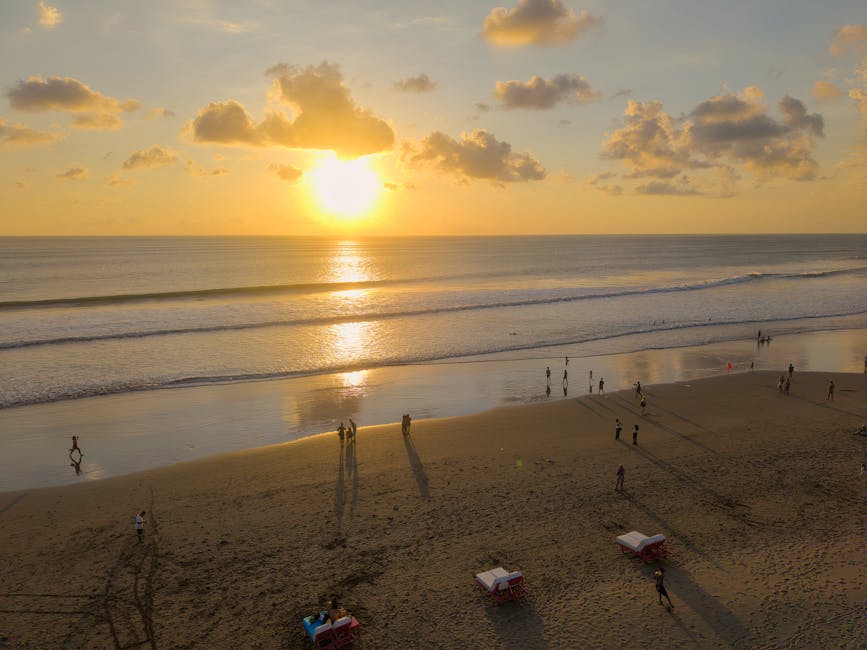
Seminyak Beach at six p.m., the half hour the Oberoi sunset tables sell out.
The Oberoi opened in 1971 as Kayu Aya, a beach club run by Australian artist Donald Friend and a small group of friends. The Oberoi Group bought it in the late 1970s and kept the bones. That is the thing nobody else in Bali can claim. Every other “iconic” property is twenty, thirty, forty years younger. The Oberoi has been refining the same lanai cottages on the same patch of Seminyak Beach for half a century. The staff turnover is glacial. The bartender at Kayu Bar made my Negroni the same way he made it three years earlier when I was last there, with the same wedge of orange and the same wink about the gin pour. That continuity is rare in Bali, where staff churn at most resorts is eye-watering.
What you actually book
The Garden View Lanai is the entry room, and the catch is right there in the name: garden view, not ocean. Around $450-650 a night low season, $700-900 high. It is a free-standing thatched cottage with a king bed, a sunken bathroom open to a small private courtyard, and a small lanai porch with two chairs. Mine smelled faintly of mildew on arrival, which I called down about and which they fixed by the end of the day. (One review I trust mentioned the same mildew issue. This Is Luxury Travel flagged it too. So it is a known thing, and worth requesting the back of the property if you are sensitive.)
The brochure shot is the Luxury Lanai Ocean View, which is a row of cottages along the front lawn, fifty metres from the surf. They are roughly $750-1100 a night. Worth it on a special trip; I would not pay it on a stopover.
The actual best room category is the Royal Villa, around $1800-3500. Two bedrooms, walled compound, plunge pool, private courtyard, a butler. Honeymoon territory or families splitting the cost.
What justifies the cost
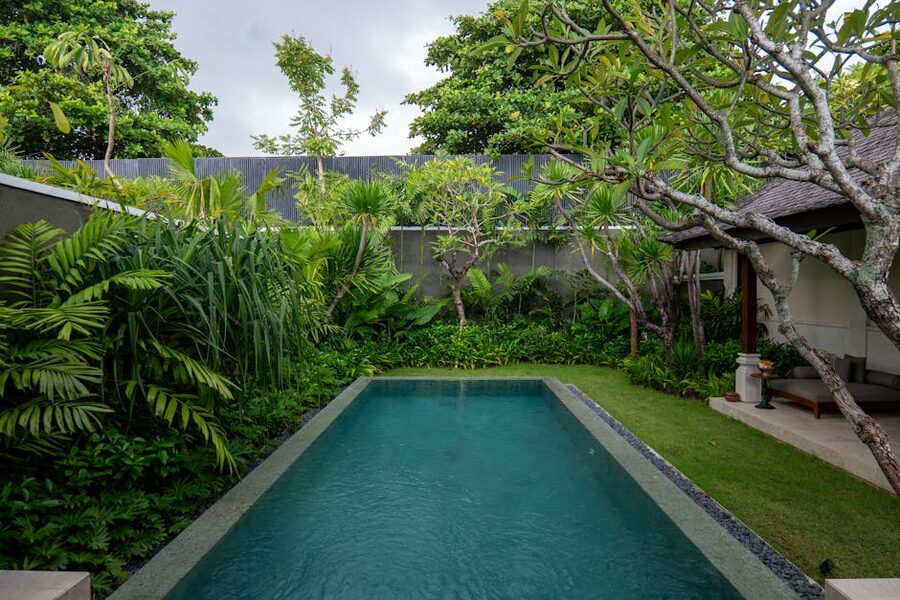
The kind of plunge pool the lanai cottages were inventing decades before plunge pools were standard.
One detail. The grounds are roughly nine hectares of garden in the middle of Seminyak. Walk five minutes through Seminyak now and you are in a wall-to-wall mash of beach clubs, cafes, traffic, surf rentals, and people on scooters with surfboards. Walk five minutes inside the Oberoi grounds and you are still in 1980s Bali, with the bougainvillea and the koi ponds and the sound of nothing but the ocean. That gap is what you are paying for. The Indonesian dance theatre on grounds runs traditional legong performances most evenings; non-guests can book the Saturday gala. Kayu Bar at the back of the property is the sunset drink, with the open-air pavilion looking down the beach toward the airport.
Eat at Frangipani for breakfast (the Indonesian set with sambal matah is the move; skip the Western buffet, which is fine but ordinary). The pool lunches are overpriced and bland; I had a bad poke bowl there once, and three of my group got mild food poisoning from the same sitting. So I avoid it now and walk five minutes to Warung Bernadette instead, which charges Rp 80,000 for an actually good nasi campur. The romantic dinner on the beach (set menu, candles, petals, white sand under your feet) is genuinely lovely in the non-cliched sense and worth doing once.
Spa is solid. Not the best in Bali (that crown belongs to Mandapa or COMO Shambhala), but the open-pavilion treatment rooms over lily ponds are atmospheric and the therapists have been there long enough to know what they are doing. Check rates on Booking.com or visit the Oberoi official site.
Ubud: where the river-villa luxury lives
Ubud has six properties that genuinely sit at the top tier. They cluster around the Ayung River gorge north and west of the town, where the topography lets architects build down a hillside with infinity pools that drop into jungle. Read on for what each actually delivers.
Mandapa, a Ritz-Carlton Reserve: the gold standard
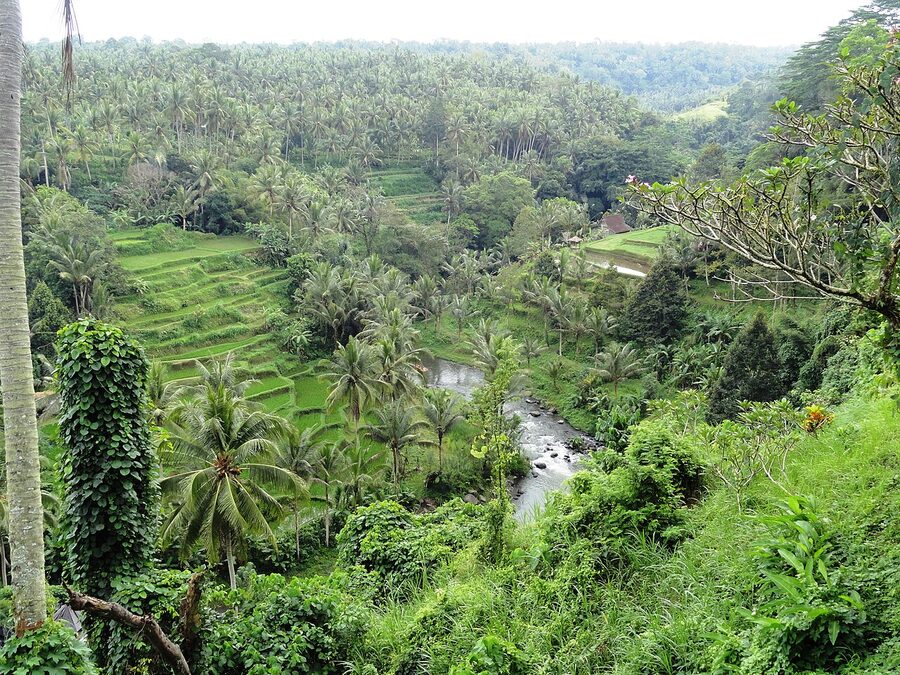
Photo: Fabio Achilli / Wikimedia Commons (CC BY 2.0)
The Ayung River. Mandapa, COMO Shambhala, and Four Seasons Sayan all sit above this gorge.
Mandapa is the property I send people to when they ask me where to stay in Bali for one trip in their life. Roughly $1100-1800 a night for a Suite, $2000-4500 for the river-pool villas. It sits on the Ayung River below Ubud, and the bones are a working rice terrace and a private temple, both of which are still in active use. (The temple actually belongs to the local banjar, the village council, so when there is a ceremony you might see priests and offerings move through the resort grounds. That is not staged for guests.)
The room to book is the One-Bedroom Pool Villa, around $2100 a night low season. It has a private pool, a riverside deck, a bathroom with a sunken tub looking onto the rice paddy, and a butler who actually butles. (Most “butler service” in Bali is a person you can text for towel deliveries. At Mandapa it is a person who notices your husband prefers cold-brew over espresso and just starts bringing one each morning without being asked.)
The detail that justifies the cost: the pool. The infinity edge does not face the Ayung River, which would be the obvious move. It faces the rice terrace, with three working farmers in conical hats wading through it most days. You sit in the pool and watch agriculture happen ten metres away. It is the most Bali thing I have experienced at the top tier.
Eat at Sawah Terrace, the open-air restaurant above the rice paddy. Indonesian small-plates set menu around Rp 1,800,000 a head. Non-guests can book a table; you should. The kitchen runs an Indonesian high-tea on Wednesday afternoons that is also worth the trip in from town. Mandapa on Booking.com.
COMO Shambhala Estate: the wellness pilgrimage
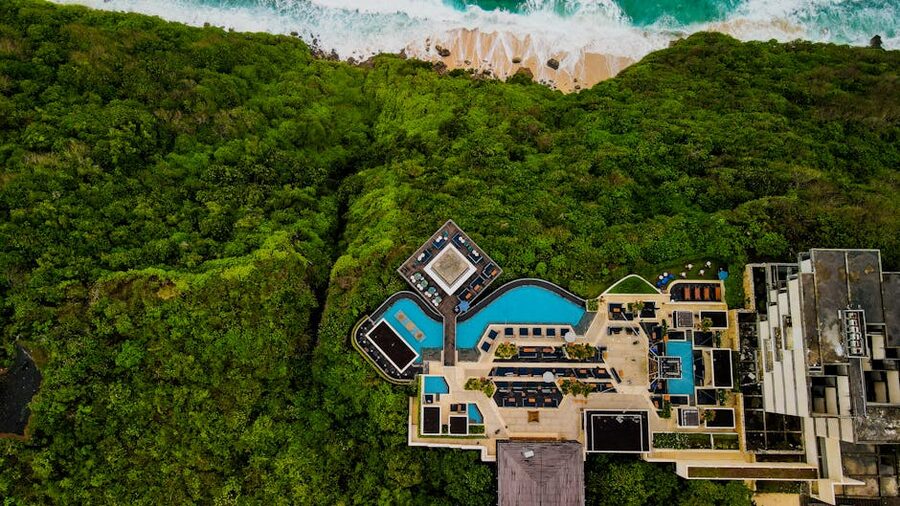
The wellness end of the Bali jungle scale.
COMO Shambhala is not a hotel; it is a wellness retreat that happens to also rent rooms. The minimum is three nights and the daily rate is around $1500-3500 with a wellness program included. There are no walk-ins; everyone arrives with a programme (cleanse, fitness, Ayurveda) and a personal practitioner who builds your day. The food is mostly raw, vegan, and weighed; the gym is on a deck above the river; the rooms (residences) are scattered through the jungle on a steep slope above the Ayung. You take a buggy between most things.
I am not a wellness person. I went sceptical and came out of three nights actually feeling, against my judgment, lighter. The yoga teachers are properly senior (most have been with COMO for more than a decade). The personal trainer who took me through a session knew exactly which ankle I had injured before I told her, which was unsettling and impressive. If you want a hotel, do not go here. If you want to be reset, this is the best in Bali.
Detail that justifies cost: the personal practitioner who genuinely tailors the three days. It is not pretend-personalisation; it is a person who actually thinks about you. Skip if you want pool drinks. COMO Shambhala on Booking.com.
Four Seasons Resort Bali at Sayan: the suspension-bridge entrance
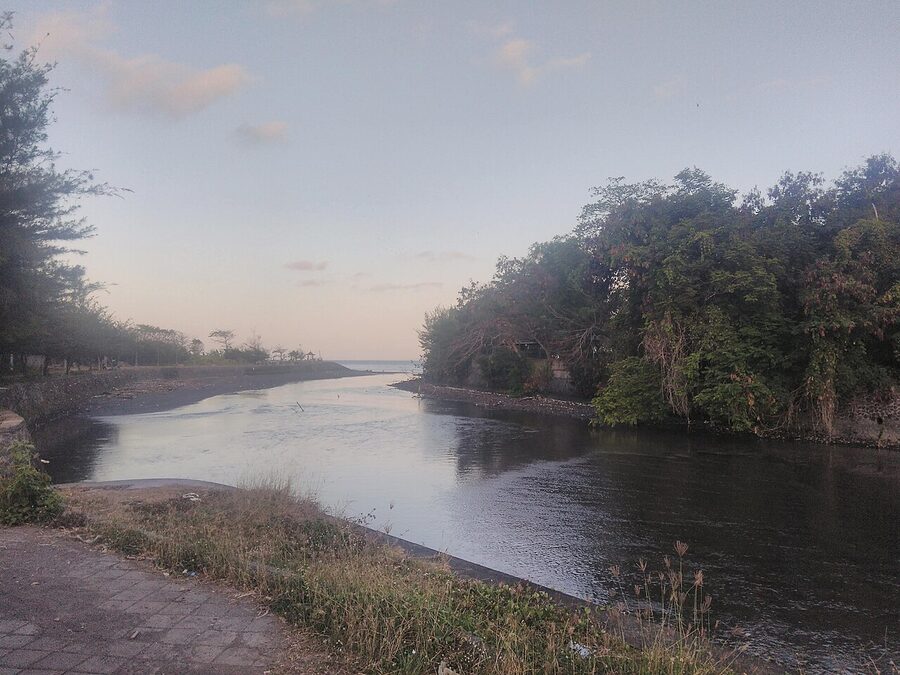
Photo: Eka343 / Wikimedia Commons (CC BY-SA 4.0)
Cross the suspension bridge over this river and you are at Four Seasons Sayan.
You arrive at Four Seasons Sayan on foot across a suspension bridge over the river. Then you walk into a two-storey lobby that floats above the gorge. The lobby is the photo, the suspension bridge is the experience. Sixty suites and villas, around $850-1500 for a One-Bedroom Suite, $1500-3500 for villas with private pools.
The Sayan villas tend to feel more “international five-star” than Mandapa, which is more “deeply Balinese”. If you are doing your first Bali trip, Mandapa wins. If you have been before and want something polished and comfortable with less ceremony, Sayan is great. The food at Sokasi (the cooking school’s restaurant) is excellent; Ayung Terrace for the river view at dinner. Four Seasons Sayan on Booking.com.
Capella Ubud: tented villas, properly
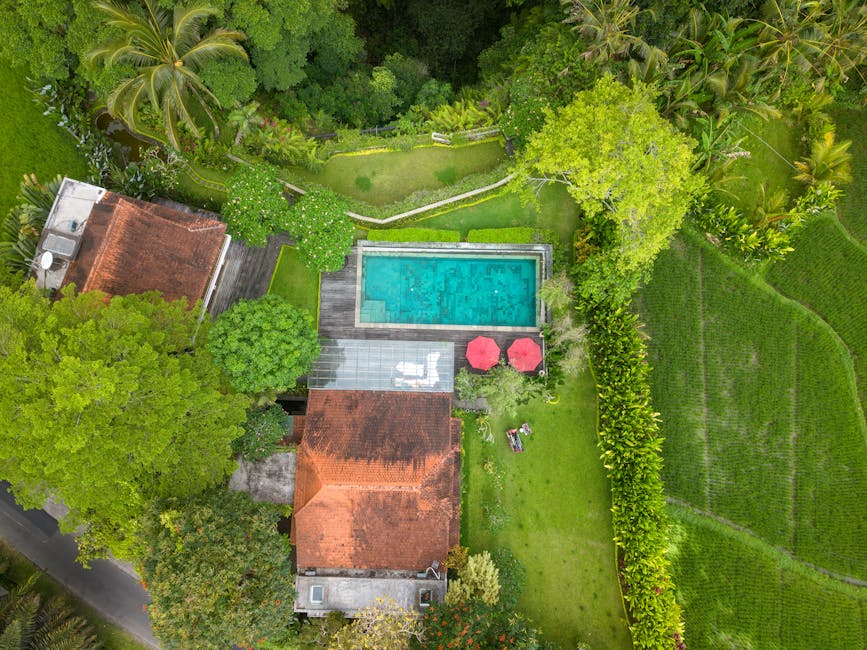
Tented villas with proper bathrooms is the Capella Ubud trick.
Capella is the most theatrical of the Ubud properties. The whole resort is twenty-three “tents” in the jungle, designed by Bill Bensley to look like a 19th-century explorer’s expedition camp. Adults only, around $1500-3500 a night. The trick is that the tents have proper plumbing, marble bathrooms, and air conditioning (Bali heat does not respect canvas). It feels camp without being camping.
The detail: every tent has a copper bathtub on the deck, looking down the jungle, and you really can soak in it under the stars. (I did. It rained halfway through. Still worth it.) Eat at Api Jiwa for the omakase-style flame-grill counter. Skip if you want a beach. Capella Ubud on Booking.com.
COMO Uma Ubud: entry-luxury that does not feel like entry
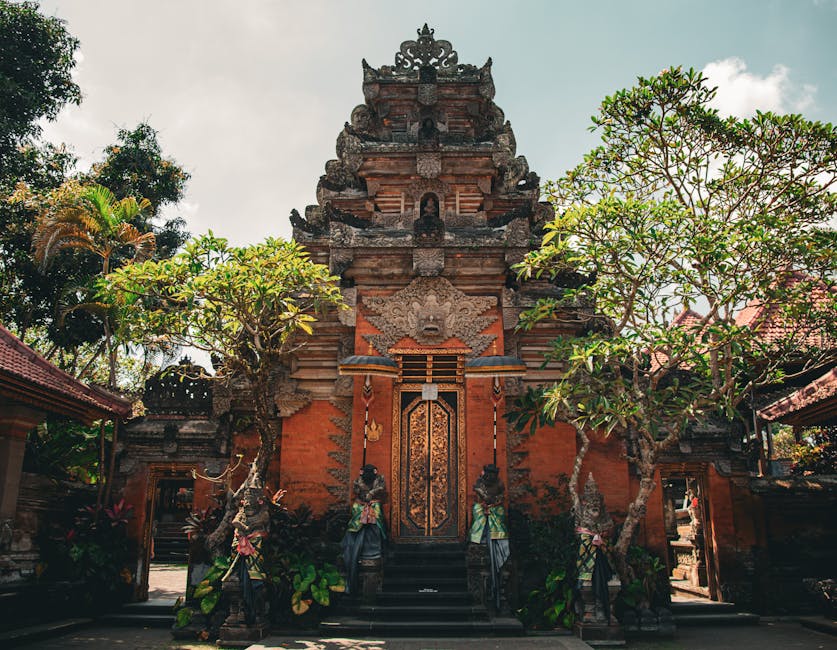
Walking distance to Ubud Palace, which is the COMO Uma selling point.
COMO Uma is the budget end of the Ubud top tier. Around $400-700 a night for a Garden Room, $700-1300 for villas. It is in the centre of Ubud, walking distance to Ubud Palace and the Monkey Forest, which is its biggest advantage over the river-gorge resorts. You are paying half the Mandapa rate and getting a smaller version of the same hospitality (Uma is the entry-luxury sister to Shambhala). The pool is glistening green tile, the bar is a tall white pavilion, and the rooms have that minimal Indonesian-meets-modern design COMO does well.
The free walk through the surrounding rice paddies every morning at seven is a small detail that I love. Bring your own coffee, the staff bring water, it takes about forty minutes. You earn breakfast. COMO Uma Ubud on Booking.com.
Bisma Eight: boutique mid-luxury in central Ubud
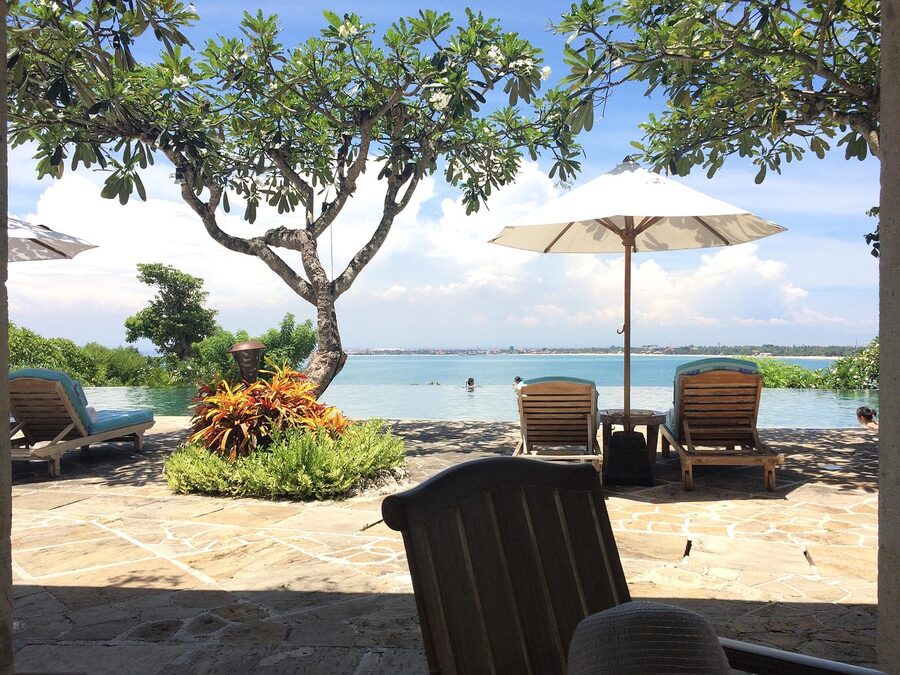
Bisma Eight is the boutique mid-luxury option in Ubud, well under the Mandapa price band.
If you want luxury feel without the Ritz-Carlton price, Bisma Eight is the answer. Around $200-380 a night. Thirty-eight rooms on a quiet lane off Jalan Bisma, central Ubud. The pool is a fifteen-metre lap pool above the jungle valley, the rooftop bar (Copper Kitchen) does a decent burger and a good cocktail, and the rooms have an exposed-brick design that does not feel mass-produced. Not a Mandapa replacement; a sane mid-tier choice. Bisma Eight on Booking.com.
Seminyak and the south Bali coast
Outside the Oberoi, the Seminyak coast has a small handful of properties at the top tier. Beyond that, prices are usually for the location and beach club access, not for what is actually in the room.
Alila Seminyak: modern beachfront alternative to the Oberoi
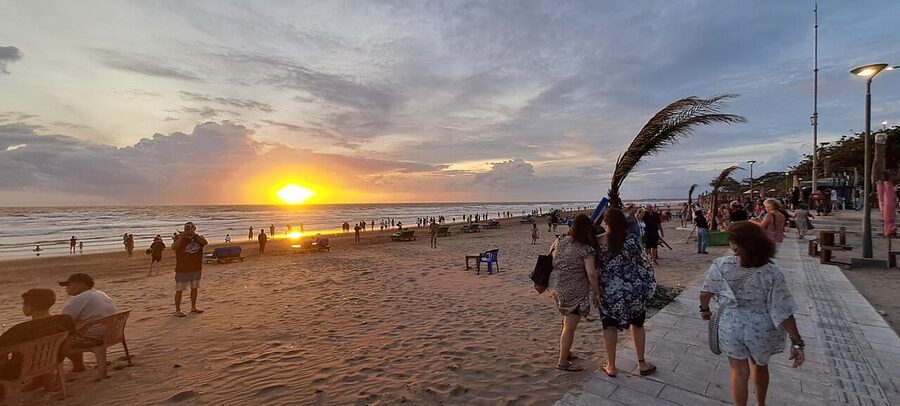
Photo: Fitri Penyalai / Wikimedia Commons (CC BY-SA 4.0)
Seminyak Beach a few hundred metres south of the Oberoi. Alila sits a block back from this stretch of sand.
Alila is the modern, minimalist counterpoint. Around $400-700 for a Deluxe Studio, $900-1500 for the One-Bedroom Pool Suites. The whole property faces a beach club pool that runs along the front, with the ocean a short walk through the lawn. The rooms are concrete, dark wood, white linen; if you find Oberoi’s thatched-cottage aesthetic dated, you will like Alila instead. It is a good honeymoon pick because the design is photogenic and the sunset bar (Stag) is a real bar, not a poolside hut.
Eat at Seasalt for the Japanese-Indonesian crossover (the wagyu sate is the dish). Skip the breakfast buffet; do the a la carte. Alila Seminyak on Booking.com.
Karma Kandara: the cliffside option south of the airport
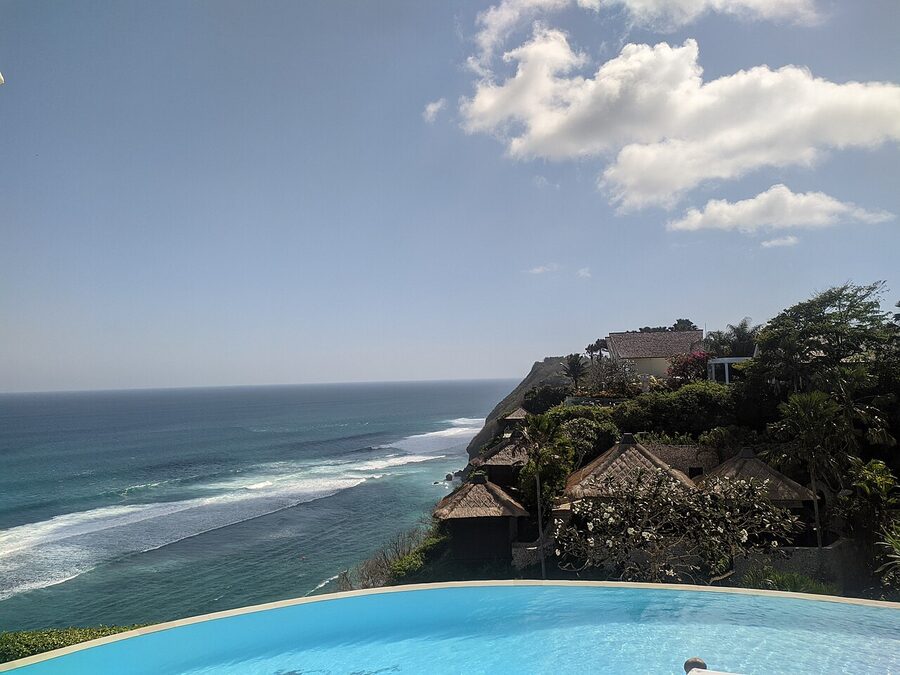
Photo: Dare2Leap / Wikimedia Commons (CC BY-SA 4.0)
Karma Kandara hangs over the southern Bukit cliffs above a private beach you reach by inclined elevator.
Karma Kandara is technically on the Bukit, not Seminyak, but it is the easiest cliff-top option to get to from the airport. Around $500-1100 a night for a One-Bedroom Villa with private pool. The selling point is the inclined elevator that takes you down to a private beach club on the sand, which most other Bukit properties do not have (you usually walk down a path). The food at Di Mare (the cliffside restaurant) is genuinely good Italian; book the sunset table.
One caveat: the property is showing its age in places (it opened in the early 2000s). Some villas have not been refurbished recently. Ask for one of the renovated cliff-front villas specifically. Karma Kandara on Booking.com.
Jimbaran: the bay where the seafood grills happen
Jimbaran is the curve of beach south of the airport where the sunset seafood grills set up tables on the sand every evening. Two top-tier resorts here, both worth the cost for different reasons.
Four Seasons Resort Bali at Jimbaran Bay: the village layout
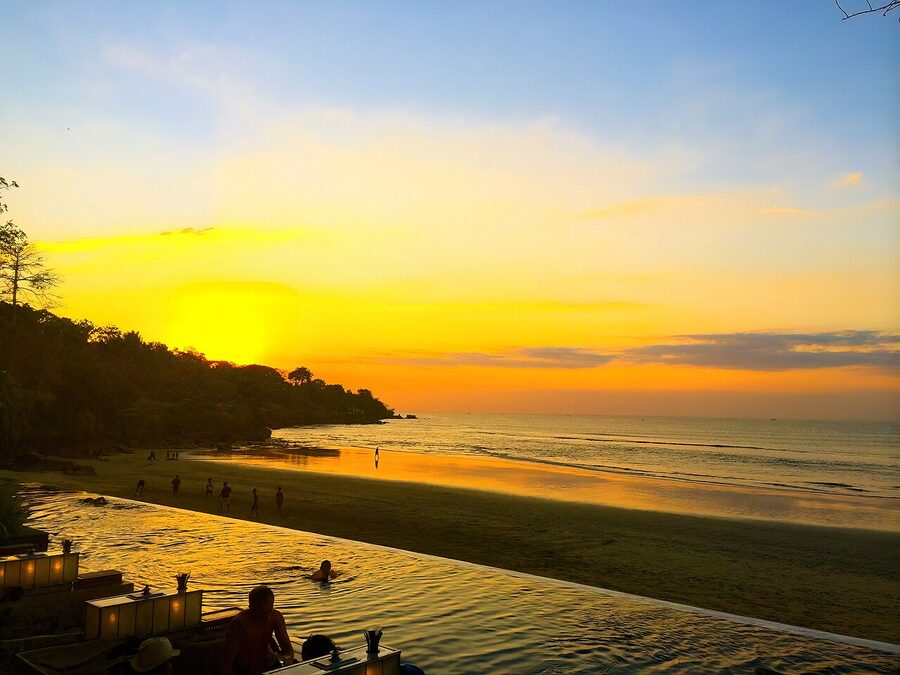
Photo: Sarah Lou / Wikimedia Commons (CC BY 2.0)
Four Seasons Jimbaran Bay. The 147 villas spread across 14 hectares of garden behind this beach.
The Four Seasons here is a 147-villa resort built to feel like a Balinese village. Each villa has a thatched roof, carved wooden double doors, a private plunge pool, and a small walled courtyard. Around $900-1700 a night for a One-Bedroom Garden Villa, $1500-3500 for ocean-view. The grounds run for fourteen hectares of palm gardens down to a private stretch of Jimbaran Beach, and the resort is genuinely walkable in a way most Bali resorts are not.
Eat at Sundara, the beachfront restaurant. The coconut negronis at sunset have a cult following, and the kitchen does a proper kaiseki-style Japanese tasting menu on Friday nights. The Healing Village Spa is one of the best spas in Bali, full stop. Treatments around Rp 2,200,000 a session. Four Seasons Jimbaran Bay on Booking.com.
Belmond Jimbaran Puri: the smaller, more intimate alternative

Photo: alq666 / Wikimedia Commons (CC BY-SA 2.0)
Belmond Jimbaran Puri sits at the quieter southern end of this bay. The sunset seafood grills are a 10 minute walk along the sand.
Belmond Jimbaran Puri is the smaller (sixty-four cottages and villas) and quieter neighbour. Around $700-1300 a night. It feels like a small village clustered around a beachfront pool. The seafood grills you have come to Jimbaran for are a ten-minute walk down the sand from the gate. If you find Four Seasons too sprawling, this is the move. The kitchen at Tunjung is good but not as memorable as Sundara. Belmond Jimbaran Puri on Booking.com.
Nusa Dua: the corporate enclave (mostly skippable)
Nusa Dua is the gated tourism enclave on the east side of the Bukit, built in the 1980s as a planned resort area. It has the whitest sand on the south coast, calm water suitable for kids, golf, and a row of large-format five-star resorts. I would only stay here if I had a corporate rate, was travelling with kids who wanted a calm pool, or had a one-night airport-adjacent reason. Read on for the four worth knowing.
The St Regis Bali Resort: the lagoon-pool option
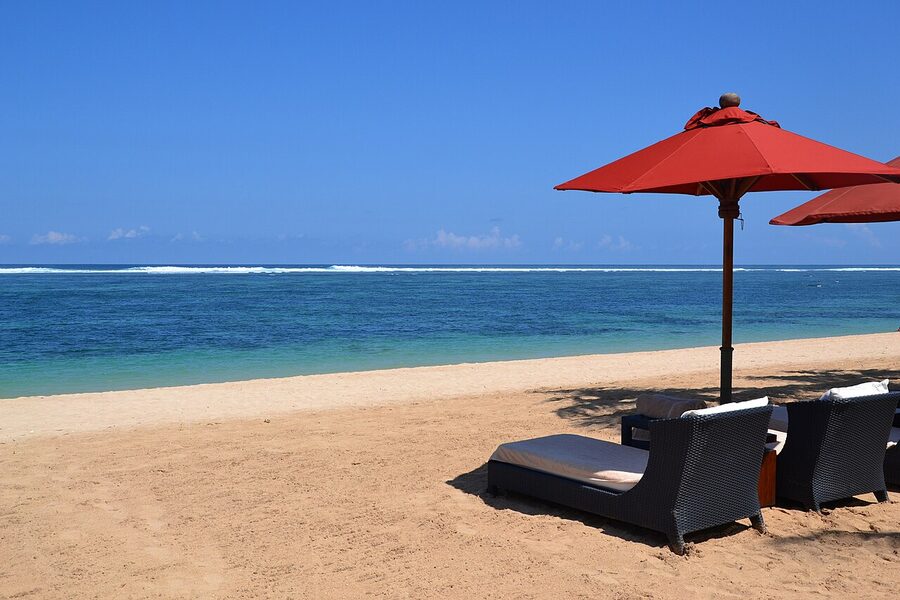
Photo: Simon_sees / Wikimedia Commons (CC BY 2.0)
The St Regis lagoon beach. Nusa Dua sand is whiter and emptier than Seminyak.
The St Regis is the strongest of the Nusa Dua giants. Around $700-1300 a night for a Suite, $1800-4000 for villa categories. The 3,800 square metre lagoon pool that runs through the property is a real architectural element, not a swim-up bar. The St Regis butler service is the same butler service the brand does everywhere, which means it actually works (proper packing, proper coffee delivery, etc). Eat at Boneka for the Sunday brunch, which is silly and good. St Regis Bali on Booking.com.
The Mulia and Mulia Villas: marble and scale
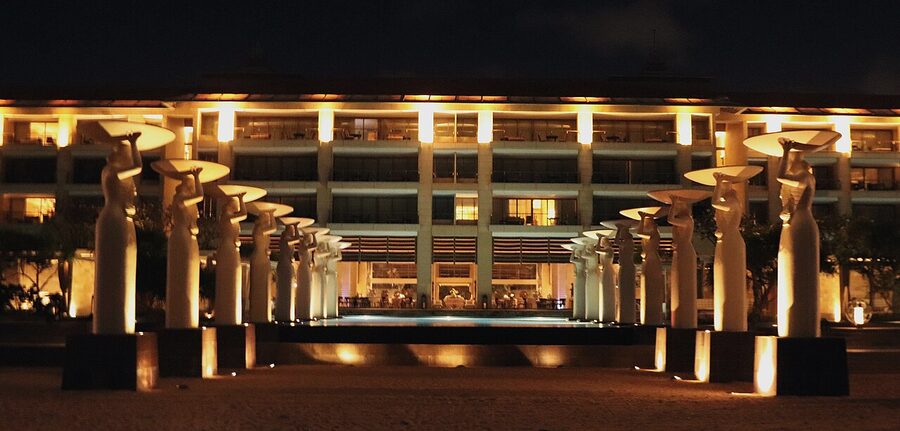
Photo: Thank You for views from Fresno / Wikimedia Commons (CC BY 2.0)
The Mulia. Sprawling, marble-heavy, big-resort feel. Some love it, some find it too corporate.
The Mulia is enormous. Three hotels in one (The Mulia, Mulia Resort, Mulia Villas), 526 rooms, 7 restaurants, the lot. My take: I find it overscaled and the rooms feel corporate, with a lot of marble that does not say Bali to me. But families love it because the pool complex is huge and there is a kids club and the buffet has a kids menu. If that is what you need, around $400-800 a night gets you in. The Mulia on Booking.com.
Ritz-Carlton Nusa Dua: the cliff-edge villas
Photo: Matt @ PEK / Wikimedia Commons (CC BY-SA 2.0)
Nusa Dua resorts share this enclave; Ritz-Carlton sits a little south of the central beach strip.
Ritz-Carlton Nusa Dua sits a little south, with some villas on a small cliff above the rocks. Around $500-900 a night for a Sawangan Suite, $1500-3500 for cliff villas with infinity pools. It is the more grown-up choice in Nusa Dua compared to Mulia (less marble, more wood). Eat at Bejana for Indonesian on Friday nights. The spa cliff pavilions are the photo. Ritz-Carlton Bali on Booking.com.
Amanusa: the Aman that quietly does its thing
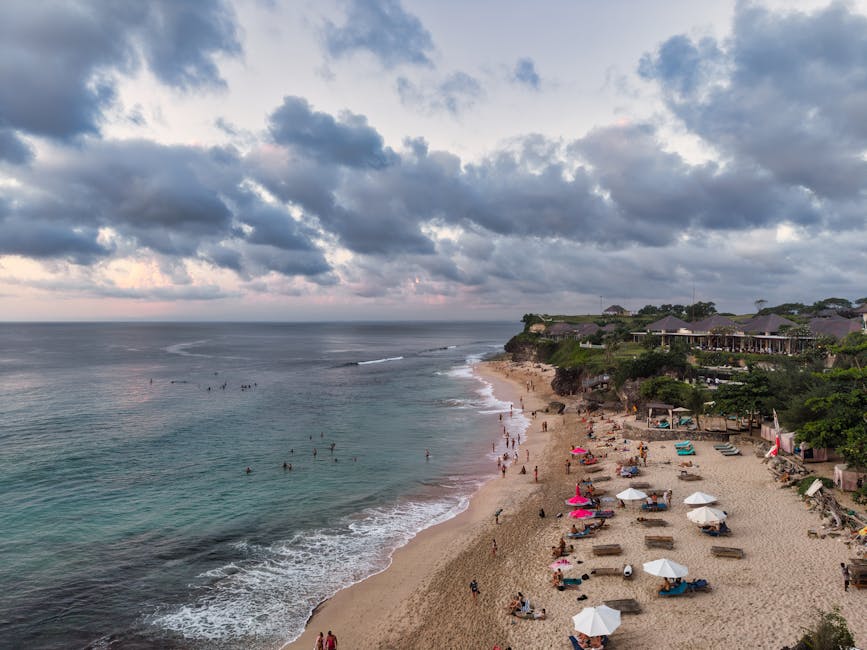
Amanusa overlooks this Nusa Dua coastline from a hill behind the Bali Golf Course.
Amanusa is on the hill behind the Bali National Golf Course, looking down at the sea. Thirty-three suites, around $1200-2500 a night. It is the smallest and least-known of the Nusa Dua properties, and that is the appeal. Aman service is famously personal; the staff-to-guest ratio is roughly four to one. The pool is the Amankila prototype, three-tier infinity. The food is fine but not the reason to come. Quick verdict: of the three Bali Aman properties (Amanusa, Amankila, Amandari), this one is the lowest-priority unless you specifically want the golf-and-beach combination. Aman official site for Amanusa (the Aman group is not on Booking).
The Bukit and Uluwatu: cliff-edge architecture
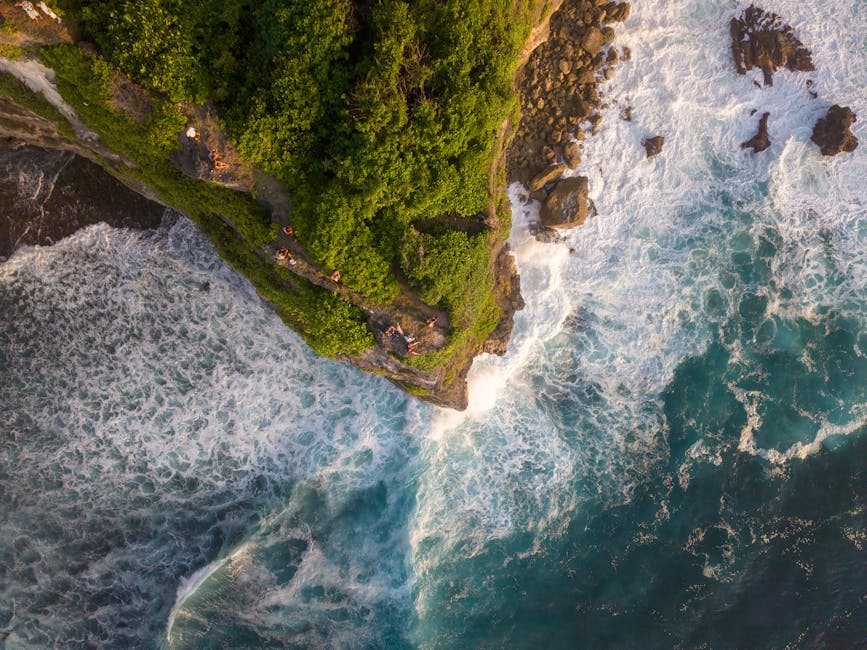
The drive from DPS to Uluwatu takes you along this coastline. Allow 90 minutes in traffic.
The Bukit is the limestone peninsula at Bali’s southern tip. Cliffs, surf breaks, dramatic sunsets. The luxury here is bigger-budget, more architectural, and it skews toward couples and design-led travellers. Three properties in the genuine top tier.
Bulgari Resort Bali: the Italian-Balinese cliffside
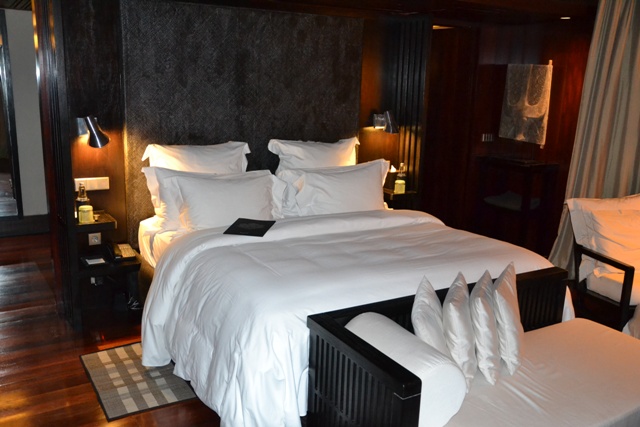
Photo: Simon_sees / Wikimedia Commons (CC BY 2.0)
Bulgari sits 150 metres above the ocean. The private inclined elevator down to the beach club is the detail people remember.
Bulgari is built on a 150-metre limestone cliff at the southern tip of the Bukit, looking out at the Indian Ocean. Fifty-nine free-standing villas, all with private plunge pools and Italian-Balinese fusion design (Indonesian wood, Italian travertine, lava-stone walls). Around $1500-3500 a night for a One-Bedroom Ocean View Villa, $4000-8000 for the larger categories.
The detail that justifies the cost: the private inclined elevator that runs down the cliff face to the beach club. You ride it standing up in a glass capsule, watching the surf break below. Then you arrive at the world’s most exclusive beach club on a tiny patch of white sand the resort essentially owns. It is theatrical in a way that Aman never bothers with, and that is either appealing or off-putting depending on the traveller. The food at Sangkar (Indonesian) and Il Ristorante (modern Italian) is genuine fine dining, both worth booking even if not staying. Bulgari Resort Bali on Booking.com.
Alila Villas Uluwatu: the architectural icon
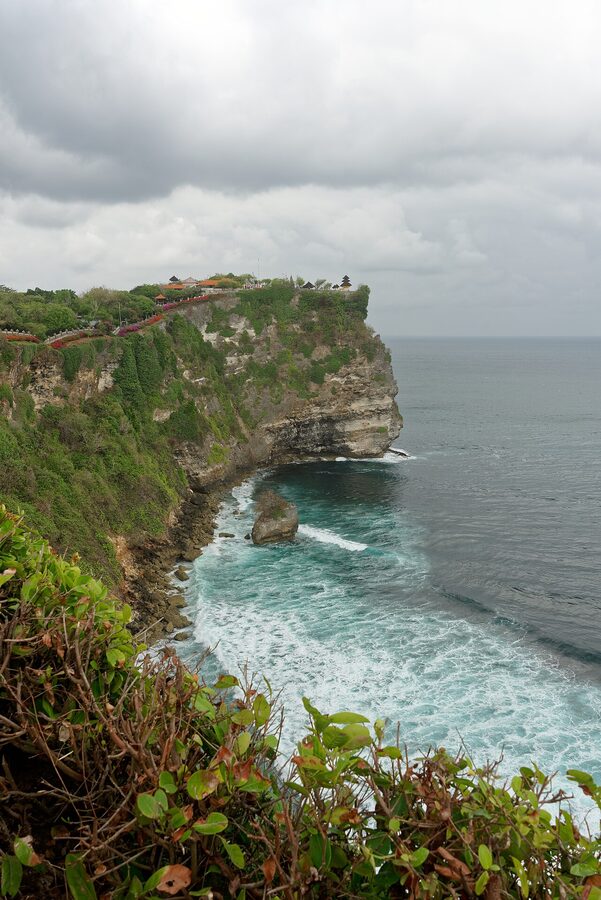
Photo: Jakub Halun / Wikimedia Commons (CC BY-SA 4.0)
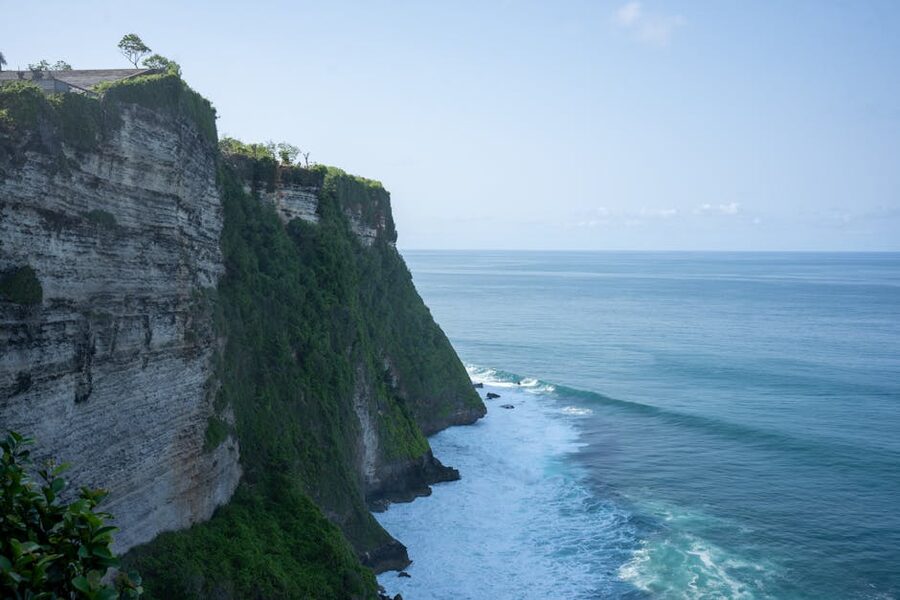
The Uluwatu cliffs Alila Villas sits on. The infinity pool above this drop is the iconic Bali resort photo.
Alila Villas Uluwatu is what most architects call the best-designed resort in Bali. Eighty-five villas (50 suites and 35 one- to three-bedroom villas), all with infinity pools, designed by Singapore firm WOHA on a limestone plateau above the Indian Ocean. Around $900-1700 a night for a Cliff Edge Suite, $2500-6000 for villas with private pools.
The clifftop infinity pool dropping into nothing is the Bali resort photo. You have seen it on Pinterest a hundred times; in person it is exactly as good as the photo. The material palette is local lava stone, recycled iron-wood, and concrete that has weathered to look ancient. Sustainability is real here, not greenwashed: the resort runs on recycled water, organic gardens, and local craftsmen. The food at The Warung (Indonesian) is decent; Cire (international) is better. Alila Villas Uluwatu on Booking.com.
Six Senses Uluwatu: wellness with a clifftop
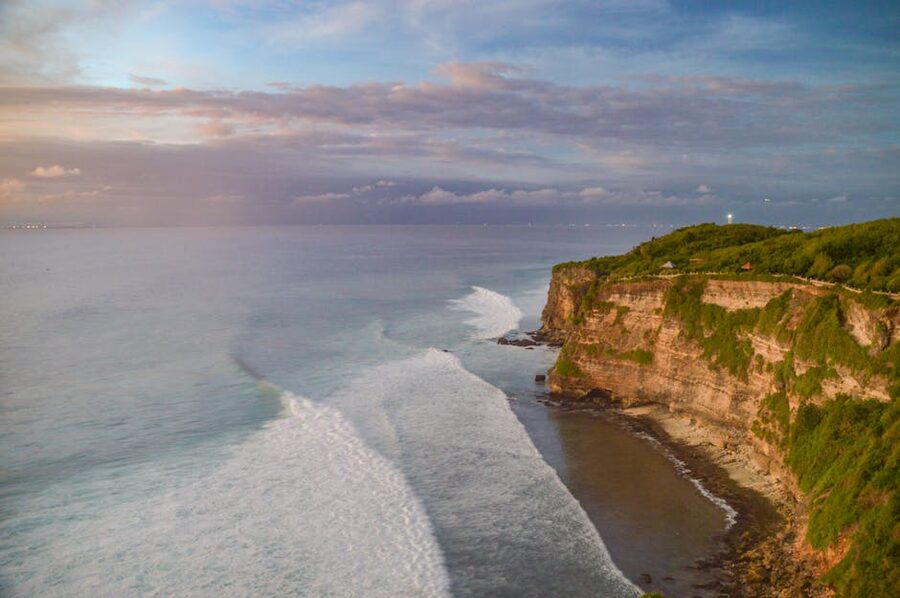
Six Senses Uluwatu shares this stretch of the Bukit cliffs.
Six Senses Uluwatu is the newest of the Bukit big three (opened 2018). 103 suites and villas on a cliff above Pantai Selonding, around $700-1500 a night for a Sky Suite, $1800-4500 for sky pool villas. The Six Senses brand is wellness-led, and that shows in the spa programme (the cliff-edge yoga pavilion is real, the wellness consultations are useful).
The detail: there is a small but proper sleep clinic on site (real sleep tracking, real consultations, a sleep pod). I am not a sleep tourist and I tried it; it actually moved my needle on jet lag. Good for a stopover when you have flown twenty-four hours. Six Senses Uluwatu on Booking.com.
East Bali: Amankila on the cliffs above Manggis
Amankila: the original Aman in Bali
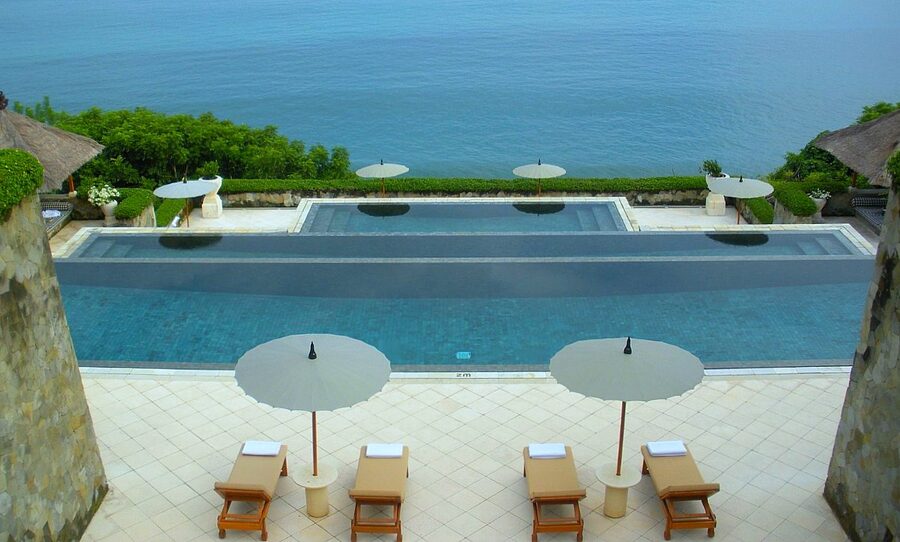
Photo: Richard Michael Shaw / Wikimedia Commons (CC BY 2.0)
Amankila on the cliffs above Manggis. The three-tier infinity pool cascades down the hillside.
Amankila (“peaceful hill”) sits on the cliffs above Manggis, on the east coast of Bali, looking across the Lombok Strait. Thirty-four free-standing thatched-roof suites connected by raised walkways, each with views of the strait and Mount Agung in the distance. Around $1500-3500 a night.
The signature is the three-tier infinity pool that cascades down the hillside. It has been photographed more than anything else in Bali hospitality. There is a black-sand beach club below, accessible by a long flight of steps (or a buggy). The location is the trade-off: you are two hours and a bit from the airport, and a long way from anything else. That is either the appeal (no traffic, no crowds, no Seminyak) or the deal-breaker (you are stuck on the property). I think it is the appeal. Pair Amankila with a few nights in Amed for the diving and you have an east-coast trip. Amankila official site (Aman is not on Booking).
The west coast outlier: Soori Bali
Soori: architectural pilgrimage on a black sand beach
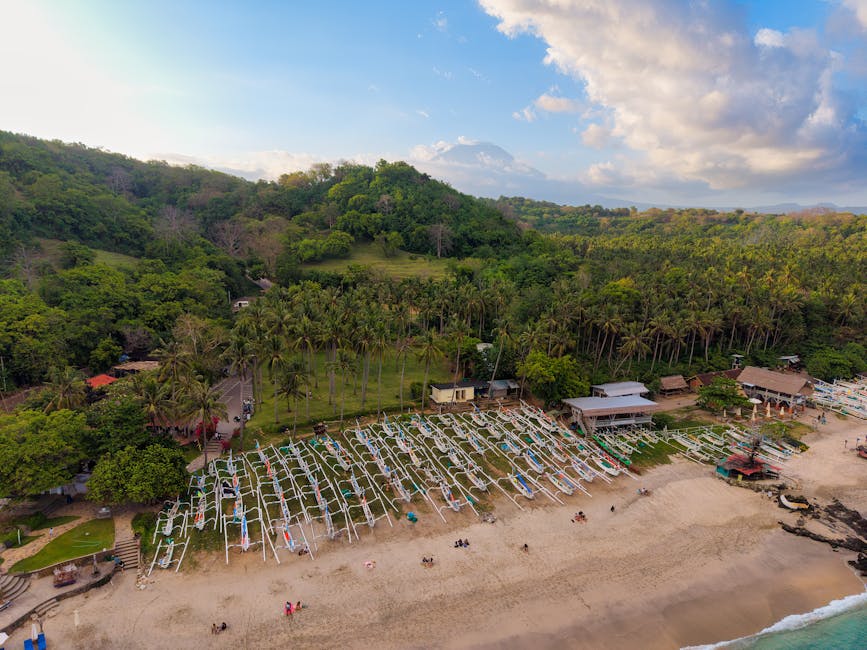
Soori Bali sits on this black-sand stretch of the south-west coast, an hour-plus from anywhere.
Soori was designed by Singaporean architect Soo K. Chan as a personal project; he and his family lived on the property at one point. Forty-eight villas, all with private plunge pools, scattered across rice fields and a stretch of black volcanic sand on the south-west coast. Around $1200-2500 a night.
The reason to go: the architecture. This is the most beautifully designed Bali resort I have stayed at, full stop. The lines are minimal, the volcanic stone walls have weathered to look ancient, the villas open completely to the elements. It is also the most isolated. You are an hour and a half from Seminyak, in farm country, with nothing nearby. Eat at Cotta (local) and Ombak (international). The squid ink beef is the dish. Book a private driver if you want to get out for a day; otherwise plan to stay on the property. Soori Bali on Booking.com.
What this catalogue actually buys you
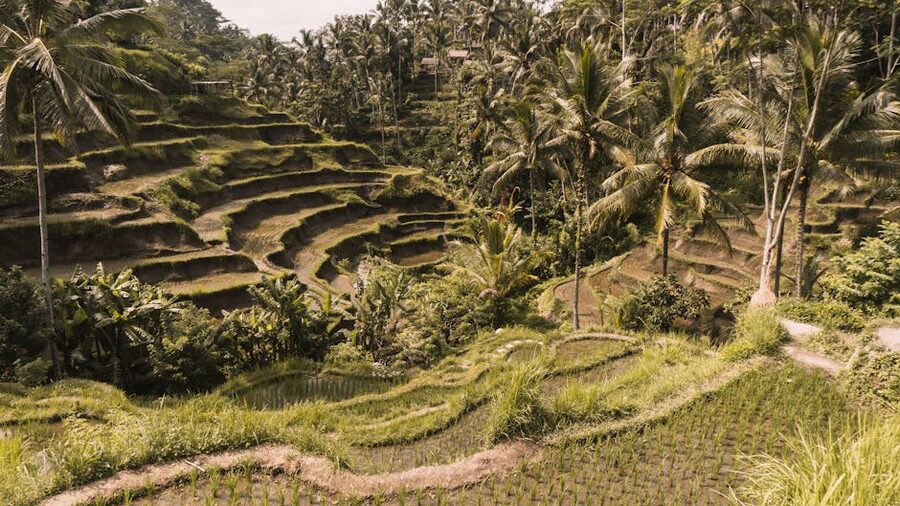
A Rp 350,000 a night homestay in Penestanan delivers this view too. Price is not the same as quality.
Here is the unromantic truth. Eight hundred dollars a night does not buy you a better Bali. It buys you privacy, space, staff-to-guest ratio, food made from ingredients you trust, a bathroom that opens to a garden, and the absence of small frictions. It does not buy you better sunsets, better rice terraces, better beaches, friendlier people, or a more meaningful cultural experience. A Rp 350,000 ($22) a night homestay in Penestanan, ten minutes’ walk from the centre of Ubud, will give you an arguably better Bali. The host family will share their breakfast. Their kids will teach you to fold canang sari. You will see the morning offerings happen at six a.m. on the front step, not staged for you in a hotel lobby. That is also Bali. It is not a worse Bali; it is a different one.
The right answer to “where should I stay in Bali” is usually a mix. Two nights at Mandapa, then four nights at a Penestanan homestay, then two more at Amankila on the way out. You spend less than you would on a week at any one of these resorts, and you see more of the island. Use Sanur as a calmer base if you want a beachfront town that is not Seminyak; the long-running Tandjung Sari is a mid-luxury alternative I rate highly that did not make this list because it is a tier below the Mandapa-Bulgari level on price.
For arrival logistics on the high-end end of the trip (private transfers, lounges at DPS, business-class fares), see the flights to Bali guide. If you are coming from Australia and considering layered itineraries through Munduk or the north, the eco-lodge angle there pairs nicely with one or two top-tier nights at the start or end. And if you want to ground the comparison at the other end of the price scale, the Poppies Kuta piece walks through what Rp 200,000 a night actually feels like, and the south Bali beaches guide covers the public stretches the resort guests share with everyone else.
The short version: my actual rankings
One trip in your life: Mandapa.
You want the design pilgrimage: Alila Villas Uluwatu, then Soori.
You want to feel reset: COMO Shambhala Estate.
You want continuity, beach, and that 1980s Bali feel: The Oberoi Seminyak.
You want quiet east coast and a long view of Mount Agung: Amankila.
You want theatre: Bulgari with the inclined elevator, Capella with the tents.
You want corporate-points luxury that still feels Balinese: Four Seasons Sayan or Four Seasons Jimbaran Bay.
You want to keep it under $400 a night and still feel boutique: Bisma Eight or COMO Uma Ubud.
You want to skip a hotel altogether and live in a Penestanan homestay for two weeks: also valid. Sometimes the right move. See you at the warung.
For more on staying across Bali at every tier and area, browse the full Where to Stay archive.
Planning a Bali trip?
Start with the cornerstones — when to go, where to base, and what's actually worth doing.