
Padangbai, Bali: Stay Two Nights, Not 30 Minutes
Almost everyone you ask about Padangbai will say the same thing. It’s the port. The 30-minute pit stop on the way to the Gilis. You roll in by Grab from Sanur, you wait an hour for a fast boat, you eat a bad nasi goreng next to a stray dog, and you leave. The whole town becomes a Wikipedia entry in your head: ferry, scam, boat, gone.
I want to make a different argument. Stay two nights. Skip the boat the morning after you arrive, sleep in, and walk out to the Blue Lagoon snorkel with a Rp 30,000 (about $1.90) coconut from the warung on the way. The east coast has a real fishing town here, with a thousand-year-old temple on the headland, a white-sand cove ten minutes south, some of the cheapest scuba diving on the island, and zero clubs and zero rooftop bars. By the time you actually get on a Gili boat on day three, you’ll know why the people working that pier live here.
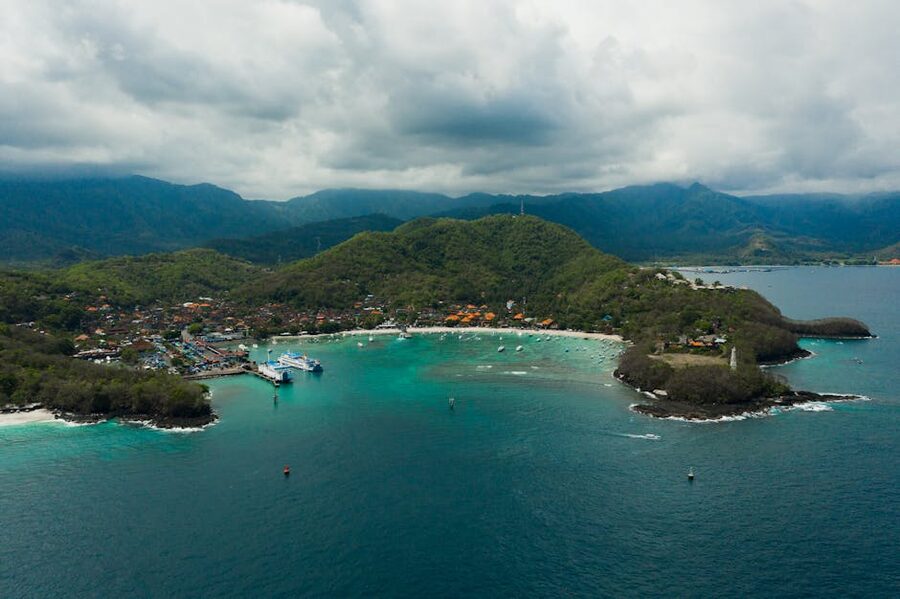
This guide is the case for slowing down. Where to stay (Topi Inn is still the cheap-bed anchor), what’s actually here that’s worth your time, the dive shops that have been operating since the late nineties, the food, and the practical bits, including the harbour-tout scam that catches almost every backpacker on the Gili boat back. If you’re already deep in east-Bali planning, our pieces on Amed and Sanur pair with this one for the wider east-coast loop.
In This Article
- Why Most People Skip It (And Why That’s Their Problem)
- The Harbour, the Boats, and the Tout Scam to Watch For
- Topi Inn, the Long-Running Anchor
- Blue Lagoon, the Snorkel That Doesn’t Need a Boat
- Bias Tugel, the White-Sand Walk South
- The Diving: Cheaper Than Amed, And the Shops Have Been Here Forever
- Pura Silayukti, the Temple Almost Nobody Visits
- Where to Eat
- Where to Stay
- Budget (Rp 60,000 to 400,000 a night)
- Mid-Range (Rp 500,000 to 1,200,000 a night)
- What I’d actually book
- Padangbai as a Hub for East Bali
- Boats Out: Gili, Lombok, the Nusas
- Getting There
- The Verdict
Why Most People Skip It (And Why That’s Their Problem)
Padangbai sits on the southeast coast of Bali, in Manggis sub-district of the Karangasem regency. From Ngurah Rai airport it’s about 75 to 90 minutes by car if traffic behaves, slightly less from Sanur, slightly more from Canggu. The whole built-up village is maybe 800 metres long and three streets deep. You can walk across it in eight minutes.
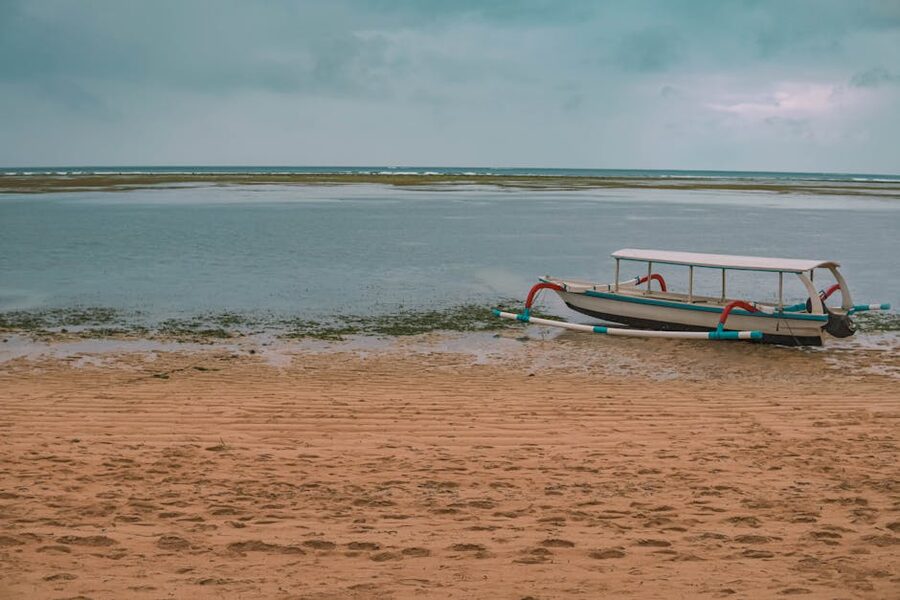
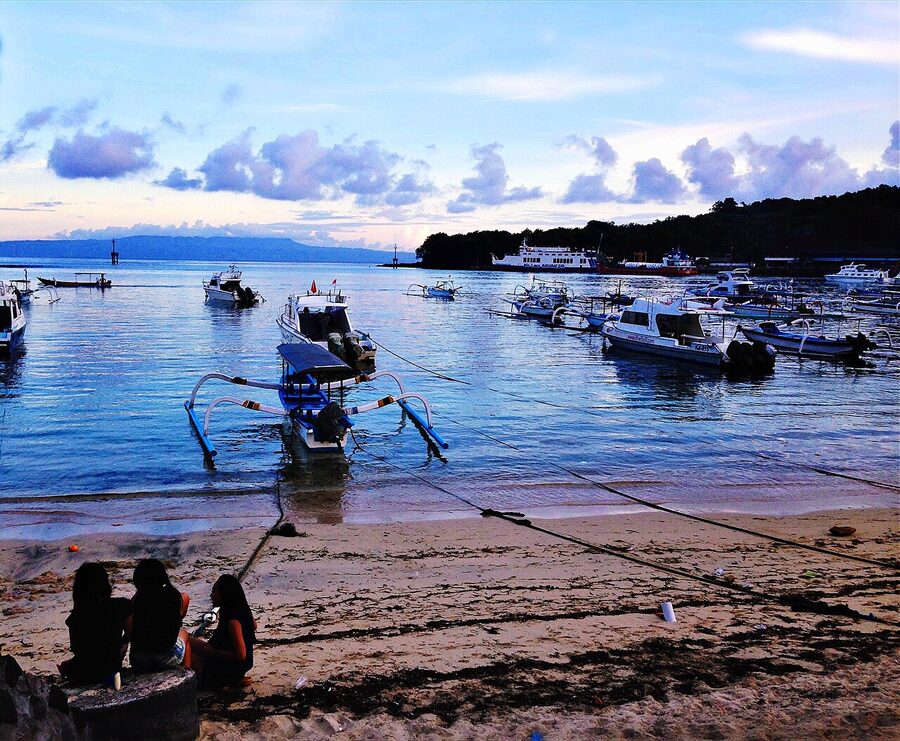
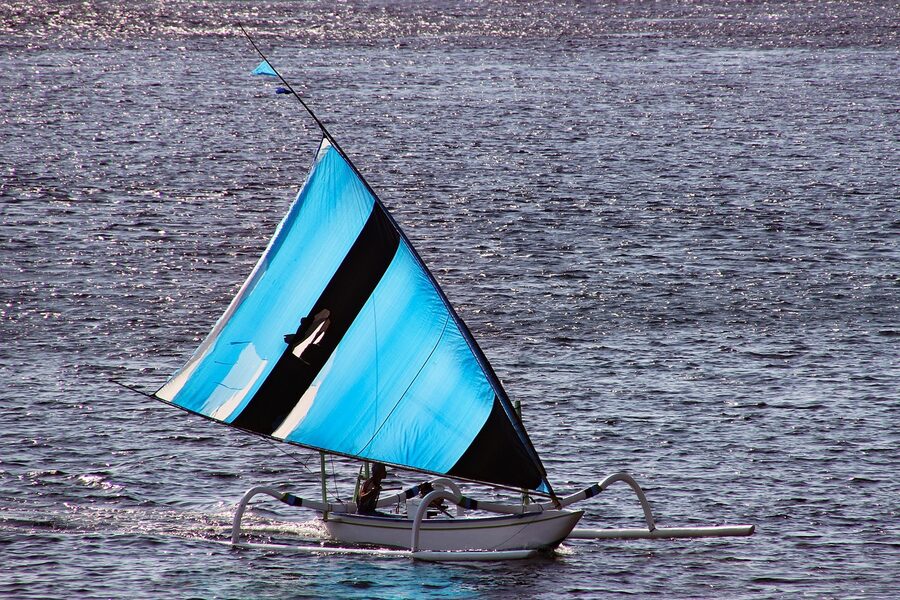
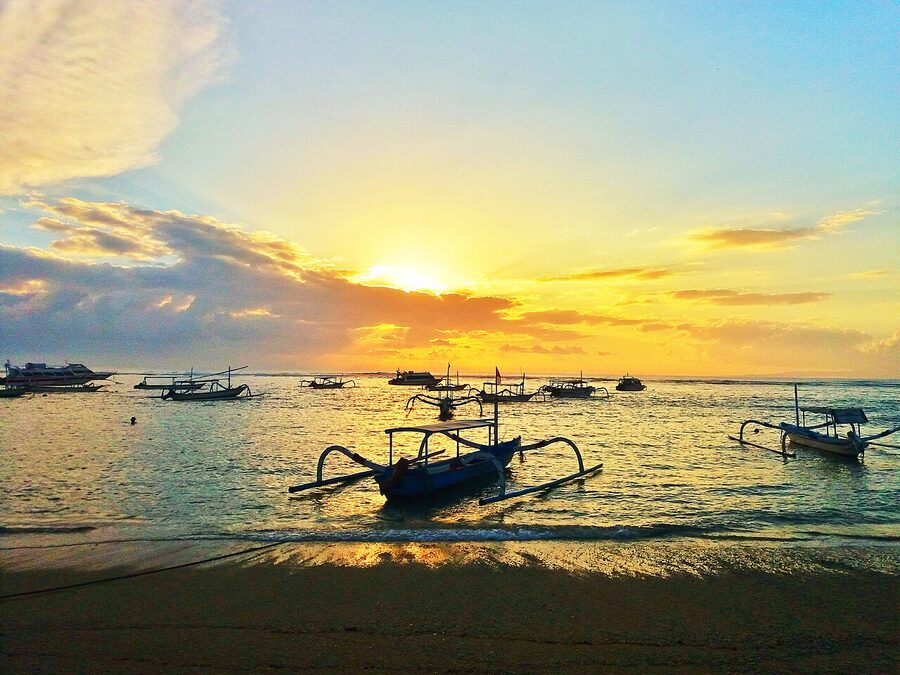
And that’s the problem, in the eyes of most travellers. There’s nothing flashy here. No Bingin-style cliff villas, no DJ sets, no smoothie bowls plated like art. The town beach in front of the village is a working stretch of sand with painted jukung (traditional Balinese outrigger fishing boats) hauled up at the water line, dive boats coming in and out, and a pleasant amount of plastic at the tide mark after a windy night. If you arrive expecting Seminyak in fishing-village clothing, you will be disappointed within twenty minutes and you will write a one-star Tripadvisor review about the harbour smell.
The contrarian read: that working-village quality is exactly what’s worth two nights of your trip. The cost of accommodation runs forty per cent under Sanur for similar rooms. The dive shops have small groups (four max at most operators) and prices that are noticeably under what you’ll pay in Amed or Tulamben. The Blue Lagoon is a three-minute walk from your guesthouse. There’s a 1,000-year-old temple on the headland that nobody visits because nobody’s heard of it. You can do nothing for two days and have it work.
The Harbour, the Boats, and the Tout Scam to Watch For
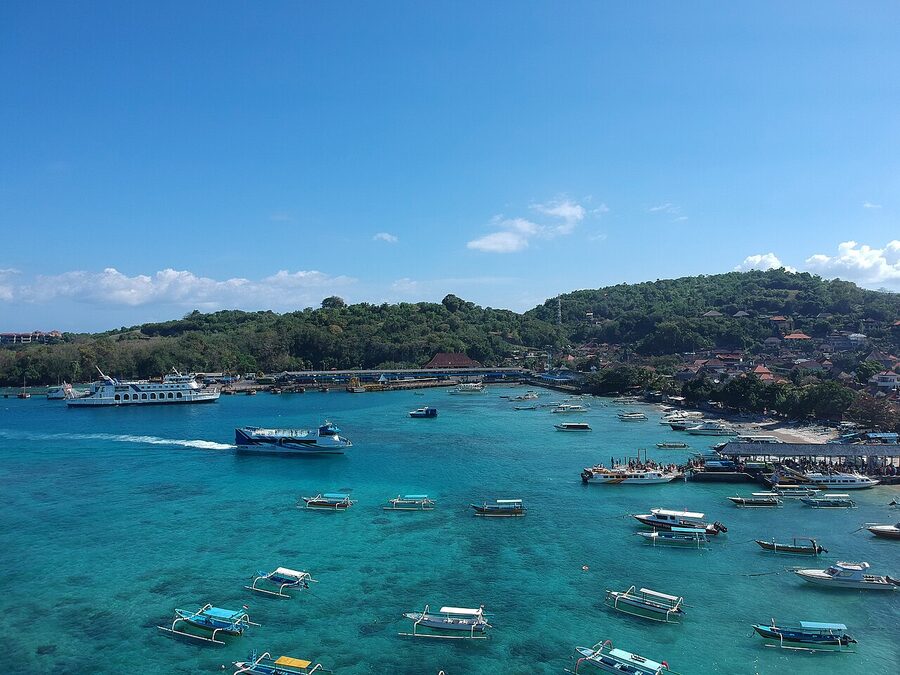
The harbour is the reason Padangbai exists in the modern tourist map. Three things leave from here:
- Slow ferry to Lembar (Lombok). About 4 hours, runs roughly hourly day and night. Foot passenger Rp 65,000, motorbike Rp 175,000, car Rp 1.2 million and up. This is what locals and freight take. It’s slower, much cheaper, and entirely fine if you’re not in a hurry.
- Fast boats to Gili Trawangan, Gili Air, Gili Meno. Around 1h 45m to Trawangan with operators like Eka Jaya, Blue Water Express, Gili Gili, Semaya One. Roughly 20 daily departures across operators. Prices typically run $23 to $40 (Rp 370,000 to 640,000) one way per person, with hotel transfer from south Bali sometimes bundled. Common departure clusters are 08:00, 09:00, 10:30, 12:30, and 16:00.
- Fast boats to Nusa Penida and Nusa Lembongan. Shorter run, around 45 minutes to Penida, slightly less to Lembongan. Less frequent than from Sanur, so most travellers actually do these from Sanur instead.
Now the scam. This is real and it is well documented and it has been catching backpackers at this pier for years.
You arrive on the Gili boat back from Trawangan. You step off into a parking lot. A friendly man in a fake company t-shirt tells you the included shuttle to Seminyak isn’t running today, or that it’s broken down, or that there’s a problem with the road and it’ll take six hours, or that you’d be much better off in his cousin’s car for “only” Rp 800,000. He sounds plausible. He has a clipboard. The actual shuttle is sitting twenty metres away with a driver who genuinely is going to Seminyak in forty minutes for the price you already paid. Walk past the man. Walk into the official terminal building. Show your ticket at the kiosk for the boat company you arrived with. The shuttle is real. The man is not.
Same logic on outbound: only buy fast-boat tickets from the official kiosks inside the terminal or pre-book online with a named operator. Anyone selling tickets from a folding table in the car park is either marking up by 100 per cent or selling you on a boat that doesn’t exist. The harbour has a perfectly functional ticket office. Use it.
Topi Inn, the Long-Running Anchor
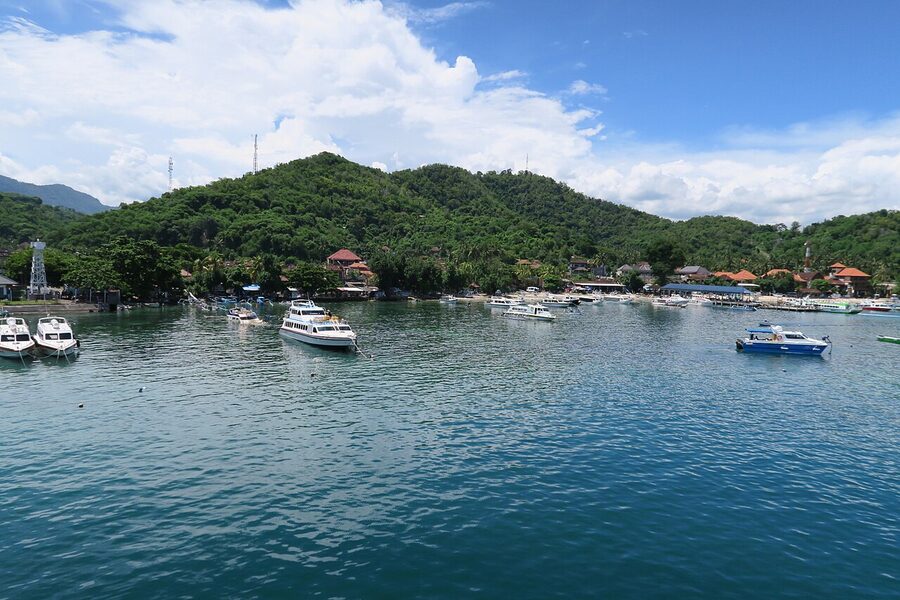
Topi Inn sits on the eastern end of the bay, on Jalan Silayukti, between the village beach and the path that climbs to the Blue Lagoon. It’s a three-storey bamboo and timber thing, sea-view rooms above a noisy ground-floor restaurant, the kind of place where the staff remember the regulars and the regulars are mostly returning divers. It has been doing the same job for a long time.
What you actually book here: a clean, simple room with a fan or AC, a mosquito net you’ll be glad of, and either a private or shared bathroom. Dorm beds run from around Rp 60,000 (about $3.80) and private rooms from Rp 200,000 to 400,000 (about $13 to $26) depending on AC and view. There’s no breakfast included, but the Topi Inn restaurant downstairs bakes its own bread and serves a long menu of Western and Indonesian plates from morning until late. Free WiFi works in the restaurant and most rooms.
The catch: the restaurant is loud, the building is right on the harbour-side road, and a 4 a.m. ferry crew can wake light sleepers. Pack earplugs. The room is cheap for a reason. If you want quiet luxury, you’re in the wrong town and this is the wrong guesthouse.
I’d still book it for one night purely because it’s a fixed point in the local geography. You step out the door, turn left along the seawall, and you’re at the Blue Lagoon path in five minutes. Turn right, and you’re at the harbour ticket kiosks in three. The breakfast banana porridge is genuinely good. And the staff are some of the friendliest people working in tourism on this coast, which after a few weeks in the south is its own kind of holiday.
Blue Lagoon, the Snorkel That Doesn’t Need a Boat
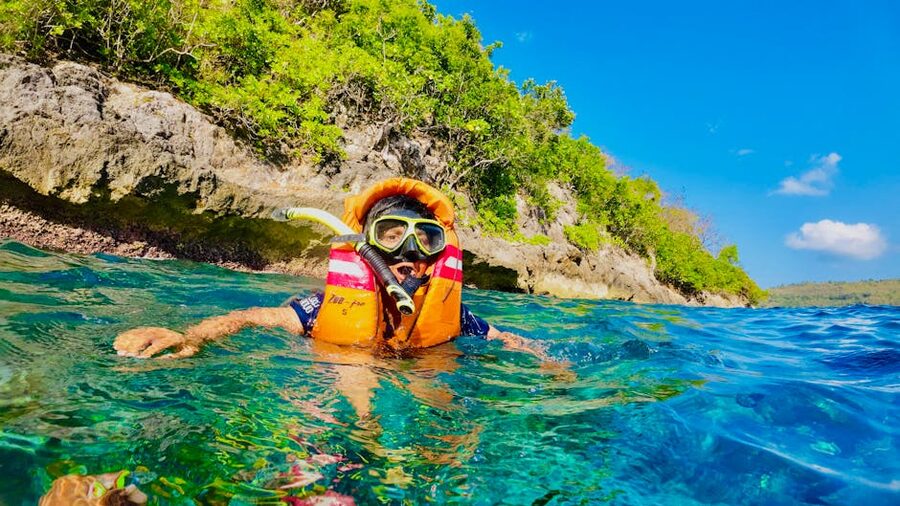
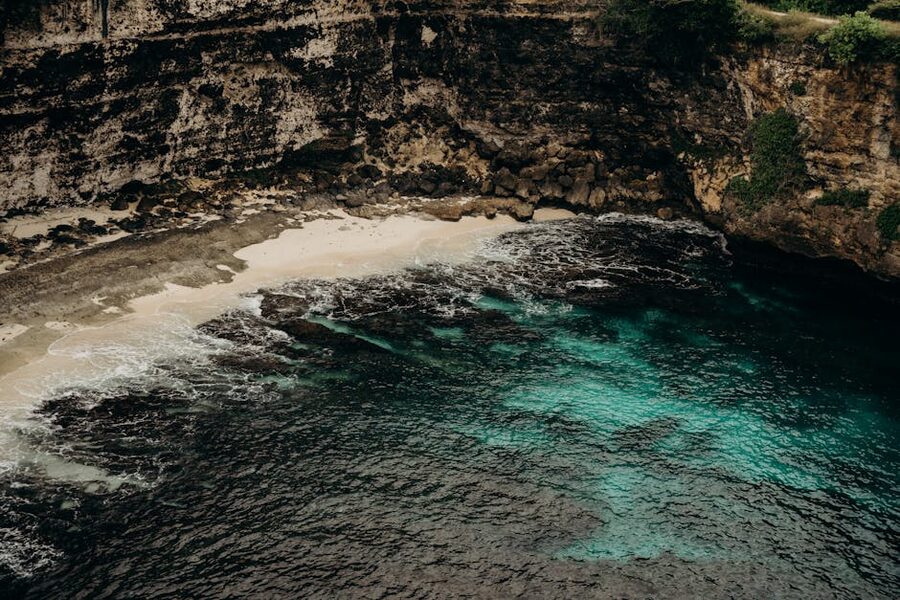
Blue Lagoon is the easiest world-class snorkel in south-east Bali. From the eastern end of the village, walk up the small road past Pura Silayukti for about ten minutes. You drop into a small bay with a strip of coarse sand, four or five warungs selling Bintang and grilled fish, snorkel and fin rental for around Rp 50,000 a day, and a couple of dive shops with their boats lined up on the sand.
The reef sits maybe twenty metres off the beach. You can swim straight out from the rocks on the south side, drift along the wall, and come back in. No boat needed. On a calm morning the visibility is genuinely good (15 to 20 metres), and you’ll see angelfish, butterflyfish, the odd reef shark on a deeper wall, and occasionally a turtle. Conditions vary: when the wind blows up after lunch, the surface chops out and visibility drops, so go early. By “early” I mean walk out of your guesthouse at 7:30 a.m. with a bottle of water.
If you want to go a little further, the warungs and dive shops will set you up with a jukung ride for Rp 100,000 to 150,000 (about $6.40 to $9.60) for a couple of hours, taking you over to the wall on the east side and the small reef in the middle of the bay. It’s worth it once. Negotiate the price before you get on the boat.
One real downside, and I’d rather you knew: there is sometimes plastic on the tide line at Blue Lagoon, especially after a storm or a strong onshore wind. The local warungs clean the beach most mornings but the sea brings more in. Don’t arrive thinking you’re going to a Maldives postcard. Arrive thinking you’re going to a working east-Bali bay where the snorkel is great and the beach is okay.
Bias Tugel, the White-Sand Walk South
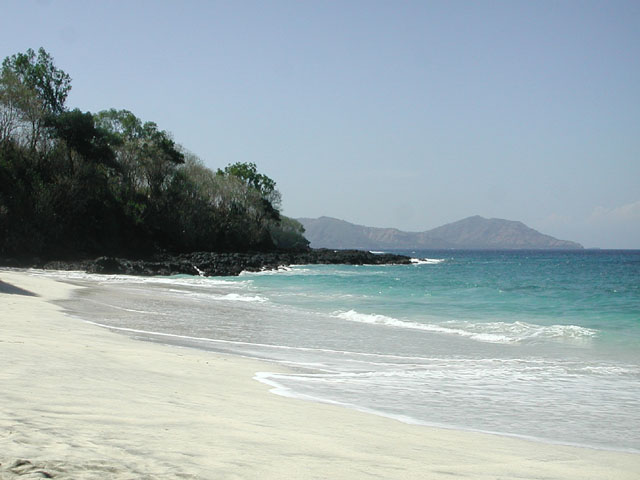
Bias Tugel is the secret-beach upgrade. From the village, walk south up the small hill on the right (the road that climbs out of town toward Candidasa). You’ll pass a couple of homestays and after about 200 metres there’s a marked path on your left descending steeply down to a cove. It’s a bit of a scramble in flip-flops and the signage is half-hearted, so don’t expect Disney-style markers. The descent takes five minutes and ends on a 200-metre crescent of properly white sand framed by black volcanic rocks at both ends.
This is the prettiest beach within easy walk of any town on the east coast. There are usually two or three small warungs at the back doing fresh young-coconut juice (Rp 30,000), Bintang (Rp 35,000), and a small grilled-fish menu around Rp 70,000. Bring cash. There’s no ATM and no card reader and there is unlikely ever to be one.
The water can get rough, especially in the afternoons when the swell builds, so swim with care and don’t go out far if you’re not a strong swimmer. There’s no lifeguard. The snorkel is okay on a calm day along the rocks at the south end. The big draw is just lying on white sand with no boats and no port noise, twenty minutes after you left a working harbour. That contrast is the whole point.
One quirk: bring a small towel for the climb back, and good shoes if you can. The path is loose stone and dust, and after rain it’s slippery. I have done it in Havaianas, badly, on multiple occasions. Don’t be me.
The Diving: Cheaper Than Amed, And the Shops Have Been Here Forever
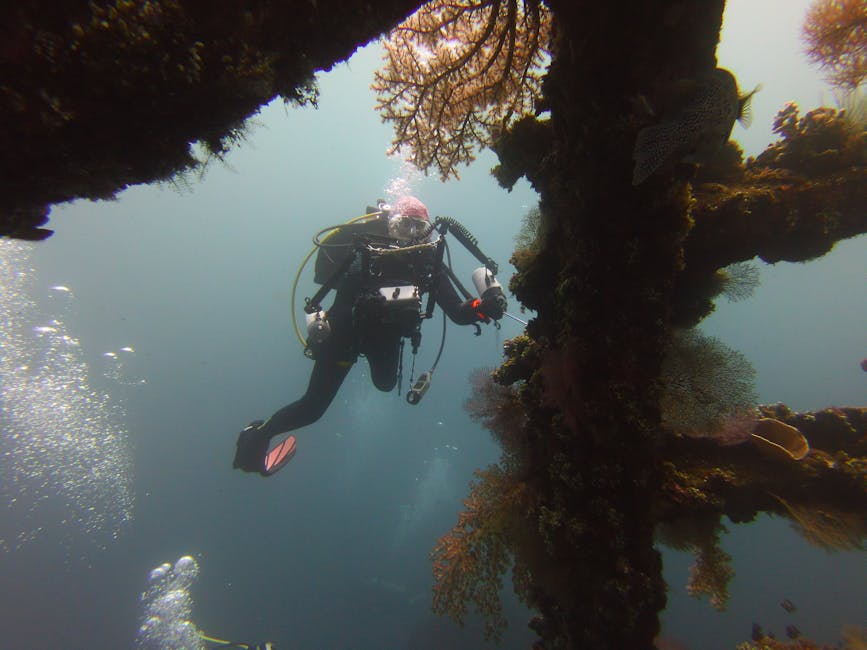
This is the reason a lot of people stay. Padangbai has its own decent dive sites within ten minutes of the harbour (Blue Lagoon for beginners, the Jetty for macro and a strange shipwreck-y collection of debris, Channel for drift dives), plus easy access to the bigger named sites at Gili Tepekong, Gili Mimpang, and the famous Liberty wreck and drop-off at Tulamben to the north.
The shops here run small groups and price below the Amed and Tulamben competition. A 3-day PADI Open Water typically runs around Rp 5.5 to 6.5 million ($350 to $415), against Rp 6.5 to 7.5 million further north. Two fun dives at local sites with full kit are usually Rp 1.0 to 1.3 million ($65 to $85).
The four operators with the longest track records and the most consistent reviews:
- OK Divers Resort & Spa. PADI 5-Star centre, brand-new training pool, on-site rooms and a smarter restaurant called The Colonial. The biggest operator in town and a sensible default for an Open Water course. OK Divers Bali.
- Geko Dive Bali. A PADI 5-Star Resort and TecRec facility operating in Padangbai since 1997. Multilingual staff (English, French, German, Spanish, Italian), strict 4-max group cap, very good for nervous first-timers. Geko Dive Bali.
- Absolute Scuba Bali. On the bay shoreline, attached to its own small dive resort. Good for combined accommodation-plus-dive packages.
- Paradise Diving Bali. German-run, tighter focus on certified divers and tech courses. Less of a beginner shop, more an intermediate-to-advanced choice.
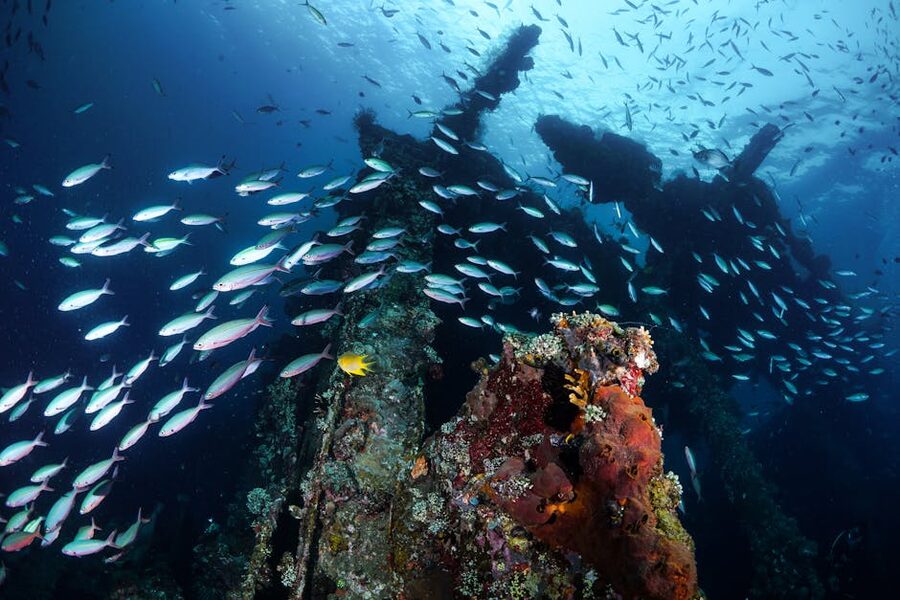
One real note on visibility. Padangbai’s water can be variable. June to October is the dry-season window with the best conditions (often 20 metre visibility, calmer surface). November to March can drop to 8 to 12 metres after rain, and the currents at Channel and at Tepekong get serious. If you’re chasing crystal-clear postcard diving, plan for the dry season. If you’re learning, the shallow-reef sites are fine year-round.
Pura Silayukti, the Temple Almost Nobody Visits
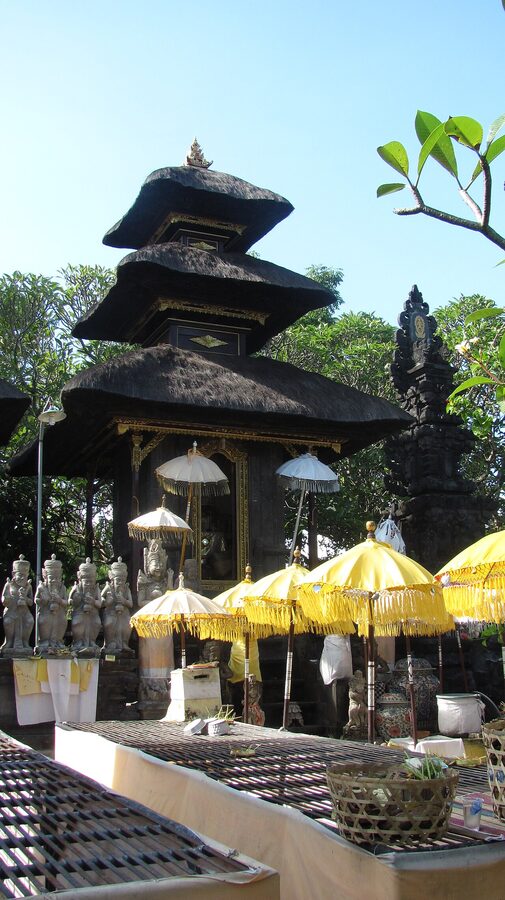
Walk five minutes east of Topi Inn, up the road to Blue Lagoon, and you’ll pass a small temple complex on a low headland to your right. From the road it looks unremarkable. Walled, slightly weathered, a couple of incense sticks burning. This is Pura Silayukti, and it is one of the older and quietly more important temples in Bali.
The temple is dedicated to Mpu Kuturan, the 11th-century Javanese-Balinese spiritual reformer who was sent to Bali to harmonise the various competing Hindu sects on the island. Mpu Kuturan settled at Padang (now Padangbai) and is credited with establishing the tri murti framework of three main deities (Brahma, Vishnu, Shiva) within Balinese temple architecture, and with shaping the basic structure of village temples that you see across the island today. He was also instrumental in setting up the basic banjar (village council) structure that still governs Balinese community life. The temple is built on the spot where, by tradition, he meditated and eventually achieved moksha.
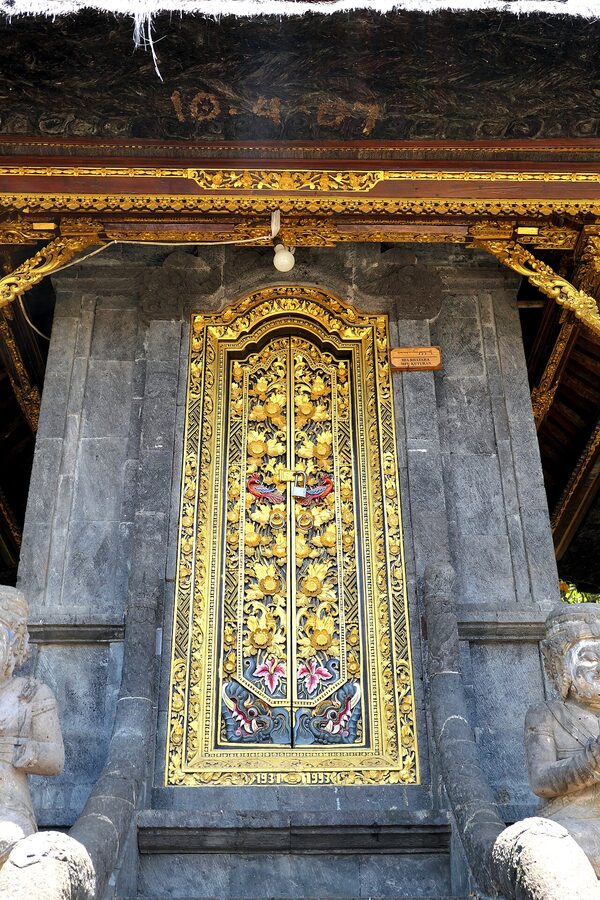
The visit is short, twenty minutes is plenty, and there’s no entrance fee. You’ll need to wear a sarong (you can borrow one at the gate or bring your own), and a small donation in the box at the entrance is appropriate. Don’t enter during a ceremony unless someone clearly invites you. The view from the temple grounds out over the bay is one of the best in town, particularly in late afternoon when the light slants in across the water.
For broader context on what you’re actually looking at and the system Mpu Kuturan helped build, our piece on Balinese Hinduism and the Agama Hindu Dharma covers the temple structure, the daily offerings (canang sari), and the bigger ceremonies you’ll come across. The Padangbai temple is one of the earliest physical pieces of evidence we have for the system that became modern Balinese culture.
Where to Eat
Padangbai food is not a destination. It is, however, perfectly fine and very cheap, and you can eat well for under Rp 100,000 a meal almost anywhere in town. Don’t expect Ubud’s brunch scene or Seminyak’s fine dining. Expect grilled fish, nasi goreng, mie goreng, the occasional pizza, and a lot of cold Bintang.
The places that consistently come up across the dive crowd and the slow-traveller crowd:
- Topi Inn restaurant. Long menu, in-house bread, banana porridge for breakfast, decent grilled fish for dinner. The on-site default. Around Rp 40,000 to 90,000 a plate.
- Ozone Cafe. On Jalan Silayukti, just up from Topi Inn. The expat hangout. Italian-influenced menu (pasta, pizza, schnitzel) plus standard Indonesian. Floor cushions, low benches, busy from sundown. Around Rp 60,000 to 130,000 a plate. Cash and card. Ozone Cafe.
- Warung Bu Jeno. Small family warung doing the best fish and shrimp in town according to most divers I’ve talked to. Around Rp 60,000 to 90,000. Cash only.
- The Colonial at OK Divers. The smartest restaurant on the bay, with hammocks, beanbags, and its own swimming pool. You don’t need to be a guest. Western and Asian, around Rp 90,000 to 180,000 a plate. Open all day.
- Kerti Restaurant. Sea-front warung with traditional decor and the best view in the immediate harbour area. Fresh fish, around Rp 70,000 to 110,000 a plate.
- Martini’s Warung. Where the minivans leave from, so it gets busy mid-morning. The food is solid Balinese plate (nasi campur, gado-gado), the woman who runs it is sharp and friendly, and a meal will run you around Rp 35,000 to 50,000.
Where to Stay
Padangbai accommodation breaks into three plain tiers. There’s no luxury here. If you want a $400 villa with a pool butler, you’re booking the wrong town and you should look at our broader where-to-stay archive.
Budget (Rp 60,000 to 400,000 a night)
Topi Inn. Already covered above. Dorm beds from Rp 60,000, simple privates from Rp 200,000. Anchor of the budget scene.
Bamboo Paradise Guesthouse. Clean, friendly, walking distance to the harbour. Around Rp 250,000 to 350,000.
Zen Inn Padangbai. Small guesthouse, decent for a first night before a Gili boat. Around Rp 200,000 to 300,000.
Bagus Homestay. Family-run, Balinese-style, 5-minute walk from the harbour. Around Rp 250,000 to 350,000.
Mid-Range (Rp 500,000 to 1,200,000 a night)
OK Divers Resort & Spa. Attached to the dive operation. Sea-view rooms, brand-new training pool, breakfast included, the smartest restaurant in town. Around Rp 700,000 to 1,200,000. The default if you’re booking a multi-day dive course and want everything in one spot.
Bloo Lagoon Eco Village. Up on the bluff above the village, on the path between Padangbai and Blue Lagoon. Open-sided villas with full kitchens, an outdoor yoga studio with an ocean view, a real spa, and the most thoughtful design in town. Worth knowing: the open-air design means you’ll get the occasional ant and frog visitor. Not all rooms have AC. Around Rp 800,000 to 1,400,000. Bloo Lagoon.
Puri Rai Hotel. Old-school mid-range across from the harbour. Large pool, big rooms, decent restaurant. Around Rp 500,000 to 800,000. Reliable, not exciting.
Absolute Scuba Bali Dive Resort. Bay-shore dive resort with garden bungalows and standard rooms. Direct beach access, 16-minute walk to Bias Tugel. Around Rp 600,000 to 900,000.
What I’d actually book
For a first-time Padangbai visit, two nights at Topi Inn or Bamboo Paradise. For a dive course or a longer stay, three nights at OK Divers. For a slow couple’s stay with no diving, Bloo Lagoon. For a Gili-boat-tomorrow overnight, anything walking distance to the harbour, including the Topi Inn dorm if you don’t mind the noise.
Padangbai as a Hub for East Bali
Two nights here gives you east Bali at half the driver fee you’d pay from Sanur or Ubud. Hire a private car for a day for around Rp 600,000 to 800,000 (about $38 to $51) and you can comfortably loop:
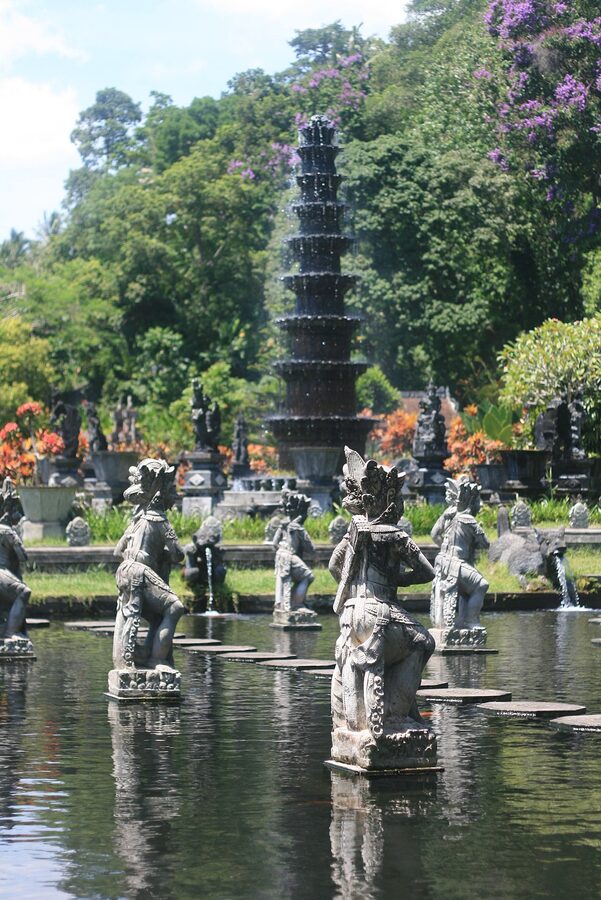
- Tirta Gangga. The 1946 water palace at Karangasem, with stepping stones over koi-filled pools and an eleven-storey fountain in the back garden. Foreign entry around Rp 50,000. About 50 minutes north of Padangbai.
- Pura Lempuyang. The “Gates of Heaven” temple with the much-photographed split gateway frame. Be aware: the famous mirror-pool reflection is not a real reflection (it’s a piece of glass held under a phone by a temple staffer). The temple itself is genuinely beautiful and a serious climb if you go all the way to the top. About 1h 15m drive.
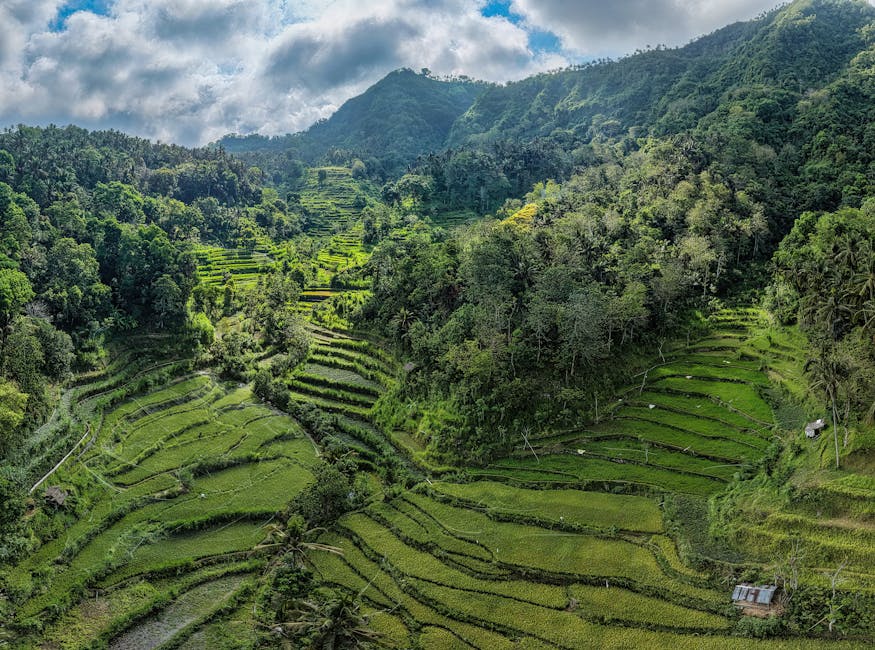
- Sidemen. The valley of green rice terraces and quiet homestays that Ubud was thirty years ago. The drive itself is the experience. About 45 minutes from Padangbai. A natural overnight if you want to add a third night to the loop.
- Tulamben and the Liberty wreck. If you’re a diver, go up for a full dive day. About 50 minutes north. We round up the wider east-coast options in our things to do in Bali archive.
- Amed. Quiet diving and snorkel village stretched along 14km of coast. About 1h 15m. Read our Amed area guide if you’re considering pairing it with Padangbai for a longer east-coast trip.
- Candidasa. 11km east, a quieter strip of mid-range hotels and a famous lotus lagoon. Worth a stop if you’re driving past, not a destination on its own.
Boats Out: Gili, Lombok, the Nusas
Quick reference for what leaves from Padangbai and where it makes sense to go:
- Gili Trawangan. Around 1h 45m by fast boat. Party island of the three. From around Rp 370,000 one way. Schedule on Gili Ferries.
- Gili Air. Around 2 to 3 hours depending on operator and stops. The middle-ground island, has bars and bungalows and a more local feel.
- Gili Meno. Around 2 to 3 hours. The quietest of the three, best for honeymoons and people who genuinely want to read a book for a week.
- Lombok (Bangsal). Several fast-boat operators run direct to Lombok’s main port. From around Rp 350,000 to 500,000.
- Lombok (Lembar) by slow ferry. 4 hours, Rp 65,000 foot passenger. The traveller-budget option, very common with motorbike riders crossing for the Rinjani trek.
- Nusa Penida. Around 45 minutes. Less frequent than from Sanur, so most people skip Padangbai for the Nusa boats.
- Nusa Lembongan. Around 35 to 40 minutes. Same logic as Penida, Sanur is usually easier.
If your route is “Bali, then Gilis, then Bali again”, Padangbai is the perfect overnight stop both directions. If your route is “Bali, then Penida or Lembongan”, just go from Sanur. Our piece on flights to Bali covers airport-to-east-coast logistics, which often shapes whether you stop in Padangbai on the way in or on the way back.
Getting There
From Ngurah Rai airport, count on 75 to 90 minutes by car if traffic is normal, longer through the worst of the Sanur and Sukawati afternoon snarl. From Sanur, around 1h 15m. From Ubud, 1h 30m. From Canggu or Seminyak, around 2 hours.
Practical options:
- Private driver. The default. Pre-book through your hotel or via a transfer-booking platform for around Rp 350,000 to 500,000 (about $22 to $32) one way from south Bali. The driver waits at the kerb with your name on a board.
- Airport taxi (Bluebird or coupon counter). Around Rp 365,000 with the official airport taxi coupon. Use the official counter inside, not a freelance driver in the car park.
- Perama shuttle. The veteran tourist-shuttle operator runs a Kuta-to-Padangbai bus for around Rp 150,000, but only if they have at least two passengers. Frequency is limited.
- Scooter from Sanur. Around 1h 30m on the bypass road. Doable, but not pleasant if you’ve just landed. If you’re already on a scooter from a longer trip, fine.
- Grab and Gojek. Will drop you here from the south but won’t pick you up here, because there’s no driver pool stationed in town. Plan a return ride before you arrive or have your guesthouse arrange a driver.
Cash and ATMs: there’s a BCA ATM next to the 2 Combi convenience store on the main strip, plus a Mandiri and a BRI within 50 metres. They’re fine to use during the day. Be cautious with any ATM at night or that looks tampered-with. There are reliable accounts of skimmer devices on Bali ATMs (one traveller in our research had a thousand-dollar cash-advance fraud after using a sketchy machine). Stick to ATMs attached to bank branches or convenience stores in plain sight.
The Verdict
Padangbai is not for everyone. If your trip is fourteen days and your priority is south-Bali nightlife, Ubud yoga, and Penida cliffs, it’s a 30-minute pit stop on the way to a Gili boat and that’s fine. Don’t force it.
If your trip is ten days or more, or you’re doing a second Bali visit, or you dive, or you want one stop on the east coast that isn’t Amed, two nights here will repay you. The dive prices are real. The Blue Lagoon snorkel at 8 a.m. is a genuinely good morning. Bias Tugel is the prettiest beach within a 90-minute drive of the airport. Pura Silayukti is one of the older temples on the island and you’ll have it to yourself. And the food is cheap enough that you can eat dinner three nights for the price of one beach-club appetiser in Seminyak.
The harbour is what gets travellers in the door. The fact that almost nobody stops past the parking lot is what keeps the rest of it usable. Go slow, eat at the warungs, dive cheap, walk the headland at sunset, and skip the boat the next morning. The boat will still be there at 10:30.
Planning a Bali trip?
Start with the cornerstones — when to go, where to base, and what's actually worth doing.