
When Is the Best Time to Visit Bali (Without the Crowds)
Bali’s rainy season doesn’t ruin your trip. It rains for ninety minutes most afternoons in January, the temple grass goes the kind of green it never gets in August, and lower-tier accommodation drops 30-40% across the board. The actual worst-time-to-visit windows are different and shorter than most articles claim, and the months I’d send a friend to are not the months everyone else is flying in for. Here is the real seasonal calendar, the festival dates that affect you, and the months I’d actually pick for a first trip, a surf trip, a dive trip, or a quiet trip on a budget.
The short version, if you want to stop reading after this paragraph: May, June, and September are the sweet spot. July and August have the best weather and the worst crowds and prices. February and October are the quiet, cheap months I’d pick if my budget mattered more than perfect surf. The Christmas-to-New-Year week is the actual most expensive window of the year and it’s also when traffic in the south becomes physically painful. Galungan, the ten-day Hindu festival, falls on 17 June 2026 this year and is a cultural opportunity, not something to dodge. Nyepi, the day of silence, falls on 19 March 2026 and is the one day of the year you can’t fly in or out of Denpasar.
In This Article
- The two-season myth (and what’s actually changing)
- What “rainy season” actually feels like
- What “dry season” actually feels like
- Crowd peaks: the months that get stupid
- Christmas to New Year (the worst week)
- Australian school holidays (the constant)
- European summer (July-August)
- Chinese New Year (the secondary spike)
- Galungan and Kuningan (cultural opportunity, not a crowd)
- The festival calendar (with the dates that matter)
- Nyepi (the day of silence)
- Galungan and Kuningan
- Bali Spirit Festival
- Bali Arts Festival (Pesta Kesenian Bali)
- Bali Kite Festival (Layang-Layang)
- Ubud Writers and Readers Festival
- Smaller things on the calendar
- The surf calendar
- The dive calendar
- Tulamben and Amed (year-round)
- Nusa Penida and the mantas (May-October peak)
- Mola mola at Crystal Bay (July-October)
- The photography calendar
- Price patterns through the year
- Region by region (because Bali isn’t one weather pattern)
- Editor’s actual picks (which months for which trip)
- First trip, no specific agenda: May or September
- Surfer: June through September
- Diver: July through October
- Honeymoon or quiet luxury: April through June, or September through October
- Budget-conscious: February-March or October-November
- Cultural traveller: time it for Galungan or the Bali Arts Festival
- Family with school-age kids: when the school holidays force you
- The micro-pattern: what to actually pack and watch
- The waterfalls and the hike that need their own season
- One last calendar item: the tourism levy
- So when should you actually go?
The two-season myth (and what’s actually changing)
Every Bali article will tell you there are two seasons: dry from April-October, wet from November-March. That’s still mostly true on the calendar. It’s becoming less true on the ground.
I’ve been coming to Bali long enough to remember when the wet season meant six months of dependable afternoon rain and the dry season meant six months of dependable sunshine. The seasons now blend more than they used to. You’ll get a string of cloudless days in February and a four-day washout in late June. The Indonesian Meteorological Agency (BMKG) publishes daily forecasts that are reasonably accurate two days out and approximate after that. Plan for the seasonal pattern, but don’t book non-refundable around a single weather forecast.
The pattern that has held: dry season is reliably less rainy and the humidity drops noticeably (around 70% rather than 85%). Wet season is reliably greener, and the rain mostly comes in afternoon bursts of 60-120 minutes rather than all-day grey. Mornings in January are often clear and beautiful. Afternoons in January are often a downpour you can sit out at a warung with a coffee.
What “rainy season” actually feels like
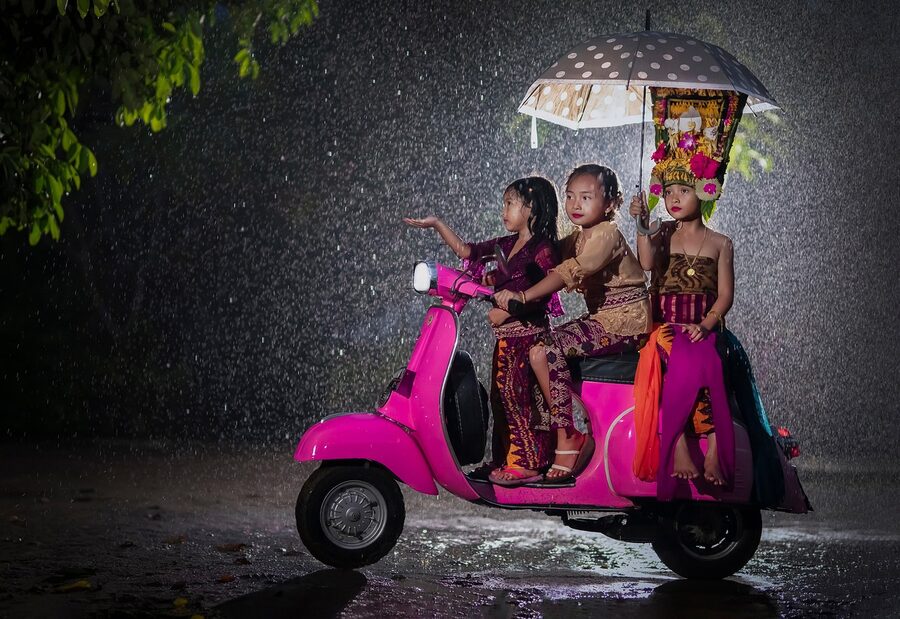
A wet-season day in the south coast (Canggu, Seminyak, Kuta, Sanur) usually goes: sunrise to about 1 p.m. is sunny or partly sunny, then clouds build, then a 60-90 minute downpour somewhere between 2 p.m. and 5 p.m., then it clears for sunset. Some days it doesn’t rain at all. Some days it rains for four hours. January and February are the wettest months and you’ll hit the occasional two-or-three-day storm window. December varies year to year. October and March are short shoulder months that lean dry.
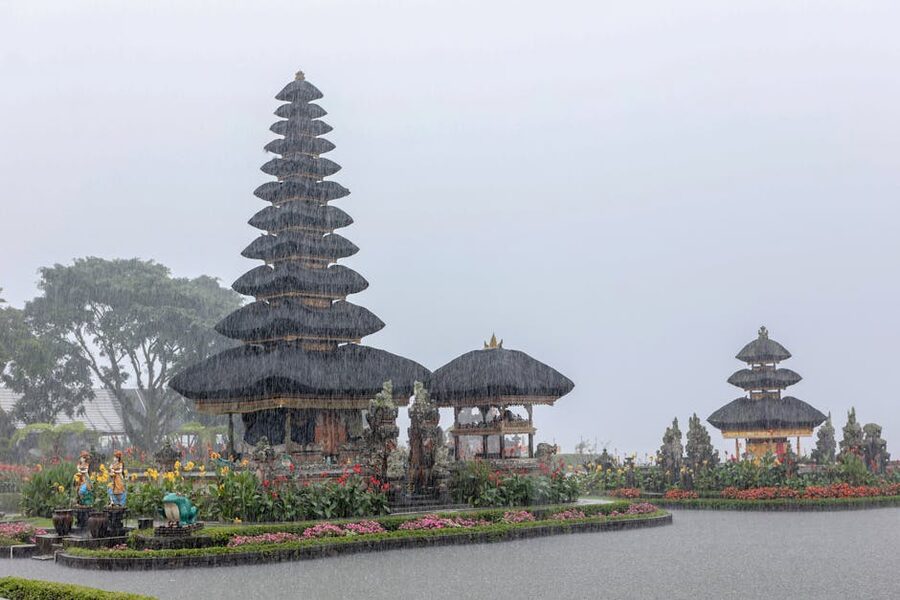
What changes that’s worth knowing: ocean visibility drops sharply, surf shifts (more on that below), and trash washes up on Kuta-Legian-Seminyak after big storms because of currents from elsewhere in Indonesia. Sanur stays cleaner because it sits inside the reef. Bukit beaches stay cleaner because they’re south-facing. Mosquitos triple. Rice fields and waterfalls look astonishingly good.
What “dry season” actually feels like
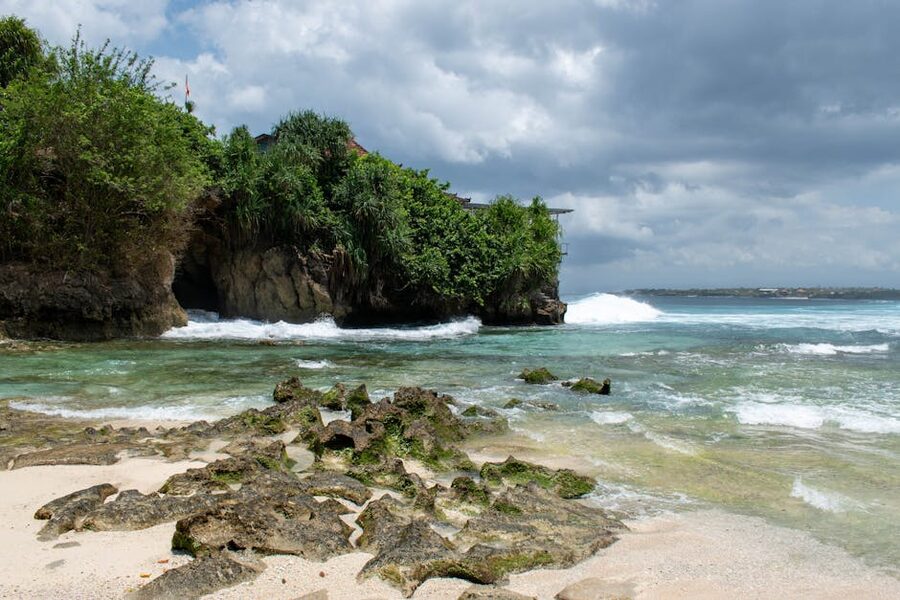
Dry season days are warmer than the rainy season days when you’re in the sun, but cooler when you’re in the shade because the humidity falls. June through August also has a reliable offshore wind on the south coast that takes the edge off the heat and feeds the surf at the Bukit. The beaches are at their cleanest. Rice terraces start to look brown by August because the irrigation slows, which is why September is often a better photography month than August despite having very similar weather.
The catch with the dry season is the price. Accommodation in Canggu and Seminyak runs 30-50% above wet-season rates from June through August, and the genuinely good villas book out two months ahead. Restaurants that don’t take reservations have queues. Roads in the south get genuinely bad. We’ll come back to that.
Crowd peaks: the months that get stupid
Weather is one variable. Crowds and prices move on a different calendar, and that’s where the wet/dry shorthand misleads people. There are six distinct crowd peaks, and only some of them line up with the dry season.
Christmas to New Year (the worst week)
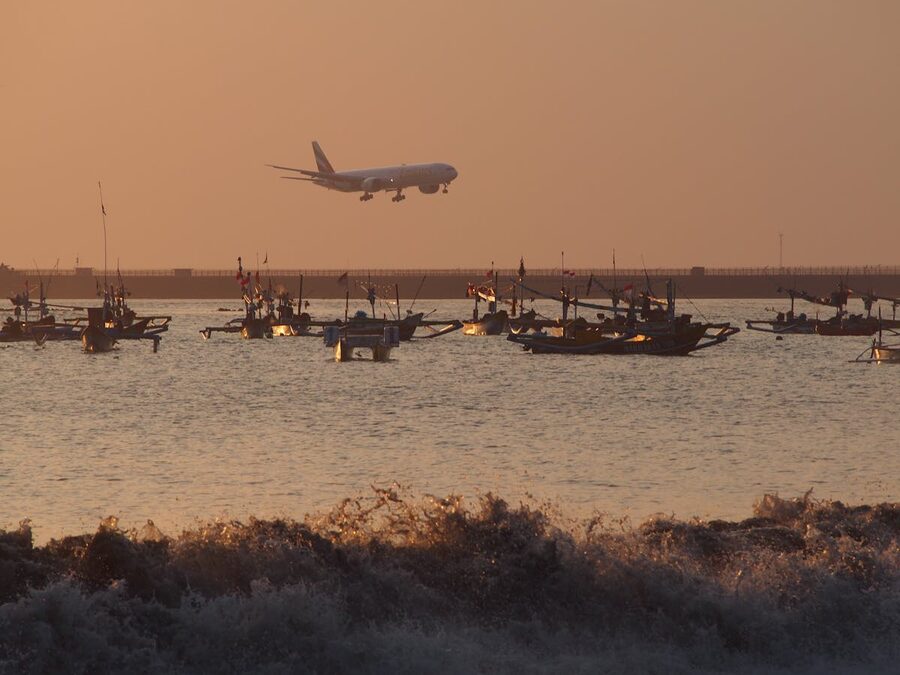
This is the most expensive seven-day window of the year, full stop. Accommodation in Seminyak and Canggu runs two to three times normal rates. Villas that go for $200 a night in February will list at $500-700 over New Year’s. Roads in the south are physically gridlocked, and the drive from Canggu to Seminyak that takes 25 minutes in February takes 90 minutes on 30 December. Beach clubs charge entry covers they don’t normally charge. The airport queue at immigration on arrival routinely runs 90-120 minutes despite extra staff. If you’re flying out, leave for Denpasar (DPS) four hours before your flight. I’d avoid this week unless you’re committed to celebrating New Year’s in Bali specifically. Read our flights to Bali guide for tips on cheaper booking windows.
Australian school holidays (the constant)
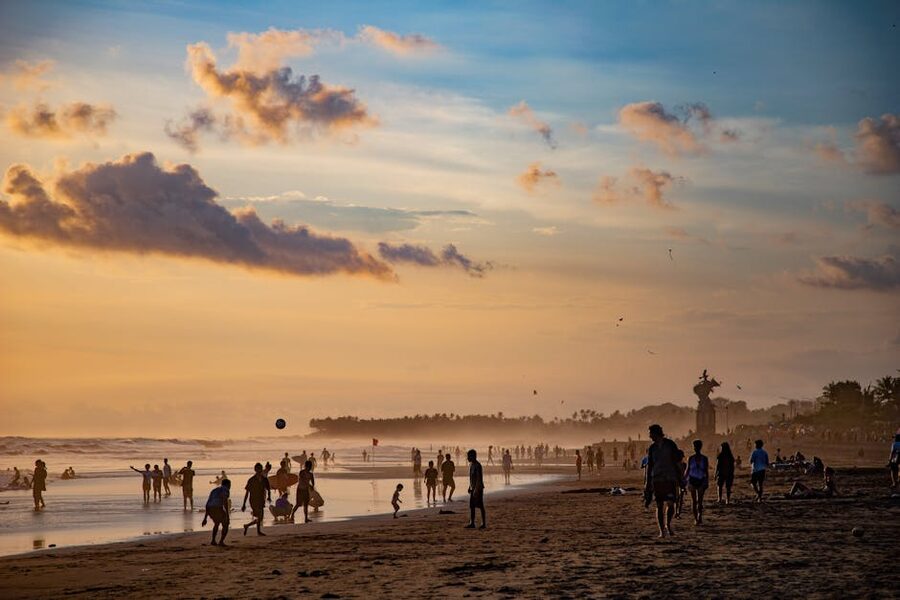
The biggest single influence on Bali tourism is the Australian school calendar. Australian state schools break in late June through mid-July, late September through mid-October, mid-December through January, and around Easter. June-July is the longest break and overlaps with European summer holidays, which is why those are the absolute peak months. The September-October break is shorter but it’s why mid-October is busier than you’d expect from the weather alone.
If you want quiet beach clubs and a real conversation with the warung ibu instead of a queue, avoid the Australian school break weeks. The exact dates change yearly per state but you can check the rough windows on most state education department websites.
European summer (July-August)
July and August are when the Europeans show up in numbers. They tend to stay longer (two-three weeks rather than the seven-night Australian average) and concentrate in Ubud and the Bukit rather than Canggu. This is why July-August also drives Ubud accommodation prices up, while June is more of a Canggu and Seminyak peak.
Chinese New Year (the secondary spike)
Chinese New Year falls on a different date each year (it’s lunar). For 2026 it was 17 February, for 2027 it falls on 6 February. The week around it brings a small but noticeable bump in accommodation prices in Nusa Dua and Ubud, which are the two areas Chinese visitors favour. It’s a smaller peak than Christmas-NYE and the weather is usually fine.
Galungan and Kuningan (cultural opportunity, not a crowd)
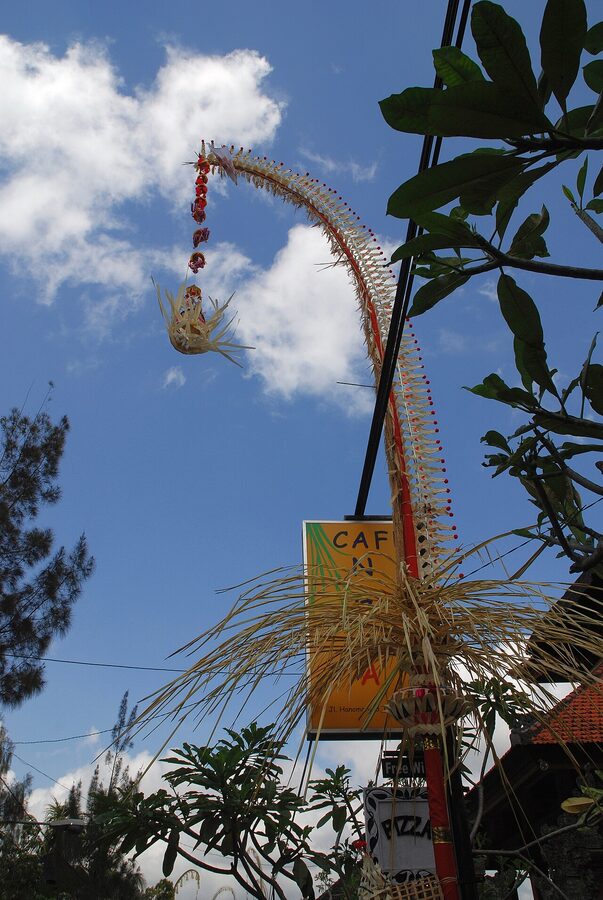
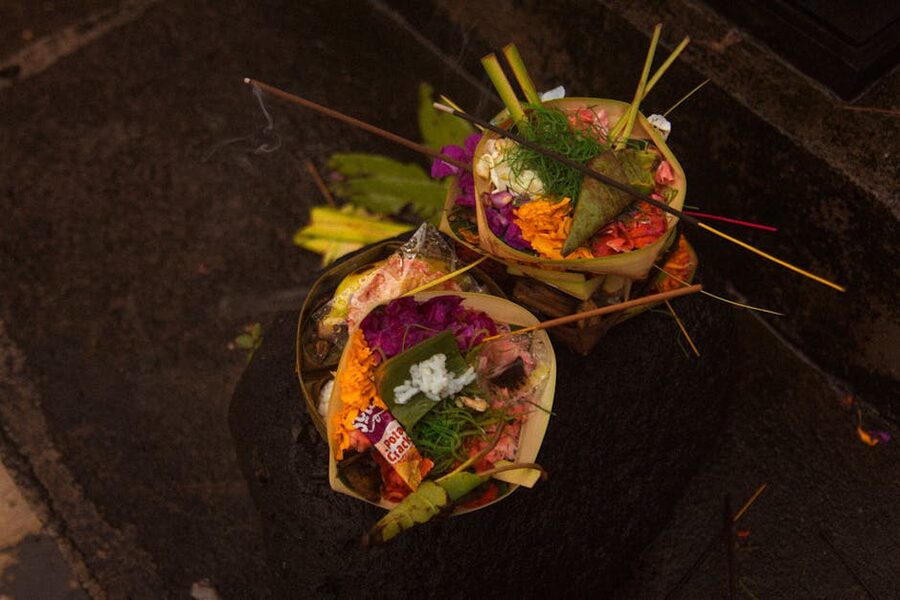
Galungan (the ten-day festival when ancestors return to earth) and Kuningan (when they go back) are the most important Hindu holidays on the island. Streets fill with penjor, the curving bamboo poles you’ll see lining roads everywhere from Ubud down to the Bukit. Families travel home, ceremonies happen day and night, every temple I’ve passed has had something going on. It’s worth seeing once. Hotels and guesthouses don’t shut. Many warungs do close for a day or two near home villages, so eat at hotel restaurants for a couple of meals, but otherwise it’s a normal traveller week with the volume turned up. Read our Balinese Hinduism guide for the cultural background.
The festival calendar (with the dates that matter)
The dates here are cross-checked against the Balinese government calendar (kalenderbali.org), Wikipedia’s Pawukon entries, and the official festival sites. Pawukon dates (Galungan, Kuningan, Tumpek, Saraswati) move every year because the Pawukon calendar is 210 days, not 365. Saka dates (Nyepi) move because the Saka calendar is lunar.
Nyepi (the day of silence)
- Nyepi 2026: Thursday 19 March 2026 (Saka new year 1948).
- Nyepi 2027: falls in early March 2027 (sources differ slightly between 8 and 9 March; the Indonesian government will confirm it closer to the date).
Nyepi is a 24-hour shutdown of the entire island. From 6 a.m. on the day until 6 a.m. the next morning: no flights in or out of Denpasar (the airport literally closes), no cars on the roads, no streetlights, no work, no entertainment, no fires, hotels turn off external lights and ask guests to stay quiet inside. Even the internet was throttled in 2023 and 2024 (a 2025 court ruling pushed back on this but expect inconsistent service).
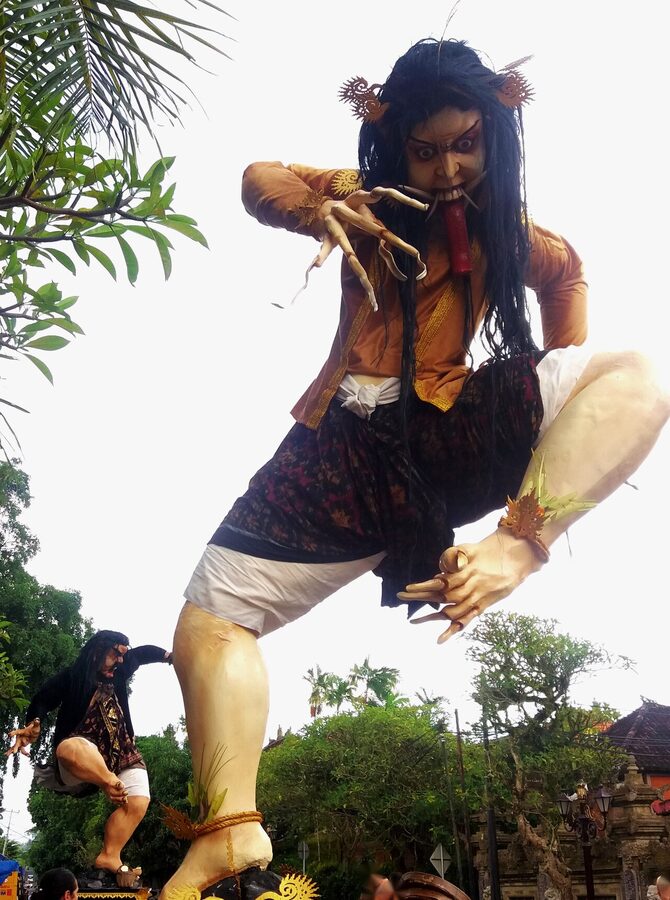
If you happen to be in Bali on Nyepi, the day before is the spectacle: Ogoh-Ogoh (giant demon effigies) parades happen in every banjar across the island the evening of pengrupukan, the day before Nyepi. The day itself in a hotel pool is genuinely peaceful. Just understand: you cannot fly in or out, and you cannot leave the hotel grounds. Plan accordingly.
Galungan and Kuningan
- Galungan 2026: Wednesday 17 June 2026 (Budha Kliwon Dungulan).
- Kuningan 2026: Saturday 27 June 2026.
- Galungan 2027: Wednesday 13 January 2027 AND Wednesday 11 August 2027 (the 210-day Pawukon cycle gives two Galungans in 2027).
- Kuningan 2027: 23 January 2027 and 21 August 2027.
2026 only has one Galungan because of the way the 210-day cycle landed. 2027 has two. This trips up planners who assume an annual rhythm. If you’re booking a six-month trip, check whether you’ll cross a Galungan window because accommodation in Ubud tightens in the week leading up to it.
Bali Spirit Festival
2026 dates: 15-19 April 2026, at The Yoga Barn and Puri Padi in Ubud. Five-day yoga, music, and wellness festival. The Wednesday and Thursday opening events are free; Friday-Sunday is paid pass. If you’re already coming to Bali for a yoga trip, time it for this if you can. Ubud accommodation is tight that week.
Bali Arts Festival (Pesta Kesenian Bali)
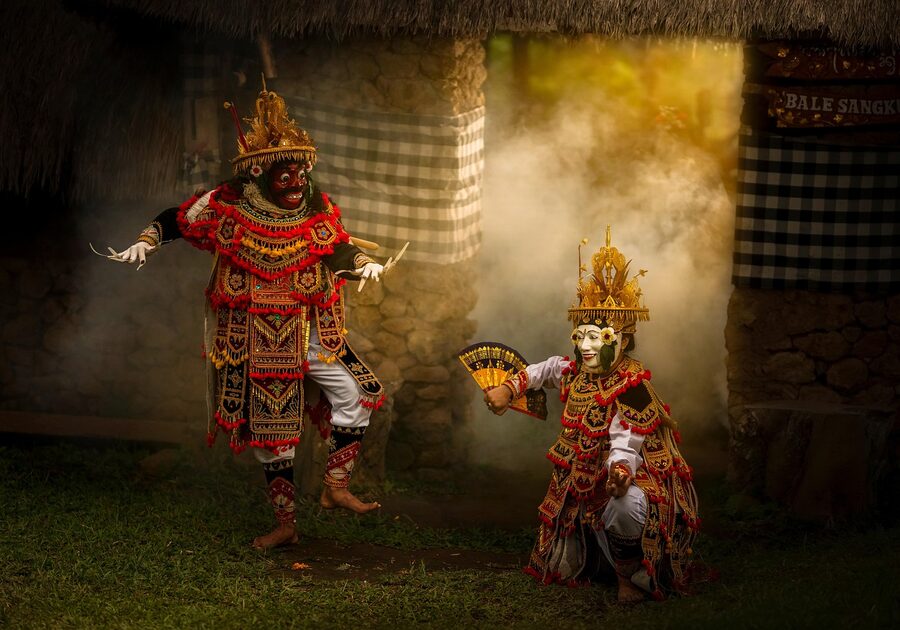
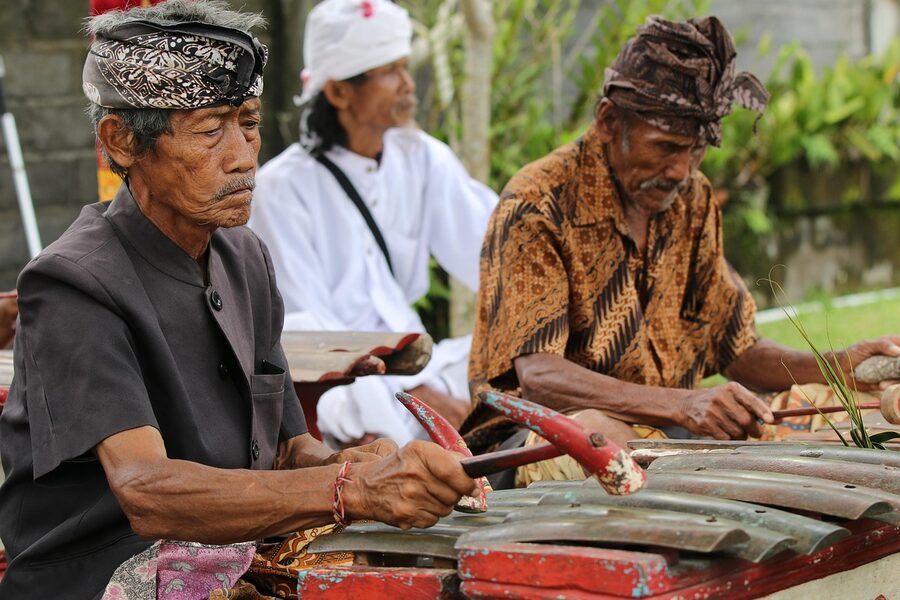
2026 dates: 13 June – 11 July 2026, at Taman Werdhi Budaya Art Centre in Denpasar. Month-long traditional Balinese arts: dance, music, handicrafts, parades, exhibitions. Every event is free. Most foreign visitors miss this entirely because it’s in Denpasar, not the tourist zones, but if you’re staying in Sanur or Ubud it’s an easy taxi ride. The opening parade through Denpasar is the single best one-day cultural event of the year.
Bali Kite Festival (Layang-Layang)
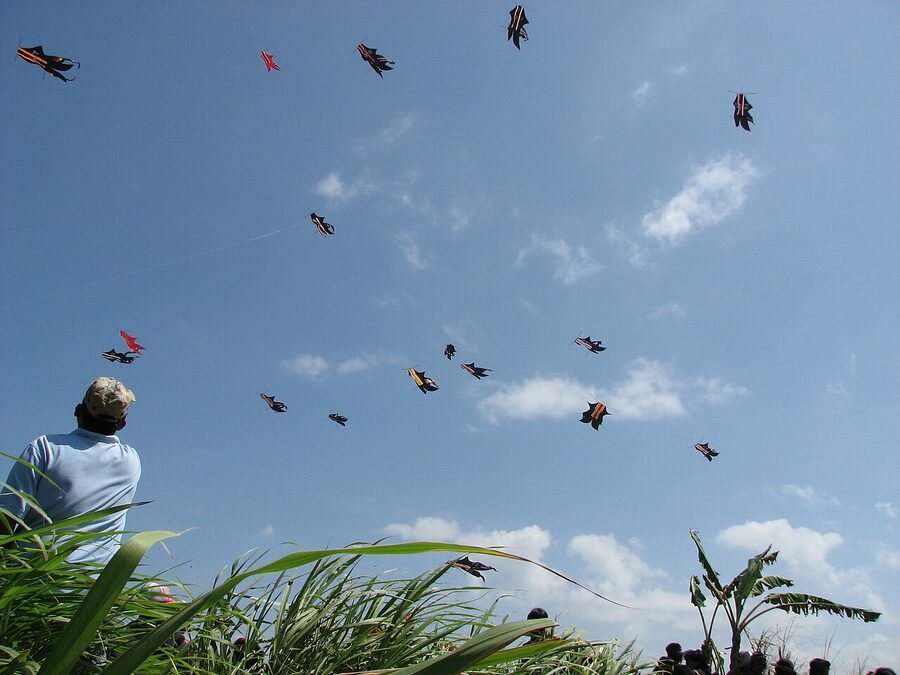
July-August every year, at Padang Galak Beach in Sanur. Traditional Balinese kite competition with massive kites, gamelan crews, and a real local-not-tourist atmosphere. The exact festival weekend changes each year but kite-flying happens informally throughout July and August across the island.
Ubud Writers and Readers Festival
2026 dates: 21-25 October 2026. Five days of author talks, panels, and big-idea conversations across Ubud. Programme is mostly in English. Worth timing a Ubud trip around if literary festivals are your thing. Tickets and the program are at ubudwritersfestival.com. Hotels in central Ubud are noticeably tighter that week.
Smaller things on the calendar
- Saraswati (the day of knowledge): 30 May 2026 and 27 December 2026. Books and laptops get blessed; libraries close. Charming to witness if you happen to be staying in a Balinese household, otherwise a normal day for tourists.
- Pagerwesi (the day of mental fortification): 3 June 2026 and 31 December 2026 (yes, the one falls on New Year’s Eve, which is its own scheduling oddity).
- Tumpek days: a series of six different blessings spread through the Pawukon cycle, including Tumpek Wariga (plants), Tumpek Kandang (animals), Tumpek Landep (metal objects). You’ll see processions you didn’t expect; the easiest one to witness is Tumpek Kandang when families dress their cattle in cloth and bring offerings.
- Indonesia Independence Day: 17 August every year, marked with red-and-white decoration everywhere, traditional games in villages, a normal travel day with extra atmosphere.
The surf calendar
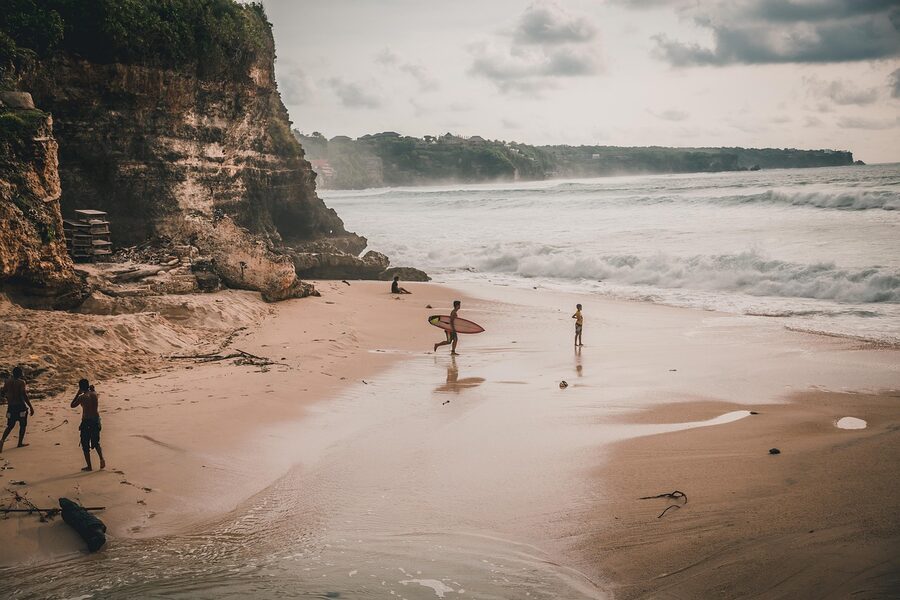
Bali surf is split between the south coast and the west coast, and the wet/dry seasons completely flip which side fires. This is the single biggest factor in when a surfer should come.
Dry season (May-September) is Bukit time. The trade winds blow offshore on the south-facing breaks: Uluwatu, Padang Padang, Bingin, Impossibles, Balangan. This is the world-class window. June through August has the most consistent swell. Crowds get heavy on the named breaks but you can still find space at the in-between reefs if you’ll paddle. The water is clean. Padang Padang and the Bukit beaches are at their best in this window.
Wet season (November-March) is Canggu and west-coast time. The wind direction reverses. Now Bukit goes onshore and lumpy, and Canggu, Pererenan, Echo Beach, Berawa, and the Medewi/Balian breaks down the west coast clean up. Wet season Canggu can fire as hard as you’ll find anywhere in Bali. The water visibility drops, the rip currents at Echo get serious, and after big rains there’s plastic in the lineup, but the wave quality is genuinely good.
Shoulder seasons (April, October) have the most consistent forecasts because the trade winds haven’t fully committed and a single change in wind direction means both coasts can offer something on the same day.
The dive calendar
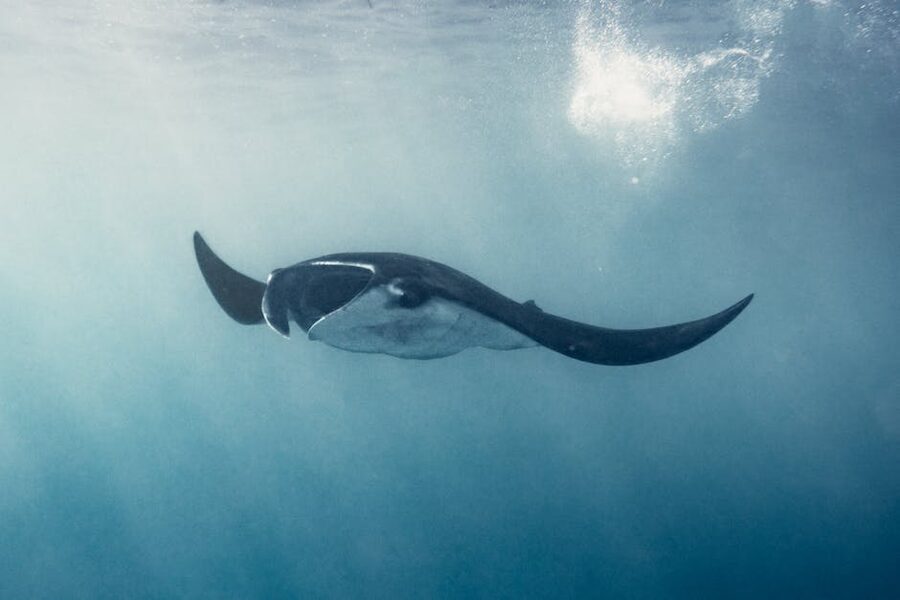
Diving in Bali splits across three areas with three different seasonal rhythms.
Tulamben and Amed (year-round)
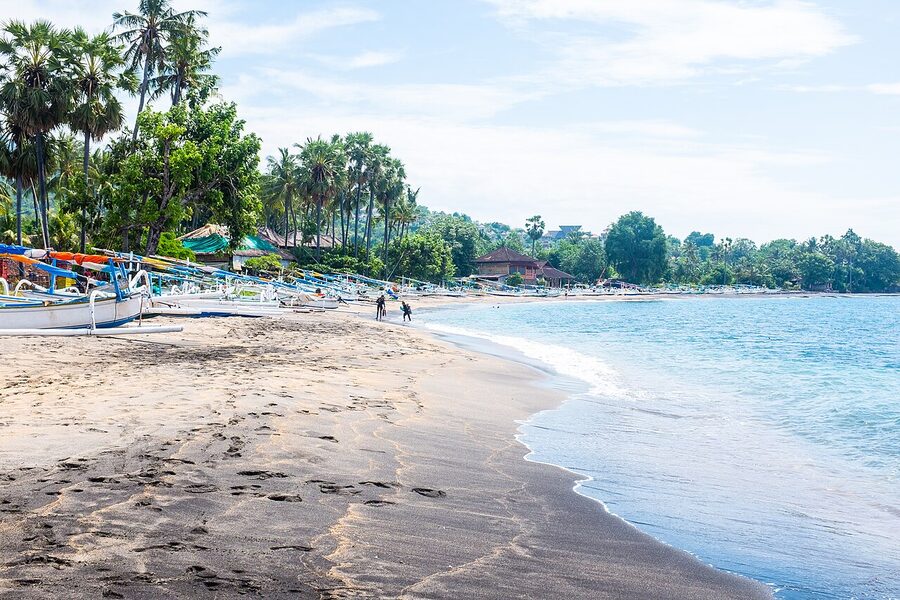
The east coast has the most consistent diving anywhere on the island. The USAT Liberty wreck at Tulamben sits in 5-30m of water and it’s diveable every month. Amed’s house reefs and Jemeluk Bay are the same. Wet season can drop visibility from 25m to 12m on bad days but it’s still worthwhile. Read our Amed guide for what to expect.
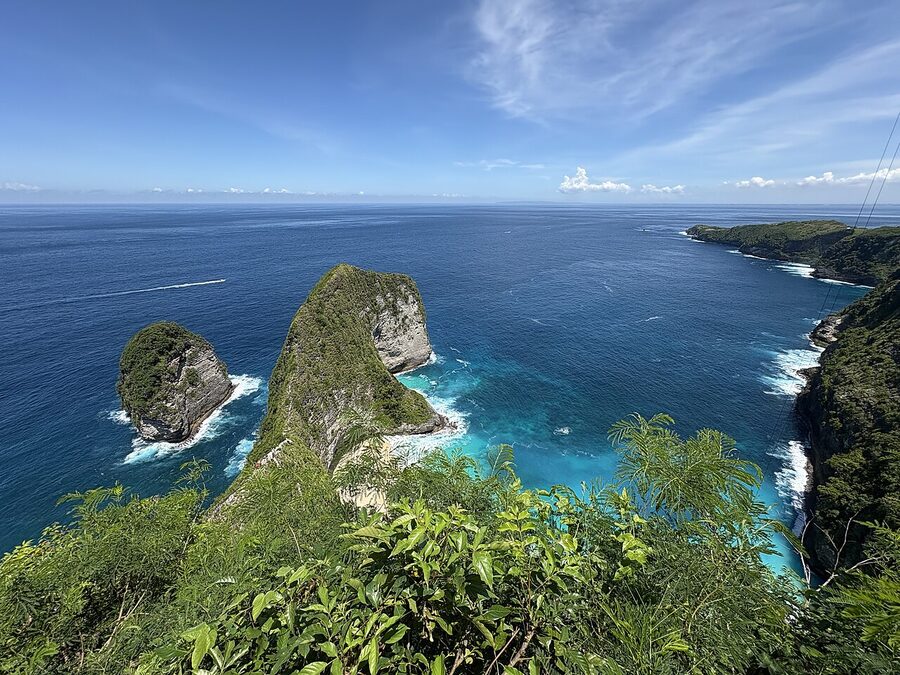
Nusa Penida and the mantas (May-October peak)
Manta Point off the south coast of Nusa Penida is reliable May through October. October-March still gets manta sightings but the swell at the cleaning station can shut down the dive. June through August is the most consistent window, but it’s also when the boat traffic from Sanur gets heavy. If you can dive midweek, do.
Mola mola at Crystal Bay (July-October)
The bucket-list one. Ocean sunfish (mola mola) appear at Crystal Bay off Nusa Penida from late July through early October when the seasonal upwelling drops water temperatures to 13-17 degrees. Peak sightings are August and September. Probability of a sighting on any given dive is roughly one in three, higher with a guide who knows the cleaning stations. You need an Advanced Open Water cert because you’ll dive to 25-30m. Bring a 5mm wetsuit; the cold is real.
The photography calendar
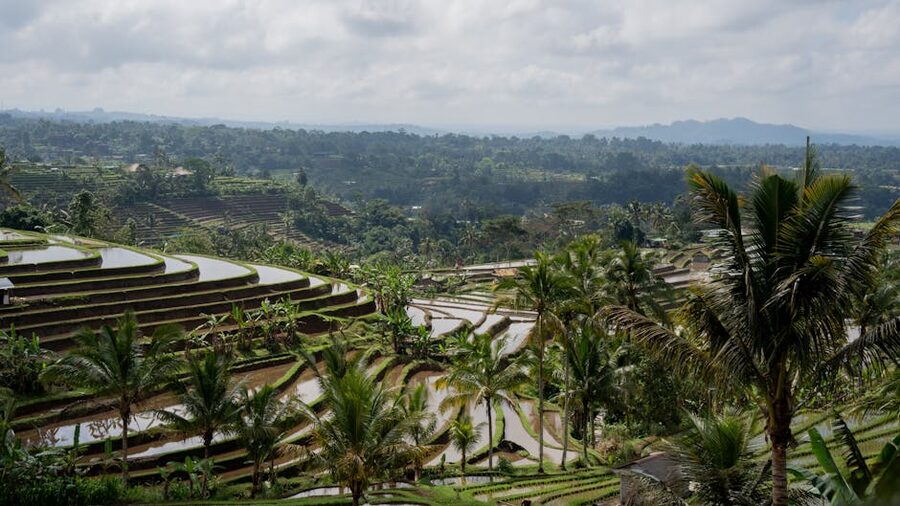
Light in Bali changes through the year more than the temperature does. Some patterns to plan around if photography is part of why you’re coming:
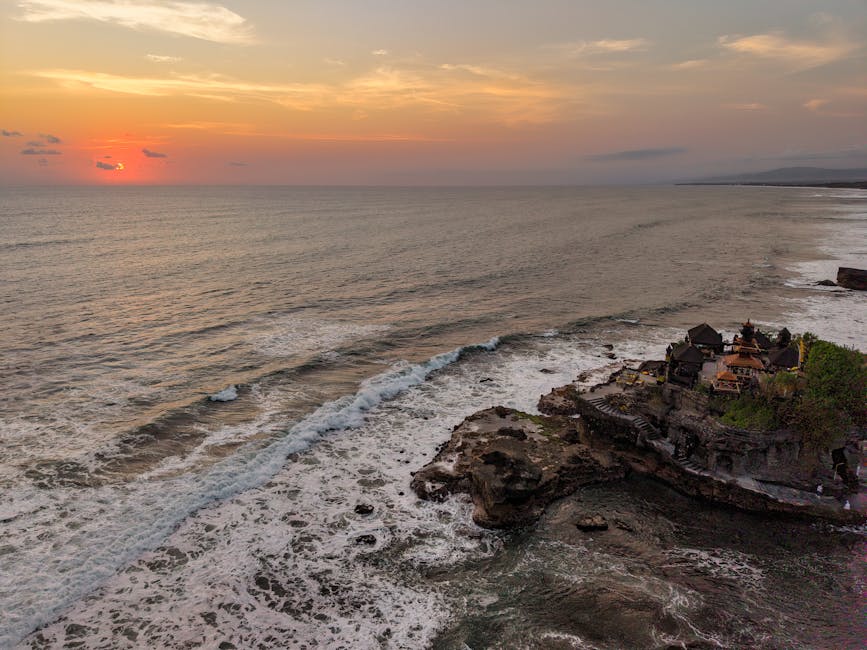
Golden hour timing. In June through August, sunrise is around 6:25 a.m. and sunset around 6:05 p.m. In December through February, sunrise creeps to 6:00 a.m. and sunset to 6:35 p.m. The morning golden window lasts about 75 minutes after sunrise; the evening one is about 60 minutes before sunset. Plan shoots accordingly.
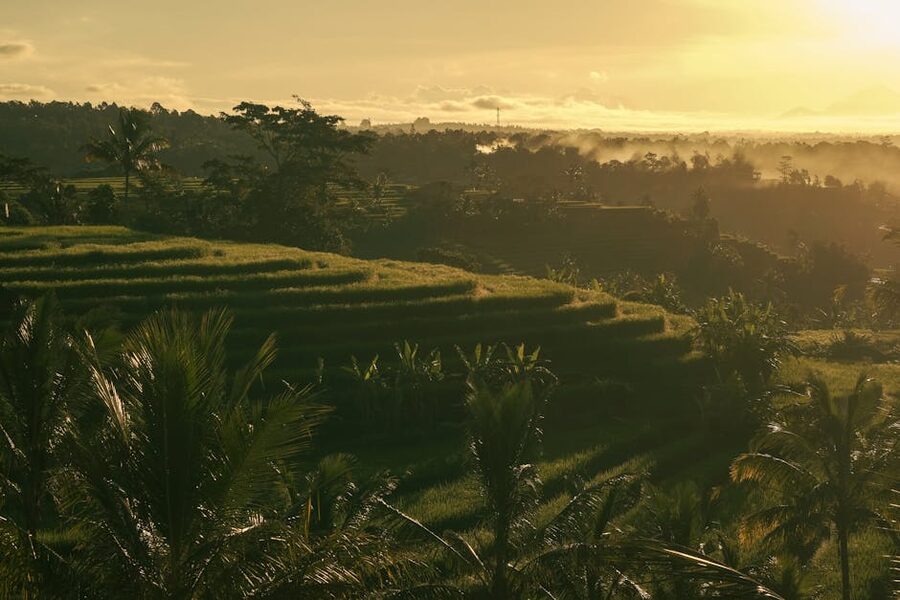
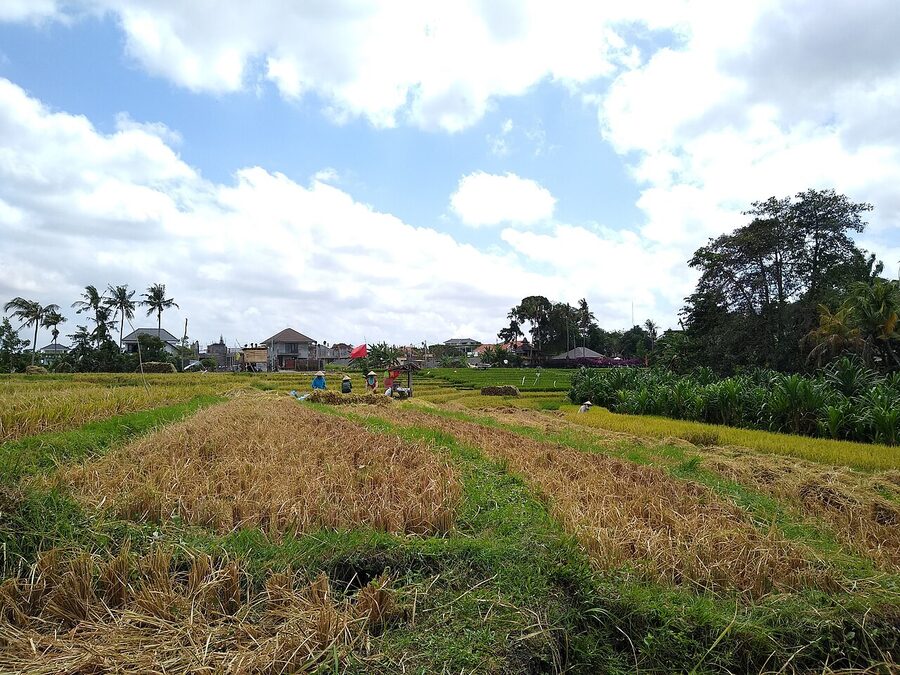
Rice terrace harvest cycles. The terraces are most photogenic in two windows. In late February through March they’re emerald green and the terraces are flooded. In late August through September they’re harvest gold. In June and July (peak tourist months) they often look brown and stubbly because that’s between cycles. Waterfalls in the Lovina area like Singsing run hardest from January through April when the upstream catchment is full.
Dust haze, September-October. When farmers in Java burn crop stubble in late September through October, the smoke drifts east and you’ll get a noticeable haze layer in Bali sunsets. Some photographers love it (it makes the sun a flat orange disc). For long-distance landscape work it’s a problem. The rains in November typically clear it.
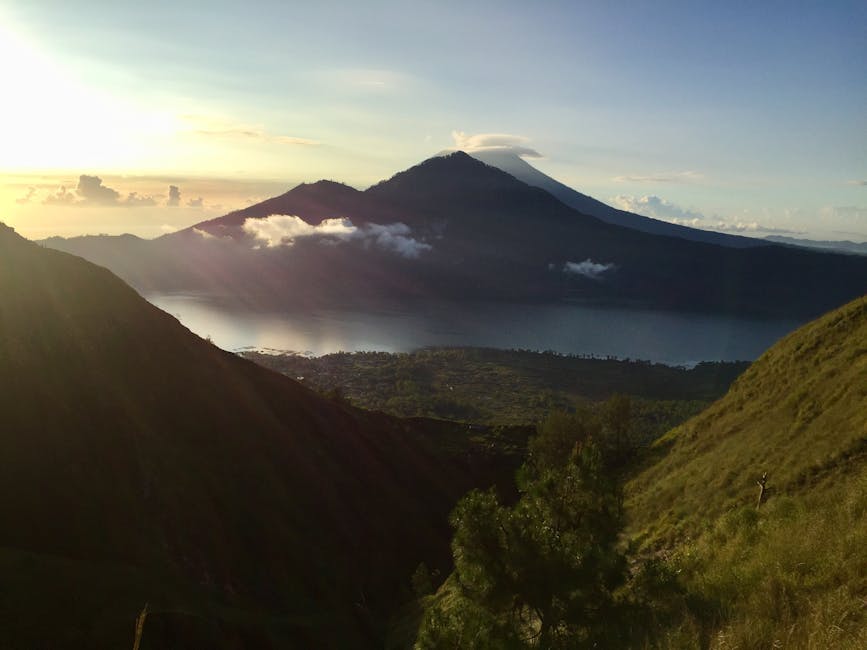
Mount Agung and Mount Batur visibility. Both volcanoes are reliably clear in the dry season morning hours. By midday clouds usually obscure the peaks. If you want a Mount Agung shot from Amed or a Batur shot from Kintamani, be set up for sunrise. Munduk is the exception: the upland mist there is the picture, and it sits in best in the wet season mornings.
Price patterns through the year
Accommodation prices in Bali follow a predictable wave with two sharp spikes. Below are the patterns for a mid-range villa or hotel room in Canggu/Seminyak/Ubud (figures in IDR, with USD in brackets the first time):
- February-March: the genuine low. Mid-range villas Rp 1,200,000-1,800,000 (about $75-115) per night. Easy to negotiate further on a multi-night stay.
- April-May: shoulder. Rp 1,500,000-2,200,000.
- June: rising. Rp 1,800,000-2,800,000.
- July-August: peak. Rp 2,500,000-4,500,000. Genuinely good places book out.
- September: drops back fast. Rp 1,800,000-2,500,000.
- October-mid-November: excellent value. Rp 1,400,000-2,000,000.
- Late November-mid-December: low. Rp 1,200,000-1,800,000.
- 20 December – 5 January: the spike. Rp 4,000,000-9,000,000. Two to three times normal.
- Mid-January – end of January: drops back to low.
Flight prices follow a similar but flatter pattern. The jump for July-August is real but it’s typically 25-40% above the wet season floor, not double. The Christmas-NYE spike on flights is sharp and you should book 4-6 months out for that window. International flights from Australia run cheaper than Europe in absolute terms because of distance, which is partly why Australia dominates the visitor mix.
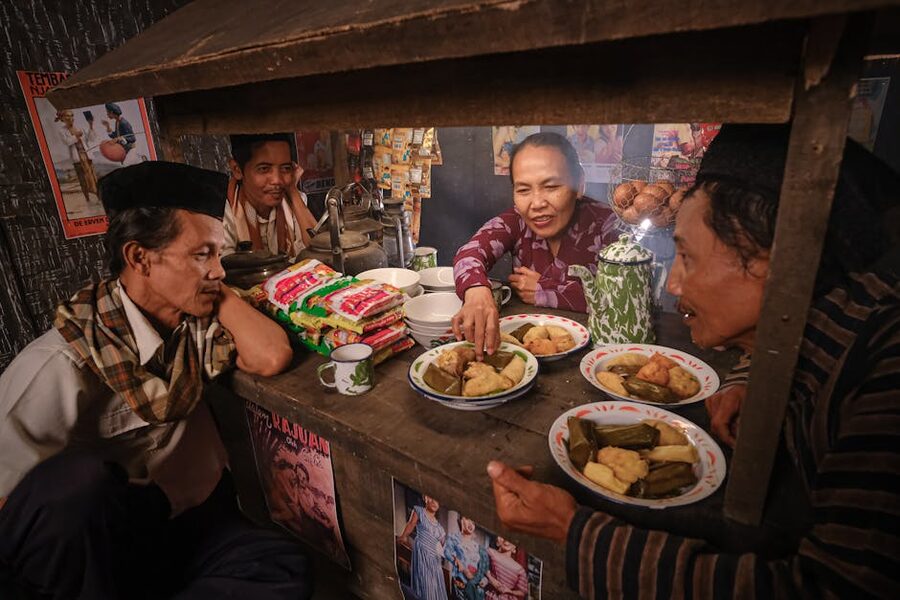
Food and warung prices barely move season to season. A plate of nasi goreng at a real warung is Rp 25,000-35,000 in any month. Where prices move is at the beach clubs and tourist-zone restaurants, which jack up by 15-25% in peak months and add cover charges around major holidays.
Region by region (because Bali isn’t one weather pattern)
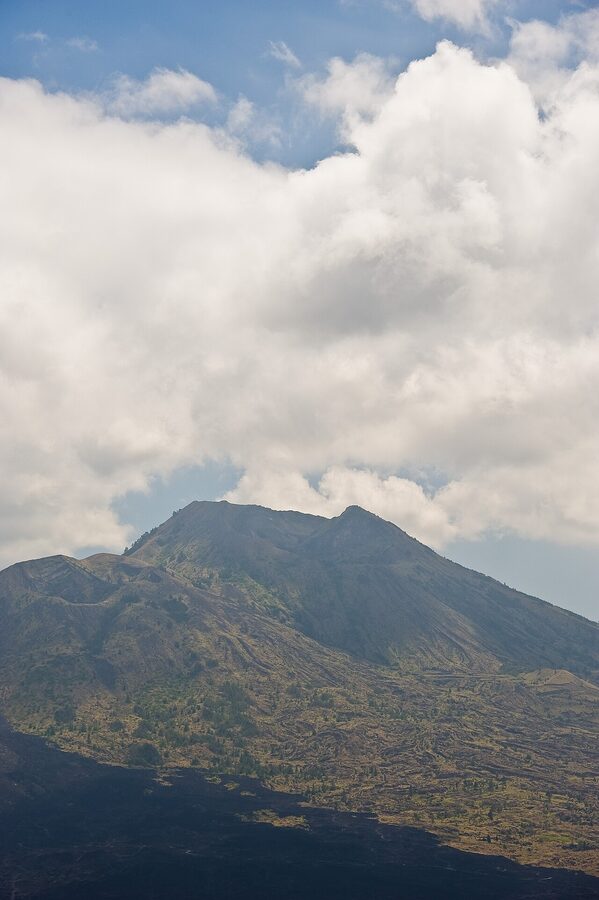
Bali has at least three distinct micro-climates. A weather forecast for Denpasar tells you something about Canggu and very little about Munduk.
The south coast (Canggu, Seminyak, Kuta, Sanur). Tropical lowland. 27-32 degrees year-round in the day. Wet season brings the afternoon storm pattern. Sea breezes in the dry season take the edge off. This is what most “Bali weather” articles describe.
Central uplands (Ubud, Sidemen, Bedugul, Munduk, Kintamani). 200-1,500m elevation, noticeably cooler. Ubud days are similar to the coast but nights drop 3-5 degrees lower. Munduk and Kintamani at altitude can hit 15 degrees overnight in July, especially January-February when nighttime temperatures in the highlands can surprise people who packed only beach clothes. Bring a fleece if you’re staying in Munduk any time of year. These areas get more rain than the coast at all times.
Bukit and the Nusa islands. The Bukit Peninsula (Uluwatu, Ungasan, Pecatu, Nusa Dua) and the Nusas (Penida, Lembongan, Ceningan) are drier and hotter than the rest of Bali. They sit on a different rainfall pattern, get less wet-season rain, and have water-supply problems in the dry season. Some Bukit villas truck water in from Denpasar in August. The upside: wet-season Bukit can be perfectly fine when central Ubud is in a four-day storm.
Editor’s actual picks (which months for which trip)
This is the bit most articles either skip or fudge. Here’s what I’d actually recommend, by traveller type:
First trip, no specific agenda: May or September
Either of these months is the sweet spot. Weather is reliably dry but not yet at peak heat. Crowds are 30-40% lower than July-August. Prices are lower. The rice terraces look better. You get to see Bali rather than the queue at Bali. May has the slight edge because it’s drier, and the Bali Spirit Festival mid-April-May extends the cultural offering. If you have to pick just one, I’d say May. Pair it with our 7-day Bali itinerary for a route that actually works.
Surfer: June through September
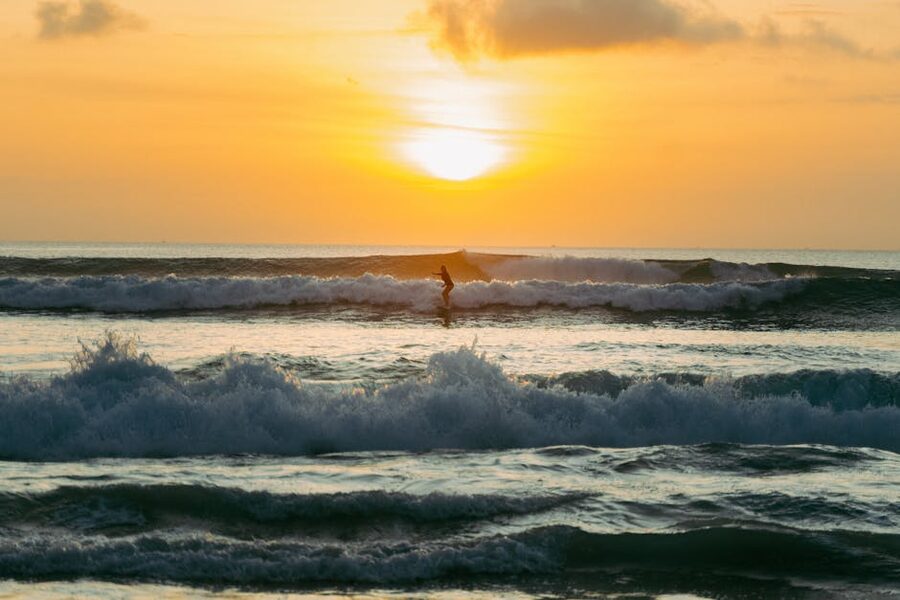
If surf is the priority, go in the middle of the dry season. June and September are slightly less crowded than July-August at the marquee Bukit breaks. Stay on the Bukit (Uluwatu, Ungasan, Bingin) so you can paddle out at first light before the day-trippers arrive. Wet-season surfers should base in Canggu instead.
Diver: July through October
Mola mola season at Crystal Bay opens this window and that’s the trip-of-a-lifetime stuff. August-September are the most consistent. Combine with manta dives at Manta Point and Tulamben wreck for a complete week. October has the bonus of dropping prices on accommodation while diving conditions are still excellent. More practical Bali travel tips on packing and logistics.
Honeymoon or quiet luxury: April through June, or September through October
You want the weather to behave, the photographs to look good, and the crowds to be moderate. The shoulders deliver all three. Avoid July-August (too crowded for Bukit cliff-top villas to feel private) and avoid Christmas-NYE (because it’s the worst week to spend that much money for the experience you’ll get).
Budget-conscious: February-March or October-November
The genuinely cheap windows. Accommodation is 30-40% off peak. Flights are softer. Restaurants aren’t full. The trade-off: you’ll have rain in your trip. If you can frame the rain as part of the deal (warung lunches, spa days, temple visits, an extra hour on a Ubud cafe terrace) rather than a problem, these are excellent value. Our area-by-area guide covers which neighbourhoods handle the rainy season best.
Cultural traveller: time it for Galungan or the Bali Arts Festival
If experiencing Balinese culture is the actual reason for your trip, the dates that earn the trip are Galungan (17 June 2026, or 13 January / 11 August 2027) and the Bali Arts Festival (13 June – 11 July 2026). Galungan gives you the entire decorated island. The Arts Festival gives you the entire performance and crafts catalogue in one place in Denpasar. A Ngaben cremation ceremony is a separate cultural experience entirely; those happen on lunar dates set by individual villages and you can ask your hotel to look out for them.
Family with school-age kids: when the school holidays force you
You’re going to travel during school breaks. The trick is which one. Christmas in Bali is brutal value. Easter is a much smaller spike. The best family window if you can make it work is northern-hemisphere October half-term (which lands neatly between the Australian September break and the Chinese New Year wave) or late June if you have to go in summer. Sanur is the family-friendly base; our Sanur guide covers the why.
The micro-pattern: what to actually pack and watch
Two practical things that move with the season:
Mosquitos. Wet season multiplies them and dengue cases tick up January through April. Pack a 50% DEET repellent and use it from late afternoon. Stay somewhere with screens on the windows or a mosquito net. The risk is real but manageable.
The afternoon thunderstorm pattern in wet season. Plan outdoor activities for the morning. Schedule yoga classes, spa appointments, indoor cooking classes, and warung lunches for the 2-5 p.m. window. By 5 p.m. it’s usually clear again for sunset. If you fight the rhythm you’ll have a worse trip than the rain alone would cause.
One more piece. The 17 August Indonesia Independence Day is a national holiday and government offices close, but tourist services run normally. Banks close, so withdraw cash a day or two earlier if you’ll need it. Roads in the south are louder than usual. If you’re putting a list together of things to do, it’s worth scheduling around the August 17 traffic in Kuta-Legian.
The waterfalls and the hike that need their own season
Two activities sit in their own season slot worth flagging:
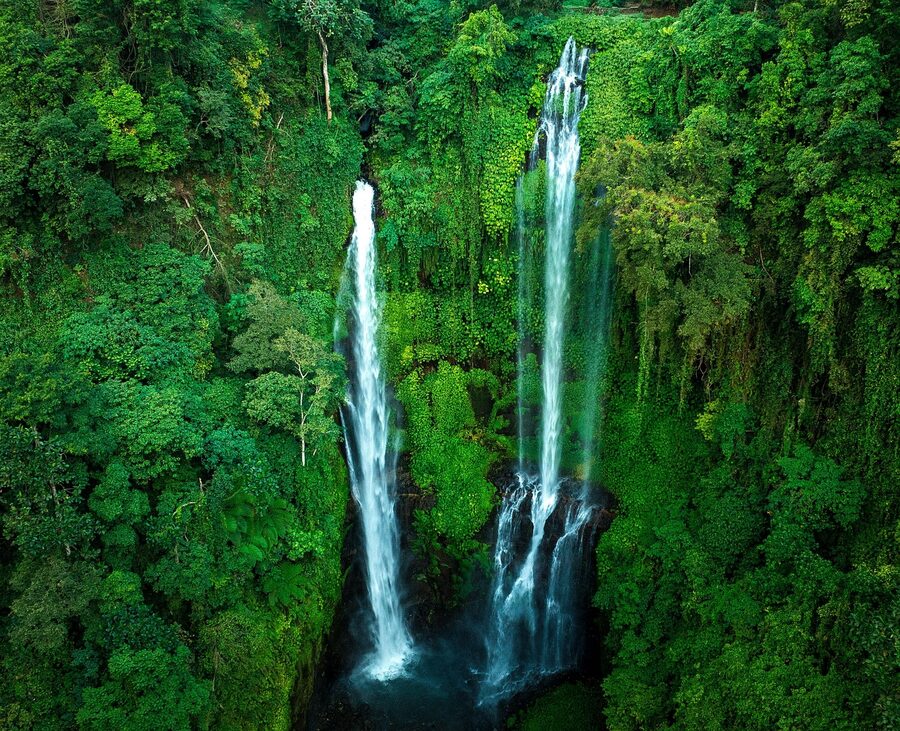
Waterfalls run hardest in February through April. Sekumpul, Tegenungan, Tibumana, Tukad Cepung, and the Munduk falls are at peak flow in the late wet season. The trade-off is muddy trails. By August they’re still impressive but a fraction of the volume.
Mount Batur sunrise hike. Doable year-round, ideal in the dry season (May-September) when you’ll get a clear horizon for the actual sunrise. In the wet season you’ll often hike up in cloud and not see the sunrise itself, even on a “clear” day. The hike still happens and the experience is good, just temper expectations. Mount Agung (the harder climb) is dry-season-only because of trail safety; sometimes restricted further by volcanic activity.
One last calendar item: the tourism levy
Since February 2024 every foreign visitor to Bali pays a Rp 150,000 (about $9.50) tourism levy. You can pay before arrival via the Love Bali app/website, or on arrival at Denpasar airport at a marked desk. It’s a one-time per trip charge regardless of length. It funds cultural preservation and waste management programs (with mixed enforcement results so far). Allow an extra 5-10 minutes at arrival in months when you can’t pre-pay; in peak months that arrival queue can be 30+ minutes if you didn’t.
So when should you actually go?
If you take one thing from this calendar: the months everyone tells you not to go (February, March, late October, November) are the months I’d often pick. You get a real Bali, half the people, half the prices, and rain you can plan around. The months everyone tells you to go (July, August) deliver perfect weather and a queue at every warung. The week most articles ignore as a problem (Christmas to New Year) is the only window I’d actively warn against booking unless you have a specific reason.
Pick a month based on which trade-off you’d rather make. Bali in May is a different island from Bali in August, and Bali in February is different again. None of them are the wrong answer. The wrong answer is showing up in late December expecting February prices.


_of_Nusa_Penida,_Bali_(2025)_-_img_17.jpg)
Planning a Bali trip?
Start with the cornerstones — when to go, where to base, and what's actually worth doing.