
Amed, Bali: The East Coast Bali Most Travelers Skip
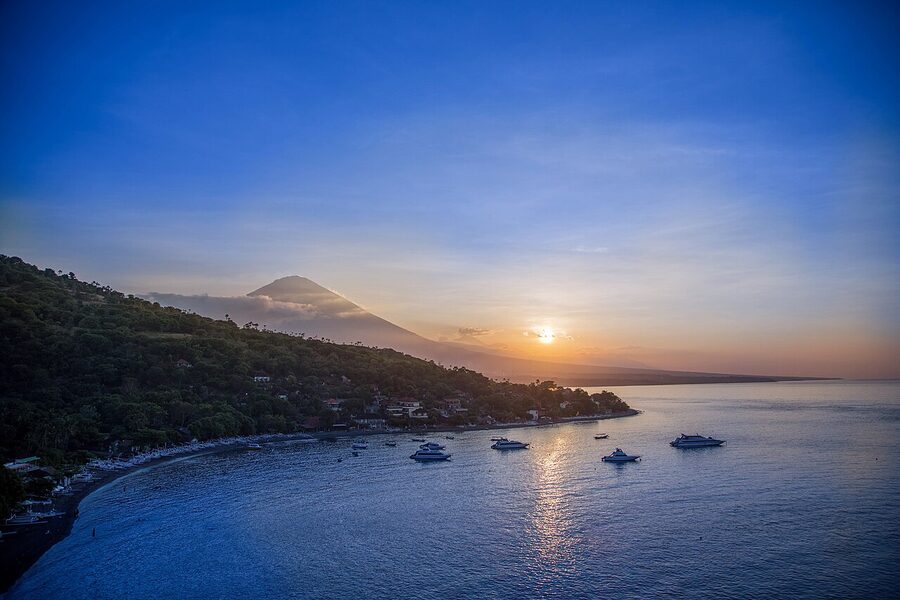
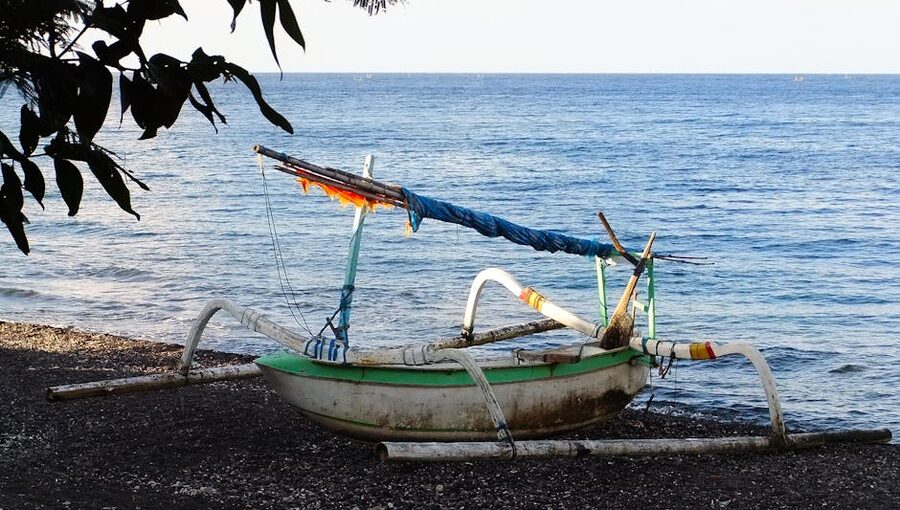
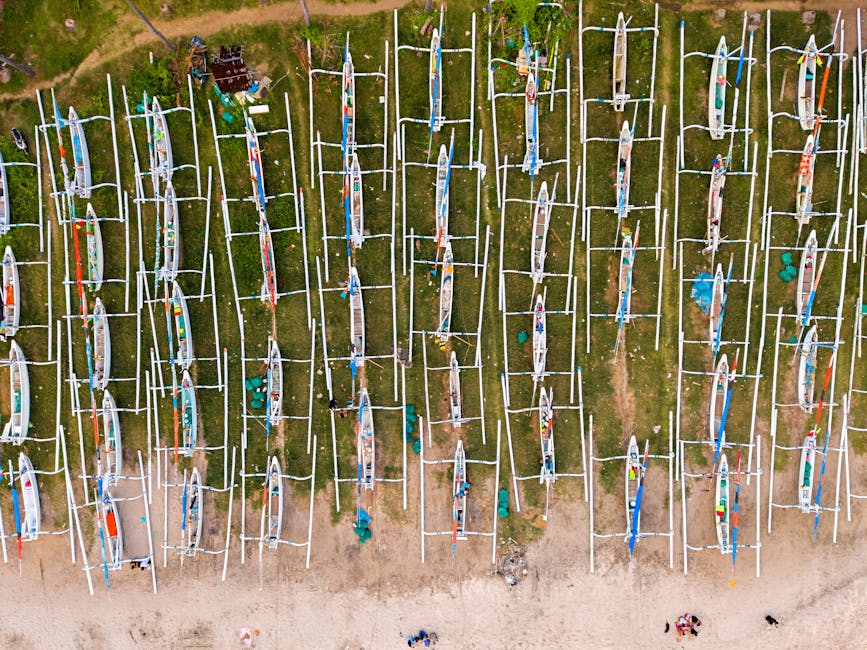
Bali is Canggu and Seminyak. That’s what Instagram says. Drive two hours northeast from the airport and you find a coast that still has fishing jukungs (traditional outrigger boats) hauled up on black sand beaches at dawn, salt being raked into wooden troughs by hand, and a pair of dive sites that have been on Lonely Planet’s radar for thirty years and still aren’t crowded. That’s Amed. Seven small fishing villages strung along a 14-kilometre stretch of coastline in Karangasem regency, Mount Agung behind you, the Lombok Strait in front, and almost no one in the water before 8 a.m.
I went the first time because I’d booked four nights in Ubud and gotten Ubud-tired by the second morning. A driver quoted Rp 800,000 (about $50) for the run east. I took it, stayed eight nights, and have made two return trips since. This guide is what those three visits taught me.
In This Article
- Where Amed Actually Is (and Why It’s Plural)
- Why You’d Bother Going This Far
- The USAT Liberty Wreck: The History Most Guides Get Half-Right
- The Japanese Wreck at Jemeluk: Snorkellers Welcome
- Snorkelling Off the Beach (No Boat, No Tour)
- The Salt Farms: Watch How It’s Actually Made
- Mount Agung From Amed
- Sunrise on the Beach
- Where to Stay: No Five-Stars (and That’s the Point)
- Eating in Amed
- Day Trips: The East Bali Loop
- Pura Lempuyang (the “Gates of Heaven”)
- Tirta Gangga Water Palace
- Taman Ujung
- Sidemen
- Padangbai (and Onward to the Gilis)
- The Cultural Bit Worth Knowing
- Macro and Muck Diving (For the Geeks)
- Practical Notes
- Final Take
Where Amed Actually Is (and Why It’s Plural)
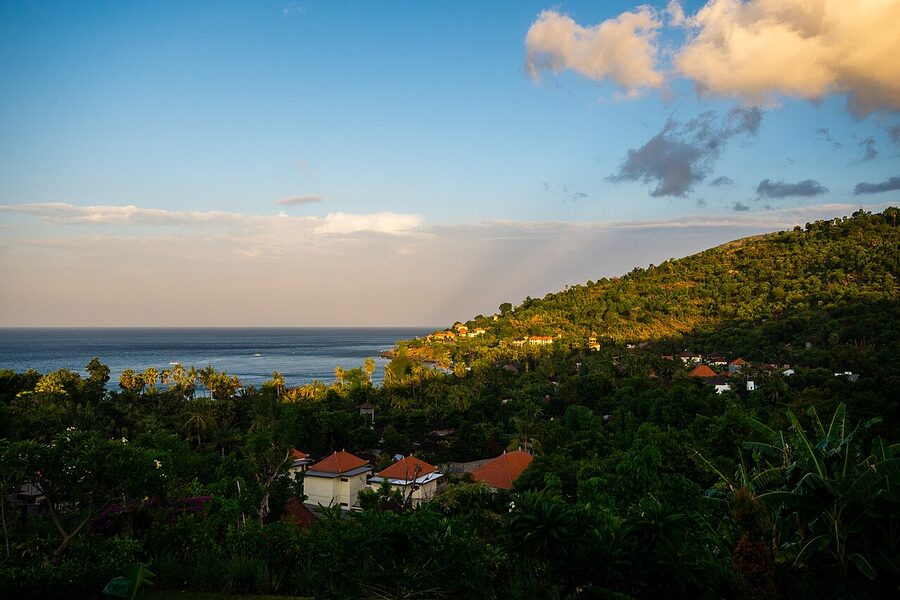
The name “Amed” gets used loosely. Strictly, Amed is one village. In practice, “Amed” means the whole stretch from Culik in the north down to Aas in the south: roughly 14 kilometres of coast on one main road, with a sequence of small bays and villages along the way (Jemeluk, Bunutan, Lipah, Lehan, Selang, Banyuning, Aas). Each has its own beach, personality, and short list of warungs. None is more than a few minutes’ scooter ride from the next.
From south Bali, plan on three hours from Kuta or Seminyak, three and a half from Canggu, 2.5 from Ubud if traffic cooperates. There’s no Grab or Gojek out here and taxis don’t roam, so you arrange transport before you arrive or you don’t move once you’re here. Most travelers book a private driver for the run (Rp 700,000-900,000 / about $44-57 one way), then rent a scooter on arrival (Rp 70,000-100,000 / about $4.40-6.30 per day) or use the hotel’s driver for day trips. If you’re flying in fresh, our flights to Bali guide covers connection logistics so you actually arrive with the energy to do this drive.
Why You’d Bother Going This Far
Two reasons, mostly. First, the diving. The USAT Liberty wreck at Tulamben (twenty minutes north of Amed Beach) is one of the best shore-accessible wreck dives anywhere. Second, the absence of south-Bali atmosphere. No nightlife to speak of, no clubs, no rooftop bars charging Rp 250,000 (about $16) for a beer, no DJs, no influencer studios. You’ll have dinner at a beachfront warung and be in bed by 10 p.m. because you’re getting up at 5:45 to dive or watch jukungs head out.
You’d also bother because of what’s on the way back: Tirta Gangga, Pura Lempuyang, Sidemen, and Padangbai string into a north-east loop that takes a couple of unhurried days. More on that further down.
The USAT Liberty Wreck: The History Most Guides Get Half-Right
You’ll see this dive site in every Bali roundup. Most articles tell you it was sunk by a Japanese torpedo in WWII and now sits 30m down at Tulamben. Roughly correct, but the actual story is better.
The ship was built in Philadelphia in 1918 as a cargo vessel called the SS Liberty Glo. After the US entered WWII, the navy commissioned her as the USAT Liberty, an armed transport carrying rubber and railway parts from Australia toward the Philippines. On 11 January 1942, the Japanese submarine I-166 hit her with a torpedo in the Lombok Strait. She didn’t sink. USS Paul Jones and the Dutch HNLMS Van Ghent towed her toward Singaraja, but Singaraja was already under enemy occupation, so the crew beached her at Tulamben. There she sat for twenty-one years, slowly being stripped for scrap.
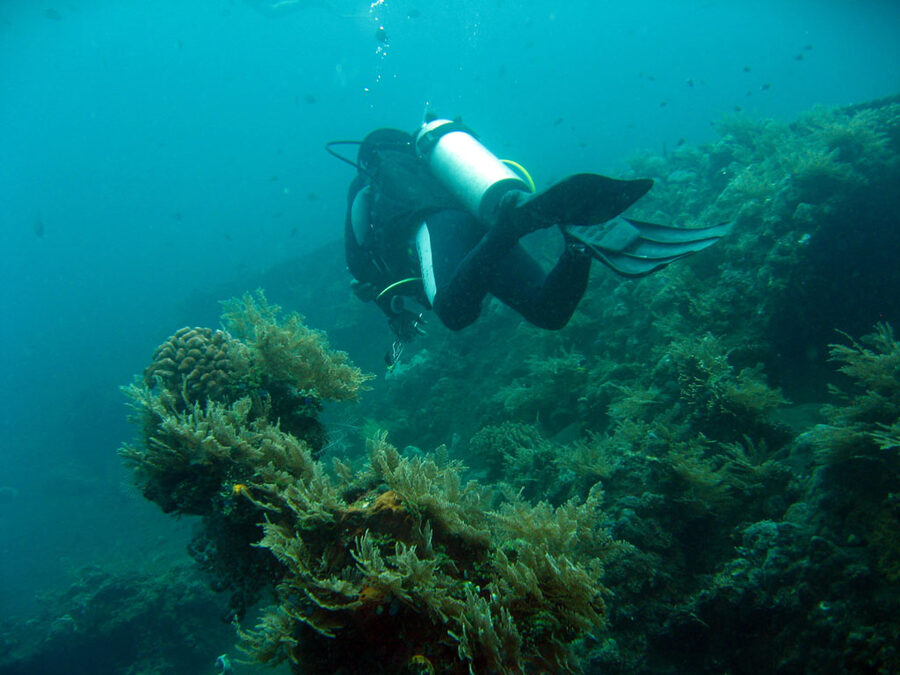
What put her underwater was Mount Agung. The 1963 eruption killed thousands of people and produced enough seismic and lahar movement to push the Liberty off the beach and break her hull in two. She now lies parallel to the shore at Tulamben, between 5m and 30m below the surface, only 40m from a black-pebble beach. You don’t need a boat. You walk in.
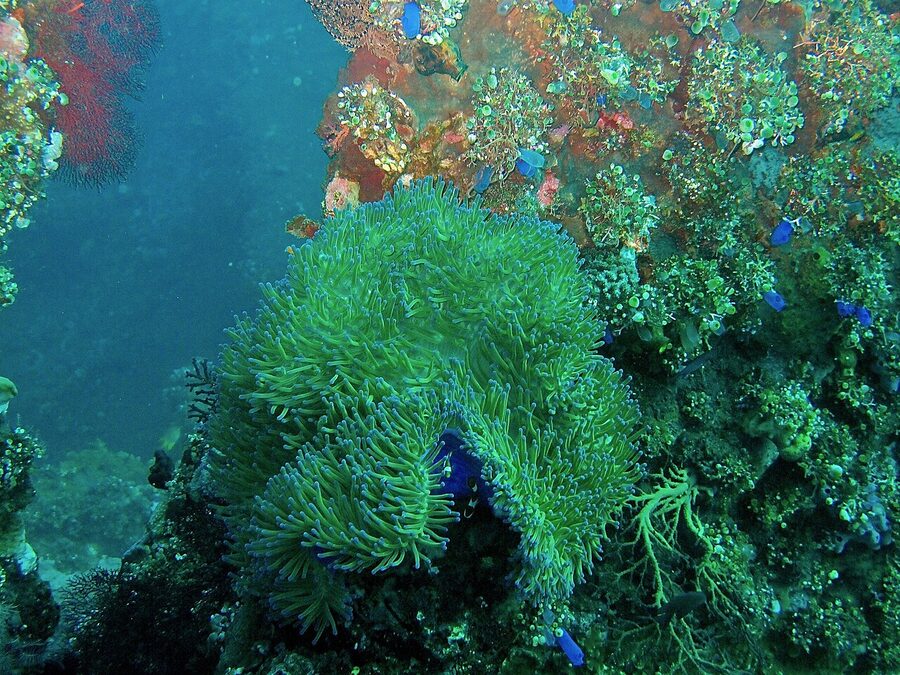
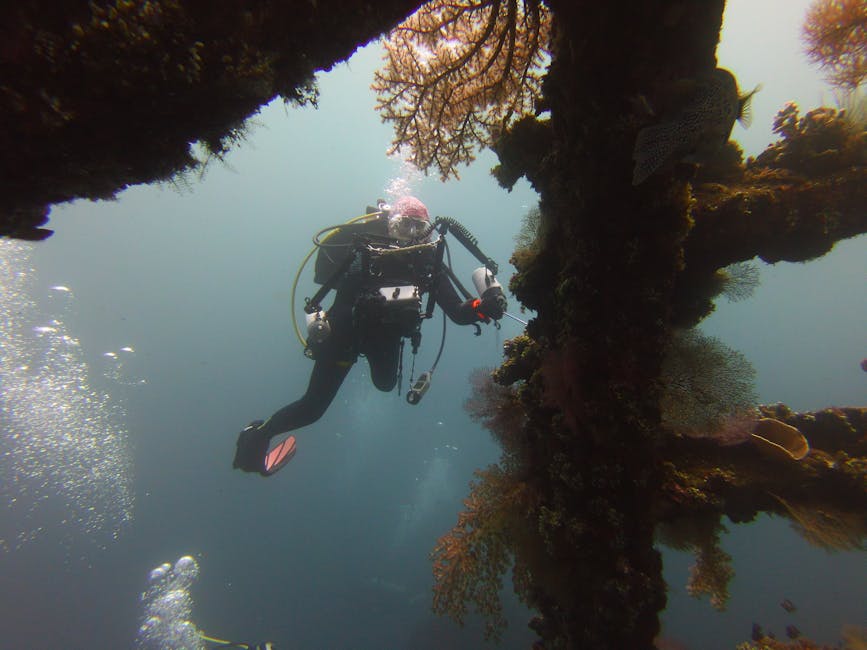
Open Water cert is enough to see most of the wreck; Advanced gets you the full thing including the swim-throughs at the bow. Visibility 15-20m, currents mild. PADI fun-dive packages run Rp 700,000-1,200,000 (about $44-76) for two dives with gear. Discover Scuba intro (never-dived-before) gets you to the shallowest sections in an afternoon for Rp 1,200,000-1,500,000 (about $76-95). Multi-day Open Water certification is Rp 5,500,000-6,500,000 (about $345-410). Local tip: dive before 9 a.m. or after 3 p.m. Day-tripper buses from south Bali arrive 9:30-10. At 6:30 a.m. you might have it almost to yourself.
The Japanese Wreck at Jemeluk: Snorkellers Welcome
The other wreck people talk about is the so-called Japanese Wreck in Banyuning Bay, ten minutes north of Amed Beach. Real talk: nobody actually knows what ship this is, or whether it’s Japanese. Divers found a single Japanese-style toilet during early surveys and the name stuck. The wreck is small (around 25m long) and the top sits just a few metres below the surface, which makes it freediveable and snorkel-friendly. No tank required.
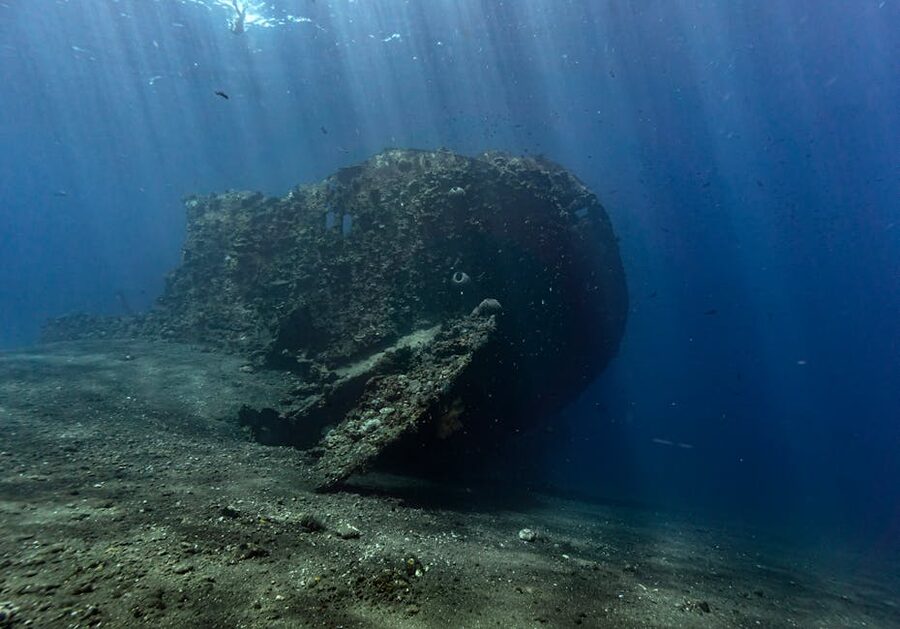
Standard access is Kawi Karma Beach Restaurant. Rp 25,000 (about $1.60) entry includes parking, a drink, and use of their toilets and outdoor showers; mask and fin rental is another Rp 25,000 each. The wreck is colonised by hard and soft corals; expect schools of cardinal fish, damsels, and trumpetfish on the swim across.
Snorkelling Off the Beach (No Boat, No Tour)
This is what makes Amed different from almost everywhere else in Bali. The reef starts a few metres from the sand. You walk in, you swim, you’re over coral. No boat, no schedule, no group, no upsell. Two best entries:
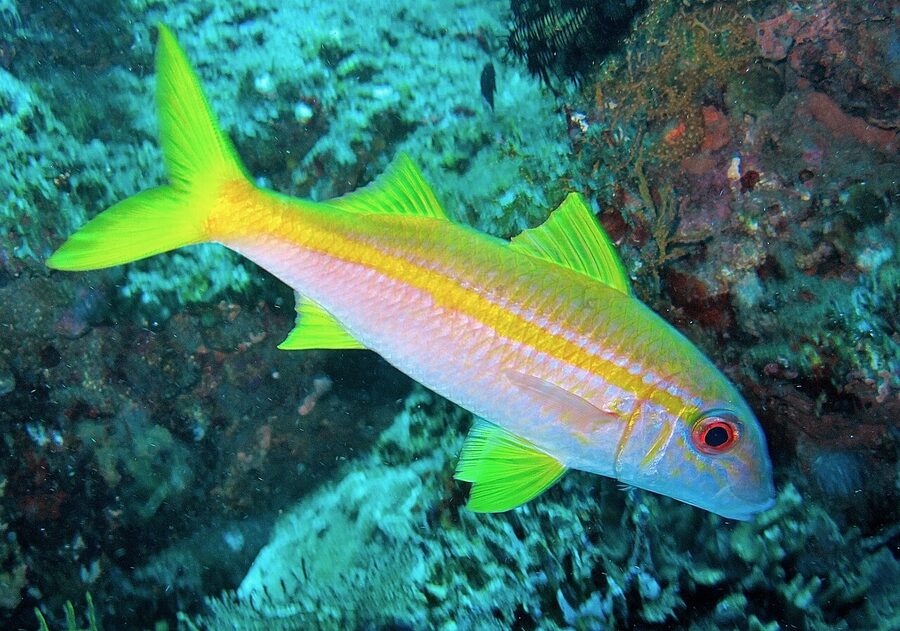
Jemeluk Bay. The crescent-shaped bay just north of Amed Beach. Calm water inside, an underwater shrine local divers placed to encourage coral growth, and a vertical drop-off at the south end where you can see straight down a wall to about 45m. The shrine buoy washed away; ask staff at Green Leaf Cafe to point it out. Snorkel rental on the beach is Rp 30,000-50,000 (about $1.90-3.20) per day.
Lipah Beach. Halfway between Amed Beach and the Japanese Wreck. Park free at Vienna Beach Resort and walk through. The reef is shallow, good for less confident swimmers, with sea turtles regularly sighted in the morning.
One safety thing the brochures don’t mention: stonefish. They sit camouflaged on rocks in the shallow entries. You won’t tread on one in clean sand, but at the rocky entries (Lipah and the Japanese Wreck) shuffle your feet rather than stepping. If you do get spined, hot water (as hot as you can stand) breaks down the toxin. Closest hospital is in Amlapura, about 45 minutes south.
The Salt Farms: Watch How It’s Actually Made
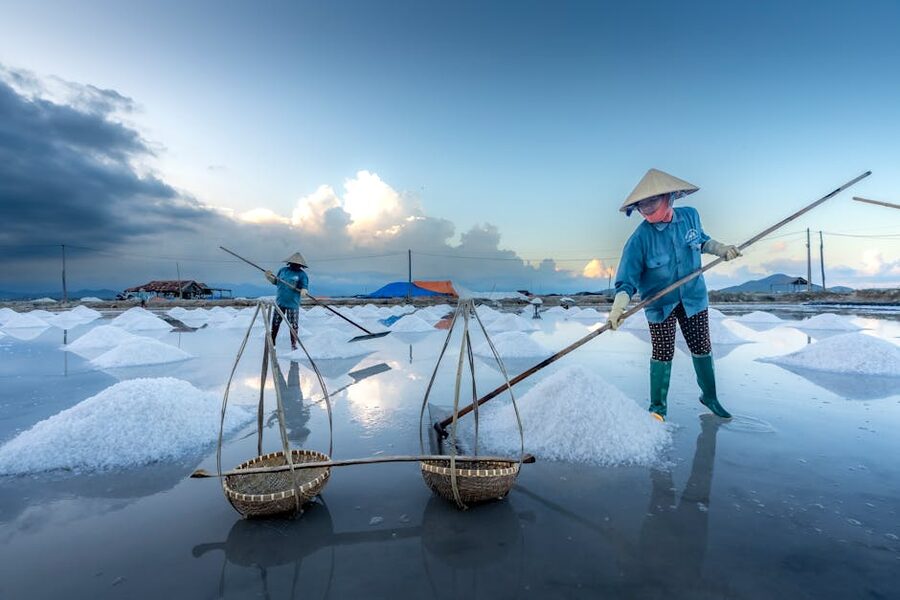
Amed has been producing sea salt for hundreds of years; the Karangasem royals used it. The technique: salt water carried up from the sea in shoulder yokes, poured over coarse black sand spread on a packed-earth bed, sun-dried, then collected, re-dissolved in concentrated brine, and evaporated again in hollowed-out palm-trunk troughs lined up on the beach. The result is a clean-tasting, faintly mineral salt that has earned a Geographical Indication designation from the Indonesian government, the local equivalent of an AOC mark.
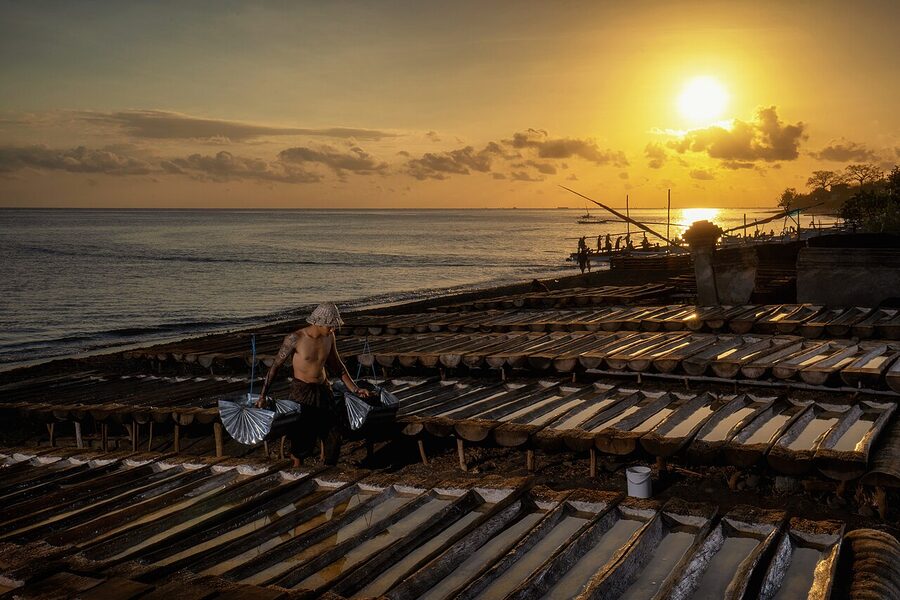
Amed Salt Centre is free to visit (donation expected). The catch: salt is only made in the dry season. Between November and March you’ll see the troughs but nobody working them. In July you’ll get a salt farmer, often an ibu (older woman) in her sixties, raking and pouring at sunrise or just before sunset. Buy direct, sealed in a small banana leaf parcel for Rp 20,000-30,000 (about $1.30-1.90). Best souvenir from Bali you’ll bring home.
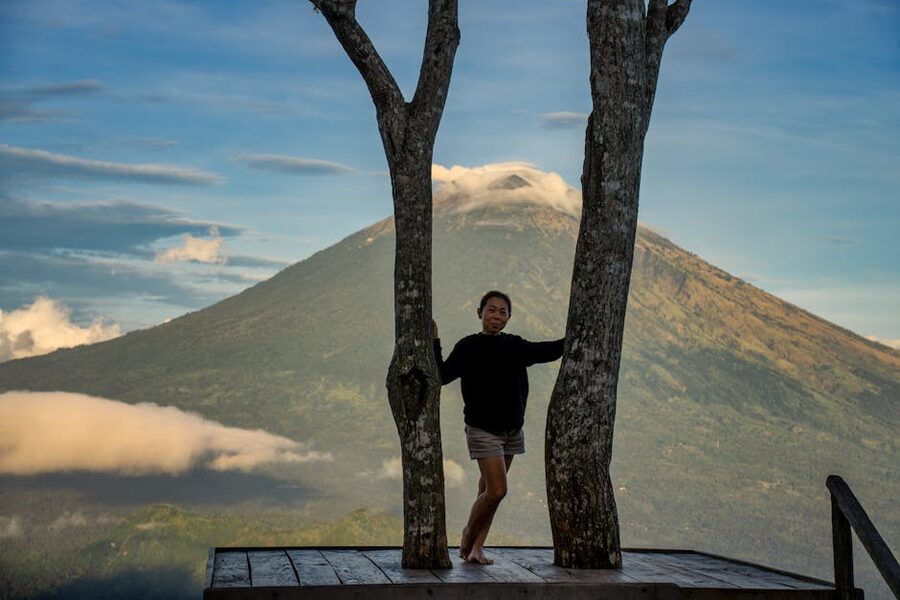
Mount Agung From Amed
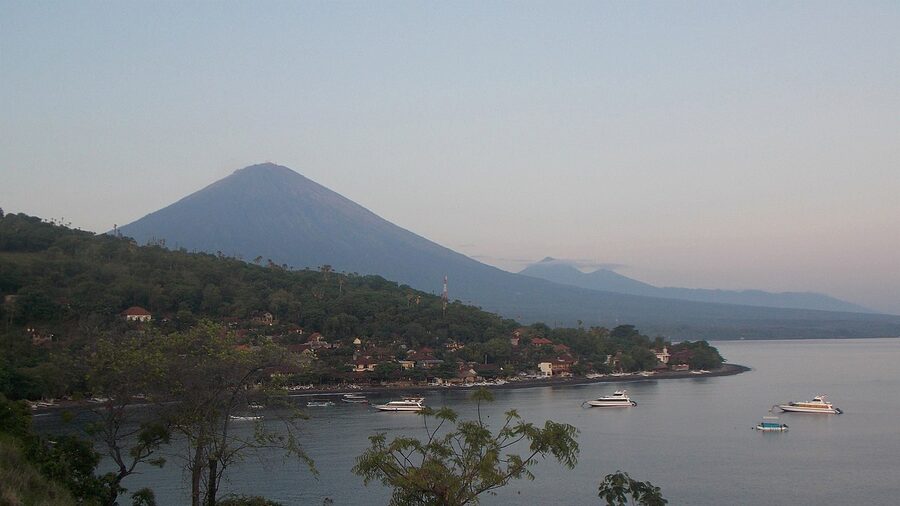
Agung is 3,031 metres tall and dominates the inland view from anywhere in Amed. On a clear morning, before cloud builds at the summit, you can see the whole profile from your hotel balcony. Last erupted 2017-2019; the exclusion zone has been lifted but the summit climb is guided-only (the PVMBG geological agency updates the alert level). Climbs leave around midnight from Pura Pasar Agung and reach the rim before sunrise. Rp 1,200,000-1,800,000 (about $76-114) per person depending on group size.
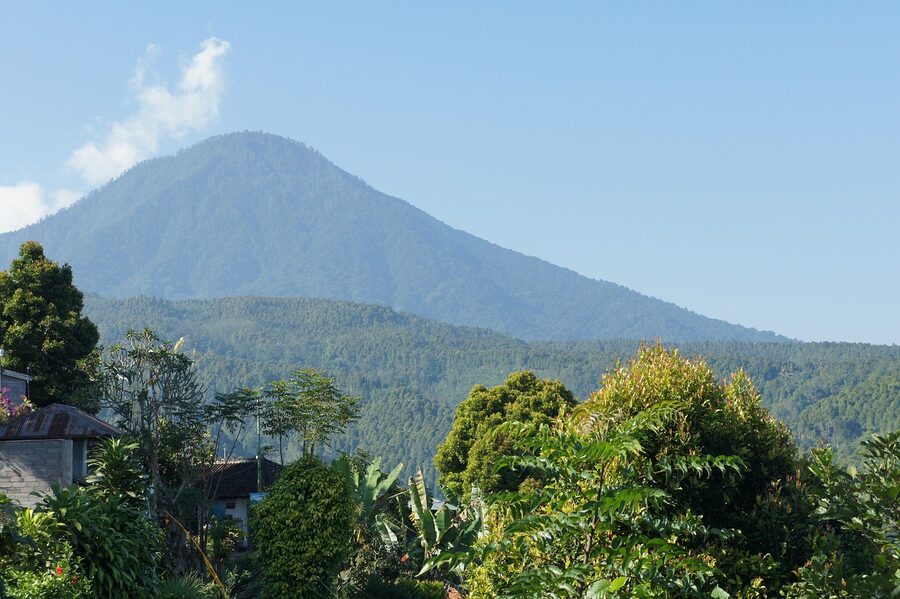
If you don’t want to climb it, scooter up to one of the inland viewpoints. Bukit Cinta (“Love Hill”) is a 30-minute ride from Amed Beach: an unmarked platform with a framed view of Agung over rice terraces. Free, bring repellent (the mosquitoes are vicious). Lahangan Sweet is more set up for visitors with a paid platform (Rp 50,000 / about $3.20), a swing, a photographer-for-hire booth, and a small warung. Get there well before sunrise; the road is rocky and the last section is best walked.
Sunrise on the Beach
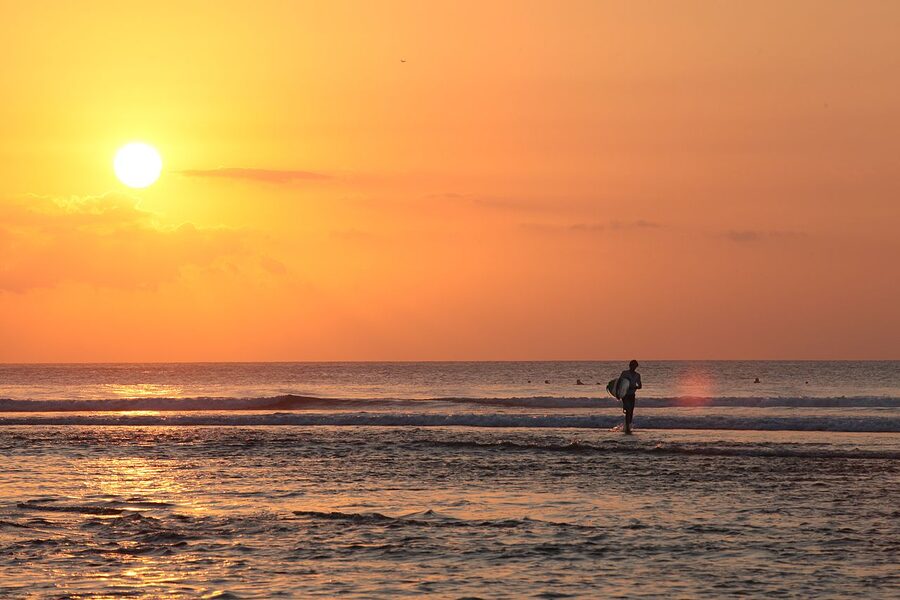
This is the genuinely good Bali moment that everyone tells you about and undersells. The water turns coral, then orange, then a thin gold line on the horizon as the sun pushes up out of the Lombok Strait. Fishermen go out at the same time, sails up, jukungs in silhouette against it. Nobody else on the beach. No entry fee, no queue, no Instagram setup. Black sand, coffee from your homestay’s kitchen, the village waking up.
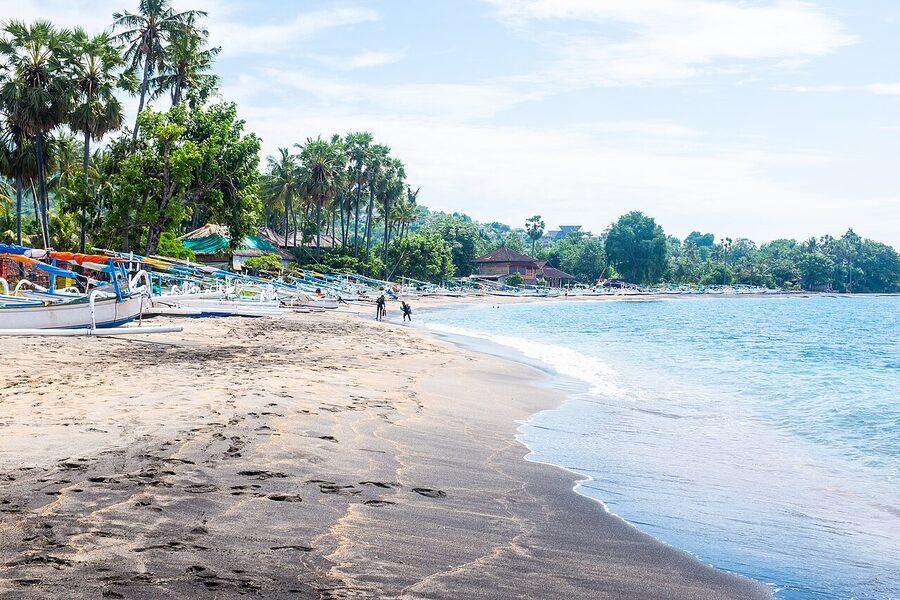
Best beaches for sunrise: anywhere along Jemeluk, Lipah, or Amed Beach proper. Sun rises slightly south of east in the dry season; face roughly toward Lombok. Up at 5:45, sunrise around 6:10-6:25.
Where to Stay: No Five-Stars (and That’s the Point)
Nothing in Amed is a tower hotel. No Marriotts, no chains, no club lounges. What you get is a long sequence of small dive lodges, family homestays, and a few small villa complexes, mostly oriented to the water. Picking the right stretch matters more than picking a specific property because everything is spread out along that one coastal road.
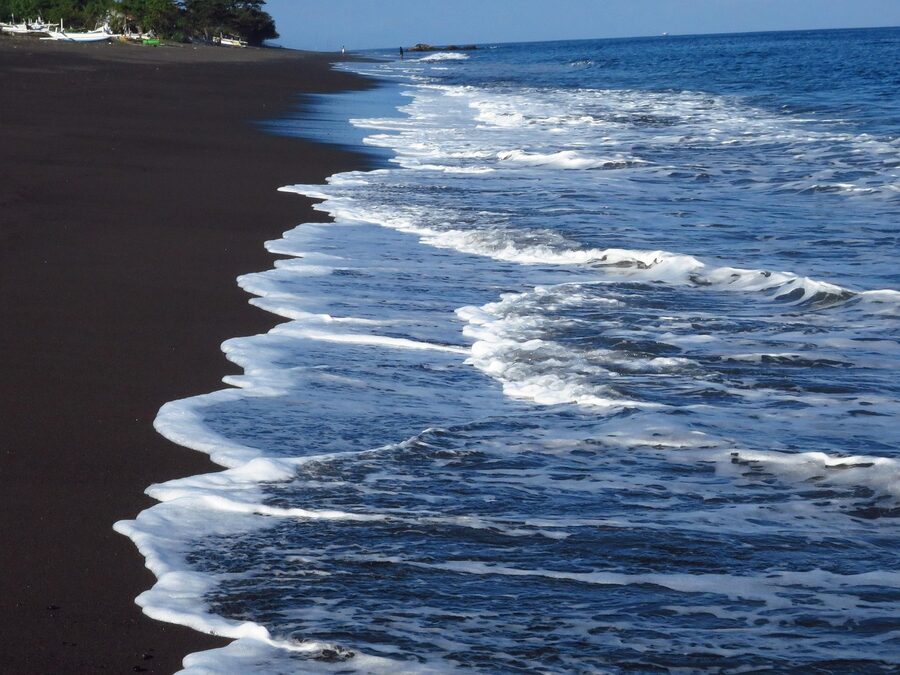
Jemeluk Bay is the best base if snorkelling matters and you want decent restaurants in walking distance. Sunset Point bar is up the hill behind. Budget homestays here run Rp 350,000-500,000 (about $22-32); mid-range villas Rp 1,000,000-1,800,000 (about $63-114). Lipah Beach is quieter and spread out with a cluster of dive resorts. Selang and Banyuning further south are the quietest stretches; plan to drive everywhere. Tulamben twenty minutes north makes more sense than Amed proper if you’re here only to dive the Liberty: cheaper rooms, dive shops right there, in the water at 6:30 a.m. without driving.
One booking note. Well-rated places fill up two to three weeks ahead in dry season (May-October). The cheapest beachfront homestays often don’t show on the big platforms. If you find a room you like, message direct via WhatsApp where possible; you’ll often get a better rate than the Booking listing.
Eating in Amed
Lean grilled fish. Most of what you’ll eat came off a jukung that morning. The classic order is ikan bakar (grilled whole fish), usually mahi-mahi, snapper, or barracuda, brushed with sambal kecap manis and served with rice, fried morning glory, and sambal matah. Rp 90,000-150,000 (about $5.70-9.50) at a family warung; Rp 180,000-250,000 (about $11-16) at the bay-view restaurants where you’re paying for the view.
Warung staples (nasi campur, nasi goreng, mie goreng, sate ayam) run Rp 25,000-50,000 (about $1.60-3.20) at the inland spots where dive guides eat lunch, less than the price of a beer in Seminyak. Our piece on Indonesian nasi goreng history and the best warungs in Bali goes into the dish in detail; Amed is where you’ll eat the village version.
Price warning: beachfront warungs in Jemeluk have started charging Seminyak-adjacent prices for straightforward local food. The view is the upcharge. For the cheap meal, walk a block back from the road. The smaller warungs without English signs are where dive guides eat.
Day Trips: The East Bali Loop
Amed is also a good base for stringing together the Karangasem cultural sites. Most travelers do these on the drive in or the drive back rather than standalone, because the loop covers a lot of ground. A driver for a full day runs Rp 700,000-900,000 (about $44-57) for 8-10 hours including all driving.
Pura Lempuyang (the “Gates of Heaven”)
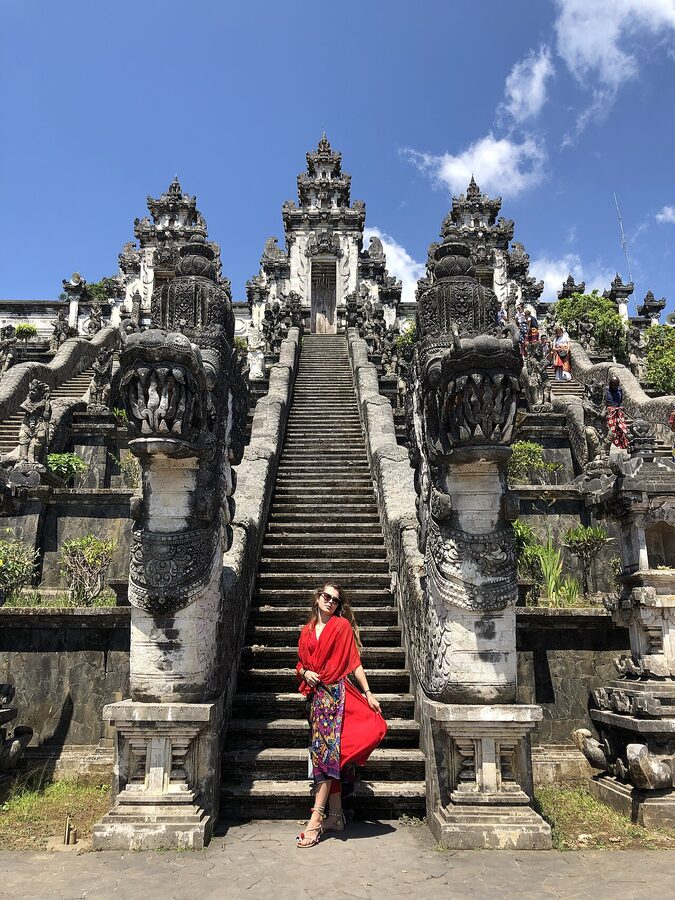
The truth the Instagram captions never mention: there is no lake. The “reflection” is created by a temple worker holding a piece of mirror glass under your phone camera. You queue one to four hours (often four in peak season), pay Rp 55,000 (about $3.50) entry, and you get four-to-six minutes on the platform. Only worshippers walk through the actual temple complex. I went once, for the absurdity of the queue and the trick. I would not go again. Lahangan Sweet has its own split gate, no queue, and an actual view of Agung instead of a mirror.
Tirta Gangga Water Palace
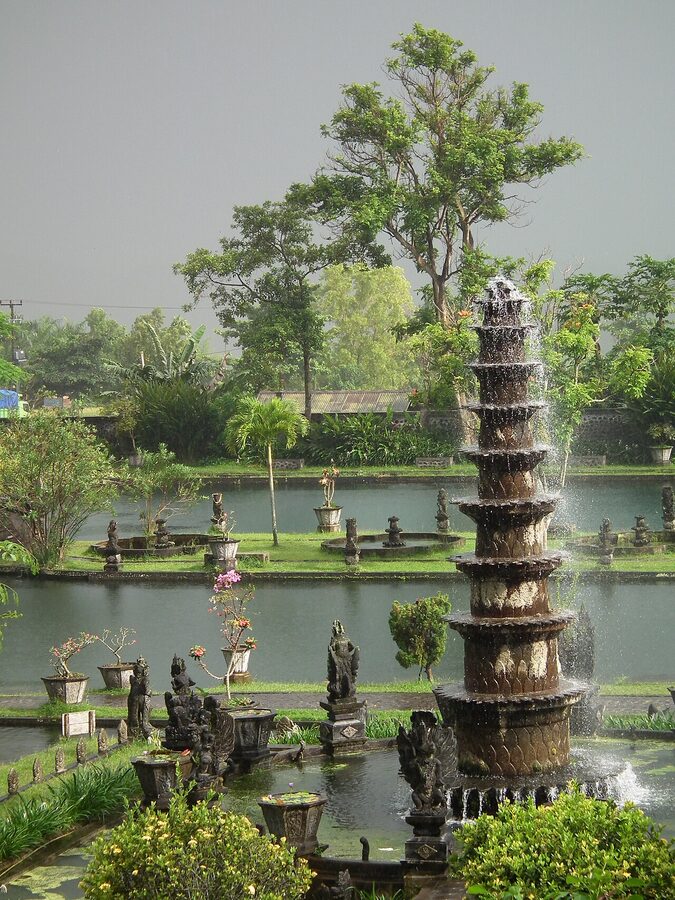
Built in 1946 by the last raja of Karangasem, named after the Ganges. Most of the original was destroyed in the 1963 Agung eruption and rebuilt. Today: fountains, ponds, and stepping-stone trails over koi-filled water. Entry Rp 50,000 (about $3.20); fish food Rp 5,000 a packet from the stall outside (vendors inside charge eight times that). One-hour visit. Pairs naturally with Lempuyang. Indonesia.travel has the background detail.
Taman Ujung
The other Karangasem water palace, less visited than Tirta Gangga, built 1909-1921 by the same royal family. A Dutch architect was involved, so the buildings mix Balinese forms with European symmetry. Three ponds, viewpoint, fewer crowds. Entry Rp 100,000 (about $6.30). I prefer it to Tirta Gangga.
Sidemen
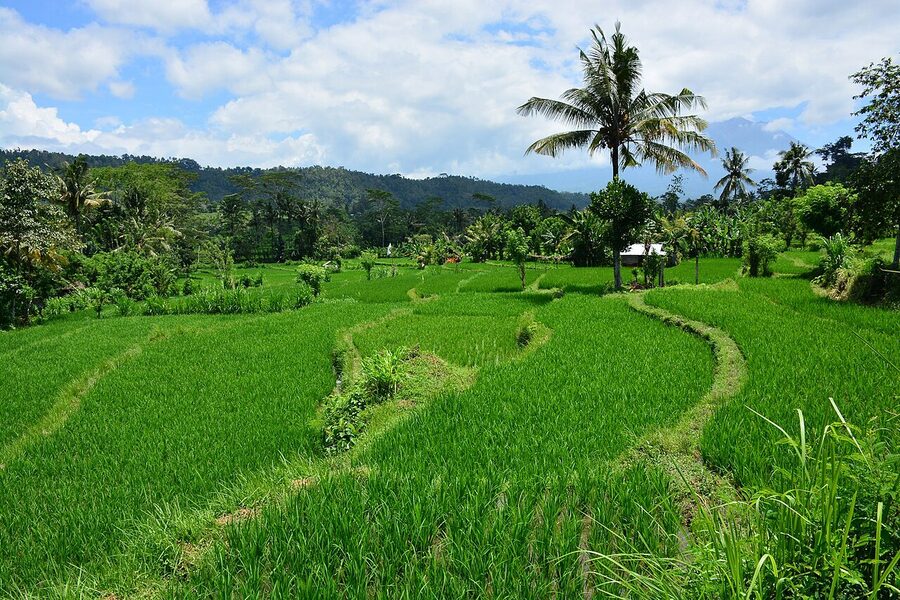
An hour south of Amed, Sidemen (pronounced see-deh-men) is a quiet rice-terrace valley with Agung as the inland backdrop. It’s what Tegalalang was twenty years ago: green, slow, no tour buses, dotted with small homestays and a couple of good viewpoint cafes. If you have a third Amed night to spare, lose one and add Sidemen. Pairs naturally with the north coast as a quiet-Bali road trip; our Singsing Waterfall guide for Lovina covers the north-coast sibling.
Padangbai (and Onward to the Gilis)
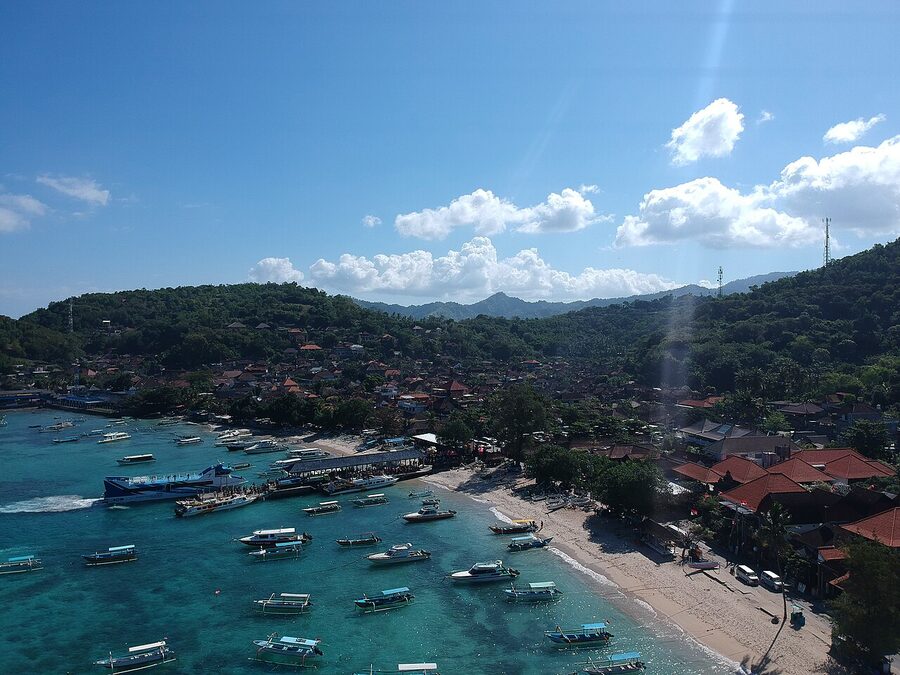
An hour south of Amed, Padangbai is the fast-boat port for the Gilis and the slow-ferry port for Lombok. If your trip continues to the Gilis, Amed makes a logical staging point: drive down in the morning, catch the 9:30 or 11:30 fast boat, be on Gili Air or Trawangan by lunch. Tickets run Rp 350,000-700,000 (about $22-44) one way. Padangbai itself is also a respectable dive base (Blue Lagoon and Jepun).
The Cultural Bit Worth Knowing
Amed is Balinese Hindu like the rest of the island: daily canang sari offerings on doorsteps, weekly temple ceremonies, the same Galungan / Kuningan / Nyepi calendar. Homestay families will quietly invite you to a ceremony if there’s one happening at their banjar during your stay. Sarong, sash, modest top; follow your host’s lead. Our primer on Balinese Hinduism covers the framework. Amed was historically salt-and-fishing rather than temple-tourism like central Bali, so the village structure is tighter and the relationship with visitors is more direct than in Ubud or Seminyak. The dive shop owner who takes you out on Tuesday will recognise you on Friday and ask how the rest of your week has been.
Macro and Muck Diving (For the Geeks)
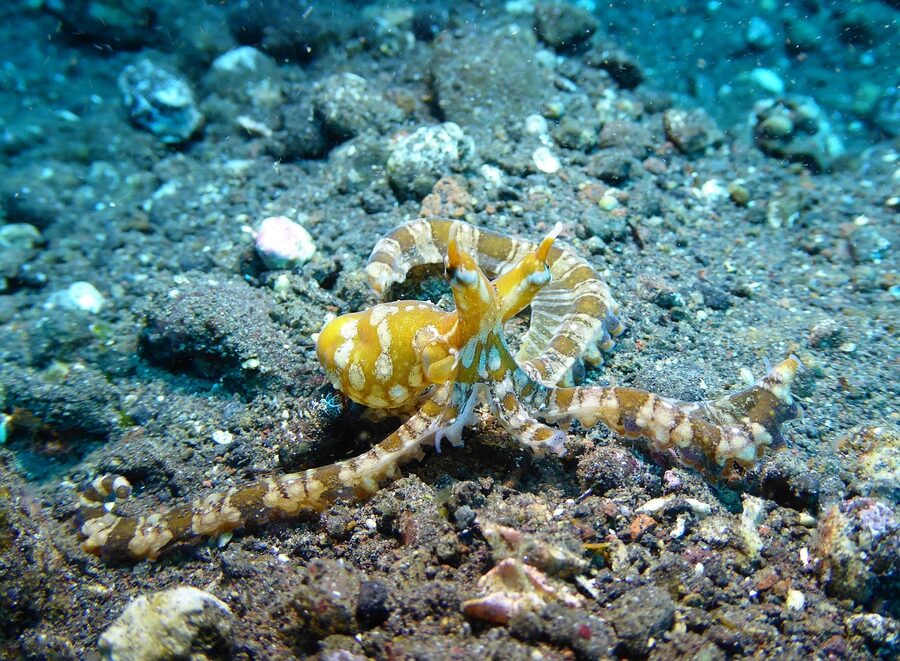
The macro is a quietly serious draw. Black sand at Tulamben and Seraya is classic muck-diving substrate. Pygmy seahorses on the gorgonian fans on the Liberty. Wunderpus, mimic octopus, ghost pipefish, frogfish, harlequin shrimp all show up regularly. Other sites people rave about: Coral Garden (south of the Liberty, easy shore entry, ridiculous fish density), The Drop Off (vertical wall from 5m to past 60m), The Pyramids off Jemeluk (artificial concrete pyramids grown into reef columns).
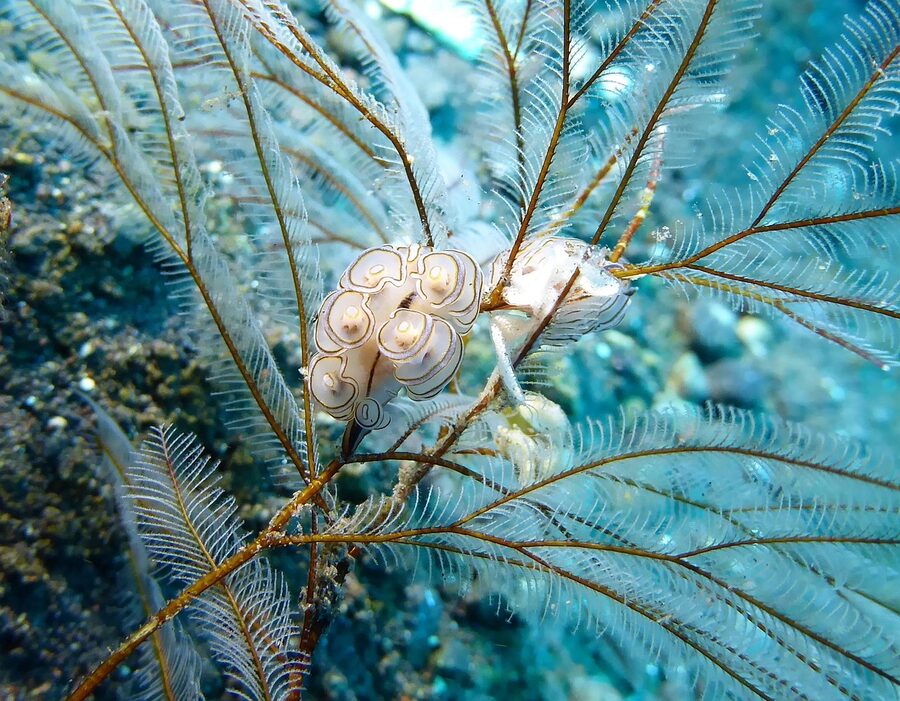
Most shops will build a 3-dive day across the Liberty, Coral Garden, and Drop Off for Rp 1,200,000-1,500,000 (about $76-95) including gear, transport, and a guide. Night dives on the Liberty are reportedly some of the best in Indonesia.
Practical Notes
Cash. ATMs in Amed Beach and Jemeluk are moody and sometimes empty. Pull cash in Ubud or Sanur before driving up. Warungs and small homestays don’t take card.
Wi-Fi. Cafe Wi-Fi is fine for basic streaming. Working remotely, get a Telkomsel SIM; there are blackspots between villages.
Tourism levy. Indonesia introduced a Rp 150,000 (about $9.50) one-time tourism levy in February 2024, paid via the LoveBali portal before you fly or in person at DPS arrivals. It’s valid for your full stay. Keep your QR receipt because some site entries ask to see it.
When to go. Dry season May-October is best for diving, with July-August the calmest. April and November are shoulder months with thinner crowds. December-March is wet season but Amed gets less rain than south Bali and rates drop. Book ahead in July-August and over Christmas.
How long to stay. Three nights is a working minimum (one to dive, one for the loop, one for nothing). Five nights is the happy length. I’ve stayed eight twice and didn’t get bored. One-night stops usually leave wishing they’d given it longer.
What to skip. Pre-arranged “snorkel tours” sold from south Bali. They charge 4-5x what you’d pay arranging directly in Amed for what you can do for free off the beach. Talk to boat owners on the sand instead: a sunrise jukung trip with a local fisherman runs Rp 200,000-300,000 (about $13-19) per person, and they’ll take you out fishing or to a snorkel spot of your choice.
Final Take
Amed is not for everyone. If you came to Bali for beach clubs, brunch culture, or the influencer pilgrimage circuit, you’ll be unhappy here. There’s none of that. If you came for the early mornings, the water, the salt, the volcano, and the version of Bali that still has a working fishing fleet hauling out before dawn, drive the three hours and stay five nights. The diving alone is worth the trip. The sunrise on the second morning is what makes you book a return visit.
If you want more of the same energy in a different corner of the island, the north coast around Lovina is the natural follow-up. Our beaches and nature category has the rest of the quiet-Bali roundups. For now: get the driver booked, the dive package shortlisted, and pack reef shoes.
Planning a Bali trip?
Start with the cornerstones — when to go, where to base, and what's actually worth doing.