
Munduk, Bali: The Mountain Village Most Travelers Skip
Forget Tegalalang. Drive an extra ninety minutes north of Ubud and you get the rice terraces, the temperature drop, four working waterfalls in one valley, a lake temple that’s actually on a lake, and almost no one else. That’s Munduk. It sits at about 800 metres in the central highlands of Bali, the air is cool enough at night that I sleep under a blanket, and the village itself has roughly the population of a busy Canggu coffee shop.
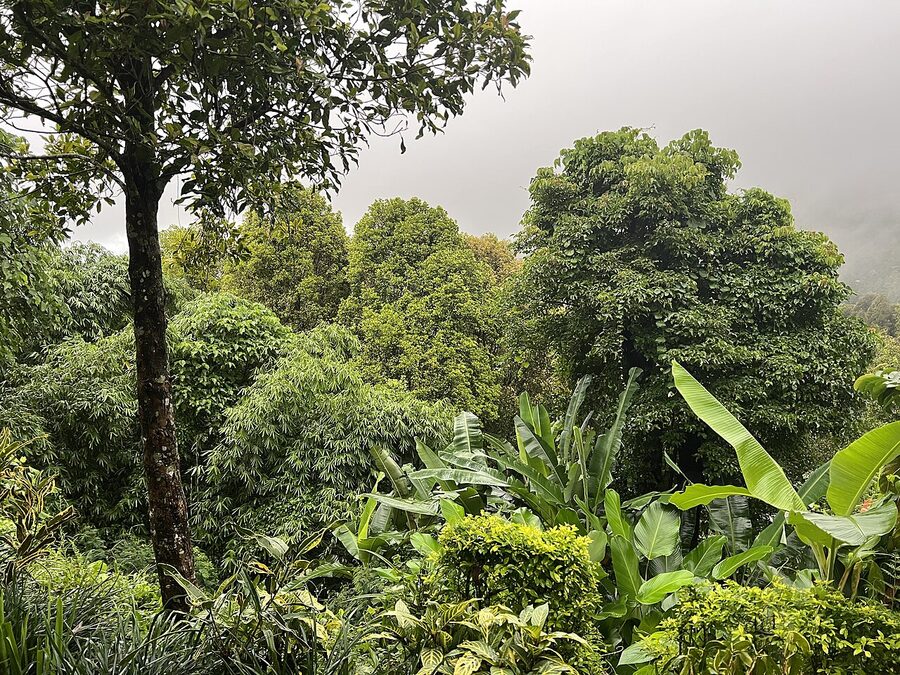
I came up here the first time on a scooter from Lovina and almost turned back twice on the climb. I’m glad I didn’t. Here’s the order I’d visit the waterfalls, the truth about Pura Ulun Danu Beratan versus the Handara Gate (one is gorgeous; the other is a paid photo prop outside a golf course), and the routes that make Munduk part of a longer Bali trip rather than a fiddly detour.
In This Article
- Why Munduk Beats the South for a Few Days
- The Cool-Weather Reality (Pack a Fleece, Yes Really)
- The Four Munduk Waterfalls (in the Order I’d Visit Them)
- 1. Munduk Falls + Melanting Falls (do these together)
- 2. Banyumala Twin Falls
- 3. Sekumpul (the one to make a real day of)
- 4. Aling-Aling (only if you like jumping off things)
- The Lakes and Pura Ulun Danu Beratan
- Lake Buyan and Lake Tamblingan (the Twin Lakes)
- The Handara Gate: Skip Unless You Really Want the Photo
- Trekking and the Coffee/Clove Plantations
- Where to Stay in Munduk
- Eating in Munduk: Highland Warungs Beat Beach Clubs
- Combining Munduk with Lovina (and Why You Should)
- Combining Munduk with Sidemen (the Quiet-Bali Loop)
- Getting to Munduk From the South
- A Suggested Two-Day Itinerary
- Fees, Hours, and the Rest of the Practical Bits
- What to Pack Specifically for Munduk
- The Verdict
Why Munduk Beats the South for a Few Days
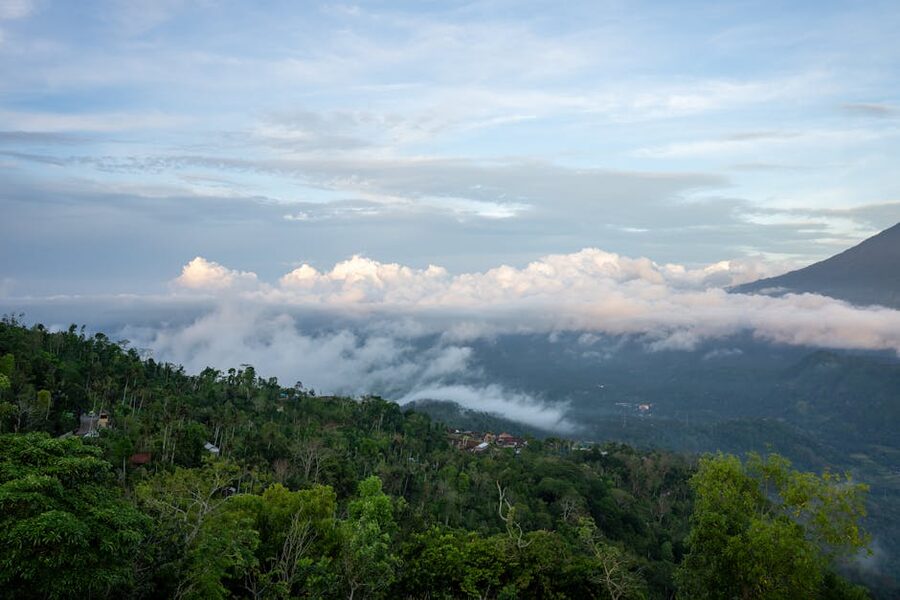
Munduk is a banjar (village hamlet) in Banjar district, Buleleng Regency, in the cool central spine of Bali. The drive in tells you a lot. You climb past clove trees, then coffee, then a band of forest where the temperature drops and the satay vendors start wearing little jackets. By the Twin Lakes viewpoint at 1,200 metres, your scooter mirror has fogged up.
What makes it different is the absence of the Bali tourist machine. No bracelet stalls, no aggressive massage touts, no beach clubs. Six warungs on the main road, two western-leaning cafes, a couple of mini-markets, a petrol station the size of a closet. Nights are quiet enough that you hear the gamelan rehearsing two valleys over.
The trade-off is that everything is spread out. You’ll need a scooter (Rp 100,000 / about $6.50 a day from most homestays), a private driver (Rp 700,000 to 900,000 from south Bali for the day, including waterfall stops), or a day-trip tour from Ubud or Canggu. No Grab or Gojek runs up here, so once you arrive, those three options are it.
The Cool-Weather Reality (Pack a Fleece, Yes Really)
Night temperatures drop to about 17-19°C in the dry season, lower in July and August. After three months of sweating in Canggu, that feels properly cold. Bring a light fleece. Many homestays don’t have heaters or hot showers (mine had neither the first time and I didn’t sleep well). If you run cold, ask the booking page directly: “is there hot water and a blanket?”
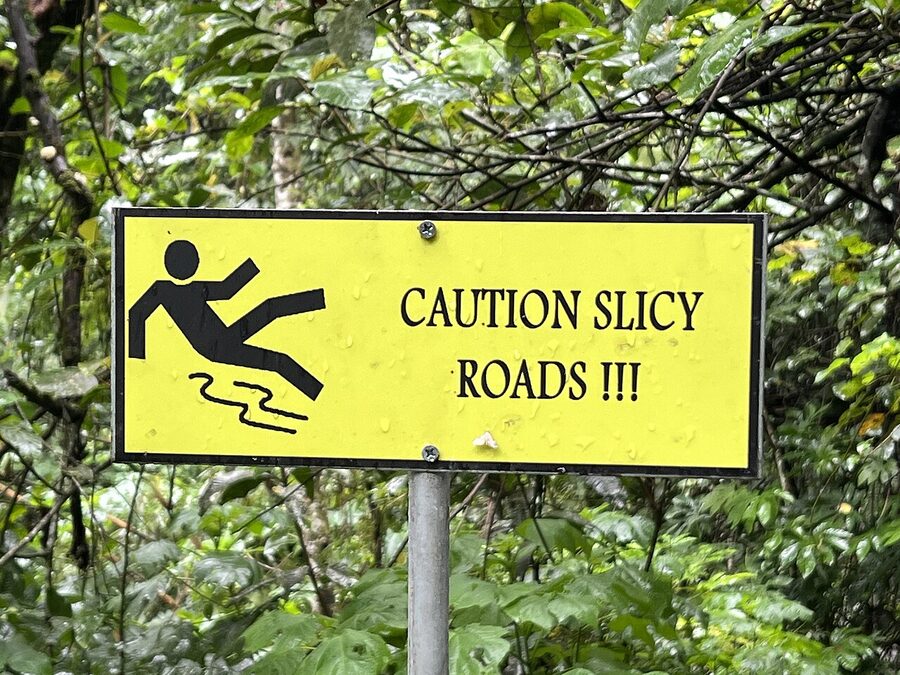
It also rains. A lot. Even in the dry months you’ll get afternoon showers through the canopy. Bring a small rain shell, dry-bag your phone, and assume your shoes will be wet.
The Four Munduk Waterfalls (in the Order I’d Visit Them)
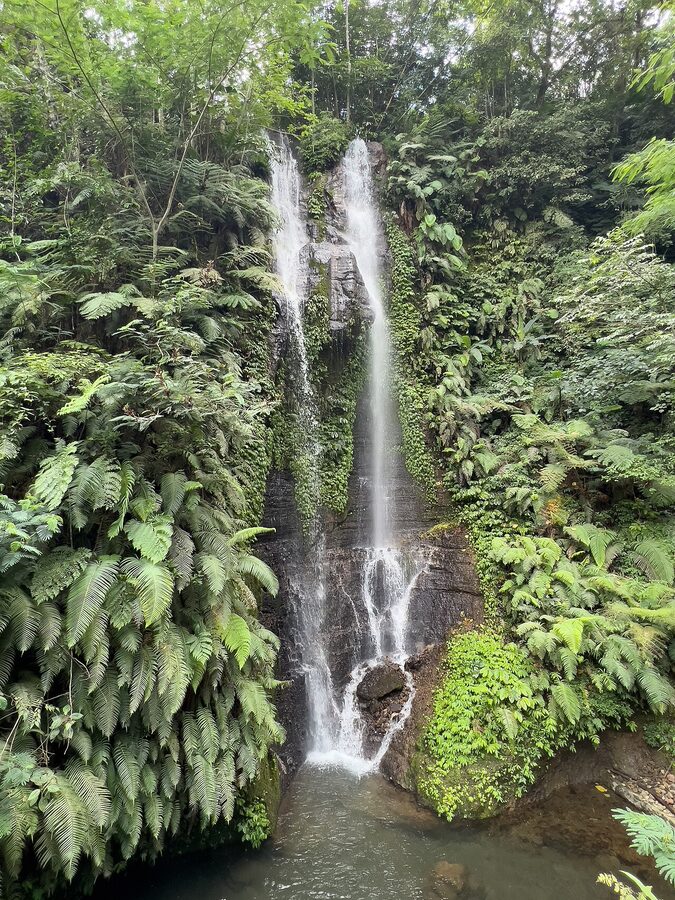
There are technically more than four waterfalls (air terjun, “falling water”, on every sign you’ll see). Locals will list eight or nine if you ask. Four of them are actually worth a half day each. The rest are nice if you happen to be passing.
1. Munduk Falls + Melanting Falls (do these together)
These two share a single trailhead, about a four-minute scooter ride from the centre of Munduk village. Park at the marked lot, pay Rp 20,000 / about $1.30 entry, and walk the path that splits after about 200 metres. Right takes you to Munduk Waterfall, also signposted as Red Coral or just Air Terjun Munduk. The fall is about 25 metres tall, plunges into a small pool, and there’s enough spray that you’ll get damp standing on the viewing rock.
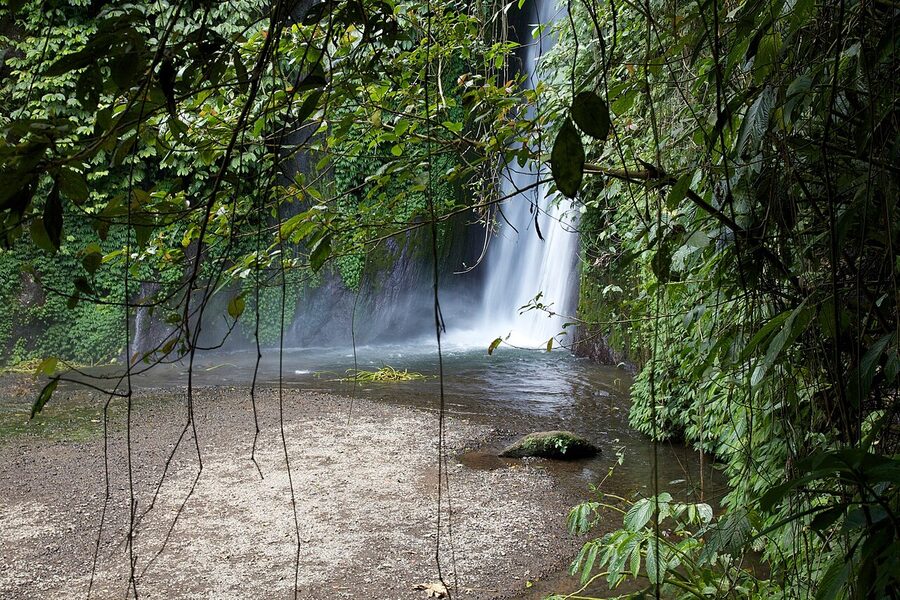
Walk back to the split and go left for Melanting. About 15 minutes down a stepped path with handrails for the steeper bits. The fall here is wider and you can stand close to the basin. There’s a small warung at the top selling kopi (coffee) and instant noodles. Both falls together are an easy two hours.
2. Banyumala Twin Falls
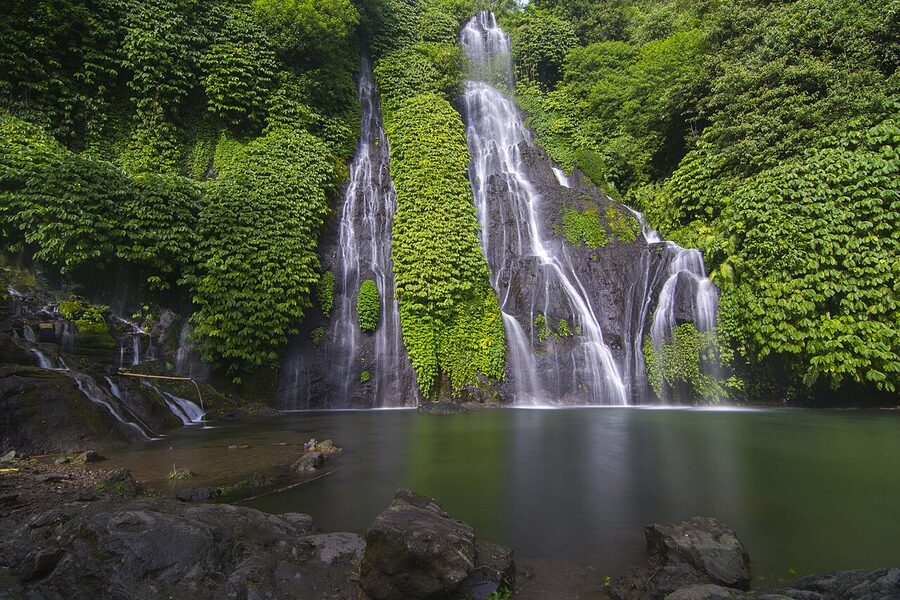
This is the famous one, and it deserves the fame. Two parallel cascades pour over a green cliff into a pool you can swim in. Entry is Rp 50,000 / about $3.20. The road to the parking lot is the worst part of the trip; expect potholes the size of dinner plates and a final dirt section that any scooter can manage but won’t enjoy. From the parking, it’s about a 15-minute walk down a stone-stepped path. Some of the steps are loose and there’s a stretch with a railing missing entirely. Wear shoes with grip.
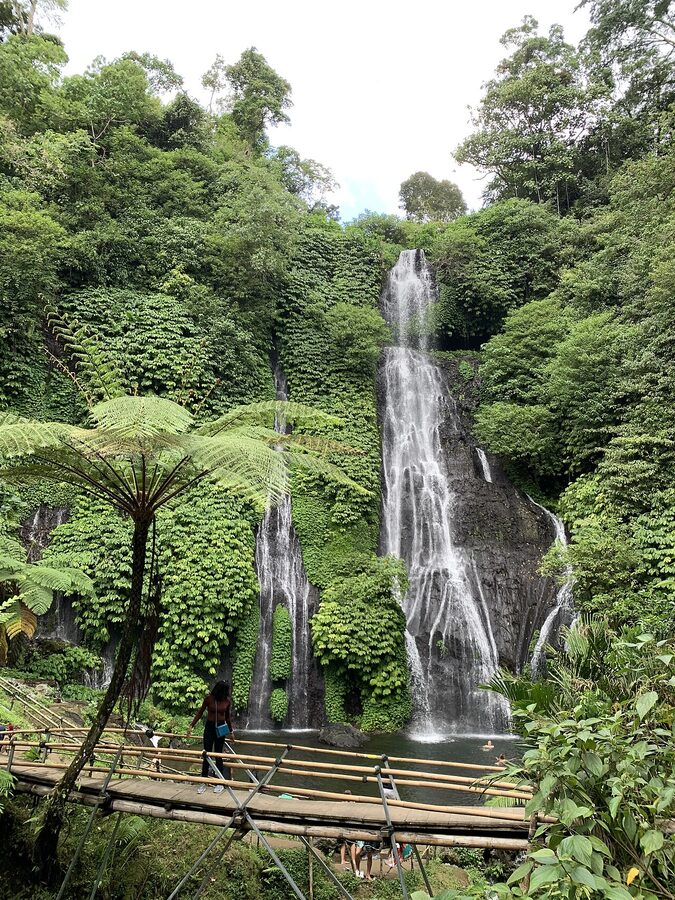
The pool itself comes up to about waist height. The current under the falls is strong but you can wade to the side. Get here before 9 a.m. on a weekday and you might have it to yourself. By midday on a weekend it’s the busiest spot in the highlands, full stop.
3. Sekumpul (the one to make a real day of)
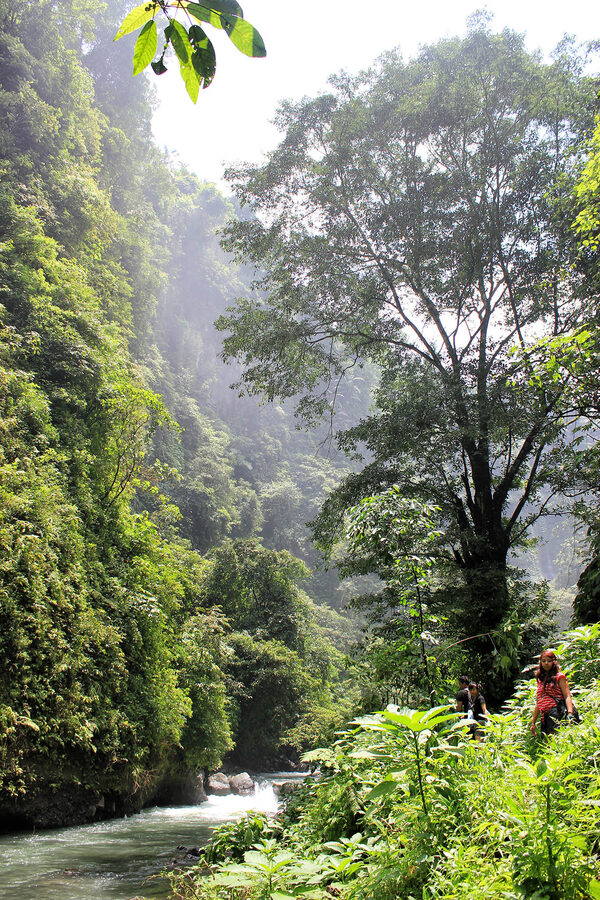
Sekumpul is half an hour east of Munduk, closer to Singaraja than to the lakes, but everyone bundles it into a Munduk trip and so should you. It’s a complex of seven falls, the tallest about 80 metres. The hike down is around 25 minutes and includes a knee-deep river crossing in the wet season. There’s a contentious local rule that you must take a guide from the official ticket office (Rp 125,000 / about $8 per person for the Sekumpul + Hidden Falls combo). I get the controversy, but the trail is genuinely confusing and the guide gets you closer to the spray than you’d manage on your own.
Plan four hours minimum here. The view of the main falls from the lower platform is, no exaggeration, one of the best things I’ve seen anywhere in Indonesia. Bring water and snacks; the warungs at the bottom run out of cold drinks by lunchtime.
4. Aling-Aling (only if you like jumping off things)
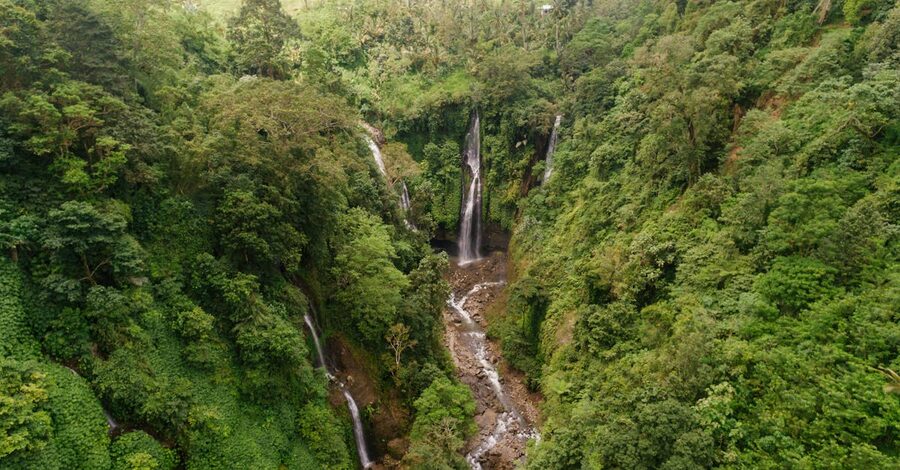
Further north towards the coast, Aling-Aling is a four-tier system where the main falls are sacred and swimming is forbidden. The lower tiers include a 5-metre natural slide, a 10-metre jump, and a 15-metre jump the guides will let you try if they think you can handle it. Not for everyone (not for me on a hangover), but a good day out for the brave.
If you want the same cascade vibe at lower elevation and less of a hike, the Singsing Waterfalls near Lovina are a 40-minute drive down the mountain and pair with a sunset back at the coast.
The Lakes and Pura Ulun Danu Beratan
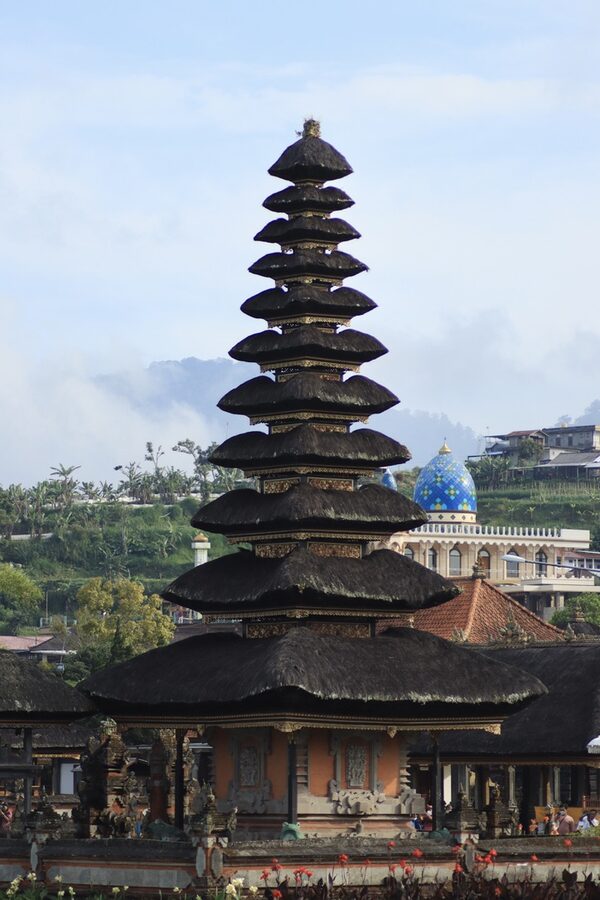
Pura Ulun Danu Beratan is the floating-temple shot you’ve seen on a thousand Bali postcards and on the back of the Rp 50,000 banknote. It’s a real working temple, dedicated to Dewi Danu (the lake goddess) and built on a small rocky outcrop in Lake Bratan. The 11-tiered meru tower in the photos is for Shiva, the smaller 3-tier one is for Brahma. There’s a quick primer on the temple-architecture vocabulary and the Hindu side of all of this in our Balinese Hinduism guide; worth a skim before you visit.
Entry is Rp 75,000 / about $4.80 for foreigners. The grounds open at 7 a.m. Get there at opening or an hour before sunset; midday is harsh light, busloads of tour groups, and a queue at every photo spot. It’s at Bedugul, about a 30-minute drive from Munduk village.
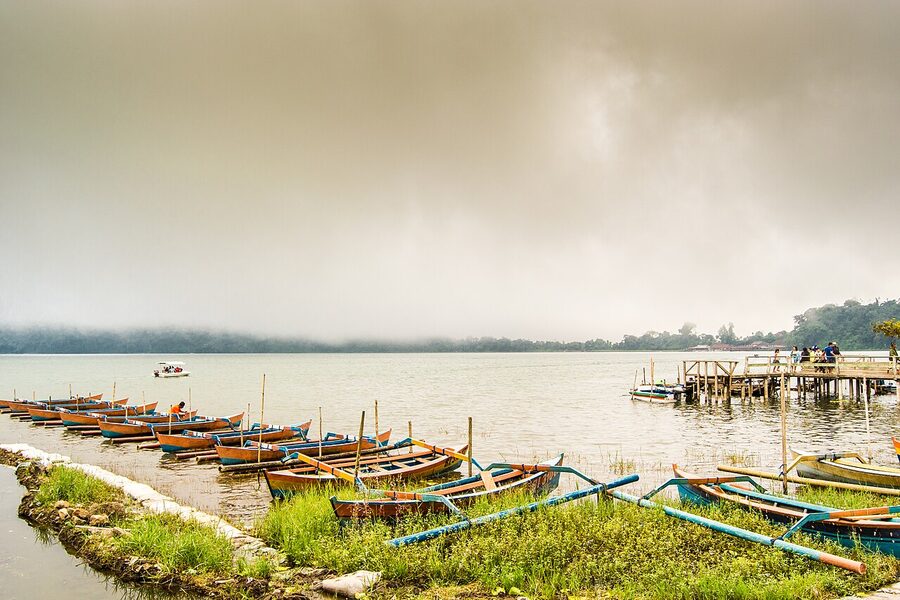
You can rent a jukung (small outrigger canoe) for an hour from a couple of guys at the temple side of the lake, which is genuinely lovely if there’s no breeze. Negotiate; expect to start around Rp 150,000 and settle near Rp 100,000 / about $6.50.
Lake Buyan and Lake Tamblingan (the Twin Lakes)
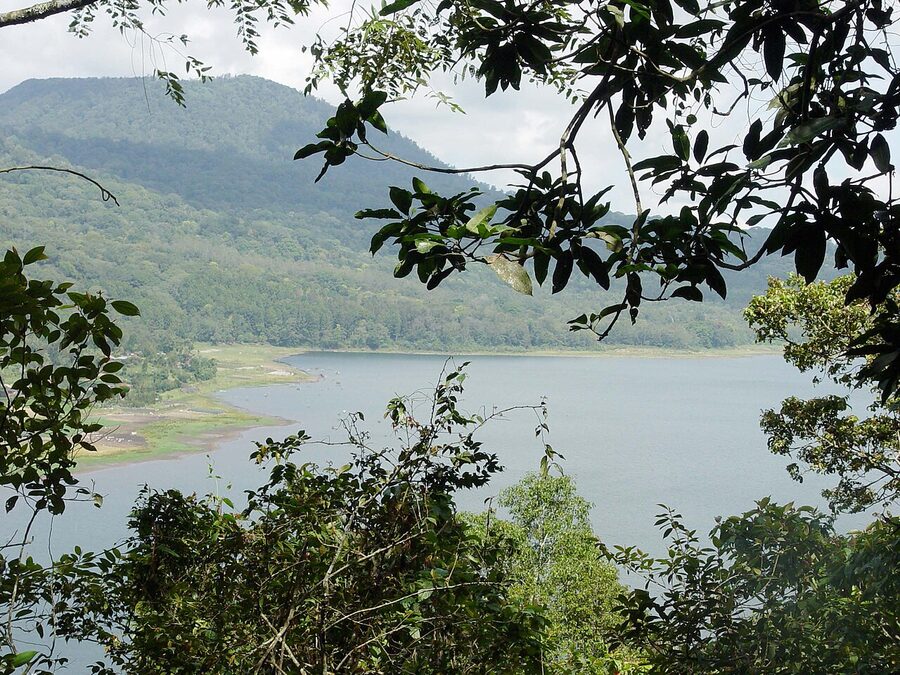
The Twin Lakes (Buyan and Tamblingan) sit a few kilometres further on from Bratan. The famous viewpoint is on the Wanagiri side and yes, it’s the spot with the heart-shaped wooden frames you’ve seen on Instagram. Half of them charge Rp 50,000 to stand on a platform. The view itself is free if you stop at one of the unmarked pull-offs along the road. Same lakes, no queue, no man with a snake on his shoulder asking for a photo tip.
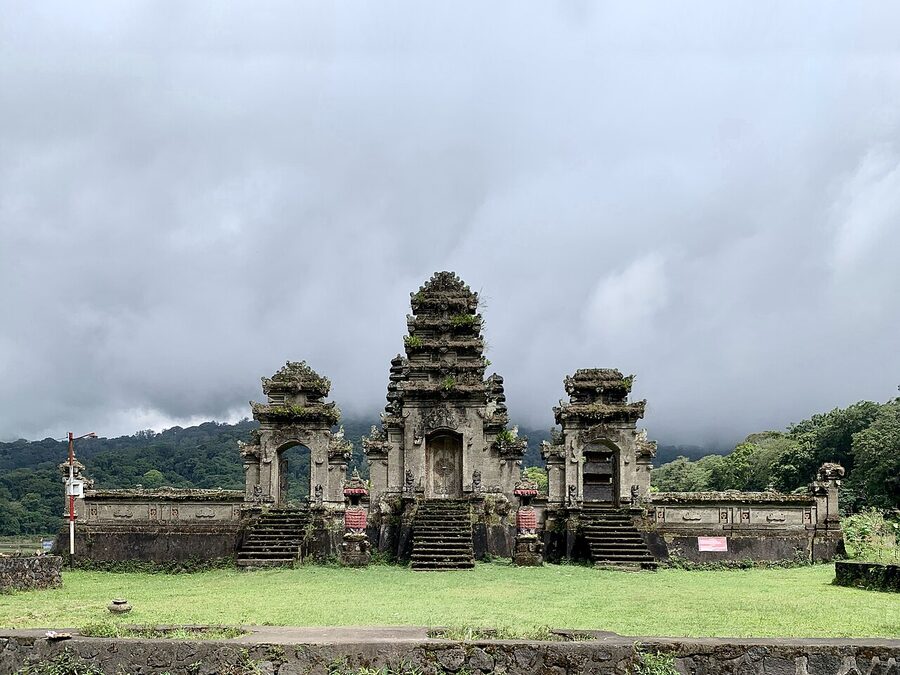
If you want a temple experience without the queue, walk down to Pura Ulun Danu Tamblingan on the Tamblingan lakeshore. The gates are mossy, the grounds are usually empty, and the only sound is birds. Donation-based entry, sash provided at the gate.
The Handara Gate: Skip Unless You Really Want the Photo
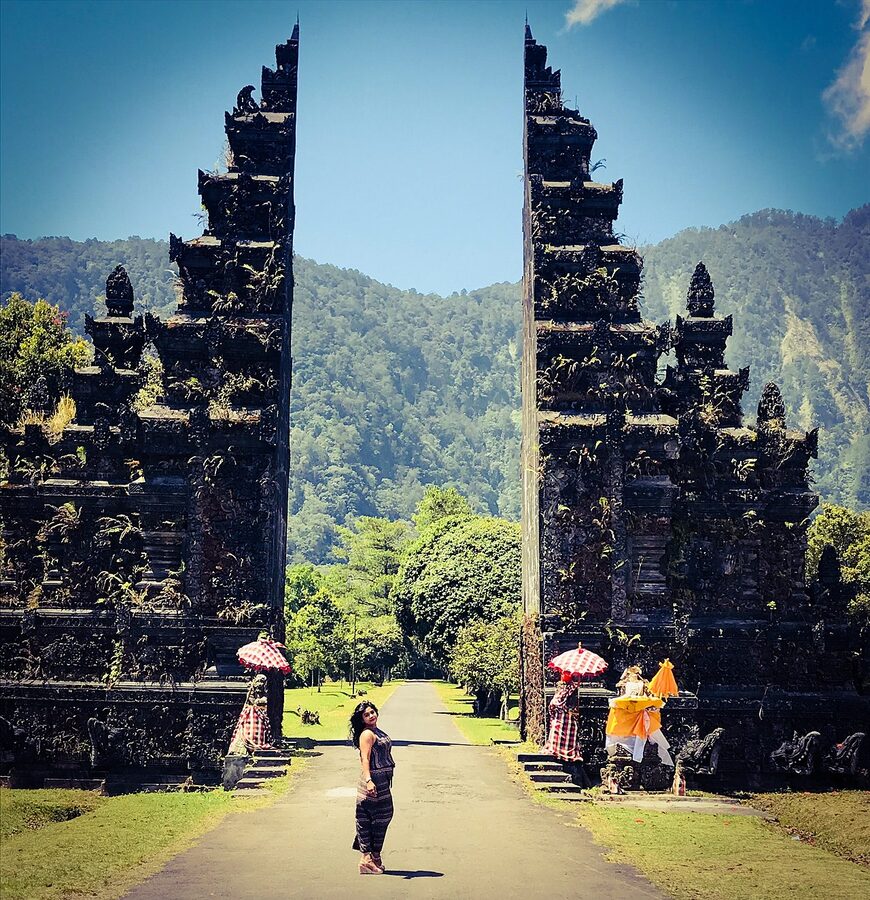
The Handara Gate is the entrance to a golf course and resort. It has no religious meaning, no temple behind it, no story beyond looking dramatic. Entry to take a photo is Rp 30,000 to 100,000 depending on the day and how busy they are. The famous “reflection” you see in every photo is created by the staff holding a small mirror flat under the camera lens. There’s almost always a queue.
If you must, go at 7 a.m. when it opens and the light is soft and the queue is short. Otherwise, skip it. The 20 minutes you’ll spend here are 20 minutes you don’t get to spend at Tamblingan.
Trekking and the Coffee/Clove Plantations
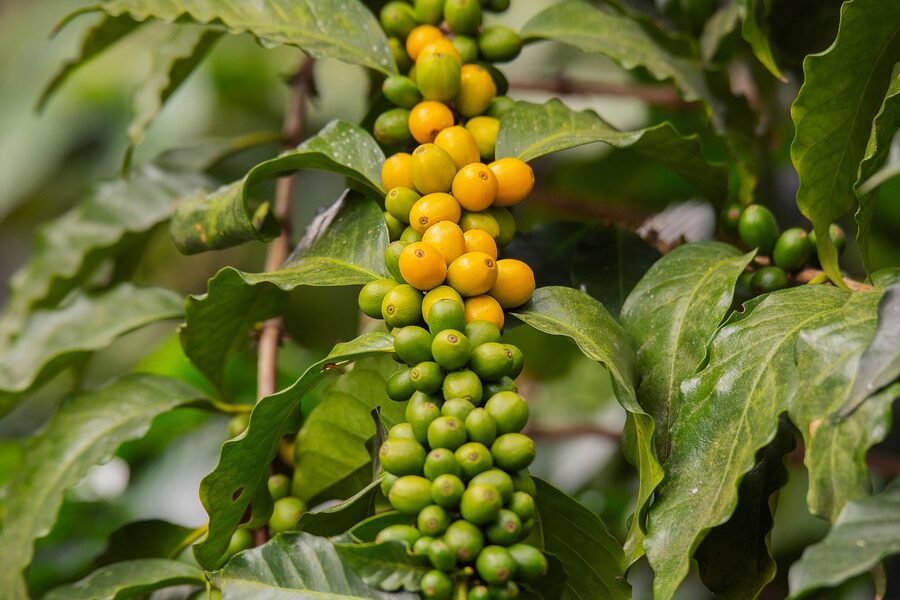
Munduk’s altitude makes it one of the few parts of Bali that grows real coffee, plus cloves, cocoa, and vanilla. The whole hillside is a working plantation. Most homestays can arrange a 2-3 hour walking tour for Rp 100,000 to 200,000 per person, usually with the homestay’s uncle as guide, which is what you want. You walk through clove trees that smell unbelievably strong underfoot, see the coffee cherries on the branch, and finish at a roastery where a small bag is Rp 50,000.
For longer walks, two routes stand out: the rice-paddy + jungle loop (about 2.5 hours, easy, starts behind Warung Classic, drops through terraces and climbs back through forest, no other tourists) and the lake circuit (about 5 hours around Lake Tamblingan on fishermen’s paths, take a guide because the trail is unmarked in places).
Where to Stay in Munduk
There are no five-star resorts, and that’s the point. The accommodation tier here is homestay, eco-lodge, and a small handful of boutique places. I’ve stayed at three different ones across my visits and these are the categories you’ll be choosing between.
Budget homestays sit around Rp 200,000 to 400,000 / about $13 to $26 a night, usually with a basic Indonesian breakfast (mie goreng or banana pancakes), shared or private bathroom, no heater, sometimes hot water. Maliana Homestay in the village centre is a good example. Aditya Homestay also gets consistently good word-of-mouth. The location matters less than you’d think; everywhere in central Munduk is a short scooter ride from everywhere else.
Mid-range eco-lodges run Rp 800,000 to 2,000,000 / about $52 to $130. Puri Lumbung Cottages is the well-known one, set on a ridge above the village with rice-paddy views and a sunset bar that closes inconveniently at 5:30 p.m. Lesong Hotel is a quieter mid-range option on the rice paddies.
Boutique splurge: Munduk Moding Plantation is the famous one, with the infinity pool overlooking the valley that you’ve seen on every “instagrammable Bali” list. Rooms run Rp 3,000,000 to 5,000,000 / about $195 to $325 a night. They also sell day passes (around Rp 500,000) which include pool access and lunch, a reasonable compromise if you want the photo without the spend. Munduk Cabin is the other splurge option, with treehouse-style rooms above the canopy.
Whatever you pick, book ahead. Munduk has limited beds and the good ones sell out a month or more in advance for the dry-season weeks (June-September).
Eating in Munduk: Highland Warungs Beat Beach Clubs
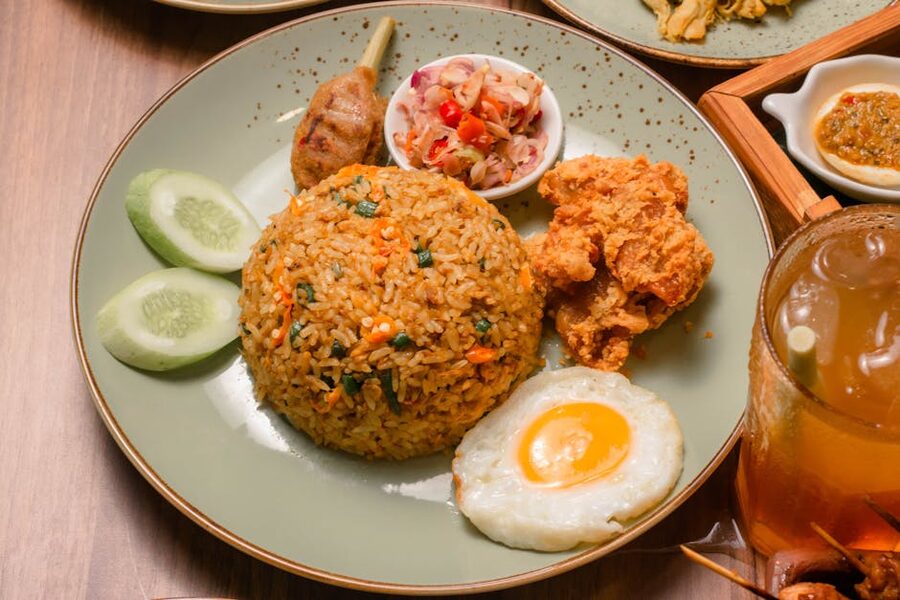
The food scene is small and excellent in places, mediocre in others. The good warungs are the ones run by an ibu (mother/auntie) who does all the cooking herself, which means slow service and proper food. The bad ones are the ones with laminated photo menus and waiters who hand you a tablet.
The places I keep going back to:
- Warung Made: ridge-side, panoramic view, best Indonesian curry I’ve had in the highlands. Try the ayam betutu (slow-cooked spiced chicken) if it’s on.
- Warung Classic: the sunset warung. Get there at 5 p.m., order a Bintang and the cap cai (mixed stir-fry vegetables), watch the light hit Lovina below.
- Warung D’Munduk: smaller, cheaper, the family running it will remember you on day two.
- Eco Cafe 2: a one-woman operation. Long waits, real espresso, potato croquettes with peanut sauce that I think about months later.
Expect Rp 30,000 to 60,000 / about $2 to $4 for nasi goreng or mie goreng with a drink. If you’ve never had nasi goreng done properly, our history of nasi goreng piece is good background; the highland warung version with home-fried krupuk is a long way from the airport-lounge one.
Vegan and strict-vegetarian options are essentially zero. Most warungs will adapt a dish (gado-gado, tempe goreng) if you say “tanpa daging, tanpa ayam, tanpa terasi” (without meat, chicken, shrimp paste), but expect a shared cooking surface.
Combining Munduk with Lovina (and Why You Should)
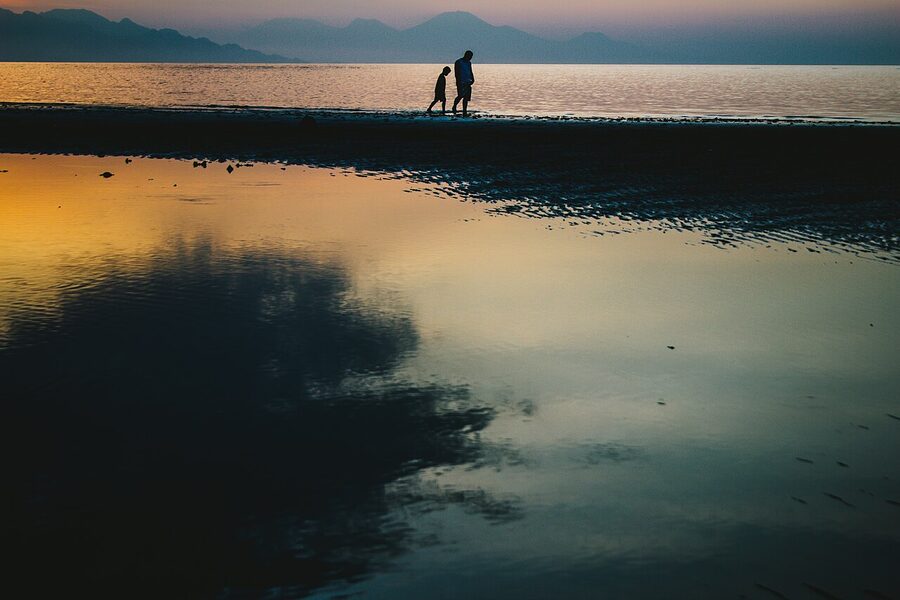
Lovina is a 50-minute drive down the mountain on the north coast. Black volcanic sand, calmer water than the south, and a town that’s sleepy in a good way. Two nights Munduk and one Lovina gives you cool mountains, waterfalls, a proper beach, and the optional 5:30 a.m. dolphin-watching boat from Lovina pier. The dolphins are a coin flip and the boats can crowd each other; ask your accommodation for a captain who runs solo trips.
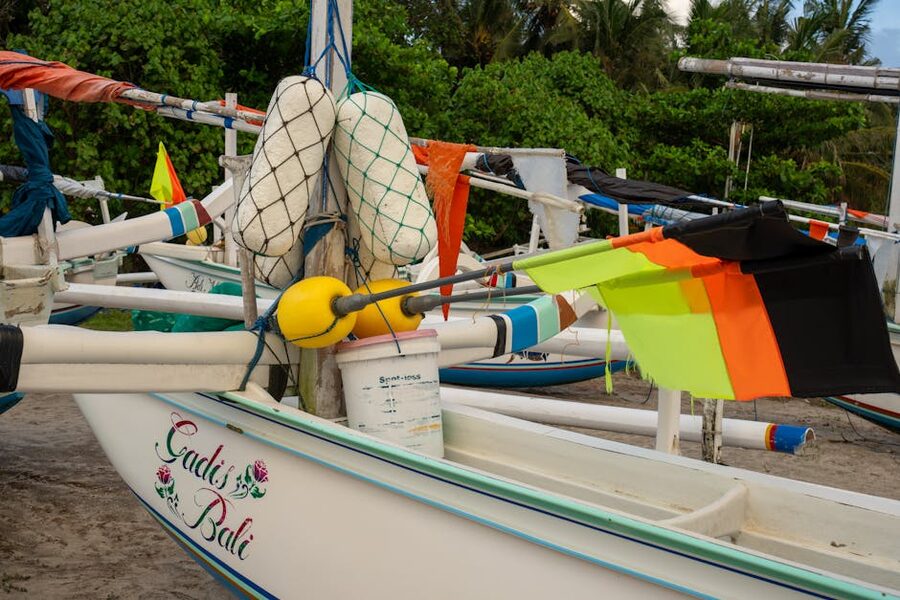
The combination works because the drive down is short, the contrast between mountain and coast is total, and the north coast still has that quieter feel of Bali pre-2010. If you’ve already read about Singsing Waterfall near Lovina, the trailhead is on the way back up to Munduk and slots into the same day easily.
Combining Munduk with Sidemen (the Quiet-Bali Loop)
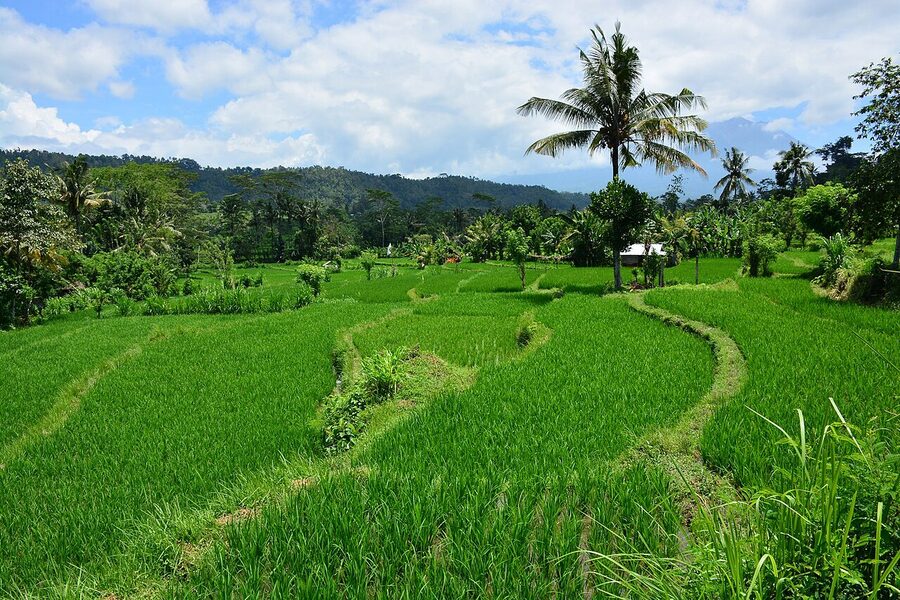
The longer pairing is Munduk plus Sidemen, in east Bali. Both are quiet, both are mountain-adjacent, both run on homestays rather than resorts. The drive takes 3 to 4 hours via Bedugul and Klungkung; hire a private driver (Rp 800,000 for the transfer) and break it up with a stop at Pura Besakih on the way.
This loop is the antidote to a Canggu-and-Seminyak Bali trip. Three nights Munduk, three nights Sidemen, no party scene, no traffic, no beach club. If you’re in Bali for two weeks and want a real reset, build the second week around it.
Getting to Munduk From the South
From the airport (Ngurah Rai / DPS) or south Bali, you’ve got three realistic options. A private driver for the full day, with stops, runs Rp 700,000 to 900,000 / about $45 to $58 with petrol included. A scooter from Canggu (90 minutes) or Ubud (2 hours) is free if you already have a rental, but the climb is winding and steep; don’t attempt it if your scooter experience is “I drove around Sanur for an afternoon”. A day-trip tour from south Bali is around Rp 500,000 to 800,000 per person and covers Munduk Falls plus Banyumala or Sekumpul plus the lake temple, but you don’t get to slow down.
If you’re still planning the connection from your home airport, the flights to Bali primer covers the routing. Worth one night’s recovery in Canggu or Ubud before you tackle the mountain road.
A Suggested Two-Day Itinerary
Two days is the minimum that justifies the drive. Three is better. Here’s what I’d do with two:
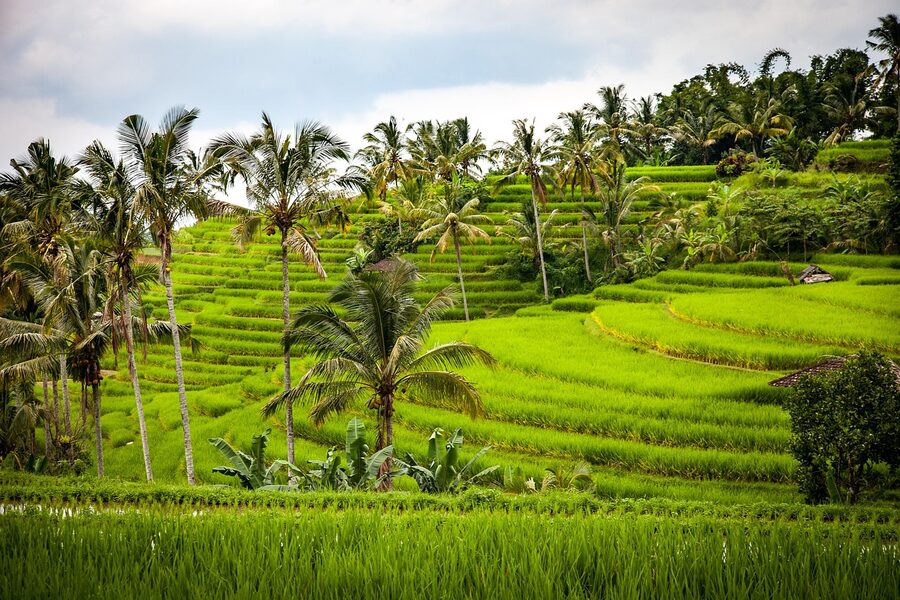
Day 1. Drive up from south Bali via Jatiluwih (the World Heritage rice terraces, 90 minutes longer than the direct route but worth it). Lunch at Batu Karu Kopi above the terraces. Continue to Munduk, check into the homestay, do the Munduk Falls + Melanting combo in the afternoon while the light is good. Dinner at Warung Made, sleep early.
Day 2. Up at 6 a.m. for Pura Ulun Danu Beratan at opening (you’ll have it almost to yourself for the first hour). Breakfast at one of the cafes overlooking Lake Bratan. Drive to Banyumala for the swim before the crowds. Late lunch in the village. Afternoon at Tamblingan or, if you’re keen, Sekumpul (it’ll be a long day). Sunset at Warung Classic. Drive back to south Bali the next morning, or push down to Lovina for night three.
Fees, Hours, and the Rest of the Practical Bits
Quick reference, current as of late 2025-early 2026:
- Munduk Falls + Melanting Falls: Rp 20,000 entry, dawn to about 6 p.m.
- Banyumala Twin Falls: Rp 50,000, opens 7 a.m.
- Sekumpul: Rp 125,000 with mandatory guide for the basic combo, more for extended routes
- Aling-Aling: Rp 125,000 for the jump-and-slide route with guide
- Pura Ulun Danu Beratan: Rp 75,000, 7 a.m. to 7 p.m., sash and sarong included
- Pura Ulun Danu Tamblingan: donation, gate is open during daylight
- Handara Gate: Rp 30,000 to 100,000 (price changes)
- Wanagiri Hidden Hills swing/photo platforms: Rp 50,000 each, often per person per platform
- Indonesian Tourism Levy: Rp 150,000 per visitor, paid online via the LoveBali app or at arrival, valid for the whole trip (introduced February 2024)
Cash matters up here. There’s an ATM at the petrol station and another in Bedugul, but both run out on weekends. Pull what you’ll need before leaving the south. Most warungs and homestays don’t take card.
Phone signal is patchy. Telkomsel works best, Indosat second. Download the offline Google Maps area before you set off; you will lose signal in the gorges.
What to Pack Specifically for Munduk
Beyond your normal Bali kit: a light fleece for the nights, quick-dry trousers (not jeans), trail shoes or sandals with proper grip, a rain shell, a dry-bag for your phone, a swimsuit you don’t mind getting muddy, and more cash than you think.
The Verdict
Most Bali trips are built around the south. Canggu, Seminyak, Uluwatu, two days in Ubud. Munduk asks you to take three days off that itinerary and drive into the cold mountains instead. It’s not for first-timers who came for beach clubs and surf lessons.
But for anyone on a second trip, or anyone who’s already done the south and felt like they’d seen the brochure version, this is the antidote. Real waterfalls. A lake temple at sunrise. A working coffee plantation a five-minute walk from your bed. Cool nights and quiet mornings. A village where the warung ibu remembers what you ordered yesterday.
Bring a fleece. Take the long road via Jatiluwih. Skip the Handara Gate unless the mirror trick really matters. Spend a few hours at Tamblingan with no one else around. For more on the north Bali coast and the cascades you can pair with a Munduk run, the beaches and nature archive has the related pieces.
Planning a Bali trip?
Start with the cornerstones — when to go, where to base, and what's actually worth doing.