
Bali Tourism Levy 2026: How to Pay, Who is Exempt, and the Scams to Skip
Three different scams use the Bali Tourism Levy as cover. The real fee is Rp 150,000 (about $9.50), paid once per visit, online or at the airport. Pay any other amount and you’ve been had. Here’s the official process, the scam variants that are still active in 2026, and the proof you should keep on your phone.

I paid the levy online from my hotel in Sanur the night before my second arrival. It took four minutes. The traveler in front of me at Tanah Lot two days later did not have a receipt and ended up tapping a card at a side counter while his Grab driver waited in the car park. Neither of us got fined. Both of us paid Rp 150,000 because that’s the only amount the Bali provincial government actually charges. Everything else you’ve been quoted is somebody trying it on.
In This Article
- What the Bali Tourism Levy actually is
- The official portal and nothing else
- What if the website doesn’t load?
- What the levy actually funds
- Who is exempt and how to apply
- The three scam variants that are still active in 2026
- 1. Lookalike websites that charge double
- 2. Drivers and “facilitators” who offer to handle it for you
- 3. Pre-arrival WhatsApp and email scams
- Enforcement reality at temples and tourist sites
- Step-by-step: paying online before you fly
- Step-by-step: paying on arrival at DPS
- How the levy interacts with your visa fee
- How much cash to carry for the levy
- Showing the QR code at temples and beach clubs
- What happens if you genuinely can’t pay
- Recent updates and what might change
- The short version, in case you skipped to the bottom
What the Bali Tourism Levy actually is
The official Indonesian name is Pungutan Wisatawan Asing (PWA), or Foreign Tourist Levy. It came into effect on 14 February 2024 under Bali Provincial Regulation Number 6 of 2023, then was tightened by Provincial Regulation Number 2 of 2025. The rate is fixed at Rp 150,000 per international tourist, regardless of age. Babies and toddlers count. The fee is collected by the Bali provincial government, not the national Indonesian government, which is why this only applies in Bali and not Lombok, Java, or anywhere else in Indonesia.
It is a separate payment from your visa. If you arrive on a Visa on Arrival you’ll pay Rp 500,000 (about $32) for that, plus Rp 150,000 for the levy. Two payments, two different portals, two different receipts. Don’t conflate them.
One detail that catches people out: the levy is per visit, not per day. You pay it once and it covers the entire stay, whether that’s three days or three months. If you fly from Bali to Lombok and back, you do not pay again. If you fly out of Indonesia and re-enter, you do.
The official portal and nothing else

There is exactly one legitimate website for paying the levy: lovebali.baliprov.go.id. The domain ends in .go.id, which is reserved for Indonesian government entities. Anything ending in .com, .net, .org, .info, or any other suffix is a scam. There are no exceptions to this rule. Bookmark the URL or type it yourself rather than clicking a link from a stranger.
The portal does have a mobile app called LoveBali, available on the Google Play Store and Apple App Store. Verify the developer is listed as “Bali Provincial Government” before installing. Counterfeit apps with similar names exist and they will charge you double or worse.
The interface is in English by default and switches to Bahasa Indonesia, Mandarin, German, Spanish, or Arabic. You enter your given name, surname, email address, passport number, country on passport, and arrival date. Then pick your payment method. Visa, Mastercard, JCB, and American Express all work. So do bank transfers, virtual accounts, UnionPay, and QRIS. The fee is the same Rp 150,000 across all methods.
Once the payment goes through, the system emails you a voucher with a QR code. That QR code is your proof. Screenshot it. Add it to your phone wallet. If you want belt-and-braces, print a copy. The QR survives a flat phone if you have the printout, and survives lost paper if you have the screenshot. Both are accepted.
What if the website doesn’t load?
This happens more than it should. Indonesian government websites tend to block traffic from VPNs and aggressive ad blockers, and the response when blocked is usually a stark “Error 403 Forbidden” page. If you see one, try these in order: turn off your VPN, switch to mobile data instead of hotel Wi-Fi, disable browser ad blockers, and try a different browser. I had to switch from Brave to Safari on my last trip before the payment form would render.
If none of that works, you can pay on arrival at I Gusti Ngurah Rai International Airport (DPS). There are levy counters in both the international and domestic arrival halls, and a BRI bank counter in the international arrival hall that handles payments by credit or debit card only. No cash. The queues are real, sometimes 45 minutes during peak season, which is the entire reason the government wants you to pay online.
What the levy actually funds

The provincial government released an official statement on 13 October 2025 spelling out where the money goes. Three categories: cultural and environmental protection programs for desa adat (traditional villages) and the subak rice irrigation system, waste management initiatives across the province, and tourism road infrastructure. The first round of funding was distributed to traditional village leaders to spend at their discretion, and detailed line-item budgets have not been published publicly.
Whether that breakdown satisfies you is your call. Bali Governor Wayan Koster has been pressed publicly on transparency questions, and the system has its critics. By late 2024, the Bali Tourism Office reported the levy had collected IDR 211.8 billion. By the same point, only about 40 percent of arriving tourists had actually paid, which made the spending math harder than it should have been. The compliance rate has crept up since enforcement started and the Bali Sun reported the figure had reached around 35 to 40 percent of eligible visitors by early 2026, still well short of where it should be.
For what it’s worth, the subak system is a UNESCO World Heritage cultural landscape and the network of temple ceremonies you’ll see if you spend any time outside the resorts is what makes Bali Bali. The principle, at least, is sound. Balinese Hinduism runs through everything you’ll see here, and the temples and ceremonies cost real money to maintain.
Who is exempt and how to apply
Per the LoveBali FAQ, the following groups are exempt:
- Diplomatic and official visa holders
- Crew members of conveyances (airline crew, ship crew)
- KITAS holders (Limited Stay Permit Card)
- KITAP holders (Permanent Stay Permit Card)
- Family unification visa holders
- Student visa holders
- Golden Visa holders
- Other visa holders with a non-tourism purpose, by application
Indonesian citizens are not on the official exemption list because the levy applies only to international tourists in the first place. If you’re traveling on an Indonesian passport, you don’t pay regardless. If you have dual nationality and entered on your Indonesian passport, same.
If you fall into one of the exempt categories above, you still need to register through the LoveBali “Apply Exemption” portal before you arrive. The recommended timeline is at least five days in advance, though I’ve seen reports of approvals coming through in under 24 hours when people cut it close. The point of the registration is so that when an officer asks for your QR code, you have one to show them, even if it says “exempt” instead of “paid”.
Transit passengers who don’t leave the airside area at DPS are not subject to the levy because they aren’t entering Bali. If you are connecting through Denpasar to a third destination and never clear immigration, you’re fine.
The three scam variants that are still active in 2026
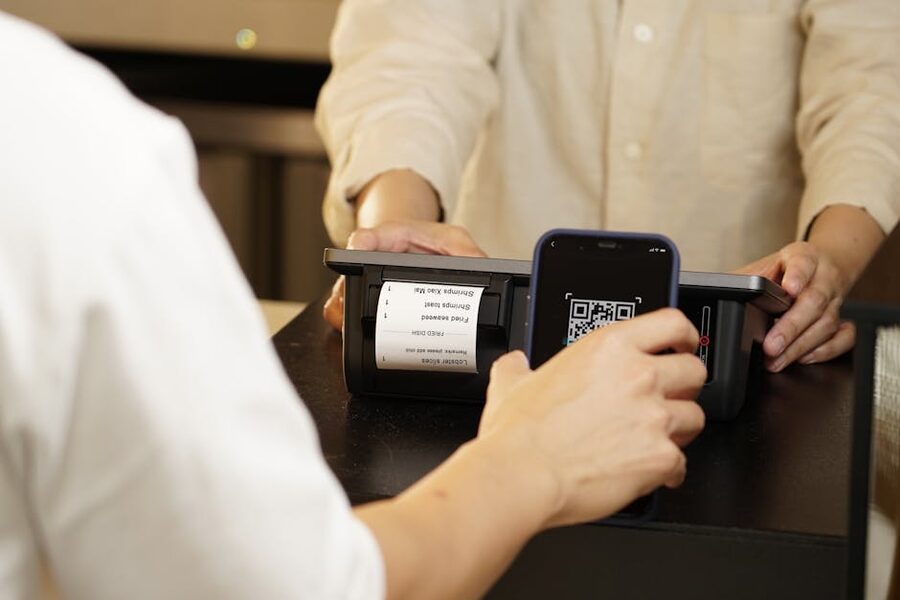
If you remember nothing else from this article, remember the rate is Rp 150,000. Anything more or less is wrong. Here are the three variants I’ve personally seen or had reported by other travelers since the levy started.
1. Lookalike websites that charge double
The first wave hit within weeks of the launch. Sites with names like “lovebali.com”, “balitouristtax.org”, “balilevy.info” and similar all do the same thing: they copy the LoveBali interface, take your details, charge you Rp 250,000 to Rp 500,000 (or the rough USD equivalent), then either email you a forged QR code that fails inspection or pass your real details and the actual Rp 150,000 to the official portal while pocketing the difference.
The tell is the domain. The only legitimate URL ends in .baliprov.go.id. If you see anything else, close the tab. This includes Google ads that sometimes appear above the real result. Don’t click ads, type the URL yourself or use the bookmark you saved.
2. Drivers and “facilitators” who offer to handle it for you
This is the most common one I’ve heard about in 2025 and 2026. A taxi or Grab driver, sometimes a tour guide or hotel concierge, offers to handle the levy “for convenience”. The number quoted is usually Rp 250,000 to Rp 350,000, occasionally as much as Rp 500,000. They might do the paperwork, they might not. Either way, the markup is going in their pocket.
It’s not always malicious. Some drivers genuinely think they’re helping. The answer is the same regardless: do it yourself in four minutes on the LoveBali website. If you’re already in the car and they’re insistent, just say you’ve already paid online. They won’t ask to see proof.
3. Pre-arrival WhatsApp and email scams
The newer wave: messages claiming to be from “Bali Immigration” or “LoveBali Authority” asking you to pay the levy via a link they provide, or asking for your passport details to “pre-register” you. The Bali provincial government does not contact tourists via WhatsApp. They do not email you unsolicited asking for payment. They do not need your passport details until you fill the form yourself.
If you booked a tour or hotel and they’ve sent you a WhatsApp asking to pay the levy through them, that’s not necessarily a scam, but you should still pay it yourself directly on the official site rather than route it through a third party. The receipt is in your name, your QR code is yours alone, and you avoid the markup.
Enforcement reality at temples and tourist sites
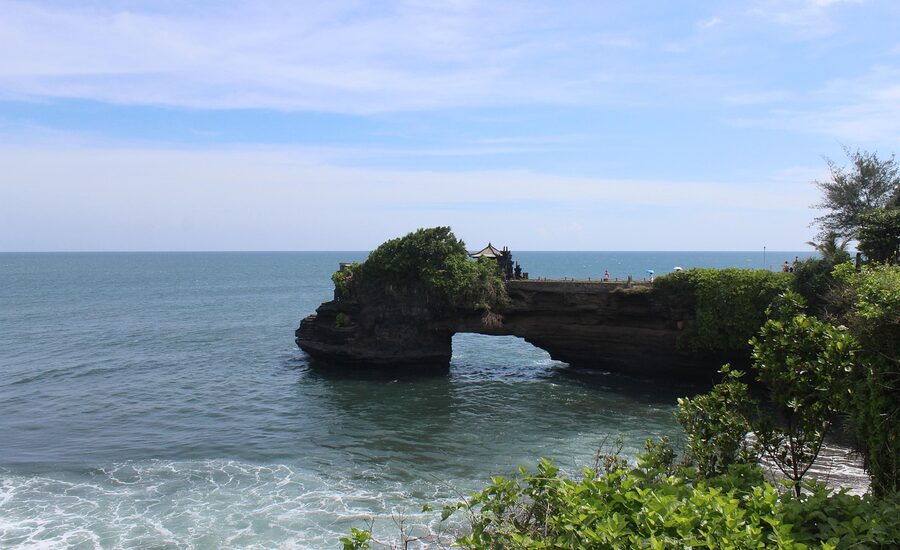
For most of 2024, enforcement was effectively zero. You paid the levy on a moral basis or you didn’t, and there were no consequences either way. That changed when the Bali Tourism Office started running spot-check operations.

The first publicly reported batch happened on 4 September 2024 at Tanah Lot, Uluwatu, and the Ulun Danu Beratan area in Bedugul. From 19 to 25 March 2025 a second wave hit Besakih on day one, then Tanah Lot and Uluwatu again on day two, and a partner travel agency. Spot checks have continued through 2025 and into 2026 at Goa Gajah in Gianyar, Penglipuran Village in Bangli, Tirta Empul in Tampaksiring, and the four big temples already named.
The procedure is the same at every site. Officers in identifiable Bali Tourism Office vests stand at the entrance and ask international visitors for the QR code voucher. If you have it on your phone or printed, they scan it and wave you through in about ten seconds. If you don’t, they direct you to a nearby counter where you pay Rp 150,000 by card on the spot. No cash. No fines on top. No penalties. They simply make you pay what you should have paid before you got there.
That’s it. There are no arrests, no deportations, no entry stamps cancelled. The provincial government has talked about introducing fines of ten times the levy or short jail terms, but as of early 2026 those measures are still proposals rather than law. The on-the-spot payment is the actual consequence.
What does cost you is time. The lines at the spot-check counters at Tanah Lot can run 20 to 30 minutes during peak season. If you’re rushing to make sunset, that’s the difference between catching the light and watching the back of someone’s head.
Step-by-step: paying online before you fly
This is the version I’d recommend if you’ve got a working internet connection and ten minutes of patience.
- Open lovebali.baliprov.go.id directly in your browser. Type it, don’t search for it.
- Click “Pay Now” or “Levy” at the top of the homepage.
- Select language if you need it. The default is English.
- Fill in: given name, surname, email, passport number, country on passport, arrival date in Bali. Use the names exactly as they appear in your passport. Don’t add middle names that aren’t in the passport, don’t change capitalisation.
- Pick payment method. I find QRIS to be slowest because it requires an Indonesian banking app you probably don’t have. Visa or Mastercard is the easiest from outside Indonesia.
- Confirm the amount is Rp 150,000. Not 300,000, not 250,000. If the displayed total is anything other than 150,000 IDR per person, you’re on a fake site. Close the tab.
- Pay. The page loads a confirmation. The voucher arrives by email within five minutes, sometimes immediately. Check your spam folder if it doesn’t appear.
- Open the voucher email. Screenshot the QR code. Save it to your phone wallet or photos. If you have a printer to hand, print one copy as backup.
If you’re traveling as a group of more than two, the LoveBali portal has a group payment form that handles up to 25 people in one transaction. Cruise agents can do up to 500 in one go. For families I’ve found it easier to do separate transactions per person, because if one passport detail is wrong you don’t have to redo the whole batch.
Step-by-step: paying on arrival at DPS
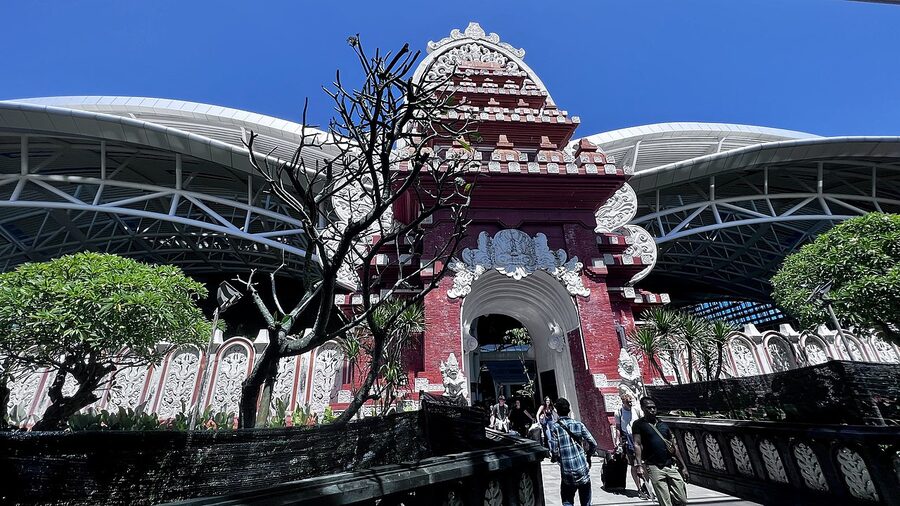
If the website refused to load and you’ve landed without a receipt, here’s what to do. After clearing immigration and grabbing your bags, look for the LoveBali signs in the international arrival hall. They’re usually before the customs scanners, sometimes after. If in doubt, ask an airport official. The counters are obvious because they’re marked with the same blue and white logo as the website.

The counter takes credit and debit cards only. No cash, including no Indonesian rupiah cash. This catches people out who arrive having converted money at a kiosk and assume they can pay there. If your card is rejected, you can use the BRI bank counter as a backup, also in the international arrival hall, which accepts a wider range of card networks and sometimes processes contactless faster.
You enter the same details as the online form, pay the Rp 150,000, get your QR code printed on a paper voucher and emailed to you, and you’re through. Allow 30 to 45 minutes during peak arrival times. Off-peak it’s quicker. The general advice from the LoveBali team is to pay before flying because the in-airport queue is the part of arrival nobody enjoys.
How the levy interacts with your visa fee
These are two completely separate payments, made on two different government portals, and both are required for tourists.
The Visa on Arrival (eVoa) costs Rp 500,000 and is paid through the Indonesian Directorate General of Immigration portal at evisa.imigrasi.go.id. The tourism levy costs Rp 150,000 and is paid through lovebali.baliprov.go.id. Total compulsory cost on arrival for a foreign tourist on a 30-day VOA: Rp 650,000, or about $42 at current rates.
Pay both online before you fly and you can walk through arrival with two QR codes, one stamp, and very little waiting. Pay both at the airport and you’ll spend an hour in queues. The math is the same either way, the time isn’t. For more on the visa side, see our Bali visa guide which covers the VOA, B211A, KITAS, and Golden Visa options in detail.
If you’re connecting from a long-haul flight and the thought of fiddling with two different payment portals while jet-lagged is unappealing, see also our guide to flights to Bali which has a section on what to do in the 24 hours before you fly.
How much cash to carry for the levy
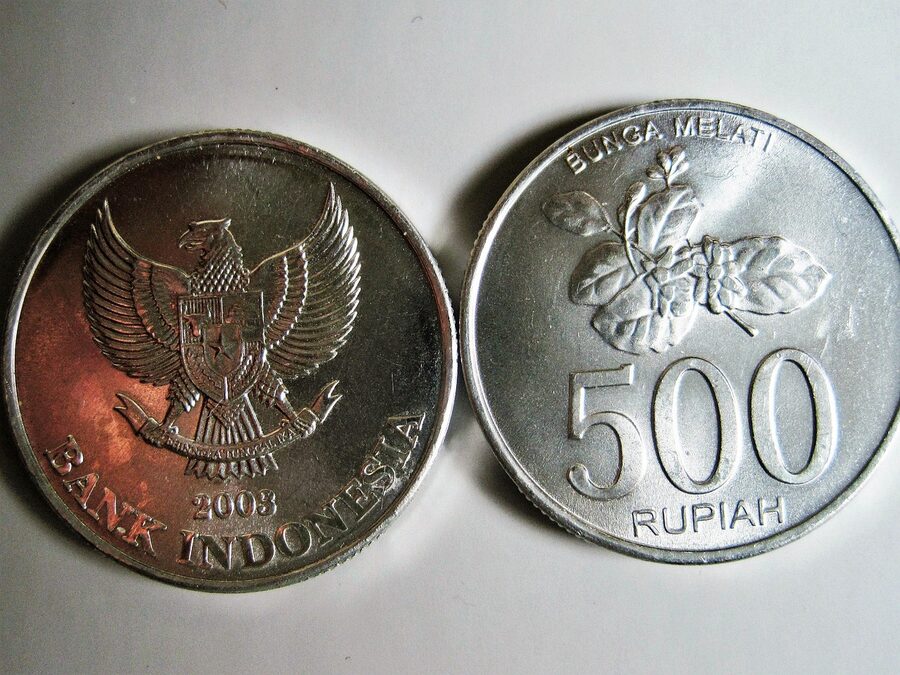
None. The whole levy system is cashless by design, both online and at the airport. If you only have cash and your card has been blocked for foreign use (call your bank before you fly), you have a problem. The fallback is the BRI bank counter at DPS where staff can sometimes help, but it isn’t a guaranteed workaround.
For cash you need on the rest of your trip, see our Bali money guide which covers ATM strategy, money changers, and where the licensed authorized chains are.
Showing the QR code at temples and beach clubs

Most days at most temples nobody asks. The spot checks are random and concentrated at the big sites. But when officers are present, having your QR code ready in three taps will save you 20 minutes in a queue.
What I do: save the QR image to my phone’s lock screen wallpaper for the first day. After that I move it to a dedicated “Bali docs” album in Photos so it’s two taps away. If you use Apple Wallet or Google Wallet, you can add the voucher there too. The officers don’t care about format, only that the code scans.
Hotels, beach clubs, restaurants, and shops do not check the levy. Beach access points generally don’t either. The checks happen at the big temple complexes and occasionally at popular village viewpoints. If you’ve planned a trip around the major things to do in Bali, you’ll pass through at least one checkpoint location, so it’s worth being prepared.
What happens if you genuinely can’t pay
The blunt answer is, in 2026, you walk in anyway. There is no border check at arrival that turns you back, no airline that refuses to board you for missing the levy, no penalty applied at departure. The only practical consequence is the on-the-spot payment at a temple checkpoint, which you can decline by simply not visiting that temple, or which you can pay with a card if you do.
That said, the rate is Rp 150,000. About the cost of a decent dinner at a beach club. Even if the spending isn’t perfectly transparent, the principle of contributing to desa adat villages and the subak system is reasonable. The article you’re reading wouldn’t exist without those temples, ceremonies, and rice terraces. Pay it. Then forget about it.
Recent updates and what might change
As of April 2026, the rate remains Rp 150,000 with no announced increase. The Bali provincial government has periodically floated raising it, with figures of Rp 200,000 to Rp 500,000 mentioned in news cycles, but nothing has been formalised. The 2025 amendment (Provincial Regulation Number 2 of 2025) tightened the legal framework for collection and added stricter rules for partner agents, but did not change the consumer-facing fee.
Several proposals are in the air. One would tie the levy to specific high-impact attraction entries (Mount Batur sunrise hikes, certain temple complexes) with a higher per-site fee on top of the universal Rp 150,000. Another would extend the levy to domestic Indonesian tourists at a lower rate. Both are being debated and neither was law as of this writing.
If you’re reading this six months or more after the publication date, double-check the rate at the official portal before paying. The principle of “type the URL, don’t trust the price quoted by anyone else” still holds either way.
The short version, in case you skipped to the bottom
- Pay Rp 150,000 (about $9.50) per person at lovebali.baliprov.go.id. Type the URL.
- Pay before you fly. Save the QR code to your phone.
- If you didn’t pay online, there are counters at DPS airport that take cards only.
- The fee is per visit, not per day. One payment covers your entire stay.
- Anyone quoting a different price (drivers, “facilitators”, random WhatsApp messages) is running a scam.
- Show the QR code at temple entrances if asked. Officers scan it and wave you through.
- If you forgot to pay and an officer at Uluwatu or Tanah Lot asks for it, you pay Rp 150,000 on the spot by card. No fines.
- For more on the practical side of arrival, see our travel tips archive.
The levy is not the scam. The levy is a real, government-mandated, reasonable contribution to keeping Bali Bali. The scams are the people trying to ride it. Know the rate, know the URL, and you’ll be fine.

_I_Gusti_Ngurah_Rai_International_Airport.jpg)

Planning a Bali trip?
Start with the cornerstones — when to go, where to base, and what's actually worth doing.