
Where to Stay in Bali: An Area-by-Area Guide for First-Timers and Returnees
The first decision matters more than the second. Get the area wrong and the rest of the trip is fighting traffic to undo it. I have stayed in eleven different parts of Bali across four trips since 2019, and the pattern is brutal: pick the right base and the island feels effortless. Pick the wrong one and you spend half your holiday in a Grab car staring at brake lights on Jalan Sunset. Here is how Bali’s main areas actually feel, who each is for, and how to pick fast.
In This Article
- The 30-second decision matrix
- Bali geography in two minutes
- Ubud: culture, yoga, rice fields, no beach
- Sanur: calm beach, families, a slower south
- Seminyak: beach clubs, rooftops, shopping, see-and-be-seen
- Canggu: surf, cafes, digital nomads, traffic
- Berawa and Echo Beach: Canggu’s quieter siblings
- Pererenan: the next Canggu, currently in the act of becoming Canggu
- Kuta and Legian: cheap, central, and a bit of a mess
- Uluwatu and the Bukit: clifftops, surf, dramatic
- Nusa Dua: resort enclave, family-friendly, planned
- Jimbaran: seafood grills and airport-adjacent
- Lovina: north-coast slow, dolphin tours, black sand
- Munduk: mountain village, cool nights, waterfalls
- Sidemen: rice-terrace valley, quietest base on the island
- Amed: east-coast diving, fishing villages, black sand
- Padangbai: ferry hub that earns a two-night stay
- Nusa Lembongan: small island, mangroves, sunsets to Mount Agung
- Nusa Penida: wild, dramatic, day-trip-able but better with a stay
- The Gili Islands: technically Lombok, but a Bali staple
- The big comparisons travellers actually ask
- Ubud vs Canggu
- Seminyak vs Canggu
- Sanur vs Nusa Dua (the family question)
- Villa vs hotel: the real value question
- How to combine areas in one trip
- Booking practicalities you’ll wish you knew first
- Quick area snapshot for the impatient
The 30-second decision matrix
Before the area-by-area catalogue, three questions sort about 80% of first-time travellers into the right base. Answer them straight and skip ahead.
1. Beach and bars, or culture and rice fields? If you came for the swimming pool and the espresso martinis, you want the south coast (Seminyak, Canggu, Berawa, Pererenan, Uluwatu). If you came for temples, dance, yoga, and green: it’s Ubud and only Ubud. There is no compromise area that does both well. The drive between them is 90 minutes on a good day and two hours on most days.
2. First trip, or returning? First-time travellers do better in Seminyak, Sanur, or Ubud. The infrastructure is dense, English is widely spoken in restaurants, and you can walk to dinner. Returnees can handle Sidemen, Munduk, Amed, or the Nusas, where you need a scooter or a driver to do anything and the menu is written in Bahasa Indonesia first.
3. How much driving do you tolerate per day? If the answer is “as little as possible”, base in one place per trip. Pick whichever area answered question one. If you happily ride a scooter or hire a driver for 250-400k a day (about $16-26), you can split a week into two areas: south coast plus Ubud is the classic combination, and it works.
If you answered “beach”, “first trip”, “minimal driving”, you want Seminyak or Sanur. If you answered “culture”, “first trip”, “happy with a driver”, you want Ubud. If you answered “beach”, “returning”, “scooter”, you want Canggu, Pererenan, or Uluwatu. If you answered “anything”, “returning”, “I want it quiet”, you want Sidemen or Munduk. The rest of this guide is the long version.
Bali geography in two minutes
The island isn’t huge. End to end is roughly 145 km. But the road network is a mix of one-lane village roads and a single coastal highway, and from Canggu to Amed in a car can take five hours including the inevitable lunch stop. So distances on a map lie a bit. Here is the mental model that worked for me by trip three.
South Bali is where about 70% of accommodation sits. It runs from Kuta and Legian (cheap, loud, near the airport) up the coast through Seminyak and Berawa to Canggu and Pererenan, then south around the Bukit peninsula to Jimbaran, Nusa Dua, and Uluwatu. This is the beach-bar-villa-pool zone.
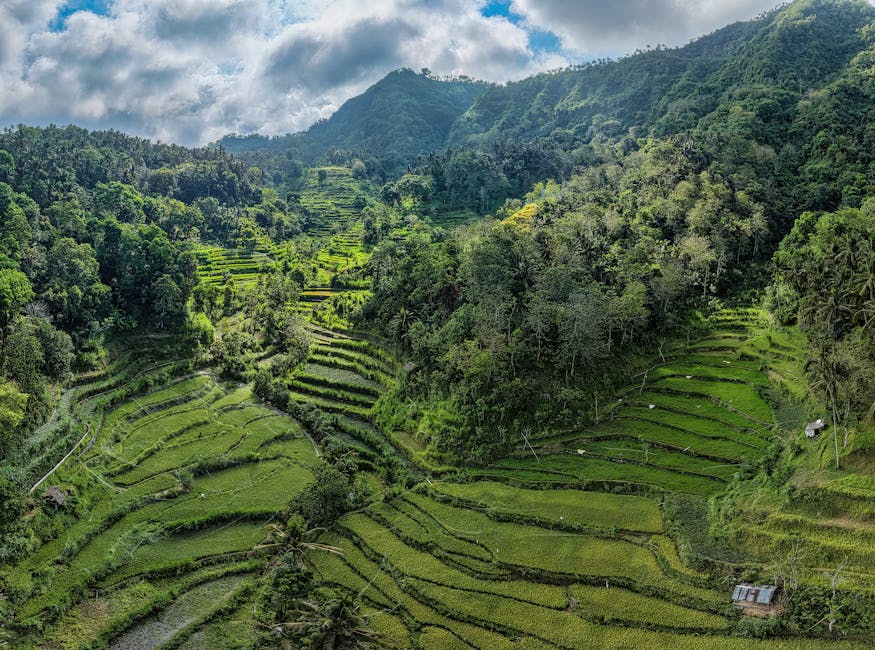
Ubud and central Bali sit inland, an hour north of the south coast. Cooler, greener, no beach access. Yoga, rice terraces, temples, jungle.
East Bali covers Sidemen, Padangbai, Candidasa, and Amed. Slower, more traditional, harder to reach. The east is where I started returning to Bali for instead of just visiting.
North Bali means Lovina and the Munduk highlands. Black-sand beaches, dolphin tours, mountain villages. Five hours from the airport, so it’s a multi-night detour rather than a base.
The offshore islands (Nusa Lembongan, Nusa Penida, the Gilis) sit a 30-90 minute fast boat ride east. Different government, different feel, often cheaper, almost always slower-paced. Worth two to four nights of any trip longer than ten days.
Ubud: culture, yoga, rice fields, no beach
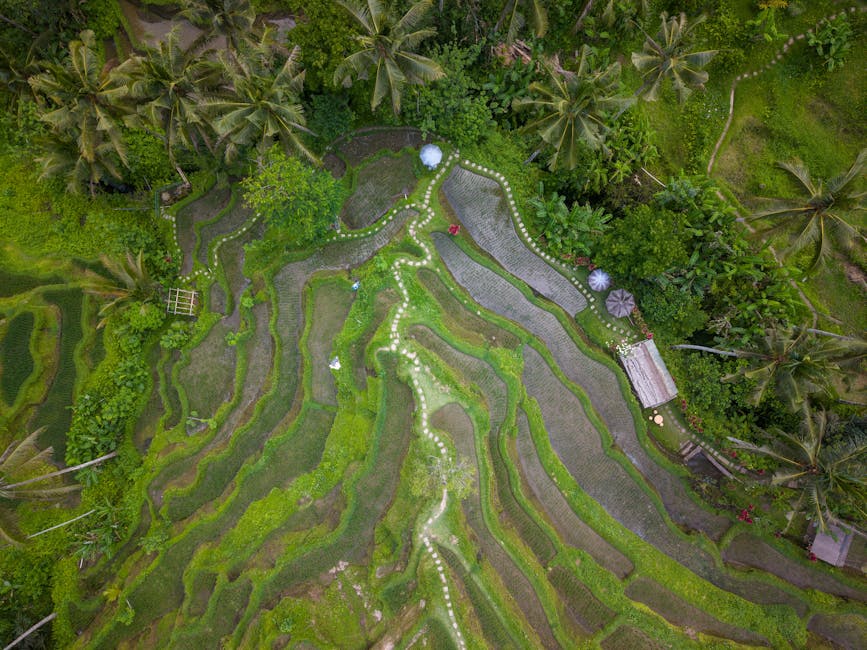
Ubud is the cultural capital and the obvious answer if you don’t care about swimming in the sea. It sits at about 200 metres elevation an hour north of the airport (90 minutes if you arrive after 4 p.m.). The town is built around the Ubud Royal Palace, the Saraswati lily-pond temple, and the Sacred Monkey Forest. Walk in any direction for fifteen minutes and you’ll find rice fields, a gamelan rehearsal in a banjar (the local neighbourhood council), or a yoga studio with a 7 a.m. class. The food scene is the most interesting on the island, and Ubud invented the modern Bali vegetarian restaurant.
Who Ubud is for: first-timers who want culture more than beach, returnees doing a yoga or art week, families with kids who like animals (the Monkey Forest plus the river-walk path is a brilliant day), digital nomads who don’t surf, anyone in the wellness category.
Who Ubud is wrong for: beach holidays, party crowds, people who hate driving (it’s an hour to the closest beach in Sanur, longer to anywhere else), anyone who can’t tolerate humidity at 25 degrees with no breeze.
Where to stay in Ubud: central Ubud (around Jalan Hanoman or Jalan Monkey Forest) is walkable but loud and traffic-heavy. Penestanan is fifteen minutes walk west and quieter, with a nicer concentration of cafes. Sayan and Kedewatan are luxury-villa zones above the Ayung River, very pretty, but you need a driver to get into town. For tier-by-tier prices: a homestay with breakfast runs Rp 350,000-500,000 a night (about $22-32). A mid-range pool villa or boutique guesthouse is Rp 900,000-2,200,000 ($58-140). Real luxury (Mandapa, Como Shambhala, Bambu Indah, Four Seasons Sayan) starts around Rp 8,000,000 ($510) and runs into multiple thousands of dollars.
If you want a deeper sense of how the temples and ceremonies actually work before you book, our guide to Balinese Hinduism walks through the daily offerings and the calendar.

Two things first-timers in Ubud get wrong: they book Tegalalang for the rice-field photo and find a queue of forty people for the same swing. Drive an hour further to Jatiluwih instead, or walk the Campuhan Ridge at 6 a.m. They also try to do a sunrise Mount Batur hike on the same day they arrive in Bali. Don’t. The 2 a.m. wake-up after a long-haul flight is brutal. Save it for day three.
Sanur: calm beach, families, a slower south
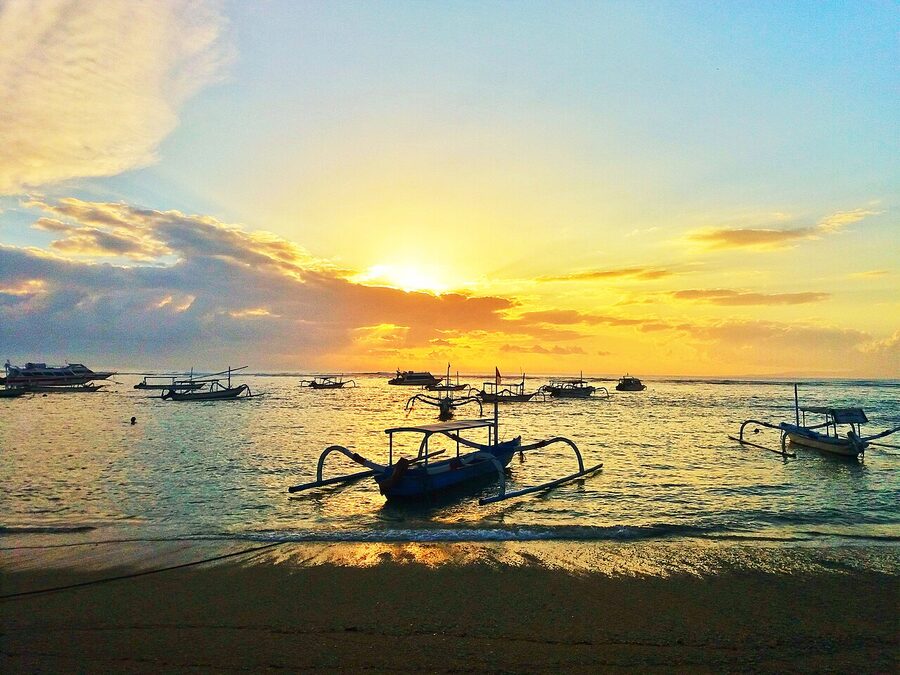
Sanur was the original beach resort area in Bali, developed in the 1960s by the Hotel Bali Beach (now the Inna Bali Beach), and it has the easiest beach in Bali. Easy because the reef five minutes offshore takes the swell down to lake-flat by the time it reaches the sand. You can swim. Kids can swim. Older travellers who can’t deal with the Kuta-Canggu shorebreak can swim. There’s a paved beach path you can walk for five kilometres from the south end at Mertasari past the Bali Hyatt to the north end at Hotel Sanur Beach, and it’s the only stretch of Bali coastline I’ve ever genuinely cycled along without fearing for my life.
Who Sanur is for: families with kids under twelve, older travellers, people whose holiday is books-and-pool not bars-and-pool, anyone catching a fast boat to the Nusa islands or the Gilis (the Sanur harbour is your departure point), divers using Sanur as a base for east-coast trips. There’s a strong long-stay European retiree population that gives the area a different feel from the bachelor-party energy further west.
Who Sanur is wrong for: surfers (the reef kills the wave, it’s not a surf beach), nightlife seekers (it’s quiet by 11 p.m.), anyone who needs to be where the influencer crowd is.
Where to stay in Sanur: the centre runs along Jalan Danau Tamblingan, parallel to the beach about 200 metres inland. Stay anywhere on or one street back from this road and you can walk to dinner. Budget homestays start around Rp 300,000 ($19). The mid-range tier of small boutique hotels and pool guesthouses is Rp 700,000-1,500,000 ($45-95) and there is more genuine value at this tier than anywhere else in south Bali. Luxury (Fairmont Sanur, Maya Sanur, Andaz, the Bali Hyatt) runs Rp 3,500,000-7,000,000 ($225-450). Read our deeper Sanur area guide for specific picks.
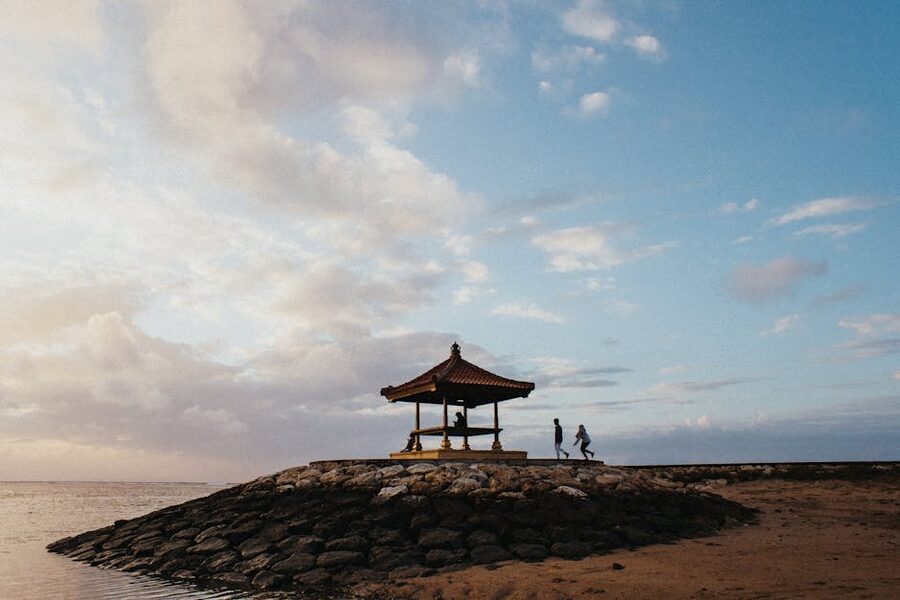
Two things returnees know about Sanur: the morning market on Jalan Danau Tamblingan starts at 5:30 a.m. and is genuinely local. And after monsoon season (December-February) the plastic on the beach is real. Don’t romanticise it.
Seminyak: beach clubs, rooftops, shopping, see-and-be-seen
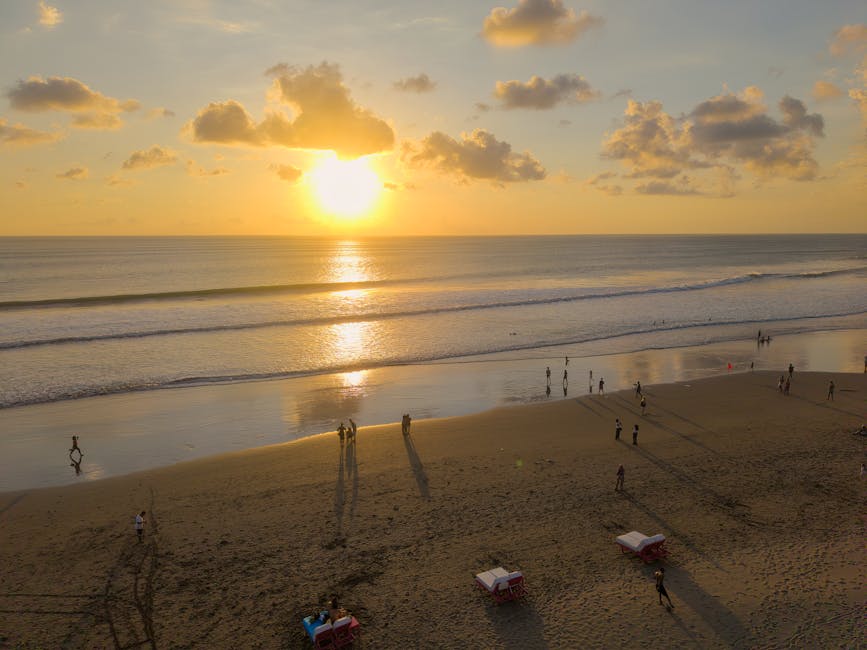
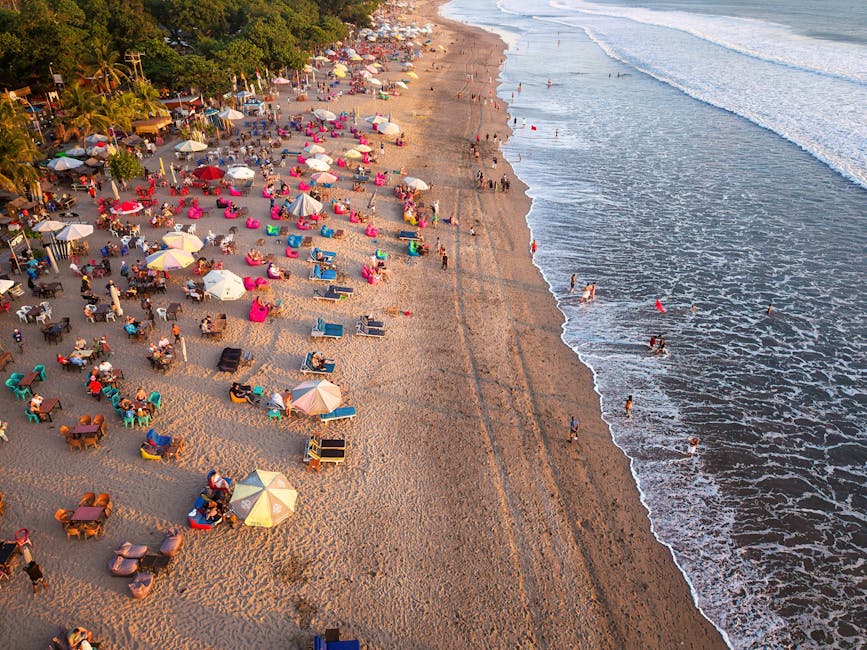
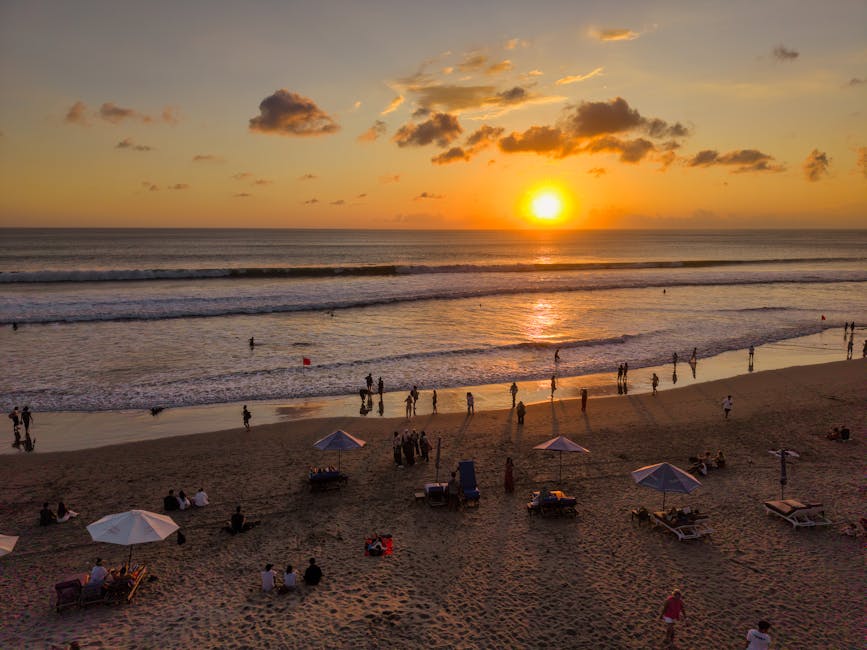
Seminyak is what Kuta wanted to grow up to be. It’s the polished, spendy, brunch-and-boutique version of south Bali, and the area where you’ll spend the most money the fastest. The strip runs from Jalan Kayu Aya (also called Eat Street, a slightly painful name) down to the beach, where Potato Head Beach Club, Ku De Ta, and La Plancha sit. The beach itself is a long, wide, dark-sand stretch with a respectable shorebreak and a dramatic sunset. There are good shops (Magali Pascal, Biasa, Drifter Surf), the food scene is solid even if it’s expensive, and Petitenget Temple at the north end is photogenic at golden hour.
Who Seminyak is for: couples on a short trip who want easy beach plus easy nightlife, honeymooners who want a villa-pool base near a beach club, the bachelor and hen weekend crowd at the higher end (the Bounty crowd is in Kuta, not here), shoppers, first-timers who want the most polished introduction to south Bali.
Who Seminyak is wrong for: budget travellers (you’ll spend twice as much for less than Sanur or Canggu), anyone seeking a trace of pre-tourist Bali (Seminyak is the most fully developed area on the island), surfers (the wave is closeout-prone, and Canggu is fifteen minutes north).
Where to stay in Seminyak: Petitenget at the north is the highest-end pocket. Oberoi Street has the boutique hotels. Anywhere south of Eat Street starts to bleed into Legian and gets cheaper. Tier prices: budget around Rp 600,000-900,000 ($38-58), but you can do better in Sanur. Mid-range pool villas Rp 1,800,000-3,500,000 ($115-225). Luxury (The Legian, Alila Seminyak, the Oberoi) Rp 5,000,000-15,000,000 ($320-960). Our Oberoi Seminyak guide covers the Bali luxury benchmark in detail.
Two notes if you book Seminyak: the traffic on Jalan Petitenget into the Kayu Aya area between 6 p.m. and 8 p.m. is genuinely terrible. Walking is faster. And a beer at the rooftop bars now lands at around Rp 110,000 ($7), a cocktail at Potato Head is Rp 250,000 ($16), and a sun lounger with minimum spend will cost you the same as a mid-range hotel night by sunset.
Canggu: surf, cafes, digital nomads, traffic

Canggu was a quiet rice-field village fifteen years ago. Today it’s the most-talked-about area in Bali, the digital-nomad capital of Southeast Asia, and a town that has visibly outgrown its road infrastructure in real time. The pull is the trifecta: surf (Echo Beach, Batu Bolong, Berawa peaks), cafes (the laptop scene around Crate, Milk and Madu, Nüde, KYND Community is genuinely impressive), and the social/dating/yoga community that feeds all of it. The vibe is twenties-to-mid-thirties, internationally mixed, gym-on-Sunday, espresso-tonic-at-three, and it’s a brilliant base for a long stay. For a one-week beach holiday it’s also fine, with caveats.
Who Canggu is for: intermediate surfers, remote workers planning to stay a month or more, the gym-cafe-yoga crowd, returnees who want the social scene, anyone who finds Seminyak too try-hard and Ubud too sleepy.
Who Canggu is wrong for: people who hate traffic (the spine road, Jalan Pantai Berawa, can take 45 minutes to crawl 4 km at sundown), beginners who can’t surf at all (the wave breaks over rocks and reef in places, less forgiving than Kuta), the over-fifty crowd unless you’ve been before, anyone seeking quiet (it’s not).
Where to stay in Canggu: the area divides into rough sub-zones. Berawa at the south is the most developed, closest to Seminyak, with the Atlas Beach Club crowd. Batu Bolong is the spiritual centre, with Old Man’s, Deus Ex Machina, and the main strip. Echo Beach at the north is quieter and surfier. Budget homestays Rp 350,000-650,000 ($22-42). Mid-range pool villas Rp 1,200,000-2,800,000 ($75-180). Luxury Rp 4,500,000+ ($290+). Note: the value tier above $200/night in Canggu shifts in favour of villas over hotels, you get a private pool and full kitchen for the same money as a high-end resort room.
Berawa and Echo Beach: Canggu’s quieter siblings

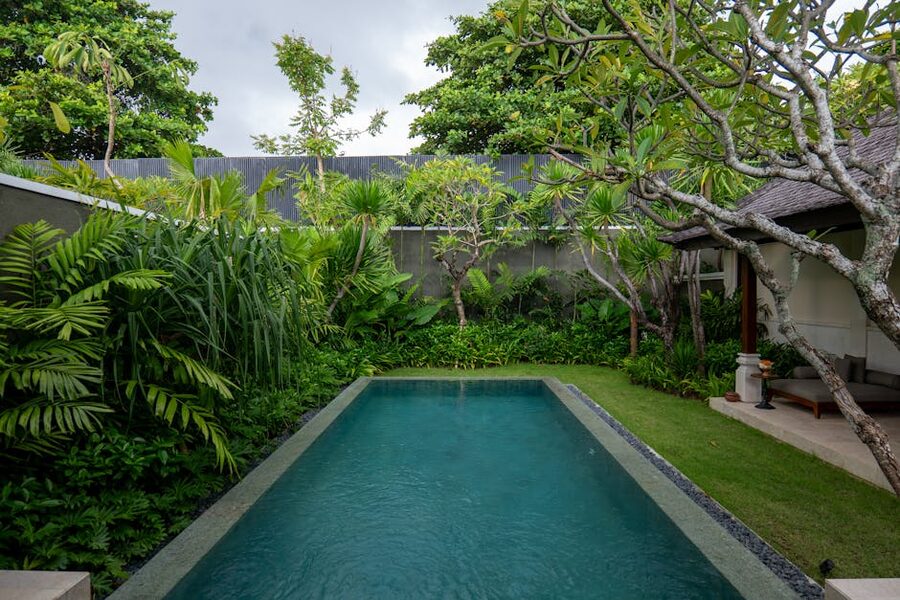
If you want Canggu’s coffee and surf without quite Canggu’s intensity, the answer is Berawa or Echo Beach. Berawa sits between Seminyak and Batu Bolong proper, with the giant Atlas Beach Club anchoring the south end and a beach that’s wider and slightly less crowded than Batu Bolong. Echo Beach (Pantai Echo, also called Batu Mejan) is at the north end of the Canggu sprawl, where the road runs out and Pererenan begins. The wave is bigger and more consistent than Batu Bolong, and the crowd thins.
Who these are for: surfers who don’t want to walk far in the morning, returnees who liked Canggu but found it too noisy, families who want a Canggu-adjacent location with quieter streets.
What to know: Echo Beach is where La Brisa, Sand Bar, and a handful of beachfront warungs sit. The volcanic black sand here gets genuinely hot at midday, flip-flops are not optional from 11 a.m.
Pererenan: the next Canggu, currently in the act of becoming Canggu
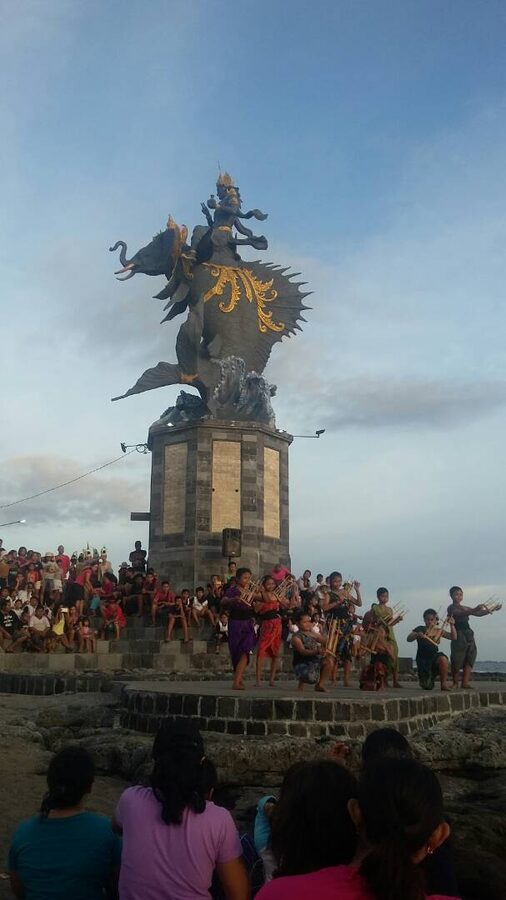
Pererenan is the area just north of Echo Beach, separated from Canggu by the Yeh Poh river. Five years ago there were rice fields. Today there are fifteen new villa developments with construction crews working through the night. It’s still a beat or two quieter than Canggu, the cafes have a more local-international mix, and the surf at Pantai Pererenan is one of the better intermediate waves in the south. By 2027 it will probably be indistinguishable from Canggu, but right now it occupies the Canggu-five-years-ago niche.
Who Pererenan is for: returnees who liked Canggu in 2019 and want that energy back, surfers, long-stay nomads who can’t deal with Berawa traffic, anyone willing to scooter for cafe variety.
What to know: the unfinished construction is real and will be your morning soundtrack at any villa within 50 metres of a building site. The trade-off is that prices are still 20-30% lower than equivalent Canggu villas. Use that window while it lasts.
Kuta and Legian: cheap, central, and a bit of a mess
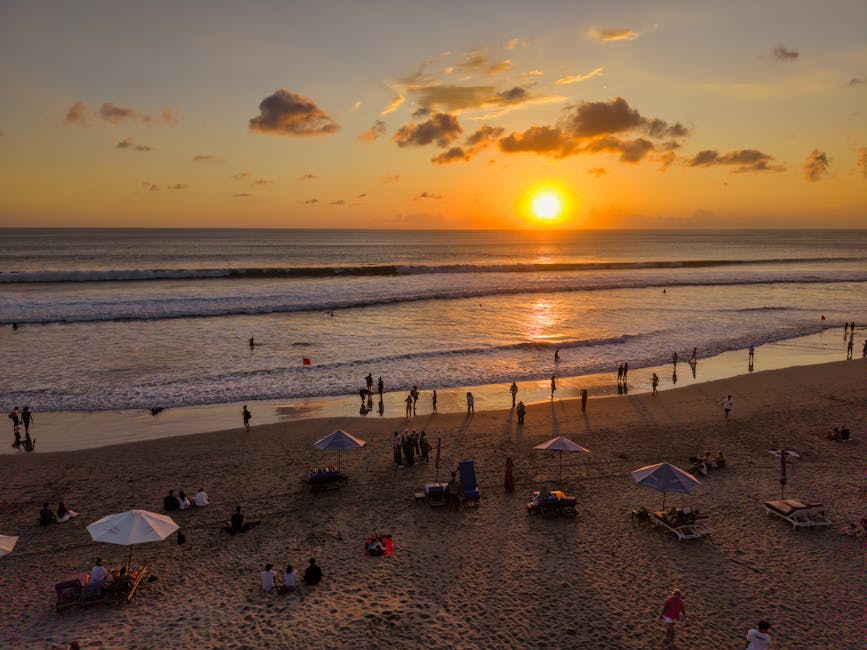
Kuta gets a deserved rough write-up in most modern guides, and it’s not where I’d send most readers, but it has a real role for one specific kind of trip. The strip on Jalan Legian runs hard with mass-market clubs (Sky Garden, Bounty), boutiques selling fake football shirts, and a beach that’s actually quite good but feels like a film set for everyone’s worst Bali stereotype. Legian, immediately north, is the calmer cousin: more package-tour hotels, less of the heavy nightlife, the Padma Hotel families come back to year after year.
Who Kuta is for: first-time surfers (the Kuta Beach surf school scene is excellent and the wave is genuinely beginner-friendly), backpackers who want the absolute cheapest accommodation in Bali, transit travellers with one night before an early flight (it’s ten minutes from DPS), and the under-25 stag-do crowd who actually want what Kuta sells.
Who Kuta is wrong for: almost everyone else. The truth is: if your friends are pressuring you to “stay near the airport”, choose Sanur (15 minutes) or Jimbaran (10 minutes) instead.
Where to stay: Poppies Lane I or Poppies Lane II are the historic budget alleys with cheap homestays from Rp 250,000 ($16). Our deeper Poppies Kuta guide covers the surf-school-and-budget angle. Mid-range hotels along Jalan Pantai Kuta or in Legian run Rp 800,000-1,500,000 ($50-95). The Padma Resort in Legian and the Sheraton Kuta are the two reliable family-resort picks.
Uluwatu and the Bukit: clifftops, surf, dramatic
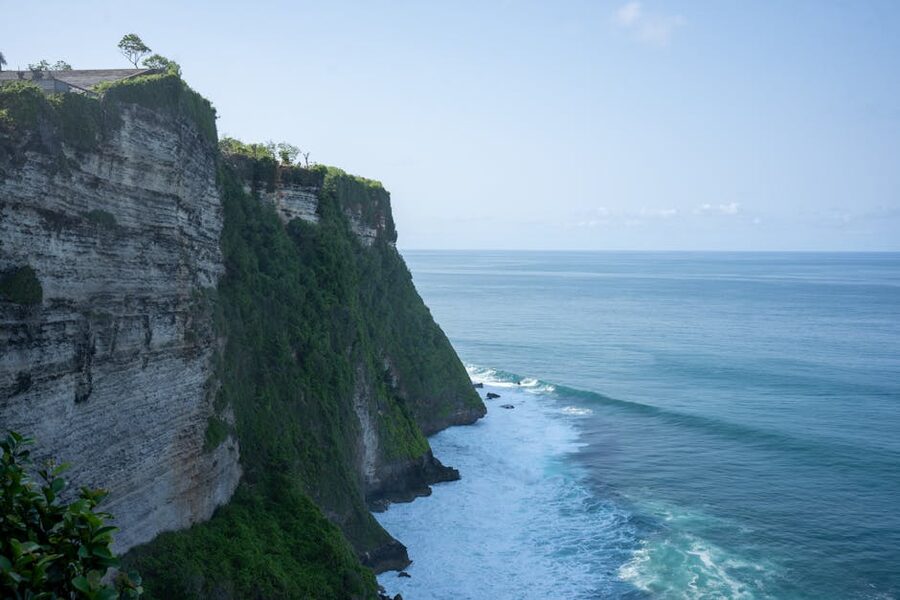
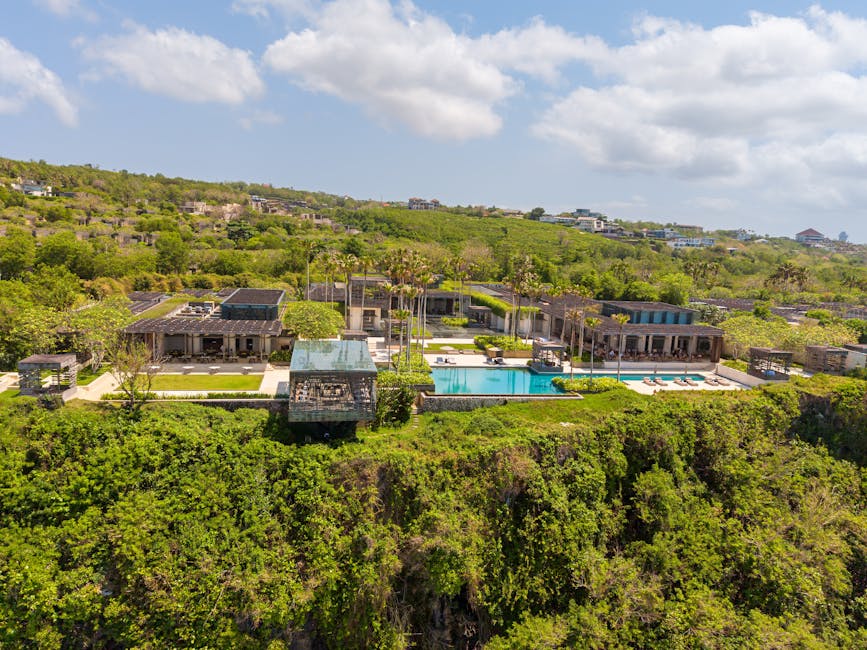
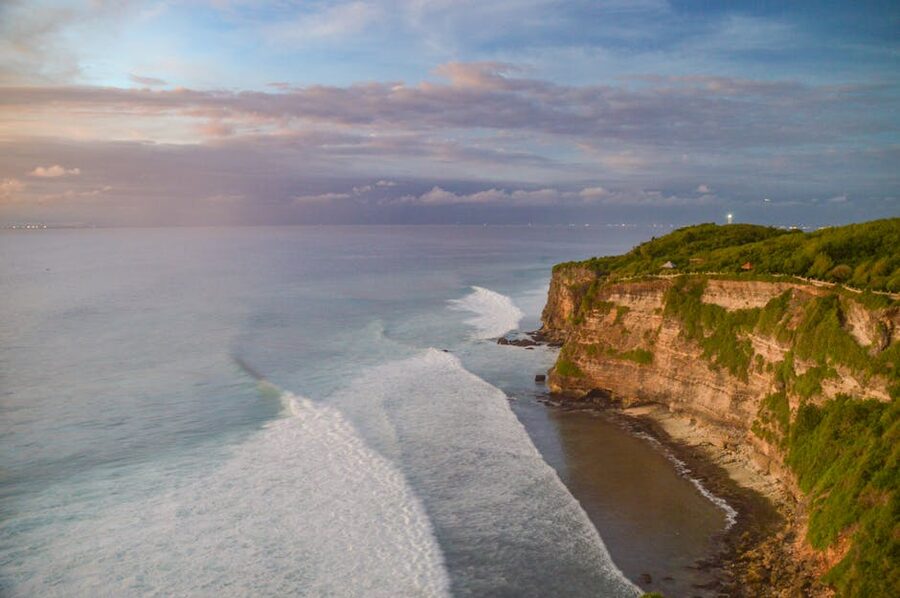
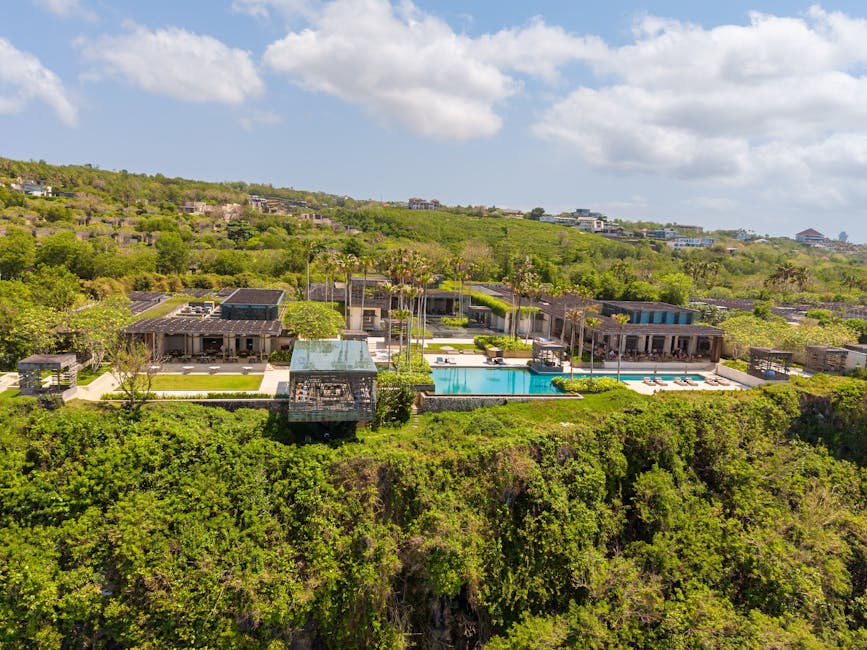
The Bukit peninsula is the limestone tongue at the south of Bali, and Uluwatu, on its west cliffs, is the most dramatic accommodation zone on the island. Cliff-edge villas, infinity pools that visually drop into the Indian Ocean, the famous kecak fire dance at Pura Uluwatu at sunset, and the wave at Uluwatu itself, which is one of the legendary right-handers of world surfing. The beaches under the cliffs (Padang Padang, Bingin, Suluban, Dreamland, Balangan) involve real walking down stairs cut into the rock, which keeps the casual crowds away.
Who Uluwatu is for: intermediate to advanced surfers, honeymooners who want drama (the cliffside resorts are spectacular), returnees who already know they don’t need a town to wander, anyone who can scooter or wants to hire a driver for the duration.
Who Uluwatu is wrong for: first-timers who want walkable streets, anyone who dislikes being driven everywhere, beginner surfers (the waves break over reef), the no-stairs crowd (every beach involves a descent).
Where to stay: Pecatu and Ungasan are the residential villa zones inland from the cliffs. Bingin and Padang Padang have the surfer guesthouse scene from Rp 500,000 ($32). Mid-range cliffside boutique villas run Rp 2,000,000-4,500,000 ($130-290). Real cliff-edge luxury (Bulgari, Six Senses, Alila Villas, the Edge) starts at Rp 12,000,000 ($770) and runs to genuinely silly numbers.
Nusa Dua: resort enclave, family-friendly, planned
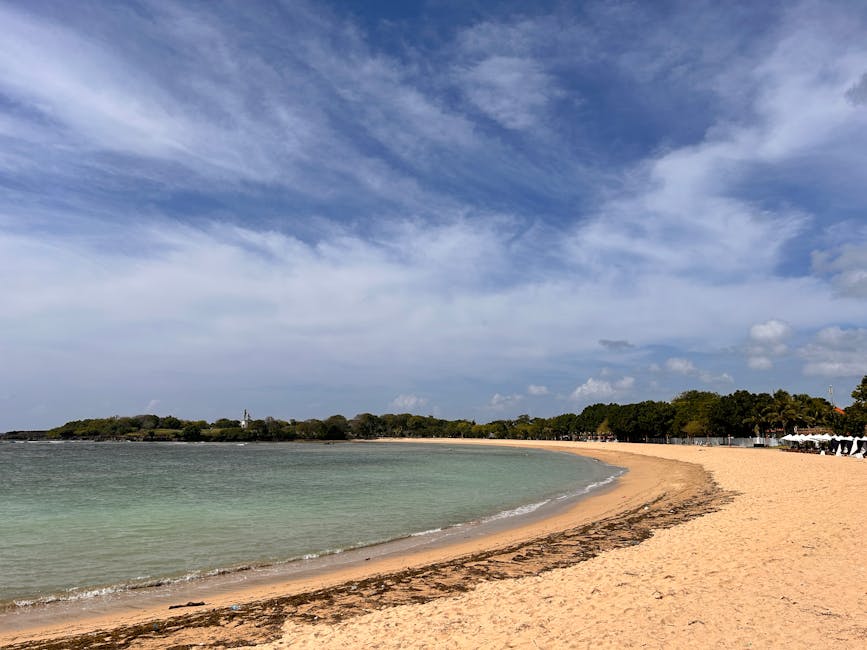
Nusa Dua is a planned resort area on the east side of the Bukit peninsula, gated, manicured, with white-sand reef-protected beaches and a who’s-who of international hotel chains (Ritz-Carlton, St Regis, Mulia, Grand Hyatt, Conrad, Westin, Sofitel). It’s the most planned area in Bali, the closest the island comes to a Maldives-style resort enclave, and it serves a specific traveller really well. The trade-off is that you can spend a week here and barely interact with Bali at all.
Who Nusa Dua is for: families with young kids (the reef-flat sea is genuinely safe), travellers who want a fly-and-flop resort holiday with kids’ clubs and buffet breakfast, golfers (the Bali National Golf Course is here), conference-and-leisure trips, anyone who specifically does not want the chaos of Canggu or Seminyak.
Who Nusa Dua is wrong for: independent travellers, food adventurers (you’ll eat at the resort), anyone for whom “Bali” means the cultural and visual texture they saw on Instagram (Nusa Dua looks like a polished tropical resort anywhere in Asia).
Where to stay: the BTDC (Bali Tourism Development Corporation) zone is the gated cluster. Outside it, Tanjung Benoa and Mengiat are slightly cheaper. Mid-range resort rooms Rp 2,500,000-4,000,000 ($160-255). Luxury Rp 5,500,000-12,000,000 ($350-770). Cheap doesn’t really exist here; Nusa Dua’s mid-range is most of the island’s luxury.
Jimbaran: seafood grills and airport-adjacent
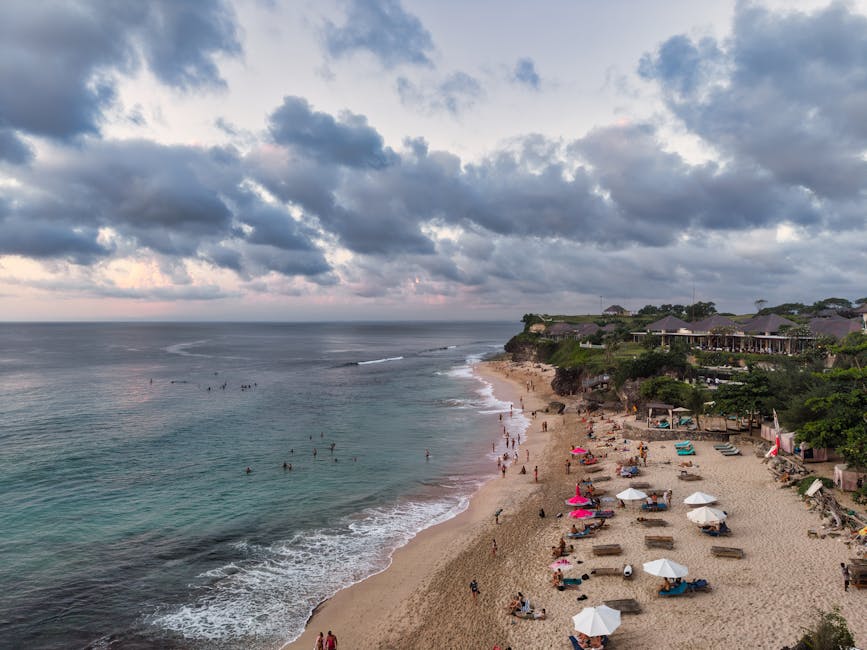
Jimbaran is a long crescent bay on the east of the Bukit, ten minutes from the airport, famous for two things: the row of beachfront seafood grills (Menega, Lia, Furama) where you sit at plastic tables on the sand and eat grilled red snapper at sunset, and a handful of high-end beachfront resorts (Four Seasons Jimbaran, Ayana, Rimba, the Intercontinental). The fishing market in the morning is the real working version of what the rest of Bali has tidied away for tourists. The middle of the bay is residential and a bit charmless; the resort ends at north and south are where you stay.
Who Jimbaran is for: first-or-last-night travellers who want one quieter night near the airport, romantic couples doing the seafood-grill night, families wanting a less-formal alternative to Nusa Dua, sunset photographers (the bay faces west across the water back to the airport runway, with regular plane silhouettes against the sun).
Where to stay: the south end (around Four Seasons) is the calmer luxury zone. The north end (Kedonganan) is where the seafood grills sit and where mid-range hotels concentrate. Mid-range Rp 1,200,000-2,500,000 ($75-160). Luxury Rp 6,000,000+ ($385+).
Lovina: north-coast slow, dolphin tours, black sand

Lovina sits on Bali’s north coast, about three hours’ drive from the airport and two hours from Ubud over the mountains. It’s a string of small black-sand beach villages (Kalibukbuk, Anturan, Tukad Mungga) anchored by the famous dolphin-spotting tours that leave at sunrise. The pace is properly slow, the prices are 30-40% lower than the south coast for the same standard, and the area pairs beautifully with two or three nights up in the Munduk highlands. The water is calm, the snorkelling at Pemuteran an hour west is solid, and there’s a Buddhist monastery (Brahma Vihara Arama) in the hills that does ten-day silent retreats.
Who Lovina is for: returnees who’ve done the south, slow-travel couples on a longer trip, divers using it as a base for west-coast trips (Menjangan), anyone seeking a base for the north and central highlands. Pair with our Singsing Waterfall guide for the day-trip details.
Who Lovina is wrong for: first-timers on a short trip (the drive eats half a day each way), anyone who specifically wants white sand or surf, travellers prone to sea sickness on dolphin boats (the swell isn’t bad but the boat is small).
Where to stay: Kalibukbuk has the densest cafe-restaurant scene. Anturan is quieter. Budget homestays Rp 250,000-450,000 ($16-29). Mid-range pool resorts Rp 700,000-1,500,000 ($45-95). The high end caps out around Rp 4,000,000 ($255) here; Lovina doesn’t have proper international five-stars.
One note on the dolphin tour: the boats can crowd the dolphins, and the experience is mixed. If you go, choose an operator that limits boat numbers and stays back. If you don’t go, you’re not missing the trip-defining experience.
Munduk: mountain village, cool nights, waterfalls
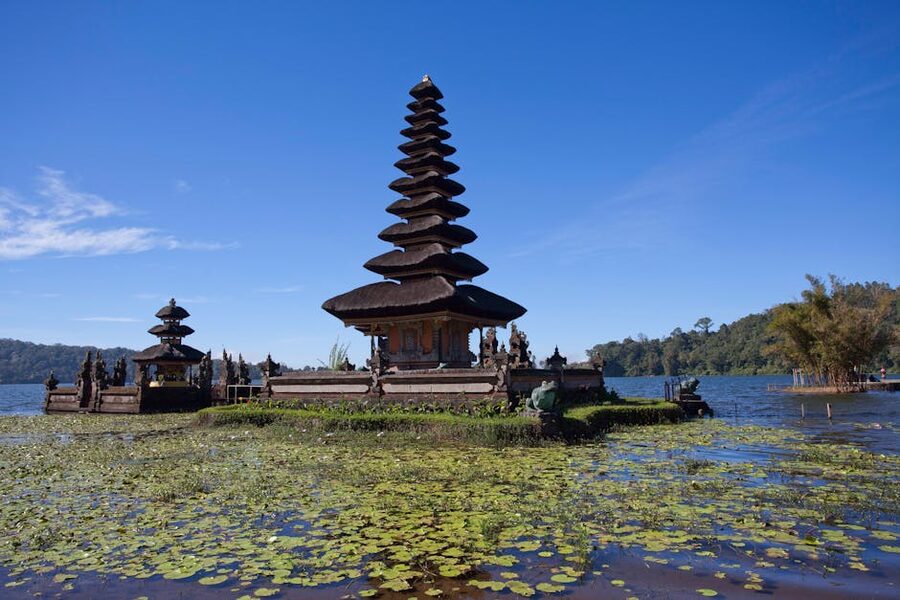
Munduk is the highland village I keep coming back to. It sits at about 800 metres, two and a half hours’ drive from the airport, in clove and coffee plantations above the Buyan and Tamblingan twin lakes. Nights are properly cool (you’ll want a light layer), the air smells of cloves, and there’s a network of waterfall walks through the surrounding jungle (Munduk waterfall, Melanting, Banyumala, Sekumpul about 45 minutes east). The Pura Ulun Danu Beratan temple, the famous one floating on Lake Beratan, is a 30-minute drive south. Read our deeper Munduk area guide for a real itinerary.
Who Munduk is for: returnees who want temperature relief from the south coast humidity, hikers, photographers, couples who want two or three quiet nights in the middle of a longer trip, anyone whose Bali fantasy involves mist and rice terraces more than beaches.
Who Munduk is wrong for: beach holidays, anyone who wants restaurant variety (Munduk has maybe a dozen places to eat, mostly small warungs), travellers easily disappointed by rain (afternoon mist and rain are common at this altitude even in dry season).
Where to stay: small bamboo-and-wood guesthouses with valley views are the local speciality. Budget Rp 350,000-600,000 ($22-38). Mid-range eco-resorts and boutique cottages Rp 900,000-2,000,000 ($58-128). The few high-end options (Munduk Moding Plantation, Sanak Retreat) run Rp 3,000,000-5,500,000 ($192-350).
Sidemen: rice-terrace valley, quietest base on the island
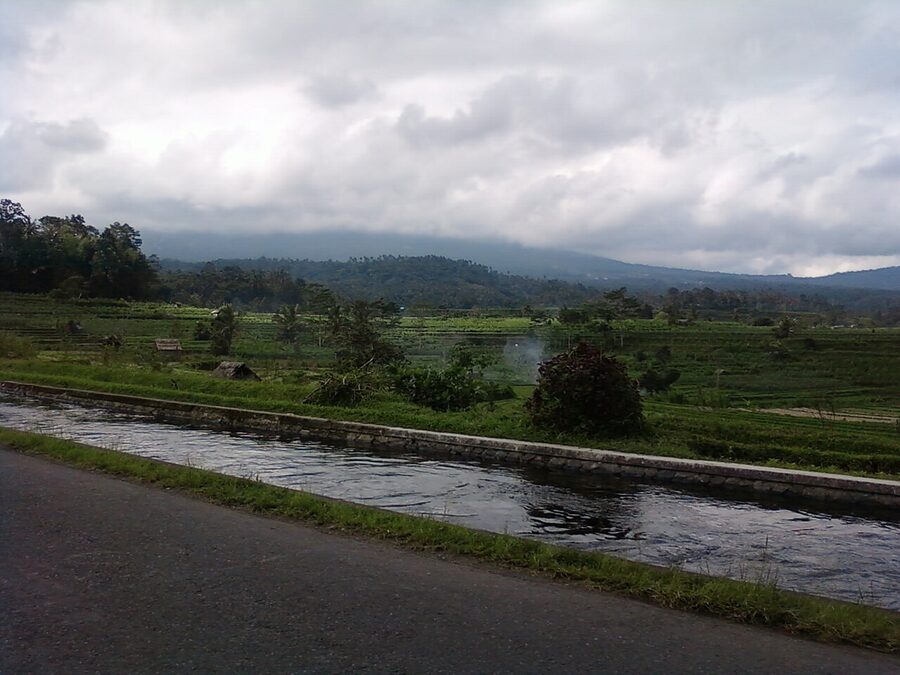
Sidemen sits in a wide rice-terrace valley about 90 minutes east of Ubud, in the foothills below Mount Agung. The closest comparison I can give is what Ubud must have felt like in 1990: working rice farms, no traffic, no clubs, no crowds. The view from any decent guesthouse looks straight at Agung’s volcanic cone, and on a clear morning at 6 a.m. it’s the kind of view people fly across continents for. There’s almost nothing to do except walk in the rice fields, drink coffee on a verandah, and read books, which is the entire point.
Who Sidemen is for: returnees who’ve done Ubud and want quieter, couples on a long-stay honeymoon, anyone running on burnout, photographers who’ll be up at sunrise.
Who Sidemen is wrong for: short-trip travellers (it’s not worth a single night, you need three), the nightlife crowd, anyone who needs restaurants, beach holidays.
Where to stay: small valley-view eco-lodges and bamboo houses are the standard. Budget Rp 300,000-550,000 ($19-35). Mid-range valley-view resorts Rp 900,000-2,500,000 ($58-160). The high-end (Wapa di Ume Sidemen, Samanvaya) tops out around Rp 3,500,000 ($225).
Amed: east-coast diving, fishing villages, black sand
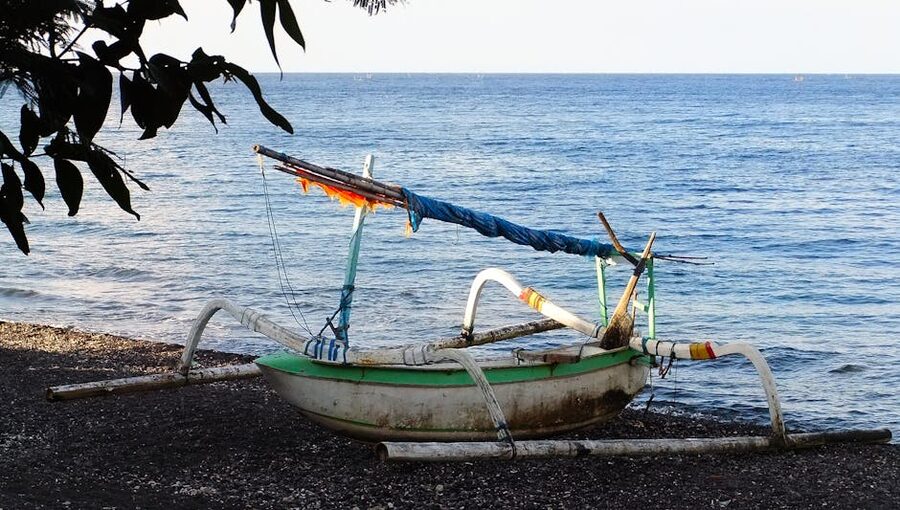
Amed is the strip of black-sand fishing villages on Bali’s far east coast, about three hours from the airport, famous for two things: the USAT Liberty wreck dive at Tulamben (a 30-minute drive north, you can shore-dive a WWII shipwreck from the beach), and the calm reef-sheltered snorkelling and diving from beaches like Jemeluk Bay. The pace is genuinely slow, the warungs serve the best grilled mahi-mahi I’ve ever eaten, and the village strung along the coastal road is half-fishing-village, half-divers’ end-of-the-world hangout. Read our Amed area guide for the dive specifics.
Who Amed is for: divers and snorkellers, returnees, couples who want the quietest beach base in Bali, anyone allergic to crowds.
Who Amed is wrong for: short-trip travellers (the drive in eats half a day), nightlife seekers, surfers, the white-sand-and-cocktails crowd.
Where to stay: the strip runs from Bunutan in the south through Amed proper, Jemeluk, Lipah, and on to Tulamben. Jemeluk Bay is the central pocket and most popular. Budget homestays Rp 250,000-450,000 ($16-29). Mid-range dive resorts and boutique villas Rp 700,000-1,800,000 ($45-115). Luxury caps out around Rp 3,500,000 ($225); Amed is not a luxury zone.
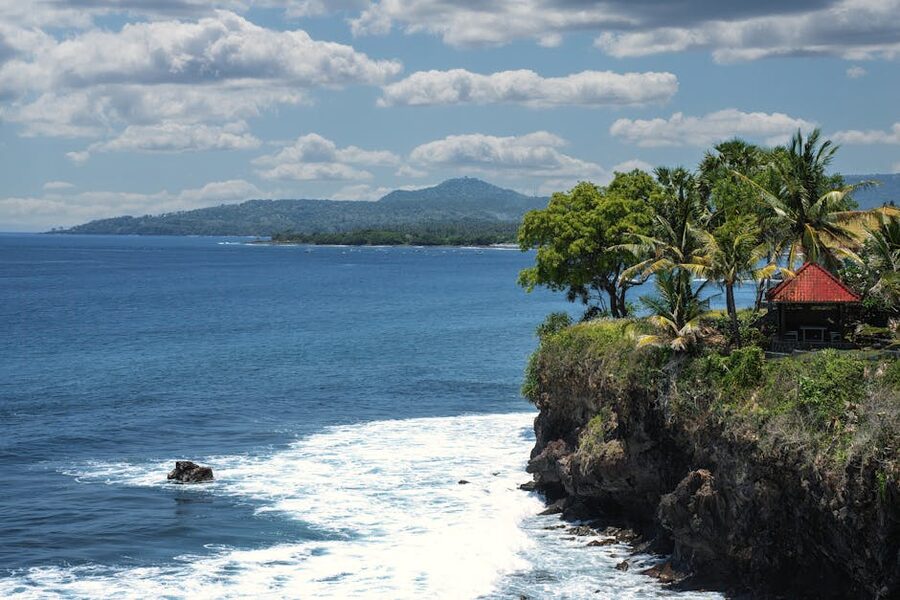
Padangbai: ferry hub that earns a two-night stay
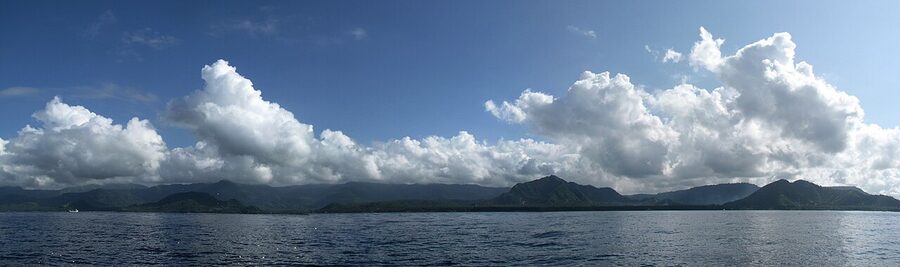
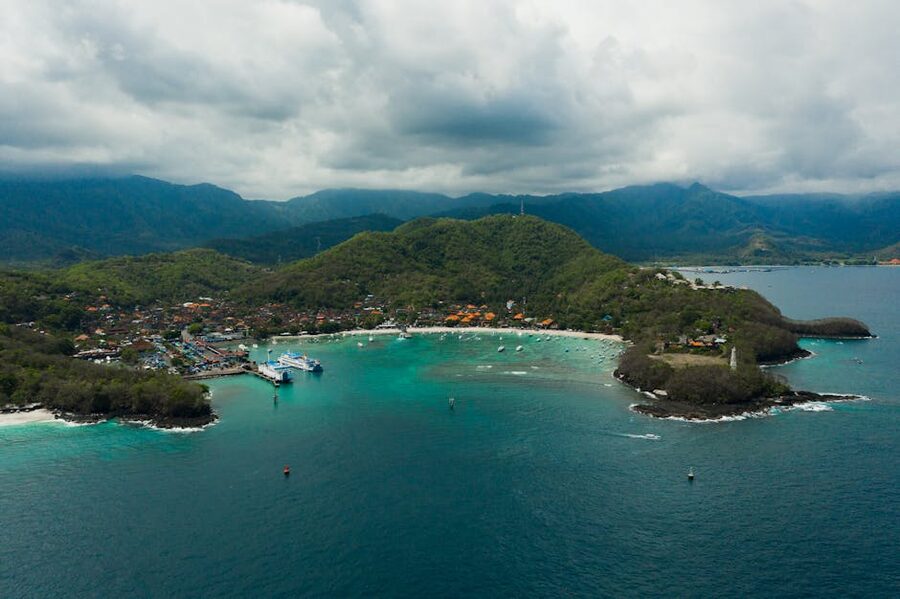
Padangbai is the small east-coast port that fast boats to the Gilis and Lombok depart from, and 95% of travellers pass through it without stopping. The 5% who book two nights find one of the more pleasant small-town surprises in Bali. The main bay is a horseshoe with a working fishing fleet and a swimmable beach, the Blue Lagoon five minutes’ walk over the headland is one of the best easy snorkelling spots in east Bali, and the coastal walk south to Bias Tugel beach is genuinely lovely. Our Topi Inn Padangbai guide covers the area as a stay rather than a transit point.
Who Padangbai is for: travellers heading to or returning from the Gilis or Lombok who want to break the journey, divers (Blue Lagoon and Tepekong are local dive sites), backpackers on a budget, anyone who likes small ports.
Where to stay: a handful of small guesthouses in the village run Rp 200,000-450,000 ($13-29). Mid-range options are sparse, around Rp 600,000-1,000,000 ($38-65). No luxury here; this is a working port.
Nusa Lembongan: small island, mangroves, sunsets to Mount Agung
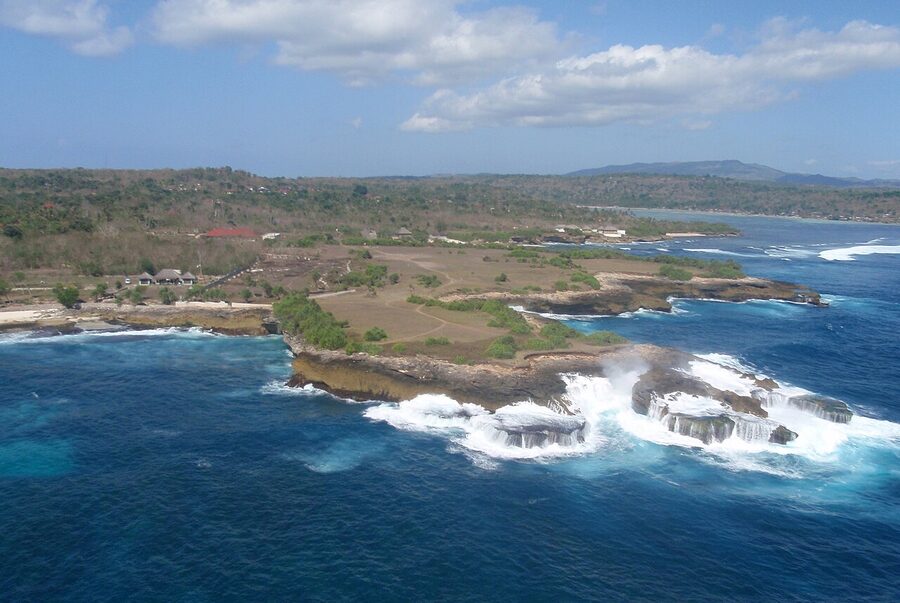
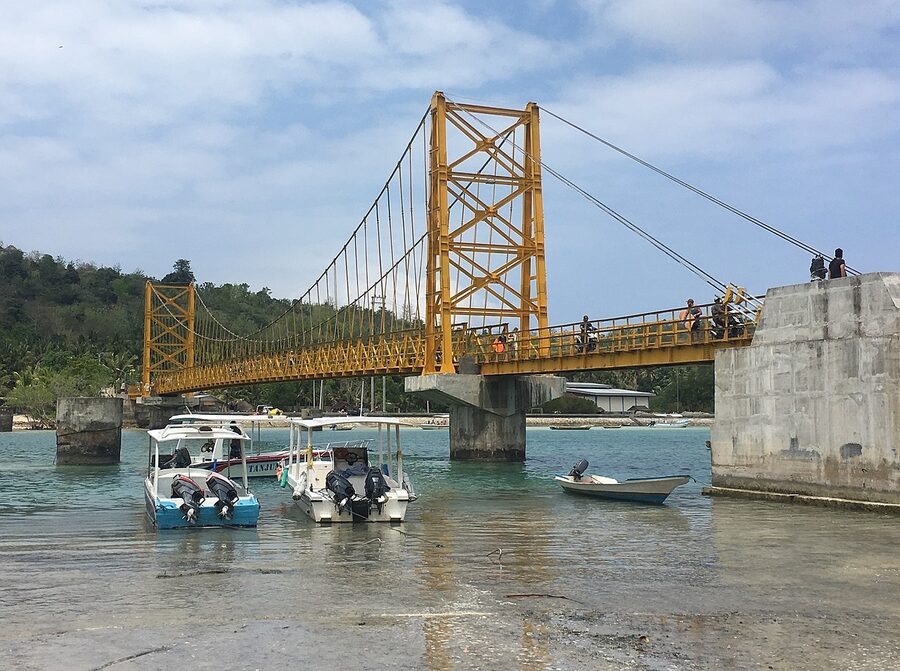
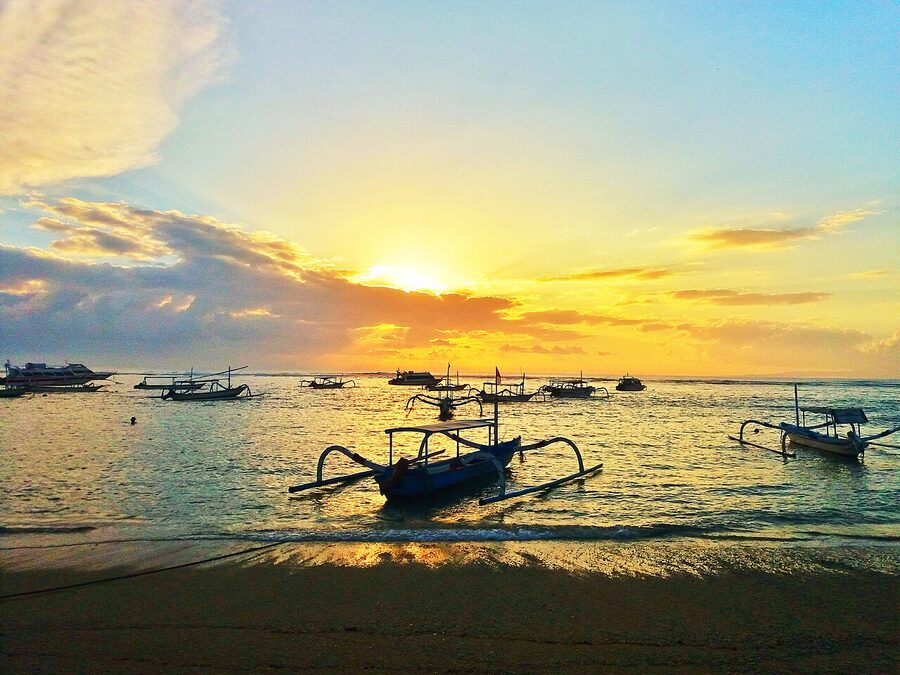
Nusa Lembongan is the easiest of the three Nusa islands, a 30-minute fast boat from Sanur (about Rp 350,000 / $22 return), small enough to scooter around in an afternoon, with calm reef-protected snorkelling and a mellower vibe than mainland south Bali. The strip at Jungutbatu is where the fast boats land and most accommodation sits. Mushroom Bay on the south is quieter and prettier, with good snorkel reefs offshore. The island links to neighbouring Nusa Ceningan via the famous yellow suspension bridge.
Who Nusa Lembongan is for: travellers wanting an offshore-island change of pace within an hour of mainland Bali, snorkellers and divers (manta rays at Manta Point, mola mola at Crystal Bay in season), couples on the second half of a longer trip, anyone who wants three days off the scooter-traffic of south Bali.
Where to stay: Mushroom Bay or Sandy Bay for the prettiest and quietest. Jungutbatu for cheaper and busier. Budget Rp 350,000-650,000 ($22-42). Mid-range cliff villas and beach bungalows Rp 1,000,000-2,500,000 ($65-160). High-end (Hai Tide Beach Resort, Batu Karang) Rp 3,000,000-5,500,000 ($192-350).
Nusa Penida: wild, dramatic, day-trip-able but better with a stay
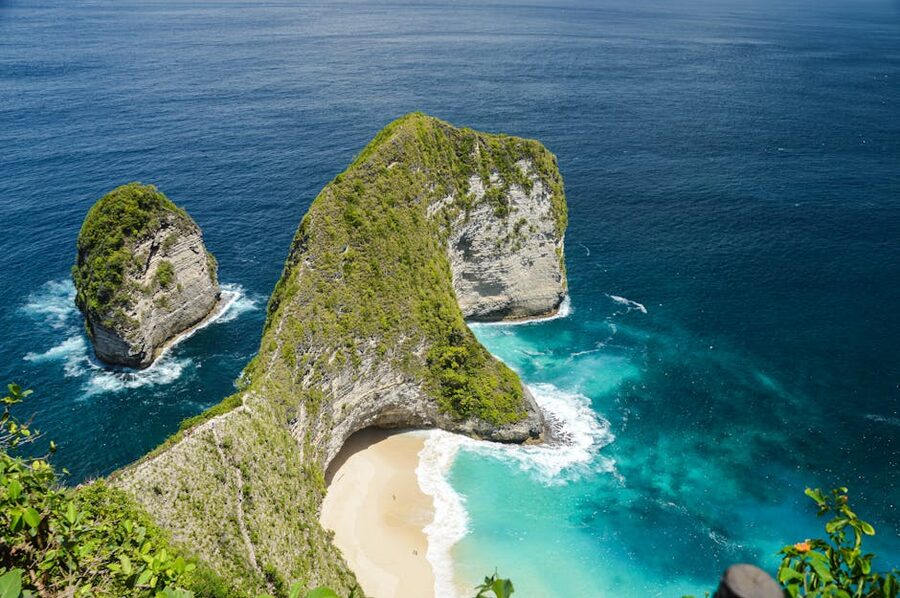
Nusa Penida is the bigger, wilder, less-developed island east of Lembongan, and the source of about 80% of “Bali” Instagram photos in the last five years (Kelingking Beach, Diamond Beach, Angel’s Billabong, Broken Beach all sit here). It’s possible to do as a day trip from south Bali (most travellers do), but you’ll spend half the day in a fast boat and the other half stuck behind 200 other day-trippers in a mini-bus. Stay two nights and you can be at Kelingking at sunrise with no one else there.
Who Nusa Penida is for: photographers, divers (manta rays year-round at Manta Point and Manta Bay, mola mola July-October at Crystal Bay), returnees who want an island that still feels rough and undeveloped, anyone willing to deal with bumpy roads.
Who Nusa Penida is wrong for: luxury travellers (the high-end has caught up only recently and is patchy), anyone with mobility issues (the famous viewpoints involve real stairs and scrambles), nervous scooter riders (the roads are genuinely bad in places).
Where to stay: Toya Pakeh (the port and main town) for convenience. Crystal Bay for the dive scene. The north and east coasts are the harder-to-reach pockets with the most dramatic clifftop villas. Budget Rp 250,000-450,000 ($16-29). Mid-range Rp 700,000-1,800,000 ($45-115). Newer high-end (Adiwana Warnakali, Semabu Hills) Rp 2,500,000-4,500,000 ($160-290).
The Gili Islands: technically Lombok, but a Bali staple
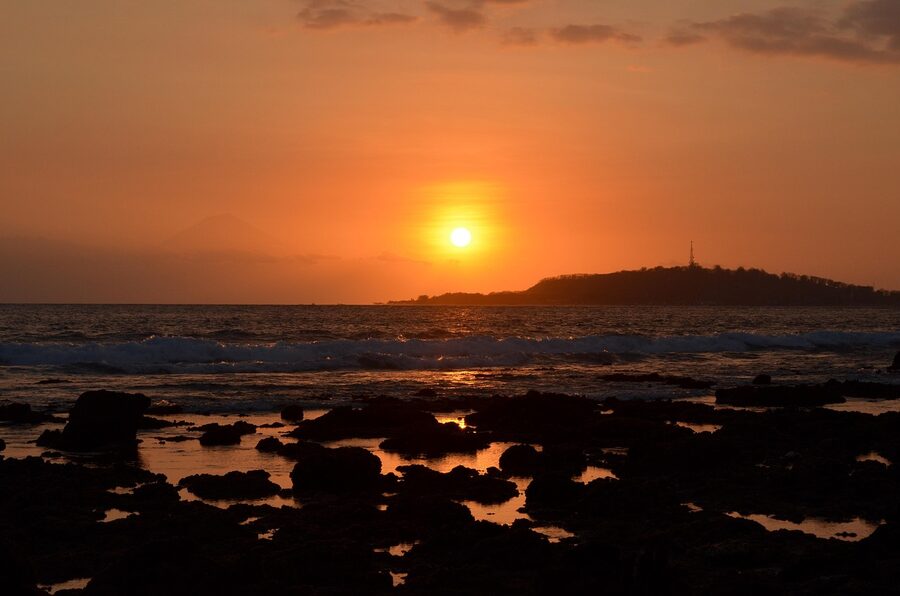
The Gilis (Trawangan, Meno, Air) sit east of Bali in Lombok’s water, but every Bali trip longer than ten days should consider including them. Fast boats from Sanur or Padangbai run 90-150 minutes (around Rp 750,000-1,200,000 / $48-77 return) and the islands are small (no cars, only horse carts and bicycles), with easy snorkelling, sea turtles you can find from the beach, and a vibe that flips between three distinct characters. Trawangan is the party island. Meno is the quietest, with the famous underwater statue circle. Air sits between them and is the one I’d recommend most travellers for.
Where to stay: all three have full ranges from Rp 350,000 ($22) backpacker bungalows to Rp 5,000,000+ ($320+) beachfront luxury. Air is the best value mid-range. Trawangan has the most accommodation density. Meno has the fewest options but the prettiest beach.
The big comparisons travellers actually ask
Ubud vs Canggu
This is the most-asked Bali question. The real answer: they are not interchangeable. Ubud is inland, cultural, no beach, food-and-yoga, slower-paced. Canggu is coastal, surf-and-cafe-and-nomad, faster-paced, traffic-heavy. If you have one week, you can do both, three nights Ubud, four nights Canggu, with a private driver Rp 600,000 ($38) for the transfer. If you have to pick one for a short trip, pick by your answer to question one of the matrix above. The trip you actually want will pick itself.
Seminyak vs Canggu
Seminyak is more polished, more expensive, more shopping, more rooftop bars. Canggu is more surf, more cafes, more digital-nomad, more rice fields visible between the construction. Seminyak’s beach is genuinely better for swimming. Canggu’s wave is genuinely better for surfing. For a five-day couples trip with no interest in surfing, Seminyak. For a two-week stay with any surf interest, Canggu. The drive between them is fifteen minutes when traffic is good and 45 minutes at sundown.
Sanur vs Nusa Dua (the family question)
Nusa Dua is more controlled, more resort-like, more swimming-pool-and-buffet. Sanur is more local, more walkable to a real town, cheaper at the same standard. For under-fives who’ll basically stay at the resort all week, Nusa Dua wins on the kids’ clubs and the buffet. For seven-and-up who’ll do day trips and eat out, Sanur wins on the walkable street scene and the variety. For the parents specifically, Sanur wins on the “feels like Bali” factor. Nusa Dua feels like an upscale resort that happens to be in Indonesia.
Villa vs hotel: the real value question
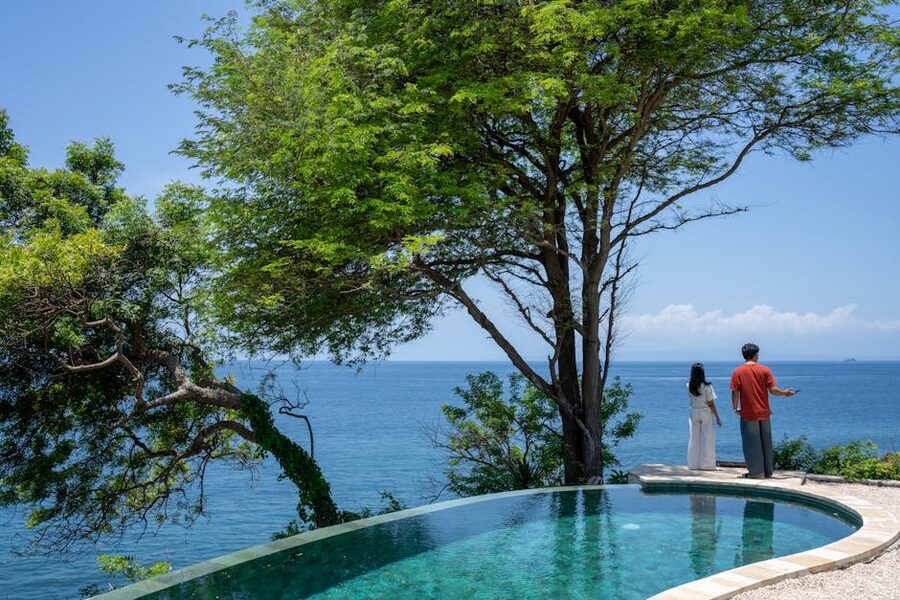
The crossover line in Bali sits at about $200 per night. Below that, hotels usually win on amenities (pool, breakfast, daily housekeeping, on-site restaurant) for the same money. Above that, villas usually win, for $250 a night you can have a private two-bedroom villa with your own pool, full kitchen, and private staff in Canggu, Seminyak, or Uluwatu. That same $250 buys you a nice room at a four-star hotel and nothing else. For groups of four or more, this calculation tips even harder in favour of villas: a four-bedroom villa at $400 a night ($100 a head) gives you something a hotel can’t match at any price under $1,500.
How to combine areas in one trip
If you have less than five nights, base in one area and stay there. The transfer time costs more than the variety adds. If you have five to seven nights, pair south coast (3-4 nights) with Ubud (2-3 nights). If you have eight to twelve nights, add a third area: a cultural trip works as Ubud + Sanur + Sidemen or Amed; a beach-and-surf trip works as Canggu + Uluwatu + Nusa Lembongan; an everything trip works as Canggu + Ubud + Munduk. If you have fourteen nights or more, you can sensibly do four or even five areas, and you should: that’s how Bali repays a longer trip.
For specific day-by-day planning, our 7-day Bali itinerary walks through the classic Canggu-Ubud combination, and our seasonal calendar guide covers when to go for what.
Booking practicalities you’ll wish you knew first
A few things almost no first-time guide spells out. Most listings on the major platforms ( Booking.com Bali, Agoda Bali, GetYourGuide Bali) include the 21% government tax and service charge in the headline price now, but check before booking, the same villa on a direct-to-owner site may be 15-20% cheaper without the platform fees, and a WhatsApp message to the property often gets you a better rate for stays of seven nights or more. The Indonesian tourism levy (Rp 150,000 / about $9.60 per person, introduced February 2024) applies on arrival, separately from your accommodation. Pay it online before you fly via the official portal to skip the airport queue.
Booking platform photos often show the property from its absolute best angle. Two specific things to look for in the listing photos before committing: the actual view from the room (not the property’s hero shot, which may be from a different building), and the road in front of the property (a beautiful villa on a busy spine road in Berawa is a noisy villa). Check the location pin against Google Maps satellite view rather than trusting the marker the property set.
For longer stays, the digital-nomad two-month trips that are a meaningful share of Canggu and Ubud’s accommodation now, almost everything serious is booked off-platform on monthly contracts at 50-70% of nightly rates. Facebook groups like Bali Long Term Rental and Canggu Community are where the listings actually circulate. The platform listings for monthly stays are a starting reference point, not the deal you should accept.
Quick area snapshot for the impatient
If you skipped the matrix at the top: Seminyak for the polished beach-club holiday. Canggu for surf, cafes, and a young scene. Sanur for families and slower beach days. Nusa Dua for the resort-bubble holiday. Jimbaran for the airport-adjacent quiet night. Uluwatu for the dramatic clifftop villa stay. Ubud for culture, yoga, rice fields, no beach. Munduk for the cool mountain detour. Sidemen for the quietest base on the island. Amed for diving and the slow east coast. Padangbai for two nights between Bali and the Gilis. Lovina for the slow north and dolphin tours. Nusa Lembongan for an easy offshore island. Nusa Penida for the dramatic landscape and the overnight stay that beats the day trip. The Gilis for a Lombok-water bolt-on if you have ten nights or more. Pererenan, Berawa, Echo Beach for travellers who liked Canggu but want it just a touch quieter. Kuta and Legian if you specifically want what they sell.
For the next layer of detail on specific areas, browse our Where to Stay category, and for what to do once you’ve booked, our Things to Do in Bali pillar walks through the actual itinerary fillers across all the areas covered here.
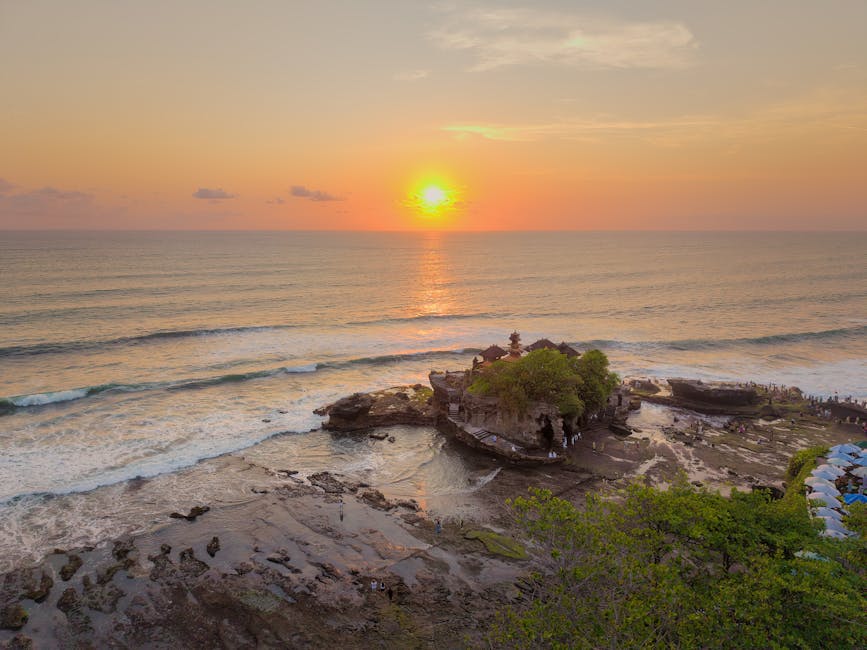
Pick the area straight. The rest of the trip looks after itself.
Planning a Bali trip?
Start with the cornerstones — when to go, where to base, and what's actually worth doing.