
Where Locals Eat in Sanur
Skip the beachfront restaurants. The best food in Sanur is being served from gas burners on plastic tables in lanes you’ll never find on Instagram, and you can eat better there for Rp 35,000 (about $2.20) than you will at most of the boardwalk places for ten times that.
I learned this the slow way. First trip, I ate every dinner on the sand because that’s what the hotel concierge pointed at. Six months later I was renting a room two blocks back from the beach off Jl. Danau Tamblingan and the Balinese family next door pretty much fed me for two weeks. Their daughter ran a tiny warung (small family-owned eatery) at the front of the compound. Nasi campur, fish soup if her uncle landed something that morning, kopi tubruk strong enough to bend a spoon. I have not been able to take Sanur’s beach restaurants seriously since.
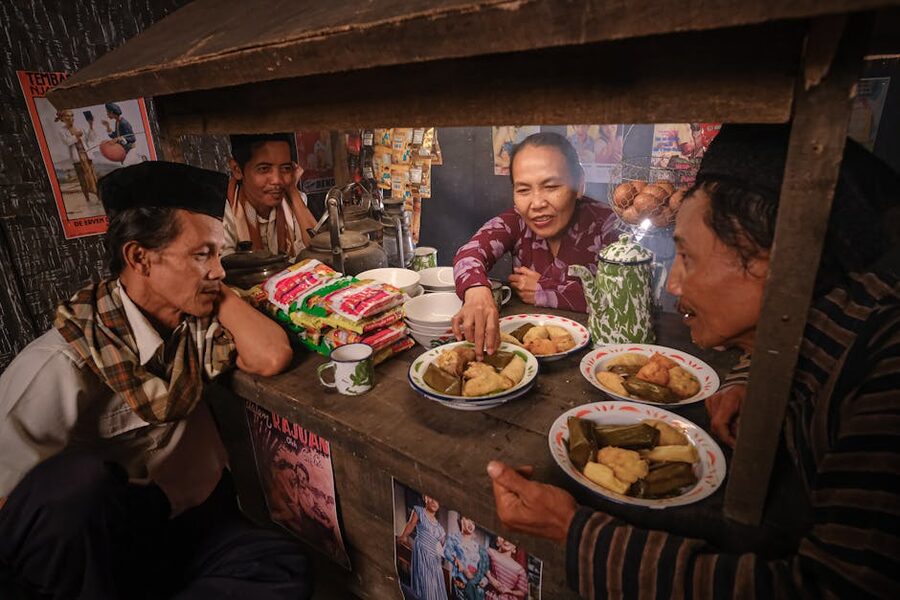
This guide is the catalogue I wish someone had handed me on day one. Where to actually eat in Sanur for under Rp 65k. The legendary places that earn the queue. The Indonesian non-Balinese cuisines worth seeking out. And the small skill of reading a warung from the outside so you can pick a good one anywhere on the island, not just here.
In This Article
- What Counts as a Warung (and What Doesn’t)
- Reading a Warung From the Outside
- The Sanur Warung You Have to Eat At
- Warung Mak Beng
- Warung Blanjong and the Pura Blanjong Connection
- The Local-Eat Staples
- Warung Krishna
- Warung Wardani
- Warung Pregina
- Warung Khas Sanur and Warung Murah Lestari
- Pondok Bali
- Indonesian, Not Balinese
- Warung Padang Sanur
- Soto Banjar Sanur
- Warung Jawa Moro Seneng
- Coffee and Breakfast Warungs
- The Wider Sanur Warung Map
- North Sanur (around Jl. Hang Tuah and the boat ramp)
- Sindhu and central Sanur (Jl. Danau Tamblingan and its back gangs)
- Sanur Kauh / Blanjong (south end)
- Mertasari and Renon-adjacent
- Beyond the Plate: Sate, Sambal, and the Dishes That Define Balinese Warung Cooking
- Nasi Campur Bali
- Nasi Goreng
- Sate Lilit
- Sate Ayam
- Sambal
- Ikan Goreng
- Warung Etiquette, Briefly
- Is Warung Food Safe?
- The Real Reason This Matters
What Counts as a Warung (and What Doesn’t)
The word gets used loosely in Sanur because it’s good marketing. A “warung” name signals casual, local, cheap. So you’ll see Warung This and Warung That on places with air conditioning, English menus in five languages, and a Rp 180k pizza on the back page. Those are restaurants with a costume on. Useful, sometimes excellent, but not what we’re talking about here.
A real warung is small, family-run, mostly serving the people who live in the neighbourhood. The food is cooked once a day, displayed at the front, and reheated to order. There’s no menu in English because there’s no menu at all. You point at what looks good. The price for a generous plate sits between Rp 25,000 and Rp 65,000 depending on what you load it with. You pay in cash at the end and the change (the kembali) is yours.
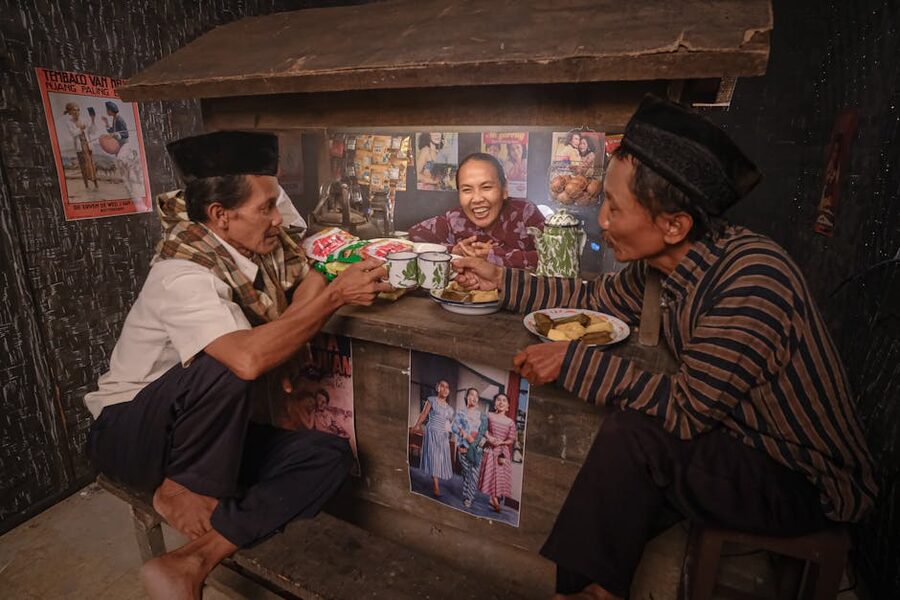
Most warungs run on trust. You eat, then you settle up. In a busy one the ibu (the mother running the place) will somehow remember exactly what you had even if you sat there for an hour. Tip: don’t try to game it. Pay what she asks. The total will be low.
Reading a Warung From the Outside
Before you walk in anywhere, read the place. The skill takes about three days to develop and saves you from a hundred bad meals across an island like Bali. There’s more on the wider quality-and-safety question in our Bali health guide, but the warung-specific signals are simple.
The queue is the menu. If there are five locals waiting at noon, the food is fresh and worth the wait. If you’re the only person in there at 1 p.m. on a weekday, something is off. Sanur runs on a lunch rhythm. Local Balinese eat hot food between 11 a.m. and 1.30 p.m., not at 7 p.m. like a Western restaurant, so a quiet warung at 12.45 p.m. is a quiet warung for a reason.
Look at who’s eating. Indonesian construction workers, security guys in uniform, scooter drivers in helmets, women on lunch break from the salon next door. That’s the seal. If everyone inside is on a phone in English, you’re in a Bali-themed cafe.
Look for the wok. If there’s an ibu in the back actively cooking, flame on, smell of garlic and shallot frying in coconut oil, the food is being made fresh. If everything is wrapped in cellophane and sitting cold in a glass case, it’s been there since breakfast. The cellophane warungs are fine for a wrapped portion to take to the beach. They are not where you sit down.
Check the sambal. Every warung makes its own. Ask for it on the side, taste a tiny dab on rice. If it’s flat, the kitchen is tired. If it punches you in the face with chilli, garlic, and lime, the rest of the food will be good too. The sambal is the kitchen’s signature in a way that nothing else is.
The Sanur Warung You Have to Eat At
If you only do one of these in Sanur, do this one.
Warung Mak Beng
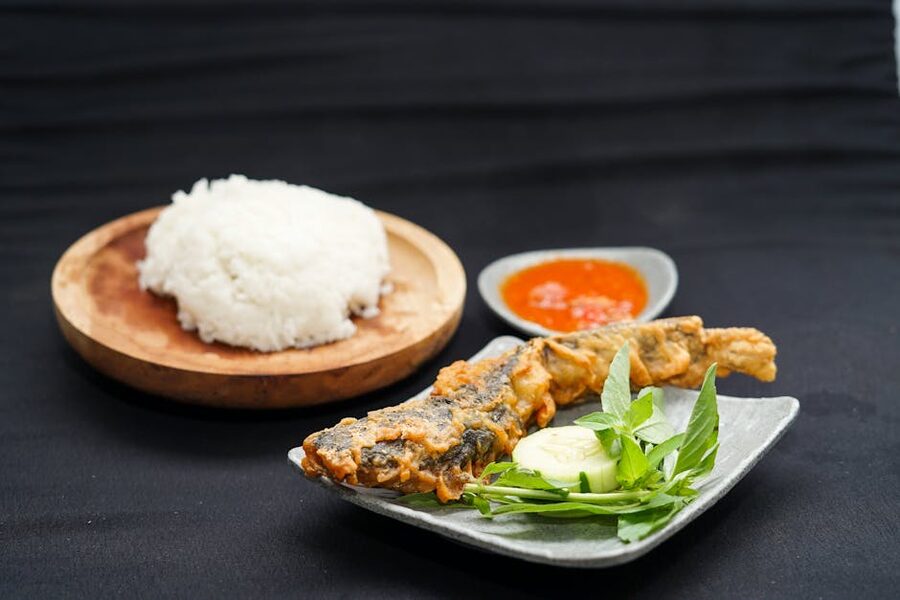
Open since 1941, Mak Beng is the warung version of an institution. One dish. They serve a single set: ikan goreng (deep-fried fish, usually snapper or trevally), a bowl of sup ikan (clear fish-head soup with green papaya and lemongrass), white rice, and a small dish of incendiary sambal. That’s it. There is no menu choice. You sit down, you get the set, you eat. Indonesia’s official tourism board lists it among the country’s iconic warungs and the queue at lunch makes the case. The official site still bills it as kuliner legendaris Sanur sejak 1941 (legendary Sanur cuisine since 1941) and runs the same one-dish formula it always has.
Address: Jl. Hang Tuah No.45, Sanur Kaja, near the boat ramp at the north end of Sanur beach. They open around 10 a.m. and close when they sell out, which on a busy day is around 2 p.m. The set runs roughly Rp 50,000 a person. Cash only. No reservation. Get there by 11.30 a.m. on a weekday or 11 a.m. on a Sunday or you will be eating elsewhere.
Three things to know. First: the fish is whole, head on. The cheek is the best bite. Second: drink the soup. People skip it because they came for the fish, but the broth is the point: fishbones, lemongrass, lime, papaya, and a small handful of fried shallots on top. Third: brown rice is now an option for an extra few thousand rupiah. Get it. The white rice is fine but the brown rice with that broth is a different meal.
Warung Blanjong and the Pura Blanjong Connection
Down at the south end of Sanur, near the small temple compound that holds the Blanjong pillar, there’s a warung that took its name from the temple and built its reputation on the kind of generous Balinese plate that explains why people come back to Sanur for years. Warung Blanjong sits at Jl. Danau Poso No.78 in Sanur Kauh, the slightly quieter southern half of the area, a short walk from where the locals queue at the morning market.
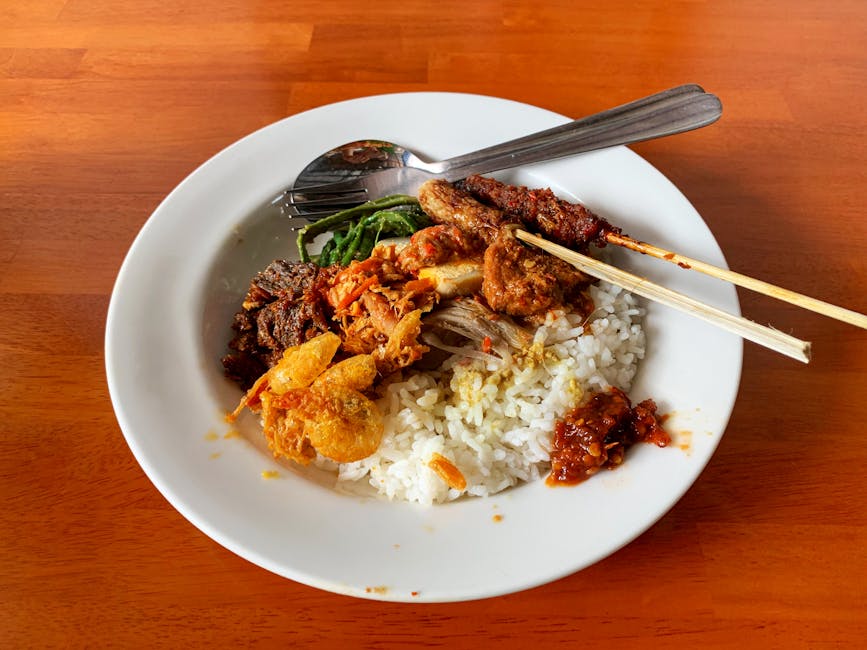
The signature here is nasi campur Bali, mixed rice with a rotating cast of sides: shredded chicken in spices, urap vegetables with grated coconut, a piece of fried fish, sometimes a skewer of sate lilit, always sambal. They also do a barracuda fish that comes out fresh from the coast and chicken sate that gets quietly recommended in Sanur expat groups more than the menu suggests. A meal for two with drinks lands around Rp 250,000-330,000. That’s higher than the Rp 25-35k street warungs, lower than anywhere on the boardwalk. The middle tier in Sanur is well covered and Blanjong sits at the better end of it.
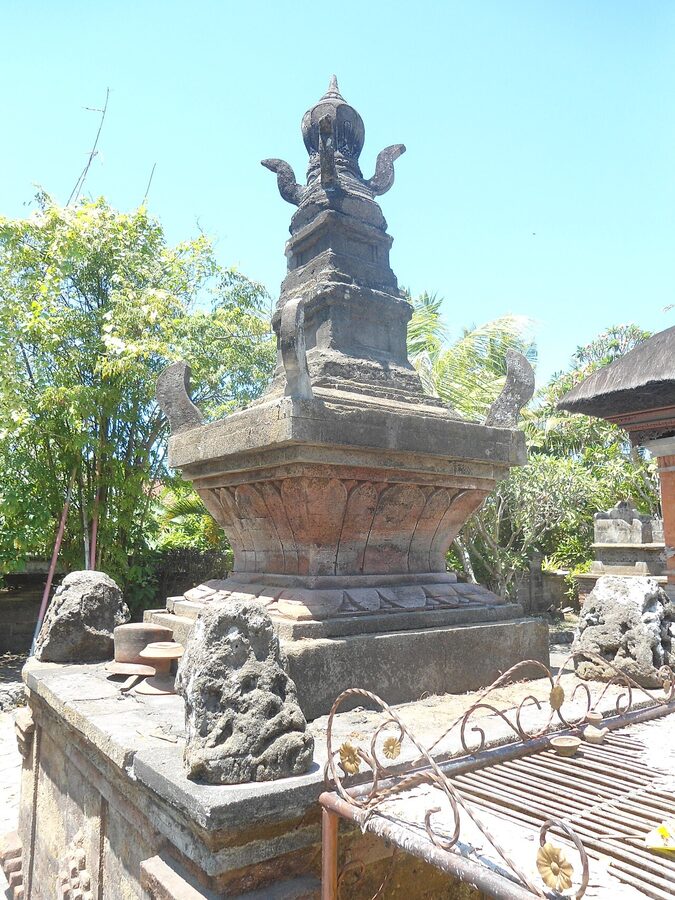
The location is part of the appeal. The Pura Blanjong compound, two minutes’ walk away, holds the Belanjong pillar, a stone pillar with an inscription dated 4 February 914 CE that is the oldest dated written record found on Bali, in a mix of Old Balinese and Sanskrit (the issuing king was Sri Kesari Warmadewa). There’s more on the religious context in our guide to Balinese Hinduism, but the practical version is: do the temple, then walk over for lunch. It’s the rare moment in Sanur where two pieces of the area line up cleanly.
The Local-Eat Staples
Below the icons there’s a deeper bench. These are the warungs people who actually live in Sanur put on rotation, the ones that don’t trend on TikTok and never will.
Warung Krishna
Vegetarian Balinese on Jl. Kutat Lestari No.4, in the residential streets back from the beach. Banana-leaf plates, small but well-done menu, the kind of place where you eat tempe (fermented soybean cake) and remember why people get evangelical about it. Around Rp 30-40k for a generous plate, plus Rp 5k for an iced tea. Closed on Sundays, sometimes Mondays. Phone ahead during ceremonies because the family closes for upacara without warning. If you’ve eaten the bland tofu-and-tempe at every cafe in Ubud, eat here and recalibrate.
Warung Wardani
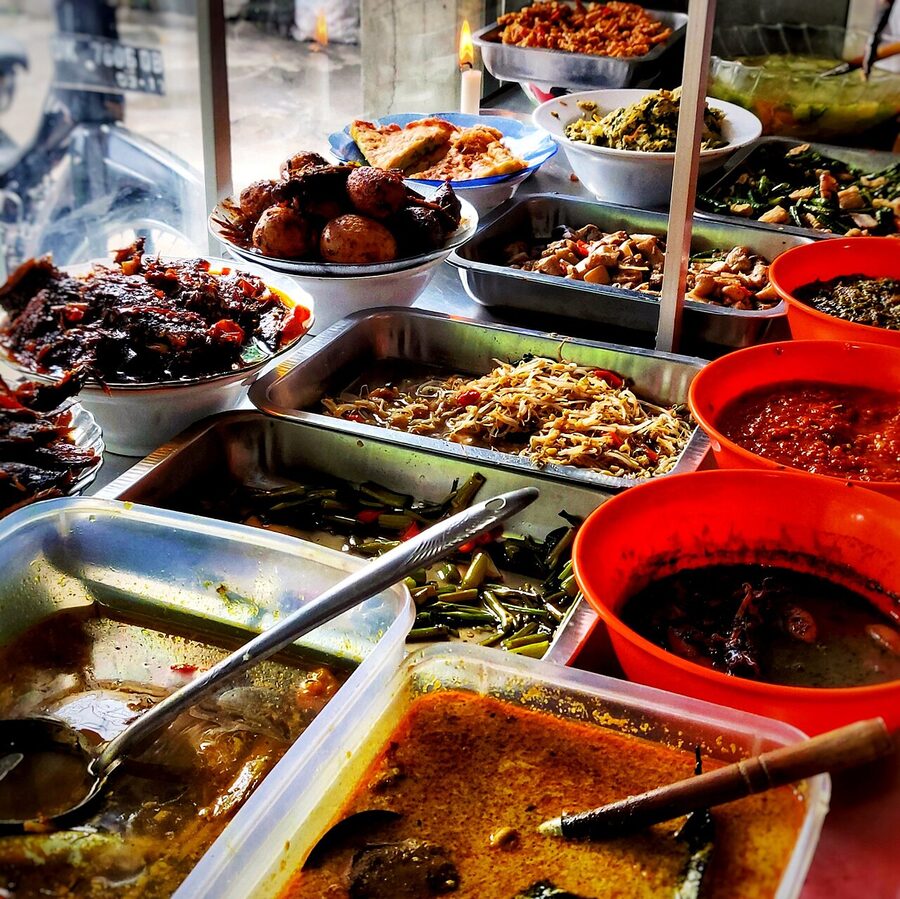
An institution for Balinese rijsttafel-style lunch. They bring you a tray with a dozen small dishes and you pay for what you finish. Originally a Denpasar place that opened a Sanur outpost. Get there at noon, leave at 1 p.m., and you’ll have eaten more variety than a tasting menu would give you for a fifth of the price. The crispy duck (bebek goreng) is the order if you see it on the tray.
Warung Pregina
Balinese specialties in a small open-walled room off Jl. Danau Tamblingan. Their ayam betutu (slow-cooked spiced chicken wrapped in banana leaf) is the dish. They do it properly, eight hours of cooking, the meat falling off the bone, the spice paste deep and complex. Order it ahead if you can; they only make a few a day and walk-in misses out. Higher end of the warung tier, Rp 60-90k for the betutu set.
Warung Khas Sanur and Warung Murah Lestari
The two cheap-and-reliable options for when you just need a feed and don’t care about a story. Khas Sanur sits on the back lanes off Jl. Danau Tamblingan, low-key, big portions, locals everywhere. Murah Lestari is what the name says (murah means cheap, lestari means lasting), and the prices have not moved much in years. Around Rp 25-35k for a full plate, including a glass of warm tea. These are not destination meals; they are the warungs you eat at on the third Tuesday of a long stay.
Pondok Bali
Down at the south end past Mertasari, popular with families from Sanur Kauh and the Renon office crowd at lunch. Big covered eating area, fans, a long counter of pre-cooked dishes. Their ayam goreng with sambal matah is what to point at. Not photogenic, very good.
Indonesian, Not Balinese
Bali gets talked about as if Balinese food were the only Indonesian cuisine that mattered, which would surprise the rest of the country. Sanur has a few good non-Balinese Indonesian warungs that are worth a meal each.
Warung Padang Sanur
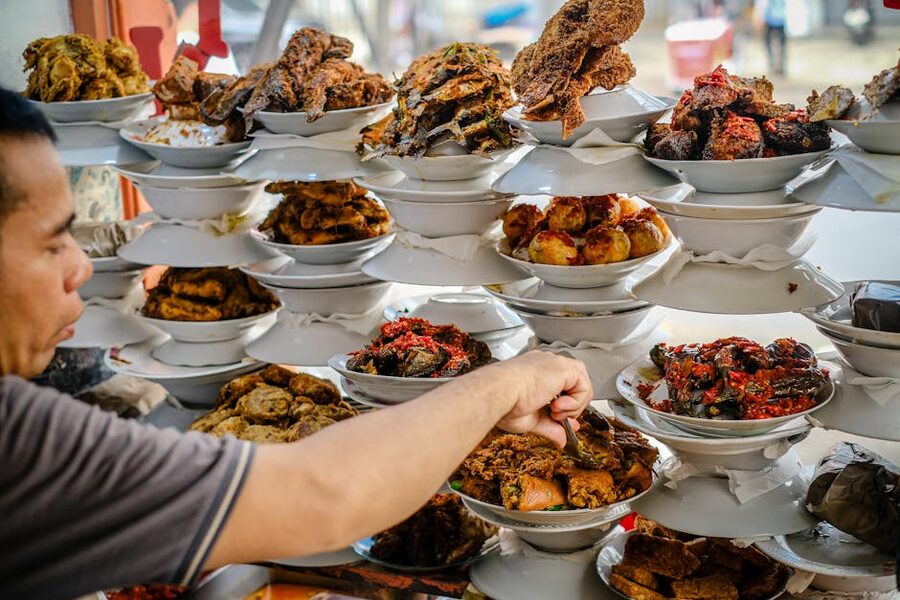
Padang food comes from West Sumatra. The format is the warung equivalent of dim sum: dishes are cooked in the morning, stacked in plates in the front window, and brought to your table when you sit down. You eat what you want, and you only pay for what you actually take. The signature is rendang (beef slow-cooked in coconut and spices for hours until it’s almost dry), but the green chilli sauce, the curried jackfruit, the salted egg, the fried lung, the spicy potato all earn their place too. Rp 40-65k for a proper plate.
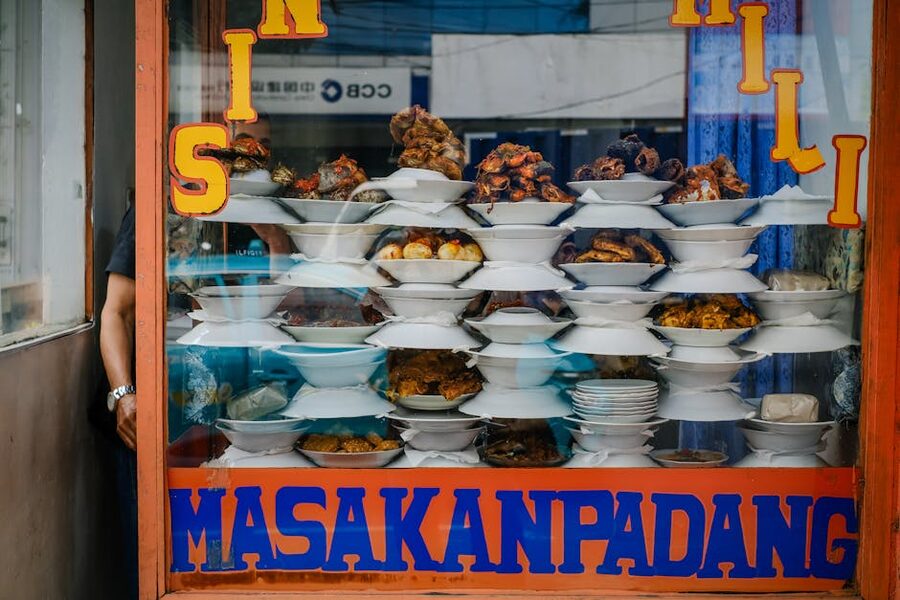
Etiquette note: at a Padang place, dishing the food onto your rice with the spoon they bring is fine, but don’t double-dip the spoon between dishes. And the place tends to be Muslim-run, so dress slightly less beach-bum than you can elsewhere. There’s more on respectful local eating in the Wikipedia entry on Padang cuisine if you want a deeper read.
Soto Banjar Sanur
Soto banjar is a chicken-and-rice-noodle soup from South Kalimantan with a clear broth, a small handful of perkedel (potato fritters), boiled egg, and a squeeze of lime. It’s a breakfast dish in Banjarmasin and works just as well at 9 a.m. in Sanur if you want to skip the hotel buffet. The Sanur version is found at a small warung on Jl. Danau Tamblingan with a sign in Bahasa, no English, a few plastic chairs, and exactly one specialty. Rp 30-35k for a bowl. Look for the queue of motorbike taxi drivers having coffee outside.
Warung Jawa Moro Seneng
Javanese home cooking on Jl. Danau Poso, open 24 hours, ridiculously cheap. Half-curries, fried tempe, omelettes, vegetable stews, fried chicken. You pay 15-30k for a generous plate and leave full. The atmosphere is roadside-pavement; you eat at long tables in the open air. This is where the office workers from Renon eat lunch when they’re in Sanur, and where backpackers eat dinner when they’ve worked out that the beach restaurants are robbery.
Coffee and Breakfast Warungs
The morning warungs are a separate category and worth knowing. A proper warung kopi doesn’t really do food beyond a few snacks: pisang goreng (banana fritters), kue-kue (small cakes), maybe a packet of nasi kuning wrapped in banana leaf. The point is the coffee and the chat.
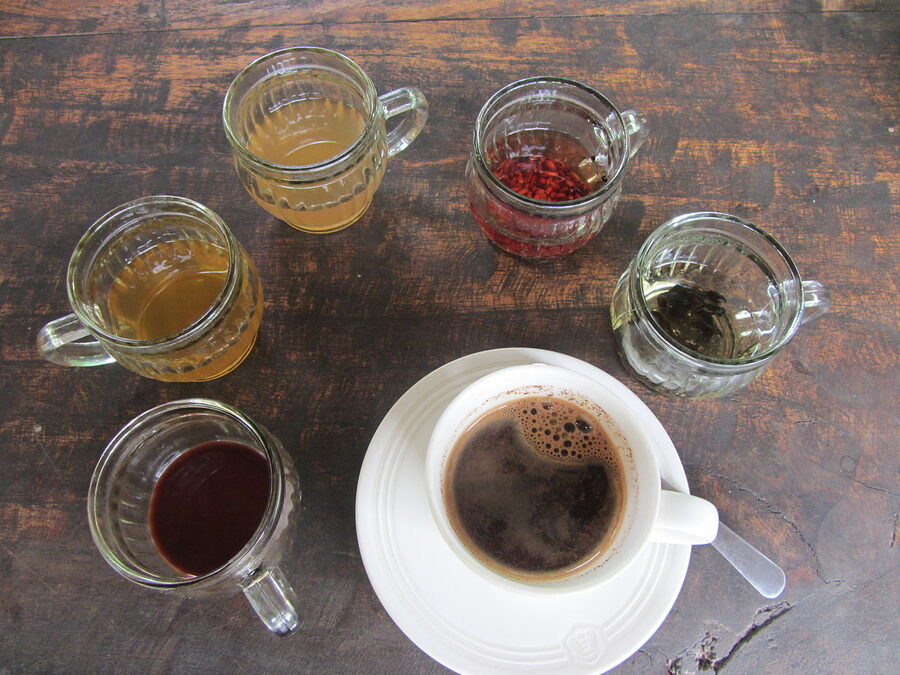
The thing to ask for is kopi tubruk. Coarse-ground robusta, hot water poured over the top, sugar optional, no filter. The grounds settle to the bottom of the glass after a couple of minutes. Sip the top three-quarters, leave the sludge. It’s strong and a little bitter and exactly what you want at 7 a.m. before a day on the beach. It costs about Rp 8-12k.
For an actual breakfast, the Indonesian standard is nasi kuning (turmeric rice with a few sides) wrapped in banana leaf, about Rp 15-20k from a stall, eaten standing or on a plastic stool. Or bubur ayam (chicken rice porridge) for around Rp 18-25k, which is both a breakfast and a hangover cure depending on how the night went. Both are sold from carts and small warungs around the morning market, before 9 a.m. and gone by 10.
The Wider Sanur Warung Map
Sanur runs north-south for about five kilometres. Each section has its own cluster of warungs, and which one you walk to depends mostly on where you’re staying. Worth knowing the rough layout if you’re picking accommodation; we go into the area in more depth in our Sanur area guide.
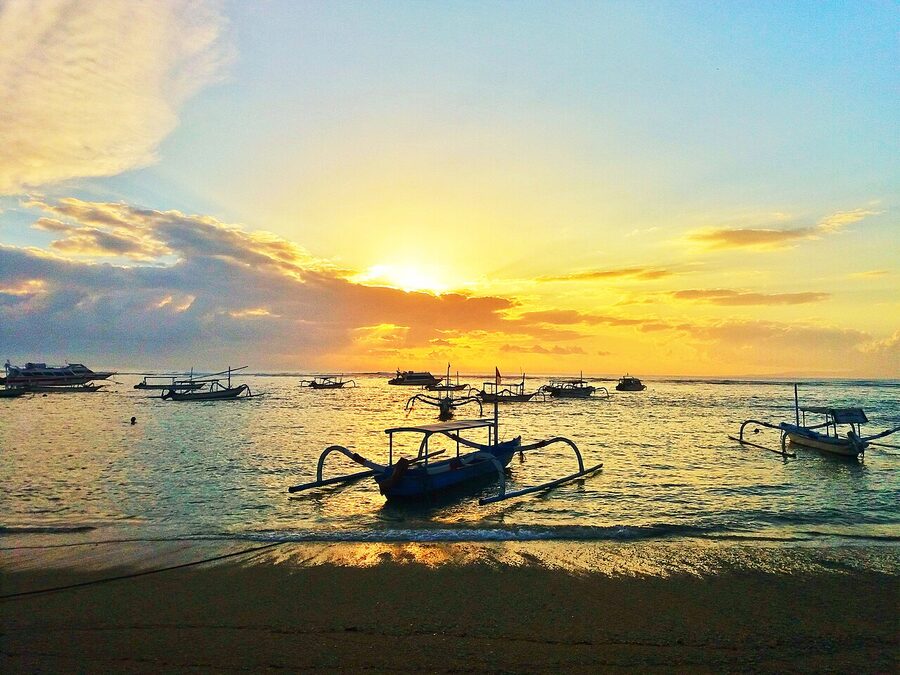
North Sanur (around Jl. Hang Tuah and the boat ramp)
Mak Beng anchors this end. The Padang warungs on Jl. Hang Tuah stay open into the night for the Nusa Penida boat crews. Soto, mie ayam carts roll out around 6 p.m. Stay here if you want to be near the Lembongan boat in the morning and don’t mind a slightly busier feel.
Sindhu and central Sanur (Jl. Danau Tamblingan and its back gangs)
The dense middle. Most of the spa-stay accommodation is here. Pregina, Khas Sanur, Murah Lestari, Soto Banjar are all in the gangs (the small lanes) running off Jl. Danau Tamblingan. Don’t eat on Tamblingan itself; walk into a gang and find the hand-painted sign half-buried in bougainvillea.
Sanur Kauh / Blanjong (south end)
Warung Blanjong, Pondok Bali, the Pura Blanjong compound. Quieter, more residential. Good if you’re staying at a homestay rather than a hotel. The walk from the south to the north end is about an hour along the beach path or fifteen minutes on a Gojek scooter.
Mertasari and Renon-adjacent
Past the south end of the beach path, where Sanur bleeds into the Renon office district. The warungs here serve the lunchtime office crowd: efficient, cheap, no English needed. If you find a place packed with men in batik shirts at 12.15 p.m., sit down.
Beyond the Plate: Sate, Sambal, and the Dishes That Define Balinese Warung Cooking
A few dishes show up at almost every proper warung, and knowing what to look for helps you order without a menu.
Nasi Campur Bali
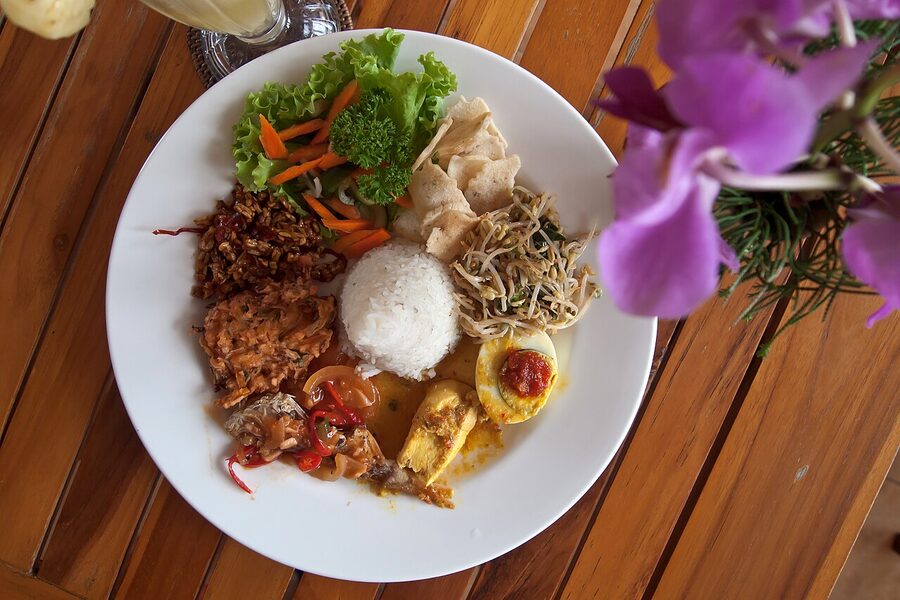
The point-and-eat dish. Rice in the middle, a rotating cast of sides on top: shredded chicken, urap vegetables, a small piece of sate lilit, a piece of fried fish, sambal matah. Every warung does it differently. The ratio is the kitchen’s signature. Locals order it more often than tourists do.
Nasi Goreng
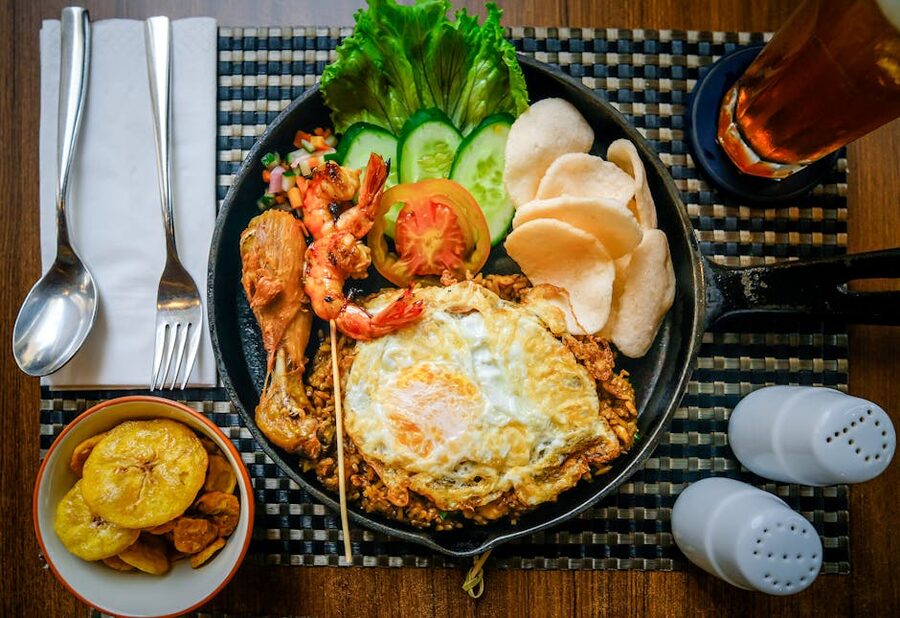
The fried rice you have probably already had on a hotel breakfast buffet, but at a warung it’s a different dish. Wok-charred, with kecap manis (sweet soy), a fried egg on top, and a few krupuk (prawn crackers) on the side. Rp 25-35k. Our deeper dive on the dish, including its surprising history, lives at our nasi goreng story.
Sate Lilit
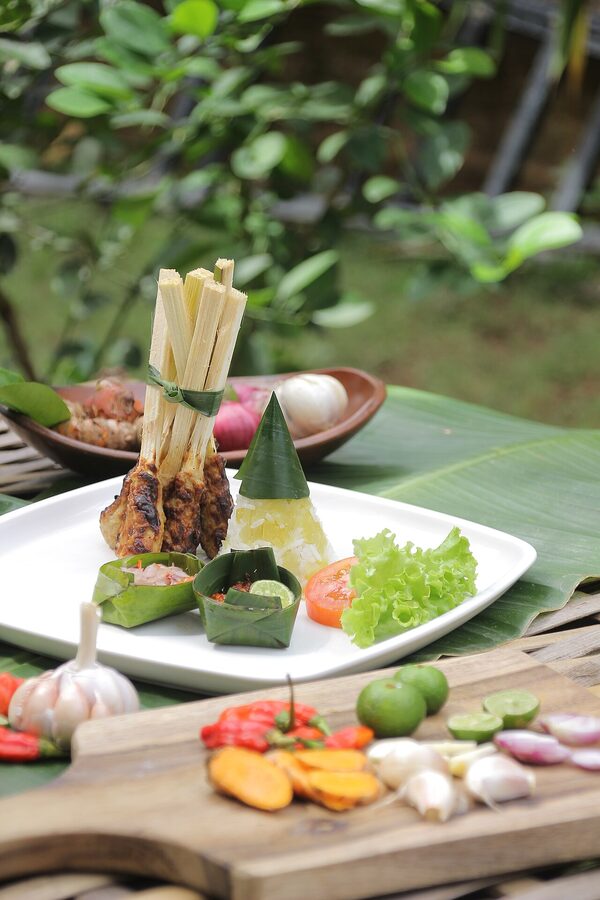
Balinese satay, distinct from the more common sate ayam. Minced fish or chicken mixed with grated coconut, kaffir lime leaf, and spices, then wrapped around a flat bamboo or lemongrass stick rather than threaded on a thin skewer. Grilled over coconut husks. The good stuff has a warm spice complexity you don’t get from the peanut-sauce satay versions in Western menus.
Sate Ayam
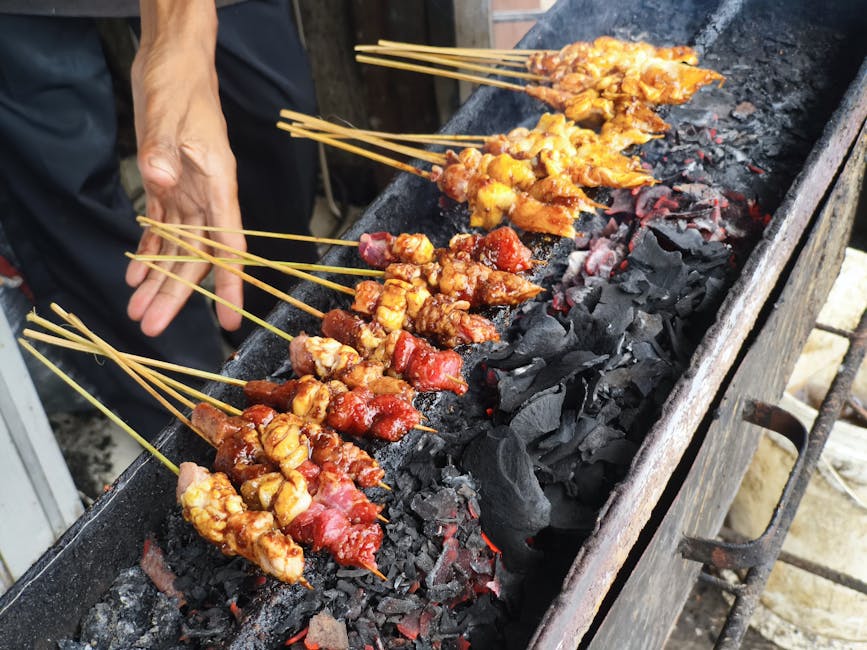
The classic skewered chicken with peanut sauce. Less Balinese, more Indonesian-generic, but every warung has a version. Look for one being grilled fresh over charcoal; the warungs that hold pre-grilled skewers in a warmer never quite get there.
Sambal
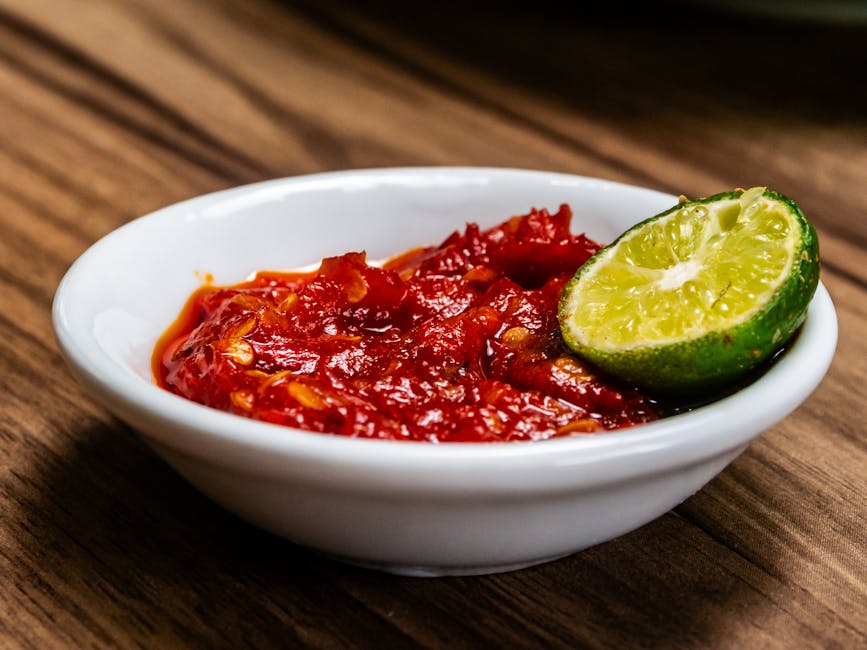
Not one thing, but a whole family. Sambal matah is the Balinese style: raw shallot, lemongrass, kaffir lime, chilli, all chopped fine and bound with a hot oil. Sambal terasi has fermented shrimp paste in it; it’s intense and divisive. Sambal kecap is for satay, sweet and salty with chilli. Most warungs make at least matah and one cooked sambal.
Ikan Goreng
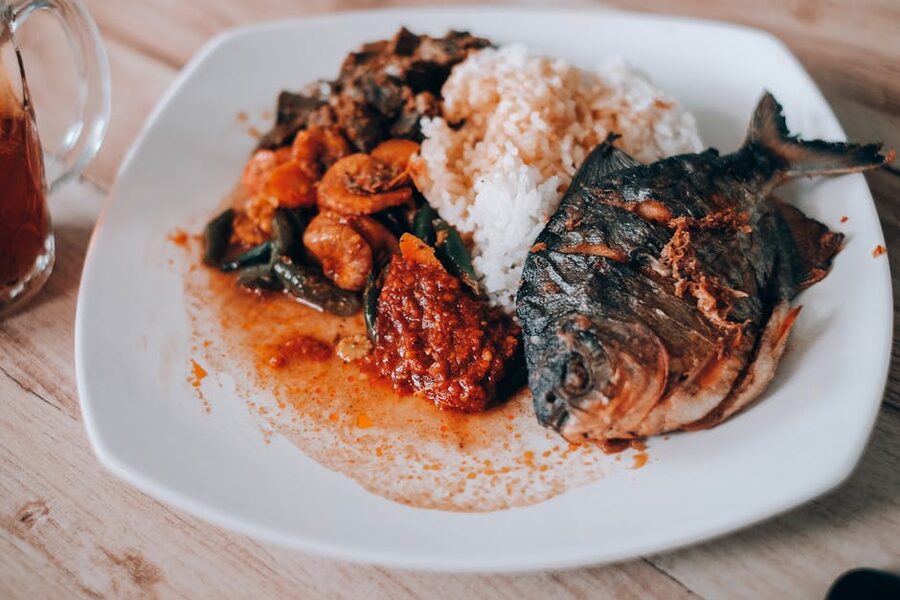
Whole fish, deep-fried, head on, served with rice and a green sambal. Often part of the Mak Beng-style fish set, but also turns up at any warung near the beach. Eat it with your fingers.
Warung Etiquette, Briefly
None of this is hard. Most of it is what you’d do anywhere small and personal.
Sit down first. Most warungs have you take a stool, then someone comes over. If there’s a counter with the day’s food on it, walk over and point at the dishes you want. Hold up a finger for one portion, two for two. If you want it spicy, say pedas; if not, tidak pedas. Always works. Saying terima kasih (thank you) when the food arrives gets a smile, even if your accent is appalling.
Eat with your right hand if you’re going local. Indonesia treats the left as unclean, and using it to pass food or pay is a small but real rudeness. A spoon and fork is fine if you prefer. Pay at the end. Cash. Small notes. Rp 50,000 and Rp 20,000 notes are your friends; trying to break a Rp 100,000 note for a Rp 35k meal at lunch rush will get you a polite shrug while she goes hunting for change.
Don’t tip in the way you would in a Western restaurant. A small rounding-up, like paying Rp 40,000 for a Rp 35,000 meal and waving off the change, is welcome. Adding 10 or 15 percent is awkward and slightly insulting because the price wasn’t a request for negotiation.
Take your shoes off if it feels like you’re walking into a room rather than a shop. Some warungs are run out of someone’s family compound and the eating area is technically inside the home. The give-away is a low step up and a row of sandals at the threshold.
Is Warung Food Safe?
Mostly yes, with the same caveats that apply to any street food anywhere in the tropics. The risk isn’t the food, it’s the water it was washed in and the ice it was served with. Stick to hot dishes that are cooked through, skip raw salads at small places, and ask for drinks without ice if you’re nervous. Bottled drinks, tea brewed with boiling water, and freshly made coffee are all fine.
The single best protection is the same signal you used to pick the warung: high turnover. Food that’s been sitting at room temperature for six hours is a roll of the dice; food that’s just come off the wok is not. Eat at the lunch rush and you have already cut the risk in half. There’s more on Bali belly and how to handle it in our Bali health guide.
The Real Reason This Matters
Sanur is not Canggu. It’s slower, older, more residential, and the people who live here have eaten at the same warungs for two generations. Walking in and ordering badly is fine, you’ll still eat well. But pay attention for a week and you’ll start noticing things: that the ibu at Krishna remembers you ordered no-spicy last time, that the Padang plates rearrange every day, that the kopi guy on Hang Tuah opens at 5.30 a.m. for the boat crews. None of that turns up in a TripAdvisor review and none of it is on the menus on Jl. Danau Tamblingan.
For everything else Sanur (the beachfront restaurant tier, the date-night spots, the upmarket Italian and Asian fine-dining places that share the area with the warungs), see our companion restaurant guide to Sanur. It’s the other half of the same story. And if you want the wider food and drink writing across the rest of the island, that’s where to go next.

End of the day, the test for whether you’ve actually eaten in Sanur isn’t whether you tried the famous places. It’s whether the woman behind the counter at one warung (any warung, even a small one in a side street with a hand-painted sign) has started to recognise you when you walk in. That happens about day four if you do this right, and it’s the only piece of Sanur that the resorts can’t sell you.

Planning a Bali trip?
Start with the cornerstones — when to go, where to base, and what's actually worth doing.