
Ngaben: The Balinese Cremation Ceremony
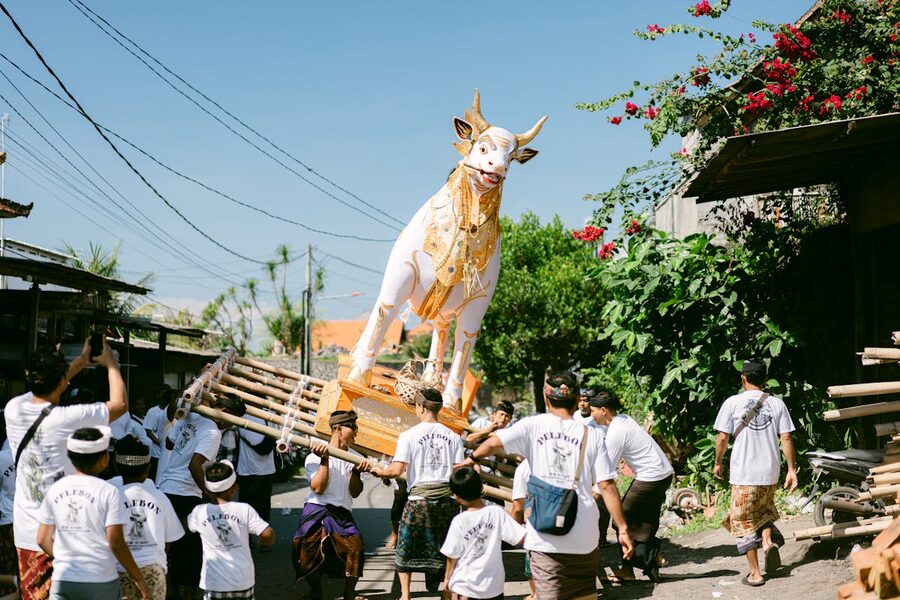
The procession came around the corner of a side road off Jalan Raya Andong in Ubud and I almost walked straight into it. Twenty men under a bamboo platform, the platform carrying a tower maybe four metres tall painted in red and gold, the family in white walking ahead, the gamelan in the back of an open-bed truck. I had been on the way to lunch and stopped because there was no choice. Two Australian tourists nearby were filming on their phones from the front. A woman in white came over, said something quietly, and the phones went down. The procession moved past, the tower swaying with each step, and the road that had been a road thirty seconds earlier was now somebody’s funeral.
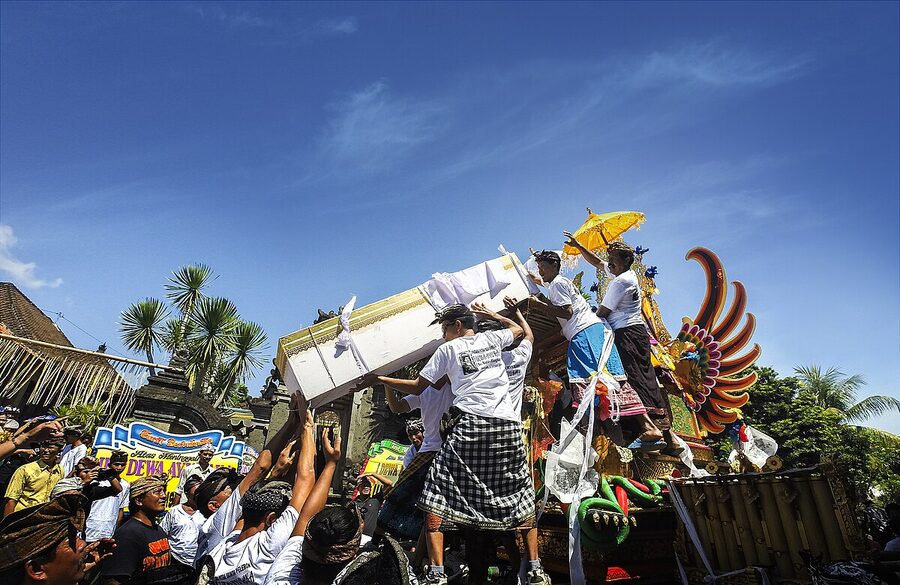
What I had stumbled into is called ngaben (eng-AH-ben), the Balinese cremation ceremony. What I want to do here is the thing nobody quite did when I started reading about it: explain what is actually happening, why it matters this much to the family, and how to be near one without making it about you.
This is the most important ceremony in this person’s life. It is also, very often, the most expensive and most logistically complicated week the family will undertake for a decade. If you are in Bali while one is happening near you, you are watching something the family has saved for, planned for, and prayed for. Treat it that way.
In This Article
- Ngaben is a cremation, but mostly it is a release
- The wadah and the lembu, or how to read the procession
- The procession through the village is meant to be confusing
- The setra: where the burning happens
- Twelve days later: the nyekah and the dispersal
- What it actually costs, and why ngaben massal exists
- Royal pelebon: when ngaben becomes a public event
- So can you actually attend, and how?
- Respectful-observer rules I wish someone had told me first
- How to know one is happening before you walk into it
- What you might see if you stay long enough
- “Should I even be here?”
Ngaben is a cremation, but mostly it is a release
The English word “cremation” gets the mechanism right and the meaning wrong. Ngaben comes from api, meaning fire, and the point of the fire is not to dispose of a body. The point is to free the soul, called atman or atma, from the physical shell holding it.
Balinese Hindu cosmology teaches that the body is built from panca mahabhuta, the five great elements: earth, water, fire, air, and ether. When somebody dies, those five elements are still bound up in the body, holding the soul to the material world. Burning is the only ritual considered powerful enough to break the bond and return each element to where it came from. The soul, once freed, can either reincarnate into a new body, very often a newborn in the same family line, or in rare cases reach moksha, full liberation from the cycle of rebirth.
This is the bit that tripped me up the first time I read about it. The funeral does not look like a Western funeral because it is not really a funeral. It is closer to a launch ceremony. There is grief, there is family in white, there is incense, but there is also gamelan music loud enough to feel in your chest, kids running, and the deliberate festive atmosphere the Balinese consider the correct send-off. Open weeping is discouraged. The teaching is that tears can become a hurdle, slowing the soul down at the moment it needs to be free.
If you have read the Balinese Hinduism guide on this site, you will recognise where ngaben sits in the larger framework. Balinese ritual life is organised into five categories of sacred duty called Panca Yadnya, and the category that contains ngaben is Pitra Yadnya, sacrifices for the ancestors. The event is, in Balinese eyes, the family discharging a debt to the dead. It is not optional. Skipping it is considered a failure of duty so serious that families will go into debt or wait years for the right communal ceremony rather than not do it.
The wadah and the lembu, or how to read the procession
Two objects do most of the visual work in a ngaben procession, and once you can name them you can read what is going on.
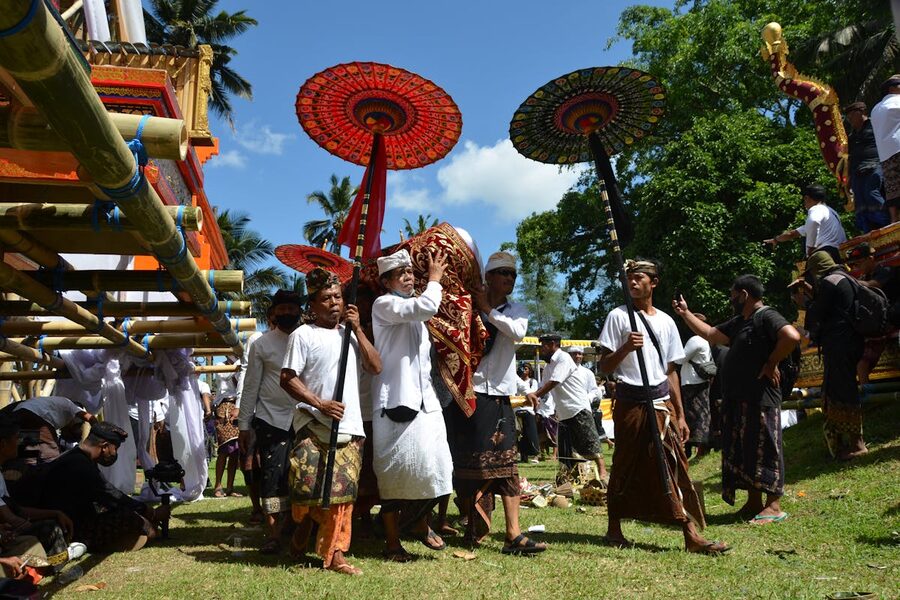
The first is the wadah, sometimes called the bade: the multi-tiered tower you see being carried. Built from bamboo, wood, paper, gold leaf and dyed cloth in the weeks before the ceremony, it is a model of the Balinese cosmos. At the base sit a turtle and two snakes, representing the underworld. Above that comes a section painted with leafy forests, the world of humans. At the top sits a small pagoda called a meru, representing heaven, the realm the soul is travelling toward.
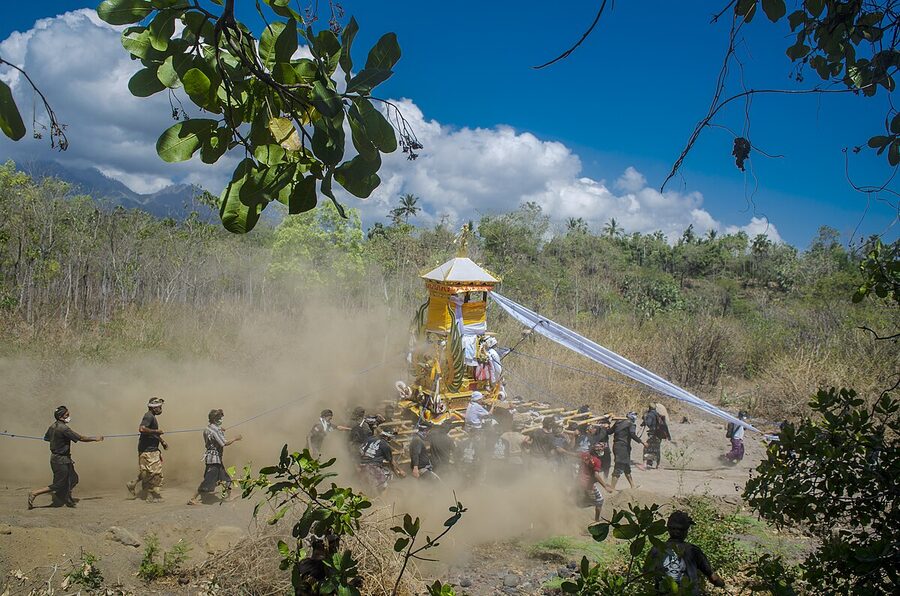
The number of tiers signals the family’s social standing and the spiritual weight of the deceased. A regular family ngaben might use a one-tier or three-tier tower. A royal cremation, called pelebon, can run to nine tiers and stand ten or fifteen metres tall, which is why royal ceremonies need bamboo bracing crews and electrical workers to lift cables along the route.
The second object is the lembu, the bull-shaped sarcophagus that receives the body for burning. The bull is not random. It is Nandi, the mount of Shiva, and Shiva in Balinese Hinduism is the destroyer-transformer aspect of the divine, the god most directly associated with the dissolution of form. Putting the body inside Nandi for cremation is, conceptually, handing the deceased directly to Shiva for the next stage of the journey.
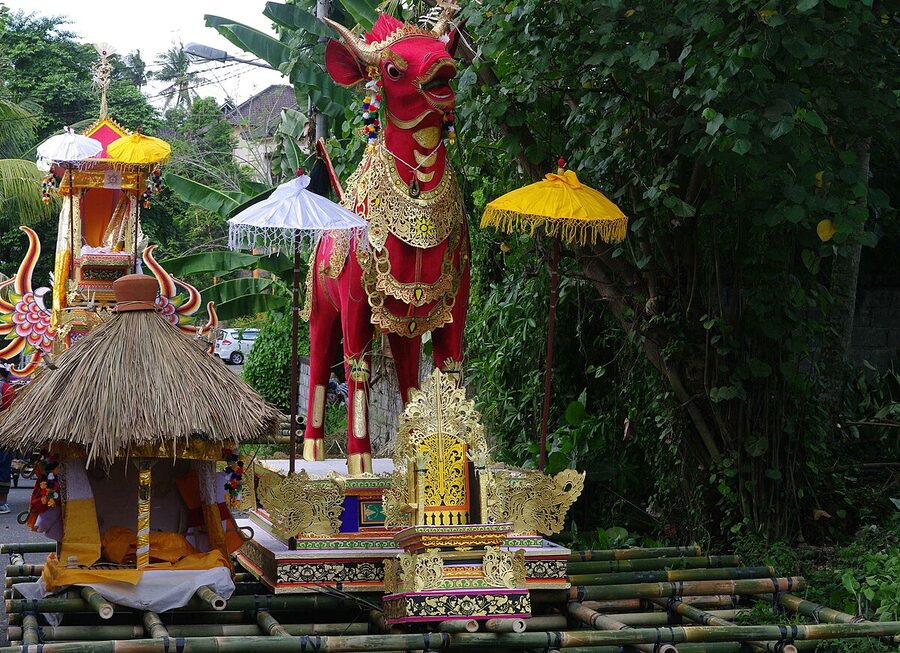
Caste reads off the lembu too. A white bull is traditional for a Brahmana, the priest caste. Black bulls or, in some regions, lions and deer are used for other castes. Smaller animal effigies appear depending on village tradition: gold-painted bulls, fantasy beasts called singha with lion bodies and elephant trunks. None of it is decorative. Each form encodes who the deceased was.
The procession through the village is meant to be confusing
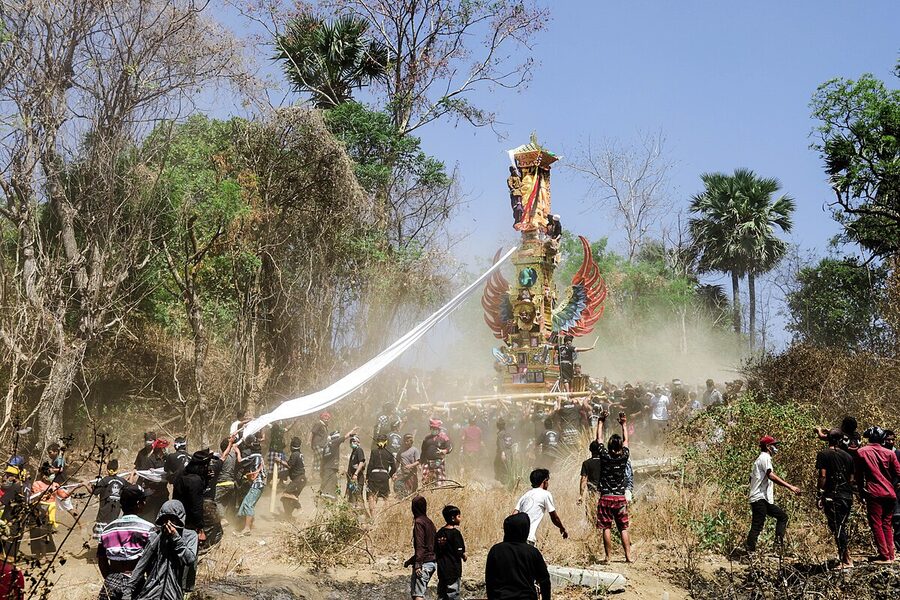
The first time you watch a procession move through narrow village lanes, the route looks chaotic. Bearers run a few metres, stop, hoist the tower up and down, spin it through a half-turn, then run another stretch. At every intersection they spin the tower again, sometimes a full three rotations.
The chaos is the point. The route is being deliberately disordered to confuse the soul, which at this stage is loose between the body and the cosmos. If the soul could remember the way back to the family compound, the belief goes, it might try to return and become trapped on earth as an unhappy spirit. Spinning the tower at intersections breaks its sense of direction. The spirit, disoriented, looks up to the meru at the top of the tower and travels onward instead.
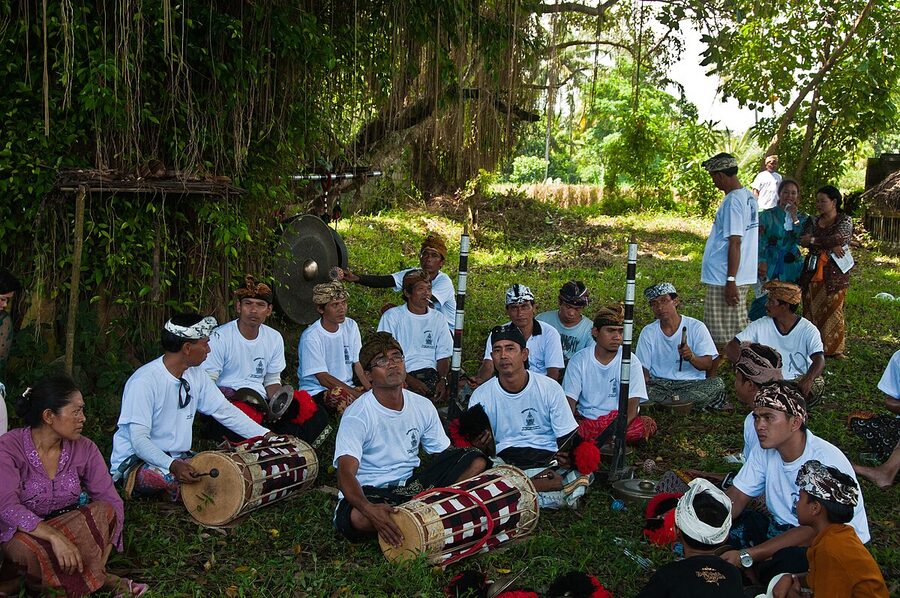
The gamelan that walks behind the procession is a specific percussion ensemble called gamelan beleganjur, sometimes translated as “battle gamelan”. The original purpose was to scare off demons along the route. The cymbals and gongs are played at a marching pace, slightly off-beat, deliberately chaotic. It is the sound that, if you are anywhere in the village, will tell you a procession is coming before you see it.
The setra: where the burning happens
Every Balinese village has a setra, a dedicated cremation ground usually on the seaward edge of the village in line with the temple of the dead, the Pura Dalem. They tend to be open fields with permanent bamboo structures, ash-darkened ground, and a few bale shelters for priests and family.
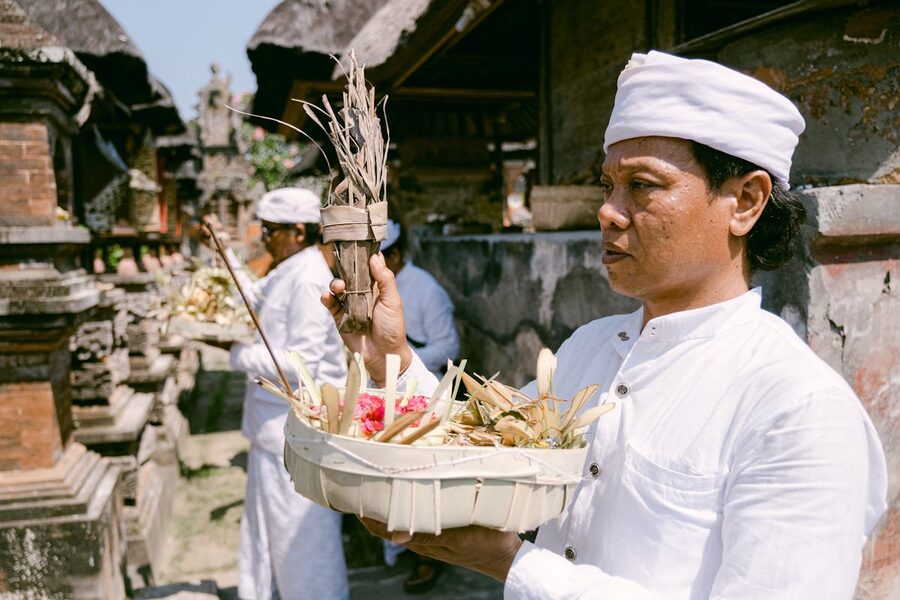
The wadah arrives. Bearers lower it onto a pavilion. The body, wrapped in white cloth and accompanied by holy water and offerings, is transferred from the tower into the lembu. The priest, called a pemangku for village ceremonies or a pedanda for the full Brahmin priesthood, performs the final mantras. Family members place small personal items inside the lembu: a favourite shirt, prayer beads, photos.
Then comes the fire. Traditionally the priest lights a sacred torch and the lembu is set alight from underneath. In modern practice many families use a propane blowtorch to get the fire going quickly and reliably. It is not disrespect, it is a practical concession to wet-season humidity and the ritual calendar’s time windows.
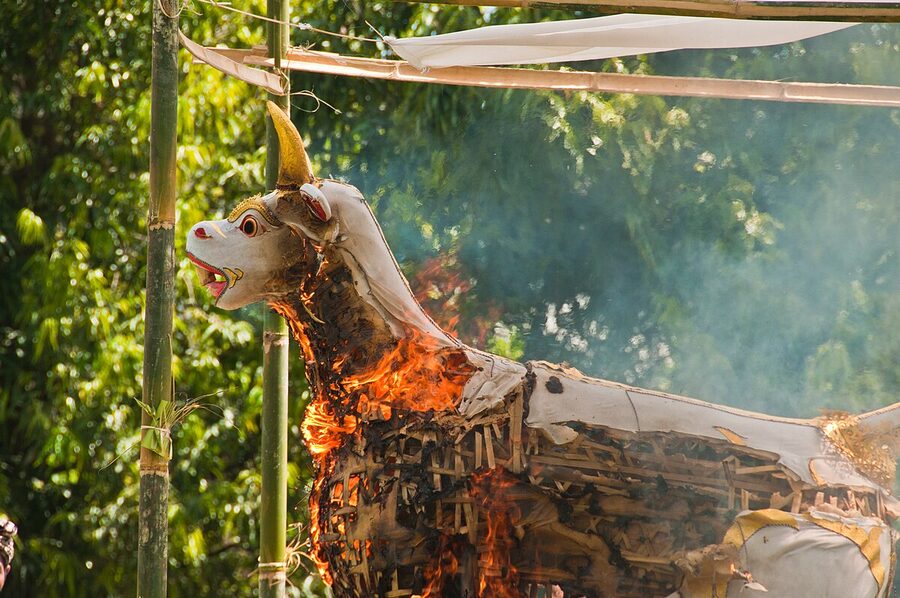
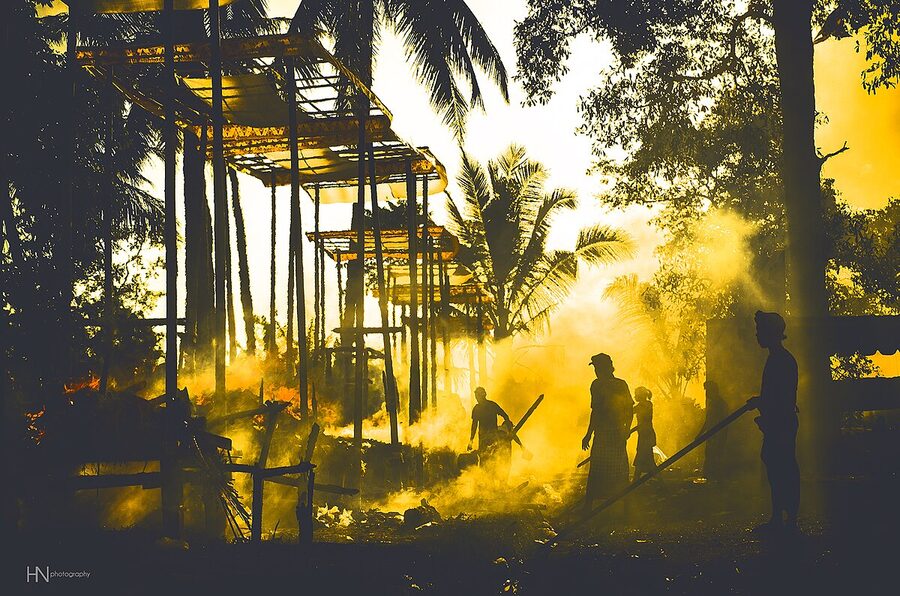
The burning takes hours. Family members stay throughout, sometimes singing, often quiet, occasionally sharing food. Other villagers rotate in and out. The wadah, used for the procession but not the actual cremation, is broken up and burned alongside, returning all of its symbolism to ash.
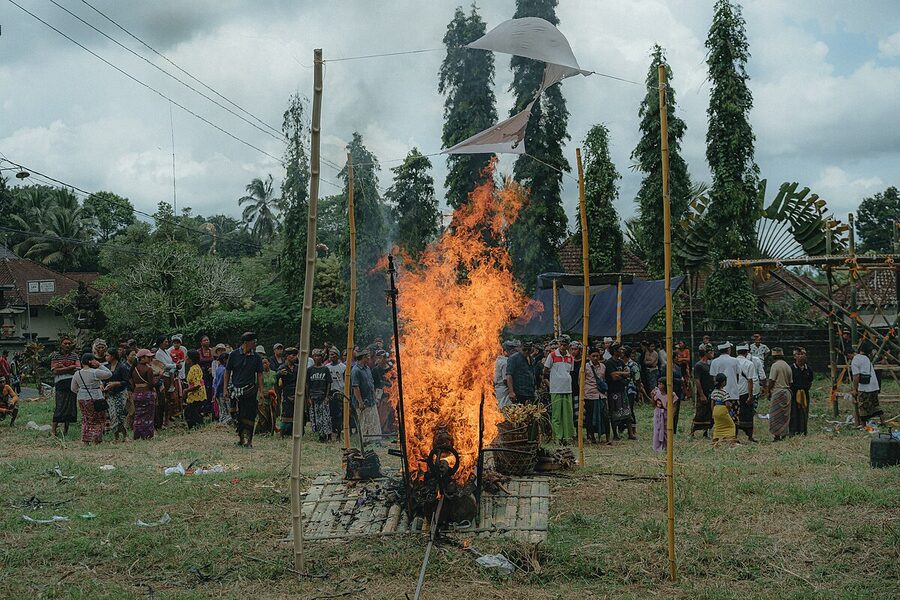
By evening the lembu is reduced to ash, charred bamboo and a small pile of bones. The family returns the following day to collect the ash, place it in a yellow coconut shell or similar container, and prepare for the next stage.
Twelve days later: the nyekah and the dispersal
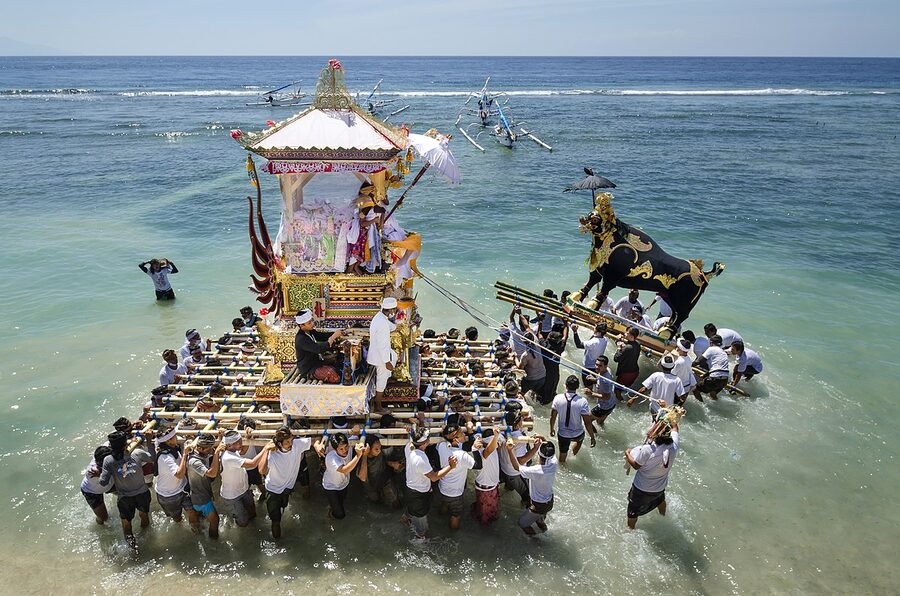
The fire is not the end. Twelve days after the cremation, in most traditions, the family performs nyekah, the dispersal ceremony. The collected ashes are carried in procession to the sea or, if the village is far inland, to a flowing river that reaches the sea.
The procession is smaller than the cremation parade and quieter, immediate family rather than the whole village. At the water, the priest performs further mantras and the container of ash is poured into the surf. Returning the elements to the ocean completes the cycle. The body’s earth and water rejoin earth and water, the fire has done its work, and the soul, now fully unbound, is free.
Some families perform an additional rite weeks or months later called memukur, in which a small effigy of the deceased is consecrated and burned. This ceremony elevates the soul to the status of a deified ancestor who can be petitioned and remembered at family temple anniversaries. From that point on, the deceased is no longer a recently-departed individual but an ancestor of the family line, addressed at every family ceremony for generations.
What it actually costs, and why ngaben massal exists
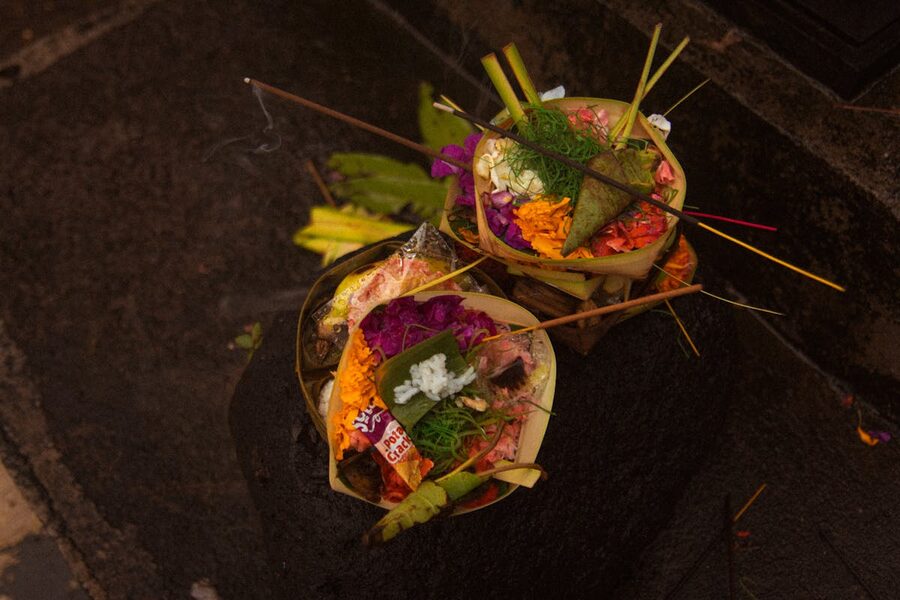
A solo ngaben is expensive. The wadah and lembu have to be commissioned and built. The priest receives a fee. The gamelan has to be paid. The whole village turns up to help and they need to be fed, sometimes for two or three days. Offerings, called banten, are crafted by the women of the family for weeks using fresh flowers, palm leaves, fruit, rice cakes, and small symbolic items, and the materials add up.
The cost band you will hear quoted is roughly Rp 30 million to Rp 150 million (about $1,900 to $9,500) for a private family ngaben, with the upper end much higher again for elaborate ceremonies. That is a serious sum in a country where the average rural Balinese family income is a small fraction of that figure per year.
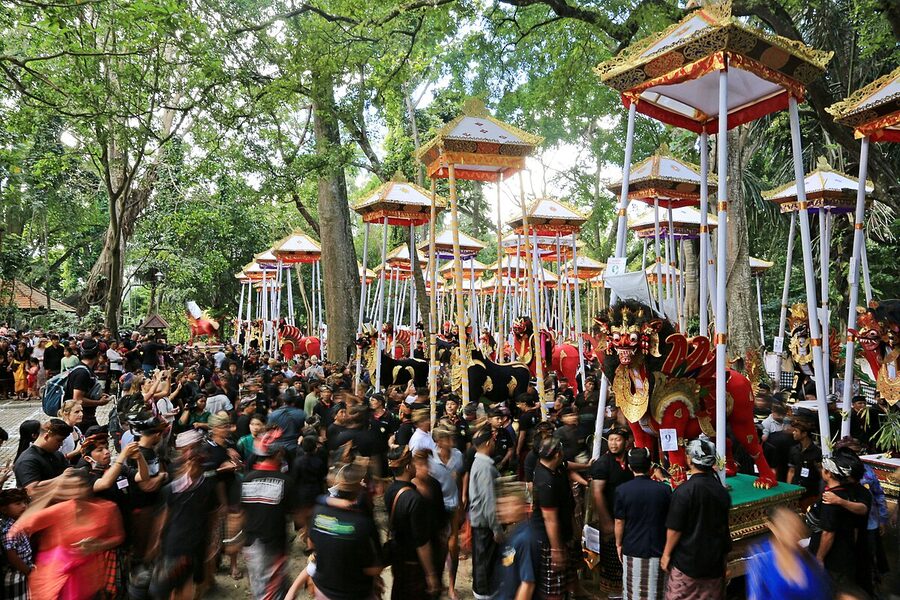
Which is why ngaben massal exists. A mass communal ceremony, organised by the local community council called the banjar, gathers families across the village who have lost loved ones in the past few years. They share the wadah, the priest, the gamelan, the offerings, and the catering. A single ngaben massal might process and cremate twenty or fifty bodies on the same day, dropping the cost per family to roughly Rp 5 to 10 million (about $320 to $640) per individual.
This is why you will sometimes hear that a body has been temporarily buried for years before the cremation. The family is not neglecting the dead. They are waiting for the next ngaben massal so the ceremony can happen properly without bankrupting them. The temporary grave at the village Pura Dalem is a holding state, not a final resting place. When the ceremony comes, the bones are exhumed, cleaned, and brought to the cremation ground. Banjars typically organise a ngaben massal every five to ten years; in larger villages, every two or three.
Royal pelebon: when ngaben becomes a public event
A small fraction of cremations are royal ceremonies, called pelebon rather than ngaben, and these are scaled up to a degree that has to be seen to be understood. Royal pelebon use towers of nine tiers or more, lembu the size of small trucks, processions involving thousands of bearers working in shifts, and crowds of tens of thousands lining the route. The Ubud royal family has held several over the past two decades and each has made international news.
If a pelebon is happening during your stay you will know about it. The local press, your hotel, your driver, and the warung ibu down the road will all mention it. Schools close. Roads close. The whole town turns out. These are the only ngaben that come close to being a public spectacle, and even then it is a public ritual, not entertainment. Behave accordingly.
So can you actually attend, and how?
Mostly you do not attend in any active sense. Mostly you witness. There is a meaningful difference.
If you happen to be in a village when a ceremony is happening, observe from the side, give the family room, and let the procession move past you the way the locals do. Do not follow it into the cremation ground unless you are explicitly invited. Most cremations are private family affairs even if the procession is on a public road, and most family members are happy for respectful onlookers to witness from the edges as long as the onlookers behave.
If you are invited to a private ngaben, usually because you are connected to the family or the homestay where you are staying, you go in proper dress, you bring a small donation, and you follow the lead of the family and the priest at every step. Mass ngaben and royal pelebon are by their nature more public; the rules of respect do not change because the crowd is bigger.
Respectful-observer rules I wish someone had told me first
These are not Western etiquette politeness. They are specific things the family will notice and that other Balinese onlookers will, quietly, judge you for if you get them wrong.
Dress. White or muted dark colours, never bright resort wear. Cover shoulders and knees. If you are close to the ceremony, a sarong and sash are required, the same as for entering any temple. Sarong shops near the procession rent or sell them for around Rp 50,000 to Rp 150,000 (about $3 to $10).
Stand lower than the family and the priest. Spiritual hierarchy in Bali is partly literal. Your head should never be above the head of a priest, a family elder, or any of the bearers carrying the deceased. Don’t climb a wall for a better photo.
Do not photograph the body. This includes the moment the body is transferred from the wadah to the lembu, and the body once it has been placed inside. The procession itself is photographable from a respectful distance with the family’s tacit agreement; the body is not.
Ask before photographing the family. Wide procession shots of the bearers, the gamelan, the tower in motion are usually fine. Close-up portraits of grieving family members are not, unless someone has nodded yes.
No drones. Ever. A drone over a ngaben procession is the single fastest way to get every Balinese person within a kilometre furious with you. The airspace above a soul-release ritual is not yours to fly through.
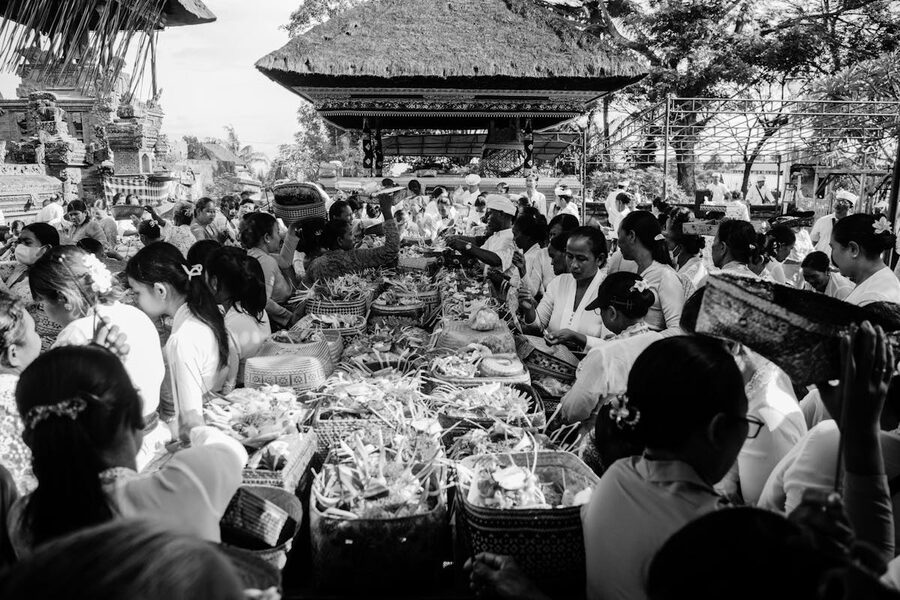
Do not step over offerings. Banten on the ground are altars. Step around them, never over. Do not point your foot at a priest, an offering, or any sacred object.
Stay quiet during the prayers. Conversation during processions and meal breaks is normal; conversation during the priest’s mantras is not.
Donate quietly. Most ceremonies have a discreet donation box near the entrance. Rp 50,000 to Rp 100,000 (about $3 to $6) is a normal amount; more if you have been personally invited. Hand it over with two hands, no fuss, no photo.
Leave when asked, immediately. If anyone, family or banjar volunteer, indicates you should leave or move, you do, without negotiation. There may be a stage of the ritual that is not for outsiders.
How to know one is happening before you walk into it
Ngaben do not run on a published calendar. The date for each ceremony is chosen by the priest in consultation with the family, based on the 210-day Balinese pawukon calendar and the auspicious days within it. The short version: you will not know in advance unless someone local tells you.
Which means the practical advice is to ask around. If you are staying in a village in the Ubud area, in Gianyar, in Bangli, in Karangasem, or any of the older inland villages, mention to your homestay host or driver that you are interested in seeing a procession respectfully if one is happening. They will often know what is on in the next week.
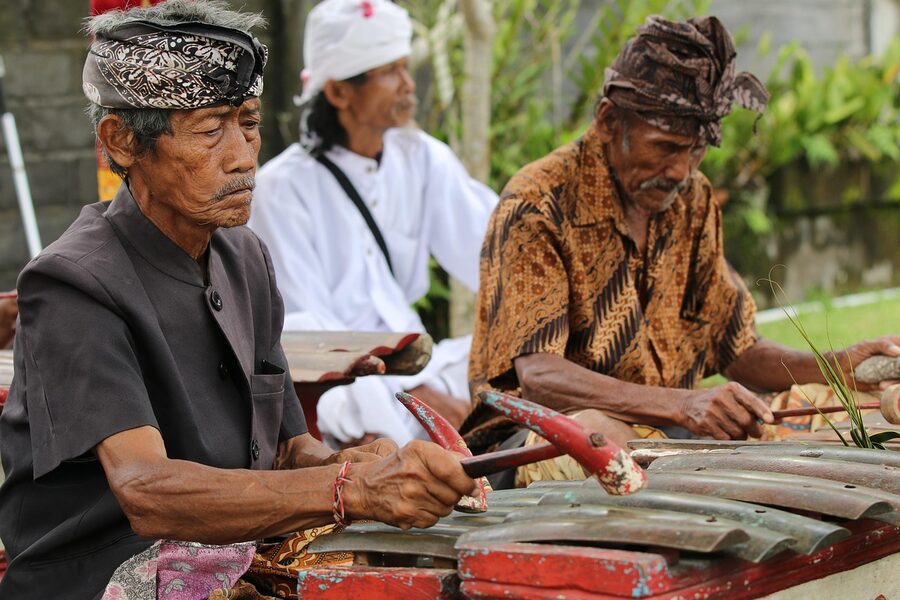
Other clues. White and yellow cloth tied around banjar gates often signals an upcoming ceremony. The sound of gamelan rehearsal in the late afternoon, a few days running, is a strong sign a procession is being prepared. Asking at a warung is an underrated tactic; the ibu who has been there forty years knows the village calendar better than any guidebook. Order a plate of nasi goreng, eat slowly, and ask politely whether there are any upacara coming up.
What you might see if you stay long enough
If you spend more than a week or two in Bali, especially outside the south coast bubble, the odds of stumbling into a procession get high. Across the island, with hundreds of villages and the long delays between death and cremation, there are ngaben happening somewhere most weeks of the year.
The most likely first encounter is a small village procession: a modest wadah, a smaller lembu, perhaps fifty people in white walking ahead, the gamelan in a pickup truck, scooters held up behind. Ten or fifteen minutes to pass. Busy rather than solemn. A ngaben massal, when one happens, is bigger by an order of magnitude: multiple wadah lined up at the assembly point, several lembu in different colours, gamelan ensembles from three or four villages combined, a crowd in the thousands.
“Should I even be here?”
I have thought about this question every time I have been near a ngaben and I have not arrived at a clean answer. The family is grieving. The ceremony is sacred. The tourist on the corner taking phone photos is, on the face of it, an intrusion.
What I have settled on is this. The Balinese themselves treat ngaben as a public ritual in the sense that the procession runs on a public road and the village setra is open ground. Locals from neighbouring villages turn up and watch all the time. An outsider who behaves the way the locals do is, in my experience and in what Balinese friends have told me, considered a respectful witness to something that is, by religious design, communal.
The line gets crossed when the witness becomes the consumer. The selfie taken with a burning lembu in the background. The drone overhead. The tourist who grabs at the procession to get to the front. A camera shoved in a child’s face. These are the things I have seen go wrong and they have always made me wince.
Ngaben is one of the moments when Bali shows you what it really runs on. The temples and the rice terraces and the beach clubs are surface. The thing underneath is a community that has chosen to spend a meaningful chunk of its time and money and labour on the proper release of its dead, and that does this not as a tourist performance but as the central duty of being Balinese. If you can stand at the side of a road and witness that without making it about yourself, you are doing the right thing.
Ngaben sits inside the broader category of Balinese sacred duty I touched on at the top. The culture archive on this site covers Galungan, Nyepi, melukat purification, and the temple system that all of it operates within. If you are still in the early planning stages, the flights to Bali primer handles the logistics of getting here, and the things to do archive rounds out the rest.
Should you stumble into a procession on your way to dinner, the way I did off Jalan Raya Andong, my advice is this. Stop. Move to the side. Take your hat off. Watch. Be quiet. When it has passed, walk on. The family will have been doing this for weeks before you arrived and they will be doing it for days after you leave. Your job is to be a small, respectful presence at the edge of something that is not yours.
You Might Also Enjoy
Planning a Bali trip?
Start with the cornerstones — when to go, where to base, and what's actually worth doing.