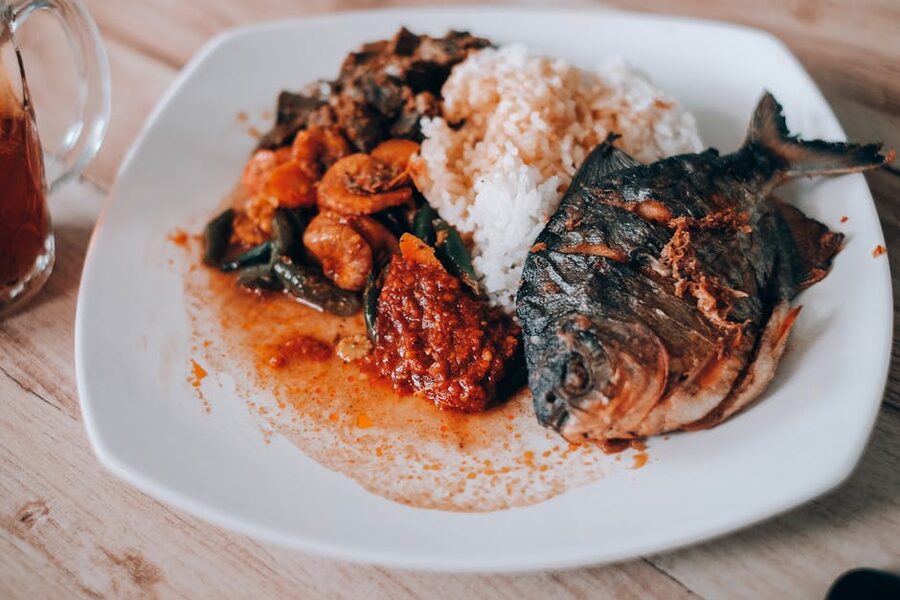
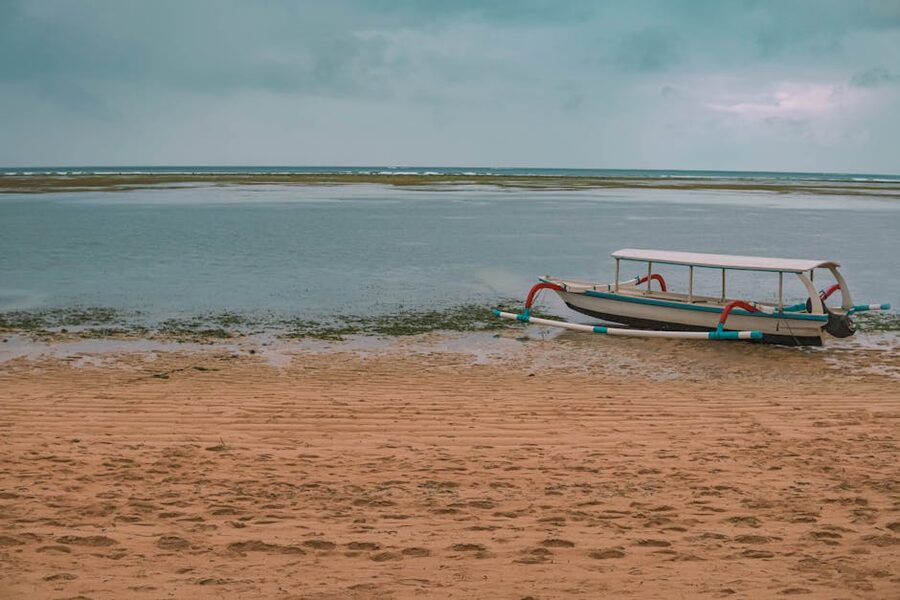
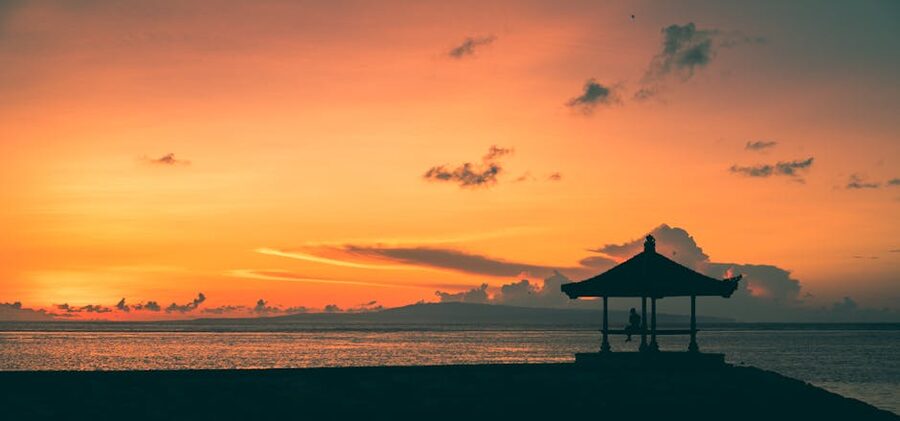
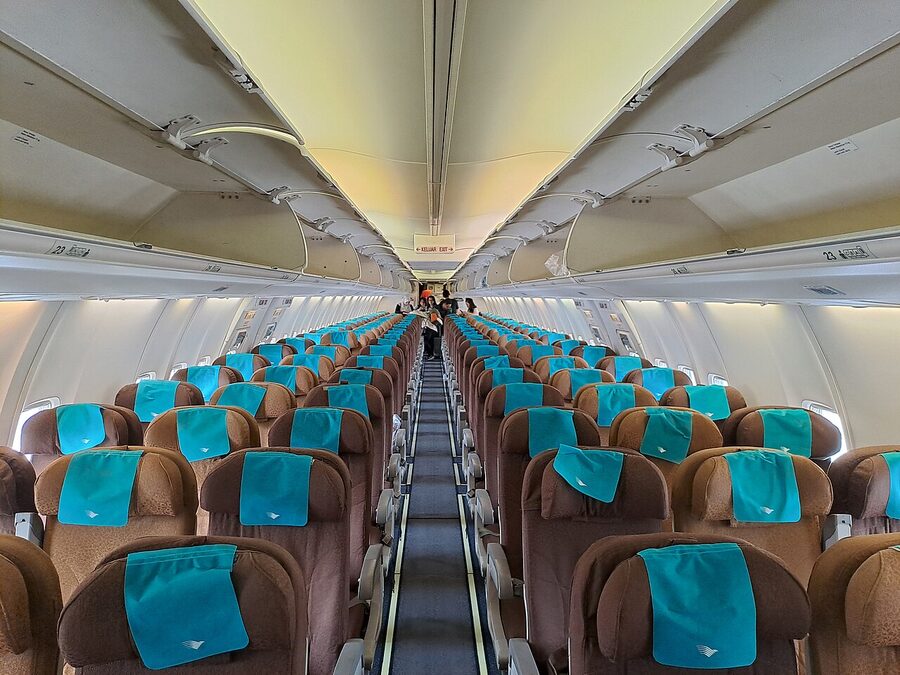
The Best Restaurants in Sanur, Ranked by What’s Worth the Price

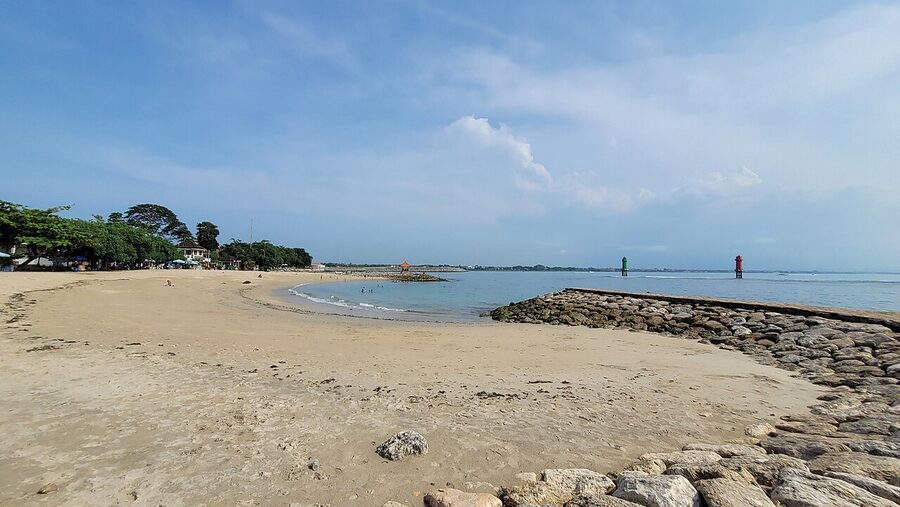
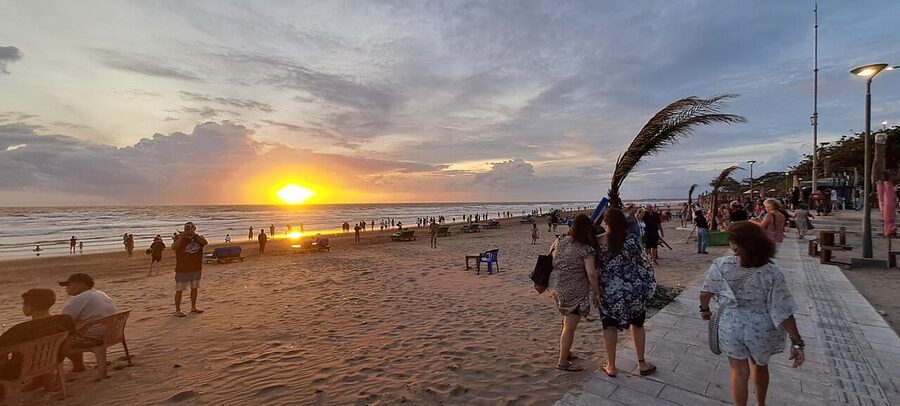
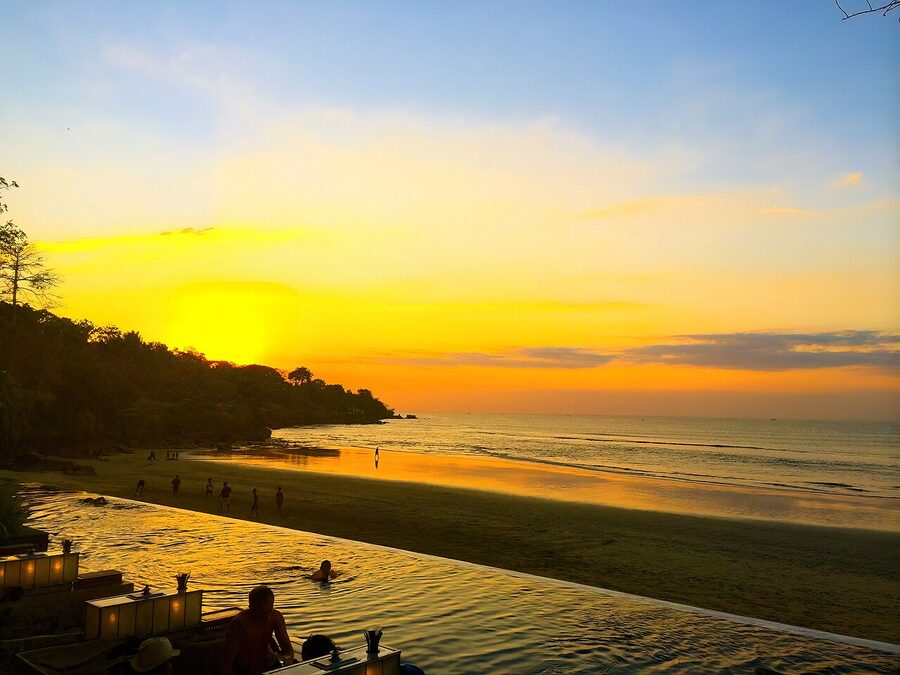
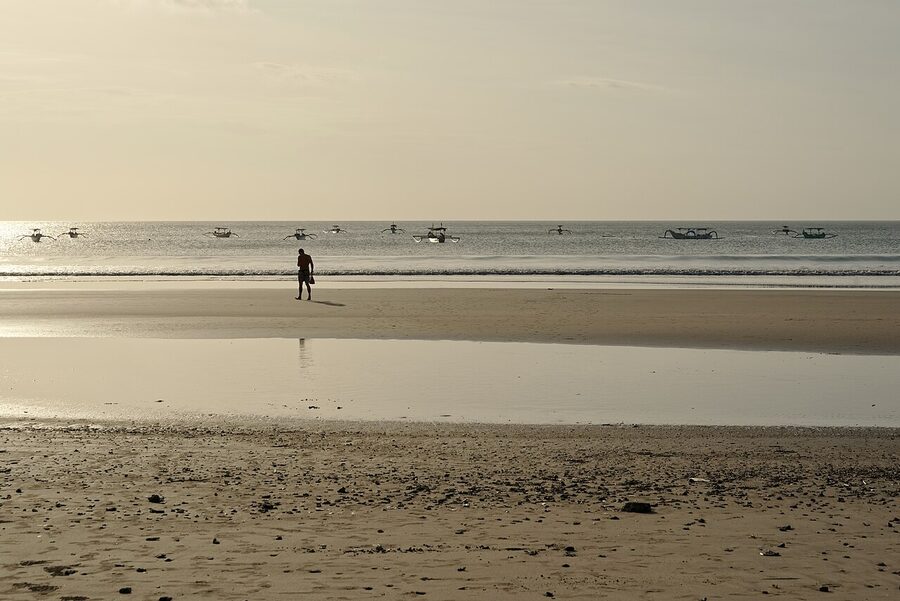
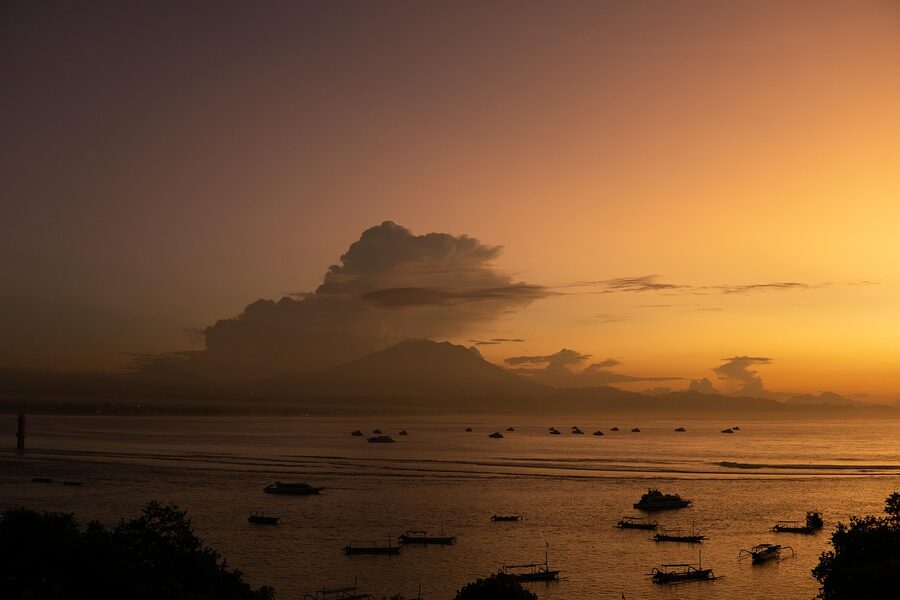
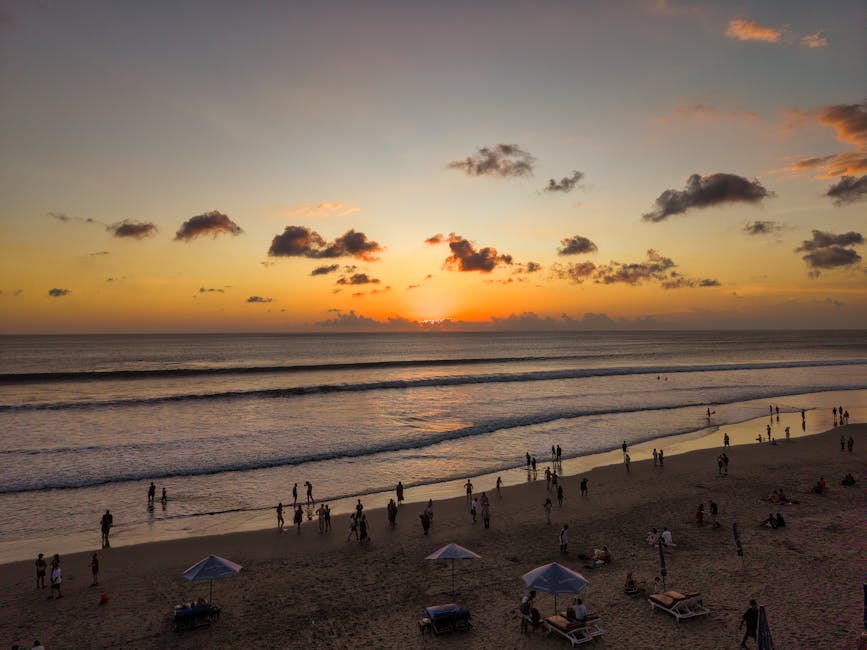
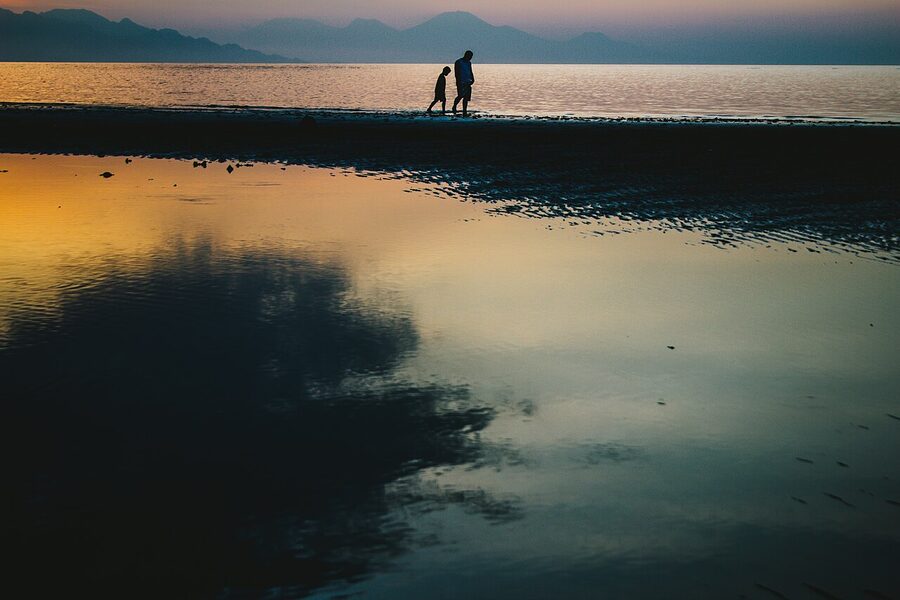
Sunset dining on a restaurant patio overlooking the sea

If you have one dinner in Sanur, book Three Monkeys. If you have two, add Massimo for the carbonara and the gelato out front. If you have a week, here’s the rest of the catalogue, ranked by what’s actually worth the price. I’ve eaten my way along Jalan Danau Tamblingan more times than I can count, and Sanur quietly does food better than anyone expects from the calmer end of south Bali. The street is short, the choices are plenty, and the prices are nothing like Seminyak.
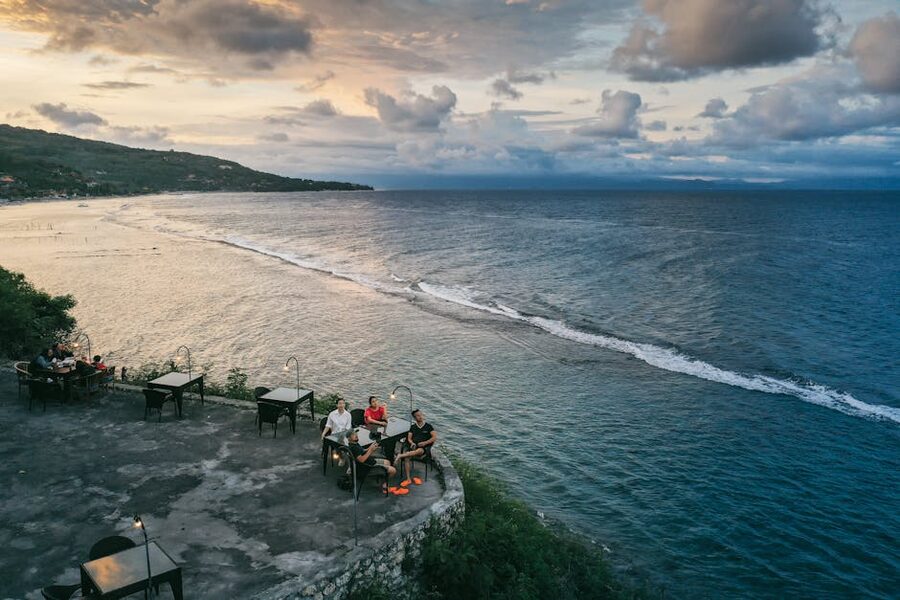
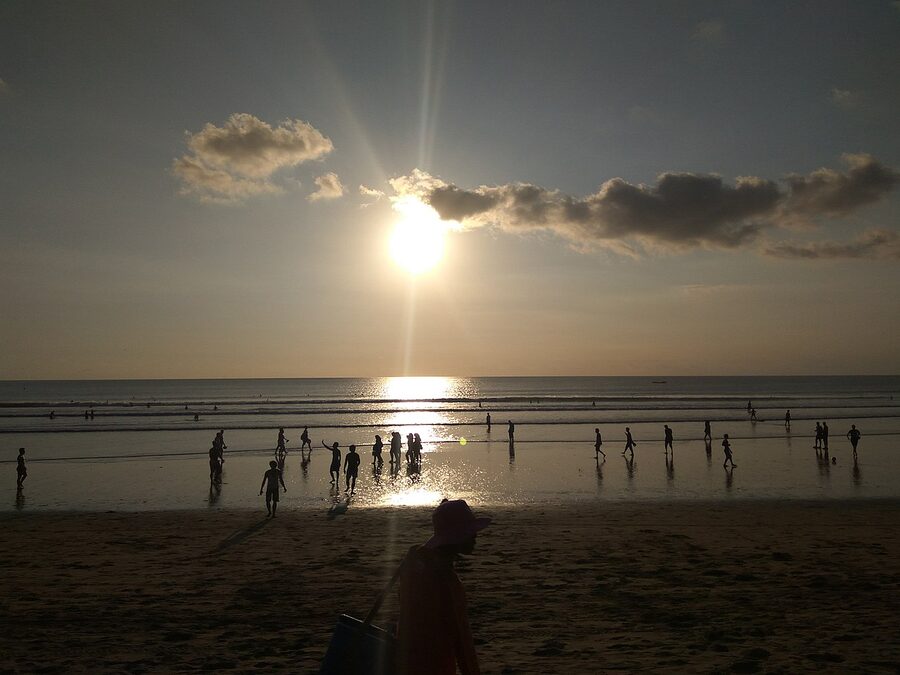
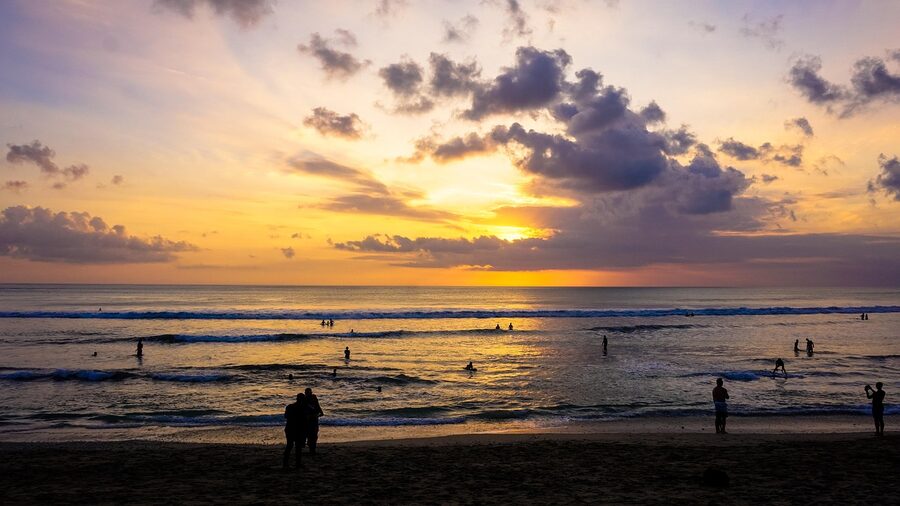
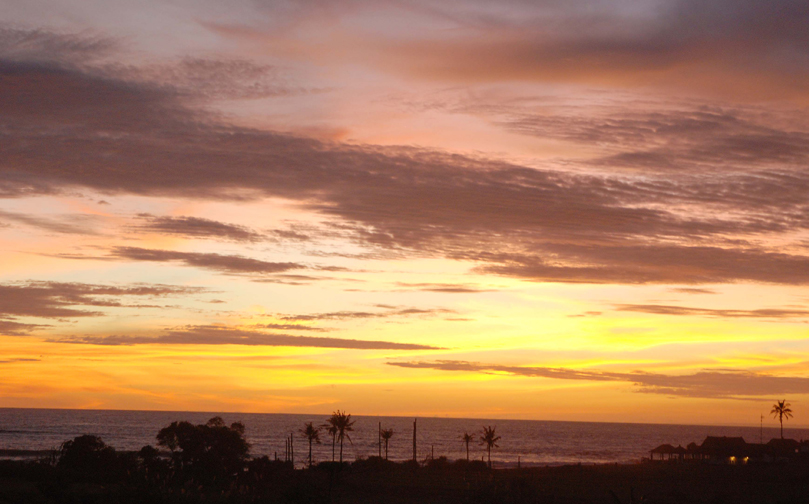
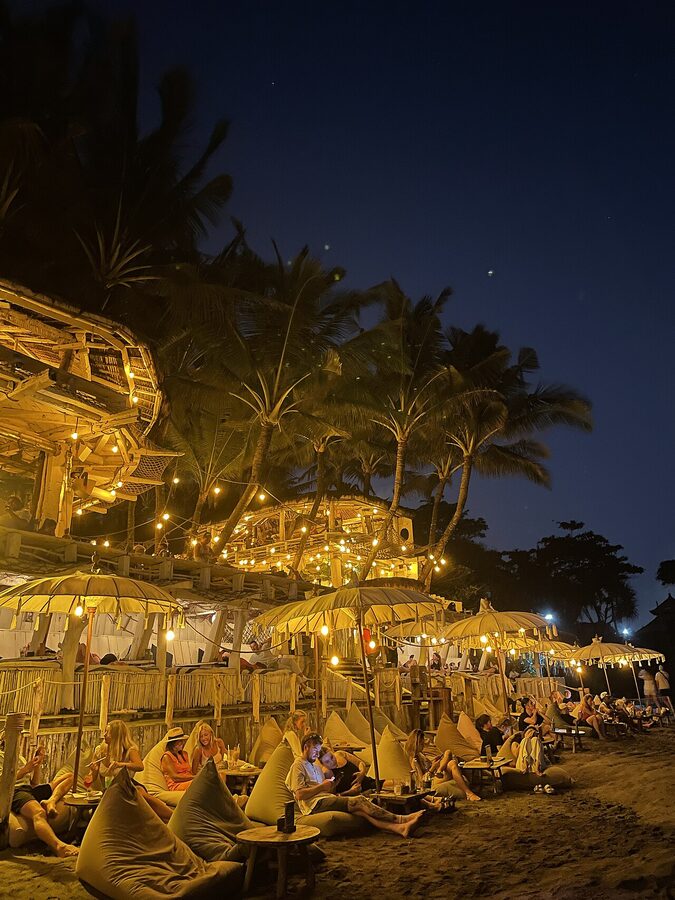
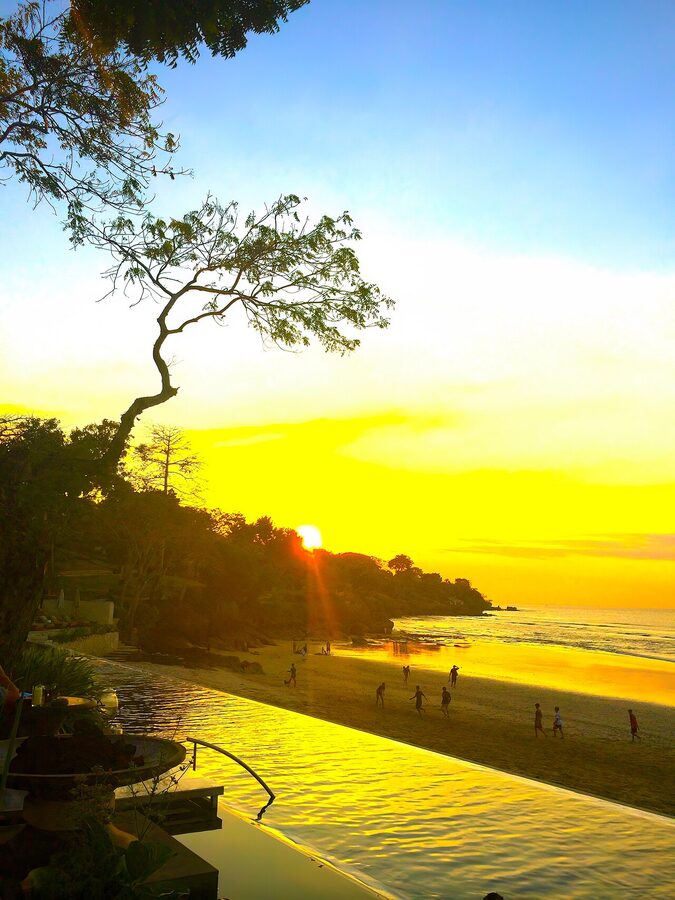
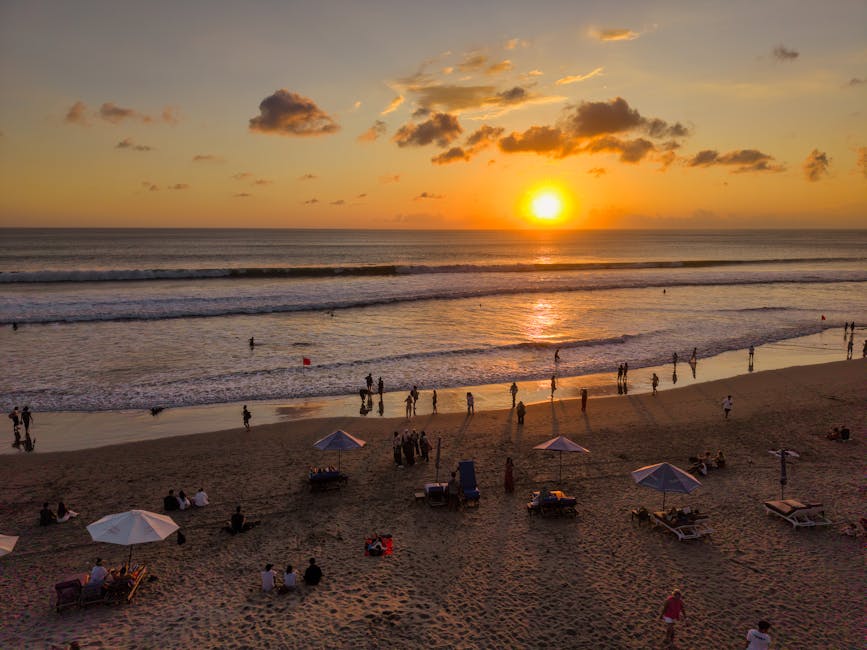
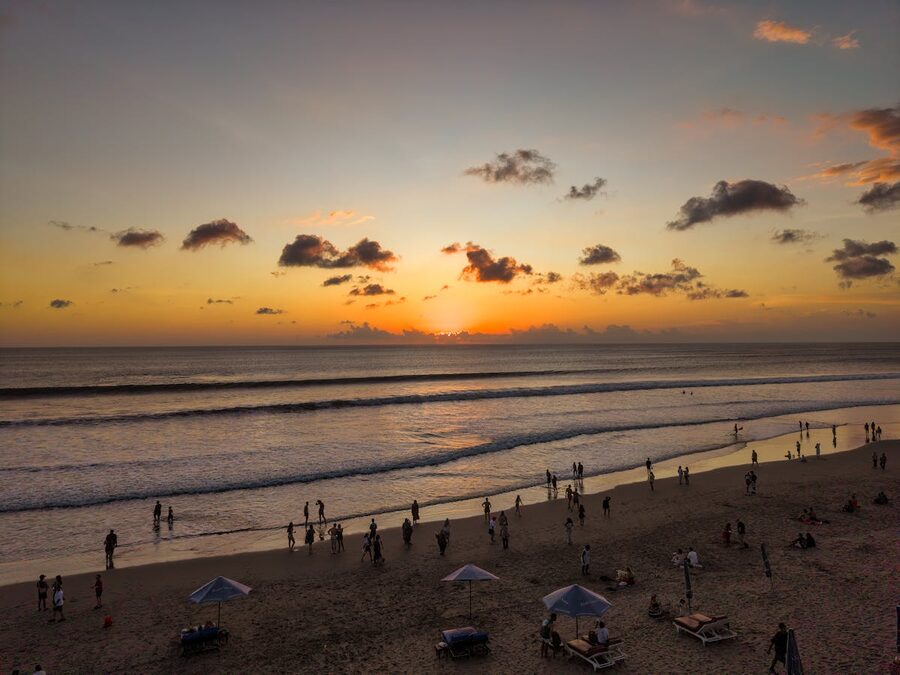
Sunset dining at a beachfront restaurant in Sanur, Bali
Sunset on the Sanur boardwalk. Tables on the sand fill from 5pm; the inside seats stay open longer.

A note before we start. The original Bianco Restaurant that lent its name to this URL doesn’t appear in any current Sanur dining guide and has no live website I can find. If you turned up looking for it, treat it as closed and pick from this list instead. Sanur has gained more than it has lost on this front, especially since the new ICON Bali mall pulled L’Osteria and Curry Traders into town. The food scene here in 2026 is the strongest it has ever been.

How to read this guide

I’ve sorted everything by tier, not by alphabet. Three Monkeys, Massimo, and a couple of resort-restaurant picks sit at the top because they earn the booking. The mid-tier covers the beachfront spots where you’ll spend most evenings. The casual tier is where I eat when I’m not in the mood to dress up. Real prices in IDR with USD in brackets the first time, then IDR only. Reservations matter at the top tier in high season; you can wing it almost everywhere else.

One thing I learned the hard way. The Sanur sunset window runs about 5:30pm to 7pm and every beachfront table fills in that hour. Book ahead or eat at 8pm. The food is the same; the wait isn’t.

The top tier: book these in advance

Three Monkeys Sanur
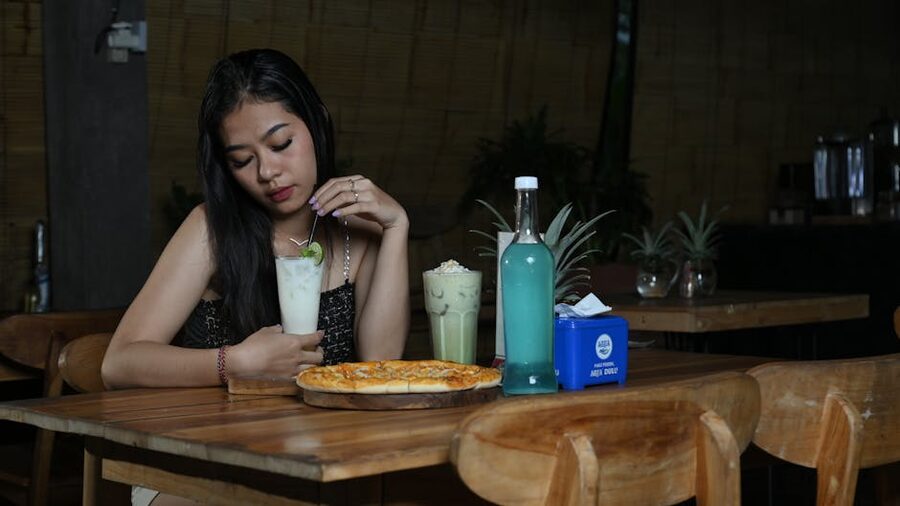
Diner at a Sanur restaurant table, Bali
The booth seats at Three Monkeys go first; the koi-pond tables go second. Either is a win.

The icon. Three Monkeys on Jl. Danau Tamblingan is the one restaurant in Sanur that everyone agrees on. The original Three Monkeys is in Ubud (since 2000); the Sanur outpost opened in a beautiful tropical-modern courtyard with koi ponds and water features and has been packed ever since. The kitchen does Mediterranean and modern Indonesian, both done seriously. Open daily 11am to 11pm.

What to order. The duck confit (a long-running favourite), the lamb shank, the seafood linguine, and any of the rotating fish specials. The Indonesian side of the menu is genuinely good too, not the token Western-friendly nasi goreng you get at most fusion places. Mains run about Rp 180k to Rp 350k (about $11 to $22), starters Rp 80k to Rp 140k. A bottle of decent Indonesian wine is around Rp 450k, imported wines climb fast.

What matters. Book two or three days ahead in season for sunset; a week ahead at Christmas and New Year. The booth seats at the back are quieter than the courtyard tables. They’re also one of the few Sanur restaurants that handles a fussy table well, I’ve watched a kid order plain pasta with butter and the kitchen sent it out without a sigh.

Massimo Italian Restaurant
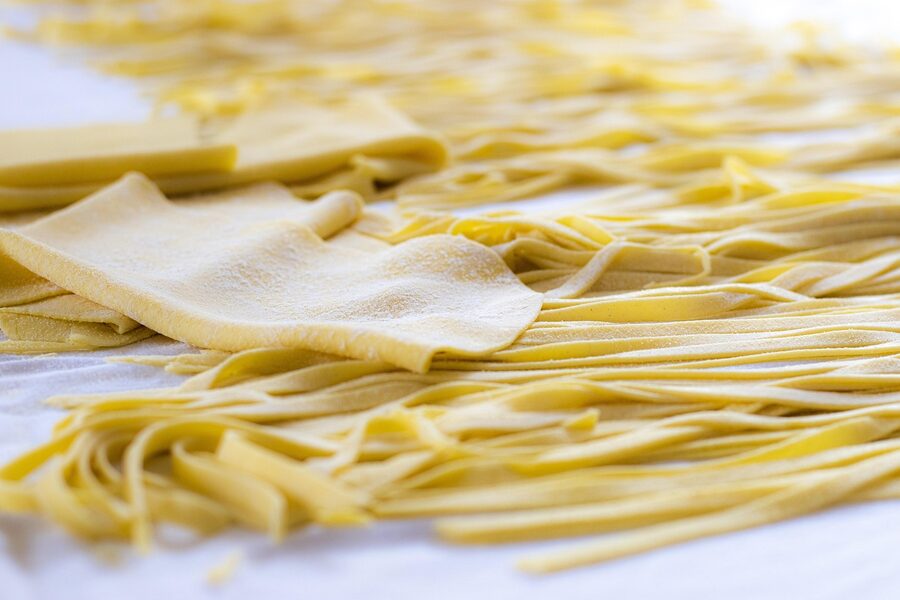
Fresh handmade Italian pasta on a board
Massimo makes the pasta in-house. The carbonara is the giveaway dish for whether an Italian restaurant in Bali is the real thing.

Sanur has the largest long-resident Italian community in Bali, which is why it has so many Italian restaurants and why one of them, Massimo, has been in the same spot on Jl. Danau Tamblingan since 1996. Chef Massimo Sacco is from southern Italy. The pasta is made in-house; the gluten-free menu is a separate full menu, not a sad afterthought; and the gelato counter at the front is the best in Sanur and arguably the best in south Bali.

Order the carbonara (Rp 95k), the seafood linguine, the pizza only if you must, and the homemade gnocchi when it’s on the specials board. Skip the imported steaks unless you’re feeling flush. After dinner, walk to the gelato counter and try the stracciatella, the pistachio, and whatever the daily special is. A scoop is around Rp 30k; four small scoops in a cup is Rp 30k to Rp 40k and feels indecently cheap for the quality.

Open 9am to 11pm daily, last orders 10:30pm. The dining room books up at 7pm so come at 6 or 8:30. If you only want gelato, the counter has its own queue at the front and you can grab a cone without sitting down.

The Restaurant at Tandjung Sari
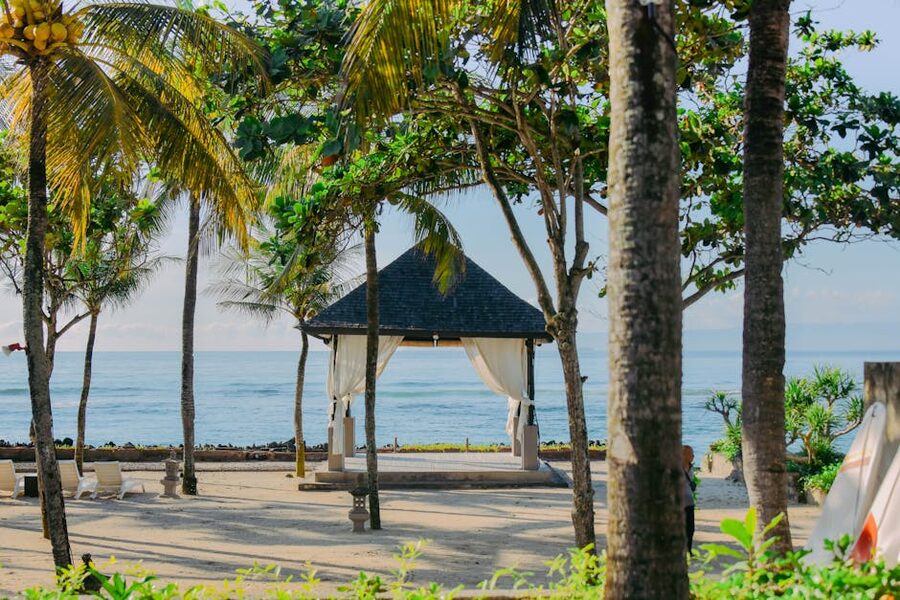
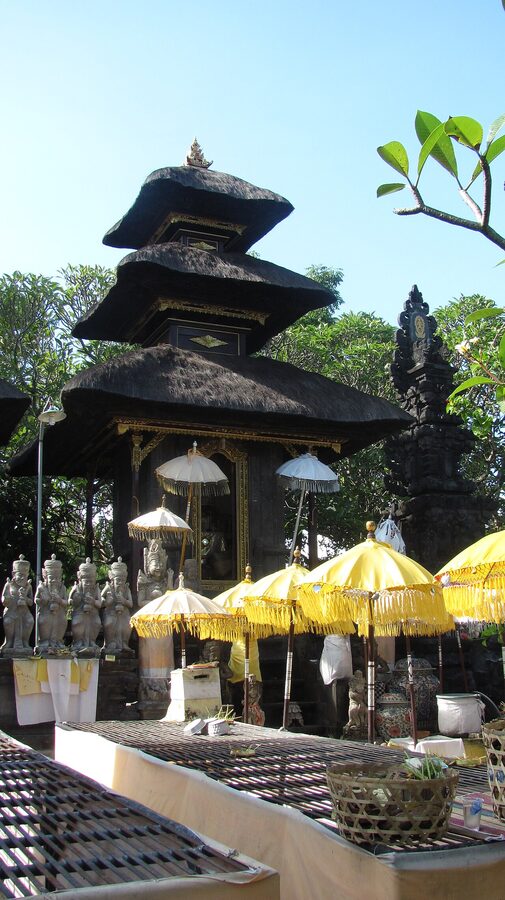
Traditional Balinese pavilion at a beach resort, Bali
Tandjung Sari’s pavilions sit straight on the sand. The rijsttafel is for two people but it’s plenty for three.

For a date night that earns the spend, eat at the on-site restaurant of Tandjung Sari, one of Sanur’s oldest and most loved hotels. The dining tables are scattered across the sandy bay under huge palms, the lighting is candle and lantern, and the menu is modern Indonesian done with care. The signature is the rijsttafel, the colonial-era rice table, a feast for two with about a dozen small dishes around a central pile of rice. It’s about Rp 750k for two, which is a lot for Sanur but the most memorable Indonesian meal you’ll have on the trip.

If you don’t want the full feast, the nasi campur (mixed rice plate) is around Rp 165k and gives you the same flavours in one plate. Book ahead, outside guests are welcome but the tables on the sand go first. Sunset reservations on Friday and Saturday are gone two weeks out in July and August.

The mid-tier beachfront: book once, walk in twice

Soul on the Beach
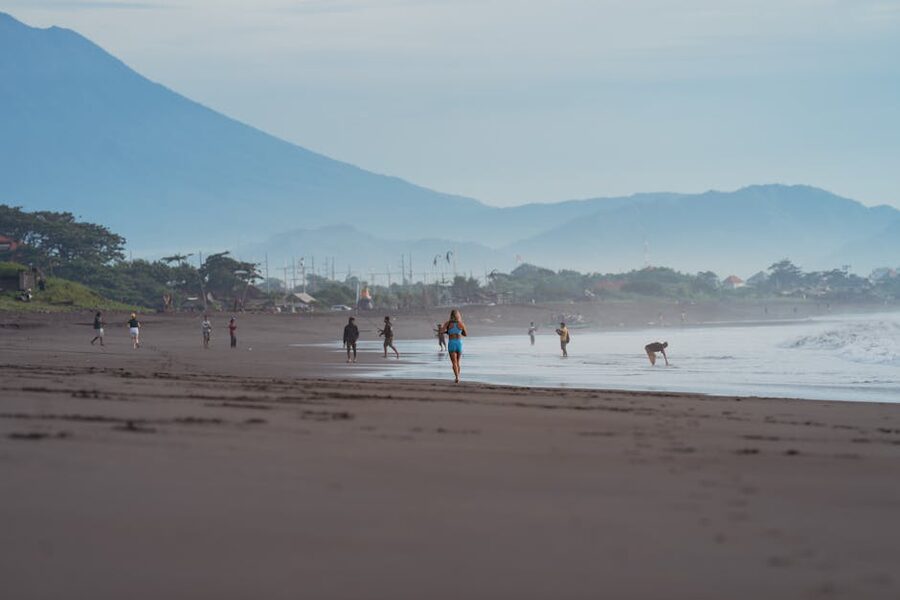
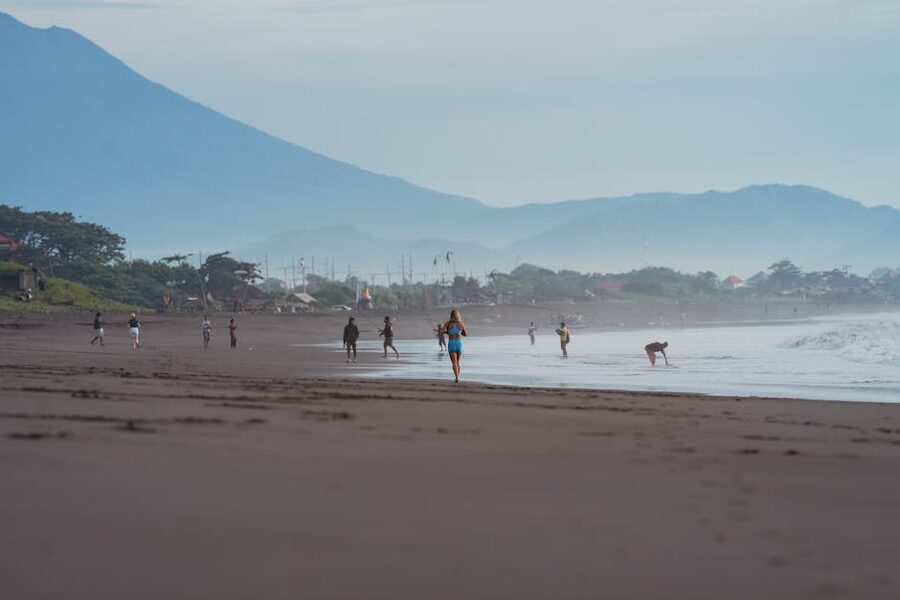
People walking along the Sanur beach path, Bali
Sindhu Beach, where Soul on the Beach has tables on both sides of the boardwalk. The sand-side tables are worth the wait.

If I had to pick one beachfront restaurant for daily use, it’d be Soul on the Beach at Sindhu. Tables sit on both sides of the boardwalk; the sand-side ones are the prize. It opens at 7am for breakfast and runs all day, which matters in Sanur because most beachfront places don’t really get going until lunch. The breakfast deal is Rp 60k for coffee and a croissant or egg muffin, cheaper than most Canggu cafes for a much better view.

The menu is loose Mediterranean: tapas plates, pizza, pasta, salads, a big seafood section, and a few decent local dishes for when you want a nasi goreng without leaving the beach. Happy hour runs 4 to 7pm with cheap cocktails and house wines, which is when the place fills up. Mains land Rp 110k to Rp 220k. They have showers and towels for guests, so you can swim before dinner without a guilt trip. Book for sunset; lunch and breakfast are walk-in.

Moreno
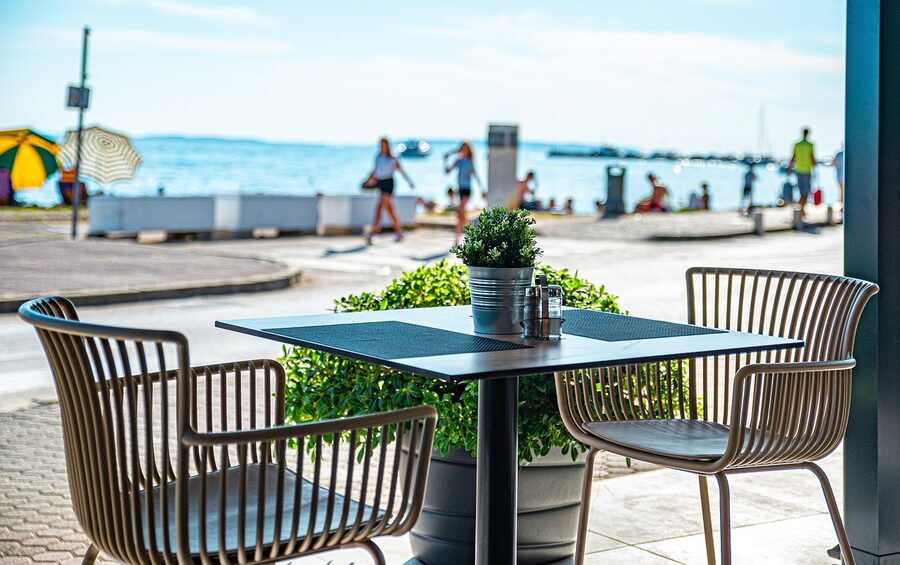
Beachfront restaurant table with sea view
Moreno’s covered terrace stays cool through the afternoon. Patatas bravas with the pesto chicken sandwich is the easy lunch.

Three doors down, Moreno is the slightly more grown-up sibling of Soul. Same beach, slightly more careful cooking, and a covered terrace that’s actually cool during the heat of the day. Mediterranean and Italian crossover menu, patatas bravas (worth ordering twice), big sandwiches with proper bread, handmade pasta with truffle carbonara, and a hanging-rib-eye thing on a skewer that comes with a little bit of theatre. Mains Rp 130k to Rp 280k.

I’d come here for a long lunch when you don’t want to sit in direct sun. Open 7:30am to 10pm daily on Jl. Segara Ayu 42, just back from the beach.

L’Osteria at ICON Bali
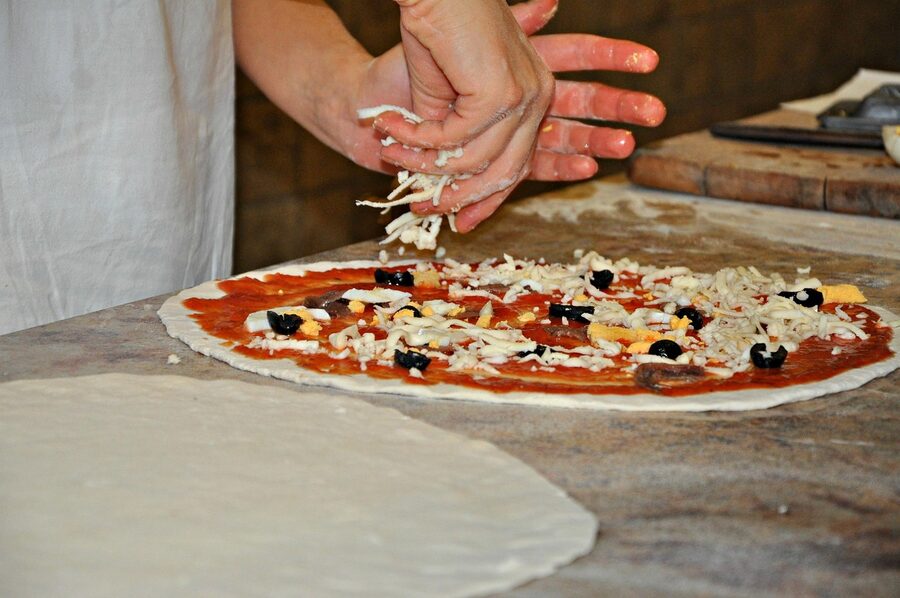
Wood-fired pizza on a wooden paddle
L’Osteria’s tiramisu is the best in Sanur. The pumpkin and sausage risotto is the dish that kept me coming back.

The Italian-tavern chain L’Osteria opened a Sanur outpost in front of the new ICON Bali mall in 2024, right on the beachfront. Stone walls, low wooden beams, a terrace facing the water, and a kitchen that takes Italian food more seriously than most Bali Italian spots. The pumpkin-and-sausage risotto, the ragù arancini, and the homemade gnocchi alla Sorrentina are the picks. The tiramisu is genuinely the best in Sanur. Mains Rp 130k to Rp 250k.

One catch. It can feel slightly mall-like in the entrance area because of where it sits. Once you’re on the beachfront terrace it doesn’t matter. Walk past the front and ask for an outdoor table.

Costa Beach Restaurant
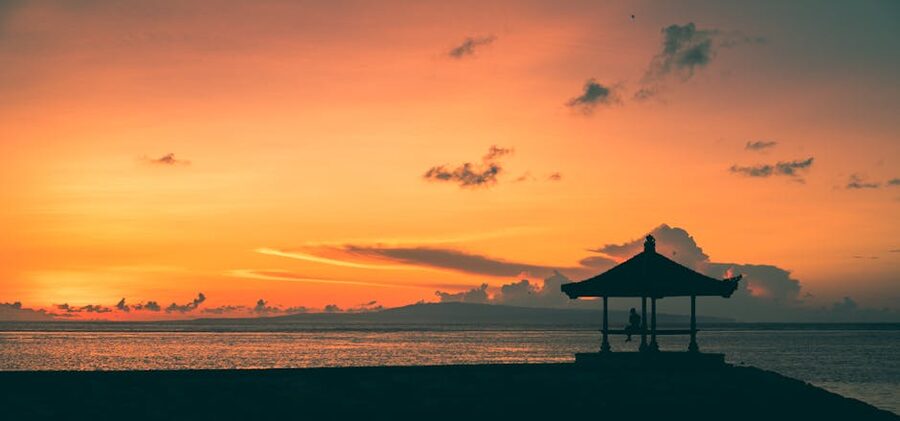
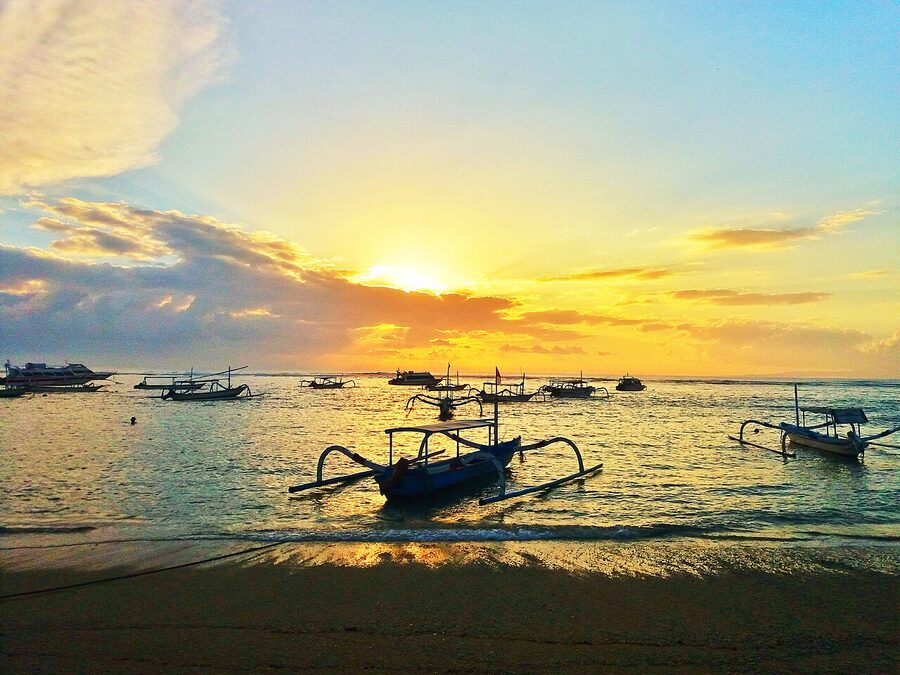
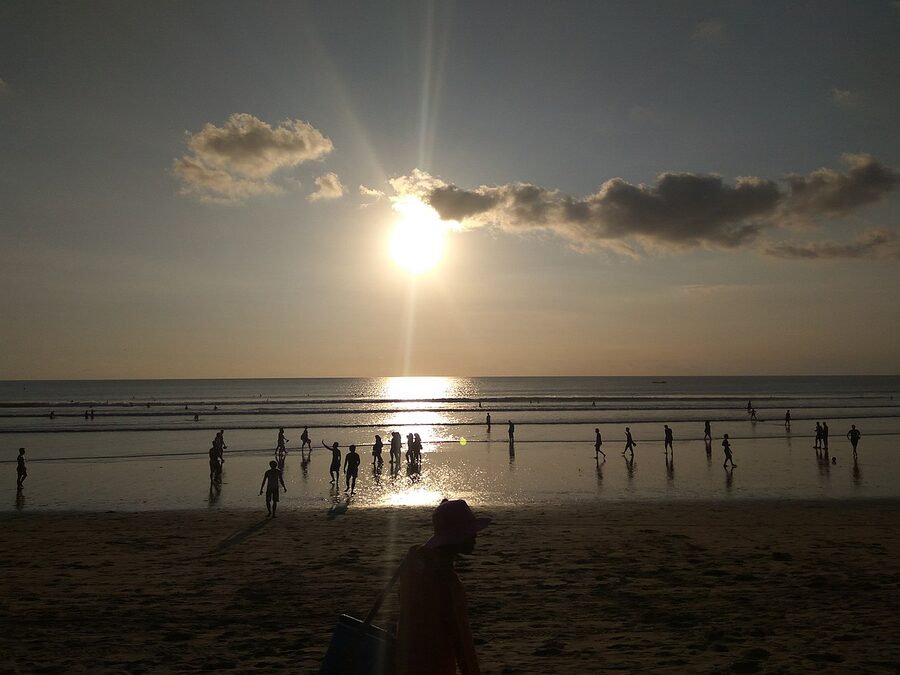
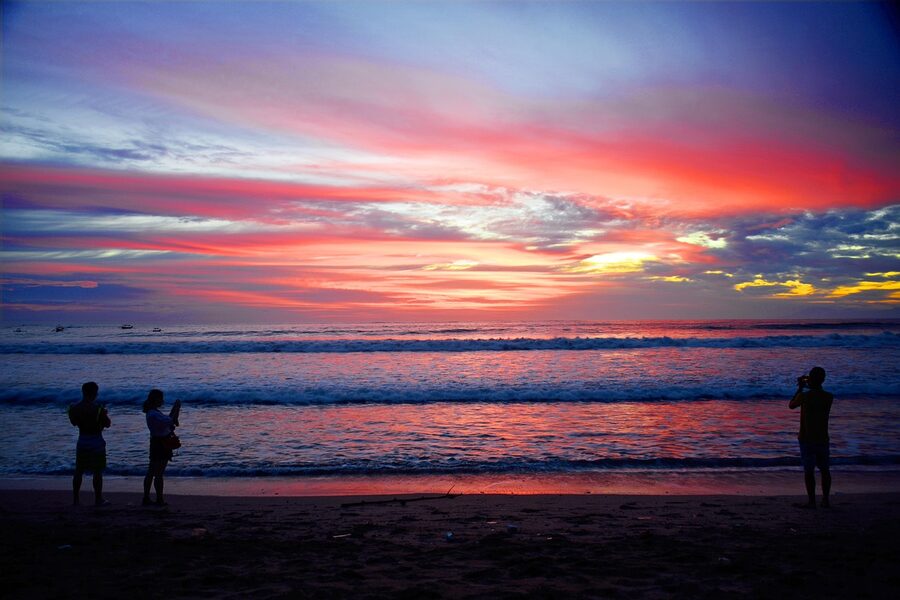
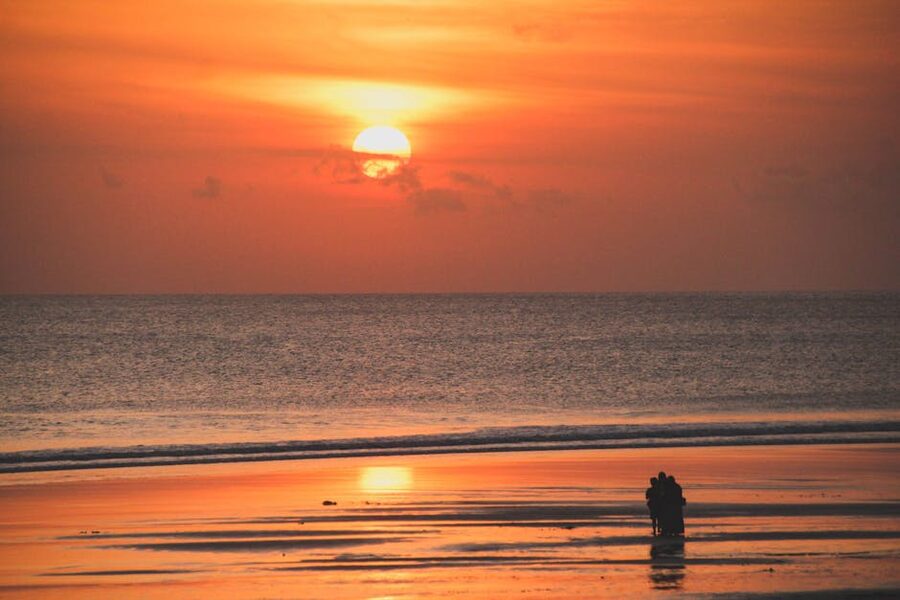
Silhouettes on Sanur beach at sunset, Bali
Costa is the most-Instagrammed restaurant in Sanur. The food is genuinely good, but go for the daytime drinks if photos matter to you.

The number-one ranked Sanur restaurant on TripAdvisor (TripAdvisor rankings are an imperfect signal but the local consensus tracks) is Costa, sometimes called Costa by Monsta. It’s the Insta-perfect beachfront spot in Sanur, bleached wood, white linen, hammocks, a curved bar, with a Mediterranean and Italian fusion menu and pricing that sits at the higher end of the mid-tier. The truffle burger, the seafood pasta, and the cocktails are the right orders. Mains Rp 150k to Rp 300k, cocktails Rp 130k.

It earns the rank, but the food itself isn’t a level above Soul or Moreno. You’re paying for the look, the service polish, and the feeling of having booked the right table. If aesthetics matter to your trip, book a sunset slot. If you just want dinner, the food is the same at lunch and the photos are better.

The atmospheric picks: pick by mood, not menu

Café Smörgås, the Scandinavian holdout

Tropical breakfast spread at a Bali cafe
Smörgås does the only proper open-faced sandwich in south Bali. The cinnamon buns sell out by 11am.

Sanur has a long Scandinavian community alongside the Italian one. The most visible expression of that is Café Smörgås, which has been doing proper Scandi café food in Sanur for two decades. It’s the only place in Bali I know of where you can order a proper smørrebrød (the Danish open sandwich) on rye, with herring or pickled salmon or beetroot, and have it taste right. The cinnamon buns, the cardamom buns, and the chocolate cake are all baked on site. Breakfast and lunch only, closes around 4pm.

It’s not a date-night place. It’s a 9am-after-the-beach-walk place. Coffee is good, the orange juice is fresh, and there’s a small patio at the back that’s quieter than the main room. Plates Rp 65k to Rp 130k. Cash and card both fine.

Genius Cafe, the digital-nomad lunch spot
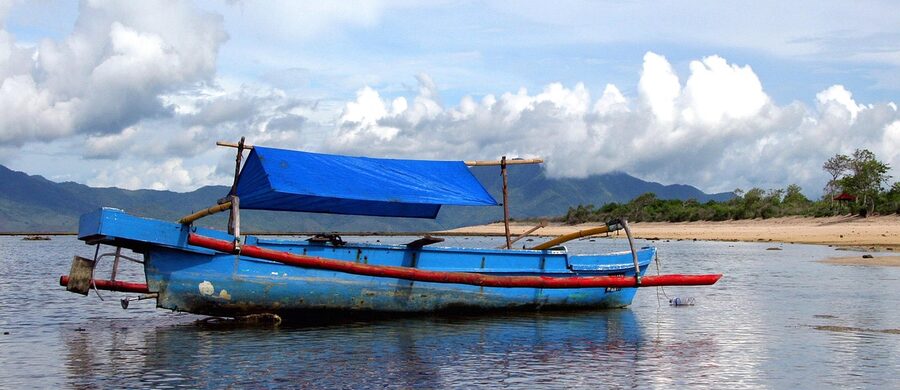
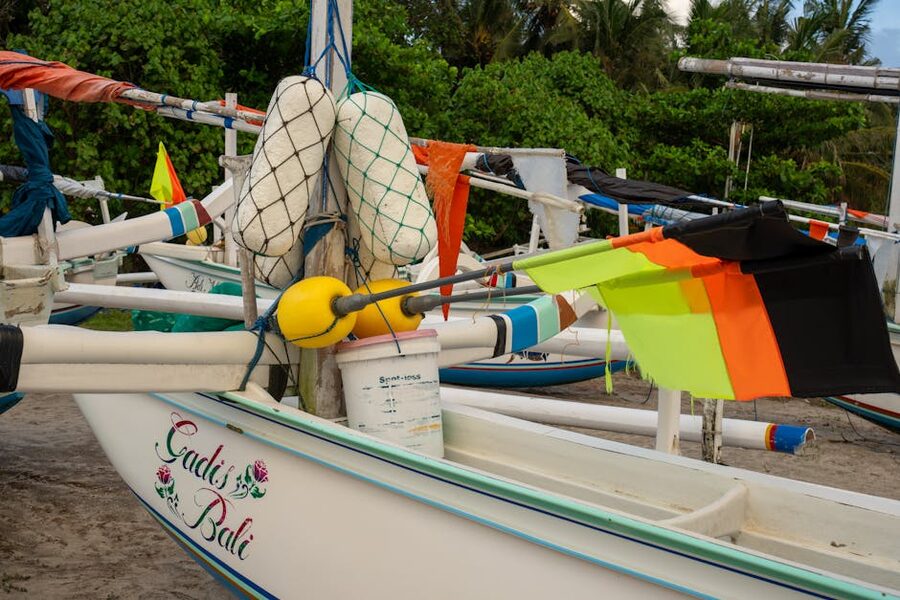
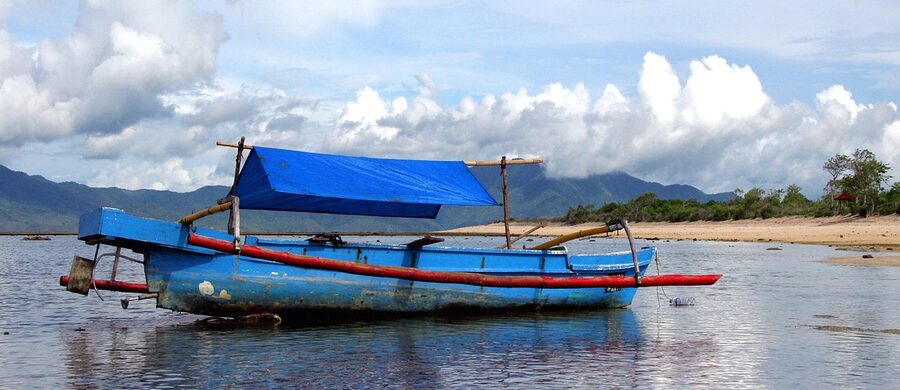
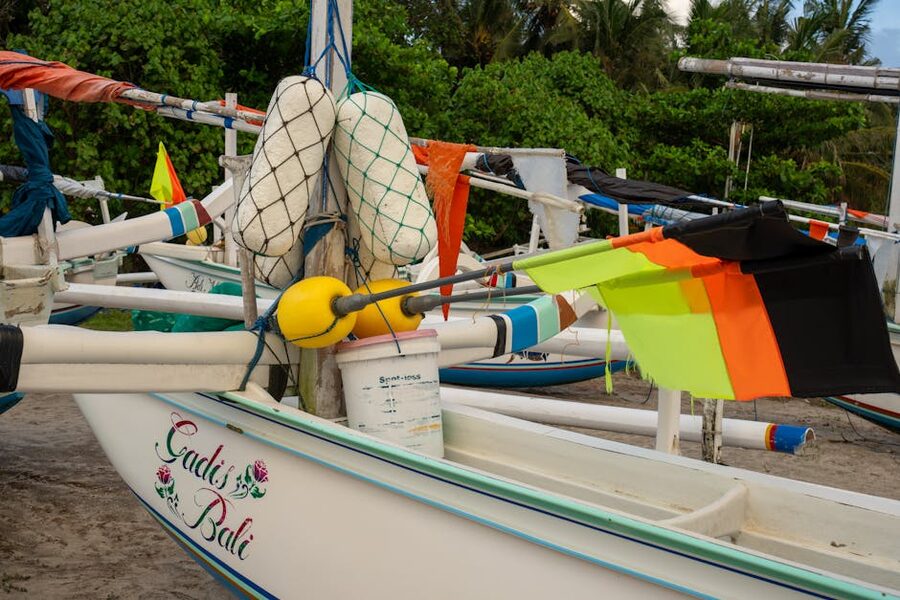
Traditional Balinese jukung at Sanur beach
Genius Cafe sits straight on Mertasari Beach, the southernmost end of Sanur. Quieter than Sindhu and the parking lot is paid (Rp 5k).

If you’ve spent time in Canggu, you’ll recognise the format. Genius Cafe on Mertasari Beach is Sanur’s answer to the laptop-and-smoothie-bowl scene, a beachfront café with strong Wi-Fi, sit-up bar tables for working, a healthy-leaning menu (poke bowls, açai bowls, smoothies, big salads, plus burgers and pasta for the unconverted), and a constant rotation of yoga, sound bath, and breathwork events through the week.

It’s the only Sanur café I’d actually open a laptop at. Mains Rp 90k to Rp 160k, smoothies Rp 65k. Open 7am to 11pm. Mertasari is the southern beach in Sanur, less crowded than Sindhu or Segara, with paid parking (Rp 5k for the day). The cafe sits inside a small shoreline strip; you’ll spot the white signage from the boardwalk.

Fisherman’s Club at Andaz Bali
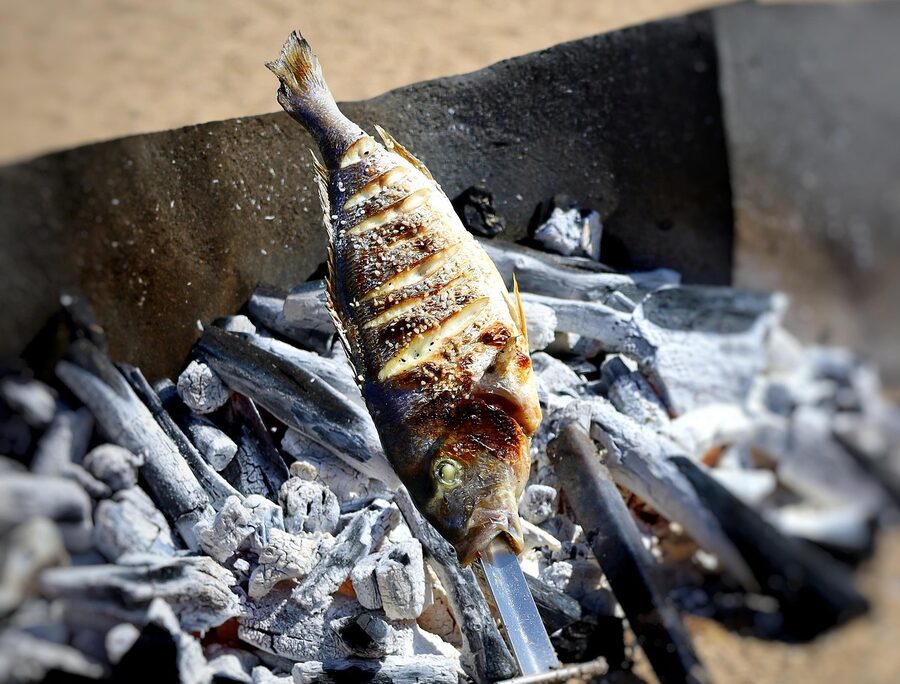
Grilled fish on a charcoal barbecue
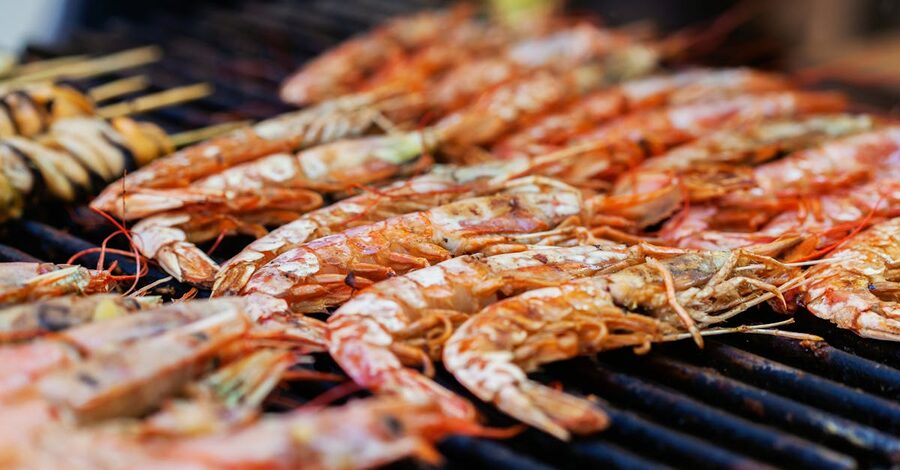
Fisherman’s Club at Andaz does the cleanest charcoal-grilled fish in Sanur. The set lunch is the value play.

If you’re staying somewhere else and want a hotel-restaurant experience without the chain feel, Fisherman’s Club at Andaz Bali is the pick. It’s gated, beachfront, set inside the lush Andaz garden, and does a clean Italian-leaning seafood menu with a charcoal grill out front. Wooden boat-shaped private dining cabanas if you want to splurge; long communal teak tables otherwise. The grilled snapper, the seafood platter, and the negronis are the right call.

It’s pricier than the boardwalk spots, mains Rp 200k to Rp 400k, the seafood platter is around Rp 850k for two, but the set lunch (around Rp 350k for three courses including a glass of wine) is a value-for-money play. Open 11:30am to 11pm; happy hour 3 to 5pm. Reservation recommended for sunset, walk-in fine for lunch. The gated area also means no boardwalk dogs, which makes a difference for some travellers.

For the broader story on luxury hotel restaurants in Bali, see the rundown at Bali luxury hotels, the Oberoi’s restaurant in Seminyak is the closest equivalent at a higher price point.

Casual but worth it

Shotgun Social, craft beer, NYC pizza, family-friendly
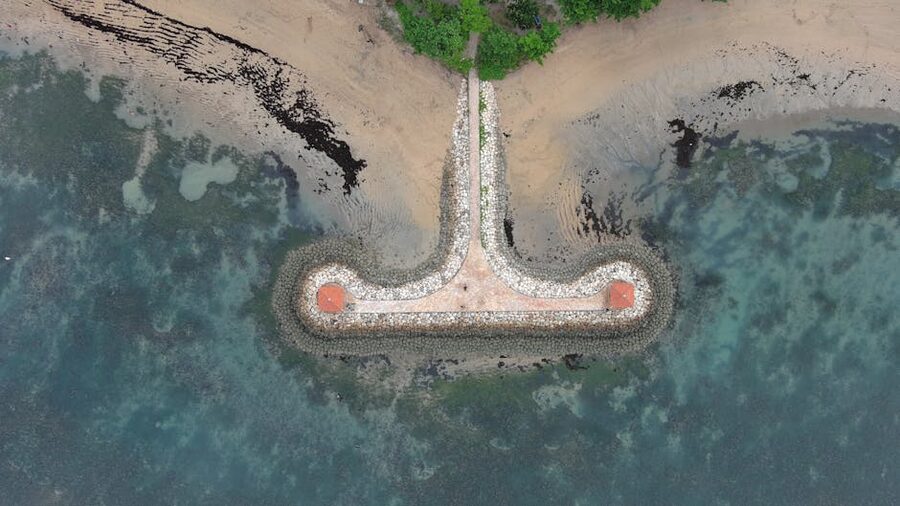
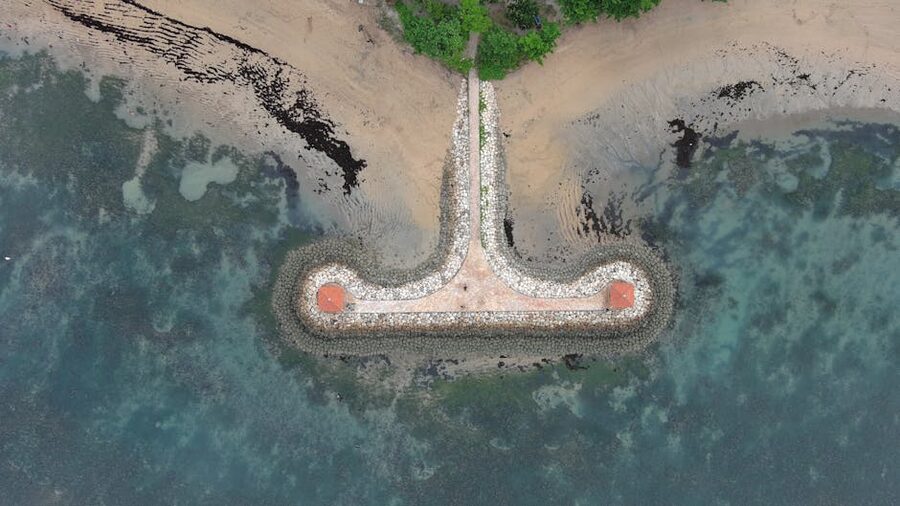
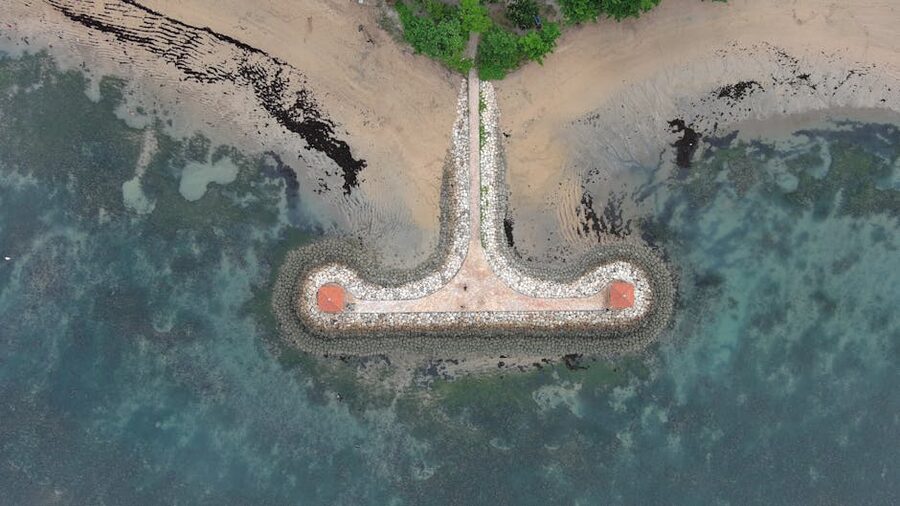
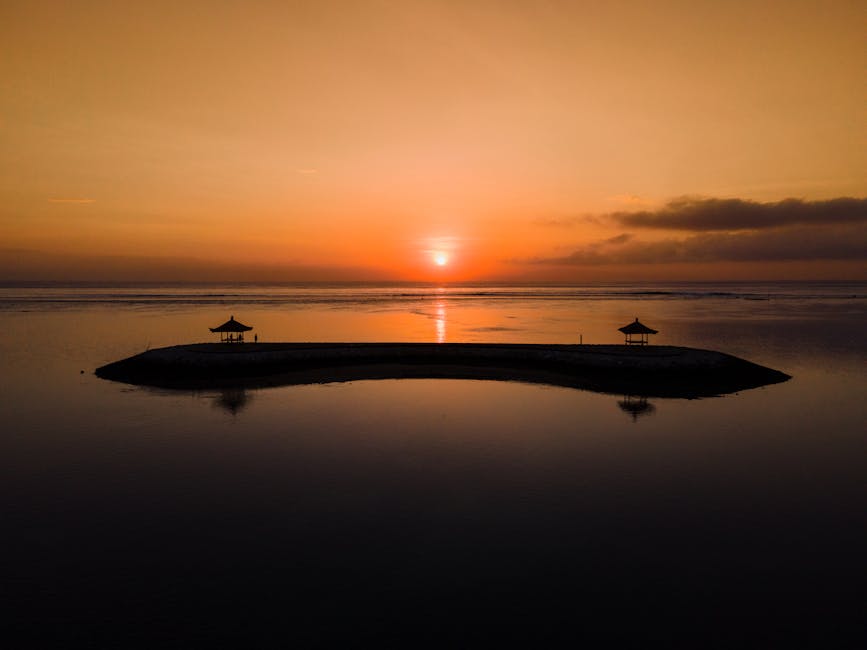
Aerial view of Sanur stone pier, Bali
Shotgun Social isn’t on the beach; it’s a few blocks inland with an open-air beer garden. The play area keeps kids happy until adults are done.

Shotgun Social is Sanur’s craft-beer taproom and one of the few places in Bali doing local craft beer at scale. The beer list rotates through Stark, Kura Kura, Bali Brewing and a few imports, pints around Rp 70k to Rp 95k. The food is loose American: NYC-style pizza by the slice or whole pie, mac and cheese croquettes, fried chicken sandwiches, tacos. Pizza is the order. The pumpkin-and-sausage slice is the sleeper hit.

It’s a family-friendly venue with a kids’ play area, which is why you see actual local families eating here on Sundays. Live music two or three nights a week, weekly traditional Balinese dance for the kids on Tuesdays, and a quiz night that’s better attended than you’d guess. Open afternoons through late evening; it gets busy on event nights, so check their schedule.

Curry Traders, bold spice and gin cocktails
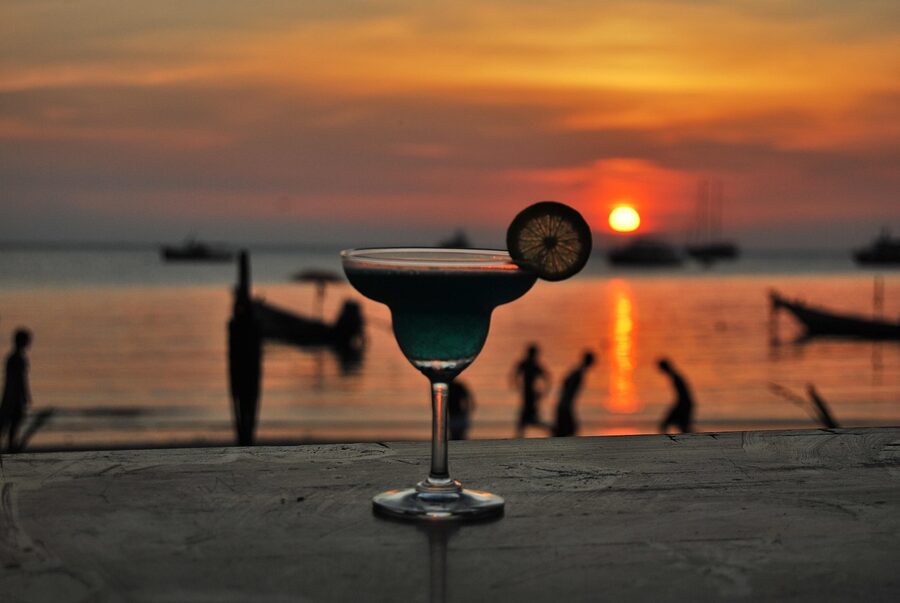
Tropical cocktail at sunset on a beach
Curry Traders does British-Colonial-themed gin cocktails. The water bubble shots are a gimmick that works.

The Sanur outpost of Curry Traders opened in 2023 after the original built a name in Nusa Lembongan. It’s a stylish, dim, slightly-theatrical Indian-Sri Lankan-Southeast Asian fusion spot with a gin-heavy cocktail list and a knack for sharing plates. The butter chicken is good, the spicy gunpowder potatoes are very good, and the lamb biryani for two is the right call when you’re properly hungry.

The fun stuff is the small plates: water bubble shots (savoury pastries with a mint-sauce shooter), crispy pastry cigars served in a cigar box, and a paneer dish that arrives smoking. Mains Rp 140k to Rp 280k, cocktails Rp 130k to Rp 170k. Book ahead on weekends.

Jepun Sanur, pan-Asian for groups
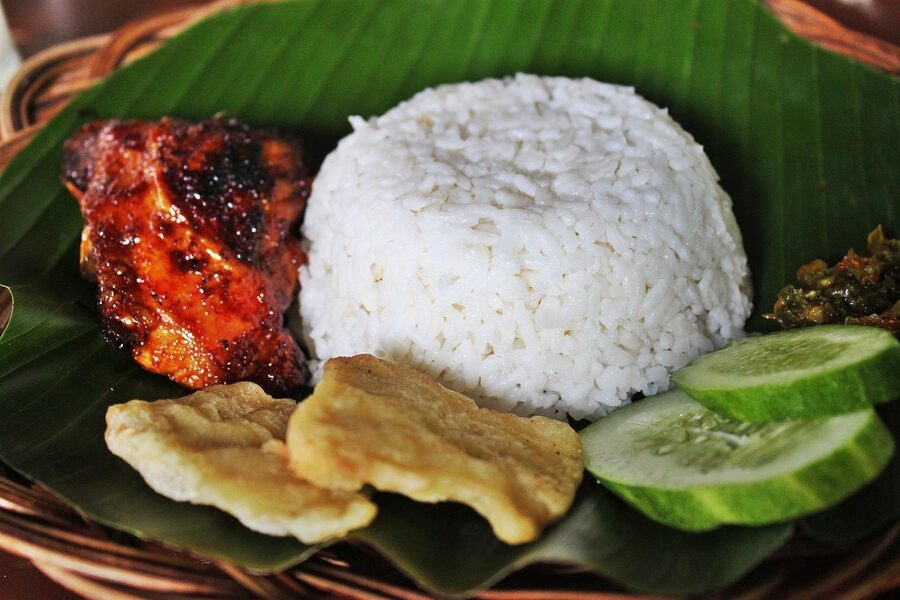
Grilled chicken with rice and sambal, Indonesian style
Jepun’s beef rendang is the order. The Joglo building means there’s almost always live music in the evening.

If you’re with a group of mixed eaters, Jepun is the easy answer. It’s a converted Joglo (Javanese teak pavilion) with a wide pan-Asian menu, Indonesian classics like nasi goreng, soto ayam (chicken soup) and beef rendang, plus Pad Thai, Indian curries, dim sum, burgers, pastas, and chicken parma for the cousin who only eats chicken parma. The Indonesian dishes are the strength; the pulled pork pancakes are a sleeper hit.

It always has a fun atmosphere with live music or a band a few nights a week. Mains Rp 95k to Rp 180k. Walk-in usually fine; book if you’re more than four people.

The Fire Station, Sunday roast in a humid country
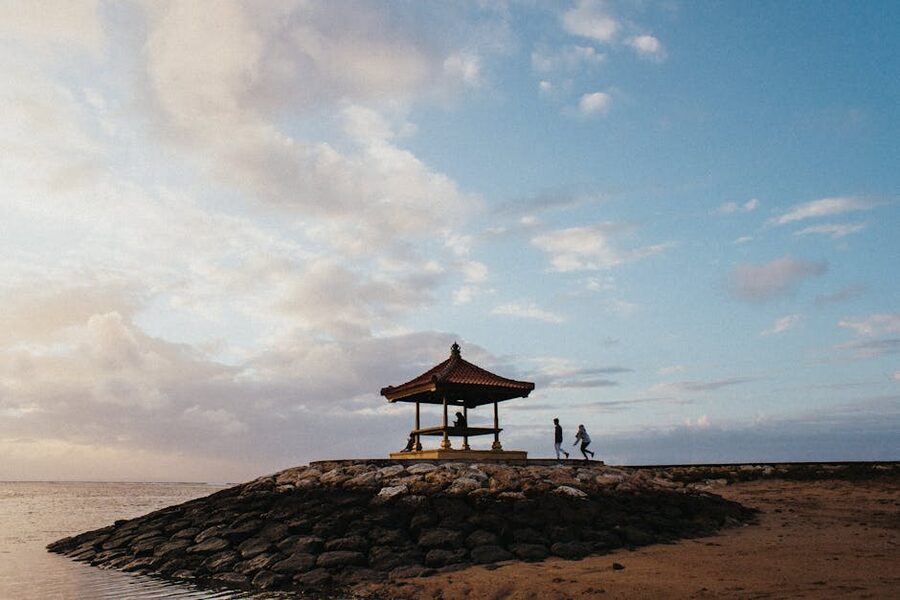
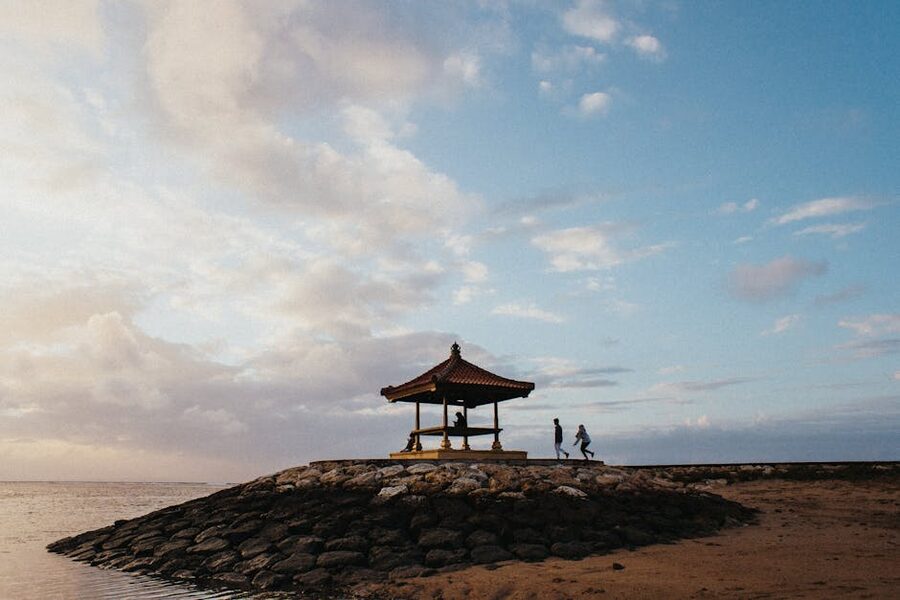
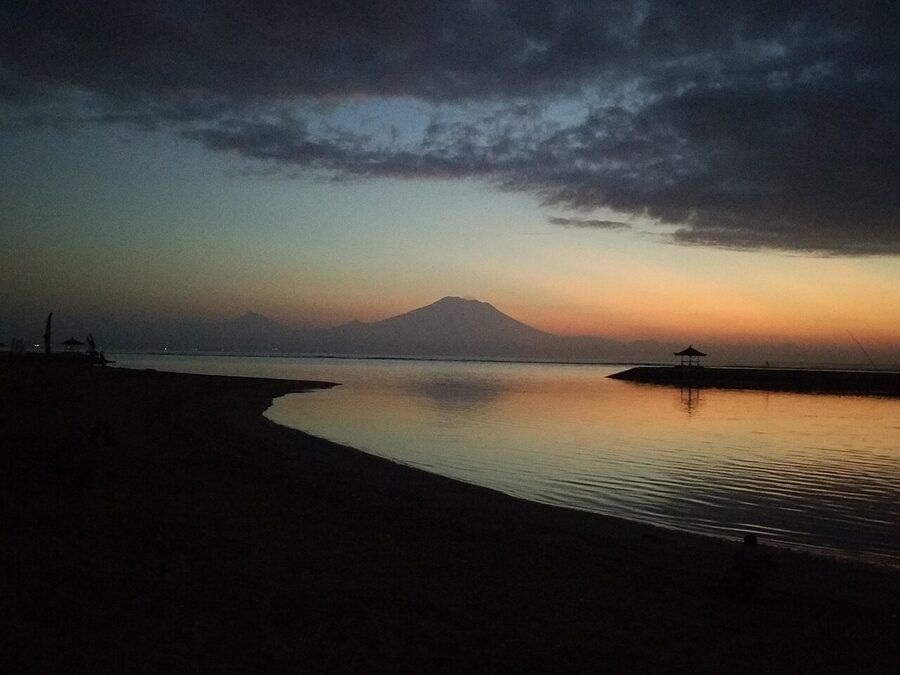
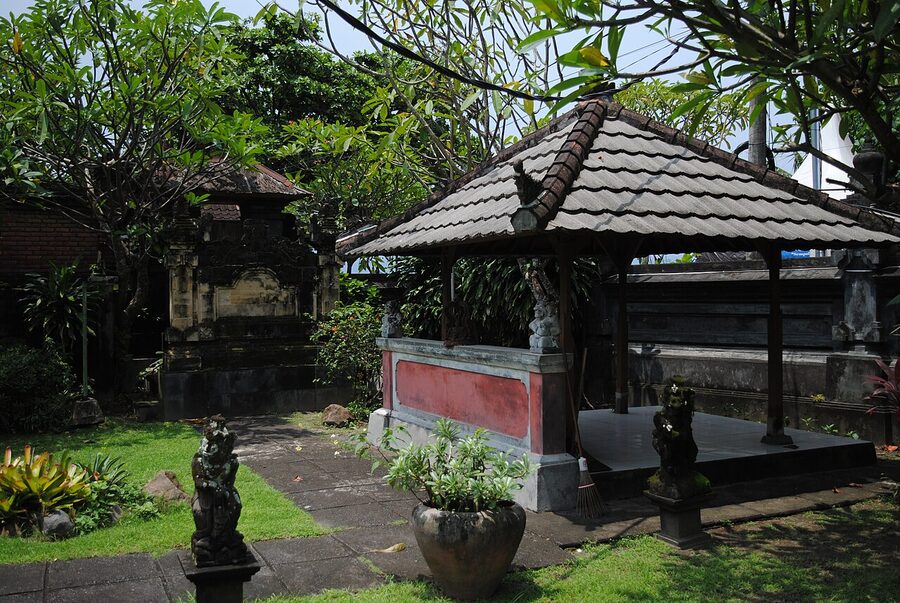
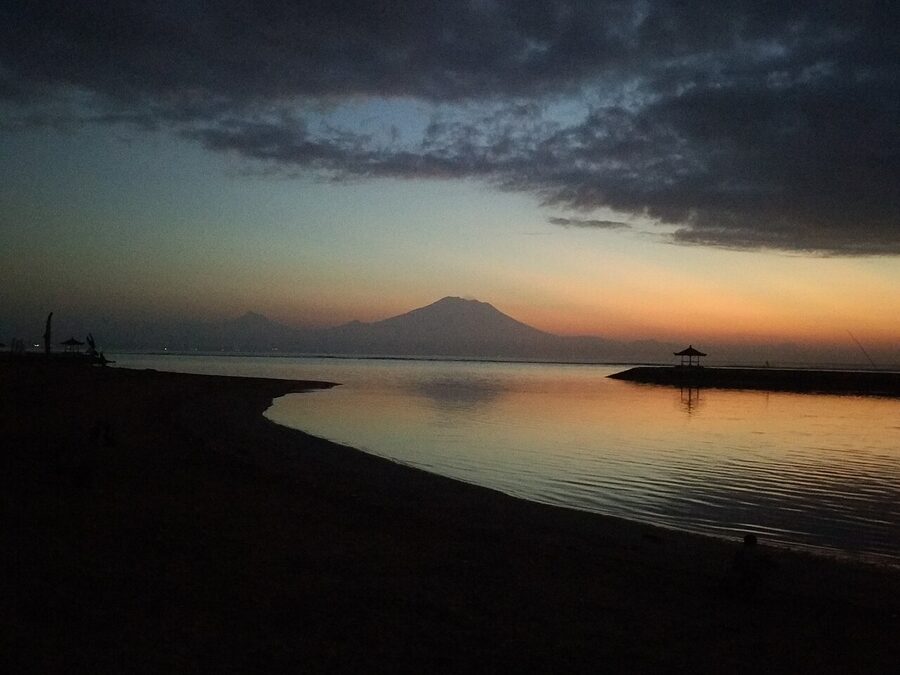
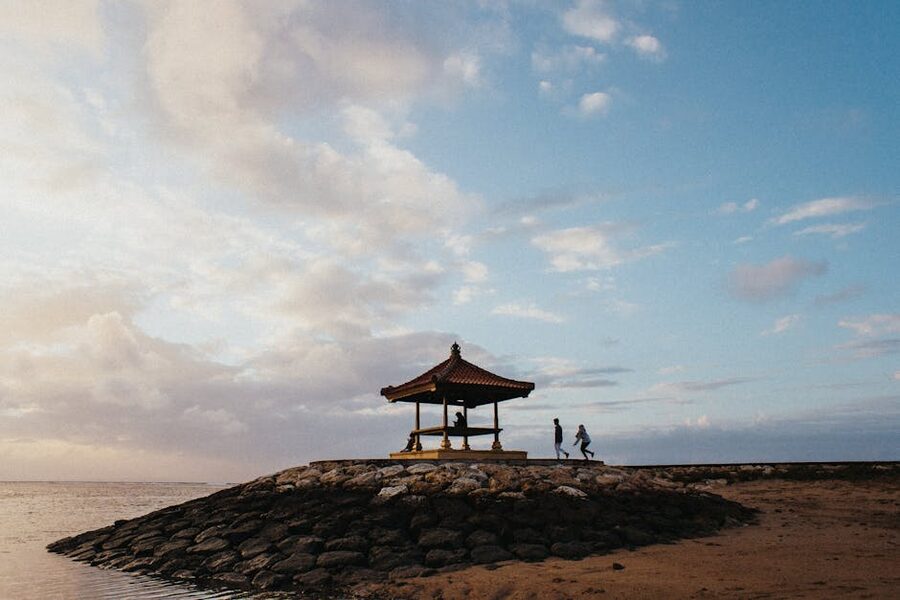
Beach gazebo at sunrise, Sanur Bali
The Fire Station’s Sunday roast lands on the table at lunchtime. Skip it on a humid day; book it on a cool one.

The Fire Station is Sanur’s only proper British gastropub and the only place I’d seriously recommend a Sunday roast in a 30-degree country. They do chicken, lamb, beef, and pork, with proper homemade Yorkshire puddings, red-wine gravy, and roast veg. The truffle cauliflower cheese is the must-add. Sunday roast lunch is around Rp 195k and you have to book.

The rest of the week the menu is pub classics, fish and chips, burgers, pies, plus a few curries and a steak. Sport on the screens for whoever needs it. It’s not the food I’d come to Bali for, but on a rainy afternoon at the end of a two-week trip, sometimes you really do want a roast and a pint.

Cheap and excellent: the warung route
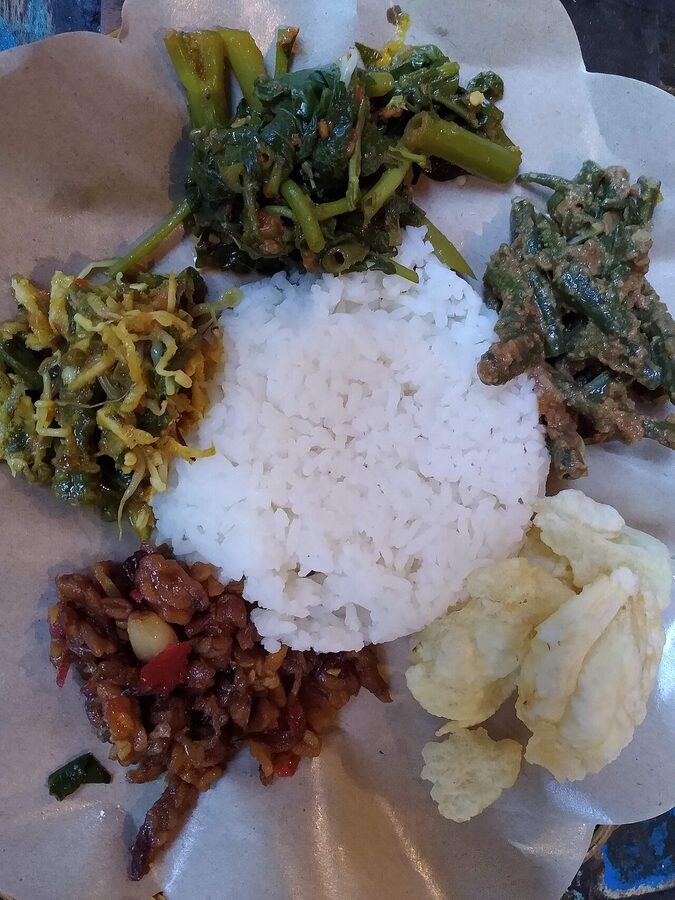
Nasi campur platter at a Bali warung with vegetables, rice, and sambal
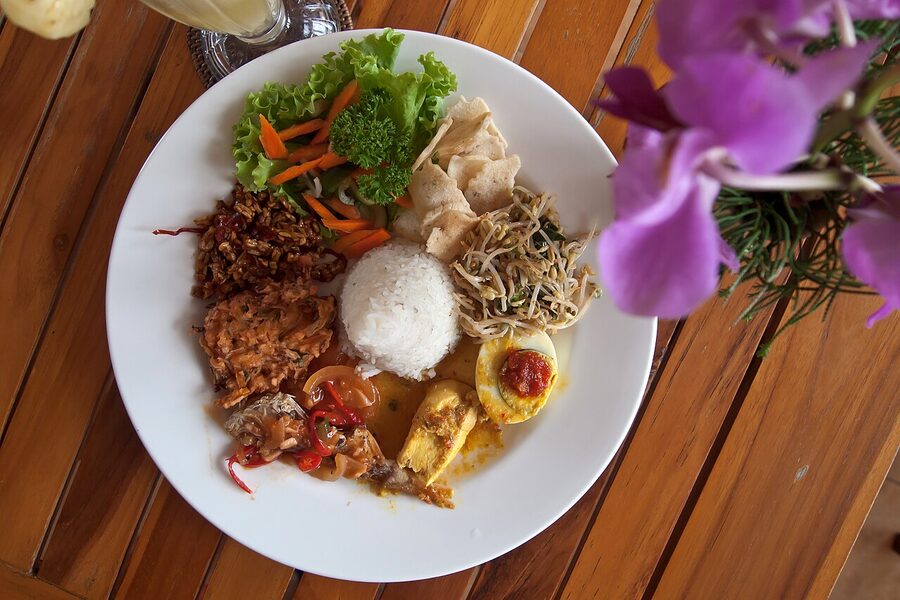
A nasi campur plate at a Sanur warung. Rp 40k for the kind of meal a beachfront restaurant charges Rp 165k for.

Restaurants are where Sanur shows off. Warungs are where it shows up. The full warung scene is its own thing, and I’ve written it up separately, see where locals eat in Sanur for the deep dive on Warung Mak Beng, Warung Wardani, the Sindhu night market, and the rest. Two quick mentions for the restaurant guide:

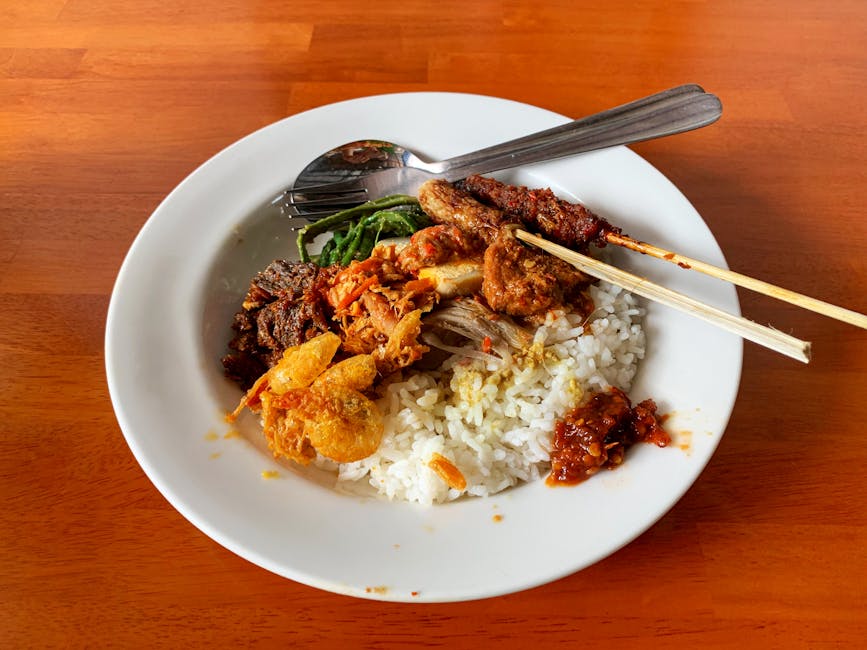
Warung Kecil on Jl. Duyung 1 is a great option for a quick Indonesian plate near the beach. Slightly more Western-leaning Indonesian, pick what you want from the counter, served with rice. Plates around Rp 35k to Rp 55k. Open 8am to 10pm.

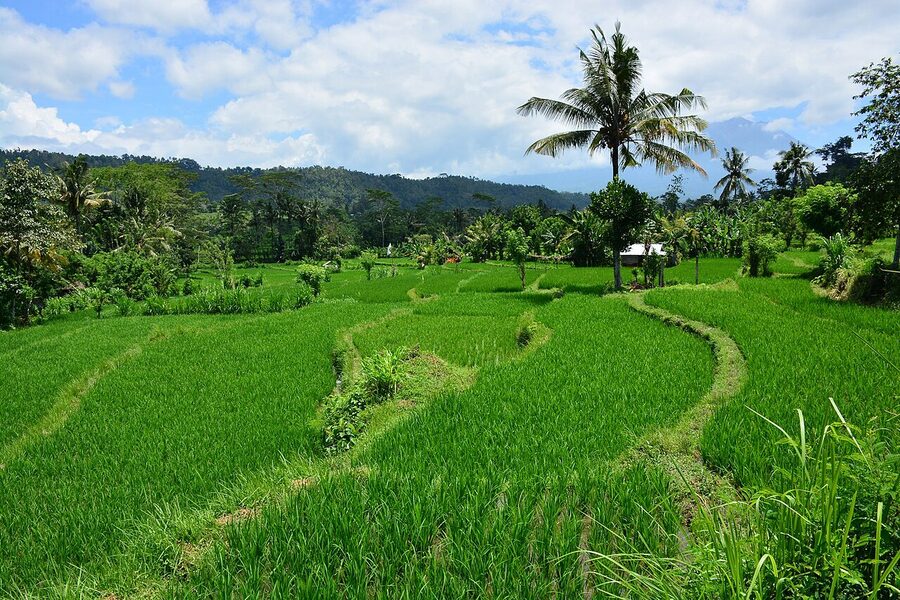
Warung Umago hidden among Sanur’s quiet rice fields (yes, Sanur still has rice fields back from the beach) is a recent discovery. Small, simple Balinese menu, chicken teriyaki rice bowl is around Rp 35k and incredibly good value. Proper barista coffee, terrace views over the rice. Worth the moped ride if you want a slow late lunch.

For a deeper dive on the dish that defines Indonesian cooking, including where to eat the best version in Bali, see the history of nasi goreng.

Breakfast and coffee

Daily Baguette
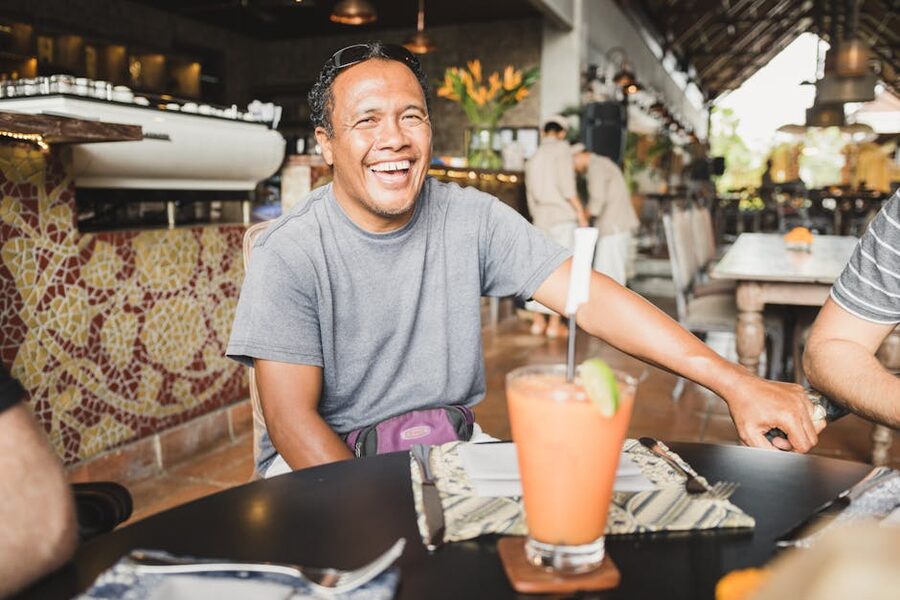
Tropical drink at a Bali cafe, Indonesia
Daily Baguette runs two locations in Sanur. The Jl. Danau Tamblingan branch is bigger and has more bread.

The number one breakfast spot in Sanur, and I’ll fight anyone who says otherwise. Daily Baguette is a French bakery with two Sanur branches (one inside ICON Bali, one on Jl. Danau Tamblingan) doing properly good croissants, pain au chocolat, baguettes, and a small all-day breakfast menu. Avo on toast plus a coffee plus a pastry costs about Rp 75k, under $5 for the kind of breakfast that’s Rp 180k at the boardwalk cafés.

The Jl. Danau Tamblingan branch is the bigger one and has the full bread shelf, which matters if you want to grab a baguette to take back to your villa. Open from 7am.

Le Croissant

Smaller, slightly pricier, and very good waffles. Worth a stop if you’re eating eggs Benedict and don’t want to wait in a Daily Baguette queue. Pastries are excellent. Smoothie bowls are decent.

Sala Bistro & Coffee

The vegan-and-lactose-friendly café with a quietly excellent farmer’s omelette. Pet-friendly, big-windowed, fills by 9am. Flat white Rp 35k; the smoked-salmon omelette is Rp 115k. Good first stop after a morning beach walk on Jl. Danau Tamblingan.

Genius Cafe (again)

Already covered above, but their breakfast bowls are also excellent and worth flagging here. The early-morning yoga class plus breakfast combo is a Sanur classic.

The Sanur gelato situation

Gelato cones at an Italian-style gelateria
Sanur is the gelato capital of south Bali. Massimo is the original; Gaya is the strongest competitor.

Because of that long Italian community, Sanur quietly has the best gelato in south Bali. The two you should care about:

Massimo Gelato on Jl. Danau Tamblingan 228, the front-of-restaurant counter at Massimo. Made daily, traditional flavours done correctly, and the queue moves fast even when it looks long. Stracciatella, pistachio, and the daily seasonal flavour are the right picks. Rp 30k a scoop, Rp 30k for four small scoops in a cup.

Gaya Gelato Trattoria on Jl. Danau Tamblingan 192. Smaller branch of the Gaya chain. The hazelnut and the chocolate are the giveaway flavours; both are excellent. Open until 11:30pm if you want a late dessert walk along the boardwalk.

One avoidable mistake. The hotel-pool ice cream stalls inside the bigger Sanur resorts charge Rp 80k for what is essentially industrial gelato. Walk five minutes to Massimo or Gaya instead.

What’s worth skipping

I’ll keep this short. The big-name Italian and steakhouse chains inside the new ICON Bali mall are mostly fine, but they’re priced like Seminyak and they’re not what Sanur is for. The hotel beach clubs have great views but the food is two notches below what the same money buys you at Three Monkeys or Massimo.

And a flag for closures. Char Ming was a long-running Asian fine-dining favourite on Jl. Danau Tamblingan and gets recommended in older guides. It closed several years ago, multiple Sanur forum threads from January 2026 confirm this. Sand Beach Bar & Restaurant at the ICON Bali beachfront also announced its closure on Facebook in 2025. Bianco Restaurant, the original namesake of this URL, doesn’t appear in any current Sanur dining guide and has no live presence, assume closed unless you can verify otherwise. If you spot any of these names in older blog rankings, treat the rest of that article as outdated too.

How much should dinner cost in Sanur?
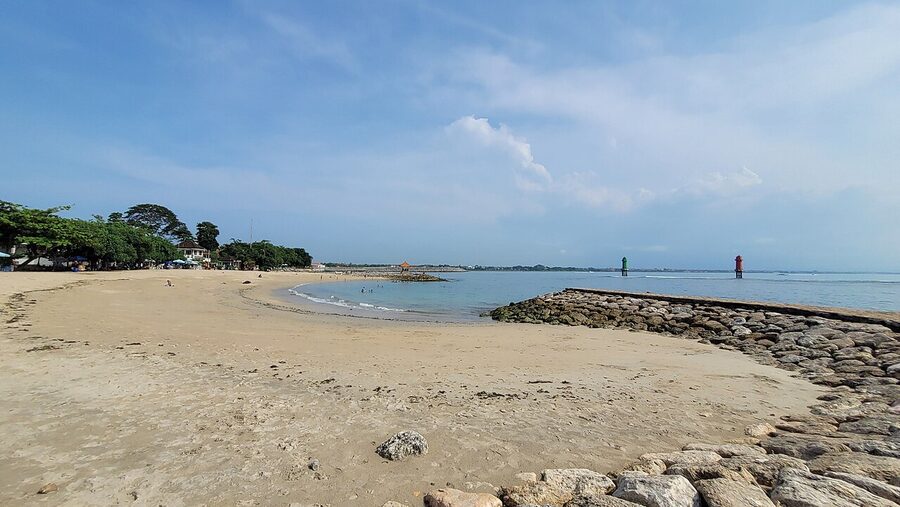
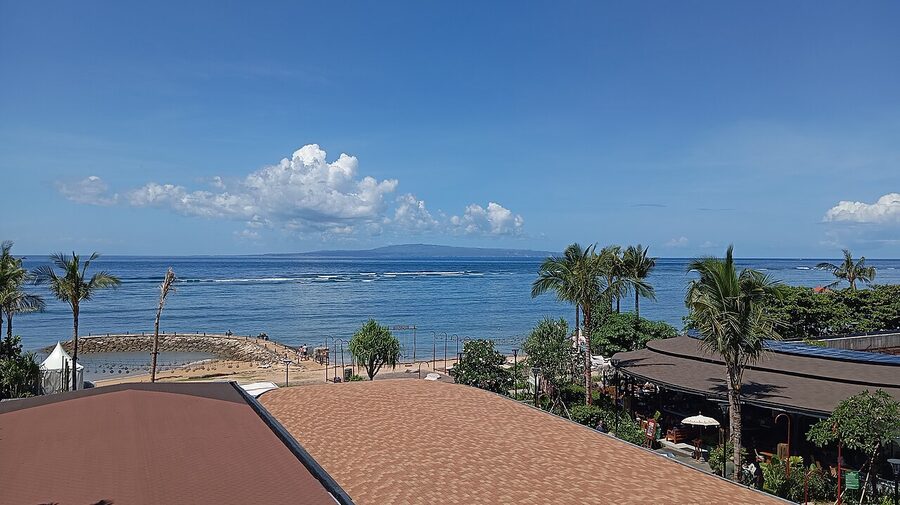
Sanur Beach with traditional Balinese gazebo
Sanur stays cheaper than Seminyak across the board. The Italian community has kept import prices reasonable, especially for wine.

Quick price-band reference for planning a week of dinners:

  • Warung dinner: Rp 25,000 to Rp 65,000 per person, drinks extra (Bintang Rp 25k). Mak Beng’s set is Rp 50k. You’ll eat well.
  • Mid-range beachfront restaurant: Rp 150,000 to Rp 350,000 per person with one drink. Soul on the Beach, Moreno, L’Osteria, Massimo all sit here. The Sanur sweet spot.
  • Top-tier restaurant: Rp 400,000 to Rp 700,000 per person with wine. Three Monkeys, Tandjung Sari, Costa, Fisherman’s Club. Bookable special-occasion territory.
  • Cocktails: Rp 110,000 to Rp 170,000 at the mid-tier; Rp 90,000 at happy hour; Rp 35,000 to Rp 50,000 at warung-adjacent beach bars.
  • Coffee: Rp 30,000 to Rp 45,000 at any decent café. Rp 15,000 if you’re in a warung.

Card payments are accepted at every restaurant in this guide. Most warungs are cash only or QR via QRIS. ATMs are easy to find on Jl. Danau Tamblingan; pick the BCA, Mandiri or BNI ones over the standalone money-changer machines. (For more on managing money in Bali, the broader site has a food and drink section and there’s a separate guide to why Sanur works on the second Bali trip.)

Sanur restaurant booking, what actually matters
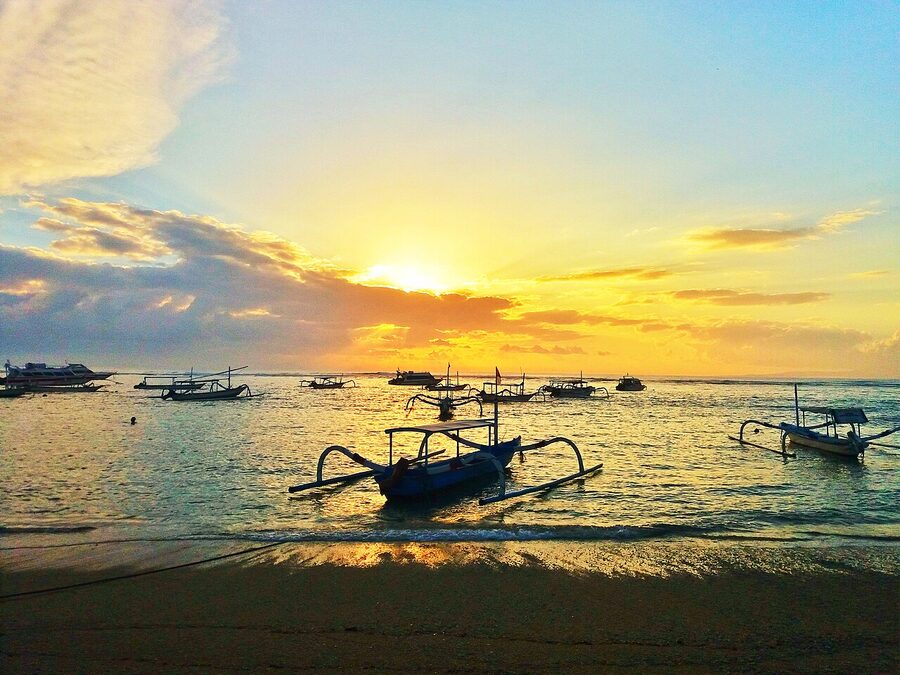
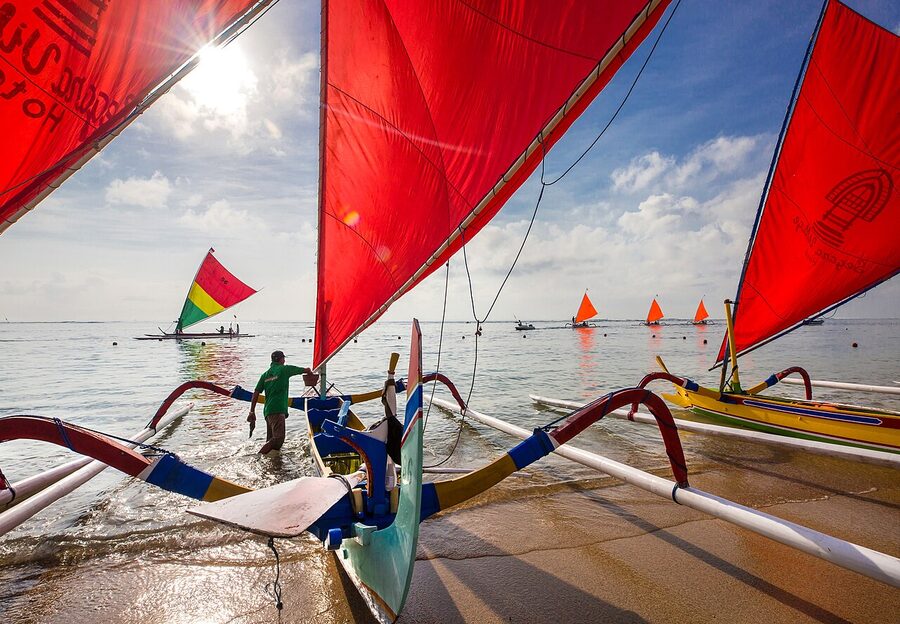
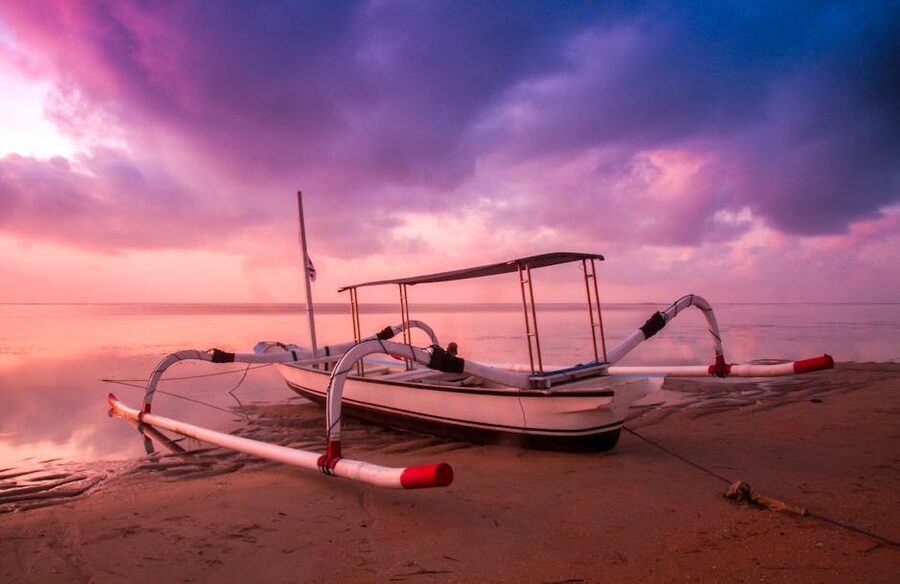
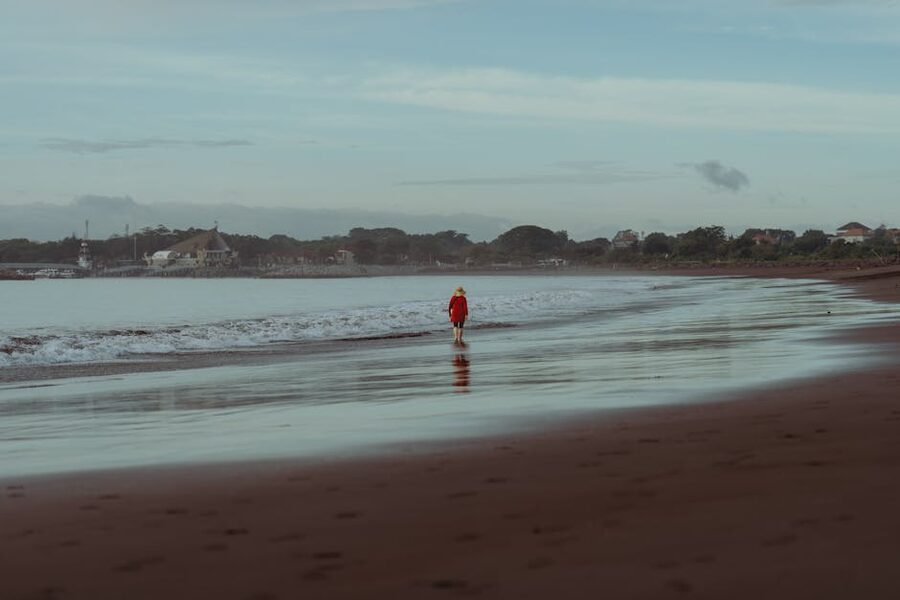
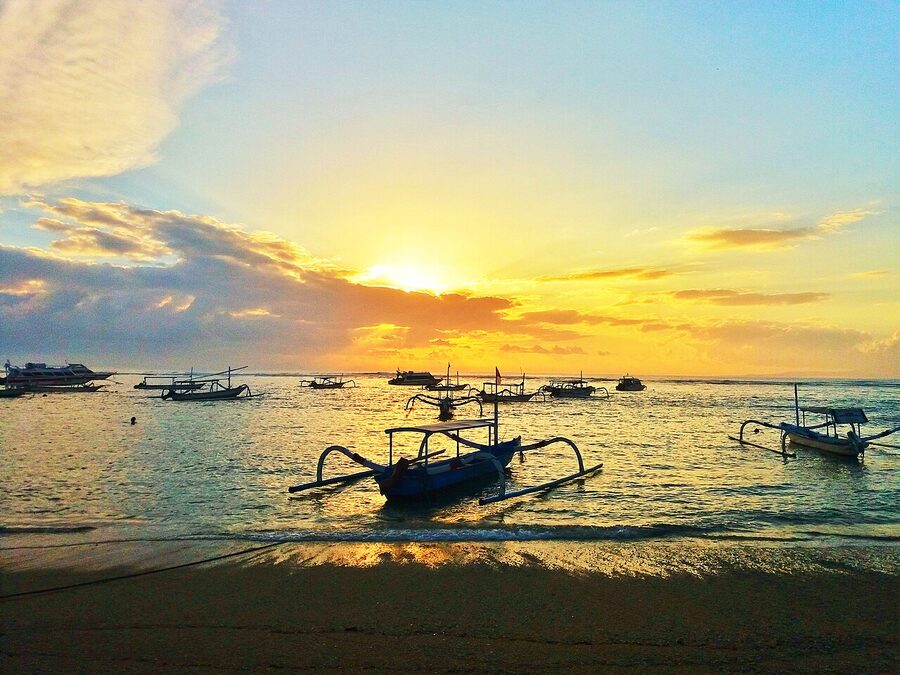
Morning at Sanur Beach with traditional jukungs at sunrise, Bali
Sanur’s beach faces east, so sunrise is the show. Sunset dining still works, the light over the boardwalk is gorgeous around 6pm. Photo: Danangtrihartanto / CC BY-SA 4.0 (via Wikimedia Commons)

A few things I’ve learned the hard way about getting tables in Sanur:

Book Three Monkeys, Massimo and Tandjung Sari at least two days ahead in season. Their websites have direct booking forms. Three Monkeys also takes WhatsApp bookings if you’re already in country, they reply fast. Costa takes online bookings via their site. For everywhere else, walk-in usually works at lunch and around 8pm; the gap is the 5:30pm to 7pm sunset window.

For sunset, request a beachfront table specifically. Most restaurants have indoor seating that nobody wants in the evening. If the host says “all sunset tables are taken” but offers an inside table, it’s worth asking what time the next beachfront slot opens up, sometimes there’s a 6pm and an 8pm seating and you’ve just missed the 6pm.

Sanur is not Seminyak. Most restaurants close their kitchens around 10pm or 10:30pm. If you want late food, you’re looking at Massimo (10:30pm), Three Monkeys (10:30pm), Genius Cafe (11pm), or one of the warungs that runs late around the night market.

Tip 5 to 10 percent if there’s no service charge on the bill. Most mid-tier and top-tier places add a 10 percent service charge plus 11 percent tax, the bill makes this clear. At warungs and at the cheaper cafés, leave round change or a small note.

For the broader area context, what to do during the day before dinner, where to walk, where to swim, see Sanur, Bali: why the slow coast wins on the second trip. The eating is the third or fourth thing I love about Sanur, and it’s the single thing that’s improved the most in the last five years.

The short version
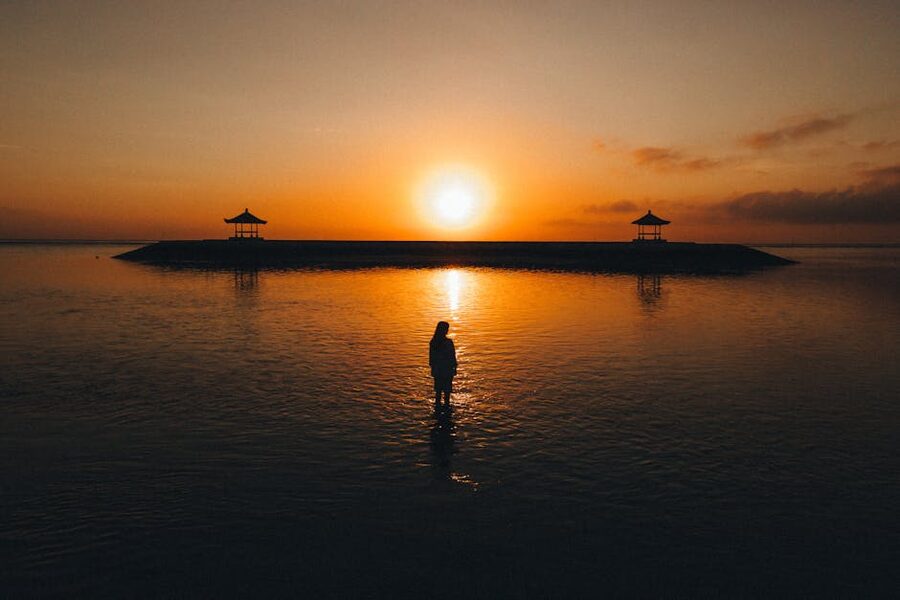
Silhouette at Sanur sunrise with traditional pavilions, Bali
Sunrise from the boardwalk near Sindhu. The breakfast spots open at 7am; the best ones (Daily Baguette, Sala) fill by 9.

One dinner: Three Monkeys. Two dinners: add Massimo. Three: add Tandjung Sari for the rijsttafel. Four: a Soul on the Beach sunset and a Curry Traders late dinner. Five and beyond: walk Jl. Danau Tamblingan in the early evening, stop at any place where the queue is people who look like they live in Sanur, and you’ll be fine. The street is honest. It tells you what’s good.

Skip the things people will tell you to do that aren’t worth it. Don’t book the highest-priced hotel restaurant for dinner unless you’re staying there, you’re paying for the resort, not the food. Don’t go to a beachfront restaurant in heavy rain if there’s no proper shelter; the boardwalk floods. And if Bianco Restaurant is what brought you here, save the money you’d have spent and split it between dinner at Three Monkeys and gelato at Massimo. You’ll come out ahead.
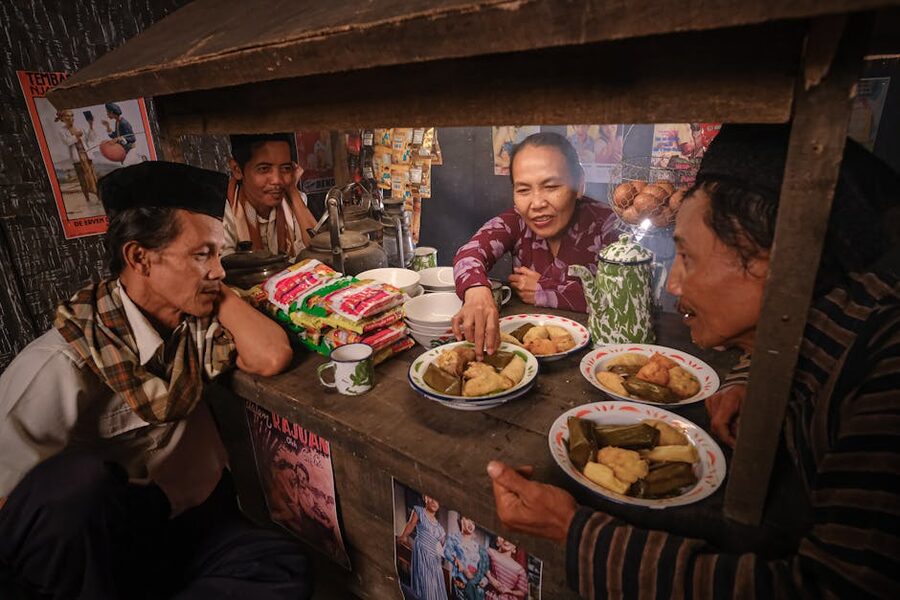
Where Locals Eat in Sanur

Skip the beachfront restaurants. The best food in Sanur is being served from gas burners on plastic tables in lanes you’ll never find on Instagram, and you can eat better there for Rp 35,000 (about $2.20) than you will at most of the boardwalk places for ten times that.

I learned this the slow way. First trip, I ate every dinner on the sand because that’s what the hotel concierge pointed at. Six months later I was renting a room two blocks back from the beach off Jl. Danau Tamblingan and the Balinese family next door pretty much fed me for two weeks. Their daughter ran a tiny warung (small family-owned eatery) at the front of the compound. Nasi campur, fish soup if her uncle landed something that morning, kopi tubruk strong enough to bend a spoon. I have not been able to take Sanur’s beach restaurants seriously since.

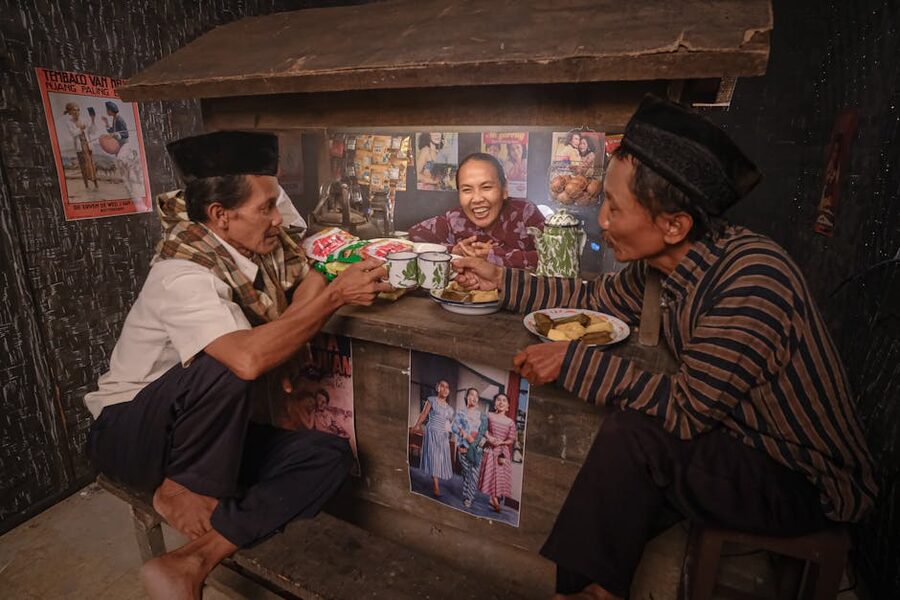
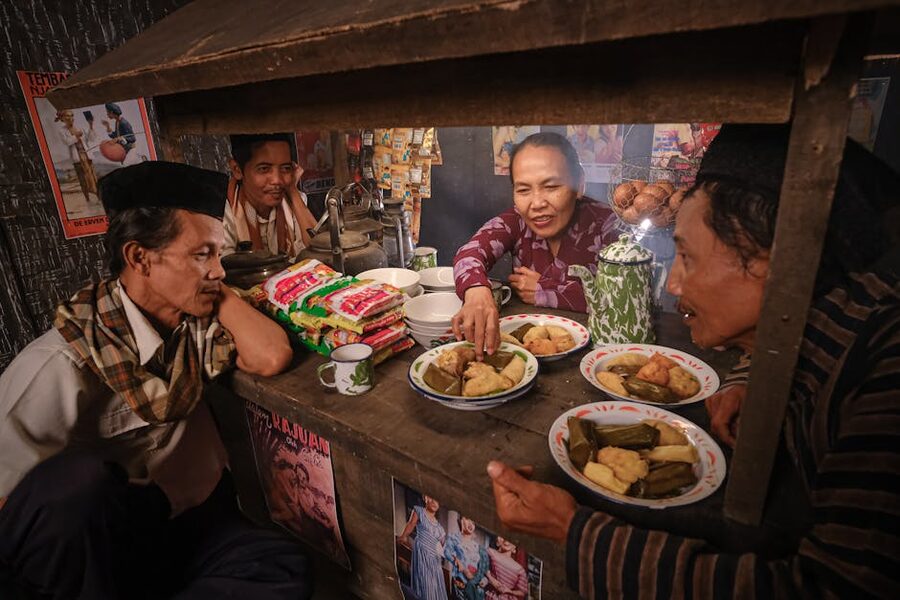
Local diners gathering around a wooden warung counter in Sanur Bali
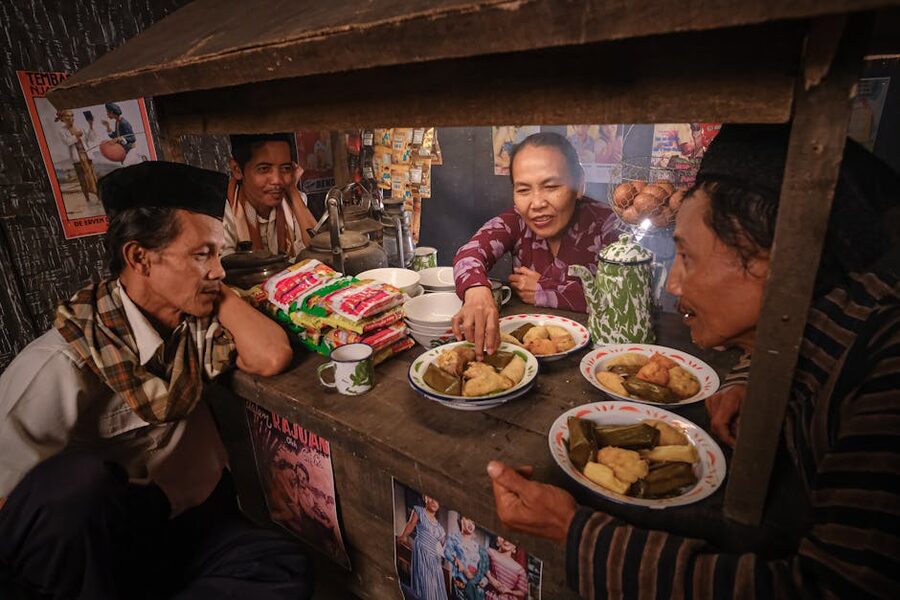
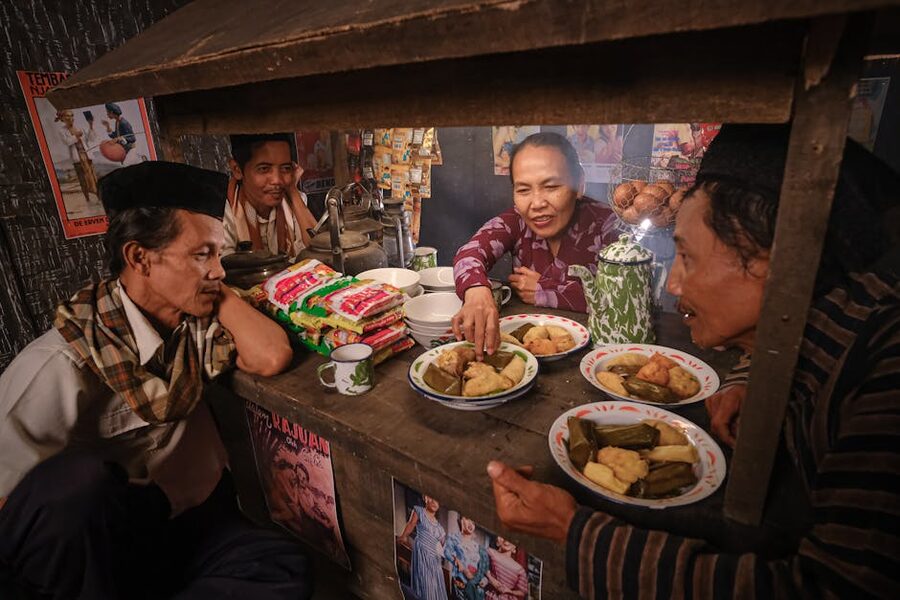
This is what a real warung looks like inside. Plastic stool, wooden counter, a few packets of snacks, and someone’s mum cooking out the back.

This guide is the catalogue I wish someone had handed me on day one. Where to actually eat in Sanur for under Rp 65k. The legendary places that earn the queue. The Indonesian non-Balinese cuisines worth seeking out. And the small skill of reading a warung from the outside so you can pick a good one anywhere on the island, not just here.

What Counts as a Warung (and What Doesn’t)

The word gets used loosely in Sanur because it’s good marketing. A “warung” name signals casual, local, cheap. So you’ll see Warung This and Warung That on places with air conditioning, English menus in five languages, and a Rp 180k pizza on the back page. Those are restaurants with a costume on. Useful, sometimes excellent, but not what we’re talking about here.

A real warung is small, family-run, mostly serving the people who live in the neighbourhood. The food is cooked once a day, displayed at the front, and reheated to order. There’s no menu in English because there’s no menu at all. You point at what looks good. The price for a generous plate sits between Rp 25,000 and Rp 65,000 depending on what you load it with. You pay in cash at the end and the change (the kembali) is yours.

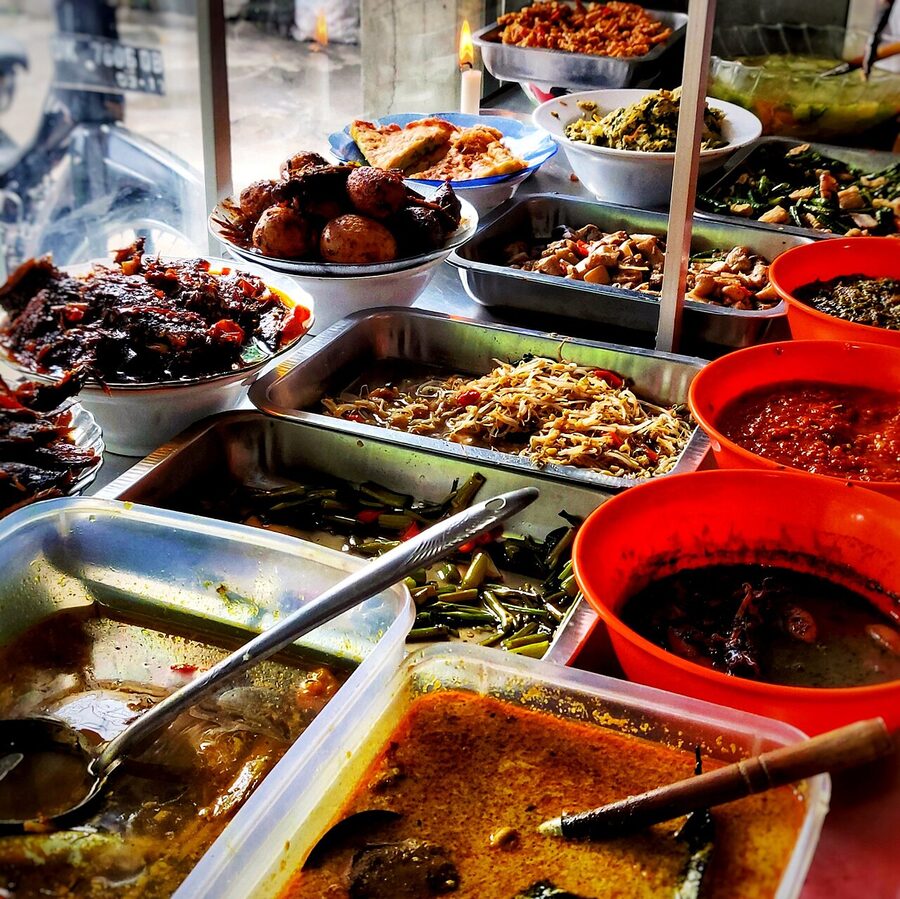
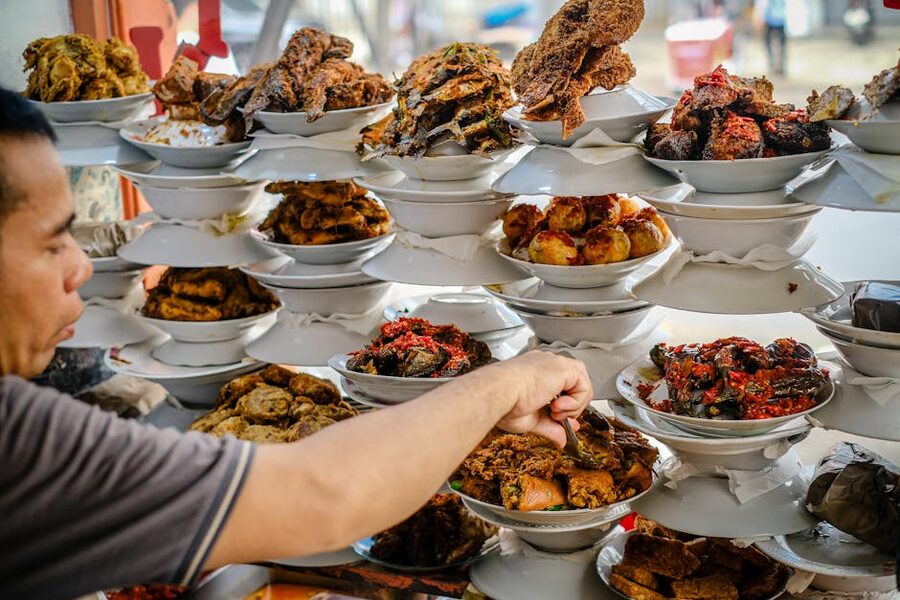
Stacked white bowls of pre-cooked Indonesian dishes at a warung display counter
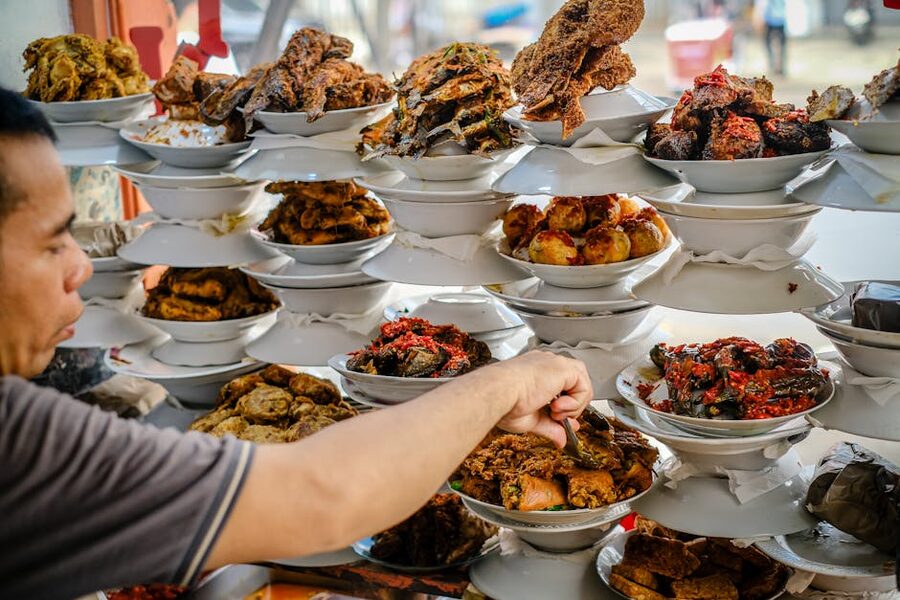
The cooked-once-a-day pile. If it’s mostly empty by 1 p.m. you’ve found a good one. If it’s still full at 3 p.m., walk on.

Most warungs run on trust. You eat, then you settle up. In a busy one the ibu (the mother running the place) will somehow remember exactly what you had even if you sat there for an hour. Tip: don’t try to game it. Pay what she asks. The total will be low.

Reading a Warung From the Outside

Before you walk in anywhere, read the place. The skill takes about three days to develop and saves you from a hundred bad meals across an island like Bali. There’s more on the wider quality-and-safety question in our Bali health guide, but the warung-specific signals are simple.

The queue is the menu. If there are five locals waiting at noon, the food is fresh and worth the wait. If you’re the only person in there at 1 p.m. on a weekday, something is off. Sanur runs on a lunch rhythm. Local Balinese eat hot food between 11 a.m. and 1.30 p.m., not at 7 p.m. like a Western restaurant, so a quiet warung at 12.45 p.m. is a quiet warung for a reason.

Look at who’s eating. Indonesian construction workers, security guys in uniform, scooter drivers in helmets, women on lunch break from the salon next door. That’s the seal. If everyone inside is on a phone in English, you’re in a Bali-themed cafe.

Locals chatting and drinking at a small Indonesian warung kopi
Even when the food’s gone, locals stay for the coffee and gossip. A warung is half kitchen, half village hall.

Look for the wok. If there’s an ibu in the back actively cooking, flame on, smell of garlic and shallot frying in coconut oil, the food is being made fresh. If everything is wrapped in cellophane and sitting cold in a glass case, it’s been there since breakfast. The cellophane warungs are fine for a wrapped portion to take to the beach. They are not where you sit down.

Check the sambal. Every warung makes its own. Ask for it on the side, taste a tiny dab on rice. If it’s flat, the kitchen is tired. If it punches you in the face with chilli, garlic, and lime, the rest of the food will be good too. The sambal is the kitchen’s signature in a way that nothing else is.

The Sanur Warung You Have to Eat At

If you only do one of these in Sanur, do this one.

Warung Mak Beng

Open since 1941, Mak Beng is the warung version of an institution. One dish. They serve a single set: ikan goreng (deep-fried fish, usually snapper or trevally), a bowl of sup ikan (clear fish-head soup with green papaya and lemongrass), white rice, and a small dish of incendiary sambal. That’s it. There is no menu choice. You sit down, you get the set, you eat. Indonesia’s official tourism board lists it among the country’s iconic warungs and the queue at lunch makes the case. The official site still bills it as kuliner legendaris Sanur sejak 1941 (legendary Sanur cuisine since 1941) and runs the same one-dish formula it always has.

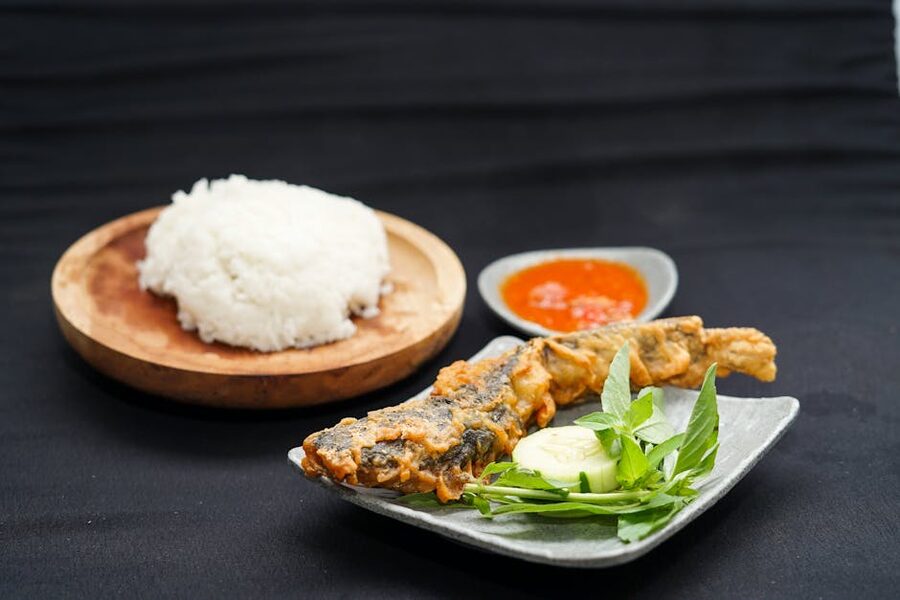
Crispy whole fried fish served with rice and red sambal on a white plate
Roughly the Mak Beng plate. Crispy fried fish, rice, sambal that fights back. Eat the fish with your fingers, the way the locals do.

Address: Jl. Hang Tuah No.45, Sanur Kaja, near the boat ramp at the north end of Sanur beach. They open around 10 a.m. and close when they sell out, which on a busy day is around 2 p.m. The set runs roughly Rp 50,000 a person. Cash only. No reservation. Get there by 11.30 a.m. on a weekday or 11 a.m. on a Sunday or you will be eating elsewhere.

Three things to know. First: the fish is whole, head on. The cheek is the best bite. Second: drink the soup. People skip it because they came for the fish, but the broth is the point: fishbones, lemongrass, lime, papaya, and a small handful of fried shallots on top. Third: brown rice is now an option for an extra few thousand rupiah. Get it. The white rice is fine but the brown rice with that broth is a different meal.

Warung Blanjong and the Pura Blanjong Connection

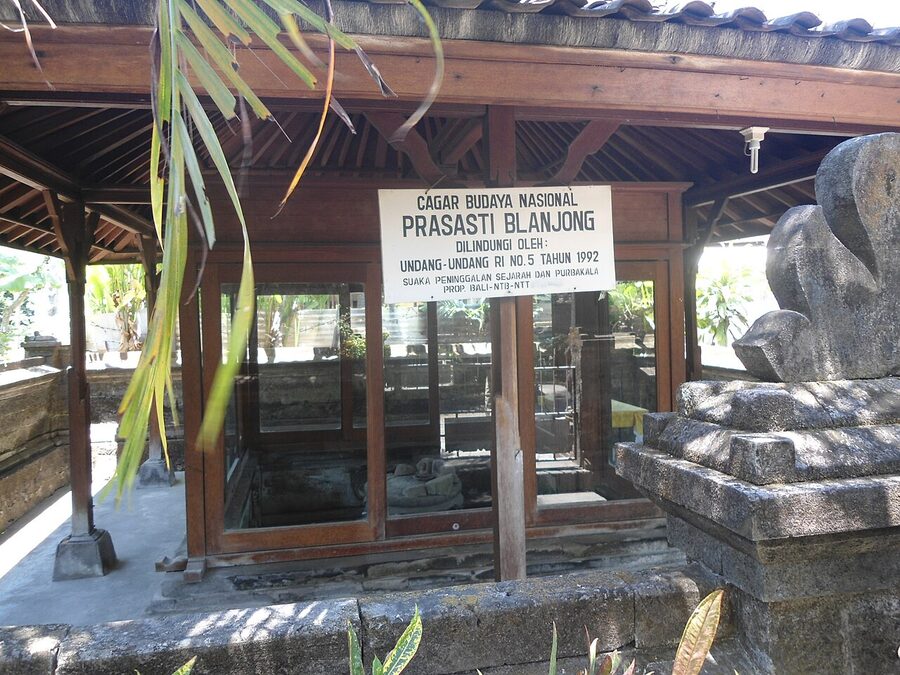
Down at the south end of Sanur, near the small temple compound that holds the Blanjong pillar, there’s a warung that took its name from the temple and built its reputation on the kind of generous Balinese plate that explains why people come back to Sanur for years. Warung Blanjong sits at Jl. Danau Poso No.78 in Sanur Kauh, the slightly quieter southern half of the area, a short walk from where the locals queue at the morning market.

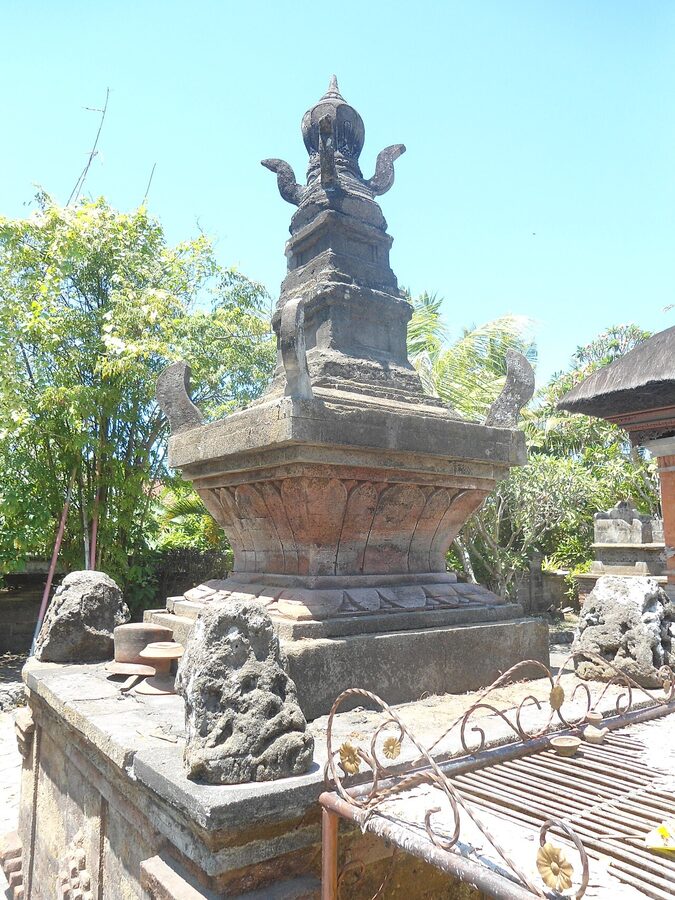
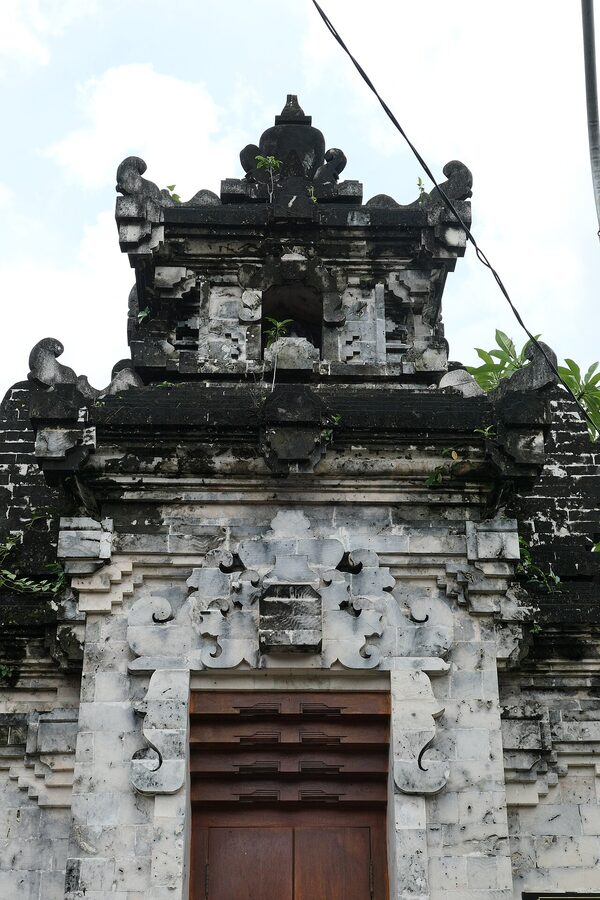
The shrine at Pura Blanjong temple compound in Sanur Kauh
The Pura Blanjong shrine. The compound also protects the Belanjong pillar, dated to 914 CE, the oldest dated written record on Bali. A short walk from the warung that took its name. Photo by DayakSibiriak / Wikimedia Commons (CC BY-SA 4.0)

The signature here is nasi campur Bali, mixed rice with a rotating cast of sides: shredded chicken in spices, urap vegetables with grated coconut, a piece of fried fish, sometimes a skewer of sate lilit, always sambal. They also do a barracuda fish that comes out fresh from the coast and chicken sate that gets quietly recommended in Sanur expat groups more than the menu suggests. A meal for two with drinks lands around Rp 250,000-330,000. That’s higher than the Rp 25-35k street warungs, lower than anywhere on the boardwalk. The middle tier in Sanur is well covered and Blanjong sits at the better end of it.

The location is part of the appeal. The Pura Blanjong compound, two minutes’ walk away, holds the Belanjong pillar, a stone pillar with an inscription dated 4 February 914 CE that is the oldest dated written record found on Bali, in a mix of Old Balinese and Sanskrit (the issuing king was Sri Kesari Warmadewa). There’s more on the religious context in our guide to Balinese Hinduism, but the practical version is: do the temple, then walk over for lunch. It’s the rare moment in Sanur where two pieces of the area line up cleanly.

The Local-Eat Staples

Below the icons there’s a deeper bench. These are the warungs people who actually live in Sanur put on rotation, the ones that don’t trend on TikTok and never will.

Warung Krishna

Vegetarian Balinese on Jl. Kutat Lestari No.4, in the residential streets back from the beach. Banana-leaf plates, small but well-done menu, the kind of place where you eat tempe (fermented soybean cake) and remember why people get evangelical about it. Around Rp 30-40k for a generous plate, plus Rp 5k for an iced tea. Closed on Sundays, sometimes Mondays. Phone ahead during ceremonies because the family closes for upacara without warning. If you’ve eaten the bland tofu-and-tempe at every cafe in Ubud, eat here and recalibrate.

A spread of Indonesian dishes on a warung counter ready for lunch
Local warungs cook everything in the morning and pile it up like this. By 2 p.m. the best dishes are gone. Eat early.

Warung Wardani

An institution for Balinese rijsttafel-style lunch. They bring you a tray with a dozen small dishes and you pay for what you finish. Originally a Denpasar place that opened a Sanur outpost. Get there at noon, leave at 1 p.m., and you’ll have eaten more variety than a tasting menu would give you for a fifth of the price. The crispy duck (bebek goreng) is the order if you see it on the tray.

Warung Pregina

Balinese specialties in a small open-walled room off Jl. Danau Tamblingan. Their ayam betutu (slow-cooked spiced chicken wrapped in banana leaf) is the dish. They do it properly, eight hours of cooking, the meat falling off the bone, the spice paste deep and complex. Order it ahead if you can; they only make a few a day and walk-in misses out. Higher end of the warung tier, Rp 60-90k for the betutu set.

Warung Khas Sanur and Warung Murah Lestari

The two cheap-and-reliable options for when you just need a feed and don’t care about a story. Khas Sanur sits on the back lanes off Jl. Danau Tamblingan, low-key, big portions, locals everywhere. Murah Lestari is what the name says (murah means cheap, lestari means lasting), and the prices have not moved much in years. Around Rp 25-35k for a full plate, including a glass of warm tea. These are not destination meals; they are the warungs you eat at on the third Tuesday of a long stay.

Plate of Balinese nasi campur with rice, satay, vegetables and sambal
Standard nasi campur at a Sanur warung. Rice in the middle, four or five sides, a small mound of sambal. Costs less than a coffee on the boardwalk.

Pondok Bali

Down at the south end past Mertasari, popular with families from Sanur Kauh and the Renon office crowd at lunch. Big covered eating area, fans, a long counter of pre-cooked dishes. Their ayam goreng with sambal matah is what to point at. Not photogenic, very good.

Indonesian, Not Balinese

Bali gets talked about as if Balinese food were the only Indonesian cuisine that mattered, which would surprise the rest of the country. Sanur has a few good non-Balinese Indonesian warungs that are worth a meal each.

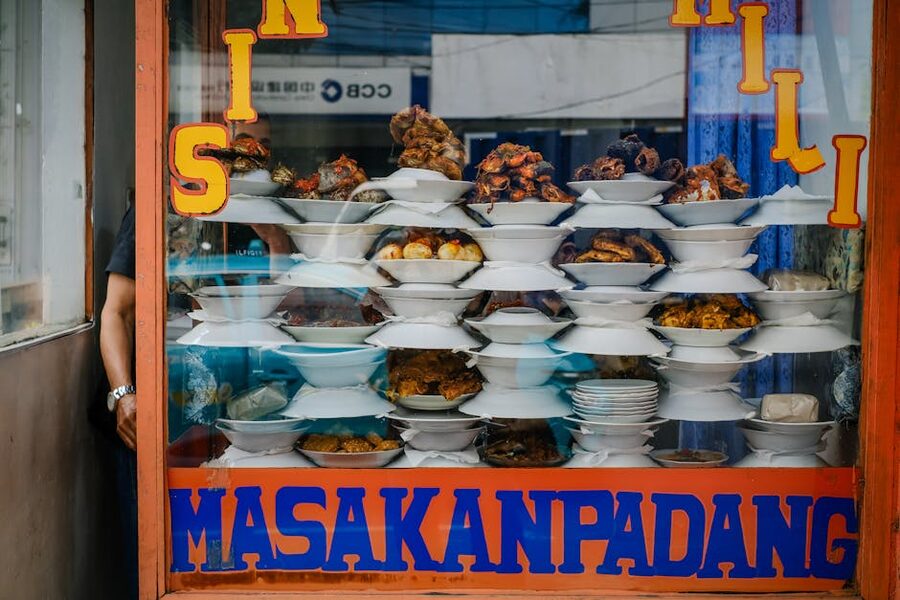
Warung Padang Sanur

Padang food comes from West Sumatra. The format is the warung equivalent of dim sum: dishes are cooked in the morning, stacked in plates in the front window, and brought to your table when you sit down. You eat what you want, and you only pay for what you actually take. The signature is rendang (beef slow-cooked in coconut and spices for hours until it’s almost dry), but the green chilli sauce, the curried jackfruit, the salted egg, the fried lung, the spicy potato all earn their place too. Rp 40-65k for a proper plate.

Window display of stacked Padang food plates at a Masakan Padang warung
The Padang window. Pick what looks good through the glass before you sit down. They’ll only charge you for what ends up on your plate.

Etiquette note: at a Padang place, dishing the food onto your rice with the spoon they bring is fine, but don’t double-dip the spoon between dishes. And the place tends to be Muslim-run, so dress slightly less beach-bum than you can elsewhere. There’s more on respectful local eating in the Wikipedia entry on Padang cuisine if you want a deeper read.

Soto Banjar Sanur

Soto banjar is a chicken-and-rice-noodle soup from South Kalimantan with a clear broth, a small handful of perkedel (potato fritters), boiled egg, and a squeeze of lime. It’s a breakfast dish in Banjarmasin and works just as well at 9 a.m. in Sanur if you want to skip the hotel buffet. The Sanur version is found at a small warung on Jl. Danau Tamblingan with a sign in Bahasa, no English, a few plastic chairs, and exactly one specialty. Rp 30-35k for a bowl. Look for the queue of motorbike taxi drivers having coffee outside.

Warung Jawa Moro Seneng

Javanese home cooking on Jl. Danau Poso, open 24 hours, ridiculously cheap. Half-curries, fried tempe, omelettes, vegetable stews, fried chicken. You pay 15-30k for a generous plate and leave full. The atmosphere is roadside-pavement; you eat at long tables in the open air. This is where the office workers from Renon eat lunch when they’re in Sanur, and where backpackers eat dinner when they’ve worked out that the beach restaurants are robbery.

Coffee and Breakfast Warungs

The morning warungs are a separate category and worth knowing. A proper warung kopi doesn’t really do food beyond a few snacks: pisang goreng (banana fritters), kue-kue (small cakes), maybe a packet of nasi kuning wrapped in banana leaf. The point is the coffee and the chat.

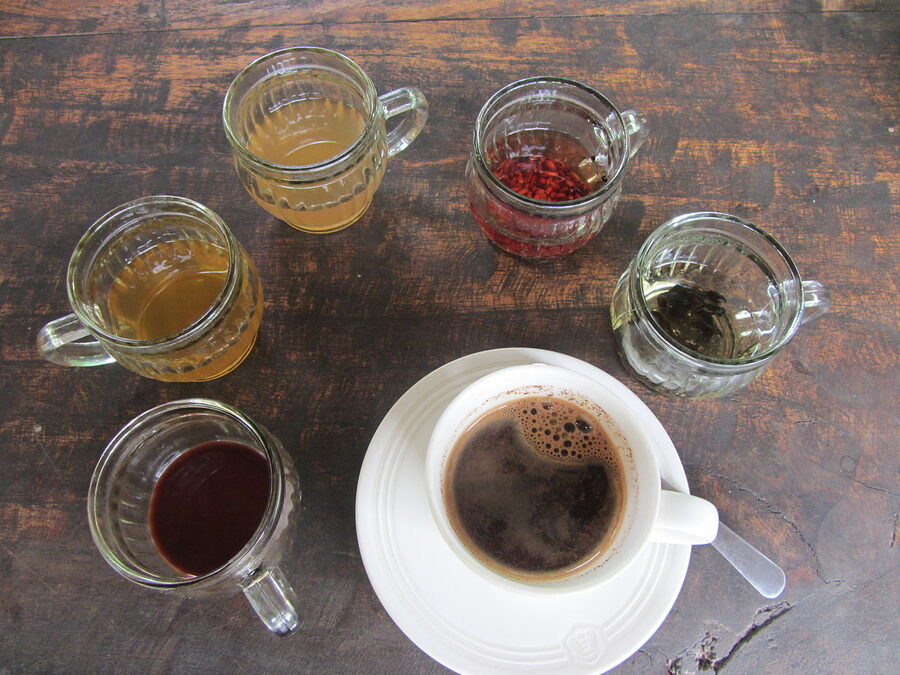
A small glass of strong Balinese coffee served on a tray
Kopi tubruk done the right way: grounds at the bottom of the glass, no milk, optional sugar. Wait two minutes for the grounds to settle before you sip. Photo by David Bacon / Wikimedia Commons (CC BY 2.0)

The thing to ask for is kopi tubruk. Coarse-ground robusta, hot water poured over the top, sugar optional, no filter. The grounds settle to the bottom of the glass after a couple of minutes. Sip the top three-quarters, leave the sludge. It’s strong and a little bitter and exactly what you want at 7 a.m. before a day on the beach. It costs about Rp 8-12k.

For an actual breakfast, the Indonesian standard is nasi kuning (turmeric rice with a few sides) wrapped in banana leaf, about Rp 15-20k from a stall, eaten standing or on a plastic stool. Or bubur ayam (chicken rice porridge) for around Rp 18-25k, which is both a breakfast and a hangover cure depending on how the night went. Both are sold from carts and small warungs around the morning market, before 9 a.m. and gone by 10.

The Wider Sanur Warung Map

Sanur runs north-south for about five kilometres. Each section has its own cluster of warungs, and which one you walk to depends mostly on where you’re staying. Worth knowing the rough layout if you’re picking accommodation; we go into the area in more depth in our Sanur area guide.

Morning view of Sanur Beach Bali with fishing boats on the shoreline
Morning at Sanur Beach. Most of the good warungs sit a block or two back from this. Walk inland, not along the boardwalk. Photo by Danangtrihartanto / Wikimedia Commons (CC BY-SA 4.0)

North Sanur (around Jl. Hang Tuah and the boat ramp)

Mak Beng anchors this end. The Padang warungs on Jl. Hang Tuah stay open into the night for the Nusa Penida boat crews. Soto, mie ayam carts roll out around 6 p.m. Stay here if you want to be near the Lembongan boat in the morning and don’t mind a slightly busier feel.

Sindhu and central Sanur (Jl. Danau Tamblingan and its back gangs)

The dense middle. Most of the spa-stay accommodation is here. Pregina, Khas Sanur, Murah Lestari, Soto Banjar are all in the gangs (the small lanes) running off Jl. Danau Tamblingan. Don’t eat on Tamblingan itself; walk into a gang and find the hand-painted sign half-buried in bougainvillea.

Sanur Kauh / Blanjong (south end)

Warung Blanjong, Pondok Bali, the Pura Blanjong compound. Quieter, more residential. Good if you’re staying at a homestay rather than a hotel. The walk from the south to the north end is about an hour along the beach path or fifteen minutes on a Gojek scooter.

Mertasari and Renon-adjacent

Past the south end of the beach path, where Sanur bleeds into the Renon office district. The warungs here serve the lunchtime office crowd: efficient, cheap, no English needed. If you find a place packed with men in batik shirts at 12.15 p.m., sit down.

Beyond the Plate: Sate, Sambal, and the Dishes That Define Balinese Warung Cooking

A few dishes show up at almost every proper warung, and knowing what to look for helps you order without a menu.

Nasi Campur Bali

The point-and-eat dish. Rice in the middle, a rotating cast of sides on top: shredded chicken, urap vegetables, a small piece of sate lilit, a piece of fried fish, sambal matah. Every warung does it differently. The ratio is the kitchen’s signature. Locals order it more often than tourists do.

A plate of nasi campur from a warung in Ubud showing varied sides over rice
A more elaborate nasi campur from up in Ubud. Sanur warungs serve a slightly simpler version, but the principle is the same. Photo by Vyacheslav Argenberg / Wikimedia Commons (CC BY 4.0)

Nasi Goreng

The fried rice you have probably already had on a hotel breakfast buffet, but at a warung it’s a different dish. Wok-charred, with kecap manis (sweet soy), a fried egg on top, and a few krupuk (prawn crackers) on the side. Rp 25-35k. Our deeper dive on the dish, including its surprising history, lives at our nasi goreng story.

Sate Lilit

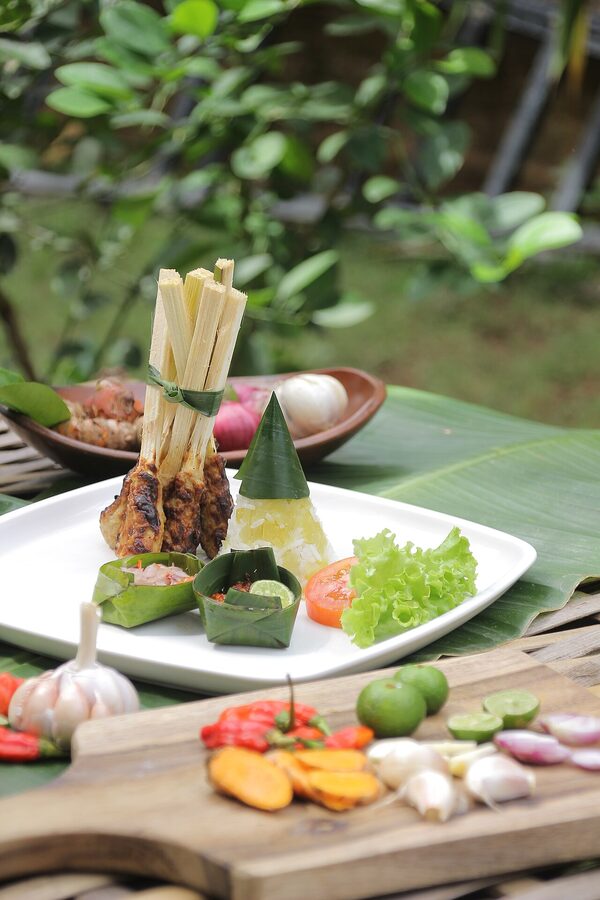
Balinese satay, distinct from the more common sate ayam. Minced fish or chicken mixed with grated coconut, kaffir lime leaf, and spices, then wrapped around a flat bamboo or lemongrass stick rather than threaded on a thin skewer. Grilled over coconut husks. The good stuff has a warm spice complexity you don’t get from the peanut-sauce satay versions in Western menus.

Bali sate lilit on lemongrass sticks served with rice and chilli garnishes
Sate lilit done properly, on lemongrass sticks. The lemongrass perfumes the meat as it grills. Photo by Kresnanta / Wikimedia Commons (CC BY-SA 4.0)

Sate Ayam

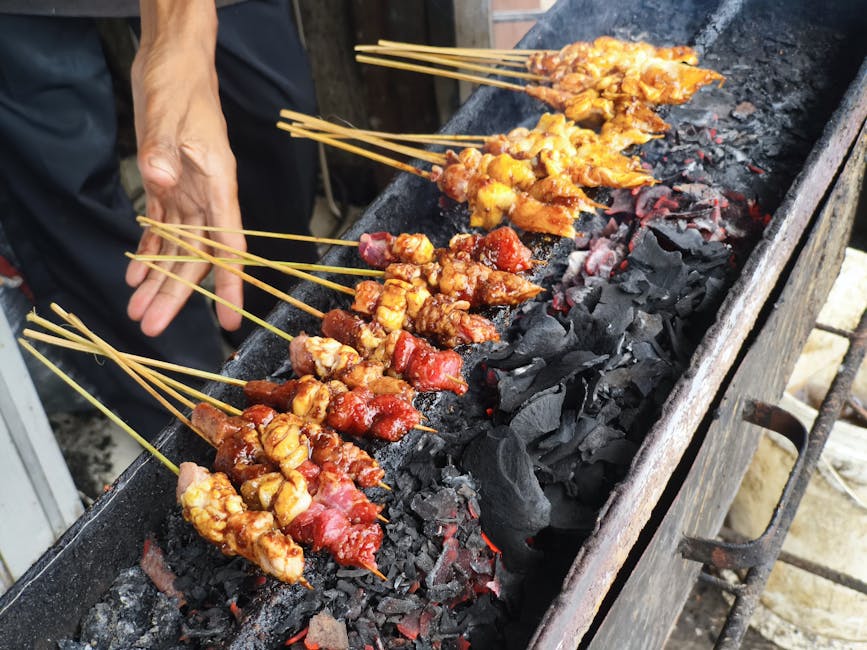
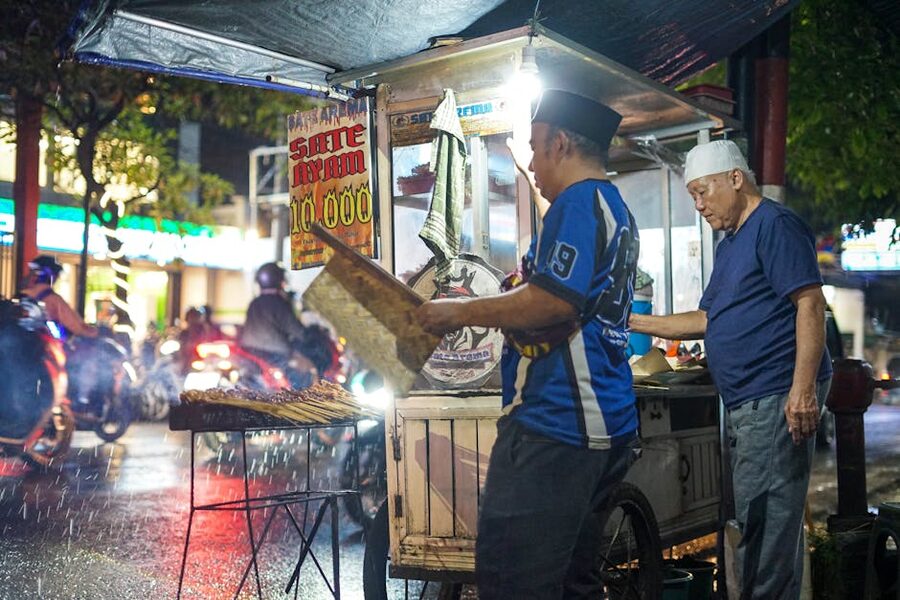
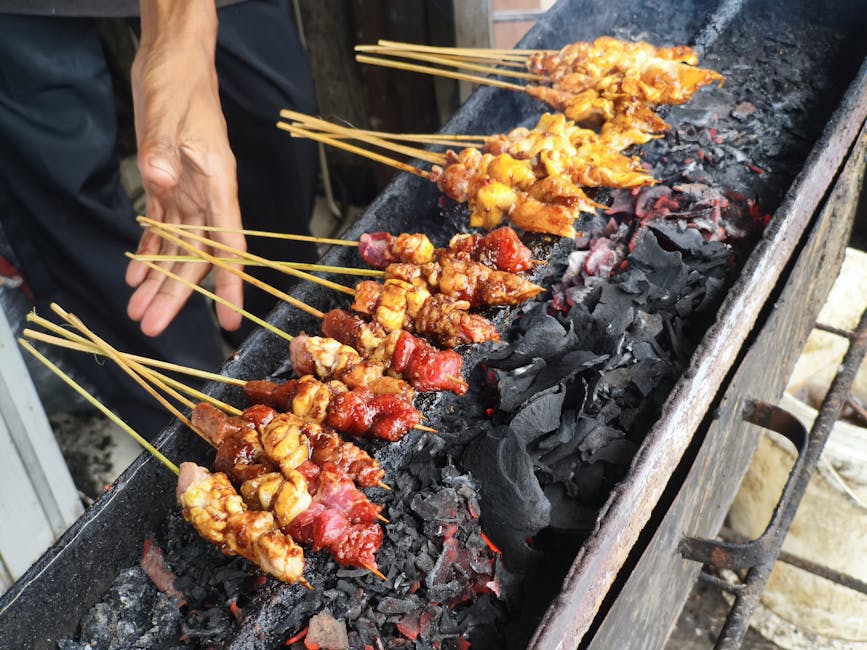
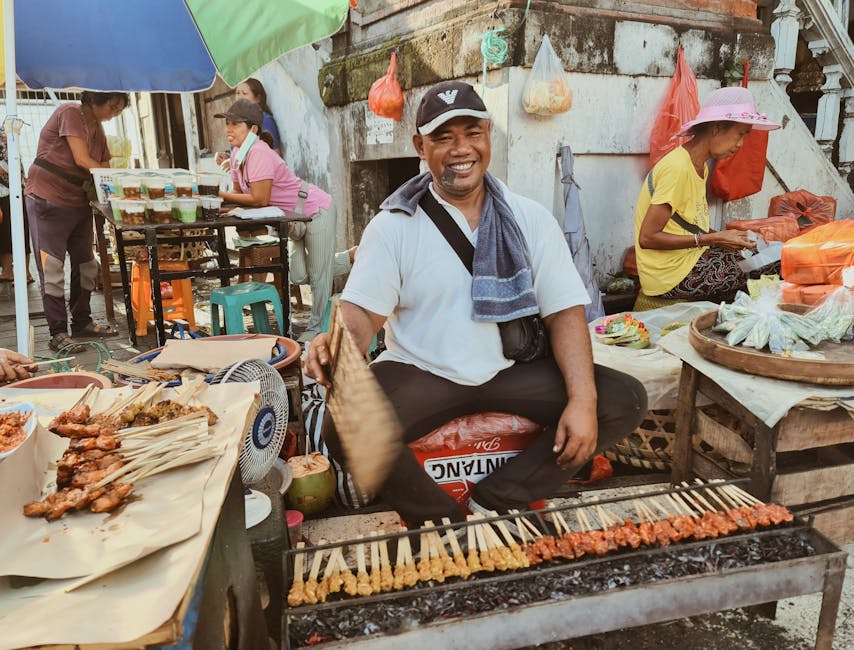
The classic skewered chicken with peanut sauce. Less Balinese, more Indonesian-generic, but every warung has a version. Look for one being grilled fresh over charcoal; the warungs that hold pre-grilled skewers in a warmer never quite get there.

Indonesian sate skewers cooking over charcoal at a warung grill
Charcoal-grilled sate. The grill smell three blocks away is half the reason you walk in.

Sambal

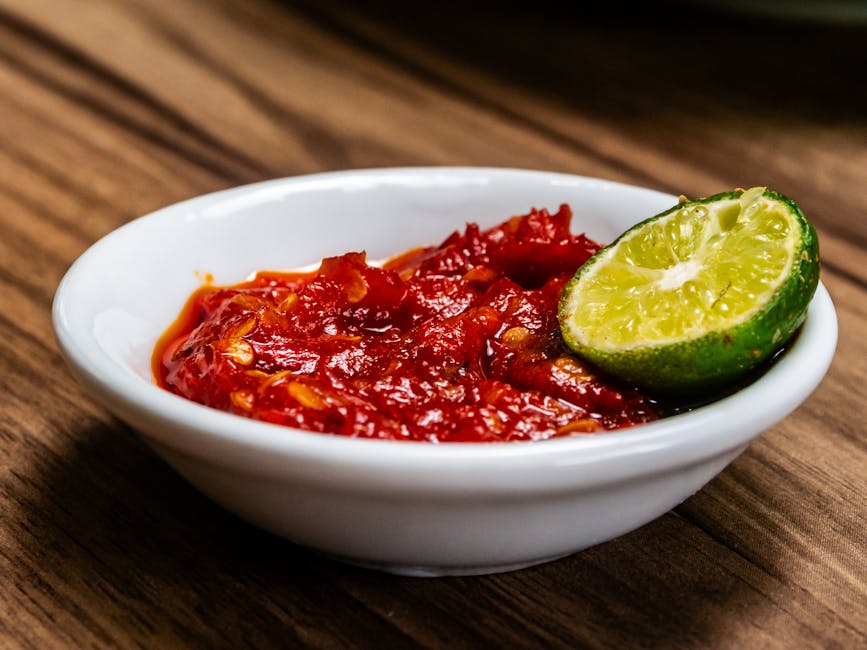
Not one thing, but a whole family. Sambal matah is the Balinese style: raw shallot, lemongrass, kaffir lime, chilli, all chopped fine and bound with a hot oil. Sambal terasi has fermented shrimp paste in it; it’s intense and divisive. Sambal kecap is for satay, sweet and salty with chilli. Most warungs make at least matah and one cooked sambal.

A small white bowl of spicy Indonesian sambal with a wedge of lime
Always taste the sambal before you order. Flat sambal means flat food.

Ikan Goreng

Whole fish, deep-fried, head on, served with rice and a green sambal. Often part of the Mak Beng-style fish set, but also turns up at any warung near the beach. Eat it with your fingers.

Whole fried fish served with rice and red sambal at an Indonesian warung
The basic fish-and-rice plate at a beachside warung. The sambal does most of the work; the fish is the canvas.

Warung Etiquette, Briefly

None of this is hard. Most of it is what you’d do anywhere small and personal.

Sit down first. Most warungs have you take a stool, then someone comes over. If there’s a counter with the day’s food on it, walk over and point at the dishes you want. Hold up a finger for one portion, two for two. If you want it spicy, say pedas; if not, tidak pedas. Always works. Saying terima kasih (thank you) when the food arrives gets a smile, even if your accent is appalling.

Eat with your right hand if you’re going local. Indonesia treats the left as unclean, and using it to pass food or pay is a small but real rudeness. A spoon and fork is fine if you prefer. Pay at the end. Cash. Small notes. Rp 50,000 and Rp 20,000 notes are your friends; trying to break a Rp 100,000 note for a Rp 35k meal at lunch rush will get you a polite shrug while she goes hunting for change.

Don’t tip in the way you would in a Western restaurant. A small rounding-up, like paying Rp 40,000 for a Rp 35,000 meal and waving off the change, is welcome. Adding 10 or 15 percent is awkward and slightly insulting because the price wasn’t a request for negotiation.

Take your shoes off if it feels like you’re walking into a room rather than a shop. Some warungs are run out of someone’s family compound and the eating area is technically inside the home. The give-away is a low step up and a row of sandals at the threshold.

Is Warung Food Safe?

Mostly yes, with the same caveats that apply to any street food anywhere in the tropics. The risk isn’t the food, it’s the water it was washed in and the ice it was served with. Stick to hot dishes that are cooked through, skip raw salads at small places, and ask for drinks without ice if you’re nervous. Bottled drinks, tea brewed with boiling water, and freshly made coffee are all fine.

The single best protection is the same signal you used to pick the warung: high turnover. Food that’s been sitting at room temperature for six hours is a roll of the dice; food that’s just come off the wok is not. Eat at the lunch rush and you have already cut the risk in half. There’s more on Bali belly and how to handle it in our Bali health guide.

Traditional jukung outrigger boat resting on Sanur beach at low tide
The Sanur jukung crews bring in the fish that ends up at Mak Beng and the smaller fish-soup warungs at the north end. Eating local means eating what came in this morning.

The Real Reason This Matters

Sanur is not Canggu. It’s slower, older, more residential, and the people who live here have eaten at the same warungs for two generations. Walking in and ordering badly is fine, you’ll still eat well. But pay attention for a week and you’ll start noticing things: that the ibu at Krishna remembers you ordered no-spicy last time, that the Padang plates rearrange every day, that the kopi guy on Hang Tuah opens at 5.30 a.m. for the boat crews. None of that turns up in a TripAdvisor review and none of it is on the menus on Jl. Danau Tamblingan.

For everything else Sanur (the beachfront restaurant tier, the date-night spots, the upmarket Italian and Asian fine-dining places that share the area with the warungs), see our companion restaurant guide to Sanur. It’s the other half of the same story. And if you want the wider food and drink writing across the rest of the island, that’s where to go next.

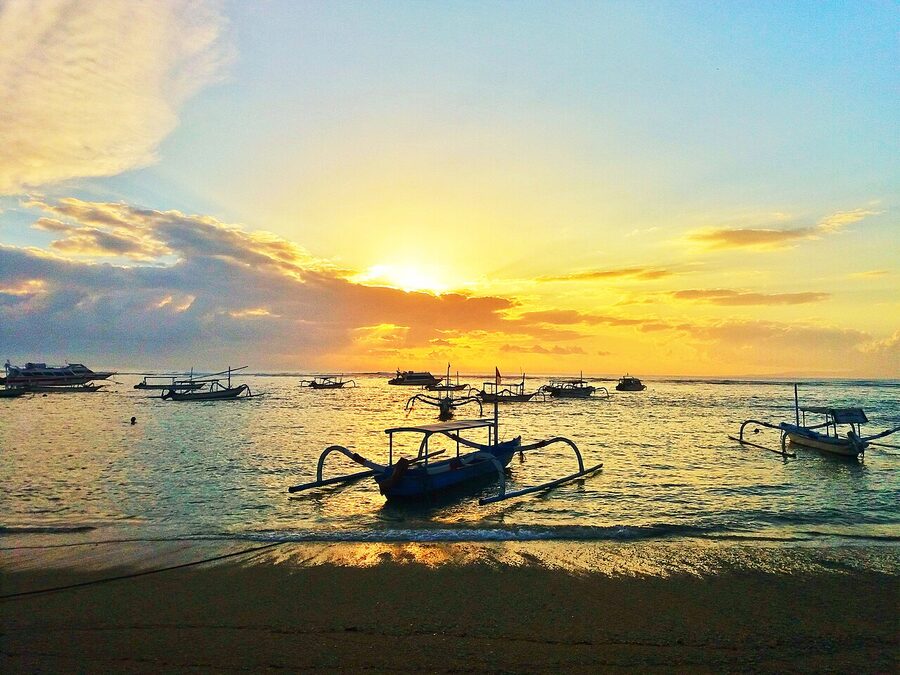
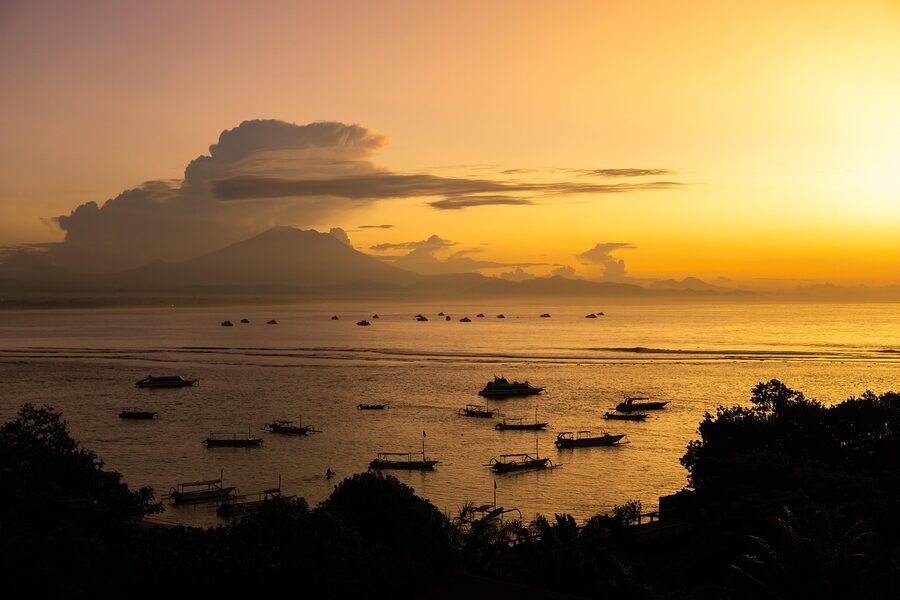
Sunset over Sanur Beach Bali with a beach hut silhouette on the sand
Sanur sunset, looking west off the beach. The boardwalk restaurants want you watching this with a Rp 250k cocktail in your hand. The warungs want you to come in once it’s dark and the kitchen’s still going.

End of the day, the test for whether you’ve actually eaten in Sanur isn’t whether you tried the famous places. It’s whether the woman behind the counter at one warung (any warung, even a small one in a side street with a hand-painted sign) has started to recognise you when you walk in. That happens about day four if you do this right, and it’s the only piece of Sanur that the resorts can’t sell you.

Bali Courses: How to Learn Yoga, Cooking, Surf and Bahasa Indonesia

The graduation circle at Yoga Barn happens at sunset on the last day of the 200-hour. Twenty trainees, mostly women in their thirties, sat on cushions in the upstairs shala while a teacher pressed her thumb into the third eye of each one and said something quiet in a mix of English and Sanskrit. Outside, the dusk insects were warming up their evening racket. One trainee, a Dutch nurse named Annelot who had been quiet most of the month, started crying when her thumb-print landed. Not loudly. Just the kind of crying you do when a thing you decided to do at home is suddenly real, and you’re holding a Yoga Alliance certificate that says you can teach this stuff to other people now. After the ceremony she walked back to her homestay in Penestanan, ordered a Bintang from the warung at the bottom of her path, and texted her boyfriend that she’d booked another month.

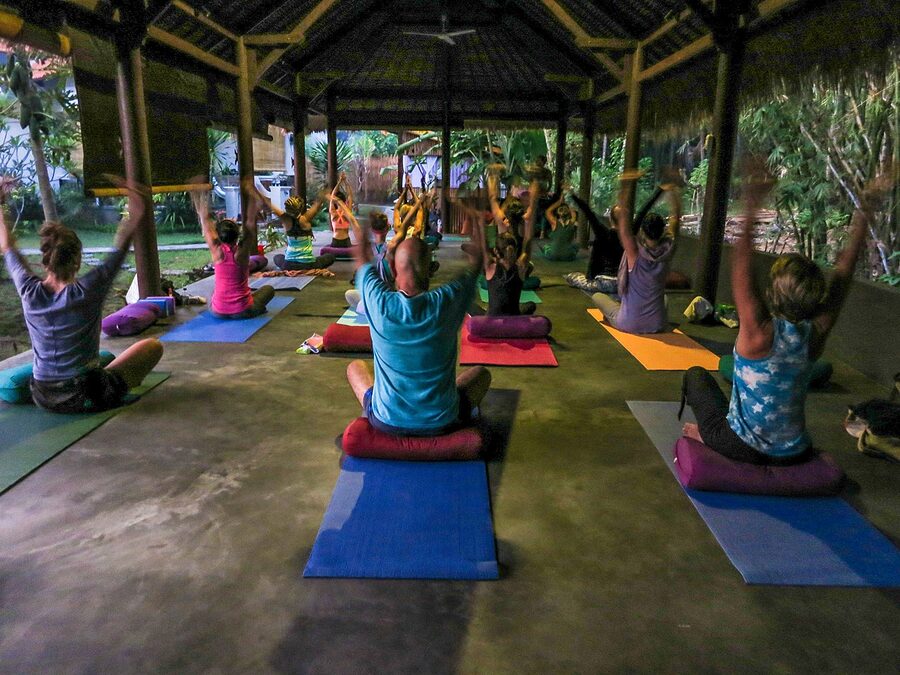
Group practicing yoga outdoors in lush Bali setting
Outdoor yoga in Ubud is part of the standard 200hr teacher-training day. Most schools run morning and afternoon sessions, with theory blocks in between.

That’s one way to learn something in Bali. Here’s the catalogue of everything else you can pick up here in a week, two weeks, or a month, with the schools I’d actually send a friend to and the prices I’ve seen in 2025. Yoga teacher training, cooking classes, surf school, Indonesian language, silver jewellery, painting, meditation, permaculture. Most are in Ubud, which has been the learning capital of the island since the 1970s, but Canggu and Sanur and the Bukit have their own scenes too.

Yoga Teacher Training: The 200-Hour Decision

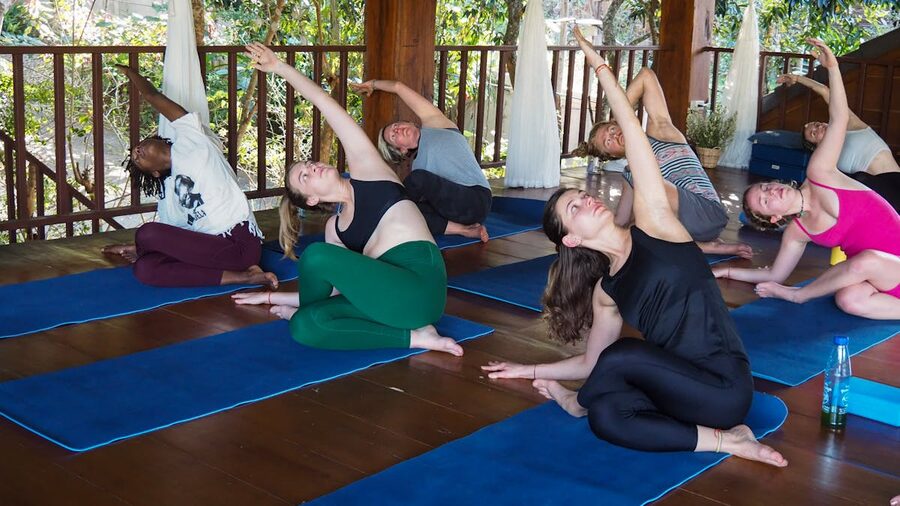
Outdoor yoga session in Amed Bali
An outdoor session in Amed on the east coast. The big-name TT schools cluster in Ubud and Canggu, but smaller intensives run all over the island. Photo by Tjioeke / Wikimedia Commons (CC BY-SA 4.0)

Bali has been the world’s go-to spot for a 200-hour Yoga Alliance teacher training (RYT-200) since the early 2010s. Costs run roughly $1,800 to $3,500 for a 24- or 28-day intensive, with the higher end including private accommodation and three vegetarian meals. A 300-hour or full RYT-500 sits at $4,500 and up, usually split across two months. Cheaper than Rishikesh once you factor in food quality, more expensive than India, much better lifestyle. That’s the trade.

The four schools I’d shortlist:

  • The Yoga Barn (Ubud): the original. Multiple 200hr Hatha and Vinyasa intakes per year, plus 300hr advanced and short specialty trainings. Largest community, biggest noticeboard, best chance of finding teaching work after. Drop-in classes run from Rp 175,000 if you just want to test the studio first.
  • Radiantly Alive (Ubud): RA Vinyasa is their own lineage, taught by founder Daniel Aaron and a strong faculty. Smaller cohort sizes than Yoga Barn, more anatomy-heavy. Around $3,200 for the 200hr.
  • The Practice (Canggu): pranayama-led, slower, more inward. The 200hr here will not turn you into a power-vinyasa teacher; it will turn you into a teacher who can sit with people in silence. For some this is the point. For others, a mismatch.
  • Power of Now Oasis (Sanur): the Sanur option, beach-facing, smaller and quieter than the Ubud scene. Good if you want to study without the Ubud yoga-bro intensity.
Group yoga class inside an open Balinese pavilion
A typical bale-style open shala. Bring a sarong; the floor is cooler than you’d think before sunrise.

Real certification vs the racket

The thing nobody tells you: a “Yoga Alliance certified” course only means the school is registered with Yoga Alliance and follows their hour requirements. Yoga Alliance does not vet quality. There are 200-hour TTs in Bali run by people with two years of practice and a printer. If a course costs less than $1,500 and the school has been going under three years, ask hard questions. Read reviews on YogaTrail and the r/YogaTeachers subreddit, not the school’s own website. Ask which faculty are actually teaching this round (founders sometimes only show up for opening and closing). And know that a Bali RYT-200 won’t impress anyone in New York if you can’t actually teach when you get back, so don’t pick the cheapest one and call it done.

Yoga on a Bali beach with the ocean in view
The morning beach class, mat damp from sea spray. Worth it once or twice; the daily home for serious training is a real shala with a wooden floor.

Cooking Classes: Half Day, Full Day, or the Real Thing

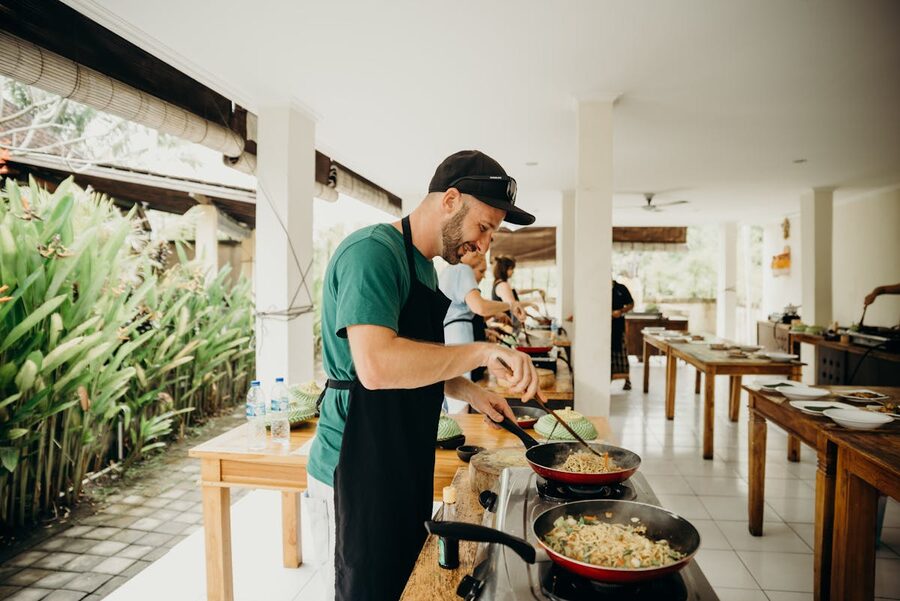
Chef preparing food in an open-air kitchen in Bali
Most Bali cooking classes happen in semi-open kitchens. You’ll be standing for three to five hours, so wear sandals and bring a hair tie.

Bali cooking classes split into two camps. The half-day “make four dishes and eat them” version, around Rp 350,000 to Rp 500,000 (about $22 to $32). And the full-day version that starts at a wet market at 6 a.m., walks you through the spice paste base (bumbu), and finishes with you eating six dishes you cooked, around Rp 600,000 to Rp 950,000 ($38 to $60). The full day is what you actually want. The market visit is the part you’ll remember in five years; the dish-making is the part you’ll repeat at home.

The four worth your time:

  • Paon Bali Cooking Class (Laplapan, Ubud): the one most travellers come back raving about. Family-run since 2010, set in a traditional compound 15 minutes east of central Ubud. Full-day class with market visit, around Rp 700,000. You’ll cook sate lilit (minced satay on lemongrass skewers), sambal matah (raw shallot-and-lemongrass salsa), nasi kuning, and a coconut-milk vegetable curry. Book a week ahead.
  • Casa Luna Cooking School (central Ubud): Janet DeNeefe’s school. She’s been running classes here since the 1990s and wrote one of the better Balinese cookbooks in English. Slightly more polished than Paon, slightly more expensive, includes a one-night stay option if you want the full experience.
  • Bumbu Bali Cooking School (Tanjung Benoa, Nusa Dua): chef Heinz von Holzen runs this. He wrote the textbook on Balinese cuisine that culinary schools actually use. Day starts at the Jimbaran fish market before sunrise, full day, around $95. The most serious of the lot if you’re a real food person.
  • Lobong Culinary Experience (north of Ubud): smaller scale than the others, hosted at a traditional compound, includes a tour of the family rice paddy and a quick blessing at the household temple. Good if you want the cultural framing as much as the cooking.
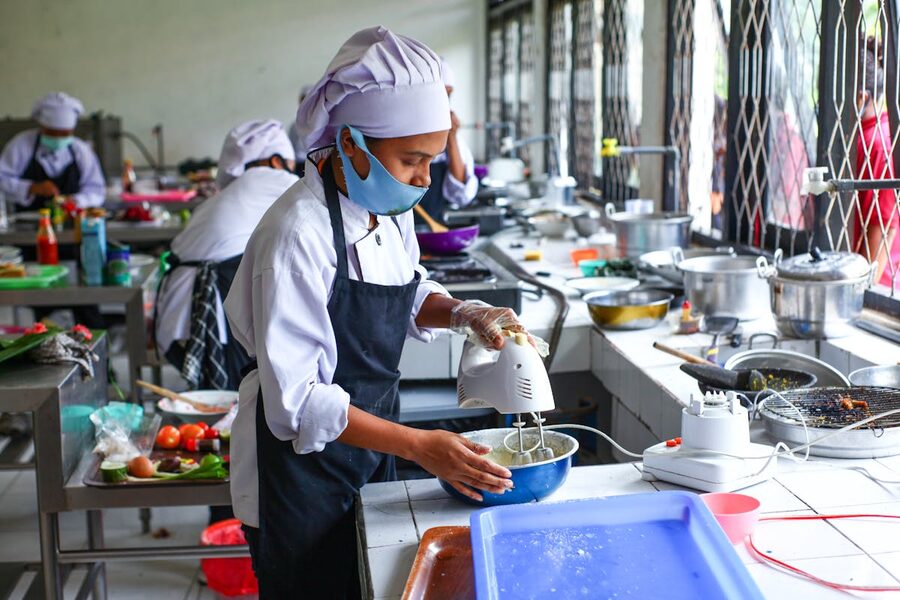
Indonesian culinary students at work in a cooking class
You’ll spend most of the morning grinding spice paste with a stone mortar. It’s harder than it looks; the chefs do it one-handed in two minutes.

One thing nobody warns you about: the half-day class at 10 a.m. that brings you to a “market” for ten minutes is often a tour stop the school owns, not a real working market. If the brochure says “market visit” but the meeting time is after 8 a.m., the market is probably an exhibition. Real markets close their main trade by 9.

Surf School: The Foam-Board Years

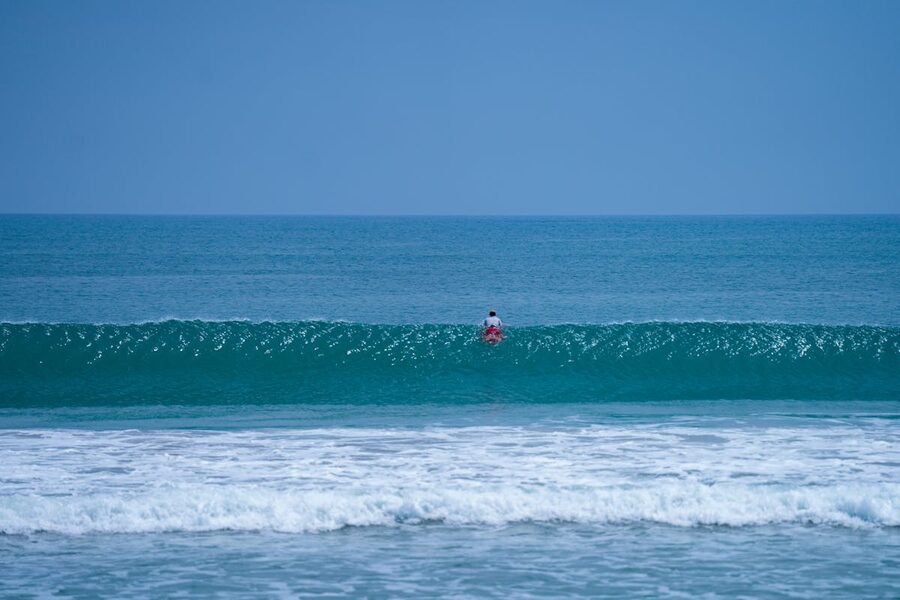
Surfer paddling out at Kuta Beach Bali
Kuta’s main beach break is the world’s most forgiving learning wave. Take the early lesson at 7 a.m. before the wind comes up.

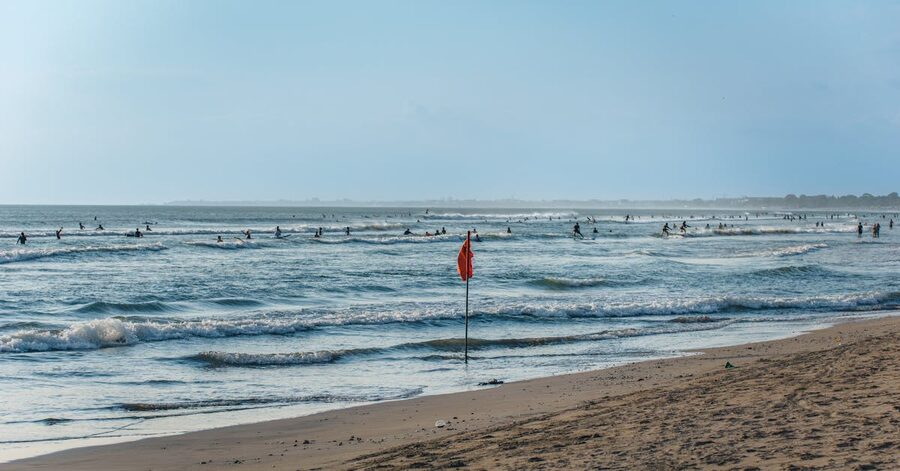
Bali is where most of the world learns to surf. Kuta beach is a long, soft beach break that runs for kilometres, and on a normal day you can have your own peak with no fight for it. A two-hour group lesson (max five students per instructor, foam board, rashie, board hire all included) costs around Rp 450,000 to Rp 650,000 ($28 to $40). Private one-on-one is roughly double that. A five-day intensive package with daily lessons, video review, and accommodation runs $400 to $700 depending on where.

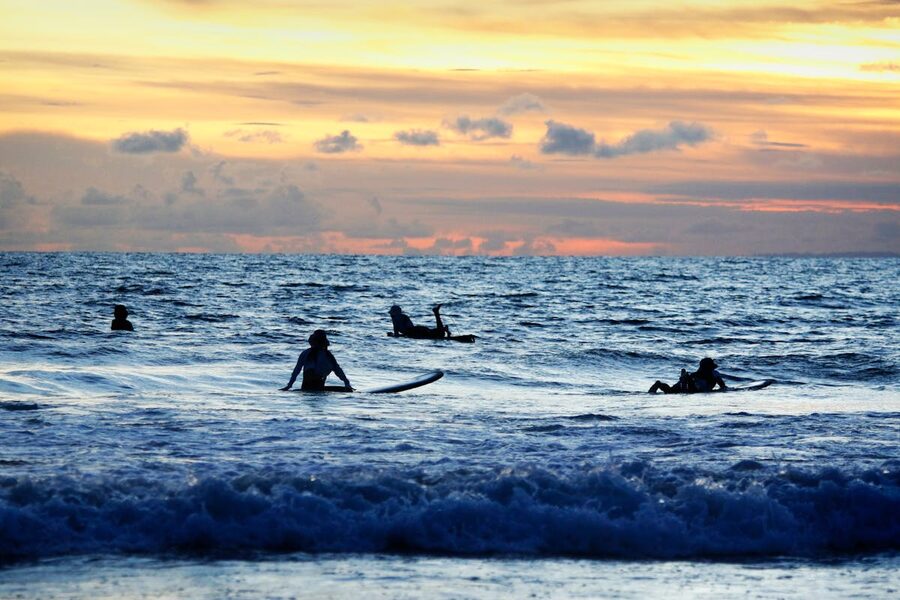
Surfers riding sunset waves on Kuta Beach Bali
The crowded version of Kuta in the late afternoon. If you’re learning, this is the wrong time to be in the water; come back at dawn.

The schools I’d shortlist:

  • Pro Surf School (Kuta): ISA-certified instructors, big operation, decent group ratio. Their multi-day camp packages with accommodation in their own surf hostel are the easiest way to commit to actually learning. Walking distance to Poppies Lane for cheap food after lessons.
  • Rip Curl School of Surf (Legian): the brand-name option, on the beach in Legian, slick operation. Slightly more expensive, slightly more polished. Their guarantee is that you’ll stand up by the end of the first lesson, which they can deliver because the wave is that easy.
  • Surf Goddess Retreats (Seminyak): women-only week-long retreats with daily surf lessons, yoga, spa treatments, and shared villa accommodation. Around $2,200 to $3,000 for a week including everything. The friend who recommended this to me said the surf instruction was the least of why she went; the community was the why.
  • Bali Green Surf School (Canggu): the Canggu pick. Berawa beach is a step up from Kuta in difficulty and a step down in the surf-school count, which means more attention per student. Group lesson around Rp 550,000.
  • Padang Padang Surf Camp (Bukit): the progression school. You don’t start here; you come here once you’re past the foam board and want to learn proper reef-break technique on the Bukit. Week-long camps with accommodation around $700 to $900.
Canggu beach with surfers riding small waves
Berawa in Canggu, softer than Uluwatu, faster than Kuta. The right next step after a few days on the foam board.

One thing to know. If you book a “private lesson” in Kuta and your instructor is on his phone for half of it while you flounder, you’re not getting what you paid for. The walk-up touts on the beach charge less but vary wildly in quality. The branded schools cost more for a reason: the instructor actually watches you. Worth it for the first three days. After that, board rental is about Rp 50,000 an hour and you can practise on your own.

Indonesian: The Language Most Travellers Don’t Bother With

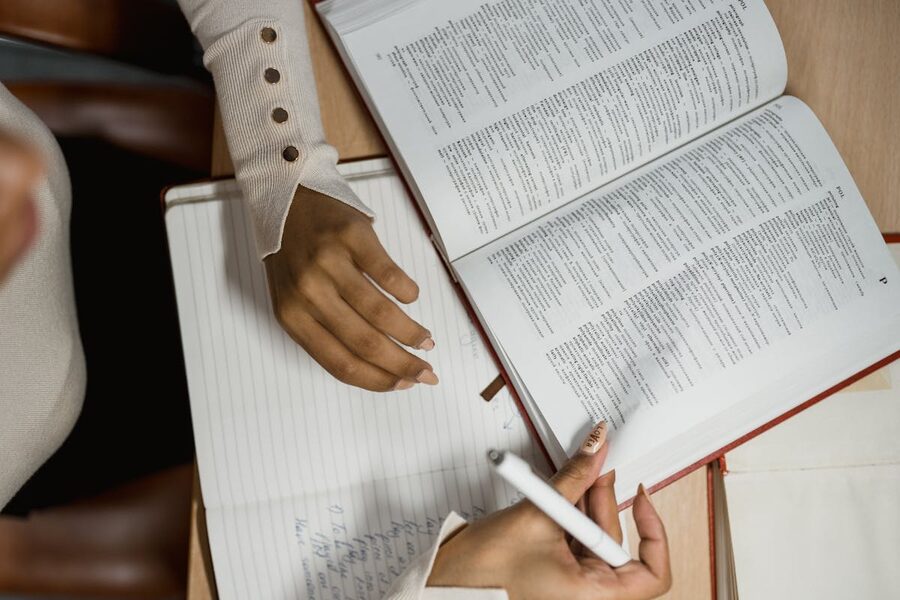
Notebook and Indonesian dictionary on a desk
Indonesian is famously friendly to learners. No verb conjugations, no tones, no genders. You can hold a useful conversation after a week.

Bahasa Indonesia is the easiest major language to start in. No verb conjugations, no tones, no grammatical gender, no plurals (you just say the noun twice if you mean a few, buku-buku, books). Two weeks of daily one-hour lessons and you can negotiate a moped rental, order food from a non-tourist menu, and chat with the warung ibu who suddenly treats you like a regular. Three months and you can have actual conversations.

Three options depending on how serious you are:

  • Cinta Bahasa (Ubud + Sanur + online): the standard for travellers. Group classes from around Rp 1,800,000 for 20 hours; private one-on-one from Rp 250,000 per hour. Real curriculum, certified teachers, good textbooks. Their online program is the same content if you want to start before you arrive.
  • IALF (Indonesia Australia Language Foundation, Denpasar): the academic option, used by diplomats and researchers. Longer programs, more expensive, more rigorous. Overkill if you just want to chat with the warung lady; right if you want to read Indonesian newspapers.
  • italki (online, freelance tutors): for $8 to $15 an hour you can book one-on-one Zoom lessons with a teacher in Yogyakarta or Bandung. Some are excellent, some are not. Try three teachers before committing.

The thing to know about Bali specifically: most Balinese also speak Balinese (basa Bali) at home. Bahasa Indonesia is the national language used in shops, government, and with non-Balinese Indonesians. If you greet a Balinese person with om swastiastu instead of selamat pagi, you’ll get a wider smile. That’s a Balinese phrase, not Indonesian. Both are useful.

Silver Jewellery and Crafts: The Ubud Workshop Day

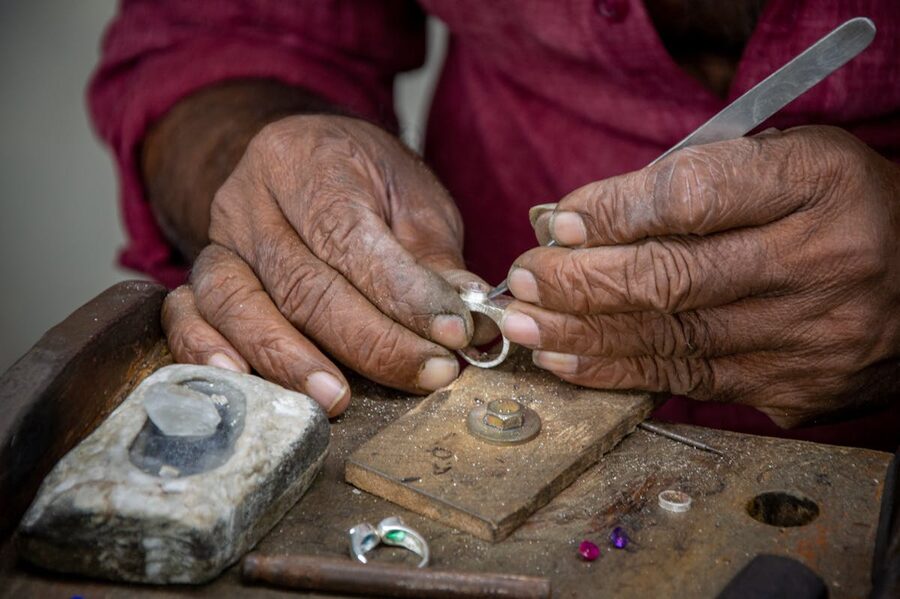
Silversmith shaping a silver ring at a workshop bench
Most silver-jewellery classes have you cut, shape, file, and solder a ring or pendant in three hours. You walk out wearing it.

Silver jewellery is the most-booked workshop in Bali on TripAdvisor. There’s a reason: the price is right (around Rp 350,000 to Rp 600,000 for three hours including 5g of silver), the result goes home with you, and Bali has a real silversmithing tradition centred on Celuk, a village 30 minutes south of Ubud where almost every household runs a workshop. The tour-bus version is fine. The smaller direct-to-artisan version is better.

  • John Hardy Workshop (Mambal, north of Ubud): the polished tourist version. Bamboo campus, lunch on the property, walk through the workshop where their high-end pieces are actually made. Their workshop tour with a chain-making demonstration is around $30; they do longer hands-on classes too. Worth combining with a visit to their Kapal Bamboo Boutique on the same property.
  • Celuk village (independent silversmiths): walk down Jalan Raya Celuk and you’ll see workshop after workshop with hand-painted signs offering classes. Three-hour group sessions usually around Rp 350,000 including the silver. Negotiate the price first; you’ll often pay more if your stone is bigger or you want a more complex design.
  • Ubud Monkey Forest silver classes: the easiest to book online. Sessions run all day from a workshop in central Ubud, three hours, around Rp 450,000. Good if you want it slotted into a tight schedule.
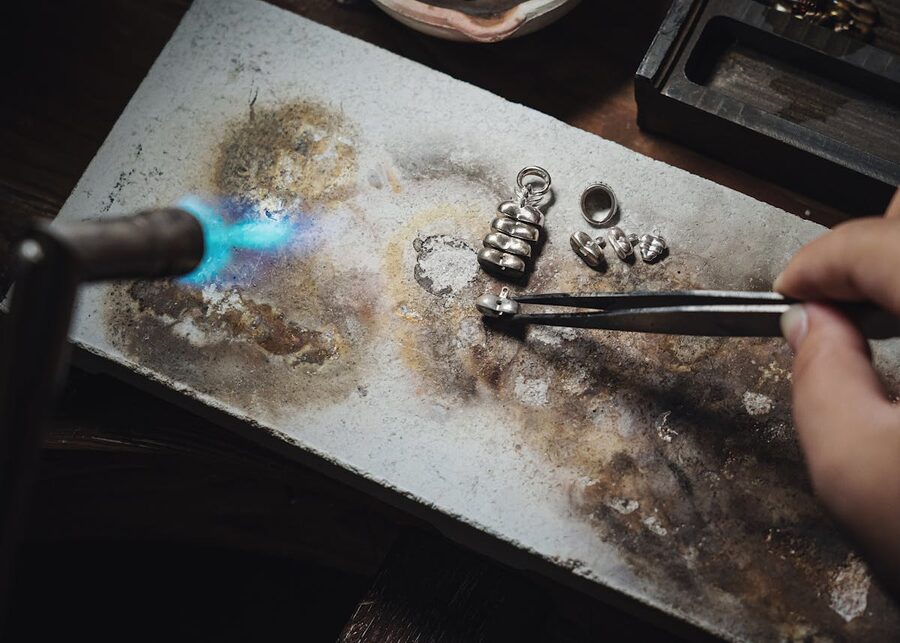
Jeweller using a blowtorch to solder silver
The soldering bit is intimidating the first time. The artisan does the actual flame work; you do the cutting, filing, and stone-setting.

Beyond silver, Ubud is the headquarters for everything else hand-made. Some highlights:

  • Batik painting: the wax-resist textile dyeing technique. Three- to four-hour classes, around Rp 400,000, you go home with a small canvas. Widiantara Batik in Ubud is a long-running spot.
  • Wood carving: the trade of the Mas village south of Ubud. Three-hour blocks where you turn a piece of softwood into a small mask or figure under a master carver’s hands. Around Rp 500,000.
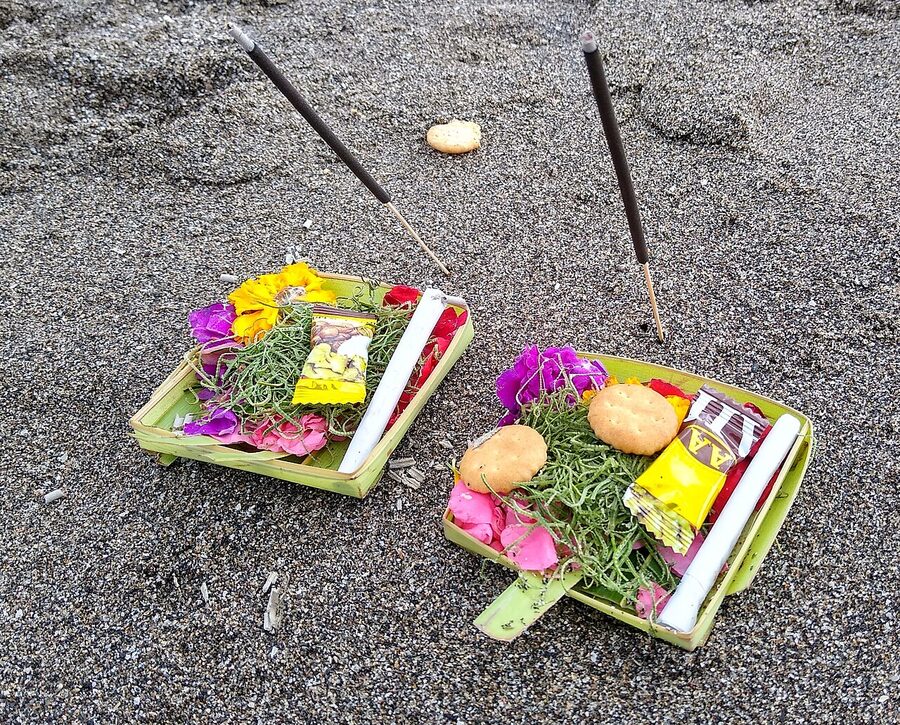
  • Canang sari making: the daily palm-leaf offering you see on every doorstep at sunrise. Some Ubud guesthouses run free morning classes for guests. The technique is simple, the meaning is layered, and once you know how to weave one you’ll never look at the floor offerings the same way.
  • Pranoto’s Art Studio (Ubud): life drawing sessions on Wednesday and Saturday mornings with a Balinese model in traditional dress. Drop in for around Rp 100,000. The studio’s been running since the 1990s and is the closest thing Ubud has to a working artists’ atelier.
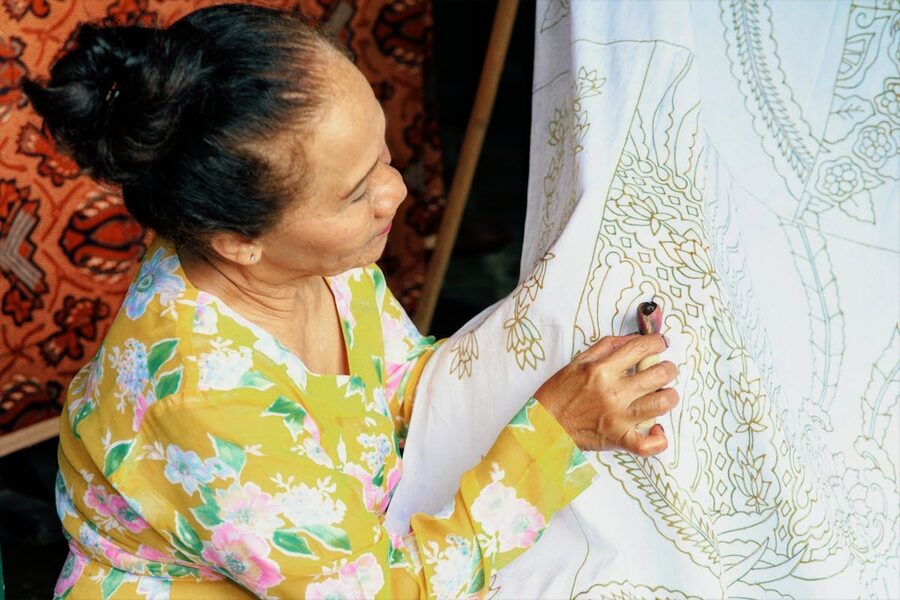
An Indonesian woman crafting batik patterns by hand
Batik uses a small copper tool called a canting to lay down hot wax. Traditional designs each carry meaning; ask your teacher for the story.

Meditation and Silent Retreats

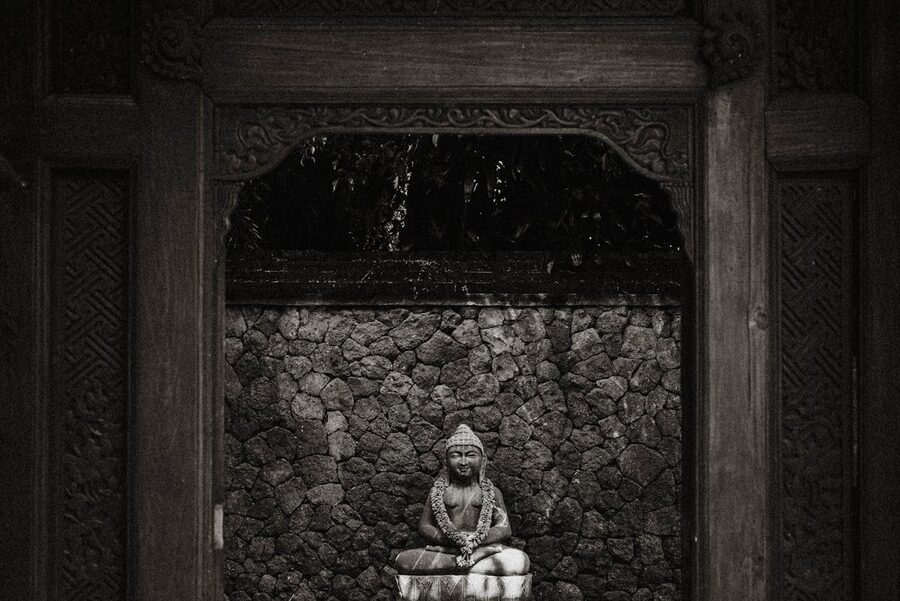
Stone Buddha shrine framed by carved Balinese woodwork
Many of the meditation retreats are run on land that already has its own household temple. The shrines aren’t decoration; they’re working.

Bali has more silent and meditation retreats per square kilometre than anywhere outside Asia. Three I’d actually recommend:

  • Bali Silent Retreat (near Tabanan): the real one. Three-day to ten-day silent stays in a forest property north of Tabanan. No phones in the public spaces, no talking outside designated periods, vegetarian buffet from their own garden. From around $80 a night including meals and yoga. You’ll either love it by day three or count the hours; both reactions are normal.
  • Sukhavati (Ketewel, near Sanur): Ayurvedic detox retreats with a meditation component. Five- to fourteen-day programs that go deep into the panchakarma cleanse. Expensive (from $5,000 a week) and worth it if you want clinical-grade Ayurveda; otherwise overkill.
  • Yoga Barn silent days (Ubud): the entry-level option. Yoga Barn runs occasional one-day silent meditation immersions for around Rp 800,000. Good way to test whether a longer silent retreat is for you before paying for one.

One thing about Bali silent retreats. The “silent” bit usually means the noble silence framework: no eye contact, no small talk, but you can still ask a teacher a question or talk to the kitchen if you have a dietary issue. It’s not Vipassana-grade total silence unless explicitly stated.

Permaculture and Sustainability Courses

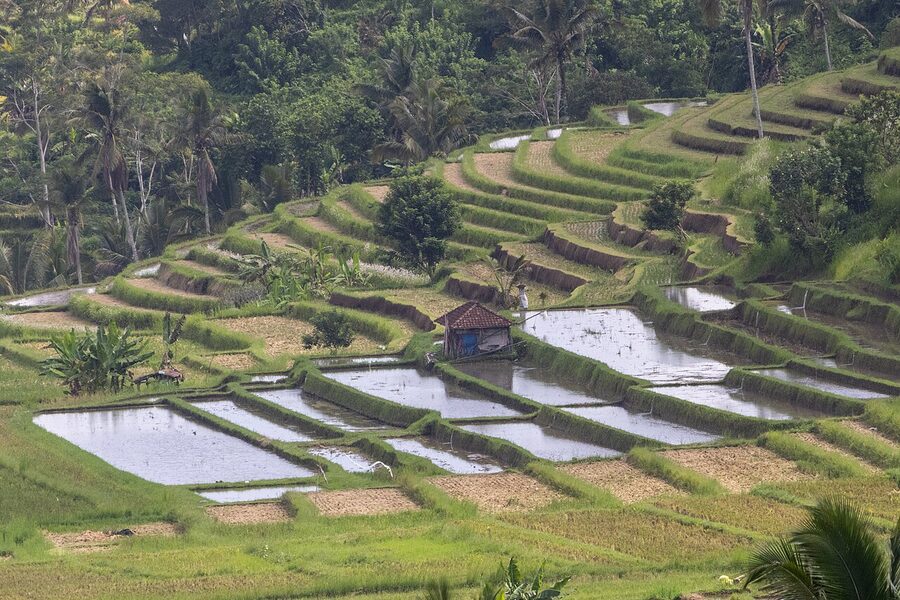
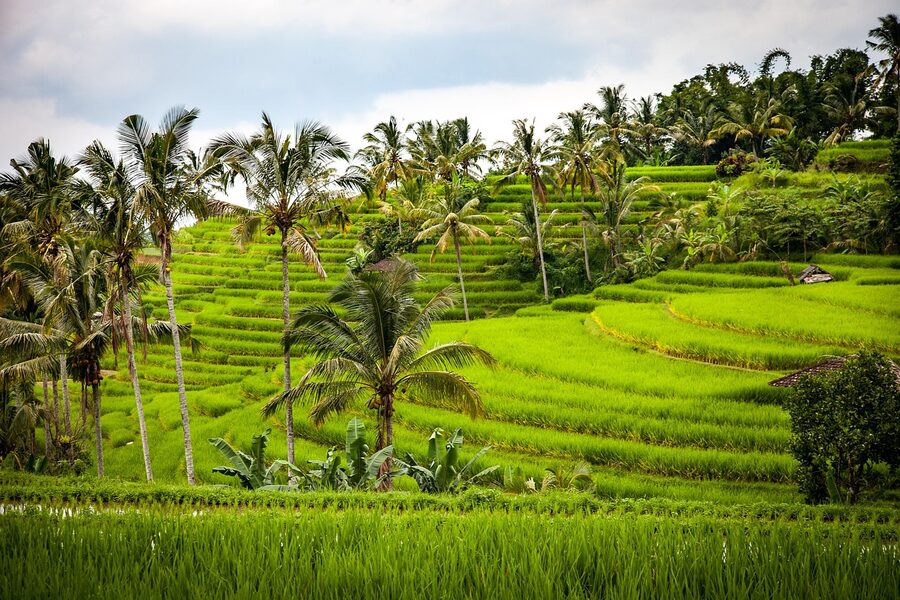
Jatiluwih subak rice terraces in Bali with the irrigation system visible
The Jatiluwih subak terraces. The thousand-year-old water-sharing system is what permaculture courses on Bali use as a working case study. Photo by Eka343 / Wikimedia Commons (CC BY-SA 4.0)

This is the niche that Bali quietly does very well. The island’s traditional subak rice-irrigation system is a UNESCO-listed example of community-scale water sharing that’s been running for a thousand years, and the modern permaculture scene around Ubud has used it as a teaching framework since the 1980s.

  • Green School Bali (Sibang Kaja, north of Ubud): the bamboo school you’ve seen in the videos. They run public campus tours twice a week (Tuesday and Thursday mornings, around Rp 250,000) and longer professional development courses for educators. The campus alone is worth the visit.
  • Five Pillar Experiences (Jembrana, west Bali): multi-day immersion programs that combine permaculture, Balinese culture, and conservation work. Smaller, more remote, more serious than the day-tour options.
  • IDEP Foundation Permaculture Design Course: the gold-standard 14-day Permaculture Design Certificate (PDC) course, run by the Indonesian permaculture NGO. Around $1,400 including accommodation and food. Held a few times a year; check their schedule.

The Practical Bit: Visas, Where to Stay, and Real Costs

Ubud street at golden sunset with traditional architecture
Ubud at sunset. Most of Bali’s serious learning scene is here or within 20 minutes by scooter.

Visa logistics

This is where most people trip up. The standard Visa on Arrival (VOA) is good for 30 days, extendable once for another 30. So you have 60 days max on a VOA, which covers a 24-day yoga TT or a few weeks of cooking and surf classes with room to breathe. For longer programs you need a B211A social/cultural visa, which gives you 60 days on entry and is extendable up to 180 days total. The B211A requires a sponsor; most reputable schools (Yoga Barn, IALF, Green School professional dev) can sponsor you, and visa agents in Ubud and Denpasar handle the rest for around $250 to $400. Apply at least three weeks before your trip via Indonesian immigration or through your school’s recommended agent. Don’t try to do back-to-back VOAs by border-running to Singapore; the immigration officers see this pattern and turn you back.

Where to stay near each scene

Where you base yourself matters more than people admit. Twenty minutes by scooter sounds short until you do it twice a day in rain.

  • Yoga Barn / Radiantly Alive students: stay in Penestanan or Sanggingan, the rice-paddy neighbourhoods west and north of central Ubud. Walk or 5-minute scooter to the studios. Homestay rooms from Rp 350,000 a night, full villa from Rp 1,200,000.
  • The Practice (Canggu) students: stay in Berawa or Pererenan, both walkable to the studio. Coliving spaces like Tribal or Outpost are popular with the digital-nomad-yoga-teacher crossover crowd.
  • Power of Now (Sanur) students: the whole of Sanur is walkable; stay anywhere along Jl Danau Tamblingan or in the back lanes east of it. Quieter than Ubud, beach access at sunrise.
  • Pro Surf School / Rip Curl students: stay in Kuta itself or Legian; you want to walk to lessons because you’ll be wet. Budget rooms on or off Poppies Lane from Rp 250,000.
  • Cooking/silver/craft students: central Ubud. Anywhere within 10 minutes walk of the central market puts you in scooter range of Paon, Casa Luna, the silver workshops, and the cafe scene. Try the back gangs off Jl Hanoman for cheap homestays.
Bali rice terrace and subak system from above
The view from a Penestanan homestay window, give or take. Rice terraces are not a luxury here; they’re the default backdrop.

Real total costs

For a one-month stay built around a 200hr yoga TT in Ubud, expect roughly:

  • Yoga TT tuition: $2,500 (mid-range)
  • Accommodation 30 nights at Rp 600,000 = Rp 18,000,000 (about $1,150), sometimes included in TT
  • Food at warungs and TT meals: Rp 4,000,000 ($255)
  • Scooter rental for the month: Rp 1,800,000 ($115)
  • Tourism levy (one-off): Rp 150,000 ($10)
  • Visa (B211A with agent): $300
  • Spa, weekend trips, evenings out: $200 buffer

Total: roughly $4,500 for a serious learning month. Surf school is cheaper because the courses are shorter; cooking class week with a B211A is more expensive per day because the course costs less. Plug your numbers in and you’ll see why Bali keeps drawing people who want to use a sabbatical for something other than lying on a beach.

Surfer at Uluwatu Bali on the Bukit peninsula
Once you’ve outgrown the foam board at Kuta, the next step south is the Bukit. Uluwatu is the trophy wave; Padang Padang is where you actually learn to ride a reef break.

What I Wouldn’t Bother With

A few things to skip:

  • Sound healing “certifications” that take a weekend. If a school will certify you as a sound healer in three days, what they’re really selling is the certificate, not the training. Real sound healing teachers exist in Bali. They don’t run weekend factories.
  • “Shamanic” courses with no lineage you can verify. A traditional Balinese balian trains for years inside a family lineage. Anyone claiming to teach you to be a shaman in a workshop is selling something else.
  • Day-trip “learn Balinese culture” packages that include a temple, a coffee plantation, and a rice terrace photo stop. You’ll see the surface and learn nothing. Better to spend that money on a single deeper experience: a half-day with a real cooking teacher, a quiet morning at a Hindu temple ceremony, or a one-on-one offering-making session with a guesthouse host.
Balinese gamelan ensemble performing
Gamelan classes are the thing nobody books. Most banjars (village neighbourhood associations) will let you sit in on a rehearsal if you ask politely. Bring a small donation for the ensemble. Photo by Candra Firmansyah / Wikimedia Commons (CC BY-SA 4.0)

If you’re flying out for one of the longer courses, check the routing on flights to Bali and time your arrival for the day before your school’s orientation. Show up jet-lagged to a 7 a.m. opening circle and you’ll be playing catch-up for the first week.

Where to Start If You Only Have a Week

Ubud Palace cultural landmark in Bali
The Ubud Royal Palace is on the corner where most arrivals get dropped off by the airport shuttle. The yoga, cooking and silver scenes are all within 15 minutes of here.

If you have seven days, don’t try to do all of it. Pick one main thread and add one cultural side-quest. A week’s example:

  • Day 1: arrive Denpasar, transfer to Ubud, settle into a homestay in Penestanan.
  • Days 2-3: two-day intensive cooking course with Paon Bali (or sub Casa Luna).
  • Day 4: three-hour silver-jewellery class in central Ubud or Celuk.
  • Day 5: drop in to a yoga class at Yoga Barn or Radiantly Alive in the morning, batik workshop in the afternoon.
  • Day 6: day trip down to Canggu for a beginner surf lesson and an afternoon beach.
  • Day 7: Bali Silent Retreat day immersion or a quiet morning at Tirta Empul, fly out evening.

Two weeks lets you commit to one proper short course (cooking with Bumbu Bali or a five-day surf camp). A month lets you do the 200hr yoga TT or the IDEP permaculture PDC. More than that and you’re in B211A visa territory and can structure it however you want, which is the part most people quietly stay for.

Annelot the Dutch nurse from the opening? She extended her visa, did the 300hr at Yoga Barn, met a Spanish surf instructor at Pratama Beach in week six, taught her first paid yoga class to four backpackers on the rooftop of a Penestanan homestay in week eight, and went home in month four with a deeper backbend and a complicated long-distance situation. None of that was on the brochure. None of it ever is. Bali’s good at that.

Where to Drink Coffee in Bali: A Local’s Cafe Guide by Area (2026)

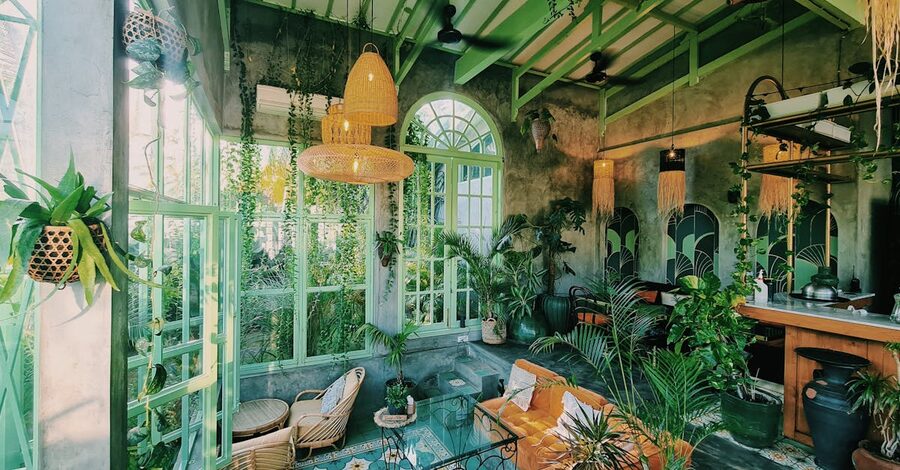
Bali cafe interior with green decor and vintage furniture

A Rp 35,000 (about $2.20) third-wave flat white at Crate Cafe in Canggu, served by a barista who could win a regional championship and probably has. A Rp 8,000 ($0.50) kopi tubruk (Indonesian-style coffee where the grounds sit at the bottom of the cup) at the warung next to the petrol station in Sidemen, served in a glass that has been washed in the same water for a decade. Both are coffee in Bali. Both deserve a place in your day. The trick is knowing when each one is the right call, which cafes across the island are worth the markup, and which ones are charging Seminyak rates for Seminyak vibes and not much else.

Bali cafe interior with green decor and vintage furniture
The mid-tier brunch cafe template you find across Canggu and Seminyak: hanging plants, mismatched lounge furniture, concrete-and-greenery palette.

I have been drinking coffee in Bali, on and off, for six years. I have queued at Crate Cafe at 9 a.m. with a hundred laptops in front of me. I have ordered the wrong drink at Seniman in Ubud and been gently corrected by a barista who took it personally. I have paid Rp 5,000 for a glass of kopi panas (hot coffee) on a plastic stool in Amlapura while watching a man fix a moped engine with a hammer. None of these were a mistake. This is the catalogue, by area, with prices that are not made up and opinions that are.

The Quick Answer If You Just Want a Recommendation

If you are spending one day in Canggu and want to know where to go, the answer is Crate Cafe for the scene, Milu by Nook for the food, and Quince for the rooftop. If you have one morning in Seminyak, go to Revolver Espresso. In Sanur, walk Jalan Danau Tamblingan and pick the one that is least packed. Skip the beach clubs that call themselves cafes and charge Rp 250,000 for a flat white. They are not cafes. They are nightclubs that open at breakfast and have a price problem.

If you want the longer version, with the cafe-by-area breakdown, the wifi reality, and a real read on which places justify the markup over the warung kopi at the gas station, keep reading.

How Bali Got Here: The Specialty-Coffee Story

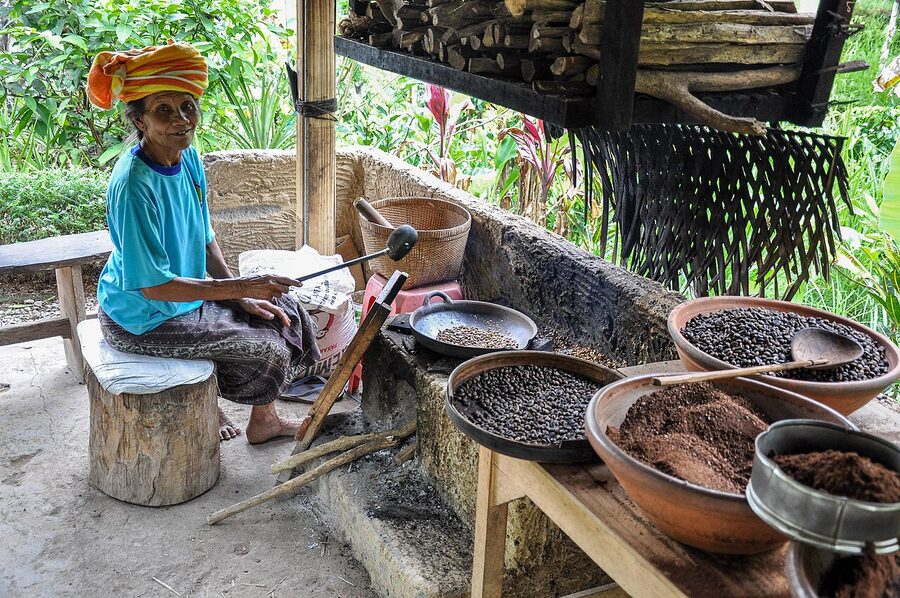
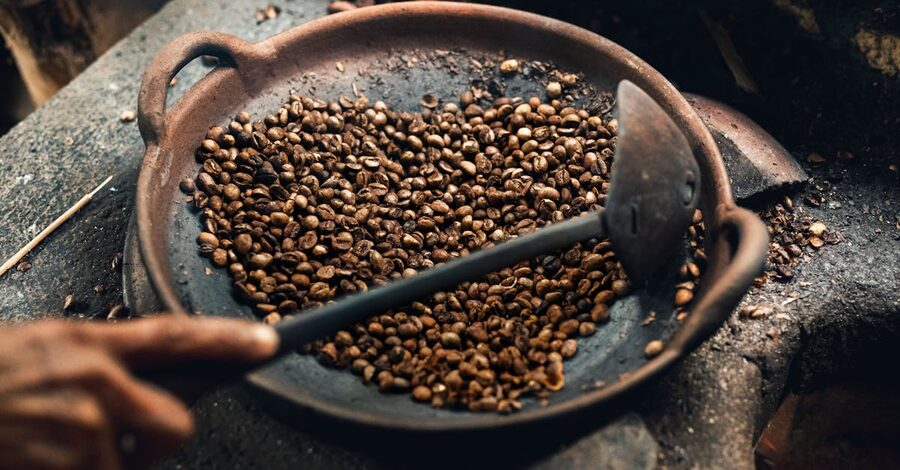
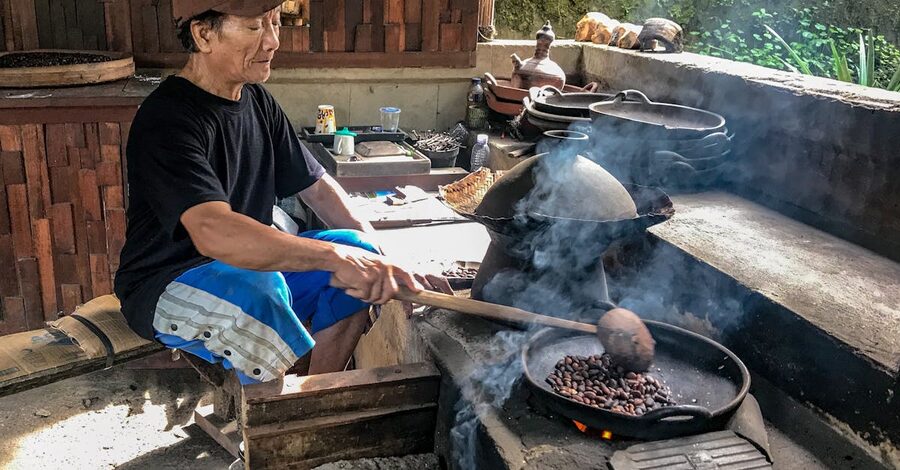
Traditional coffee bean roasting at a Bali coffee plantation
Traditional clay-pot bean roasting at a Bali coffee plantation. The growing and roasting traditions are old; the third-wave cafe layer on top is recent. Photo: Rennytan / CC BY-SA 4.0 (via Wikimedia Commons)

Indonesia has been growing coffee since the Dutch colonial era. The country sits in the top four global producers most years, and the beans you drink in a Canggu cafe today are almost always Indonesian: Kintamani Arabica from up near Mount Batur, Toraja from Sulawesi, Aceh Gayo from Sumatra, Java from East Java. The growing was always there. The cafes are newer.

The Bali specialty-coffee scene as you experience it now started building around 2012. That is when Revolver Espresso opened in Seminyak, when Seniman Coffee Studio launched its Ubud roastery, and when Australian baristas started arriving in serious numbers. By 2014 the picture had shifted. Anomali Coffee, Senchamps, Karana, and the wave of in-house roasters made specialty espresso a normal thing in Bali, not an Australian-import novelty. Hungry Bird in Canggu, founded 2013 by Indonesian Aeropress champion Edo, still roasts on-site and remains one of the most respected names on the island. Expat Roasters opened in 2017 in Petitenget and now sources 95 percent of their beans from within 40 km of the roastery.

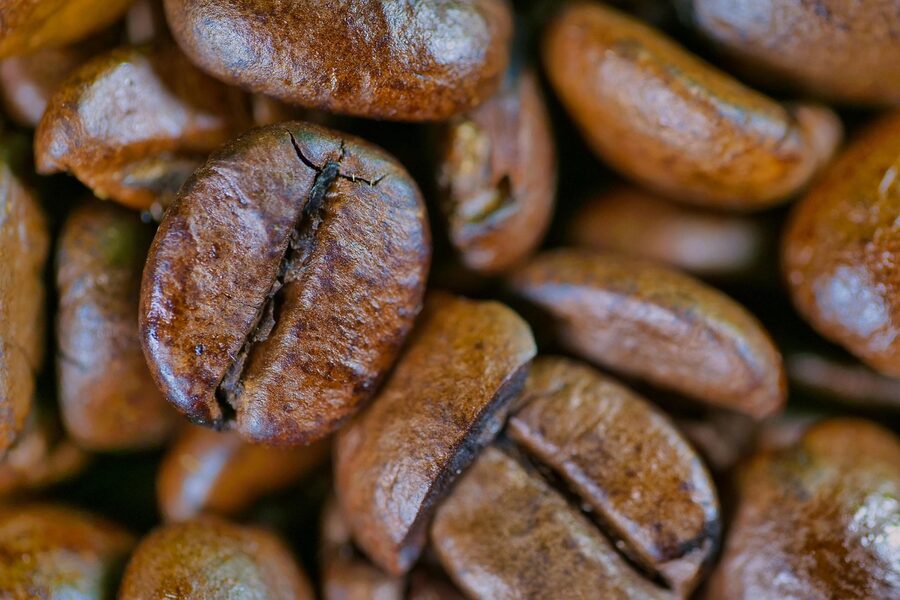
Roasted coffee beans close-up showing texture and color
Roasted beans up close. The in-house roasting that started arriving in Bali around 2014 is now standard at any cafe charging more than Rp 30,000 for an espresso.

The third wave is real here. So is the price gap. A flat white at a third-wave cafe in Canggu runs Rp 35,000 to Rp 45,000. The same flat white at the international hotel buffet costs Rp 65,000. The same drink in a strict sense, kopi susu (coffee with sweet condensed milk), at the warung next to your homestay costs Rp 8,000 to Rp 15,000. None of these is wrong. They are different products. Coffee at the warung is fuel and conversation. Coffee at Hungry Bird is a craft drink with a single-origin tasting note. You pick which one you want at which moment.

What Is Kopi Tubruk and Should You Drink It

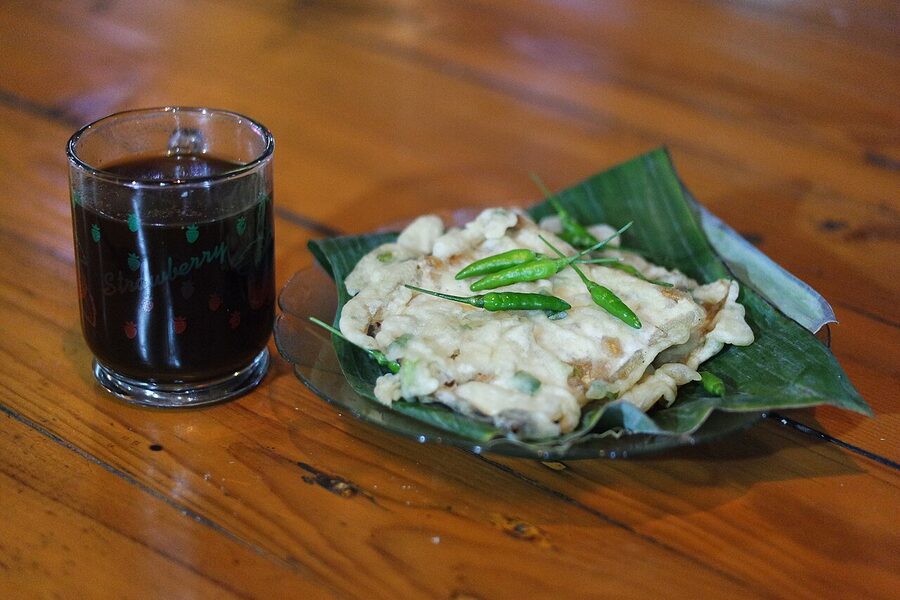
Kopi tubruk served with mendoan tempeh fritters
The Rp 12,000 morning: a glass of kopi tubruk and a plate of mendoan (battered tempeh fritters) with bird’s-eye chillies on the side. Photo: Hersy ardianty a / CC BY-SA 4.0 (via Wikimedia Commons)

Yes. Drink it. Kopi tubruk is the traditional Indonesian preparation where coarsely ground robusta or arabica is brewed straight in the glass with hot water and a generous spoon of sugar, the grounds settling at the bottom. You wait two minutes, you drink the top two-thirds, you stop before you hit the silt. It tastes like a strong, sweet, slightly muddy filter coffee. It is the standard pour at any warung, any roadside coffee shack, any village ceremony. A glass costs Rp 5,000 to Rp 12,000. You will see Balinese men and women drinking it at 6 a.m. before work, at 10 a.m. with a snack, at 3 p.m. as a break. There is no wrong time.

If you want the full local version, ask for kopi tubruk Bali or kopi panas pakai gula (hot coffee with sugar). If you want it without sugar, say tanpa gula; this will surprise the warung owner, but they will accommodate. Do not expect microfoam. Do not expect a tasting note. Do expect to feel slightly more awake and slightly more part of the place, which is what coffee at the warung is actually for. Pair it with a piece of jaja Bali (sweet rice cake) or a banana fritter and you have spent Rp 15,000 on a small pleasure.

Sanur: The Quiet Cafe Scene

Sanur Beach at low tide
Sanur Beach at low tide. The reef breakers keep the water flat all day, which is part of why the cafe scene here skews calm and second-trip rather than party-and-laptop.

Sanur gets written off as a retiree town with a flat beach, which is true and also misses the point. The cafe scene here is calmer than Canggu, less polished than Seminyak, and skewed toward the wellness-and-yoga crowd that has been coming to Sanur since the 1990s. The strip along Jalan Danau Tamblingan is where you find most of the indie spots. For the area context, my full Sanur guide covers where to stay, the beach access, and why the second-trip crowd ends up here.

Genius Cafe (Mertasari Beach)

This is the digital-nomad anchor for Sanur, sitting right on Mertasari Beach at the southern end of the Sanur strip. Open 7 a.m. to 10 p.m. daily. Two locations now: original Sanur, plus a Gianyar coast outpost (their website has the current menu and event calendar). The Sanur space mixes a covered cafe with garden seating and a few tables actually on the sand. Wifi is genuinely fast (300+ Mbps when I tested last visit). Coffee runs Rp 35,000 to Rp 45,000, breakfast bowls and bao buns Rp 60,000 to Rp 95,000, mains Rp 75,000 to Rp 130,000.

Charming gazebo overlooking the calm sea at Sanur Bali
The classic Sanur beach gazebo silhouette at sunrise. Genius has tables on the sand close to setups like this, which is the actual reason to come here over a Canggu cafe.

The reason to come here over a Canggu cafe is that you can actually see the ocean while you work, which sounds obvious but is not the case at Crate. Parking is Rp 2,000. Walk about five minutes from the parking area through the beach access. It gets full from 9 a.m. on weekdays and full-full on Sundays when the Bali expat brunch crowd arrives, so come before 8:30 if you want a table near the water.

Manik Organik

Vegetarian since they opened, on Jalan Danau Tamblingan 85 in central Sanur. This is the cooking-class cafe, the yoga-studio cafe, the place where the menu has more turmeric on it than coffee. Drinks Rp 30,000 to Rp 55,000, mains Rp 65,000 to Rp 110,000. The kitchen does an Indonesian thali plate that is good value at Rp 95,000. They also run a 3-hour cooking class for around Rp 600,000 per person if you want to take the warung style home with you. Open from 7 a.m. The crowd skews older, so you will not be queuing behind influencers. Wifi works for emails, not for video calls.

Healthy green smoothie bowl topped with almonds and seeds
The wellness-bowl staple at Manik Organik and Soul Garden: blended greens, flaked almonds, sunflower seeds, optional drizzle of nut butter. Add Rp 15,000 for chia.

Soul Garden Cafe

Tucked back from Jalan Danau Tamblingan with garden seating and a quieter vibe than Genius. Plant-based menu, healthy bowls, smoothies, decent flat whites at Rp 35,000. The reason to come here over Genius is the calm. There are no laptops banned, but there are also fewer people staring at them. Open daily 7 a.m. to 9 p.m. Mains Rp 70,000 to Rp 120,000. Solid breakfast option that does not feel like sitting inside an open-plan office.

Croissants and bakery pastries at a Bali cafe
The pastry case is now a feature at most Sanur cafes. Croissants run Rp 25,000 to Rp 40,000 depending on whether the kitchen lays the butter in-house or buys frozen.

Bonsai Cafe (Closed)

Mention this one because anyone who came to Sanur before about 2012 remembers it. Bonsai Cafe sat right on Sanur beach near where Hattons Wine and the icon Sands restaurant now sit. The original draw was an extraordinary collection of bonsai trees, more than 1,000 of them, set around the seating area, plus a basic Indonesian-and-international menu. It closed years ago and the space has been redeveloped. If you are looking for it on a map and finding nothing, that is why. The closest current equivalent on the beach is Sands and the new Sands Beach Club, which is more restaurant than cafe and pricier. For a cafe that captures some of the old Bonsai laid-back-on-the-sand feel, walk south to Genius.

Aerial view of Sanur stone pier and turquoise water
The Sanur stone pier from above. The old Bonsai Cafe site sat just inland from views like this, which is part of what made it worth missing.

Seminyak: The Established Scene

Modern cafe interior with industrial design elements
The polished Seminyak cafe template: polished concrete, exposed wood ceiling, La Marzocco at the bar, and one statement plant per square metre.

Seminyak was the first area in Bali where the third-wave cafe scene took root, and it still has the highest concentration of legacy spots. Petitenget, the road that runs from Seminyak Square up toward Canggu, is the densest stretch. Prices are 10 to 20 percent above what you pay in Canggu. The scene is more polished, more dressed-up, less laptop-friendly.

Revolver Espresso

This is the icon. Opened in 2012 in a tiny space on Gang Kayu Aya off Jalan Kayu Aya, now expanded to six venues across the south (the full venue list is on the Revolver Bali site). The original Seminyak hatch is still there and still does the best espresso in the area. House-roasted beans, a solid all-day food menu (the breakfast roll is famously good), and a bar that does cocktails after 5 p.m. Coffee Rp 35,000 to Rp 50,000, mains Rp 95,000 to Rp 165,000. Cash and card both work. Wifi exists but is throttled at lunch. Get there before 9 a.m. on weekends or expect to stand outside until a table opens up.

Espresso pouring from a Sanremo machine into cups
A double pull on a Sanremo, the same general setup Revolver has been running since 2012. The bar at the original hatch on Gang Kayu Aya still pulls the best espresso in Seminyak.

If the original is full, walk to the Revolver HQ in Umalas instead. Larger space, fewer tourists, same coffee.

Sisterfields

The Australian-cafe imported wholesale to Seminyak. Open 7 a.m. to 9 p.m. daily, on Jalan Kayu Cendana (current hours and menu on sisterfieldsbali.com). The smashed avocado on whole-wheat sourdough is legitimately one of the best plates in Seminyak at Rp 110,000. Coffee is good but not better than Revolver. The reason to come here is the brunch menu and the consistency. They have been running the same kitchen for over a decade and it shows. They take reservations, which matters in Seminyak.

Avocado toast with fresh tomato and seed toppings
The Sisterfields smashed avocado on whole-wheat sourdough at Rp 110,000. Tomato, feta, chilli oil, and a poached egg if you ask. The benchmark Bali brunch plate.

Watercress Seminyak

Smaller, calmer, more local than Sisterfields. On Jalan Batu Belig. Coffee Rp 35,000 to Rp 45,000, brunch Rp 75,000 to Rp 130,000. Smashed pumpkin, banana French toast, the standard Bali brunch list done well. The garden seating is the move. Open 7 a.m. to 10 p.m. They also have a Canggu sister location that I cover below.

Sea Circus

The fun one. Bright graphics on the outside, fish tacos inside, a vibe that leans more bar-restaurant than cafe but the morning coffee is solid. Jalan Kayu Aya. Mains Rp 95,000 to Rp 175,000. Great if you want a meal, less ideal if you just want espresso and a quiet hour with a book.

Common Grounds

The cafe inside The Common Hotel. Open to non-guests. Decent coffee, low-key crowd, useful when the rest of Seminyak is heaving and you need somewhere quieter. Coffee Rp 35,000 to Rp 50,000, breakfast Rp 65,000 to Rp 110,000. Good fallback option, not a destination.

Canggu: The Densest Cafe Scene on the Island

Canggu beach at low tide
Canggu beach with the small temple shrine on the rock outcrop. Five minutes inland from this stretch is the densest cafe corridor on the island.

Johnny Africa, who lived in Canggu for five months during the pandemic, claims the area has the highest concentration of cafes per capita of anywhere in the world. Having spent serious time in coffee cities like Melbourne and Lisbon, I think he might be right. The corridor that runs through Berawa, central Canggu, and Pererenan has more cafes than any human can visit in a week. Prices are slightly cheaper than Seminyak, slightly more expensive than Sanur, and the food menus are bigger because everyone here is trying to outdo everyone else.

Crate Cafe

The one with the line. Opened 2014 on Jalan Canggu Padang Linjong (the venue gallery on lifescrate.com shows what the space actually looks like), now famous as the original digital-nomad-with-a-MacBook cafe in Canggu. Open 7 a.m. to 11 p.m. The brekkie menu runs all day. Coffee Rp 30,000 to Rp 45,000, breakfast bowls and avo toast Rp 75,000 to Rp 110,000, mains Rp 95,000 to Rp 140,000. Wifi exists and is fine for emails, but the actual policy is that you cannot stay all day at one table. They turn over.

Stylish cafe interior in Indonesia featuring modern decor and lush greenery
Indoor seating mid-morning before the lunch rush. The Canggu cafe formula: open kitchen, polished concrete bar, statement greenery, baristas in matching aprons.

The real read on Crate: the food is good, the coffee is good, the scene is the actual product. You are paying Rp 95,000 for an avocado toast you could get for Rp 55,000 next door because Crate is where the Instagram crowd ends up and you want to see and be seen. If that does not appeal, eat next door at Cinta Cafe and have your coffee at Crate. If it does appeal, go with it. The line is real but moves fast.

Milu by Nook

The food is the reason here, not the coffee. Sister to the well-known Nook in Berawa, this is the larger and more polished of the two, on Jalan Subak Sari with rice paddy views from the back tables. Open 7 a.m. to 10 p.m. The breakfast menu is one of the best in Canggu, the Mediterranean breakfast plate at Rp 110,000 is genuinely worth the money. Coffee runs Rp 35,000 to Rp 50,000. Get there at 8 a.m. or expect to wait. They take reservations for groups of 4+ which is useful.

Hungry Bird Coffee

The barista cafe. Opened in 2013, founded by Edo (Indonesian Aeropress Champion 2013), now roasts on-site and supplies several other Canggu cafes including Miel. On Jalan Raya Semat. The coffee is the best in Canggu, and that is not a controversial opinion among people who actually know coffee. They serve nine Indonesian and three international single origins on rotation, plus the house espresso. A V60 pourover runs Rp 50,000 to Rp 75,000 depending on the bean. Espresso drinks Rp 30,000 to Rp 45,000. Food menu is small but solid; the nasi goreng is excellent (and the warung version, covered in my nasi goreng deep dive, is a different and equally legitimate animal).

Hand brewing coffee with a pour-over method
The V60 pourover ritual. Hungry Bird runs nine Indonesian and three international single origins on rotation; the bean of the day is chalked up at the bar.

If you have one cafe morning in Canggu and you actually care about coffee as a craft drink, this is the one.

The Loft

The work-from-cafe cafe. Three floors on Jalan Batu Bolong, with the top deck open to the air and a strict-ish no-laptops-after-noon policy on the ground floor (the upper floors are fine all day). Coffee Rp 30,000 to Rp 40,000, food Rp 65,000 to Rp 110,000. The thing that makes The Loft work is reliable wifi and air conditioning that actually works. Both are not a given in Canggu.

Quince

The rooftop. Jalan Pantai Berawa. Open 7 a.m. to 11 p.m. The downstairs is a competent cafe, the upstairs has an open-air rooftop with sunset views. Coffee Rp 35,000 to Rp 50,000, mains Rp 110,000 to Rp 175,000. This is one of the only cafes in Canggu that converts cleanly into a sundowner spot. Order an espresso at 4 p.m. and stay for a Negroni at 6 p.m.

Rooftop cafe with natural decor and comfortable seating
An open-air rooftop with rattan seating and palm-fringed views. The Quince template, perfect for the espresso-at-4 to Negroni-at-6 handoff.

Ours

A newer addition on Jalan Batu Mejan. Plant-based, well-lit, the kind of space where everything is photogenic by accident. Coffee Rp 35,000 to Rp 45,000, bowls Rp 75,000 to Rp 95,000. A more serene alternative to Crate when you want the brunch but not the queue.

Givings

The newest of the Berawa wave. Espresso bar at the front, larger seating and a kitchen at the back. Coffee Rp 30,000 to Rp 45,000, brunch Rp 75,000 to Rp 110,000. Good fallback.

Watercress Canggu

The Canggu sibling of the Seminyak Watercress. Larger, leafier, slightly busier. Same menu, same prices, less of the dressed-up Seminyak crowd. On Jalan Pantai Batu Mejan.

A Light Touch on Ubud (the Other Cafe Capital)

Ubud has its own cafe scene, big enough to deserve its own treatment. Seniman Coffee Studio (the third-wave anchor founded 2012), Anomali Coffee, Suka Espresso, Cafe Vespa, plus the wellness-bowl giants like Sayuri, Watercress Ubud, Kismet, and Atman. I have written that one out properly in the Ubud cafes guide; if you are heading to Ubud, start there.

The shorthand: Seniman for the coffee craft, Suka Espresso for the bigger food menu, Hujan Locale for an evening Indonesian dinner that is really worth it, and Cafe Vespa if you want a calmer space with rice paddy views.

The Bukit, Uluwatu, Jimbaran: Surf-Adjacent Coffee

Down on the Bukit peninsula, the cafe scene is sparser and skews toward the surf crowd. Suka Espresso Uluwatu (sister to the Ubud original) is the best general-purpose cafe in Uluwatu, on Jalan Labuansait. Coffee Rp 35,000 to Rp 50,000, breakfast Rp 75,000 to Rp 130,000. There is also a Bull Coffee branch in Jimbaran for the airport-area crowd, which serves a serviceable piccolo across from the InterContinental. The Bukit is not the place to come for coffee. It is the place to surf, eat fish at Jimbaran beach, and drink a coconut at Single Fin. Coffee is incidental.

Kuta and Legian: The Budget Side

Kuta gets dismissed for traffic and tourist-trap restaurants, but you can drink decent coffee here for less. The Bali Bakery franchise in Legian does Rp 28,000 lattes and Rp 45,000 breakfasts that are entirely fine. Madeleine in Kuta has decent flat whites for Rp 30,000. The Poppies Lane area has several small Aussie-style cafes that are not destination spots but get you a coffee for Rp 25,000 to Rp 35,000 in a setting that is more pleasant than the main Kuta strip. For the full Poppies area context (and why staying there is still legitimate on a budget), my Poppies Lane Kuta guide covers it.

The plain take on Kuta cafes: there are no third-wave anchors here. If you want craft coffee, drive 20 minutes to Seminyak. If you want a serviceable flat white and a banana smoothie, Kuta will not let you down.

The Warung Coffee Counterpoint

Friends at a traditional Indonesian warung enjoying snacks
The Rp 8,000 morning version of the Bali coffee scene. Plastic stools, glass of kopi tubruk, plate of gorengan (fried snacks) on banana leaf. No password needed.

I would be doing you a disservice if I left this article without saying clearly: some of the best coffee experiences I have had in Bali have been at warungs that do not have a wifi password, do not roast in-house, do not have an Instagram account, and charge Rp 8,000 for a glass of kopi tubruk.

The warung in Sidemen run by an old man called Pak Wayan, where you sit on a plastic stool and watch chickens cross the road. The kopi panas at the back of the wet market in Klungkung at 5 a.m. when nobody is awake yet. The kopi susu at the bus terminal in Denpasar where the driver gives you the milk-in-the-coffee version for Rp 12,000 and asks where you are from. None of this involves a third-wave bean. All of it involves the right amount of caffeine and the kind of place that does not exist anywhere else.

You do not have to choose between the two. You can have your Rp 35,000 flat white at Crate and your Rp 8,000 kopi tubruk at the warung and both can be excellent coffee for what they are. The problem is not the price gap. The problem is when the third-wave cafe makes you forget that the warung version exists, and then you spend three weeks in Bali drinking only Australian-roaster espresso and missing what the place actually tastes like.

The Wifi Reality (Read This Before You Plan a Workday)

The single biggest source of digital-nomad frustration in Bali is wifi that looks fast and is not. Here is the actual situation:

Cafes with genuinely fast and reliable wifi: Genius Cafe Sanur, The Loft Canggu (upper floors), Hungry Bird Canggu, Givings, BWork co-working spaces, and most of the dedicated coworks (Outpost, Tropical Nomad, Dojo). These are the places where you can do a video call without your face freezing.

Cafes with wifi that is fine for emails but will let you down on a video call: Crate Cafe, Milu by Nook, Watercress (both locations), Sisterfields, Common Grounds, Sea Circus, Quince, Manik Organik, Soul Garden, most of Ubud.

Cafes with a no-laptops-during-lunch policy: Crate, The Loft (ground floor), Revolver Seminyak (informal but enforced, they will turn the wifi off between noon and 2 p.m. if the cafe is full). The cue is when you see all the laptops disappear at noon. If they stay gone past 2 p.m., that cafe has the policy.

Cafes where the wifi password is on the menu: nearly every cafe in Canggu and Seminyak. Just ask. The barista will give you the password without asking what you are working on.

Hotels that beat any cafe wifi: if you are staying somewhere with serious wifi (most Como, Mandapa, the Oberoi properties, the four-star international chains), the wifi at your hotel will be faster than any cafe. Use the cafe for the food and atmosphere, take the call in your room.

How to Find a Cafe That Actually Works

Five practical rules from years of doing this wrong:

1. Walk in and look for laptops. If the cafe is half-full of people working, the wifi is good and the staff are used to it. If there are no laptops, either the cafe banned them or the wifi is not worth using. Both are useful information.

2. Check the lunch crowd at 1 p.m. If all the laptops are gone, that is the wifi-on-block lunch policy enforced. Come back at 2 p.m. and the laptops will be back.

3. Order food, not just coffee. Cafes in Canggu and Seminyak make their margin on the food. Sitting on a Rp 35,000 flat white for three hours while the lunch rush wants your table will get you the cold-stare treatment. Order an avo toast or a smoothie bowl and you have bought yourself the seat.

4. Avoid the rooftop and the beach club at coffee hours. They are not cafes. They are venues that serve coffee while gearing up for cocktails. The coffee will be fine. The price will be triple what you pay at a real cafe and the staff will not care about it.

5. Use Google Maps photos, not Instagram. Instagram shots of Bali cafes are heavily filtered and shot at the one good corner of the place. Google Maps photos are taken by random visitors and show the actual seating, the actual lighting, and the actual queue. If the queue in the Google photos looks long, it will be long when you go.

Prices, Tipping, and How to Pay

Standard Canggu and Seminyak cafe prices in 2026: espresso Rp 25,000 to Rp 30,000, flat white Rp 35,000 to Rp 45,000, smoothie bowl Rp 70,000 to Rp 95,000, avocado toast Rp 75,000 to Rp 110,000, mains Rp 95,000 to Rp 175,000. Sanur runs about 10 to 15 percent below this. Ubud is similar to Canggu. Kuta is about 25 to 35 percent below.

Service charge of 10 percent and government tax of 11 percent are added at most third-wave cafes (so a Rp 35,000 flat white becomes about Rp 42,400 after tax). At the warung you pay the price on the menu and that is it. Tipping is not expected at warungs and is appreciated at cafes; round up to the nearest Rp 10,000 or leave the change. Card payment works at all the named cafes above. Most accept QRIS (the Indonesian QR-pay system) which is what every Balinese pays with. Cash works everywhere; small notes are useful at warungs, less so at cafes.

Cafe-Hopping Routes That Actually Work

If you want to do a coffee crawl across Bali in a day, here are three routes that work logistically:

The Canggu route (half-day): Start at Hungry Bird at 8 a.m. for the V60 pourover. Walk or scooter 5 minutes to Milu by Nook for breakfast at 9. Espresso at Quince at 11 a.m. Lunch at Watercress Canggu at 1 p.m. Total damage about Rp 350,000 per person and you have hit four of the best cafes in the area.

The Seminyak route (half-day): Revolver original at 8 a.m. for breakfast and the espresso. Walk to Watercress Seminyak at 11 a.m. for a second coffee in the garden. Sisterfields at 1 p.m. for the smashed avocado plate. About Rp 380,000 per person.

The Sanur slow route (full morning): Bali coffee at the warung next to your homestay at 7 a.m. for Rp 8,000. Walk Mertasari beach. Genius Cafe at 9 a.m. for breakfast on the sand. Manik Organik for lunch at 12:30. About Rp 250,000 per person and you have done a slow morning in the calmest part of south Bali. For where to base yourself for this kind of day, check the where-to-stay options across the island.

What Time of Day to Go

The right time at any popular Bali cafe is one hour before it stops being empty. For Crate, that is 8 a.m. For Hungry Bird, 8:30. For Milu by Nook on a weekend, 7:30 a.m. or you wait. For Sisterfields, 8 a.m. or after 2 p.m. For Genius Cafe, before 9 a.m. or after 4 p.m. The peak hours at Bali cafes are 9 a.m. to 1 p.m. and again from 5 p.m. to 8 p.m. Outside those windows the cafe is yours.

Sundays are different. The expat brunch crowd takes over the popular cafes from 9 a.m. onwards and does not leave until 2 p.m. If you want a quiet Sunday morning, go before 8 a.m. or skip Sunday entirely and do your cafe day on a Tuesday.

Should You Visit a Coffee Plantation

The classic Bali tour stop is the Kintamani coffee plantation, where you taste the famous (and notorious) kopi luwak: coffee beans that have passed through a civet’s digestive tract before being roasted. The taste is different and slightly cleaner than standard kopi tubruk. The ethical issue is real: most luwak operations cage the civets in poor conditions, force-feed them coffee cherries, and stress them into producing year-round. Wild luwak coffee is rare and expensive. The tour-bus version is almost always caged.

If you want to see how Indonesian coffee is grown, go up to Munduk in the highlands instead. The plantations there grow Arabica without the luwak gimmick, the views are better, and you can do the visit as part of a longer northern Bali trip. My Munduk guide covers what to do up there. The Munduk Moding plantation runs cafe-and-coffee-tasting tours that are straightforward and do not involve caged animals.

The Verdict, By Trip Type

If you are a digital nomad here for a month: base in Canggu, work from The Loft and Hungry Bird, do brunches at Milu by Nook and Quince, and take a slow weekend in Sanur at Genius Cafe.

If you are a coffee enthusiast here for a week: Hungry Bird in Canggu, Seniman Coffee Studio in Ubud, Revolver in Seminyak, Expat Roasters in Petitenget. Plus Paper Hills in Kintamani if you can spare the day for a Mount Batur trip; the cafe sits right above the volcano and serves Expat Roasters beans.

If you are here for two weeks doing the standard south Bali loop: one cafe per area is plenty. Revolver in Seminyak, Crate or Milu in Canggu, Genius in Sanur, Seniman in Ubud, Suka Espresso in Uluwatu. That covers the bases without spending your trip in cafes.

If you have one day in Bali: drink a Rp 8,000 kopi tubruk at the warung next to your hotel in the morning, do whatever else you came to Bali for during the day, and have one third-wave flat white in the afternoon at the cafe closest to where you are staying. You will not have done a Bali coffee tour. You will have had two coffees that tell you what the island actually drinks.

For a full sense of how the cafe scene fits with the rest of the food I rate on the island, the food and drink section has the warung-and-restaurant counterpart. Sambal matah on the way out the door.

Padangbai, Bali: Stay Two Nights, Not 30 Minutes

Almost everyone you ask about Padangbai will say the same thing. It’s the port. The 30-minute pit stop on the way to the Gilis. You roll in by Grab from Sanur, you wait an hour for a fast boat, you eat a bad nasi goreng next to a stray dog, and you leave. The whole town becomes a Wikipedia entry in your head: ferry, scam, boat, gone.

I want to make a different argument. Stay two nights. Skip the boat the morning after you arrive, sleep in, and walk out to the Blue Lagoon snorkel with a Rp 30,000 (about $1.90) coconut from the warung on the way. The east coast has a real fishing town here, with a thousand-year-old temple on the headland, a white-sand cove ten minutes south, some of the cheapest scuba diving on the island, and zero clubs and zero rooftop bars. By the time you actually get on a Gili boat on day three, you’ll know why the people working that pier live here.

Aerial view of Padang Bai Bay in east Bali with the harbour, cove, and forested hills
Padang Bai from the air. The pier and ferry terminal are bottom-left, the cove with the boats is the village beach, and the white-sand stretch on the far left is the start of the path to Bias Tugel.

This guide is the case for slowing down. Where to stay (Topi Inn is still the cheap-bed anchor), what’s actually here that’s worth your time, the dive shops that have been operating since the late nineties, the food, and the practical bits, including the harbour-tout scam that catches almost every backpacker on the Gili boat back. If you’re already deep in east-Bali planning, our pieces on Amed and Sanur pair with this one for the wider east-coast loop.

Why Most People Skip It (And Why That’s Their Problem)

Padangbai sits on the southeast coast of Bali, in Manggis sub-district of the Karangasem regency. From Ngurah Rai airport it’s about 75 to 90 minutes by car if traffic behaves, slightly less from Sanur, slightly more from Canggu. The whole built-up village is maybe 800 metres long and three streets deep. You can walk across it in eight minutes.

And that’s the problem, in the eyes of most travellers. There’s nothing flashy here. No Bingin-style cliff villas, no DJ sets, no smoothie bowls plated like art. The town beach in front of the village is a working stretch of sand with painted jukung (traditional Balinese outrigger fishing boats) hauled up at the water line, dive boats coming in and out, and a pleasant amount of plastic at the tide mark after a windy night. If you arrive expecting Seminyak in fishing-village clothing, you will be disappointed within twenty minutes and you will write a one-star Tripadvisor review about the harbour smell.

A traditional Balinese jukung outrigger boat parked on a sandy beach
A jukung at rest. Most of these go out before sunrise and are pulled up the sand by 8 a.m.

The contrarian read: that working-village quality is exactly what’s worth two nights of your trip. The cost of accommodation runs forty per cent under Sanur for similar rooms. The dive shops have small groups (four max at most operators) and prices that are noticeably under what you’ll pay in Amed or Tulamben. The Blue Lagoon is a three-minute walk from your guesthouse. There’s a 1,000-year-old temple on the headland that nobody visits because nobody’s heard of it. You can do nothing for two days and have it work.

The Harbour, the Boats, and the Tout Scam to Watch For

Padangbai harbour with fast boats lined up at the pier and turquoise water
Mid-morning at the pier. Most fast boats run to Gili Trawangan in around 1h 45m. Buy your ticket inside the terminal, not from anyone in the parking lot. Photo: Magul / CC BY-SA 4.0 (via Wikimedia Commons)

The harbour is the reason Padangbai exists in the modern tourist map. Three things leave from here:

  • Slow ferry to Lembar (Lombok). About 4 hours, runs roughly hourly day and night. Foot passenger Rp 65,000, motorbike Rp 175,000, car Rp 1.2 million and up. This is what locals and freight take. It’s slower, much cheaper, and entirely fine if you’re not in a hurry.
  • Fast boats to Gili Trawangan, Gili Air, Gili Meno. Around 1h 45m to Trawangan with operators like Eka Jaya, Blue Water Express, Gili Gili, Semaya One. Roughly 20 daily departures across operators. Prices typically run $23 to $40 (Rp 370,000 to 640,000) one way per person, with hotel transfer from south Bali sometimes bundled. Common departure clusters are 08:00, 09:00, 10:30, 12:30, and 16:00.
  • Fast boats to Nusa Penida and Nusa Lembongan. Shorter run, around 45 minutes to Penida, slightly less to Lembongan. Less frequent than from Sanur, so most travellers actually do these from Sanur instead.

Now the scam. This is real and it is well documented and it has been catching backpackers at this pier for years.

You arrive on the Gili boat back from Trawangan. You step off into a parking lot. A friendly man in a fake company t-shirt tells you the included shuttle to Seminyak isn’t running today, or that it’s broken down, or that there’s a problem with the road and it’ll take six hours, or that you’d be much better off in his cousin’s car for “only” Rp 800,000. He sounds plausible. He has a clipboard. The actual shuttle is sitting twenty metres away with a driver who genuinely is going to Seminyak in forty minutes for the price you already paid. Walk past the man. Walk into the official terminal building. Show your ticket at the kiosk for the boat company you arrived with. The shuttle is real. The man is not.

Same logic on outbound: only buy fast-boat tickets from the official kiosks inside the terminal or pre-book online with a named operator. Anyone selling tickets from a folding table in the car park is either marking up by 100 per cent or selling you on a boat that doesn’t exist. The harbour has a perfectly functional ticket office. Use it.

View of Padang Bai harbour from the deck of the Lombok ferry
Pulling out of Padang Bai on the slow ferry to Lembar. The crossing takes about four hours and costs around Rp 65,000 for a foot passenger. Photo: Felix Dance / CC BY 2.0 (via Wikimedia Commons)

Topi Inn, the Long-Running Anchor

Topi Inn sits on the eastern end of the bay, on Jalan Silayukti, between the village beach and the path that climbs to the Blue Lagoon. It’s a three-storey bamboo and timber thing, sea-view rooms above a noisy ground-floor restaurant, the kind of place where the staff remember the regulars and the regulars are mostly returning divers. It has been doing the same job for a long time.

What you actually book here: a clean, simple room with a fan or AC, a mosquito net you’ll be glad of, and either a private or shared bathroom. Dorm beds run from around Rp 60,000 (about $3.80) and private rooms from Rp 200,000 to 400,000 (about $13 to $26) depending on AC and view. There’s no breakfast included, but the Topi Inn restaurant downstairs bakes its own bread and serves a long menu of Western and Indonesian plates from morning until late. Free WiFi works in the restaurant and most rooms.

The catch: the restaurant is loud, the building is right on the harbour-side road, and a 4 a.m. ferry crew can wake light sleepers. Pack earplugs. The room is cheap for a reason. If you want quiet luxury, you’re in the wrong town and this is the wrong guesthouse.

I’d still book it for one night purely because it’s a fixed point in the local geography. You step out the door, turn left along the seawall, and you’re at the Blue Lagoon path in five minutes. Turn right, and you’re at the harbour ticket kiosks in three. The breakfast banana porridge is genuinely good. And the staff are some of the friendliest people working in tourism on this coast, which after a few weeks in the south is its own kind of holiday.

Blue Lagoon, the Snorkel That Doesn’t Need a Boat

Snorkeler in clear blue water near a rocky shore in Bali
Snorkeling at Blue Lagoon. Best visibility is between June and October during the dry season; the rest of the year you can still get clear mornings if the wind has been off the land.

Blue Lagoon is the easiest world-class snorkel in south-east Bali. From the eastern end of the village, walk up the small road past Pura Silayukti for about ten minutes. You drop into a small bay with a strip of coarse sand, four or five warungs selling Bintang and grilled fish, snorkel and fin rental for around Rp 50,000 a day, and a couple of dive shops with their boats lined up on the sand.

The reef sits maybe twenty metres off the beach. You can swim straight out from the rocks on the south side, drift along the wall, and come back in. No boat needed. On a calm morning the visibility is genuinely good (15 to 20 metres), and you’ll see angelfish, butterflyfish, the odd reef shark on a deeper wall, and occasionally a turtle. Conditions vary: when the wind blows up after lunch, the surface chops out and visibility drops, so go early. By “early” I mean walk out of your guesthouse at 7:30 a.m. with a bottle of water.

If you want to go a little further, the warungs and dive shops will set you up with a jukung ride for Rp 100,000 to 150,000 (about $6.40 to $9.60) for a couple of hours, taking you over to the wall on the east side and the small reef in the middle of the bay. It’s worth it once. Negotiate the price before you get on the boat.

One real downside, and I’d rather you knew: there is sometimes plastic on the tide line at Blue Lagoon, especially after a storm or a strong onshore wind. The local warungs clean the beach most mornings but the sea brings more in. Don’t arrive thinking you’re going to a Maldives postcard. Arrive thinking you’re going to a working east-Bali bay where the snorkel is great and the beach is okay.

Bias Tugel, the White-Sand Walk South

A white sand beach at Padangbai with rocks and a forested headland and Lombok in the distance
Bias Tugel beach, a 15 to 20 minute walk south of the village over a hill. White sand, no boats, and a view across the strait toward Lombok.

Bias Tugel is the secret-beach upgrade. From the village, walk south up the small hill on the right (the road that climbs out of town toward Candidasa). You’ll pass a couple of homestays and after about 200 metres there’s a marked path on your left descending steeply down to a cove. It’s a bit of a scramble in flip-flops and the signage is half-hearted, so don’t expect Disney-style markers. The descent takes five minutes and ends on a 200-metre crescent of properly white sand framed by black volcanic rocks at both ends.

This is the prettiest beach within easy walk of any town on the east coast. There are usually two or three small warungs at the back doing fresh young-coconut juice (Rp 30,000), Bintang (Rp 35,000), and a small grilled-fish menu around Rp 70,000. Bring cash. There’s no ATM and no card reader and there is unlikely ever to be one.

The water can get rough, especially in the afternoons when the swell builds, so swim with care and don’t go out far if you’re not a strong swimmer. There’s no lifeguard. The snorkel is okay on a calm day along the rocks at the south end. The big draw is just lying on white sand with no boats and no port noise, twenty minutes after you left a working harbour. That contrast is the whole point.

One quirk: bring a small towel for the climb back, and good shoes if you can. The path is loose stone and dust, and after rain it’s slippery. I have done it in Havaianas, badly, on multiple occasions. Don’t be me.

The Diving: Cheaper Than Amed, And the Shops Have Been Here Forever

A scuba diver exploring underwater near a wreck and coral fans in Bali
The Liberty wreck at Tulamben sits about 25 minutes north up the coast and is a standard day trip from any Padangbai dive shop.

This is the reason a lot of people stay. Padangbai has its own decent dive sites within ten minutes of the harbour (Blue Lagoon for beginners, the Jetty for macro and a strange shipwreck-y collection of debris, Channel for drift dives), plus easy access to the bigger named sites at Gili Tepekong, Gili Mimpang, and the famous Liberty wreck and drop-off at Tulamben to the north.

The shops here run small groups and price below the Amed and Tulamben competition. A 3-day PADI Open Water typically runs around Rp 5.5 to 6.5 million ($350 to $415), against Rp 6.5 to 7.5 million further north. Two fun dives at local sites with full kit are usually Rp 1.0 to 1.3 million ($65 to $85).

The four operators with the longest track records and the most consistent reviews:

  • OK Divers Resort & Spa. PADI 5-Star centre, brand-new training pool, on-site rooms and a smarter restaurant called The Colonial. The biggest operator in town and a sensible default for an Open Water course. OK Divers Bali.
  • Geko Dive Bali. A PADI 5-Star Resort and TecRec facility operating in Padangbai since 1997. Multilingual staff (English, French, German, Spanish, Italian), strict 4-max group cap, very good for nervous first-timers. Geko Dive Bali.
  • Absolute Scuba Bali. On the bay shoreline, attached to its own small dive resort. Good for combined accommodation-plus-dive packages.
  • Paradise Diving Bali. German-run, tighter focus on certified divers and tech courses. Less of a beginner shop, more an intermediate-to-advanced choice.
School of fish near a wreck underwater in Bali
Fusiliers around the Liberty’s wreckage. The shallowest sections are at about 5 metres, the deepest around 30.

One real note on visibility. Padangbai’s water can be variable. June to October is the dry-season window with the best conditions (often 20 metre visibility, calmer surface). November to March can drop to 8 to 12 metres after rain, and the currents at Channel and at Tepekong get serious. If you’re chasing crystal-clear postcard diving, plan for the dry season. If you’re learning, the shallow-reef sites are fine year-round.

Pura Silayukti, the Temple Almost Nobody Visits

Pura Silayukti temple gateway with ceremony decorations and yellow umbrellas in Padangbai
Pura Silayukti during a temple ceremony. The temple is dedicated to Mpu Kuturan, an 11th-century spiritual reformer who shaped much of modern Balinese Hindu practice. Photo: Torbenbrinker / CC BY-SA 3.0 (via Wikimedia Commons)

Walk five minutes east of Topi Inn, up the road to Blue Lagoon, and you’ll pass a small temple complex on a low headland to your right. From the road it looks unremarkable. Walled, slightly weathered, a couple of incense sticks burning. This is Pura Silayukti, and it is one of the older and quietly more important temples in Bali.

The temple is dedicated to Mpu Kuturan, the 11th-century Javanese-Balinese spiritual reformer who was sent to Bali to harmonise the various competing Hindu sects on the island. Mpu Kuturan settled at Padang (now Padangbai) and is credited with establishing the tri murti framework of three main deities (Brahma, Vishnu, Shiva) within Balinese temple architecture, and with shaping the basic structure of village temples that you see across the island today. He was also instrumental in setting up the basic banjar (village council) structure that still governs Balinese community life. The temple is built on the spot where, by tradition, he meditated and eventually achieved moksha.

Carved golden doors of Pura Silayukti temple in Padangbai Bali
The carved golden doors of one of the inner shrines. Wear a sarong, drop a small donation, and don’t enter the inner courtyard during a ceremony unless invited. Photo: Anandajoti Bhikkhu / CC BY-SA 4.0 (via Wikimedia Commons)

The visit is short, twenty minutes is plenty, and there’s no entrance fee. You’ll need to wear a sarong (you can borrow one at the gate or bring your own), and a small donation in the box at the entrance is appropriate. Don’t enter during a ceremony unless someone clearly invites you. The view from the temple grounds out over the bay is one of the best in town, particularly in late afternoon when the light slants in across the water.

For broader context on what you’re actually looking at and the system Mpu Kuturan helped build, our piece on Balinese Hinduism and the Agama Hindu Dharma covers the temple structure, the daily offerings (canang sari), and the bigger ceremonies you’ll come across. The Padangbai temple is one of the earliest physical pieces of evidence we have for the system that became modern Balinese culture.

Where to Eat

Padangbai food is not a destination. It is, however, perfectly fine and very cheap, and you can eat well for under Rp 100,000 a meal almost anywhere in town. Don’t expect Ubud’s brunch scene or Seminyak’s fine dining. Expect grilled fish, nasi goreng, mie goreng, the occasional pizza, and a lot of cold Bintang.

The places that consistently come up across the dive crowd and the slow-traveller crowd:

  • Topi Inn restaurant. Long menu, in-house bread, banana porridge for breakfast, decent grilled fish for dinner. The on-site default. Around Rp 40,000 to 90,000 a plate.
  • Ozone Cafe. On Jalan Silayukti, just up from Topi Inn. The expat hangout. Italian-influenced menu (pasta, pizza, schnitzel) plus standard Indonesian. Floor cushions, low benches, busy from sundown. Around Rp 60,000 to 130,000 a plate. Cash and card. Ozone Cafe.
  • Warung Bu Jeno. Small family warung doing the best fish and shrimp in town according to most divers I’ve talked to. Around Rp 60,000 to 90,000. Cash only.
  • The Colonial at OK Divers. The smartest restaurant on the bay, with hammocks, beanbags, and its own swimming pool. You don’t need to be a guest. Western and Asian, around Rp 90,000 to 180,000 a plate. Open all day.
  • Kerti Restaurant. Sea-front warung with traditional decor and the best view in the immediate harbour area. Fresh fish, around Rp 70,000 to 110,000 a plate.
  • Martini’s Warung. Where the minivans leave from, so it gets busy mid-morning. The food is solid Balinese plate (nasi campur, gado-gado), the woman who runs it is sharp and friendly, and a meal will run you around Rp 35,000 to 50,000.
Sunset over Padang Bai harbour with moored jukung outrigger boats
Sunset on the village beach. The boats are mostly moored here for the night by 6 p.m., then back out by 5:30 the next morning. Photo: Jasmine Halki / CC BY 2.0 (via Wikimedia Commons)

Where to Stay

Padangbai accommodation breaks into three plain tiers. There’s no luxury here. If you want a $400 villa with a pool butler, you’re booking the wrong town and you should look at our broader where-to-stay archive.

Budget (Rp 60,000 to 400,000 a night)

Topi Inn. Already covered above. Dorm beds from Rp 60,000, simple privates from Rp 200,000. Anchor of the budget scene.

Bamboo Paradise Guesthouse. Clean, friendly, walking distance to the harbour. Around Rp 250,000 to 350,000.

Zen Inn Padangbai. Small guesthouse, decent for a first night before a Gili boat. Around Rp 200,000 to 300,000.

Bagus Homestay. Family-run, Balinese-style, 5-minute walk from the harbour. Around Rp 250,000 to 350,000.

Mid-Range (Rp 500,000 to 1,200,000 a night)

OK Divers Resort & Spa. Attached to the dive operation. Sea-view rooms, brand-new training pool, breakfast included, the smartest restaurant in town. Around Rp 700,000 to 1,200,000. The default if you’re booking a multi-day dive course and want everything in one spot.

Bloo Lagoon Eco Village. Up on the bluff above the village, on the path between Padangbai and Blue Lagoon. Open-sided villas with full kitchens, an outdoor yoga studio with an ocean view, a real spa, and the most thoughtful design in town. Worth knowing: the open-air design means you’ll get the occasional ant and frog visitor. Not all rooms have AC. Around Rp 800,000 to 1,400,000. Bloo Lagoon.

Puri Rai Hotel. Old-school mid-range across from the harbour. Large pool, big rooms, decent restaurant. Around Rp 500,000 to 800,000. Reliable, not exciting.

Absolute Scuba Bali Dive Resort. Bay-shore dive resort with garden bungalows and standard rooms. Direct beach access, 16-minute walk to Bias Tugel. Around Rp 600,000 to 900,000.

What I’d actually book

For a first-time Padangbai visit, two nights at Topi Inn or Bamboo Paradise. For a dive course or a longer stay, three nights at OK Divers. For a slow couple’s stay with no diving, Bloo Lagoon. For a Gili-boat-tomorrow overnight, anything walking distance to the harbour, including the Topi Inn dorm if you don’t mind the noise.

Padangbai as a Hub for East Bali

Tirta Gangga water palace fountain and statues in Karangasem east Bali
Tirta Gangga water palace, about 50 minutes north of Padangbai by scooter or driver. Foreign entry is around Rp 50,000. Photo: Umar Khatab Eko Putrawan / CC BY-SA 4.0 (via Wikimedia Commons)

Two nights here gives you east Bali at half the driver fee you’d pay from Sanur or Ubud. Hire a private car for a day for around Rp 600,000 to 800,000 (about $38 to $51) and you can comfortably loop:

  • Tirta Gangga. The 1946 water palace at Karangasem, with stepping stones over koi-filled pools and an eleven-storey fountain in the back garden. Foreign entry around Rp 50,000. About 50 minutes north of Padangbai.
  • Pura Lempuyang. The “Gates of Heaven” temple with the much-photographed split gateway frame. Be aware: the famous mirror-pool reflection is not a real reflection (it’s a piece of glass held under a phone by a temple staffer). The temple itself is genuinely beautiful and a serious climb if you go all the way to the top. About 1h 15m drive.
  • Sidemen. The valley of green rice terraces and quiet homestays that Ubud was thirty years ago. The drive itself is the experience. About 45 minutes from Padangbai. A natural overnight if you want to add a third night to the loop.
  • Tulamben and the Liberty wreck. If you’re a diver, go up for a full dive day. About 50 minutes north. We round up the wider east-coast options in our things to do in Bali archive.
  • Amed. Quiet diving and snorkel village stretched along 14km of coast. About 1h 15m. Read our Amed area guide if you’re considering pairing it with Padangbai for a longer east-coast trip.
  • Candidasa. 11km east, a quieter strip of mid-range hotels and a famous lotus lagoon. Worth a stop if you’re driving past, not a destination on its own.
Lush green rice terraces in the Sidemen valley of east Bali
Sidemen valley, about 45 minutes from Padangbai. The drive itself is part of the trip.

Boats Out: Gili, Lombok, the Nusas

Aerial view of cliff coastline and turquoise water near Nusa Lembongan Bali
The Nusa Lembongan and Penida cliffs across the Badung Strait. Most travellers do the Nusas from Sanur, but Padangbai works too if you’re heading on to the Gilis next.

Quick reference for what leaves from Padangbai and where it makes sense to go:

  • Gili Trawangan. Around 1h 45m by fast boat. Party island of the three. From around Rp 370,000 one way. Schedule on Gili Ferries.
  • Gili Air. Around 2 to 3 hours depending on operator and stops. The middle-ground island, has bars and bungalows and a more local feel.
  • Gili Meno. Around 2 to 3 hours. The quietest of the three, best for honeymoons and people who genuinely want to read a book for a week.
  • Lombok (Bangsal). Several fast-boat operators run direct to Lombok’s main port. From around Rp 350,000 to 500,000.
  • Lombok (Lembar) by slow ferry. 4 hours, Rp 65,000 foot passenger. The traveller-budget option, very common with motorbike riders crossing for the Rinjani trek.
  • Nusa Penida. Around 45 minutes. Less frequent than from Sanur, so most people skip Padangbai for the Nusa boats.
  • Nusa Lembongan. Around 35 to 40 minutes. Same logic as Penida, Sanur is usually easier.

If your route is “Bali, then Gilis, then Bali again”, Padangbai is the perfect overnight stop both directions. If your route is “Bali, then Penida or Lembongan”, just go from Sanur. Our piece on flights to Bali covers airport-to-east-coast logistics, which often shapes whether you stop in Padangbai on the way in or on the way back.

Getting There

A Bali fisherman returning home with a bright blue triangular sail
A jukung under sail. Most go out at 4 to 5 a.m. and are back by mid-morning.

From Ngurah Rai airport, count on 75 to 90 minutes by car if traffic is normal, longer through the worst of the Sanur and Sukawati afternoon snarl. From Sanur, around 1h 15m. From Ubud, 1h 30m. From Canggu or Seminyak, around 2 hours.

Practical options:

  • Private driver. The default. Pre-book through your hotel or via a transfer-booking platform for around Rp 350,000 to 500,000 (about $22 to $32) one way from south Bali. The driver waits at the kerb with your name on a board.
  • Airport taxi (Bluebird or coupon counter). Around Rp 365,000 with the official airport taxi coupon. Use the official counter inside, not a freelance driver in the car park.
  • Perama shuttle. The veteran tourist-shuttle operator runs a Kuta-to-Padangbai bus for around Rp 150,000, but only if they have at least two passengers. Frequency is limited.
  • Scooter from Sanur. Around 1h 30m on the bypass road. Doable, but not pleasant if you’ve just landed. If you’re already on a scooter from a longer trip, fine.
  • Grab and Gojek. Will drop you here from the south but won’t pick you up here, because there’s no driver pool stationed in town. Plan a return ride before you arrive or have your guesthouse arrange a driver.

Cash and ATMs: there’s a BCA ATM next to the 2 Combi convenience store on the main strip, plus a Mandiri and a BRI within 50 metres. They’re fine to use during the day. Be cautious with any ATM at night or that looks tampered-with. There are reliable accounts of skimmer devices on Bali ATMs (one traveller in our research had a thousand-dollar cash-advance fraud after using a sketchy machine). Stick to ATMs attached to bank branches or convenience stores in plain sight.

The Verdict

Padangbai is not for everyone. If your trip is fourteen days and your priority is south-Bali nightlife, Ubud yoga, and Penida cliffs, it’s a 30-minute pit stop on the way to a Gili boat and that’s fine. Don’t force it.

If your trip is ten days or more, or you’re doing a second Bali visit, or you dive, or you want one stop on the east coast that isn’t Amed, two nights here will repay you. The dive prices are real. The Blue Lagoon snorkel at 8 a.m. is a genuinely good morning. Bias Tugel is the prettiest beach within a 90-minute drive of the airport. Pura Silayukti is one of the older temples on the island and you’ll have it to yourself. And the food is cheap enough that you can eat dinner three nights for the price of one beach-club appetiser in Seminyak.

The harbour is what gets travellers in the door. The fact that almost nobody stops past the parking lot is what keeps the rest of it usable. Go slow, eat at the warungs, dive cheap, walk the headland at sunset, and skip the boat the next morning. The boat will still be there at 10:30.

Bali Luxury Hotels: The Top Tier Ranked by What’s Worth the Price

The doorman at The Oberoi Seminyak wears a sarong and a pressed white jacket, and when my taxi pulled up at half past eleven on a humid Tuesday night, he opened the door, took my bag, said my name back to me before I had given it, and offered a cold towel scented with frangipani. I had been on a plane for fourteen hours. I was sweaty, cranky, slightly wobbly on the cocktails. He did not register any of this. He just walked me past the koi pond to a low pavilion where a lady with a clipboard and a kebaya did the check-in standing up, no counter between us, while a gentleman behind her brought ginger tea in a small ceramic cup. The whole thing took maybe four minutes. I was in a lanai cottage with the doors open to the sound of the surf by midnight. That is what eight hundred and fifty US dollars a night buys you in Bali, and once you have felt it, the rest of this article makes more sense.

Tropical pavilion on the beach in Seminyak, Bali

A thatched beachfront pavilion in Seminyak. The Oberoi has had this view since 1971.

The contrast is the point. A Rp 350,000 (about $22) homestay in Penestanan with a host family, frangipani on your pillow, and the morning canang sari (the small palm-leaf offerings Balinese Hindus place on doorways at dawn) at the gate, delivers a different but equally valid Bali. Price is not the same as quality. Eight hundred dollars is not better than thirty dollars; it just buys a very specific thing. What it buys is what this guide is about. I have stayed at, eaten in, or walked the grounds of every property below, ranked by what they actually deliver against what they cost. The Oberoi anchors the list because it more or less invented luxury hospitality in Bali in 1971, when the rest of Seminyak was still rice fields and a fishing path. Everything else on this catalogue exists because the Oberoi proved a market existed.

Why this list is not the usual press-trip roundup

Most Bali luxury roundups come from press trips. Hotel pays for the flights, the agency does the writing, the article tells you the spa is “transformative”. You can usually spot them: every property is a 10/10, no opinions, the same five adjectives recycled. This list is not that. I have paid my own way at most of these and stayed on points or comp at a few; either way I will say a room smelled of mould or the breakfast was nothing special. Both have happened. You will find that kind of comment below, because it matters more than the brochure copy.

If you want the short version: Mandapa, Amankila, Bulgari, and Alila Villas Uluwatu are the top tier on quality of the actual experience. The Oberoi Seminyak is the one that keeps drawing me back because the staff have been there for twenty years and remember your order. Soori is the architecture pilgrimage. Capella is the most fun. Aman properties are great but quietly losing edge to COMO Shambhala Estate. Most of the Nusa Dua corporate giants are skippable unless you have a corporate rate and want a pool with no surprises. Read on for why.

The Oberoi Seminyak: where the catalogue starts

Sunset on Seminyak Beach, Bali

Seminyak Beach at six p.m., the half hour the Oberoi sunset tables sell out.

The Oberoi opened in 1971 as Kayu Aya, a beach club run by Australian artist Donald Friend and a small group of friends. The Oberoi Group bought it in the late 1970s and kept the bones. That is the thing nobody else in Bali can claim. Every other “iconic” property is twenty, thirty, forty years younger. The Oberoi has been refining the same lanai cottages on the same patch of Seminyak Beach for half a century. The staff turnover is glacial. The bartender at Kayu Bar made my Negroni the same way he made it three years earlier when I was last there, with the same wedge of orange and the same wink about the gin pour. That continuity is rare in Bali, where staff churn at most resorts is eye-watering.

What you actually book

The Garden View Lanai is the entry room, and the catch is right there in the name: garden view, not ocean. Around $450-650 a night low season, $700-900 high. It is a free-standing thatched cottage with a king bed, a sunken bathroom open to a small private courtyard, and a small lanai porch with two chairs. Mine smelled faintly of mildew on arrival, which I called down about and which they fixed by the end of the day. (One review I trust mentioned the same mildew issue. This Is Luxury Travel flagged it too. So it is a known thing, and worth requesting the back of the property if you are sensitive.)

The brochure shot is the Luxury Lanai Ocean View, which is a row of cottages along the front lawn, fifty metres from the surf. They are roughly $750-1100 a night. Worth it on a special trip; I would not pay it on a stopover.

The actual best room category is the Royal Villa, around $1800-3500. Two bedrooms, walled compound, plunge pool, private courtyard, a butler. Honeymoon territory or families splitting the cost.

What justifies the cost

Tropical villa pool in lush Bali garden

The kind of plunge pool the lanai cottages were inventing decades before plunge pools were standard.

One detail. The grounds are roughly nine hectares of garden in the middle of Seminyak. Walk five minutes through Seminyak now and you are in a wall-to-wall mash of beach clubs, cafes, traffic, surf rentals, and people on scooters with surfboards. Walk five minutes inside the Oberoi grounds and you are still in 1980s Bali, with the bougainvillea and the koi ponds and the sound of nothing but the ocean. That gap is what you are paying for. The Indonesian dance theatre on grounds runs traditional legong performances most evenings; non-guests can book the Saturday gala. Kayu Bar at the back of the property is the sunset drink, with the open-air pavilion looking down the beach toward the airport.

Eat at Frangipani for breakfast (the Indonesian set with sambal matah is the move; skip the Western buffet, which is fine but ordinary). The pool lunches are overpriced and bland; I had a bad poke bowl there once, and three of my group got mild food poisoning from the same sitting. So I avoid it now and walk five minutes to Warung Bernadette instead, which charges Rp 80,000 for an actually good nasi campur. The romantic dinner on the beach (set menu, candles, petals, white sand under your feet) is genuinely lovely in the non-cliched sense and worth doing once.

Spa is solid. Not the best in Bali (that crown belongs to Mandapa or COMO Shambhala), but the open-pavilion treatment rooms over lily ponds are atmospheric and the therapists have been there long enough to know what they are doing. Check rates on Booking.com or visit the Oberoi official site.

Ubud: where the river-villa luxury lives

Ubud has six properties that genuinely sit at the top tier. They cluster around the Ayung River gorge north and west of the town, where the topography lets architects build down a hillside with infinity pools that drop into jungle. Read on for what each actually delivers.

Mandapa, a Ritz-Carlton Reserve: the gold standard

Ayung River valley near Ubud, Bali

Photo: Fabio Achilli / Wikimedia Commons (CC BY 2.0)

The Ayung River. Mandapa, COMO Shambhala, and Four Seasons Sayan all sit above this gorge.

Mandapa is the property I send people to when they ask me where to stay in Bali for one trip in their life. Roughly $1100-1800 a night for a Suite, $2000-4500 for the river-pool villas. It sits on the Ayung River below Ubud, and the bones are a working rice terrace and a private temple, both of which are still in active use. (The temple actually belongs to the local banjar, the village council, so when there is a ceremony you might see priests and offerings move through the resort grounds. That is not staged for guests.)

The room to book is the One-Bedroom Pool Villa, around $2100 a night low season. It has a private pool, a riverside deck, a bathroom with a sunken tub looking onto the rice paddy, and a butler who actually butles. (Most “butler service” in Bali is a person you can text for towel deliveries. At Mandapa it is a person who notices your husband prefers cold-brew over espresso and just starts bringing one each morning without being asked.)

The detail that justifies the cost: the pool. The infinity edge does not face the Ayung River, which would be the obvious move. It faces the rice terrace, with three working farmers in conical hats wading through it most days. You sit in the pool and watch agriculture happen ten metres away. It is the most Bali thing I have experienced at the top tier.

Eat at Sawah Terrace, the open-air restaurant above the rice paddy. Indonesian small-plates set menu around Rp 1,800,000 a head. Non-guests can book a table; you should. The kitchen runs an Indonesian high-tea on Wednesday afternoons that is also worth the trip in from town. Mandapa on Booking.com.

COMO Shambhala Estate: the wellness pilgrimage

Aerial view of a Bali jungle resort

The wellness end of the Bali jungle scale.

COMO Shambhala is not a hotel; it is a wellness retreat that happens to also rent rooms. The minimum is three nights and the daily rate is around $1500-3500 with a wellness program included. There are no walk-ins; everyone arrives with a programme (cleanse, fitness, Ayurveda) and a personal practitioner who builds your day. The food is mostly raw, vegan, and weighed; the gym is on a deck above the river; the rooms (residences) are scattered through the jungle on a steep slope above the Ayung. You take a buggy between most things.

I am not a wellness person. I went sceptical and came out of three nights actually feeling, against my judgment, lighter. The yoga teachers are properly senior (most have been with COMO for more than a decade). The personal trainer who took me through a session knew exactly which ankle I had injured before I told her, which was unsettling and impressive. If you want a hotel, do not go here. If you want to be reset, this is the best in Bali.

Detail that justifies cost: the personal practitioner who genuinely tailors the three days. It is not pretend-personalisation; it is a person who actually thinks about you. Skip if you want pool drinks. COMO Shambhala on Booking.com.

Four Seasons Resort Bali at Sayan: the suspension-bridge entrance

Ayung River, Bali jungle valley

Photo: Eka343 / Wikimedia Commons (CC BY-SA 4.0)

Cross the suspension bridge over this river and you are at Four Seasons Sayan.

You arrive at Four Seasons Sayan on foot across a suspension bridge over the river. Then you walk into a two-storey lobby that floats above the gorge. The lobby is the photo, the suspension bridge is the experience. Sixty suites and villas, around $850-1500 for a One-Bedroom Suite, $1500-3500 for villas with private pools.

The Sayan villas tend to feel more “international five-star” than Mandapa, which is more “deeply Balinese”. If you are doing your first Bali trip, Mandapa wins. If you have been before and want something polished and comfortable with less ceremony, Sayan is great. The food at Sokasi (the cooking school’s restaurant) is excellent; Ayung Terrace for the river view at dinner. Four Seasons Sayan on Booking.com.

Capella Ubud: tented villas, properly

Aerial view of a Bali jungle villa with pool

Tented villas with proper bathrooms is the Capella Ubud trick.

Capella is the most theatrical of the Ubud properties. The whole resort is twenty-three “tents” in the jungle, designed by Bill Bensley to look like a 19th-century explorer’s expedition camp. Adults only, around $1500-3500 a night. The trick is that the tents have proper plumbing, marble bathrooms, and air conditioning (Bali heat does not respect canvas). It feels camp without being camping.

The detail: every tent has a copper bathtub on the deck, looking down the jungle, and you really can soak in it under the stars. (I did. It rained halfway through. Still worth it.) Eat at Api Jiwa for the omakase-style flame-grill counter. Skip if you want a beach. Capella Ubud on Booking.com.

COMO Uma Ubud: entry-luxury that does not feel like entry

Ubud Palace and traditional Balinese architecture

Walking distance to Ubud Palace, which is the COMO Uma selling point.

COMO Uma is the budget end of the Ubud top tier. Around $400-700 a night for a Garden Room, $700-1300 for villas. It is in the centre of Ubud, walking distance to Ubud Palace and the Monkey Forest, which is its biggest advantage over the river-gorge resorts. You are paying half the Mandapa rate and getting a smaller version of the same hospitality (Uma is the entry-luxury sister to Shambhala). The pool is glistening green tile, the bar is a tall white pavilion, and the rooms have that minimal Indonesian-meets-modern design COMO does well.

The free walk through the surrounding rice paddies every morning at seven is a small detail that I love. Bring your own coffee, the staff bring water, it takes about forty minutes. You earn breakfast. COMO Uma Ubud on Booking.com.

Bisma Eight: boutique mid-luxury in central Ubud

Pool villa with sunbeds in Bali

Bisma Eight is the boutique mid-luxury option in Ubud, well under the Mandapa price band.

If you want luxury feel without the Ritz-Carlton price, Bisma Eight is the answer. Around $200-380 a night. Thirty-eight rooms on a quiet lane off Jalan Bisma, central Ubud. The pool is a fifteen-metre lap pool above the jungle valley, the rooftop bar (Copper Kitchen) does a decent burger and a good cocktail, and the rooms have an exposed-brick design that does not feel mass-produced. Not a Mandapa replacement; a sane mid-tier choice. Bisma Eight on Booking.com.

Seminyak and the south Bali coast

Outside the Oberoi, the Seminyak coast has a small handful of properties at the top tier. Beyond that, prices are usually for the location and beach club access, not for what is actually in the room.

Alila Seminyak: modern beachfront alternative to the Oberoi

Seminyak Beach, Bali

Photo: Fitri Penyalai / Wikimedia Commons (CC BY-SA 4.0)

Seminyak Beach a few hundred metres south of the Oberoi. Alila sits a block back from this stretch of sand.

Alila is the modern, minimalist counterpoint. Around $400-700 for a Deluxe Studio, $900-1500 for the One-Bedroom Pool Suites. The whole property faces a beach club pool that runs along the front, with the ocean a short walk through the lawn. The rooms are concrete, dark wood, white linen; if you find Oberoi’s thatched-cottage aesthetic dated, you will like Alila instead. It is a good honeymoon pick because the design is photogenic and the sunset bar (Stag) is a real bar, not a poolside hut.

Eat at Seasalt for the Japanese-Indonesian crossover (the wagyu sate is the dish). Skip the breakfast buffet; do the a la carte. Alila Seminyak on Booking.com.

Karma Kandara: the cliffside option south of the airport

Karma Kandara cliffside view, Bukit Bali

Photo: Dare2Leap / Wikimedia Commons (CC BY-SA 4.0)

Karma Kandara hangs over the southern Bukit cliffs above a private beach you reach by inclined elevator.

Karma Kandara is technically on the Bukit, not Seminyak, but it is the easiest cliff-top option to get to from the airport. Around $500-1100 a night for a One-Bedroom Villa with private pool. The selling point is the inclined elevator that takes you down to a private beach club on the sand, which most other Bukit properties do not have (you usually walk down a path). The food at Di Mare (the cliffside restaurant) is genuinely good Italian; book the sunset table.

One caveat: the property is showing its age in places (it opened in the early 2000s). Some villas have not been refurbished recently. Ask for one of the renovated cliff-front villas specifically. Karma Kandara on Booking.com.

Jimbaran: the bay where the seafood grills happen

Jimbaran is the curve of beach south of the airport where the sunset seafood grills set up tables on the sand every evening. Two top-tier resorts here, both worth the cost for different reasons.

Four Seasons Resort Bali at Jimbaran Bay: the village layout

Four Seasons Resort Jimbaran Bay, Bali

Photo: Sarah Lou / Wikimedia Commons (CC BY 2.0)

Four Seasons Jimbaran Bay. The 147 villas spread across 14 hectares of garden behind this beach.

The Four Seasons here is a 147-villa resort built to feel like a Balinese village. Each villa has a thatched roof, carved wooden double doors, a private plunge pool, and a small walled courtyard. Around $900-1700 a night for a One-Bedroom Garden Villa, $1500-3500 for ocean-view. The grounds run for fourteen hectares of palm gardens down to a private stretch of Jimbaran Beach, and the resort is genuinely walkable in a way most Bali resorts are not.

Eat at Sundara, the beachfront restaurant. The coconut negronis at sunset have a cult following, and the kitchen does a proper kaiseki-style Japanese tasting menu on Friday nights. The Healing Village Spa is one of the best spas in Bali, full stop. Treatments around Rp 2,200,000 a session. Four Seasons Jimbaran Bay on Booking.com.

Belmond Jimbaran Puri: the smaller, more intimate alternative

Jimbaran Bay sunset over fishing boats

Photo: alq666 / Wikimedia Commons (CC BY-SA 2.0)

Belmond Jimbaran Puri sits at the quieter southern end of this bay. The sunset seafood grills are a 10 minute walk along the sand.

Belmond Jimbaran Puri is the smaller (sixty-four cottages and villas) and quieter neighbour. Around $700-1300 a night. It feels like a small village clustered around a beachfront pool. The seafood grills you have come to Jimbaran for are a ten-minute walk down the sand from the gate. If you find Four Seasons too sprawling, this is the move. The kitchen at Tunjung is good but not as memorable as Sundara. Belmond Jimbaran Puri on Booking.com.

Nusa Dua: the corporate enclave (mostly skippable)

Nusa Dua is the gated tourism enclave on the east side of the Bukit, built in the 1980s as a planned resort area. It has the whitest sand on the south coast, calm water suitable for kids, golf, and a row of large-format five-star resorts. I would only stay here if I had a corporate rate, was travelling with kids who wanted a calm pool, or had a one-night airport-adjacent reason. Read on for the four worth knowing.

The St Regis Bali Resort: the lagoon-pool option

St Regis Bali Resort beach, Nusa Dua

Photo: Simon_sees / Wikimedia Commons (CC BY 2.0)

The St Regis lagoon beach. Nusa Dua sand is whiter and emptier than Seminyak.

The St Regis is the strongest of the Nusa Dua giants. Around $700-1300 a night for a Suite, $1800-4000 for villa categories. The 3,800 square metre lagoon pool that runs through the property is a real architectural element, not a swim-up bar. The St Regis butler service is the same butler service the brand does everywhere, which means it actually works (proper packing, proper coffee delivery, etc). Eat at Boneka for the Sunday brunch, which is silly and good. St Regis Bali on Booking.com.

The Mulia and Mulia Villas: marble and scale

Mulia Resort Bali, Nusa Dua

Photo: Thank You for views from Fresno / Wikimedia Commons (CC BY 2.0)

The Mulia. Sprawling, marble-heavy, big-resort feel. Some love it, some find it too corporate.

The Mulia is enormous. Three hotels in one (The Mulia, Mulia Resort, Mulia Villas), 526 rooms, 7 restaurants, the lot. My take: I find it overscaled and the rooms feel corporate, with a lot of marble that does not say Bali to me. But families love it because the pool complex is huge and there is a kids club and the buffet has a kids menu. If that is what you need, around $400-800 a night gets you in. The Mulia on Booking.com.

Ritz-Carlton Nusa Dua: the cliff-edge villas

Beachfront resort in Nusa Dua, Bali

Photo: Matt @ PEK / Wikimedia Commons (CC BY-SA 2.0)

Nusa Dua resorts share this enclave; Ritz-Carlton sits a little south of the central beach strip.

Ritz-Carlton Nusa Dua sits a little south, with some villas on a small cliff above the rocks. Around $500-900 a night for a Sawangan Suite, $1500-3500 for cliff villas with infinity pools. It is the more grown-up choice in Nusa Dua compared to Mulia (less marble, more wood). Eat at Bejana for Indonesian on Friday nights. The spa cliff pavilions are the photo. Ritz-Carlton Bali on Booking.com.

Amanusa: the Aman that quietly does its thing

Aerial view of Nusa Dua beach, Bali

Amanusa overlooks this Nusa Dua coastline from a hill behind the Bali Golf Course.

Amanusa is on the hill behind the Bali National Golf Course, looking down at the sea. Thirty-three suites, around $1200-2500 a night. It is the smallest and least-known of the Nusa Dua properties, and that is the appeal. Aman service is famously personal; the staff-to-guest ratio is roughly four to one. The pool is the Amankila prototype, three-tier infinity. The food is fine but not the reason to come. Quick verdict: of the three Bali Aman properties (Amanusa, Amankila, Amandari), this one is the lowest-priority unless you specifically want the golf-and-beach combination. Aman official site for Amanusa (the Aman group is not on Booking).

The Bukit and Uluwatu: cliff-edge architecture

Aerial view of Bali coastal cliffs and ocean

The drive from DPS to Uluwatu takes you along this coastline. Allow 90 minutes in traffic.

The Bukit is the limestone peninsula at Bali’s southern tip. Cliffs, surf breaks, dramatic sunsets. The luxury here is bigger-budget, more architectural, and it skews toward couples and design-led travellers. Three properties in the genuine top tier.

Bulgari Resort Bali: the Italian-Balinese cliffside

Bvlgari Resort Bali cliff villa, Uluwatu

Photo: Simon_sees / Wikimedia Commons (CC BY 2.0)

Bulgari sits 150 metres above the ocean. The private inclined elevator down to the beach club is the detail people remember.

Bulgari is built on a 150-metre limestone cliff at the southern tip of the Bukit, looking out at the Indian Ocean. Fifty-nine free-standing villas, all with private plunge pools and Italian-Balinese fusion design (Indonesian wood, Italian travertine, lava-stone walls). Around $1500-3500 a night for a One-Bedroom Ocean View Villa, $4000-8000 for the larger categories.

The detail that justifies the cost: the private inclined elevator that runs down the cliff face to the beach club. You ride it standing up in a glass capsule, watching the surf break below. Then you arrive at the world’s most exclusive beach club on a tiny patch of white sand the resort essentially owns. It is theatrical in a way that Aman never bothers with, and that is either appealing or off-putting depending on the traveller. The food at Sangkar (Indonesian) and Il Ristorante (modern Italian) is genuine fine dining, both worth booking even if not staying. Bulgari Resort Bali on Booking.com.

Alila Villas Uluwatu: the architectural icon

Cliffs of Uluwatu, Bali

Photo: Jakub Halun / Wikimedia Commons (CC BY-SA 4.0)

The Uluwatu cliffs Alila Villas sits on. The infinity pool above this drop is the iconic Bali resort photo.

Alila Villas Uluwatu is what most architects call the best-designed resort in Bali. Eighty-five villas (50 suites and 35 one- to three-bedroom villas), all with infinity pools, designed by Singapore firm WOHA on a limestone plateau above the Indian Ocean. Around $900-1700 a night for a Cliff Edge Suite, $2500-6000 for villas with private pools.

The clifftop infinity pool dropping into nothing is the Bali resort photo. You have seen it on Pinterest a hundred times; in person it is exactly as good as the photo. The material palette is local lava stone, recycled iron-wood, and concrete that has weathered to look ancient. Sustainability is real here, not greenwashed: the resort runs on recycled water, organic gardens, and local craftsmen. The food at The Warung (Indonesian) is decent; Cire (international) is better. Alila Villas Uluwatu on Booking.com.

Six Senses Uluwatu: wellness with a clifftop

Aerial view of Uluwatu cliffs at sunset, Bali

Six Senses Uluwatu shares this stretch of the Bukit cliffs.

Six Senses Uluwatu is the newest of the Bukit big three (opened 2018). 103 suites and villas on a cliff above Pantai Selonding, around $700-1500 a night for a Sky Suite, $1800-4500 for sky pool villas. The Six Senses brand is wellness-led, and that shows in the spa programme (the cliff-edge yoga pavilion is real, the wellness consultations are useful).

The detail: there is a small but proper sleep clinic on site (real sleep tracking, real consultations, a sleep pod). I am not a sleep tourist and I tried it; it actually moved my needle on jet lag. Good for a stopover when you have flown twenty-four hours. Six Senses Uluwatu on Booking.com.

East Bali: Amankila on the cliffs above Manggis

Amankila: the original Aman in Bali

Amankila resort, East Bali, Aman

Photo: Richard Michael Shaw / Wikimedia Commons (CC BY 2.0)

Amankila on the cliffs above Manggis. The three-tier infinity pool cascades down the hillside.

Amankila (“peaceful hill”) sits on the cliffs above Manggis, on the east coast of Bali, looking across the Lombok Strait. Thirty-four free-standing thatched-roof suites connected by raised walkways, each with views of the strait and Mount Agung in the distance. Around $1500-3500 a night.

The signature is the three-tier infinity pool that cascades down the hillside. It has been photographed more than anything else in Bali hospitality. There is a black-sand beach club below, accessible by a long flight of steps (or a buggy). The location is the trade-off: you are two hours and a bit from the airport, and a long way from anything else. That is either the appeal (no traffic, no crowds, no Seminyak) or the deal-breaker (you are stuck on the property). I think it is the appeal. Pair Amankila with a few nights in Amed for the diving and you have an east-coast trip. Amankila official site (Aman is not on Booking).

The west coast outlier: Soori Bali

Soori: architectural pilgrimage on a black sand beach

Black sand beach with traditional fishing boats, west Bali

Soori Bali sits on this black-sand stretch of the south-west coast, an hour-plus from anywhere.

Soori was designed by Singaporean architect Soo K. Chan as a personal project; he and his family lived on the property at one point. Forty-eight villas, all with private plunge pools, scattered across rice fields and a stretch of black volcanic sand on the south-west coast. Around $1200-2500 a night.

The reason to go: the architecture. This is the most beautifully designed Bali resort I have stayed at, full stop. The lines are minimal, the volcanic stone walls have weathered to look ancient, the villas open completely to the elements. It is also the most isolated. You are an hour and a half from Seminyak, in farm country, with nothing nearby. Eat at Cotta (local) and Ombak (international). The squid ink beef is the dish. Book a private driver if you want to get out for a day; otherwise plan to stay on the property. Soori Bali on Booking.com.

What this catalogue actually buys you

Tegalalang rice terraces with coconut trees, Bali

A Rp 350,000 a night homestay in Penestanan delivers this view too. Price is not the same as quality.

Here is the unromantic truth. Eight hundred dollars a night does not buy you a better Bali. It buys you privacy, space, staff-to-guest ratio, food made from ingredients you trust, a bathroom that opens to a garden, and the absence of small frictions. It does not buy you better sunsets, better rice terraces, better beaches, friendlier people, or a more meaningful cultural experience. A Rp 350,000 ($22) a night homestay in Penestanan, ten minutes’ walk from the centre of Ubud, will give you an arguably better Bali. The host family will share their breakfast. Their kids will teach you to fold canang sari. You will see the morning offerings happen at six a.m. on the front step, not staged for you in a hotel lobby. That is also Bali. It is not a worse Bali; it is a different one.

The right answer to “where should I stay in Bali” is usually a mix. Two nights at Mandapa, then four nights at a Penestanan homestay, then two more at Amankila on the way out. You spend less than you would on a week at any one of these resorts, and you see more of the island. Use Sanur as a calmer base if you want a beachfront town that is not Seminyak; the long-running Tandjung Sari is a mid-luxury alternative I rate highly that did not make this list because it is a tier below the Mandapa-Bulgari level on price.

For arrival logistics on the high-end end of the trip (private transfers, lounges at DPS, business-class fares), see the flights to Bali guide. If you are coming from Australia and considering layered itineraries through Munduk or the north, the eco-lodge angle there pairs nicely with one or two top-tier nights at the start or end. And if you want to ground the comparison at the other end of the price scale, the Poppies Kuta piece walks through what Rp 200,000 a night actually feels like, and the south Bali beaches guide covers the public stretches the resort guests share with everyone else.

The short version: my actual rankings

One trip in your life: Mandapa.

You want the design pilgrimage: Alila Villas Uluwatu, then Soori.

You want to feel reset: COMO Shambhala Estate.

You want continuity, beach, and that 1980s Bali feel: The Oberoi Seminyak.

You want quiet east coast and a long view of Mount Agung: Amankila.

You want theatre: Bulgari with the inclined elevator, Capella with the tents.

You want corporate-points luxury that still feels Balinese: Four Seasons Sayan or Four Seasons Jimbaran Bay.

You want to keep it under $400 a night and still feel boutique: Bisma Eight or COMO Uma Ubud.

You want to skip a hotel altogether and live in a Penestanan homestay for two weeks: also valid. Sometimes the right move. See you at the warung.

For more on staying across Bali at every tier and area, browse the full Where to Stay archive.

The Best Cafes in Ubud, Bali

The first time I drank a flat white in Ubud, it was 8 a.m. on Jalan Suweta, the queue for green juice at Juice Ja Cafe was four deep, and a kebaya-clad ibu across the road was placing a fresh canang sari (a small palm-leaf offering) on the pavement outside her warung. The barista at the cafe two doors down, who I’d later learn used to roast at Seniman, pulled the shot, steamed the milk to that exact silky 60 degrees, and slid it across the counter. Rp 38,000. About $2.40. The same drink, made by a less skilled person, with worse beans, on a worse machine, would cost me the equivalent of $7 in Sydney.

A flat white with latte art served in a cup at an Ubud cafe in the morning
The third-wave flat white in Ubud is consistently better than what I get at home, and roughly a third of the price. 8 a.m. is the sweet spot before the cafes fill.

That’s Ubud cafe culture in one swallow. World-class coffee, ridiculously fair prices, served in spaces built around rice paddies and gardens and old Balinese compound walls. This is the catalogue of where I actually go, what I order, and which of these places are worth your time and which I now drive past. I’ve ranked the top five at the end by the only thing that matters: what you came to Ubud to do.

So what about Juice Ja Cafe?

A row of cold-press juices in glass bottles at an Ubud cafe
Juice Ja’s cleanse program runs five to seven days. They deliver if you’re staying out of the centre.

Yes, it’s still open. Address is Jalan Suweta No.49, Ubud 80571, hours 8 a.m. to 11 p.m. daily, and as of my last visit in early 2026 there are 523 reviews on TripAdvisor sitting at 4.5 stars and a Travelers’ Choice badge. Cash only. Free parking off the street, which in Ubud is rarer than you’d think.

What I order: the cold-press green juice (Rp 45,000), the mung bean burger if I’m hungry, and the Leningrad black tea with the chocolate cake if it’s late. The juice is the point. They run their own organic farm just outside Ubud and a five-day juice cleanse is one of the cheaper ones on the island at roughly Rp 1.4 million for the program with daily delivery. If you’ve never done a juice fast before and want to try one without the wellness-resort markup, this is the place.

The food is hit and miss. The juices, the burgers, and the Indonesian dishes (the nasi goreng, fried rice, was once called the best one a visiting reviewer had ever had) are reliable. I’ve had distracted service when there were two other tables in the room, and I’ve had a hot strawberry tart that I still think about. So go for the juice and the cake, treat the rest as a bonus, and read on, because Juice Ja is one entry in a much bigger list.

The price of a coffee in Ubud (so you don’t get fleeced)

A cappuccino with latte art in a white cup at an Ubud specialty coffee bar
If your flat white costs more than Rp 50k, you’re in a tourist tax bracket. Walk five minutes.

Bali is cheap. It’s also been getting steadily less cheap since the 2024 tourism levy and the post-pandemic price reset. Here is what I actually pay across Ubud cafes in 2026, taken from real menus and crossed against what other Bali long-stayers report:

  • Espresso: Rp 18,000 to 30,000 (about $1.10 to $1.85)
  • Cappuccino or piccolo: Rp 25,000 to 40,000
  • Flat white: Rp 30,000 to 50,000 (the Rp 50k mark is the line; over that you’re paying for the view)
  • Cold-press juice (single 250ml): Rp 35,000 to 55,000
  • Smoothie bowl: Rp 60,000 to 95,000
  • Avocado toast or eggs benedict: Rp 60,000 to 110,000
  • Pancakes or proper brunch plate: Rp 70,000 to 150,000

For context, a kopi tubruk (Indonesian black coffee, grounds and all, served in a glass) at the warung next to my homestay was Rp 8,000. The same caffeine, very different ritual. If you’re settling in for the morning with a laptop, fine, pay the third-wave premium. If you just need a hit of caffeine and you’re walking past a warung kopi (small Indonesian coffee shop), drink there. Both belong in your day.

Specialty coffee: where the third-wave crowd actually drinks

Coffee beans being roasted in a commercial coffee roaster at an Ubud roastery
Indonesia is one of the largest coffee-producing countries on the planet. Most of what you drink at the third-wave cafes here is grown in Bali, Sumatra, or Sulawesi.

This is the heart of the Ubud cafe scene and the reason I keep coming back. Indonesia produces an absurd amount of coffee, and Bali in particular grows arabica in Kintamani and on the slopes around Mount Batur. The third-wave scene was built by Australian baristas who set up shop here from about 2010 onwards and trained Indonesian staff to a level that you simply do not see in most countries that grow coffee.

Seniman Coffee Studio

Coffee beans being hand-roasted at a Bali coffee plantation
Seniman roasts in-house and runs a retail shop and barista workshop across the street from the cafe. Photo: Jorge Lascar / CC BY 2.0 (via Wikimedia Commons)

If you only have time for one specialty coffee in Ubud, this is it. Seniman Coffee Studio opened in 2012 on Jalan Sri Wedari (No. 5), and “seniman” means “artist” in Indonesian, which is the right word for what they do. They roast their own beans in-house, run a retail store and a roastery across the street, and you can sit on a swinging stool at the counter watching the baristas pull shot after shot.

I order the espresso and piccolo flight (Rp 75,000 last I checked) and a Japanese-style iced filter coffee brewed with their Karana line, which is sourced from Kintamani. The juicy berry notes come through cleanest in the cold brew. They also sell home roasters and gift boxes of three smaller bags if your suitcase is small, which mine usually is. Take the workshop with one of their senior baristas if you’re staying more than a week and care about coffee at all.

Anomali Coffee

Roasting coffee beans over an open flame in Bali
Anomali serves only Indonesian beans, sourced from across the archipelago. Try a flight if you want a tour of the country in espresso form.

Anomali sits on Jalan Raya Ubud at No. 88 and dates back to 2007, which makes it one of the older specialty roasters in the country. They’ve grown to ten cafes across Indonesia. The Ubud branch has a terrace out front for the heat-acclimatised and an air-conditioned interior for the rest of us. I usually order a piccolo brewed with their Bali Ulian beans and pay around Rp 35,000.

Anomali’s pitch is that everything they serve was grown in Indonesia. The single-origin menu changes with the harvest. If you want to taste the difference between Aceh, Bali, Toraja, and Java in one sitting, they’ll happily set you up with a flight. The latte art is consistent and the staff actually know the beans they’re pouring, which is not always the case at cafes that style themselves as third-wave.

Suka Espresso (Ubud)

Two flat white coffees with cookies on a wooden table at an Ubud cafe
Suka’s house blend is made with Indonesian beans and pulls a chocolate-and-caramel flat white. Order the cookie if there’s one left.

Suka started in Uluwatu, then expanded to Canggu and Berawa and finally landed in Ubud at Jalan Raya Pengosekan No. 108. The Ubud branch is a two-floor cafe in the south end of town, walkable from the Monkey Forest in about 12 minutes. It gets busy at brunch and the brunch envy is real because the food coming out of that kitchen is excellent. I usually only have time for the piccolo (Rp 32,000) and one of the chocolate chip cookies, but the avocado on toast (Rp 75,000) and the breakfast plates are worth a longer stop.

The house blend is Indonesian and pulls with chocolate and caramel notes that hold up in milk drinks. If you don’t like fruity, fermented coffee and just want something that tastes like coffee should, Suka is the safer bet than the lighter-roast houses.

F.R.E.A.K. Coffee

F.R.E.A.K. is a small, cosy spot at Jalan Hanoman No. 19, easy to walk to from anywhere in central Ubud. The name stands for Fresh Roasted Enak Arabica from Kintamani. Enak means “delicious” in Indonesian. Kintamani is Bali’s primary coffee-growing region, on the slopes of Mount Batur about 90 minutes north. The team focuses on a farm-to-cup story and will happily walk you through the supply chain if you ask. The piccolo is reliable. The space is tight, so it’s not a laptop cafe, more a 30-minute pause cafe.

Pison Coffee

A vintage cafe interior in Ubud with greenery and patterned tile floor
Pison’s south-Ubud branch sits over a rice paddy. Get the patio table if you can; the view does most of the work.

Pison sits on Jalan Hanoman No. 10X, on the south side of central Ubud. The patio looks straight out over a small green rice paddy and the indoor seating mixes traditional Balinese architecture with a sleek espresso bar. The all-day menu is solid. They do a house special with avocado and chocolate syrup, which I have not been brave enough to order. The nitro cold brew has decent fruity notes and is the right thing on a 32-degree day, which is most of them.

Cafe Vespa and the small-shop scene

Cafe Vespa is a tiny place on the south side of central Ubud, scooter-themed in a way that should be naff and somehow isn’t, with a short menu and a single excellent espresso machine. It seats maybe twelve. Use it as a quick stop on a walk. There are dozens of cafes in this category in Ubud, places that don’t make the listicles because they only seat a handful of people, and they’re often the ones with the most consistent coffee. Ubud Coffee Roastery on Jalan Goutama Selatan is another in this category, with six single-origins on pourover at any one time and bags of retail beans to take home.

Healthy bowls and plant-based: the Ubud cliche done well

A vibrant smoothie bowl topped with fresh fruit and seeds at an Ubud cafe
The Ubud smoothie bowl is real and it is good. The Rp 80k mark is fair for a properly assembled one.

Yes, Ubud is the smoothie-bowl capital of the planet and the vegan scene here is genuinely strong. I’m not a vegan, but I eat at vegan cafes here regularly because the food is good, the produce is local, and the desserts are surprisingly addictive. Here are the ones worth crossing town for.

Sayuri Healing Food

An acai smoothie bowl with fresh fruit served at an Ubud plant-based cafe
Sayuri’s raw vegan dessert counter is the part I keep returning for. The carrot cake is unreal.

Sayuri is the long-running vegan and raw-food anchor of the scene. Address is Jalan Sukma Kesuma No. 2, walking distance from the Yoga Barn. The cafe has indoor seating in a slightly chaotic layout (benches, cross-legged platform at the back) and a calmer outdoor courtyard. They run cooking classes, raw food teacher training, and a permaculture programme on the side. The menu is enormous. I come for coffee and the dessert counter, and the raw vegan cheesecake genuinely beats any non-vegan one I’ve had in Bali. The mains run Rp 75,000 to 130,000.

Watercress Ubud

Watercress on Jalan Gootama is the brunch end of the spectrum: avocado toast (around Rp 90,000), eggs benedict, smoked salmon plates, smoothie bowls. Not strictly vegan but with a strong plant-based menu. The space is light, the wifi works, and the breakfast crowd actually turns over. Service is fast for Ubud, which is a real compliment.

Kismet

Kismet is a wellness-leaning cafe and yoga shala on Jalan Gootama Selatan, owned by a longtime Ubud resident, with a menu that leans Mediterranean. Hummus plates, mezze, and one of the better falafel wraps in town for around Rp 85,000. The downstairs is cafe, the upstairs hosts yoga and sound healing. If your day involves both lunch and a movement class, this is the most efficient way to combine them.

Atman Kafe

Atman is a quieter, less Instagram-famous spot at Jalan Hanoman near the south end. Long Indian-influenced menu with a thali plate (Rp 95,000) that is the best thali in Ubud and several plates I haven’t seen anywhere else on the island. Cushion seating. Slow service in a good way. A long lunch here is the right choice on a hot day.

Zest Ubud

A relaxed group of guests at a tropical Ubud cafe surrounded by indoor plants
Zest’s no-shoes policy is real. Leave them at the door, take a cushion, settle in for at least two hours.

Zest is the most photographed vegan cafe in Ubud and one of the most quietly opinionated. Up the hill in Penestanan with a sweeping view down over the town and rice fields, no shoes inside, a tree growing through the centre of the room, and rattan everywhere. The crowd is the whole Ubud spectrum: yoga teachers, digital nomads, families on holiday, the occasional vegan podcaster doing a recording. The food is genuinely good. The passionfruit cheesecake is the dessert I tell people to order. I’m not vegan and I still sometimes come here for dinner.

Brunch and breakfast: where to eat before noon

Avocado toast at an Ubud brunch cafe
Ubud avocado toast in 2026 is rarely under Rp 75k. The avocado is good. Pay the premium or order a Balinese breakfast at a warung instead.

If you want a long, leisurely breakfast and don’t want to do it back at your homestay, this is the cluster I send people to. Ubud is an unusually strong breakfast town because so many residents work on cafe schedules, so the kitchens are properly running by 8 a.m.

Milk and Madu

Milk and Madu started in Canggu and the Ubud branch is at Jalan Suweta No. 3, right in the centre near the Royal Palace. Floor-to-ceiling windows, high ceilings, a kitchen that genuinely turns out one of the better smoothie bowls on the island (Rp 85,000). The annoying part: there is no scooter parking nearby and it gets packed by 9 a.m. Get there at 7:30 if you want a window table. Open 7 a.m. to 10 p.m.

BGS Ubud

A modern, plant-filled Bali cafe interior used by Ubud digital nomads
BGS does coffee properly and not much else. Don’t come hungry, do come for an early espresso.

BGS is the Canggu surf-cafe institution that opened a Penestanan branch on the ridge above central Ubud. The Bali coffee scene treats this place like an institution and they earn it: clean Scandinavian-modern space, an outdoor raised seating area, and some of the most reliably pulled coffee I’ve had in Bali. There is no proper food, only basic pastries, so come for the coffee and go elsewhere for breakfast. Open 7:30 a.m. to 8 p.m. daily.

Home Cafe Ubud

Home Cafe is the Russian-themed chain that grew out of Canggu. There are two outlets in Ubud, one in the centre and one slightly out (Jl. Sri Wedari area). Both are spacious and Bali-styled and good for a long brunch with a group. They serve syrniki (Eastern European cottage-cheese pancakes) which is on more Ubud menus than you’d guess because the Russian and Ukrainian community here is large. I find Home’s syrniki slightly underwhelming for the price (Rp 110,000), but the brunch plates are reliable. Open until 11 p.m., which is unusually late for a cafe.

Moon by Sun

Moon by Sun is the western brunch sister of Sun Sun Warung, one of the better dinner spots in central Ubud. Plenty of seating, comfortable sofas with side tables for laptops, and a row of single seats overlooking the street that I always go for. It does both breakfast and dinner properly, and runs taco nights and burger nights in the evening. Get there before noon if you want to actually work.

Cafes with a real rice-paddy view (and the ones to skip)

A view across Tegalalang rice paddies near Ubud
The morning hours in the rice paddies are the best ones. Cafes that open at 8 are missing the show.

The rice-paddy cafe is the Ubud Instagram cliche and roughly half the time the rice paddy in question is a postage-stamp view between two roads. These are the ones where the view actually delivers.

Huma Cafe by Goldmine

Aerial view of the Ubud rice terraces from a cafe deck
Huma sits in proper rice fields about 15 minutes north of central Ubud, no traffic, no tour buses. Worth the scooter ride.

Huma is about 15 minutes north of central Ubud near Tegallalang on Jalan Cinta. It’s the quintessential Bali rice-field cafe done properly: outdoor deck, paddies on three sides, no mass tourism (because Tegalalang’s main viewpoint is doing all the work). Open 8 a.m. to 10 p.m. The 8 a.m. opening is my one complaint, because the morning light over rice paddies hits at 6:30 to 7:30 and Huma misses it. Coffee and brunch prices are mid-range for Ubud (mains around Rp 110,000). Come for late breakfast or early dinner; the deck is best at sunset.

Keliki Coffee

Keliki is on a ridge in Tegallalang on Jalan RSI Markandya II, with a view down into the Bali jungle rather than rice fields. Small space, comfortable bar chairs facing out, and plugs at the counter for laptop work. The morning coffee and juice is what I order. Open 10 a.m. to 7 p.m., which means it’s not a sunrise option, but the late-morning to mid-afternoon window with the jungle below you is one of the better cafe experiences on the island.

Rusters Cafe and Bakery

A cafe deck overlooking a tropical Ubud landscape
Rusters is one of the few cafes worth sitting at past 5 p.m. The deck faces west into the rice fields.

Rusters sits in front of a proper rice paddy off Jalan Penestanan, far enough from central Ubud that you avoid the worst of the daytime traffic. It has both a cafe and a bakery, both with ample seating. The view from the cafe is the rice fields directly. It’s also one of the few Ubud cafes worth coming to at sunset because the outdoor deck faces west, which means you get the palm trees and rice fields silhouetted against the sky. Stay for a coffee and shift to a beer when the sun drops.

The ones to skip

Tegalalang rice terraces near Ubud as seen from a viewing platform
The Tegalalang viewpoint earns the photos. The cafes lining the road in are mostly trading on a much smaller version of the same view. Photo: Freddy eduardo / CC BY-SA 4.0 (via Wikimedia Commons)

I’m not going to name names, but a fair chunk of the rice-paddy cafes you see on Instagram are essentially a Rp 95,000 smoothie bowl, a Rp 50,000 latte, and a 30 cm strip of green between two service roads with the camera angled carefully. If the cafe is on the main Ubud Tegalalang road and there’s a tour bus parked outside, the view inside is going to be smaller than the photo promised. Drive the extra 15 minutes to Huma or out to Jatiluwih if you want the real thing. Sari Organik in the Subak Sok Wayah area was the original of the genre and is now permanently closed; if you see it in an old guide, it’s gone.

Working from cafes: the digital-nomad reality

A digital nomad working from a laptop at an Ubud cafe with a coffee
The cafe with the best wifi often isn’t the one with the best coffee. You usually need two cafes per day.

Ubud has a real remote-work population now and the cafe scene has reorganised around it. Some cafes welcome laptops, some don’t, some welcome them but cut the wifi at noon to push lunch turnover. Here is what actually works.

Mudra

Mudra is the most obvious nomad anchor in central Ubud and the only place I’ll consistently sit for four to six hours. They have great wifi, table sharing is openly encouraged, the food and drinks are good (the matcha latte is one of the better ones in Ubud at Rp 55,000), and the social density is unusually high. There is always something happening: handpan lessons, ecstatic dance afterparties, open mic nights. If you need deep focus this is not the place. If you want to write blog posts, get out of your homestay, and meet other nomads, you’ve found the spot.

Chandra Cafe

Chandra is connected to the Radiantly Alive Yoga Studio. Soft music, sofas, plug-equipped tables, an open front that lets natural light flood in. It’s calmer than Mudra and the wifi is reliable. The vegan dessert menu is genuinely tempting; you will end up eating your way through the menu. A good middle option between Mudra’s energy and a hotel desk.

Tucky

Tucky is a small inside, air-conditioned cafe (which in Ubud is its own selling point in March when humidity is at 90 percent). Coffee and breakfast are both solid. Because the space is small, I avoid setting up here at peak hours; mid-morning to lunch is fine. If you have a 2-hour deep-focus block to do, this is the right room.

Eightea Bali

Eightea is on the Sweet Orange Trail just outside Ubud off Jalan Raya Ubud, a 15-minute walk through the rice paddies to reach. It’s not the most convenient cafe in Ubud and the wifi is unreliable, but if you want to read, journal, or do email-only work in actual peace, this is one of the few spots that delivers it. I come here in the morning to read more than I come to work.

The dish anchors: Tukies, Locavore To Go, and the small specialists

A counter of fresh pastries at an Ubud cafe bakery
Ubud’s bakery shelves are unreasonably good. Stop at the counter even if you didn’t plan to.

Some cafes in Ubud are not cafes you sit at. They’re a counter you walk up to, get one specific thing, and walk out. These are the ones I always tell people to try.

Tukies Coconut Shop

Tukies is a small chain that does one thing: fresh young coconut, drilled, served with a spoon, and (the move) blended into a coconut shake with house-made coconut ice cream for around Rp 40,000. The original is on Jalan Raya Ubud. There are now branches across Bali. On a 33-degree afternoon walking back from the Monkey Forest, this is exactly what you want.

Locavore To Go

Locavore was Ubud’s most acclaimed restaurant for years. Locavore To Go is the more accessible counter-and-deli sister, where they sell their own bread, pastries, sandwiches, and ready-to-eat plates. The kombucha is excellent. The croissants and danishes are the closest thing to a proper European bakery I’ve found in Bali, and the fact that you can put together a takeaway picnic of charcuterie, cheese, bread, and a bottle of wine for under Rp 350,000 is the best deal in Ubud for what you actually get. This is where I go for proper takeaway food.

Hujan Locale

Hujan Locale is technically a restaurant, not a cafe, but the lunch hours are when it earns its place on this list. The cuisine is Indonesian done with proper technique and presentation: Balinese, Javanese, and other regional dishes plated like the kitchen takes them seriously. The lunch set is around Rp 195,000 for two courses and is one of the better-value sit-down meals in Ubud. The front room doubles as a casual cafe before noon. If you want to eat your way through Indonesian regional food in an air-conditioned space, this is where to do it.

The Elephant

The Elephant is a vegetarian and vegan restaurant just out of central Ubud near the Tjampuhan Hotel, with a deck that overlooks the Wos river valley. The view is the genuine article (proper jungle drop, not a postage stamp). The menu is creative vegan food, not just plates of greens. Mains run Rp 95,000 to 145,000. Best at sunset.

Coffee: where it actually comes from

A Balinese man hand-roasting coffee beans in a traditional kitchen
Hand-roasting kopi over a wood fire is still done in the highland villages around Kintamani. The flavour is wildly different from anything in a third-wave cafe.

One reason the Ubud cafe scene punches so far above its weight is that the coffee is grown an hour up the road. Bali’s coffee comes mostly from Kintamani, on the slopes of Mount Batur, where the volcanic soil and altitude (around 1,200 to 1,500 metres) produce a clean, slightly fruity arabica. Indonesia as a whole is the fourth-largest coffee producer on the planet, with Sumatra producing the famous Mandheling and Gayo, Sulawesi producing Toraja, and Java producing the namesake bean.

Kopi luwak coffee samples at a Bali coffee plantation
Kopi luwak is a tourist trap nine times out of ten. The animals at most plantations are caged. Skip it.

A note on kopi luwak, the famous “civet coffee” sold across Bali. The original concept was wild civets eating coffee cherries and the partially-digested beans being collected from the forest floor. The reality at most Bali coffee plantations advertised to tourists is caged civets being force-fed coffee cherries in tiny cages for a tourism photo and an inflated coffee price. Don’t drink it. The coffee at Seniman or Anomali is better and you’re not paying for animal cruelty.

A kopi luwak plantation in Bali set up for tourist visits
The “coffee plantation tour” along the Tegalalang road is mostly a sales funnel for overpriced tea and luwak coffee. Photo: Stunip / CC BY-SA 4.0 (via Wikimedia Commons)

If you want to see real coffee farming, drive to the Munduk area in the north and visit one of the working plantations there. The Munduk highlands have real farms doing real coffee, and the contrast with the Tegalalang tourist circuit is instructive. For more context on regional Balinese food and the warung scene that sits alongside the cafes, you can also read about where to eat the best nasi goreng on the island, which is the dish I default to for any meal under Rp 30,000.

Ubud cafe culture in context: temples, traffic, and the morning offering

Houses over the Tukad ravine in Ubud, a key part of the town's geography
Ubud is built into a ravine system. The cafes on the western ridge in Penestanan have the views; the ones in the centre have the traffic. Photo: Jakub Halun / CC BY-SA 4.0 (via Wikimedia Commons)

Ubud is a real Balinese town with active Hindu temples and daily ceremonies happening alongside the cafe scene. The morning canang sari offerings sit on cafe doorsteps right next to the chalkboard with the day’s specialty drink. If a procession comes down the road and stops the traffic, the cafes pause too. This is the part of Ubud cafe culture that the listicles miss: the cafe is sitting inside an active Balinese village, not outside it.

Practical bits. Traffic in central Ubud is bad from about 9 a.m. to 7 p.m. The single best way to cafe-hop is on a scooter (Rp 70,000 a day, 5,000 baht/day fine if you don’t have an international permit and get caught at a checkpoint, the law is being enforced harder since 2024). The second best way is to walk; the centre is small. Grab and Gojek work but the centre often has surge and slow pickup. Most cafes accept cards now, but the small ones (and Juice Ja) are still cash only.

If you’re staying outside central Ubud, Penestanan in the west and Pengosekan in the south are the two cafe-dense neighbourhoods with the least traffic. I much prefer staying in either to staying in the centre itself. The relevant comparison from the coast: the Sanur cafe scene is calmer and more beach-resort, Canggu is denser and more surf-and-nomad, and the broader island indie cafe scene stretches well beyond Ubud, with sister branches of Suka, BGS, Watercress, and Milk and Madu in multiple areas. If you’re tracing the cafe culture across Bali I cover that in the island-wide indie cafe guide.

Where to stay if you actually want the cafe scene

Rice fields just outside Ubud
Stay in Penestanan or Pengosekan if you want to walk to cafes through rice paddies, not down a traffic-choked main road. Photo: Jakub Halun / CC BY-SA 4.0 (via Wikimedia Commons)

You don’t need to stay in central Ubud to enjoy the cafe scene. In fact you’ll have a better time slightly out. Two areas to consider:

  • Penestanan, on the ridge to the west. Walking distance to BGS, Sayuri, Zest, and a string of small cafes. Quieter at night. Most of the long-term nomads I know live here.
  • Pengosekan, on the south side toward the Monkey Forest. Walking distance to Suka, Watercress, Pison, F.R.E.A.K. The Yoga Barn is here. Less hippie than Penestanan, more brunch crowd.

Central Ubud near Jalan Suweta and the Royal Palace gets you closest to Juice Ja, Milk and Madu, and the dance-performance evenings, but the traffic and noise are real. Find the breakdown of where to stay in different parts of Bali if you’re trying to choose between Ubud and the coast for a longer trip.

The editor’s top five (by what you actually want from your day)

A paddy field outside Ubud, the setting for the best cafes in town
The Ubud cafe scene is one of the genuine reasons to stay here for more than three days. Pace yourself.

If I had to send someone to one cafe in Ubud for a specific reason, here’s where they’d go:

  1. For a single best coffee: Seniman Coffee Studio. Order the espresso and piccolo flight, then a Japanese-style iced filter. Buy the beans on the way out.
  2. For a long laptop day: Mudra in central Ubud. Stay 4 hours, eat lunch, meet people. Or Chandra if you need quieter focus.
  3. For one cold-press juice and a juice cleanse to take home: Juice Ja Cafe on Jalan Suweta. Five-day cleanse, daily delivery, no wellness-resort markup.
  4. For the rice-paddy view that delivers: Huma by Goldmine north of central Ubud. Get there for late breakfast and stay until the deck catches the afternoon light. Rusters at sunset.
  5. For the vegan dessert that converts the non-vegans: Sayuri Healing Food’s raw vegan cheesecake, or Zest’s passionfruit cheesecake if you want the view too.

One more rule of mine after years of doing this: a third cafe in a single day is one too many. Two excellent ones plus a long lunch somewhere with proper food beats three rushed flat whites. The Ubud cafe scene rewards slowness, which is convenient because there’s no other speed Ubud will let you operate at anyway.

The South Bali Beaches, Ranked By Area

It is just past six in the morning at Pantai Balangan, the sand pulling cold under your feet, and a single surfer is paddling out into a glassy left. Behind him the cliff is still in shadow. The warungs on stilts (small family-run cafes) along the dunes are not open yet. Two locals are folding towels onto bamboo sun-loungers, and a small dog is patrolling the wrack line. By eight there will be a hundred people on this beach. Right now it is him, the wave, and you. This is the moment that makes the south coast worth setting an alarm for.

Surfer silhouette walking out at Balangan Beach, south Bali, with a low sun on the horizon
Balangan at first light. Get there before seven and the cliff stairs are still empty. Photo: Wokshots / CC BY-SA 4.0 (via Wikimedia Commons)

What follows is the south-coast beach catalogue, ordered the way I would actually rank it: by area, not by some random “top ten” list that bounces from Bukit to Canggu and back like a tour-bus itinerary. South Bali is really five strips of coast and they are nothing like each other. The Bukit peninsula is white sand and limestone cliffs. The Kuta-Legian-Seminyak strip is one long flat beach with a different demographic every kilometre. Canggu is volcanic grit and surf schools. Jimbaran is the seafood beach. Nusa Dua and Tanjung Benoa are the resort grid, calm water and watersports vendors. Pick the right area for the day you have, and you will save yourself two hours in the back of a Grab.

I have been driving the south coast on and off for years, mostly on a Honda Scoopy, occasionally with a private driver when the rain comes. Below is what I would tell a friend who messaged me from the airport. Prices are in IDR with rough USD in brackets the first time they appear. Entrance and parking fees go up every year and the 2024 tourism levy added a flat Rp 150,000 (about $9.50) per person at arrival, so verify before you make a special trip. And please, take your trash off the beach.

The Bukit peninsula: cliffs, white sand, and the actual best beaches

View of Pandawa Beach Bali from the cliff lookout with turquoise water and white sand
Pandawa from the cliff cut. The water on the Bukit really is this colour at low tide before noon. Photo: Riska Diamitri / CC BY-SA 4.0 (via Wikimedia Commons)

If you have one day to “do” south-coast beaches, spend it on the Bukit. The peninsula sits south of the airport like a thumb, separated from the rest of the island by the mangrove channel that the Mandara toll bridge now crosses. Take that bridge from Sanur or Denpasar. It costs a few thousand rupiah for a scooter and saves you forty minutes of Kuta traffic, plus the gulf view at sunset is genuinely something. From Canggu it is faster to come down via the Kuta bypass and then cut west at Pecatu.

The Bukit beaches share a few traits. The sand is white and coarse. The water is clear because there is no river outflow on this side of the island. Every beach is reached down a staircase or a steep gang, often after paying a small parking fee at the top. Tide matters more here than anywhere else in Bali because some of these coves disappear at high water. Check Magicseaweed’s Uluwatu surf report before you commit. And monkeys, especially around Padang Padang and Suluban, will absolutely take your sunglasses if you give them the chance.

Padang Padang

Padang Padang Beach Bali at low tide showing the cave entrance and the rock pool in the bay
The cave entrance at Padang Padang, low tide, before nine. After nine the staircase is a queue.

Padang Padang is the famous one. You park up on the road, pay Rp 15,000 / about $1 to get in, and walk down through a split in the rock that opens onto a small cove. The first time you see it you understand the hype. The second time you understand the problem. By nine in the morning the cave passage is a single-file queue, the narrow strip of sand fills with influencers, and the surf-school crowd is jockeying for the inside section. If you can get there at seven, before the tour groups, the beach is genuinely beautiful and the small wave near shore is fun for intermediate surfers. If you can only get there at eleven, skip it and go to Bingin.

One thing the guidebooks underplay: the wave at Padang Padang itself, the famous left, is for advanced surfers only. It barrels hard over shallow reef and the takeoff is a paddle-battle. The lessons happen on a different, smaller wave further along. Do not turn up with a foam board expecting the postcard.

Suluban (Blue Point)

Pantai Suluban Blue Point Bali with limestone cliffs and the cave-mouth opening onto the surf
Suluban at low tide. The beach is the shape of a comma. At high tide the comma vanishes. Photo: I made jon arinata / CC BY-SA 4.0 (via Wikimedia Commons)

Suluban, often called Blue Point, sits directly below Single Fin, the cliff-top bar where every Sunday afternoon turns into a small festival. To get to the actual sand you walk down stone steps that switch through bamboo huts selling sarongs and Bintang singlets, then squeeze through a slot in the limestone that opens onto a comma-shaped beach. Entry is around Rp 5,000 (about 30 cents) at the parking. Time it for low tide. At high tide the sand simply isn’t there and the surf lineup gets dangerous to swim through.

Up at the top of the steps, the Delpi Rock Cafe has the view that explains why this whole stretch of coast became a surf legend in the first place. Bintang is overpriced (Rp 50,000 / $3.20 versus Rp 25,000 in town), but the seat is worth it. Pura Luhur Uluwatu, the cliff temple where the kecak fire dance happens at sunset, is fifteen minutes east; pair the two if you want to stretch the day. There is more on the temple system in our Balinese Hinduism guide.

Bingin

Surfer riding a wave at sunset below the limestone cliffs of the Bukit Bali, near Bingin
Late session at Bingin. The wave breaks over a shallow reef so it is not a beginner spot, but the watching is good.

If I had to pick one Bukit beach for an unhurried day, this is it. Bingin is reached down two-hundred-plus uneven steps through a cliff village of homestays and warungs (the descent is the security system that keeps the tour buses out). The sand is short, white, and ringed by limestone. The wave is a long left over a sharp reef, so swim with the surfers’ line in mind. There is no formal entry fee at most of the access points, just Rp 5,000 for parking up top.

What makes Bingin worth the climb back up is the cluster of cliffside warungs serving good food at warung prices. Grab a bean bag, order nasi campur (a plate of rice with several small dishes) for Rp 50-70k, and watch the surfers thread the wave for two hours. Sunset light here is gold rather than orange because the cliff blocks the lower angle. Nobody talks about that and it is one of the things that makes the place feel different.

Dreamland

I’ll be direct: I usually skip Dreamland. The original beach was a real find decades ago, but the New Kuta Beach development built a paid car park and shuttle system, lined the back of the beach with commercial vendors, and turned a quiet cove into the Bukit’s busiest day-trip stop. The shore-break is fun and the sand is still white, but you pay Rp 10,000 to park and another Rp 25,000 for a sun-lounger, vendors will work you for sarongs and braids the whole time, and the trash situation after a busy weekend is not great. If you are with kids who want a wide gentle beach with infrastructure, Dreamland works. If you are looking for the version everyone wrote about ten years ago, it is gone.

Balangan

View of Balangan Beach Bali from the cliff lookout showing the long curve of white sand
Balangan from the north cliff. The reef comes up at low tide so the surfers cluster at the southern end. Photo: Magul / CC BY-SA 4.0 (via Wikimedia Commons)

Balangan is the long crescent just north of Dreamland. Coarse white sand, a reef that exposes at low tide (do not try to swim then; you will scrape yourself), and a row of bamboo warungs built on stilts at the back of the beach. Parking is Rp 5,000 and there is no formal entry fee. The wave is gentler than Padang Padang, more forgiving than Bingin, and a number of small surf schools run lessons here, so it works for intermediate surfers and confident beginners with a guide. Walk north along the beach to the small clifftop temple and you’ll usually have the upper sand to yourself.

The downside: Balangan is exposed and there is almost no shade. Bring a sarong to sit on, drink water you brought yourself, and reapply sunscreen twice if you stay past eleven. The UV at this latitude burns you fast, which is part of why we wrote a separate Bali health guide on sun safety and reef-safe choices.

Pandawa

The Bima statue at Pandawa Beach Bali wearing a black-and-white poleng cloth
The Bima statue above Pandawa. There are five of these, one for each Pandawa brother from the Mahabharata. Photo: Satdeep Gill / CC BY-SA 4.0 (via Wikimedia Commons)

Pandawa is the engineered version of a Bukit beach. A wide road was cut through the limestone in the early 2010s, the cliff faces along the descent were carved with five large statues of the Pandawa brothers from the Mahabharata (Yudhishthira, Bhima, Arjuna, Nakula, and Sahadeva), and a long flat beach with a paved promenade was opened. Entry is Rp 15,000 plus parking. The water is calm and shallow because of an offshore reef, which makes Pandawa one of the few south-coast beaches genuinely safe for kids and weak swimmers.

The wide white-sand beach at Pandawa Bali with calm shallow water
The bay at Pandawa, late morning. The reef offshore takes the swell down to ankle-slap waves. Photo: Herryz / CC BY-SA 4.0 (via Wikimedia Commons)

The catch: from about ten in the morning the tour buses unload and the centre of the beach gets loud. Roosterfish Beach Club at the south end is the calmer family option (loungers around Rp 150-200k including a drink credit, last verified in 2025). Walk five minutes north of the main entrance for a quieter strip. Best window is sunrise to nine.

Nyang Nyang and Melasti

The cliff road descending to Pantai Melasti at the southern tip of Bali
The Melasti road, late afternoon. The whole drive down feels like a film set, which is exactly why drone pilots and wedding shoots love it. Photo: Rhani Lilianti Kata / CC BY 4.0 (via Wikimedia Commons)

Two beaches at the southern tip of the Bukit, both reached by spectacular cliff roads, both worth the drive. Melasti is the easier one to access (the road was widened a few years ago) and has wide flat sand, calm water, and a small handful of beach clubs at the south end including Minoa and the cliff-edge Karang Boma Cafe. Entry is Rp 10,000. It does get busy with drone-shot tourists by mid-morning, but the south end stays calmer.

Nyang Nyang is the one nobody tells you about until you have already done the others. You park up at the cliff and walk down a steep dirt path through long grass for fifteen minutes. There are no warungs once you get to the bottom. There is no shade. There are also, often, no other people. Bring water, a hat, and a sense of humour about the climb back. Rp 5,000 to park. Not for swimming (strong shore-break and no lifeguard), absolutely for a long walk on a wide empty beach.

Kuta, Legian, and Seminyak: one long beach, three demographics

Pantai Kuta Bali at sunset with crowd silhouettes against the orange sky
The Kuta sunset crowd hasn’t really changed in a long time. Cheap Bintang, sand games, the football match that breaks out at golden hour. Photo: Stepgun / CC BY-SA 4.0 (via Wikimedia Commons)

Kuta-Legian-Seminyak is one continuous beach. About eight kilometres of flat sand, sloping gently into the surf, all of it facing west so the sunset is the headline event every evening. The beach is the same beach the whole way along. What changes is who is on it and what is behind it. Kuta is cheap, Aussie-skewed, party-driven; the warungs serving Bintang are Rp 25k a bottle and the surf-board hire is Rp 50-80k a day. Legian in the middle is calmer, more families, more mid-range hotels. Seminyak at the north end is beach clubs, day beds, and bottles of wine that cost what you’d pay in Sydney.

Kuta Beach

Kuta Beach Bali in the morning with traditional jukung outrigger boats anchored offshore
Kuta in the early morning before the day really starts. The jukung outriggers come back from night-fishing right around six. Photo: Jakub Halun / CC BY-SA 4.0 (via Wikimedia Commons)

Kuta gets a worse rap than it deserves. The town is run-down, the touts on the main strip are aggressive, and the trash situation after wet-season storms is grim (you will see brown plastic strips along the high-tide line in January-February). But the beach itself is wide, the wave is the most beginner-friendly in Bali, and a sunrise walk along it from the Hard Rock end down to Legian is genuinely calming. Surf schools (Pro Surf School, Rip Curl School of Surf, Odysseys) run all morning and the lineup is tolerant of beginners because the bottom is sand.

If you are basing in Kuta, the practical primer is in our Poppies Lane guide. Beach access from Poppies I or II is a ten-minute walk. Watch your stuff if you swim alone; a beach attendant for Rp 20-30k will keep an eye on your bag and a cold drink waiting.

Legian and Seminyak

Seminyak beach umbrellas and beanbags at sunset Bali
Seminyak from a beanbag spot. The bag is “free” if you order a Rp 90k cocktail. Pick the warung end if you want the same sunset for Rp 25k.

Walk thirty minutes north of Kuta and you are in Legian, where the beach calms down. Locals play football in the late afternoon. Families set up. The vendors are still there but less aggressive. Another twenty minutes and you are at Seminyak, which is where the beach clubs start. Ku De Ta is the legacy one, opened in 2000, still iconic and still expensive (drinks Rp 150-300k, lounger minimum spend Rp 500k+). Potato Head Beach Club is the famous Bali sunset venue with the mosaic of vintage shutters facing the ocean; minimum spend on a day bed is around Rp 1.5-2M for two during peak season.

The beach club experience is enjoyable once. The view from a Ku De Ta lounger is the same view you get from a Rp 25k beanbag at one of the Seminyak warungs further south, and the drink is two and a half times the price. Do the beach club thing if it’s a special evening. Otherwise pick a colourful umbrella warung and watch the football match. The trash trade-off applies here too: bring a bag for your own and the next person’s.

Canggu, Berawa, Echo, Pererenan: surf-traveler central

Sunset at Canggu beach Bali with palm trees in silhouette
Canggu sunset. The black volcanic sand makes the colours sit differently than they do at Kuta. Photo: Burmesedays / CC BY-SA 4.0 (via Wikimedia Commons)

Canggu is the surf-traveler strip that Kuta used to be a couple of decades ago, before it got built out. The sand is volcanic grey-black, which gets stinging hot from about ten onwards, so flip-flops are not optional. The beach runs north from Berawa to Batu Bolong to Echo Beach to Pererenan, four named breaks within walking distance. Pick by skill: Batu Bolong for beginners (slow soft wave, foam board hire Rp 50-80k a day, surf schools everywhere), Echo for intermediates with a bigger sandy break, Pererenan for the quieter morning session. Old Man’s at Batu Bolong is the bar that defines the scene; arrive at five for the Wednesday and Friday DJ sessions and a drink runs Rp 60-90k.

Echo Beach and La Brisa

La Brisa beach club at Echo Beach Canggu Bali in the evening with lanterns and bean bags
La Brisa at Echo, around six. The Sunday market here pulls a crowd you should expect. Photo: Meetvas / CC BY-SA 4.0 (via Wikimedia Commons)

If you only do one beach club on the Canggu strip, do La Brisa at Echo. It is built almost entirely from reclaimed fishing boats, the layout flows down to the sand on multiple levels, and the food is good rather than just instagram-good. Cocktails sit in the Rp 100-150k range, mains around Rp 120-180k. The Sunday La Brisa Market is the kind of event that turns a beach day into a long evening; expect a queue from four onwards. Park at the lot just north and walk in; do not try to drive into the lane.

The wave at Echo Beach proper, just south of La Brisa, is heavier than Batu Bolong, breaking over a sandy bottom with some rock. Intermediate-and-up. The sunset is reliable.

Pererenan and the morning surf check

Surfer riding a small wave on a Bali beach, the kind of forgiving wave Canggu specialises in
The Canggu beginner wave does the work for you. Two days of lessons and most people stand up.

Pererenan is the next break north of Echo, and it is what Canggu felt like five years ago. Quieter sand, fewer warungs, the same dependable wave but with elbow room. The beach stretches further than people walk, so push past the first cluster and you’ll usually find a clear patch. Worth the extra ten-minute scooter from Batu Bolong.

One Canggu reality nobody likes to mention: in wet season (roughly November to March) the strip from Berawa to Pererenan accumulates a lot of plastic and organic debris on the high-tide line. It comes from rivers further up the coast, not from beach-goers, but the result is the same. If you are visiting between January and February, plan a day on the Bukit instead. For the bigger Bali-isn’t-only-beaches argument, the inland alternative I send people to is Munduk in the mountains.

Jimbaran: the seafood beach

Jimbaran Bay at sunset with the silhouette of a tree and people on the wide flat beach
Jimbaran sunset. The bay curves enough that the light hangs on the sand longer than it does at Seminyak. Photo: Studio Sarah Lou / CC BY 2.0 (via Wikimedia Commons)

Jimbaran is a long curving bay between the airport and the start of the Bukit. Quiet and almost boring during the day, then completely transformed at sunset when the seafood grills along the southern stretch fire up. This is the south-coast beach that earned its reputation: a row of warungs sets folding tables right onto the sand, you pick your snapper or prawns from the ice display, and you eat with your feet in dry sand while the sun sets directly over the water.

The wide flat beach at Jimbaran Bali with grills and tables along the sand
Jimbaran’s southern grill strip in the early afternoon, before the tables come out and the smoke starts.

Daytime, the bay is best for an early-morning swim (the wave is gentle here because it sits inside the airport reef break). Parking is Rp 5,000 along Jalan Pantai Kedonganan and you can walk the whole bay. Made Bugus Cafe along the main grill strip is the long-time favourite; a fish-prawn-squid platter for two with rice, sambal matah, and a Bintang each runs around Rp 350-450k / about $22-29 if you bargain reasonably. Confirm the per-kilogram price before they weigh anything; this is where new arrivals get burned.

Close-up of grilled prawns on a beach grill in Bali
Grilled prawns at Jimbaran. The marinade is a sambal of garlic, kemiri, palm sugar, and bird’s-eye chilli; ask for less if you cannot do heat.

For a non-seafood meal nearby, the warungs along Jl. Uluwatu just inland do good nasi campur at warung prices. The history of nasi goreng, the dish you’ll see on every Jimbaran menu, has its own story; we wrote a long one in our nasi goreng article if you want background while you wait for your fish.

Nusa Dua and Tanjung Benoa: the resort grid and the watersports strip

Two sunbeds with green-and-white striped cushions on a manicured Nusa Dua resort lawn
Nusa Dua loungers. The grass is cut, the towels are folded, and the loudest sound is the wind through the casuarinas. Photo: CEphoto, Uwe Aranas / CC BY-SA 3.0 (via Wikimedia Commons)

Nusa Dua is the engineered resort enclave on the east side of the Bukit thumb. Built from the late 1970s as a tourism zone designed to keep large hotels off the rest of the south coast, it is now a gated grid of five-star resorts (Mulia, Hyatt Regency, St Regis, Grand Hyatt, Conrad) facing a long calm beach protected by an offshore reef. If you want a “Bali resort” experience with no traffic outside your hotel and a swim that won’t pull you sideways, this is the area. If you want anything else, you’ll find Nusa Dua sterile.

Geger and Mengiat Beach

Pura Geger temple at Geger Beach in Nusa Dua Bali at sunset
Pura Geger sits on the headland between Geger Beach and the resort beach. Quiet at sunset on a weekday. Photo: Devianagloria / CC BY-SA 4.0 (via Wikimedia Commons)

Geger Beach is the public access point on the south side of Nusa Dua and the one I would actually recommend. Park on Jl. Pura Geger (around Rp 5,000), walk down past Pura Geger, the small clifftop temple, and you come out on a long calm strip with traditional jukung outriggers pulled up at one end. The water is shallow and reef-protected, the warungs serve plates for under Rp 60k, and the demographic skews local-family. Mengiat Beach further north is similar but more frequented by guests of the Mulia and St Regis. Either is good for an unhurried swim with kids.

Tanjung Benoa

Tanjung Benoa Bali with watersports boats and a cruise yacht offshore
Tanjung Benoa, late morning. The boat-speakers carry across the water; do not come here for quiet. Photo: Simon_sees from Australia / CC BY 2.0 (via Wikimedia Commons)

Tanjung Benoa is the spit at the north end of the Nusa Dua peninsula and it has a single defining purpose: watersports. Parasailing, banana boats, jet skis, flyboard, and the glass-bottom-boat-and-Turtle-Island combo are the menu. Most operators are clustered along Jl. Pratama. The reality is that prices here are negotiable but the published rates are about double what you should pay (banana boat list Rp 150-250k per person, walk-up Rp 80-120k after a polite back-and-forth). Booking online via Klook or GetYourGuide locks the price but adds a markup; in person and a smile usually wins if you’re not in a hurry.

The watersports are fun for an hour with friends or with kids of about ten and up. The beach itself is mediocre, dredged for the operators, and the water is busy with engines. Do the activity, then leave for a real beach. If diving is what you want, the east coast around Amed has clearer water and actual coral.

The east-coast contrast: a quick mention

Sanur Beach at sunrise with Mt Agung silhouette across the strait, Bali
Sanur sunrise with Agung in the distance. Different coast, different rhythm. Worth a sentence in any south-coast guide. Photo: Nleni1976 / CC BY-SA 4.0 (via Wikimedia Commons)

Sanur isn’t on the south coast in the strict sense (it sits on the east-facing strait between the main island and Nusa Penida), but it gets lumped in often enough that I’ll close by saying: if calm flat water for swimming, a four-kilometre paved beach path, and sunrise rather than sunset is what you actually want, you want Sanur, not the south coast. Different rhythm, different demographic, and a useful counterweight to a Bukit-day plan.

How I would actually plan a south-coast day

One day on the south coast goes one of three ways depending on what you want.

Surf-leaning day, no resort. Up at six. Coffee at the homestay. Scooter to Bingin for an early session or watch from the cliff warung if you don’t surf. Mid-morning, drive ten minutes to Padang Padang for the second sweep before it gets busy. Lunch at Bingin or one of the Suluban cliff warungs. Afternoon surf check at Balangan. Sunset Bintang at Single Fin above Suluban. Dinner of nasi campur at a warung on the Pecatu road on the ride home. Total damage with parking and food, around Rp 350-500k per person.

Family or non-surfer beach day. Skip the Bukit cliff descents. Geger Beach in the morning for the calm swim. Lunch at one of the Geger warungs. Afternoon transfer to Pandawa, pre-tour-bus rush is over by three so it’s not bad. Sunset on Jimbaran sand with a fish grill. The driver-and-car option (Rp 600-800k for a full day) makes this work without anyone losing patience in traffic.

Sunset-and-beach-club day. Late start. Lunch in Seminyak. Afternoon at La Brisa or one of the smaller Echo Beach warungs. Sunset on Canggu sand with the football crowd. Late dinner back in Seminyak or at one of the Pererenan side-street warungs. This is a Canggu-based day; a Grab from Bukit accommodation will eat the budget.

Top five by traveller type

Because everyone reads to the bottom for this list anyway:

  • For surfers (intermediate+): Bingin, Padang Padang (early), Echo Beach, Balangan, Suluban.
  • For swimmers: Pandawa, Geger, Mengiat, Jimbaran, Sanur (technically east coast).
  • For sunset-seekers: Jimbaran (over the bay), Echo Beach (Canggu), Seminyak (beach-club energy), Suluban (cliff view), Melasti (the cliff road shot).
  • For families with small kids: Geger, Pandawa, Nusa Dua resort beaches, Sanur, Jimbaran south end.
  • For Instagram and the photo: Melasti (the cliff road), Pandawa (the carved cliff cuts), Padang Padang (the cave entrance), Nyang Nyang (the empty beach reward), Suluban (the Single Fin cliff angle).

Pick a category, pick a beach, set the alarm for six. The south coast rewards getting there before the buses do, every single time.

For more on the wider beaches and nature across the rest of the island, or the broader things-to-do filter on our things-to-do hub, those category pages collect the rest.

Sanur, Bali: Why the Slow Coast Wins on the Second Trip

Everybody arriving in Bali for the first time books Seminyak. They land at Ngurah Rai, fight the traffic up the west coast, drop their bags somewhere within walking distance of a beach club, and start the trip with a Rp 250,000 (about $16) cocktail at sunset. I have been there. I have done that. I have come back the next morning with a hangover and a sunburn and the dim feeling that I was paying mainland prices for a beach that smelled like cigarettes.

Here is the contrarian case. Your second Bali trip should be Sanur. Your first Bali trip probably should have been too. Sanur sits on the southeast coast, faces the sunrise, has a four-kilometre paved bike path, restaurants that close at ten, and a reef-protected swim that means the water is calm at every hour of every day. The crowd skews older and more local. The prices run twenty to thirty per cent under Seminyak for similar quality. The mopeds do not snarl down narrow lanes at midnight. And the morning light, when it comes up over Nusa Penida and washes the painted jukung outriggers (traditional Balinese fishing canoes) on the sand, is genuinely the best two hours of the day in south Bali.

Morning at Sanur Beach Bali with calm water and palm trees
First light at Pantai Sanur, around 5:50 a.m. Get there twenty minutes before the sun, with coffee. Photo: Danangtrihartanto / CC BY-SA 4.0 (via Wikimedia Commons)

This is not a sales pitch. Sanur is not for everyone. If you came to Bali for surf, you will be disappointed at Sanur Beach because the reef break sits a kilometre offshore and you need a boat to get to the wave. If you came for nightlife, you will get a cocktail bar and a beachfront beer garden and a night market and that is more or less it by ten. If you came to be photographed in front of cliff temples in flowy white linen, the Instagram crowd genuinely skips Sanur and there are reasons for that. Fine. The article below is for travellers who want a base that lets them do the rest of Bali at half the stress, and a sunrise walk that does not require a 4 a.m. taxi to Mount Batur.

Why Sanur Exists at All

Museum Le Mayeur Sanur Bali interior with Balinese art
Museum Le Mayeur sits next to the Inna Bali Beach hotel. The Belgian painter built it as his house in 1932 and lived here until 1958. Photo: Andy Mabbett / CC BY-SA 4.0 (via Wikimedia Commons)

Sanur is older than every other resort area in Bali. Walter Spies, the German painter who shaped what the world thinks Bali looks like, came through here in the 1930s, and the Belgian painter Adrien-Jean Le Mayeur de Merpres built a house on the beach at Sanur in 1932 and lived there until he died in 1958. His widow Ni Pollok donated the house to the Indonesian state and it is now Museum Le Mayeur (open Tuesday to Sunday, 8 a.m. to 3:30 p.m., entry around Rp 50,000 / about $3.20). It sits beside the old Inna Bali Beach hotel, which was the first international-class hotel on the island when it opened in 1966.

The point of that history is not that Sanur is a museum. The point is that Sanur was designed, from the start, around the kind of traveller who wanted Bali without the rave. The grid of streets back from the beach is laid out in a way that Kuta and Canggu were never laid out, with proper pavements, a main road that runs parallel to the sand, and side gangs (narrow alleys) feeding off it. You can walk it. You can cycle it. You can let your kids cycle it. None of that is true in Seminyak.

If you are reading this knowing nothing about Bali at all, the wider context lives in our where to stay in Bali archive, which compares the main areas on price, vibe, and traveller fit. Sanur is one slice of that.

The Beach Itself, in One Paragraph

Traditional jukung outrigger boat parked on Sanur beach
The painted jukung outriggers are not props. The fishermen still take them out at first light most days. Photo: Imadedana / CC BY-SA 4.0 (via Wikimedia Commons)

Let me be straight with you. Sanur Beach is not the prettiest beach in Bali. The sand is grey-gold rather than white, there is a fair amount of seaweed at certain tides, and the four-kilometre stretch from Mertasari in the south to Padang Galak in the north is broken up by hotel frontages, beach warungs, and the occasional ugly sea wall. If you ranked Bali beaches purely on swimwear-shoot photogenics, Sanur would not crack the top ten.

What Sanur Beach has, that almost nothing else on the south coast has, is a fringing reef that sits about a kilometre offshore. The reef breaks the swell. The water inside the reef is shallow and calm and warm and you can swim, properly swim, as far as the reef line at low tide without ever feeling out of your depth. For a family with kids, that is the only metric that matters. We rank the south coast on a few different axes in our south Bali beaches guide; Sanur is not the prettiest but it is the easiest.

The other thing Sanur Beach has is the four-kilometre paved promenade that runs the full length. It is wide enough for cyclists and walkers to share without anyone getting hit. The local government renovated it in 2023 to widen the worst sections, and from 2026 they have banned electric bikes from the path entirely. Push bikes and pedestrians only. This means you can rent a regular bike from any of the rental shops along Jalan Danau Tamblingan for around Rp 30,000 to 50,000 a day ($2 to $3.20) and ride from one end to the other in about twenty-five minutes if you stop for nothing.

People walking on Sanur Beach with mountains in distance
The Sanur boardwalk is busiest between 6 and 8 a.m. After 9 the heat takes over.

I will not pretend the seaweed problem isn’t real. After the rainy-season storms (roughly November to March) the seaweed and some plastic does pile up on the tide line and the hotel staff are out raking it most mornings. The Tandjung Sari and Hyatt Regency frontages get cleaned daily. The public stretches in between get cleaned less, and there are days when it is a real eyesore. I am telling you this because I do not want you arriving in February and feeling lied to.

Sunrise Is the Reason

Sanur Beach sunrise with red sky and silhouetted boats
Pantai Sanur at sunrise. The sky goes red around 5:55, the sun breaches the horizon at about 6:10. Photo: Nleni1976 / CC BY-SA 4.0 (via Wikimedia Commons)

The single best argument for Sanur is the morning light. Bali sits eight degrees south of the equator and the sunrise here happens fast, in maybe twelve minutes from first colour to the sun being properly up. The Sanur shore faces east, the Nusa Penida and Lembongan silhouettes sit on the horizon, and the painted jukung on the sand reflect into wet ribbed sand at low tide. On a clear morning, particularly between May and September when the sky has fewer clouds, Mount Agung shows on the northeast skyline, sometimes with a thin cap of cloud, sometimes bare.

Get out of bed at 5:30. Walk the boardwalk for ten minutes north of wherever you are staying. Do not bring a phone, do not bring breakfast, do not even bring a coffee, the warungs are not open yet. Watch the sky. Then walk back to one of the hotel frontage cafes that opens at 6:30 and order a Bali coffee. This is the single ritual that justifies the whole Sanur trip and you will see fifty other people of all ages doing the same thing.

Traditional outrigger boat on Sanur beach at sunrise
Most jukung skippers go out before dawn and are back before the heat. By 8 a.m. the boats are pulled up the sand for the day.

Sunset, by contrast, is a non-event in Sanur. The sun sets behind the island, behind the volcanoes. You can watch the sky go pink for about ten minutes from the boardwalk at the right angle, but if you came to Bali for the iconic west-coast sunset you will be making the drive over to Seminyak or Canggu. The only Sanur exception I have found is the rooftop at Maya Sanur Resort, which sits high enough to catch some of the western sky, but you are paying restaurant prices for the view.

The Two Temples Worth Walking To

Prasasti Blanjong inscription pillar at Pura Blanjong Sanur
The Prasasti Blanjong stone inside Pura Blanjong is the oldest dated inscription on the island, year 914 CE. Photo: DayakSibiriak / CC BY-SA 4.0 (via Wikimedia Commons)

Sanur is not a temple-tour town in the way Ubud or the Bukit are. There are dozens of small village temples scattered through the back streets, but the two that earn a deliberate visit are Pura Blanjong and Pura Segara. Both are near the south end of the area, walking distance if you are based on Jalan Danau Tamblingan, otherwise a short Grab from anywhere else in Sanur.

Pura Blanjong sits on Jalan Danau Poso. From the street it looks like any other small village temple, walled, slightly weathered, with a couple of incense sticks burning. What makes it worth the walk is what stands inside the courtyard: the Prasasti Blanjong, a stone pillar carved in the year 914 CE during the reign of the Balinese king Sri Kesari Warmadewa. The inscription on the pillar is in two scripts (early Nagari and Old Balinese) and two languages (Sanskrit and Old Balinese), and it commemorates a military victory. It is the oldest dated artefact on the island and you are looking at the moment Bali enters written history. The temple itself is small, the pillar is housed under a simple shelter, and the whole visit takes about fifteen minutes. There is no entrance fee, but you should be wearing a sarong (you can borrow one at the gate) and a small donation in the box at the entrance is appropriate.

If the broader story of how Balinese Hinduism evolved interests you, our deeper dive sits at a traveler’s guide to Agama Hindu Dharma. The Prasasti Blanjong is one of the earliest pieces of evidence we have for the Hindu kingdoms that became modern Balinese culture.

Pura Segara temple gateway at Sanur
Pura Segara sits right on the beach. Best visited late afternoon when the light is soft and the offerings are fresh. Photo: Anandajoti / CC BY-SA 4.0 (via Wikimedia Commons)

Pura Segara (literally “sea temple”) is the other one. It sits at the back of Mertasari Beach, accessible from the boardwalk. As a building it is more architecturally rewarding than Blanjong: a multi-tier meru shrine, painted guardian statues at the entrance, fresh canang sari offerings at every shrine. Visit late afternoon when the sun is dropping behind the trees, the air cools, and the local women are doing the daily round of offerings. Same etiquette: sarong, donation, do not climb on anything, do not photograph anyone praying without asking. Twenty minutes is enough.

Daily Balinese canang sari offering on a temple shrine
The daily canang sari offering. You will see them on every doorstep, dashboard, and shrine in Sanur from about 7 a.m.

Where to Eat

Sanur eats well. It is not Ubud-level for vegan brunch and it is not Seminyak-level for fine dining, but the spread between Rp 25,000 warung lunches and Rp 600,000 hotel-restaurant dinners is wider here than almost anywhere else on the south coast. Below is what I would actually point a friend at if they asked, sorted by tier rather than ranking, all of these came up in my research scrapes and I have eaten at most of them on previous trips.

Warungs (Rp 25,000 to 70,000 a plate)

Warung Mak Beng, at the north end of Jalan Danau Tamblingan near the Inna Bali Beach, has been doing the same three-item menu (fried fish, fish soup, plate of rice and sambal) for decades. There is a queue at lunch most days. The fish is whatever came in that morning. Skip if you are not eating seafood; otherwise this is the single Sanur food experience I would not skip. Cash only. Rp 65,000 will feed you well.

Warung Wardani, on Jalan Danau Tamblingan, does proper Balinese plate food, the kind of nasi campur (rice plate with several small portions of curry, sate, urap, sambal) you would get at a Balinese family meal. Open lunch only, queue forms by noon, gone by 2:30. Around Rp 45,000 a plate. The history of the dish itself we cover in our piece on nasi goreng and where to eat it; Wardani is doing the older, less travelled cousin.

Warung Krishna, on Jalan Danau Tamblingan opposite Maya Sanur, is fully vegetarian and has been since long before the digital nomads decided plants were a personality. The gado-gado and tempeh dishes are the picks. Rp 35,000 to 50,000 a plate.

Warung Pregina, slightly off the main strip on Jalan Danau Tamblingan north end, does serious Balinese specialities (sate lilit, lawar, babi guling on Wednesdays). Sit-down rather than canteen-style. Rp 80,000 to 130,000 a plate, expect a wait at peak.

Colourful Sanur jukung boats with offering flags
The fish soup at Warung Mak Beng was probably caught from one of these.

Mid-Tier Cafes and Restaurants (Rp 90,000 to 250,000)

Genius Cafe at Mertasari Beach is the all-day brunch and bowls institution. Smoothie bowls, gluten-free everything, vegan nachos, a dedicated kids’ menu. You can dig your toes in the sand at the table. Rp 120,000 will get you a serious breakfast. Live music in the evenings.

Sala Bistro on Jalan Danau Tamblingan is two floors of Australian-style brunch downstairs and a wine bar upstairs. The hash benedict is the order. Open from 7:30 a.m. to 10 p.m. About Rp 130,000 for breakfast.

Soul on the Beach at Mertasari is the relaxed beachfront sister to Genius. Big breakfast plates, smoothies, beachfront tables. Around Rp 150,000 a head.

Char Ming, on Jalan Danau Tamblingan, is the smarter dinner pick. Indonesian-fusion, candlelit, garden-style room, decent wine list. Around Rp 250,000 to 350,000 a head with one drink.

Cafe Smorgas, in north Sanur, does Scandinavian breakfast, open sandwiches, proper coffee. The Swedish expat scene in Sanur is bigger than you would think; this is their canteen. Around Rp 110,000 for the open-sandwich plate.

Shotgun Social, on Jalan Pantai Sindhu, is a brewhouse with sixteen craft beers on tap, a treehouse for kids, a doggy menu, and big NYC-style pizzas. This is where the Sanur expat families end up on a Friday. Around Rp 180,000 with a beer.

The Italian Thing

Aerial view of Sanur stone pier
The Sanur Harbour pier, viewed from above. Boats to Lembongan and Penida leave from here.

One quirk of Sanur worth knowing: this is the gelato capital of Bali. There has been a small but persistent Italian community in Sanur since the 1970s, and the result is that you can get genuinely good gelato in five different places, more variety than you will find anywhere else on the island. Massimo, on Jalan Danau Tamblingan, is the one. Two scoops cost about Rp 40,000 ($2.60). The pistachio is the obvious order; the watermelon sorbet in dry season is the sleeper. There is also a sit-down trattoria on the same site if you want a proper bowl of pasta after.

For pizza, Bella Italia on Jalan Danau Tamblingan does wood-fired Neapolitan-style. Around Rp 140,000 for a margherita with a beer. Not life-changing, but better than the touristy pizza places in Seminyak by a meaningful margin.

Sindhu Night Market

Indonesian sate ayam being grilled over coals at night
The sate ayam stall at Sindhu is the order. Twenty-five thousand rupiah for ten sticks and a bowl of peanut sauce.

Most evenings around 5 p.m., the empty lot on Jalan Pungutan in north Sanur fills up with food carts and turns into Pasar Malam Sindhu (the Sindhu night market). This is the cheap proper-Indonesian dinner. Plates of sate ayam for Rp 25,000, martabak from the legendary cart-flipping master for Rp 30,000 to 60,000 depending on filling, fresh juice for Rp 15,000. Communal tables. Smoke and chatter. It runs until late, usually past 11. Closed on the major Hindu ceremony days, so check before you go.

Where to Stay, by Budget

Sanur Beach with Mount Agung in the distance
From the right Sanur hotel pool you can see Mount Agung on a clear morning. Andaz, Hyatt, and Maya all have this angle.

Sanur has the deepest budget-to-luxury hotel spread of any south Bali area. The west side of the bypass (away from the beach) is where the homestays and family-run guesthouses cluster. The east side, between the bypass and the beach, is where the resorts sit, with their gardens running right onto the sand. The closer to Jalan Danau Tamblingan you stay, the more you pay and the less you walk to dinner.

Budget (under Rp 600,000 / about $38 a night)

Walk the back gangs off Jalan Danau Poso and Jalan Danau Tamblingan and you will find proper Balinese homestays charging Rp 250,000 to 500,000 for a clean room with breakfast and often a small pool. Many do not list on Booking.com at all. If you are on a long stay or just want zero corporate vibe, knock on a few gates and ask about monthly rates. Ari Putri Hotel in south Sanur is the well-known mid-budget pick: two pools, breakfast included, around Rp 550,000 a night.

Mid-Range (Rp 1,500,000 to 3,500,000 / about $95 to $220 a night)

Tandjung Sari (check rates on Booking.com) is the one I would book if I had to pick one Sanur hotel for a special trip. Eleven thatched bungalows on the original Sanur beachfront, opened in 1962, restored thoughtfully, the sand right there at the gate. Mick Jagger and David Bowie stayed here in the 1970s and the photos are still on the wall. Bungalows from around Rp 2,800,000 a night low season.

Beachfront gazebo at Sanur
The classic Sanur thatched beach pavilion. Half the older hotels still have one of these on their lawn.

ARTOTEL Sanur (check rates on Booking.com) is the design-hotel pick at the budget end of mid-range. Inspired by the Bali Kite Festival, painted murals throughout, rooftop pool, around Rp 1,400,000 a night. Best for couples and solo travellers.

Sudamala Suites (check rates on Booking.com) just off the main street, twelve suites, garden pool, the kind of place where the staff remember your coffee order on day two. Around Rp 2,200,000 a night.

Top-End (Rp 3,500,000+ / $220+ a night)

Hyatt Regency Bali (check rates on Booking.com) sits on nine hectares in the middle of the beachfront, three pools, the best beachfront stretch of any Sanur hotel. Reopened in 2020 after a full rebuild on the original 1973 plot. From around Rp 3,300,000 a night low season.

Andaz Bali (check rates on Booking.com) is the first Andaz in Asia and is laid out as a Balinese village with a central grass square the staff call the Village Square, koi pond at entry, lagoon pools. From around Rp 4,800,000 a night.

Maya Sanur Resort & Spa (check rates on Booking.com) is the more modern luxury pick. Direct beach access, infinity pool, three restaurants. From around Rp 6,100,000 a night for the suites with private pool.

For a wider comparison of Sanur against the louder west-coast strips, see our guide to Poppies Lane Kuta; same island, different planet.

Getting Around Sanur

This is the part Sanur quietly does better than anywhere else on the south coast. The whole area is walkable. The main strip, Jalan Danau Tamblingan, runs roughly north-south for about two and a half kilometres parallel to the beach, and almost everything that matters (warungs, cafes, spas, hotel entrances, gelato shops) sits along it. The boardwalk runs parallel to that, on the beach itself. Everything else feeds off these two lines.

If you are not walking, the order I would put the options in is this. Bicycle is the single best Sanur option for actually getting around within the area. Rent for Rp 30,000 to 50,000 a day from any rental shop, ride the boardwalk, lock it at the cafe or hotel and walk the last bit. The boardwalk is genuinely flat and well-maintained.

Grab and Gojek work everywhere in Sanur and the local taxi mafia does not block them the way it does in Ubud. A car ride within Sanur is Rp 20,000 to 35,000. A scooter (faster, cheaper, slightly riskier) is Rp 10,000 to 20,000 on the same routes.

Bemo (the small green minibus vans you see honking down the main street with one door open) is the local option. About Rp 5,000 to 10,000 a person to anywhere on the main strip. Wave one down, get in, tell the driver where you want off.

Scooter rental for the day is Rp 60,000 to 80,000 from any of the dozens of rental shops. Helmet provided. International driving permit with motorcycle endorsement is genuinely required by police, the 2024 to 2025 enforcement has been real, and our Bali health and safety guide covers what your travel insurance probably will and will not cover for moped accidents.

Bluebird metered taxi still works for longer rides and unlike the random taxis is reliable on the meter. Use the app rather than flagging on the street.

From Ngurah Rai Airport, Sanur is about 25 to 40 minutes by taxi depending on traffic. A Bluebird from the airport rank costs about Rp 200,000 to 250,000. Booking an airport transfer through your hotel runs Rp 250,000 to 350,000 for the same trip in a private car. Grab from the airport is technically allowed but the official taxi pool can be hostile about it; use the airport rank and pay the small premium for an easy life.

Day Trips Out of Sanur

View from Sanur Beach looking out to Nusa Lembongan
Looking east from Sanur to Nusa Lembongan and Nusa Penida. The boats leave from the harbour at the south end of the boardwalk. Photo: WMWis / CC BY-SA 4.0 (via Wikimedia Commons)

The single best argument for using Sanur as a base, beyond the sunrise and the pace, is the Sanur Harbour. The new pier at the south end of the area, finished in 2022, is the main jump-off point for the Nusa islands. Boats to Nusa Lembongan take about 30 minutes and cost Rp 75,000 to 150,000 each way depending on the operator. Boats to Nusa Penida take about 45 minutes. You can do Penida as a long day trip from Sanur (leave 7 a.m., back by 6 p.m.), but most people who go to Penida end up wishing they had stayed a night.

If you want the day trip done for you, the Nusa Penida day tour from Sanur Harbour on Klook handles the boat, the transport on the island, and Kelingking, Angel’s Billabong, and Broken Beach in one shot. Around $45 per person.

Island in calm water at sunrise
The view of Nusa Lembongan from the boardwalk at first light is reason enough to come here. Boats start running at 7 a.m.

Other day trips that work well from a Sanur base:

  • Ubud is 60 to 90 minutes by car each way (longer in afternoon traffic). A full-day private driver costs around Rp 600,000 to 800,000 for up to four people. Worth it for one day if you have not been to Ubud before.
  • The east coast (Padangbai, Candidasa, Amed) opens up if you have your own scooter or a driver. Amed in particular is where Sanur travellers go when they want quieter, properly clear water and the diving scene. Two and a half hours each way; consider an overnight.
  • Pura Tirta Empul and Pura Besakih (the central temples, both important) are doable as a full day from Sanur with a driver.
  • Ngurah Rai Airport for a domestic onward, 25 to 40 minutes. Sanur is the rare south-coast area that is genuinely close to the airport without the traffic that the Kuta-Seminyak strip suffers.

What to Do Inside Sanur

A solo walker on Sanur Beach shoreline
Most of what you do in Sanur happens on the boardwalk or just off it. The pace is the point.

Truthful answer: not a huge amount, and that is part of the appeal. The list below is what I would actually do on a four-day Sanur stay.

  • Sunrise on the boardwalk, every single morning. See the section above.
  • Cycle or walk the full four kilometres from Mertasari Beach in the south to Pantai Padang Galak in the north. Stop for coffee at one of the hotel beachfront cafes around the Hyatt or Maya halfway through.
  • Pura Blanjong and Pura Segara. See the temples section above.
  • Museum Le Mayeur, half an hour, painter’s house from 1932 next to the old Inna Bali Beach hotel.
  • Massage at The Nest Beachside Spa or Body Karma. Sanur’s spa scene is good without being trendy. A 90-minute massage runs Rp 250,000 to 450,000.
  • Yoga. There is a free morning yoga class at Pantai Karang at 7:30 a.m. most days, instructor uses a microphone, anyone can join. Bring a towel or mat.
  • Hire a SUP or kayak from any of the beach vendors and paddle out to the reef line at low tide. Around Rp 100,000 an hour.
  • Snorkel from the beach. The reef itself is not great (the visibility is mediocre, the coral is patchy), but if you take a boat out to the reef edge you can see decent fish life. Real take: snorkel as a day trip from Sanur to Nusa Penida (manta rays, mola mola if you are lucky), do not snorkel in Sanur itself.
  • Sindhu Night Market, at least once. Cash, plates of sate, fresh juice, communal table.
  • Bali Kite Festival in July or August if you are around for it. The kites are four metres wide and ten metres long and the local banjar villages compete with them on Sanur Beach. Free.
Kitesurfing off Sanur Beach during the windy season
Sanur catches strong easterlies from May to August. The kitesurf scene is small but real.

The Genuine Reasons to Choose Sanur

Stripping out everything above, the case for Sanur over the alternatives comes down to about six things. I will be specific.

  1. Sunrise side of the island. The morning light is excellent and the beach faces it. If you are a morning person at all, this is worth more than any pool view.
  2. Calm swim, every day. The reef breaks the swell. Kids can swim. People who do not like big waves can swim. There are no rip currents. This matters more than the photogenic-beach factor for most travellers.
  3. Family-friendly grid layout. Wide pavements, walkable streets, restaurants with high chairs, hotels with kids’ clubs. None of these are Sanur-exclusive but the combination at the price point is.
  4. Twenty to thirty per cent cheaper than Seminyak or Canggu for similar-quality hotels and meals. The mid-range bracket in particular is much better value here. The luxury bracket is roughly the same.
  5. Less moped chaos. The 2024 to 2025 enforcement on moped permits has cleared up the worst of it, but Sanur was always less moped-dense to begin with. The wide main street and the pedestrian boardwalk help. You can let a child walk to the corner shop.
  6. The Sanur Harbour for Nusa. If you are doing the Nusa islands and especially Nusa Lembongan and Penida, basing in Sanur for two or three nights either side is the sensible play.

The Genuine Reasons Not to Choose Sanur

Equally true, the other side. Sanur is wrong for some travellers and you should know which side you fall on.

  • No surf for non-experts. Sanur Beach has no surf. The break sits on the reef offshore and you need a boat. Beginners and intermediates: stay at Kuta or Canggu.
  • The nightlife is mild. A few bars, a beer garden, the night market, dinner restaurants. By 11 p.m. most things are closing. If you came to club, this is the wrong area.
  • The Instagram crowd skips it. Which is great for you if you are over that, but means there are not the dramatic cliff-temple shots, the rice-terrace selfies, the swing-over-the-jungle setpieces. Sanur is not photogenic in the contemporary social-media sense.
  • The beach is not the prettiest in Bali. See above. The reef is a feature; the seaweed is a bug.
  • The crowd skews older. Sanur has been the family and retiree pick for thirty years. The bars are quieter. The dinner-time conversations at adjacent tables are about grandchildren more than about Bingin barrels. If you are 22 and travelling solo and want to meet other 22-year-olds, this is not the place.

Practical: Money, ATMs, the Tourism Levy

One small thing because I keep getting asked about it. Bali introduced a Rp 150,000 (about $10) tourism levy in February 2024, payable per visitor on entry. You can pay online before you arrive (the official site is lovebali.baliprov.go.id) or at the airport on landing. It applies once, not per day. Sanur hotels do not collect it; you do.

ATMs are everywhere on Jalan Danau Tamblingan. Use the Bank Mandiri or BCA ones, ideally inside a bank lobby rather than freestanding kiosks; the skimmer scams in tourist areas are real. Withdraw Rp 1,500,000 to 2,500,000 at a time, the per-transaction fee is the same regardless of amount.

Cash is still preferred at warungs, the night market, taxis, and the bemo. Cards work at hotels, mid-range and up restaurants, and Massimo. Most spas take both. Browse the rest of our food and drink coverage for more on where the cash-only places cluster.

How Many Days You Need

Painted Sanur jukung outrigger boat on the sand
If you do nothing else in Sanur, walk past these boats once at low tide and once at sunrise.

Three nights is the minimum for Sanur to make sense. You need two full sunrise mornings and one whole day to wander the beach and have lunch at Mak Beng. Two nights and you will not slow down enough to feel why people pick this place.

Four to five nights is the sweet spot if Sanur is a leg of a wider Bali trip. Day-trip to Nusa Lembongan, day-trip to Ubud, two relaxed Sanur days, and you have the area properly covered.

Seven nights or more is what Sanur was built for, and you will see why the long-stay expat community loves it. The pace of the area gets noticeably better the longer you stay. Mornings stop being about itinerary and start being about routine. Coffee at the same cafe. Same spa lady. Same warung lunch. This is not a thing you can do in three nights.

One Last Thing

Sanur Bali morning silhouette and sunrise sky
If you only do one Sanur ritual, do this one. Set the alarm for 5:30. The phone stays in the room.

The thing nobody tells you about Sanur is how quickly it stops feeling like a holiday and starts feeling like a place. Three days in, you have a regular warung. Five days in, you know which spa lady is the masseuse you want and which is the one who scrolls on her phone. A week in, you are walking to dinner without checking Google Maps. None of the places in Bali that get the Instagram love can do that for you.

That, more than the sunrise or the reef-protected swim or the gelato or the harbour or the price gap to Seminyak, is the actual case for Sanur.

Go for the second trip. Or if you are still planning the first, swap two of your Seminyak nights for two Sanur nights. You can keep the cocktails. You can lose the moped chaos.

A Guide to Poppies Lane Kuta

Poppies Lane is named after Poppies Restaurant, which opened on 12 January 1973. The story is a bit messier than the usual telling. Two former owners of a California restaurant called Poppies took a holiday in Bali in 1972, met two old friends called George and Bob, and the four of them got into business with a Balinese woman named Zenik (everyone calls her Jenik) Sukenny who was already running a small streetside warung off what was then a dirt track behind Kuta Beach. They expanded her kitchen, added a bamboo bar, and one of them, John, dug out a garden with ponds and winding paths. The previous California owners, who had named their place after the state flower, gave their blessing for the name to live on. Within months the three travellers had wandered off, and Zenik kept the place running. The dirt track later became a proper street, named after the restaurant, and is now Jalan Poppies Lane 1.

Entrance to Poppies Lane 1 in Kuta Bali next to Circle K minimart
The mouth of Poppies Lane 1 off Jalan Pantai Kuta, with the Circle K that everyone uses as a meeting point. Photo: Panoramio (archived) / CC BY 3.0 (via Wikimedia Commons)

The restaurant is still there. The narrow gang (alley) it sits on has filled and emptied a hundred times since, has weathered two Bali bombings, the 2008 financial crisis, the COVID-19 shutdown that emptied Kuta for two years, and the post-2024 wave of tourism that has shoved most of the surf-traveler scene up the coast to Canggu. But if you walk the lane at 6 a.m., before the bars on Jalan Legian start unloading the night before and before the warung ibus light their stoves, you can still see why this is where the original Bali surf-traveler scene took root. It is narrow. It is shaded. It smells of frangipani and last night’s kretek (clove cigarettes). The lane bends. You hear roosters. You can imagine, with very little effort, a 1970s overlander stepping off a bus from Java with a damaged surfboard and asking around for a cheap room.

Poppies Lane 1 and Poppies Lane 2: how the geography actually works

Older man walking on a Bali beach at sunrise with sandals in hand
Walk Kuta Beach at 6 a.m. and the sand belongs to the early surfers and a couple of beach cleaners. The bars on Legian don’t unload until about eight.

Two lanes, parallel to each other, run from Jalan Legian (the main north-south party drag) west to Jalan Pantai Kuta (the beach road). They are short. Walking either one end-to-end takes about eight minutes if you don’t stop, and you will stop, because the lane is too narrow for two scooters to pass cleanly and you’ll be flattening yourself against a homestay wall every thirty seconds.

Poppies Lane 1 (Jalan Poppies I) is the original, the one named after the restaurant. It runs from the Legian roundabout area down to the beach road, with Poppies Restaurant about two thirds of the way down. This is the busier of the two by day, with most of the surf shops, the long-running cafes, and the souvenir stalls.

Poppies Lane 2 (Jalan Poppies II) sits about 200m north and runs roughly parallel. It is even narrower, more residential at the eastern end, and used to be where the lowest-budget homestays clustered (the first four Poppies cottages were built here in 1974/75, before the bigger Poppies Bali hotel went up across from the restaurant on Lane 1 in 1980/81). Lane 2 is also the noisier of the two at night because the back of Sky Garden Nightclub spills onto the eastern end. The lane that I’d actually pick for sleep is Lane 1, west half, past the restaurant.

Both are dead-ends for cars, by design and by chaos. Scooters and pedestrians only. There is no continuous footpath, just whatever uneven bit of cement is in front of each warung or homestay. If it has rained the night before the lanes will have shallow puddles and you should walk slowly because the local stray dogs (Kuta has a lot of them) sleep in the dry patches.

The genuine reasons to stay on Poppies

Pantai Kuta beach at golden hour with crowd silhouettes
Kuta Beach is a ten-minute walk from anywhere on Poppies. Show up by 5 p.m. for a flat patch of sand. Photo: Stepgun / CC BY-SA 4.0 (via Wikimedia Commons)

The pitch hasn’t really changed in 50 years. You stay on Poppies because:

  • It is cheap. Walk-in rooms with breakfast, fan-cooled, in a clean homestay still go for Rp 200,000 to Rp 450,000 (about $13 to $29 USD) a night if you ask in person. Online prices are usually higher. The cheap ones are not on Booking.com.
  • The beach is ten minutes on foot. Anywhere on either lane to the sand at Pantai Kuta. No moped needed, no Grab needed.
  • Kuta nightlife is five minutes away. Sky Garden, the Bounty, Bounty Discotheque, all on Jalan Legian. You walk there, you walk back, you do not negotiate a midnight ride.
  • Bemo Corner (the intersection where Jalan Pantai Kuta meets Jalan Bakung Sari) sits at the south end of the Poppies area. From here you can flag a metered Grab car or moped, walk to Discovery Mall and the southern end of the beach in 12 minutes, or get a bemo (the shared minibus, though most travellers now skip these) up the coast.
  • It is walkable in a way that almost nothing else in south Bali is. Seminyak you need a scooter for. Canggu you need a scooter for. Ubud you need a scooter for. Poppies you need feet for.

The genuine reasons not to

Crowd along Kuta Beach with umbrellas at sunset
The Kuta sunset crowd is reliably big, reliably cheerful, and reliably leaves a lot of plastic behind.

It would be dishonest to skip the downsides. There is a reason a lot of repeat Bali travellers don’t come back to this part of the island.

The noise is real. Sky Garden and the Bounty pump music until 3 a.m. on weekends, and on Lane 2 you will hear a thumping low-end bass even with the windows shut. If you are a light sleeper, ask for a room at the western half of either lane (further from Jalan Legian, closer to the beach), pay an extra Rp 100k for an air-conditioned room, and shut the windows.

Kuta itself has gotten run-down in spots. The footpath on Jalan Legian is in poor shape, sections are flooded after monsoon, and the strip of cheap tattoo parlours, cigarette warungs, and timeshare touts on the main road has not been refreshed in a decade. If you came to Bali for elegant cafes and eucalyptus-scented yoga studios, you came to the wrong neighbourhood. Try Canggu, Berawa, or Pererenan.

The beach itself has a rubbish problem after monsoon (roughly November through March), when the currents wash plastic onto the sand from across the strait. Volunteers from the Bali Sea Turtle Society and a rotating cast of NGO clean-ups do their best, but on a bad morning you’ll see a brown high-tide line of bottle caps and noodle wrappers. Locals have largely stopped pretending this isn’t a thing. Plan to swim in dry season (April to October) or to walk further south past Kuta into Tuban for cleaner water.

Where to actually stay (the real budget reality)

Inside an Indonesian warung sharing snacks at a wooden counter
Most Poppies homestays are run out of a family compound. The room costs you Rp 250k. The hospitality is free.

Three tiers, in increasing price.

The walk-in homestays. If you turn up on Lane 1 or Lane 2 with a backpack and ask “ada kamar?” (any rooms?) at three or four signs that say kamar or homestay, you will find a clean fan room with breakfast for Rp 200k to Rp 350k. Air-con bumps it to Rp 350k to Rp 450k. These places do not all have websites. Some have a single Booking.com listing that is more expensive than the door rate. The trick is to book one night online to get off the airport, then walk the lanes the next morning. I’d point you to specific names but the operators turn over fast and the recommendation rots in six months.

Mid-range hostels and small hotels. Bread and Jam Hostel is on a quieter side gang off the Lane 2 area, modern boutique style, with private twin rooms and dorm beds. Borough Capsule Hostel up on Legian has the airport-shuttle convenience that matters if your flight gets in late. The Pavilion (the original wing, not the 2015 extension which is reportedly worse) is a long-running budget boutique with a pool that you can sometimes book through Agoda for under $30. Stay away from any “boutique” room above Rp 600k that doesn’t include the pool, the breakfast, and air-con. At that price you should be in Sanur or Seminyak.

Poppies Cottages I, the old-school original. The four cottages built in 1974/75 on Lane 2 are still operational in their original form. Poppies Bali, the larger hotel built across from the restaurant in 1980/81, has 20 cottages set in a serious garden with a bougainvillea-framed pool that was added in 1987. Rates are Rp 1.5 million to Rp 3 million depending on the season, which is properly mid-range, not budget. If you want the Poppies experience, this is the real version, and it pays for itself in atmosphere. Reservations through their website, not the discount aggregators, get you the best room placement. Worth knowing the cottages were renovated in 1996, 2006, 2017 and most recently 2022. This is not faded grandeur, it is functional grandeur.

If hostels in general aren’t your thing and you want the cheap Bali stay without the noise, the calmer alternative is to skip Kuta entirely and go to Sanur. The room rate is Rp 50k or so higher, you get the sunrise side of the island, and you sleep through the night. But you also lose the ten-minute beach walk and the five-minute nightlife walk, so it depends what you want.

Eating on the lanes

Sate skewers on charcoal at an Indonesian street stall
The Bemo Corner satay carts come out around 6 p.m. and run until they sell out, usually before 11.

Three categories: the long-running expat-friendly cafes on the lanes themselves, the small warungs that change hands but never disappear, and the food at Bemo Corner.

Made’s Warung, actually two restaurants now (the original near Kuta beach and a second branch in Seminyak), has been on Poppies-area maps since the late 1960s when Made started serving Western breakfasts to surfers from a wooden stall. It is no longer a single warung; it is a proper restaurant, the menu is bigger than it needs to be, and prices are double what you’d pay at a true street warung. But the nasi campur is consistent, the staff still wear the same checked shirts, and at 9 a.m. it is the quietest spot for a quiet breakfast on the strip. If you want to read more about the dish, my history of nasi goreng and where to eat it in Bali walks through the warung scene in more detail.

Aromas Cafe (vegetarian, Lane 1) does big breakfast plates with eggs and avocado, the kind of thing Australian backpackers crave on the third day. Take is a tiny Japanese place at the southern end that has been there forever, does a passable katsu-don for Rp 65k and a salmon teriyaki set for Rp 95k that comes out fast. Ketupat on Lane 1 is the closest thing to a proper Indonesian-fine-dining option in this neighbourhood, set in a garden, mid-range pricing (mains Rp 80-150k), and it gets full at 8 p.m. Book ahead.
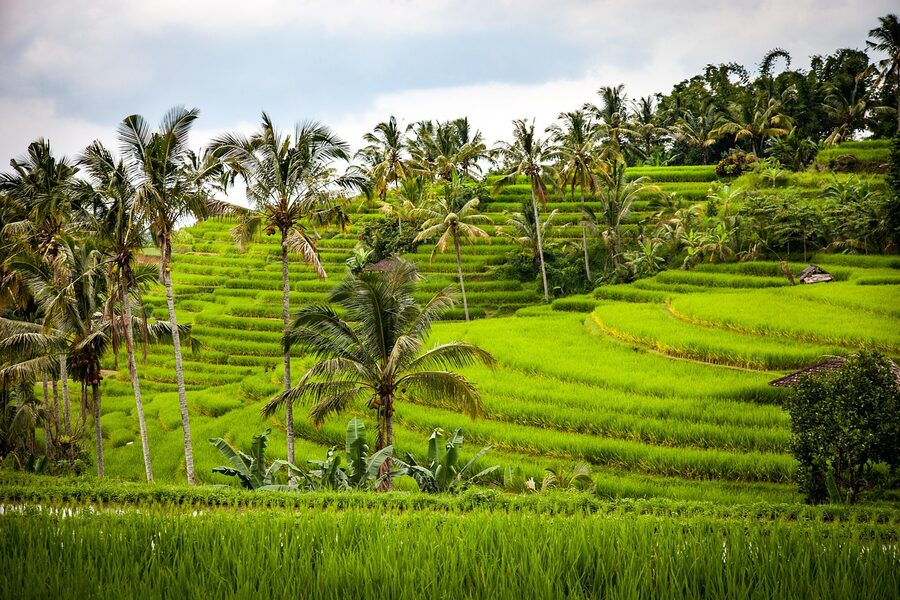
Smiling sate vendor grilling skewers at a Bali street stall
Local sate vendors pop up around Bemo Corner from late afternoon. Rp 25k for ten skewers and rice is the going rate.

For genuinely cheap food, walk to Bemo Corner. From late afternoon you’ll find sate ayam carts (chicken skewers, peanut sauce, lontong rice cake), nasi goreng warungs, soto ayam (chicken broth) carts, and the whole rotating cast of Indonesian street eats. A plate of nasi goreng with a fried egg is Rp 18-25k. Sate ayam with rice is Rp 25-30k for ten skewers. Es teh manis (sweet iced tea) is Rp 5k. If you want to eat for a week on Rp 200k a day, this is how. The sambal at the cart with the green awning at the southern Bemo Corner is genuinely spicy; ask for “sedikit sambal” (a little) the first time.

One real warning. Avoid ice in places that look brand new and clearly serve mostly tourists, especially on Jalan Legian itself. Ice at proper warungs is usually delivered in standardised cubes from a bag from a freezer, which is fine; the suspicious stuff is the broken-up block of ice in upmarket-looking bars where the staff are using a hammer. The full breakdown of how to avoid Bali belly is in the Bali health guide, but the short version: peeled, cooked, or bottled.

Kuta Beach access from Poppies

Lone surfer paddling out at Kuta Beach Bali on a clear day
Mid-morning is when you’ll get the cleanest waves at Kuta. After 11 the chop and the tour-bus crowd both pick up.

Walk west on either lane to the beach road (Jalan Pantai Kuta). Cross. You’re on the sand. The whole exercise from a Lane 1 homestay is between eight and twelve minutes depending on where you started.

The beach itself is roughly five kilometres long if you count the connected stretches of Tuban (south, near the airport), Kuta (the famous bit, in front of you), Legian (a kilometre north of Poppies), and Seminyak (further north again, where the beach clubs cluster). The Kuta section in front of Poppies is the section everyone Instagrams, with the soft sand bar that produces the long mellow waves the surf schools love.

Board hire from the beach vendors runs Rp 50,000 to Rp 80,000 a day, more if you want a leash and rashguard included. The vendors are generally on the level but the price always opens at “Rp 100k” so haggle politely. They will hold your bag while you surf. Tip them Rp 20k when you give the board back.

Sunset at Kuta is the local ritual. By 5:30 p.m. the sand fills up. Vendors push beanbags at Rp 50k for two hours including a Bintang. The sun drops behind the horizon at roughly 6:30 p.m. year-round (8 degrees south of the equator means very little seasonal variation), and the whole strip applauds when it touches the water. It is a cliche and it is also pleasant. For sunset photographs the south end of the beach is less crowded.

Surf schools at Poppies

Beginner surfer riding a small Kuta-style wave on a long board
Kuta is a beginner wave. The drop is forgiving, the bottom is soft sand, and your group instructor will push you onto your first ten waves.

The genuine reason the surf schools cluster here is not nostalgia, it is the wave. Kuta’s break is sand-bottom, slow, and forgiving, and at low to mid tide it produces the kind of soft long waves that beginners need. You will not bash a reef. You will get pushed around by a chop you weren’t expecting. You will make it up onto your knees on lesson 2 and onto your feet on lesson 3 if your instructor is any good.

The big three on the lanes:

  • Pro Surf School on Jalan Pantai Kuta, group lessons Rp 600-750k for a half day, includes board, rashguard, instructor in the water with a 1:3 ratio. They have been running since the early 2000s and the head instructors are local Kuta surfers who actually surf when they’re not teaching.
  • Rip Curl School of Surf at the Hard Rock Hotel side, more polished, more expensive (Rp 850k-1.1M), and you get the Rip Curl-branded gear and a video review. Worth it if you want a souvenir, less worth it if you want maximum water time.
  • Odysseys Surf School, slightly south near Tuban, intermediate-friendly with smaller class sizes. Worth it if you’ve already had a beginner lesson somewhere and want to progress.

Surf school injuries do happen. The most common are reef cuts (not at Kuta itself, but if your school takes a van trip to Padang Padang or Balangan as a “level two” lesson) and ear infections from constant water. The Bali health guide has the practical detail on what to do for surfer’s ear and where to go for stitches.

The crowd reality

Bali surfer carrying his board at golden hour silhouetted against the waves
Kuta still pulls a surf-traveller flow, but the crowd skews younger and louder than it did in the 1990s.

Be straight about who you’ll be sharing this with. Kuta in 2026 is younger, partier, and more Australian-skewed than just about any other part of Bali. The 18-25 year-old gap-year flow comes through here. The 21st-birthday-trip groups come through here. The Western Australian school-leavers (the “schoolies”) arrive in numbers in late November and December. The Indian and Chinese package-holiday tour groups stay here because the airport is close. Surfers who actually live in Bali long-term mostly do not stay here; they’re in Canggu, Pererenan, or up in the Bukit.

That doesn’t mean the lanes themselves feel like a frat party. Plenty of solo-traveller backpackers in their thirties and forties stay on Poppies because the price is right and the location works. The yoga-and-green-juice crowd skips it for Ubud, which is fine. The cliff-villa-and-rooftop-bar crowd skips it for Uluwatu and Seminyak, which is also fine. What’s left on Poppies is people who are passing through, people who are surfing, and people who like a cheap clean room they can walk to from the beach.

Using Kuta as a base

Airplane descending over Kuta Bali coastline with traditional jukung boats below
Ngurah Rai Airport’s runway runs out into the bay south of Kuta. Window seats on the right of an inbound flight get this.

Kuta is the airport-area choice for a first night. Ngurah Rai International is a 15-minute Grab from Bemo Corner if traffic is light, 25 minutes if it isn’t. Coming off a 7-hour flight from Sydney or a 14-hour from Europe, the last thing you want to do is then drive 90 minutes to Ubud. Stay one night in Kuta, sleep, do the longer trip in the morning. The full breakdown of routes and which airlines into Bali are worth the upgrade is in the flights to Bali guide.

From Poppies, the practical day-trip ranges:

  • The Bukit beaches (Padang Padang, Bingin, Balangan, Suluwban, Pandawa) are 30-45 minutes south by Grab car or scooter. A full day trip is the right move; rent a moped from your homestay for Rp 60-80k. The full beach catalogue is in the south Bali beaches roundup.
  • Ubud is 90 minutes in normal traffic and two hours when it isn’t. Full-day private driver Rp 600-800k for four to six people, which is cheaper than four Grabs.
  • Tanah Lot for sunset is 45 minutes northwest, probably better skipped if you’re already on the Kuta sunset.
  • Sanur is 25 minutes east by Grab if you want a different beach for a half day. Easier from here, the boats to Nusa Lembongan and Nusa Penida go from Sanur Beach.
  • Seminyak and Canggu are 20 and 35 minutes north respectively. Worth a beach-club afternoon, especially if you want the Seminyak sunset bar scene without staying there.

Transport from Bemo Corner

Mopeds parked in rows at Kuta Beach in Bali
Most Poppies homestays will rent you a moped for Rp 60-80k a day. Wear the helmet. Bring your home licence with an international permit. Photo: Photowiki1 / CC BY-SA 4.0 (via Wikimedia Commons)

Bemo Corner is the practical transport hub. From here:

  • Grab is the default. Use the app, not the unmetered street taxi, ever. Airport pickup is roughly Rp 60-80k. Seminyak is Rp 35-55k. Canggu Rp 70-100k. Ubud Rp 250-350k. Surge pricing kicks in around 10 p.m. on weekends.
  • Gojek is the same idea, slightly cheaper for short rides, with the moped-taxi (GoRide) option that beats traffic but you don’t want it with luggage.
  • Metered Bluebird taxis are the legit street alternative if your phone is dead. Insist on “argo” (meter). The drivers in front of the malls or on Jalan Legian who quote a fixed price for the airport are double the meter rate.
  • Bemos (the original shared minibus, hence the name “Bemo Corner”) barely run any more. Don’t plan on them.
  • Scooter rental from your homestay is Rp 60-80k a day. Honda Scoopy or Vario, automatic. Ask for the helmet (most don’t volunteer it). You need to be carrying your home country licence and an international driving permit if Indonesian police stop you. Enforcement of the IDP requirement was ramped up in late 2024 and can mean an Rp 250-500k “fine” on the spot if you don’t have one.

Practical tips for first-timers on Poppies

Bali back lane at dusk with a woman walking and moped passing
The Poppies side gangs at night are mostly safe but quiet. Carry your bag across your body, not on the road shoulder.

A short list of things that catch first-timers off-guard. None are deal-breakers but knowing them up front saves money and aggravation.

Don’t take an unmetered taxi. If a driver outside Discovery Mall or in front of the Hard Rock quotes you “Rp 200k to Sky Garden”, which is a five-minute walk, smile and walk on. Use Grab or Gojek for everything. Even short rides. The Bluebird metered taxi guys are okay, but only the ones who put the meter on without being asked.

Watch for moped-snatch in the back gangs at night. Two men on a scooter, the back rider grabs your bag from your shoulder as they pass. It is very rare on the main lanes, more common in the unlit cuts between Lane 1 and Lane 2. Carry your bag across your body so the strap can’t slide off, walk on the inside of the lane (not the shoulder), and if you’re staying out late take Grab back to the western end of the lane and walk the last bit toward your homestay.

The legitimate massage parlours have signs in English on the lanes themselves. Plus or minus Rp 100-150k for an hour-long Balinese massage is the going rate. The “spas” with no menu, no price list, and a tout in the doorway who follows you down the street are something else and you can probably guess what. Just say no thanks and keep moving.

Timeshare touts on the main road. A friendly Australian-accented guy will try to engage you on Jalan Legian about a “free champagne breakfast” or a “scratch card you’ve won”. This is a 90-minute timeshare presentation pitch. Polite “no thanks, not interested” works fine. Don’t take the scratch card.

The 2024 Bali tourism levy. All foreign tourists pay Rp 150,000 (about $9.50 USD) on arrival, payable online via the Love Bali portal before you fly or at the airport on arrival. It is a one-time payment per visit. Have the QR code ready or stand in the levy queue at Ngurah Rai. The money is supposed to fund cultural-heritage maintenance and waste management.

Kembali, the bottle return system, isn’t a thing here. Refill stations exist (look for the “Refill Bali” signs at some of the cafes; Aromas has one) where you can refill a bottle for Rp 5-10k instead of buying a new plastic one. On a week-long trip that’s twenty plastic bottles you don’t add to the rubbish problem. Bring a reusable bottle.

The Poppies sunset hour

Kuta Beach sunset with red and purple sky over the ocean
From Lane 1 you walk west, cross the beach road, and you’ve got fifteen minutes to find sand before the colour goes.

If you do nothing else on a Poppies stay, do this at least once. Walk out of your homestay around 5:45 p.m., follow Lane 1 west to Jalan Pantai Kuta, cross the beach road, and get onto the sand. Don’t rent a beanbag the first time; just walk barefoot south along the high-tide line until the crowd thins out a bit. Sit. Watch.

Sunset waves at Kuta Beach with two surfers in the line-up
The last surfers stay out until the sky goes orange. The water is warm, around 27 degrees year-round.

The colour does what it does, the surfers stay in until they can’t see the sets coming, and the kite vendors and the bracelet sellers do a slow patrol up and down the sand. Around 6:50 p.m., once the sun has dropped, the crowd starts walking back to the bars. Walk with them. Stop at the Bemo Corner satay cart on the way for a Rp 25k dinner. Take it back to your homestay, eat it on the steps, and feel the heat of the day finally come off the lane.

That is what Poppies is for. It has not been the cool part of Bali for at least fifteen years. It is, however, still the cheapest way to be a few minutes from a long beach and the loudest sunset bar strip on the island, and the lane itself still smells like 1973 if you wake up early enough. The travellers who built the original Poppies didn’t stick around. Zenik did, and so did the lane, and so, against all the odds, did the restaurant on the corner. It is still there. You can have a Henry Wallbanger at the bar and watch the garden ponds the way Alistair Speirs did in 1979 and a thousand surfers did before him.

For the wider Kuta strip and how it stacks up against Sanur, Seminyak, and Canggu as a base for a week in Bali, see the where to stay in Bali category for the area-by-area comparison.

Bali Health and Safety: Bali Belly, Vaccines, and Hospitals

Bali belly is not a 50/50 lottery. About 70% of cases trace back to three habits, all of them avoidable, and most travellers who get hit have done at least one of them within the previous 24 hours. The other 30% gets you on a slow build over a few days from cumulative low-level contamination. Either way, it is not the universe rolling dice on your holiday.

Friends sharing snacks at an Indonesian warung table
The hook is the warung, not the pretty hotel restaurant. The food is usually safer than you think and tastier than the resort version, you just need to know what to look for.

I have eaten my way through five trips to Bali across the better part of fifteen years, ranging from a backpacker stretch on Poppies Lane in 2011 to a six-week working stint in Canggu more recently. I got Bali belly twice. The first time was day three of trip one, and I can still pinpoint the salad. The second time was a longer working trip and I am genuinely not sure which meal did it. What I will tell you is what worked across the rest of those weeks of warung lunches, ice in coconuts, and all the things the safety blogs tell you not to do, and what to actually carry with you and what to do when it goes wrong anyway.

This is not medical advice. I am a traveller who has read the CDC and UK NHS guidance, talked to a few apotek (pharmacy) staff in Sanur and Ubud, and learned by getting it wrong. For your specific health history and trip length, see a travel doctor six to eight weeks before you fly. For the hospital phone numbers, the cost of a helicopter off Nusa Penida, and which warungs are actually safe, read on.

What actually causes Bali belly

Traditional roadside warung in Bali with Bintang and Aqua signage
A roadside warung outside Tabanan. Signed-up Aqua water on the wall is a quiet quality cue, and so is the open-front layout where you can see the kitchen. Photo via Wikimedia Commons (CC BY-SA 3.0)

The medical name is travellers’ diarrhoea. The CDC estimates that 30 to 70% of travellers to high-risk regions pick it up on a typical two-week trip, and bacteria are the culprit in roughly 80 to 90% of cases. The usual suspects are E. coli (especially the enterotoxigenic strain, ETEC), Campylobacter, Salmonella, and Shigella. Norovirus runs a strong second, and parasites like Giardia show up in the smaller subset of cases that drag on for more than a week.

The catalogue of how it actually gets into you, in order of how often I see it cause trouble:

  • Ice made from tap water. The classic. A coconut on a cart in Kuta, a bin of crushed ice the vendor scoops your drink out of, an iced coffee at a small warung. If the ice did not come from a sealed bag of factory kubus (cube) ice, treat it as suspect. Bigger places filter their own and freeze it in trays, and that is fine. Roadside vendors with a single block of ice on a chopping board, that block was made from tap water on someone’s back porch.
  • Salads and raw vegetables washed in tap water. The lettuce in your gado-gado, the raw cucumber on the side of a sambal matah dish, the herbs in your fresh spring rolls. The vegetable is fine, the rinse water is the problem. Cooked vegetables are safe. Raw is the gamble.
  • Sambal that has been sitting out. Especially at warungs that put a tray of small bowls on each table and refill them. Sambal is fresh chilli paste with shallot, lime, and oil. Left at room temperature in 32°C heat for hours, it is a bacteria farm. The first scoop of the day is fine. The 4 p.m. scoop is the one that gets you.
  • Raw or undercooked seafood. Sushi at a hotel restaurant with proper cold chain is one thing, sushi at a small place that buys yesterday’s tuna from a back-of-bike vendor is another. The Jimbaran beachfront grills are generally fine because everything is cooked over coconut husks at high heat, but order it cooked through, not pink in the middle.
  • Buffet food kept lukewarm. Hotel breakfast buffets are usually the worst single source if the warmer trays are not actually warm. Always check the eggs are hot, not tepid. The pancakes are safer than the cut fruit.
  • Tap water by accident. Brushing teeth, rinsing your toothbrush, the gulp in the shower. Most travellers tighten up about drinking water then casually rinse their mouth from the bathroom tap. Use the bottle you have in your room.

What does not usually cause it: spice. People blame the chilli for the diarrhoea on day three and they are wrong. A spicy nasi goreng at a clean place will not give you Bali belly, even if it gives you a hot afternoon. The capsaicin can make a sensitive stomach uncomfortable, but that is a different feeling. Bali belly is a wet, urgent, please-no-traffic-jam feeling. If you can tell the difference, you know which one you have.

Indonesian food stall display with multiple cooked dishes sitting in white bowls
The display-tray model. Pretty, photogenic, and the older the dish on top of that pile, the more risk it carries. Pick the bottom of the pile or the freshest restocked tray.

Prevention rules that actually work

Indonesian fruit vendor with mangosteens, salaks, and tropical fruit at a traditional market
Pasar Badung in Denpasar at 7 a.m. The mangosteens and salak you peel yourself are the safest fruit on the island. The pre-cut watermelon at a stall, less so.

The standard advice is “boil it, peel it, cook it, or forget it” and I think that is mostly right, but it is also too cautious for a real trip where you actually want to eat the local food. Here is the version I follow:

  • Bottled water for everything you swallow. Brushing teeth included. The Aqua brand is everywhere, a 1.5L bottle is around Rp 6,000 to Rp 8,000 (about $0.40 to $0.55) at the corner shop. Refill stations at homestays charge Rp 5,000 to Rp 10,000 for a 19L jug refill if you brought a refillable bottle, which is the move for longer stays. Check the seal on any bottle you buy. If the cap clicks when you twist, it is fine. If it does not, reject it.
  • Ice only at upmarket places. Beach clubs, hotel restaurants, sit-down cafes in Seminyak and Ubud, generally fine. Coconut on the beach with ice scooped from a polystyrene box at a warung, no. If you really want the iced coffee at a small place, ask: esnya dari kubus? (is the ice from cubes, meaning bagged factory ice). If they show you a sealed bag from the freezer, you are good. If they shrug, skip it.
  • Peel-or-cooked-or-bottled fruit. Mangosteens (peel), bananas (peel), pineapple (you watch them peel), salak (peel). Pre-cut watermelon and papaya at a stall, the knife and the rinse water and the open air are the problem, not the fruit. Whole fruit at the supermarket is fine if you wash it with bottled water and peel it.
  • Read the warung queue as a quality signal. A warung packed with locals at lunchtime is turning over food fast and has reputation to protect. Warung Mak Beng in Sanur, the one with the queue out the door for ikan goreng, is exactly this kind of place. An empty warung at 2 p.m. with food sitting in trays since 11 a.m. is the opposite. Empty plus tourist-targeted is the red flag combination.
  • Cooked-and-hot beats fresh-and-cold every time when you are unsure. A bowl of soto ayam at a stall is safer than the same stall’s gado-gado. The boiling broth has done your sterilising for you.
  • Carry hand sanitiser and use it before you eat. A small bottle in the day bag, applied before you pick up a piece of nasi campur. Maybe half the cases of Bali belly travel up your own hand from a doorknob, not down through the food.

The real tradeoff: if you follow every rule strictly you will miss some of the best food on the island. If you ignore them all you will probably get sick. I have come to think of it as a budget. Spend it on the things that are worth it (the babi guling at Ibu Oka in Ubud is worth the calculated risk of a salad), skip the things that are not (the iced coffee from a cart on the way to the beach, the lukewarm pad thai at a tourist trap with no queue).

When it happens anyway: treatment

Open first aid kit with travel medical supplies and oral rehydration sachets
What I now carry: oralit sachets, loperamide, paracetamol, ciprofloxacin (only after a doctor consult at home), antihistamine, antiseptic wipes, hydrocortisone cream, plasters. The whole thing is the size of a sandwich.

Most cases resolve on their own in 1 to 3 days. The thing that makes you feel actually awful for the first 24 hours is dehydration, not the bug. Fix the dehydration, the rest gets manageable.

The protocol I use:

  • Oral rehydration first. Walk to the nearest apotek (pharmacy, you will see the green cross sign) and buy a strip of oralit sachets. They cost about Rp 2,000 each (around $0.13). Mix one sachet in 200ml of bottled water, drink it slowly over 30 minutes. Repeat after every loose stool and every vomit. The sodium-glucose ratio is what makes your gut absorb fluid even when it is in chaos. Plain water alone does not work as well.
  • Boring food, small portions. White rice, plain crackers, banana, plain toast. Avoid dairy, fried food, alcohol, coffee, fruit juice, and anything with sambal. The BRAT diet (banana, rice, applesauce, toast) is the baseline.
  • Loperamide carefully. Brand name Imodium. It stops the diarrhoea by paralysing your gut, which is useful if you have a four-hour van transfer to the airport but counterproductive if your body is trying to flush a bug out. Use it for travel days only, or for night sleep. Do not use it if you have a fever or blood in your stool, because then the bug needs to come out, not stay in.
  • Sleep and rehydrate, do not push through. Cancel the day. Read a book. Most cases that drag on do so because the traveller went for a planned snorkel trip on day two and the dehydration cascaded. One full rest day costs you nothing and saves you three.
  • Coconut water (kelapa muda) is genuinely useful. Buy from a stall where you watch them open the coconut, drink straight, no ice. The natural electrolyte mix is close to oralit. Avoid the bottled coconut water with added sugar, which makes the diarrhoea worse.

The 24-hour rule that I actually use: if you are no better after 24 hours of sensible rehydration, see a doctor. If at any point you have any of these, see a doctor immediately, do not wait the 24 hours:

  • Blood or mucus in the stool
  • Fever above 38.5°C (101.3°F) for more than a few hours
  • Dizziness when you stand up, dark concentrated urine, or no urine for more than 8 hours (signs of significant dehydration)
  • Severe abdominal pain that is not just cramping
  • Vomiting that prevents you from keeping any fluid down for more than 4 hours

The hospitals listed below all have English-speaking doctors and 24-hour emergency. None of them will judge you for a stomach bug. They see twenty of these a week.

The apotek over the counter, and what to be careful with

Apotek Ari Medika pharmacy storefront in Ubud Bali with mopeds parked outside
Apotek Ari Medika in Ubud, opening hours 07:00 to 22:00. Smaller apoteks like this one keep the basics behind the counter, ask for what you need by name. Photo: CEphoto, Uwe Aranas / Wikimedia Commons (CC BY-SA 3.0)

The Indonesian pharmacy system is a lot more permissive than what most Western travellers are used to. A lot of medication is available without a prescription that you would need a doctor for at home. This is convenient and also a place to be careful.

What you can buy off the shelf at most apoteks (Apotek K-24 is a 24-hour chain you will see across Bali, Guardian and Watson’s are the larger Western-style chains in Seminyak and the malls):

  • Oralit. Oral rehydration sachets, around Rp 2,000 each. Buy a strip of ten, you will use them.
  • Neo Entrostop. An attapulgite-based anti-diarrhoeal that binds toxins in the gut. Around Rp 15,000 for a strip. Less aggressive than loperamide and worth knowing about.
  • Loperamide (Imodium, generic versions). Around Rp 25,000 to Rp 40,000 for a strip.
  • Paracetamol (parasetamol) and ibuprofen. The full Western range, often cheaper than at home. Useful for the dehydration headache and the body aches that come with viral cases.
  • Antihistamines. Cetirizine (Cetin, Cetirizine OGB) for the inevitable mosquito reaction is around Rp 15,000.
  • Antiseptic and bandages. Betadine, plasters, gauze, alcohol wipes. Buy more than you think you need, the moped-burn from the hot exhaust is a real Bali souvenir.
  • Antibiotics including ciprofloxacin and azithromycin. These are sold over the counter at most Indonesian apoteks. This is convenient, and risky. The convenient bit is obvious. The risky bit is that taking antibiotics for a viral or self-limiting bacterial gastro is bad for your gut microbiome long term, contributes to antibiotic resistance, and is often the wrong drug for the bug. If your home doctor wrote you a prescription before the trip “in case”, great, follow that. If not, see a doctor on the island before self-prescribing antibiotics. The medical clinics charge Rp 200,000 to Rp 500,000 for a consultation and that is money worth spending before you take a five-day course of cipro for what was probably a 36-hour viral thing.

What to be careful of: do not stockpile antibiotics for the next trip. Do not use the antibiotic that worked for your friend last year. If you are pregnant, breastfeeding, on regular medication, or have any chronic condition, see a doctor not a pharmacy counter. The apotek staff are pharmacists and they do their best, but they will not always have the time or the language to ask the right intake questions.

Vaccinations, and the conversation to have with your travel doctor

Pharmacist arranging medicine bottles in a pharmacy cabinet
Travel vaccinations get booked at home, six to eight weeks before you fly. Some of them need multiple doses spaced over a month, so do not leave it to the week before.

Plain reminder, this is a travel blog, not medical advice. Book a travel doctor consultation at home, six to eight weeks before you fly, with your full health record in front of them. The summary below is what I have heard most consistently from CDC and UK NHS guidance and from travel-doctor friends, current as of 2025. None of it is a substitute for that consultation.

No vaccinations are legally required to enter Bali for travellers from most countries. The exception is a yellow fever certificate, which is required only if you are arriving from a country with active yellow fever transmission (parts of sub-Saharan Africa, parts of South America). Indonesia has no yellow fever.

Routine vaccines, check these are current

  • MMR (measles, mumps, rubella). Indonesia, including Bali, still reports measles outbreaks. Two lifetime doses recommended. Check your records.
  • DTP (diphtheria, tetanus, pertussis). Tetanus booster within the last ten years is the standard. The reef cuts and the moped grazes will thank you.
  • Polio. Wild polio has been documented in parts of Indonesia in recent years. Adult booster if your travel doctor flags it.

Recommended for most Bali travellers

  • Hepatitis A. Spread through contaminated food and water, which is exactly the Bali transmission route for everything. Travel-clinic consensus is that almost every Bali traveller should be vaccinated, including the ones staying at five-star resorts.
  • Typhoid. Same transmission route, more relevant if you plan to eat at warungs (which you should) or stay outside the big tourist zones. Available as an injection or as oral capsules.

Worth a conversation, depending on your trip

  • Rabies. Bali has a documented rabies presence in dog and monkey populations. The pre-exposure series is two or three doses. Worth discussing if you will be riding a moped (the bite risk is more from stray dogs near the road than from monkeys), staying in rural areas, or doing anything that puts you near animals. The post-exposure protocol if you do get bitten is much simpler if you have had the pre-exposure shots, and the rabies immunoglobulin is not always easily available in Bali. The Monkey Forest in Ubud bites are real, the staff are calm about them, and the standard advice is to get to a clinic the same day for the post-exposure follow-up.
  • Japanese encephalitis (JE). A mosquito-borne illness. The standard recommendation is for stays longer than a month or significant time in rural areas near rice fields and pig farms. For a two-week resort holiday in Seminyak, most travel doctors do not push it.
  • Hepatitis B. Relevant if you might have medical or dental treatment, tattoos, or piercings on the island. Many people already have this from childhood schedules in their home country.
  • Dengue. The Qdenga vaccine is approved in Indonesia for ages 6 to 45. Two doses three months apart, which makes it more practical for expats and digital nomads than for short-trip holidaymakers. For a typical holiday, mosquito prevention is the standard play.
  • Malaria. The risk in Bali’s main tourist areas is very low, and antimalarials are not generally recommended for a standard Bali trip. If you are heading to remote parts of Indonesia (Papua, parts of Sulawesi), the conversation changes.

Travel insurance, and the helicopter off Nusa Penida

Travel medical supplies and bandages from a travel first aid kit
The single most expensive Bali travel claim I have heard about was a moped accident on Nusa Penida that needed a helicopter to Denpasar. The bill was in the tens of thousands of US dollars. Read the policy.

Get insurance. The blanket recommendation. But the more important version is read the policy carefully for the two things that actually matter in Bali.

Medical evacuation coverage. The bigger Bali hospitals are in Denpasar, Sanur, and Kuta. If something serious happens to you in Amed, on Nusa Penida, or up at Mount Batur for the sunrise hike, getting you to a hospital is not a 20-minute Grab. It can be a one-hour ambulance, a two-hour boat, or in the genuinely bad cases a helicopter. The helicopter off Nusa Penida is the example everyone cites because the costs run into the tens of thousands of US dollars and a lot of basic policies do not include it. If you are staying in Amed for the diving or doing anything around the Nusa islands, check the medical evacuation cap on your policy. SafetyWing, World Nomads, and the bigger insurers all sell explicit evacuation coverage.

Moped exclusions. This is the trap that catches more tourists than anything else. Most Western travel-insurance policies will not cover a moped accident unless your home country licence has a motorcycle endorsement on it (UK call it Cat A, Australia call it an R licence, US varies by state). It does not matter that you rented the bike legally in Bali with a passport scan and a bored shop owner. If your home licence is for a car only, the policy does not cover you, and a hospital stay for a moped collarbone in Bali is yours to pay. The workarounds: get the international moped endorsement at home before you fly (a couple of weekend lessons), buy a separate moped-specific add-on from your travel insurer (some sell them for an extra premium), or do not ride. The Grab and Gojek bike-taxi apps cost almost nothing and get you everywhere. I switched to those a few trips ago and have not regretted it once.

While we are on the subject, a few real numbers from the Bali traveller-claim brochures my insurer sent me last year:

  • Moped accident, hospital stay, plate and screws in a wrist: roughly $3,000 to $8,000 USD.
  • Helicopter evacuation Nusa Penida to Denpasar: $20,000 to $40,000 USD.
  • Three days in BIMC Kuta for severe dengue with IV fluids: $2,000 to $4,000 USD.
  • Repatriation flight back to home country in a medical-equipped seat: $30,000 to $80,000 USD.

Insurance. Check the small print. Read the moped clause twice.

Hospitals by area, and what to do in an emergency

Doctor with stethoscope on examination table in a clinic
BIMC and Siloam are the two names every long-term Bali traveller knows. Both have English-speaking doctors and direct billing arrangements with most international insurers.

The emergency number for ambulance in Indonesia is 112. Save it. The ambulance response in the touristy parts of south Bali is reasonable, in the more remote areas it is not, and you may be better off getting a Grab or your hotel to drive you to the nearest hospital. The major hospitals all have their own phone numbers worth saving in your contacts before you arrive.

The foreign-friendly options, the ones with English-speaking doctors and direct insurance billing for the major international insurers:

  • BIMC Kuta. Jl Bypass Ngurah Rai 100X, Kuta. Tel +62 361 761263. The closest of the foreign-oriented hospitals to the airport and to the Kuta-Legian-Seminyak strip. 24-hour ER, dental, ambulance, dive medicine. This is where most insurance companies will direct you for the south Bali resort areas.
  • BIMC Nusa Dua. Kawasan ITDC Blok D, Nusa Dua. Tel +62 361 3000911. The sister facility, more convenient if you are staying in Nusa Dua, Tanjung Benoa, or Jimbaran. Also handles dive emergencies and has a hyperbaric chamber.
  • Siloam Hospitals Bali (Denpasar). Jl Sunset Road 818, Kuta (despite the Denpasar branding it is on the Sunset Road). Tel +62 361 779900. The big Indonesian private chain, large facility with a full range of specialists. English-speaking staff in the main departments. Often the best option for anything more complex than a stomach bug.
  • Kasih Ibu Hospital Denpasar. Jl Teuku Umar 120, Denpasar. Tel +62 361 3003333. Indonesian private hospital with international patient department. Often a better price point than the BIMC clinics for a consult, with most of the same equipment.
  • Sanglah General Hospital (RSUP Prof Ngoerah). Jl Diponegoro, Denpasar. The public general hospital, cheapest care on the island, but English-language coverage is patchier. Good for serious-emergency stabilisation, less ideal for routine care if you have insurance covering the private alternatives.

What to expect at the foreign-friendly clinics: you will be seen quickly (often inside 20 minutes for a non-emergency walk-in), the doctor will speak good English, the consultation is Rp 400,000 to Rp 800,000 (about $26 to $52), an IV drip with anti-emetic for severe Bali belly is typically Rp 1,500,000 to Rp 3,000,000 (about $97 to $195), and they handle the insurance paperwork directly with your provider. Bring your passport and your insurance card. Most accept credit cards.

The remote-area reality: if you are based in Amed for the diving, the nearest decent hospital is Karangasem (about 45 minutes), and the BIMC and Siloam options are at least 90 minutes by car. If you are on Nusa Penida or Nusa Lembongan, the local clinic handles minor things but anything serious means a boat back to Sanur and an ambulance from the pier. This is the dive-trip and remote-village factor that the south Bali resort-and-spa travellers do not have to think about, and it is the main reason the medical evacuation line on your insurance matters.

Dental work, the genuine Bali bargain

Dental clinic patient receiving routine dental check-up in a modern surgery
Bali dental clinics serve a steady stream of dental tourists from Australia and Singapore. The price difference is real, and the quality at the established clinics is genuinely good.

This is the one health-related thing in Bali that is both real value and worth planning around. A filling at a reputable Bali clinic runs about Rp 450,000 to Rp 900,000 (about $30 to $60). A crown is around Rp 3,000,000 to Rp 6,000,000 ($200 to $400). A full implant package, including the post and crown, can come in around $1,500 to $3,000, which is a fraction of the equivalent in Australia, the UK, or the US.

The catch is the clinics are not all the same. The dental tourism scene in Bali has a lot of new entrants and a few that have been operating for decades. The standard advice from the digital-nomad community in Canggu is to use the clinics that have a long online review history and that publish their dentists’ qualifications. Bali Dental Clinic in Sanur, Bali Dental Centre, and BIA Dental Centre in Seminyak are the names that come up most often when I ask in the working-Bali Telegram groups, but please do your own due-diligence research and read recent reviews. I am not endorsing any specific clinic, just naming the ones that get mentioned most.

Practical: book your appointment a few days into the trip rather than for day one, so you have a buffer if you are jet-lagged or have stomach trouble. Bring a copy of any recent X-rays or dental records from your home dentist. For a crown or implant, plan a return trip three to six months later for the final fitting, or stay long enough for the full sequence (usually two to three weeks). Hepatitis B vaccination is a sensible addition before any procedure that involves blood, see the vaccinations section.

Mosquito-borne illness, mostly dengue

Aedes aegypti mosquito biting human skin, the dengue and Zika vector
The Aedes aegypti, the dengue carrier. It bites during the day, not at night, and breeds in any standing water including the saucer under your hotel-room flowerpot.

Dengue is the main one and it is genuinely present in Bali, including the tourist areas, including the dry season. The wet-season peak runs roughly January to March and the case numbers spike then, but cases happen year-round. The vector is the Aedes aegypti mosquito, which bites during daylight hours (this is the important behavioural detail) and breeds in any standing water from a few millimetres up.

The symptoms come on fast and feel like a flu with extra ankle pain. High fever, severe headache especially behind the eyes, muscle and joint pain that some travellers describe as “breakbone fever”, a rash that appears a few days in. There is no specific treatment, the protocol is rest, fluids, paracetamol for fever and pain, and absolutely not aspirin or ibuprofen, because dengue can cause platelet count to drop and those drugs increase bleeding risk. Most cases resolve in a week, the worry is the small fraction that progress to severe dengue (haemorrhagic symptoms, plasma leakage, dangerous fluid loss). If you have any second-illness pattern (felt fine for a day after the fever broke and then worse again), get to a hospital. The hospitals listed above are well-practised at dengue management.

Prevention is mosquito avoidance:

  • DEET-based repellent. 30 to 50% DEET, applied morning and afternoon. Permethrin-treated clothing is more effective for long-stay travellers. The natural alternatives (lemon eucalyptus, picaridin) work for shorter durations and need more frequent reapplication.
  • Long sleeves and trousers at dawn and dusk. Even though Aedes is a daytime biter, the other species that carry chikungunya, JE, and (rarely in Bali) malaria, are dawn and dusk biters. Cover up.
  • Air-conditioned room or screened windows. Mosquitoes do not love AC.
  • No standing water near where you sleep. The flowerpot saucer, the bird bath at the villa, the unused bucket on the balcony. Tip them out.
  • Mosquito coil at dusk. The cheap green coils at any minimart work, the smell takes some getting used to.

Other mosquito-borne things present in Bali but much less common: chikungunya (similar to dengue, joint pain lasts longer), Zika (mostly mild but matters if you are pregnant), Japanese encephalitis (rare in tourist areas, see the vaccination section). Malaria risk in Bali itself is very low.

Sun, and how badly you can underestimate it

Couple silhouette on Kuta Beach Bali at sunset
The sunset at Kuta is the safe time to be on the beach without a hat. The 11 a.m. version of the same view will fry you in 20 minutes.

Bali sits 8° south of the equator. The UV index reaches 11+ on a normal sunny day, which is the same scale that puts most of Northern Europe at 6 in midsummer. The sun in Bali at midday in February is doing the same thing to your skin as a tanning bed. I am not being dramatic. I have seen the sunburn on day-one tourists who lay on the beach at Seminyak from 11 a.m. to 1 p.m. without sunscreen because it was overcast and “didn’t feel that hot”. They came back to the beach club in the afternoon already medium rare.

What works:

  • SPF 50+ broad-spectrum sunscreen. Reapply every two hours, more if you swim. The factor matters less than the reapplication.
  • Hat with a brim and a long-sleeved rash vest for snorkelling or surfing. A rash vest with UPF 50 protection is more effective than any sunscreen on the bits it covers, and you will not have to reapply.
  • Reef-safe sunscreen at certain spots. Some of the snorkel and dive sites around the south Bali beaches and around the Nusa islands now require oxybenzone-free and octinoxate-free sunscreens. Bring a tube of reef-safe with you, the local options are limited and overpriced.
  • Stay out of direct sun 11 a.m. to 3 p.m. This is the genuine Balinese local advice. Even the sunbathers are under umbrellas in the middle of the day. Find a beach club, a cafe, a temple visit, or take a long lunch.
  • Hydrate, including electrolytes. The sweat you lose in 30°C with 80% humidity is not just water. The same oralit sachets you bought for Bali belly do double duty for heat exhaustion.

Heat exhaustion symptoms (lightheaded, nauseated, cold and clammy skin despite the heat, no sweating) are an “out of the sun, into the AC, fluids” emergency. Heat stroke (confusion, dry hot skin, fast pulse, body temperature over 40°C) is a 112 ambulance emergency.

Other practical things

Plastic bottled mineral water on a soft background
Aqua, Le Minerale, Pristine. Any sealed brand at the corner shop. The 19L refill jugs at homestays are the same factory water for less plastic.

Drinking water

You already know. Bottled or filter-station refills only. Aqua is the dominant brand, Le Minerale is the cheaper alternative, both are everywhere. The tap water in Bali is not treated to drinking standard. Brushing teeth with tap water is a debate I will not settle here, the cautious traveller uses bottled water for that too, the long-stay resident often does not bother and is fine. Your gut tolerance, your call.

Food handling at street stalls

Read the queue. Read the turnover. Read the open kitchen. The best street food in Bali is at stalls where the food is cooked to order in front of you (sate, martabak, the soup stalls) and the worst is at trays of fried things that have been sitting for hours. The presence of locals eating at the stall is a strong positive signal. The absence of locals at a tourist-area stall is a strong negative one. Apply the rule consistently and you will eat well.

Alcohol, and the arak warning

The local beer Bintang is fine. Imported wines and spirits at proper bars and restaurants are fine. The arak warning is the one to know about: arak is the local rice spirit, and a small number of unscrupulous producers have cut it with methanol, which causes blindness or death. The cases are rare and almost always involve cheap unlabelled bottles at small bars in the tourist strips. Stick to brand-name spirits at established venues, do not buy unlabelled bottles, do not order suspiciously cheap cocktails. Real arak from a known producer (look for Iwak Arak, Dewi Sri Arak) is fine in proper bottles.

Road safety brief

The biggest health risk in Bali for foreign tourists is mopeds, full stop. Bali had 100+ tourist deaths from moped accidents in 2024. The roads are crowded, narrow, and unforgiving, the helmets at rental shops are often the cheap shells that do nothing in a real crash, and the moped-snatch culture in Kuta and Canggu is real. If you are going to ride, bring or buy a proper helmet (the upgrades are sold at every minimart, around Rp 250,000 to Rp 400,000), wear long sleeves and trousers and proper shoes (not flip-flops), do not ride drunk, do not ride at night unless you absolutely have to, and check that your insurance covers you (see the moped exclusion section above). If you are not confident, do not ride. The Grab and Gojek bike-taxis are cheap and safer because the drivers do this for a living.

Stray dogs and monkeys

Do not pet stray dogs. Do not feed monkeys. The Monkey Forest in Ubud is the high-incident location for monkey bites and scratches. Take off any visible jewellery, sunglasses, or food before you enter. If a monkey grabs you, do not pull away (you will lose), drop whatever they want, walk away calmly. If you are bitten or scratched, wash the wound thoroughly with soap and water for 15 minutes, then go to a clinic the same day for the post-exposure rabies follow-up. The big private hospitals all carry the post-exposure vaccine.

The first-night arrival kit

What I now keep in the carry-on:

  • 10 oralit sachets (or a pack of similar from home)
  • Strip of loperamide (10 tablets is enough)
  • Paracetamol and ibuprofen
  • Antihistamine tablets
  • 50 SPF sunscreen, reef-safe
  • 30% DEET repellent
  • Hand sanitiser
  • Plasters and a small tube of antiseptic
  • Any prescription medication in original packaging with the pharmacy label
  • A printed copy of the insurance policy and the emergency phone number

Most of this you can buy on the island for less, but the first-night version of you is jet-lagged and might not want to find an apotek before bed.

What actually happens, most of the time

Sunrise over Sanur Beach Bali with traditional jukung outrigger boats
Sanur at 6 a.m. The light is good, the air is cool, the day is open. Most Bali health stories end here, with no drama at all. Photo: Danang Trihartanto / Wikimedia Commons (CC BY-SA 4.0)

Most travellers come to Bali, eat at warungs, drink the bottled water, pay attention to the sun, and have nothing more dramatic to report than a slightly windy first 24 hours. The serious incidents almost always involve a moped at night or a complacent attitude to the salad on day three. Get the vaccinations sorted at home, buy real insurance with the moped clause checked, pack the small first-night kit, and apply the prevention rules without being paranoid about them. The food is too good and the island is too generous to spend the trip worried.

If you do get hit, you have got the apotek on the corner, oralit for Rp 2,000 a sachet, and a hospital that has seen this every day for twenty years. The system works. Drink the water. Sleep the day. The next day will be fine.

Amed, Bali: The East Coast Bali Most Travelers Skip

Bali is Canggu and Seminyak. That’s what Instagram says. Drive two hours northeast from the airport and you find a coast that still has fishing jukungs (traditional outrigger boats) hauled up on black sand beaches at dawn, salt being raked into wooden troughs by hand, and a pair of dive sites that have been on Lonely Planet’s radar for thirty years and still aren’t crowded. That’s Amed. Seven small fishing villages strung along a 14-kilometre stretch of coastline in Karangasem regency, Mount Agung behind you, the Lombok Strait in front, and almost no one in the water before 8 a.m.

Golden hour over Amed bay with Mt Agung silhouette
Golden hour at Jemeluk Bay. The fishermen are already out by the time the sun lifts over the Lombok Strait. Photo: Wawansatriawan_bali / CC BY-SA 4.0 (via Wikimedia Commons)

I went the first time because I’d booked four nights in Ubud and gotten Ubud-tired by the second morning. A driver quoted Rp 800,000 (about $50) for the run east. I took it, stayed eight nights, and have made two return trips since. This guide is what those three visits taught me.

Where Amed Actually Is (and Why It’s Plural)

The name “Amed” gets used loosely. Strictly, Amed is one village. In practice, “Amed” means the whole stretch from Culik in the north down to Aas in the south: roughly 14 kilometres of coast on one main road, with a sequence of small bays and villages along the way (Jemeluk, Bunutan, Lipah, Lehan, Selang, Banyuning, Aas). Each has its own beach, personality, and short list of warungs. None is more than a few minutes’ scooter ride from the next.

Amed sunrise landscape with Mt Agung in distance
The classic east-coast view: village rooftops in the foreground, Agung in the back, water full of jukungs at anchor. Photo: Marklchaves / CC BY-SA 4.0 (via Wikimedia Commons)

From south Bali, plan on three hours from Kuta or Seminyak, three and a half from Canggu, 2.5 from Ubud if traffic cooperates. There’s no Grab or Gojek out here and taxis don’t roam, so you arrange transport before you arrive or you don’t move once you’re here. Most travelers book a private driver for the run (Rp 700,000-900,000 / about $44-57 one way), then rent a scooter on arrival (Rp 70,000-100,000 / about $4.40-6.30 per day) or use the hotel’s driver for day trips. If you’re flying in fresh, our flights to Bali guide covers connection logistics so you actually arrive with the energy to do this drive.

Why You’d Bother Going This Far

Two reasons, mostly. First, the diving. The USAT Liberty wreck at Tulamben (twenty minutes north of Amed Beach) is one of the best shore-accessible wreck dives anywhere. Second, the absence of south-Bali atmosphere. No nightlife to speak of, no clubs, no rooftop bars charging Rp 250,000 (about $16) for a beer, no DJs, no influencer studios. You’ll have dinner at a beachfront warung and be in bed by 10 p.m. because you’re getting up at 5:45 to dive or watch jukungs head out.

Mt Agung profile dominating the inland horizon at Amed
Agung from inland of the coast road. On a clear morning the whole 3,031m profile is right there.

You’d also bother because of what’s on the way back: Tirta Gangga, Pura Lempuyang, Sidemen, and Padangbai string into a north-east loop that takes a couple of unhurried days. More on that further down.

The USAT Liberty Wreck: The History Most Guides Get Half-Right

You’ll see this dive site in every Bali roundup. Most articles tell you it was sunk by a Japanese torpedo in WWII and now sits 30m down at Tulamben. Roughly correct, but the actual story is better.

Diver beside the coral-encrusted USAT Liberty shipwreck at Tulamben
A diver beside the Liberty’s coral-covered hull. The shallowest sections are at about 5m, the deepest at 30. Photo: G_patkar / CC BY-SA 3.0 (via Wikimedia Commons)

The ship was built in Philadelphia in 1918 as a cargo vessel called the SS Liberty Glo. After the US entered WWII, the navy commissioned her as the USAT Liberty, an armed transport carrying rubber and railway parts from Australia toward the Philippines. On 11 January 1942, the Japanese submarine I-166 hit her with a torpedo in the Lombok Strait. She didn’t sink. USS Paul Jones and the Dutch HNLMS Van Ghent towed her toward Singaraja, but Singaraja was already under enemy occupation, so the crew beached her at Tulamben. There she sat for twenty-one years, slowly being stripped for scrap.

What put her underwater was Mount Agung. The 1963 eruption killed thousands of people and produced enough seismic and lahar movement to push the Liberty off the beach and break her hull in two. She now lies parallel to the shore at Tulamben, between 5m and 30m below the surface, only 40m from a black-pebble beach. You don’t need a boat. You walk in.

Sea anemone growing on the USAT Liberty wreck at Tulamben
One of the magnificent sea anemones colonising the Liberty. Marine biologists count over 400 fish species on the wreck. Photo: Bernard DUPONT / CC BY-SA 4.0 (via Wikimedia Commons)

Open Water cert is enough to see most of the wreck; Advanced gets you the full thing including the swim-throughs at the bow. Visibility 15-20m, currents mild. PADI fun-dive packages run Rp 700,000-1,200,000 (about $44-76) for two dives with gear. Discover Scuba intro (never-dived-before) gets you to the shallowest sections in an afternoon for Rp 1,200,000-1,500,000 (about $76-95). Multi-day Open Water certification is Rp 5,500,000-6,500,000 (about $345-410). Local tip: dive before 9 a.m. or after 3 p.m. Day-tripper buses from south Bali arrive 9:30-10. At 6:30 a.m. you might have it almost to yourself.

The Japanese Wreck at Jemeluk: Snorkellers Welcome

The other wreck people talk about is the so-called Japanese Wreck in Banyuning Bay, ten minutes north of Amed Beach. Real talk: nobody actually knows what ship this is, or whether it’s Japanese. Divers found a single Japanese-style toilet during early surveys and the name stuck. The wreck is small (around 25m long) and the top sits just a few metres below the surface, which makes it freediveable and snorkel-friendly. No tank required.

Underwater shipwreck remains with marine life
The Japanese Wreck is small enough to snorkel and the visibility is usually decent. Bring a dry bag, you’ll want your camera.

Standard access is Kawi Karma Beach Restaurant. Rp 25,000 (about $1.60) entry includes parking, a drink, and use of their toilets and outdoor showers; mask and fin rental is another Rp 25,000 each. The wreck is colonised by hard and soft corals; expect schools of cardinal fish, damsels, and trumpetfish on the swim across.

Snorkelling Off the Beach (No Boat, No Tour)

This is what makes Amed different from almost everywhere else in Bali. The reef starts a few metres from the sand. You walk in, you swim, you’re over coral. No boat, no schedule, no group, no upsell. Two best entries:

Yellowfin goatfish on Jemeluk Wall, Amed Bay
Yellowfin goatfish on the Jemeluk wall. The drop-off is a 15-minute swim from the south end of the bay. Photo: Bernard DUPONT / CC BY-SA 4.0 (via Wikimedia Commons)

Jemeluk Bay. The crescent-shaped bay just north of Amed Beach. Calm water inside, an underwater shrine local divers placed to encourage coral growth, and a vertical drop-off at the south end where you can see straight down a wall to about 45m. The shrine buoy washed away; ask staff at Green Leaf Cafe to point it out. Snorkel rental on the beach is Rp 30,000-50,000 (about $1.90-3.20) per day.

Lipah Beach. Halfway between Amed Beach and the Japanese Wreck. Park free at Vienna Beach Resort and walk through. The reef is shallow, good for less confident swimmers, with sea turtles regularly sighted in the morning.

Scuba diver exploring coral reef in Bali
Macro life is the other reason divers come back. The Pyramids site has artificial reef columns crawling with shrimp and small octopus.

One safety thing the brochures don’t mention: stonefish. They sit camouflaged on rocks in the shallow entries. You won’t tread on one in clean sand, but at the rocky entries (Lipah and the Japanese Wreck) shuffle your feet rather than stepping. If you do get spined, hot water (as hot as you can stand) breaks down the toxin. Closest hospital is in Amlapura, about 45 minutes south.

The Salt Farms: Watch How It’s Actually Made

Amed has been producing sea salt for hundreds of years; the Karangasem royals used it. The technique: salt water carried up from the sea in shoulder yokes, poured over coarse black sand spread on a packed-earth bed, sun-dried, then collected, re-dissolved in concentrated brine, and evaporated again in hollowed-out palm-trunk troughs lined up on the beach. The result is a clean-tasting, faintly mineral salt that has earned a Geographical Indication designation from the Indonesian government, the local equivalent of an AOC mark.

Traditional Balinese salt farmer working wooden evaporation troughs at sunset
A salt farmer at the Amed Salt Centre, working the wooden troughs at sunset. They produce around 38 tons a year between them. Photo: Surya Edy Gautama / CC BY-SA 4.0 (via Wikimedia Commons)

Amed Salt Centre is free to visit (donation expected). The catch: salt is only made in the dry season. Between November and March you’ll see the troughs but nobody working them. In July you’ll get a salt farmer, often an ibu (older woman) in her sixties, raking and pouring at sunrise or just before sunset. Buy direct, sealed in a small banana leaf parcel for Rp 20,000-30,000 (about $1.30-1.90). Best souvenir from Bali you’ll bring home.

Salt farmers harvesting traditional salt at sunrise
The carry yokes are heavier than they look. Watch for ten minutes and you’ll have new respect for what Rp 30,000 of salt represents.

Mount Agung From Amed

Agung is 3,031 metres tall and dominates the inland view from anywhere in Amed. On a clear morning, before cloud builds at the summit, you can see the whole profile from your hotel balcony. Last erupted 2017-2019; the exclusion zone has been lifted but the summit climb is guided-only (the PVMBG geological agency updates the alert level). Climbs leave around midnight from Pura Pasar Agung and reach the rim before sunrise. Rp 1,200,000-1,800,000 (about $76-114) per person depending on group size.

Gunung Agung volcano profile from a Bali viewpoint
Agung from inland Karangasem. The 1963 eruption is what gave Amed its black sand beaches and pushed the Liberty wreck off Tulamben.

If you don’t want to climb it, scooter up to one of the inland viewpoints. Bukit Cinta (“Love Hill”) is a 30-minute ride from Amed Beach: an unmarked platform with a framed view of Agung over rice terraces. Free, bring repellent (the mosquitoes are vicious). Lahangan Sweet is more set up for visitors with a paid platform (Rp 50,000 / about $3.20), a swing, a photographer-for-hire booth, and a small warung. Get there well before sunrise; the road is rocky and the last section is best walked.

Sunrise on the Beach

This is the genuinely good Bali moment that everyone tells you about and undersells. The water turns coral, then orange, then a thin gold line on the horizon as the sun pushes up out of the Lombok Strait. Fishermen go out at the same time, sails up, jukungs in silhouette against it. Nobody else on the beach. No entry fee, no queue, no Instagram setup. Black sand, coffee from your homestay’s kitchen, the village waking up.

Fishing jukungs hauled up on the black sand beach in Amed village
Sunrise off Jemeluk village. Boats land their catch around 6:30 a.m. and head straight to the warungs. Photo: Marklchaves / CC BY-SA 4.0 (via Wikimedia Commons)

Best beaches for sunrise: anywhere along Jemeluk, Lipah, or Amed Beach proper. Sun rises slightly south of east in the dry season; face roughly toward Lombok. Up at 5:45, sunrise around 6:10-6:25.

Where to Stay: No Five-Stars (and That’s the Point)

Nothing in Amed is a tower hotel. No Marriotts, no chains, no club lounges. What you get is a long sequence of small dive lodges, family homestays, and a few small villa complexes, mostly oriented to the water. Picking the right stretch matters more than picking a specific property because everything is spread out along that one coastal road.

Black volcanic sand beach in Bali with foam-line waves
Black sand close-up. It’s volcanic, fine-grained, and gets seriously hot in midday sun. Reef shoes help.

Jemeluk Bay is the best base if snorkelling matters and you want decent restaurants in walking distance. Sunset Point bar is up the hill behind. Budget homestays here run Rp 350,000-500,000 (about $22-32); mid-range villas Rp 1,000,000-1,800,000 (about $63-114). Lipah Beach is quieter and spread out with a cluster of dive resorts. Selang and Banyuning further south are the quietest stretches; plan to drive everywhere. Tulamben twenty minutes north makes more sense than Amed proper if you’re here only to dive the Liberty: cheaper rooms, dive shops right there, in the water at 6:30 a.m. without driving.

One booking note. Well-rated places fill up two to three weeks ahead in dry season (May-October). The cheapest beachfront homestays often don’t show on the big platforms. If you find a room you like, message direct via WhatsApp where possible; you’ll often get a better rate than the Booking listing.

Eating in Amed

Lean grilled fish. Most of what you’ll eat came off a jukung that morning. The classic order is ikan bakar (grilled whole fish), usually mahi-mahi, snapper, or barracuda, brushed with sambal kecap manis and served with rice, fried morning glory, and sambal matah. Rp 90,000-150,000 (about $5.70-9.50) at a family warung; Rp 180,000-250,000 (about $11-16) at the bay-view restaurants where you’re paying for the view.

Traditional jukung outrigger fishing boat resting on Amed pebble beach
The boats are made by hand in the same villages that fish from them. The bamboo outriggers keep them stable in the morning chop.

Warung staples (nasi campur, nasi goreng, mie goreng, sate ayam) run Rp 25,000-50,000 (about $1.60-3.20) at the inland spots where dive guides eat lunch, less than the price of a beer in Seminyak. Our piece on Indonesian nasi goreng history and the best warungs in Bali goes into the dish in detail; Amed is where you’ll eat the village version.

Price warning: beachfront warungs in Jemeluk have started charging Seminyak-adjacent prices for straightforward local food. The view is the upcharge. For the cheap meal, walk a block back from the road. The smaller warungs without English signs are where dive guides eat.

Day Trips: The East Bali Loop

Amed is also a good base for stringing together the Karangasem cultural sites. Most travelers do these on the drive in or the drive back rather than standalone, because the loop covers a lot of ground. A driver for a full day runs Rp 700,000-900,000 (about $44-57) for 8-10 hours including all driving.

Pura Lempuyang (the “Gates of Heaven”)

The famous candi bentar gates at Pura Lempuyang, east Bali
The famous gates at Pura Lempuyang Luhur. The “reflection” in every Instagram photo is a man with a small mirror held under the lens. There is no lake. Photo: Julia Kado / CC BY-SA 4.0 (via Wikimedia Commons)

The truth the Instagram captions never mention: there is no lake. The “reflection” is created by a temple worker holding a piece of mirror glass under your phone camera. You queue one to four hours (often four in peak season), pay Rp 55,000 (about $3.50) entry, and you get four-to-six minutes on the platform. Only worshippers walk through the actual temple complex. I went once, for the absurdity of the queue and the trick. I would not go again. Lahangan Sweet has its own split gate, no queue, and an actual view of Agung instead of a mirror.

Tirta Gangga Water Palace

Tirta Gangga water palace, the royal Karangasem garden complex
The central fountain at Tirta Gangga. Get there by 8 a.m. for the koi ponds before the bus tours arrive. Photo: Bair175 / CC BY-SA 3.0 (via Wikimedia Commons)

Built in 1946 by the last raja of Karangasem, named after the Ganges. Most of the original was destroyed in the 1963 Agung eruption and rebuilt. Today: fountains, ponds, and stepping-stone trails over koi-filled water. Entry Rp 50,000 (about $3.20); fish food Rp 5,000 a packet from the stall outside (vendors inside charge eight times that). One-hour visit. Pairs naturally with Lempuyang. Indonesia.travel has the background detail.

Taman Ujung

The other Karangasem water palace, less visited than Tirta Gangga, built 1909-1921 by the same royal family. A Dutch architect was involved, so the buildings mix Balinese forms with European symmetry. Three ponds, viewpoint, fewer crowds. Entry Rp 100,000 (about $6.30). I prefer it to Tirta Gangga.

Sidemen

Sidemen valley rice terraces in east Bali
Sidemen valley, the slower rice-paddy alternative to Tegalalang. About an hour’s drive south of Amed. Photo: Paul Arps / CC BY 2.0 (via Wikimedia Commons)

An hour south of Amed, Sidemen (pronounced see-deh-men) is a quiet rice-terrace valley with Agung as the inland backdrop. It’s what Tegalalang was twenty years ago: green, slow, no tour buses, dotted with small homestays and a couple of good viewpoint cafes. If you have a third Amed night to spare, lose one and add Sidemen. Pairs naturally with the north coast as a quiet-Bali road trip; our Singsing Waterfall guide for Lovina covers the north-coast sibling.

Padangbai (and Onward to the Gilis)

Padangbai harbour with ferries and Gili-bound fast boats
Padangbai harbour. The Gili-bound fast boats leave between 8 a.m. and 1 p.m. Book direct at the dock for the best price. Photo: Magul / CC BY-SA 4.0 (via Wikimedia Commons)

An hour south of Amed, Padangbai is the fast-boat port for the Gilis and the slow-ferry port for Lombok. If your trip continues to the Gilis, Amed makes a logical staging point: drive down in the morning, catch the 9:30 or 11:30 fast boat, be on Gili Air or Trawangan by lunch. Tickets run Rp 350,000-700,000 (about $22-44) one way. Padangbai itself is also a respectable dive base (Blue Lagoon and Jepun).

The Cultural Bit Worth Knowing

Amed is Balinese Hindu like the rest of the island: daily canang sari offerings on doorsteps, weekly temple ceremonies, the same Galungan / Kuningan / Nyepi calendar. Homestay families will quietly invite you to a ceremony if there’s one happening at their banjar during your stay. Sarong, sash, modest top; follow your host’s lead. Our primer on Balinese Hinduism covers the framework. Amed was historically salt-and-fishing rather than temple-tourism like central Bali, so the village structure is tighter and the relationship with visitors is more direct than in Ubud or Seminyak. The dive shop owner who takes you out on Tuesday will recognise you on Friday and ask how the rest of your week has been.

Macro and Muck Diving (For the Geeks)

Wunderpus octopus on a Tulamben dive site
A wunderpus octopus on a Tulamben muck-dive site. The black volcanic sand is what makes the macro photography work.

The macro is a quietly serious draw. Black sand at Tulamben and Seraya is classic muck-diving substrate. Pygmy seahorses on the gorgonian fans on the Liberty. Wunderpus, mimic octopus, ghost pipefish, frogfish, harlequin shrimp all show up regularly. Other sites people rave about: Coral Garden (south of the Liberty, easy shore entry, ridiculous fish density), The Drop Off (vertical wall from 5m to past 60m), The Pyramids off Jemeluk (artificial concrete pyramids grown into reef columns).

Doto nudibranch on hydroids, Tulamben
Nudibranchs everywhere on the macro sites. Slow down. Look at the hydroids. They’re crawling.

Most shops will build a 3-dive day across the Liberty, Coral Garden, and Drop Off for Rp 1,200,000-1,500,000 (about $76-95) including gear, transport, and a guide. Night dives on the Liberty are reportedly some of the best in Indonesia.

Practical Notes

Cash. ATMs in Amed Beach and Jemeluk are moody and sometimes empty. Pull cash in Ubud or Sanur before driving up. Warungs and small homestays don’t take card.

Wi-Fi. Cafe Wi-Fi is fine for basic streaming. Working remotely, get a Telkomsel SIM; there are blackspots between villages.

Tourism levy. Indonesia introduced a Rp 150,000 (about $9.50) one-time tourism levy in February 2024, paid via the LoveBali portal before you fly or in person at DPS arrivals. It’s valid for your full stay. Keep your QR receipt because some site entries ask to see it.

When to go. Dry season May-October is best for diving, with July-August the calmest. April and November are shoulder months with thinner crowds. December-March is wet season but Amed gets less rain than south Bali and rates drop. Book ahead in July-August and over Christmas.

Aerial view of traditional fishing boats lined up on a beach in Bali
The whole village’s fleet, hauled up. Each colour pattern represents a banjar.

How long to stay. Three nights is a working minimum (one to dive, one for the loop, one for nothing). Five nights is the happy length. I’ve stayed eight twice and didn’t get bored. One-night stops usually leave wishing they’d given it longer.

What to skip. Pre-arranged “snorkel tours” sold from south Bali. They charge 4-5x what you’d pay arranging directly in Amed for what you can do for free off the beach. Talk to boat owners on the sand instead: a sunrise jukung trip with a local fisherman runs Rp 200,000-300,000 (about $13-19) per person, and they’ll take you out fishing or to a snorkel spot of your choice.

Final Take

Amed is not for everyone. If you came to Bali for beach clubs, brunch culture, or the influencer pilgrimage circuit, you’ll be unhappy here. There’s none of that. If you came for the early mornings, the water, the salt, the volcano, and the version of Bali that still has a working fishing fleet hauling out before dawn, drive the three hours and stay five nights. The diving alone is worth the trip. The sunrise on the second morning is what makes you book a return visit.

View of Mt Agung from a wooden deck in east Bali
The view from a sunrise deck above Jemeluk. This is what most of your photos from Amed will look like, eventually.

If you want more of the same energy in a different corner of the island, the north coast around Lovina is the natural follow-up. Our beaches and nature category has the rest of the quiet-Bali roundups. For now: get the driver booked, the dive package shortlisted, and pack reef shoes.

Ngaben: The Balinese Cremation Ceremony

The procession came around the corner of a side road off Jalan Raya Andong in Ubud and I almost walked straight into it. Twenty men under a bamboo platform, the platform carrying a tower maybe four metres tall painted in red and gold, the family in white walking ahead, the gamelan in the back of an open-bed truck. I had been on the way to lunch and stopped because there was no choice. Two Australian tourists nearby were filming on their phones from the front. A woman in white came over, said something quietly, and the phones went down. The procession moved past, the tower swaying with each step, and the road that had been a road thirty seconds earlier was now somebody’s funeral.

Ngaben pelebon procession with bade tower carried by family bearers in Bali
A pelebon procession in Ubud. The tower is heavy enough that bearers swap out every few hundred metres. Photo: shankar s. / CC BY 2.0 (via Wikimedia Commons)

What I had stumbled into is called ngaben (eng-AH-ben), the Balinese cremation ceremony. What I want to do here is the thing nobody quite did when I started reading about it: explain what is actually happening, why it matters this much to the family, and how to be near one without making it about you.

This is the most important ceremony in this person’s life. It is also, very often, the most expensive and most logistically complicated week the family will undertake for a decade. If you are in Bali while one is happening near you, you are watching something the family has saved for, planned for, and prayed for. Treat it that way.

Ngaben is a cremation, but mostly it is a release

The English word “cremation” gets the mechanism right and the meaning wrong. Ngaben comes from api, meaning fire, and the point of the fire is not to dispose of a body. The point is to free the soul, called atman or atma, from the physical shell holding it.

Balinese Hindu cosmology teaches that the body is built from panca mahabhuta, the five great elements: earth, water, fire, air, and ether. When somebody dies, those five elements are still bound up in the body, holding the soul to the material world. Burning is the only ritual considered powerful enough to break the bond and return each element to where it came from. The soul, once freed, can either reincarnate into a new body, very often a newborn in the same family line, or in rare cases reach moksha, full liberation from the cycle of rebirth.

Ngaben pyre symbolic procession returning the five elements to the universe Bali
The fire returns the five elements to the universe. The white cloth is a guide rope for the soul. Photo: Nyengendadi / CC BY-SA 4.0 (via Wikimedia Commons)

This is the bit that tripped me up the first time I read about it. The funeral does not look like a Western funeral because it is not really a funeral. It is closer to a launch ceremony. There is grief, there is family in white, there is incense, but there is also gamelan music loud enough to feel in your chest, kids running, and the deliberate festive atmosphere the Balinese consider the correct send-off. Open weeping is discouraged. The teaching is that tears can become a hurdle, slowing the soul down at the moment it needs to be free.

If you have read the Balinese Hinduism guide on this site, you will recognise where ngaben sits in the larger framework. Balinese ritual life is organised into five categories of sacred duty called Panca Yadnya, and the category that contains ngaben is Pitra Yadnya, sacrifices for the ancestors. The event is, in Balinese eyes, the family discharging a debt to the dead. It is not optional. Skipping it is considered a failure of duty so serious that families will go into debt or wait years for the right communal ceremony rather than not do it.

The wadah and the lembu, or how to read the procession

Two objects do most of the visual work in a ngaben procession, and once you can name them you can read what is going on.

The first is the wadah, sometimes called the bade: the multi-tiered tower you see being carried. Built from bamboo, wood, paper, gold leaf and dyed cloth in the weeks before the ceremony, it is a model of the Balinese cosmos. At the base sit a turtle and two snakes, representing the underworld. Above that comes a section painted with leafy forests, the world of humans. At the top sits a small pagoda called a meru, representing heaven, the realm the soul is travelling toward.

Wadah bade cremation tower being carried through Bonyoh village Karangasem Bali
A smaller wadah on its way through Bonyoh village in Karangasem. The dust kicks up when bearers break into a half-run. Photo: Imadedana / CC BY-SA 4.0 (via Wikimedia Commons)

The number of tiers signals the family’s social standing and the spiritual weight of the deceased. A regular family ngaben might use a one-tier or three-tier tower. A royal cremation, called pelebon, can run to nine tiers and stand ten or fifteen metres tall, which is why royal ceremonies need bamboo bracing crews and electrical workers to lift cables along the route.

The second object is the lembu, the bull-shaped sarcophagus that receives the body for burning. The bull is not random. It is Nandi, the mount of Shiva, and Shiva in Balinese Hinduism is the destroyer-transformer aspect of the divine, the god most directly associated with the dissolution of form. Putting the body inside Nandi for cremation is, conceptually, handing the deceased directly to Shiva for the next stage of the journey.

Decorated red lembu bull sarcophagus with ceremonial umbrellas before ngaben Bali
A red lembu waiting on its bamboo platform. The colour and ornamentation usually take a banjar’s craftsmen weeks of work. Photo: shankar s. / CC BY-SA 2.0 (via Wikimedia Commons)

Caste reads off the lembu too. A white bull is traditional for a Brahmana, the priest caste. Black bulls or, in some regions, lions and deer are used for other castes. Smaller animal effigies appear depending on village tradition: gold-painted bulls, fantasy beasts called singha with lion bodies and elephant trunks. None of it is decorative. Each form encodes who the deceased was.

The procession through the village is meant to be confusing

The first time you watch a procession move through narrow village lanes, the route looks chaotic. Bearers run a few metres, stop, hoist the tower up and down, spin it through a half-turn, then run another stretch. At every intersection they spin the tower again, sometimes a full three rotations.

The chaos is the point. The route is being deliberately disordered to confuse the soul, which at this stage is loose between the body and the cosmos. If the soul could remember the way back to the family compound, the belief goes, it might try to return and become trapped on earth as an unhappy spirit. Spinning the tower at intersections breaks its sense of direction. The spirit, disoriented, looks up to the meru at the top of the tower and travels onward instead.

Ceremonial Balinese funeral procession with locals carrying an ornate white bull effigy through a village street
A white bull lembu under bougainvillea. The bearers will spin the platform a half-turn at the next junction.

The gamelan that walks behind the procession is a specific percussion ensemble called gamelan beleganjur, sometimes translated as “battle gamelan”. The original purpose was to scare off demons along the route. The cymbals and gongs are played at a marching pace, slightly off-beat, deliberately chaotic. It is the sound that, if you are anywhere in the village, will tell you a procession is coming before you see it.

Gamelan beleganjur musicians in white seated at ngaben procession Bali
A gamelan beleganjur ensemble waiting under a banyan tree before the procession sets off. Photo: shankar s. / CC BY 2.0 (via Wikimedia Commons)

The setra: where the burning happens

Every Balinese village has a setra, a dedicated cremation ground usually on the seaward edge of the village in line with the temple of the dead, the Pura Dalem. They tend to be open fields with permanent bamboo structures, ash-darkened ground, and a few bale shelters for priests and family.

The wadah arrives. Bearers lower it onto a pavilion. The body, wrapped in white cloth and accompanied by holy water and offerings, is transferred from the tower into the lembu. The priest, called a pemangku for village ceremonies or a pedanda for the full Brahmin priesthood, performs the final mantras. Family members place small personal items inside the lembu: a favourite shirt, prayer beads, photos.

Balinese pemangku priest in white holding traditional offerings during a ceremony
A pemangku in his white headcloth, offering basket in hand. The bamboo handle is for sprinkling holy water onto the lembu before the fire is lit.

Then comes the fire. Traditionally the priest lights a sacred torch and the lembu is set alight from underneath. In modern practice many families use a propane blowtorch to get the fire going quickly and reliably. It is not disrespect, it is a practical concession to wet-season humidity and the ritual calendar’s time windows.

Lembu bull effigy fully burning during a Balinese ngaben cremation ritual
The lembu fully alight. The white cloth on the bamboo overhead is a baldachin protecting the priest’s working space. Photo: shankar s. / CC BY 2.0 (via Wikimedia Commons)

The burning takes hours. Family members stay throughout, sometimes singing, often quiet, occasionally sharing food. Other villagers rotate in and out. The wadah, used for the procession but not the actual cremation, is broken up and burned alongside, returning all of its symbolism to ash.

Burning ngaben pyre with cremation tower elements in a Bali village setra
Mid-afternoon at a village setra. The crowd gradually thins as the fire burns down, but family stay. Photo: Krisnayuda3 / CC BY 4.0 (via Wikimedia Commons)

By evening the lembu is reduced to ash, charred bamboo and a small pile of bones. The family returns the following day to collect the ash, place it in a yellow coconut shell or similar container, and prepare for the next stage.

Twelve days later: the nyekah and the dispersal

The fire is not the end. Twelve days after the cremation, in most traditions, the family performs nyekah, the dispersal ceremony. The collected ashes are carried in procession to the sea or, if the village is far inland, to a flowing river that reaches the sea.

The procession is smaller than the cremation parade and quieter, immediate family rather than the whole village. At the water, the priest performs further mantras and the container of ash is poured into the surf. Returning the elements to the ocean completes the cycle. The body’s earth and water rejoin earth and water, the fire has done its work, and the soul, now fully unbound, is free.

Ngaben procession at the sea Nusa Penida Bali with bade tower carried into shallow water
A coastal village ngaben on Nusa Penida. The tower is taken into the shallows for the final dispersal. Photo: Imadedana / CC BY-SA 4.0 (via Wikimedia Commons)

Some families perform an additional rite weeks or months later called memukur, in which a small effigy of the deceased is consecrated and burned. This ceremony elevates the soul to the status of a deified ancestor who can be petitioned and remembered at family temple anniversaries. From that point on, the deceased is no longer a recently-departed individual but an ancestor of the family line, addressed at every family ceremony for generations.

What it actually costs, and why ngaben massal exists

A solo ngaben is expensive. The wadah and lembu have to be commissioned and built. The priest receives a fee. The gamelan has to be paid. The whole village turns up to help and they need to be fed, sometimes for two or three days. Offerings, called banten, are crafted by the women of the family for weeks using fresh flowers, palm leaves, fruit, rice cakes, and small symbolic items, and the materials add up.

Balinese canang sari offering with flowers, rice and incense on dark stone
Banten in their simplest daily form, a canang sari. A ngaben ceremony will use thousands of these plus much larger offerings.

The cost band you will hear quoted is roughly Rp 30 million to Rp 150 million (about $1,900 to $9,500) for a private family ngaben, with the upper end much higher again for elaborate ceremonies. That is a serious sum in a country where the average rural Balinese family income is a small fraction of that figure per year.

Which is why ngaben massal exists. A mass communal ceremony, organised by the local community council called the banjar, gathers families across the village who have lost loved ones in the past few years. They share the wadah, the priest, the gamelan, the offerings, and the catering. A single ngaben massal might process and cremate twenty or fifty bodies on the same day, dropping the cost per family to roughly Rp 5 to 10 million (about $320 to $640) per individual.

Ngaben massal mass communal cremation ceremony at Padangtegal Ubud Bali with multiple wadah towers
A ngaben massal at Padangtegal in Ubud. Each tower carries a separate family’s deceased; the village runs the ceremony every five to ten years. Photo: Kochiana / CC BY-SA 4.0 (via Wikimedia Commons)

This is why you will sometimes hear that a body has been temporarily buried for years before the cremation. The family is not neglecting the dead. They are waiting for the next ngaben massal so the ceremony can happen properly without bankrupting them. The temporary grave at the village Pura Dalem is a holding state, not a final resting place. When the ceremony comes, the bones are exhumed, cleaned, and brought to the cremation ground. Banjars typically organise a ngaben massal every five to ten years; in larger villages, every two or three.

Bali group cremation ceremony 2013 ngaben massal multiple pyres at sunset
Late afternoon at a group cremation. Multiple pyres burn at once during a ngaben massal; the smoke is part of the ritual atmosphere, not an accident. Photo: Daniel Hoherd / CC BY 2.0 (via Wikimedia Commons)

Royal pelebon: when ngaben becomes a public event

A small fraction of cremations are royal ceremonies, called pelebon rather than ngaben, and these are scaled up to a degree that has to be seen to be understood. Royal pelebon use towers of nine tiers or more, lembu the size of small trucks, processions involving thousands of bearers working in shifts, and crowds of tens of thousands lining the route. The Ubud royal family has held several over the past two decades and each has made international news.

If a pelebon is happening during your stay you will know about it. The local press, your hotel, your driver, and the warung ibu down the road will all mention it. Schools close. Roads close. The whole town turns out. These are the only ngaben that come close to being a public spectacle, and even then it is a public ritual, not entertainment. Behave accordingly.

So can you actually attend, and how?

Mostly you do not attend in any active sense. Mostly you witness. There is a meaningful difference.

If you happen to be in a village when a ceremony is happening, observe from the side, give the family room, and let the procession move past you the way the locals do. Do not follow it into the cremation ground unless you are explicitly invited. Most cremations are private family affairs even if the procession is on a public road, and most family members are happy for respectful onlookers to witness from the edges as long as the onlookers behave.

Balinese ngaben procession with ceremonial red umbrellas and bearers in white
Onlookers standing back from the procession. Note the distance the umbrella-bearers maintain from the actual route.

If you are invited to a private ngaben, usually because you are connected to the family or the homestay where you are staying, you go in proper dress, you bring a small donation, and you follow the lead of the family and the priest at every step. Mass ngaben and royal pelebon are by their nature more public; the rules of respect do not change because the crowd is bigger.

Respectful-observer rules I wish someone had told me first

These are not Western etiquette politeness. They are specific things the family will notice and that other Balinese onlookers will, quietly, judge you for if you get them wrong.

Dress. White or muted dark colours, never bright resort wear. Cover shoulders and knees. If you are close to the ceremony, a sarong and sash are required, the same as for entering any temple. Sarong shops near the procession rent or sell them for around Rp 50,000 to Rp 150,000 (about $3 to $10).

Stand lower than the family and the priest. Spiritual hierarchy in Bali is partly literal. Your head should never be above the head of a priest, a family elder, or any of the bearers carrying the deceased. Don’t climb a wall for a better photo.

Do not photograph the body. This includes the moment the body is transferred from the wadah to the lembu, and the body once it has been placed inside. The procession itself is photographable from a respectful distance with the family’s tacit agreement; the body is not.

Ask before photographing the family. Wide procession shots of the bearers, the gamelan, the tower in motion are usually fine. Close-up portraits of grieving family members are not, unless someone has nodded yes.

No drones. Ever. A drone over a ngaben procession is the single fastest way to get every Balinese person within a kilometre furious with you. The airspace above a soul-release ritual is not yours to fly through.

Black and white image of crowd at a Balinese offering ceremony in white dress
If you are close enough to the family that you are part of the crowd, you are close enough to be in white. The dress code matters.

Do not step over offerings. Banten on the ground are altars. Step around them, never over. Do not point your foot at a priest, an offering, or any sacred object.

Stay quiet during the prayers. Conversation during processions and meal breaks is normal; conversation during the priest’s mantras is not.

Donate quietly. Most ceremonies have a discreet donation box near the entrance. Rp 50,000 to Rp 100,000 (about $3 to $6) is a normal amount; more if you have been personally invited. Hand it over with two hands, no fuss, no photo.

Leave when asked, immediately. If anyone, family or banjar volunteer, indicates you should leave or move, you do, without negotiation. There may be a stage of the ritual that is not for outsiders.

How to know one is happening before you walk into it

Ngaben do not run on a published calendar. The date for each ceremony is chosen by the priest in consultation with the family, based on the 210-day Balinese pawukon calendar and the auspicious days within it. The short version: you will not know in advance unless someone local tells you.

Which means the practical advice is to ask around. If you are staying in a village in the Ubud area, in Gianyar, in Bangli, in Karangasem, or any of the older inland villages, mention to your homestay host or driver that you are interested in seeing a procession respectfully if one is happening. They will often know what is on in the next week.

Balinese gamelan musicians playing percussion instruments at a village ceremony
Gamelan groups rehearse for ceremonies in the days before. If you hear a beleganjur ensemble practising in the late afternoon, a procession is coming up.

Other clues. White and yellow cloth tied around banjar gates often signals an upcoming ceremony. The sound of gamelan rehearsal in the late afternoon, a few days running, is a strong sign a procession is being prepared. Asking at a warung is an underrated tactic; the ibu who has been there forty years knows the village calendar better than any guidebook. Order a plate of nasi goreng, eat slowly, and ask politely whether there are any upacara coming up.

What you might see if you stay long enough

If you spend more than a week or two in Bali, especially outside the south coast bubble, the odds of stumbling into a procession get high. Across the island, with hundreds of villages and the long delays between death and cremation, there are ngaben happening somewhere most weeks of the year.

The most likely first encounter is a small village procession: a modest wadah, a smaller lembu, perhaps fifty people in white walking ahead, the gamelan in a pickup truck, scooters held up behind. Ten or fifteen minutes to pass. Busy rather than solemn. A ngaben massal, when one happens, is bigger by an order of magnitude: multiple wadah lined up at the assembly point, several lembu in different colours, gamelan ensembles from three or four villages combined, a crowd in the thousands.

Balinese woman in yellow kebaya praying by the sea with offerings on a stone platform
The sea is where the cycle ends, twelve days after the fire. Offerings are usually left at the water’s edge by individual family members.

“Should I even be here?”

I have thought about this question every time I have been near a ngaben and I have not arrived at a clean answer. The family is grieving. The ceremony is sacred. The tourist on the corner taking phone photos is, on the face of it, an intrusion.

What I have settled on is this. The Balinese themselves treat ngaben as a public ritual in the sense that the procession runs on a public road and the village setra is open ground. Locals from neighbouring villages turn up and watch all the time. An outsider who behaves the way the locals do is, in my experience and in what Balinese friends have told me, considered a respectful witness to something that is, by religious design, communal.

Balinese temple altar with fruit offerings smoke and priest in white during ceremony
The offerings table at a ceremony. Even the food laid out for guests is part of the ritual structure, not catering.

The line gets crossed when the witness becomes the consumer. The selfie taken with a burning lembu in the background. The drone overhead. The tourist who grabs at the procession to get to the front. A camera shoved in a child’s face. These are the things I have seen go wrong and they have always made me wince.
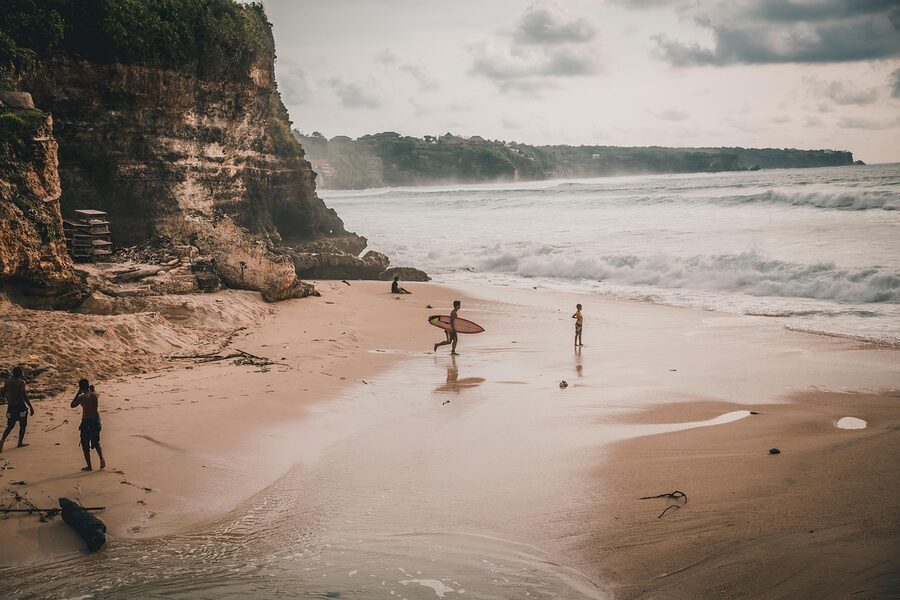
Ngaben is one of the moments when Bali shows you what it really runs on. The temples and the rice terraces and the beach clubs are surface. The thing underneath is a community that has chosen to spend a meaningful chunk of its time and money and labour on the proper release of its dead, and that does this not as a tourist performance but as the central duty of being Balinese. If you can stand at the side of a road and witness that without making it about yourself, you are doing the right thing.

Ngaben sits inside the broader category of Balinese sacred duty I touched on at the top. The culture archive on this site covers Galungan, Nyepi, melukat purification, and the temple system that all of it operates within. If you are still in the early planning stages, the flights to Bali primer handles the logistics of getting here, and the things to do archive rounds out the rest.

Should you stumble into a procession on your way to dinner, the way I did off Jalan Raya Andong, my advice is this. Stop. Move to the side. Take your hat off. Watch. Be quiet. When it has passed, walk on. The family will have been doing this for weeks before you arrived and they will be doing it for days after you leave. Your job is to be a small, respectful presence at the edge of something that is not yours.

Munduk, Bali: The Mountain Village Most Travelers Skip

Munduk village highland view across forested ridges in north Bali

Forget Tegalalang. Drive an extra ninety minutes north of Ubud and you get the rice terraces, the temperature drop, four working waterfalls in one valley, a lake temple that’s actually on a lake, and almost no one else. That’s Munduk. It sits at about 800 metres in the central highlands of Bali, the air is cool enough at night that I sleep under a blanket, and the village itself has roughly the population of a busy Canggu coffee shop.

Munduk village highland view across forested ridges in north Bali
The view from a homestay balcony just above Munduk village. The cloud sits below you, not above. Photo: Mike Dickison / CC BY 4.0 (via Wikimedia Commons)

I came up here the first time on a scooter from Lovina and almost turned back twice on the climb. I’m glad I didn’t. Here’s the order I’d visit the waterfalls, the truth about Pura Ulun Danu Beratan versus the Handara Gate (one is gorgeous; the other is a paid photo prop outside a golf course), and the routes that make Munduk part of a longer Bali trip rather than a fiddly detour.

Why Munduk Beats the South for a Few Days

Sea of clouds over the Bali highlands near Munduk at sunrise
Mornings up here look like this until about 8 a.m., then the cloud burns off and you see the volcano lines.

Munduk is a banjar (village hamlet) in Banjar district, Buleleng Regency, in the cool central spine of Bali. The drive in tells you a lot. You climb past clove trees, then coffee, then a band of forest where the temperature drops and the satay vendors start wearing little jackets. By the Twin Lakes viewpoint at 1,200 metres, your scooter mirror has fogged up.

What makes it different is the absence of the Bali tourist machine. No bracelet stalls, no aggressive massage touts, no beach clubs. Six warungs on the main road, two western-leaning cafes, a couple of mini-markets, a petrol station the size of a closet. Nights are quiet enough that you hear the gamelan rehearsing two valleys over.

The trade-off is that everything is spread out. You’ll need a scooter (Rp 100,000 / about $6.50 a day from most homestays), a private driver (Rp 700,000 to 900,000 from south Bali for the day, including waterfall stops), or a day-trip tour from Ubud or Canggu. No Grab or Gojek runs up here, so once you arrive, those three options are it.

The Cool-Weather Reality (Pack a Fleece, Yes Really)

Night temperatures drop to about 17-19°C in the dry season, lower in July and August. After three months of sweating in Canggu, that feels properly cold. Bring a light fleece. Many homestays don’t have heaters or hot showers (mine had neither the first time and I didn’t sleep well). If you run cold, ask the booking page directly: “is there hot water and a blanket?”

It also rains. A lot. Even in the dry months you’ll get afternoon showers through the canopy. Bring a small rain shell, dry-bag your phone, and assume your shoes will be wet.

The Four Munduk Waterfalls (in the Order I’d Visit Them)

Munduk Tutub waterfall plunging through a narrow cliff face into a pool
Air Terjun Munduk itself, also called Red Coral by some signs. Quieter than Banyumala, just as photogenic. Photo: Stefan Fussan / CC BY-SA 3.0 (via Wikimedia Commons)

There are technically more than four waterfalls (air terjun, “falling water”, on every sign you’ll see). Locals will list eight or nine if you ask. Four of them are actually worth a half day each. The rest are nice if you happen to be passing.

1. Munduk Falls + Melanting Falls (do these together)

These two share a single trailhead, about a four-minute scooter ride from the centre of Munduk village. Park at the marked lot, pay Rp 20,000 / about $1.30 entry, and walk the path that splits after about 200 metres. Right takes you to Munduk Waterfall, also signposted as Red Coral or just Air Terjun Munduk. The fall is about 25 metres tall, plunges into a small pool, and there’s enough spray that you’ll get damp standing on the viewing rock.

Munduk Melanting waterfall basin with foliage and shallow pool
Melanting basin in the late morning. The light is best between 10 and noon when the sun gets over the canopy. Photo: Jean-Marie Hullot / CC BY 3.0 (via Wikimedia Commons)

Walk back to the split and go left for Melanting. About 15 minutes down a stepped path with handrails for the steeper bits. The fall here is wider and you can stand close to the basin. There’s a small warung at the top selling kopi (coffee) and instant noodles. Both falls together are an easy two hours.

2. Banyumala Twin Falls

Banyumala Twin Waterfall, two parallel cascades over a moss-covered cliff into a green pool
Banyumala at maybe 9 a.m. on a Tuesday. By 11 there will be twenty people in the water. Photo: Made agus devayana / CC BY-SA 4.0 (via Wikimedia Commons)

This is the famous one, and it deserves the fame. Two parallel cascades pour over a green cliff into a pool you can swim in. Entry is Rp 50,000 / about $3.20. The road to the parking lot is the worst part of the trip; expect potholes the size of dinner plates and a final dirt section that any scooter can manage but won’t enjoy. From the parking, it’s about a 15-minute walk down a stone-stepped path. Some of the steps are loose and there’s a stretch with a railing missing entirely. Wear shoes with grip.

Bamboo footbridge over a stream below Banyumala waterfall
The bamboo bridge at the base. There’s a small platform here that gives you the classic shot if you’re patient enough to wait people out. Photo: Chainwit. / CC BY-SA 4.0 (via Wikimedia Commons)

The pool itself comes up to about waist height. The current under the falls is strong but you can wade to the side. Get here before 9 a.m. on a weekday and you might have it to yourself. By midday on a weekend it’s the busiest spot in the highlands, full stop.

3. Sekumpul (the one to make a real day of)

Trail descending the gorge towards Sekumpul Waterfall in north Bali
Halfway down to Sekumpul. Take the local guide, even if you think you don’t need one; the river crossings are not obvious. Photo: Ciousmagz / CC BY-SA 3.0 (via Wikimedia Commons)

Sekumpul is half an hour east of Munduk, closer to Singaraja than to the lakes, but everyone bundles it into a Munduk trip and so should you. It’s a complex of seven falls, the tallest about 80 metres. The hike down is around 25 minutes and includes a knee-deep river crossing in the wet season. There’s a contentious local rule that you must take a guide from the official ticket office (Rp 125,000 / about $8 per person for the Sekumpul + Hidden Falls combo). I get the controversy, but the trail is genuinely confusing and the guide gets you closer to the spray than you’d manage on your own.

Plan four hours minimum here. The view of the main falls from the lower platform is, no exaggeration, one of the best things I’ve seen anywhere in Indonesia. Bring water and snacks; the warungs at the bottom run out of cold drinks by lunchtime.

4. Aling-Aling (only if you like jumping off things)

Further north towards the coast, Aling-Aling is a four-tier system where the main falls are sacred and swimming is forbidden. The lower tiers include a 5-metre natural slide, a 10-metre jump, and a 15-metre jump the guides will let you try if they think you can handle it. Not for everyone (not for me on a hangover), but a good day out for the brave.

If you want the same cascade vibe at lower elevation and less of a hike, the Singsing Waterfalls near Lovina are a 40-minute drive down the mountain and pair with a sunset back at the coast.

The Lakes and Pura Ulun Danu Beratan

Pura Ulun Danu Beratan eleven-tier meru tower at the edge of Lake Bratan
The 11-tier meru tower of Pura Ulun Danu Beratan. The reflection only works at sunrise on a still day. Photo: Abizar Al Ghifari / CC BY-SA 4.0 (via Wikimedia Commons)

Pura Ulun Danu Beratan is the floating-temple shot you’ve seen on a thousand Bali postcards and on the back of the Rp 50,000 banknote. It’s a real working temple, dedicated to Dewi Danu (the lake goddess) and built on a small rocky outcrop in Lake Bratan. The 11-tiered meru tower in the photos is for Shiva, the smaller 3-tier one is for Brahma. There’s a quick primer on the temple-architecture vocabulary and the Hindu side of all of this in our Balinese Hinduism guide; worth a skim before you visit.

Entry is Rp 75,000 / about $4.80 for foreigners. The grounds open at 7 a.m. Get there at opening or an hour before sunset; midday is harsh light, busloads of tour groups, and a queue at every photo spot. It’s at Bedugul, about a 30-minute drive from Munduk village.

Traditional jukung outrigger boats on Lake Bratan with mist over the water
Lake Bratan early morning. The little jukung outriggers belong to local fishermen who’ll take you out for about Rp 100,000 an hour.

You can rent a jukung (small outrigger canoe) for an hour from a couple of guys at the temple side of the lake, which is genuinely lovely if there’s no breeze. Negotiate; expect to start around Rp 150,000 and settle near Rp 100,000 / about $6.50.

Lake Buyan and Lake Tamblingan (the Twin Lakes)

Lake Buyan seen from a forested viewpoint with surrounding ridges
Lake Buyan from one of the unmarked viewpoints along the road. Stop at any pull-off; they all look like this.

The Twin Lakes (Buyan and Tamblingan) sit a few kilometres further on from Bratan. The famous viewpoint is on the Wanagiri side and yes, it’s the spot with the heart-shaped wooden frames you’ve seen on Instagram. Half of them charge Rp 50,000 to stand on a platform. The view itself is free if you stop at one of the unmarked pull-offs along the road. Same lakes, no queue, no man with a snake on his shoulder asking for a photo tip.

Pura Ulun Danu Tamblingan with moss-covered stone gates under low cloud
Pura Ulun Danu Tamblingan. Almost no one comes here. It’s a 15-minute walk from the lakeshore and it’s one of my favourite quiet spots in north Bali. Photo: Chainwit. / CC BY-SA 4.0 (via Wikimedia Commons)

If you want a temple experience without the queue, walk down to Pura Ulun Danu Tamblingan on the Tamblingan lakeshore. The gates are mossy, the grounds are usually empty, and the only sound is birds. Donation-based entry, sash provided at the gate.

The Handara Gate: Skip Unless You Really Want the Photo

Handara Gate Bali entrance with mountains and a lone visitor walking through
The Handara Gate. The reflection in most Instagram shots is a small mirror held under the camera. Photo: Shankara42 / CC BY-SA 4.0 (via Wikimedia Commons)

The Handara Gate is the entrance to a golf course and resort. It has no religious meaning, no temple behind it, no story beyond looking dramatic. Entry to take a photo is Rp 30,000 to 100,000 depending on the day and how busy they are. The famous “reflection” you see in every photo is created by the staff holding a small mirror flat under the camera lens. There’s almost always a queue.

If you must, go at 7 a.m. when it opens and the light is soft and the queue is short. Otherwise, skip it. The 20 minutes you’ll spend here are 20 minutes you don’t get to spend at Tamblingan.

Trekking and the Coffee/Clove Plantations

Coffee cherries ripening on the branch in a Bali highland plantation
Coffee cherries up at the Munduk altitude take seven to nine months to ripen. The kopi here is genuinely good.

Munduk’s altitude makes it one of the few parts of Bali that grows real coffee, plus cloves, cocoa, and vanilla. The whole hillside is a working plantation. Most homestays can arrange a 2-3 hour walking tour for Rp 100,000 to 200,000 per person, usually with the homestay’s uncle as guide, which is what you want. You walk through clove trees that smell unbelievably strong underfoot, see the coffee cherries on the branch, and finish at a roastery where a small bag is Rp 50,000.

For longer walks, two routes stand out: the rice-paddy + jungle loop (about 2.5 hours, easy, starts behind Warung Classic, drops through terraces and climbs back through forest, no other tourists) and the lake circuit (about 5 hours around Lake Tamblingan on fishermen’s paths, take a guide because the trail is unmarked in places).

Where to Stay in Munduk

There are no five-star resorts, and that’s the point. The accommodation tier here is homestay, eco-lodge, and a small handful of boutique places. I’ve stayed at three different ones across my visits and these are the categories you’ll be choosing between.

Budget homestays sit around Rp 200,000 to 400,000 / about $13 to $26 a night, usually with a basic Indonesian breakfast (mie goreng or banana pancakes), shared or private bathroom, no heater, sometimes hot water. Maliana Homestay in the village centre is a good example. Aditya Homestay also gets consistently good word-of-mouth. The location matters less than you’d think; everywhere in central Munduk is a short scooter ride from everywhere else.

Mid-range eco-lodges run Rp 800,000 to 2,000,000 / about $52 to $130. Puri Lumbung Cottages is the well-known one, set on a ridge above the village with rice-paddy views and a sunset bar that closes inconveniently at 5:30 p.m. Lesong Hotel is a quieter mid-range option on the rice paddies.

Boutique splurge: Munduk Moding Plantation is the famous one, with the infinity pool overlooking the valley that you’ve seen on every “instagrammable Bali” list. Rooms run Rp 3,000,000 to 5,000,000 / about $195 to $325 a night. They also sell day passes (around Rp 500,000) which include pool access and lunch, a reasonable compromise if you want the photo without the spend. Munduk Cabin is the other splurge option, with treehouse-style rooms above the canopy.

Whatever you pick, book ahead. Munduk has limited beds and the good ones sell out a month or more in advance for the dry-season weeks (June-September).
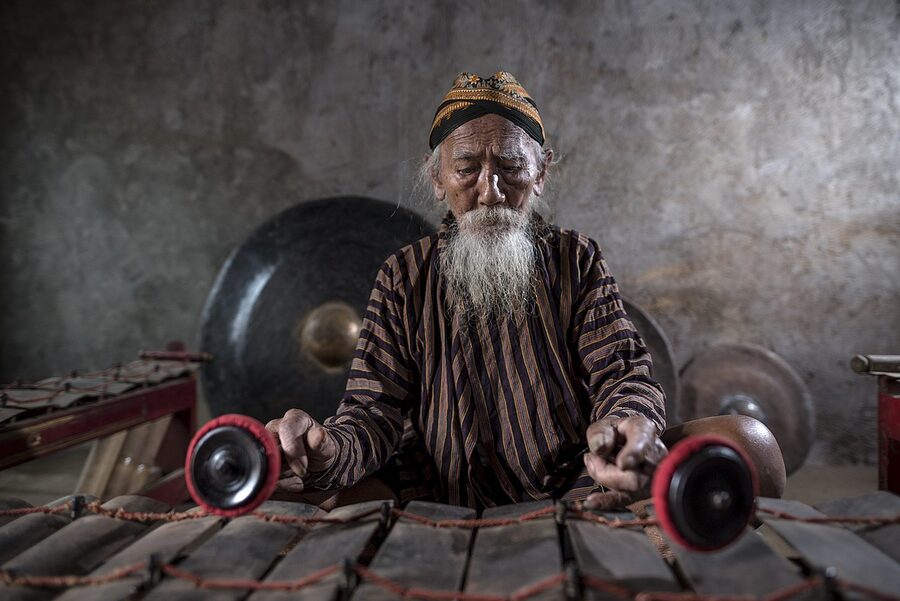
Eating in Munduk: Highland Warungs Beat Beach Clubs

Plate of nasi goreng with a fried egg, sate skewers, and iced tea at a Munduk warung
Warung Made’s nasi goreng. The egg is the test; if the yolk runs when you cut it, you’re at a good warung.

The food scene is small and excellent in places, mediocre in others. The good warungs are the ones run by an ibu (mother/auntie) who does all the cooking herself, which means slow service and proper food. The bad ones are the ones with laminated photo menus and waiters who hand you a tablet.

The places I keep going back to:

  • Warung Made: ridge-side, panoramic view, best Indonesian curry I’ve had in the highlands. Try the ayam betutu (slow-cooked spiced chicken) if it’s on.
  • Warung Classic: the sunset warung. Get there at 5 p.m., order a Bintang and the cap cai (mixed stir-fry vegetables), watch the light hit Lovina below.
  • Warung D’Munduk: smaller, cheaper, the family running it will remember you on day two.
  • Eco Cafe 2: a one-woman operation. Long waits, real espresso, potato croquettes with peanut sauce that I think about months later.

Expect Rp 30,000 to 60,000 / about $2 to $4 for nasi goreng or mie goreng with a drink. If you’ve never had nasi goreng done properly, our history of nasi goreng piece is good background; the highland warung version with home-fried krupuk is a long way from the airport-lounge one.

Vegan and strict-vegetarian options are essentially zero. Most warungs will adapt a dish (gado-gado, tempe goreng) if you say “tanpa daging, tanpa ayam, tanpa terasi” (without meat, chicken, shrimp paste), but expect a shared cooking surface.

Combining Munduk with Lovina (and Why You Should)

Silhouette of palm trees and a person at sunset on Lovina Beach in north Bali
Lovina at 6 p.m. The dolphin-watching boats leave at 5:30 a.m. the next morning if you’re committed. Photo: Andreia from Lisboa / CC BY 2.0 (via Wikimedia Commons)

Lovina is a 50-minute drive down the mountain on the north coast. Black volcanic sand, calmer water than the south, and a town that’s sleepy in a good way. Two nights Munduk and one Lovina gives you cool mountains, waterfalls, a proper beach, and the optional 5:30 a.m. dolphin-watching boat from Lovina pier. The dolphins are a coin flip and the boats can crowd each other; ask your accommodation for a captain who runs solo trips.

Traditional fishing jukung boats lined up on Lovina Beach in Bali
The fishing jukungs at Lovina. They go out at dawn and come back with the morning catch around 8 a.m.

The combination works because the drive down is short, the contrast between mountain and coast is total, and the north coast still has that quieter feel of Bali pre-2010. If you’ve already read about Singsing Waterfall near Lovina, the trailhead is on the way back up to Munduk and slots into the same day easily.

Combining Munduk with Sidemen (the Quiet-Bali Loop)

Sidemen rice paddy with a single coconut palm and surrounding hills in east Bali
Sidemen rice paddies. About three hours from Munduk by car, no good public transport between them. Photo: Paul Arps / CC BY 2.0 (via Wikimedia Commons)

The longer pairing is Munduk plus Sidemen, in east Bali. Both are quiet, both are mountain-adjacent, both run on homestays rather than resorts. The drive takes 3 to 4 hours via Bedugul and Klungkung; hire a private driver (Rp 800,000 for the transfer) and break it up with a stop at Pura Besakih on the way.

This loop is the antidote to a Canggu-and-Seminyak Bali trip. Three nights Munduk, three nights Sidemen, no party scene, no traffic, no beach club. If you’re in Bali for two weeks and want a real reset, build the second week around it.

Getting to Munduk From the South

From the airport (Ngurah Rai / DPS) or south Bali, you’ve got three realistic options. A private driver for the full day, with stops, runs Rp 700,000 to 900,000 / about $45 to $58 with petrol included. A scooter from Canggu (90 minutes) or Ubud (2 hours) is free if you already have a rental, but the climb is winding and steep; don’t attempt it if your scooter experience is “I drove around Sanur for an afternoon”. A day-trip tour from south Bali is around Rp 500,000 to 800,000 per person and covers Munduk Falls plus Banyumala or Sekumpul plus the lake temple, but you don’t get to slow down.

If you’re still planning the connection from your home airport, the flights to Bali primer covers the routing. Worth one night’s recovery in Canggu or Ubud before you tackle the mountain road.
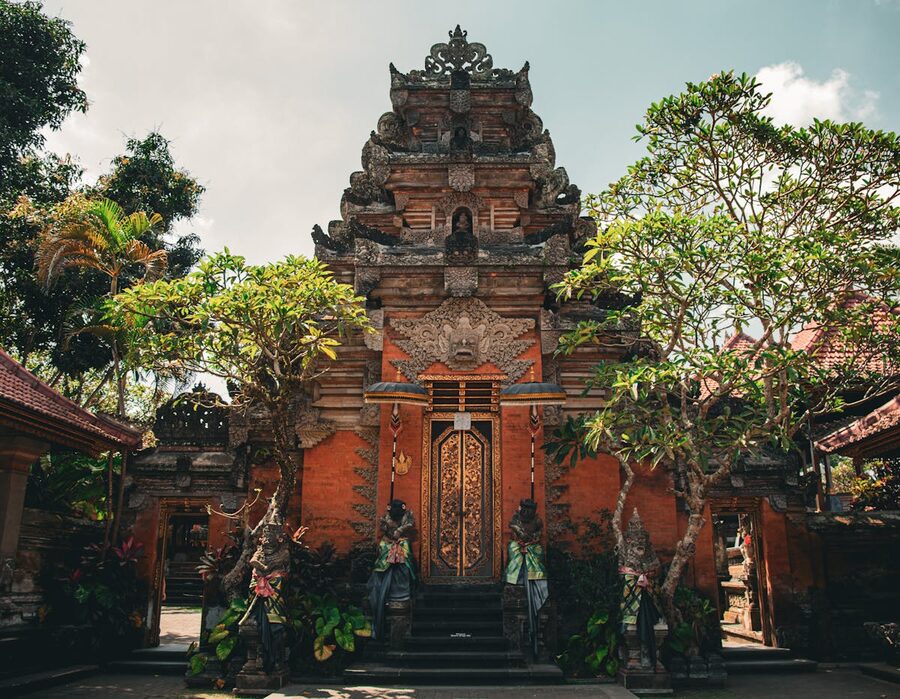
A Suggested Two-Day Itinerary

Jatiluwih rice terraces with palms in the central Bali highlands
Jatiluwih on the way up. If you have time, take the longer route via the World Heritage rice terraces.

Two days is the minimum that justifies the drive. Three is better. Here’s what I’d do with two:

Day 1. Drive up from south Bali via Jatiluwih (the World Heritage rice terraces, 90 minutes longer than the direct route but worth it). Lunch at Batu Karu Kopi above the terraces. Continue to Munduk, check into the homestay, do the Munduk Falls + Melanting combo in the afternoon while the light is good. Dinner at Warung Made, sleep early.
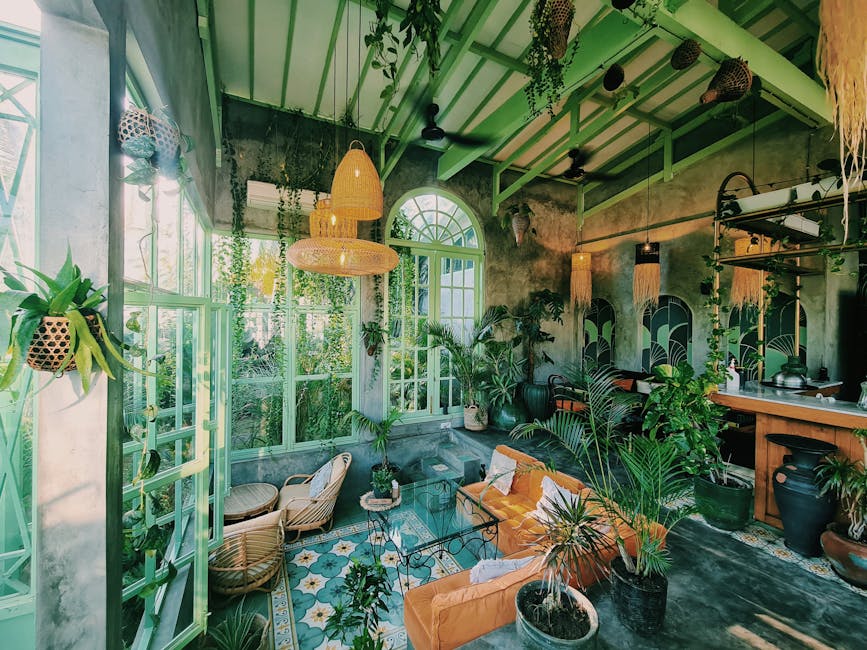
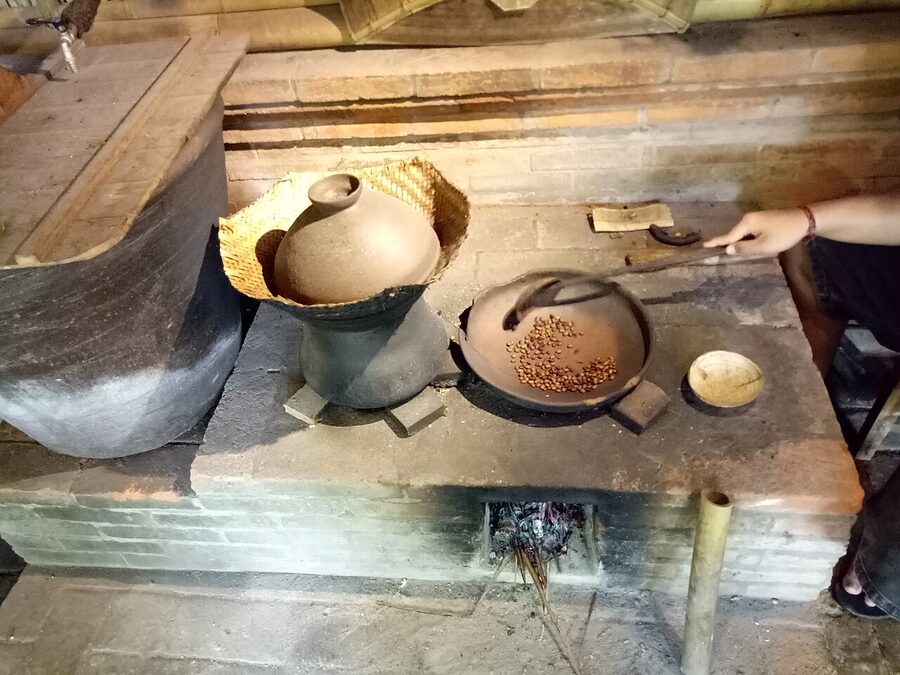
Day 2. Up at 6 a.m. for Pura Ulun Danu Beratan at opening (you’ll have it almost to yourself for the first hour). Breakfast at one of the cafes overlooking Lake Bratan. Drive to Banyumala for the swim before the crowds. Late lunch in the village. Afternoon at Tamblingan or, if you’re keen, Sekumpul (it’ll be a long day). Sunset at Warung Classic. Drive back to south Bali the next morning, or push down to Lovina for night three.

Fees, Hours, and the Rest of the Practical Bits

Quick reference, current as of late 2025-early 2026:

  • Munduk Falls + Melanting Falls: Rp 20,000 entry, dawn to about 6 p.m.
  • Banyumala Twin Falls: Rp 50,000, opens 7 a.m.
  • Sekumpul: Rp 125,000 with mandatory guide for the basic combo, more for extended routes
  • Aling-Aling: Rp 125,000 for the jump-and-slide route with guide
  • Pura Ulun Danu Beratan: Rp 75,000, 7 a.m. to 7 p.m., sash and sarong included
  • Pura Ulun Danu Tamblingan: donation, gate is open during daylight
  • Handara Gate: Rp 30,000 to 100,000 (price changes)
  • Wanagiri Hidden Hills swing/photo platforms: Rp 50,000 each, often per person per platform
  • Indonesian Tourism Levy: Rp 150,000 per visitor, paid online via the LoveBali app or at arrival, valid for the whole trip (introduced February 2024)
Caution slippery roads sign on a wet jungle trail near Munduk waterfalls
The sign at the Munduk Falls trailhead. They mean it. Photo: Mike Dickison / CC BY 4.0 (via Wikimedia Commons)
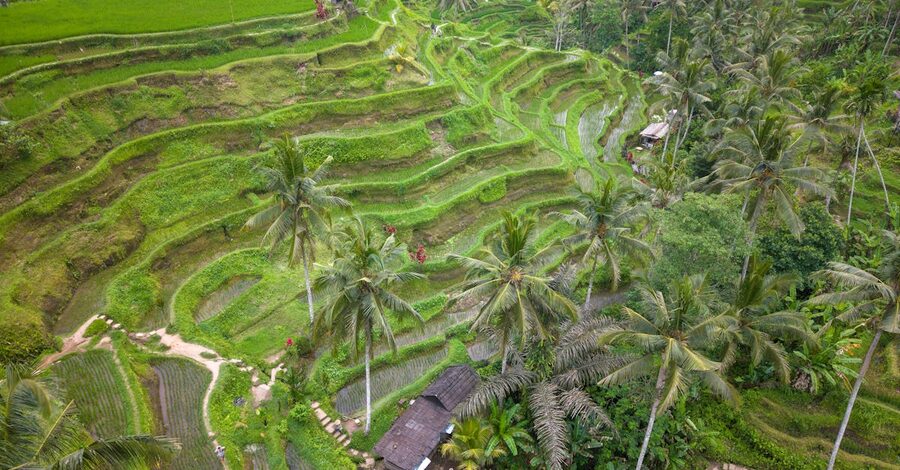
Cash matters up here. There’s an ATM at the petrol station and another in Bedugul, but both run out on weekends. Pull what you’ll need before leaving the south. Most warungs and homestays don’t take card.

Phone signal is patchy. Telkomsel works best, Indosat second. Download the offline Google Maps area before you set off; you will lose signal in the gorges.

What to Pack Specifically for Munduk

Beyond your normal Bali kit: a light fleece for the nights, quick-dry trousers (not jeans), trail shoes or sandals with proper grip, a rain shell, a dry-bag for your phone, a swimsuit you don’t mind getting muddy, and more cash than you think.

The Verdict

Most Bali trips are built around the south. Canggu, Seminyak, Uluwatu, two days in Ubud. Munduk asks you to take three days off that itinerary and drive into the cold mountains instead. It’s not for first-timers who came for beach clubs and surf lessons.

But for anyone on a second trip, or anyone who’s already done the south and felt like they’d seen the brochure version, this is the antidote. Real waterfalls. A lake temple at sunrise. A working coffee plantation a five-minute walk from your bed. Cool nights and quiet mornings. A village where the warung ibu remembers what you ordered yesterday.

Bring a fleece. Take the long road via Jatiluwih. Skip the Handara Gate unless the mirror trick really matters. Spend a few hours at Tamblingan with no one else around. For more on the north Bali coast and the cascades you can pair with a Munduk run, the beaches and nature archive has the related pieces.

How to Fly to Bali in 2026

There are no direct flights to Bali from North America or most of Europe. So here is the one number that matters: connect through Singapore (SIN) or Doha (DOH), not Jakarta (CGK), and you save four to six hours and one less domestic transfer that almost nobody warns you about. That is the article in one sentence. The rest is the why, the when, the cost, and the things you find out the hard way at 3 a.m. local time.

Emirates 777 on final approach to DPS over Bali fishing jukungs at sunset
Late-afternoon arrivals from the Middle East come in low over the Jimbaran fishing fleet. If your seat is on the right side flying in from Doha or Dubai, ask for a window.

I have done the Bali run six different ways across four trips. Singapore Airlines from JFK via Frankfurt and SIN. Qatar from London via Doha. Cathay from LAX via HKG. KLM from Amsterdam via Singapore. The cheap one through Kuala Lumpur on AirAsia, which I will not do again. And the slow one via Jakarta on Garuda, which is also off my list. The price spread between best and worst was about 35 percent. The time spread was nearly twelve hours. So you will want to read past the headline fare on Skyscanner before you book.

Where you actually land: Ngurah Rai (DPS)

DPS Bali airport terminal exterior with traditional red Balinese gateway
The international terminal entrance at DPS. The candi bentar split-gate motif on the right is the first thing the island shows you. Photo: Pinterpandai / CC BY-SA 3.0 (via Wikimedia Commons)

Bali has one international airport. It is officially I Gusti Ngurah Rai International Airport (DPS), named after a Balinese resistance leader killed by the Dutch in 1946. Locals just call it Ngurah Rai or sometimes Bandara. It sits on the narrow isthmus between the south coast and the Bukit peninsula, in the Tuban area just south of Kuta, and the runway juts out into the sea on a reclaimed strip. If you fly in at golden hour from the east or south, the descent is the best window seat on the trip.

Functionally there are two terminals: international (T2) and domestic (T1). They sit next to each other and you can walk between them in about ten minutes if you know what you are doing, which the airport’s wayfinding does not always make obvious. The international terminal is the one with the dramatic curved wave roof and the candi bentar (the traditional Balinese split-gate, in italics on first use, then plain) over the entrance.

Inside DPS international terminal Bali with curved roof
Arrivals concourse on the international side. The roof is meant to evoke a Balinese pendopo pavilion, and after a 14-hour flight it is genuinely calming. Photo: Ardfeb / CC BY-SA 4.0 (via Wikimedia Commons)

One quirk worth knowing on arrival: the immigration hall has banks of e-gates for visa-on-arrival e-visa holders and a second set of counters for the in-person visa-on-arrival queue. The e-gate line is dramatically faster, sometimes 5 minutes versus 90, so it is worth doing the e-visa step before you board. More on that below.

Direct routes by region (the real list, 2025)

Aerial view of Super Air Jet aircraft at DPS Bali airport apron
DPS apron from the air. Super Air Jet, Lion Group’s premium-economy brand, is one of the workhorses on Indonesian domestic.

Direct service to DPS has expanded since 2023, but the geography hasn’t moved. Bali is a long way from anywhere outside Asia and Oceania. Here is the real list, broken by region. Specific carriers and frequencies change, so check Skyscanner or Google Flights for the day you actually want to fly.

Intra-Asia (the easy ones)

From within Asia, you have plenty of direct options:

  • Jakarta (CGK): Garuda Indonesia, Citilink, Lion Air, Batik, Pelita, Super Air Jet. Over 25 flights daily, every hour or two. Roughly 1h50.
  • Singapore (SIN): Singapore Airlines, Scoot, Jetstar Asia, AirAsia. Several daily, 2h35.
  • Kuala Lumpur (KUL): AirAsia, Malaysia Airlines, Batik Air. Multiple daily, 3h.
  • Bangkok (BKK): Thai Airways, AirAsia, Vietjet. Daily, 4h.
  • Hong Kong (HKG): Cathay Pacific, sometimes Hong Kong Airlines. Daily, around 5h.
  • Tokyo (NRT): Garuda. Daily, around 7h. (ANA and JAL do not currently fly DPS, which surprises people.)
  • Seoul (ICN): Korean Air, Asiana, Garuda. Daily-ish, 7h.
  • Taipei (TPE): China Airlines, EVA Air. Daily, around 5h.
  • Shanghai (PVG), Guangzhou (CAN), Shenzhen (SZX): China Eastern, China Southern, Xiamen Airlines. Schedules less stable post-COVID, so verify before counting on it.
  • Manila (MNL): Philippine Airlines, Cebu Pacific. Daily, 4h30.

Middle East (the long-haul connector tier)

Qatar Airways Boeing 777 at airport
The Doha hub via Qatar’s 777 fleet is genuinely good for Bali. Hamad International is one of the few transit airports where 6 hours feels civilised.

From or via the Gulf, you have three solid options:

  • Doha (DOH): Qatar Airways. Daily, 9h. This is the one to book from London, Manchester, Edinburgh and most of Europe.
  • Dubai (DXB): Emirates. Daily, 9h. Slightly longer total trip from most European origins because DXB is further than DOH, but the lounge is famous.
  • Abu Dhabi (AUH): Etihad, codeshare with Garuda. Less frequent, sometimes routed via Singapore, so check the actual itinerary.

Oceania (the easy ones from down south)

If you are coming from Australia or New Zealand, Bali is basically a long domestic flight:

  • Perth (PER): 3h35
  • Darwin (DRW): 3h10
  • Brisbane (BNE): 6h
  • Sydney (SYD), Melbourne (MEL): 6h20
  • Adelaide (ADL): 5h30
  • Cairns (CNS): 5h30
  • Auckland (AKL): 8h via direct on Air New Zealand seasonally; otherwise SYD or MEL connection.

Carriers from Oceania include Jetstar, Virgin Australia, Qantas, Garuda Indonesia, AirAsia X, and Batik Air Malaysia. Aussies also get the most aggressive sale fares of any market into Bali; PER round-trips can drop into the low AU$300s on Jetstar in shoulder season.

The reality from North America and most of Europe

Singapore Airlines A350 in flight
Singapore’s A350 is the workhorse of the LAX-SIN-DPS routing, and the cabin is the most comfortable economy I have flown intercontinental.

This is the section that actually changes how you book. There are no direct flights to Bali from anywhere in the continental US, Canada, the UK, or most of mainland Europe. Not yet, and probably not for the foreseeable future, despite Garuda periodically announcing a Los Angeles route that never quite materialises. Every single itinerary is one or two stops, somewhere in Asia or the Middle East.

That changes the calculation. Instead of comparing direct vs connecting, you are comparing connection points. And the connection point matters enormously, because:

  • Two stops is significantly worse than one stop for total travel time and stress, and the price difference is rarely worth it.
  • Some hubs are pleasant to transit (Doha, Singapore, Hong Kong); others are punishing (Beijing PEK transit visa rules, Manila MNL terminal-change confusion).
  • The final leg from your hub to DPS is what determines whether you arrive at midnight or 6 a.m., which then determines whether you spend Rp 500,000 on a hotel room you barely sleep in.

Why connecting through Jakarta is almost always the wrong move

Soekarno-Hatta Airport Jakarta with Mt Salak in the distance
Soekarno-Hatta from the air, with Mt Salak in the background. CGK has the most domestic Bali flights of any hub. It is also the worst place to transfer if you can avoid it.

Here is the thing that travel agents and naive booking engines will not tell you. Yes, on paper, Jakarta has the most flights to Bali. Garuda alone runs almost two dozen daily. Lion Air and Citilink run more. From a search engine’s perspective, CGK looks like the obvious connection.

It is not. Here is what actually happens when you connect through CGK from a long-haul international flight:

  1. You land at CGK Terminal 3 international arrivals.
  2. You clear Indonesian immigration in Jakarta even though Bali is your final destination. This is a real queue, sometimes 60-90 minutes during peak.
  3. You collect your bags from the international carousel.
  4. You walk or shuttle (signs vary in clarity) to the domestic check-in for your CGK-DPS leg.
  5. You re-check your bags, clear domestic security, and wait at the gate.
  6. You fly the final two-hour leg.
  7. You collect bags again at DPS and clear customs.

That is two immigration stamps, two baggage claims, and a domestic transfer that adds 4-6 hours minimum to a trip that was already 18+ hours. The fare is rarely cheaper than just flying SIN-DPS or KUL-DPS instead. And if your inbound long-haul is delayed, you almost certainly miss the domestic connection because separate tickets do not protect each other.
The exception: if you are flying Garuda end-to-end on a single ticket from a city Garuda serves direct (like Tokyo NRT, Seoul ICN, or Sydney), and they are routing you via CGK on their own metal with through-checked bags. Then it is fine. Otherwise pick a different hub.

The hubs that actually work for Bali

If you are flying from outside Asia, these are the connection points that make sense, ranked roughly by how often I would pick them.

Singapore (SIN) on Singapore Airlines or Scoot

SIN-DPS is 2h35, with several flights a day on Singapore Airlines, Scoot (the budget arm), Jetstar Asia, and AirAsia. Singapore Airlines runs a long-haul network that hits the US (LAX, SFO, JFK, ORD, IAH, EWR, SEA), the UK (LHR, MAN), and most of mainland Europe. The transit experience at Changi is genuinely good: terminal 2 has the Jewel waterfall, you can take a free city tour if your layover is over five hours, and the showers are affordable. Total time from JFK or LHR to DPS via SIN is typically 22-25 hours including layover.

Best for: most of Europe, and the US East Coast and West Coast.

Doha (DOH) on Qatar Airways

DOH-DPS is 9h, daily, on Qatar’s 777 or 787. Qatar’s network out of Doha is enormous: most of Europe, most of the US East Coast, much of South America, and a heavy African presence. Hamad International Airport is one of the better transit airports anywhere; the Al Mourjan business lounge is iconic, and even the public terminal is comfortable. Total LHR-DOH-DPS or LGW-DOH-DPS is around 21 hours.

Best for: the UK, most of Europe, and the US East Coast.

Hong Kong (HKG) on Cathay Pacific

HKG-DPS is around 5h, daily on Cathay. HKG is well-connected from the US West Coast (LAX, SFO, ORD, JFK, EWR, BOS, IAD, YVR) and from London. The Cathay business cabin and the Pier lounge are both highly regarded. Total time from SFO via HKG is roughly 21-23 hours.

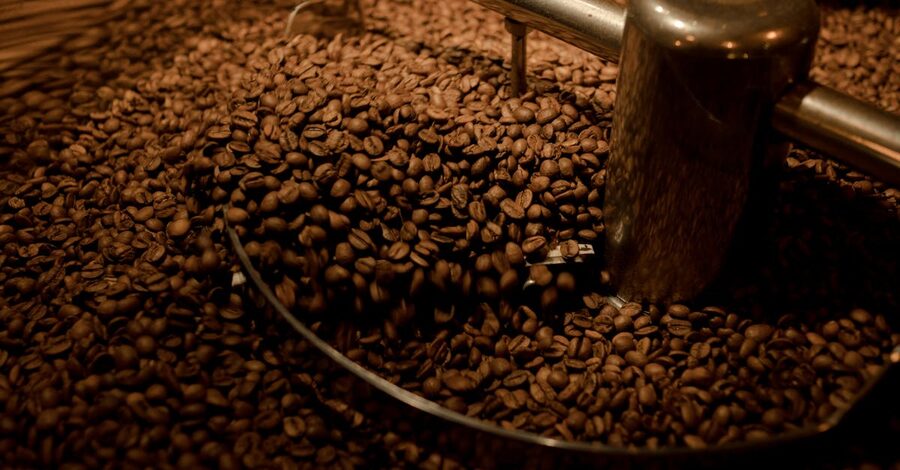
Best for: the US West Coast and Canada.

Seoul (ICN) on Korean Air or Asiana

ICN-DPS is about 7h, daily on Korean Air (SkyTeam) and several times a week on Asiana (Star Alliance). Seoul is a strong hub from US West Coast cities and from JFK, ORD, IAD, ATL, SEA. ICN is consistently rated one of the best airports in the world for transits.

Best for: US West Coast, JFK, and anyone collecting SkyTeam or Star Alliance miles.

Tokyo (NRT) on Garuda Indonesia

NRT-DPS is direct on Garuda, daily. Tokyo is well served from the US (LAX, SFO, JFK, ORD, IAH, SEA) on Delta, ANA, JAL, United, and others. ANA and JAL do not fly direct to Bali themselves, but you can fly them to NRT or HND, then connect to Garuda for the final leg. The ANA cabin is famously good. Total LAX-NRT-DPS is around 22 hours.

Best for: anyone with ANA, JAL, or United miles, and travellers who want to add a few days in Tokyo to the trip.

Kuala Lumpur (KUL) on AirAsia or Malaysia Airlines

KUL-DPS is about 3h, multiple daily on AirAsia and Malaysia Airlines. Often the cheapest connection from Europe via the AirAsia X long-haul network from London Stansted or Manchester. The catch: separate tickets and budget-airline baggage rules mean you really need to plan the layover. AirAsia X has had famously inconsistent schedules; double-check the day you fly.

Best for: Europe travellers who want the absolute cheapest fare and have time on the ground at KUL.

When to book: best months for fares

Sunset on Kuta Beach Bali with people on the sand
Kuta sunset in early November. Shoulder season, half the crowd, fares 30 percent under July prices.

Bali fares move on a few overlapping calendars: Indonesian school holidays, Australian holidays, Chinese New Year, Japanese Golden Week, and the southern-hemisphere summer rush around Christmas and New Year. The cheapest weeks consistently are:

  • February to early April: low season for international, the tail of the wet season. Fewer flights are full. Wet-season weather is mostly afternoon thunderstorms, not all-day rain, so the trade-off is real but workable.
  • October to mid-November: shoulder season. Dry weather is back, the Australian summer rush hasn’t kicked in, and Northern Hemisphere school holidays are over.

The cheapest weeks to avoid:

  • July to August: peak season. Australian and European summer holidays. Fares from London or Sydney can double versus shoulder.
  • December 25 to January 5: holiday peak. Worst of the year. From Sydney during Christmas week, you can pay AU$1,200+ for what costs AU$450 in October.
  • Chinese New Year week (varies, late Jan to mid-Feb): regional Asian fares spike on intra-Asia routes.
  • Indonesian Eid holiday (varies): Jakarta-Bali domestic flights become impossible to find at any price for about a week. If you are connecting via CGK during Eid, build in a day buffer or pick a different hub.

Book three to four months in advance for shoulder season; six months for July-August or Christmas. Tuesday-Wednesday departures are typically cheaper than Friday-Sunday by 10-20 percent.

What it actually costs (rough fare bands)

Specific fares date the moment you publish them, so these are the bands you should expect to see in shoulder season for round-trip economy. Peak season pushes the upper end. Sales push the lower end. Premium cabins are 3-5x economy.

  • London to Bali: GBP 600-1,200 economy round-trip. Qatar via DOH and Singapore Airlines via SIN are the consistent best-value full-service options. AirAsia X via KUL can drop into the GBP 450 range if you pack light.
  • Amsterdam to Bali: EUR 650-1,400. KLM via SIN is the obvious option (codeshare with Singapore Airlines), but Qatar via DOH is often cheaper.
  • New York (JFK) to Bali: USD 1,100-1,800. Singapore Airlines direct JFK-FRA-SIN-DPS is comfortable. Cathay via HKG is sometimes a few hundred cheaper. Qatar via DOH is the third option.
  • Los Angeles (LAX) to Bali: USD 1,000-1,500. Singapore Airlines via NRT-SIN, EVA via TPE, Korean via ICN, Cathay via HKG are all competitive. China Eastern and China Southern via PVG/CAN are usually cheapest but the layover experience is rough.
  • Sydney to Bali: AU$450-1,000. Jetstar, Virgin Australia, Garuda. Direct flights so it is a straight comparison.
  • Tokyo (NRT) to Bali: JPY 50,000-100,000 round-trip on Garuda direct.
  • Singapore to Bali: SGD 170-360. Genuinely cheap if you find yourself in Singapore on the way back from somewhere else and want to tack on a Bali week.

For points and miles, the sweet spot is Singapore Airlines KrisFlyer (Amex Membership Rewards transfer partner) for premium cabin, or Aeroplan / United for Star Alliance saver awards. Expect 38,000-45,000 miles each way in economy from the US to DPS, and 88,000-120,000 in business. Qatar via Avios is also routinely good value out of Europe.

The Indonesian Tourism Levy (Rp 150,000)

Indonesian rupiah notes including 100,000 IDR pink and 10,000 purple bills
The pink ones are 100,000 rupiah (about $6.50). You will pay the tourism levy with one of these and a half. Or do it from your couch before you fly.

Since 14 February 2024, every foreign visitor entering Bali has had to pay an International Tourist Levy of Rp 150,000 (about $9.50 / GBP 7.50), one-time, valid for the duration of your trip. This is not the visa fee. It is separate. Every foreign tourist pays it, including infants, including people transiting from Jakarta to Bali on a domestic flight, including everyone who is not a permit holder (KITAP, KITAS, diplomatic visa, student visa, golden visa, or crew).

The levy was introduced under Bali Provincial Regulation No. 6 of 2023. The official line is that the money funds three things: cultural preservation (temple maintenance, ceremony support, traditional arts), environmental protection (waste management, beach cleanup, marine conservation), and tourism infrastructure. Locals I have spoken with are skeptical about how transparently the funds are used, which is fair, but the levy itself is real and required.

Pay it before you fly (the only sensible option)

Two ways to pay:

  1. Online via the official Love Bali platform at lovebali.baliprov.go.id, or via the Love Bali mobile app. You enter passport details, arrival date, and pay by card or QRIS. You get a QR code voucher emailed within minutes (check spam). Print it or save it offline. This is what to do.
  2. At the airport on arrival. There are dedicated counters in the international arrivals area at DPS that take cashless payment only. The queue can be 30-60 minutes during peak arrivals. Skip this if at all possible.

Two warnings worth flagging. First: the only legitimate website is lovebali.baliprov.go.id (note the .go.id government domain). There are several scam sites that look identical and charge inflated fees, sometimes Rp 500,000-1,000,000. If you Google it, double-check the URL. Second: pay in IDR if your card supports it, not in your home currency. The platform’s fixed exchange rate is sometimes worse than your card’s.

While you are sorting out the practical bits, the Travel Tips section has a few more pieces worth reading before you fly.

Visa: visa-on-arrival, e-VOA, or visa-exempt

A passport with multiple visa stamps held open
What your passport will look like after a few Indonesia entries. Bali stamps go on the right page, customs stickers on the left.

As of 2025, citizens of about 90 countries can get a visa on arrival (VOA) or an electronic visa on arrival (e-VOA) for Bali. This is the most common path. The list includes the US, UK, Canada, Australia, New Zealand, all EU member states, Singapore, Malaysia, Japan, South Korea, India, Brazil, the UAE, and many others. ASEAN passport holders (Brunei, Cambodia, Laos, Malaysia, Myanmar, Philippines, Singapore, Thailand, Vietnam) can enter visa-free under the regional bilateral agreement.

Key facts as I understand them right now (verify on the official Indonesian e-visa portal, evisa.imigrasi.go.id, before you fly because policy moves):

  • Visa fee: Rp 500,000 (about $32). Payable in IDR, USD, or by card.
  • Validity: 30 days from entry, extendable once for another 30 days for an additional Rp 500,000.
  • Passport rule: minimum six months validity beyond your departure date from Indonesia. This is enforced. They check.
  • Onward ticket: a return or onward flight ticket is technically required. Spot-checked rather than universally enforced, but I would not gamble on it.
  • e-VOA: pay online before you fly at evisa.imigrasi.go.id and you get a PDF with a QR code. Use the e-gates at DPS instead of the manual VOA queue. Saves an hour easily.
  • Electronic customs declaration: also mandatory, fill it out at ecd.beacukai.go.id within three days before arrival. Brings up your QR code at customs.
  • Overstay penalty: Rp 1,000,000 per day. Add it up before you decide to wing it.

For longer stays (remote work, retirement, surf seasons that bleed into months), you are looking at the B211A visit visa (60 days, extendable twice), the new E33G remote-worker visa, the Second Home Visa, or the KITAS work permit if you are actually being employed locally. All are beyond the scope of a flight article, but it is worth knowing they exist before you assume you can just keep extending VOAs forever (you cannot).

Getting from DPS to where you are actually staying

Bali traffic with mopeds and minivan in Kuta area
The 5 p.m. Kuta-to-Seminyak crawl. What looks like a fifteen-minute drive on Google Maps will take you forty-five if you arrive at the wrong time of day.

The airport-to-accommodation transfer is where Bali first tries to charge you a tourist tax of its own. The fares vary wildly depending on whether you negotiate, prebook, or just walk out and use Grab. Here is what you should expect.

Grab (the rideshare app)

Grab is the Southeast Asian Uber. It works at DPS, but with a quirk: the airport doesn’t allow Grab pickup at the curb directly, the result of a long-running dispute with the licensed taxi mafia. You walk from arrivals to the designated Grab pickup zone (signposted, but ten minutes from the terminal). Expected fares from DPS:

  • To Kuta or Legian: Rp 70,000-120,000 (about $4.50-7.50). 15-30 minutes depending on traffic.
  • To Seminyak: Rp 100,000-180,000 (about $6.50-11.50). 25-50 minutes.
  • To Canggu: Rp 150,000-250,000 ($9.50-16). 40-90 minutes. Canggu traffic is genuinely the worst.
  • To Sanur: Rp 100,000-160,000 ($6.50-10). 25-45 minutes.
  • To Ubud: Rp 250,000-400,000 ($16-25.50). 60-90 minutes.
  • To Uluwatu: Rp 150,000-250,000 ($9.50-16). 40-60 minutes.
  • To Nusa Dua: Rp 100,000-180,000 ($6.50-11.50). 20-30 minutes.

The Grab app in Indonesia accepts foreign credit cards and is in English. Download and create the account before you fly so you are not fighting the airport WiFi after a 14-hour journey. Gojek is the local rival and works similarly; either is fine.

Bluebird taxi

The licensed taxi at DPS is Bluebird (the actual blue sedan ones, not the imitators wearing similar paint jobs). Metered, generally fair, marginally pricier than Grab. From DPS to Seminyak you might pay Rp 150,000-220,000. Worth knowing about for late-night arrivals when Grab pickup at the designated zone feels less appealing. Bluebird also has its own app (My Blue Bird) which is reliable.

Hotel transfer

Almost every hotel will offer to arrange airport pickup. The fare is typically 50-100 percent above Grab. From DPS to Ubud, hotel transfer might be Rp 600,000-800,000 versus Grab at Rp 300,000-400,000. The exception: villas in Canggu, Uluwatu, or Sidemen where signage is poor and the driver knowing the place matters. For a first arrival into somewhere remote, the hotel transfer overpayment is sometimes worth it. For Kuta or Seminyak, just take Grab.

The wild card: red taxi mafia

Outside the airport you will be approached by drivers offering “official airport taxi” for “a special price.” It is rarely a special price. They will quote Rp 350,000 to Kuta, which is roughly four times what Grab charges. Decline politely, walk to the Grab pickup zone, and use the app. The fare is not the only reason; the drivers also have a track record of routing through “their friend’s gold shop” or “a quick Pak’s spice plantation” before getting you to the hotel.

The first few hours after landing

Plate of nasi goreng with prawn satay fried egg and prawn crackers at a Bali warung
The standard recovery meal: nasi goreng (Indonesian fried rice, in italics first, then plain) with a fried egg, sate skewers, kerupuk crackers, and an Es Teh Manis (sweet iced tea). Rp 35,000 / about $2.20 at any decent warung.

If you have been awake for 24 hours and your only goal is to not collapse before sunset local time, the move is: eat something hot, drink water, do not nap. The standard cure is a plate of nasi goreng at the first warung (small family-run eatery, in italics first use, then plain) you pass. Rp 30,000-50,000, comes out in five minutes, sets you right. Your hotel restaurant will charge Rp 90,000-180,000 for the same plate; do not pay the markup unless you are too jet-lagged to walk.

If you land late and want to sleep, fine. If you land in the morning, force yourself to stay up until at least 9 p.m. Get a swim in the ocean in the late afternoon; the cold-water shock is genuinely useful for resetting the body clock.

While you are settling in, it is worth knowing what the offerings on the dashboard, the morning chants from the banjar, and the small palm-leaf baskets at every doorway actually mean. The Balinese Hindu cultural framework shapes daily life on the island in ways that are easy to walk past for the first few days.

What to skip and what to splurge on

Garuda Indonesia Boeing 737 cabin interior with teal seat covers
Garuda’s regional cabin. Comfortable enough on a 1h50 hop from CGK or NRT. The full-service in-flight meal on what feels like a domestic flight is a small pleasure.

A few opinions from someone who has done this trip more times than I want to count.

Skip: the airport SIM card desk. The kiosks at DPS arrivals charge double what you pay at any phone shop in Kuta the next morning, and an eSIM (Airalo, Holafly, GigSky) is faster, cheaper, and active before you walk out of the terminal. Skip the airport ATMs unless you have to (they have lower limits and worse rates than the BCA ATMs in town). Skip pre-buying transport vouchers from your hotel before you have looked at Grab fares.

Splurge: on lounge access if your layover is over four hours, particularly at SIN, DOH, HKG, or NRT. The PriorityPass or Plaza Premium fee is genuinely worth it if you want to land in Bali functional rather than wrecked. Splurge on premium economy if it is within reach for a 14-hour leg; the leg-room-and-recline difference is large.

Genuinely worth booking ahead: a fast-track immigration service if you are arriving on a Saturday-morning peak slot (Bali Premium Pass and similar, about $30-50). Saves you an hour to ninety minutes when six wide-body flights land in a 30-minute window.

Putting it all together: a sample cheap Bali itinerary from London

For concrete grounding, here is what a no-frills first-timer trip from London might look like at the cheap end.

  • Book Qatar Airways London-Doha-Denpasar in early November for around GBP 700 round-trip economy. Tuesday departure, Thursday return.
  • Pay the Indonesian Tourism Levy online: Rp 150,000.
  • Apply for the e-VOA online: Rp 500,000.
  • Fill the electronic customs declaration the day before flying: free.
  • Land at DPS around 5 p.m. local. E-gate immigration in 5 minutes.
  • Grab from DPS pickup zone to a Seminyak homestay: Rp 130,000.
  • First dinner at a warung: Rp 40,000 nasi goreng, Rp 10,000 Bintang.
  • Total before accommodation, day one: about GBP 720 plus the in-country bits, which is roughly the price of a long-weekend in Lisbon.

The trip is worth doing properly. The bit nobody tells you is that the flight is the largest single decision and it is the one you have most leverage over. Pick the right hub, fly in shoulder season, do the visa and levy paperwork before you board, and the rest is mostly easier than you think. Then once you are on the ground, the real work starts: figuring out which beach, which warung, which morning ceremony to wander past. The Things to Do section has some starting points.

One last note on what changes

Indonesia tweaks visa rules, the tourism levy amount, and the airport’s fast-track services more often than most countries. The big things (DPS being the only international airport, no direct flights from North America or most of Europe, Qatar via DOH and Singapore Airlines via SIN being your best long-haul options, the levy being a real and required Rp 150,000) are stable. Specific fees and processes shift quarterly. Cross-check the current state on the official sites before you fly: lovebali.baliprov.go.id for the levy, evisa.imigrasi.go.id for the visa, ecd.beacukai.go.id for the customs declaration. Not the look-alike scam ones.

And if you are reading this as someone about to take their first long-haul flight to Indonesia, here is the only travel advice I have not put in any of the practical sections above: when the wheels touch down at Ngurah Rai and the cabin smells of sugarcane and faint frangipani through the door seal, you have already done the hard part. The rest is just figuring out where to put your bags down.