Bali Spiritual Soul Retreat Cleansing and Mantra Healing
This is Bali spirituality in motion. You’ll move through three sacred settings in and around Ubud—starting at the water temple for Melukat, then making a Canang Sari offering with locals, and finishing with an energy-balancing session with a priest/shaman. The day is built around hands-on ritual, not just watching.
I especially like that the tour includes what you’ll need to participate: sarong/kamen for temple entry, plus entry fees and the shaman fee. I also like the pacing—about 2 hours per main stop—so you’re not racing through everything. One possible drawback to plan around: depending on the ticket option you choose, there can be additional costs for things that aren’t included.
You’ll typically get pickup and drop-off in an AC car, so you spend less time navigating and more time doing the ceremonies.
In This Review
- Key things to know before you go
- A spiritual day with real local rituals in Ubud
- What makes this experience interesting
- How the 4–6 hour format actually feels on the ground
- Stop 1: Mengening Temple and Melukat cleansing at the sacred spring
- Why this stop is worth your time
- A practical consideration
- Stop 2: Tampak Siring and making Canang Sari with locals
- What you’ll do in plain terms
- Why learning Canang Sari changes the whole day
- A possible drawback
- Stop 3: Batuan Village for priest/shaman energy balancing
- What makes this stop different
- A practical note
- The mantra part: meditation help you can actually use
- Sarong/kamen, offerings, and what’s handled for you
- What you’re still responsible for
- Tridatu bracelet: fire, air, and water as a daily reminder
- Price and value: what $79 gets you, and where extras can appear
- The only real caution
- Getting context in the car: the Gusty factor
- Who should book this retreat in Ubud
- My booking checklist before you go
- Should you book this Bali Spiritual Soul Retreat Cleansing and Mantra Healing?
- FAQ
- How long is the Bali Spiritual Soul Retreat experience?
- Where does the experience take place?
- Is hotel pickup and drop-off included?
- What is included in the price?
- What is not included?
- What are the main stops during the retreat?
- Are entry fees included?
- Is this a private tour?
- Can most people participate?
- What if I need to cancel?
Key things to know before you go
- Melukat at Mengening Temple: a traditional water-temple cleansing meant to neutralize negative energy.
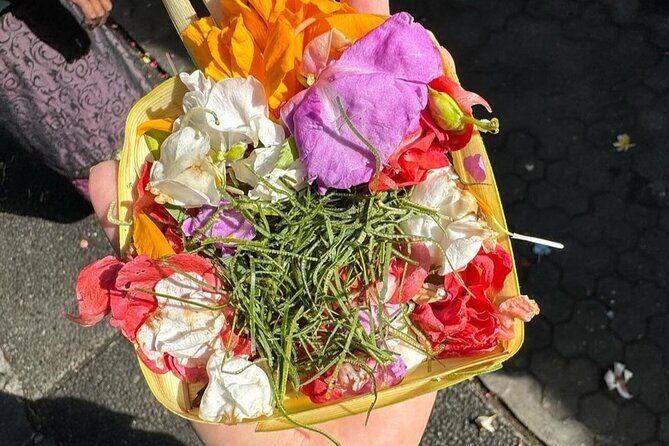
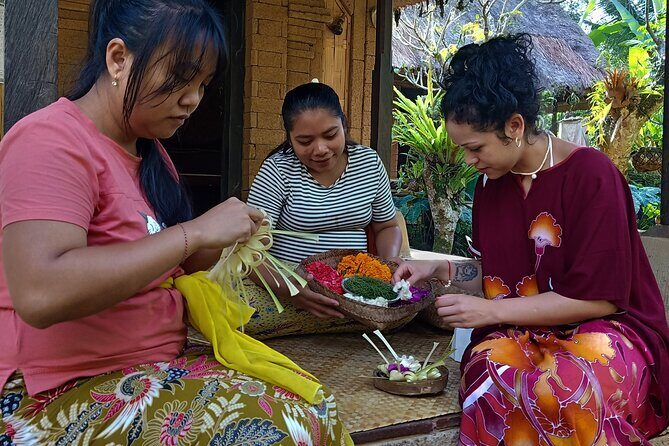
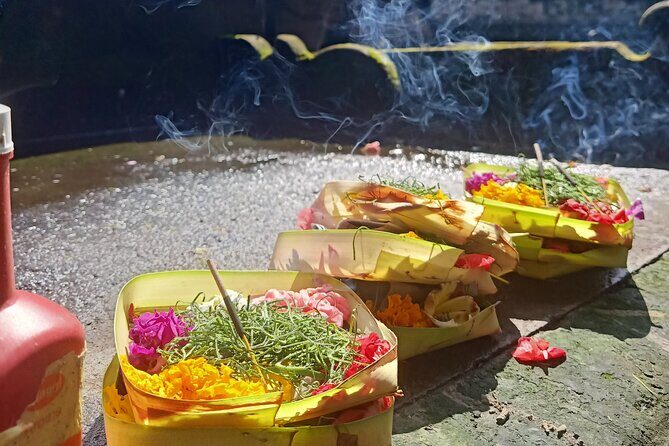
- Canang Sari hands-on practice: you’ll learn how to combine flowers into the offering Balinese people use in daily ceremonies.
- Tampak Siring local house visit: you’ll see how offerings are explained at the community level, not in a showroom.
- Energy balancing with a priest/shaman: focused session to help balance your aura and chakras.
- Mantra healing at the temple: learn a holy song to help you meditate while you’re there.
- Tridatu Bracelet meaning: the bracelet symbolizes fire, air, and water elements (and you’ll have it as a ritual symbol).
A spiritual day with real local rituals in Ubud
This retreat isn’t about collecting photos. It’s about doing small, meaningful actions with your hands, your body, and your attention. That matters in Bali, where many ceremonies are about daily life as much as big temple moments.
The tour is centered on chakra and aura balancing, and it wraps that idea into three different experiences: water cleansing, offering-making, and priest-led energy work. You’ll also learn a mantra for meditation, which is a useful skill even if you’re not trying to become a meditation expert overnight.
What makes this experience interesting
- You get a mix of body-and-mind practices: water ritual, offering construction, and sound/chant meditation.
- The day includes materials you’ll use during ceremonies—like the offering and temple clothing—so you’re not stuck improvising.
- The schedule is tight enough to feel complete, but not so rushed that you can’t slow down.
How the 4–6 hour format actually feels on the ground
On paper, this is listed as 4 to 6 hours, with two-hour blocks at each main stop. In practice, the feeling is more like a half-day ritual route than a long full-day tour.
Pickup and drop-off are included, and the transport is in an AC car. That’s not a small detail in Ubud. Between traffic and heat, comfort can determine whether you can stay calm for the spiritual parts.
Also, it’s described as a private tour/activity, meaning you’re not sharing the ceremonies with a random crowd from another group. That tends to make the experience feel more personal and easier to follow.
Stop 1: Mengening Temple and Melukat cleansing at the sacred spring
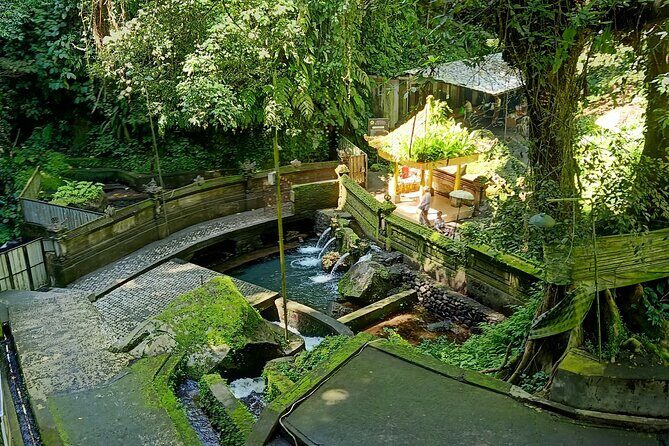
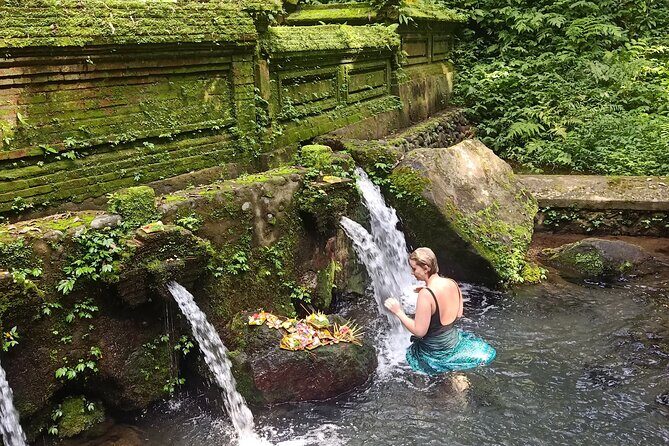
Your first main moment lands at Mengening Temple, which is described as a water temple for spiritual cleansing. This is where you’ll perform Melukat, a traditional Balinese ceremony people believe helps cleanse and neutralize negative energy and shift it toward positive energy.
What you should expect here:
- A ceremony setting at the temple, tied to the sacred spring concept.
- Time to participate rather than only look around.
- Inclusion of entry fees, which matters because temples can get complicated and you don’t want to be handling payment while you’re trying to focus.
Why this stop is worth your time
If you’re coming for stress reduction, this is the anchor. Water-based purification has a different emotional tone than, say, a lecture or a short sightseeing pause. Even if you’re skeptical, it gives your day a clear “reset” point.
A practical consideration
You’ll want to be mentally ready for a spiritual ritual rather than a casual cultural break. If you prefer low-intensity experiences, treat this stop as the main event and plan the rest of your day to match the calmer mood.
Stop 2: Tampak Siring and making Canang Sari with locals
Next you head to Tampak Siring, where the focus shifts from cleansing to daily-life spirituality through offerings.
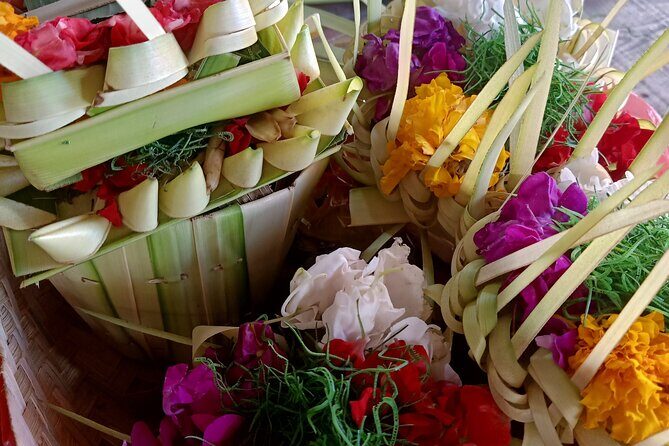
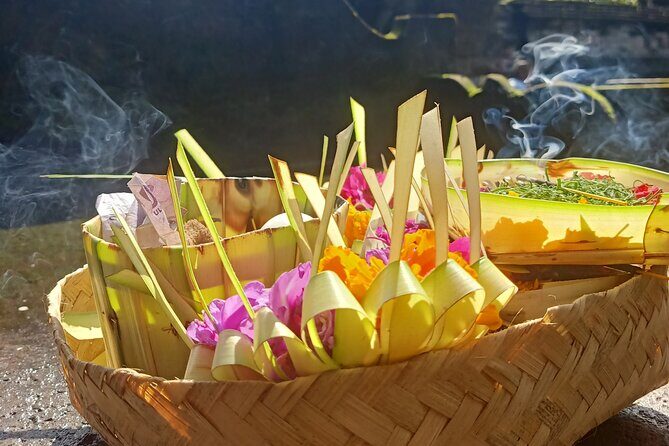
You’ll visit a local house to explore the local concept of offerings and to learn how to make a Canang Sari. Canang Sari is described as a basic Balinese offering used for ceremonies as an implementation symbol to nature. The key is that you don’t just get shown a finished offering—you learn how flowers are combined into the offering.
What you’ll do in plain terms
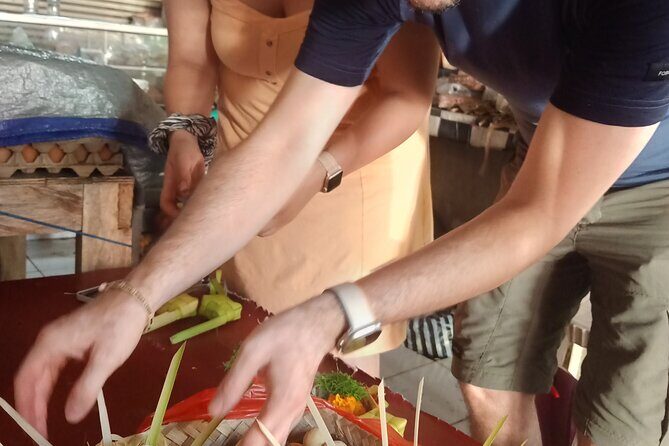
- You’ll be taught how to build the offering using flower arrangements.
- Locals assist and explain the function and meaning behind the practice.
- You get cultural context that’s hard to pick up from temple-only sightseeing.
Why learning Canang Sari changes the whole day
This is where the retreat feels grounded. Temple rituals are important, but offering-making shows spirituality as something Balinese people do consistently. Learning the process also keeps you focused. Your hands have a job. Your mind follows.
A possible drawback
Offering-making can be a bit fiddly—small components, careful placement. If you’re someone who hates precision tasks, just go in knowing you’re participating in the learning, not chasing perfection.
Stop 3: Batuan Village for priest/shaman energy balancing
The final main stop is Batuan Village, where you’re treated by a local priest to balance your energy through shaman-style guidance.
This part is described as balancing your chakra and changes into strength energy of the aura influenced by emotional feels. In other words, it’s not only about feeling “spiritual.” It’s framed around your emotional state and your energy field.
What makes this stop different
This stop feels more direct in intention. Mengening is about cleansing with water. Tampak Siring is about offering culture. Batuan Village is about personal energetic alignment with a guided practitioner.
A practical note
This is a spiritual session, so it can feel intense depending on your mindset and your openness. If you go in curious rather than pressured—thinking of it as a guided cultural ritual—you’re more likely to enjoy it.
The mantra part: meditation help you can actually use
The retreat includes mantra healing, described as learning holy song to meditate yourself at the temple.
I like this addition because it gives you something active to carry forward. Even if you forget the exact words later, the basic idea—using sound to steady your attention—can be practical back home.
When you’re in the temple environment, the mantra component also makes the experience feel coherent. It’s not three unrelated activities. It’s one day of spiritual training through different methods.
Sarong/kamen, offerings, and what’s handled for you
One of the best value points here is what’s already included:
- Offering/Canang (so you’re not scrambling to buy supplies you’ll use immediately)
- Sarong/Kamen for temple entry
- Entry fees
- Shaman fee
- Bottle water
- Private pickup and drop
- AC car
This matters because spiritual tours often nickel-and-dime you at each stop. Here, the core ceremony needs are built in.
What you’re still responsible for
You’ll need to budget for:
- Lunch
- Personal expenses
If you don’t want to hunt for food mid-ritual, I suggest grabbing an easy snack before you start and planning your lunch after the drop-off. The tour duration is long enough that hunger can distract you.
Tridatu bracelet: fire, air, and water as a daily reminder
You’ll be introduced to the Bali Tridatu Bracelet, described as a symbol of three concepts: fire, air, and water elements.
Even if you don’t interpret elements in a traditional way, it’s a nice physical reminder of what the day is about: cleansing (water), transformation (fire), and breath/space (air). It also makes the retreat feel more like a meaningful experience than a one-time stop.
Price and value: what $79 gets you, and where extras can appear
At $79 per person, the value is mainly in the included ceremony costs: entry fees and the shaman fee are part of what you’re paying for, and you also get private pickup/drop and AC transport.
That’s a lot of “hidden” costs rolled in, which can make the final bill feel less stressful than other tours.
The only real caution
There’s a note that some people run into extra fees when they choose a trip option that excludes certain tickets. So before you lock it in, confirm what your selected option covers versus what might be paid separately on the day. If you’re trying to keep costs predictable, this is the step that matters most.
Getting context in the car: the Gusty factor
In at least one instance, the driver Gusty was highlighted as sharing lots of information about the rituals and the people of Bali during the trip.
That kind of commentary can make a big difference. It turns the in-between time—car rides, short transitions—into useful context so you’re not waiting for the next ceremony to start learning.
Even without a name like Gusty, the best version of this tour is the one where you use the ride time to ask questions. Keep it simple: what you’re doing next, what it’s for, and what you should pay attention to.
Who should book this retreat in Ubud
This retreat fits best if you:
- Want a structured spiritual day with hands-on participation
- Like rituals that connect to everyday Balinese practice (especially through Canang Sari)
- Want guided energy work rather than only sightseeing temples
- Prefer a private set-up where you can focus
It may not be your best choice if:
- You want a casual, minimal-effort tour with no spiritual participation
- You dislike ceremonies that feel personal or emotionally framed
- You strongly prefer fixed, predictable costs with zero surprises—just make sure your ticket option is clear
My booking checklist before you go
Here are the practical things I’d double-check so you show up relaxed:
- Confirm what your ticket option includes, especially regarding any admissions.
- Wear clothing that works for temple entry since you’ll use sarong/kamen.
- Plan for lunch later. This isn’t described as a lunch-included experience.
- Bring an open mind. This day is built around belief-based rituals and meditation.
If you’re the type who likes calm mornings, this is a strong pick. It gives your day a storyline: cleansing → offerings → balancing → mantra.
Should you book this Bali Spiritual Soul Retreat Cleansing and Mantra Healing?
I’d book it if you want a real spiritual-route experience in Ubud that goes beyond temple photos. The best reason is value: you’re not paying separately for the core ceremony needs, and the day includes the right ingredients—Melukat cleansing, Canang Sari making, priest/shaman balancing, and mantra meditation.
The decision hinges on one thing: your ticket option and whether it truly matches what you expect to be included. If you confirm that up front, you’re likely to leave feeling calmer and more connected to how Balinese people practice spirituality in daily life.
FAQ
How long is the Bali Spiritual Soul Retreat experience?
It runs for about 4 to 6 hours.
Where does the experience take place?
It takes place in and around Ubud, Indonesia, including Mengening Temple, Tampak Siring, and Batuan Village.
Is hotel pickup and drop-off included?
Yes. Private pickup and drop-off hotels are included.
What is included in the price?
Included items are private pickup/drop hotels, bottle water, offering/Canang, sarong/kamen to entrance temple, AC car, entry fees, and shaman fee.
What is not included?
Lunch and personal expenses are not included.
What are the main stops during the retreat?
The main stops are Mengening Temple (Melukat cleansing), Tampak Siring (local house and Canang Sari offering), and Batuan Village (energy balancing with a local priest).
Are entry fees included?
Yes, entry fees are included.
Is this a private tour?
Yes. Only your group will participate.
Can most people participate?
The experience states that most travelers can participate.
What if I need to cancel?
Free cancellation is available. You can cancel up to 24 hours in advance for a full refund, and changes less than 24 hours before the start time aren’t accepted.