Bali Traditional Village Experience
In Taro, about 18 kilometers north of Ubud, you get a short, private look at everyday Balinese Hindu life—hands-on offerings, family time, and a holy water blessing in a sacred site. It feels more personal than a quick stop, because it’s built around one family compound.
What I really like is the canang sari offering practice, where you make offerings and then bring that same ritual energy to the blessing ceremony later. I also love the simple warmth of the morning tea and local snacks inside the household, which keeps the whole thing human, not staged.
One possible drawback: the holy water temple has a cash entrance fee or donation that’s not included, and the cleansing ritual can mean you’ll get wet. Plan for cash and clothes that can handle it.
In This Review
- Key moments I’d plan around
- Taro village near Ubud: why this feels real
- Getting there without turning it into a logistics project
- Inside the family compound: the best kind of guided context
- Canang Sari workshop: make offerings, then use them later
- Morning tea and Balinese cookies: small, not secondary
- Sacred holy water site: sarong, possible wet clothes, and the blessing
- Price and what you’re actually buying for $35
- Who should book this, and who might not love it
- Quick practical tips so the morning goes smoothly
- Should you book the Bali Traditional Village Experience in Taro?
- FAQ
- How long is the Taro village traditional experience?
- Is this tour private or shared?
- What’s included in the $35 price?
- What costs extra during the experience?
- Is it necessary to bring swimwear?
- Where does the experience start and end?
- What is the cancellation policy?
Key moments I’d plan around
- Family compound tour with a clear look at where family members live and how the household temple fits in
- Canang Sari workshop so you’re not just watching a ritual
- Morning tea with the family plus local snacks and coffee or tea
- Holy water ceremony using the offerings you made earlier
- Sarong and sash required at the sacred site, provided for your visit
- 2-way private transfers from Ubud so you avoid the scooter shuffle
Taro village near Ubud: why this feels real
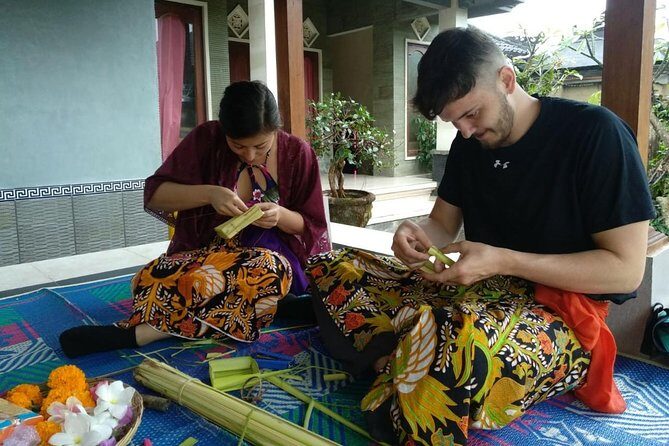
Ubud is the classic Bali base, but Taro is where you see a more traditional rhythm. Taro sits about 12 miles (18 kilometers) north of Ubud, and it’s known for being a very traditional Balinese village. That matters, because this experience isn’t about visiting a polished attraction. It’s about stepping into day-to-day spiritual practice inside a real family space.
This tour also earns points for being private. You’re not squeezed into a crowd or rushed through cultural steps you barely understand. You’ll move at the pace of your guide and your family hosts, even though the whole thing runs about two hours.
And the theme is clear: Balinese Hinduism as lived practice—offerings first, then a blessing with holy water. If you like learning by doing, you’ll enjoy how this one keeps switching from explanation to action.
Getting there without turning it into a logistics project
The experience includes 2-way private transfers from your Ubud area address, which is a big deal in Bali. Traffic and short distances can still eat time. Here, you can keep your morning simple and let the driver handle the route.
Your start point is in the Taro area: Delodsema Traditional Village on Delodsema Road, Taro, Tegallalang, Gianyar Regency. The experience ends back at the meeting point as well. If you’re using a mobile ticket, you can keep everything digital and calm.
One practical note: this is often booked well ahead. The average booking window is about 50 days, which tells me it’s a steady favorite for people planning their Ubud stay. If you’re traveling in peak season or on a tight schedule, book early so you’re not stuck choosing a less friendly time slot.
Inside the family compound: the best kind of guided context
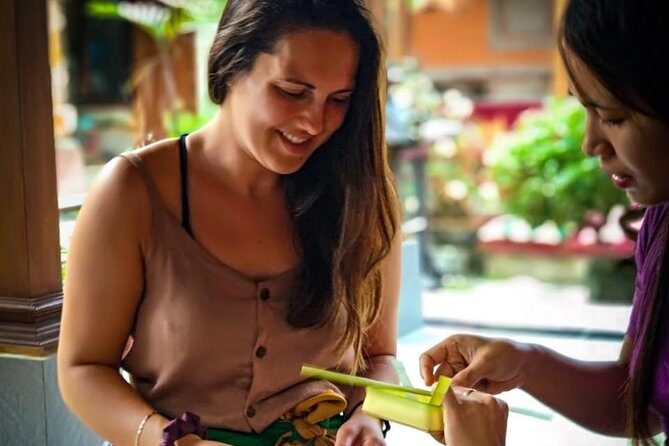
A huge part of the value is what happens before any ceremony. You start with pickup and then you’ll be taken through a traditional family compound where the host explains how the household works.
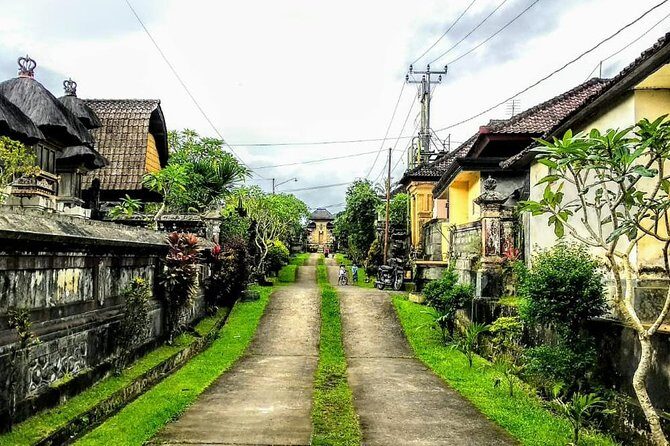
You should expect a walkthrough of the compound layout—where the families live, and how the family temple fits into everyday life. That kind of structure is often missing when people only visit temples from the outside. Here, you get the context that makes the rituals make sense.
You’ll also share a traditional Balinese morning tea with the family in the compound. That tea stop isn’t just a break; it’s a social bridge. It signals that you’re being hosted, not shepherded. I like experiences like this because they turn culture into conversation.
Because the whole tour is about two hours, this portion is likely to be focused rather than long. Still, it’s enough time to understand the basics of where worship sits inside daily household life.
Canang Sari workshop: make offerings, then use them later
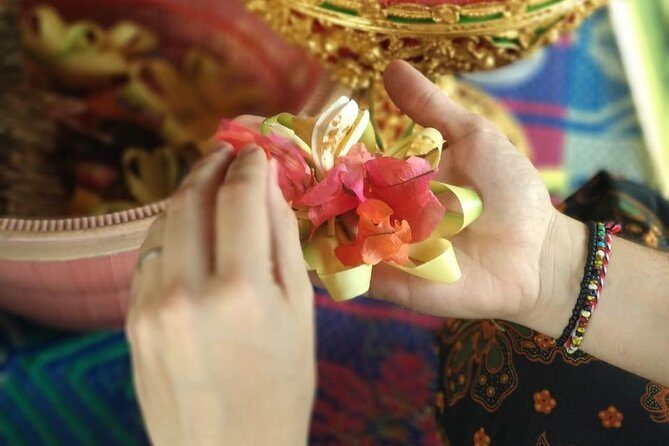
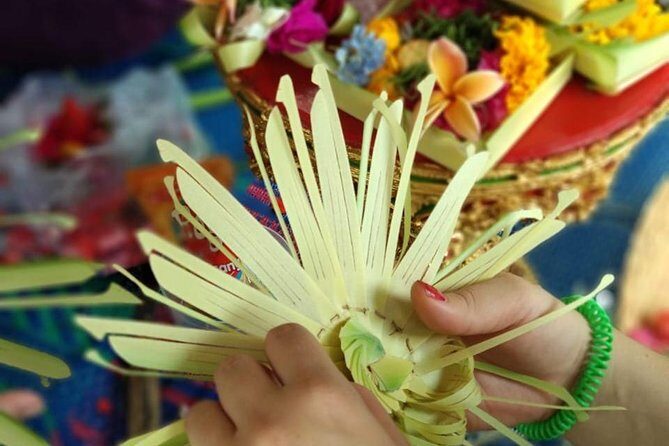
The hands-on offering step is the heart of the experience. You’ll be taught how to make Canang Sari—small Balinese Hindu offerings used in daily worship. You’re not just shown ingredients and told the name. You’re taught how to create the offering yourself.
In plain terms, this is one of the best ways to learn any ritual: your hands pick up what your brain can’t absorb from descriptions alone. You’ll get guidance while you make them, and you’ll leave with something you created and understand why it’s meaningful.
Here’s the smart part: the offerings you make earlier aren’t wasted on the spot. They’re used during your holy water blessing ceremony later in the day. That turns the workshop into a “real sequence” instead of a one-time craft project.
Also, based on what’s been described from the experience, the offering teaching can be more than a single step. The point is that you leave with a clearer understanding of how these items are formed and used, not just one quick demo.
Morning tea and Balinese cookies: small, not secondary
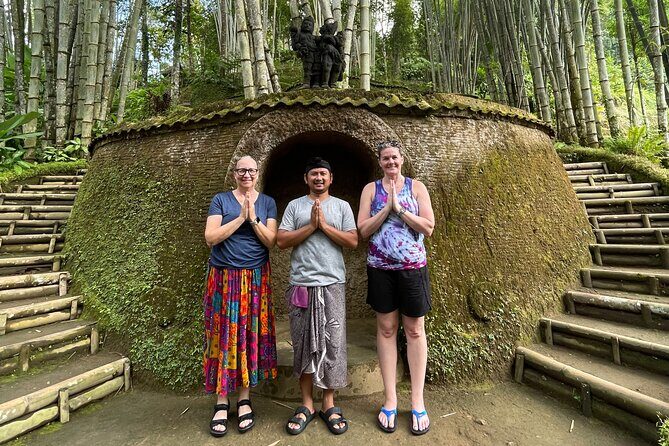
After you settle into the family compound, you’ll get traditional morning tea with the family, along with included snacks such as Bali cookies. You’ll also have coffee and/or tea included.
This matters more than it sounds. In Bali, food and drink are often part of the cultural welcome. A tea-and-snack pause gives you time to ask questions in a low-pressure way. It also helps you slow down so you can actually pay attention to the steps later at the sacred water site.
The snacks here are simple and locally oriented, which fits the overall vibe: you’re tasting what the household serves, not chasing a “must-try” list for tourists.
Sacred holy water site: sarong, possible wet clothes, and the blessing
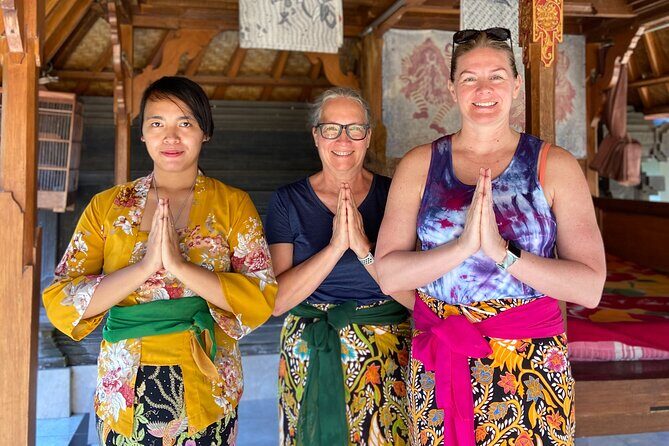
After the compound portion, you’ll head to a sacred holy water site for a traditional Hindu blessing. This is where your earlier work comes back into play.
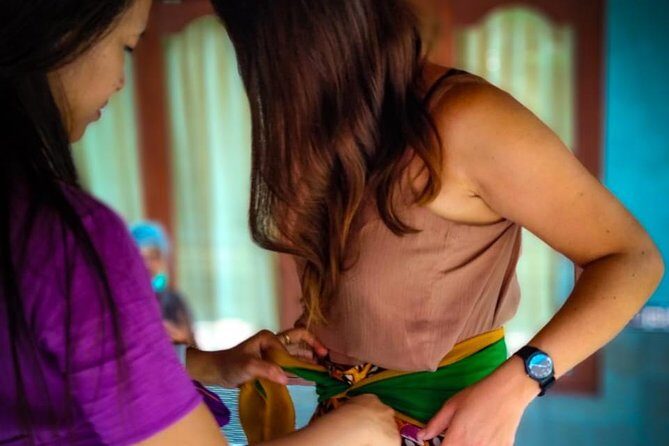
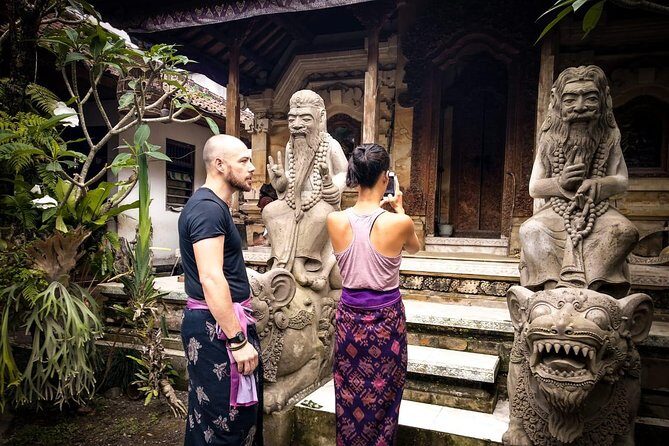
Before entering the site, you’ll need to wear a sarong and sash. The tour provides a sarong, and the sarong/sash requirement is mandatory for entering. Plan for respect-first clothing behavior. This isn’t the place for casual rules-bending.
You can change into swimwear or clothes that may get wet if you choose to do the cleansing ritual. That choice is yours, but you should know it’s part of the experience flow. If you want the full meaning of the holy water ceremony, bring swimwear or at least something you don’t mind getting damp.
Then your offerings are used in your blessing ceremony, where you’ll receive a Hindu blessing with holy water. The temple portion includes a small entrance fee or donation that’s paid in cash on-site, and it’s not included in the tour price.
Price and what you’re actually buying for $35
At $35.00 per person for about two hours, this is priced like a culture experience, not a luxury escape. Here’s why that can be good value.
Included items:
- Snacks such as Bali cookies
- Balinese sarong
- Coffee and/or tea
- 2-way private transfers from your Ubud area address
What’s not included:
- Entrance ticket or donation at the holy water temple (pay in cash)
- Lunch
So you’re paying for a private, guided, religious-culture experience that covers transportation from your Ubud base, plus the key ritual parts: family time, offering teaching, and the blessing ceremony where your offerings are used. You’re also avoiding the hassle of arranging a ride and timing your own transport between locations.
The only real “watch this budget” item is the cash donation/entrance fee at the holy water temple. If you like having control over spending, set aside a bit for that and you’ll feel fully in charge.
Also, since you can combine this with other activities (cooking class, coconut oil class, silver class, or evening fireflies), you could build a longer Bali day around a similar theme.
Who should book this, and who might not love it
I’d recommend this tour if you want a hands-on cultural experience with a spiritual focus. If you like small-scale learning—making an offering, hearing how a family temple works, and seeing how holy water fits in—you’ll get a lot from the tight schedule.
It’s also a good fit if you’re staying in Ubud but don’t want to spend your time on scooters, sidestreets, and parking. The private transfer support makes a difference.
This might be less ideal if you want a long, museum-style explanation session. The experience is about 2 hours, so it’s concentrated. You’ll get the main steps, but not hours of deep theology.
If you dislike getting wet, keep in mind the cleansing ritual is optional, but the water site setup includes the option to change into swimwear or wet clothes.
Quick practical tips so the morning goes smoothly
These are the details that keep the experience from feeling awkward:
- Bring or plan for cash for the holy water temple entrance fee or donation.
- If you want the cleansing ritual, bring something you can change into (swimwear or clothes that may get wet).
- Expect sarong and sash to be mandatory at the sacred site; the sarong is provided.
- Wear something comfortable for a short, guided walk-through inside a family compound.
- If you want to make it a bigger day, ask about combining with a cooking class, coconut oil class, silver class, or evening fireflies.
That’s it. When you show up prepared for the ritual basics, the rest feels natural.
Should you book the Bali Traditional Village Experience in Taro?
I think you should book this if you want a private, respectful peek into Balinese Hindu life that goes beyond looking at temples from the outside. The combination of the family compound visit, offering practice, and the holy water blessing sequence is strong—and the included transfers from your Ubud-area address make it easy to fit into a real travel schedule.
Skip it only if you mainly want a long, laid-back outing. This one is focused and spiritual, and it runs at a “do the steps, understand the meaning” pace.
If you’re trying to choose between doing another restaurant meal and this kind of cultural morning, I’d choose Taro—especially if you like learning by doing.
FAQ
How long is the Taro village traditional experience?
It lasts about 2 hours (approx.).
Is this tour private or shared?
It’s a private tour/activity. Only your group participates.
What’s included in the $35 price?
Included are snacks (Bali cookies), a Balinese sarong, and coffee and/or tea. It also includes 2-way private transfers from your Ubud area address.
What costs extra during the experience?
You’ll pay an entrance ticket or donation at the holy water temple in cash. Lunch is also not included.
Is it necessary to bring swimwear?
It’s optional. You can change into swimwear or clothes that may get wet if you choose to do the cleansing ritual.
Where does the experience start and end?
It starts at Delodsema Traditional Village, Tegallalang (Delodsema Road, Taro, Tegallalang) and ends back at the meeting point.
What is the cancellation policy?
You can cancel for free up to 24 hours in advance of the experience start time for a full refund.
If you want, tell me your travel dates and where you’re staying in Ubud, and I’ll help you fit this into a realistic morning schedule with buffer time.