Canyoning Bali, Tamata Canyon (Adventure, discovery, nature)
Your morning starts with gravity.
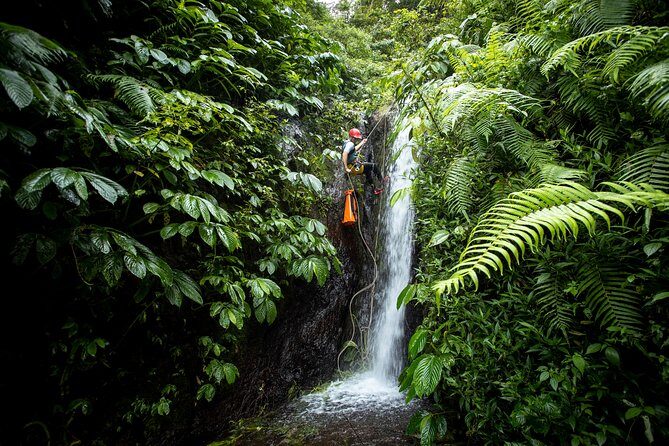
Tamata Canyon in Ubud is non-stop, guided canyoneering through rainforest. I like how the experience is run by a real pro crew, including guides like Rama, and how you get ICOpro-standard initiation training before you drop into the canyon. One thing to know up front: this is an endurance test, so you’ll want strong fitness and a mindset for intense, wet, and physical work.
This isn’t a sit-and-look tour. You’ll ride off the main roads in a 4×4, then spend the day on the move with a small group (max 8), which makes it easier to stay organized and feel supported when things get slippery. You also start early enough (6:00am) that the day feels like momentum, not a slow morning.
When you finish, you’re not left hanging. You return to basecamp for shower + lunch, then you get free photos and video from the day—nice when you’re too muddy (and busy) to film everything yourself.
In This Review
- Key things to know before you go
- Tamata Canyon: what this “6 hours” really feels like
- A practical note on fear and heights
- Morning logistics in Ubud: pickup, basecamp setup, and the 6:00am start
- Timing reality check
- Basecamp training: how you’re taught before you’re tested
- Why this pre-canyon training is good value
- The ride and the downhill approach: getting from road to river
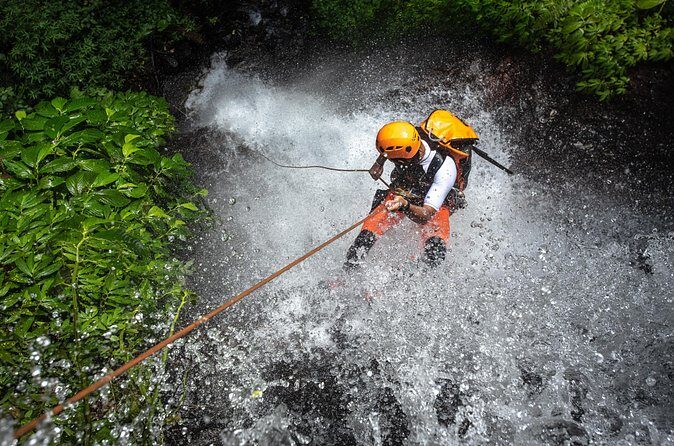
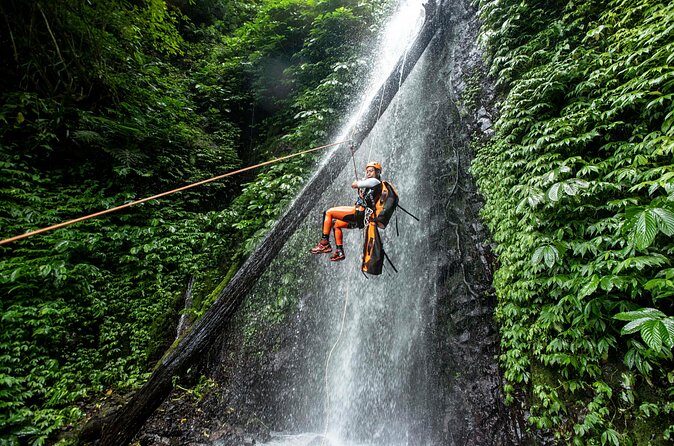
- Canyon action: waterfalls, slides, jumps, and rappelling down
- The “only way out is down” mindset
- Terrain conditions you should assume
- Getting refueled: breakfast, lunch, and post-canyon shower time
- Price and value: is $310 a fair deal?
- What to bring (and what you can skip)
- Footwear and fit matters
- Who should book Tamata Canyon, and who should think twice
- Should you book Tamata Canyon with Adventure and Spirit?
- FAQ
- What time does the Tamata Canyon tour start?
- How long is the canyoning experience?
- Is pickup from my hotel included?
- Do I need to know how to swim?
- What’s included in the price?
- What should I bring since it’s not included?
Key things to know before you go
- ICOpro Canyoneer Initiation (CAI) training so you know what to do before the canyon action starts
- CE-standard and ICOpro equipment, including high-performance canyoning rope
- 4×4 ride off the beaten track on the way to the start point
- A full descent session (5–6 hours) with swimming, sliding, jumping, and rappelling options
- Small group size (up to 8) plus close supervision from the instructor and assistant team
- Accident insurance up to USD 10,000/pax and free photo/video after the trip
Tamata Canyon: what this “6 hours” really feels like
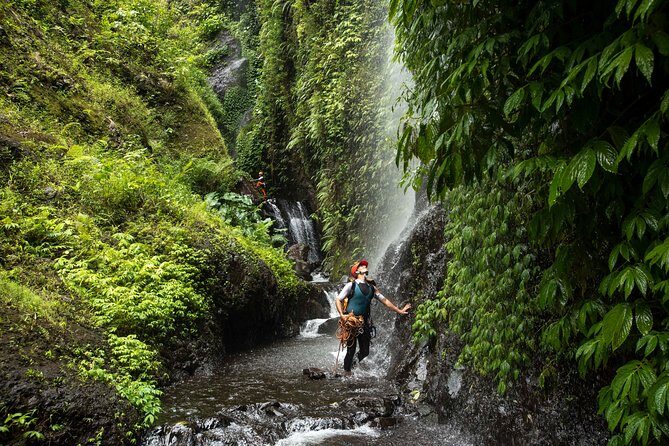
The headline sounds simple: descent through a jungle canyon. The reality is more like a nonstop sequence of short challenges stacked on top of each other—hike, gear up, drop, move, and repeat. The canyon is built for action from the start, and the day is designed so there’s no lounging your way through. You’ll be committed.
You should expect the canyon to include moments like swimming through parts of the river, sliding natural rock features, jumping where it’s appropriate, and doing rappels down waterfalls. Even the walk segments are part of the flow: you’ll hike downhill to reach the river, then later return toward basecamp.
And yes, you’ll likely feel it in your legs and core. That doesn’t mean it’s only for athletes, but it does mean you can’t treat this like a light nature walk. If you’re the type who wants big thrills with clear structure and expert help, this fits well.
A practical note on fear and heights
One review highlighted nerves about heights, which is common. The important detail here is that the day includes initiation training and direct supervision while you’re in the technical parts. That structure matters. You won’t be handed a helmet and told good luck.
Morning logistics in Ubud: pickup, basecamp setup, and the 6:00am start
You’ll start at 6:00am, and pickup is offered from your accommodation within a specified area. This is genuinely useful in Ubud, where transfers can turn into extra time and extra hassle if you’re doing it on your own.
Once you’re collected, you drive to the operator’s basecamp. The day begins with a calm, practical setup—registration, coffee/tea, and a light breakfast—before you’re fitted and taught. That order matters. It helps you go into the canyon ready to move, not scrambling to figure out gear or basics.
After training, you’ll do a short transfer—about 10 minutes by local small truck—to the start point. Then you begin with a downhill hike to reach the river. That downhill approach is usually where you feel the terrain shift from “easy walking” to “canyon day.”
Timing reality check
The descent itself is 5–6 hours, and you’ll also have approach/return walking time totaling about 30–45 minutes. So you’ll be out a big chunk of the day. If you’re planning the rest of Ubud afterward, keep it flexible. You may not want to schedule anything ambitious for the afternoon.
Basecamp training: how you’re taught before you’re tested
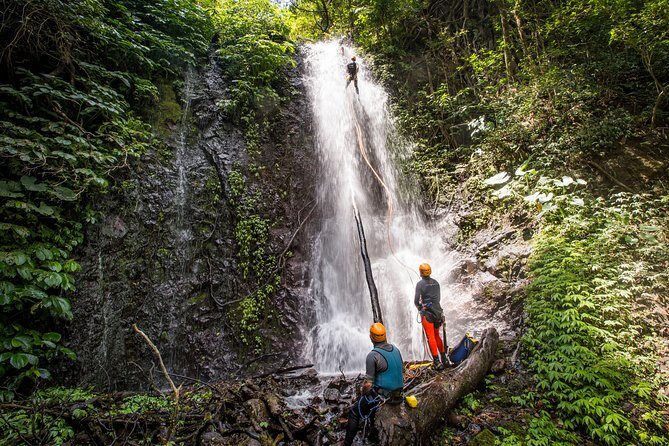
At basecamp, you’re not just geared up—you’re coached. You’ll go through ICOpro Canyoneer Initiation (CAI) training, and the goal is simple: you understand what to do in the canyon and how to handle the canyon equipment safely.
The tour also specifies supervision from an ICOpro instructor and assistant team, which changes the vibe. Instead of guessing, you’re learning skills that match what you’ll actually do next—rope work, movements on wet rock, and how to handle technical sections with guidance nearby.
You’ll also get the gear that matters for confidence: all canyoning equipment is included and is listed as ICOpro and CE-standard, plus branded international technical equipment and high-performance canyoning rope from Korda’s. That level of detail is a good sign because in canyoneering, equipment quality and correct setup are not optional.
Why this pre-canyon training is good value
Training is one of the big reasons this tour can feel worth the price. You’re not just paying for a location and a guide walk. You’re paying for instruction time, equipment, and supervision built around a technical activity. That’s how you get the fun and limit the chaos.
The ride and the downhill approach: getting from road to river
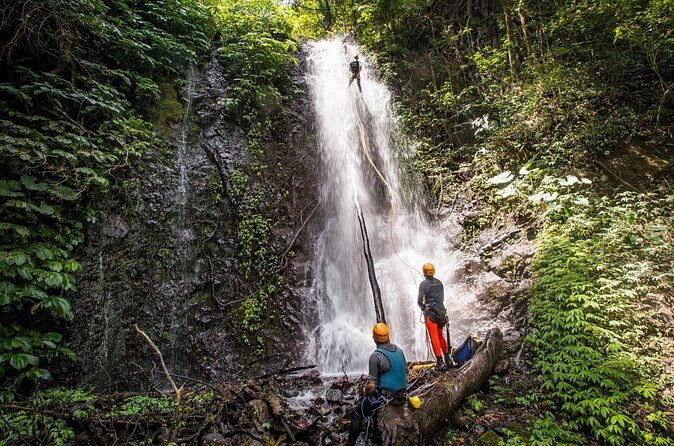
After basecamp, it’s a quick transfer—about 10 minutes—to the canyon start. Then comes a short hike downhill. This isn’t just scenic. It’s the transition moment where you shift from “tour mode” into “canyon mode.”
You’ll arrive at the river and the day flips. From there, it’s mostly movement: navigating, swimming through sections as needed, and using rock features for sliding, jumping, or rappel entries where the route allows.
You don’t need to be a strong swimmer for this activity. The tour data explicitly says no swimming ability is required, which helps a lot. That said, you should still be comfortable with getting wet and moving in water along with your team and instructor.
Canyon action: waterfalls, slides, jumps, and rappelling down
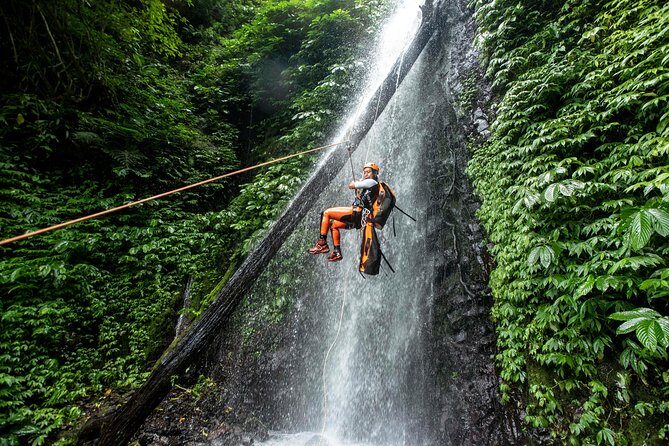
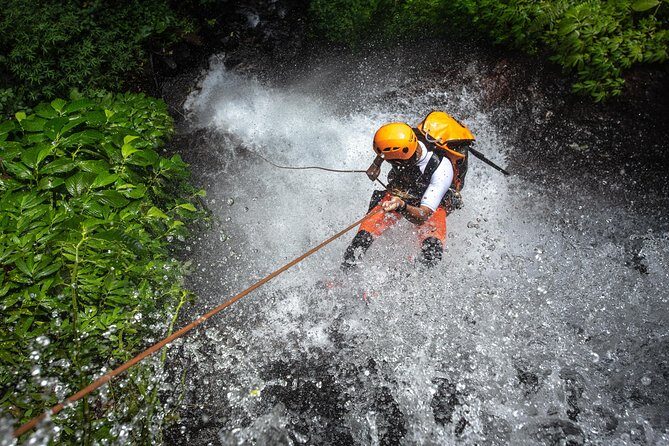
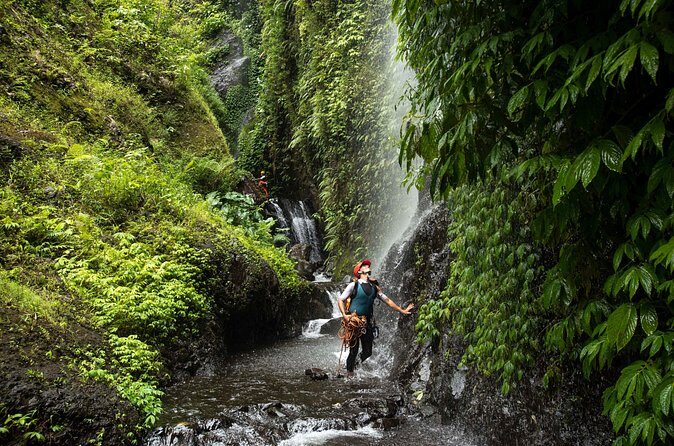
This is where Tamata earns its reputation. The canyon is described as unique jungle canyoning—rainforest trails, forgotten side of Bali, and a descent that’s basically endurance plus adrenaline.
Here’s what you can expect during the descent window (5–6 hours):
- Swimming through certain river sections
- Sliding down natural rock features where the route allows
- Jumping when it’s safe and appropriate
- Rappelling waterfalls down vertical drops using the provided technical setup
Not every moment is identical, but the rhythm is consistent: you move from one feature to the next with guide support. This is also why small-group size helps. With up to 8 people, the instructor team can keep a closer eye on spacing and technique.
The “only way out is down” mindset
The tour describes the experience like a commitment. That isn’t marketing fluff—it changes how you mentally handle the day. Instead of stopping and starting like a hike, you’ll be carried through a progression where the canyon route leads you forward and downward.
If you like feeling challenged but want structure, you’ll probably enjoy this format. If you want something gentle and flexible with lots of breaks, you might find it intense.
Terrain conditions you should assume
The tour is in a jungle canyon environment, which implies wet rock and slippery surfaces. Even though the tour doesn’t list weather specifics, you should plan for damp conditions and keep your attention on the guide’s instructions. When you’re on wet rock, small mistakes add up quickly.
Getting refueled: breakfast, lunch, and post-canyon shower time
Food is part of why this feels complete, not like you paid for gear and then hoped for lunch. You’ll get:
- Light breakfast at basecamp
- Tasty lunch after the descent
- Fresh fruits
- Tea/coffee/water and snacks
Lunch can be vegetarian or vegan, which is a helpful option if you eat that way. And there’s also the practical matter of eating after a long wet day. When your body’s cooled down and you’re tired, a real lunch and a warm shower can make the whole experience feel smoother.
Speaking of shower: you get shower / shampoo / soap / towel at basecamp after the canyon. That’s an underrated comfort win. You won’t be stuck figuring out how to clean up after getting muddy and soaked.
Then you get to see your day from a different angle. The tour includes free photos and video, so you’ll leave with memories that match the action you were too busy living to capture.
Price and value: is $310 a fair deal?
$310 for a canyoneering day sounds like real money until you break down what’s included. Here’s what your price covers:
- Pickup and drop-off from your accommodation (within the specified area)
- All canyoning equipment (ICOpro and CE-standard)
- Technical support from an ICOpro instructor and assistant team
- ICOpro CAI training before you enter the canyon
- Meals (breakfast + lunch), plus snacks and drinks
- Shower setup (towel, shampoo, soap, and more)
- Accident insurance up to USD 10,000/pax
- Free photos and video
When you compare that to doing gear rental, instruction, insurance, and a guide separately, the “all-in” nature can start to look like the right kind of spending. You’re paying for time, safety systems, and a full day of structured work—not just a spot in the canyon.
The main value trade-off is that this is not a short activity. It’s a real half-day block. If you’re on a tight schedule or want lots of easy sightseeing, the cost may feel high relative to your time.
What to bring (and what you can skip)
The tour data lists some items that are not included, which helps you prep without guessing. Plan to bring or arrange:
- Swimwear / bathing suit (not included)
- A change of clothes (not included)
- Sunscreen (not included)
- If you want personal media: a camera and optional USB/memory card for your photos/videos are not included
On the other hand, the tour provides towel and shower items, so you don’t need to pack that part. You also don’t need to bring your own canyon gear; it’s included.
Footwear and fit matters
You’ll be asked for your shoe size at booking time. That’s a sign they’re planning to size gear properly, which affects comfort on wet rock. When you book, put your shoe size in carefully so your gear fits right from the start.
Who should book Tamata Canyon, and who should think twice
This is a great match if you:
- Want real canyon action (not just a walk in the forest)
- Like guided technical activities with coaching and supervision
- Have strong fitness and can handle getting wet and working hard
- Prefer a small-group day (max 8) so you stay supported
You might think twice if you:
- Have limited physical stamina. The descent is 5–6 hours, with approach/return walking.
- Are extremely nervous about heights or rappelling. The training and supervision help, but this is still a technical canyon environment.
- Want a slow, relaxed nature outing. This is endurance plus adrenaline.
A nice bonus from the reviews vibe: the team is friendly and good at making it approachable. One review specifically called out Rama and his team, and that matches what the structure is designed to do—make you feel ready, not rushed.
Should you book Tamata Canyon with Adventure and Spirit?
If you’re craving an active, guided canyon day in Ubud—and you’re okay with being soaked and tired at the end—this is an easy yes. The biggest reasons to book are the ICOpro training, the technical gear standards, the small-group format, and the fact that the day covers meals, shower, and even your free photo/video wrap-up.
If you’re still on the fence, use this quick test: are you excited by sliding, jumping, swimming, and rappelling waterfalls, and are you comfortable with a big physical chunk of time? If yes, go. If you want something gentle or you’re not ready for an endurance-style descent, you’ll probably enjoy a different kind of Bali day more.
FAQ
What time does the Tamata Canyon tour start?
The tour starts at 6:00am.
How long is the canyoning experience?
The descent takes about 5 to 6 hours, and the approach and return walking totals about 30 to 45 minutes. The overall duration is listed as about 6 hours.
Is pickup from my hotel included?
Yes. Pick-up and drop-off from/to accommodation in a specified area is included.
Do I need to know how to swim?
No. The tour states that no swimming ability is required.
What’s included in the price?
Included are canyoning equipment (ICOpro/CE-standard), supervision from the ICOpro instructor and assistant team, ICOpro CAI initiation training, breakfast and lunch (vegetarian or vegan options available), fresh fruits, tea/coffee/water and snacks, shower items, accident insurance up to USD 10,000/pax, and free photos and video.
What should I bring since it’s not included?
Swimwear/bathing suit, change of clothes, and sunscreen are not included. Camera and USB/memory card for photos and videos are also not included.