Indonesia: Garuda Wisnu Kencana
This place is all scale and story. Garuda Wisnu Kencana (GWK) is built around a giant statue of Lord Wisnu riding Garuda, and the park turns that myth into an easy half-day visit with hourly cultural performances. I also like that you can tour the grounds on foot or by Segway, so you can match the experience to your energy level.
One thing I really appreciate is the way the park’s Hindu symbolism and national-emblem meaning are explained through the setting: Garuda as the emblem of Indonesia, and the statue itself at 120.9 meters tall with a 64-meter wingspan. My only caution is that the overall value can feel uneven if you expect everything to be included as part of the first ticket price.
In This Review
- Key Things to Know Before You Go
- Entering GWK Cultural Park: A Landmark With a Built-In Flow
- The Garuda Wisnu Kencana Statue: Meaning, Materials, and Photo Angles
- How You’ll Get Around: Footpath, Segway, and Buggy Reality
- The Performance Plan: Catch Tari Dances Hour by Hour
- Amphitheater Shows (Tari dances)
- Plaza Wisnu (Parade)
- Lotus Pond
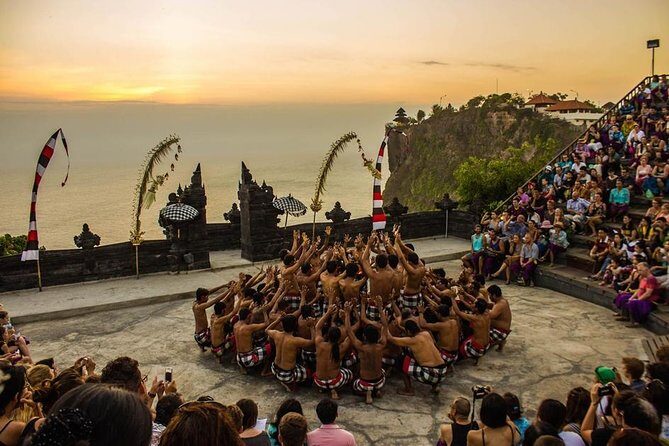
- Evening Finale: KECAK – Garuda Wisnu Kencana
- Don’t Skip the Grounds: Gardens, Other Sculptures, and Setpieces
- Food and Culture: Heritage Cuisine as Part of the Experience
- Price and Value: The $6.22 Ticket Versus Reality Inside
- Best Time to Visit: Matching Your Arrival to the Show Schedule
- Who This Experience Fits (and Who Might Skip It)
- Should You Book Garuda Wisnu Kencana in Kuta?
- FAQ
- Where is Garuda Wisnu Kencana Cultural Park?
- How long does the visit last?
- What is included with admission?
- Can I explore the park on my own?
- Are there cultural performances during the day?
- What time is the KECAK performance?
- How much does it cost?
- Are tickets free for children?
- Is the ticket valid more than once?
- FAQ
- Can I get a refund or change my booking?
Key Things to Know Before You Go
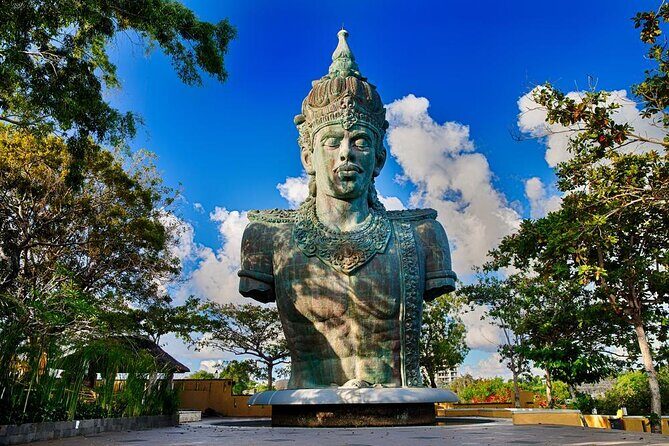
- 120.9-meter Garuda Wisnu Kencana with a 64-meter wingspan makes the whole park feel like a landmark you can’t miss
- Hourly performances every day at the amphitheater, plaza, lotus pond, and evening KECAK show
- Segway or walking lets you control how much ground you cover during your 2–3 hours
- Buggy service can matter for getting around efficiently when paths feel spread out (and especially if weather turns)
- The statue is tied to Balinese artistry by Nyoman Nuarta and made from copper, brass, and steel
Entering GWK Cultural Park: A Landmark With a Built-In Flow
GWK is not just a single photo stop. It’s a planned cultural park spread across a large area, centered on one towering artwork: the Garuda Wisnu Kencana statue. The effect is simple. Even if you arrive not knowing the myth, the scale pushes you to slow down and look around.
The park is designed like a “move through the story” experience. You’ll find performance spaces spaced through the grounds, so timing your visit matters. If you’re only in a rush, you can still see the statue and a show, but you’ll miss the best part: catching the performances in order rather than grabbing random segments.
Also, this visit tends to be a sweet spot for people who like Bali’s mix of religion, art, and spectacle without needing a full-day tour commitment. Your ticket is tied to one person and one arrival time, so once you enter, plan your hour-to-hour rhythm.
The Garuda Wisnu Kencana Statue: Meaning, Materials, and Photo Angles
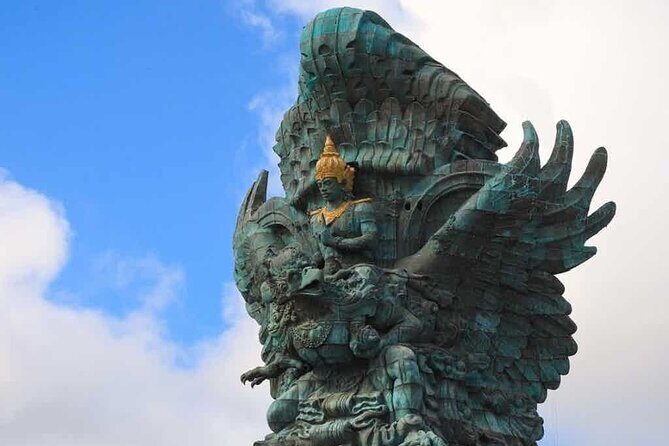
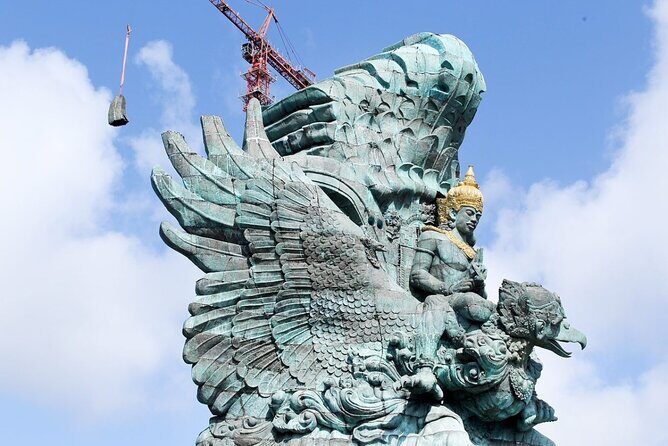
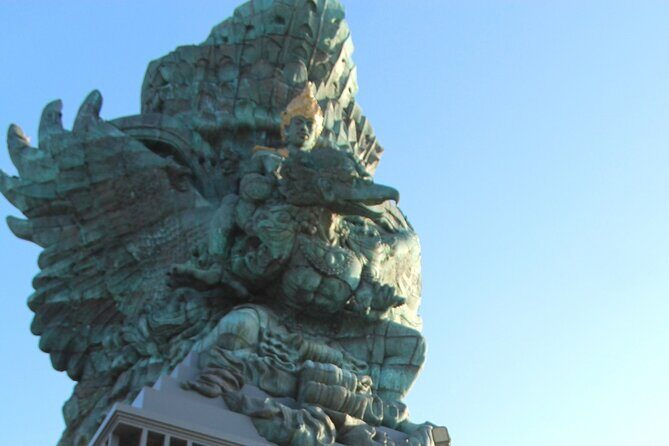
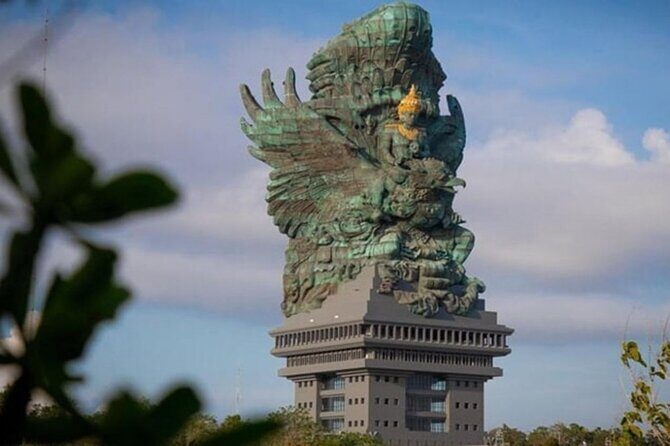
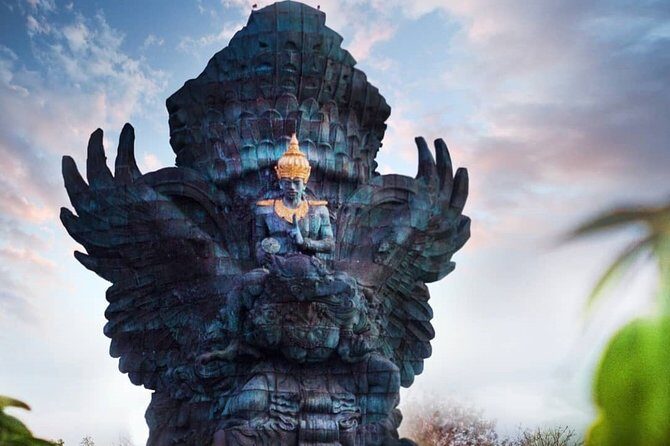
The star of GWK is the Garuda Wisnu Kencana statue: Lord Wisnu riding Garuda. In Hindu mythology, Wisnu is linked with protection, loyalty, and freedom—exactly the vibe the park tries to project. Garuda itself is the national emblem of Indonesia, so the statue reads like art plus national symbolism.
Here’s what you can anchor your visit around:
- Height and wingspan: 120.9 meters tall, with a 64-meter wingspan
- Materials: copper, brass, and steel
- Design details: gold mosaic crowns
- Artist: Balinese sculptor Nyoman Nuarta
It’s also one of the tallest monumental statues in the world, and the park places it alongside comparisons like the Statue of Liberty and Christ the Redeemer. Whether you take those comparisons literally or not, the point lands: you’re looking at a structure built to dominate your viewpoint from almost everywhere in the park.
Practical photo tip: give yourself time to circle your viewing angle. When you’re inside the park, the statue doesn’t read as one flat image. It changes as you move because the wings, crown, and scale shift against the skyline and hills.
If you’re hoping for the kind of “one perfect picture” that ends the visit, GWK can still deliver. But it’s more fun when you treat the statue like a compass and let it guide where you walk next.
How You’ll Get Around: Footpath, Segway, and Buggy Reality
You have two easy ways to tour the grounds: on foot or by Segway. For a lot of people, this is the biggest “comfort” factor of the day. If you’re coming from Kuta with a tight schedule, a Segway can help you see more without burning all your energy before the evening show.
If you’re walking, plan for steady movement. The park’s spaces—amphitheater, plaza, lotus pond, and the main statue area—aren’t packed into a tiny square. Walking works, but it’s not “stroll and stop every 30 seconds” unless you’re happy to miss performances.
The helpful reality check: GWK uses buggy service to move people around. If you’re short on time or you hit a sudden shower, those rides can keep your schedule from collapsing. One smart approach is to stay flexible. Aim to be near the next performance space a little early, and if weather or timing gets messy, use the buggy to reset rather than trying to force every segment by foot.
If the weather turns (and Bali absolutely can do that), bring something light for rain. Even simple protection can keep you from feeling trapped under umbrellas while you wait for your next showtime.
The Performance Plan: Catch Tari Dances Hour by Hour
GWK runs cultural performances every hour, every day. That means you can build your visit around the time you arrive. The park includes an amphitheater, plus other event areas like Plaza Wisnu and a Lotus Pond spot. You’ll also finish with an evening KECAK performance.
Here’s the schedule you can use to plan your flow. Try to time your arrival so at least one sequence feels “in order” rather than random.
Amphitheater Shows (Tari dances)
These are slotted at specific times:
- 11.00 WITA: Tari Sekar jepun, Tari Kebyar Duduk, Topeng Kenyum Manis
- 12.00 WITA: Tari Jauk Keras, Tari Oleg Tamulilingan, Tari Kebyar Duduk
- 13.00 WITA: Tari Sekar Jepun, Tari Jauk Manis,
- 14.00 WITA: Tari Topeng Monyer, Tari Jauk Manis
- 15.00 WITA: Tari Oleg Tamulilingan, Tari Barong-Bojog
If you like variety, this is your moment. You’re not watching one dance all afternoon. You’re seeing changes in style and costume, and you get the sense that GWK wants you to experience Balinese performing arts as a living schedule, not a single ticketed event.
Plaza Wisnu (Parade)
- 16.00 WITA: Parade Budaya Bali at Plaza Wisnu
This is a good “energy reset” stop. After the amphitheater segment(s), you can regroup, watch movement and group presentation, and then prepare for the next show.
Lotus Pond
- 17.00 WITA: Joged Bumbung
Joged Bumbung gives you a different feel than the amphitheater lineup. It’s staged for a later window, and that timing matters because by late afternoon you’re usually ready to settle in rather than run between spaces.
Evening Finale: KECAK – Garuda Wisnu Kencana
- 18.00 WITA: KECAK – Garuda Wisnu Kencana
This evening slot is the big finish. KECAK performances are known for their crowd rhythm and vocal patterns, and at GWK it’s linked directly back to the Garuda Wisnu Kencana theme. If you can only catch one part of the schedule, try to aim for this one—because it’s the closest thing to a “whole story ending” in the park.
Don’t Skip the Grounds: Gardens, Other Sculptures, and Setpieces
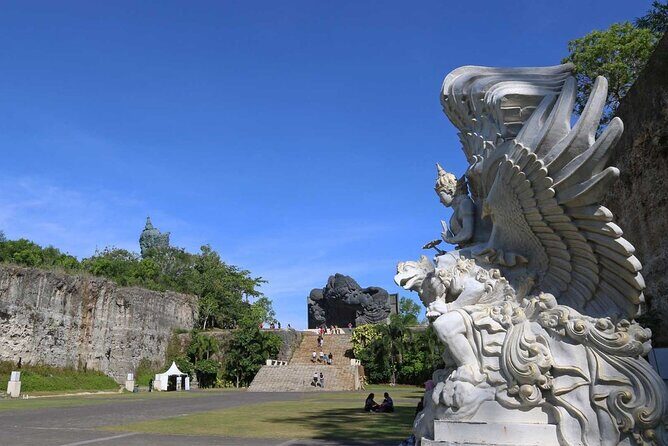
GWK isn’t just the statue. The park is laid out with landscaped areas and additional sculptures that help you spend time without feeling like you’re waiting for the next show. The grounds are also a big part of why the visit works even in a short 2–3 hours.
This is also where your transportation choice shows up. If you use a Segway or buggy intelligently, you can move between the statue viewpoint and the performance spaces without turning the day into a workout. If you only walk, you’ll still enjoy it, but your performance plan has to be tighter.
As with any big park, weather will decide how comfortable you feel while exploring. If you hit a thunder shower, your best strategy is to keep your schedule anchored to the performance times rather than forcing extra exploring between shows.
Food and Culture: Heritage Cuisine as Part of the Experience
Your GWK day isn’t meant to be only visuals and shows. The experience also includes Indonesian heritage cuisine as part of the overall offering.
The practical takeaway: treat food as a planned break, not an afterthought. If you eat too early, you can feel rushed while trying to get to the right performance space. If you leave food to the last minute, you may spend your final hour hunting for something instead of watching the show you wanted.
Since details like where and what you’ll be served aren’t specified here, I’d just plan on having lunch or a snack slot that doesn’t steal time from your 11.00 through 18.00 show windows.
Price and Value: The $6.22 Ticket Versus Reality Inside
The price shown is $6.22 per person, which sounds like a bargain for a cultural park day with admission included. Booking is typically done around 8 days in advance, so it’s not just a spur-of-the-moment stop—though you can still fit it into a Bali schedule if you plan your arrival time.
Here’s the honest value question: some people feel GWK is overpriced once they’re inside, especially if they expected everything to be included and were surprised by extra paid elements beyond what they thought they were buying.
So what should you do? Keep this simple:
- Decide which show(s) you care about most: afternoon dances or the 18.00 KECAK
- Make sure you understand what your specific admission includes versus what may be extra once inside
- Treat the main statue and performances as the core value, not a bonus on top
If your mindset is “I’m here for the statue and the schedule of performances,” the ticket is easier to justify. If your mindset is “I’m paying to see only a handful of things and then leave,” you may feel disappointed by how much the park actually expects you to experience.
Best Time to Visit: Matching Your Arrival to the Show Schedule
Because performances run across the day, the best time to arrive depends on what you want.
- If you arrive earlier, aim for the 11.00 to 15.00 amphitheater window. You’ll get multiple dance styles in one run.
- If you’re arriving later, shift your focus to 16.00 Parade Budaya Bali, 17.00 Joged Bumbung, and the 18.00 KECAK finale.
If you only have 2 to 3 hours, I’d pick one “anchor” show and build around it. For example, if KECAK at 18.00 is a must, don’t overfill your schedule with extra stops that eat into your arrival time.
Also watch for waiting time if you’re joining any scheduled tours around the statue area. When a park has frequent entry windows, skipping the wrong slot can turn “quick” into “slow,” and weather can make it even worse.
Who This Experience Fits (and Who Might Skip It)
GWK is a great match for you if:
- You like cultural performances with a clear schedule
- You want one place that combines mythology, huge sculpture, and live dance
- You’re okay spending time moving between performance spaces
You might reconsider if:
- You hate added costs once you’re inside any attraction
- You only want a quick look and a fast exit without committing to the show timing
- You’re extremely sensitive to rain delays and tight schedules
The sweet spot is a relaxed half-day where the schedule pulls you forward.
Should You Book Garuda Wisnu Kencana in Kuta?
If you want Bali’s performing arts plus a massive, meaningful monument in one planned stop, I’d say book. It’s simple: the statue scale and the hour-by-hour show structure are the heart of the value.
Before you commit, do two quick checks. First, confirm what your ticket includes beyond admission so you don’t get surprised by add-ons. Second, pick your target show time (either the amphitheater run or the 18.00 KECAK finale) so your 2–3 hours feel full rather than rushed.
If you do that, GWK becomes one of those rare Bali experiences where the place itself helps you know what to do next.
FAQ
Where is Garuda Wisnu Kencana Cultural Park?
It’s in Kuta, Indonesia, at the Garuda Wisnu Kencana Cultural Park area.
How long does the visit last?
The experience is listed at about 2 to 3 hours.
What is included with admission?
Admission is included.
Can I explore the park on my own?
Yes. You can explore the area on foot or by Segway.
Are there cultural performances during the day?
Yes. There are Balinese cultural performances every hour every day, including amphitheater shows, events at Plaza Wisnu, and an evening KECAK performance.
What time is the KECAK performance?
The schedule lists KECAK – Garuda Wisnu Kencana at 18.00 WITA.
How much does it cost?
The price is listed at $6.22 per person.
Are tickets free for children?
Children under 100 cm are free of charge.
Is the ticket valid more than once?
No. One ticket is valid for one person and one time of arrival.
FAQ
Can I get a refund or change my booking?
No. This experience is non-refundable and cannot be changed for any reason.