PADI Open Water Course
Three days, one big step toward certified scuba. I like that this PADI Open Water Course targets 18m certification and teaches the skills you’ll need for safe, independent scuba in open water. I also like the small group size (max 3) and the hotel pickup that keeps things organized in busy Bali. One thing to consider: you’ll need a clear health check, and flying close to your first day isn’t recommended.
You’ll do the full course rhythm over three days: knowledge development, pool training, then four open-water sessions split between Padang Bai and Tulamben. Instructors can make or break the experience, and Neptune’s team has a strong reputation for patient teaching, including names like Gede Ariawan, Muli, Julian, Sia, and guide Agus, with extra support for skills like buoyancy control.
This is also a comfort-and-logistics win: included lunch, snacks, coffee/tea, bottled water, and air-conditioned minivan transport. Still, souvenir photos cost extra, so if you want a full photo set, plan to purchase them separately.
In This Review
- Key things that make this PADI Open Water Course work
- Why this certification feels like a real foundation, not just paperwork
- Kuta on the booking page, but Sanur starts the day: logistics that matter
- Three days, three phases: what each part is really doing
- Phase 1: Knowledge development
- Phase 2: Pool training
- Phase 3: Four open-water sessions in two areas
- Padang Bai and Tulamben: how changing locations can build confidence
- The Neptune team: patient coaching and attention to details
- Price in context: is $530 good value here?
- What to know before you go: health, timing, and real-world constraints
- Where you meet, and when you should plan to arrive
- Should you book this PADI Open Water Course in Bali?
- FAQ
- How long is the PADI Open Water Course in Bali?
- What depth will I be certified to?
- Where does the course start?
- Is pickup and drop-off included?
- What’s included in the $530 price?
- What is not included?
- Is there a minimum age requirement?
- Do I need a health questionnaire?
- Can I cancel for free?
Key things that make this PADI Open Water Course work
- Max 3 travelers keeps the training feeling personal
- Hotel pickup and air-conditioned transport reduces Bali hassle
- Four open-water sessions give you real confidence, not just a certificate
- Padang Bai + Tulamben means you train in more than one setting
- Instructor support for buoyancy control shows up in real feedback
- Inclusions cover the day-to-day basics (meals, water, transport)
Why this certification feels like a real foundation, not just paperwork
The PADI Open Water Course is the “starter kit” that many divers rely on for their entire scuba life. The goal here is straightforward: once you’re certified, you’re trained and assessed to dive safely to a maximum depth of 18m. That matters because the course isn’t just about getting through checklists. It’s about learning how to manage yourself underwater with safe habits you can carry forward.
I like how the structure matches that promise. You don’t jump straight into open water without preparation. You build the background first, then you practice in a controlled environment, and only after that you move to open water with guided supervision. If you’re a nervous starter, that step-by-step flow is the difference between feeling rushed and feeling ready.
Also, the course is set up for normal people, not only strong swimmers. The minimum age is 10, and the course notes say most travelers can participate. That doesn’t mean it’s casual, but it does suggest you’ll get support appropriate to beginners who are learning the basics from scratch.
Kuta on the booking page, but Sanur starts the day: logistics that matter
The course is listed with Kuta, Indonesia as the location. In practice, the meeting point is at Neptune Scuba Diving Bali, located in Sanur Kauh (Denpasar Selatan). So even if you’re staying closer to Kuta, your day usually begins with pickup and then transport by air-conditioned minivan.
This is worth paying attention to because Bali traffic can be the real boss of your schedule. When a tour includes pickup and drop-off, you lose less time wrangling taxis and trying to match unclear arrival times. In plain terms: you get fewer moving parts on your first training day.
Neptune also runs during a wide daily window (7:00 AM to 6:00 PM). That’s helpful if your plans are flexible or you need to coordinate with travel days. And the activity ends back at the meeting point, which makes your last-day timing easier to plan.
One more practical detail: the tour mentions it’s near public transportation. That’s a small safety net if you ever need to adjust your timing.
Three days, three phases: what each part is really doing
This course uses three main phases over three days: knowledge development, pool training, then open-water sessions. If you’ve never seen a certification course like this, it helps to understand what each phase accomplishes for you.
Phase 1: Knowledge development
This part is where you learn the information you’ll need for the rest of the course. The practical value is simple: it gives you the why behind what you’ll do later. When you understand the concepts, skills training makes more sense. Without it, you’re just memorizing steps.
For many first-timers, this is also where online preparation can help. One reviewer mentioned doing theory online in advance using the PADI website. If you can do that before you arrive, you often save time and reduce stress once you’re in Bali.
Phase 2: Pool training
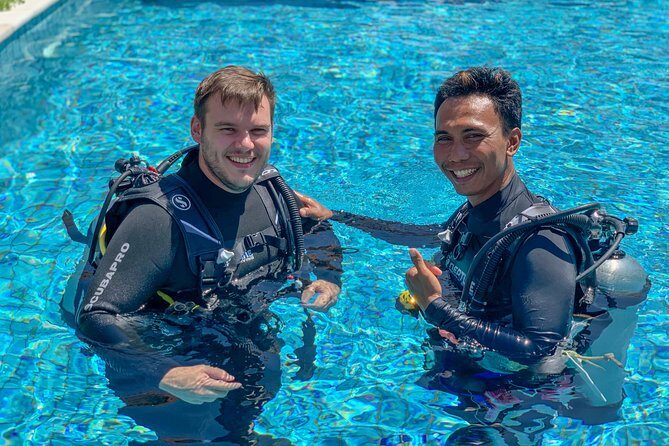
Pool training is where your brain stops working only from book knowledge and starts working from muscle memory. It’s also where instructors can spot issues early. One review specifically mentions help with buoyancy control, which is exactly the kind of skill that benefits from guided correction in a calmer setting.
Pool work is also usually where you build comfort: breathing rhythm, how equipment feels, and how you move with less panic. If you’re worried about being too slow or too awkward, this is where you’ll get the coaching to catch up at a pace that makes sense.
Phase 3: Four open-water sessions in two areas
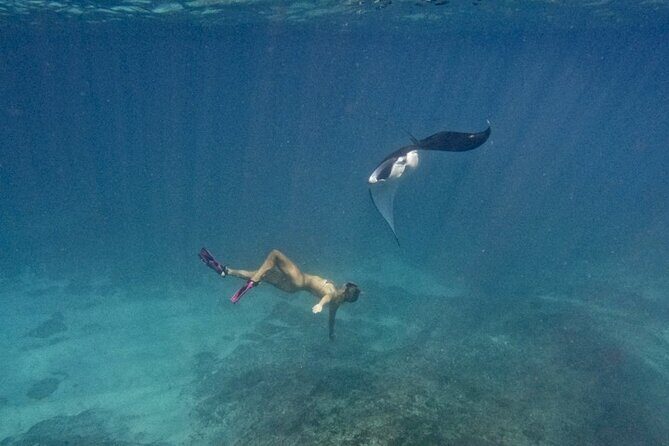
After the classroom and pool phases, you move to open water. The course includes four open-water sessions across Padang Bai and Tulamben. Splitting the training across locations can help you feel less like you’re “performing” in only one environment. You learn to adapt your control to changing conditions, while staying within your training boundaries and under professional guidance.
Even if you’re eager to get to the fun part, the open-water phase is the one that will stick with you most. It’s where you learn to translate what you practiced into real water, with real variables.
Padang Bai and Tulamben: how changing locations can build confidence
The course uses Padang Bai and Tulamben for the four open-water sessions. I like this approach because it reduces the feeling that your certification depends on one single day, one single spot, or one single set of conditions.
Padang Bai is often chosen for training because it’s connected to established diving routines. Tulamben is also a common training area, and the key benefit for you as a student is consistency in what you’re doing, even while the setting changes.
What this means for you: you’ll practice staying calm and controlled while the environment shifts. That’s the real reason people feel more confident after training across more than one place.
The Neptune team: patient coaching and attention to details
A certification course is basically a skills course with a lot of nerves. What you want is instruction that’s calm, clear, and willing to repeat things without making you feel small.
Neptune’s feedback highlights patient, professional coaching from instructors and guides. Specific names that show up include:
- Gede Ariawan as an instructor
- Muli as an instructor who helped with buoyancy control
- Julian as an instructor during an Open Water Course
- Sia as part of the instructor team
- Agus as a guide
The common thread in the reviews is the support style. People describe instructors as kind, personal, passionate, and very patient—especially for students who were new to scuba or who weren’t confident swimmers. That matters because the first underwater experience can feel like a lot: you’re managing equipment, breathing, and staying oriented.
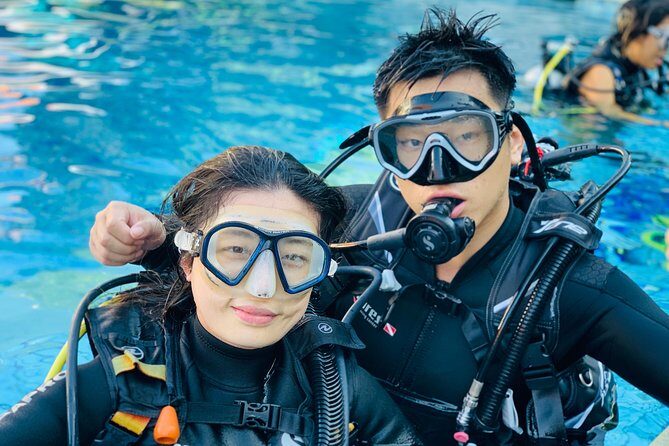
Also, this course has a maximum of 3 travelers. That small group size is more than a number. It usually means you get more direct attention during the steps where mistakes happen. If you’ve ever tried to learn something technical in a big group, you already know what that can feel like.
Price in context: is $530 good value here?
At $530.00 per person, this course is positioned as a full, packaged PADI Open Water training experience. Here’s what that price covers based on what’s included:
- all taxes, fees, and handling charges
- bottled water
- lunch
- coffee and/or tea
- snacks
- driver/guide and a professional guide
- hotel pickup and drop-off
- transport by air-conditioned minivan
- a mobile ticket
What’s not included: souvenir photos (available to purchase).
So how do you judge value? By looking at what you’re avoiding. Without a package, you’d be paying separately for transport, meals, guides, and probably dealing with more scheduling friction. This course price bundles those everyday costs so your main variable becomes your training schedule and your own health readiness.
Also, it’s being booked about 11 days in advance on average. That’s a sign the course fills up or is popular among short-stay divers. If you’re traveling in high season or you want specific days, booking earlier tends to be the smarter move.
What to know before you go: health, timing, and real-world constraints
This course comes with standard safety notes, and you should read them seriously.
You’ll be required to complete a health questionnaire prior to diving. Some pre-existing medical conditions may prevent you from participating, including asthma and heart conditions. The course also notes that respiratory and circulatory systems must be in good health, and all body air spaces must be normal and healthy.
The course also lists situations to avoid: a current cold or congestion, epilepsy, severe medical problems, or being under the influence of alcohol or drugs. If any of these apply to you, talk to your doctor before you book. When it says consult your doctor, that’s not just legal language. It can save you from a disappointing situation.
Timing matters too. Diving within 18 hours of flying is not recommended. If you’re coming from far away, plan a cushion day if you can. If not, at least understand that the course may not fit right after a long flight.
Where you meet, and when you should plan to arrive
You’ll start at Neptune Scuba Diving Bali at Jl. Suka Merta, Sanur Kauh, Denpasar Selatan, Kota Denpasar, Bali 80228. The activity ends back at the meeting point.
Opening hours are 7:00 AM to 6:00 PM. So even if your day runs a bit differently depending on training flow, there’s a wide operating window.
Confirmation happens at booking time, and you’ll receive confirmation details then. Since it’s a small-group course (max 3 travelers), arriving on time matters more than with larger tours.
Should you book this PADI Open Water Course in Bali?
Yes, if you want a structured certification with real training time, a small group, and an operation that emphasizes patient instruction. The four open-water sessions in Padang Bai and Tulamben plus pool training is a strong setup if you’re new or if you want confidence building rather than rushing.
Think twice if:
- you’re unsure about your health clearance and you don’t have time for a doctor’s consult
- you’re flying in and out with tight timing and you can’t follow the 18-hour guidance
- you’re expecting the full photo package included (souvenir photos cost extra)
If you’re the kind of person who likes clear steps—learn, practice, then apply—you’ll probably like this course format. And if you appreciate hands-on feedback like buoyancy control coaching, this one has the kind of instructor support that helps you move from anxious to competent.
In Bali, the Open Water Course is a lot of effort for a short trip. This one is priced and organized in a way that tries to remove friction. If you’re going to do it, do it with a team that runs it smoothly.
FAQ
How long is the PADI Open Water Course in Bali?
It runs for 3 days (approx.) and includes knowledge development, pool training, and four open-water sessions.
What depth will I be certified to?
The course is designed for certification to a maximum depth of 18m.
Where does the course start?
The meeting point is Neptune Scuba Diving Bali, Jl. Suka Merta, Sanur Kauh, Denpasar Selatan, Kota Denpasar, Bali 80228, Indonesia.
Is pickup and drop-off included?
Yes. Hotel pickup and drop-off are included.
What’s included in the $530 price?
The price includes taxes and fees, bottled water, lunch, coffee and/or tea, snacks, a driver/guide and professional guide, and air-conditioned minivan transport, plus a mobile ticket.
What is not included?
Souvenir photos are not included, but they are available to purchase.
Is there a minimum age requirement?
Yes. The minimum age is 10 years.
Do I need a health questionnaire?
Yes. All participants must complete a health questionnaire prior to diving. Some medical conditions (such as asthma or heart conditions) and situations like current cold or congestion may prevent you from participating.
Can I cancel for free?
Yes. You can cancel for free up to 24 hours in advance for a full refund. If you cancel less than 24 hours before the start time, the amount paid will not be refunded.