
The Volcano Trail – Epic Volcano Cycling Adventure
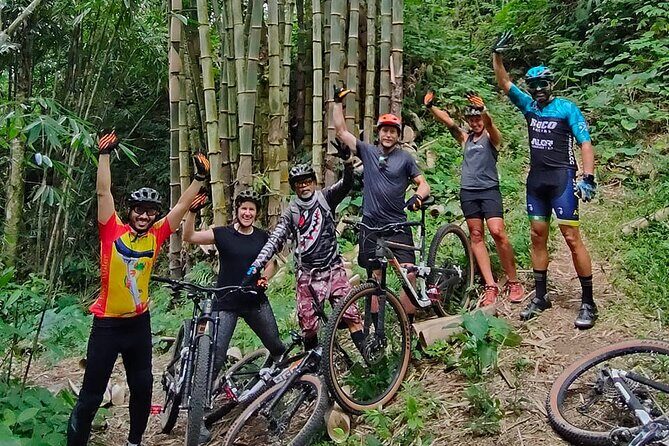
Volcanic singletrack with real downhill fun. This Volcano Trail day starts high around 1,600m and delivers a fast, mostly downhill run on volcanic ground before turning into cross-country riding through rice paddies and small villages toward Ubud. I love the full-suspension bikes with a dropper post and the solid safety kit that makes sketchy-looking sections feel manageable. I also love the guided pace with a senior mountain bike guide plus vehicle support. The one thing to weigh: this is built for intermediate to advanced riders with strong fitness and bike control, so it’s not a casual spin.
I’m also a big fan of how the day is structured. You get an early start, then you spend the middle hours actually riding—about 4–5 hours on trail—rather than wasting time hanging around. Small group size (up to 15) helps keep the ride flowing and lets the guide steer you around the tricky bits.
And yes, the scenery is the main event here: Mt Batur region views at altitude, then paddies and village life as you work your way down. Expect a long day (about 7–8 hours total) that blends adrenaline, local food, and real trail riding.
In This Review
- Key highlights to know before you go
- Volcano Trail: what this ride is really like
- Why the early 7:00 am start is worth it
- Kintamani area transfer: from hotel comfort to volcanic core
- The first stage: fast downhill on volcanic ground
- Second stage: cross-country through rice paddies and villages
- Bike setup and safety: what’s included (and why it matters)
- Lunch and the pacing: getting a real break
- Terrain difficulty: who this ride suits best
- Price and value: what $80 covers in the real world
- How to get the most out of the Volcano Trail
- Should you book this Volcano Trail ride?
- FAQ
- What time does the Volcano Trail ride start?
- How long is the tour from pickup to drop-off?
- Is pickup and drop-off included, and where does it cover?
- What bike and safety gear do I get?
- What fitness level and skill do I need?
- Is lunch included, and do you offer a vegetarian option?
- Can I cancel for a full refund?
Key highlights to know before you go
- Early transfer to 1,600m so you start with momentum instead of climbing for hours
- Big descent with no “extreme feature” pressure, built around smooth single and double track
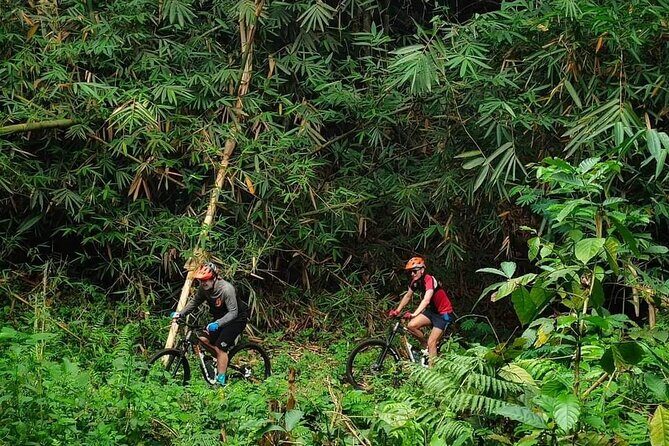
- Rice paddies + villages on the cross-country stretch, so it’s not just a downhill day
- Dropper-post full-suspension bikes plus helmet, gloves, and knee protection
- Senior guide + vehicle support, which helps you ride faster with less stress
Volcano Trail: what this ride is really like
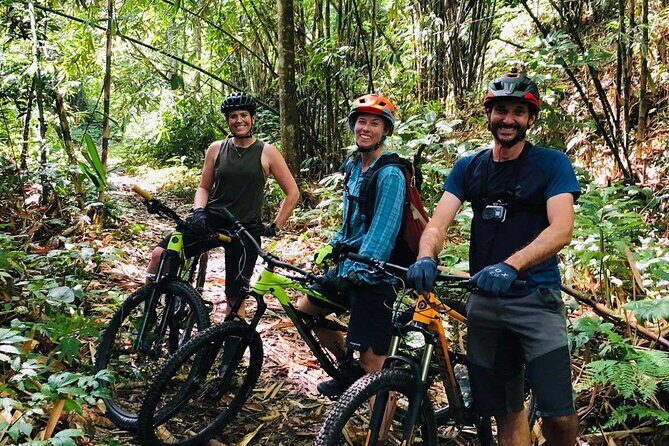
This is a Bali mountain bike day for people who want their adrenaline served on dirt, not in a theme-park setting. The core idea is simple: get you up near Bali’s volcanic heart, then let the trail do the work. The route is known for fast, flowing single and double track. It mixes a big downhill section with a calmer cross-country portion through rice fields and countryside.
One of the nicest surprises is what isn’t part of the ride. You’re not signing up for mandatory jumps, huge drops, or anything that turns it into a stunt course. The challenge comes from terrain, traction, and control—plus enough climbing to keep your fitness useful.
The ride profile is stout on paper: roughly 45 km total distance, about 300m of climbing, and more than 1,300m of descent. That descent is why the early transfer matters. You’ll feel like you’re being set up for success instead of punished for convenience.
Why the early 7:00 am start is worth it
You start at 7:00 am, with pickup from the main Bali tourist areas (Seminyak, Kuta, Nusa Dua, Canggu, Sanur, Legian, and the Ubud area). The practical payoff is that you’re already in the higher zones while the day is still fresh.
Altitude also changes what the ride feels like. At around 1,600m, the air tends to be cooler, and you start the downhill leg with more comfort in your breathing and legs. That matters because the first stage is predominantly downhill. If you’ve ridden technical dirt before, you know the first 20–30 minutes often decide how confident you feel for the rest of the ride. Getting there early helps you start calm, not rushed.
Another small but real plus: the day is long enough to include lunch and breaks, but short enough to keep your energy up. You’re typically done after 7–8 hours. The actual trail time sits around 4–5 hours, which is a sweet spot for riders who want a real adventure without turning it into an all-day suffering contest.
Kintamani area transfer: from hotel comfort to volcanic core
The ride begins with an air-conditioned vehicle transfer to the volcanic regions at about 1,600m. This isn’t just logistics. That drive sets up the ride’s personality.
You’re heading for the Kintamani area and the Mt Batur zone. From there, you drop into lower terrain along volcanic ground, then later you weave through rice paddies and villages. It’s a classic Bali combo: volcanic power at the top, everyday rural life as you descend.
Look, the drive portion can’t be skipped. But here it’s doing its job—placing you in the correct elevation so you can focus your effort on trail rather than brute-force climbing.
The first stage: fast downhill on volcanic ground
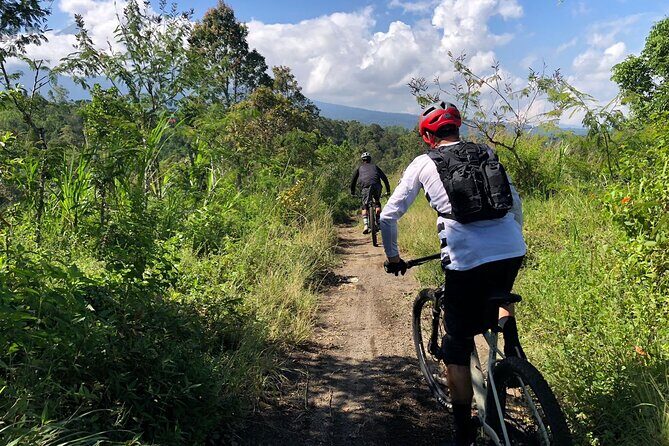
The opening leg is mostly downhill, starting around 1,600m and finishing at lower grounds. This is where the Volcano Trail earns its reputation.
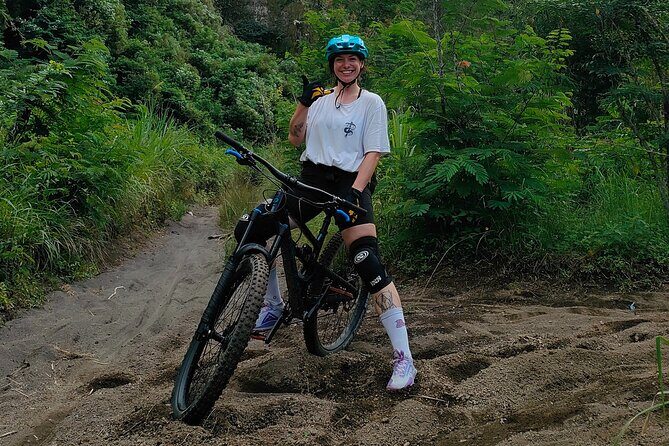
The trail is described as fast-flowing single and double track. In plain terms: it’s meant for riders who can handle speed and changing surfaces. You might encounter volcanic sand or slippery volcanic ground, so braking and line choice matter more than muscling through.
What I like about this stage is that it rewards smooth riding. You don’t need to be doing aerial tricks. You need good bike handling, steady body position, and quick adjustments. If you’ve got intermediate skills, this is where you’ll feel your confidence grow—especially if you follow the guide’s cues early.
A couple practical tips for this downhill section:
- Keep your weight balanced and low. On slippery ground, staying composed matters more than late heroic corrections.
- Assume traction changes. Volcanic surfaces can feel different track to track.
- Use your brakes with intention, not panic. Let the bike roll where possible, then slow progressively.
Second stage: cross-country through rice paddies and villages
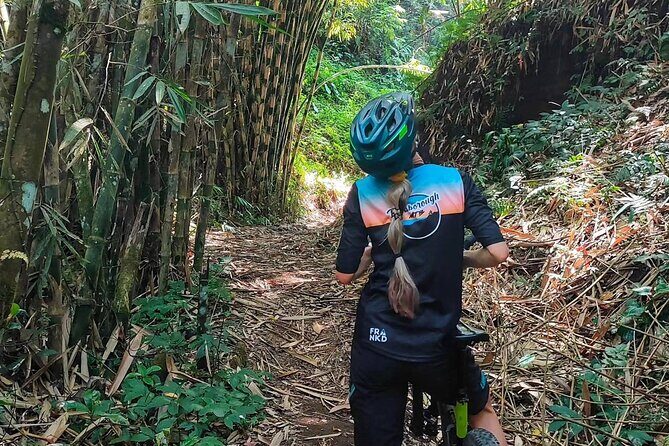
After the downhill, the ride shifts into a more cross-country style. This is the stretch that changes the mood.
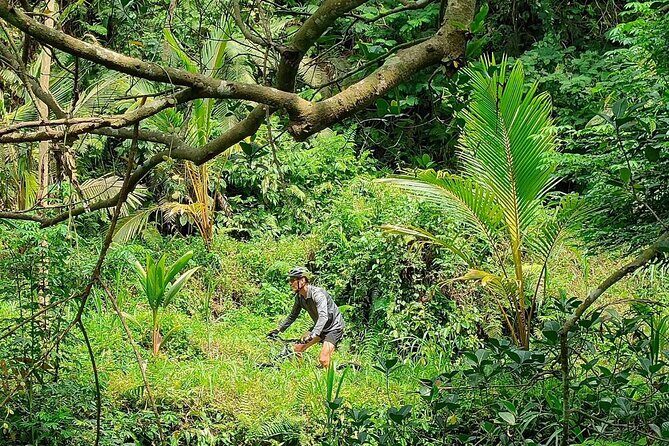
Instead of pure speed, you get weaving segments through lush rice paddies and past local villages. The terrain is still trail riding—single and double track—but it’s more about flow and endurance than nonstop downhill thrills. You’ll likely spend time picking your line through countryside, watching how the terrain opens and closes as you pass fields and homes.
This stage also helps justify the “epic” label. The ride isn’t just a descent; it’s a journey. You’re moving through rural Bali at real speed, with big views and plenty of visual variety.
The trade-off is that the cross-country portion can feel more “work.” You’ve already burned your energy in the downhill. Now you have to keep your legs active while staying relaxed enough to handle the trail. That’s why the tour asks for intermediate to advanced fitness and excellent bike skills.
Bike setup and safety: what’s included (and why it matters)
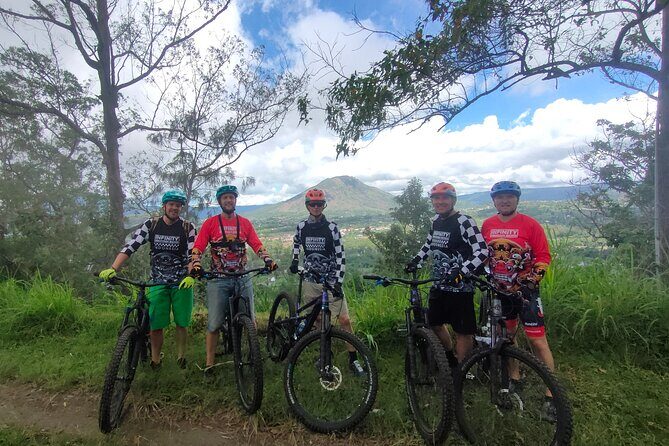
The tour includes a quality full suspension mountain bike with a dropper post. That one detail matters more than it sounds. When you hit steep or bumpy sections, being able to move your seat height quickly helps you stay balanced and in control. It’s especially useful on downhill terrain where you want stability.
You also get:
- Helmet
- Gloves
- Knee protection
- Flat or SPD pedals (depending on what you’re provided)
- Guided ride with a senior mountain bike guide
- Vehicle support during the ride
That safety kit is a big deal on a volcanic-surface day. Slippery ground plus speed can turn mistakes into pain. Knee protection won’t make the trail easy, but it can save your day when you misjudge a corner or need to dab a foot.
Guides: you’ll be riding with a senior mountain bike guide, and I’ve seen names like Gita and Ruddy associated with this type of Infinity Mountainbiking experience. If you get the same guides, you’re likely in good hands—people who clearly enjoy the riding and keep the group comfortable with steady instructions.
Also, check your own comfort level. If you haven’t ridden with a dropper post before, you’ll want to treat it like a learning curve. Don’t wait until the steepest moment to figure it out.
Lunch and the pacing: getting a real break
You get local snacks, fruit, lunch, drinking water, and isotonic drinks. That’s not just a nice bonus. On a ride with over 1,300m of descent and a total of around 45 km, your body still needs fuel even if the legs aren’t “climbing mountain” style all day.
The day timing matters too. With a start around 7:00 am and a total duration of 7–8 hours, your meals likely line up with the longer break after major sections. The goal is to keep you hydrated and ready for the next trail segment.
One more practical note: dress sporty casual. You’ll want clothing that can handle dust and sun. Bali can be warm even early, and volcanic trail can be dusty fast.
Terrain difficulty: who this ride suits best
This is aimed at intermediate to advanced riders with strong fitness and excellent bike-handling skills. The ride avoids extreme features like mandatory jumps or huge drops. But it’s still not “beginner friendly.”
Here’s how I’d interpret the challenge level:
- If you can ride technical dirt without freezing at speed, you’ll likely have a great day.
- If you’re comfortable with braking on loose or slippery surfaces, you’ll feel more in control on the volcanic downhill.
- If you struggle with balance or you avoid going fast downhill, this may feel stressful rather than fun.
The upside is that it’s described as a “step up” from other Bali off-road options in the same biking lineup. So if you’re already biking in your home country and you want to level up, this fits.
It’s also built for a small group (max 15). That’s good news if you want guidance and pacing, but you still want to ride actively rather than waiting in line.
Price and value: what $80 covers in the real world
At $80 per person, this ride can look like a bargain or a splurge depending on how you usually budget for activities in Bali. Here’s the reality check: you’re paying for much more than a bike rental.
Included in the price:
- A full suspension mountain bike with dropper post
- Helmet, gloves, and knee protection
- Lunch plus snacks and fruit
- Drinking water and isotonic drinks
- Air-conditioned pickup and drop off from multiple areas
- A guided mountain bike tour
- Vehicle support during the ride
So you’re getting the bike + gear + guide + transport + food in one package. If you tried to piece that together on your own, the guide and transport would likely eat the savings fast. The value is strongest if you’re staying in one of the pickup zones and you want a guided, high-quality trail day without the hassle.
If you’re a rider who can’t ride without a dropper post or prefers SPD pedals, this kind of included setup reduces friction. You show up, you ride, you eat, you go.
How to get the most out of the Volcano Trail
You’ll have a better time if you prepare like the ride is technical, even if it avoids extreme stunt features.
A few smart moves:
- Bring a focus on bike control, not just fitness. This ride is about line choice and braking on changing surfaces.
- Go in expecting speed on the first big downhill. If you’re relaxed there, everything feels easier later.
- Wear protective gear. Even though knee protection is provided, consider gloves fit and helmet snugness. Comfort equals better riding.
- Ask the guide for how they want the group to ride in the first stage. The early instructions prevent stress later.
And if you’re traveling as a couple or friends: small-group dynamics help. You can still have your own rhythm, but you won’t feel lost.
Should you book this Volcano Trail ride?
Book it if you want a day that’s:
- Built around real off-road riding with fast, flowing trail
- Focused on volcanic scenery and big downhill energy
- Guided, with safety gear and vehicle support so you can ride hard without chaos
- A manageable adventure day (7–8 hours total) rather than a full travel circus
Skip it if:
- You’re a beginner or you avoid technical dirt surfaces
- You don’t like downhill riding or slippery terrain
- You’re looking for a gentle sightseeing ride with minimal effort
My take: this is the kind of Bali activity that feels more like a trail day than a tour. If you match the skill level, you’ll come away with a story that isn’t just scenery photos—it’s the sensation of riding singletrack down a volcanic route, then rolling into rice paddies and villages as the day winds down.
FAQ
What time does the Volcano Trail ride start?
The start time is 7:00 am, with early pickup before you head up to the higher elevation.
How long is the tour from pickup to drop-off?
It runs about 7 to 8 hours total, with around 4–5 hours of actual riding time.
Is pickup and drop-off included, and where does it cover?
Yes. The tour includes air-conditioned pickup and drop-off from Seminyak, Kuta, Nusa Dua, Canggu, Sanur, Legian, and Ubud areas.
What bike and safety gear do I get?
You get a quality full suspension mountain bike with a dropper post. You also receive a helmet, gloves, and knee protection.
What fitness level and skill do I need?
The ride is suited for intermediate to advanced riders with strong fitness and excellent bike-handling skills.
Is lunch included, and do you offer a vegetarian option?
Lunch and local snacks are included, along with fruit and drinks. A vegetarian option is available if you request it at booking.
Can I cancel for a full refund?
Free cancellation is offered up to 24 hours in advance for a full refund. If you cancel less than 24 hours before the start time, the payment is not refunded.
More Cycling Tours

More Tour Reviews



More Ubud Tours
Ubud Tours: how the alternatives stack up
 ★ 5.0
★ 5.0Ubud: Monkey Forest, Jungle Swing, Rice Terrace, and Water Temple
The lists this tour appears in