Traditional Balinese Meal in Ubud in Dewa’s Family Village Home
Food tastes different when you eat at home. This private evening takes you beyond Ubud’s restaurant circuit into Dewa and Jero’s traditional family home in the foothills north of town. I love how the meal leans farm-to-fantasy-with-real-farming—you get dishes like pepes ikan and bumbu kuning that feel personal, not mass-produced. I also like the lead-in, where you learn about local fruits, herbs, and spices such as galangal, cloves, cacao, and nutmeg (including how they’re used).
One thing to consider: the family’s eating rhythm is their own. They will not share the meal with you at the dining table; instead, they eat separately and focus on meditation and a positive state of mind, which may feel odd at first if you expect a chatty dinner setup.
In This Review
- Key highlights worth your attention
- Entering Dewa and Jero’s Balinese home in Ubud
- Pickup, timing, and why the 2 hours feels right
- The spice and fruit walk that makes the meal click
- Inside the walled compound: pavilions, courtyard life, and family space
- The Balinese menu: what you’re likely to eat
- Why you won’t eat with them at the dining table
- Where the best value comes from (and where it doesn’t)
- Practical tips to get the most from the evening
- Who should book Dewa and Jero’s Ubud family dinner
- Should you book this traditional Balinese meal in Ubud?
- FAQ
- How long is the traditional Balinese meal experience in Ubud?
- Is hotel pickup included?
- What’s included with the meal?
- Are vegetarian meals available?
- What dishes might I be served?
- Is this a private experience, and do I get a ticket on my phone?
Key highlights worth your attention
- A true home setting in Keliki: a walled Balinese family compound with open pavilions around a central courtyard
- Spices with purpose: galangal, cloves, cacao, nutmeg, and more, explained in everyday terms
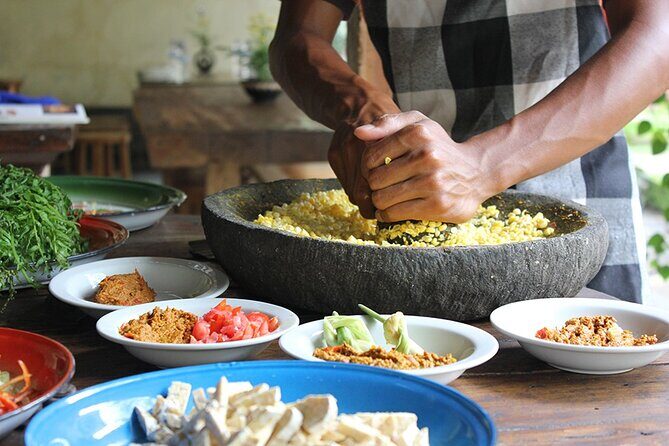
- A serious Balinese menu: pepes ikan (tuna in banana leaves), bumbu kuning (turmeric-coconut chicken), bregedel, and jukut urab
- You may meet Putu or another family teacher: several hosts are named in guide-style teaching roles and praised for patience
- Farm-grown details: ingredients are presented as home-grown or fresh, even when it comes to protein
Entering Dewa and Jero’s Balinese home in Ubud
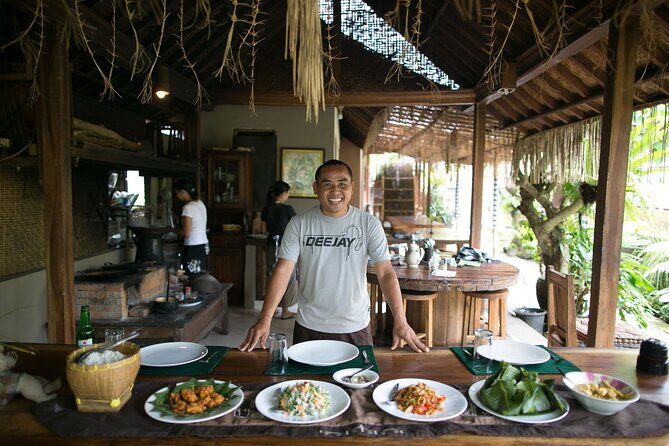
This experience is built around one simple idea: eat where Balinese life actually happens. Instead of a cooking demo in a studio, you’re hosted at a traditional family compound in a village setting just north of Ubud. The compound has multiple open pavilions arranged around a central courtyard, with daily life unfolding at a human scale.
You start with pickup if you’re staying in Ubud (hotel-to-hotel is included for Ubud hotels). If you aren’t based in Ubud, you’ll meet the host at Alam Sari Resort in Keliki. Either way, the plan sets you up for a slower pace than you’ll find in tour buses: a bit of walking, an ingredient-focused tour, then the meal.
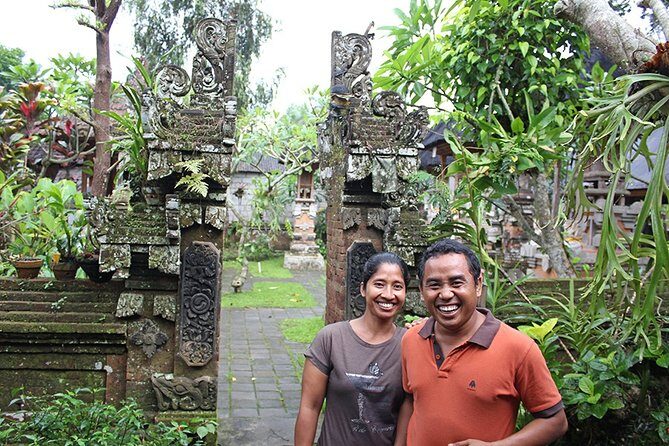
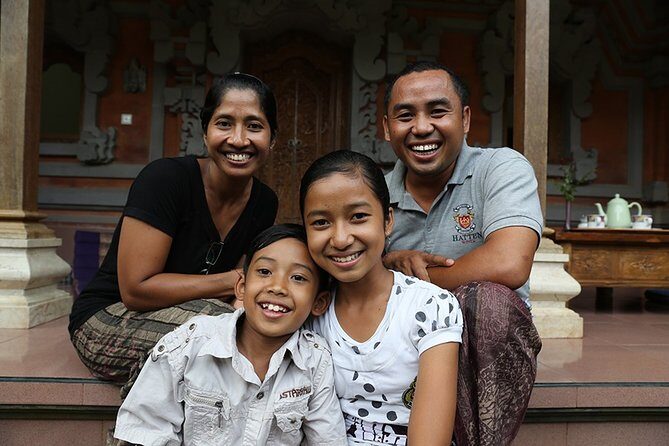
Dewa and Jero are the anchors of the evening. Even though you’ll likely meet other family members along the way, the format stays consistent: you’ll be welcomed into a walled home compound, you’ll be taught about local ingredients, and then you’ll eat an in-home Balinese feast prepared with care. The vibe is warm, but not staged.
One of the best parts is that you’re not just handed food. You’re shown what the food is made from—fruits, herbs, and spices that grow locally and are used with a practical mindset. It helps you taste with better context: when you understand why turmeric and coconut show up in bumbu kuning, it stops being just another yellow curry and becomes a familiar Balinese flavor logic.
Pickup, timing, and why the 2 hours feels right
The whole experience runs about 2 hours. That’s long enough to feel like an evening—not a quick snack—but short enough that it won’t bulldoze your other Ubud plans.
Pickup matters here because it keeps you from wrestling with roads and traffic on a night when you’re also trying to pay attention to details like where ingredients come from. You get hotel pickup and drop-off from Ubud hotels only. If you’re outside the pickup zone, plan on meeting at Alam Sari Resort in Keliki instead.
For timing, confirmation comes within 48 hours (subject to availability), so you’ll want to book early if your calendar is fixed—there’s an average booking lead time of about 18 days. Also, your ticket is mobile, which keeps the day simple once you’re in Bali.
If you’re comparing options in Ubud, this is a value proposition more than a bargain: you’re paying for a private in-home experience, not just a meal. The “private” piece is the real driver—your group stays with the host family without being mixed into a larger crowd.
The spice and fruit walk that makes the meal click
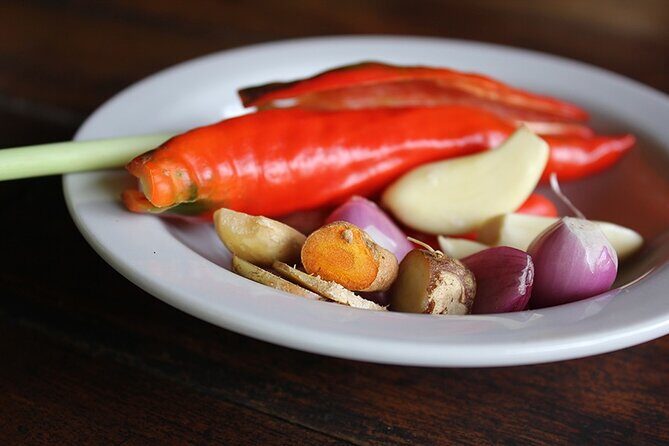
Before you even sit down to eat, you get a mini lesson in Balinese ingredients. Near the host’s home, you’ll encounter fruits, herbs, and spices such as galangal, cloves, cacao, and nutmeg. The host explains their medicinal properties, which adds a deeper layer than what most tourist cooking experiences include.
This part is important because it changes how you read the meal. Balinese cooking isn’t random. Flavors are built with intention, and many ingredients show up because they’re valued in everyday life—taste, health beliefs, and household use.
In past evenings, some hosts also lean into the ingredient-and-garden angle even more, with explanations and examples that feel like walking through a real pantry. Even if your day focuses more on plants nearby the home, you’ll still get the same theme: these are not imported convenience items. They’re part of the local rhythm.
If you like food travel that has a little brain behind it—why something is used, not just what it is—you’ll feel at home here.
Inside the walled compound: pavilions, courtyard life, and family space
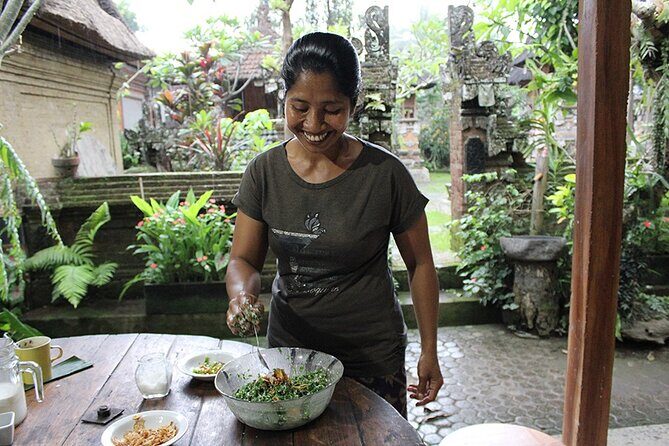
Then you walk over to the traditional family compound itself. The space is organized around open pavilions around a central courtyard, which is a classic Balinese home layout. It’s the kind of place where you can see how families move through daily tasks without squeezing life into one room.
As you tour, you’re not just looking at decor. You’re learning how a home functions: where people gather, how spaces connect, and how the family’s routines fit into the architecture. That’s one reason this works better than a normal restaurant meal. Restaurants are designed to serve many; this home is designed for one family’s way of living.
You’ll spend time in the green compound walls area (and it’s just part of the charm). The setting is lush and residential, not staged scenery. You’re getting an inside look at Balinese life—what it feels like to live there, not just what it looks like from a photo.
The Balinese menu: what you’re likely to eat
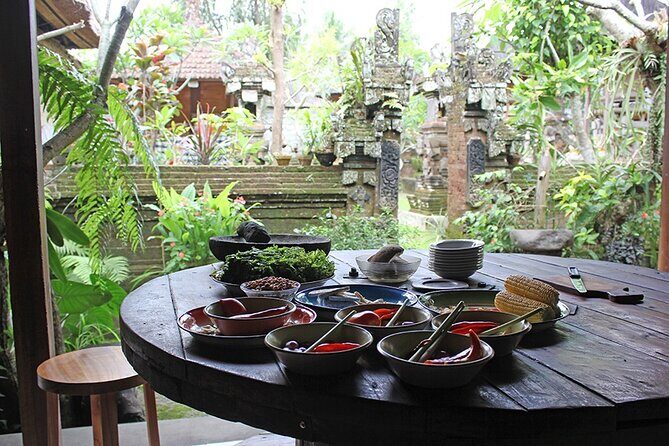
The meal is the headline, and it’s built from specific Balinese dishes. You may taste a mix that includes:
- Pepes ikan: grilled tuna in banana leaves. Expect delicate aroma and a flavor that feels wrapped in the cooking process.
- Bumbu kuning: chicken in a fresh turmeric and coconut milk sauce. This one leans comforting and deeply satisfying rather than sharp or heavy.
- Bregedel: corn fritters. Usually fried, crunchy, and handy for balancing saucy dishes.
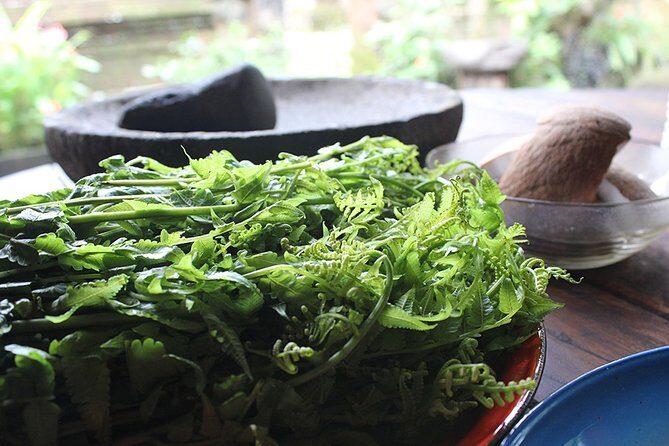
- Jukut urab: seasonal vegetables with grated coconut and fried shallots. This is where you get the garden-to-table side most clearly.
Beverages are included, and vegetarian options are available if you request them at booking. That’s a big deal for practical planning—don’t assume the kitchen will guess correctly without a heads-up.
One more detail I appreciate: the focus tends to be on fresh, home-prepared ingredients. In written feedback, hosts and family members are praised for using homegrown ingredients, including fresh protein. I’d treat that as part of the overall value of the evening, not marketing fluff.
Why you won’t eat with them at the dining table
Here’s the cultural twist that can surprise people: the hosts won’t share the meal with you at the dining table. Their tradition and spirituality lead them to eat separately and focus on meditation to achieve a positive state of mind.
This changes the social feel. Instead of constant back-and-forth conversation around the plate, you’re more in the role of being welcomed into the space and then experiencing the meal as a visitor in their rhythm.
If you’re expecting a Western-style dinner where the host sits down, asks questions, and tours you through each bite like a show, you may find it quieter than you anticipated. But if you’re open to a more respectful, almost ceremonial pace, it can be one of the most memorable parts of the night. It’s also a useful reminder that this isn’t a performance—it’s a family meal shaped by their beliefs.
In other words: go in with patience. Give them space, eat slowly, and let the experience be what it is.
Where the best value comes from (and where it doesn’t)
At $56 per person for a private 2-hour home meal, the price isn’t “cheap,” but it’s also not just paying for food. You’re paying for:
- Pickup in Ubud (and private hosting)
- A guided walkthrough of ingredients like spices and medicinal uses
- Access to a traditional Balinese family compound
- A full in-home Balinese meal with multiple dishes
- Beverages included
The value gets even better if you’re already spending time in Ubud but don’t want another crowded dinner with mediocre quality. This is the opposite: you get a smaller, calmer setting where the host family can take their time.
Where the value can be weaker: if you’re traveling with strict expectations about a hands-on cooking class, this experience may feel more like a hosted meal and ingredient storytelling than a structured cooking lesson. Some people in past write-ups used the terms cooking course or class, and the host teaching style can be very instructional—but the core product is the family dinner.
Another consideration: pickup is limited to Ubud hotels. If your base is elsewhere, you’ll need to plan your own arrival to the meet point at Alam Sari Resort in Keliki.
Practical tips to get the most from the evening
A few things make a difference on nights like this:
- Request the vegetarian option upfront if you need it. Don’t wait until the last minute.
- Plan for a home-food setting: this is not a polished restaurant with fast service. Pace matters.
- Be flexible about conversation since the family’s meal routine is separate from yours.
- Use the mobile ticket and keep your confirmation details accessible in your phone.
- Bring questions about spices and ingredient use. The host’s explanations are a big part of what makes the food taste richer.
If you’re the type who likes to connect a dish to its ingredients, this is a great fit. If you want nonstop entertainment and a table full of host-host chatter, you may need to adjust your expectations.
Who should book Dewa and Jero’s Ubud family dinner
This experience fits best if you’re traveling for food with meaning, not just food for calories.
Book it if you:
- Want a private Balinese home meal with an ingredient-focused intro
- Like seeing how local families live in traditional spaces, not just in souvenir shops
- Enjoy learning about flavors tied to practical uses (including medicinal properties)
- Want a menu that goes beyond nasi goreng and satay
It’s less ideal if you:
- Need the host to eat at the table with you the whole time
- Are relying on pickup outside Ubud and don’t want to coordinate your own meet spot
- Want a long, hands-on cooking session as the main event
Still, even for picky eaters, the multiple dishes and the ability to request vegetarian options make it workable.
Should you book this traditional Balinese meal in Ubud?
I think this is a solid booking when you want authenticity without chaos. The combination of a traditional compound tour, a spice-and-fruit explanation, and a multi-dish in-home Balinese meal makes it more memorable than the usual dinner upgrade.
If you’re open to the quieter dining style—where the family eats separately and keeps their spiritual focus—you’ll likely love it. If you want a loud, back-and-forth host-led dinner, you might find the structure slower than expected.
One final check before you book: confirm your pickup situation based on where you’re staying in Ubud, and request vegetarian needs if needed. Get those right, and you’ll have an evening built around real flavors, real home space, and a better understanding of how Balinese food lives in everyday life.
FAQ
How long is the traditional Balinese meal experience in Ubud?
It lasts about 2 hours (approx.).
Is hotel pickup included?
Yes, hotel pickup and drop-off are included for hotels in Ubud. If you’re not staying in Ubud, you meet the host at Alam Sari Resort in Keliki.
What’s included with the meal?
You’ll get an in-home meal with beverages, and gratuities are included. You’ll also be hosted by Dewa or another family member along with his wife Jero.
Are vegetarian meals available?
Yes. A vegetarian option is available if you advise at the time of booking.
What dishes might I be served?
The meal may include pepes ikan (grilled tuna in banana leaves), bumbu kuning (chicken in turmeric and coconut milk sauce), bregedel (corn fritters), and jukut urab (seasonal vegetables with grated coconut and fried shallots).
Is this a private experience, and do I get a ticket on my phone?
Yes, it’s private, and you’ll receive a mobile ticket. Only your group participates.