[All Inclusive] The Soul of Bali: Temples, Art & Traditions Tour
You don’t need a full day to feel Bali’s culture. This half-day circuit around Ubud mixes rice-field views, temple stops, and a quieter waterfall walk, so your photos and your understanding both get fed. The UNESCO subak irrigation story also ties the sites together in a way that feels practical, not lecture-y.
Two things I really liked: the chance to photograph Tegalalang Rice Terrace in a classic cliffside setting, and the way the guide can adjust the pace and even add small extras. One review mentioned the host adapted the tour for their needs, and that kind of flexibility matters when you’re trying to avoid rushing through sacred places and crowded viewpoints.
The main thing to consider is the schedule is tight. You’ll see a lot in about 5 hours, and Suwat Waterfall involves going down a path (even though it’s described as easy), so wear comfy shoes if your legs aren’t thrilled about stairs and uneven ground.
In This Review
- Key highlights worth your time
- A Half-Day That Mixes Rice Views, Art, Temples, and a Quiet Fall
- Hotel Pickup Across Ubud and South Bali (So You Don’t Waste Your Morning)
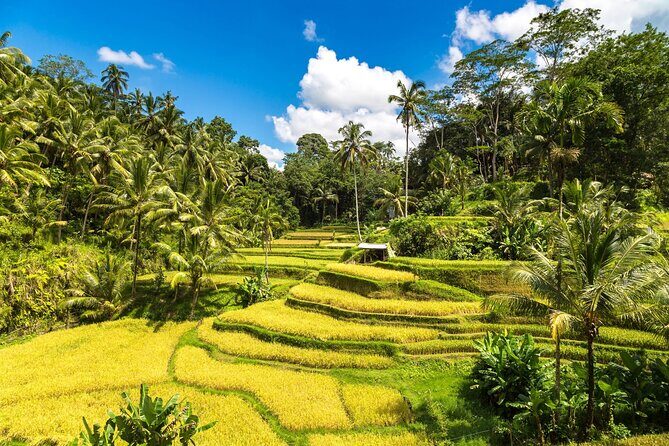
- Stop 1: Tegalalang Rice Terrace and the Photo Spots That Actually Make Sense
- Stop 2: Ubud Traditional Art Market for Crafts, Not Just Souvenirs
- Stop 3: Goa Gajah (Elephant Cave) Temple and Its 11th-Century Roots
- Stop 4: Suwat Waterfall, Bamboo Walk, and Rock Carvings
- How the UNESCO Subak Story Fits the Whole Route
- Price and Timing: Is $50 Worth It for a Private 5-Hour Day?
- Should You Book This Soul of Bali Tour?
- FAQ
- How long is the tour?
- What stops are included in the itinerary?
- Are admission tickets included?
- Is hotel pickup included, and from where?
- Is this a private tour?
- What ticket method do I use?
- Do I need a certain fitness level?
- What if the weather is bad?
- What is the cancellation window for a full refund?
Key highlights worth your time
![[All Inclusive] The Soul of Bali: Temples, Art & Traditions Tour - Key highlights worth your time](https://www.bali-travel-life.com/wp-content/uploads/2026/05/all-inclusive-the-soul-of-bali-temples-art-traditions-tour-1.jpg)
- Tegalalang Rice Terrace with admission included and lots of photo opportunities
- Ubud Traditional Art Market for crafts and everyday local shopping
- Goa Gajah (Elephant Cave) dating back to the 11th century
- Suwat Waterfall on an easy-feeling path through bamboo and tropical foliage
- Private guided experience with hotel pickup across Ubud and much of south Bali
A Half-Day That Mixes Rice Views, Art, Temples, and a Quiet Fall
This tour is built for people who want Bali in “chapters.” You start with the rice terraces and their famous cliffside outlook, then you pivot to crafts and temple culture, and you end with a waterfall that feels calmer than the most overbooked stops.
I like that it’s not only about ticking off attractions. The route connects agriculture, daily life, and spirituality. The rice terrace stop isn’t just scenery; it’s part of Bali’s famous water system story tied to the subak irrigation network, recognized by UNESCO.
You should also know you’re going in the “private tour” lane. Your group participates only with your guide, and transfers are offered from Ubud and several south Bali areas (like Seminyak, Kuta, Canggu, and Jimbaran). That reduces the typical hassle of figuring out timing, parking, and who’s doing what.
The vibe is also easy to manage. It’s about 5 hours, with each stop given a realistic block of time (an hour here, 45 minutes there). That pacing helps if you like photos, but also want time to actually look at details—like rock carvings at Suwat’s bottom.
Hotel Pickup Across Ubud and South Bali (So You Don’t Waste Your Morning)
![[All Inclusive] The Soul of Bali: Temples, Art & Traditions Tour - Hotel Pickup Across Ubud and South Bali (So You Don’t Waste Your Morning)](https://www.bali-travel-life.com/wp-content/uploads/2026/05/all-inclusive-the-soul-of-bali-temples-art-traditions-tour-2.jpg)
Logistics make or break a short tour. What helps here is the included pickup service from many places: Ubud, and also Nusa Dua, Seminyak, Kuta, Legian, Canggu, and Jimbaran. That’s a big advantage if you’re staying outside Ubud’s center, because you won’t be hunting for transport at the last minute.
You’ll also get transfers that are described as hassle-free and private. In plain terms: you’re not trying to coordinate multiple rides or wait around for a group to assemble. For a 5-hour experience, cutting friction is worth real money.
You’ll receive confirmation at booking time, and you’ll use a mobile ticket. That matters because it lets you keep your day simple—no last-minute printouts.
Fitness wise, the tour asks for moderate physical readiness. The waterfall route is described as easy, but “easy” still means walking down a path and then dealing with the climb back up. If you have knee issues, plan for slower steps and bring shoes with grip.
Stop 1: Tegalalang Rice Terrace and the Photo Spots That Actually Make Sense
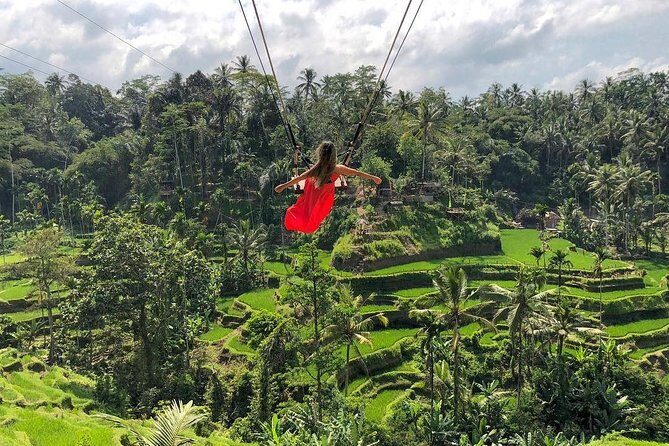
Tegalalang Rice Terrace is the kind of place where your first instinct is to point your camera everywhere. The terraces are set on a cliff and framed by traditional rice-field patterns, so you get that classic layered look quickly.
You get about an hour here, and admission is included. That timing is useful because you don’t have to sprint between viewpoints. You can pause, move to a new angle, and then come back to the same spot to get a different light or perspective.
Here’s the practical tip: don’t treat it like a single photo stop. Use the hour to watch how the irrigation and terraces work visually. Even if you don’t know the terminology yet, you’ll start noticing how water and field layout shape the whole scene.
A drawback to flag: it’s famous, so you might feel busy around the most photographed areas. With a private guide, you can often do a better job picking where to stand and when to move, compared with a group that’s stuck flowing with the crowd.
If you’re doing this tour for culture as well as photos, use this first stop to set context. When you later hear about subak, the rice terraces will make more sense than if you saw them as just pretty scenery.
Stop 2: Ubud Traditional Art Market for Crafts, Not Just Souvenirs
![[All Inclusive] The Soul of Bali: Temples, Art & Traditions Tour - Stop 2: Ubud Traditional Art Market for Crafts, Not Just Souvenirs](https://www.bali-travel-life.com/wp-content/uploads/2026/05/all-inclusive-the-soul-of-bali-temples-art-traditions-tour-4.jpg)
The Ubud Traditional Art Market stop is shorter—around 45 minutes—and admission is included. That’s long enough to browse without turning it into an all-day shopping mission.
What I like about this stop is that it’s framed as a society/economic center of Ubud, not just a tourist bazaar. You’re more likely to see the day-to-day rhythm of what locals buy, sell, and trade, even while you’re shopping.
You should expect a lot of options. One review highlighted that the market has too many choices for street shopping, which is accurate in spirit—there’s variety, and it can be a little decision-heavy. If you’re the type who hates decision fatigue, go in with a plan: pick one type of souvenir (like small art items) or one price range and stick to it.
Also, use your time wisely. In a half-day tour, the market is your chance to buy gifts or decorate your Bali memories without feeling like you missed the rest of the day. If you want to shop seriously, you might find you’ll want extra time beyond 45 minutes, so treat this as browsing with a chance to buy.
The upside of having a guide here: they can help you navigate what’s worth your attention and keep the experience moving at a comfortable pace.
Stop 3: Goa Gajah (Elephant Cave) Temple and Its 11th-Century Roots
![[All Inclusive] The Soul of Bali: Temples, Art & Traditions Tour - Stop 3: Goa Gajah (Elephant Cave) Temple and Its 11th-Century Roots](https://www.bali-travel-life.com/wp-content/uploads/2026/05/all-inclusive-the-soul-of-bali-temples-art-traditions-tour-5.jpg)
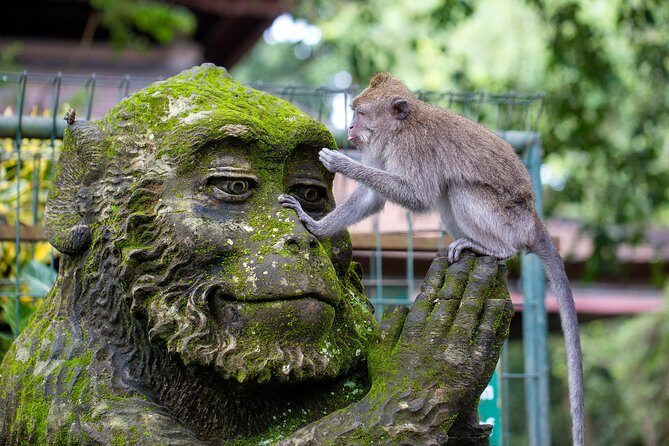
After the terraces and market, you shift to a temple site: Goa Gajah, also known as Elephant Cave Temple. The site is described as dating back to the 11th century, which gives the visit a real sense of time depth.
The stop lasts about 45 minutes and includes admission. That’s enough time to take in the hillside setting and the sacred atmosphere without feeling trapped in a long temple loop.
A detail worth knowing: the temple was built on a hillside where two streams met to form a junction. Even if you don’t fully map the geography while you’re there, it’s a good reminder that many religious sites in Bali are tied to water, natural features, and the logic of the surrounding land.
What helps this stop is context from your guide. In reviews, guides like Komang and Wayan were praised for explaining things clearly and adapting the tour to needs. If you can ask questions, do it here. A few good answers can turn a “we saw a cave” moment into a “now I understand why it mattered” moment.
A consideration: temples require respect. Plan for slower steps, keep your shoulders and knees covered as needed, and follow whatever rules you see on-site. With a private guide, you’ll usually get clearer direction than if you arrive alone.
Stop 4: Suwat Waterfall, Bamboo Walk, and Rock Carvings
![[All Inclusive] The Soul of Bali: Temples, Art & Traditions Tour - Stop 4: Suwat Waterfall, Bamboo Walk, and Rock Carvings](https://www.bali-travel-life.com/wp-content/uploads/2026/05/all-inclusive-the-soul-of-bali-temples-art-traditions-tour-6.jpg)
Suwat Waterfall is the quieter, less-discovered stop on the route. The walk down is described as easy, and it goes through a small bamboo forest and other tropical foliage along the way. In other words, you’re not doing a tough hike, but you are getting a real nature moment instead of only urban sightseeing.
You’ll have about an hour here, which usually gives you enough time to take photos, enjoy the view from different spots, and check out the details near the bottom. Admission is included.
At the bottom, you’ll find cool rock carvings and a big natural pool. That mix—waterfall plus rockwork plus a natural setting—makes Suwat feel like more than a quick stop.
One practical note: “easy walk” still means you’re going down and back up. If you’re sensitive to slippery stones, go slow. If rain is in the forecast, bring a plan for wet footing and consider how weather might affect your willingness to take photos and linger.
This is a great ending to the tour because it resets your brain. Rice terraces and markets are busy on your senses. A waterfall with a calmer path gives you a softer landing before you head back to hotel.
How the UNESCO Subak Story Fits the Whole Route
![[All Inclusive] The Soul of Bali: Temples, Art & Traditions Tour - How the UNESCO Subak Story Fits the Whole Route](https://www.bali-travel-life.com/wp-content/uploads/2026/05/all-inclusive-the-soul-of-bali-temples-art-traditions-tour-7.jpg)
The tour is specifically framed around Bali’s subak irrigation system, recognized with UNESCO World Heritage status. That detail matters because it changes how you interpret what you’re seeing.
When you start at Tegalalang, the terrace layout is just visually impressive. But when your guide connects it to the water management system, you start to understand why rice terraces look the way they do, and why water isn’t just a resource—it’s part of how communities organize life.
That same idea carries over into the temple stop, too. Goa Gajah is tied to streams and natural water junctions, and many Balinese sacred sites have this kind of connection to the environment. It’s not random decoration; it’s a relationship.
Then you end at Suwat, where the waterfall and natural pool make the water theme physical. After that, the whole tour feels like a single theme expressed through different places: agriculture, art and daily commerce, spirituality, and nature.
I like tours that explain why sites exist, even briefly. This one doesn’t need to be a textbook. You just need a few clear links, and a good guide can handle that. The reviews praising guides like Komang and Wayan suggest you’re likely to get solid explanations without turning the day into homework.
Price and Timing: Is $50 Worth It for a Private 5-Hour Day?
![[All Inclusive] The Soul of Bali: Temples, Art & Traditions Tour - Price and Timing: Is $50 Worth It for a Private 5-Hour Day?](https://www.bali-travel-life.com/wp-content/uploads/2026/05/all-inclusive-the-soul-of-bali-temples-art-traditions-tour-8.jpg)
$50 per person is the kind of price that makes you ask: what am I really getting? Here’s what’s supported by the tour details: private guided experience, hotel pickup across multiple areas, admission included for each listed stop, and a 5-hour time window that keeps you from wasting a whole day in transport.
For many short tours, the hidden cost is admissions plus the hassle of getting around. In this case, the admissions for Tegalalang Rice Terrace, Ubud Art Market, Goa Gajah, and Suwat Waterfall are included. That shifts the value in your favor.
Another value point is the private guide. Even within a short schedule, having one person to translate what you’re seeing—and adapt pace if needed—can make the difference between “I went places” and “I understood places.” Reviews repeatedly called out guides who were friendly and clear, and who could adjust.
Timing is also a value feature. With 5 hours, you can do this without sacrificing an entire day of lounging by your pool or exploring on your own. It’s half-day enough to keep your energy up, but structured enough to feel like a real itinerary instead of a loose plan.
The main consideration is choice limits. You can’t cover everything. If you’re the type who wants slow travel and lots of extra stops, you might later wish the tour was longer. But that’s not a failure. It’s the trade for keeping it short and focused.
Should You Book This Soul of Bali Tour?
If you want a smart first taste of Ubud—rice terraces, a traditional market, a historic temple site, and a quieter waterfall—this is a strong match. It also fits you if you care about how Bali’s water system and community life connect to what you see.
I’d especially recommend it if:
- You’re staying in Ubud or south Bali and want pickup handled for you
- You’d like admission tickets included rather than paying them one by one
- You prefer a private guide and a paced, explain-what-you-see kind of day
Skip it (or be cautious) if:
- You’re looking for a long, slow, unhurried exploration day
- You’re worried about walking down and up at Suwat Waterfall
- You want a lot of free time for shopping beyond the market stop
If you’re unsure, this tour is also a practical test-run. It gives you four varied stops in one coherent route, and a guide who can adapt helps you make the day feel personal rather than mechanical.
FAQ
How long is the tour?
The tour is approximately 5 hours.
What stops are included in the itinerary?
The tour includes Tegalalang Rice Terrace, Ubud Traditional Art Market, Elephant Cave (Goa Gajah), and Suwat Waterfall.
Are admission tickets included?
Yes. Admission tickets are included for the listed stops.
Is hotel pickup included, and from where?
Pickup is included for areas including Nusa Dua, Seminyak, Kuta, Legian, Canggu, Jimbaran, and Ubud.
Is this a private tour?
Yes. It’s a private tour/activity, and only your group participates.
What ticket method do I use?
The tour provides a mobile ticket.
Do I need a certain fitness level?
The tour notes a moderate physical fitness level is recommended.
What if the weather is bad?
The experience requires good weather. If canceled due to poor weather, you’ll be offered a different date or a full refund.
What is the cancellation window for a full refund?
You can cancel up to 24 hours in advance for a full refund, based on local time.