Bali Art Experience: Batik Painting & Cultural Connection
Batik painting is craft therapy. This Nusa Dua workshop is a practical, guided way to learn how wax-resist batik actually works, from tracing your design to coloring your cloth. I also like the clear, personal instruction that makes it feel doable even if you have zero crafting background. One thing to plan for: part of the process needs to be finished at home at least 24 hours later.
You’ll work seated around a table for roughly 1.5 to 2.5 hours, starting with a demonstration and then doing the steps yourself. Before and after the class, the experience includes time at Nusa Dua Beach and Mengiat Beach, so you get that Bali “outside time” along with the creative work.
At $33.45 per person, the value is strong because tools, the cloth, and a design to trace are included, plus you get a licensed guide. Still, food and transport are not included, so you’ll want to handle that on your own.
In This Review
- Key takeaways before you go
- Nusa Dua and Mengiat Beach: where the day starts to feel easy
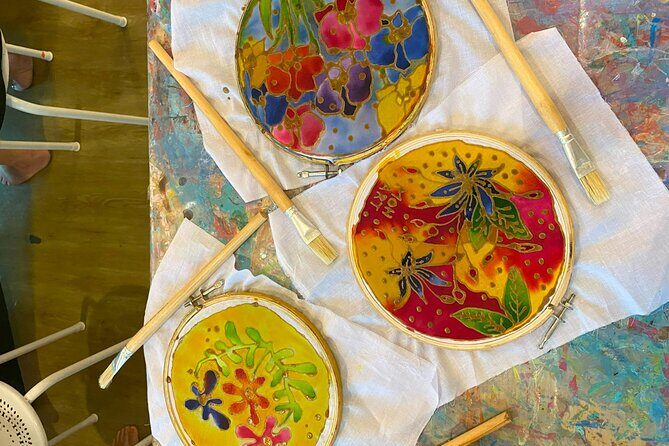
- What you make: a real wax-resist batik on cloth
- The class flow in 2.5 hours: wax, color, fix
- The at-home finishing step you should actually plan for
- Teacher-led creativity with Jenn: the class feels personal
- Beach stops: how they fit without stealing your focus
- Price and value: why $33.45 feels fair here
- What to bring (and what to skip) for a smoother class
- Who should book this batik workshop in Nusa Dua
- Should you book the Oedel Batik Experience?
- FAQ
- FAQ
- How long is the batik workshop?
- Where does the experience start and end?
- What’s included in the price?
- Is food or drink included?
- Does transportation come with the tour?
- What does the batik class involve step by step?
- Do I have to finish part of the process at home?
- Is this a private activity?
- Is there a mobile ticket?
- What are the opening hours?
- Can I cancel or change the booking?
- Is it accessible for most people?
Key takeaways before you go
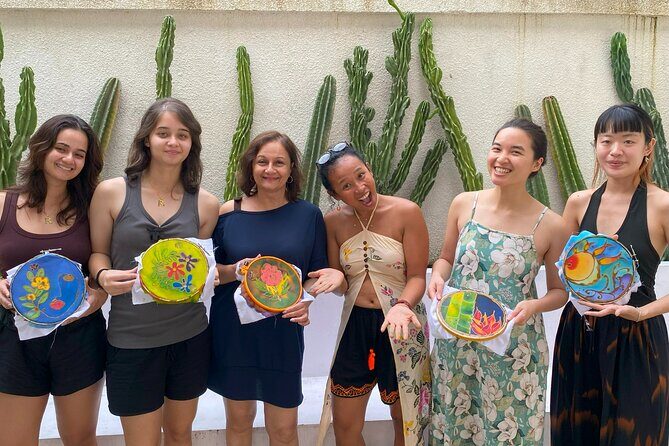
- Wax tracing to color: you learn the real batik sequence, not just a show-and-tell lesson
- Teacher-guided creativity: Jenn helps you make choices while still following proper steps
- Made-to-take souvenir: you finish with batik you can bring home
- Beach stops built in: Nusa Dua Beach and Mengiat Beach add a relaxed rhythm to the day
- At-home finishing step: you’ll need a simple follow-up after at least 24 hours
Nusa Dua and Mengiat Beach: where the day starts to feel easy
The big win here is pacing. You’re not racing around Bali doing quick photo stops. You start near TOPM Pizzeria on Jl. Siligita No. 99, Benoa, then you head to Nusa Dua Beach and later to Mengiat Beach as part of the experience flow.
In plain terms, those beach stops matter because they give your brain a break between the hands-on work and the outdoors. Batik needs patience. Your wrist slows down when you’re painting wax, and the work rewards calm focus. Having a scenic setting helps you settle in instead of feeling rushed.
Also, because the class is in Nusa Dua, you’re often not dealing with the same level of chaos as in busier areas. That makes it a nice option if you want craft time without the stress of navigating complicated routes.
If you’re planning your day, treat this as a creative block first, beaches second. The workshop is the main event, so build your schedule around the class rather than around other attractions.
Still comparing? These are other Bali tours we've reviewed.



What you make: a real wax-resist batik on cloth
Batik is famous, but this workshop helps you understand why. You’re not painting a picture like a casual art class. The process is built around wax-resist design.
Here’s the core idea you’ll practice:
- You trace a design onto cloth.
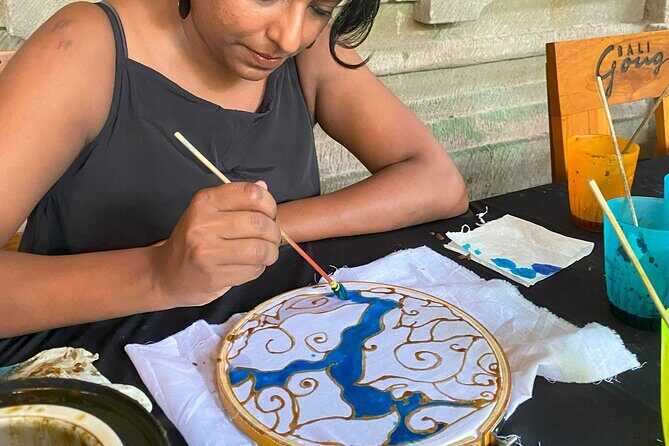
- You paint melted wax along the traced lines.
- You add color over the cloth.
- You apply a liquid to fix the colors.
- Then you complete the remainder of the process at home at least 24 hours later.
That wax step is the magic. Wax blocks dye from reaching the cloth in the areas you marked, which is what creates the crisp pattern effect that makes batik look like batik.
You’ll get a design to trace as part of the workshop, and the guide also notes you can bring your own simple design if you want. For many people, that combo is perfect: you can follow a prepared option if you’re unsure, or you can add a personal twist if you have something in mind.
One more practical point: the included cloth and tools mean you’re not hunting for supplies. You walk in, you work the technique, and you end up with something you can take home as a finished souvenir.
The class flow in 2.5 hours: wax, color, fix
Plan for about 2 hours 30 minutes total, though the seated work is often around 1.5 to 2.5 hours depending on how smoothly the steps go. That variation makes sense in a workshop setting. Some people move faster. Others take extra time making their wax lines neat.
The flow is straightforward:
- Pick and trace your design
You choose a piece of artwork to use, then trace it onto cloth using a pencil. This is a helpful start because it sets you up for clean wax lines later.
- Paint melted wax over the traced lines
You apply melted wax following your pencil guide. If your lines aren’t perfect, that’s okay. Part of the charm is that it’s handmade.
- Add colors onto the waxed cloth
Next comes painting color. This is where the resist effect begins to show, since areas covered by wax resist dye.
- Fix the colors with a liquid
After color work, you apply a liquid intended to fix the colors on the cloth.
- Finish the rest at home (minimum 24 hours later)
The workshop is not the full story. You’ll receive a handout with instructions for the remainder, and you’ll do that at home after at least 24 hours.
This sequence is useful even if you just want a souvenir. You’ll understand what you did and why it matters, which helps when you’re following the at-home finishing instructions later.
The at-home finishing step you should actually plan for
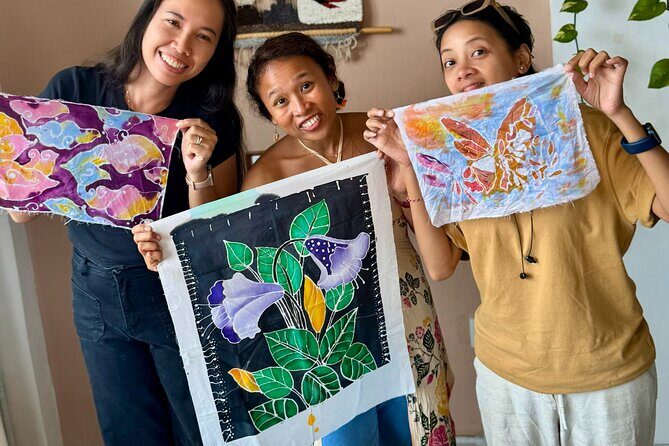
The at-home portion is the one part I’d call out as a real consideration, not a minor footnote. The workshop includes the initial steps and a color-fixing step, but the remainder happens at home at least 24 hours later.
That means you should think ahead:
- You’ll want a time buffer after the class so you can finish properly.
- You’ll need a place where you can work with your cloth carefully without rushing.
If you’re the type who likes clean checklists, this part is manageable because you’ll get a handout with instructions. Still, if your Bali days are tightly packed or you’re traveling the same day you do the class, plan around the follow-up time requirement.
On the positive side, this at-home step helps the batik turn out better. It’s not just making you carry wet dye around. It’s built into how the process works after you’ve applied color and fixed it.
Teacher-led creativity with Jenn: the class feels personal
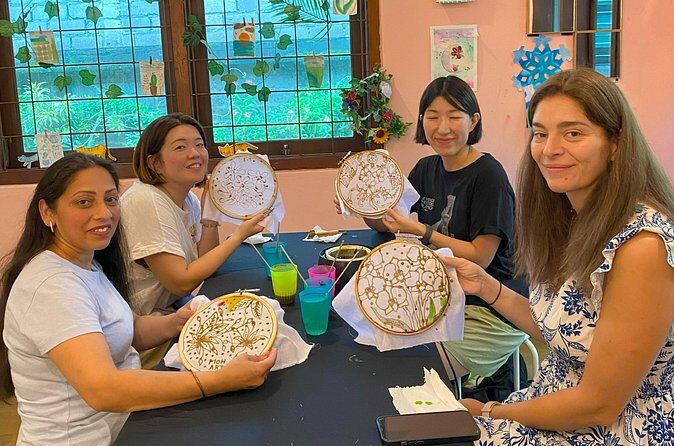
One of the strongest highlights here is instruction. You get a licensed guide, and the teaching style makes a difference.
The standout theme from past participants is how clear the step-by-step guidance is and how creative you’re allowed to be. In particular, Jenn is singled out for making the process easy to understand and for explaining each step clearly while still letting you choose and develop your own design.
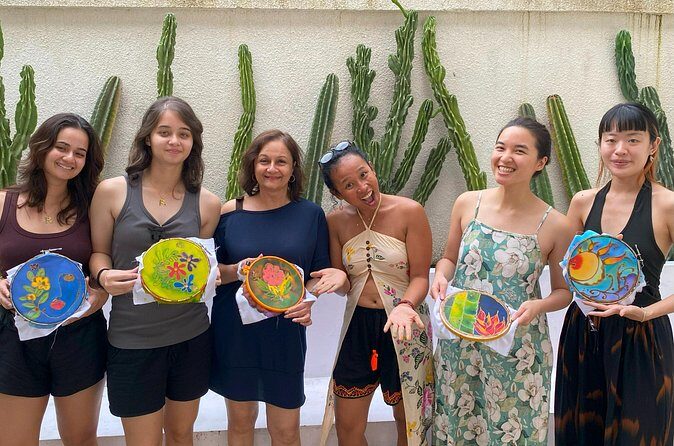
You also get a private setup for your group, which usually changes the whole feel. It’s not a crowded, assembly-line class where you’re waiting your turn. You’re working at a table, and you’re more likely to get direct attention when you have questions.
If you enjoy crafts where the instructor watches your technique and helps you correct things early, this is a good match. If you only want passive entertainment, you might find the hands-on wax and tracing more work than you expected. But if you want to learn by doing, the teaching approach is the point.




Beach stops: how they fit without stealing your focus
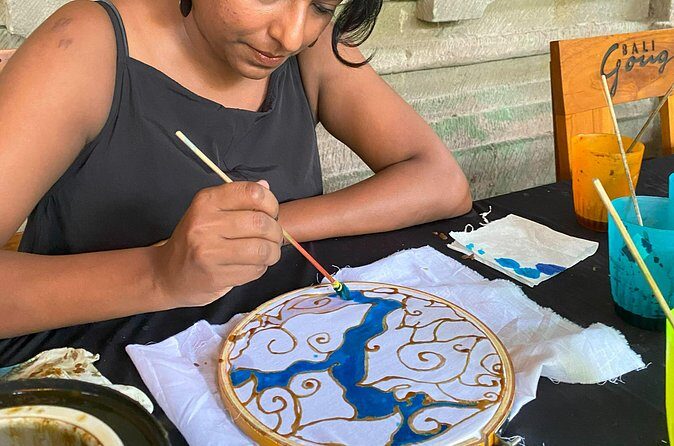
You’ll see Nusa Dua Beach and Mengiat Beach listed as stops, so you might wonder how much time you actually get. The key is that they aren’t the main activity. The class is.
So think of the beaches as breaks that keep the day from feeling like a long indoor art session. They help you reset your eyes and your shoulders between steps. Also, since the workshop takes place while you’re seated for a while, outdoor time can make the whole experience feel lighter.
Practical tip: if you do this during the brighter hours, protect yourself like you would for any beach day. Even if the beach time is shorter than a full outing, you’ll still likely be outside.
And because the experience ends back at the meeting point, you’re not left scrambling for transport at the end. You can plan a next meal or rest stop with fewer unknowns.
Price and value: why $33.45 feels fair here
At $33.45 per person, this workshop is priced like a budget-friendly activity, not a premium craft studio experience. The value comes from what’s included.
You get:
- batik tools
- a design to trace (you can also bring a simple design)
- the cloth
- a licensed guide
That’s the big part. When tools and materials are covered, you’re paying for the technique and the guidance, not for a pile of supplies you’d otherwise need to buy.
What’s not included:
- food and drink
- transportation
So factor in at least a small meal plan. If you’re doing this as part of a full day in Nusa Dua, you can keep costs controlled by grabbing something nearby before or after, then focusing on the workshop.
Also, the total time works well. About 2.5 hours is long enough to feel like you actually made something meaningful, but short enough to fit into a travel schedule. For many people, that’s the sweet spot.
What to bring (and what to skip) for a smoother class
The good news is the essentials are handled. You don’t need to show up with batik tools or cloth.
What helps:
- If you have a simple design you like, you can bring it. Otherwise, you’ll choose from what the workshop provides.
- Wear something you don’t mind getting a little stained risk. The process involves melted wax and color, and even careful work can get messy.
What you don’t need:
- No listed requirement to bring tools or materials.
- You also don’t need to arrange food through the provider, since it’s not included.
Mobile ticket is part of the setup, so make sure your phone battery is healthy on the day of the class. It’s a small detail, but it’s one of those things that can slow you down if you show up unprepared.
Who should book this batik workshop in Nusa Dua
This is a strong fit if you:
- want a hands-on souvenir that you can explain, not just buy
- like learning techniques step-by-step
- enjoy crafts and don’t mind wax-and-color work
- prefer a more personal class setup for your group
It’s also a good option if you’re traveling with a friend or just want a break from Bali sightseeing without losing the cultural connection. Nusa Dua is a convenient base area for visitors who want an organized day with a clear end point.
If you dislike any at-home follow-up tasks, you may want to think twice because a chunk of the process happens after at least 24 hours at home.
Should you book the Oedel Batik Experience?
If you want something meaningful that stays with you after the trip, I’d say yes—book it. The included tools, cloth, and design support make it low-stress, and the guidance you get is the reason most people feel good about what they produce.
Choose this workshop if you can handle a small at-home finishing step later. It’s not hard in concept, but it does require follow-through.
Skip it only if you’re looking for a purely passive activity or you can’t fit the at-least-24-hours timing into your travel rhythm.
FAQ
FAQ
How long is the batik workshop?
It runs for about 2 hours 30 minutes total, with seated work typically lasting around 1.5 to 2.5 hours depending on how quickly the process goes.
Where does the experience start and end?
It starts at TOPM PIZZERIA, Jl. Siligita No. 99x, Benoa, Kec. Kuta Sel., Kabupaten Badung, Bali 80361, Indonesia, and ends back at the meeting point.
What’s included in the price?
The price includes batik tools, a design to trace onto the cloth (you can also bring your own simple design), the cloth, and a licensed guide.
Is food or drink included?
No. Food and drink are not included.
Does transportation come with the tour?
No. Transportation is not included.
What does the batik class involve step by step?
You trace a design onto cloth, paint melted wax along the traced lines, paint colors, apply a liquid to fix the colors, and then do the remainder at home at least 24 hours later using instructions provided.
Do I have to finish part of the process at home?
Yes. The remainder is done at home at least 24 hours later, and you’ll receive a handout with instructions.
Is this a private activity?
Yes. It’s private for your group, meaning only your group participates.
Is there a mobile ticket?
Yes. The experience includes a mobile ticket.
What are the opening hours?
From 10/21/2024 to 12/16/2026, it runs Monday to Friday from 9:00 AM to 5:00 PM.
Can I cancel or change the booking?
No. The experience is non-refundable and cannot be changed for any reason.
Is it accessible for most people?
Most travelers can participate, and service animals are allowed.