
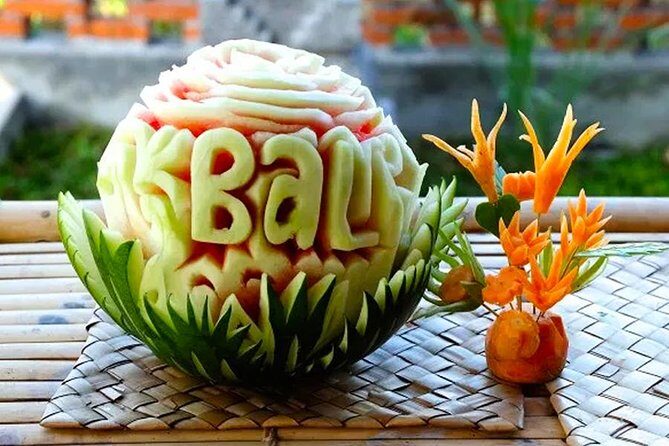
Bali Fruit Carving Class
Fruit turns into art in just two hours. This Bali fruit carving class in Lodtunduh, Ubud is a hands-on skill lesson, not a performance. You’ll learn how to carve designs on real fruit like watermelon and papaya, guided step by step so you can actually finish something worth showing.
I love that it’s small-group (max 10), which makes it easier to get help when your cuts aren’t cooperating. I also love the practical side: the technique you learn can be applied to other foods later. One thing to consider: fruit carving takes patience and precision, so if you want zero effort and instant results, this may feel a bit like a workout.
You’ll meet at the WS Art Studio in Lodtunduh, get a welcome drink and traditional snack, and leave with a certificate—plus your own carved fruit art.
In This Review
- Key things you’ll notice
- Fruits, Tools, and the Lodtunduh Studio Feel
- Where the class starts: the WS Art Studio meeting point
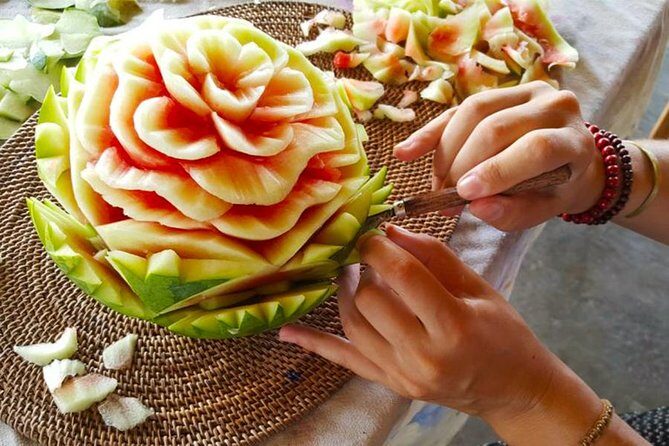
- What you’ll actually carve: flowers, animals, and personal names
- Inside the 2-hour flow: learn, practice, finish
- The perks that make the price feel fair
- Price and logistics: what to know before you book
- Who this class suits best (and who might skip it)
- Should you book this Bali fruit carving class?
- FAQ
- How long is the Bali fruit carving class?
- Where does the class take place?
- What time does the class start?
- What is the group size?
- What age range is allowed?
- What can I carve during the class?
- What’s included in the price?
- Is transport included?
- Do I need to bring any materials or equipment?
- What is the cancellation policy?
Key things you’ll notice
- Max 10 people means calmer, more personal instruction
- 2 hours on the clock keeps you moving from practice to a finished design
- Carve real fruit like watermelon and papaya (not foam or props)
- Materials and equipment included so you’re not hunting down supplies
- A certificate makes it feel like a real class, not a quick demo
Fruits, Tools, and the Lodtunduh Studio Feel
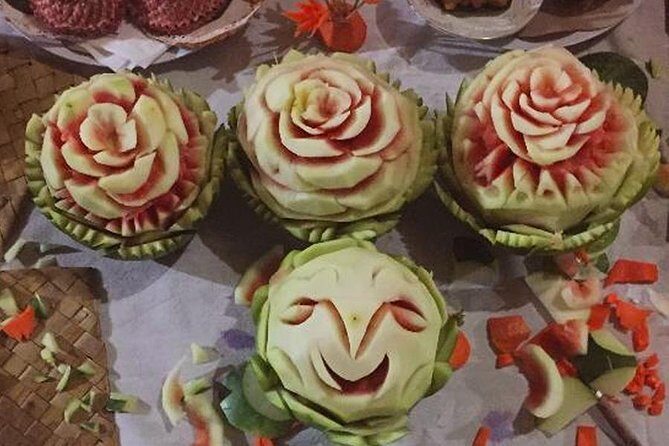
This class is built around one simple idea: you can make something pretty out of everyday food. Fruit carving isn’t only about decoration. It trains your hands to be careful—short, controlled cuts—and it rewards focus. If you’ve ever watched someone carve a flower out of fruit and thought, I could never do that, this is the kind of lesson that turns that doubt into something more doable.
The vibe is also a big part of why it works. The class runs in Lodtunduh (near Ubud), and the setting has that laid-back Bali studio feel where you can hear the tools, see the fruit in progress, and take your time. One review mentioned a calming view while working, which makes sense: you’re not trapped indoors looking at a wall. Even if you don’t care about the view, the slower pace helps you concentrate on technique.
One more plus for value: the experience includes the stuff you’d otherwise need to buy or borrow—equipment and materials. So you’re paying for instruction plus the “workbench” to practice, not just a teacher talking while you stand there.
Where the class starts: the WS Art Studio meeting point
You’ll start at WS Art Studio Balinese Handicrafts in Lodtunduh (address listed on your confirmation). The exact pin is provided in the meeting info, and it’s described as easy to locate. That matters in Bali, where a “nearby” meeting point can sometimes mean a short scavenger hunt.
The class starts at 10:00 am and runs about 2 hours. It uses a mobile ticket, and the activity ends back at the meeting point, so you won’t need to track a second location during the session. The listing also notes the area is near public transportation, which can be useful if you’re not riding with a private driver.
Planning tip: if you’re already in Ubud earlier that morning, this is a good slot because it doesn’t eat your entire day. You can treat it like a focused morning activity and still have time for lunch or another Ubud stop afterward.
What you’ll actually carve: flowers, animals, and personal names
Fruit carving here is about variety. The class teaches you to carve designs like:
- Flowers
- Animals
- Your name (for example on fruit like watermelon)
You’ll work with fruit such as watermelon and papaya, plus other options mentioned in the class description. That range is smart for first-timers. Flowers are a good way to learn shaping and petal-like cuts. Animals help you practice curved details. And carving a name is where you’ll discover how much precision matters—your letters have to sit cleanly on the fruit without collapsing.
This is also where the small group size helps. If you choose something simple, great—you’ll likely finish comfortably. If you’re a little more ambitious (especially for a name), you’ll want the instructor’s eyes on your cuts before things go off track. With up to 10 people, it’s more realistic that the teacher can check in as you go.
One of the best parts is that this turns fruit into a “designed” object, not just snack decoration. You’re learning technique you can use at home—cut patterns, shaping steps, and the basic logic of how to carve without tearing the fruit.
Inside the 2-hour flow: learn, practice, finish
The class is designed to fit in about two hours, which is a sweet spot for a skill lesson. Long workshops can be great, but they’re harder to manage on a Bali vacation schedule. Two hours keeps it energetic. It also reduces the chances you’ll lose motivation halfway through.
Here’s what you can expect from the way the class is described:
- Your instructor shows the technique first.
- Then you practice the steps yourself.
- You create a carved design of your choice, using provided materials and equipment.
- You finish with something you can take home, and you receive a certificate.
Because the class emphasizes patience and precision, don’t assume it’s a “speed carving” contest. Plan to slow down. Even if you’re good with scissors at home, fruit is different—its structure is soft, and your cuts need to be controlled so you get clean edges.
Also, this is family-friendly in a real way. The class states it’s for ages 4 to 65. That wide range tells me the instruction likely scales: kids can focus on simpler shapes, while adults can attempt more detail. If you’re traveling with mixed ages, that’s a big advantage. You won’t feel like the class is only for “tiny artists” or only for experienced crafters.
The perks that make the price feel fair
At $39 per person for about 2 hours, the value isn’t just the lesson—it’s the complete package. You get:
- Welcome drink
- Traditional snack
- Equipment and materials
- Certificate
Those inclusions matter in Bali because tours can sometimes hide extra costs behind add-ons. Here, the class description is clear that you’re fed and set up with what you need to carve. You’re also not responsible for bringing tools or hunting for fruit carving kits.
The certificate is a small detail, but it changes the feeling of the experience. It becomes something you participated in, not just something you watched. And since the class includes both instruction and a finished output, you leave with a story and an object you made.
One review also mentioned morning tea being delicious, which lines up with the class offering a welcome drink and snack. I’d treat the food break as part of the pacing—an easy way to reset your hands before the final carving.
Price and logistics: what to know before you book
Let’s talk money honestly. $39 isn’t a bargain price in the sense of “half an hour and done.” But for a small-group session with instruction, tools, materials, plus drink/snack, it’s fairly priced. The “cost driver” isn’t only the teacher. It’s the materials (fruit and carving supplies) and the time spent helping you practice until you get it.
Logistics are also fairly easy:
- Location: Lodtunduh, Ubud area
- Meeting point: WS Art Studio Balinese Handicrafts (listed address)
- Start time: 10:00 am
- Duration: ~2 hours
- Group size: max 10
- Transport: transport service not included
So you’ll want to handle your own ride to the studio. If you’re using a driver, budget for that. If you’re using public transport, the listing says it’s near public transportation, which can help.
One more practical note: confirmation is received within 48 hours of booking, subject to availability. So don’t wait until the last minute if your schedule is tight.
Who this class suits best (and who might skip it)
This fruit carving class is a strong fit if you want:
- a hands-on Bali activity with a clear skill payoff
- something calm and focused rather than loud sightseeing
- a souvenir you can eat and enjoy (or at least show off before you do)
- a class you can do with a wide age range
It’s also a great rainy-day backup idea. When you’re in Bali and the weather doesn’t cooperate, a studio-based class with included materials is often easier than trying to race between open-air sites.
You might consider skipping it if you:
- hate slow, careful tasks
- want a purely passive experience
- expect no concentration at all (carving is precision work)
Also, if you’re the type who gets frustrated when you can’t get it right immediately, go in with a plan: start simple, take the instructor’s guidance, and treat it like learning, not like performance.
Should you book this Bali fruit carving class?
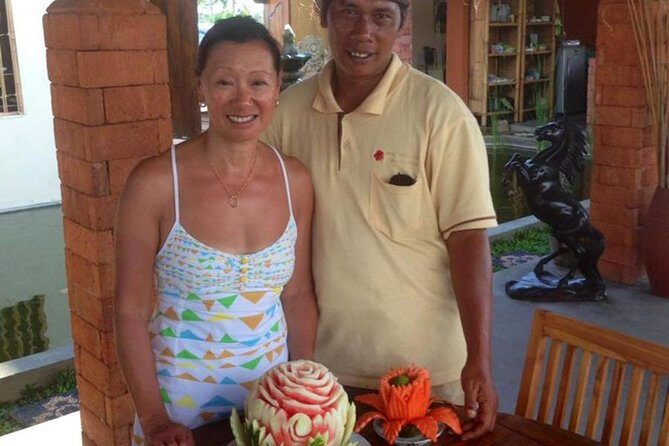
If you’re in Ubud and you like the idea of learning a real technique you can reuse, book it. The combination of small group size, included supplies, and a structured lesson makes it feel like you’re paying for something tangible—not just a one-off photo op.
I’d especially recommend it if you want a break from temples and traffic and you’d like a calmer morning activity. You’ll leave with carved fruit art, a certificate, and a new set of hands-on skills. Just bring patience—and don’t rush. In fruit carving, speed is the enemy, and slow hands win.
FAQ
How long is the Bali fruit carving class?
The class runs for about 2 hours.
Where does the class take place?
It’s in Lodtunduh, Ubud, Bali. The meeting point is WS Art Studio Balinese Handicrafts (address is provided).
What time does the class start?
The start time is 10:00 am.
What is the group size?
The class has a maximum of 10 travelers.
What age range is allowed?
The class is for ages 4 to 65.
What can I carve during the class?
You can carve designs like flowers and animals, and you can also carve your name on fruit such as watermelon and papaya.
What’s included in the price?
Included are a certificate, welcome drink, traditional snack, equipment, and materials.
Is transport included?
No, transport service is not included.
Do I need to bring any materials or equipment?
No. Equipment and materials are provided.
What is the cancellation policy?
This experience is non-refundable and cannot be changed for any reason. If you cancel or ask for an amendment, the amount you paid will not be refunded. Confirmation is received within 48 hours of booking, subject to availability.
More Workshops & Classes



More Tour Reviews






More Ubud Tours
Ubud Tours: how the alternatives stack up

 ★ 5.0
★ 5.0Ubud: Monkey Forest, Jungle Swing, Rice Terrace, and Water Temple





The lists this tour appears in