
Bali Mountains and Villages Cycling Tour
A great bike day starts with a smooth plan. This one pairs rural Balinese village time with an honest downhill ride through rice fields, Hindu temples, river valleys, and rainforest edges. I like that it stays small-group intimate, capped for the experience, so you get real time with your guide instead of feeling like luggage. I also like that the route mixes scenery with culture, including Bayung Gede Kintamani, Taro, and Keliki. One thing to consider: the schedule is built around a long drive to and from the highlands, so you will spend a good chunk of the day in the van.
You’ll start early (7:30 am), get fitted with a bike and helmet, then ride out with a safety briefing before you start moving. Expect mostly downhill riding, which is great if you don’t want to grind uphill all day. The pace is still active, and you should have moderate fitness and basic bike comfort.
If you want a day that feels more like getting invited into rural life than doing a checklist, this Bali Mountains and Villages Cycling Tour is a strong option.
In This Review
- Key reasons this Bali bike tour feels worth it
- How the day flows: from 7:30 am pickup to a village-focused ride
- Kintamani highlands: where the ride begins and why it matters
- Downhill riding through rice fields, temples, and rainforest edges
- Bayung Gede Kintamani, Taro, and Keliki: village culture in a real-world setting
- Coffee and cocoa country: seeing how the countryside is used
- Lunch on tour: refuel without dragging the day out
- Bike + helmet + guide: what’s included, what’s on you
- Price and value: why $60 can make sense here
- Who should book this Bali Mountains and Villages cycling tour
- Quick tips to make your day smoother
- Should you book it? My straight answer
- FAQ
- What time does the Bali Mountains and Villages cycling tour start?
- How long is the tour?
- Is hotel pickup and drop-off included?
- Are the bike and helmet provided?
- Is lunch included?
- Can children join, and what’s the minimum age?
Key reasons this Bali bike tour feels worth it
- Small-group attention: kept to a limited group size for the ride, not a giant bus vibe
- Real rural variety: coffee and cocoa areas, rice fields, temples, and rainforest scenery on one day
- Village learning built in: Bayung Gede Kintamani, Taro, and Keliki are part of the plan, not just scenery stops
- Downhill momentum: the ride is mostly downhill, so the day stays fun instead of punishing
- You’re set up for the day: bike, helmet, and lunch are included, plus hotel pickup/drop-off for select areas
How the day flows: from 7:30 am pickup to a village-focused ride
The tour starts at 7:30 am, with hotel pickup by air-conditioned minivan from select Bali resort areas. If you’re in Ubud, the drive is shorter (about 45 minutes), while southern Bali pickups tend to be longer (around 1.5 hours) to reach the high hills around Bayung Gede Kintamani.
That travel time is the main “price” you pay in energy. One review-style takeaway you should plan around is that the car hours can feel long, especially if you’re hoping for a purely active day. Still, that early start matters because it gets you to the highlands in time for the ride and village visits.
Once you arrive, you don’t just show up and pedal. You get fitted with your bike and helmet and get a short briefing from your guide. That small step sets the tone for an easier experience, especially if you’re not super confident on a cycling tour.
Kintamani highlands: where the ride begins and why it matters
The cycling starts in the high hills of Bayung Gede, in the Kintamani region. This is where the scenery does the heavy lifting: rolling countryside, river valleys, and a mix of planted areas and green fields.
Before you really drop into the downhill part of the ride, you move through countryside that includes coffee and cocoa plantations and green rice fields. It’s a nice shift in textures and smells—less touristy than a single “lookout and back” stop—and it gives you time to get comfortable on your bike after the briefing.
A practical note: the route includes off-road tracks and rainforest surroundings. That doesn’t mean you’ll be white-knuckling over rocks nonstop, but it does mean you’ll want to stay alert and keep a steady grip. If you know how to ride, you’re in good shape.
Downhill riding through rice fields, temples, and rainforest edges
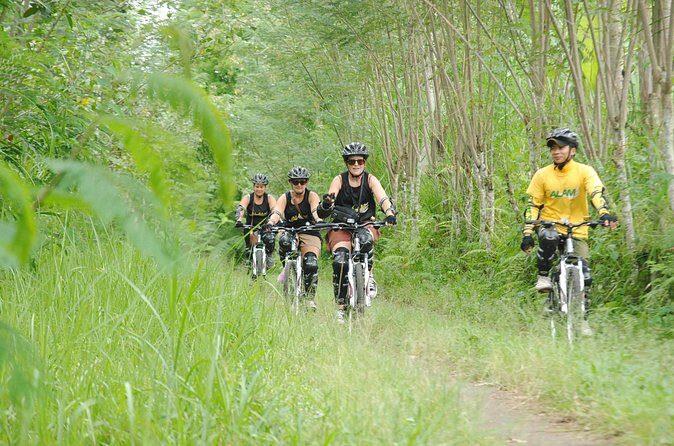
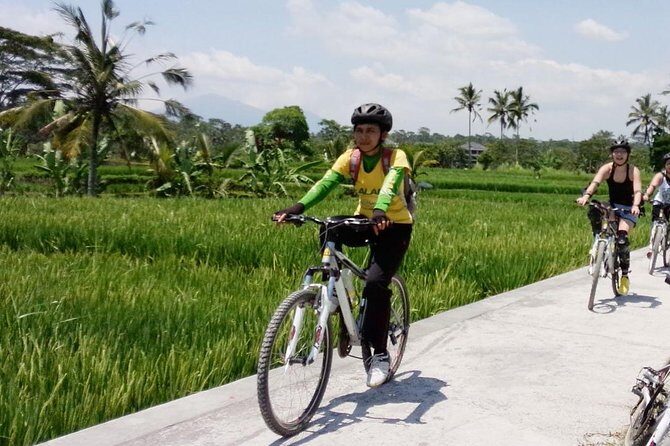
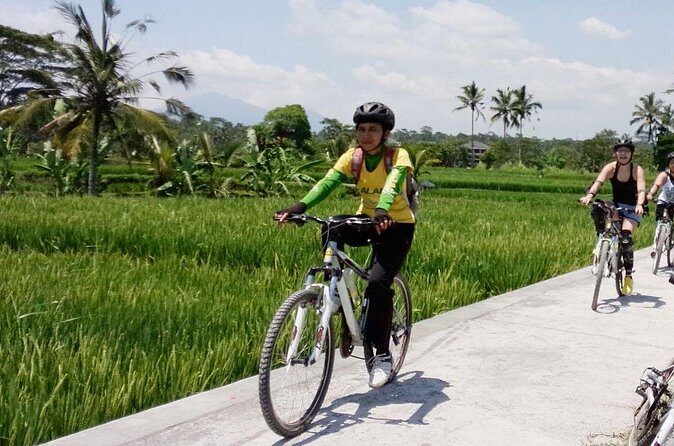
This is the heart of the day. You cycle downhill past rice fields, Hindu temples, and stretches that feel like Bali’s green spine—rainforest edges and valley views.
Downhill is a gift on a full-day tour because it turns the ride into something you can enjoy with your eyes up. You still feel movement and wind, but you’re not constantly fighting the bike. The result is that you can actually look at what’s around you instead of only focusing on your effort level.
The route is also described as passing through rice fields and Hindu temples, which means you’re not just biking through nature—you’re moving through places with daily life and local meaning. The guide helps connect what you’re seeing to the communities you’ll visit later.
Bayung Gede Kintamani, Taro, and Keliki: village culture in a real-world setting
The tour’s standout value is that the bike ride is only half the story. The other half is the time in villages—specifically Bayung Gede Kintamani, Taro, and Keliki—where you learn about traditional customs practiced there.
This is the part that makes the tour feel more grounded than a scenic ride. Instead of treating the villages like photo backdrops, the plan is built around learning how people live and why certain customs matter.
In practical terms, that means your day includes human-scale moments: walking through village areas, listening to explanations from your guide, and observing daily patterns that don’t revolve around tourists. Even if you’re short on language skills, you’ll usually be able to catch the bigger picture through the guide’s context.
One consideration: village time can mean uneven walking surfaces and short stops where you shift between biking and on-foot segments. The tour asks for moderate fitness, so think of this as active travel, not a sit-and-snap day.
Coffee and cocoa country: seeing how the countryside is used
Along the ride, you’ll pass areas linked to coffee and cocoa plantations. That matters because it gives you a sense of how the land is worked, not just how it looks.
You’ll also spend time moving through river valleys and countryside that mixes cultivated areas with natural cover. That variety is one of the reasons this tour works well for first-timers: it shows multiple sides of rural Bali without forcing you to book separate experiences.
For you, it’s a smooth way to understand the rhythm of the landscape—how fields, vegetation, and waterways shape daily life. It also makes the downhill segments feel more meaningful, because you’re not just gliding past greenery; you’re moving through systems.
Lunch on tour: refuel without dragging the day out
Lunch is included, and it’s a key piece of why a full-day tour like this can still feel manageable. You’re riding for hours, then spending time in villages, so you need a break that’s already planned.
The lunch is described as Balinese specialties, which usually means you’ll get a meal with local flavors instead of generic cafe food. Since food and drinks are not listed as included beyond lunch, you should plan for the ride by bringing extra water if you need it, or buying what’s available at stops (the tour doesn’t promise drinks).
A good strategy: treat lunch as your reset point. Eat steadily, then keep energy for the final part of the day so you don’t feel drained during the return.
Bike + helmet + guide: what’s included, what’s on you
Included items make this tour easier than a DIY bike day. You get a bike and helmet, a cycling guide, lunch, and hotel pickup/drop-off (select hotels and resort areas only).
What’s not included is souvenir photos and food/drinks beyond what’s specified (with lunch included). So while the essentials are handled, you’ll want to budget for extras if you care about keepsakes.
Also, the tour requires that you know how to ride a bicycle. That doesn’t mean you need to be a racer, but it does mean you should be comfortable staying balanced while the route includes off-road tracks.
If you’re choosing between this tour and a more casual walking-only day, this one is better for you if you enjoy cycling and want motion plus stops.
Price and value: why $60 can make sense here
At $60 per person, this Bali cycling tour is positioned as a budget-friendly full-day experience rather than a luxury day. The value comes from the bundle: pickup/drop-off (from select areas), a bike and helmet, lunch, and a guide, plus the time in three villages.
You can think of the cost as paying for logistics and guidance. Without a setup like this, reaching Bayung Gede Kintamani early, organizing transportation, and arranging village learning would cost you time and money. Here, the structure is built in.
The only “value risk” is the long day in the vehicle. If you strongly dislike being in transit, that may be harder to accept at any price point. But if you’re fine treating the ride as the main event and using the van time to relax and recharge, $60 can feel like a fair deal.
Who should book this Bali Mountains and Villages cycling tour
This experience is a great fit if you:
- want a mostly downhill day with active sightseeing
- enjoy rural scenery like rice fields, plantations, and temple surroundings
- want village context with Bayung Gede Kintamani, Taro, and Keliki included
- like small-group travel with guide attention
It may not be your best match if:
- you hate long driving days and want minimal time in a van
- you’re looking for a purely downhill, zero-walking experience (there are village elements that require getting on and off the bike)
- you don’t feel comfortable riding on slightly rougher tracks
Also, the tour lists a maximum size for the activity and describes it as intimate with a limited small group. That usually works well for comfort and questions, so it’s a good option when you don’t want to feel like you’re in a parade.
Quick tips to make your day smoother
- Bring a way to stay hydrated since drinks aren’t listed as included beyond lunch.
- Wear comfortable cycling shoes and clothes you don’t mind getting a little dusty if you hit off-road sections.
- Arrive with basic bike comfort; the tour expects you already know how to ride.
- Consider keeping your phone accessible for the mobile ticket, and bring a simple rain layer just in case the rainforest-adjacent route feels damp.
Should you book it? My straight answer
Book it if you want a fun, guided downhill cycling day that also spends real time in rural Bali villages like Bayung Gede Kintamani, Taro, and Keliki. The included bike/helmet, lunch, and pickup make it easier than DIY, and the small-group feel helps you actually connect with the places you pass.
Skip or think twice if you get cabin-tired easily. The biggest drawback is the long drive time to and from the highlands, and that will shape how you feel by late afternoon.
If you can handle a full day of transit plus cycling, this tour offers a good blend of motion and culture at a price that’s hard to beat.
FAQ
What time does the Bali Mountains and Villages cycling tour start?
The start time is 7:30 am.
How long is the tour?
The duration is about 6 hours.
Is hotel pickup and drop-off included?
Yes, hotel pickup and drop-off are included by air-conditioned minivan, but only for select hotels/resort areas.
Are the bike and helmet provided?
Yes. You’ll get a bike and helmet as part of the tour.
Is lunch included?
Yes. Lunch is included, described as Balinese specialties. Food and drinks are not included unless specified.
Can children join, and what’s the minimum age?
Children must be accompanied by an adult. The child rate applies only when sharing with 2 paying adults, and the minimum child age is 10.
More Tours



More Tour Reviews


More Kuta Tours
Kuta Tours: how the alternatives stack up
 ★ 5.0
★ 5.0Nusa Penida day trip: boat, 4 snorkeling, Manta rays & Land tour


The lists this tour appears in