
Review · Bali Waterfalls Tours
Best of Ubud Tour: Monkey Forest, Rice Terraces & Waterfall
Monkeys, temples, and rice terraces in one day. This full-day Ubud tour strings together the big hits: Sacred Monkey Forest jungle temples, classic Tegalalang rice terraces, the holy-water ritual at Tirta Empul, and a jungle waterfall stop. You start around 9:30am and the pace is paced enough to enjoy the sights instead of just sprinting between them.
I like that you’re not doing this solo. You get private transport with an English-speaking local guide, plus bottled water and a sarong for the temple stops. I also like how the day mixes nature and culture in a real sequence: monkeys and jungle first, then the rice irrigation system, then water purification, and finally a place to cool off.
One thing to plan for: temple and attraction entry fees aren’t included, and the stops involve walking and time outdoors. If you’re sensitive to crowds at Monkey Forest, or you’re not a fan of humid conditions, it helps to go in with your expectations set.
In This Review
- Key things that make this Ubud day tour work
- How the day works: 9:30am start, private car, and a sensible 8–10 hour rhythm
- Monkey Forest Sanctuary: temple bridges and the reality of jungle monkeys
- Tegalalang Rice Terraces: looking past the postcard
- Tirta Empul Temple: holy spring water and the optional Melukat ritual
- Ulu Petanu Waterfall: a jungle cool-down you can actually enjoy
- Optional add-ons: coffee plantation, swing, and artisan villages
- Price and value: what $25 gets you (and what it doesn’t)
- What to bring and how to dress so the day goes smoothly
- Who should book this Best of Ubud Highlights Tour
- Should you book it?
- FAQ
- Do I get hotel pickup and drop-off?
- Is the tour price fully all-in?
- Can I take part in the water purification ritual at Tirta Empul?
- What’s the dress code for the temple stops?
- Are women allowed to enter the sacred grounds at Tirta Empul during menstruation?
- How long is the tour and when does it start?
Key things that make this Ubud day tour work
- Private pickup and drop-off from Ubud (Sanur pickup may cost extra), so you’re not stuck on a shared van circuit
- English-speaking local guide who can explain what you’re looking at, not just point and drive
- Sarong included for temple visits, plus clear temple dress guidance (shoulders and knees covered)
- Tirta Empul water ritual context, including the option to take part in Melukat
- Real viewpoint time at Tegalalang rice terraces, not just a quick photo stop
- A short waterfall cooldown at Ulu Petanu (about 40 minutes in the area)
How the day works: 9:30am start, private car, and a sensible 8–10 hour rhythm
This tour is built for first-time Ubud visitors who want the highlights without overplanning. You begin at 9:30am, and the full day runs about 8 to 10 hours, depending on traffic and your pacing.
You’re traveling by private transportation, meaning you and your group stay together, and you’re not juggling other people’s hotel locations. That also matters for timing at the temples—if one stop is busier than expected, your guide can keep the rest of your day from feeling rushed.
Even better, it includes parking fees and bottled water. That sounds basic, but in Bali heat it adds up fast. I’d still bring sunscreen and keep a hat handy, since most of the day is outdoors.
Monkey Forest Sanctuary: temple bridges and the reality of jungle monkeys
Sacred Monkey Forest Sanctuary is one of those places where “nature” and “temple” are basically the same thing. You’ll walk through a leafy sanctuary with jungle paths, and you’ll see the classic features like the dragon bridge, the temple complex, and the canyon-like river area.
The key experience here is observing how people live alongside the monkeys. The setting is beautiful, but you’ll want to be practical: keep your phone and snacks secure, avoid sudden movements, and follow your guide’s advice on how close to get. These monkeys can be bold, and the best way to enjoy it is calm attention, not surprise.
How long is enough? The plan gives about 1 hour at the sanctuary. For many people, that’s the sweet spot: long enough to walk the main loop and take photos, but short enough to avoid turning into a sweaty shuffle.
One consideration: the sanctuary is popular, so expect crowds during peak hours. If you’re traveling with kids, or if you’d rather skip the monkey behavior factor, you might want to keep your expectations grounded and focus on the temple details and jungle atmosphere.
Tegalalang Rice Terraces: looking past the postcard
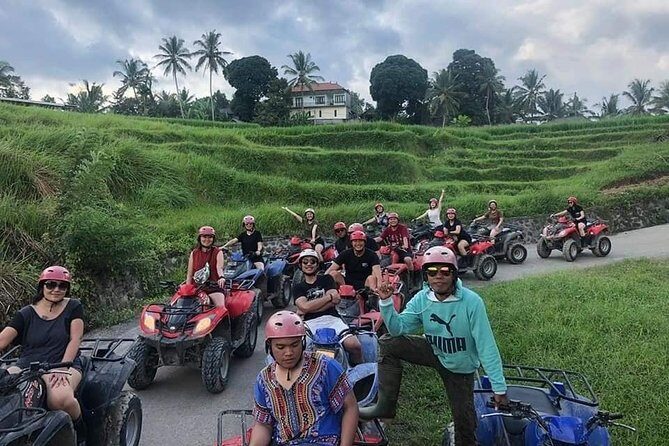
Then you head to Tegalalang Rice Terraces, one of Bali’s best-known terrace views. The big draw is the view over rice fields and the layers of greenery stacked down the valley.
What makes this stop more than a photo break is the explanation of the traditional irrigation system called subak. In plain terms, this is a community-based way of managing water for growing rice. When you understand that, you start seeing more than “pretty green steps.” You notice how the slopes and water channels fit together, and why the terraces look the way they do.
Time-wise, you get about 1 hour here. That’s enough to hit a few viewpoints and walk around without feeling trapped. Still, bring comfy shoes. The terrace paths can be uneven, and you don’t want to be fighting your footwear while you’re trying to take in the views.
Admission isn’t included, so plan to pay entry on-site. I’d budget a little extra cash so you’re not scrambling right when you arrive.
Tirta Empul Temple: holy spring water and the optional Melukat ritual

Next up is Tirta Empul Temple, a national cultural heritage site with a long background dating back to around 960 AD (Waramadewa Dynasty period). The name basically points you to the point: it’s connected to a holy water spring.
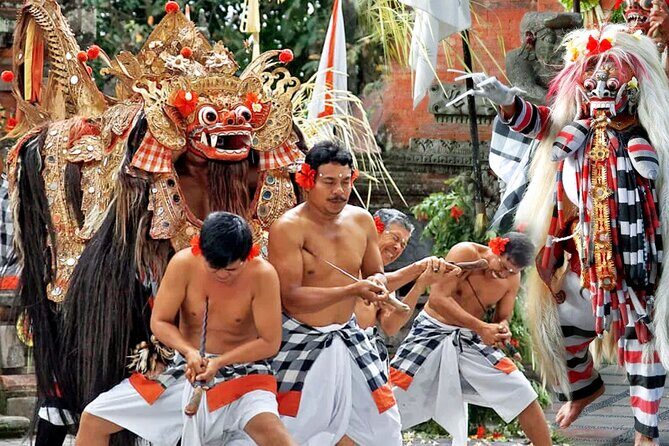
This is where the day shifts from scenery to spirituality. You’ll spend about 1 hour at the temple complex, with your guide helping you understand the meaning behind the Balinese purification ritual linked to the holy water.
There’s also an optional participation element: Melukat. If you’re curious, this is the part where you learn what the ritual is for and whether it feels like the right choice for you. If you’re not sure, you can also simply observe respectfully—temple spaces are about listening as much as looking.
Dress code matters here. The tour provides a sarong, but you still need shoulders and knees covered. If you forget, you may be turned away from certain sacred areas.
Important rule to know: women can’t enter the sacred grounds of the Pura during their menstrual period. If that applies to you, you’ll want to plan your day accordingly so you don’t lose time at the gate.
Also, bring modesty and patience. Holy sites have their own flow. The best experience comes when you move with the space, not against it.
Ulu Petanu Waterfall: a jungle cool-down you can actually enjoy
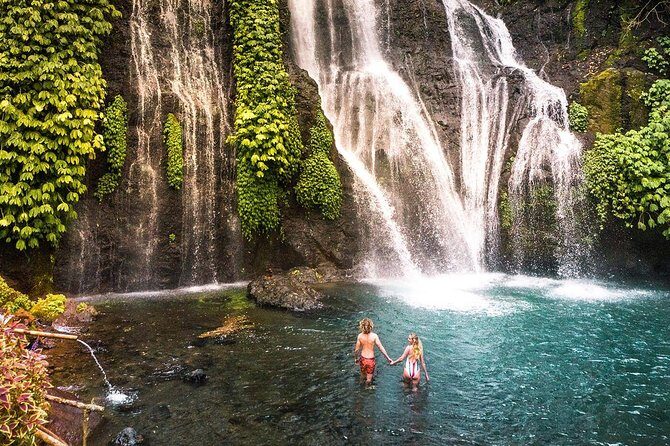
After the temple stops, the tour slows into something more physical: Ulu Petanu Waterfall. This is described as a waterfall about 15 meters high, and it’s roughly 30 minutes north of Ubud.
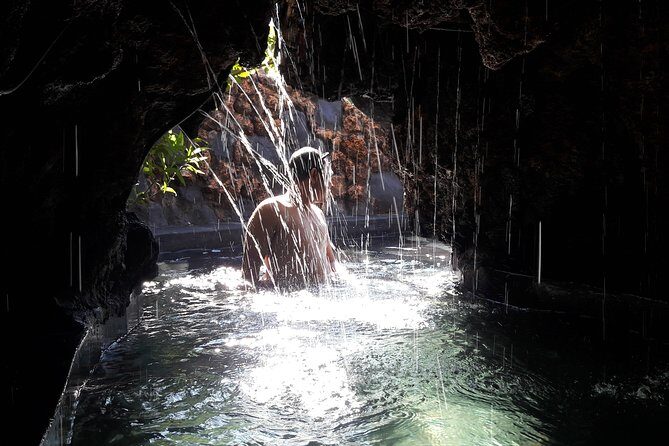
You’ll have about 40 minutes in the waterfall area. That’s usually enough for the main viewpoint, a short walk, and if conditions allow, some time near the plunge area. The plan notes you can go down toward the pebbly base and enjoy a dip in the plunge pool.
This is a great contrast stop. Tirta Empul is about water as ritual; the waterfall is water as relief. If the day has felt hot and long, this is the moment you feel the weather shift.
Entry tickets aren’t included, so remember that’s another on-site payment. And bring what helps you enjoy the water safely: a towel and slippers are listed for a reason. Comfortable shoes matter too, since you’ll likely walk on uneven ground.
Optional add-ons: coffee plantation, swing, and artisan villages
The tour gives you flexibility with added experiences. Depending on what you choose, you may include a coffee plantation, a swing stop, or an artisan village.
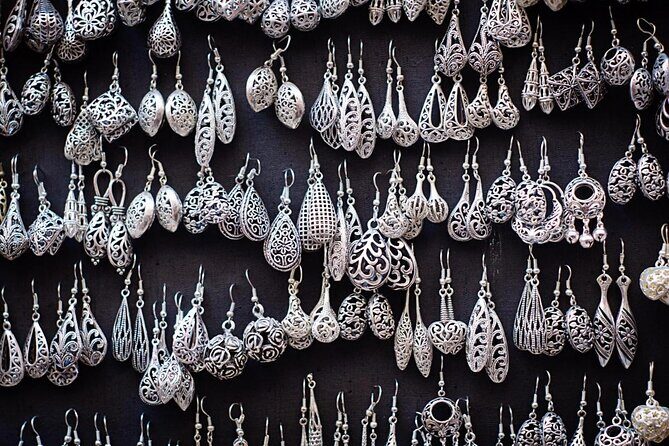
One artisan option shown in the route is Celuk Village, known for craftsmanship. Your stop there is short (around 30 minutes), and the admission ticket is listed as free. That makes it a low-stress add-on if you want a quick taste of the creative side without losing your main highlights.
Coffee and swing are also common add-ons for this style of Ubud day. If your priority is photos and local flavor, these can be worth it. If your priority is pure culture and slower walking, you may want to treat add-ons as optional extras instead of must-do items.
My practical advice: pick only one extra “activity” if you’re also doing Monkey Forest + terraces + Tirta Empul + waterfall. Packing too much usually makes the day feel like a checklist. One nice bonus is the sweet spot.
Price and value: what $25 gets you (and what it doesn’t)

At $25 per person, this is priced like a budget-friendly way to cover a full day of major Ubud sights. The value isn’t just the places—it’s the included logistics.
You’re getting private transportation with hotel pickup and drop-off, an English-speaking local guide, bottled water, sarong for temple visits, and parking fees. Those items add up, especially when you consider that you’re also covering several separated destinations in one day.
What’s not included is also clear: personal expenses and gratuities, plus entry tickets for the attractions listed in the plan (Monkey Forest, rice terraces, Tirta Empul, and the waterfall). So the final total depends on how you handle admissions.
For most people, this still works out as good value because the heavy lift—driving, routing, and guide interpretation—is already handled. Just don’t assume the $25 equals a fully all-in day. Keep a small cash buffer for on-site entry and any snacks you want outside the optional lunch.
There’s also an option for an optional local lunch stop. If you get offered lunch, treat it as convenience. If you’d rather control your meal plan, you can always skip it, as long as you’re okay with fewer choices later in the day.
What to bring and how to dress so the day goes smoothly
This is an outdoor-heavy day with temple rules and a possible water moment. Here’s what the tour asks you to bring, and what I’d treat as non-negotiable.
You’ll want:
- Cash (for on-site entry fees and small purchases)
- Comfortable attire with shoulders and knees covered for temples
- Sunscreen and a hat
- Camera or smartphone (good lighting helps at terraces)
- Towel and slippers if you plan to get near the plunge area
- Extra clothes if you swim or get splashed
Shoes matter. Wear walking shoes you can handle on uneven paths, especially at the terraces and around the waterfall approach.
Who should book this Best of Ubud Highlights Tour
This tour is best for you if:
- You’re visiting Ubud for the first time and want the main highlights in one day
- You like a guide who explains the meaning behind what you’re seeing, not just the timing
- You want a balanced day: jungle temples + irrigation views + a purification ritual + a cooling waterfall
It might be less ideal if:
- You hate crowds and you’re very monkey-sensitive
- You want a relaxed, slow day with long downtime between stops
- You’re looking for everything to be fully included price-wise (entry fees are separate)
If you’re a couple, a small group of friends, or solo traveler who wants easy coordination without going full DIY, this private format is a strong fit.
Should you book it?
If your goal is a well-paced “Ubud highlights” day with private pickup and a guide who can connect the dots between jungle, water, and culture, I think it’s a smart buy. The $25 rate becomes compelling because you’re not paying separately for transport, interpretation, and the temple prep item (sarong).
Just go in ready for two realities: you’ll pay entry tickets on-site, and it’s an active day in humid outdoor conditions. If that doesn’t bother you, this is one of the easier ways to get a meaningful overview of Ubud without spending your day in transit planning.
FAQ
Do I get hotel pickup and drop-off?
Yes. Pickup and drop-off are included. Pickup is available from Ubud, and pickup from Sanur may involve an additional charge.
Is the tour price fully all-in?
No. The price includes private transportation, an English-speaking local guide, bottled water, sarong for temple visits, parking fees, and an optional lunch stop. Entry tickets for the sights are not included.
Can I take part in the water purification ritual at Tirta Empul?
Yes, Melukat is listed as optional. You’ll also be given context for the ritual and the holy water spring during your visit.
What’s the dress code for the temple stops?
You should dress modestly with shoulders and knees covered. A sarong is provided for the temple visit.
Are women allowed to enter the sacred grounds at Tirta Empul during menstruation?
No. Entry to the sacred grounds of the Pura is not allowed for women during their menstrual period.
How long is the tour and when does it start?
The tour runs about 8 to 10 hours and starts around 9:30am.
More Bali Waterfalls Tours



More Rice Terrace Tours


More Ubud Tours




Bali Waterfalls Tours: how the alternatives stack up
 ★ 5.0
★ 5.0Best of Bali Waterfalls: Tibumana, Tukad Cepung and Tegenungan

The lists this tour appears in