
Review · Bali Waterfalls Tours
Gates of Heaven Tour: Tirta Gangga – Kanto Lampo Waterfall
Mountaintop heaven shots take effort, not luck. This tour is all about the Gates of Heaven photo moment plus easy hotel pickup and one-guide-one-car attention for the day. I also like the way it stacks the big visual stops—Tirta Gangga water gardens, a Candidasa lotus spot, then Kanto Lampo—for a full camera day. The main catch: the value depends on what you actually upgrade for, since some people reported mismatches around entrance fees, lunch, bottled water, and Wi‑Fi.
You’ll cover a lot of ground between Ubud and east Bali, with a total day running about 8 to 12 hours. The itinerary feels photo-focused, including a selfie line at Lempuyang Temple and a quick lotus lagoon moment. If you’re expecting a fully stocked, worry-free package, you’ll want to double-check inclusions before you go.
Weather matters here. Gates of Heaven is famous for misty Mt. Agung views, but the tour itself requires good weather to really deliver, and cloudy conditions can dull the payoff.
In This Review
- Key things to know before you go
- The Gates of Heaven gateway: why the views are the whole point
- How the selfie line works (and how to get better photos with less stress)
- Tirta Gangga water gardens: palace romance without the museum vibe
- Candidasa lotus lagoon: a quick photo stop you should plan for
- Kanto Lampo waterfall: the payoff stop with swim potential
- Pricing and value: does $35 make sense for a private day?
- Transfers, timing, and comfort: what the long day feels like
- Who should book this tour (and who might not love it)
- Should you book the Gates of Heaven Tour to Tirta Gangga and Kanto Lampo?
- FAQ
- How long is the tour?
- Where does pickup happen?
- Is this a private tour?
- What’s included in the car and guide service?
- Are entrance tickets included?
- Is lunch included?
- Can you swim at Kanto Lampo?
- What if the weather is bad?
Key things to know before you go
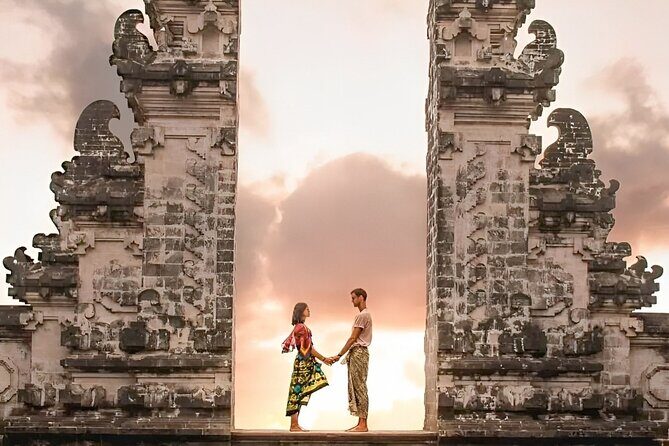
- Lempuyang Temple photo line is part of the experience: expect waiting for your shot at the main gateway view.
- You ride in an air-conditioned private car with an English-speaking driver-guide and bottled water listed as included.
- Tirta Gangga is a palace-and-water-garden layout from 1946: plan to wander the stone pathways and basins.
- The lotus lagoon stop can be short and simple: you’ll want to be ready to move when you get there.
- Kanto Lampo is the refresh break: the plan includes time at the waterfall, with a chance to swim.
- Tickets and lunch can be confusing: tickets may be optional or upgraded, so confirm what’s covered in your booking.
The Gates of Heaven gateway: why the views are the whole point
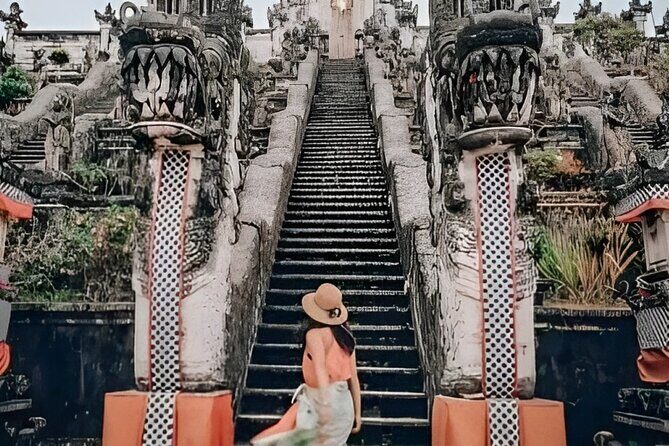
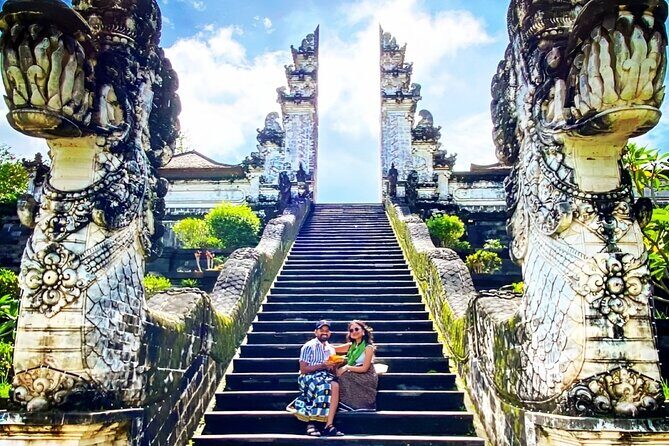
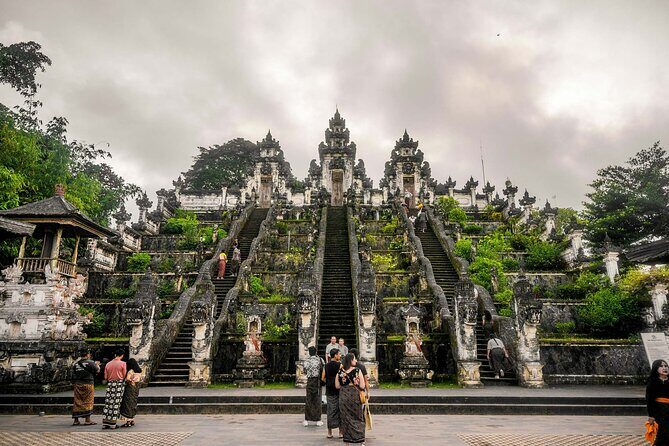
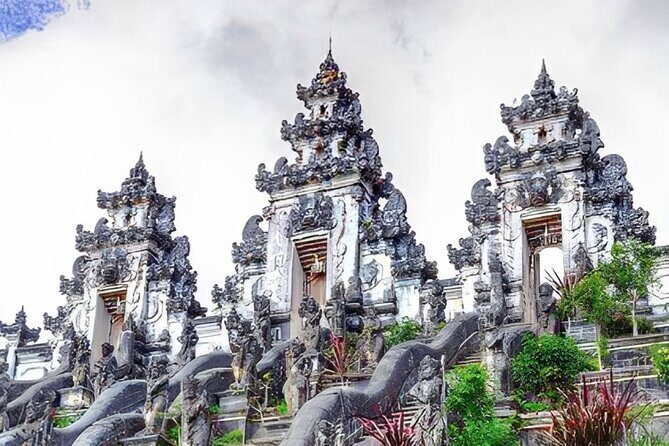
Lempuyang Temple is one of Bali’s most recognizable temple scenes, mainly because of the famous mountaintop gateway people call the Gates of Heaven. The layout is designed for that big reveal: you climb up, you get the wider view, and then you line up for the signature framed picture with the Mt. Agung backdrop.
This tour’s value is that it doesn’t leave you to figure out the day on your own. You start with pickup and a straightforward route to the temple area, then you get time on-site to climb to the upper points and handle the selfie line without chaos.
Practical note: the temple experience is not a quick stroll. You’ll be walking stairs, and you’ll want to bring your best “steady pace” energy rather than hoping for a casual photo loop. If you’re not comfortable with uneven steps and lots of up-and-down, plan to go slow, take breaks, and accept that you’re trading comfort for iconic scenery.
And here’s the key reality: the temple’s magic depends on weather. The tour is described as requiring good conditions, because the whole visual concept is mist and mountain views. When the sky is clear, the gateway picture hits harder. When it’s cloudy, you may still get a great temple scene, but the Mt. Agung payoff can be weaker.
How the selfie line works (and how to get better photos with less stress)
This is a tour built around one thing: the shot. At Lempuyang, you’ll join the photo setup line that people use to get their turn in front of the gateway frame.
You can make this part smoother by thinking like a photographer for 15 minutes, not like a tourist who just wants to be done. Show up ready: phone charged, camera settings sorted, and your outfit/hat situation decided before you reach the busiest spot. Then use your time in line efficiently—when you finally step into position, don’t start hunting for the right angle or rereading messages.
I also recommend you treat the line as a timed performance. If you’re trying to get multiple versions (wide shot, closer shot, different poses), do it in a planned sequence, not in a panic spiral. A private driver-guide helps, because they can guide you to where you need to be and how to keep your momentum.
One more thing: the tour format is private, so you’re not juggling the movement of a big bus group. That matters. You can move through the space more flexibly, and you’re less likely to be stuck waiting on strangers while your best light passes.
Tirta Gangga water gardens: palace romance without the museum vibe
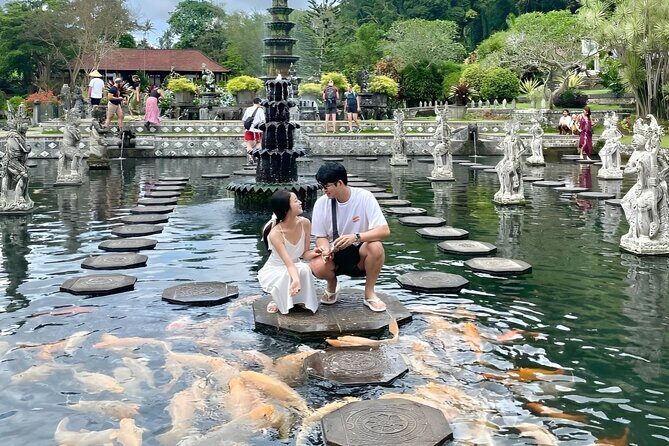
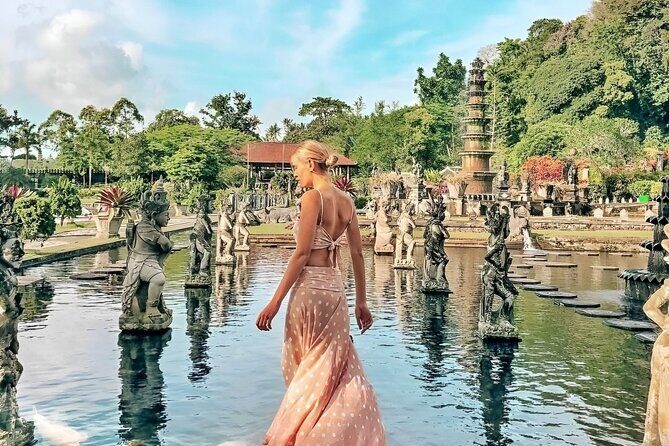
After the mountaintop temple, the day shifts to Tirta Gangga, a former palace and water garden established in 1946 by the former king of Karangasem. This is where the tour turns from “stand and pose” into “wander and soak in details.”
I like Tirta Gangga because it’s visually satisfying in a calmer way than temple steps. You get multiple angles of basins, stone channels, and garden scenes, so you can take your time without feeling like you’re on a strict schedule every ten seconds. The tour allots a good block of time here—around two hours—which is enough to stroll, reframe photos, and still not feel rushed.
There’s also a practical benefit: you’re moving from higher-altitude, stair-heavy time into something flatter. That gives your legs a moment to reset. If you’re traveling with someone who cares less about temples but still wants photos, Tirta Gangga tends to please both sides—pretty scenery, easy walking, and lots of “walk-by-to-get-another-shot” opportunities.
A small caution: this is still a popular photo and sightseeing stop. Bring patience. If you hit it during a busy window, expect people to be moving through your frame. The best way to handle it is simple: take your first shot quickly, then go deeper into the complex for less crowded views.
Candidasa lotus lagoon: a quick photo stop you should plan for
The lotus lagoon stop is designed for one thing: fast, bright photos. You’ll hit a lotus spot around Candidasa with about one hour to make it count.
Here’s the part you should calibrate expectations on. Even though the stop is included in the flow, it’s not described as a big, long-form garden experience with a full wander. The time is tight, and the approach can feel like a quick roadside-style stop for picture time. So arrive ready to shoot quickly, not expecting a slow scenic walk the whole hour.
To make this kind of stop work for you, I’d treat it like a mini mission:
- Pick your background options fast.
- Get the main photo first.
- Then use the remaining time to try one alternate angle or pose.
If you’re the type who loves soft detail shots, lotus scenes can deliver. If you want a deeper cultural stop, this one may feel more like a photogenic waypoint than a must-see attraction on its own.
Also, keep an eye on the timing of the overall day. After Lempuyang and before Kanto Lampo, this lotus stop is partly a reset and partly a photo hit. If you run low on energy, do the photos efficiently and save your legs for the waterfall part.
Kanto Lampo waterfall: the payoff stop with swim potential
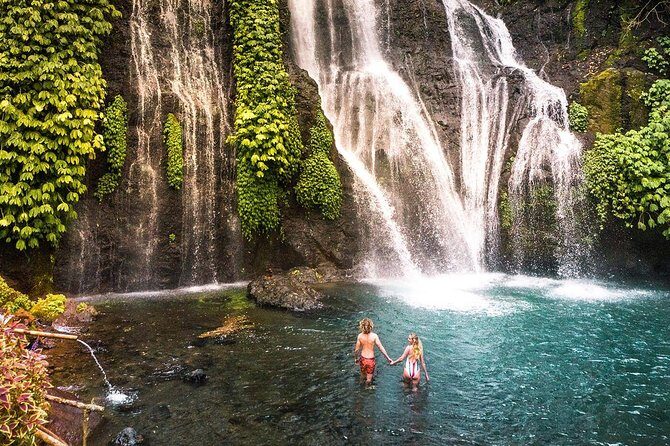
Kanto Lampo is where the itinerary goes from pretty to refreshing. The plan calls it a hidden-feeling waterfall experience and includes time at the waterfall with ticket included, plus an opportunity for swimming after the trip.
Waterfall stops are never totally predictable, because conditions can change. But the basic value is clear: you break up the day with motion, cool air, and the chance to get wet. That alone can make the long 8–12 hour route feel worth it.
Practical advice: bring footwear that can handle wet ground, and plan for getting your clothes/gear damp if you swim or splash around. You’ll have a short window, so don’t wait until you’re there to realize your shoes are wrong.
Photos here can be dramatic, but they also come with reality—mist, uneven footing, and a lot of people aiming for the same angles. I like waterfalls with time to move slightly and find your own viewpoint rather than treating it as one single photo perch. The tour gives about one hour at this stop, which is enough to enjoy the water and still keep the day moving.
Pricing and value: does $35 make sense for a private day?

At $35 per person, this tour can look like a steal—especially because you’re paying for a private air-conditioned car, an English-speaking driver-guide, and a full-day route across multiple major stops. The price also benefits from group discounts and mobile ticket convenience.
But here’s the honest value check: some inclusions are optional, and some people felt the all-inclusive language didn’t match their expectations. In particular, there have been complaints about missing items like bottled water, lunch not being included when it was expected, and confusion around entrance fees and Wi‑Fi.
So I’d treat $35 as a starting point, not a guarantee that everything is automatically covered.
What to confirm before you book:
- Whether entrance tickets are included or are part of an upgrade option.
- Whether lunch is included in your specific option (it’s listed as optional).
- Whether bottled water and Wi‑Fi are actually expected during your ride.
- Whether any “souvenir photos” are an extra purchase at the sites.
One more point: the tour format is private, meaning you should get undivided attention rather than a driver juggling multiple stops for different groups. That’s where the money should feel justified—when your guide is helping you get where you need to be and keeping the day flowing.
If you’re okay with a photo-first itinerary and you verify what’s covered, the price can feel fair. If you want a fully packed meal-and-tickets bundle with zero questions, you may want to compare upgrade options carefully.
Transfers, timing, and comfort: what the long day feels like
The tour is built for convenience, with pickup offered from hotels in Ubud and much of south Bali and a private comfortable air-conditioned vehicle. That matters on Bali days like this, where distances add up and traffic can shift your schedule.
You should plan for a full day: 8 to 12 hours is a real commitment. You’ll be traveling, waiting a bit at photo points, walking stairs at Lempuyang, and then moving on to Tirta Gangga, the lotus lagoon, and finally Kanto Lampo.
This kind of schedule works best when you pack smart:
- Have your essentials in a small day bag (water, sunscreen, a towel or quick dry item if you plan to swim).
- Keep your charger ready—photo days drain batteries fast.
- Be flexible with weather. Even if the itinerary is solid, visibility can change the overall impact.
On the comfort side, the tour lists free Wi‑Fi in the car, plus a bottle of mineral water and insurance. Yet some feedback suggested those items didn’t show up as expected. So I’d recommend you don’t plan on Wi‑Fi as your “must work” plan for messaging or uploading. Bring offline maps or just save your sharing for later.
Also, remember: this is a private tour, so the driver-guide can help with route flow and getting you to the right spots. That’s one reason private beats self-drive on this type of photo circuit.
Who should book this tour (and who might not love it)
I’d point this tour toward people who want one efficient Bali day focused on iconic visuals. If you’re a photographer or you just love getting those dramatic “temple meets mountain” shots, Lempuyang is the headline, and everything after it supports that theme.
You’ll likely enjoy it if you:
- Want a private car with hotel pickup.
- Are okay with joining a photo line and waiting for your turn.
- Prefer a smooth day with guided help between stops.
You might not love it if you:
- Expect lunch and ticket costs to be automatically included for every option.
- Want long, slow cultural exploration at every stop.
- Dislike short photo stops that feel more like quick photo ops.
If you’re deciding between types of Bali tours, think of this one as a photo route with a driver, not a deep dive into fewer places.
Should you book the Gates of Heaven Tour to Tirta Gangga and Kanto Lampo?
Book it if your priority is the Gates of Heaven photo moment plus a full visual circuit in one day, and you’re willing to confirm exactly what’s included for tickets and optional add-ons. The best part of this experience is the combination of private convenience and multiple scenic “hit points,” with enough time at Tirta Gangga and Kanto Lampo to actually enjoy them.
Skip—or at least re-check the option—if you strongly want a guaranteed all-inclusive setup with lunch, entrances, water, and working Wi‑Fi handled without any questions. Some people have felt that the details didn’t match the expectations tied to the wording.
If your schedule is flexible, also consider the weather requirement. This tour is at its best when the sky and visibility cooperate, since the whole Gates of Heaven idea relies on those mountain views.
FAQ
How long is the tour?
The tour runs about 8 to 12 hours.
Where does pickup happen?
Pickup is offered from hotels in Ubud and much of south Bali.
Is this a private tour?
Yes. It’s private, so only your group participates.
What’s included in the car and guide service?
You get a private comfortable air-conditioned car, an English-speaking driver as your guide, bottle mineral water, insurance, and free Wi‑Fi is listed.
Are entrance tickets included?
Entrance ticket inclusion is optional, and there’s an upgrade option to include tickets. Kanto Lampo’s ticket is included in the plan, and other stops are listed as admission ticket free in the schedule.
Is lunch included?
Lunch is optional.
Can you swim at Kanto Lampo?
The plan includes time at Kanto Lampo and mentions swimming after the trip.
What if the weather is bad?
The experience requires good weather. If it’s canceled due to poor weather, you’ll be offered a different date or a full refund.
If you tell me your travel dates (and whether you’re staying in Ubud or further south), I can help you think through what to prioritize in your day and what to confirm in the booking.
More Tour Reviews



More Bali Waterfalls Tours


More Ubud Tours
Bali Waterfalls Tours: how the alternatives stack up
 ★ 5.0
★ 5.0Best of Bali Waterfalls: Tibumana, Tukad Cepung and Tegenungan

The lists this tour appears in