
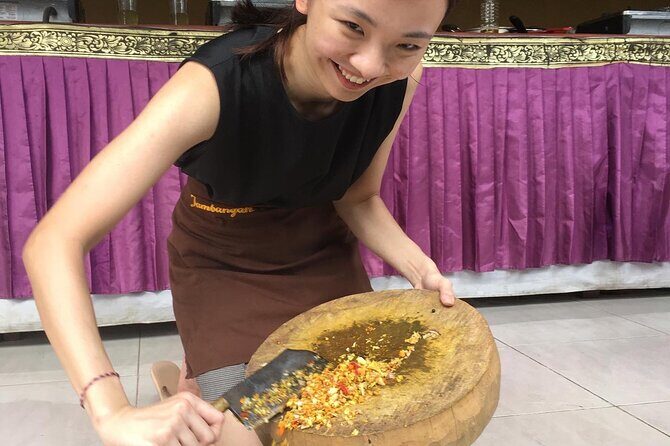
Jambangan Bali Cooking Class
If you like food with a story, this fits. I like the market stop where you pick ingredients instead of staring at a menu, and I love the family-home kitchen angle—open, relaxed, and very “this is how we actually eat.” One thing to consider: the timing matters, and a dinner slot can sometimes mean the market is already closed, so the experience may shift.
You get a full, hands-on session in English with Balinese chefs, and the day is designed for real culture as much as cooking. Expect about 5 hours, a small group (up to 15), and a meal that you cook and then eat together—plus extra home traditions like coconut oil and simple offerings.
In This Review
- Key Highlights You’ll Feel in Your Day
- Start in Tegallalang’s Market and Build Your Meal from Scratch
- Choosing Lunch vs Dinner: How Timing Shapes the Experience
- Cooking in an Open Kitchen at a Balinese Family Home
- What You Actually Learn (Not Just What You Watch)
- Coconut Oil Processing, Daily Offerings, and Rindik Music
- Small Group Size Means More Time with the Chefs
- Price and Value: Why $34 Can Feel Like a Bargain
- Logistics That Matter: Mobile Ticket, Meeting Point, Weather
- Who This Cooking Class Is Best For
- Should You Book Jambangan Bali Cooking Class?
- FAQ
- How long is the Jambangan Bali Cooking Class?
- Where does the class start?
- Do you choose lunch or dinner?
- What’s included in the price?
- Is alcohol included?
- Is the class taught in English?
- How many people are in a group?
- Is a mobile ticket used?
- What happens if weather is poor?
- Can I cancel for free?
Key Highlights You’ll Feel in Your Day

- Market shopping you actually do: choose herbs, spices, meat, and vegetables
- A real home, not a restaurant set: cooking happens in an open kitchen setting
- Lunch or dinner timing: you choose your class slot, and the pace changes
- Balinese traditions built into the lesson: offerings, daily household practice, coconut oil
- Music and hands-on learning: rindik bamboo music shows up as part of the visit
Start in Tegallalang’s Market and Build Your Meal from Scratch
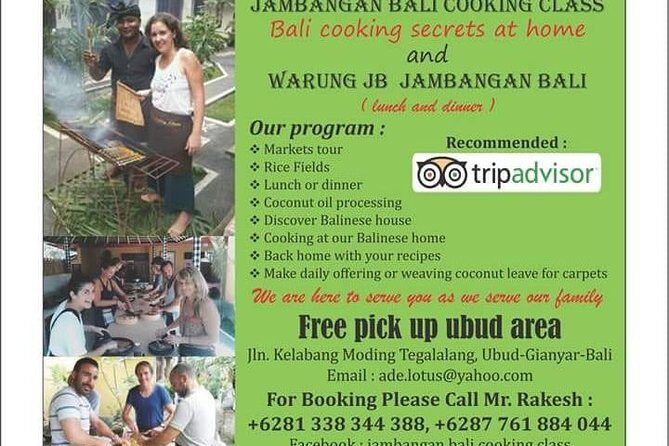
This class begins with a morning start at a traditional market in the Tegallalang area. You’re not just watching someone else work—you’re selecting fresh herbs and spices, plus your choice of meat and vegetables. If you’ve eaten Balinese food before, you’ll notice the big difference: many flavors come from what’s used and how fresh it is.
After you shop, you head out to see rice-farm life and daily routines tied to the area’s agriculture. Even if you’re not a “farm tour” person, it gives context for why Balinese cooking tastes the way it does—rice isn’t a side idea here. It’s a backbone of the food system.
Choosing Lunch vs Dinner: How Timing Shapes the Experience
The class is offered as either a lunch or a dinner option, and the schedule affects what you can see. A morning class is the best bet if you want the full market experience, including the early energy of shopping and ingredient picking.
If you book an evening class, plan for a more flexible day. One experience feedback noted that when the market wasn’t accessible because it was closed, the group did an alternate plantation stop and tasting instead. Translation: dinner is still worthwhile, but it may feel slightly less “market-to-home” depending on the day.
Cooking in an Open Kitchen at a Balinese Family Home
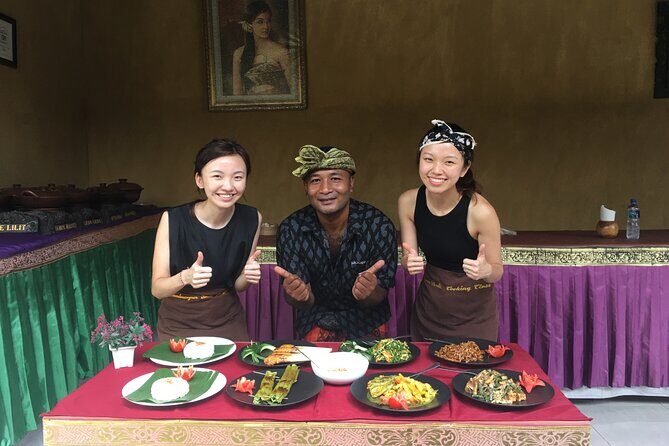
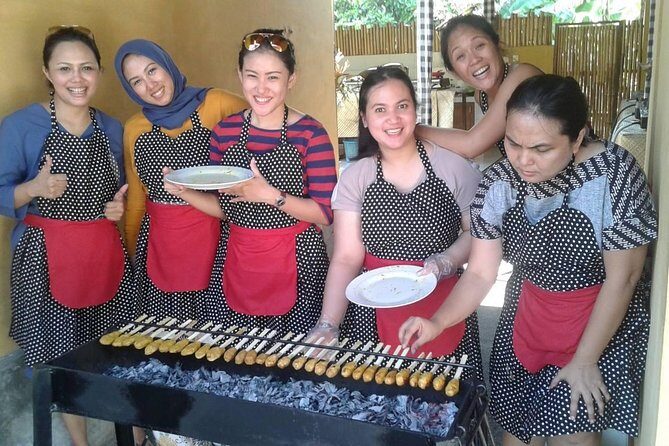
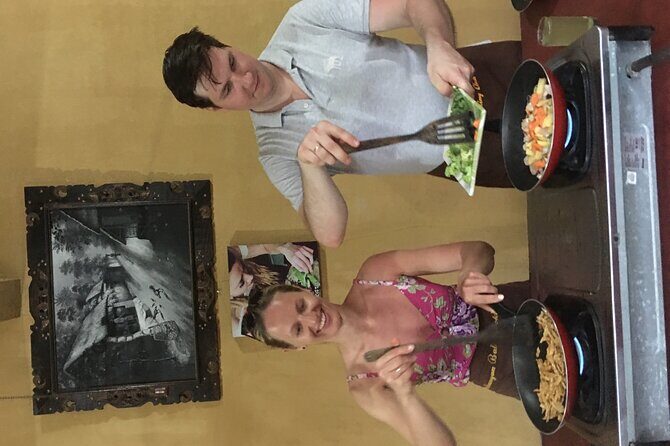
This is where the class earns its reputation. Instead of a staged demonstration, you arrive at a Balinese house with a home setting and an open kitchen where you cook. You also get a look at daily family life—enough to make the cooking feel grounded, not like a performance.
The setup also makes the class feel personal. English is used throughout, and the chefs are fully conversational about Balinese cuisine and culture. In at least a few experiences, names like Putu, Wayan, and Made show up as the people guiding the day, which hints at consistent hosting rather than a rotating script.
After cooking, you sit down and enjoy what you made—often in a garden setting. This is one of those simple pleasures: you’ll taste your own food while everything still feels fresh in your mind.
What You Actually Learn (Not Just What You Watch)
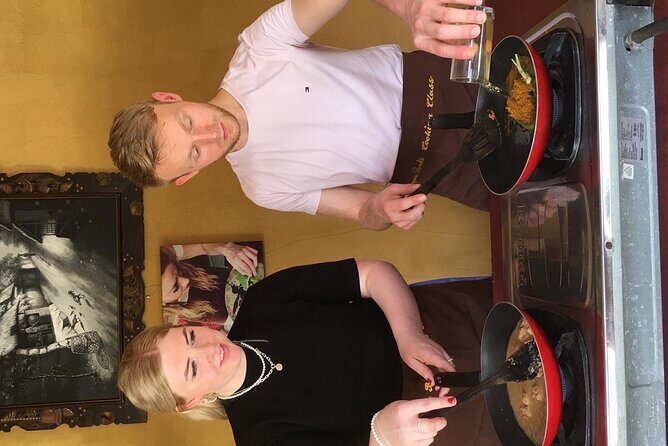
A restaurant can teach you flavors. This kind of class teaches you choices. You learn how ingredients work in Balinese cooking by handling them yourself: selecting options at the market, preparing your components, and assembling dishes as you go.
One review mentioned that a group cooked eight dishes, which gives you a sense of how much practice you can get in one session. Even if your menu ends up different, you should expect a meaningful workload. That’s the point—so you leave with more than memories.
Also, cooking classes are usually strict about dishes. Here, you might find the kitchen is willing to adapt to your needs. In one case, an allergy concern was addressed so the participant could cook and eat without being shut out of the menu. If you have dietary requirements, tell them early and be specific.
Coconut Oil Processing, Daily Offerings, and Rindik Music
One reason I’d pick this over a basic “cook and eat” class is the cultural content is hands-on. You get authentic coconut oil processing, and you learn how to make a simple offering. You can also witness the household’s daily Hindu offering, which is one of those small rituals that helps you understand why certain foods and flavors matter.
Then there’s rindik, the bamboo-based Balinese music. It shows up as a learning moment, not just background noise. In plain terms: this turns the day from a cooking workshop into a living cultural visit where food is part of a wider everyday rhythm.
If you’re traveling with kids, this matters even more. The day isn’t only timing and chopping—there are human moments, music, and ritual. That tends to keep attention better than a classroom-style session.
Small Group Size Means More Time with the Chefs
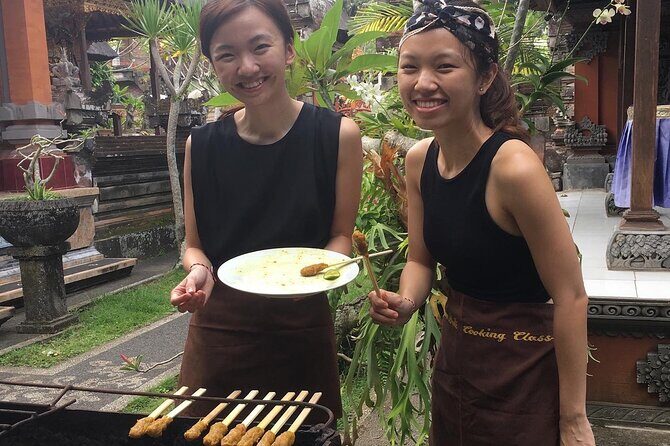
You’ll be in a group with a maximum of 15 travelers, which is a big deal in a cooking class. Smaller groups usually mean you spend less time waiting and more time actually cooking. It also makes it easier to ask questions in English while you’re working, rather than saving everything for the end.
Another practical plus: because it’s in a home setting with chefs (instead of a huge teaching kitchen), the pace feels calmer. You’re not lost in a crowd. You’re part of the process.
Price and Value: Why $34 Can Feel Like a Bargain
At around $34 for roughly five hours, the value comes from what’s included. You pay for a full experience: market shopping for ingredients, cooking in a family home, and the meal you prepare. Lunch is listed as included, so you’re not paying extra just to eat what you cooked.
Alcohol isn’t included, so if you like a drink with dinner, budget separately. But compared to typical Ubud tours that are only one thing—either a market walk or a cooking demo—this stacks several experiences into a single day.
The best value angle is the “do it yourself” part. You’re not just learning recipes; you’re practicing ingredient choices and cooking steps in a kitchen you can picture yourself visiting again. If you leave with a better sense of what you’d try at home (and not just what you liked), that’s when the price starts to feel like a real deal.
Logistics That Matter: Mobile Ticket, Meeting Point, Weather
This activity uses a mobile ticket, and the start point is a specific warung in the Tegallalang area. The day ends back at the meeting point, so you’re not hopping across town at the end.
Also, the experience requires good weather. That doesn’t mean it turns into a disaster plan if clouds show up. It does mean you should be ready for the operator to shift dates if conditions are truly poor.
For comfort, I’d plan as if you’ll be out early and walking through market areas: wear breathable clothes, bring water, and expect you’ll get a more “hands-on” day than a sit-and-smile tour.
Who This Cooking Class Is Best For
This class is a strong fit if you want more than a souvenir meal in Ubud. I’d recommend it to:
- Food lovers who like to understand ingredients, not just sample dishes
- Families who want a culture-first activity with variety built in
- Travelers who enjoy smaller groups and personal guiding
If you only want a quick activity and don’t care about markets or cultural add-ons, you might prefer a shorter cooking demo. But if you’re curious about Balinese daily life, the home setting makes it easier to care.
Should You Book Jambangan Bali Cooking Class?
Yes, if you want a cooking day that’s practical and cultural at the same time. The market ingredient shopping, the family-home open kitchen, and the added rituals like offerings and coconut oil processing are a rare combo at this price.
Book especially if you can do a morning class, since that’s when the market experience is most likely to fully land. If you’re set on dinner, go in with flexibility and know the day may include a different agriculture/tea stop instead of the full market walk.
If you like food with context—and you want to cook, not just watch—this is one of the better bets in Ubud.
FAQ
How long is the Jambangan Bali Cooking Class?
It runs for about 5 hours (approx.).
Where does the class start?
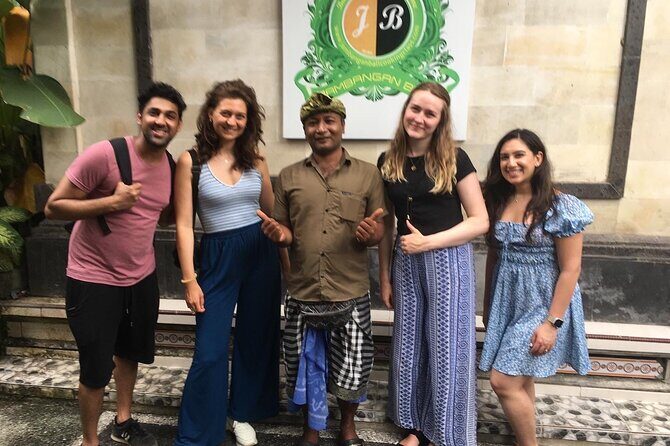
You start at Warung JB Jambangan Bali, Jln kelabang moding no 713, Kelabang Moding No.713, Tegallalang, Kecamatan Ubud, Kabupaten Gianyar, Bali 80571, Indonesia.
Do you choose lunch or dinner?
Yes, you can choose between a lunch or dinner class.
What’s included in the price?
Lunch is included.
Is alcohol included?
No, alcohol is not included.
Is the class taught in English?
Yes, the classes are conducted in English by Balinese chefs.
How many people are in a group?
The maximum group size is 15 travelers.
Is a mobile ticket used?
Yes, the tour uses a mobile ticket.
What happens if weather is poor?
The experience requires good weather. If it’s canceled due to poor weather, you’ll be offered a different date or a full refund.
Can I cancel for free?
Yes. You can cancel up to 24 hours in advance for a full refund.
More Tour Reviews





More Balinese Cooking Classes


More Ubud Tours
Ubud Tours: how the alternatives stack up

 ★ 5.0
★ 5.0Ubud: Monkey Forest, Jungle Swing, Rice Terrace, and Water Temple


The lists this tour appears in