
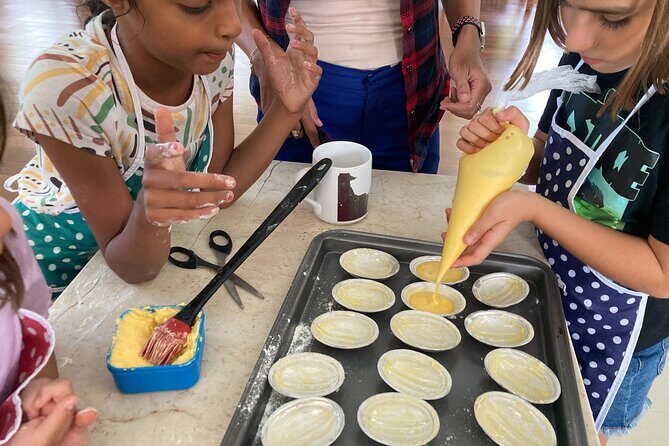
Kerobokan Pastry Class for Kids and Families
A sweet lesson beats another screen break. This Kerobokan Pastry Class for Kids and Families is hands-on, small-group, and built around real baking steps plus playful food learning. You’ll practice measuring, mixing, dough work, decorating, and even the science of baking in about 1 hour 30 minutes.
I love the small group size (maximum 10), which means kids get attention without the class turning into a rushed line. I also like that the lesson blends classic pastries—tarts, cookies, cupcakes, and more—with games like fruit and spice quizzes that keep energy up.
One thing to consider: transport is not included, so you’ll want an easy ride to the meeting point in Kerobokan Kaja. If you’re tight on time, plan the pickup so you’re not late, since the whole method and timing matter in a baking session.
In This Review
- Key things that make this pastry class work well for families
- Kerobokan Kaja, a short hop from Seminyak, with a home-kitchen feel
- Small group lessons (max 10) that make kids feel supported
- What you bake in 90 minutes: tarts, cookies, cupcakes, and the steps behind them
- Food games, fruit-and-spice discovery, and pastry basics beyond the recipe
- Vegan and gluten-free options, plus how to handle nut allergies safely
- What’s included (and what’s not) so you don’t overpack
- Price and value: $21.29 per person for real hands-on learning
- Who should book this kids pastry class in Seminyak
- Should you book? My quick decision guide
- FAQ
- How long is the Kerobokan pastry class?
- What does the $21.29 per person price include?
- What is the maximum group size?
- Do they offer vegan or gluten-free options?
- What about nut allergies or other allergies?
- Do I need to bring anything?
- Is transport included in the price?
- Can I cancel for a full refund?
Key things that make this pastry class work well for families
- Max 10 people per lesson for real help, not just watching from the sidelines
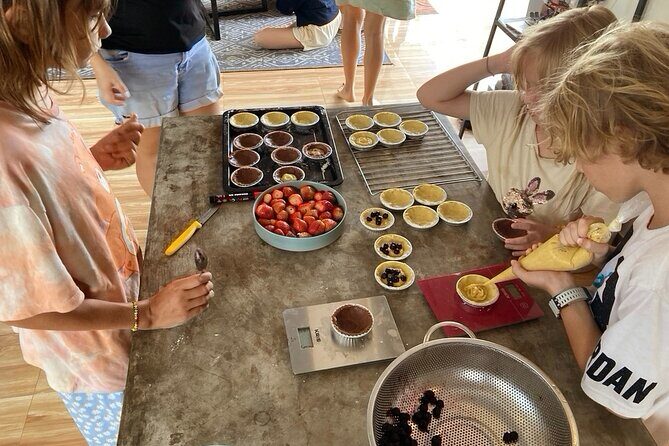
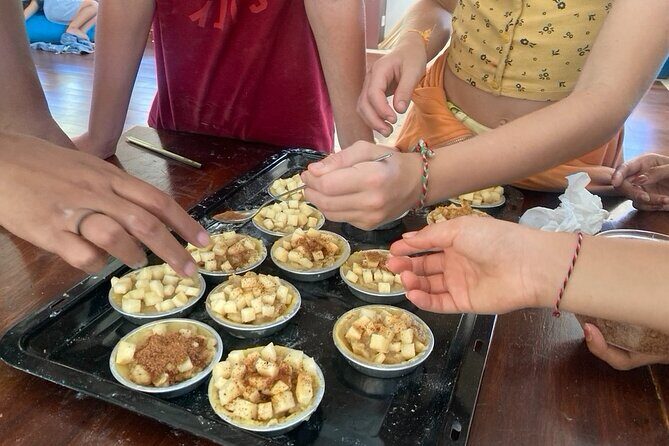
- Hands-on baking steps like measuring, mixing, kneading dough, decorating, and filling a tart
- Food games and quizzes that teach ingredients (fruits, spices, desserts) in a kid-friendly way
- Educational add-ons like videos of top chocolate creations and learning how breads and pastries are made
- Dietary options by group including vegan or gluten free, plus nut-allergy notes you can provide
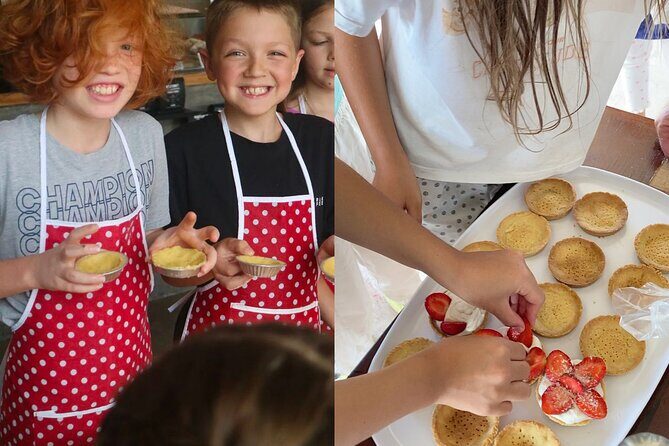
- Eat now or bring home what you make, with packaging provided
Kerobokan Kaja, a short hop from Seminyak, with a home-kitchen feel
This class starts in Kerobokan Kaja, close to Seminyak. You’ll meet at the address shown on the booking details (85RH+VM8, Kerobokan Kaja, Kuta Utara, Badung Regency). It also ends back at the meeting point, so you’re not left guessing about getting home with a bag of pastries.
What makes the setting special for families is the “home kitchen” vibe. One of the best signals you’ll get is that this isn’t a giant classroom. That matters with kids. When the space feels like a private kitchen lesson, kids usually focus better, and parents get a clearer view of what’s happening.
You should expect a structured session rather than a freeform baking party. The lesson emphasizes method and organization of work, so the kitchen stays calm while kids are kneading dough and decorating. If your child gets overwhelmed easily, this kind of pacing can actually help.
Also: it’s near public transportation. If you’re using a scooter or driver in Bali, this is the kind of meeting point that usually fits into a normal day. Just build in buffer time, since baking is not a wait-and-see activity.
Small group lessons (max 10) that make kids feel supported
This is the kind of class that’s designed around attention. Maximum group size is 10 travelers, and the experience highlights personalized attention as a core feature. For families, that translates into fewer kids competing for the same tools or the same teacher time.
The lesson is hands-on, so kids can’t really “opt out.” That’s a good thing here. Kids practice skills like accurate measuring and mixing batters instead of just frosting something and calling it done. When there are fewer students, the instructor can correct small mistakes early—especially important when you’re learning dough texture and baking timing.
There’s also a private lesson option you can request. If you have very young kids, a child with strong sensory preferences, or you want a more tailored pace, private can reduce the noise level and speed up skill-building. It also helps if your family wants a specific pastry focus.
One more practical note: the experience is family-forward but not limited to kids. The provider also makes adult pastry classes, so the atmosphere is friendly and not overly childish. That tends to work well when siblings have different comfort levels around cooking.
What you bake in 90 minutes: tarts, cookies, cupcakes, and the steps behind them
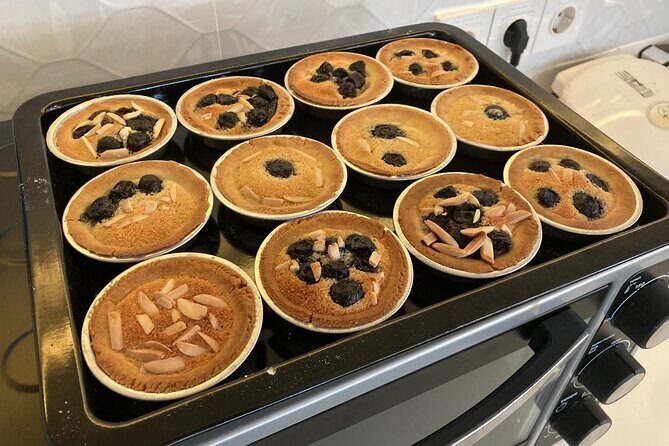
In about 1 hour 30 minutes, kids learn how to bake several pastry types. The lesson mentions tarts, pie, biscuits, cheesecake, cookies, cupcakes, and snack-style pastries. You can think of it as a “skills + results” class: you learn techniques and you end with something you can taste.
You’ll go through key steps, including:
- How to measure ingredients accurately
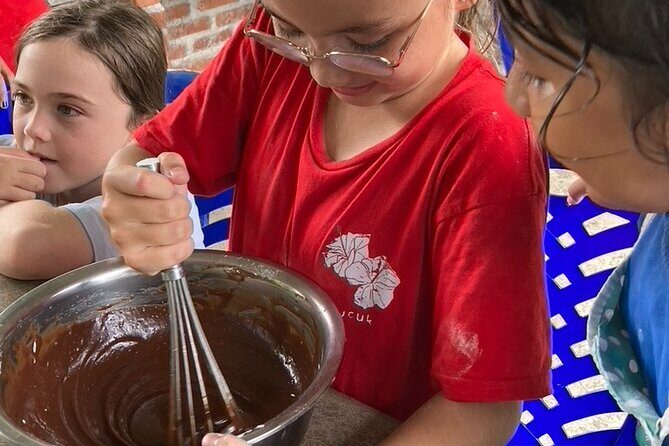
- How to mix batters
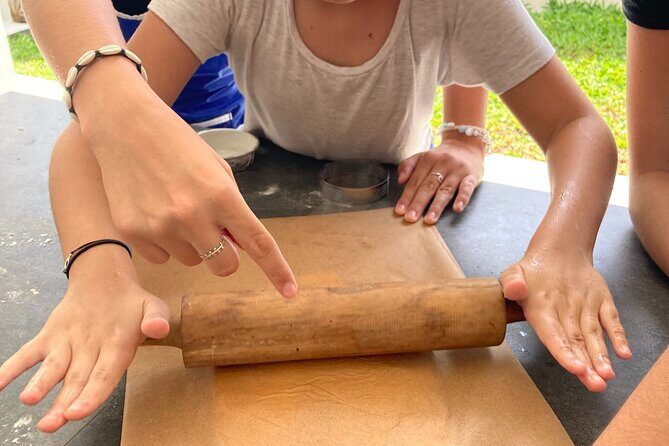
- Kneading dough (so you understand texture, not just ingredients)
- Decorating your creations
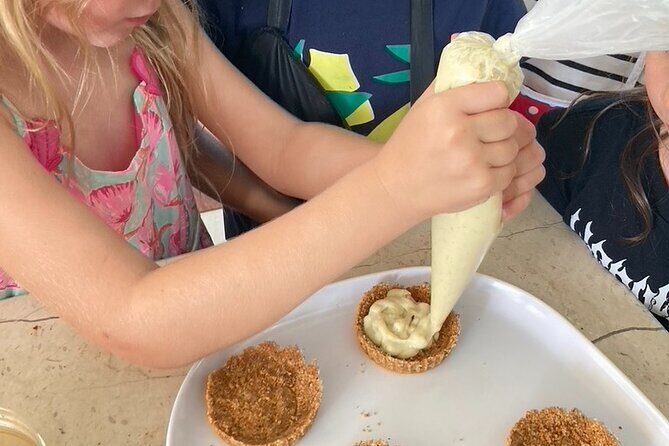
- Filling a tart with plastic pouch cream
- Understanding the science behind baking
That science part is not just a buzzword. It’s the difference between random baking and learning why something works. When kids understand that baking depends on structure, heat, and mixing, they’re more likely to feel proud when their pastry turns out.
Decorating is built in, but it’s not only about looking pretty. Decorating is how kids practice steadiness and timing, and it gives them ownership. Parents usually appreciate this because you’re not just paying for a finished cake. You’re paying for skill growth plus a satisfying edible result.
Also, ingredients quality is addressed. The class notes import diary, Belgian chocolate, and farmer honey as examples of “only the best ingredients.” Even if you don’t know what each ingredient does, kids recognize the taste. And good ingredients make it easier for kids to succeed in a short class.
Food games, fruit-and-spice discovery, and pastry basics beyond the recipe
This class doesn’t treat pastries like a boring worksheet. It builds in games and mini-lessons so kids keep moving and stay curious.
Expect activities like:
- Food games that help kids learn how fruits and spices grow and what they look like
- Quizzing where you guess fruits, vegetables, and desserts
- Discovery time for new ingredients, including their texture and smell
- Videos showing chocolate creations and “best party chef in the world” style inspiration
- Learning how pastries like croissants, macarons, and bread are made
These parts matter because they turn cooking into observation. When a child smells an ingredient and can describe it, they’re using real senses, not memorizing. And when they play a fruit or dessert guessing game, they practice vocabulary and attention skills without feeling like they’re in a lecture.
There’s also mention of learning with numbers during weighing. That’s a stealth math lesson. Kids who struggle with traditional numbers sometimes do better when measuring tablespoons or grams becomes a game with a goal.
One practical detail: you’ll also write the recipes. The class asks you to bring a pen and a note book. That’s a smart way to help kids remember what they made. It also gives you something to take home besides food, like their own recipe notes and baking steps.
If your child loves crafts and storytelling, pairing recipes with a “method and organization of work” approach can be a great mix of fun and structure.
Vegan and gluten-free options, plus how to handle nut allergies safely
If your family has dietary needs, this class is worth a look. It says vegan recipes can be done for a vegan group, and a gluten-free option is possible per group. That means it’s not a vague promise. It’s conditional on the group setup, so booking early and clearly communicating your needs helps.
Allergies are something you should take seriously. The class specifically asks you to let them know if you have nut allergies or other allergies. That’s exactly what you want to see before you commit.
Here’s how to make this run smoothly in real life:
- Tell them about allergies at booking
- Ask for vegan or gluten-free support when you reserve
- Plan for the child to still follow the same structured steps (measuring, mixing, decorating), even if ingredients differ
Because this is a small-group class, the provider is likely able to adjust without chaos. Still, in cooking, ingredients matter, so clarity upfront is key.
If you’re traveling with a child who can’t eat common baking ingredients, this is one of the few Bali food activities that explicitly points to vegan/gluten-free and allergy communication.
What’s included (and what’s not) so you don’t overpack
This experience is priced to feel like a complete activity, not a “bring your own stuff” class. Included is everything needed to bake and make your creation. You also get bottled water with fresh mineral water, plus packaging and “eperon” provided (likely the apron-style gear and packaging so you can store or take the pastry).
You also get the ingredients and your cake to eat now or bring home. That take-home part is important. It turns the class into a meal plan for later, which can save you time and money on snacks the rest of your day.
What is not included is transport. You’ll need to arrange getting to the meeting point at Kerobokan Kaja.
What you should bring is simple:
- A pen and notebook for the recipe writing part
- Any allergy info you want the instructor to follow
- An appetite for eating what you make
Since this class is short, you don’t need a suitcase of cooking tools. It’s more about showing up ready to participate and taking notes along the way.
Price and value: $21.29 per person for real hands-on learning
At $21.29 per person, this class sits in a very approachable range for a 1.5-hour, small-group food experience in Bali. The value isn’t only that you’ll taste something sweet. It’s that you learn multiple baking skills in one session.
You’re getting:
- Instruction for hands-on techniques (measuring, mixing, kneading, decorating)
- A science element about baking
- Food games and quizzes that teach ingredients and pastry origins
- Videos and learning about pastries like croissants and macarons
- Ingredients and packaging so you can eat now or take it home
- Water provided
For families, the biggest value is avoiding the “pay to watch” trap. With a max of 10 people, you’re more likely to get guidance while kids work, which is where the learning happens.
Also consider the ingredient quality mentioned: Belgian chocolate, farmer honey, and dairy ingredients sourced well. Kids who taste quality ingredients often come away with a stronger sense of what good baking means. That’s hard to price, but it shows up in how motivated kids feel to do it again.
If you have two kids, this is often the kind of activity that feels like less of a splurge than a restaurant meal plus entertainment. You’re paying for a focused, practical experience with a result you can bring into your day.
Who should book this kids pastry class in Seminyak
This is best for families who want an activity that’s structured but still fun. It fits well if your kids like cooking, decorating, and hands-on projects. It also suits older kids who enjoy learning why things work, not just following steps.
It may also be a good match if:
- You want a break from screens
- You have kids who enjoy games, quizzes, and sensory discovery (smell and texture)
- You want to practice basic measurement skills with a “weighing numbers” element
- You want a class with options for vegan or gluten-free groups
It might be less ideal if your child gets very impatient with group activities or doesn’t like trying new textures. Even though the class is kid-friendly, baking still requires waiting for steps, following timing, and doing tasks in order.
One more fit note: the lesson encourages teamwork and respect timing. If your child thrives on clear instructions and shared goals, that’s a plus. If they dislike routines, you’ll want to prepare them gently before you arrive.
Should you book? My quick decision guide
Book it if you want a short, practical family activity in Kerobokan Kaja that combines baking skills with ingredient discovery games. For many families, it hits the sweet spot: kids get to make pastries, learn how they’re made, and take something home.
I’d skip it or think twice if you’re looking for a fully free-choice cooking experience, or if transport timing is a problem for you since transport isn’t included. Also, if dietary needs are complex, message the provider early about allergies and vegan or gluten-free requirements.
If your goal is a memorable 90-minute experience that feels like education plus dessert, this one is a strong choice.
FAQ
How long is the Kerobokan pastry class?
The class runs for about 1 hour 30 minutes.
What does the $21.29 per person price include?
You get everything needed to bake, bottled fresh mineral water, packaging, and your ingredients plus the cake you make to eat now or bring home.
What is the maximum group size?
This activity has a maximum of 10 travelers.
Do they offer vegan or gluten-free options?
Vegan recipes are possible for a vegan group. Gluten-free options are possible per group. Let the provider know when you book.
What about nut allergies or other allergies?
You should tell the provider about nut allergies or any other allergy so they can plan accordingly.
Do I need to bring anything?
Bring a pen and a notebook for the recipe writing part of the class.
Is transport included in the price?
No, transport is not included.
Can I cancel for a full refund?
Yes. You can cancel up to 24 hours in advance of the experience’s start time for a full refund.
More Workshops & Classes



More Tour Reviews





More Seminyak Tours
Seminyak Tours: how the alternatives stack up
 ★ 5.0
★ 5.0Bali Full-Day Traditional Village Sightseeing Trip All Inclusive
 ★ 5.0
★ 5.0Experts Bali Driver : Best Bali Private Driver for Tour in Bali





The lists this tour appears in