
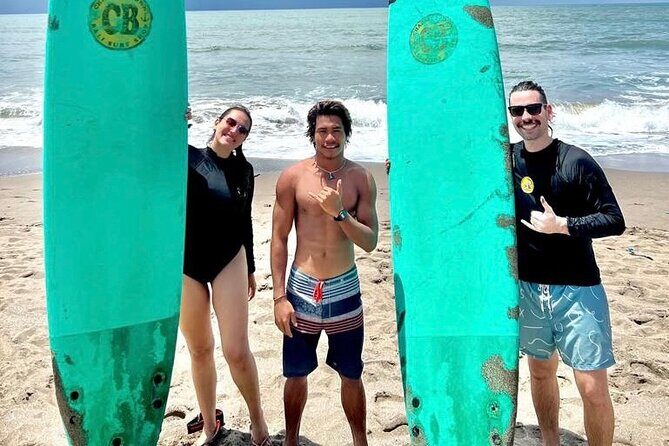
Private Experience Surf Lessons in Canggu
Surf lessons go a lot farther with a coach.
This private setup in Bali focuses on what you need, not a one-size-fits-all group ride. I like the one-on-one attention that speeds up progress, and I also like the clear skill ladder from soft boards to bigger-wave goals. One thing to consider: you’ll need to match your level to the lesson type, because the session plan shifts a lot between beginner, intermediate, and advanced.
It’s run by Faruka Surf Lessons Bali, and the coaching style is built around practical wave reading and feedback you can actually use right away. Based on the strong 5/5 rating (9 reviews), the instructors—often named Bedi, with Yoza also showing up—are the kind of teachers who guide in the water and keep communication clear, even when English isn’t perfect. For the best results, come ready to learn fast and accept a lot of short, targeted corrections.
In This Review
- Key Things I’d Notice First
- Entering The Beach Scene in Canggu (and Finding Your Meeting Point)
- The 2-Hour Flow: Briefing, Board Time, and Wave Progression
- Beginner Coaching: Soft Tops, First Waves, and Green-Wave Goals
- Intermediate Progress: Fiberglass Boards and Skill Polishing
- Advanced Sessions: Shortboards, Positioning, and Higher-Performance Maneuvers
- The Coaching Style: Clear Feedback in the Water (Bedi and Yoza)
- Gear, Sunscreen, and What You Should Bring
- Price and Value: Why Private Coaching Works Here
- Single Lesson vs 3 or 5-Pack: How to Choose
- Timing in Bali: When to Plan Your Lesson
- Should You Book This Private Surf Lesson in Canggu?
- FAQ
- How long is the private surf lesson?
- Where does the lesson start?
- What’s included in the price?
- What should I bring?
- Is this a private lesson or a group activity?
- What skill levels are offered?
- When will I receive confirmation after booking?
- Can I cancel for a refund?
Key Things I’d Notice First
- Private, one-on-one coaching so you get attention during every attempt
- Beginner to advanced progression, including green-wave goals and higher-performance boards
- Surf gear included: board, rashguard, and zinc
- On-land briefing first, so you’re not guessing what to do when you hit the water
- Coach feedback in real time, with clear explanations and wave guidance
Entering The Beach Scene in Canggu (and Finding Your Meeting Point)
This experience is positioned around Seminyak, but the actual start is in Canggu at the meeting point listed as 84RJ+C58, Canggu, Kuta Utara, Badung Regency, Bali 80361, Indonesia. That matters because Canggu has a different vibe and surf feel than some nearby areas. If you’re staying around Seminyak, it’s still a short, common move to get into the Canggu surf zone.
The lesson runs for about 2 hours, and it ends back at your meeting point. That makes the whole plan easy to plug into a day: no long transfer loops, no “then we drive for another hour” surprise.
Practical tip: treat the meeting time like a start time, not a suggestion. You want your briefing, warm-up, and first wave attempts to land while you’re fresh. Surfing is fun, but it’s also timing-heavy. Being late usually means you lose your best practice window.
The 2-Hour Flow: Briefing, Board Time, and Wave Progression
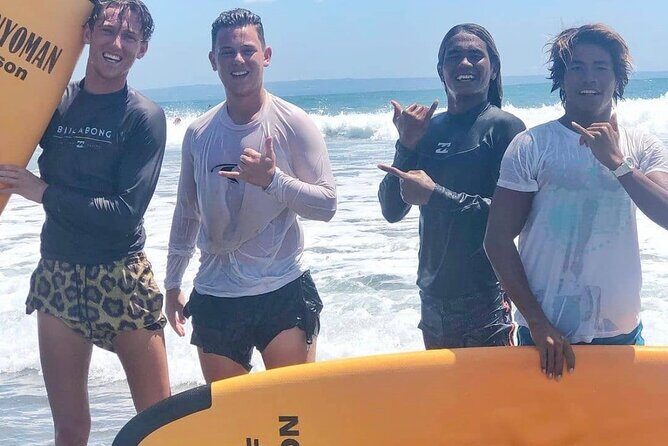
Here’s the shape of the session: you’ll get an on-land briefing, then you’ll move into the water with guidance that keeps adjusting as your attempts improve. Private lessons tend to feel smoother because your coach can watch what you’re doing, then correct the specific issue—stance, timing, paddling rhythm, or how you’re aiming for the wave.
Expect the lesson to build in layers:
- Land briefing: you’re coached before you’re in the water, so you’re not learning by trial only
- First wave attempts: your coach helps you get started catching waves
- Progression work: you’ll shift to the next skill goal within your level
Also, you’re provided the core gear: a surfboard, rashguard, and zinc. That removes a big friction point. In Bali, it’s common to hunt for gear, and it can turn your first surf day into a scavenger hunt. Here, the lesson is set up so your attention stays on surfing.
Beginner Coaching: Soft Tops, First Waves, and Green-Wave Goals
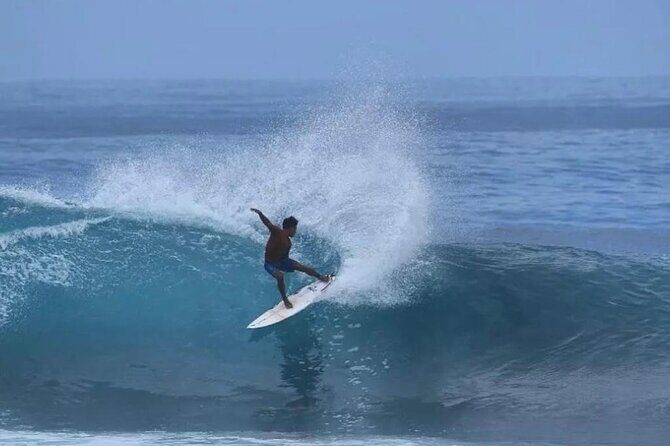
If you’re brand new or still building confidence, the beginner plan is set up to make success happen early. Beginner lessons use soft top boards. That detail isn’t just about comfort. Soft tops are more forgiving, which helps you focus on timing and balance instead of fighting the board.
The session starts with an on-land briefing, then you work your way into catching waves. The goal is to go beyond standing up once or twice and toward catching green waves on your own. Green waves are a key threshold: you’re still learning, but you’re no longer purely relying on someone helping you every moment.
What this means for you in real life:
- You’ll likely practice the same fundamental actions more times, which helps muscle memory stick
- You’ll get feedback fast, so you can adjust before your energy runs out
- You’ll leave with a clearer sense of what to do next time you surf independently
A small consideration: beginners can feel like the lesson is a “lot of trying.” That’s normal. Surf improvement is mostly repetition plus corrections. The good news is the coach’s job here is to keep that repetition from feeling random.
Intermediate Progress: Fiberglass Boards and Skill Polishing
Once you’ve graduated from beginner basics, the intermediate lessons aim at improvement instead of survival. At this level, you can choose to move from the soft board to a fiberglass board. That’s a big upgrade for performance, but it also changes how the board behaves under your feet.
Intermediate lessons focus on perfecting skills and improving how you surf your chosen waves. Think of it as getting more consistent with the basics while preparing your technique for a more “serious” surf style.
Why this stage is valuable: fiberglass boards reward clean habits. If your paddling is rushed, timing slips. If your stance is off, your line gets sloppy. The private format matters here because your coach can spot what’s causing your inconsistency and give feedback you can test right away.
If you’re deciding between beginner and intermediate, be honest about where you are. If you’re still struggling to catch waves with confidence, stick with beginner. If you’re already doing that consistently and you want higher performance, intermediate will likely feel more satisfying.
Advanced Sessions: Shortboards, Positioning, and Higher-Performance Maneuvers
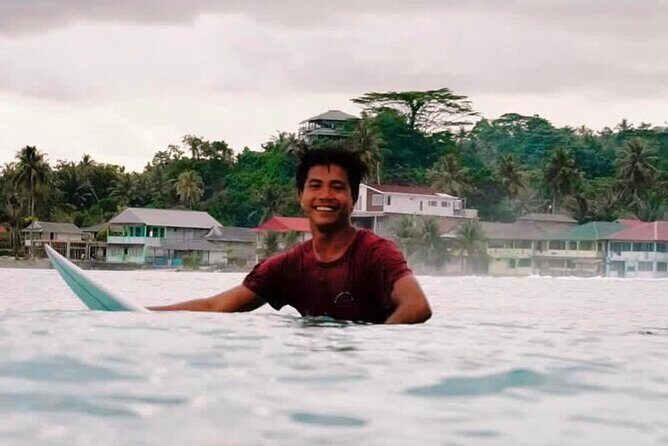
Advanced is for surfers who want to push past comfort and into sharper technique. This course typically uses shortboards, and the focus becomes positioning and high-performance maneuvers.
That sounds fancy, but it’s really practical:
- Positioning is about where you are relative to the breaking part of the wave
- Maneuvers are about what you do once you’re in the right spot
A good advanced coach doesn’t just show you tricks. They help you connect technique to wave mechanics—what to do on takeoff, how to set your body for turns, and how to keep speed. Since your coaching can be customized to your needs, you’re not locked into a cookie-cutter drill list.
Possible drawback to keep in mind: advanced lessons can be more demanding mentally and physically. If you’re tired, you’ll miss feedback moments. If you’re tense, positioning goes off. Bring energy, hydrate, and be ready to work.
The Coaching Style: Clear Feedback in the Water (Bedi and Yoza)
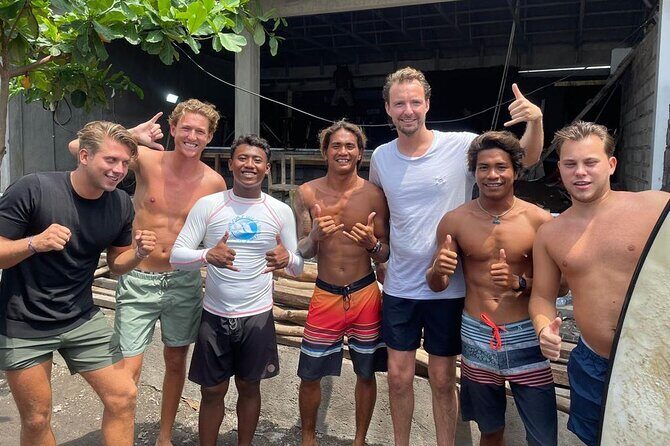
The most praised part of this experience is the coaching itself. I especially like that the teaching is described as:
- Patient and supportive when you’re figuring things out
- Clear communication about waves and what to focus on
- Constructive feedback you can use immediately
In the coaching roster, Bedi is repeatedly mentioned as the instructor who explains well and guides in the water. Another name that comes up is Yoza, which suggests you might be learning with more than one coach depending on the session. Either way, the coaching theme is consistent: you’re not left floating and hoping.
One detail I take seriously: a coach using body language and practical instruction can still work even if language is limited. Surf is visual. A teacher who knows how to demonstrate the idea matters as much as having perfect vocabulary.
If you want a lesson where you feel like the coach is actively reading your attempts and adjusting your plan, this is built for that.
Gear, Sunscreen, and What You Should Bring
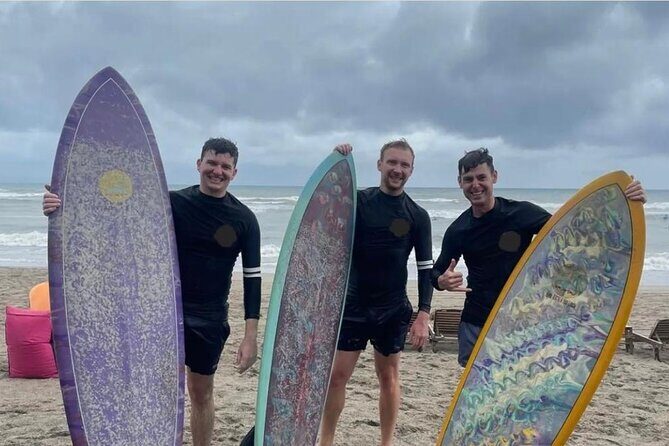
For $33, you get the key surfing supplies:
- Surf board
- Rashguard
- Zinc
That’s a strong value mix, because buying a board rental plus proper rash protection can quietly cost more than the lesson itself. Zinc is also helpful in Bali sun. It won’t replace common sunscreen habits, but it shows the provider is thinking about the realities of the beach.
What’s not included is simple:
- Bring your own towel
- Bring water
For most people, that’s enough. A towel matters because you’ll be wet and salty pretty quickly. Water matters because a surf lesson can feel shorter than it is, and then you’re dehydrated without realizing it.
Small practical tip: arrive with the mindset that you’ll be outside for the whole lesson. Clothing and basic hydration help you stay relaxed instead of rushing around.
Price and Value: Why Private Coaching Works Here
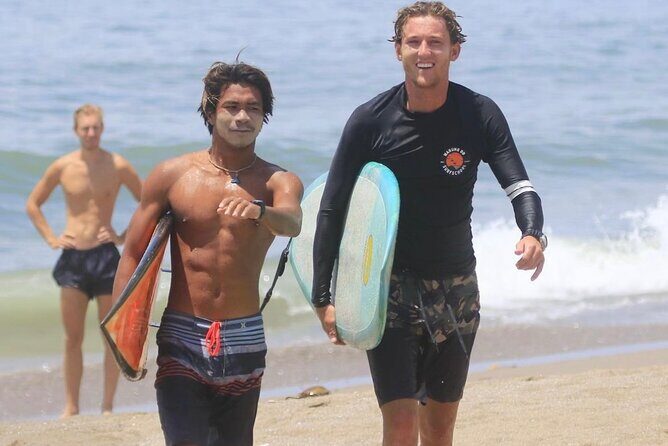
Let’s talk money without the fluff. The session costs about $33 for roughly 2 hours, and it’s private. That combination is the core value.
Here’s why it can be a good deal:
- You’re paying for coach time, not split attention across a crowd
- You get included gear, so you’re not doing extra rentals
- The lesson is structured by skill level, so you’re not wasting the session on the wrong basics
Now the honest consideration: private lessons can feel pricey compared with group sessions if you’re thinking only about cost. But surf learning isn’t linear. If your coach can fix a mistake on your second or third attempt, you progress faster—and you don’t need as many lessons to feel improvement.
If you’re already motivated and you want real feedback, private coaching usually pays off.
Single Lesson vs 3 or 5-Pack: How to Choose
You can buy a single lesson, or a 3-lesson or 5-lesson package. Even without seeing an exact day-by-day schedule, the structure makes sense: more sessions means more repetition, and surf improvement happens through repetition plus feedback.
How I’d choose:
- Pick one lesson if you’re curious, want a taste, and need coaching to get your footing
- Pick 3 lessons if you want a noticeable jump—enough time to correct your main habits
- Pick 5 lessons if you want real development, especially if you’re moving up from beginner to the next step
If you’re the type who hates leaving things half-learned, the 3 or 5 pack is where this experience starts to feel like a proper training block.
Timing in Bali: When to Plan Your Lesson
The provider’s opening hours are listed as 7:00 AM to 5:00 PM, Monday through Sunday. That’s your practical planning window.
In surf, time of day can affect conditions and how you feel in the session. I suggest you book a time when you’re not rushing from another activity. Surf lessons work best when you’re calm and ready to focus.
Also, since the experience ends back at the meeting point, plan for the rest of your day to be simple. You’ll likely be tired in that good way.
Should You Book This Private Surf Lesson in Canggu?
I’d book it if you want:
- Private coaching with feedback in the water
- A lesson plan that matches your level, from soft-top beginner work to shortboard advanced goals
- Included board, rashguard, and zinc, plus a straightforward 2-hour format
I’d think twice if you’re hoping for a full-day surf adventure or a long guided tour experience. This is about coaching and improvement, not wandering around for hours.
If you’re ready to learn by doing, and you want your coach to help you correct the exact thing holding you back, this is a smart way to spend $33 in Bali—and a fast path to standing up with more confidence than you started with.
FAQ
How long is the private surf lesson?
It’s listed as about 2 hours.
Where does the lesson start?
The meeting point is listed at 84RJ+C58, Canggu, Kuta Utara, Badung Regency, Bali 80361, Indonesia. The activity ends back at the meeting point.
What’s included in the price?
You get a surf board, rashguard, and zinc for use during the lesson.
What should I bring?
You may bring your own towel and water. Those are the only items listed as not included.
Is this a private lesson or a group activity?
This is a private tour/activity, so only your group participates.
What skill levels are offered?
The lesson options include beginner, intermediate, and advanced levels. Beginner uses soft top boards, intermediate may move to fiberglass, and advanced typically uses shortboards.
When will I receive confirmation after booking?
Confirmation is received within 48 hours of booking, subject to availability.
Can I cancel for a refund?
Yes, there’s free cancellation. A full refund is available if you cancel at least 24 hours before the experience’s start time (local time), and refunds won’t apply if you cancel later than that.
More Tour Reviews





More Canggu Tours






More Seminyak Tours
Seminyak Tours: how the alternatives stack up
 ★ 5.0
★ 5.0Bali Full-Day Traditional Village Sightseeing Trip All Inclusive
 ★ 5.0
★ 5.0Experts Bali Driver : Best Bali Private Driver for Tour in Bali



The lists this tour appears in