
Private Traditional Bali Silver Jewelry Making Class
Celuk makes silver magic. In about 3 hours, you can go from blank ideas to a piece you made with your own hands.
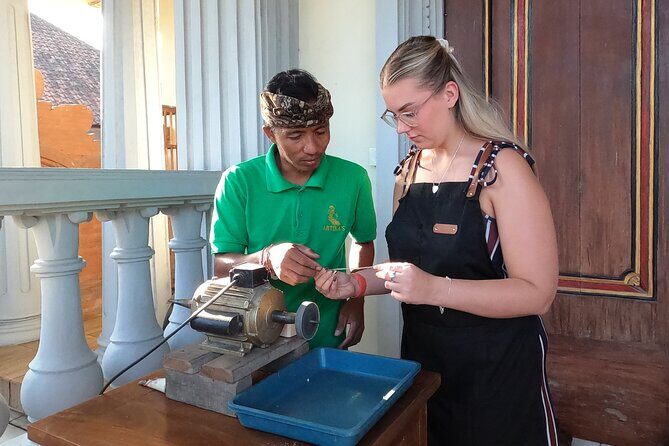
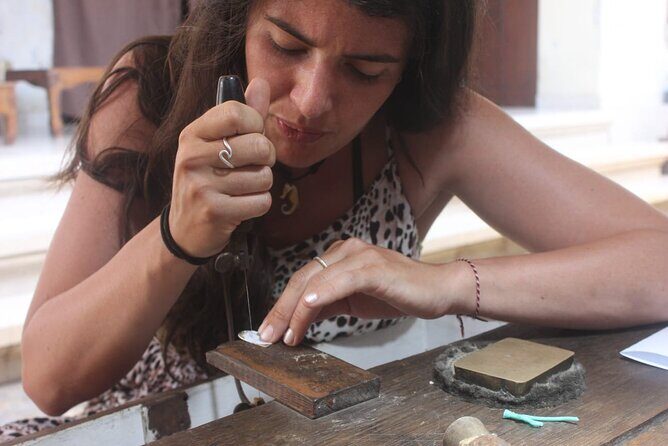
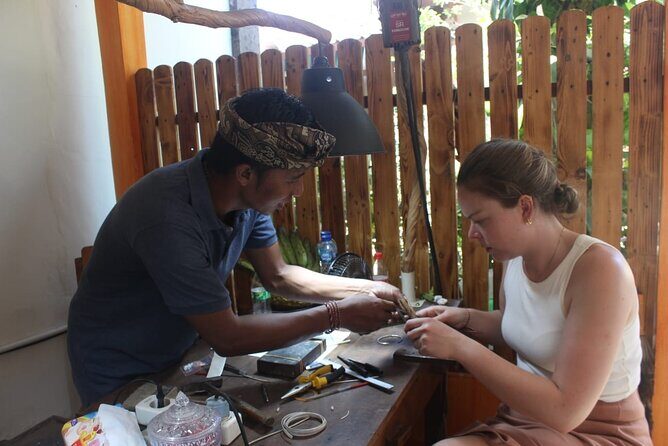
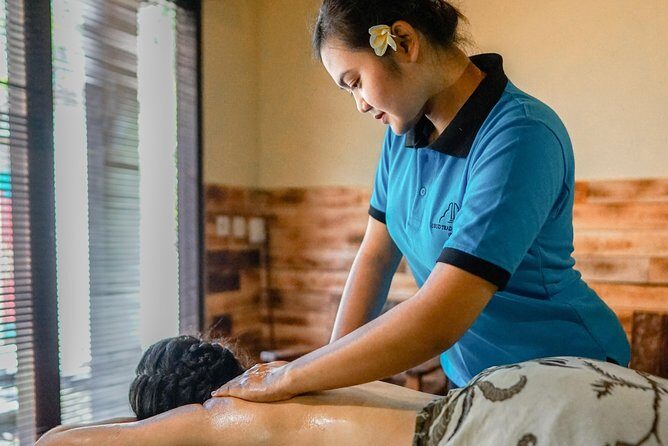
This private traditional Bali silver jewelry class happens in the silversmith village of Celuk (outside Ubud), where craftsmanship is the main event, not a demo. I like that you’re not stuck watching someone else work. You’re in the studio using real tools and techniques—sawing, stamping, hammering, soldering, sanding, and polishing—with a tutor right there to correct your moves as you go.
One thing to plan for: you work with a limited amount of silver. The class includes silver (5 grams is stated), and if you want more, there’s an extra charge per gram. Also, Celuk is a short distance from central Ubud, so decide early whether you’ll go on your own or use the paid return transfer.
In This Review
- Key Highlights You’ll Feel the Moment You Arrive
- Celuk Near Ubud: Why This Craft Village Matters
- The 3-Hour Flow: From Design Ideas to Polished Results
- Tools, Safety, and the Real Work: What You’ll Learn
- Silver Amounts and Extras: The Budget Reality Check
- Private Class Means Real Attention (and a Better Outcome)
- Getting There From Ubud: Meeting Point and Transfer Options
- Price and Value: Is $48 Worth It?
- Who Should Book This Class (and Who Might Skip It)
- Should You Book the Private Traditional Bali Silver Jewelry Making Class?
- FAQ
- How long is the private silver jewelry making class?
- Where does the class take place?
- Is this class private?
- What is included in the price?
- How much silver do I get, and is there an extra charge?
- What techniques will I learn?
- Can I create my own design?
- Is hotel pickup included?
- How much does return hotel transfer cost?
- What if the weather is bad?
Key Highlights You’ll Feel the Moment You Arrive
- Celuk’s silversmith focus: you’re learning in the craft village where most of Bali’s silver work comes from
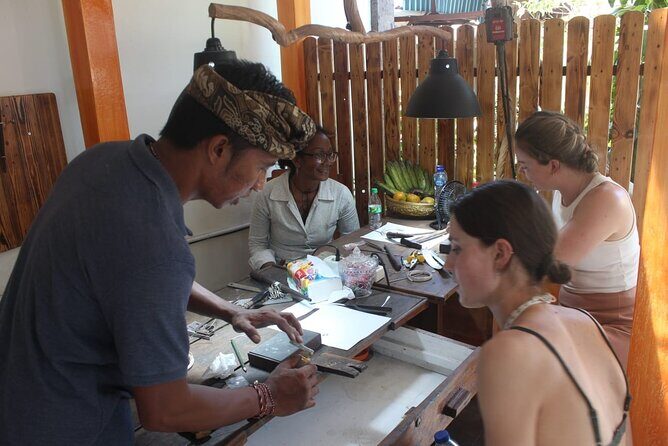
- Private, hands-on instruction: your tutor guides your design and your technique, step by step
- You leave with wearable silver: not a souvenir photo, but an item made by your hands
- You use the tools, not just see them: sawing, stamping, soldering, polishing, plus safety basics
- Light refreshments included: bottled water or soft drink and snacks during the session
Celuk Near Ubud: Why This Craft Village Matters
Celuk (spelled Celuk in the class info, and often called the silver center for this part of Bali) is where silversmiths keep the craft going day after day. That’s a big deal because jewelry making isn’t treated like a quick tourist stop here—it’s treated like work, and you’re stepping into the workflow.
I like that the class is set in a real workshop setting in Celuk, Sukawati, Gianyar Regency. You get a clearer feel for how silver is handled, how tools are used, and why finishing matters as much as shaping. It also helps you understand why people come back to Bali for crafts like this, not just temples and beaches.
You’ll meet at Rajata Silver Class, Celuk, Sukawati, Gianyar Regency. From there, you’ll move into the making side of the experience quickly—no long runaround.
The 3-Hour Flow: From Design Ideas to Polished Results
The class runs about 3 hours. In that time, the pacing is usually tight: you’ll spend time choosing or developing your design, then you’ll work through the metal steps in order so the piece can actually be finished.
Here’s what to expect in practical terms once you arrive:
- You start with a friendly welcome and drinks/snacks, then jump into design planning and tool orientation.
- You’ll go from choosing a simple approach to actually shaping the silver using the taught techniques.
- By the end, you’ll have an item that’s exclusively made by you, finished and polished enough to take home.
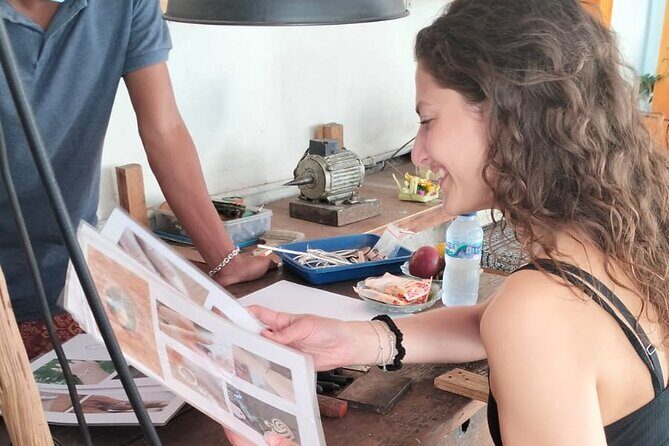
One nice detail from the experience notes: you’re able to create your own design or use a sample/template from around the workshop. That means you don’t need to be an artist. If you’re the type who brings nothing but curiosity, the samples still give you a starting point. If you already sketched something at home, you’ll be able to work from that too.
Also, bring realistic expectations. This is not a 6-hour jewelry school. The best strategy is to choose a design that fits the time and silver amount you’re given.
Tools, Safety, and the Real Work: What You’ll Learn
This class is built around core techniques that silversmiths actually use, not just the flashy parts. You’ll learn and practice tools and how to use them, plus a safety guide for working with silver and studio equipment.
The main techniques included are:
- Sawing: shaping a piece into the form you want
- Stamping: adding textures, patterns, or marks (depending on the design)
- Hammering: forming and adjusting the metal
- Soldering: joining parts so your design holds together
- Sanding and polishing: smoothing edges and bringing the shine up
What makes this valuable is the tutor’s hands-on feedback. In the workshop setting, you’re not left to figure things out alone—your guide helps you make choices that are realistic for your design. In particular, the guidance around what’s too complicated for the time is a practical gift. It keeps you from burning through time on something that won’t finish nicely.
The class is private, so you can ask direct questions as you work. If you’ve watched jewelry videos online and thought, I get the idea but not the technique, this is where you learn what the videos skip.
And yes, you’re working with real tools. Your hands will get involved. That’s the whole point.
Silver Amounts and Extras: The Budget Reality Check
The experience includes silver—5 grams is listed—plus tools and equipment. At the same time, the overview text mentions 10 grams (0.35 ounce), which is a small mismatch. Don’t panic, but do confirm the exact silver allowance at booking so you know what you’re starting with.
Here’s what’s clearly stated: if you use more than 5 grams of silver, there’s an extra charge of IDR 50,000 per gram. That means your design should match your metal budget.
My advice:
- If you want something bold or multi-part, keep it simple. Fewer components usually mean a better chance of finishing cleanly.
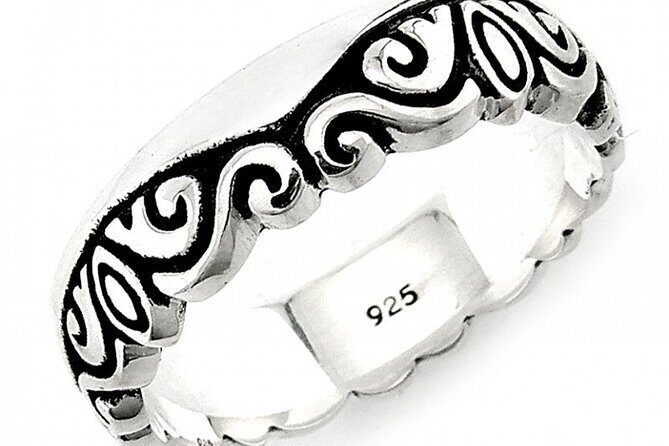
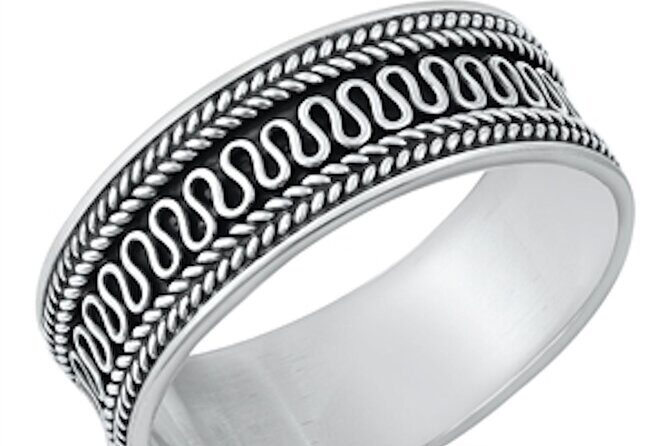
- If you’re aiming for a ring, focus on a design that can be executed with the steps and time you have.
- If you’re not sure, choose the template or a sample design first. Then adjust only the details that fit your comfort level.
This is one of those experiences where paying attention to the constraints actually improves the result. You’ll end up with a piece you’re proud of, not a half-finished project you didn’t have time to refine.
Private Class Means Real Attention (and a Better Outcome)
This is a private tour/activity, so it’s just your group. That matters because silversmithing is slow, finicky work. Small mistakes show up later, especially during soldering and finishing.
In the class, the guide’s role is active: helping you decide what will work, guiding your steps, and supporting your design through the process. One of the most praised parts of the experience is the patience and step-by-step direction—exactly what you want when you’re learning tools you’ve never held before.
The guide name that shows up in the experience stories is Arik, and the overall vibe is very family-workshop friendly. People describe being welcomed at the door with cold drinks, then getting straight into the process with design support. If you’re lucky, you might even see the family side of the operation as part of the warmth of the day.
So if you’re traveling with a friend or a parent/child, this private format can be especially good. You’re not competing for attention, and your guide can adapt pacing to your questions and comfort level.
Getting There From Ubud: Meeting Point and Transfer Options
Your start point is Rajata Silver Class in Celuk, Sukawati. The activity ends back at the meeting point.
Return hotel transfer is available for a charge, and the price depends on where your hotel is:
- Sanur and Ubud center hotel area: 450,000 IDR per car
- Seminyak and Kuta and Legian: 500,000 IDR per car
- Canggu: 550,000 IDR per car
- Nusa Dua and Jimbaran: 550,000 IDR per car
- Uluwatu: 600,000 IDR per car
If you’re staying around Ubud, the 450,000 IDR option can be a decent convenience value, especially if you don’t want to worry about navigation, traffic timing, or parking. If you’re comfortable with local rides, going on your own may be simpler—and sometimes cheaper.
One more practical note: the class requires good weather. That doesn’t mean you need beach-day sunshine, but it does mean you shouldn’t assume this is flexible on a rainy day.
Price and Value: Is $48 Worth It?
At $48 per person, this class is priced like a serious activity—not a cheap craft workshop that results in a flimsy souvenir. What makes it feel worth it is the combination of:
- Private instruction
- Hands-on work with multiple techniques
- Silver included (plus tools, snacks, and drinks)
- A finished piece you take home
You’re also paying for time spent making decisions and building skill. A lot of Bali activities are either cultural shows or guided sightseeing. This one trades that for a new practical skill and a tangible keepsake.
The one value-risk is design scope. If you show up with something very complex and you hit the silver limit, you may end up paying extras (IDR 50,000 per gram beyond 5 grams). If you keep your design realistic, the $48 lines up better with what you’ll actually spend.
Also, the class is often booked ahead (the average booking lead time listed is 24 days). If you’re visiting during a busy season or with a tight schedule, book early so you don’t end up with only awkward time slots.
Who Should Book This Class (and Who Might Skip It)
This class is a great fit if you:
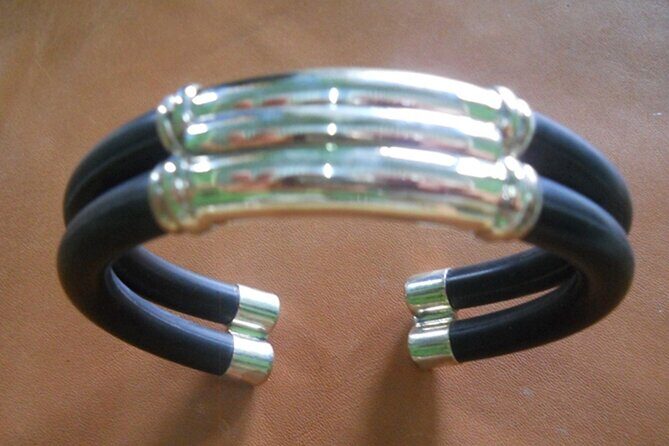
- Want a Bali souvenir you can wear, not just something decorative
- Like making things with your hands and learning by doing
- Prefer private, patient guidance while you try new tools
- Are traveling with a partner, friend, or kid who enjoys hands-on activities
It’s less ideal if you:
- Want a huge, highly detailed piece and don’t want any extra costs
- Hate studio workshops or tool-heavy activities
- Are hoping for a sightseeing-focused afternoon rather than a craft day
If you’re the type who loves temples and art but also wants one day where you do something practical, this is a strong combo. You’ll walk away with craft knowledge you can talk about for years.
Should You Book the Private Traditional Bali Silver Jewelry Making Class?
I’d book it if you want an authentic Ubud-area craft experience with private attention and a real piece of silver you designed and made. The best reason is simple: it’s one of the rare Bali activities where your effort directly turns into a physical keepsake.
My decision checklist for you:
- Pick a design you can finish within the session and silver allowance.
- Plan your transport so you arrive calm, not rushed.
- Confirm the exact silver grams included at booking, especially given the different numbers mentioned in the description.
If those boxes work for you, this class is one of the most satisfying ways to spend a few hours in Bali.
FAQ
How long is the private silver jewelry making class?
The class lasts about 3 hours (approximately).
Where does the class take place?
It takes place in Celuk, Sukawati, Gianyar Regency, Bali. The meeting point is Rajata Silver Class Celuk, Sukawati, Gianyar Regency, Bali, Indonesia.
Is this class private?
Yes. It’s a private tour/activity, and only your group will participate.
What is included in the price?
Included items are silver (5 grams), all tools/equipment, a soft drink or bottled water, snacks, and a private silver class guide.
How much silver do I get, and is there an extra charge?
The included silver is stated as 5 grams. If you use more than 5 grams, there is an extra charge of IDR 50k per gram.
What techniques will I learn?
You’ll learn and practice tools and their usage, sawing, stamping and hammering, soldering, sanding, polishing, and a safety guide for working with silver.
Can I create my own design?
Yes. You can create your own design or take inspiration from samples around the workshop.
Is hotel pickup included?
Return hotel transfer is available for a charge, depending on your area. Pickup is not listed as included.
How much does return hotel transfer cost?
Rates listed are: 450k IDR per car for Sanur and Ubud center hotel area, 550k for Canggu and Nusa Dua/Jimbaran, 500k for Seminyak/Kuta/Legian, and 600k for Uluwatu.
What if the weather is bad?
The experience requires good weather. If it’s canceled due to poor weather, you’ll be offered a different date or a full refund.
More Private Tours





More Tour Reviews




More Ubud Tours
Ubud Tours: how the alternatives stack up
 ★ 5.0
★ 5.0Ubud: Monkey Forest, Jungle Swing, Rice Terrace, and Water Temple



The lists this tour appears in