
Sanur Open Water Course learn diving in 3 Days – Get certified & Dive everywhere
Sanur is a smart place to start. This 3-day PADI Open Water certification puts you on a clear training path, with online theory and guided water work around Sanur Bay. The Bali Diving Academy setup uses small groups and a safety-first approach that matters when you’re learning from scratch.
What I like most is the pool-to-ocean progression: you start in confined water in Sanur, then move into open water on day two. Second, you get real support from professional instructors, and some staff are noted for patience and good English—one standout is Astama.
One consideration: your day-3 site can shift based on conditions (Padang Bai or Tulamben), and the experience is non-refundable, so you’re betting a bit on the weather and timing.
In This Review
- Key highlights (quick read)
- Why Sanur is a good base for your PADI Open Water start
- What you learn (and what “certified to 18 meters” really means)
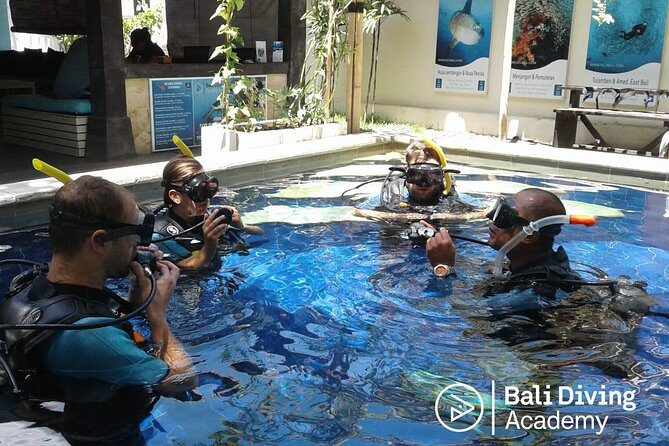
- Day 1 in Sanur: Confined-water skills that make you feel in control
- Day 2 in Sanur Bay: Your first open-water training sessions
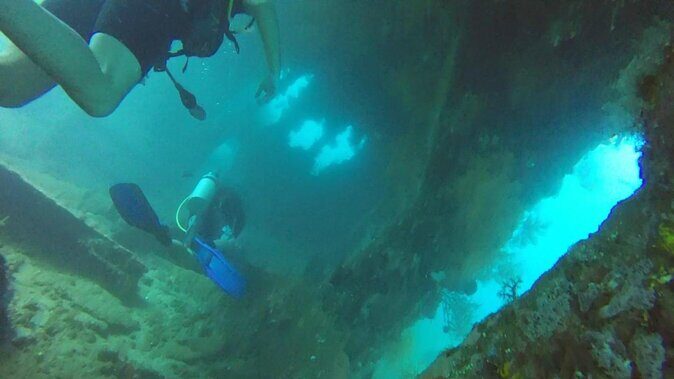
- Day 3 depends on conditions: Tulamben or Padang Bai, plus the shipwreck target
- When Tulamben shows up
- When Padang Bai shows up
- Optional add-on: Nusa Penida on day 3
- Equipment, lunches, and the small-group feel (up to 6)
- Getting there: start time, meeting point, and how the day runs
- Price and value: is $480 a fair deal?
- Instructor style matters: Astama, Benny, and the teaching vibe
- Who should book this course in Bali—and who should consider another plan
- Should you book Sanur Open Water Course (3 days)?
- FAQ
- How many days is the PADI Open Water course?
- Do I need to complete the theory online?
- Where are the water sessions held?
- What depth am I certified for after finishing the course?
- What’s included in the $480 price?
- What happens if weather forces a change or cancellation?
Key highlights (quick read)
- Sanur pool training first, so you get your breathing, buoyancy, and procedures dialed in before open water
- Small group size (max 6), which usually means more personal attention during skills practice
- Theory on PADI e-learning, completed before or during the course and reviewed with your instructor
- Open-water sessions near Sanur Bay, then a day-3 site that may include Tulamben
- USS Liberty Shipwreck is a named target, especially when Tulamben is the day-3 pick
- Flexible option for Nusa Penida on day 3 (pricing depends on your choice)
Why Sanur is a good base for your PADI Open Water start
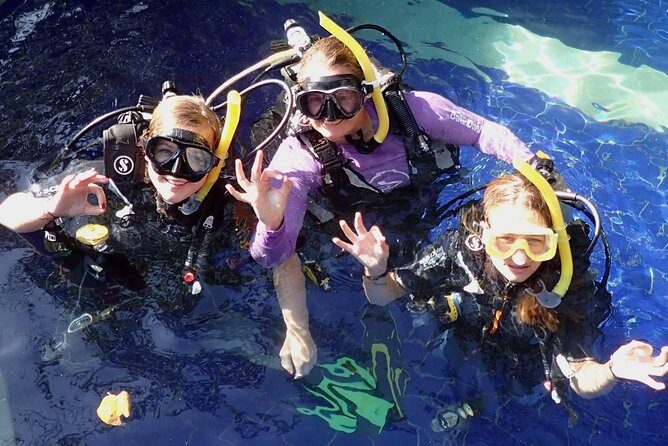
If you’ve been picturing your first scuba moments as pure chaos, this course does the opposite. It’s built like a staircase: knowledge first, then controlled practice, then real-water sessions. The biggest value is that you’re not just doing activities—you’re learning a repeatable system for staying calm and handling your gear.
Bali Diving Academy positions this as a safety-first, small-group course. They also emphasize that instructors are certified and insured, and that they know local reefs and habitats. In plain terms: when conditions or nerves get weird, you want someone who can guide you fast and correctly.
The course is also set up to be realistic for most schedules. It’s 3 days, starting at 9:00 am, with hotel pickup and drop-off and a set daily plan you can organize your trip around.
What you learn (and what “certified to 18 meters” really means)
This is the PADI Open Water level, the entry step that’s recognized worldwide. Your end goal is a certification card that lets you go down to 18 meters when you’re following appropriate diving rules and conditions with proper supervision.
You’ll cover the core fundamentals from two angles:
- Theory: The basics of how scuba works and why things matter (concepts and safety procedures).
- Practical skills: You train those basics using the actual gear, first in controlled conditions and then in open water.
What I like here is the mix of e-learning and instructor review. Completing PADI e-learning before you arrive can save you time. Doing it during the 3 days can work if you’re arriving already in vacation mode. Either way, your instructor reviews your materials so you don’t just click through and hope for the best.
Day 1 in Sanur: Confined-water skills that make you feel in control
Day one is the pool session in Sanur. This is where most first-timers either feel relieved or panic—because this is where you learn how to breathe underwater without fighting your body.
Expect to work on the foundational stuff that keeps the rest of the training smooth:
- getting used to mask airflow and regulator use
- learning basic buoyancy control
- rehearsing procedures under supervision
The main value of starting in a pool is simple: you can practice mistakes safely. You’re not dealing with strong currents, real waves, and surprise underwater scenarios all at once. Your instructor can correct your technique quickly, and you’ll have time to repeat until it clicks.
From past students, Astama is repeatedly described as patient and professional. Another strong example is Benny Wiratno Bunadji, praised for being easygoing while staying sharp on safety and learning—plus good English. If language comfort matters to you, that’s worth considering when you book.
Day 2 in Sanur Bay: Your first open-water training sessions
Day two moves from pool training to two open-water sessions in Sanur Bay. This is the point where scuba stops being a skill drill and starts feeling like the real deal—because now you’re out in open water and dealing with natural conditions.
What makes Sanur Bay useful for a first certification day is that it’s a practical stepping stone. You can focus on applying what you practiced: buoyancy, breathing, situational awareness, and staying calm while the environment adds motion and visibility changes.
Also, this is one of those days where small-group size helps. With a maximum of 6 travelers, you’re less likely to get lost in a big herd. You’re more likely to get quick feedback when something feels off.
If you’re someone who learns faster when you feel supported rather than rushed, this day-structure is your friend.
Day 3 depends on conditions: Tulamben or Padang Bai, plus the shipwreck target
Day three is the big “wow + finish strong” day. You’ll do two open-water sessions in either Padang Bai or Tulamben, depending on conditions.
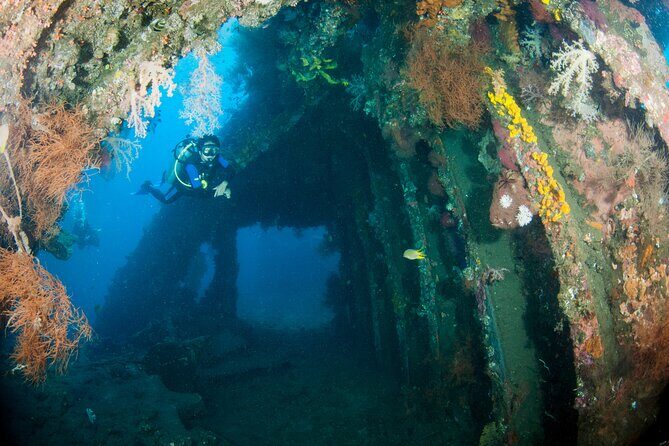
This flexibility is smart. Real ocean conditions don’t care about your calendar. The trade-off is that you’re giving up guaranteed exactness on the location. If you want the most iconic named site mentioned in the plan, Tulamben is the key link because the USS Liberty Shipwreck is specifically called out.
When Tulamben shows up
Tulamben has a reputation for memorable structure, and one course highlight mentioned in feedback is completing training with a shipwreck outing there. Even if you don’t obsess over wreck details, shipwreck dives tend to teach you how to move confidently around structure and manage focus.
When Padang Bai shows up
If conditions steer you toward Padang Bai instead, you still keep your course goals on track. You’re there to complete the final required skills and sessions safely, not to chase a checklist of photo spots.
Optional add-on: Nusa Penida on day 3
On day three, there’s also an option to do training in Nusa Penida, with pricing listed under options. This can be exciting if you want a step beyond the standard course sites. Just note the day is already built for certification completion, so treat the add-on as a bonus, not a replacement for finishing your core sessions comfortably.
Equipment, lunches, and the small-group feel (up to 6)
This course includes:
- Scuba equipment use
- Lunch
- PADI manual and certification materials
- PADI-certified instructor
- Hotel pickup and drop-off
Equipment availability matters a lot when you’re learning. You don’t want to be chasing gear fit on day one. Using the center’s gear also supports safety checks and consistent training setups.
One detail that came up in feedback: people noted equipment being new and up to code, and that records and course steps were handled properly. That’s the kind of boring, important stuff that keeps your learning on rails.
You’ll also see that the group is capped at 6 travelers, which can change the vibe fast. In a small group, instructors can watch technique more closely, and you can ask questions without feeling like your question will slow down the whole operation.
Getting there: start time, meeting point, and how the day runs
You start at 9:00 am. The meeting point is at Bali Diving Academy at the corner of Jl. Sekuta Gg. Kalpataru, Sanur, Denpasar Selatan, Kota Denpasar, Bali 80228.
The experience includes hotel pickup and drop-off, so you’re not stuck organizing transport for a pool day plus two water days. You’ll also return to the meeting point at the end.
A smart mindset for day one: arrive early enough to feel calm. Pool training goes best when you’re not rushed, and you can get your gear fitting and first instructions without stress.
Price and value: is $480 a fair deal?
At $480 per person for about 3 days, the value comes from what’s included, not just the headline price. You’re getting:
- PADI instruction and certification materials
- equipment included
- lunch included
- pickup and drop-off
- multiple water days (pool + open water)
For a first certification, your biggest hidden costs are usually gear rental, guide time, and wasted schedule days if something doesn’t line up. This package removes a lot of that friction.
A couple practical notes:
- A camera isn’t included, but it can be rented.
- Nusa Penida on day three depends on the option price. If you’re trying to keep the trip budget tight, decide in advance whether that add-on is a “nice-to-have” or a “must.”
If you compare this kind of structured, instructor-led course to piecing things together yourself, $480 feels reasonable—especially with the small-group limit and the full set of required sessions.
Instructor style matters: Astama, Benny, and the teaching vibe
A course like this lives or dies on teaching style. When people felt safe and successful, it usually came down to instructors who stayed calm, explained clearly, and corrected without making you feel dumb.
Here’s what stood out:
- Astama: described as patient, professional, and making students feel safe while learning quickly
- Benny Wiratno Bunadji: praised as easygoing but still professional, with very good English and learning that moved smoothly
- Language support: at least one student noted their instructor spoke Italian, which helped learning feel easier
Even the office side seems to get attention. Kadex is mentioned as responding promptly and making booking arrangements well. That matters because last-minute chaos is the enemy of a good first scuba course.
And on the crew side, Aan, Aang, and Made are mentioned for being friendly and helpful during course completion.
Who should book this course in Bali—and who should consider another plan
This course is ideal if:
- you’re starting from zero and want a structured PADI pathway
- you prefer small groups over big class chaos
- you want safety-first instruction with clear steps
- you’d like a course that can fit into a 3-day Bali window
It may be less ideal if:
- you’re expecting every day to be a fixed, guaranteed location with zero weather influence
- you know you’ll stress if the schedule changes based on conditions
- you dislike non-flexible booking terms
For most first-timers, though, the pool-to-Bay-to-day-3 progression is exactly what you want. It turns fear into competence.
Should you book Sanur Open Water Course (3 days)?
I’d book it if you want the practical version of learning scuba: instruction that follows the steps, small-group attention, and a course that finishes with the skills you need for certified depth up to 18 meters.
I would pause if you can’t handle any uncertainty on day three. Your location can shift between Padang Bai and Tulamben, and the shipwreck target depends on the day-3 site. Also, because it’s non-refundable, plan around your travel schedule rather than treating it like a gamble.
If you can bring a calm, learner mindset, you’ll likely walk away with a real skill base—not just a badge.
FAQ
How many days is the PADI Open Water course?
The course runs for 3 days.
Do I need to complete the theory online?
Yes. The theory is done online using the PADI e-learning platform and is reviewed with your certified instructor. You can do it before the course or during the 3 days.
Where are the water sessions held?
Day 1 is a pool session in Sanur. Day 2 includes two open-water sessions in Sanur Bay. Day 3 includes two open-water sessions in Padang Bai or Tulamben, depending on conditions. Nusa Penida on day 3 is also possible with the relevant option price.
What depth am I certified for after finishing the course?
The PADI Open Water certification allows you to dive safely up to 18 meters deep.
What’s included in the $480 price?
Included are lunch, use of scuba equipment, hotel pickup and drop-off, the PADI manual and certification, and a PADI certified instructor.
What happens if weather forces a change or cancellation?
The experience requires good weather. If it’s canceled due to poor weather, you’ll be offered a different date or a full refund.
More Tour Reviews


More Sanur Tours

More Kuta Tours
Kuta Tours: how the alternatives stack up
 ★ 5.0
★ 5.0Nusa Penida day trip: boat, 4 snorkeling, Manta rays & Land tour


The lists this tour appears in