
Sidemen Trekking with Cultural Encounters and Nature Views
Rice fields, temple stops, and no rush. This Sidemen walk is built for unhurried steps and Mt. Agung photo moments, plus local culture that feels practical, not staged. You’ll follow trails through rice country that can be hard to map on your own, so the views stay the main event.
What I like most is how the pace stays easy. You get time for photos and you’re not herded forward like a metronome. Second, the stops add real context, from a temple tied to community identity to viewpoints that connect the farming rhythm with the mountains.
One thing to consider: this is a self-arranged start at the Yellow Bridge, and there’s no hotel pickup. You also need to show up ready to walk, with shoes and long pants.
In This Review
- Key things to know before you go
- Sidemen on Foot: Why This Walk Feels Different
- Pick Your Style: Jungle and Rice, Village Life, or Classic Vistas
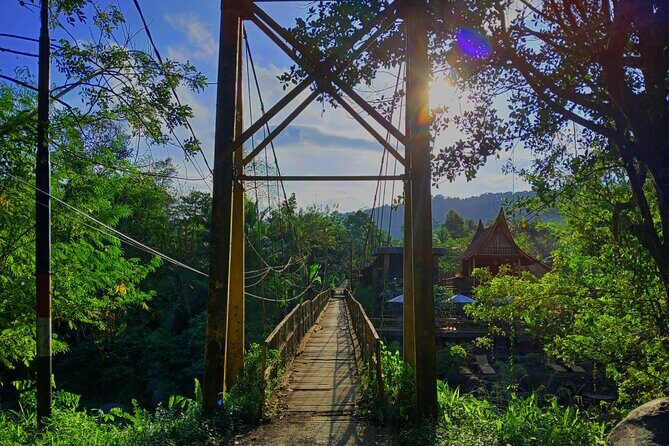
- Yellow Bridge of Yeh Unda: Your Start Point and First Photo Match
- Pura Dalem Desa Adat Dukuh Sakti: Temple Architecture and Community Meaning
- Selisian Views: Mt. Agung in the Background and Farmers in the Foreground
- Cepug Rice View: A Short, Sweet Stretch for Fresh Air and Green Tones
- Lepusa Sidemen Trekking: Where the Route Becomes the Reward
- Pace, Footwear, and What to Bring for a Comfortable 2 Hours
- Price and Value: Getting More Than Scenery for $12.84
- Private and Personal: Why Your Guide’s Style Matters Here
- Who Should Book This Sidemen Trek (and Who Might Skip It)
- Should You Book Sidemen Trekking With Cultural Encounters?
- FAQ
- How long is the Sidemen trekking experience?
- How much does it cost?
- Where do I meet the guide?
- Is hotel pick up or drop off included?
- What’s included in the tour price?
- Do I need to pay for admission at the stops?
- What should I wear for the trek?
- Do I need to bring sun protection?
- Is this tour private or shared?
- Can I cancel for free?
Key things to know before you go
- Meet at Jembatan Kuning Tukad Yeh Unda: the trek starts right at the Yellow Bridge area.
- A private group experience: only your group participates, so you can move at your level.
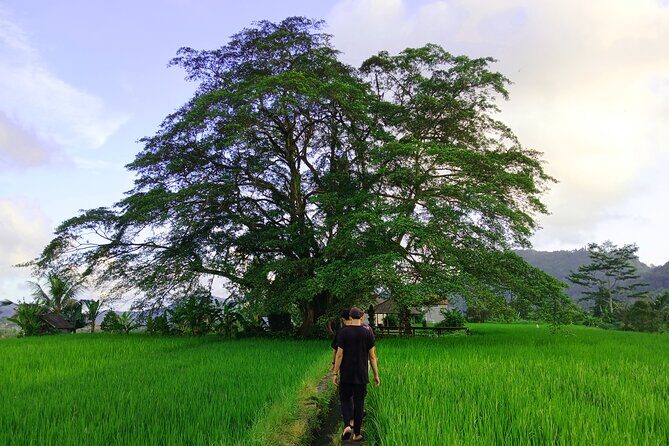
- Rice-field views with Mt. Agung behind them: the scenery is the focus, and you’ll get multiple viewpoints.
- Temple + farming culture: you’ll visit Pura Dalem Desa Adat Dukuh Sakti before heading into the fields.
- Bring proper walking wear: shoes and long pants are required, plus sun protection.
- Bottled water is included: you’ll have the basics for a 2-hour outing.
Sidemen on Foot: Why This Walk Feels Different
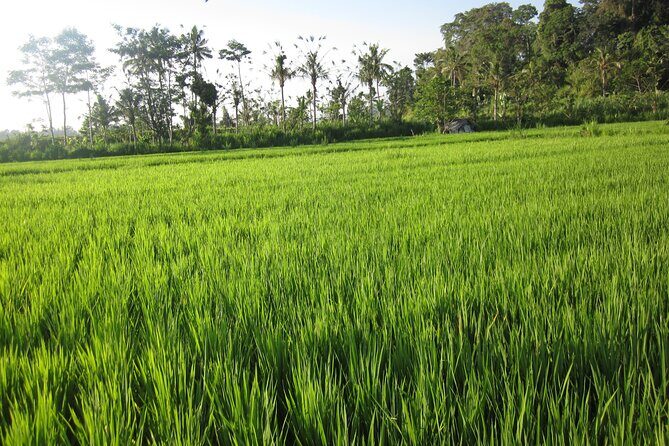
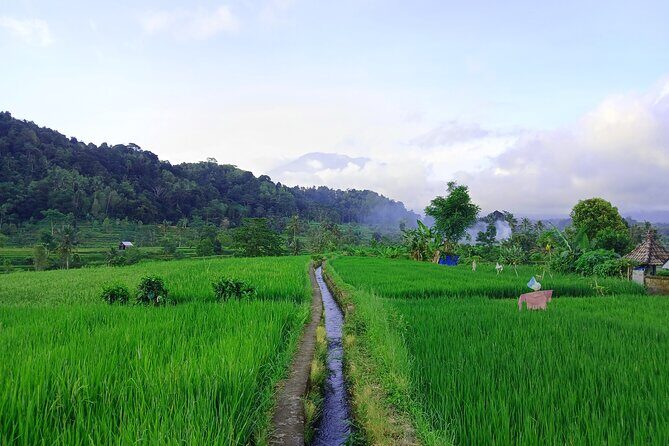
Sidemen is one of those Bali places where the scenery rewards patience. The rice terraces here are not just a backdrop. They guide the route, the pace, and even how you frame your photos.
The smart move with this experience is that it’s not designed like a bus tour with stops bolted on. You’ll walk through rice country at a tempo that lets you actually look. That matters because Sidemen’s best photo moments often come after a few turns, when the terraces line up and Mt. Agung shows itself more clearly in the distance.
And you’ll also get culture that makes sense in context. The route includes a temple stop tied to village identity, then continues north through fields and viewpoints. It’s not about ticking boxes. It’s about watching daily life and land use as part of the same story.
Pick Your Style: Jungle and Rice, Village Life, or Classic Vistas
One of the most useful parts of booking this is that you can choose the theme of your trek. The tour offers three itinerary styles, focusing on jungle and rice terraces, village lifestyles, or classic rice-field vistas.
Here’s how I’d choose your style:
- If you want the easiest win for photos, choose classic rice-field vistas. You’ll spend more time on viewpoints and open sightlines.
- If you want more day-to-day texture, go for village lifestyles. That angle fits better if you like seeing how people live alongside the terraces.
- If you prefer shade and variety in the walk, jungle and rice terraces can break up the open-field stretches.
Even with different themes, the core experience stays the same: short, scenic stops paired with walking time that keeps you close to the farming landscape.
Yellow Bridge of Yeh Unda: Your Start Point and First Photo Match
Your day begins at Jembatan Kuning Tukad Yeh Unda, the bright Yellow Bridge spanning the Yeh Unda River. This matters more than it sounds.
For one, it gives you an instant landmark. When you arrive in Sidemen, having a clear meeting point reduces stress. No guessing where the guide is standing while you’re trying to locate a trailhead.
Second, it sets the tone. The bridge area is calmer and more photogenic than you might expect from a rural start. You can take a few minutes to get your camera settings right and to check the light, especially because Mt. Agung views tend to change as you move.
Practical note: wear shoes from the start. This isn’t a flip-flop walk.
Pura Dalem Desa Adat Dukuh Sakti: Temple Architecture and Community Meaning
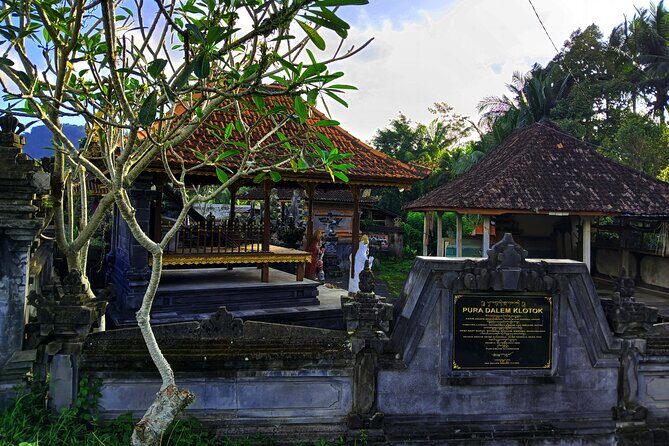
Next up is Pura Dalem Desa Adat Dukuh Sakti, a sacred temple tied to spiritual heritage and cultural identity in the traditional village.
Even if you’re not a temple expert, you’ll benefit from having a guide at this stop because it keeps your attention on what the site represents. You’re not just looking at stone and carvings. You’re seeing how a village frames spirituality as part of everyday life.
Time on this segment is short (about 10 minutes), and that’s a good thing if you’re balancing a trek with viewpoints. You’ll get enough to understand the why, then you’ll move on before your legs get stiff.
Watch your footing and dress appropriately. Long pants are required, and temple etiquette usually means staying respectful with your posture and movement. If you’re unsure, follow your guide’s lead.
Selisian Views: Mt. Agung in the Background and Farmers in the Foreground
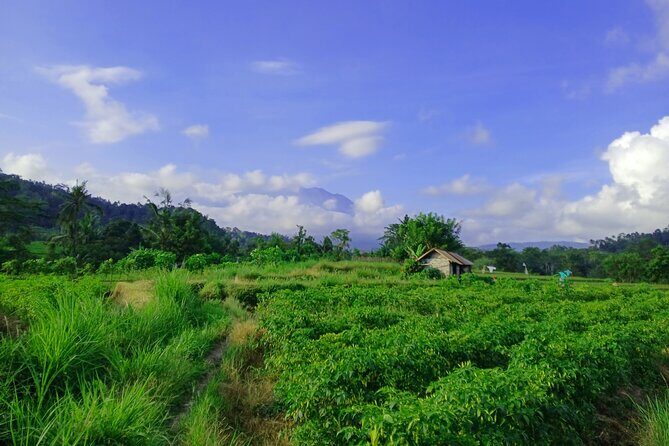
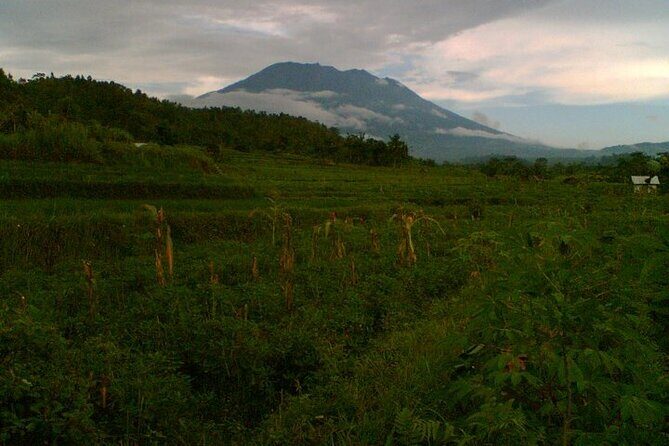
After the temple stop, you head toward the viewpoint known as Selisian Views. This is where the walk starts to feel like the centerpiece: long views, rice fields below you, and Mt. Agung rising in the distance.
The big advantage here is the balance between “big picture” and “real life.” You’re not staring at an empty postcard. You’ll see the active rhythm of local farmers, which brings the farming terraces to life instead of treating them like a static display.
This stop lasts about 45 minutes, which is plenty of time to:
- take a few different angles (some better from slightly different positions)
- pause when clouds shift and Mt. Agung visibility improves
- let your eyes adjust from bright sky to green terraces
One drawback: viewpoints can be sun-heavy. Bring your sun hat and sunglasses, and plan to take shade when your guide suggests it.
Cepug Rice View: A Short, Sweet Stretch for Fresh Air and Green Tones
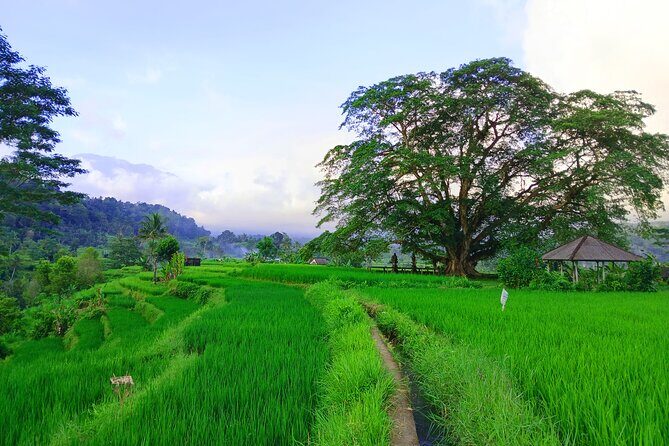
Then you move to Cepug Rice View. This one is shorter (about 20 minutes), but it’s a useful palette cleanser between longer segments.
The description fits what you’ll likely feel in your body: a peaceful atmosphere, a gentle breeze, and wide rice-field views that refresh your senses after walking. It also gives you another chance to photograph terraces from a different angle, which is helpful if you’re trying to get both near and far depth in your pictures.
If you’re trying to keep your photos consistent, use this stop to standardize your style: same camera height, similar framing, then compare results when you’re back home.
Lepusa Sidemen Trekking: Where the Route Becomes the Reward
The walking portion is listed as Lepusa Sidemen trecking (about 30 minutes). This is the part you actually sign up for.
Sidemen trekking only works when the guide helps you find a coherent path. Rice fields are beautiful, but plotting a logical route through them is not always easy on your own. This is why a local guide matters: they know which paths are passable, where the view opens, and when to slow down for the best angle.
Also, the guide’s attitude can change the whole feel of the walk. On one trip, the guide named Gede welcomed guests into his home. That kind of warmth doesn’t just add a story. It makes the route feel like you’re being treated as a person, not a walking ticket.
Language can help too. On another outing, the guide spoke perfect French, which made the cultural context easier to follow without any awkward guessing. If language matters to you, this is a good sign that your experience may come with clear explanations, not just directions.
What to expect during the walk:
- frequent pauses for photos and viewpoint checks
- uneven ground typical of farm paths (even when the route is manageable)
- lots of green, plus distant mountain cues
Pace, Footwear, and What to Bring for a Comfortable 2 Hours
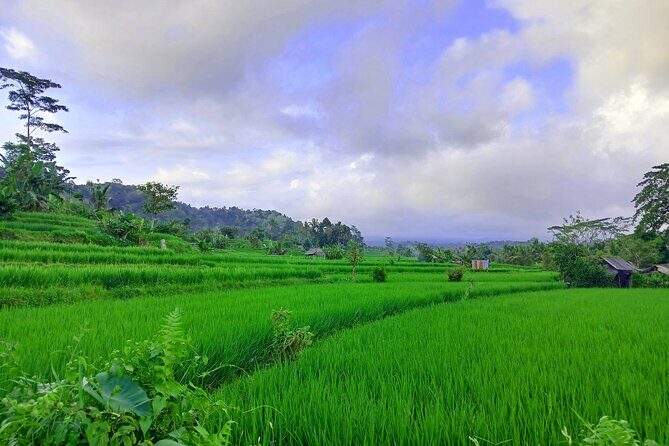
This trek is about 2 hours total (approx.), but don’t treat it like a casual stroll in the park. The route moves between viewpoints and involves real walking through rice areas.
Here’s what you should follow from the practical requirements:
- Shoes are required (bring hiking shoes/boots if you have them)
- Long pants are required
- Wear a sun hat
- Bring sunscreen and sunglasses
- Bottled water is included
If you skip any of that, you’ll feel it faster than you expect. Sun hits hard in open terraces. Mud and wet patches can happen around fields. And rice paths can be slick when the ground is damp.
If you’re deciding what footwear to bring, choose something with grip. You want stable footing more than fashion.
Price and Value: Getting More Than Scenery for $12.84
At $12.84 per person for a roughly two-hour, private guided experience, the value is strong—especially if you compare what you’d spend on transport and a guide separately.
Why the price feels fair:
- You’re paying for guiding through hard-to-navigate trails, plus stops that include viewpoints and a temple visit.
- Bottled water is included.
- It’s private, so you’re not fighting for space in a big group.
What isn’t included matters too. There’s no hotel pickup/drop-off, and you’ll want to budget for tips if you feel the guide earned it. Still, if you can get to the meeting point on your own, the core experience looks like a smart bargain.
This is the kind of trip that works well if you’re spending your Bali budget on a few high-satisfaction, experience-focused outings instead of stacking lots of paid attractions.
Private and Personal: Why Your Guide’s Style Matters Here
A private setup is more than a comfort perk. On a rice-field trek, it changes how the route unfolds.
With a private group, your guide can:
- adjust pace if you want more time for photos
- spend extra minutes on the viewpoint that’s giving Mt. Agung the best line of sight
- keep explanations relevant to what you care about (temple meaning, farming life, or just how the terraces are used)
The stories from Gede especially highlight the human side of this route. When a guide is comfortable enough to share hospitality, the trek often feels less like a checklist and more like a conversation.
Who Should Book This Sidemen Trek (and Who Might Skip It)
This tour makes the most sense for you if:
- you want rice-terrace views without rushing
- you care about local culture, including a temple stop connected to village identity
- you prefer a smaller, private-feeling experience
- you like photography with real context, not only landscapes
You might reconsider if:
- you rely on hotel pickup and don’t want to handle your own arrival at the meeting point
- you hate walking on uneven rural paths
- you’re not willing to follow the dress requirements (shoes and long pants)
Should You Book Sidemen Trekking With Cultural Encounters?
If you want a Bali experience that mixes nature and culture without the chaos, I’d book it. The big win is the combination: rice-field viewpoints framed by Mt. Agung, a temple stop that gives meaning, and walking time that feels paced for looking.
Just go prepared. Wear the right footwear, bring sun protection, and plan to meet at the Yellow Bridge yourself. If you do those things, you’ll get a calm, authentic Sidemen outing that feels worth the modest price.
If you’re choosing between itinerary styles, pick based on your mood: classic vistas for photo focus, village lifestyle for daily-life context, and jungle-and-rice for route variety.
FAQ
How long is the Sidemen trekking experience?
It runs for about 2 hours (approx.).
How much does it cost?
The price is $12.84 per person.
Where do I meet the guide?
You meet at Jembatan Kuning Tukad Yeh Unda (Yellow Bridge of Yeh Unda) in Sidemen.
Is hotel pick up or drop off included?
No. Hotel pick up and drop off are not included.
What’s included in the tour price?
Bottled water is included.
Do I need to pay for admission at the stops?
The listed stops include free admission tickets (including the temple and the viewpoints).
What should I wear for the trek?
You are required to wear shoes and long pants.
Do I need to bring sun protection?
Yes. The tour info recommends bringing a sun hat, sunscreen, and sunglasses.
Is this tour private or shared?
It’s a private activity, and only your group participates.
Can I cancel for free?
Yes. Free cancellation is available up to 24 hours in advance for a full refund.
More Hiking & Trekking Tours


More Tour Reviews




More Ubud Tours
Ubud Tours: how the alternatives stack up
 ★ 5.0
★ 5.0Ubud: Monkey Forest, Jungle Swing, Rice Terrace, and Water Temple
The lists this tour appears in