

Surfing Group Lesson Level 1 Beach Surfer
First-timers can get confident fast. This five-day Level 1 course focuses on getting you on a board with small groups and a real theory-to-practice approach at Legian’s Double Six Beach. I like that you’re capped at no more than five students per coach, and that you don’t have to juggle rentals because equipment is provided (including zinc and a rash guard). One thing to consider: sessions can run early, and surf conditions can include waves that feel big even for beginners.
What makes it practical is the whole setup around you. You get door-to-door round-trip transfers from many key South Bali areas, plus showers, changing rooms, lockers, fresh drinking water, and towel service—so you can actually move on with your day afterward. My other favorite part is the human side: the vibe is consistently described as professional, patient, and safety-minded, with instructors like Budi and Gung named in feedback.
Still, plan around a few realities of a group lesson in Bali. Your exact session time (8 am, 10 am, 1 pm, or 3 pm) can shift based on tides and wind, and food isn’t included, so you may want to eat before or after your lesson depending on your timing.
In This Review
- Key things to know before you go
- Why Legian’s Double Six Beach fits Level 1
- The five 2-hour lessons: theory, practice, practical
- Small groups and patient coaching (Budi and Gung show up)
- All the gear is handled, plus the post-surf comfort
- Pickup and drop-off in South Bali: less travel fatigue
- Lesson times, tides, wind, and why early mornings happen
- The rhythm of your learning week (and what you’ll be practicing)
- What’s included, what’s not, and what that means for value
- Who should book this Level 1 surf lesson
- Practical tips to make your first week smoother
- Should you book this surf lesson course?
- FAQ
- How many lessons are included, and how long is each one?
- What level is this surf lesson course?
- Is surf equipment included?
- Do you provide hotel pickup and drop-off?
- Where does the course start from?
- What should I bring?
- Is cancellation free?
Key things to know before you go
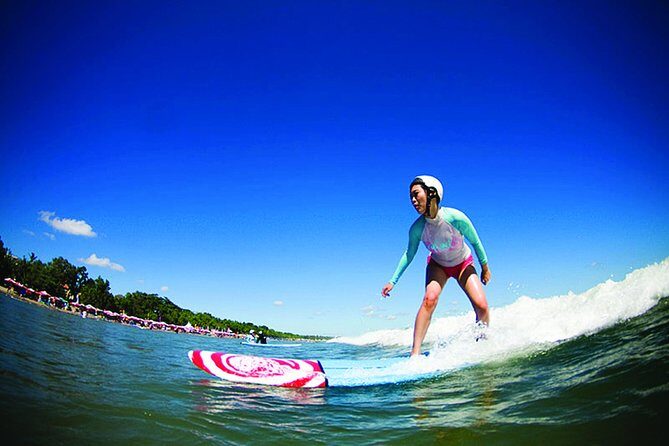
- Tiny 5:1 coaching ratio means you get more individual feedback than typical surf classes
- Five 2-hour sessions spread learning out over multiple days, not crammed into one morning
- All equipment included: board, leg rope, helmet, rash guard/leggings, towel, and imported zinc
- South Bali pickup and drop-off takes the stress out of getting to Double Six Beach
- Photo coverage happens during lessons, and images are available for purchase after the program
- Beach safety is part of the syllabus, so you’re not only practicing pop-ups
Why Legian’s Double Six Beach fits Level 1
Legian’s Double Six is the kind of surf stop where you can learn seriously, but still keep it fun. The program is designed for beginners and true first-timers, with the goal of getting you from awkward paddling to at least consistent attempts at riding waves.
The tradeoff with a famous surf beach is that conditions can vary. You may get a day with waves that are described as good but big, which is still workable for Level 1, but it’s why the course emphasizes ocean safety and beginner technique. If you’re expecting a gentle kiddie-wave curriculum every single day, you might feel surprised—because part of real learning is adapting to what the ocean is doing.
The five 2-hour lessons: theory, practice, practical
This is a 5-day structure, with 2-hour lessons each day. That repeated time is key: you don’t just get one burst of coaching and hope it sticks. You practice, learn the why behind it, then come back the next day to refine.
The course is built on three parts inside your lesson block: theory, practice, and practical. Theory helps you understand what to do and why it matters—especially around safety. Practice is where you repeat technique. Practical is where your skills get tested in a more realistic way on the water.
You also get a student study book during the course, with soft copies you can download from the school’s website. That’s useful because it gives you something to review after you’re dry, showered, and ready to remember what you learned.
Rip Curl School of Surf photographers take photos during your sessions. The images are for sale after you finish, so if you like progress souvenirs, plan to decide later once you’ve had a chance to see what they captured.
Small groups and patient coaching (Budi and Gung show up)
The biggest quality signal here is the coaching ratio: a maximum of 5 students per instructor/assistant. In a surf setting, that matters more than people think. When you’re learning balance, timing, and ocean-reading, you need corrections in the moment—especially after a wipeout.
From the feedback, instructors are described as kind, professional, and patient. People also mention feeling safe and welcome, which is exactly what you want in your first week on the water. Names like Budi and Gung come up in the kind of “they taught us well” way that suggests more than just a scripted checklist—they’re watching you closely and adjusting instruction.
One more point: this style of teaching tends to reduce frustration. If you’re trying hard but not getting it, extra attention and calm coaching can make the difference between giving up and improving each session.
All the gear is handled, plus the post-surf comfort
You save a lot of hassle with courses that include real gear, not just a board. Here, your equipment package covers the surf basics and the comfort extras: surf board, leg rope, and a helmet, plus a Rip Curl rash guard and leggings. The program also includes imported zinc, along with sealed drinking water during the lessons.
You don’t need to hunt for sunscreen or worry about forgetting something small that actually matters. The course overview also lists sunscreen in what’s included, which pairs nicely with the zinc for sun-protection days.
After you finish your water time, the setup is practical. You’ll have fresh water shower facilities, soap and shampoo, towels, private changing rooms, and individual lockers. That means you can rinse off salt and sand properly and not spend your afternoon feeling grimy.
The one clear item not included: you’ll need to bring your swimsuit (bikini or board shorts). Also, towel is included, so you can travel lighter than you would for a DIY day.
Pickup and drop-off in South Bali: less travel fatigue
Getting from wherever you’re staying to the beach can eat half a day in Bali traffic. This course builds in door-to-door round-trip transfers from a long list of South Bali areas: Legian, Seminyak, Oberoi, Canggu, Kuta, Jimbaran, Uluwatu, Nusa Dua, and Sanur.
You start at the Rip Curl School of Surf (with the meeting point listed at Hotel Prama Sanur Beach area). For most people staying in those covered zones, pickup and return is the difference between squeezing in a lesson and actually enjoying it.
The main consideration is that the lesson schedule gets confirmed one day in advance. That’s normal for surf timing, but it does mean you can’t fully lock your plans for the day until confirmation comes through. If your itinerary is tight, keep your mornings and early afternoons more flexible.
Lesson times, tides, wind, and why early mornings happen
Your sessions can be scheduled at 8 am, 10 am, 1 pm, or 3 pm. The surf school also notes that different disciplines and levels may require different tides, wave size, and wind conditions. In plain terms: they’re aiming to match you to workable water rather than forcing the same wave pattern every day.
That’s why early mornings are often recommended. Even if you’d rather sleep in, this course is built around the idea that morning can give you better conditions. I’d treat the schedule as part of the learning experience: more comfortable water often helps you get your best attempts done in that 2-hour window.
The rhythm of your learning week (and what you’ll be practicing)
Even without a written stop-by-stop itinerary, the learning rhythm is easy to understand because each day repeats the core parts. You’ll have classroom-style theory inside the lesson block, then you’ll get in the water for hands-on practice. The practical portion is where safety knowledge and technique come together as you try riding and responding to real wave behavior.
By the end of five sessions, your progress should show up in small but important ways: better positioning, steadier attempts at turning, and stronger ocean safety instincts. Reviews consistently highlight improving each time and feeling safe, which fits how this program is structured.
Also, the study book helps connect what you feel on the board to what you learned off the board. That bridge is what turns accidental progress into repeatable skill.
What’s included, what’s not, and what that means for value
At $155 for about five days, you’re paying for more than instruction. You’re paying for time on water (10 hours of 2-hour lessons), plus the convenience layer: gear, transfers, and shower and changing facilities.
Here’s where the price feels justified based on what’s included:
- Equipment included: board, leg rope, helmet, rash guard/leggings
- Sun protection included: zinc (and sunscreen is mentioned in the overview)
- Comfort included: towels, lockers, changing rooms, fresh showers, soap, shampoo
- Convenience included: pickup and return from many South Bali locations
- Student support included: study book and downloadable soft copies
- Safety included: one million USD liability insurance
- Refreshments: tea, coffee, and fruit are included in the overview, and fresh fruit is noted after lessons
What’s not included is also important:
- Food isn’t included.
- You need to bring your swimsuit.
- Transport outside the covered pickup zones would be on you.
If you’ve ever done a surf day where you had to rent gear, buy sunscreen, find a place to shower, and still fight transit, this course usually feels like a smoother deal. If you live far outside the transfer coverage areas, the value can drop because you’d need extra ground transport not covered.
Who should book this Level 1 surf lesson
I think this course is a great match if:
- you’re a true beginner or still early in learning
- you want structured progress across five days
- you’d like small-group coaching rather than a crowded class
- you appreciate having showers and lockers handled for you
- you’re okay with tides and wind meaning your session time may shift
You should pause and think twice if:
- you want advanced technique work (this is Level 1 focused)
- you hate early starts and can’t flex your schedule for tides and conditions
- you’re counting on a full meal included (food is not included)
The course also notes travelers should have a moderate physical fitness level. That doesn’t mean you need to be an athlete; it just means you should be comfortable paddling, getting up, and spending time in the water.
Practical tips to make your first week smoother
I’d treat this like a week-long skill class, not a random beach activity. Wear the included rash guard and be ready to reapply sun protection because you’re on the water.
Bring a swimsuit you don’t mind getting sandy. Then plan a simple pre-lesson snack strategy since food isn’t included. After your lesson, take advantage of the showers and fresh-water setup so you’re not stuck in salt-stained clothes for the rest of the day.
If your schedule is confirmed late, don’t panic. Surf timing changes based on conditions, and that’s part of learning safely and effectively.
Should you book this surf lesson course?
Yes, if you want a beginner-friendly surf week with small-group coaching, equipment handled, and an easy South Bali pickup system. At $155, the value comes from the package: instruction plus gear plus comfort plus transfers. That’s a lot to get in one bundle, especially for your first time surfing.
If you don’t mind putting in a bit of patience for wave conditions and early-ish session times, this is a smart way to get from zero to at least your first real wave attempts. Just pack your swimsuit, eat on your own schedule, and be ready for the ocean to be the ocean.
FAQ
How many lessons are included, and how long is each one?
You get five lessons, and each lesson is about 2 hours.
What level is this surf lesson course?
This is a Level 1 course, aimed at beginners and people who are still learning.
Is surf equipment included?
Yes. Your equipment is included, including the surf board, leg rope, and helmet, plus the school provides a rash guard/leggings.
Do you provide hotel pickup and drop-off?
Yes. Pickup and transfer back to your hotel are included for many South Bali areas listed in the course details.
Where does the course start from?
The meeting point is listed at the Rip Curl School of Surf, with the start point given at Hotel Prama Sanur Beach area. The activity ends back at the meeting point.
What should I bring?
You should bring your swimsuit (bikini or board shorts). The program provides other key items like towels, showers, and zinc.
Is cancellation free?
Free cancellation is available, and you can cancel up to 24 hours in advance for a full refund. If the experience is canceled due to poor weather, you’ll be offered a different date or a full refund.
More Workshops & Classes




More Tour Reviews





More Kuta Tours
Kuta Tours: how the alternatives stack up
 ★ 5.0
★ 5.0Nusa Penida day trip: boat, 4 snorkeling, Manta rays & Land tour





The lists this tour appears in