Bali Airport Transfers Service To Ubud, Uluwatu, Pecatu

Bali Airport Transfers Service To Ubud, Uluwatu, Pecatu - Meet your Bali Wow driver: mobile ticket and arrival sign

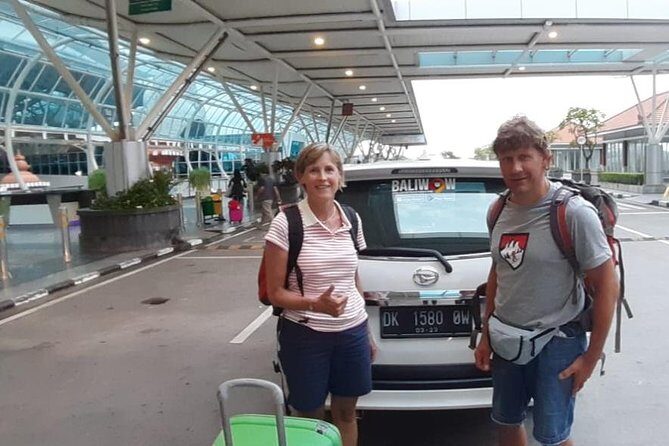
Bali is easier when you skip the taxi chaos. This pre-booked airport transfer takes you from Ngurah Rai to places like Ubud, Tanah Lot, Uluwatu, or Pecatu in air-conditioned comfort, with a driver ready at arrivals. I especially like the meet-and-greet sign and the WiFi on board that helps you stay on top of maps and messages right away.

The big watch-out is the luggage rules and what happens if a driver doesn’t show up. You’re limited to one suitcase plus one carry-on per traveler, and extra/oversized items can mean extra fees paid locally. And yes, there’s at least one scary case of an arrival pickup that never happened, so have a backup plan in mind.

Key highlights
Bali Airport Transfers Service To Ubud, Uluwatu, Pecatu - Key highlights

  • Private door-to-door ride with air-conditioned comfort
  • Personalized meet-and-greet sign at arrivals, not another guessing game
  • WiFi and bottled water included during the trip
  • Simple luggage limits: one suitcase + one carry-on per traveler
  • Extra charges locally if you bring more or oversized gear (like surfboards or golf clubs)
  • Private group transfer with only your group in the vehicle

A private door-to-door start at Ngurah Rai
Bali Airport Transfers Service To Ubud, Uluwatu, Pecatu - A private door-to-door start at Ngurah Rai
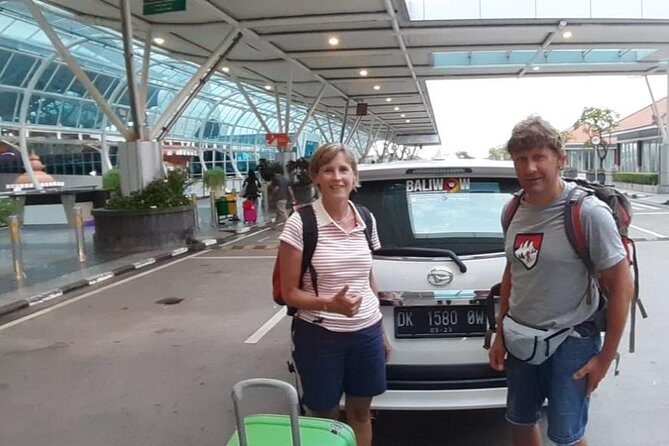
The main appeal here is straightforward: you land in Bali, and you leave with a driver. No taxi line. No arguing over pricing. No hunting for a rideshare app while your bags are getting heavier by the minute. The ride is set up as a private transfer from Ngurah Rai Airport to your selected Bali area.

The service is offered through Bali Wow, and the duration is listed at about 45 minutes. Real-world trip time can stretch with traffic, but planning for “about an hour” is a safe mindset on arrival days. This is also a good fit if you’re arriving with kids or anyone who just wants to get to the villa and exhale.

Meet your Bali Wow driver: mobile ticket and arrival sign

Bali Airport Transfers Service To Ubud, Uluwatu, Pecatu - Meet your Bali Wow driver: mobile ticket and arrival sign
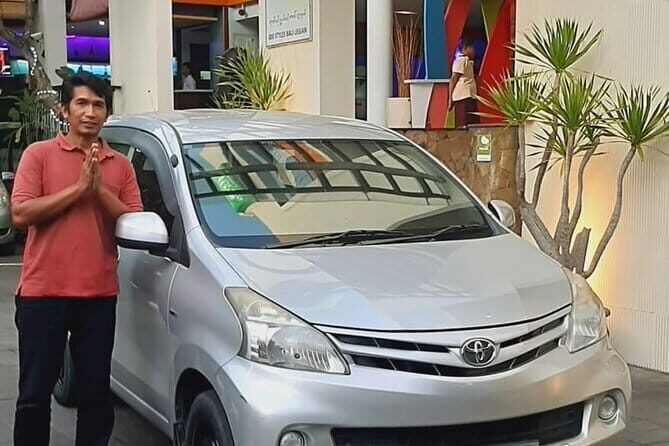
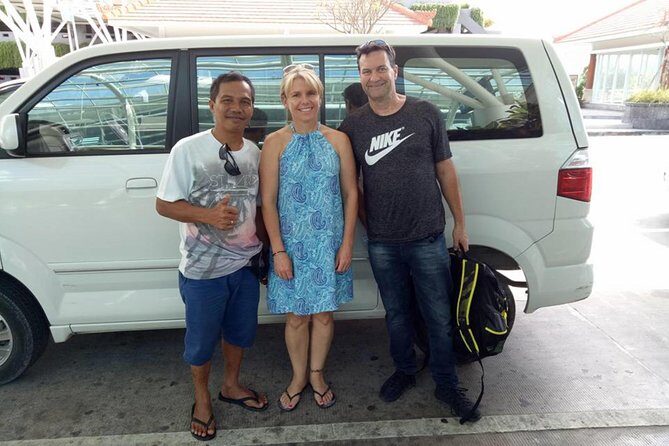
You get a mobile ticket, so you’re not juggling printed confirmations. The driver is meant to meet you in arrivals using a personalized meet-and-greet sign, which is exactly what you want when it’s crowded, loud, and humid.

This kind of handoff matters. Airport arrivals can be confusing even when you speak the language. A clear sign reduces the chance you’re walking past the wrong person with the right shirt and the wrong face.

Also, the driver can help with luggage, which sounds small until you’re standing there with a rolling suitcase that refuses to roll properly on that first step off the curb. If you need currency exchange support, the overview says the driver can help with that too.

45 minutes of air-conditioned comfort (and what the ride actually gives you)
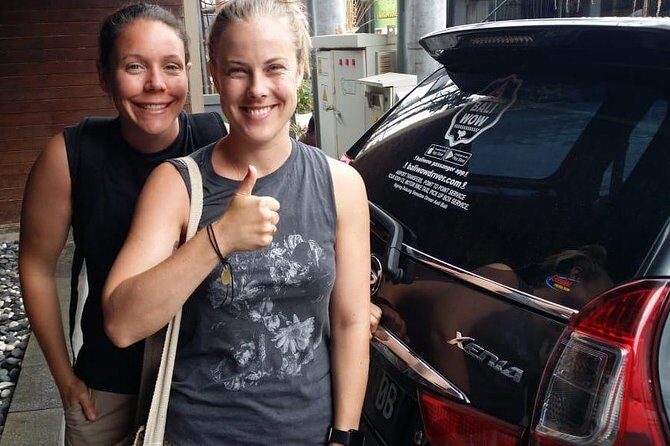
Bali Airport Transfers Service To Ubud, Uluwatu, Pecatu - 45 minutes of air-conditioned comfort (and what the ride actually gives you)
A transfer like this is about more than getting from A to B. It buys you time and calm at the start of your trip. You’ll be in a private vehicle, and the ride is listed as air-conditioned, which in Bali’s heat is a quality-of-life upgrade.

The included basics are solid:

  • Bottled water
  • WiFi on board

WiFi can be more than a perk. It helps you confirm directions to your accommodation, check message updates from your driver or hotel, and handle any arrival-day admin without sprinting across the airport to find signal.

One practical point: the transfer is described as private transportation, meaning you’re not sharing with strangers. That’s a big deal if you’ve got luggage that needs extra space or you just don’t want to think about anyone else’s timing.

Choosing your drop-off: Ubud, Tanah Lot, Uluwatu, or Pecatu

This transfer doesn’t stop at multiple sights. Your “itinerary” is basically one smooth leg from the airport to your chosen destination area. The trade-off is simple: you’re not doing sightseeing on the way, but you are getting to your real plans without detours.

Here’s how to think about your destination choice:

  • Ubud: If you’re planning an interior base, Ubud is often a go-to area for people who want to be closer to Bali’s central sights. The downside is that traffic can be a factor on arrival days, so give yourself breathing room.
  • Tanah Lot: Tanah Lot is typically chosen when you want a temple/coastal-area feel. The benefit is the location style. The consideration is that you may have slightly more planning around timing if your first day depends on a specific sunset window.
  • Uluwatu: This is a popular southern destination for visitors who want dramatic coastal views. Your arrival-day reality check: getting there by car can mean winding roads and occasional traffic slowdowns, so keep your luggage secure and ready.
  • Pecatu: Pecatu is another southern option that often works well for beach-and-sun plans. Like Uluwatu, you’re trading simplicity (one ride) for the fact that southern routes can still feel busy depending on the time you land.

No matter which one you pick, the big advantage of this service is that it takes you directly to your base area. That’s a real help when you’ve been traveling all day and you just want your room keys, not another decision.

Luggage rules and extras: what you can bring
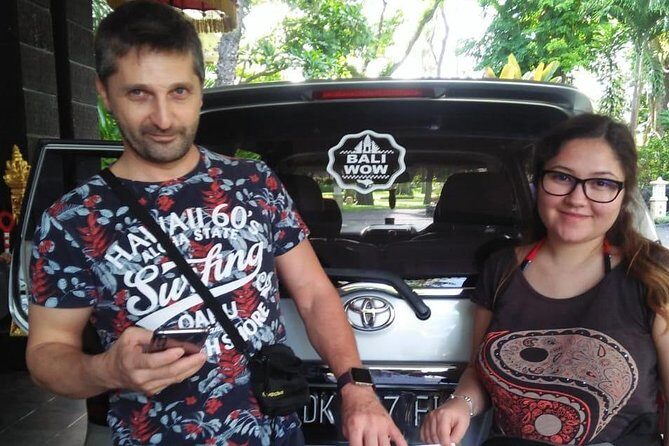
Bali Airport Transfers Service To Ubud, Uluwatu, Pecatu - Luggage rules and extras: what you can bring
This transfer is friendly toward normal travel loads, but it has clear limits. Each traveler is allowed a maximum of:

  • one suitcase
  • one carry-on bag

If you’ll bring additional or oversized luggage—the example list includes surfboards and golf clubs—you must advise at booking time. Extra charges apply and must be paid locally.

That local-payment detail matters for planning. If you’re bringing gear, I’d treat it like an expense you should expect, not a surprise you want to negotiate after arrival.

Also, wheelchair access is listed as available. If wheelchair assistance is required, you need to advise at booking.

WiFi, water, and the small comfort wins

It’s the small things that make airport transfers worth paying for. Here you get WiFi on board and bottled water included. That’s not just nice—it’s practical.

You can:

  • check your accommodation pin location once you’re leaving the airport
  • manage messages without burning through your phone data
  • relax your group while you’re still in “arrival mode”

The service also claims the driver can help with luggage and currency exchange if required. Even if you don’t use those services, it signals that the driver is expected to handle arrival pressure, not just drive.

And because it’s private, you’re not dealing with last-minute bathroom stops or luggage reshuffling for people you didn’t meet five minutes ago.

Value check: is $26 per group a good deal?

The price is listed at $26.00 per group (up to 4). That’s not the cheapest thing you’ll find in Bali, but it’s often a smart value on arrival day because it replaces multiple hassles at once.

Here’s how I’d judge value for you:

  • If you’d otherwise pay for a taxi and still spend time figuring out the right pickup and negotiating, pre-booking can end up feeling like a bargain.
  • If your group includes luggage-heavy travelers, the “one car, your group only” setup can save time and stress.
  • If you care about privacy and timing, a private transfer has a clear payoff.

That said, value depends on whether you match the service to your needs. If you’re traveling with lots of extra gear beyond the suitcase and carry-on rules, you’ll want to factor in potential excess-luggage fees paid locally.

One more note: the trip is about 45 minutes. When your transfer is short, you’re paying mainly for reliability and convenience. When it’s long, you’re paying for comfort and reduced friction. Either way, you’re buying peace of mind.

The main risk I see (and how to protect your arrival)

A pre-booked transfer should reduce risk. But no system is risk-free.

One of the major downsides shown in the experience record is a driver no-show situation. In that case, there was no contact, and the group had to scramble and take an expensive taxi to their villa.

I can’t help you predict when a rare failure happens. But I can help you reduce the damage if it does. Here are common-sense safeguards that cost you almost nothing:

  • Keep your accommodation address details handy in offline format (screenshots help).
  • Arrange a realistic buffer for arrival-to-villa time so one delay doesn’t derail the rest of your day.
  • Have a fallback plan for a taxi or another transfer option if the pickup fails.

Pre-booking still makes sense for most people. Just don’t treat it like magic. Treat it like a plan, with a backup.

When this transfer is a great fit (and when it isn’t)

This is a strong choice if:

  • you want door-to-door convenience right after landing
  • you’re traveling with family or a small group and luggage space matters
  • you like the idea of a meet-and-greet sign rather than roaming arrivals
  • you want WiFi and bottled water during the ride

It may not be your best option if:

  • you have unusual, oversized cargo and you’re not sure you’ll meet the luggage rules
  • you’re extremely time-sensitive and can’t absorb a delay if something goes wrong with pickup coordination

Also check your group size. The pricing is per group up to 4, but the highlights mention groups with luggage and talk about up to five people. If you’re right on the edge, confirm vehicle capacity during booking so everyone is comfortable.

Should you book this Bali airport transfer?

If your top priority is a smooth start—skip the taxi hunt, get to your base area fast, and arrive with your group settled—this transfer makes a lot of sense. The included comfort items (air-conditioned ride, WiFi, bottled water) help justify the price, especially when you’re landing after a long journey.

I’d book it when your luggage is straightforward and you know exactly where you’re going: Ubud, Tanah Lot, Uluwatu, or Pecatu. For added safety, plan a little buffer time and keep a backup taxi idea in your back pocket.

If you’re bringing oversized gear, don’t assume. Mention it early so you know what extra charges might apply. And if you’re the kind of traveler who gets anxious about rare mishaps, prepare like it’s a normal plan with a normal backup, not a perfect fairy tale.

FAQ

How much does the Bali airport transfer cost?

It’s listed at $26.00 per group (up to 4).

How long is the transfer from Bali’s airport?

The duration is approximately 45 minutes.

How do I find the driver at the airport?

The driver provides a personalized meet-and-greet sign at arrivals.

What ticket do I receive?

You get a mobile ticket.

Is this a private transfer?

Yes. It’s private transportation, and only your group participates.

What’s included in the price?

Included are private transportation, WiFi on board, and bottled water.

What are the luggage limits?

Each traveler is allowed a maximum of one suitcase and one carry-on bag. You must advise at booking if you have additional or oversized luggage (extra charges apply locally).

Is the service wheelchair accessible?

Yes, it’s wheelchair accessible. You need to advise at booking if wheelchair assistance is required.

What’s the cancellation policy?

Free cancellation is available. You can cancel up to 24 hours in advance for a full refund. Cancellation within 24 hours is not refunded.
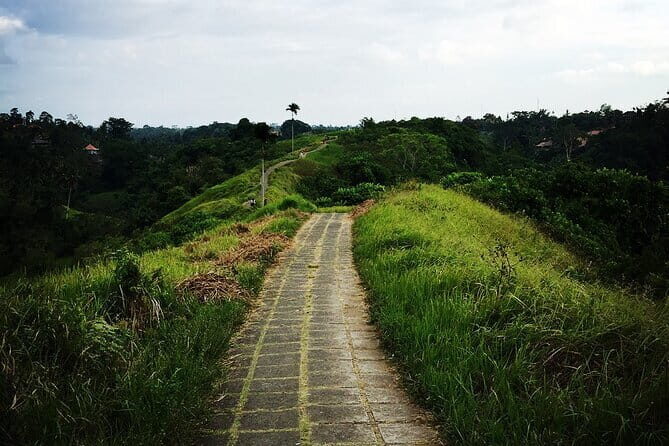

Kintamani Volcano View Tour

Kintamani Volcano View Tour - Stop 1: Tegenungan Waterfall and the easy way to enjoy it

Sacred water and big views make this day fly by. This private Kintamani Volcano View Tour strings together Bali classics—temples, a waterfall, and active-volcano scenery—with enough flexibility to move at your own pace. You start in Ubud, roll through scenic countryside, and end with a convenient drop-off back in town.

I especially like two parts of the plan: you get hotel pickup and drop-off in a private vehicle, which saves you from the usual taxi shuffling, and you spend real time at Tirta Empul where people come for the ancient cleansing ritual. The coffee-and-view stop near Mount Batur also gives you a calm break without needing extra planning.

One thing to consider: several stops have steps and uneven ground, and the day runs about 8 to 9 hours, so bring a moderate fitness level and smart casual shoes you can walk in for long stretches.

Quick hits before you go

Kintamani Volcano View Tour - Quick hits before you go

  • Private guide attention: you’re not waiting behind other groups for explanations.
  • Ancient cleansing ritual at Tirta Empul: a meaningful stop, not just a photo stop.
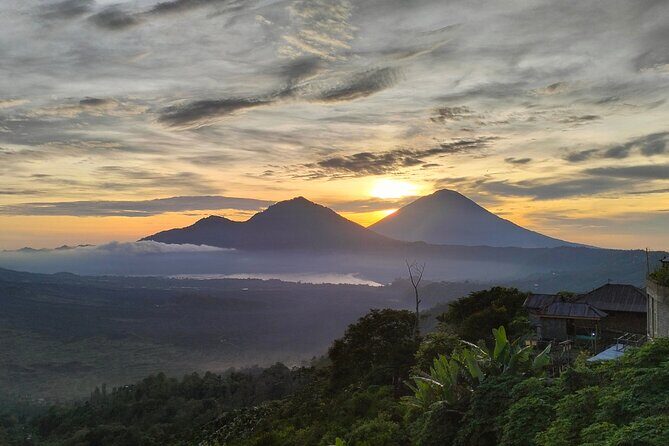
  • Kintamani day views: time at Mount Batur to pair volcano scenery with a coffee break.
  • Tegenungan Waterfall + Tirta Empul timing: a good mix of nature and culture.
  • Ubud last-hour flexibility: you can choose between the art market or a ridge walk before you’re dropped.

A Ubud day that balances temples, water, and volcano views

This tour makes a strong case for doing a full day in one smooth route. Starting at 8:00 am, you’re set up for a long but well-paced day: waterfall, temple sites, agriculture and local produce, then Mount Batur’s volcanic viewpoints before finishing with time back in Ubud.

What makes it work is the mix. Bali can be two different trips in one day—spiritual and scenic—and this itinerary tries to give you both. You’re not bouncing around randomly, and because it’s private, you can usually adapt how much time you want for photos, walking, or resting.

Also, your guide isn’t just a driver. You’ll get a driver/guide on a private vehicle, with bottled water included. That matters on a day like this because it keeps the focus on the places you came for.

Private pickup and a route built for comfort

Kintamani Volcano View Tour - Private pickup and a route built for comfort
Hotel pickup and drop-off are included, which is a big deal in Bali. It reduces friction and saves time you would otherwise spend coordinating rides or trying to find the right meeting spot.

Because it’s private, you’re not stuck moving on a strict group schedule. You can go at your own pace, and that flexibility helps at stops like:

  • the waterfall, where you might want to dip or just watch from the edges
  • the rice terrace, where you may want to slow down for viewpoints
  • Ubud at the end, where you can choose between the art market or a walk

You’ll also be on a private vehicle, which is usually the difference between a stressful day and a relaxed one. The tour includes a fuel surcharge and bottled water, so you’re not constantly managing little extras just to keep moving.

Dress code is smart casual, and the tour operates in all weather conditions. In practice, that means you should treat the day like it could involve hot sun, humidity, and maybe sudden rain—dress accordingly.

Stop 1: Tegenungan Waterfall and the easy way to enjoy it

Kintamani Volcano View Tour - Stop 1: Tegenungan Waterfall and the easy way to enjoy it
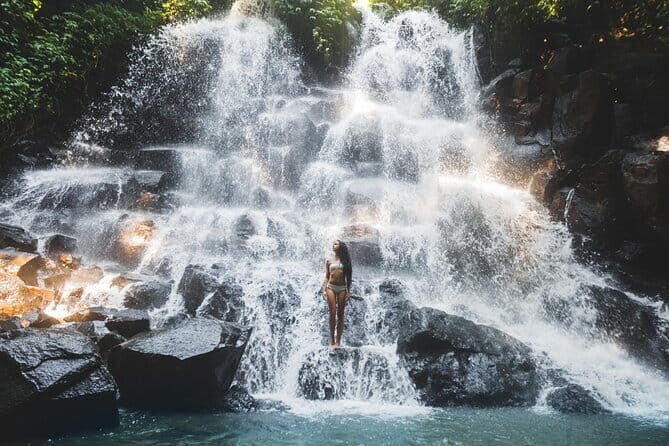
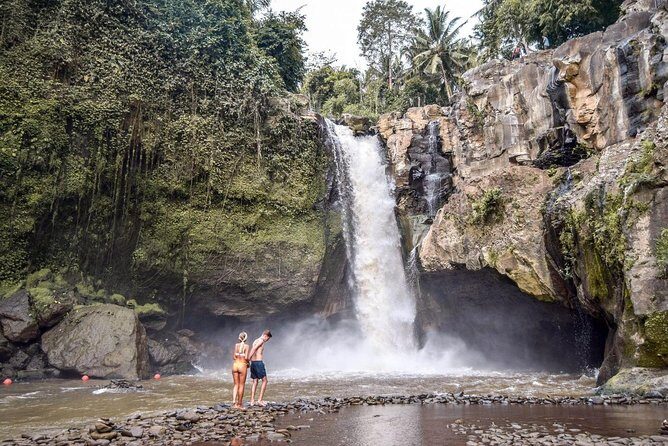
Tegenungan Waterfall is the first major nature stop, with about 2 hours on the schedule. You can splash yourself for photos, listen to the sound of the falls, and enjoy the clear spring water area. If you’re the kind of traveler who likes nature but doesn’t want a hike-first philosophy, this is a straightforward start.

A practical tip: plan for damp surfaces and a quick switch in mindset. Waterfalls can be slippery, and the ground near viewing spots can be uneven. Bring footwear you trust.

The admission ticket isn’t included, so if you’re budgeting, add that cost. Even with that, it’s a good opener because it sets an energetic tone before you move into temples and cultural stops.

Stop 2: Gunung Kawi Temple, also called Valley of the Balinese Kings

Kintamani Volcano View Tour - Stop 2: Gunung Kawi Temple, also called Valley of the Balinese Kings
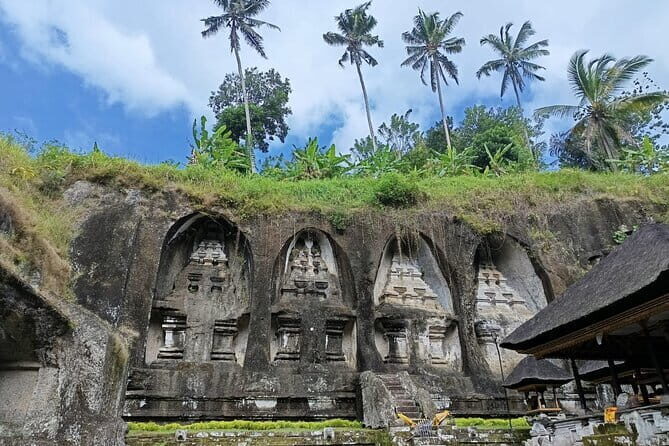
Next comes Mount Kawi (often associated with the Valley of the Balinese Kings). You’ll spend about 1 hour here, and it’s described as an 11th-century temple and funerary complex in Tampaksiring.

This stop is valuable because it’s not trying to be flashy. It’s about scale, age, and the feeling of walking into a place that was designed for reverence. If you’re interested in how Bali’s royal and religious history connects, this is the kind of stop that makes the day feel grounded.

Admission isn’t included here either, so include that in your math. Also, because it’s a temple site, dress and behavior matter: keep things respectful and expect areas that are not meant for loud posing or inappropriate footwear.

Stop 3: Tirta Empul Temple and the cleansing ritual

Kintamani Volcano View Tour - Stop 3: Tirta Empul Temple and the cleansing ritual
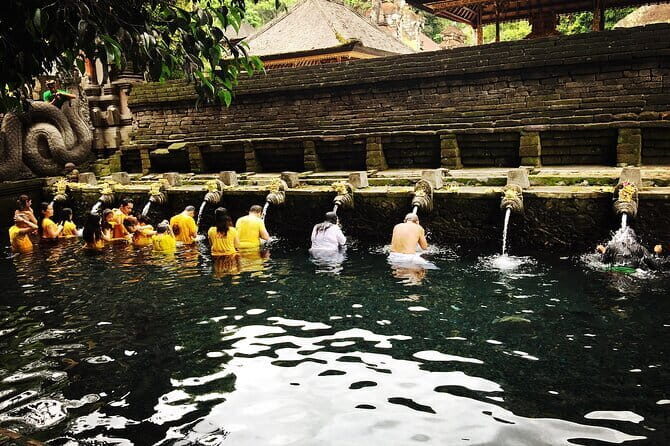
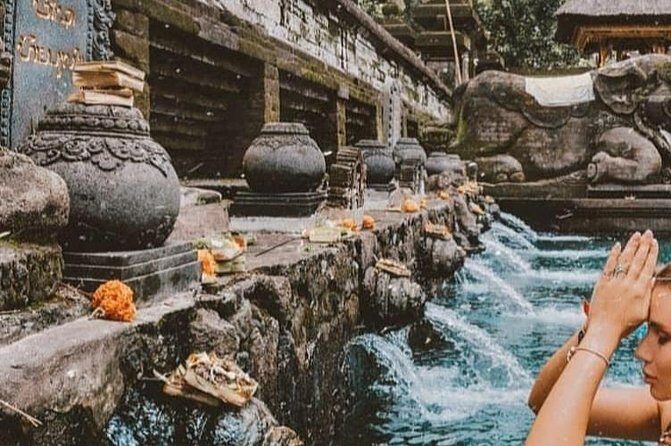
Tirta Empul is the spiritual centerpiece. You’ll have about 1 hour and it’s specifically known for the cleansing and purifying ceremony that draws visitors from all over the world as well as Balinese locals.

The tour description also notes that you may even get to see the cleansing ritual at Empul Temple. That can be one of the most memorable moments of the whole day—not because it’s a performance, but because it gives you a window into how people practice devotion.

How to get the most out of this stop:

  • be ready to observe quietly rather than treat it like a show
  • give people space during the ritual areas
  • plan for time where you’re looking, not just walking

Admission isn’t included, so again, budget for entry fees. If you want to understand what you’re seeing, this is where a good guide matters. In particular, one guide associated with this tour—Pak Gede Arta—is praised for being friendly and attentive, and for explaining the history and significance of each location. That kind of framing is what turns a temple visit from scenery into understanding.

Stop 4: Susut agriculture area and local stalls

Kintamani Volcano View Tour - Stop 4: Susut agriculture area and local stalls
After temples, the itinerary shifts into everyday Bali life. Susut is known for agriculture and fresh produce—vegetables, fruits, and bamboo. You’ll have about 1 hour here, with a chance to stop by local stalls to buy items like fresh fruit, flowers, spices, and other goods.

This is a great break from standing still. It’s also one of the easiest places to grab small gifts or ingredients to remind you of the day. Even if you don’t buy much, the stall stop adds texture that you don’t get from only scenic and sacred sites.

Admission is listed as free for this segment, which helps keep the day’s costs predictable. Just remember you’ll likely want cash or an easy payment method for small purchases.

Stop 5: Mount Batur viewpoints and coffee with a view

Kintamani Volcano View Tour - Stop 5: Mount Batur viewpoints and coffee with a view
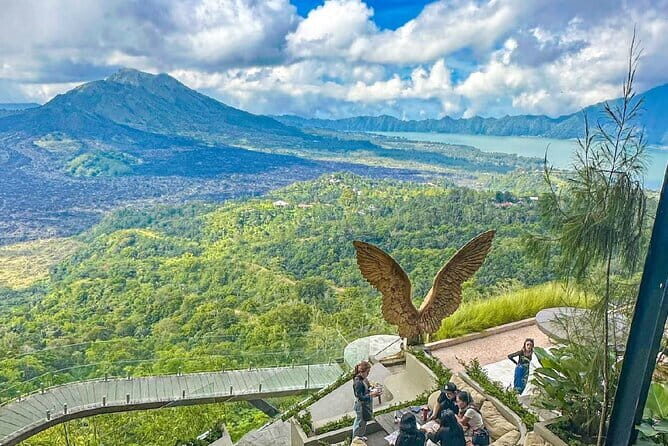
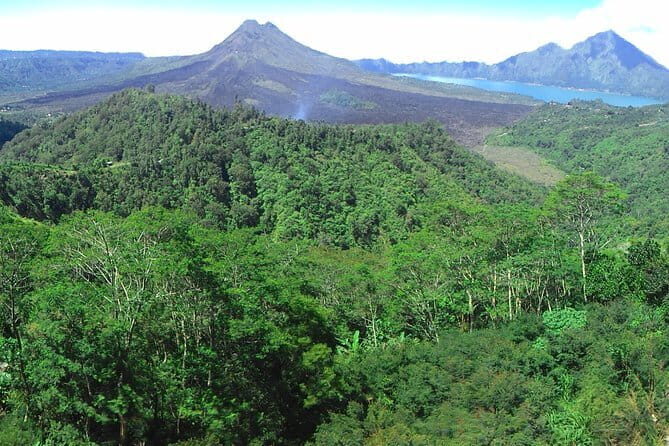
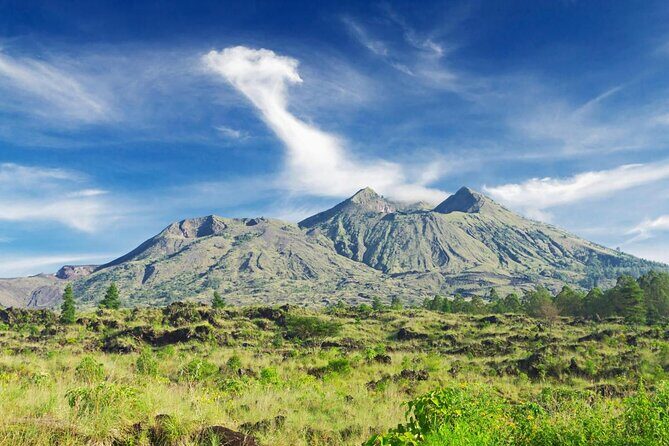
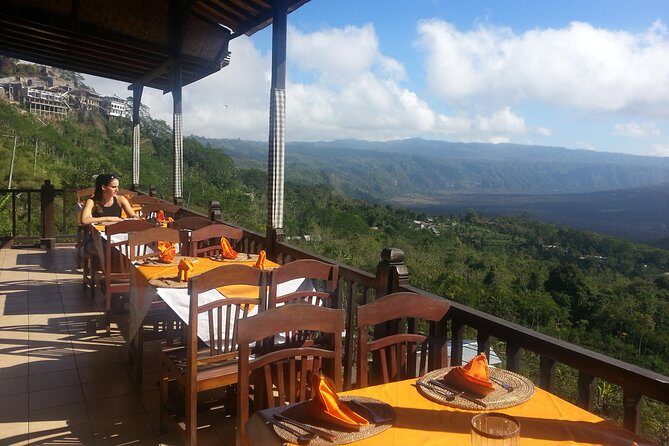
Mount Batur is an active volcano, and this stop is designed around viewpoints plus a relaxed meal option. You’ll have about 2 hours, and the schedule mentions the chance to enjoy some of the nicest coffee shops and restaurants with volcano views while you dine.

This is where Kintamani starts to feel like the reason you booked. The view is the payoff, but the bigger value is time to actually enjoy it without rushing. Two hours is enough to:

  • take photos from your chosen spot
  • order coffee or a light meal
  • sit for a bit even if clouds change the sky

Admission isn’t included here, which is helpful for planning. The day’s rhythm also makes sense: you’ve done waterfall, then spiritual sites, then farm country. Now you get scenery and a calmer pace.

One caution: volcano-area viewpoints can feel hot and exposed. If it’s sunny, bring sunscreen and plan for breaks, even if you feel like “just one more photo.”

Stop 6: Tegalalang Rice Terrace for classic Bali photos (and walking)

Kintamani Volcano View Tour - Stop 6: Tegalalang Rice Terrace for classic Bali photos (and walking)
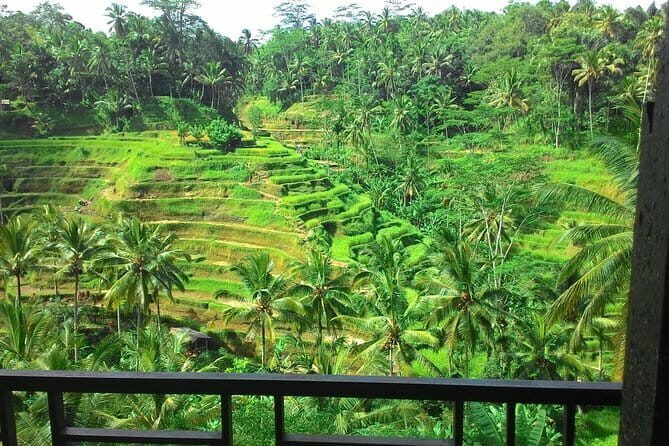
Tegalalang Rice Terrace is one of Bali’s most visited rice terraces, and you’ll have about 1 hour here. That time limit is smart because it lets you see the terraces without turning the day into a long endurance march.

What to expect: viewpoints, layered views, and plenty of places to stop and photograph. Since it’s well known, it can get busy, but the layout still makes it a good stop if you’re interested in traditional agriculture and the way terraces shape the hills.

Admission isn’t included, so add entry fees to your budget. Also, treat the walking paths like they’re uneven. Wear shoes with grip and plan your steps, especially after any rain.

Stop 7: Ubud time at the end—art market or Campuhan Ridge Walk

You finish with about 1 hour in Ubud, with the chauffeur happy to drop you where you want to go. The options mentioned are:

  • Ubud Traditional Art Market
  • Campuhan Ridge Walk

This is a nice way to avoid feeling trapped in a vehicle all day with no time back in town. The art market option works if you want souvenirs or small crafts. Campuhan Ridge Walk works if you want a short scenic walk and a chance to cool down with an easy stroll.

Because this last hour is flexible, you can choose based on energy level. If your legs feel done after rice terraces, you might prefer the market. If you want fresh air, Campuhan is a solid choice.

Admission is listed as free for this segment, and your drop-off is included as part of the hotel transport service.

Price and value: $80 per group for a full private day

The price is $80 per group (up to 5) for an 8 to 9 hour private tour. That can be strong value in Bali, especially if you’re traveling as a small group rather than just one person.

Here’s why it feels worthwhile:

  • Private hotel pickup and drop-off saves time and hassle
  • Private transport means you’re not waiting around for shared ride schedules
  • A driver/guide is included, and the tour emphasizes explanations of culture and significance at stops
  • Bottled water is included

Where you need to plan ahead is cost-of-entry. Admission fees and food/drinks aren’t included. So the total you pay can rise depending on what you order and which entry fees apply on the day.

Still, even with admissions added, the tour can pencil out well if:

  • you want a full day with multiple major stops
  • you prefer privacy and pace control
  • you’re okay handling your own meals and entrance tickets

Who this Kintamani Volcano View Tour suits best

This tour is a good fit if you want one day that mixes nature and culture without stressful logistics. You’ll likely enjoy it most if:

  • you like temples and history, not just photos
  • you want a volcano-view day with time to sit and eat or drink
  • you prefer private comfort over group tours
  • you’re traveling with a small group (up to 5)

The tour notes moderate physical fitness. That usually means you should be comfortable with walking at multiple stops, including temple areas and viewpoints. If you’re very mobility-limited, you may want to consider a shorter or more accessible itinerary.

Should you book the Kintamani Volcano View Tour from Ubud?

If you want a full, practical day that hits Bali’s big themes—waterfall moments, Tirta Empul’s cleansing ceremony, Mount Batur views, and a rice terrace stop—this is a solid booking choice. The private vehicle and hotel pickup make it feel efficient, and the inclusion of bottled water and gratuities helps simplify the day.

I’d book it if your priority is seeing several signature places in one shot while keeping control of your pace. I’d think twice if you’re trying to minimize walking, or if you’re hoping for admissions and meals to be fully covered in the price.

FAQ

What time does the tour start from Ubud?

The start time is 8:00 am.

How long is the Kintamani Volcano View Tour?

It runs about 8 to 9 hours.

Is this tour private?

Yes. It’s a private tour, so only your group participates.

What’s included in the price?

Hotel pickup and drop-off, private transportation, a driver/guide, bottled water, fuel surcharge, and gratuities are included. You also get a mobile ticket.

Are admission fees included?

No. Admission fees are not included.

What should I wear for the day?

The dress code is smart casual. Since it runs in all weather conditions, dress appropriately for rain and sun.

Can I cancel for free?

Yes. You can cancel up to 24 hours in advance for a full refund.

Private Guided Bali Car Charter

Private Guided Bali Car Charter - Price and Value: $65 per Group Plus Real-World Extras

A private Bali day can feel wonderfully low-stress. This private car charter starts in Ubud and lets you hit major sights plus local favorites without taxi hassles, with an English/Japanese speaking driver cum guide who keeps the day moving. I like the way the route is customizable, so you can trade a “must-see” for the one spot you actually care about.

Two things I’m especially into: door-to-door comfort in an air-conditioned vehicle and the chance to combine culture, art, rice terraces, and waterfalls in one smooth loop. One possible drawback: entrance fees and lunch aren’t included, so your final day budget will be a bit more than the base price.

Key Things to Know Before You Go

Private Guided Bali Car Charter - Key Things to Know Before You Go

  • Private group (max 5): You set the pace, not the crowd.
  • English/Japanese driver-guide: Fewer misunderstandings, more clarity at stops.
  • Custom itinerary: The listed places are options, not a rigid checklist.
  • 9–10 hour format: Long enough for multiple regions, but not so long you feel wrecked.
  • Most entrance fees add up: Plan for pay-at-site tickets and lunch variations.
  • Mobile ticket + pickup: It’s built for smooth start-to-finish logistics.

A Private Ubud Car Day That Actually Feels Like Your Day

Private Guided Bali Car Charter - A Private Ubud Car Day That Actually Feels Like Your Day
If you’ve ever tried to coordinate Ubud sights by taxi or rideshare, you know how quickly time evaporates. This charter is set up to stop that kind of friction. You’re picked up in Ubud and returned there at the end, so you’re not piecing the day together like a puzzle.

The real value is control. The tour runs about 9 to 10 hours, and many stops are timed around 30 minutes to 1 hour. That means you can see a lot without turning the day into a sprint. If you’d rather linger at a temple or photo spot, you can often adjust—because the itinerary is customizable based on your interests and how long you want to spend at each place.

This is also where the guide matters. In the feedback I saw reflected in the service style, Wayan gets called out for being professional, kind, and very knowledgeable, with clear communication from the beginning. Another name that came up was Wgrang—polite, friendly, and willing to handle requests that other setups might reject. For you, that usually translates into fewer “wait, where are we going?” moments and more time for actually enjoying the stops.

One practical consideration: with a full day in Bali traffic, you’ll want to keep expectations realistic. A private car helps, but travel time between Ubud and places like Bedugul or the south coast still eats up minutes fast—so flexibility is your friend.

Price and Value: $65 per Group Plus Real-World Extras

Private Guided Bali Car Charter - Price and Value: $65 per Group Plus Real-World Extras
The headline price is $65.00 per group (up to 5 people). That’s the kind of pricing where the math works best when you’re traveling with friends or family. For a group of five, you’re essentially splitting the cost rather than paying per person like you would on many hop-on tours.

What’s included is also practical for a long day:

  • Air-conditioned private transportation
  • Fuel surcharge
  • Parking fees
  • Bottled water
  • English/Japanese speaking driver cum guide

What’s not included is where you’ll want to plan ahead:

  • Entrance fees (listed as roughly $2 to $8 depending on the site)
  • Lunch (varies by menu and where you stop)
  • Other personal expenses (a listing estimate of about $4 per person)

Here’s the helpful way to think about it: the base price buys you comfort, time, and route control. Your budget beyond that mainly comes from tickets and meals, which you can steer by choosing fewer paid sights or picking longer breaks at places that don’t cost as much.

If you’re trying to keep total costs tight, tell the driver early that you want a tighter focus—maybe more temples and viewpoints, fewer paid galleries, or the reverse if art and crafts are your priority.

Ubud and Central Bali: Temples, Monkeys, and Rice Terrace Views

Private Guided Bali Car Charter - Ubud and Central Bali: Temples, Monkeys, and Rice Terrace Views
This charter is a great fit if you want a Ubud-centered day with a cultural backbone and a few “wow” scenic moments.

Pura Puseh Desa Batuan (Batuan Temple)

Batuan is known for Balinese arts and paintings, and Pura Puseh Desa Batuan ties into that reputation. You’ll be looking at a Hindu temple that dates back to the 11th century, which gives the stop extra weight compared to quick, modern photo stops.

Why it’s worth it: a temple in Batuan isn’t just a building—it’s part of a village identity tied to how people practice art and craft.

Potential drawback: this is also one of those stops where you’ll need to be respectful of temple rules and dress. If you’re not set up for that, plan for extra care so it doesn’t feel stressful.

Sacred Monkey Forest Sanctuary

Next is Sacred Monkey Forest Sanctuary in Padangtegal, with a setting connected to a spiritual and conservation-focused village center. The listing notes around 700 monkeys and 186 species, so this is more than a cute stroll.

Why it’s worth it: you get a mix of nature, temple grounds, and a living ecosystem, all in one place.

Potential drawback: it’s busy in the general sense that wildlife attractions tend to be unpredictable. Keep your belongings secure and don’t treat the animals like props.

Tegalalang Rice Terrace

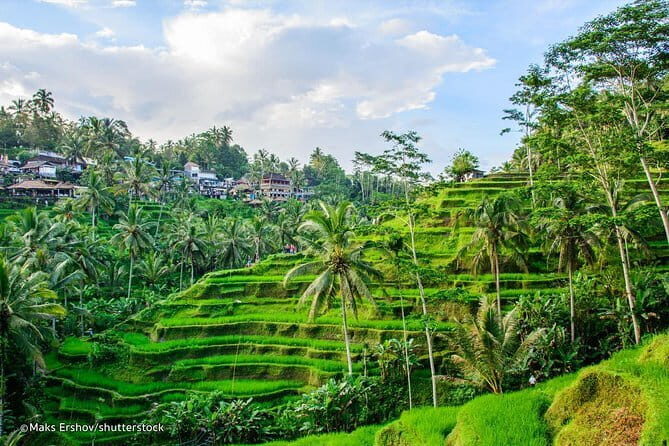
Then comes a Bali classic: Tegalalang Rice Terraces. What I like about this stop is the explanation baked into the place itself: the subak system, the traditional cooperative irrigation approach, is part of why the terraces look the way they do.

Why it’s worth it: it’s a calm reset after more active stops, and you get real context for how farming works here.

Potential drawback: viewpoints often involve uneven ground and steps. If you’re sensitive to walking on slopes, wear grippy shoes.

Uma Pakel Agro Tourism

If you want something lighter and food/caffeine adjacent, Uma Pakel Agro Tourism is a good change of pace. It’s described as a jungle setting with a coffee plantation and other agro-tourism experiences.

Why it’s worth it: you get a break from temples and viewpoints, plus an easy way to learn about how local products tie into daily life.

Potential drawback: this sort of stop can feel shorter than you’d like if you’re expecting a full guided “tour within a tour.” You’ll likely want to ask the driver where the best tasting or viewing moments are.

Volcano Views, Art Stops, and Holy Water at Tirta Empul

Private Guided Bali Car Charter - Volcano Views, Art Stops, and Holy Water at Tirta Empul
One of the best things about a private charter is how it lets you chain together very different Bali “moods” in one day.

Mount Batur (Kintamani Area)

For highland scenery, Mount Batur is often on the menu. The listing frames the Kintamani volcano region as a highlight, and it notes popularity for trekking.

Why it’s worth it: even without trekking, you usually get the kind of big-sky views that make Bali feel massive and serious in a good way.

Potential drawback: a volcano viewpoint day depends on timing and weather. Plan for variable visibility and keep clothing for cooler temperatures in mind.

Semar Kuning Art Cooperative

If you want to slow down and focus on art, Semar Kuning Art Gallery is centered on traditional Balinese paintings. This is one of the stops that tends to land best for people who like process and craft, not just buildings and scenery.

Why it’s worth it: it’s a direct look at how art is made and presented, not only how it looks from a distance.

Potential drawback: art stops can be hit-or-miss if you mainly want outdoor scenery. If that’s you, set expectations with your driver so the art time stays short.

Celuk: Prapen Jewelry & Artifacts

For a practical souvenir stop, you’ll have the option of Prapen Jewelry & Artifacts in Celuk. Celuk is known for crafts, and this is positioned as a gallery and studio compound focused on nature-inspired pieces.

Why it’s worth it: you can see items that match Bali’s artistic motifs, and you’re often able to shop with a better sense of what you’re buying.

Potential drawback: jewelry and artifacts stops can consume time if you’re browsing hard. Set a rough budget and a time limit.

Tirta Empul Temple

Then it’s back to a major spiritual site: Tirta Empul, meaning holy water spring. The spring feeds purification baths, pools, and fish ponds around the temple perimeter.

Why it’s worth it: this is one of those places where the spiritual purpose is built into the design, so it feels more grounded than a stop that’s only about photos.

Potential drawback: expect active areas and rules. If you’re unsure about what’s appropriate, ask your guide on arrival.

Waterfalls and Photo Temples: How to Pick the Right Ones

Private Guided Bali Car Charter - Waterfalls and Photo Temples: How to Pick the Right Ones
Bali has more waterfalls than you can easily “fit” into a day. This charter helps because it lists several options, and you can choose based on what looks appealing and how much walking you want to do.

Tegenungan Waterfall

Tegenungan Waterfall is described as conveniently located halfway between Ubud and Bali’s south side area (Sukawati is named in the listing). It’s the kind of stop that usually works well if you want a classic waterfall view without too much detouring.

Why it’s worth it: it’s a straightforward nature break that adds variety fast.

Potential drawback: waterfall areas tend to have slippery or uneven footing. Keep that in mind when you’re planning your time.

Tukad Cepung Waterfall

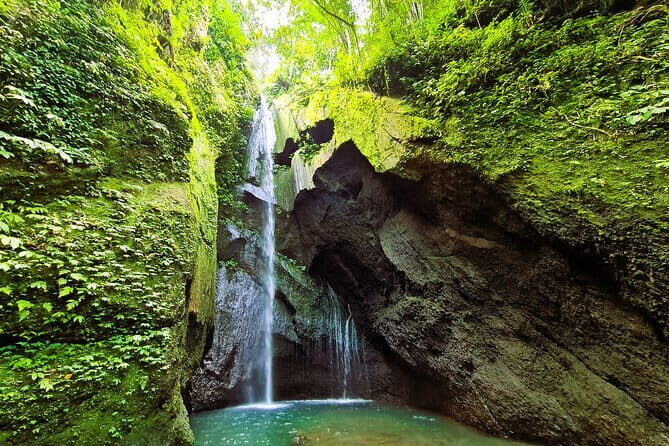
This one is different: Tukad Cepung is noted as being in a stone cave and not directly exposed to the outside, with an estimated height of 15 meters.

Why it’s worth it: it gives you a cave-wrapped “waterfall moment” that feels more cinematic than open-air falls.

Potential drawback: cave environments can mean tighter paths and darker conditions—wear shoes you trust.

Tibumana Waterfall

Tibumana Waterfall is described as one of Bali’s more beautiful less obvious waterfalls, located in the Bangli region.

Why it’s worth it: you get the payoff of a calmer feel than the most famous falls—ideal if you want a quieter reset.

Potential drawback: because it’s in the hinterland, travel time matters. If your day already has several long-distance legs, you might want to compare which stop gives the best return.

Lempuyang Temple and the Heavenly Gate Photos

If you want that iconic photo composition, Lempuyang Temple is listed as being called the gate of heaven, with the Mount Agung background for photos.

Why it’s worth it: it’s one of Bali’s most recognizable “up high” visual ideas, and it’s built for that signature view angle.

Potential drawback: since it’s a photo-driven temple stop, timing matters. If you’re easily frustrated by crowds or long waits, keep your expectations flexible.

Bedugul Lake, Mengwi Temples, and the South Coast Icons

Private Guided Bali Car Charter - Bedugul Lake, Mengwi Temples, and the South Coast Icons
This part of the day is where Bali shifts from inland texture to dramatic temple-on-a-viewpoint energy. It’s also where travel time becomes noticeable, so it helps that the charter is private.

Ulun Danu Bratan (Bedugul)

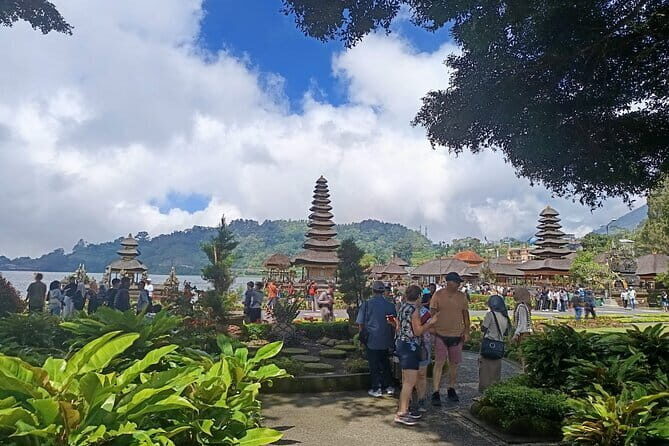
Ulun Danu Bratan Temple sits on the western side of Lake Bratan in Bedugul. The listing notes Bedugul as a popular upland area, and this temple is both picturesque and significant.

Why it’s worth it: the lake setting makes the temple feel airy and scenic.

Potential drawback: upland weather can change. Bring layers so you’re not miserable outside.

Taman Ayun Temple (Mengwi)

Taman Ayun Temple in Mengwi is described as a landmark built around 1634 by Tjokerda Sakti, the then ruler of the Mengwi kingdom.

Why it’s worth it: you get a historic-feeling temple setting with a calm, composed layout.

Potential drawback: it’s a longer temple visit (listed around 1 hour), so make sure it fits your pace.

Tanah Lot

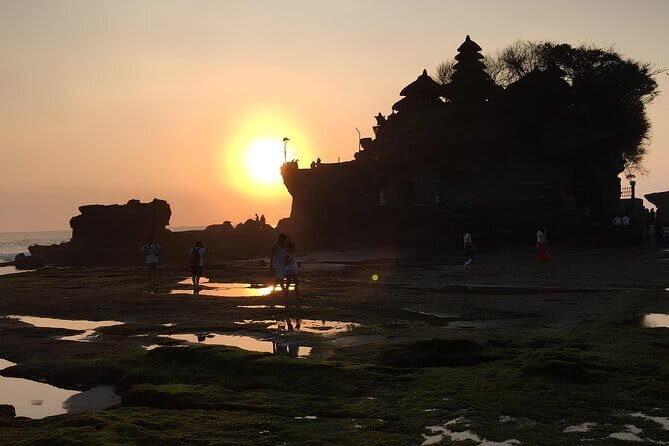
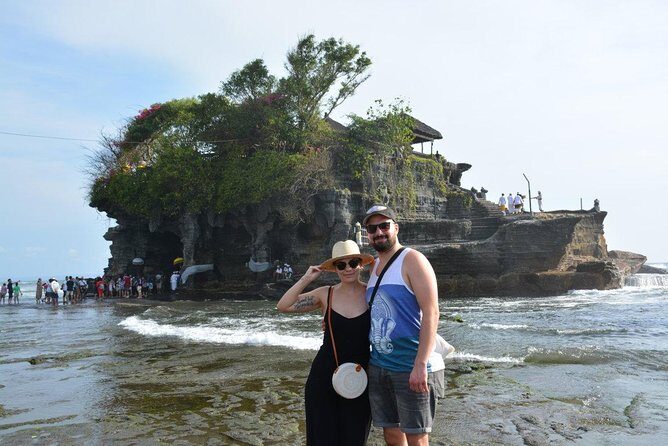
If you want a Bali icon, Tanah Lot Temple is listed as important and famous for its offshore setting and sunset backdrops.

Why it’s worth it: even if you’re not chasing sunset, the sea-and-temple pairing is memorable.

Potential drawback: coastal areas can bring wind and changing light. Plan your timing so you’re not rushing photos.

Uluwatu Temple

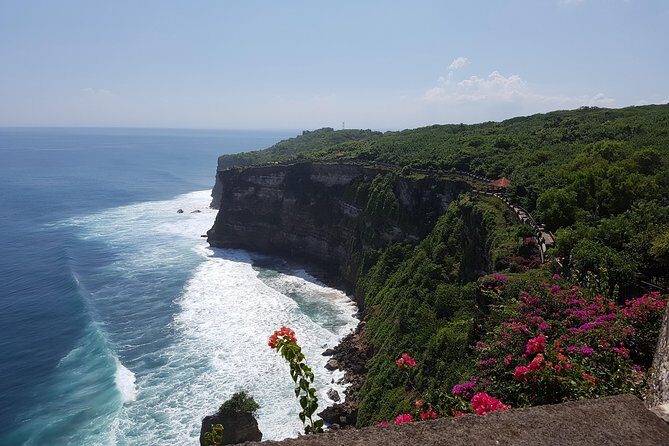
Uluwatu Temple (Pura Luhur Uluwatu) is described as one of six key temples and part of Bali’s spiritual pillars. The listing notes it sits about 70 meters above sea level on a steep cliff.

Why it’s worth it: cliff-top temple views feel dramatic in a way flatland temples don’t.

Potential drawback: again, expect stairs and uneven ground. If mobility is an issue, tell the driver to adjust your route where possible.

Modern Culture Stops: GWK and Tirta Gangga’s Koi Ponds

Private Guided Bali Car Charter - Modern Culture Stops: GWK and Tirta Gangga’s Koi Ponds
Not every day has to be only traditional temple stops. This charter lists a couple of more modern, scenic choices.

GWK Cultural Park (Garuda Wisnu Kencana)

At GWK Cultural Park, you’ll find Garuda Wisnu Kencana, described as an iconic statue about 121 meters high, representing Vishnu.

Why it’s worth it: it’s a huge visual marker that helps you understand Bali’s Hindu symbolism in a very public, monumental way.

Potential drawback: this kind of attraction can feel like a full venue stop, so you’ll want to confirm how much time you want to spend on-site.

Tirta Gangga Water Palace

Tirta Gangga is described as very popular right now, with lots of visitors drawn to the koi ponds and Instagram-style views.

Why it’s worth it: if you want photogenic water gardens, it’s built for that.

Potential drawback: popularity can mean more foot traffic during peak hours. If you prefer quiet, you’ll want to time it strategically within your day.

Should You Book This Private Bali Car Charter from Ubud?

Private Guided Bali Car Charter - Should You Book This Private Bali Car Charter from Ubud?
If you’re planning a Bali day and want to avoid taxi stress while still seeing a lot, I think this charter fits really well. It’s especially smart for groups up to five who want a comfortable, private vehicle, plus an English/Japanese speaking driver-guide who can steer you toward the right mix of temples, art, rice terraces, and waterfalls.

Book it if:

  • You want maximum flexibility from a 9–10 hour day.
  • You care about having a guide who communicates clearly and responds to requests (names like Wayan and Wgrang came up in feedback).
  • You’re okay budgeting separately for entrance fees and lunch.

Skip it or adjust expectations if:

  • You want a strictly low-cost day with no extra ticket thinking.
  • You hate walking on uneven temple grounds and waterfall paths (most stops involve some of that).

If you go in with a clear priority list—temples, nature, art, or a mix—and let the driver shape the order, you’ll get the best use out of your time in Bali.

FAQ

How much does the Private Guided Bali Car Charter cost?

It’s $65.00 per group (up to 5 people).

How long is the tour?

The duration is about 9 to 10 hours.

Is pickup included, and where does the tour start?

Yes. The tour starts with pickup in Ubud, Gianyar Regency, Bali, Indonesia, and ends back at the meeting point.

Is the itinerary flexible?

Yes. The tour is customizable, and the places you visit may differ based on your interests and your time at each stop.

What’s included in the price?

Included are parking fees, fuel surcharge, bottled water, an air-conditioned vehicle, private transportation, and an English/Japanese speaking driver cum guide.

Are entrance fees included?

No. Entrance fees are not included and are listed as varying by site (approximately $2 to $8). Your day may also include additional personal expenses.

What ticket format do I need?

You get a mobile ticket.

What group size is allowed?

It’s a private tour for your group, with a maximum of 5 people.

Who can participate?

The listing says most travelers can participate.

Half Day: Uluwatu Temple,KECAK FIRE DANCE Evening Tour & Jimbaran SEAFOOD Dinner

Half Day: Uluwatu Temple,KECAK FIRE DANCE Evening Tour & Jimbaran SEAFOOD Dinner - Uluwatu Temple at Sunset: 70-Meter Cliffs and Monkey Spotting

Sunset cliffs in Bali feel different here. This private south Bali tour strings together Padang Padang Beach time, cliff-top Uluwatu Temple at sunset, the Kecak and Fire Dance, and a Jimbaran seafood dinner in one smooth, driver-run day. You’ll ride in an air-conditioned minivan with hotel pickup and drop-off, then enjoy the big sights without the usual scramble.

Two things I really liked: the timing built around sunset at Uluwatu (that 70-meter cliff setting makes the view feel more dramatic), and the Kecak/fire performance staged right near the temple area. One thing to consider: the whole route runs about 6–7 hours, so each stop is short and you’ll want to be ready to move when it’s time.

Key Highlights You’ll Care About

Half Day: Uluwatu Temple,KECAK FIRE DANCE Evening Tour & Jimbaran SEAFOOD Dinner - Key Highlights You’ll Care About

  • Uluwatu Temple’s sunset view from a 70-meter cliff
  • Padang Padang Beach white sand break with time to relax and take a dip
  • Kecak and Fire Dance (Ramayana story) with included admission
  • Jimbaran Beach seafood dinner at ITO CAFE JIMBARAN SEAFOOD
  • Private transfers from your south Bali hotel in an air-conditioned minivan
  • Mobile ticket + admission tickets included for the main stops

How the Private Route Fits Into Your Day (Pickup to Drop-Off)

This tour is built for people who want the highlights without turning the day into a logistics puzzle. From your south Bali hotel, you’ll get pickup, then transfer by air-conditioned minivan. The tour is private per booking, meaning it’s only your group, not a mixed crowd shuffling between vehicles.

That private setup matters more than it sounds. When you’re heading to Uluwatu for sunset, timing is everything. You don’t want to burn time meeting up, transferring, and waiting. This format keeps the rhythm simple: drive, arrive, see the key things, then dinner, then back to your hotel.

Also worth noting: bottled water is included. On a warm Bali day, that small detail helps you keep moving comfortably between stops.

Padang Padang Beach: The White-Sand Reset Before the Cliffs

Half Day: Uluwatu Temple,KECAK FIRE DANCE Evening Tour & Jimbaran SEAFOOD Dinner - Padang Padang Beach: The White-Sand Reset Before the Cliffs
Padang Padang Beach is the “breather” stop, and you get about 30 minutes here. The big draw is the white sand and that laid-back beach feeling before you switch gears to temple time. There’s even a moment for a dip, since the tour specifically includes downtime to relax at the shoreline.

Here’s how to think about this stop: it’s not a long beach day. It’s a reset. You’re using it to wash the road dust off, grab some photos, and mentally prepare for Uluwatu’s crowds and climbing paths. If you’re the type who likes to start temple visits feeling human, this first beach stop does a nice job.

Practical tip: bring a light cover-up and plan for sand. You’ll be walking outdoors, and you’ll want to keep your stuff manageable before you reach the temple area with monkeys.

Uluwatu Temple at Sunset: 70-Meter Cliffs and Monkey Spotting

Half Day: Uluwatu Temple,KECAK FIRE DANCE Evening Tour & Jimbaran SEAFOOD Dinner - Uluwatu Temple at Sunset: 70-Meter Cliffs and Monkey Spotting
Uluwatu Temple is the star, and the tour schedules your main temple time to catch the sunset at the main site. You’ll spend about 25 minutes at the temple stop, with admission included.

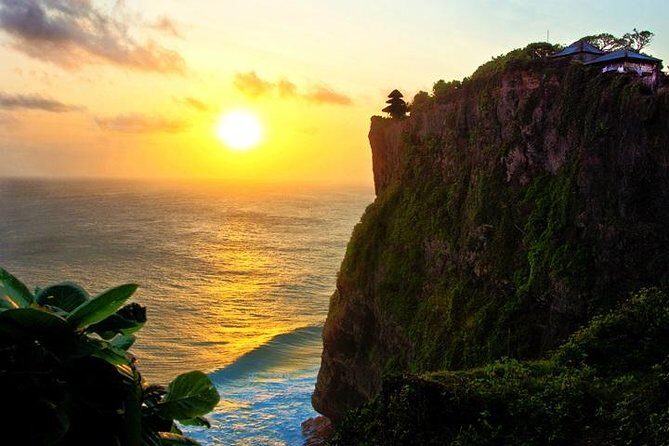
The setting is the magic. Uluwatu sits on a 70-meter protruding cliff, which means the ocean view isn’t a background—it’s part of the show. As the sun drops, the whole area feels more dramatic than temple photos suggest online.

You’ll also see monkeys around the area. That’s a normal part of Uluwatu life, so I recommend treating it like a “be aware” situation rather than a “panic” situation. Keep belongings close, avoid dangling items, and don’t act like a food vending machine. Simple habits keep the moment fun instead of stressful.

One more honest note: with only 25 minutes, you’ll have to choose your priorities. If you want the exact sunset spot, head there early within your window so you’re not rushing at the last minute. The goal is a calm view, not a sprint.

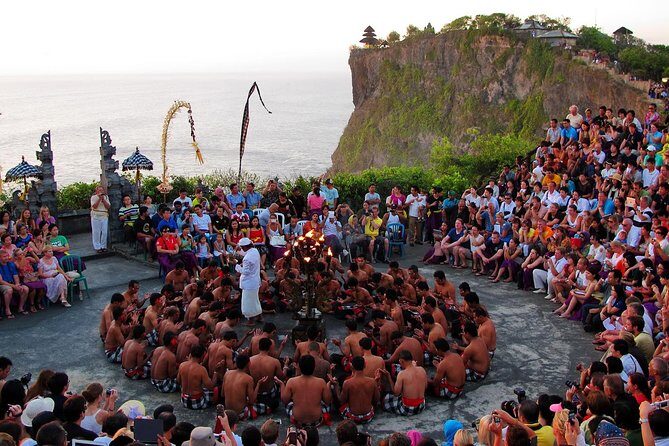
Kecak and Fire Dance: Ramayana Storytelling You Can Feel

After Uluwatu, the tour moves you to the Kecak and Fire Dance performance near the temple area. This stop lasts about 1 hour and includes admission.

The Kecak is based on the Ramayana story, told through Balinese performance style. What you’ll notice right away is how the show uses rhythm and voices to build energy. Then the fire element adds heat—literally and visually—so you’re getting an evening performance that matches the sunset mood outside.

From my perspective, this is the best “why it’s worth going” part for many people. A temple view is beautiful, but a performance gives you something you can’t recreate at a random viewpoint. Plus, the show timing keeps the evening flow coherent: temple first for the sunset, then performance to carry the atmosphere forward.

If you’re sensitive to loud sounds, plan your expectations. Kecak performances rely on group vocal chanting, and it can feel intense. On the other hand, if you like theater that’s bold and immediate, this is a great match for that taste.

Jimbaran Beach Seafood Dinner: ITO CAFE by the Water

Half Day: Uluwatu Temple,KECAK FIRE DANCE Evening Tour & Jimbaran SEAFOOD Dinner - Jimbaran Beach Seafood Dinner: ITO CAFE by the Water
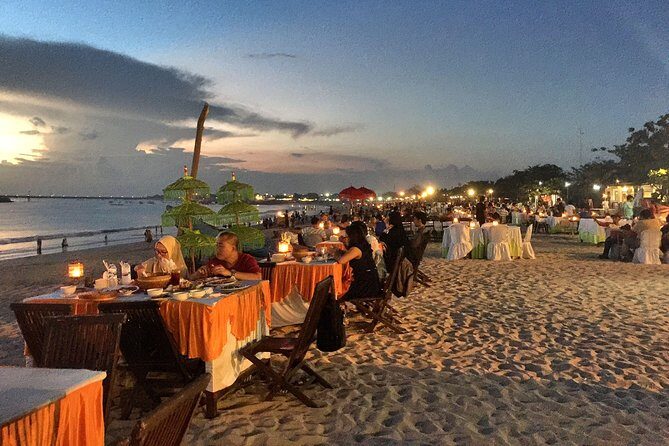
The final act is dinner on Jimbaran Beach at ITO CAFE JIMBARAN SEAFOOD. You get about 1 hour here, and dinner is included.

Jimbaran is well known for its seafood setup, and this tour keeps it local and simple: you finish the day eating fresh seafood on the beach. That works especially well after a late afternoon of temple viewpoints and a performance. You’re not just “done touring”—you’re ending with a meal that fits Bali evenings.

What makes this stop valuable for your trip is the pacing. The day moves from sightseeing to cultural performance to an easy beach dinner. You don’t need to hunt down a restaurant at the end of a long day. You show up, eat, then ride back.

One practical consideration: beach dinners can mean changing light and some breezes. If you’re picky about comfort, dress in layers so you can handle the shift from hot daytime to cooler evening air.

Price and Value: Is $60 Worth It?

At $60 per person, the value depends on what you’d otherwise pay for on your own. Here’s what’s included that you’d normally need to arrange separately:

  • Hotel pickup and drop-off by air-conditioned minivan
  • Bottled water
  • Admissions included for Padang Padang, Uluwatu Temple, and the Kecak and Fire Dance
  • Dinner included at ITO CAFE JIMBARAN SEAFOOD
  • A private tour per booking, so it’s not a shared scramble between multiple groups

So you’re not just buying viewpoints. You’re buying transportation, scheduled access, and a finished meal at the end. For many people, that turns out to be the real savings: fewer decisions, less waiting, and no need to piece together separate tickets and timing around sunset.

That said, you are paying for convenience. If you love planning every minute yourself and you’re confident navigating Uluwatu logistics, you might be able to build a cheaper DIY version. But if you want a smooth sunset sequence with admissions handled, this price is fairly in line with what you’re getting.

Who This Tour Suits Best (and Who Might Want Another Plan)

This tour fits best if you want a classic south Bali evening combo:

  • First-timers who want Uluwatu + Kecak + Jimbaran in one run
  • Couples or small groups who prefer private transfers
  • People who like their itinerary tight and their sunset views timed right
  • Anyone who wants a cultural performance rather than only temple sightseeing

It may not fit you as well if:

  • You’re hoping for lots of free time at each stop. The schedule is tight, and time at Padang Padang and Uluwatu is not long.
  • You dislike moving quickly between locations. This is an “evening highlight circuit,” not a slow travel day.
  • You want a beach day with hours of lounging. You get time to relax, but it’s still a stop, not a full beach day.

If you fall into the middle—wanting highlights but not wanting chaos—this private format is the sweet spot.

Should You Book This Uluwatu + Kecak + Jimbaran Package?

Half Day: Uluwatu Temple,KECAK FIRE DANCE Evening Tour & Jimbaran SEAFOOD Dinner - Should You Book This Uluwatu + Kecak + Jimbaran Package?
I’d book it if you want sunset at Uluwatu without dealing with ticket timing, transport juggling, and end-of-day restaurant hunting. The combination of cliff-top temple views, a performance that tells the Ramayana, and a seafood dinner on Jimbaran Beach is a strong match for a “see the big things, end on a good note” Bali visit.

You should pass (or at least consider alternatives) if you’re looking for long beach time or slow wandering. This itinerary is built around a timetable, and you’ll feel that in the short stop durations.

Overall, for $60, you’re paying for a simple, guided sequence that prioritizes sunset and an evening show—then finishes with dinner right on the beach.

FAQ

How long is the tour?

The total duration is about 6 to 7 hours.

Is hotel pickup and drop-off included?

Yes. Pickup and drop-off are included from your south Bali hotel by air-conditioned minivan.

Is this tour private?

Yes. It’s private per booking, so only your group participates.

What are the main stops?

You’ll visit Padang Padang Beach, Uluwatu Temple, watch the Kecak and Fire Dance near the temple, and end with dinner on Jimbaran Beach at ITO CAFE JIMBARAN SEAFOOD.

Are admission tickets included?

Yes. Admission tickets are included for Padang Padang Beach, Uluwatu Temple, and the Kecak and Fire Dance performance.

Is dinner included?

Yes. A fresh seafood dinner on Jimbaran Beach is included.

Is bottled water included?

Yes. Bottled water is included.

Do I need to bring a ticket?

You’ll have a mobile ticket.

Can I cancel for free?

Yes. Free cancellation is available up to 24 hours in advance for a full refund.

Private UBUD Tour

Private UBUD Tour - Barong dance: the cultural performance stop that sets the tone

Ubud can feel like a puzzle, but this day tour fixes that. You get a full, well-paced route through the sights people chase in Bali, with a local guide guiding cultural norms and customs along the way. Highlights include the Barong dance, the Tirta Empul holy-water purification, plus rice terrace views at Tegalalang.

I especially like that it’s set up as a private experience with hotel pickup and an air-conditioned car, so you spend less time figuring things out and more time enjoying what’s on the schedule. I also like the mix of culture and food stops, including a coffee plantation stop with tasting, which helps break up the day.

One thing to consider: it’s a long day (about 10 hours) and lunch plus entrance fees are not included. If you’re the type who hates tight timetables, you’ll want to plan your expectations before you go.

Key things that make this Ubud day tour work

Private UBUD Tour - Key things that make this Ubud day tour work

  • A real private format: only your group rides together, so you can keep things flexible with your driver
  • Early start for fewer headaches: pickup starts around 7:00 am to 8:00 am from your hotel area
  • A strong cultural arc: Barong dance, a classic monkey-forest stop, and spiritual purification at Tirta Empul
  • Rice-terrace storytelling: you learn how cooperative irrigation systems work across the island
  • Coffee plantation with tasting: you get a coffee stop, including tasting (often free during the visit)

Why this private Ubud route is such a smart use of one day

Private UBUD Tour - Why this private Ubud route is such a smart use of one day
Ubud is the heart of Bali for culture, art, and spirituality. The catch is that it’s also easy to waste time when you’re moving around solo: you’re stuck negotiating rides, guessing opening times, and trying to understand local rules on the fly.

This private tour fixes the problem with a simple idea: you get picked up, driven between key places, and supported by an English-speaking driver. That means you can focus on what matters—seeing the places and respecting local customs—without turning your day into a logistics project.

I also like the itinerary logic. You don’t jump randomly. The day flows from performance and nature stops toward rice terraces and then into a temple experience centered on purification. That order helps the day feel coherent rather than like a checklist.

Timing and pickup: what the 7:00 am start changes for you

The tour starts early. Pickup begins around 7:00 am to 8:00 am, depending on your hotel area and request. It’s designed for a full-day run, which is why the overall duration is about 10 hours.

For most people, that early start is the difference between a calm visit and a crowded one. You’ll arrive at places sooner rather than later, and you’ll have more time to enjoy the experience instead of watching the clock.

Your pickup areas include Kuta, Seminyak, Legian, Sanur, and Ubud. If you’re staying elsewhere, there’s an extra charge of IDR 50,000 per person for pickup. That’s worth noting if you’re not in the main resort zones.

Practical note: because this is a full-day schedule, you’ll want breakfast sorted before pickup. Also plan for a bit of heat and sunlight once you’re outside.

Barong dance: the cultural performance stop that sets the tone

Private UBUD Tour - Barong dance: the cultural performance stop that sets the tone
The day’s first big cultural moment is the Barong Dance. This is the kind of stop that gives you context for what you’ll see later around temples and daily life. Even if you’re not deep into dance traditions, the performance is a visual introduction to Bali’s spiritual storytelling.

What makes it valuable on a guided day is the framing. A driver/guide helps you understand when you should be respectful, where to stand or sit, and how to behave around the performance space. You’re not just watching something—you’re learning how the culture thinks about meaning and ritual.

Possible drawback: performances can be weather- and schedule-dependent. Since this tour requires good weather, keep in mind that your day could shift if conditions are poor.

Sacred Monkey Forest: a great nature break with some smart rules

Next up is Monkey Forest. It’s a change of pace from the performance energy, and it’s one of those places that feels instantly Bali: greenery, paths, and lots of wildlife activity.

The main practical thing here is behavior. If you go in assuming monkeys are just part of the scenery, you’ll miss the easy way to stay comfortable. Secure small items, keep hands and bags controlled, and follow your driver’s guidance. The point isn’t fear—it’s basic street-smart behavior in an animal-populated space.

The other reason this stop works in the itinerary: it breaks the day in half. By the time you reach Monkey Forest, you’re ready for walking and stretching your legs before heading into the more structured stops like coffee and rice terraces.

Coffee plantation stop: tasting is included, so treat it as a break

Then you’ll head to a Coffee Plantation stop. This is a classic Bali add-on, but the difference on a guided day is you can actually enjoy it instead of just browsing. You’ll have time to learn about coffee-making in the region and taste what you’re offered.

One detail worth calling out: a review highlighted coffee plantation and tasting for free as part of the experience. So if you’re a coffee person, this stop isn’t just a photo break—it’s a chance to experience something you can actually sample.

What I recommend: treat it as your planned rest. Hydrate, use the time to regroup, and don’t rush through the tasting portion. If you’re tired later, it’s usually because you didn’t take these tiny pauses seriously.

Note: the coffee plantation visit doesn’t mention lunch, and lunch isn’t included in the tour price. So if you’re the type who gets hungry fast, you’ll want to plan a meal strategy around the day.

Tegalalang rice terrace: learning how irrigation shapes the island

After coffee comes one of Bali’s most photographed areas: Rice Terrace Tegalalang. But this isn’t just about scenery. The tour is set up so you learn about the traditional cooperative irrigation systems used across the island.

That “why” matters. When you understand how irrigation works, the terraces start to make sense beyond Instagram angles. You can look out at the greenery and connect it to the system that keeps rice farming going. It turns the view into a story of teamwork and water management.

What to watch for here is how you pace yourself. Terrace areas can mean uneven paths and lots of steps or walking depending on where you stop. Wear comfortable footwear and keep your phone use in check so you don’t trip while trying to chase the perfect viewpoint.

Also remember: rice terrace stops can be weather-sensitive. Since the tour requires good weather, you might get a more pleasant experience outdoors on days with clear conditions.

Tirta Empul (holy water): the spiritual purification moment

The final major highlight is Holy Water (Tirta Empul Temple). This is the spiritual anchor of the day, and it’s specifically described as happening at an 11th-century Hindu temple.

Purification rituals like this are not just for watching. Even if you’re not participating, the value is in understanding what’s happening and how a guided visit helps you keep respectful boundaries. This is exactly where local guidance adds value—temple etiquette in Bali is not complicated, but it is important, and your guide helps you get it right.

Why this stop is worth the time: it gives your day a deeper ending than more sightseeing. After dance, forest, coffee, and rice terraces, you land in a place centered on spiritual cleansing and reflection. The day feels complete.

Practical consideration: this is also a wet, sacred environment. If you’re sensitive to getting splashed, plan your clothing accordingly.

Price and value: what $37.34 buys you (and what it doesn’t)

At $37.34 per person, this tour is positioned as a budget-friendly way to cover a lot of ground—especially because it’s private. You’re not just paying for driving. You’re paying for:

  • Hotel pickup and private transportation (air-conditioned)
  • An English-speaking driver
  • Bottled mineral water during the tour
  • A structured route that saves you time

That said, it’s not a “everything included” deal. Entrance fees and lunch are excluded. That means your real spend can be a bit higher depending on ticket costs at each stop and where you choose to eat.

So how do you judge value? Think like this:

  • If you’d rather avoid renting a scooter, map-reading, and negotiating each stop, the private transport alone is often worth it.
  • If you already know exactly what you want to see and you’re comfortable navigating Bali on your own, you might compare against cheaper group tours.
  • If you want someone to help you act correctly in cultural spaces, the guide support makes this feel more like a service than a simple transfer.

Booking demand is also a clue. The tour is commonly booked about 26 days in advance, which suggests it’s popular and can fill up during peak periods.

The driver factor: how Wayan Sugiartha-style service changes your day

One review called out the driver by name: Wayan Sugiartha, praised for giving a strong itinerary with best spots and for being flexible with requests. That matters because even with a fixed order, the day lives or dies based on pacing, timing, and how well you connect with the guide.

Another review emphasized the driver being open to requests and overall price being a good deal. And a third review summed it up as everything feeling perfect and magical, with the guide described as the best.

I’d translate that into practical advice for you: send your priorities ahead of time (dance, temple, coffee, photos, slower pace, whatever matters). On a private tour, the value is in tailoring the ride so the day matches your style.

What you should bring and how to make this day feel easy

This tour includes water and private transport, so you can travel lighter. Still, for a 10-hour day in Bali, I’d plan for comfort:

  • Wear comfortable shoes for walking at forest and terrace areas
  • Bring sunscreen and a hat since you’ll be outdoors for multiple stops
  • Pack a small towel if you don’t like getting damp, especially around the temple area
  • Keep your phone handy but avoid distractions when walking on uneven ground
  • Bring some cash for snacks or lunch since lunch isn’t included and you may want choices during the day

And one more thing: Bali culture works best when you slow down and follow cues. Your guide helps with norms and customs, so let them steer.

Who this tour suits best (and who might want a different plan)

This private Ubud tour is ideal if you want:

  • A single-day structure that hits Ubud-area highlights
  • A private car with pickup, rather than juggling rides yourself
  • Cultural support so you navigate temple and performance etiquette with more confidence
  • A balanced mix of performance, nature, food tasting, rice terraces, and a spiritual stop

It’s also a good match for couples, friends, or anyone who wants a smoother day without crowds forcing your schedule.

Who might not love it: if you need lots of downtime, or if you hate early starts and packed itineraries. The day is designed to cover major sites in one shot.

Should you book this Private Ubud Tour?

I’d book it if you want a high-coverage, culturally guided Ubud day without the stress of planning each leg. The combination of private transport, an English-speaking driver, and stops that go beyond just looking helps make the price feel reasonable—especially when you’re saving time and reducing confusion.

I’d think twice if you’re trying to minimize extra spending, since entrance fees and lunch aren’t included. Also, if weather is unpredictable during your dates, you might need flexibility because the tour requires good weather.

If you like your day structured and meaningful, this is a strong choice.

FAQ

What time does pickup start?

Pickup is scheduled to start around 7:00 am, and timing can range to about 8:00 am depending on your hotel or your request.

How long is the Ubud private tour?

The tour duration is approximately 10 hours.

What places are included in the itinerary?

The main stops listed are Barong Dance, Monkey Forest, a Coffee Plantation, Rice Terrace Tegalalang, and Holy Water at Tirta Empul Temple.

Is entrance fees or lunch included in the price?

No. Entrance fees and lunch are excluded from the tour price.

Where can the driver pick you up from?

Pickup is available from Kuta, Seminyak, Legian, Sanur, and Ubud. Pickup from other areas costs an extra IDR 50,000 per person.

What happens if weather is bad?

The experience requires good weather. If it’s canceled due to poor weather, you’ll be offered a different date or a full refund.

Forest Dining at Tree Deck overlooking lush valley of Ubud

Forest Dining at Tree Deck overlooking lush valley of Ubud - Your 6-Course Dinner: Real Options for Real Diets

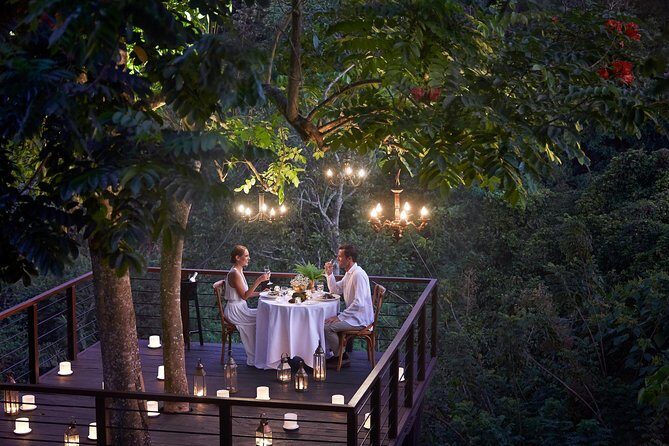
Dinner in the trees feels special fast. This is a romantic treetop terrace dinner in Ubud, with your table set high above the tropical forest so the evening sounds feel naturally slow. It’s private, candlelit, and built around one thing: a long, enjoyable meal with wine and quiet views.

I really like two parts of how this is set up. First, you get a 6-course meal with clear choices (beef, seafood, halal, or vegetarian), so you’re not stuck guessing what will work for your diet. Second, the experience includes two-way private transfers from central Ubud, which matters here because the evening is easier when you’re not figuring out transport after dinner.

One consideration: weather can change the setting. If it rains, the dinner may move indoors, so you’ll lose some of the open-air forest view even though the meal stays private and the mood is still meant to feel dreamy.

Key highlights worth knowing

Forest Dining at Tree Deck overlooking lush valley of Ubud - Key highlights worth knowing

  • Private treetop dining above Ubud forests for a genuinely quiet, date-night vibe
  • Six-course menu with beef, seafood, halal, or vegetarian options
  • One bottle of Balinese sparkling wine included to set the tone early
  • Your own staff and service pace rather than being folded into a crowd
  • Rain plan is real: you may be seated inside, but privacy is kept
  • Smart casual dress code keeps it easy while still feeling special

Treetop Dining in Ubud: What the Forest Setting Actually Does

Forest Dining at Tree Deck overlooking lush valley of Ubud - Treetop Dining in Ubud: What the Forest Setting Actually Does
This is the kind of dinner where the view is not just a backdrop. It changes your pace. Sitting up on a terrace with the sounds of the tropics around you makes normal dinner feel like an event. The setting is rustic and candlelit, and the candles plus warm lighting help even if the light outside fades quickly.

The big win is privacy. This is set up as a private experience for your group only, so you’re not watching other tables. That matters for couples most of all, but it also works if you just want a calm meal without the usual restaurant buzz.

You’re also choosing an evening time (starting at 6:00 pm). That’s ideal for Ubud: you get daylight dropping into early night, and the lighting makes the terrace feel romantic rather than dark and gloomy.

Arrival and Pickup: Keeping the Evening Low-Stress

You don’t have to treat transport like part of the show. If you’re staying in central Ubud, private round-trip transfers are included. The staff meet you at the front area of Ubud Palace and bring you to the dining location, then return you at the end of the experience.

That’s a practical advantage in Bali. Roads can be busy, and after dark you may prefer not to deal with scooters or negotiating rides. With this, the plan is simple: you meet, you go straight to dinner, then you’re brought back.

If you’re outside the central area, transport from other locations can be arranged for an extra cost. So if you’re planning your trip based on this dinner, it’s worth thinking about where your hotel sits. Staying closer to the Ubud Palace area usually makes this experience feel most seamless.

Your 6-Course Dinner: Real Options for Real Diets

Forest Dining at Tree Deck overlooking lush valley of Ubud - Your 6-Course Dinner: Real Options for Real Diets
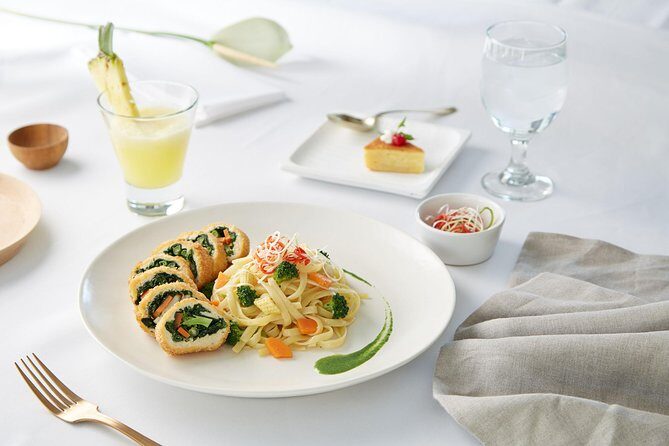
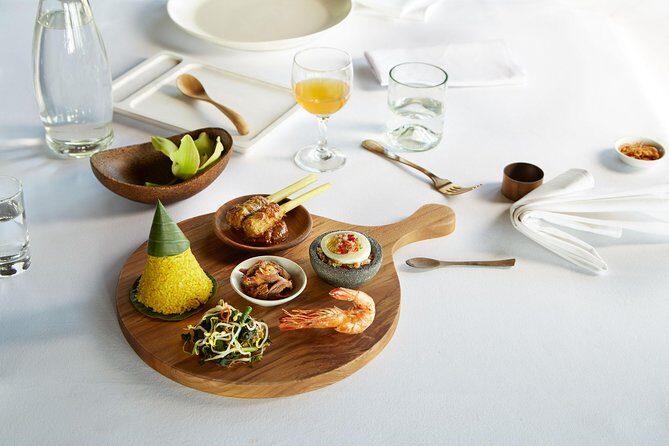
The menu structure is the heart of the value. You’re signing up for a six-course meal, not a buffet-style dinner with random portions. And you’re given diet choices upfront: beef, seafood, halal, or vegetarian.

That matters because it reduces the usual uncertainty. You can go in knowing you’ll get a full progression of courses that fits you, instead of hoping the kitchen can adjust on the fly.

A couple practical notes based on the dining reality here:

  • You may want to pay attention to course pacing. A six-course dinner is meant to be slow and social, so if you’re the type who likes a quick bite, this may feel long (in a good way for date-night, in a less-good way if you’re rushing).
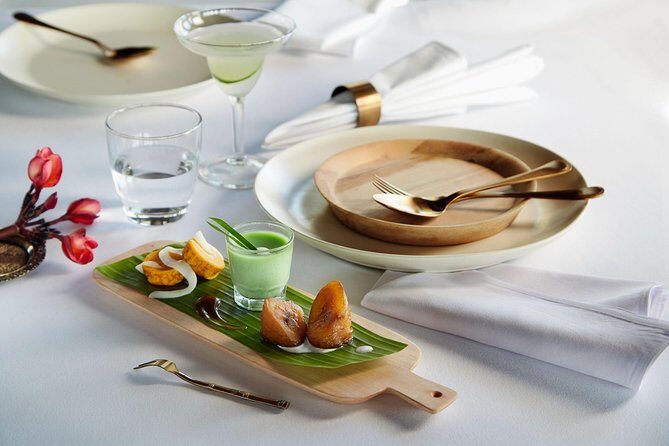
  • Dessert and small courses can vary in texture and doneness. One menu detail worth flagging: the green roll with chicken was described as a bit dry by one reviewer, and the snapper was described as over grilled (chewy rather than soft). Those are not deal-breakers, but they are useful signals. If you’re sensitive to dryness or fish texture, tell your server what you prefer at the start.

Balinese Sparkling Wine Toast: Included, and Used for a Reason

You get one bottle of Balinese sparkling wine included. That’s not just a free add-on. It’s part of how the evening is staged: you toast your companion early, and it helps set the relaxed rhythm for the courses that follow.

Since alcoholic beverages are included with the dinner package, you don’t need to juggle drink decisions while you’re trying to enjoy the view. For many couples, that’s a big deal because it keeps the night feeling like one smooth plan.

If you don’t drink, you might still find the included bottle useful if you can share it, or you can keep it to a toast and move on. The package is clearly designed for people who do want alcohol with dinner.

Private Service Style: Candlelight, Staff Attention, and Comfort

The “private” part here is more than wording. You’re seated on a terrace with candles and rustic decoration, and you’re not competing for attention among a line of tables. Service feels focused—more like hosting than like a standard restaurant run.

One standout from the service experience is the kindness and attentiveness of staff, including a waiter named Satria mentioned as especially awesome and kind. Another note from the experience is that a waitress in training still did a great job, which suggests the staff approach is supportive, not sloppy or chaotic.

A good rule for nights like this: let the staff know early if you have preferences (spice level, fish doneness, pacing). With a private setup, it’s easier for them to adjust once rather than keep doing small fixes all night.

Also, keep your camera ready. The terrace and forest view are the reason you came, and the lighting changes fast between 6:00 pm and full night.

Rain, Indoors, and Keeping the Mood

Forest Dining at Tree Deck overlooking lush valley of Ubud - Rain, Indoors, and Keeping the Mood
Bali weather can be unpredictable, and this experience works around that. If it rains, your dinner may shift indoors. One review described it as still private and very gorgeous even with rain, which is reassuring.

So here’s what to expect in practice: rain shouldn’t mean the experience becomes crowded or chaotic. It should still feel like your own dinner, just under cover. The main trade-off is obvious: you lose some of the open-air forest view.

If you want the outdoors feel, aim to keep your expectations flexible. Even if you get rain, the lighting and candle setup are designed to keep the evening romantic.

Price and Value in Plain Terms

At $177 for about 4 hours, this is not a cheap dinner. But it also isn’t just paying for food and a pretty spot.

For your money, you’re getting:

  • A full six-course meal
  • A bottle of Balinese sparkling wine
  • Service charge included
  • Candles and rustic decoration (so it’s set as an event, not just a table)
  • Dinner and alcoholic beverages included
  • Two-way private transfers from central Ubud (round-trip)

That combination is what changes the math. In Ubud, you could piece together a nice dinner plus wine plus transport separately—and it often adds up quickly. Here, it’s packaged so you pay once and then focus on the meal and the setting.

Where the value can feel less strong: if you don’t plan to enjoy the wine or you’re after a casual, no-drama meal. But if you’re celebrating, or you just want a calm romantic evening with minimal logistics, the inclusions justify the price more than they would for a basic restaurant meal.

Who This Experience Fits Best (and Who Might Skip It)

This fits best if you want:

  • A couples night that feels quiet and special
  • A meal with structure (six courses) rather than random ordering
  • A private setup with no crowd interruptions
  • Hotel convenience through private transfers
  • Diet options handled up front (beef, seafood, halal, vegetarian)

It may not be the best fit if you:

  • Want a quick, grab-and-go dinner (four hours can feel like a lot)
  • Hate slow pacing and multi-course meals
  • Are set on the outdoor view no matter what (rain can push the dinner indoors)

If you’re on your Bali trip for a mix of activities, this is a great “one big night” anchor. It gives you something that feels different from temple tours and scooter rides.

Small Tips to Make Your Evening Run Smooth

A few practical moves that keep things pleasant:

  • Wear smart casual. It’s not formal, but it keeps you comfortable for a terrace meal.
  • Bring your camera, and expect low light once the evening settles.
  • If you have strong preferences (fish doneness, texture, dryness), mention them when you sit down.
  • Go in ready for a long meal. The value is in the progression and the atmosphere, not in one quick plate.

Also, since this is near public transportation, it’s not in a totally remote corner of Bali. But the private transfers are still the easier option if they’re included for your pickup area.

Should You Book Forest Dining at Tree Deck in Ubud?

If you want a romantic evening with private treetop dining, a structured six-course meal, and Balinese sparkling wine already included, this is the kind of night I’d book without overthinking it. The biggest advantage is the combo of setting + privacy + transportation help, which is exactly what makes dinner feel effortless.

I’d book it especially if you and your date want a calm pace and you care about getting a meal that fits your dietary needs. Just go in with flexible expectations about the weather: rain may shift you indoors, but the experience is designed to stay private and beautiful.

If you’re chasing the outdoors view as your top priority, consider planning it as your backup evening rather than the single make-or-break night. Otherwise, for couples who like good food, wine, and a quiet terrace above the Ubud forest, this is a strong choice.

FAQ

Where does the experience start and what time does it begin?

It starts at Kamandalu Ubud (Jl. Raya Andong, Banjar Nagi, Kecamatan Ubud, Kabupaten Gianyar, Bali) at 6:00 pm. The activity ends back at the meeting point.

How much does forest dining cost, and how long is it?

The price is $177 and the duration is about 4 hours.

What food is included?

You’ll have a 6-course meal. You can choose beef, seafood, halal, or vegetarian.

Is sparkling wine included?

Yes. A bottle of Balinese sparkling wine is included, and alcoholic beverages are part of what’s included with dinner.

Is pickup and transport included?

If you’re staying in central Ubud, 2-way private transfers are included. The staff meet you at the front of Ubud Palace. If you’re outside the central area, transport from other locations can be arranged for an additional cost.

What’s the dress code?

The dress code is smart casual.

What happens if it rains?

This experience requires good weather. If it’s canceled due to poor weather, you’ll be offered a different date or a full refund.

Is it private for just my group?

Yes. It’s a private tour/activity, so only your group participates.

Best Ubud & Tanah Lot Excursion

Best Ubud & Tanah Lot Excursion - Sacred Monkey Forest Sanctuary: Fascinating Macaques, Know the Rules

Bali can feel like a blur. This tour slows it down with a private plan that ties Ubud culture to a sunset at Tanah Lot. You’ll see the working side of Balinese life, then swap to the big nature views of Ubud, and finish with that classic seaside temple moment.

What I like most is that your day is built around clear highlights with real time in each place: Monkey Forest for the animals and Tegalalang rice terraces for the views. The other win: lunch and bottled water are included, so you can keep spending under control while the main costs (transport and listed admission) are already handled.

One thing to consider: some stops list entrance as not included in the fine print, even though the overall description says admission is included. Before you go, confirm what’s covered for Monkey Forest, the terraces, and Tanah Lot so there are no surprises.

Key points worth knowing before you go

Best Ubud & Tanah Lot Excursion - Key points worth knowing before you go

  • Private vehicle pickup from Seminyak keeps the day moving without extra waiting around
  • Balinese woodworking at a local art stop gives context, not just photo stops
  • Sacred Monkey Forest Sanctuary is a full hour, so you can watch macaques without rushing
  • Tegalalang rice terraces get a dedicated visit for the iconic viewpoint
  • Luwak coffee sampling happens at Uma Pakel Agro Tourism, with tasting included in the plan
  • Tanah Lot at sunset is the payoff, timed for the seaside temple views

Pickup From Seminyak: Less Waiting, More Bali

Best Ubud & Tanah Lot Excursion - Pickup From Seminyak: Less Waiting, More Bali
This is a one-day excursion based in Seminyak, and it starts with pickup offered in a private vehicle. For a long day, that matters. You’re not playing taxi roulette, and you’re not juggling directions between scattered sights across the island.

The tour runs about 10 hours, which is a sensible length for Ubud plus Tanah Lot in one go. You’ll spend real time at the main attractions instead of treating them like a quick drive-by. It’s also set up as a private experience for just your group, so your guide can adjust pacing to your interests, within reason.

One practical note: the price is $69 per person. That’s not a “budget everything” deal, but it is good value when you factor in private transportation, parking, bottled water, and lunch. If you’re traveling in a smaller group, you’ll still likely feel the cost difference compared with shared buses, but the time saved is real.

Balinese Woodworking and Local Craft: Start in Ubud’s Art Center

Your first stop is at a wood-carving area, with the tour note referencing a move to Yana Art Gallery. This is a smart opening. You go from the idea of Bali to the reality: hands working, designs repeating, and daily craft traditions that don’t depend on tourists.

At this kind of art stop, you’re usually not just looking at souvenirs. You’re meant to watch skilled artisans at work in handcraft workshops. The value here is context. When you later see temples and rice terraces, the culture feels less like scenery and more like a way of life.

What you’ll likely enjoy most is the rhythm of the place. Carving and woodworking don’t translate instantly into a single “wow” photo. But if you take 20–30 minutes to look closely, you start noticing details: tools, patterns, and how artisans talk about their materials.

Potential downside: art workshops can feel like a slow start if you’re hungry for wildlife or views first. If that’s you, treat this stop as a warm-up and aim for curiosity over shopping.

Sacred Monkey Forest Sanctuary: Fascinating Macaques, Know the Rules

Best Ubud & Tanah Lot Excursion - Sacred Monkey Forest Sanctuary: Fascinating Macaques, Know the Rules
Next you head to the Sacred Monkey Forest Sanctuary for about one hour. This is the classic Ubud animal stop, and it’s popular for a reason. You’ll see long-tailed macaques in a natural setting, not just in cages.

The practical part: plan to follow the sanctuary’s rules closely. Monkey areas can be safe when you respect boundaries, but you still need common sense—keep bags secure, avoid sudden movements, and don’t encourage contact. With only an hour, you’ll want to spend your time watching behavior instead of getting pulled into a constant shuffle.

I also like that this stop gives you a real chance to observe the monkeys while you’re not rushing between multiple tiny stops. One hour is enough to spot typical macaque routines—climbing, grooming, and moving along paths—without burning the whole day.

Possible drawback: some people find monkeys stressful or simply don’t enjoy being surrounded by wild animals. If that’s your situation, you might still like seeing the forest itself, but expect behavior to be unpredictable.

Tegalalang Rice Terraces: The View You Actually Want

Best Ubud & Tanah Lot Excursion - Tegalalang Rice Terraces: The View You Actually Want
After Monkey Forest, you’ll go to the Tegalalang Rice Terrace area for another hour. This is where Bali’s postcard rice terraces become real. The terraces are famous because they’re engineered over generations, and the viewpoints are built for you to understand the scale.

What I like about giving Tegalalang a full hour is that you can do more than one thing. You can grab a viewpoint photo, then slow down and walk along an angle that shows terrace levels receding into the hills. Even if you’ve seen pictures before, it’s the depth that hits you once you’re standing there.

When you’re there, pay attention to weather. Cloud cover can soften the scene, and bright sun can make it more contrasty. In either case, plan your photo time around lighting rather than speed-walking the whole site.

Drawback to consider: this is a high-traffic area. Even with a private tour, the terraces themselves attract visitors. If you like quiet, you’ll need patience and a willingness to walk a few minutes beyond the busiest viewpoints.

Uma Pakel Agro Tourism: Coffee Sampling Without the Stress

Then you shift to Uma Pakel Agro Tourism, roughly 30 minutes in the plan. This is a coffee plantation stop, and it’s where you’ll experience local coffee highlights, including Luwak Coffee.

Luwak coffee has earned a reputation as one of the world’s most expensive coffees. The tour description ties it to beans that come from an animal’s digestion process. Even if you don’t care about the myth, this is still useful because you’ll learn how coffee culture works here—how the product is made, how it’s talked about, and why tasting matters.

Practical value: a short plantation stop is a good use of time. You’re not sacrificing the day for a long lecture. You’ll have a focused visit where you can try coffee and move on.

Possible drawback: coffee tasting is not everyone’s favorite activity, especially if you dislike strong flavors. Also, the tour lists soda/pop and alcoholic beverages as not included, so if you want additional drinks beyond what’s offered, you’ll pay. Bring your own water habits, even though bottled water is included.

Tanah Lot Temple at Sunset: Coastal Views Done Right

The last major stop is Tanah Lot Temple, about a one-hour drive from the Ubud area. You’ll visit for around one hour, and the goal is clear: watch the sunset at this seaside temple.

Tanah Lot works because it’s not a generic temple stop. The temple sits in a dramatic coastal setting, and the sea and rocks do a lot of the visual heavy lifting. When the sun starts dropping, the whole place feels built for that one moment: silhouettes, reflections, and the way the location changes the mood.

What you should plan for: wind and uneven ground. You’ll want stable shoes, not flip-flops that slide. Also, if sunset is the priority, manage your pace early. Save your wandering for when the light is best, and keep your timing for the final viewing area.

One consideration: the tour lists Tanah Lot admission as not included in the stop details, even while other parts of the program say entrance fees are included. That’s exactly why I recommend confirming coverage before you arrive. If you end up paying on-site, it usually still works out, but it’s better not to guess.

Price and Logistics: Is $69 Good Value?

At $69 per person, this tour sits in the middle. It’s not cheap in the way that a shared bus is cheap, but it’s also not inflated for what you get.

Here’s where the value comes from:

  • Private transportation and parking fees are covered
  • Lunch is included, plus bottled water
  • The day groups multiple big-ticket sights: Ubud culture, Monkey Forest, Tegalalang terraces, coffee tasting, and Tanah Lot sunset
  • It’s set up as a private tour/activity for your group, not a crowded schedule

If you hate wasting time, this kind of routing is worth it. A DIY day often turns into bargaining over rides, figuring out entrance payments, and losing hours to logistics. With a planned route, you spend more time at the sights and less time negotiating with your itinerary.

The only value “gotcha” to watch is entrance fees. The overall description indicates admission is included, but some individual stop notes list tickets as not included. Before you book, message to confirm what you’ll pay (if anything) on arrival.

Who This Tour Suits Best (And Who Might Skip It)

Best Ubud & Tanah Lot Excursion - Who This Tour Suits Best (And Who Might Skip It)
This excursion fits best if you want a classic Bali day without the stress of planning every hop. You’ll enjoy it most if you:

  • like pairing culture (wood carving and Balinese art) with nature views
  • want Ubud and Tanah Lot in one go
  • appreciate guided pacing and a private vehicle
  • don’t want to figure out lunch and transportation separately

It may not be your best fit if:

  • you strongly dislike wildlife encounters, even from a respectful distance
  • you prefer slow travel and hate “one-hour stops”
  • you want a fully all-in package with zero on-site payments (because entrance-fee details may vary by stop)

One plus from the experience details: the guide is key. In the feedback I saw, people highlighted a guide named Abdi as friendly and flexible. You can’t guarantee the same person, but it’s a good sign that customer experience is taken seriously.

What to Pack for a 10-Hour Ubud and Tanah Lot Day

You’ll be outside for most of the day, including walking around Monkey Forest and standing at terrace and temple viewpoints. Pack with that in mind.

Practical checklist:

  • Comfortable, grippy shoes for uneven paths and coastal areas
  • Sun protection (hat and sunscreen), especially at Tegalalang and outdoors temple viewing
  • Light rain layer in case weather shifts
  • A small day bag you can keep secure around monkeys
  • Cash or card backup just in case any entrance fees are paid at the site

Also plan your food timing. Lunch is included, but the day still moves between stops. Having a snack habit for the gaps can prevent energy crashes, even if the main meal is covered.

Should You Book Best Ubud & Tanah Lot Excursion?

I’d book this tour if you want a well-paced, high-coverage day that hits the big Ubud highlights and ends with the sunset payoff at Tanah Lot. The combination of private transportation, lunch, and a tight route makes it a strong value choice for a one-time visit.

Don’t book blindly if you’re sensitive to entrance-fee uncertainty. Before you go, confirm whether Monkey Forest, Tegalalang, and Tanah Lot are fully covered by your ticket. If you hate coffee tastings, also check whether the sampling is your style, since Uma Pakel Agro Tourism is part of the plan.

If you want an easy day that still feels authentic, this is a solid pick.

FAQ

How long is the Best Ubud & Tanah Lot excursion?

It’s about 10 hours.

Do you get hotel pickup?

Yes, pickup is offered, using private transportation.

Is this tour private?

Yes. It’s listed as a private tour/activity, and only your group participates.

What’s included in the price?

Included items are bottled water, private transportation, parking fees, entrance fees (listed as included), and lunch.

Is Monkey Forest included?

Monkey Forest has an admission ticket note in the stop details marked as not included, so you should confirm what’s covered before you go.

Is lunch included?

Yes, lunch is included.

What’s the minimum number of people to book?

A minimum of 2 people is required per booking.

Bali Shore Excursion: Nusa Dua Beach Half Day Tour

Bali Shore Excursion: Nusa Dua Beach Half Day Tour - Water sports at Nusa Dua: optional fun, separate cost

Nusa Dua in a half day is a sweet cruise-day fix. You get door-to-port convenience with a private Toyota or Suzuki minivan and an English-speaking driver, then spend about 2 hours lounging at a white-sand beach. I like that the trip includes a dedicated beach chair/long chair plus admission, so you’re not hunting for beach rentals. One thing to weigh: there’s a short, timed schedule, and one past booking report mentioned a driver no-show.

What makes this tour work is the simple flow: pick up from Benoa, go straight to the beach, and then return to Benoa in time for ship logistics. I also like that the water sports are optional (so you can keep it calm or go adrenaline), rather than forcing activities into the itinerary. My only caution is communication: if your cruise arrival is late, the schedule shifts, and missed timing can’t always be rescued on a cruise day.

Key things to know before you go

  • Private pickup at Benoa Port timed to your cruise arrival, with an English-speaking driver
  • Nusa Dua Beach chair included (long chair), plus admission for your beach time
  • About 2 hours at the beach for relaxing and photos without turning it into an all-day slog
  • Water sports are available but extra, including banana boat, parasailing, sea walker, and jet skis
  • Benoa Harbour stop included for about 1 hour, built into the half-day rhythm
  • Mobile ticket with confirmation at booking, and a private setup for just your group

From Benoa Port: how the pickup timing really matters

This is a cruise-oriented setup. You’re picked up at Benoa Port starting around 8:00am, but the exact moment depends on when your ship disembarks. That matters because your whole day runs on that first handoff—if your ship is delayed, your tour start likely follows.

You’ll meet a professional English-speaking driver, then head out by private vehicle. The ride is meant to be straightforward: no shared shuttles, no waiting around for other parties. Transportation is by a Toyota or Suzuki minivan with fuel included, which is a nice peace-of-mind detail when you’re on a schedule.

The tour is also described as a private experience, meaning it’s only your group. That’s a real benefit when you’re traveling with family, or when you want the driver to match the pace of your day instead of herding people along.

Nusa Dua Beach on a half day: chairs, shade, and easy sand time

Bali Shore Excursion: Nusa Dua Beach Half Day Tour - Nusa Dua Beach on a half day: chairs, shade, and easy sand time
The main event is Nusa Dua Beach, reached in about 20 minutes from Benoa Port. Once you arrive, you’re set up for an uncomplicated beach plan: relax, lounge, and enjoy the white sand without turning it into a checklist trip.

You’ll have dedicated beach seating—a long chair is included. You can lounge there all day, or you can lie under the trees if you prefer shade. That shade option is a practical touch, because sun time on Bali can feel intense even when the day looks calm.

The itinerary gives you about 2 hours on the beach. Two hours sounds short, but it’s actually a smart duration for cruise passengers. It’s long enough to swim, take photos, and eat something if you buy it on-site—without eating up your entire shore day.

If time allows, you might also have a chance to stop by nearby beach bars and restaurants. That’s not guaranteed as a full meal stop, but it gives you flexibility if the driver feels it fits the timing.

What to bring for beach time

Because food and drinks aren’t included, I’d plan around buying your own water and snacks. Bring swimwear you can change into quickly, plus sun protection. If you’re the type who hates sandy flip-flops, plan shoes you can walk in without suffering.

Water sports at Nusa Dua: optional fun, separate cost

Bali Shore Excursion: Nusa Dua Beach Half Day Tour - Water sports at Nusa Dua: optional fun, separate cost
This is one of those tours where the beach is the focus, and water sports are add-ons. You’ll find activities available on-site for your own expense, including banana boat, parasailing, sea walker, and jet skis.

The key value here is choice. You can keep it relaxed with just swimming and beach time, or you can spend extra to do one activity and still be back with time to spare. Because the half day is tight, picking one paid activity (instead of trying to do everything) usually feels best.

Another practical note: since the water sports cost extra, your final budget depends on how bold you go. If you’re traveling with kids or you’re not confident on the water, you might enjoy the beach far more than the paid add-ons.

Benoa Harbour stop: a simple included hour near the end

After beach time, the schedule includes Benoa Harbour for about 1 hour, with admission included. On a shore excursion, that kind of stop often functions like a timing buffer: time to settle back after the drive, take a breath, and handle last-minute logistics before returning to the ship.

What you’ll do at the harbour isn’t spelled out in detail, so I wouldn’t expect a guided sightseeing tour with a fixed script. Instead, treat this hour as flexible time that may work for photos, a walk around the area, or simply waiting comfortably.

On a cruise day, that’s useful. You’re less likely to feel rushed when you have an included chunk of time built in.

Private transport comfort: why it feels easier than DIY

If you’ve ever tried to coordinate Bali transport on a cruise day, you know the stress. This tour strips out some of that by giving you private transportation and a driver who speaks English.

The inclusion list matters here:

  • Fuel is included (so you’re not paying surprise add-ons mid-drive)
  • Port pickup and drop-off are included
  • You ride in a private vehicle rather than a shared group shuttle

That combo is basically what you’re paying for at this price: time saved, fewer moving parts, and a driver who can handle the route while you focus on enjoying the shore day.

Also, since it’s a private tour, you don’t get stuck waiting on other guests. Your group moves together, which helps when your ship’s schedule is unforgiving.

Price and value: what $30.77 per person really covers

At about $30.77 per person, this tour is priced like a practical half-day “beach + transport” option. You’re not just buying a ride. You’re also getting:

  • admission included for your beach time
  • admission included for the harbour stop
  • long chair / beach chair included
  • a private vehicle and an English-speaking driver

That makes it easier to compare to DIY. If you were to arrange transport on your own, you might save money, but you’d likely lose some combination of convenience, timing, and included beach seating. On cruise days, convenience often becomes the real cost you’re avoiding.

What’s not included is also clear: food and drinks are extra. Souvenir photos can be purchased if you want them, but they’re not part of the price. Water sports are also not included in the base cost.

So here’s how I’d think about value: if your plan is a relaxed beach morning/afternoon with comfortable seating, this price looks fair. If your plan is to spend heavily on multiple paid water sports, the base price is only part of your total.

The biggest watch-outs before you commit

I don’t love sugarcoating travel risk, especially with cruise itineraries. The overall rating for this experience is 3.3 across 3 reviews, and at least one review reported a driver no-show with no response and no explanation. That’s the one red flag you should take seriously.

You can’t control every operational hiccup in Bali. But you can control how prepared you are:

  • Have your meeting point details ready, not saved deep in an email
  • Double-check your pickup time window relative to your ship disembark
  • Keep a way to contact the operator handy, so you’re not stuck with only hope

Also remember the schedule is built for a half day. If your cruise runs late, your time on the beach may shrink. And if you miss the scheduled pickup, refunds aren’t issued for that kind of miss due to late or non-arrival of the cruise ship.

This doesn’t mean the tour is doomed. It means you should treat it like cruise travel: be ready, be early, and don’t assume everything will run exactly on script.

Who should book this Nusa Dua beach half-day

This tour is a good fit if you want:

  • a beach reset without a full day commitment
  • private pickup and drop-off from Benoa
  • an English-speaking driver who handles driving so you can relax
  • time for a little beach lounging, plus optional paid activities

It’s also a smart choice if your cruise shore day is short and you’d rather spend your time in sand and shade than on a multi-stop sightseeing grind.

Where it might not fit: if you’re dreaming of a deep, culture-heavy day, this isn’t that kind of itinerary. It’s about beach time. Keep your expectations aligned with a relaxed half-day beach break.

And if you’re the kind of traveler who needs absolute certainty with zero risk of delays, you should recognize cruise days always carry timing tension. In that case, I’d still consider it—but go in with a “be ready for anything” mindset.

Should you book it?

If you want an easy, beach-centered shore day with private transport, an English-speaking driver, and a beach chair included, this tour makes sense—especially at around $30.77 per person. The included seating and admissions help you avoid a lot of small on-the-ground decisions.

But given that the experience has at least one serious no-show report and a modest overall rating, I’d book only if you’re comfortable with cruise-day realities. For me, the deciding factor would be your ability to stay flexible with timing and to follow up quickly if anything seems off at pickup.

If you do book: confirm your pickup details as soon as you can, keep your phone charged, and aim to be at the meeting point early. Then you’ll spend your time on the part that matters—Nusa Dua beach lounging with minimal fuss.

FAQ

What time does the Nusa Dua beach half-day tour start?

The start time is listed as 8:00am, timed around your cruise ship’s arrival and disembark.

Where are you picked up and dropped off?

You’re picked up and dropped off at Benoa Port (port pickup and drop-off are included).

How long is the tour?

The duration is about 5 hours (approx.).

Is this a private tour?

Yes. It’s described as a private tour with only your group participating.

Are beach chairs included?

Yes. A long chair is included.

Are food and drinks included?

No. Food and drinks are not included.

Are water sports included in the price?

No. Water sports like banana boat, parasailing, sea walker, and jet skis are available but at your own expense.

Farm-to-Table Balinese Cooking Experience

Farm-to-Table Balinese Cooking Experience - The cooking class: farm produce, real technique, small group energy

Food + culture, in one tidy package.

What makes this Balinese cooking experience stand out is the market-to-kitchen flow: you start by picking ingredients with a guide, then move straight into a hands-on cooking class. I also like that the food you make ties back to organic farm produce, and you end with lunch that comes from your own work. The setting matters too—expect great views while you learn.

One thing to think about is price. At $47.31 per person it can look fair on paper, but the total you pay can feel high if you’re comparing against cheaper Bali food activities (and currency conversions can make it sting).

Key highlights to know before you go

Farm-to-Table Balinese Cooking Experience - Key highlights to know before you go

  • Market ingredient shopping with a guide before you cook
  • Hands-on cooking class led by a local expert
  • Organic, farm-fresh ingredients used for your meal
  • Countryside views during the cooking time
  • Balinese family home visit for a real-life snapshot of daily life

From market stalls to your chopping board

In Ubud, a cooking class is common. What’s less common is the full “start with ingredients, then cook, then eat” rhythm built around how Balinese daily life actually works—plus the chance to connect that meal to where the ingredients came from.

You’ll begin with a guided market tour where you choose fresh produce and other items directly from local vendors. That sets the tone. Instead of showing up at a kitchen and copying a recipe, you’re actively shaping what ends up on the table. It’s also a fast way to learn the logic behind meals here: ingredients first, technique second, and taste right at the center.

Then comes the cooking part. You’ll join a local expert for a hands-on class using farm-harvested organic ingredients. The goal isn’t just to get fed; it’s to learn how these dishes come together, step by step, with plenty of time to participate rather than watch.

Finally, you’ll add a cultural layer that goes beyond food. The experience includes a visit to a local Balinese family in their home to see daily life, not just a staged performance.

Picking ingredients in the market (and what you’ll learn)

Farm-to-Table Balinese Cooking Experience - Picking ingredients in the market (and what you’ll learn)
The market segment is the anchor of the whole experience. I like this because it gives you context you don’t get from a standard cooking class.

Here’s what it means in practical terms:

  • You’ll practice “choosing” instead of simply buying. That makes the lesson stick.
  • You get a sense of what’s fresh and what people actually use, which helps when you’re cooking later at home.
  • You’re guided through the process, so you’re less likely to end up with the wrong ingredient or miss what makes it special in Balinese cooking.

Because you’re selecting directly from vendors, you’ll see how ingredients are displayed, handled, and sold in a way that feels real. This is also where the tour’s “farm-to-table” promise starts to make sense: it’s not just marketing language. The same ingredients you pick are the ones that feed into the recipes you’ll cook.

Tip: wear comfortable shoes and bring a small bag you can keep close. Markets move fast, and you’ll appreciate not having to wrestle with your belongings while deciding what to buy.

The cooking class: farm produce, real technique, small group energy

Farm-to-Table Balinese Cooking Experience - The cooking class: farm produce, real technique, small group energy
The class itself is hands-on, led by a local expert, and built around organic ingredients harvested from the farm. That matters because you’re cooking with ingredients that match the flavor profile the recipe is meant to use—so the results you get aren’t “average cooking class food.”

The group size is also a big deal: the experience caps at 15 travelers. In real terms, that usually means you’re more likely to get personal guidance, and the instructor can spot problems quickly—like when chopping is uneven or when you’re unsure about timing. It’s the difference between feeling like a spectator and feeling like you’re actually participating.

You’ll likely do the full arc of cooking tasks during the class: prepping ingredients, learning the approach for combining them, and finishing dishes the way the recipe intends. The tour description also emphasizes that you’ll be cooking traditional Balinese dishes. That’s important because it frames the day as learning a style, not just copying one meal.

One consideration: hands-on cooking can get a bit hot, and kitchens in the tropics can feel steamy. Lightweight layers and a plan for how you’ll manage hair or sweat will make the experience more comfortable.

Views and timing: why the setting isn’t just decoration

The experience isn’t only about food. While you cook, you’ll enjoy stunning views over the lush countryside. Even if you’re focused on learning, the visual break helps the whole day feel calmer and less like a factory tour.

Why this matters for you:

  • It keeps the pace more relaxed. You’re not rushed from one stop to another just to check boxes.
  • It gives you a sense of place. Ubud sits in a green, hilly environment, and this type of view helps you understand why farms and local ingredients are such a core part of the food culture.

Duration is listed as about 3 hours 30 minutes, which is long enough to do the market, cook, visit a family home, and eat lunch without feeling like an all-day saga. In practice, that kind of time frame is ideal if you want a meaningful cultural activity but you still want energy for Ubud’s evening options.

Visiting a Balinese family home: what to watch for

Farm-to-Table Balinese Cooking Experience - Visiting a Balinese family home: what to watch for
The included home visit is one of the most valuable parts of this experience—if you go in with the right expectations.

Instead of a “look, don’t touch” photo stop, the tour description says you’ll visit a local Balinese family in their home to gain insight into daily life and the island’s unique way of living. That’s the key phrase: daily life.

This can translate into a few different things, depending on the family and timing:

  • A chance to see how households operate in a real setting
  • A better understanding of how food, routine, and community fit together
  • A quieter cultural exchange that happens through conversation and observation

Respect goes a long way here. Keep your phone put away until you’re sure it’s welcome, and follow any guidance you’re given. You’ll get more out of the visit when you treat it like a conversation rather than a scene.

Lunch you made: the payoff after the work

Lunch is included, and it’s the meal you prepared. That’s not just a perk; it’s part of the teaching method. When you taste the dish right after cooking it, you can connect technique to flavor immediately.

Expect lunch to be authentic to Balinese cooking since the class uses traditional dishes and organic farm ingredients. If you’re thinking ahead: this is also the best time to ask about what you should change if you try cooking again later—like ingredient substitutes or which steps matter most.

You’ll also receive bottled water, which is a thoughtful inclusion in Ubud’s heat.

Practical advice: take a moment at the start of lunch to note what tastes best to you. Later, when you look at the provided recipe PDF, your memory will help you choose what to practice first.

Value check: price vs what’s actually included

At $47.31 per person, on paper this is positioned as an accessible farm-to-table food experience. But the real value question isn’t just cost—it’s what you’re getting in that 3.5-hour window.

Here’s what you do get:

  • Pickup and drop-off in the Ubud area
  • A guided market tour to select ingredients
  • A hands-on Balinese cooking class with a local expert
  • Use of organic, farm-fresh ingredients
  • A Balinese family home visit
  • Lunch (plus bottled water)
  • A recipe PDF
  • Mobile ticket and group max 15

Now, the tricky part: some people feel the total cost is high compared with other Bali food options. One common complaint is that the amount can end up feeling steep once you factor in currency conversion and what you’re comparing it against. So if your main goal is budget-friendly eating, you’ll want to compare carefully.

My take: if you value the full package—market + cooking + family home visit + lunch—this can be good value. If you only want cooking and don’t care about the cultural add-ons, you may find cheaper classes that still teach you enough to satisfy your appetite.

Who this fits best (and who should skip)

This tour is a strong match if you:

  • Want a structured food experience that starts in the market
  • Like hands-on learning more than just watching
  • Enjoy cultural context, especially home life and local routines
  • Prefer smaller groups (up to 15 travelers)

It might not be the best fit if:

  • You’re purely chasing the lowest price for a cooking class in Bali
  • You want a food experience with more free time or a looser itinerary
  • You’re the type who hates guided stops and structured pacing

If you’re traveling solo, it can also work well because the group is capped and the activities are interactive. Couples often like it too, especially if one person wants cooking and the other wants culture.

Small inclusions that matter more than you think

A few details quietly improve the experience:

  • Pickup/drop-off in Ubud means you don’t lose energy figuring out transport.
  • The recipe PDF is useful because it helps you repeat what you learned instead of forgetting after a vacation buzz.
  • Bottled water is a small but welcome inclusion during cooking time.
  • The group cap supports a more personal class feel.
  • Free cancellation is available if plans change, though you still need good weather for the experience to run as intended.

Also, the tour includes lunch, so you’re not scrambling to find food afterward. In Ubud, that “not thinking about meals” freedom is real.

Should you book this farm-to-table Balinese cooking experience?

If you want a cooking class that feels connected to the island—market ingredients, organic farm produce, a family home visit, and lunch you made—then yes, this is worth booking. It’s built as a compact cultural day, not just a kitchen workshop.

But if you’re value-sensitive and you’re willing to trade cultural depth for lower cost, you may prefer a cheaper option that focuses only on cooking. The main decision comes down to whether you’ll actually use and appreciate everything included, especially the market shopping and the family home visit.

If you decide to go, book with the expectation of a guided, hands-on day in Ubud—then enjoy the payoff: a meal tied to where it started.

FAQ

How long is the Farm-to-Table Balinese Cooking Experience?

The duration is approximately 3 hours 30 minutes.

Where does the tour take place?

It’s located in Ubud, Indonesia.

What’s included in the price?

Lunch, bottled water, pickup & drop-off in the Ubud area, and a recipe PDF are included.

Is pickup offered?

Yes, pickup and drop-off are included for the Ubud area.

What is the maximum group size?

The experience has a maximum of 15 travelers.

Do I get a recipe?

Yes, you’ll receive a recipe in PDF format.

Is the tour dependent on weather?

Yes. The experience requires good weather. If it’s canceled due to poor weather, you’ll be offered a different date or a full refund.

What is the cancellation policy?

Free cancellation is available. You can cancel up to 24 hours in advance of the experience for a full refund.

Bali ATV Quad Bike & Ayung River Rafting Combo with Lunch

Bali ATV Quad Bike & Ayung River Rafting Combo with Lunch - Ayung River rafting: about 2 hours of rapids and scenery

Two hours on the rapids, then two on the track. This Bali combo in Ubud pairs Ayung River rafting with an ATV quad bike ride through rough terrain and jungle trails. You’ll paddle past river scenery and waterfalls, then switch gears to rocky paths, deep mud, river crossings, and steep slopes.

What I like most is the way the day is run: you register first, then a guide shows you how to use the equipment and explains what to do before each activity. The second thing I love is the whole package value—lunch is included, you get insurance, you’re using the gear, and you can take a shower afterward before heading back.

One possible drawback: the ATV is described as a full track built for riders who want adrenaline and tougher conditions, and the ride can be a bit muddy. If you hate getting dirty or you’re hoping for a super-calm, easy cruise, plan for a more hands-on experience.

Quick hits (the stuff that matters)

Bali ATV Quad Bike & Ayung River Rafting Combo with Lunch - Quick hits (the stuff that matters)

  • Ayung River rafting time in the water is about 2 hours, so this is more than a quick dip.
  • ATV ride time is about 2 hours, and it includes rocky, muddy, and steep sections.
  • Pickup and drop-off are offered, and the day ends back at the meeting point.
  • Lunch + insurance + equipment are included, so you’re not constantly checking add-on prices.
  • Small group size (maximum 5 travelers) helps keep the day organized and personal.
  • No prior rafting experience is needed, and you’ll get instructions before you go.

Why this Ubud ATV and Ayung River combo works as a full day

This is the kind of Bali day that fits people who don’t want to spend the afternoon deciding what to do. Instead, you get a clean sequence: rafting in the morning-to-midday window, then ATV time, plus lunch and a shower in the wrap-up.

It’s also a smart combo for two different “moods.” Rafting is all about teamwork and reading the river while you enjoy the sights—river scenery, waterfalls, and lush jungle surroundings. ATV time flips that into physical, hands-on control: braking right, steering through bumps, and staying confident when the trail gets messy.

One more reason it’s a good value: you’re not paying separately for the big ingredients. Admission fees, insurance, equipment use, and lunch are all part of the package. For a day that could otherwise turn into a patchwork of small purchases, this format is easy.

Check-in, equipment, and safety talk before you get wet

Bali ATV Quad Bike & Ayung River Rafting Combo with Lunch - Check-in, equipment, and safety talk before you get wet
The day starts with a straightforward routine. You show up, you register, and then the guide runs the show. First comes the equipment walk-through—how to use what you’ll need—and then a clear briefing on what you should do during the activities.

That matters more than people think. With rafting and ATV riding, most of the stress comes from not knowing what the instructor expects. Here, the process is set up so you’re not guessing. You get told what to do before you’re put on the water or on the track.

Another helpful detail: the day is designed for real people, including first-timers. The rafting side doesn’t require prior experience, and the guide-led instruction is part of why beginners can enjoy it without feeling lost. The ATV side is different—more about control and comfort with driving—but the structure is still the same: guidance first, then action.

Ayung River rafting: about 2 hours of rapids and scenery

Bali ATV Quad Bike & Ayung River Rafting Combo with Lunch - Ayung River rafting: about 2 hours of rapids and scenery
Rafting is your main “water” block of the day. You’ll spend roughly 2 hours on the river, with time to paddle through a mix of fast moments and calmer stretches where you can catch your breath. The setting is part of the payoff: river landscapes, waterfalls, and green jungle surroundings create that classic Ubud vibe where you feel away from traffic.

This is also the portion where teamwork matters. Even if you’re just focused on your own paddle strokes, the raft moves as a group. You’ll feel it when the guide’s instructions kick in—everyone starts responding the same way, and the ride suddenly feels smoother and more fun.

One practical thing: the tour is built to cover enough time that rafting feels like the real activity, not a tacked-on photo stop. If you’re going to do Ayung River rafting, you usually want actual time on the water—and this schedule gives you that.

What to consider: rafting is wet by nature. Even with instructions, you should expect splash and wet clothing. It’s not a “dry day tour,” so plan your mindset around getting wet.

ATV quad bike: 2 hours on rough terrain (and yes, it can get muddy)

Bali ATV Quad Bike & Ayung River Rafting Combo with Lunch - ATV quad bike: 2 hours on rough terrain (and yes, it can get muddy)
After the river, you switch to the ATV quad bike portion. This is around 2 hours, and it’s not presented as a gentle, showroom-style ride. The full track is described as tough and built for adrenaline—rocky paths, deep mud, river crossings, steep slopes, and jungle trails.

That means your success comes down to control: driving smoothly, braking at the right moments, and adjusting your line when the ground changes. In the feedback, one of the best signals of quality is that the ATV experience stands out compared to other places because it’s longer and more fun—while still requiring you to drive smart. If you know how to brake and slow down when needed, you’ll likely enjoy it more. If you’re still learning, go steady at first and let the instructions sink in.

And yes, muddy is part of the charm. The ATV ride can be “a bit muddy,” and that’s exactly why it feels like a real adventure. You’re not just rolling down a paved path. You’re dealing with terrain.

The main consideration here is suitability. The ATV track is described as for experienced riders in its “full track” sense, but the overall tour notes that most travelers can participate. Translation: you can likely do it even if you’re not a pro, but you should be honest with yourself about your comfort level with physical, dirty, bumpy riding.

Lunch break with a real meal, not just a snack

Bali ATV Quad Bike & Ayung River Rafting Combo with Lunch - Lunch break with a real meal, not just a snack
Between rafting and ATV (or after the main action, depending on how the day flows), you get lunch included. The feedback on the lunch is strong: people call it awesome, and that’s a big deal on an 8-hour day. When you’re working up sweat—paddling and then riding—you want food that actually helps you reset.

This lunch block is also where the tour keeps you from running on fumes. A combo like this can easily become a “do it all, don’t eat enough” trap. Here, lunch is built in, and that makes the day feel more balanced.

And because the tour includes the ability to take a shower after your activities, lunch isn’t just fuel. It’s part of the pacing that gets you from active chaos to a more comfortable finish.

Pickup, small groups, and why the pacing feels manageable

Bali ATV Quad Bike & Ayung River Rafting Combo with Lunch - Pickup, small groups, and why the pacing feels manageable
This is an 8-hour combo (approx.), and the time structure matters. If you pick a two-activity day that runs too long with too much waiting, it can feel exhausting instead of exciting. The way this one is set up—register, gear briefing, about 2 hours rafting, about 2 hours ATV, then back to the lobby—keeps the day active without losing the thread.

You’re also not stuck on your own. Pickup is offered, and multiple people highlight that they were collected from their hotel and dropped off afterward. Even if you start from the meeting point, the general idea is that the provider tries to keep the logistics simple and the transition smooth.

The maximum group size is 5 travelers, which is a quiet advantage. Smaller groups typically mean you spend less time waiting around. It can also mean the guide can actually notice if someone is struggling with instructions—especially helpful on the ATV where control and braking timing matter.

Opening hours run from 8:30 AM to 2:00 PM across Monday through Sunday for the stated period. So you’re usually looking at a daytime adventure rather than a late-night activity.

What’s included (and how that affects real value)

Bali ATV Quad Bike & Ayung River Rafting Combo with Lunch - What’s included (and how that affects real value)
At $100 per person, the big question is whether you’re getting a fair deal once you factor in everything that’s included—not just the headline activities.

Here’s what’s covered:

  • Lunch
  • Admission fees
  • Insurance
  • Use of equipment

That bundle matters because rafting and ATV days often have surprise costs: entry fees, gear rentals, and basic insurance can add up. With those already included, you can budget confidently for the one thing that’s usually unpredictable in Bali: what you choose to buy or tip on top.

What’s not included is listed as additional expenses. So if you’re the type who likes souvenirs, extra photos, or on-the-spot add-ons, keep a little buffer. If you’re not, this package format should feel clean and predictable.

Also, the tour includes mobile tickets and confirmation at booking time, which reduces last-minute stress. You’re not guessing.

Who this Bali combo suits best

Bali ATV Quad Bike & Ayung River Rafting Combo with Lunch - Who this Bali combo suits best
This ATV + rafting combo is ideal if you want an action-packed day and you like your travel experiences hands-on. The rafting part is good for first-timers because you don’t need prior experience and you’ll get instructions. The ATV part is more demanding because it’s built for adrenaline, but the guide-led setup and the practical way people describe their experience suggest beginners can still have a good time if they’re willing to listen and drive carefully.

You’ll likely enjoy it most if:

  • You want both water adventure and off-road riding in one day
  • You’re okay getting wet and getting muddy
  • You want a guided day with clear instructions
  • You like small group dynamics

You might want to choose something gentler if:

  • You have zero interest in dirty, bumpy riding
  • You dislike anything physically challenging
  • You’re hoping for a scenic, slow, no-effort day

Practical tips for getting the most out of rafting + ATV

Since this day is built on water and rough terrain, your main goal is to protect your comfort and focus.

1) Treat the day as wet + muddy

Rafting is splashy. ATV terrain can be muddy. I’d plan your clothing and mindset around that reality so you don’t feel annoyed halfway through.

2) On the ATV, braking and timing matter

One of the best insights from the experience is that it’s more fun when you know how to drive and brake at the right times. Even if you’re new, go slower at first, get the feel, then build confidence.

3) Listen closely during the gear and safety briefing

You register, then the guide shows equipment use and explains what to do. That briefing is where you set yourself up for an enjoyable day. If you miss it, you’ll feel it later.

4) Use the shower after

The tour offers a shower after lunch and activities. That’s not a luxury when you’ve been paddling and riding through mud.

Should you book Ars Bali Tour for ATV + Ayung River rafting?

If you want a well-organized, action-heavy Bali day with Ayung River rafting plus ATV quad bike riding, this combo is a strong option. The biggest reasons to lean yes are the included basics that usually cost extra (lunch, insurance, equipment use, admission), the small maximum group size, and the clear guide-led instruction that supports first-timers on the rafting side.

The main reason to hesitate is the ATV intensity. If you’re the kind of traveler who wants a clean, easy ride, the full track and muddy conditions may not match your expectations. But if you’re into real off-road terrain and you want the day to feel like a proper adventure, this is worth serious consideration.

FAQ

FAQ

How long is the ATV and rafting combo in Ubud?

It’s about 8 hours total (approx.). Rafting takes around 2 hours on the river, and the ATV quad bike ride also takes about 2 hours.

Is pickup available, and does the tour end back where you start?

Pickup is offered, and the activity ends back at the meeting point. People also mention hotel pickup and drop-off.

What’s included in the $100 price?

The package includes lunch, admission fees, insurance, and use of equipment.

Do I need prior experience for Ayung River rafting?

No prior rafting experience is needed. You’ll register, get instructions, and learn what to do before you go in the river.

How big is the group for this tour?

This activity has a maximum of 5 travelers.

What’s the cancellation policy?

You can cancel for a full refund if you cancel up to 24 hours in advance of the experience start time. If you cancel less than 24 hours before, the amount paid won’t be refunded.
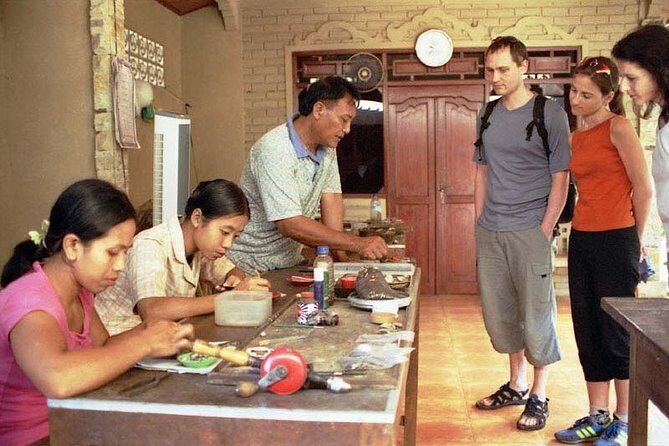
Bali Airport Transfer from or to Kuta/Legian/Jimbaran

Bali Airport Transfer from or to Kuta/Legian/Jimbaran - What the ride feels like: timing, safety, and driver quality

Bali airport nerves are real. This private transfer keeps things simple, even if your flight timing is chaotic. You’re picked up around Kuta/Legian/Jimbaran and handled by the Bali Deep Adventure Transport & Tour team with mobile ticket confirmation and a meet-you approach at the airport.

I like the way the pickup is built for clarity. You send key details like your flight number and hotel, and if you have WhatsApp or social media, it makes the handoff easier; they also show up with a name board in the terminal. I also like the human side: the service comes off calm and organized, and drivers like Heru have a reputation for friendly, neat, and smooth driving.

One thing to think about: the ride time is listed as 10 to 30 minutes, which means traffic can stretch it. If you have a very tight schedule at the airport, I’d plan extra buffer time so you do not feel rushed.

Key highlights worth your time

Bali Airport Transfer from or to Kuta/Legian/Jimbaran - Key highlights worth your time

  • Name board airport pickup to help you spot the right driver fast
  • WhatsApp or social media matching for smoother, quicker contact
  • Private transfer so it’s only your group in the car
  • Friendly, efficient drivers with an emphasis on safety
  • Mineral water provided so you start feeling human right away
  • Long service window (12:00 AM–11:30 PM) for late arrivals and departures

Seminyak to Kuta, Legian, and Jimbaran: simple private transfer value

Bali Airport Transfer from or to Kuta/Legian/Jimbaran - Seminyak to Kuta, Legian, and Jimbaran: simple private transfer value
This is one of those Bali services that feels small until you need it. When you land tired, sweaty, and staring at signs that look like they were designed to test your patience, having a driver assigned is a big relief. You’re not waiting for a shared shuttle, and you’re not guessing which pickup spot is correct.

The price is $40 for a transfer that runs about 10 to 30 minutes. That duration range is important. It usually covers a short hop between popular South Bali areas, but it also acknowledges that Bali traffic can shift fast, especially at peak times or around major roads.

What makes this feel like good value is the private setup. A short private ride can be worth it because it saves mental energy. You’re spending money to remove stress, and you get that stress reduction up front.

Airport pickup that actually helps: name board and quick contact

If you’re arriving, your biggest concern is being able to find your ride quickly. This transfer is designed for that. After you book, they contact you once your reservation is in place, and at the airport they bring a name board so you can spot the correct team member without playing airport detective.

This is also where communication matters. The service specifically says that having WhatsApp or social media makes pickup easier. In real terms, that means fewer minutes of wandering, fewer wrong turns, and less confusion between pickup counters, exits, and meeting points that are not always obvious.

You’ll also want to send the details that they ask for: flight number, your name, your hotel, and your pickup time. Doing that right away helps the team confirm everything and keep the handoff smooth.

What the ride feels like: timing, safety, and driver quality

Bali Airport Transfer from or to Kuta/Legian/Jimbaran - What the ride feels like: timing, safety, and driver quality
A transfer is only as good as the driving. The reviews you can feel in your mind here: people repeatedly emphasize safe, efficient transport and drivers who are friendly and on time.

One name that stands out is Heru. In one experience, a parent pointed out that their kids get car sick easily, but they did not have that problem with Heru’s driving style. That matters because Bali can mean lots of starting, stopping, and weaving around slower traffic. Smooth driving isn’t just comfort; it’s also peace of mind for families.

Another detail that matters is how the drivers show up. The service is described as having neat cars and drivers who are respectful and prepared. That combination matters more than you’d think when you’re stepping out of an airport where you just want to get to your room and wash the day off.

Also, because it’s private, you won’t be waiting while other passengers shuffle their bags. Your schedule is your schedule.

Hotel pickup and drop-off: what you should plan for in South Bali

This transfer covers both directions: from or to the airport with pickup in the areas you care about, including Kuta, Legian, and Jimbaran. While the exact route isn’t spelled out, the practical expectation is straightforward: you’ll be moved between Seminyak-area hotels and the airport, with the listed duration giving you a rough time window.

Here’s how I’d plan it. If you’re leaving for the airport, treat the 30-minute end of the estimate as your working number. Add a buffer for traffic and for how long it takes to get through airport procedures. If you’re arriving, your goal is the opposite: you want to be able to relax quickly after landing, not burn an hour trying to locate the correct pickup.

Because they ask for your hotel name, pickup time, and flight number, the handoff depends on good info from you. Get those details accurate and you’ll reduce the odds of awkward last-minute messages.

Included touches that make transfers less painful

Transfers can be bare-bones: you get in, you ride, you get out. This one includes small comfort perks that help it feel like a proper service, not a taxi scramble.

You’re provided mineral water during the transfer. That sounds minor, but in Bali heat and humidity it actually makes a difference. It’s also one less thing you have to think about right after arrival.

There’s also a service tone that comes through: they aim to make you feel comfortable and looked after. The provider describes their team as experienced and friendly, and their approach is meant to feel like you’ve got help, not just transportation.

And if you’re the type who likes knowing what’s happening, the mobile ticket element helps. Instead of relying on a paper voucher or guesswork, you get digital confirmation that supports a smoother start.

Who this transfer suits best (and who might want a different option)

This works best when you want low-stress logistics. It’s a strong fit for:

  • Families with kids who are sensitive to motion, since drivers like Heru are described as smooth and patient
  • Couples or small groups who prefer a private ride with no waiting for strangers
  • Anyone arriving late or leaving early, because the service runs 12:00 AM to 11:30 PM
  • People who want easy communication, especially if you use WhatsApp

It may be less ideal if you’re trying to minimize cost at all odds. Since it’s private, you’re paying for that comfort and direct routing. If you’re traveling ultra-budget and don’t mind shared transport and more stops, you might find cheaper alternatives elsewhere. But if your priority is a clean, safe handoff with less hassle, this is right in its lane.

Also, the service notes that most travelers can participate. That’s all the official detail given, so if you have specific mobility or medical needs, you should confirm with the provider directly before you book.

Price and logistics: whether $40 makes sense for you

Let’s be real about the money. $40 for a short airport transfer in South Bali is not the cheapest option, but it’s not a luxury price either for what you get: private car service, a pickup system built around a name board, and drivers described as safe and efficient.

The value equation here is time and stress. When you’re landing at a busy airport, losing 30 minutes trying to locate a driver can ruin your whole day. This service reduces that risk by design: you provide flight and hotel info, they contact you, they meet you at the airport with a name board, and they communicate in ways that can be fast.

The other side of value is comfort. A neat car, smooth driving, and a water bottle sound small, but they help you start your Bali trip in a better mood. For families especially, that comfort can be worth a lot more than the difference between private and shared.

Finally, remember the duration range: 10 to 30 minutes. If your schedule is tight, you should treat this as a flexible estimate, not a promise of exactly ten minutes. That mindset protects you from feeling stressed when traffic shifts.

The practical checklist I’d follow before your pickup

If you want this to feel effortless, copy this checklist into your notes:

  • Your flight number (so the team can track timing)
  • Your name (matching the booking)
  • Your hotel name for drop-off or pickup
  • Your pickup time
  • If you use it, your WhatsApp or social media details for easier matching

Then double-check spelling and timing. A tiny error on a flight number or hotel name can create avoidable back-and-forth. The service is set up to confirm at booking, but your job is to make the details easy to verify.

Also, keep your phone charged. Airport pickups are better when you can reply quickly.

Should you book Bali Deep Adventure Transport & Tour?

I think this is a solid choice if your top priority is reliable, private airport transport in South Bali. The biggest reasons are practical: name board pickup, quick contact support (especially with WhatsApp), and drivers who are described as friendly, efficient, and safety-focused. If you’re traveling with kids and you want smoother driving, the Heru mention is a real signal.

I’d skip it only if you’re trying to squeeze every last dollar and you’re comfortable with shared rides and extra waiting. Otherwise, for a 10 to 30 minute transfer between airport and the Kuta/Legian/Jimbaran areas, this service looks like a calm, fair-value way to start or end your Bali trip.

FAQ

What areas does this Bali airport transfer cover?

Pickup and drop-off are offered for Kuta, Legian, and Jimbaran, with the experience location listed in Seminyak.

How long is the transfer?

The transfer duration is approximately 10 to 30 minutes.

What does the transfer cost?

The price is $40.

Do I get a mobile ticket and pickup support?

Yes. The features include a mobile ticket, and pickup is offered.

What information do I need to send for the booking?

You should drop your flight number, name of your hotel, time to pickup, and your name.

How do they find you at the airport?

If the pickup is from the airport, they contact you after you make the reservation. They bring a name board in the airport, and having WhatsApp or social media makes pickup easier.

Is it private or shared with other people?

It is a private tour/activity, and only your group will participate.

What are the operating hours?

The listed opening hours are Monday through Sunday from 12:00 AM to 11:30 PM.

Is free cancellation available?

Yes. You can cancel up to 24 hours in advance for a full refund.

Is the service suitable for most travelers?

The information states that most travelers can participate.

Mount Batur Sunrise Trekking

Mount Batur Sunrise Trekking - Bayung Gede Village camp: breakfast and a plan before the climb

That 1am start is the whole point. This Mount Batur sunrise trek is built around one thing: getting you to the peak before the light show begins. You’ll head to the Bayung Gede Village trekking camp, have breakfast, then hike for about two hours to reach the viewpoint.

I especially like two parts. First, the trip is led by a professional trekking guide, which matters when you’re moving in the dark and trying to keep a steady pace. Second, the pickup timing is practical, with hotel pickup starting at 1:00 am (and 2:00 am if you’re staying in Ubud).

One consideration: this is an early-morning commitment. You’re leaving while most people are still asleep, so plan for tired legs and cool air before the sunrise.

Key things to know before you go

Mount Batur Sunrise Trekking - Key things to know before you go

  • Small group size (max 6): easier pacing and a less chaotic experience than big tour buses.
  • Trek time to the peak: the climb takes around 2 hours, so it can work for kids and first-timers who can walk.
  • Breakfast + briefing before you start: you’re not just dropped off and sent up the mountain.
  • Sunrise positioning: the goal is the sun rising from behind the other mountains, not just any view.
  • Early pickup from Ubud: start times are listed as 1:00 am, or 2:00 am for stays in Ubud.

Why the Mount Batur sunrise trek feels special at 1am

Mount Batur sunrise trekking is the kind of activity that sounds simple until you live the timing. You’re not hiking for hours just to arrive late. The whole schedule is about light, weather, and that tense-but-excited stretch right before dawn when you can actually see the mountain shape changing.

I like that this is a guided experience with a clear rhythm: pickup, drive, breakfast and briefing, then a steady ascent with a guide leading the way. That structure makes it feel more doable, especially if you’re not an experienced hiker. One of the best parts in the reviews was the day quality—going on a clear morning makes the sunrise feel almost unreal—and you’ll want to be in the right spot early to catch that.

Also, keep your expectations grounded: sunrise hikes are weather-dependent. When conditions are good, the payoff is huge. When conditions aren’t perfect, you’ll still be getting a different kind of Bali experience—fresh air, early views, and a real volcano morning—just with less drama in the sky.

Pick-up at 1:00 am and the 2:00 am Ubud option

Mount Batur Sunrise Trekking - Pick-up at 1:00 am and the 2:00 am Ubud option
This trip’s “first attraction” is logistics, and they actually keep it simple. The listed start time is 1:00 am, with early hotel pickup. If you’re staying in Ubud, your pickup time is 02:00 instead. That small difference matters: it reduces travel time from central Ubud while keeping the schedule aimed at the sunrise.

An 8-hour (approx.) duration also helps you plan your day. You’re getting your Mount Batur moment early, not losing the whole daylight window to a tour that runs late.

What you should do with this info: set your expectations around sleep. You can’t treat this like a normal morning outing. If you’re the type who needs time to wake up fully, plan to eat soon after pickup and keep your energy steady. The route is done early enough that you’ll feel the day is still ramping up as you climb.

Bayung Gede Village camp: breakfast and a plan before the climb

Mount Batur Sunrise Trekking - Bayung Gede Village camp: breakfast and a plan before the climb
After pickup, you’ll drive to the trekking camp in Bayung Gede Village. This is where the day becomes more than just a hike. The experience includes breakfast and a briefing before the trek starts, so you understand what’s coming and how to handle the pace.

I like this part because it removes a lot of uncertainty. When you’re climbing in the dark or early hours, the biggest stress is usually not knowing the plan. Here, you’re given instructions and then the guide leads your route to the peak.

One review highlighted that the guide made the morning feel smooth and that the breakfast was good. That’s a small detail, but it’s a big deal on a sunrise hike—your body needs fuel long before the sunrise crowds in and the photos happen.

The hike itself: a guided two-hour push toward the peak

The climb is described as about 2 hours to reach the peak. That’s the sweet spot for a lot of people: long enough to feel like a real trek, but not so long that it turns into a marathon. The tour also notes that this can be suitable for kids, which tells you the pacing and duration are designed to be manageable.

The phrase professional trekking guide matters here. You’re not just following a line—you’re being led. That helps on early-hour terrain when visibility isn’t great and you want fewer decision points. It also tends to make the experience feel more confident, especially if you haven’t hiked much.

In the reviews, both service and guide behavior came up. People spoke positively about guides like Kris, described as polite and friendly, and Darma, praised for being on time and helpful. Those names matter because they point to something you can’t fake: a morning hike goes better when your guide is calm and organized.

Standing at the top: watching the sun rise behind the mountains

Here’s what this trip is really selling: the sunrise view from the top of Mount Batur, with the sun rising behind the surrounding mountains. That visual cue—sun appearing from behind other peaks—is one of the reasons sunrise hikes stay on people’s shortlists even after they’ve done plenty of Bali sightseeing.

On a good clear day, the sunrise can be jaw-dropping. One review specifically called the sunrise amazing after getting lucky with clarity, which matches what you should know going into this: the sky is the wildcard. But your position is the non-wildcard. You’ll be hiking with the specific goal of being at the right spot at the right time.

Also, sunrise is a mood. Even if you don’t get perfect conditions, there’s something grounding about being on a volcano at dawn—quiet air, the mountain shape changing around you, and that moment when the day finally flips from dark to light.

Value check: is $65 worth it for an 8-hour sunrise trek?

At $65 per person, this is not a bargain-priced activity, but it can be good value if you want the full package: pickup, guided trekking, breakfast, and a small group. You’re paying for early morning organization you’d have to scramble to arrange yourself—plus the guide, which is the difference between a chaotic experience and a smooth climb.

A few value signals are built into the details:

  • Pickup offered reduces friction.
  • Max 6 travelers usually means less waiting around and more personal pacing.
  • Group discounts can help if you’re traveling with friends.
  • A mobile ticket keeps it simple day-of.

When I think about value for sunrise treks, I focus on two things: time wasted and risk managed. This format manages both. You’re scheduled to be at the peak early enough to catch sunrise, and you’re guided up so you’re not improvising in low light.

If you’re comparing this to DIY options, the real question is whether you want convenience and a guided ascent. If yes, the price starts to make sense fast. If you’re a confident hiker who already knows the route and transport, you might find cheaper ways—but they won’t feel as protected, and you’ll likely spend time coordinating.

Service quality and guide personalities: Kris and Darma

This trek lives and dies on the guide. A sunrise hike is physically demanding and time-sensitive. If the guide is calm and clear, the day feels organized even when it’s early. If the guide is scattered, you’ll feel it right away.

In the feedback provided, Kris is described as polite, friendly, and welcoming—someone who helps you feel comfortable. Darma is noted for arriving on time for pickup and being helpful, with a breakfast that felt good as part of the morning routine.

What I take from that as a practical traveler: don’t just look at the mountain. Look at how service is likely to shape your morning. A good guide doesn’t only lead the path; they manage the energy of the group. With a maximum group size of 6, that effect should be easier to feel.

Who should book this Mount Batur sunrise trek, and who might not

Mount Batur Sunrise Trekking - Who should book this Mount Batur sunrise trek, and who might not
This tour fits best if you want an early, nature-focused morning without complicated planning. I’d especially point it toward:

  • People staying around Ubud who want a single, organized Mount Batur experience.
  • First-time hikers who appreciate a professional guide.
  • Families with kids who can handle a short trek to the peak (about 2 hours on the climb portion).
  • Travelers who like small groups (max 6) and less crowd energy.

It may not fit as well if you hate early wake-ups. A 1:00 am start (or 2:00 am from Ubud) means your morning starts before your brain has fully rebooted. Also, sunrise viewing depends on conditions, so if you’re extremely risk-sensitive about photos, you should keep expectations flexible.

Finally, think about your style of travel. If you want a volcano morning with structure and minimal stress, this is your kind of day. If you prefer sleeping in and hiking only when the sun is fully up, this is the wrong rhythm.

Should you book Mount Batur Sunrise Trekking?

Yes, if you want the classic Mount Batur payoff—being at the peak for sunrise—without having to manage transport and timing on your own. The combination of pickup, breakfast + briefing, a guided trek, and a small group makes this feel like a well-run morning.

Book it if you can handle the early start and you’re okay with the fact that sunrise can’t be guaranteed. If you’re a light sleeper, plan for the pick-up time and treat this as a key experience, not a casual stroll.

And if you’re the type who loves getting out the door while the world is still dark, this is one of Bali’s mornings you’ll remember.

FAQ

Where is this Mount Batur sunrise trekking experience based?

It runs from the Ubud area, with pickup provided and a drive to the trekking camp in Bayung Gede Village.

What time does pickup start?

Pickup starts at 1:00 am. If you stay in Ubud, pickup time is 2:00 am.

How long does the trek take?

The climb to the peak is described as about 2 hours, and the total experience is around 8 hours (approx.).

Is breakfast included?

Yes. You’ll have breakfast at the trekking camp, along with a briefing before you start trekking.

How big are the groups?

The tour has a maximum group size of 6 travelers.

Are there professional guides?

Yes. The trekking is led by a professional trekking guide.

Do I get any ticket on my phone?

Yes. The tour uses a mobile ticket.

How will I receive booking confirmation?

Confirmation is received at the time of booking.

Can I cancel for a refund?

Yes. It offers free cancellation, and you can cancel up to 24 hours in advance for a full refund.

Batur Volcano Sunrise Trekking, Rice Teracce & Bali Coffee Plantation Tour

Batur Volcano Sunrise Trekking, Rice Teracce & Bali Coffee Plantation Tour - The Night Before: What Your Body Should Expect

Batur sunrise is the early-morning payoff. This full-day outing blends an active volcano trek for sunrise views with classic Bali countryside stops in Tegalalang and a coffee plantation tasting. I especially like the way the day is timed for cold, quiet light on Batur, and I love the simple breakfast setup (bali coffee and pancakes) that’s described as being served around a hot fire. The main drawback is the very early start plus a steady climb that’s only for people with at least moderate fitness.

You’ll get picked up in the middle of the night, driven up to the Kintamani highlands, and met by a local climbing guide who helps set expectations for the walk. The itinerary is tight but not rushed: hike up, watch sunrise, then walk back down, with two calmer stops afterward for photos and tastings. One more consideration: you should plan for cool mountain air and bring a jacket, even if you’re sweating later in Seminyak.

By the time you reach the rice terraces and coffee farm, you’re not just checking boxes—you’re seeing how different parts of Bali connect: volcano highlands in the morning, then Ubud-area green slopes, then the agricultural side of the island. Done well, this is a high-impact day that still feels organized, thanks to private transport and an expert guide on the mountain trek.

Key Highlights You’ll Actually Feel

Batur Volcano Sunrise Trekking, Rice Teracce & Bali Coffee Plantation Tour - Key Highlights You’ll Actually Feel

  • Cold-start Batur sunrise trek with a guided climb and time built around the morning light
  • Hot fire breakfast vibe (bali coffee and pancakes) before you hit the trail
  • Tegalalang in the photo zone with a short, efficient stop and strong panoramic viewpoints
  • Coffee plantation tasting with complimentary bali coffee and tea, plus farm crops like vanilla and cocoa
  • Private vehicle comfort for long drives without you navigating on your own
  • Tight 9–10 hour schedule that pairs mountain views with Ubud-side agriculture

Why Batur Sunrise + Rice Terraces + Coffee Works

Batur Volcano Sunrise Trekking, Rice Teracce & Bali Coffee Plantation Tour - Why Batur Sunrise + Rice Terraces + Coffee Works
This is the kind of tour that makes sense when you only have a few days in Bali. The volcano portion gives you the big, dramatic moment—sun breaking over the highlands and you feeling the mountain breeze right after a climb. Then the day shifts to slower, human-scale sights: terraced rice fields and an agro-tourism stop where coffee and other crops are part of daily life.

I like that it’s not just scenery. The coffee plantation stop adds context for what you’re seeing—how Bali grows its products and how farms can be both educational and enjoyable. And the inclusion of a local climbing guide makes the hardest part of the day feel more controlled instead of guesswork.

The value angle here is the mix. For one price, you’re getting sunrise timing, admission tickets for key stops, breakfast, and private transport. If you tried to DIY this, you’d likely pay for drivers, separate tickets, and guide costs anyway—plus you’d still have to solve the tough early-morning logistics.

The Night Before: What Your Body Should Expect

Batur Volcano Sunrise Trekking, Rice Teracce & Bali Coffee Plantation Tour - The Night Before: What Your Body Should Expect
The tour runs on a very early schedule: pickup starts around 01:00 in the Kuta area and around 02:00 in the Ubud area. That means you’ll want to treat this like a pre-dawn expedition, not a casual morning outing. Plan to be ready the night before so you’re not scrambling for shoes, a jacket, or water in the dark.

You’ll drive up toward the Kintamani highlands and meeting points along the way, then start trekking shortly after breakfast. This is also where you’ll feel the difference between beach Bali and mountain Bali: even if the later day is warm, sunrise time can be chilly.

Your best move is to come with realistic energy. The walk to the top takes about 2 hours, and you also have descent time. Even if you’re a confident hiker, you’ll still want moderate fitness for the sustained uphill pace.

Entering the Batur Trail: Sunrise, Breeze, and a Real Guide

The hike is built around getting you to the top with enough time to see sunrise and take photos. After meeting the local climbing guide, you’ll start walking and climb for about 2 hours (timing can vary). The guide is the key here—this kind of terrain looks simple on postcards, but a good guide helps you pace it, stay oriented, and avoid turning a sunrise trek into a survival event.

Once you reach the viewpoint, the payoff is immediate: sunrise from the top of an active volcano, with wide panorama views. You’ll also notice the mountain breeze and cooler air, which makes the effort feel worth it. Then you’ll walk back down toward the starting point to finish the climbing portion.

One practical note: the tour says you’ll hike about 2 hours of walking involved, with some variation, and the overall climbing stop is about 5 hours. So don’t schedule anything tight immediately after the tour ends. You’ll be tired in a good way, but you’ll also likely want a long shower and an easy meal.

The Breakfast Moment: Bali Coffee and Hot-Fire Pancakes

I like that the tour includes breakfast before the climb, because it solves the most common problem with early tours: arriving too hungry to think clearly. You’ll get a light breakfast at the meeting point with bali coffee and pancakes, and one review specifically highlights sitting around the hot fire.

That detail matters. Before sunrise, you’re cold, and warming up while you sip coffee and eat something sweet gives you momentum. It also helps you chat with others in your group before the hike. If you’re traveling solo or just want company without making it a big deal, this is a nice social bridge.

If you don’t normally eat early, keep it simple. Have a small plate, drink a bit of coffee or tea (as provided), and save your big appetite for later. You’ll thank yourself when the trail starts.

Tegalalang Rice Terraces: Fast Stop, Big Views

Batur Volcano Sunrise Trekking, Rice Teracce & Bali Coffee Plantation Tour - Tegalalang Rice Terraces: Fast Stop, Big Views
After the volcano, the pace shifts to Tegalalang rice terraces, one of Bali’s most photographed scenes. The stop is about 30 minutes, and the admission ticket is listed as free. That short window is actually useful—this is a place where you can walk to viewpoints, take photos, and still move on without burning your whole afternoon.

Tegalalang is described as being strategically positioned between the Kintamani highlands and Ubud area, which gives you that classic “Bali green hills” feeling even after the volcanic morning. You’ll also get panoramic backgrounds that make photos easier than you’d expect in a short time.

The main consideration is that the stop is short. If you want a slow wander with long photo sessions and extra exploring, you may feel slightly rushed. But if you’re happy with smart timing—snap good pictures, enjoy the view, and then head to the next stop—this fits the tour format well.

Lumbung Sari Coffee Plantation Tour: Taste and Learn

Next comes the agro-tourism stop at Lumbung Sari House of Coffee. This is where the day turns from views to flavors. You’ll get to see crops like bali coffee, vanilla, cocoa, and more, and you’ll have a short time on-site (about 30 minutes) to take it in.

What I find especially practical is the complimentary tasting: bali coffee and tea product are included. You’re not just walking through plants—you’re getting a reason to pay attention to what’s being grown and how it’s used. Even if you’re not a coffee expert, this kind of tasting helps you understand what people actually mean when they say Bali coffee tastes a certain way.
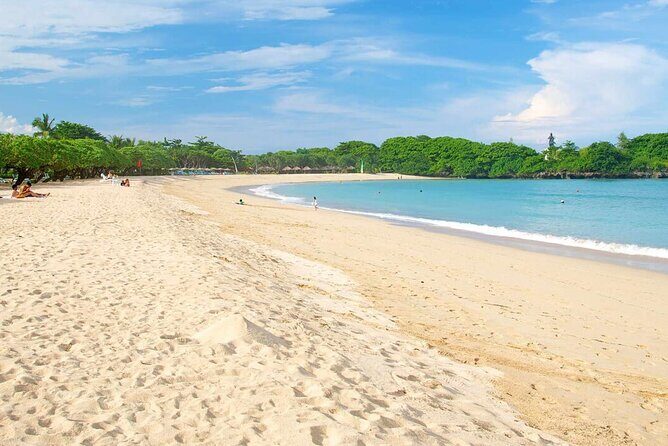
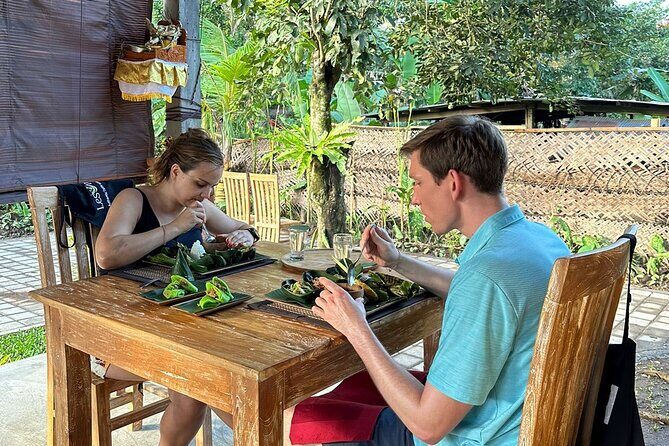
There’s also admission included for this stop. That matters for value, because plantations and tours often charge separately if you try to do them on your own. Here, it’s folded into the price, with transport included to keep the timing smooth.

Price and Value: Is $75 a Good Deal?

At $75 per person, this tour is aimed at travelers who want a lot of highlights in one day without managing a complicated schedule. You’re paying for private transport, breakfast, a local climbing guide, and admission tickets for the volcano trek and coffee plantation. Tegalalang is free for admission, which helps keep the cost efficient.

Where the value really shows is in the time-saving logistics. A sunrise trek requires correct timing, and coordinating transport plus a guide plus tickets adds up quickly if you’re piecing it together. Here, the tour pulls it all together, and you’re not left negotiating at the last moment in the dark.

The trade-off is that it’s one structured day. If you love lingering, you might prefer splitting the trip into separate days—one for sunrise and one for Ubud agriculture. But if your goal is to see Batur, Tegalalang, and coffee plantation in a single visit, this price feels reasonable for what’s included.
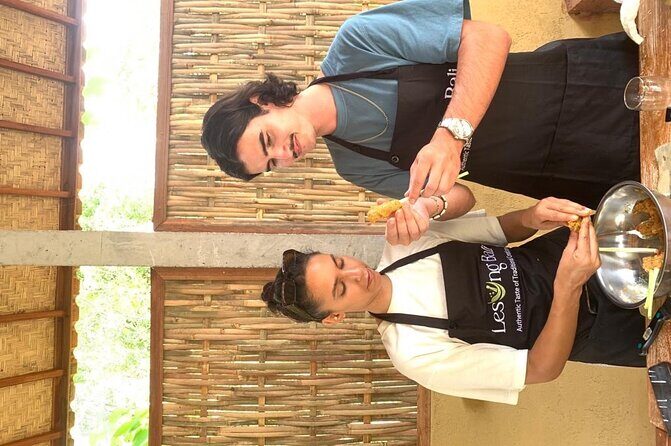
What to Pack for Batur Sunrise (So You Don’t Regret It)

Bring a jacket. The tour specifically suggests smart casual and a jacket, and it also nudges you to wear hiking or sport shoes. This is non-negotiable for comfort. Mountain air can feel sharp at sunrise, and you’ll want footwear that grips well for uneven ground on the trek.
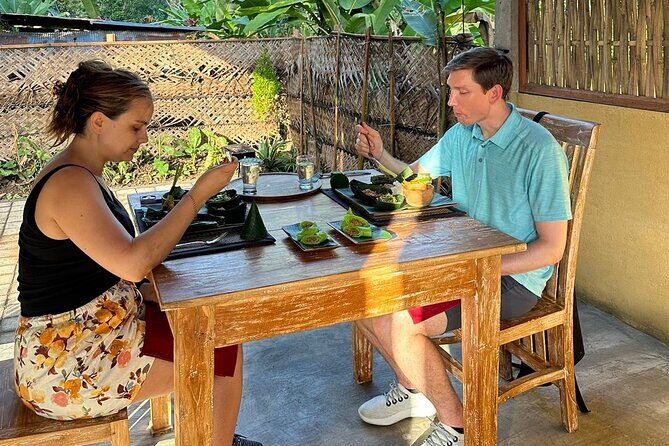
Also think about practical carry items. Even though the tour includes breakfast, you’ll still be outside for hours. Wear layers so you can adjust as your body warms up during the climb. After the volcano, you’ll be in daylight and likely hotter at the rice terraces, so a layered setup is ideal.

Finally, don’t underestimate how long 9–10 hours feels when you start at 1:00 or 2:00 a.m. Plan to keep your day afterward light. You’ll come back tired, but you’ll also have that sunrise memory that makes the early wake-up sting feel smaller.

Who This Tour Fits Best—and Who Might Prefer Something Else

This works best if you want a single, organized day that combines a major natural viewpoint with classic Bali countryside stops. I’d recommend it to couples, small groups, and solo travelers who like meeting other people at the breakfast or meeting point before the hike.

It also suits people who enjoy simple farm experiences, especially if you’re curious about coffee, cocoa, and vanilla. The complimentary tasting makes the plantation stop feel interactive, not just observational.

You should reconsider if you dislike early mornings or struggle with moderate uphill walking. The tour’s guidance says travelers should have moderate physical fitness, minimum age is 10, and maximum age is 60. If you’re outside that range—or you know your knees get angry on descents—then you’ll want a more gentle alternative.

Should You Book This Batur Sunrise + Tegalalang + Coffee Tour?

If you’re trying to maximize your Bali time, I think booking is a smart move. The tour gives you three high-recognition experiences—Batur sunrise, Tegalalang terraces, and a coffee plantation tasting—without forcing you to plan drivers and tickets from scratch. The biggest reason to choose it is the volcano sunrise segment paired with a guide and a breakfast plan that helps you start strong.

Book it if you:

  • want a structured early-morning adventure with private transport
  • like the idea of coffee tasting plus farm crop sights
  • can handle about 2 hours of walking on the volcano trek

Skip it (or choose a different format) if you:

  • hate getting up before sunrise
  • want lots of time to wander slowly at Tegalalang
  • have low tolerance for cool mountain temperatures

Overall, this is a day that rewards effort with standout scenery and then balances it with calmer, learn-and-taste stops. For many visitors, that’s the best kind of “one-day plan” in Bali.

FAQ

What time does pickup happen?

Pickup starts around 01:00 in the Kuta area and around 02:00 in the Ubud area.

How long is the tour?

The duration is approximately 9 to 10 hours.

Is breakfast included?

Yes. You’ll have a light breakfast (bali coffee and pancakes) at the meeting point.

Are there admission tickets included?

Admission tickets are included for the Batur volcano hike and for the Lumbung Sari House of Coffee stop. Tegalalang rice terraces admission is listed as free.

Is lunch included?

No. Lunch is not included.

What level of fitness do I need?

The tour notes travelers should have a moderate physical fitness level, with about 2 hours (more or less) of walking involved.

Can I cancel for free?

Yes. You can cancel up to 24 hours in advance for a full refund.

Tours and Transport Services

Tours and Transport Services - How your day runs: pickup to drop-off, step by step

Good drivers turn Bali into easy mode. Bali on Wheels offers private transport across the island, with drivers who focus on safety and reliability. In the reviews, the standout name was Tiana, and his style is all about making your day feel under control, from airport transfer to planned sightseeing.

I especially like that planning is practical: you can contact the company by phone or email, then set a route that matches your pace and needs. The service also comes with small comforts in the car—free Wi‑Fi plus bottled water and snacks—so you’re not scrambling when you get stuck in traffic. One thing to budget for: attraction entrance fees, toilet fees, and any donations at sites aren’t included, and the experience runs best in good weather.

Key highlights

  • Tiana’s prompt email planning for shaping your day around what you want to do
  • Free Wi‑Fi, bottled water, and small sweets during your ride
  • Toll roads and parking fees included, so your bill is less of a surprise
  • Private service with pickup offered and only your group in the car
  • Airport transfers plus day tours across Bali, with optional multi-day plans

What Bali on Wheels really delivers (beyond just a ride)

Tours and Transport Services - What Bali on Wheels really delivers (beyond just a ride)
In Bali, transport can be the difference between a fun day and a day that feels like constant logistics. Bali on Wheels is built for the part of travel that usually makes you tired: figuring out how to get from point A to point B, handling timing, and keeping things smooth while you’re doing other things—like visiting sites, eating, or just taking a breather.

What makes this service feel “professional” in practice is the way it’s set up around your needs. You contact them by phone or email, then you arrange personalized transport and driver requirements. That matters because Bali doesn’t run on a neat, one-size-fits-all schedule. You’re in control of what you want to prioritize, and the driver’s job is to help you get there safely and reliably.

You also get the practical perks that make rides feel less like a chore. The package includes free Wi‑Fi, bottled spring water, and small sweets. Those may sound minor until you’re out for hours and realize you’re not constantly buying drinks or hunting for a charge spot.

The “private tour/activity” setup is another big value piece. Only your group participates, which means less awkwardness, less waiting around for other schedules, and more flexibility when your day changes.

The Tiana factor: calm, responsive, and safety-first

If you’re trying to pick a driver service in Bali, look for two things: communication and driving temperament. The reviews point clearly to Tiana as a driver who handles both well.

On the planning side, he’s described as responding promptly to email and accommodating needs. That’s a big deal because private transport isn’t just booking a car—it’s managing details like pickup timing and where you want to spend your time once you’re there. When a driver communicates quickly before you even arrive, it reduces stress immediately.

On the driving side, the theme is consistent: safe, reliable, and professional. Bali can throw curveballs—traffic patterns, road changes, and sudden delays. A driver who’s steady and trustworthy helps you stay relaxed. You’ll still face Bali traffic sometimes, but you won’t feel like you’re fighting the process.

Also, his service doesn’t stop at one leg of your trip. In the reviews, the service was used from airport transfer through multiple daily tours. That continuity helps because you’re dealing with the same team approach, not relearning a new system each day.

Price and value: what $80 buys you in real life

Tours and Transport Services - Price and value: what $80 buys you in real life
The price shown starts at $80, with a duration range of about 1 to 10 hours. Since this is private transport, the value depends on how well you match your hours to your day.

Here’s where the pricing starts to make sense: the service includes toll road and parking fees. Those can add up fast in island traffic systems, and they’re exactly the kind of cost that can creep into your trip budget. Having them included means fewer small surprises.

They also include bottled spring water and small sweets, plus free Wi‑Fi. Again, these don’t sound huge on paper, but in practice they keep your trip comfortable, especially if you’re out all day.

What’s not included is just as important for judging value. You’ll need to pay for:

  • Tourist site entrance fees
  • Toilet fees
  • Rental equipment
  • Private donations at tourist sites

So the “real cost” is your entry fees plus your time. The driver service handles the moving part and the ride comforts, and you handle the site-related costs.

If you’re traveling with family, friends, or a group that wants consistency, $80 can feel like a bargain because you’re paying for time, reliability, and a plan that fits your schedule—not just distance.

How your day runs: pickup to drop-off, step by step

Tours and Transport Services - How your day runs: pickup to drop-off, step by step
Because Bali on Wheels offers customized private transport, your exact “stops” depend on what you ask for. But you can still understand the flow. Here’s how the day usually works with a driver-based service like this:

1) You arrange the plan

You contact Bali on Wheels via phone or email to set your transport needs. If you’re doing day tours, you can coordinate the sites and timing you care about. In the reviews, that back-and-forth was key to tailoring the experience.

2) Pickup happens and the car becomes your base

Pickup is offered, and the service is described as operating throughout Bali. You’re not just getting dropped off; you’re getting a ride that’s meant to support your day.

3) You visit your chosen places

Site entrance fees and toilet fees aren’t included. That means you’ll likely want to budget a little in cash or card for on-the-ground costs. The driver helps with getting you there and moving you between your chosen points.

4) You return when you’re ready

The service is private, so your timing is yours to manage. You’re not stuck waiting for someone else’s tour schedule.

5) You can repeat it for multiple days

This is where the service really shines. The reviews mention using it from an airport transfer into multiple daily tours. That repetition makes your trip easier because you’re not constantly arranging transport from scratch.

The main “drawback” to watch for isn’t about the service itself. It’s that your day is only as smooth as the weather and your planning. If weather is poor, the experience can be canceled and you’ll be offered a different date or a full refund.

Airport transfers: start Bali without the headache

Airport transfers are one of those things you either plan well or you suffer through. Bali on Wheels handles airport transfers as part of its service menu, and the reviews highlight this as a strong use case.

Why this matters: when you land, you’re tired, you’re not yet fully oriented, and everything costs more time than you expect. Having a driver service lined up helps you skip the “figure it out first” phase and just get moving.

Since the provider supports transport across Bali, you’re not limited to just one neighborhood. That’s useful if your hotel or rental villa isn’t in the exact same area as the airport zone.

Also, using the same service for both airport transfer and later day tours can make your trip feel smoother. In the reviews, the family used the service across airport transfer and multiple daily tours, and that kind of continuity often reduces stress—because you’re working with a driver who already knows your preferred style.

The car includes bottled spring water, plus small sweets and free Wi‑Fi. That’s a small thing, but after a long travel day it helps you settle in without immediate extra stops.

Day tours across Bali: flexibility for your real priorities

A lot of “tour” services try to control your day. Bali on Wheels is different. It’s centered on transport and driver support, which means you can structure a day tour around what you actually want to do.

In the reviews, one example was coordinating multiple day tours after reaching Bali, including time based around visiting areas like Ubud. Even without a fixed script, the idea is consistent: you can contact the driver ahead of time, share where you want to go, and the driver accommodates what you need.

Here’s the value of that approach:

  • You can keep your schedule realistic
  • You can adjust priorities without renegotiating a whole package
  • You reduce the time you spend figuring out routes on your own

If you’re the type who likes to move through a place at your own pace, private transport helps you do that. If you want a day that’s a mix of sightseeing, meals, and downtime, a private driver is the easiest way to make it work.

One caution: since attraction entrance fees and toilet fees aren’t included, you’ll want to factor those costs into your day planning. It’s also smart to plan around how long you want to spend at each place, because the transport duration is the part you’re paying for—about 1 to 10 hours.

Overnight tours and extra add-ons (what you can ask for)

Bali on Wheels lists several transport options beyond simple day trips. That includes daily tours, tour packages, overnight tours, and motorbike rentals, plus airport transfers.

Overnight tours are useful when you’re trying to escape the “same road, same day” feeling. They can also be a good fit if you want more time for a multi-day rhythm instead of cramming everything into one long day.

Motorbike rentals can appeal if you want more freedom. Just remember that rental equipment isn’t included in the transport price, so if you take that option, you’re paying for the bike setup separately.

Even if you don’t choose these add-ons, the bigger takeaway is flexibility. You’re not locked into one type of service. You can match the level of support to your trip style—airport-only ease, day tours with a driver, or longer plans that keep logistics from taking over your holiday.

What’s included (and what you’ll pay separately)

Let’s get practical. Here’s what you get included with Bali on Wheels:

  • Free Wi‑Fi
  • Bottled spring water
  • Small sweets
  • Toll road fees
  • Parking fees

These are the “hidden stress reducers.” The Wi‑Fi helps when you need navigation, ticket access, or just downtime. Water and snacks reduce the need for last-minute purchases, and toll/parking inclusion prevents the kind of cost creep that can ruin your day’s budget.

What’s not included:

  • Tourist site entrance fees
  • Toilet fees
  • Rental equipment
  • Private donations at tourist sites

That list isn’t a deal-breaker. It’s normal for site-based travel. The key is knowing you’ll handle those costs directly, so your transport bill stays mostly predictable.

There’s also a note that you’ll receive confirmation at booking time, and you’ll have a mobile ticket. If you like having everything on your phone, that’s convenient.

Practical planning tips for Kuta-based trips

Because this service starts in Bali and operates around the island, you can treat it like a base-and-go option from Kuta.

Here are a few smart moves I’d make:

  • Match your hours to reality. The duration is approximate and can run from 1 to 10 hours. If you plan to hop between places, choose a window that includes time for travel and breaks.
  • Share your priorities early. Email planning works well here, and the reviews highlight quick responses and accommodation.
  • Budget for site costs. Entrance fees, toilet fees, and any donations are on you. I’d set aside that money first so you don’t get surprised mid-day.
  • Use the car for breaks, not just transit. With Wi‑Fi, water, and snacks included, the ride can act as a reset point between activities.
  • Be weather-aware. The experience requires good weather, and if it gets canceled due to poor weather you’ll be offered a different date or a full refund.

One more small note: the meeting point start is listed as Bali, Indonesia, and the start time shows 12:00 am. In practice, you’ll want to confirm your exact pickup time when you book so your day starts when you actually want it to.

Who should book Bali on Wheels?

This is a great fit if you want private, reliable transport without turning your trip into a routing project.

You’ll likely enjoy it if:

  • You’re traveling with family or a group that wants only your schedule
  • You value safe, professional driving and clear communication
  • You prefer building your own day instead of following a fixed group itinerary
  • You want airport transfer help plus day-tour convenience

It may be less ideal if you only need a short, cheap ride and you’re comfortable arranging transport last-minute. Private transport works best when you’re buying time and peace of mind.

The “most travelers can participate” note also suggests the service is broadly workable for different visitor styles.

Should you book it? My honest take

Book Bali on Wheels if your priority is simple: reliable transport that supports your plans. The included perks—free Wi‑Fi, bottled water, snacks, and toll/parking—make the ride more comfortable and keep costs steadier. Add in the strong feedback around Tiana’s safe, professional driving and prompt planning, and you get a service that’s easy to trust.

I’d skip it only if you’re the kind of traveler who prefers to manage everything on your own and you don’t want to pay for that convenience. Also, if your schedule is fragile because of weather, have a flexible backup plan since the experience needs good weather.

If you want Bali to feel like a holiday instead of a constant logistics puzzle, this is a solid, practical way to get around.

FAQ

How long is the Bali on Wheels private transport experience?

The duration is listed as approximately 1 to 10 hours, depending on your plans.

Does the service include pickup?

Yes, pickup is offered.

What does the $80 price include?

The experience includes free Wi‑Fi, bottled spring water, small sweets, and all toll road and parking fees.

Are entrance fees and toilet fees included?

No. Tourist site entrance fees and toilet fees are not included.

Is it a private tour or shared experience?

It’s a private tour/activity, so only your group participates.

What happens if the weather is poor?

The experience requires good weather. If it’s canceled due to poor weather, you’ll be offered a different date or a full refund.

Munduk Twin lake Trekking, Ulun Danu Beratan & Hidden Waterfall

Munduk Twin lake Trekking, Ulun Danu Beratan & Hidden Waterfall - Handara Iconic Gate: The Photo Stop That’s Worth Timing Right

Rain forest, temples, and a real swim.

This day mixes Ulun Danu Beratan on Lake Bratan, the iconic Handara photo stop, twin-lake viewpoints, and then a forest waterfall break with time to swim. I also love the Tamblingan section with local-guided trekking and the option to add canoeing. One thing to consider: you’ll likely get wet and your footing can be slick, so skip flip-flops.

What makes it work is the pacing. You get big scenery hits (temple, gates, twin lakes) plus physical time in the jungle, then a calmer finish at Banyumala’s natural pool.

Key Things I’d Prioritize Before You Go

Munduk Twin lake Trekking, Ulun Danu Beratan & Hidden Waterfall - Key Things I’d Prioritize Before You Go

  • Temple first, then photos, then nature: the order helps you avoid rushing when the views get good.
  • A true waterfall swim stop: Banyumala’s natural pool is the day’s best reset.
  • Twin-lake viewpoint with two lakes in view: it’s built for that clear, highland feeling.
  • Tamblingan Lake trek with canoe option: you’re not just driving past scenery.
  • Guides who actually talk: guides like Ade (pro-driver, umbrella help in rain) and Eka Putra (plant and jungle explanations) make the stops click.
  • Private-group touring: only your group, so you’re not stuck with random pacing.

Why This Munduk Twin Lake Day Feels Like a Full Bali Slice

Munduk Twin lake Trekking, Ulun Danu Beratan & Hidden Waterfall - Why This Munduk Twin Lake Day Feels Like a Full Bali Slice
This isn’t a single-note “photo and leave” outing. It’s a combo day: culture at the lake, highland viewpoints, then jungle time with water at the end. That mix is great if you want a real change of pace without turning your day into a travel marathon.

You’ll also appreciate the practical setup. Hotel pickup and drop-off reduce hassle, and you get mineral water during the tour. Entrance tickets for the stops are included, so you’re not doing paperwork at multiple places mid-day.

The day runs about 6–8 hours. That’s long enough for trekking and swimming, but short enough that it won’t steal your entire Bali holiday.

Ulun Danu Beratan Temple: A Lake Temple Stop That Sets the Mood

Ulun Danu Beratan is a Hindu temple in Bedugul, with Lake Beratan as the backdrop. Even if you’ve seen lots of temples, the lakeside setting changes the vibe. The air tends to feel cooler up here, and the views help you understand why this area is such a magnet for worship and photography.

What I like about starting here is mental alignment. Before you chase Instagram gates or hike through jungle trails, you’re given a cultural anchor. And because you’re at the temple early in the day, you’re more likely to move at a comfortable pace rather than feeling like you’re squeezing between groups.

Watch-out: temple grounds can involve walking on uneven surfaces. Wear shoes you’d be happy to get a bit muddy, since later parts of the day involve forest terrain and swimming.

Handara Iconic Gate: The Photo Stop That’s Worth Timing Right

Munduk Twin lake Trekking, Ulun Danu Beratan & Hidden Waterfall - Handara Iconic Gate: The Photo Stop That’s Worth Timing Right
Handara Gate is one of the Bali “must snap” scenes. You’ll get a dedicated break here, with time to take photos and enjoy the viewpoint.

Here’s the practical angle: this stop is short but strategic. You won’t have to guess where the best angles are because the tour brings you to the recognizable location and builds a time window around it. If you care about getting a clean shot, having a guided stop prevents the usual chaos of trying to find the gate while everyone else is already photographing.

Consideration: it’s still an Instagram-famous spot. Expect other visitors and bring patience with you. Also, have your camera settings ready so you’re not fumbling once the light looks right.

Twin Lake Viewpoint: Buyan and Tamblingan in One Look

Munduk Twin lake Trekking, Ulun Danu Beratan & Hidden Waterfall - Twin Lake Viewpoint: Buyan and Tamblingan in One Look
After the gate, you’ll head to a viewpoint area where you can take in the Twin Lakes: Buyan Lake and Tamblingan Lake. People call it the Twin Lake view for a reason—this area gives you a look at both lakes at once, which is more satisfying than viewing just one body of water from the road.

I like this stop because it’s “scenery credit” before you get active. Once you start trekking and swimming later, you’ll be glad you already banked the big panoramic moment.

What to expect: you’ll have about an hour here. That’s enough time to take photos, catch your breath, and actually look instead of rushing. If weather clouds roll in, it can still be beautiful—just don’t plan on perfect sun for every photo.

Banyumala Twin Waterfalls: The Forest Pool Break You’ll Remember

Munduk Twin lake Trekking, Ulun Danu Beratan & Hidden Waterfall - Banyumala Twin Waterfalls: The Forest Pool Break You’ll Remember
Then comes the part people talk about for a reason: Banyumala Twin Waterfalls. The waterfalls sit in a forest setting, and the stop includes time for relaxation at a natural pool.

This is the day’s emotional reset. After temples and viewpoints, your body finally gets to do something fun—cool down, swim if you want, and let the sound of water do the work. The natural pool surrounded by trees feels like a different world compared with the roads that got you here.

Practical tips for the swim time:

  • Bring a swimsuit if you plan to swim. The tour includes time here, not just a quick look.
  • Wear quick-dry clothing or plan to change later.
  • Dry off and pack your valuables carefully. It’s a waterfall day—water always wins.

One more consideration: surfaces near water can be slippery. If you’re even slightly unsure, choose footwear with grip. The tour can give you a more comfortable experience when you’re not fighting your footing.

Tamblingan Lake Trekking and Optional Canoeing: Jungle Time With Locals

Munduk Twin lake Trekking, Ulun Danu Beratan & Hidden Waterfall - Tamblingan Lake Trekking and Optional Canoeing: Jungle Time With Locals
The Tamblingan Lake portion is where the day turns from sightseeing into a real nature experience. You’ll do trekking with the help of a local guide, moving through a forest area around the lake.

What I like about this section is that it changes your perspective. You’re not just looking at Bali from a height; you’re traveling through it. And because it’s with locals, the explanations tend to make the place feel more connected instead of just scenic.

This stop also includes an option to add canoeing on Tamblingan Lake. If you want your day to include water movement instead of only water at the waterfall, this is a strong add-on.

Consideration: if you’re short on time or prefer to keep things lighter, you might choose the trekking focus without canoeing. The tour notes this as an option, so you can shape it to your comfort level.

Timing, Pickup, and Getting Around (So You Don’t Lose the Day)

Munduk Twin lake Trekking, Ulun Danu Beratan & Hidden Waterfall - Timing, Pickup, and Getting Around (So You Don’t Lose the Day)
This is a pickup-and-drop-off tour from your hotel area in the Ubud region. That matters because Bedugul and the highland spots can be a long drive, and the last thing you want is to spend your limited time negotiating transport.

The total duration is about 6–8 hours, with multiple stops that build in breaks. The day includes entrance tickets and parking fees, which keeps the schedule cleaner. You’ll also have mineral water along the way, which is handy when the weather shifts.

It’s also described as private—only your group participates. That usually means you can move at a pace that fits your group without having to constantly “wait for the slowest people in a big crowd.”

Weather reality check: rain happens in the highlands. One guide example you might experience is Ade, who handled rainy conditions and provided umbrellas. Even if you don’t get the same guide, expect that weather gear and flexible timing are part of the plan.

Price and Value: Does $58 Buy Enough?

Munduk Twin lake Trekking, Ulun Danu Beratan & Hidden Waterfall - Price and Value: Does $58 Buy Enough?
At $58 per person, the value is strongest when you add up what’s included. You’re getting:

  • Entrance tickets for the listed stops
  • Mineral water
  • Live tour guide
  • Parking fees
  • Hotel pickup and drop-off
  • Mobile ticket support

Lunch is not included, so plan for that. Still, most of the cost is tied to access and guided time, not just transportation. Since you’re getting multiple paid entry points plus trekking time and a waterfall swim stop, the price feels reasonable for a full mixed-day program.

Where you get the most value: if you want both the culture stops (temple), the scenic hits (twin lakes and gate), and a hands-on nature moment (waterfall pool plus trekking, with canoeing optional). If you only care about one of those categories, you might find a simpler half-day tour makes more sense.

What Makes the Guides Matter Here

This tour lives or dies on how the guide connects the dots. The strongest praise in the experience you’re considering points to friendly, helpful guidance and real explanations, not just directions.

Some guides are known for being genuinely supportive—like Ade, who combined friendly conversation with pro-driving confidence and even umbrella support when rain rolled through. Others, like Eka Putra, are praised for explaining what’s happening in the jungle and sharing information about plants and the way the temple-to-jungle story fits together.

Why this matters for you: when someone explains what you’re seeing—rather than just moving you from point A to point B—you’ll remember the day longer. You’ll also feel less lost when trails get uneven or when you’re deciding whether to add canoeing.

Who Should Book This (And Who Should Rethink It)

This fits best if you want:

  • A day that blends culture + nature + water
  • A real swim moment at a forest pool
  • Some walking and trekking without needing to be ultra-fit
  • A guide who helps you understand the places, not only take you to them

It may be less ideal if:

  • You hate getting wet or dealing with slippery areas near waterfalls
  • You want only one or two short stops and lots of sitting time
  • You’re very sensitive to rain and don’t want to be flexible (highlands weather can change)

Most travelers can participate, but you’ll still want to bring the right mindset: this is a nature day, not a museum-only day.

Should You Book Munduk Twin Lake Trekking, Ulun Danu Beratan & Banyumala Waterfall?

If your ideal Bali day includes a temple by a lake, the classic Handara photo moment, twin-lake views, and then a forest waterfall pool where you can cool off, I think this is a strong pick. The pricing works best because entrance tickets, guide time, and pickup/drop-off are part of the package.

Book it if you want variety and don’t mind moving through different terrain in one day. Skip it only if you’re looking for a totally gentle, mostly sitting tour—because this day includes trekking and a real water setting.

If you want, tell me your travel dates and whether you plan to swim and/or add canoeing. I can help you decide what to pack and how to prioritize the optional parts.

FAQ

How long is the Munduk Twin Lake trekking tour?

It usually runs about 6 to 8 hours.

What are the main stops during the tour?

You’ll visit Ulun Danu Beratan Temple, Handara Iconic Gate, Twin Lake viewpoints, Banyumala Twin Waterfalls, and then Tamblingan Lake for trekking with an optional canoeing experience.

Is lunch included?

No. Lunch is not included.

Does the tour include pickup and drop-off?

Yes. Pickup and drop-off from your hotel is offered.

Are entrance tickets included?

Yes. Entrance tickets are included for the listed stops.

Is cancellation free?

Yes. You can cancel for a full refund up to 24 hours before the experience’s start time.