Bali Private Car Hire with Driver

Bali Private Car Hire with Driver - Ubud classics: monkeys, ridge walks, waterfalls, and rice terraces

Skip the wheel, keep the day. This private full-day hire is built for stress-free roaming: an air-conditioned car, an English-speaking driver, and pickup plus drop-off so you can focus on sights around Ubud and south/central Bali. You’ll also get plenty of room to steer your own day, from temple breaks to waterfall stops.

I love the flexibility to tell your driver what you want most and adjust on the fly, and I love that you do not have to battle traffic, navigation, and parking yourself. In real-world use, drivers like Lola and Topo show up on time with a “let’s make this work” attitude, and people often note how accommodating they are with timing.

One thing to plan around: Bali traffic. Even when distances look short, you can lose hours on the road, and you should expect entry tickets plus parking/tolls to be paid separately (Kintamani is the exception and is listed as free).

Key takeaways before you book

  • Private car, your own pace: Only your group rides, with an English-speaking chauffeur and a/c vehicle.
  • Customize in advance: Add your planned stops in the remarks field so the driver can shape a workable route.
  • 10 hours is the sweet spot: The default is about 10 hours, with optional extension at USD 5 per extra hour (within service areas).
  • Optional reach beyond Ubud: East or north Bali adds a USD 30 per area surcharge (Karangasem/Klungkung or Buleleng).
  • Fuel is included, but not everything else: Petrol is covered; parking/tolls and admission fees are on you.
  • Driver wait time matters: The operator waits up to 30 minutes from pickup time before leaving.

Skipping the wheel: why a private chauffeur works in Ubud

Bali Private Car Hire with Driver - Skipping the wheel: why a private chauffeur works in Ubud
Ubud is the kind of place where the map looks simple, but real driving time can be a surprise. With a private hire, you trade self-driving stress for a full-day ride where your driver handles routes, timing, and where you park.

That matters most when you stack multiple sights. Many of your stops are short—15 to 60 minutes—so your margin comes from not getting stuck with navigation problems or wrong turns. A good driver also helps you avoid dead time waiting around.

I also like the “quiet safety” factor. The service includes insurance, and the vehicle is described as comfortable and air-conditioned. In feedback, drivers such as Gede, Troy, and Dewa are frequently praised for being patient, attentive, and skilled in busy areas.
Price check: $25.67 per person and what you really pay for

The headline price is $25.67 per person for a day that runs about 10 hours. Since it’s priced per person, the value improves when you share the vehicle with others in your group.

What’s included is what usually costs money when you arrange it piece by piece: pickup and drop-off, a private a/c car, an English-speaking chauffeur, fuel/petrol, and insurance. That means you’re not also trying to coordinate separate local transport.

What’s not included is the part that can quietly add up:

  • Parking and tolls fees
  • Admission fees at most stops

Kintamani is listed as free, but places like Monkey Forest, Tirta Empul, the rice terraces, and the swing venues typically require tickets. Bring some cash or be ready for ticketing onsite.

A useful reality check: one person specifically said this worked out cheaper than booking through a hotel. That’s often how it goes—private transport through a dedicated provider can undercut hotel markups.

10 hours of flexibility: how your driver builds the route

Bali Private Car Hire with Driver - 10 hours of flexibility: how your driver builds the route
This is not a fixed itinerary where you march from A to B with no choices. You’re asked to briefly explain where you plan to go in the remarks field, so the driver can plan a time-effective sequence and adjust when the logistics don’t fit reality.

On the day, pickup is from your address in Ubud or much of south Bali (service coverage is listed as Ubud–Gianyar, Denpasar, Badung South, plus Bangli and Tabanan). The driver will customize your route and keep the day practical.

The tour lasts about 10 hours. If you want more time, you can extend for about USD 5 per hour, as long as you stay within the service areas. If you want to go farther—Klungkung or Karangasem in east Bali, or Buleleng in north Bali—there’s a USD 30 per area surcharge.

Also note the time rule: the operator waits up to 30 minutes from the pickup time before leaving. If your hotel lobby timing is slow or your group needs extra time, plan a little buffer.

Ubud classics: monkeys, ridge walks, waterfalls, and rice terraces

Bali Private Car Hire with Driver - Ubud classics: monkeys, ridge walks, waterfalls, and rice terraces
This itinerary is heavy on Ubud-area nature and culture, and that’s a good match if you want variety without flying around the island.
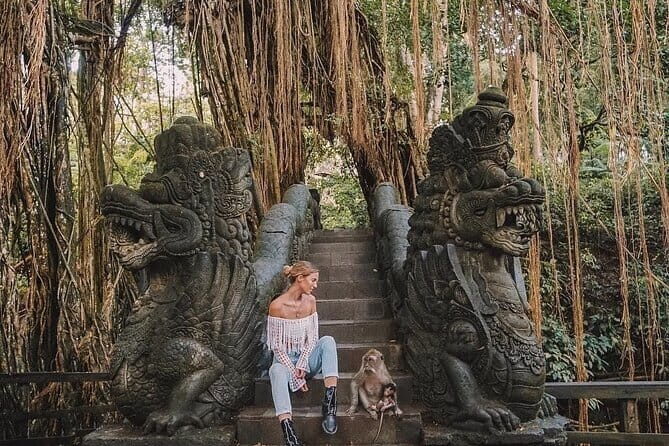
Sacred Monkey Forest Sanctuary (30 minutes)

You’ll see sacred gray macaques moving through a forest of Hindu temple settings. The stop is short, so it’s best as a quick “see it, enjoy it, move on” break rather than a long wander.
A practical tip: keep your phone and personal items secure and zipped. Monkeys can be curious, and a 30-minute window goes fast when you’re managing your stuff.

Campuhan Ridge Walk (30 minutes)

This is a lush walking break with green views along the ridge. It’s the kind of stop that feels more like a reset than a checklist item—good when you want a little stretching time after temple visits.

Wear shoes you can walk in. Even if it’s “only 30 minutes,” the path can be uneven and slippery after rain.

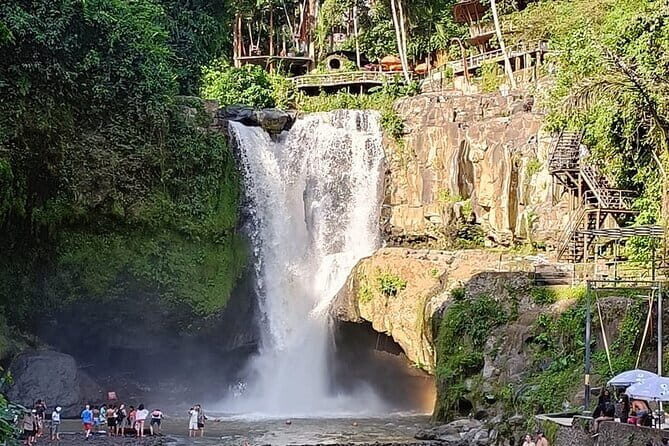
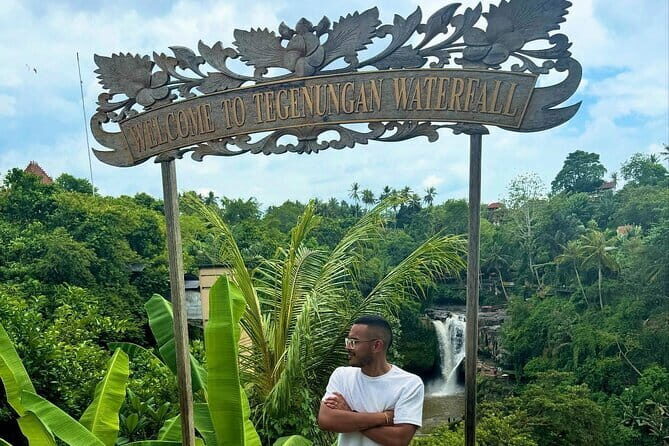
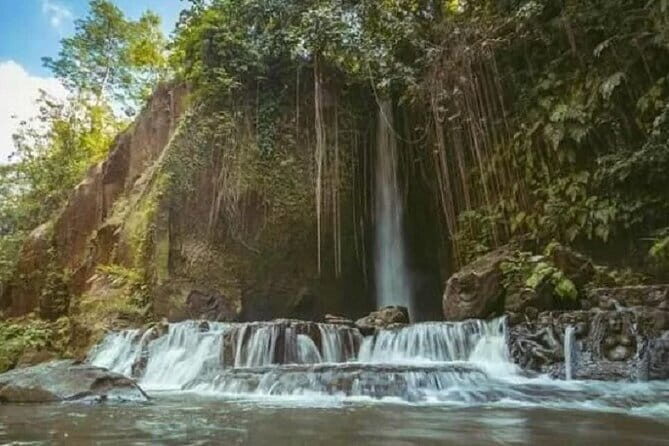
Tegenungan Waterfall (30 minutes)

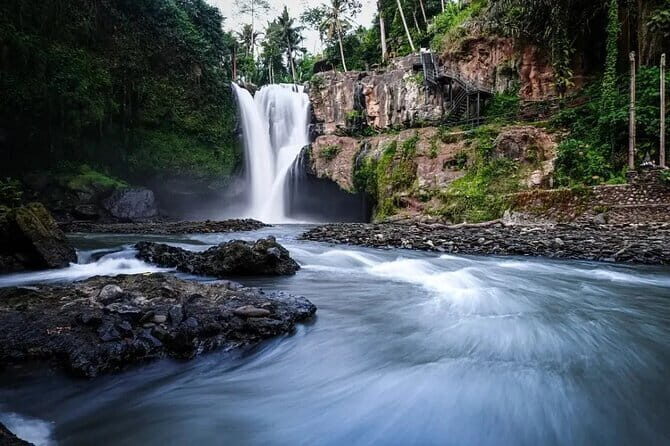
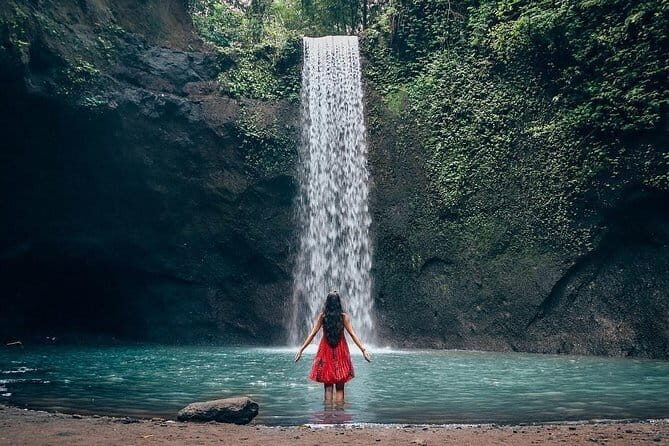
A Ubud waterfall stop with green views, and the description notes you could swim. For waterfall time, the main decision is usually: swimsuit or no swimsuit.

If you swim, keep in mind you’ll likely need time for changing and drying. If you don’t swim, you can still enjoy photos and the walk down/up without adding extra delays.

Tegalalang Rice Terrace (30 minutes)

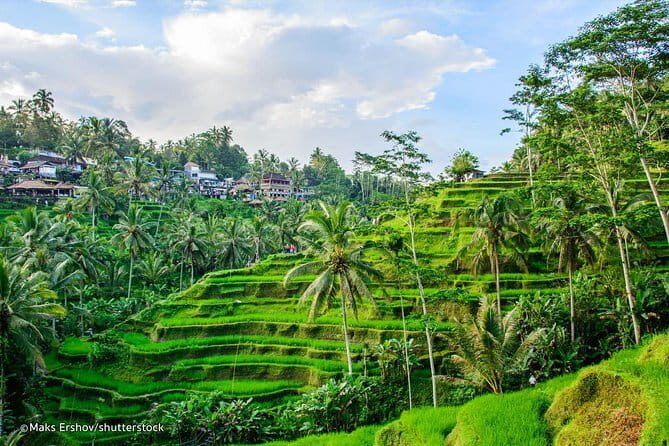
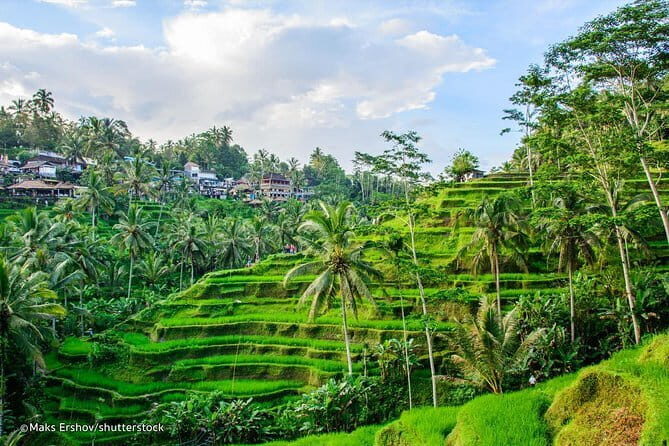
Tegalalang is famous for a reason: rice terraces that look like they were drawn by hand. This stop is brief, which is exactly what you want if you’re also stacking temples and other waterfalls.

Early or late light helps photos. Your driver can sometimes time it, but traffic and crowd patterns will still shape your reality.

Elephant Cave (30 minutes)

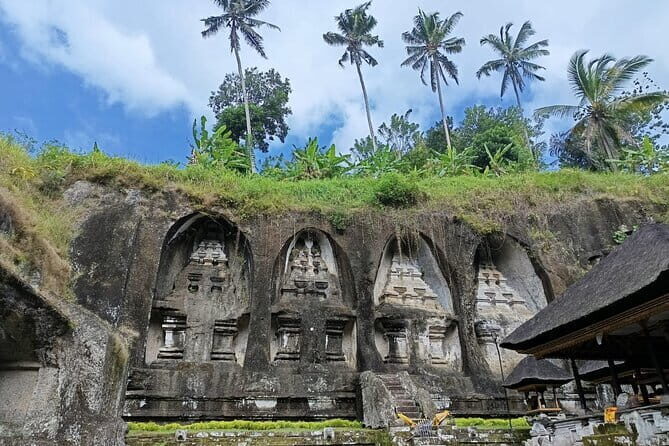
The Elephant Cave temple combines rock-wall carvings and bathing pools. It’s a “culture + water setting” stop, which makes it feel different from the typical viewpoint routine.

If you’re tempted by the bathing pools, remember you may need time and the right mindset. Some people treat this as a quick look-and-photo stop; others treat it as a slow reset.

Temple and art-market stops that feel local, not rushed

Bali Private Car Hire with Driver - Temple and art-market stops that feel local, not rushed
Ubud is one place where it’s easy to turn your day into “photo, photo, photo.” These stops add texture and human scale.

Puseh Batuan Temple (30 minutes)

This is a temple complex designed to show how Balinese temple structures form and function. The value here is not just the building itself, but seeing a living temple environment.

Expect modest viewing time. If you want deeper cultural context, ask your driver what you’re looking at and what locals do here.

Ubud Traditional Art Market (30 minutes)

This is your pulse-check for local crafts. It’s not described as a shopping spree, but as a chance to experience the traditional market atmosphere.

You’ll likely want small bills for purchases and a light hand with bargaining. If your goal is photos, keep your pace respectful—markets can get crowded quickly.

Saraswati Temple (30 minutes)

Saraswati Temple in Ubud is dedicated to the Hindu goddess Saraswati, associated with learning, literature, and art. This stop leans more spiritual than scenic, which helps balance out the waterfall and swing vibe.

Take a moment to notice details rather than just sweeping the main view for pictures. Small things tend to be what you remember later.

Kintamani views, Bali swing breaks, and timing reality

Bali Private Car Hire with Driver - Kintamani views, Bali swing breaks, and timing reality
This part of the day is where the itinerary becomes a mix of big scenery and fun-photo activities.

Kintamani (30 minutes, listed as free)

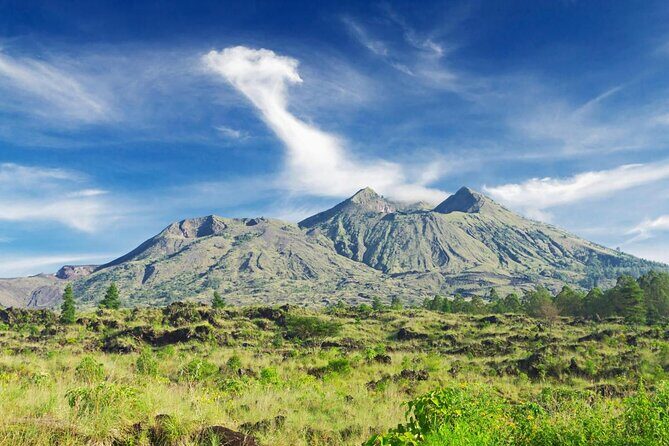
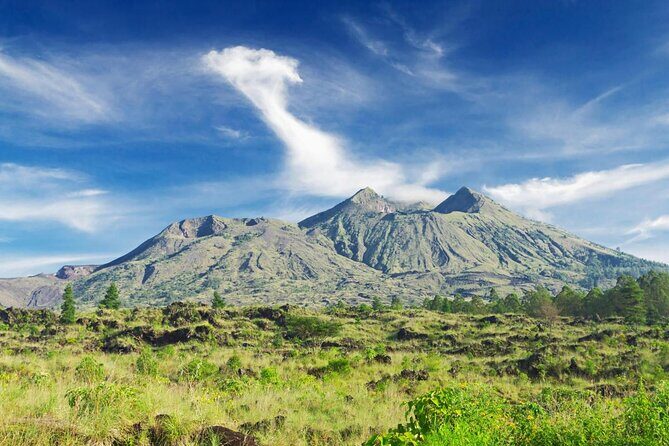
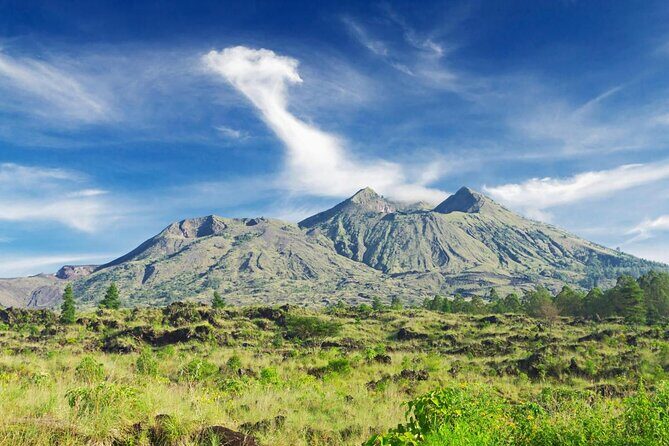
Kintamani gives you views of Mt. Batur and Batur Lake from the area. Even with short time, it’s one of those stops that can feel worth the ride because the view is the whole point.

The “30 minutes” window means you’ll want your camera ready and a quick plan for where you’ll stand. Don’t expect a long hike here.

Real Bali Swing (1 hour)

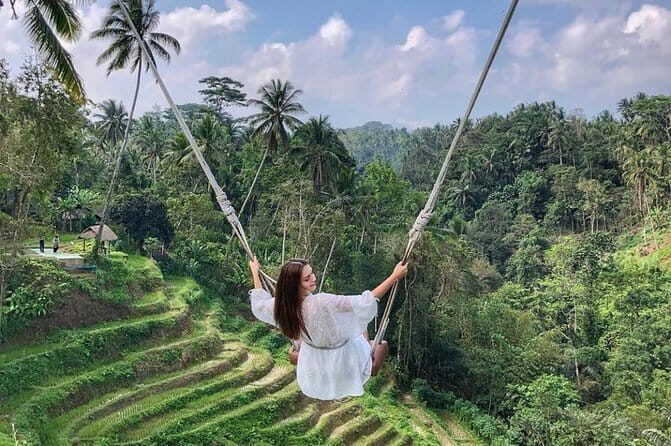
This is a swing activity stop with lots of selfie-style photo opportunities. The description calls it the first and the biggest, which signals it’s built for photos and short thrills.

One hour sounds long, but with check-in, waiting, and multiple photo rounds, it can easily fill up. If your group is split—some want swings, some don’t—your driver can often help you balance time.

Terrace River Pool Swing (15 minutes)

This swing stop is shorter and set with jungle or rice terrace views. It’s described as 15 minutes, so think of it as a quick “add-on” rather than a full activity block.

If you’re trying to keep the day moving, this is a good choice. If you hate waiting around for photos, treat this like a quick stop and move on.

Sacred springs and the waterfalls near Tirta Empul

Bali Private Car Hire with Driver - Sacred springs and the waterfalls near Tirta Empul
Now you get into Bali’s religious and water-focused side—often the most memorable because it mixes scenery with real local practice.

Tirta Empul Temple (30 minutes)

Tirta Empul is known for sacred spring purification where worshipers perform cleansing rituals. The stop is 30 minutes, which is usually enough to observe respectfully without turning it into a long lesson.

Keep your behavior quiet and observant. If you’re unsure about what’s allowed, watch what others do and follow their pace.

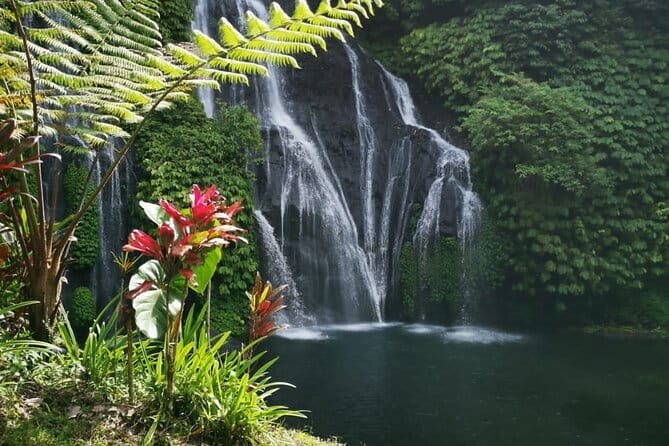
Tukad Cepung Waterfall (30 minutes)

Tukad Cepung is described as the most hidden waterfall in Bali. You explore on foot along the river with high rock in between, and the walk ends with the view.

The practical angle: caves/rock corridors can feel cool and damp. Wear grippy footwear and be prepared for uneven ground.

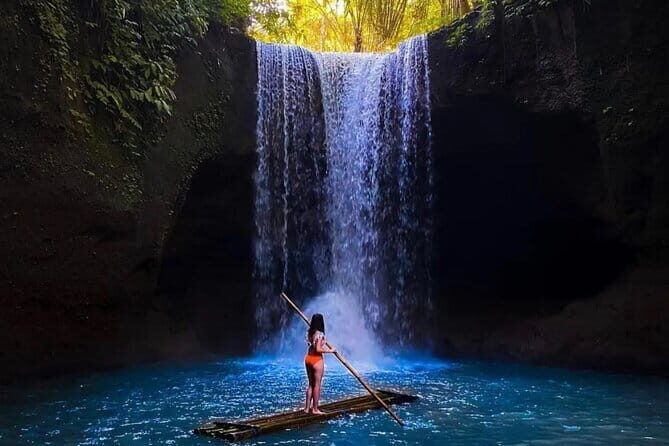
Tibumana Waterfall (30 minutes)

Tibumana is described as a great place for swimming in fresh blue water coming from the mountain. The itinerary notes this stop is covered for the 10-hour option.

If swimming is on your mind, this is the point of the day to commit. If you skip the swim, you’ll still get the waterfall experience without adding change-and-dry time.

From Tanah Lot to Uluwatu: temples, sea views, and rice terraces

Bali Private Car Hire with Driver - From Tanah Lot to Uluwatu: temples, sea views, and rice terraces
This is the south-and-central stretch that can feel like a greatest-hits reel. It also tends to be the part where timing becomes tricky because traffic can spike and driving time stretches.

Tanah Lot Temple (30 minutes)

Tanah Lot sits by the sea and is described as one of the best temples in Bali. The value here is the coastal temple setting and the iconic, “photo from multiple angles” layout.

Plan for walking and uneven surfaces around the viewpoint areas. If it’s crowded, keep your patience. Short stops go smoother when you don’t rush.

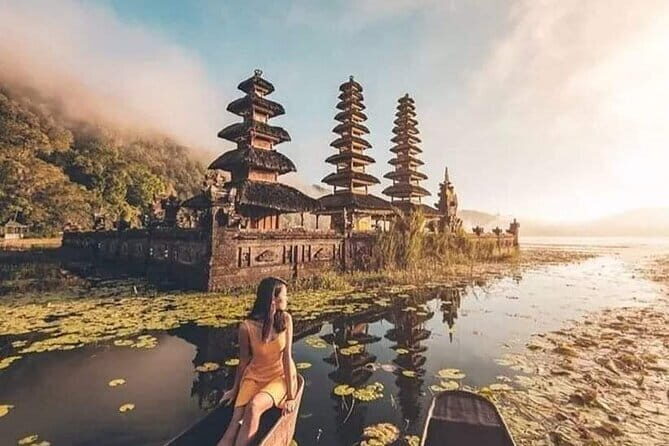
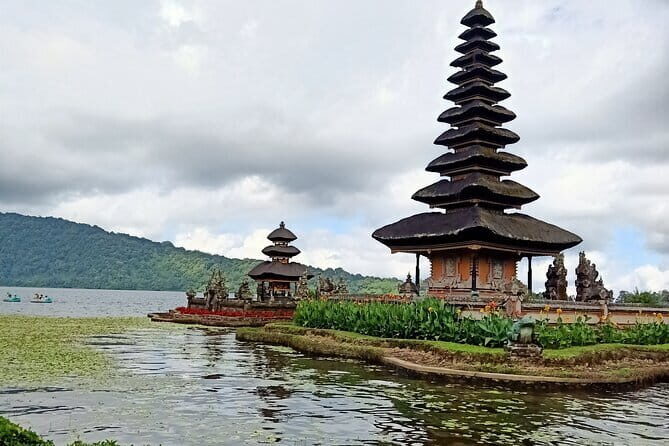
Ulun Danu Bratan Temple (30 minutes)

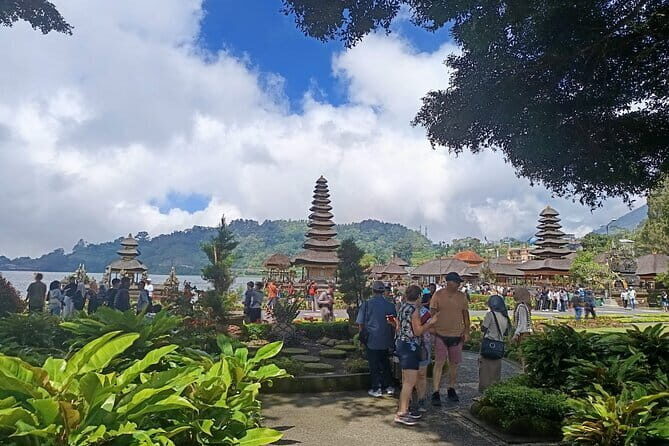
Ulun Danu Bratan is a beautiful lake-temple setting in Tabanan regency. The description explicitly frames it as a temple by the lake, which usually means your photos and your calm time matter more than time spent inside.

If weather shifts, you might get a mood change quickly. A driver’s judgement helps here.

Jatiluwih Green Land (30 minutes)

This is Jatiluwih, the largest rice terraces in Bali, noted as a UNESCO Heritage site. Rice terraces in this area are often best when you can see layers and depth, which means you’ll want a stable spot and decent light.

It’s only 30 minutes, so you might not see every viewpoint. Decide what you care about most: wide overlook photos or a slower path experience.

Water Blow (30 minutes)

Water Blow is described as a lovely walk with a massive statue and dramatic water action. The description (and a highlight from feedback) notes loving it during high tide, watching the water rise high into the sky.

This stop is one of those where timing matters. Ask your driver if they can aim for better tidal timing based on the day.

Uluwatu Temple (30 minutes)

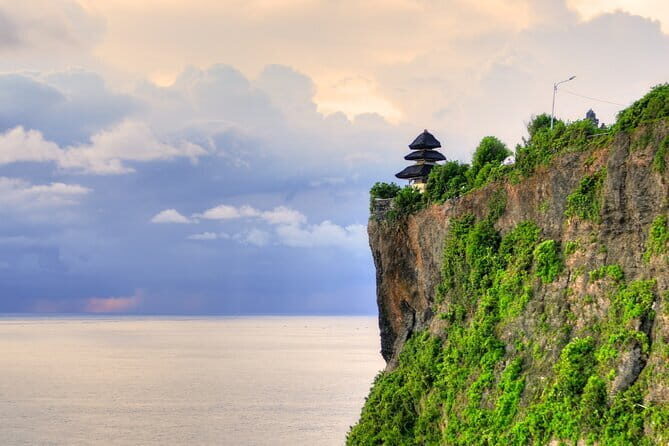
Uluwatu Temple is described as one of the most beautiful temples in Bali and located in south Bali. Expect sea-air vibes and temple viewpoints.

Because Uluwatu is famous, it’s common for the area to feel busy. Your 30-minute window works best when you arrive with a clear idea of where to look first.

Traffic reality and how to choose 5 to 7 must-sees

Here’s the honest trick to making this kind of day work: don’t treat the full list as a checklist. Even with a private car, Bali traffic can turn 30 minutes into 90 minutes fast.

I like the practical advice given in real use: pick your 5 to 7 must-sees, then show the driver right when you get in the car. That way, your driver can build a route that preserves the parts you care about most.

A helpful mindset shift: short stops are still enjoyable, but the day needs breathing room. If you cram too many ticketed locations back-to-back, you’ll feel rushed even with a driver.

If rain or crowds mess up timing, you want a driver who adjusts without drama. In feedback, some drivers reportedly shifted schedules when rain began and still made it a great day.

Drivers: punctuality, English, and the small things that matter

This service lives and dies by the chauffeur. The good news: many drivers are praised as safe, friendly, and accommodating, and people often call out punctual pickup and smooth driving.

Names that come up often include Lola, Topo, Gungan, Deygus, Aba, Oka, Gede, Troy, and Dewa. The common thread: they’ll help build a workable day when plans meet road reality.

Two things to keep in mind:

  • English can vary. One person noted their driver’s English was not quite at the promised level, so if language support matters, be ready with key questions.
  • Communication prevents problems. In the rare negative case, a driver struggled with finding the pickup spot and insisted the plan wasn’t feasible. The fix is simple: send a clear address pin and your must-see list early.

Also, expect the driver to cover gas, while tolls and parking are on you. If you want fewer surprises, keep small cash available and ask your driver what to expect before you park.

Who should book this Bali private car hire

This is a great fit if you want:

  • A private day with no self-driving
  • Custom stops, not a rigid schedule
  • Short, varied sightseeing blocks: temples, terraces, and waterfalls
  • A calmer experience when traffic makes everything harder

It’s especially good for couples who want flexibility, families who prefer a driver-led day, and anyone who cares more about seeing a few places well than ticking off everything on a list.

If you’re the type who hates waiting in lines and walking long distances, you might also prefer this over doing everything solo. Your driver helps you keep stops short and purposeful.

Should you book this tour?

Book it if you want a structured-but-flexible private day and you’re okay paying admission fees and any parking/tolls. At roughly $25.67 per person, the value comes from what you’re buying: a driver, an air-conditioned vehicle, fuel coverage, and a full-day plan that’s adaptable to your priorities.

Skip it or reduce expectations if you’re trying to fit every listed stop in one run. Bali traffic can make that impossible, even with a private car. Instead, choose your top sights in advance, give them in the remarks, and let your driver optimize the route.

If you’re deciding today: I’d book if your priority is comfort and control over driving stress. I’d be cautious if your schedule is ultra-tight or if you need strong English support for deep explanations at every stop.

FAQ

Is this a private tour or shared?

It is private. Only your group participates.

How long is the tour?

The tour is about 10 hours.

Can I extend the day?

Yes, you can extend by about USD 5 per hour (as long as you stay within the stated service areas).

What’s included in the price?

Included are hotel transfers (pickup and drop-off), a private comfortable a/c vehicle, an English-speaking chauffeur, fuel/petrol fee, and insurance.

Are admission tickets included?

No. Admission fees for visited places are not included. Kintamani is listed as free.

Do I need to pay parking or tolls?

Yes. Parking and tolls fee are not included, and those costs are at your expense.

Where does pickup happen?

Pickup is available in Ubud and much of south Bali, with coverage listed as Ubud–Gianyar, Denpasar, Badung South, plus Bangli and Tabanan.

Can the driver take you to east or north Bali?

Yes, but it costs extra: USD 30 per area for Karangasem or Klungkung in east Bali, or Buleleng in north Bali.

Do I need to send my planned itinerary before the tour?

Yes. You’re asked to mention where you plan to visit in the remarks field so the operator and driver can prepare and adjust your schedule.

What if the driver can’t find me at pickup?

The operator waits up to 30 minutes from the pickup time before leaving, and there are no refunds after this time.

Mount Batur Sunrise Hike and Natural Hot Spring Option

Mount Batur Sunrise Hike and Natural Hot Spring Option - Summit Break: Breakfast, Warm Drinks, Steam, and That First Look

That volcano sunrise hits fast. You leave Bali while it’s still dark, hike up Mt. Batur, and catch the caldera light with breakfast waiting at the rim. I love patient guides who match your pace and the natural hot springs soak right after the descent; just know the top can get crowded, and changing areas at the hot springs may not feel private.

Pickup times are early early: Ubud starts around 2:30am, and some areas go even earlier. The full outing runs about 10 hours and keeps to a maximum of 50 travelers, so it stays manageable instead of chaotic. You’ll want moderate fitness, because the climb and the loose terrain on the way down are the real work.

The value here is that you can shape your morning: go on foot for sunrise, or choose a Jeep sunrise style, then add on hot springs, a waterfall, or a jungle swing. For $33, you also get a mountain breakfast with warm drinks (tea, coffee, or hot chocolate) plus items like egg, fruits, biscuits, and a banana sandwich.

  • Sunrise timing that gets you up before the sky lights up**
  • Mountain breakfast at the summit with warm drinks**
  • Hot springs, waterfall, or jungle swing to finish your morning**
  • Small-group hiking pace inside a larger tour cap**
  • Good grip shoes matter on the steep, loose descent**
  • Hot-spring option includes lockers, towel, soap, and a changing area**

Why Mt Batur Sunrise Feels Special (Even Before You See the Sun)

Mount Batur Sunrise Hike and Natural Hot Spring Option - Why Mt Batur Sunrise Feels Special (Even Before You See the Sun)
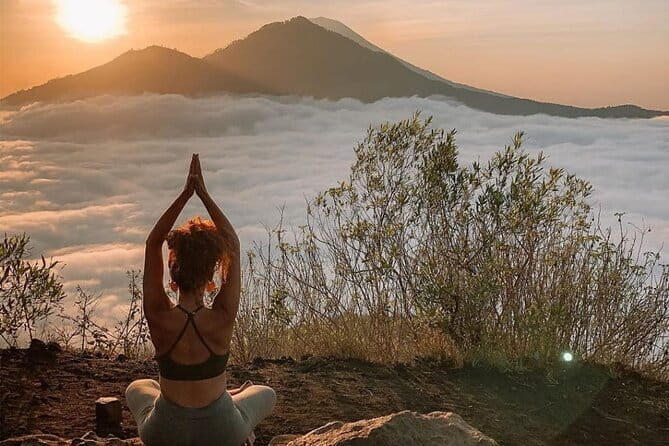
Mt Batur is one of those rare Bali experiences where timing does half the magic for you. You’re hiking while it’s still dark, then suddenly the volcano gives way to a view that feels bigger than the island around it.

What I like most is the rhythm. It’s not just climb up and go home. You get a warm-up with tea or coffee before the hike, then breakfast at the summit, then a relaxing finish with natural hot springs if you choose that option.

That combination is also why this tour tends to work for a wide range of travelers. If you want adventure, the sunrise hike delivers. If you want a more gentle morning, you can swap in a Jeep sunrise option and still get the early-day payoff.

The Early Morning Reality: Pickup Times and How the Day Flows

Mount Batur Sunrise Hike and Natural Hot Spring Option - The Early Morning Reality: Pickup Times and How the Day Flows
Plan for a very early start. Pickup times depend on where you’re staying, with Ubud around 2:30am, and other areas like Seminyak/Kuta closer to 1:45am. That means you’ll likely be awake and driving before the day really begins.

The outing runs about 10 hours end-to-end. You’ll begin at the Mount Batur Jeep Adventure Base Camp area, and the day ends back at the same meeting point.

A detail that matters: there may be toilets available at the starting area, but there are usually fewer facilities near the summit. I’d treat this as your reminder to use the restroom before you start the climb, even if you don’t feel like you need it yet.

Entering the Batur Climb: What the Hike Actually Feels Like

The hike up Mt Batur is steep, and the footing can be loose. That combination is why good pacing matters more than speed. Guides often stop when people need a breather, and they guide you toward better spots for rest and photos.

You’ll likely start in the dark, with some groups being offered a head torch and possibly a stick if you want one. Those small items help you move more confidently on uneven ground.

As you get higher, the terrain gets tougher. One of the biggest lessons from people who do this successfully is to take your time on the descent. Old lava gravel can get slippery, so your knees, ankles, and confidence all get tested.

What to watch for:

  • Steep sections mean controlled steps, not big leaps
  • Loose gravel means you need grip and balance
  • Crowd density at the summit can make the top feel busy once everyone arrives

Summit Break: Breakfast, Warm Drinks, Steam, and That First Look

Mount Batur Sunrise Hike and Natural Hot Spring Option - Summit Break: Breakfast, Warm Drinks, Steam, and That First Look
Getting to the rim before sunrise is the point. When the light starts to glow, the volcano turns into a giant natural viewpoint over the caldera.

Once you’re up there, the tour usually sets you up for a short summit window with breakfast and warm drinks. The mountain breakfast commonly includes tea or coffee (or hot chocolate) plus items like egg, fruits, biscuits, and banana sandwich. It’s simple food, but it’s also exactly what you want at altitude when you’re cold and hungry.

Then comes the fun part: the summit often has active volcanic steam, and that steam can make photos look dramatic. Many guides also time photo stops well so you’re not just standing around waiting for the sun to do its thing.

And yes, monkeys can show up at the rim area. They’re part of the scene, and they can be an entertaining distraction while you eat and take photos—just keep an eye on personal belongings and stay aware in the busy top area.

Stop 1: Mount Batur Sunrise Experience (and When the Jeep Option Helps)

Mount Batur Sunrise Hike and Natural Hot Spring Option - Stop 1: Mount Batur Sunrise Experience (and When the Jeep Option Helps)
This whole experience is built around the Mount Batur sunrise moment. If you choose the standard sunrise style, you’ll hike from the base area up to the summit rim for the best view.

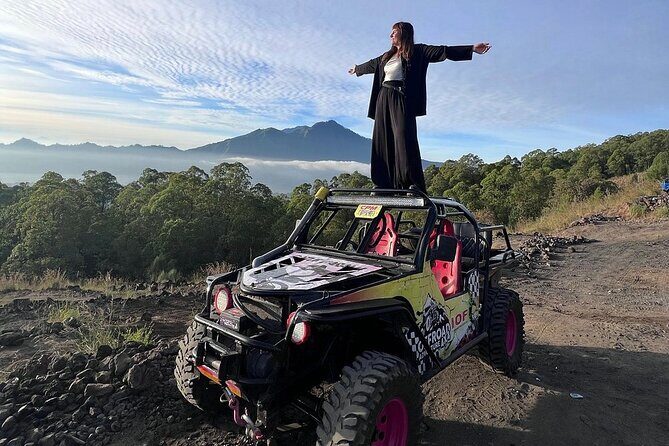
If you prefer less time on the steep trail, there’s a Jeep sunrise alternative. With a Jeep sunrise option, the trekking component is not included the way it is for the hiking package. That means you still get a sunrise experience, but your morning will be less physically demanding.

So how do you choose? If you enjoy walking uphill early in the morning and you want the full volcano-to-hot-springs flow, hiking is the best fit. If you’re recovering from an injury, dealing with mobility issues, or simply want sunrise with less effort, the Jeep option makes the day more accessible.

Stop 2: Natural Hot Springs at the Foot of Mt Batur

Mount Batur Sunrise Hike and Natural Hot Spring Option - Stop 2: Natural Hot Springs at the Foot of Mt Batur
If you upgrade with the hot spring option, the finish becomes pure recovery. After the climb, soaking in the natural hot springs at the foot of the mountain is a satisfying payoff.

For the hot spring upgrade, the tour can include extras that make a difference in comfort: locker, towel, soap, and a changing room. That’s a practical bundle, because you’ll arrive sweaty, then need a simple setup to rinse and change.

One caution: the hot springs can be busy. Also, at least one person noted that men’s and women’s changing areas were not separated in a way that felt comfortable. If privacy is a big deal for you, it’s worth mentally preparing for shared facilities.

Still, for many people this part is the best “after” to the hardest part of the morning. It’s where your legs stop complaining and you start enjoying the day instead of just surviving it.

Optional Add-Ons: Waterfall and Jungle Swing as a Second Act

Mount Batur Sunrise Hike and Natural Hot Spring Option - Optional Add-Ons: Waterfall and Jungle Swing as a Second Act
Not every morning has to be all volcano all the time. Depending on which package you pick, you can add a waterfall or a jungle swing after the main volcano portion.

The logic here is simple: the sunrise part is intense, and the add-ons give you variety once you’re back on the road. A waterfall can feel like a cool reset, while a jungle swing leans playful and photo-friendly.

These add-ons work best if you like having a full day with multiple “wow” moments, rather than only the sunrise window. If you’re more focused on a quiet, slow experience, you might prefer sticking to sunrise plus hot springs and skipping the extra stops.

The Coffee Plantation Stop: A Pleasant Energy Refill

Mount Batur Sunrise Hike and Natural Hot Spring Option - The Coffee Plantation Stop: A Pleasant Energy Refill
On the way back, there can be an optional stop for a coffee tasting. People describe it as a way to recharge after a long morning.

Even if coffee isn’t your thing, the tasting stop is often a useful break from movement fatigue. It gives you a chance to sit down, taste samples, and get a bit of context about what you’re drinking.

Just keep expectations realistic: this isn’t the main attraction. It’s the warm-up snack of the second half of your day.

Price and Value: Why $33 Can Work (If Your Option Matches Your Goals)

Mount Batur Sunrise Hike and Natural Hot Spring Option - Price and Value: Why $33 Can Work (If Your Option Matches Your Goals)
The base price is about $33 per person, and the big reason it can feel like good value is what’s commonly included. You’re getting:

  • Pickup and drop-off service for many packages (depending on your hotel transfer choice)
  • Mountain breakfast with warm drinks
  • The sunrise experience on Mt Batur
  • And if you choose the right upgrade, hot springs can be included

The not-so-sexy part: what’s included depends on which option you book. For example:

  • If you choose the hot springs option, hot spring entry and facilities like locker/towel/soap are included.
  • If you choose waterfall or jungle swing add-ons, those are included only when you select those packages.
  • If you choose the Jeep sunrise style, trekking and hot springs are not included in the way they are in the hiking packages.

So the value isn’t automatic. It’s option-dependent. If you want hot springs, don’t buy the version that only covers sunrise by Jeep. If you want the full hike, don’t pick the add-ons built for the Jeep style.

Guide and Driver Factor: What Makes the Difference Early On

I pay extra attention to guide quality on volcano mornings because the hike is hard enough without confusion. Many people highlight that guides are patient and supportive, and that they help with pace and safety during the climb.

Names that came up include guides such as Nopia, Ayu, Made Rum, Airy, Gede, Ketut, Mk Dados, and Putu. Drivers mentioned include Martin, Mudiana, Iwan, Wira, and Kadek. What those names suggest isn’t that every guide is identical—it’s that the tour team often delivers a friendly, organized experience, with help when the trail gets steep.

Also, guides often help with photo moments, including positioning around volcanic steam. That can make your sunrise shots look more intentional instead of random.

What to Pack (So the Descent Doesn’t Steal Your Day)

This tour is often won or lost on the feet. People strongly recommend solid trekking shoes with grip, because the descent can be slippery on loose lava gravel. If you show up in squishy flip-flops or smooth sneakers, you’ll feel it.

A few practical ideas that match what this trip tends to demand:

  • Wear shoes with strong grip and ankle stability
  • Expect cold before sunrise, even in Bali’s warmer months
  • Bring water if you’re allowed or if your guide suggests it (the pace includes breaks, but it’s still a climb)
  • If you get offered a stick, consider taking it for extra confidence on steep sections

Who Should Book This, and Who Should Skip It

This is for you if:

  • You love sunrise experiences and early starts
  • You can handle a steep hike on uneven, loose ground
  • You want a full morning that ends with something relaxing, especially natural hot springs

It might not be for you if:

  • You want an easy walk with no steep sections
  • Your mobility is limited and the descent is a major concern
  • You’re very sensitive to crowded viewpoints, since the summit area can be busy

Even among experienced hikers, the descent needs respect. One review described a painful injury from slipping on lava gravel, which is a reminder that this is not a casual stroll.

Should You Book This Mt Batur Sunrise Hike and Hot Springs Option?

I’d book it if you want the classic Mt Batur experience: early pickup, a real sunrise climb, breakfast at the rim, and then a natural hot springs soak to make your legs feel human again. The overall setup is built for value—especially when your selected package includes what you actually care about.

Choose carefully between hiking vs Jeep sunrise. If hot springs is your must-do, make sure you book the option that includes it. And if you’re the type who sweats the small comfort details, mentally prepare for busy spots and shared facilities at the springs.

If you show up with grippy shoes, a flexible attitude, and respect for the descent, this is one of those Bali mornings that sticks in your memory long after the sun goes down.

FAQ

What does the Mount Batur sunrise tour include?

Most options include hotel pickup and drop-off (for many packages), a mountain breakfast with warm drinks, and the Mt Batur sunrise experience. If you book the hot springs option, natural hot spring access is included. Waterfall and jungle swing are included only when you select those specific options.

How long is the tour?

The duration is listed as about 10 hours.

What are the pickup times?

Pickup times vary by area: Seminyak/Kuta around 1:45am, Nusa Dua/Jimbaran around 1:40am, Sanur around 2:00am, and Ubud around 2:30am.

Where does the tour meet and end?

The start is at Mount Batur Jeep Adventure Base Camp by CV Bali Trekking Tour (Q97V+PMF, Songan A, Kintamani). The activity ends back at the meeting point.

Is the hot spring upgrade included, or is it extra?

Natural hot spring is included only if you book the hike with the natural hot spring option. The hot spring option also includes locker, towel, soap, and a changing room.

What’s different about the Jeep sunrise option?

For the Jeep sunrise tour, trekking and hot springs are not included. It’s a different morning format from the hiking package.

Is this tour suitable for beginners?

It states that travelers should have moderate physical fitness. The hike includes steep, loose terrain, so it’s not ideal if you want an easy walk.

How many people are in the group?

The tour lists a maximum of 50 travelers.

What’s the cancellation policy?

Free cancellation is available up to 24 hours in advance for a full refund. If you cancel less than 24 hours before the experience start time, the amount paid is not refunded.

Bali: Ubud Kecak and Fire Dance Show Tickets

Bali: Ubud Kecak and Fire Dance Show Tickets - Timing in Ubud: when the gate opens and the show actually starts

Balinese temple nights can feel like pure ritual, not staged performance. What makes the Ubud Kecak and Fire Dance special is the chanting-driven drama: the rhythm comes from voices and sounds, with no musical instruments, as the story of the Ramayana unfolds in front of you. You sit in an open-air temple setting in Ubud, and the show builds from slow, steady movement into faster intensity, with a dalang narrating the tale (including monkey chant moments). If you want a little extra guidance, I’ve seen people highlight helpers like Dews Nyoman Putra Yasa for making the story easier to follow.

My favorite part is how close and hypnotic the chanting feels—like you’re inside the rhythm rather than watching from far away. I also really love the fire finale: it’s the moment when the whole crowd locks in, even if you don’t catch every line of the story. The one drawback to plan for: seating can be a bit tough, and depending on the exact venue you choose, you may hear some traffic or nearby construction noise that pulls your attention out of the trance.

Key points before you go

Bali: Ubud Kecak and Fire Dance Show Tickets - Key points before you go

  • No-instruments Kecak: the vocal chorus creates the beat and the atmosphere
  • Ramayana storytelling with dalang narration so the plot stays on track
  • Rising tempo and trance-like performance that turns “chanting” into theater
  • Fire dance finale that’s visually dramatic and crowd-stopping
  • Arrive early to snag better sightlines in a small venue
  • Outdoor timing and weather matter because it’s held at a temple in the evening

Why this Ubud show feels different than typical theater

Bali: Ubud Kecak and Fire Dance Show Tickets - Why this Ubud show feels different than typical theater
The Kecak and Fire Dance is often described as a dance show, but that doesn’t fully capture it. Yes, you get costumed performers acting out the Ramayana. But the experience runs on something stranger and more powerful: human voices creating rhythm like a living drumline.

That means two things for you, right away. First, the sound design is part of the show, not a soundtrack. Second, when the pace speeds up and the performers’ movements tighten, the whole crowd tends to react—people lean forward, whisper less, and just follow what’s happening. It’s not background entertainment.

It also helps that the staging is temple-based and open to the night air. Even if you’ve been to temples during the day, this evening format changes the mood. The show starts after dusk, and it’s timed so you’re watching dramatic movement in low light with the temple setting doing some of the work for you.

Finally, it’s one of the rare performances that can be both dramatic and family-friendly. If you’re traveling with kids, they usually handle the hour better than you’d expect because the visuals are strong and the chants keep things moving.

Timing in Ubud: when the gate opens and the show actually starts

Bali: Ubud Kecak and Fire Dance Show Tickets - Timing in Ubud: when the gate opens and the show actually starts
This is the part that saves you hassle in the real world. In Ubud, the performance happens at a chosen temple venue in the evening. The stage gate is open from 18:00 to 19:30, and the Kecak dance starts at 19:00.

Plan to arrive at least 30 minutes early. Not 10 minutes early. Early early. That gives you time to find your section, settle in, and avoid the last-minute scramble that leads to bad sightlines. People who arrive early also tend to get the breeze and better angles, which matters because the seating is outdoors and you’ll be sitting for about an hour.

One practical note: there are different venues for Kecak in Ubud (the choice matters). Double-check the venue tied to your booking option so you don’t end up showing up at the wrong temple compound.

Your first 15 minutes: ticket entry and finding your seat

Bali: Ubud Kecak and Fire Dance Show Tickets - Your first 15 minutes: ticket entry and finding your seat
Tickets include entry to the temple and the Kecak and Fire Dance show ticket. The event is set up so you can skip the ticket line, which is a nice time-saver in the evening when things get hectic.

Once you’re inside, you’ll want to do the boring but important stuff fast:

  • Find the best seat you can, especially if you care about a clear view of the center action.
  • Get any essentials (water or a small snack if refreshments are sold at that venue).
  • Use your camera setup early. Don’t wait until the chanting hits peak intensity.

From what I’ve seen, the venue experience can vary a bit. Some spots feel more “small and close,” with you feeling closer to the performers. Other spots can be slightly more exposed depending on the layout. Either way, you’ll spend the show largely stationary, so think of the seat as part of the experience—because it is.

The Kecak rhythm: what happens when there are no instruments

Bali: Ubud Kecak and Fire Dance Show Tickets - The Kecak rhythm: what happens when there are no instruments
Most shows use music like a background engine. Here, the chanting is the engine.

In the Kecak performance, the dancers move and chant rhythmically while the dalang narrates the tale. The rhythm comes from the chorus—voices and sounds working together—so you get a powerful, hypnotic effect that’s hard to replace with anything modern.

The show typically has a clear build:

  • It starts slowly, giving you a chance to get oriented.
  • Then tempo and intensity gradually rise.
  • The performers’ movements and collective chants push toward a trance-like feeling.

For your brain, that slow-to-fast structure is helpful. If you’re not fluent in the story, the pacing gives you a spine to follow. You may not catch every plot detail, but you can still feel when action ramps up and when the narrative turns.

One small “heads-up” for expectations: there’s no guarantee of super-clear English translation on-screen during every venue. Some people like having extra context for the Ramayana storyline. If you want that, a quick read about the basics beforehand can help you enjoy the narration more.

The Ramayana story on stage: dalang narration and the monkey chant

The show’s narrative core is the Ramayana, with the famous monkey chant moments playing a role in the drama. The dalang is the storyteller who narrates the tale as dancers enact the scenes.

Here’s what I’d tell you to pay attention to. Watch for how the dalang’s pacing matches the dancers. When the narration signals a shift, the movement patterns and vocal rhythm usually change too. That’s your cue that the story is turning—even if you don’t catch every word.

It’s also why this performance works for different ages. For kids, the costumes and action keep them focused. For adults, the structure of story + chant turns it into more than a simple dance routine.

The fire dance finale: why it’s the moment everyone remembers

Bali: Ubud Kecak and Fire Dance Show Tickets - The fire dance finale: why it’s the moment everyone remembers
The fire portion is usually the headline image people take home. And yes, it’s impressive. But the best part is how it lands after the earlier build.

Because the Kecak rhythm ramps up first, the fire finale feels like a dramatic release. The audience attention tightens. People who came for “the fire” still end up reacting to the chanting and storytelling beforehand, because that groundwork makes the finale hit harder.

If you’re taking photos, plan ahead. Make sure your camera settings are ready and avoid flash. The goal is to let the performers do their thing without disruption. Most people find that the best shots happen when you’re already settled and not fiddling with gear at the critical moment.

Weather and comfort: the outdoor stuff you can’t ignore

Bali: Ubud Kecak and Fire Dance Show Tickets - Weather and comfort: the outdoor stuff you can’t ignore
This show is outdoors. That’s both the charm and the complication.

Rain can happen, especially during certain seasons in Bali. I’ve seen examples where the event gets adjusted with cover during bad weather, including cases where the performance moved under cover when storms hit. Still, don’t assume you’ll be dry no matter what.

What you should bring for comfort:

  • Comfortable shoes (you may be standing or walking around a bit before seating)
  • Comfortable clothes suitable for an outdoor evening
  • A light jacket or shawl, because evenings can feel cool
  • Camera (and remember flash is best avoided)
  • Insect repellent, because mosquitoes are part of outdoor Bali

Also, expect seating to be firm. Some people mention that the seats can feel tough for your bottom for a full hour. If you’re sensitive to that, bring a small cushion if your venue allows it (the activity info bans luggage/large bags, so keep anything you bring small and simple).

Venue noise and disruptions: how to protect your attention

Bali: Ubud Kecak and Fire Dance Show Tickets - Venue noise and disruptions: how to protect your attention
Not every temple compound is perfectly quiet. In Ubud, you might notice:

  • Traffic noise if the venue sits near a road
  • Construction noise if there’s work nearby
  • General evening sound from people moving around before the show settles

This doesn’t ruin the performance, but it can interrupt the mood if you’re trying to be fully “in the trance.” Your best move is to time your arrival so you’re seated early and settled before the show begins. When you’re already focused on the center action, outside noise matters less.

If you’re really noise-sensitive, choose your venue option carefully. The activity information notes there are multiple venues, so the location details attached to your option are worth checking.

Accessibility and who this show suits best

Bali: Ubud Kecak and Fire Dance Show Tickets - Accessibility and who this show suits best
This experience is listed as wheelchair accessible. Also, it’s not suitable for babies under 1 year.

If you have specific mobility needs, it’s smart to confirm venue details in advance, since while access is available, each temple setup can still vary.

Who tends to love this most:

  • Families looking for an engaging cultural performance in one hour
  • People who enjoy vocal performance and dramatic storytelling
  • Travelers who want something more local than a standard theater show

Who might not love it as much:

  • If you need a lot of explicit English explanation, you might feel the lack of translation guidance (the show relies on narration, but language support isn’t guaranteed at every venue)
  • If you’re uncomfortable sitting on firm outdoor seating, plan for extra comfort

Price and value: why $6 feels like a steal here

At about $6 per person (often referenced around that range), this show is strong value because you get:

  • Temple entry
  • A full hour performance
  • A unique format that doesn’t rely on instruments or modern staging tricks

The real value is that this is not a polished “tourist-only” production. It’s a traditional-style performance tied to Balinese Hindu storytelling, using voices and movement as the core art.

If you’re trying to balance your Bali budget, this is one of those easy wins: low cost, high entertainment, and it gives you a cultural evening that feels different from day-trip sightseeing.

Food and beverages aren’t included. Some venues may sell snacks and drinks, so you can top up before or during the waiting period. If you’re thirsty, don’t count on the show time itself being when you remember to buy water.

Practical checklist: what to bring and what to avoid

The activity info is pretty straightforward, so follow it and you’ll have a smoother night.

Bring:

  • Comfortable shoes
  • Camera
  • Comfortable clothes

Don’t bring:

  • Pets (assistance dogs allowed)
  • Luggage or large bags
  • Fireworks
  • Anything that disrupts the show (like making noise)

Before you leave your room, also double-check the start time and your venue choice. The show starts at 19:00, so arriving late means you risk worse seats and missing the slow build that makes the whole experience work.

Should you book the Ubud Kecak and Fire Dance show?

If you want an evening cultural performance that’s easy on the budget and genuinely different from Western theater, yes, I’d book it. The chanting-only rhythm is the hook, the Ramayana narration gives it structure, and the fire finale provides the big visual payoff. It’s also family-friendly in practice because the visuals and pace hold attention.

Skip it if your top priority is comfort or language support. Outdoor seating can be firm, and depending on the venue, you may deal with ambient noise. Also, if you truly need lots of English translation detail, you might feel under-supported and would be happier with something more explanatory.

If you book, arrive early, pick your venue carefully, and plan for the outdoors. Do that, and this $6 hour in Ubud has a good chance of being one of the most memorable nights of your trip.

FAQ

How long is the Ubud Kecak and Fire Dance show?

The show lasts about 1 hour.

Where does the show take place?

It’s held in the Ubud area at a temple. There are multiple venues in Ubud, and your option determines which one.

What time does the performance start?

The gate opens from 18:00 to 19:30, and the Kecak dance starts at 19:00.

Is food included with the ticket?

No. Food and beverages are not included, though some venues may offer refreshments for purchase.

Is there music with instruments during the performance?

No. The dance does not use musical instruments. The rhythm comes from the human voice chants and sounds.

Can I bring a pet or luggage?

Pets are not allowed, and you also can’t bring luggage or large bags. Assistance dogs are allowed.

Is the event wheelchair accessible?

Yes, it is listed as wheelchair accessible, though it’s still a good idea to check specific needs in advance.

If you tell me your exact travel dates and whether you prefer the closest seats or the quietest location, I can suggest how to choose the best venue option.

ATV Quad Bike Through Tunnel and Waterfall in Bali

ATV Quad Bike Through Tunnel and Waterfall in Bali - Solo vs Tandem Quad: Age Rules and How It Actually Works

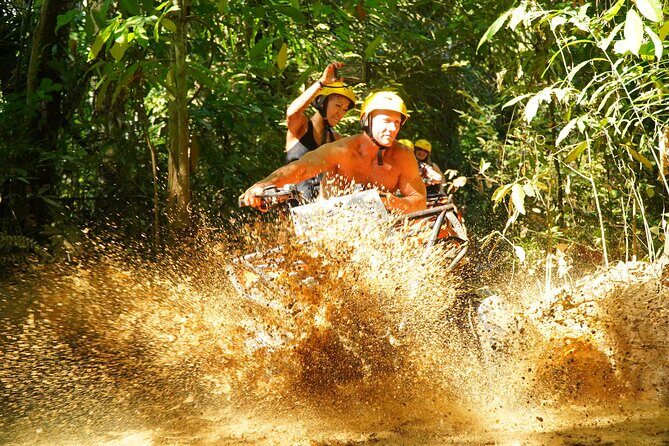
Mud, speed, and a tunnel in one ride. This ATV tour near Ubud mixes jungle trails with a real underground tunnel and a waterfall splash that turns into the muddy highlight. What I like most is that you get the full safety kit and guidance, and you’re not just cruising paved paths, you’re riding countryside that feels off the beaten track. The one drawback: plan for dirt and wet clothes, even if you wear your best intentions.

I also like how the day has a start-and-finish rhythm. There’s a welcome drink, quick paperwork for insurance, then boots and helmets, and afterward you get a shower, a place to change, and a simple lunch of egg sandwich plus fries. Guides like Jerry, Andi, Wayan, Mateo, Pawah, and Ari come up often for keeping things smooth and helping first-timers feel confident, and the tour caps at 15 people, so it stays manageable.

Key Things I’d Plan For

ATV Quad Bike Through Tunnel and Waterfall in Bali - Key Things I’d Plan For

  • Tunnel + waterfall combo that makes the ride feel like more than a loop
  • Solo (13+) or tandem (6+) quad setup with clear rules for who drives
  • Hotel pickup option across Ubud and much of south Bali, with earlier pickup than your check-in time
  • Boots, helmet, insurance, and lunch included for a straightforward, good-value day
  • Locker and showers on-site, but expect a small deposit for towel/locker use
  • Steep, slippery moments where the guide’s pacing and safety checks matter

Where The Ride Starts Near Ubud

ATV Quad Bike Through Tunnel and Waterfall in Bali - Where The Ride Starts Near Ubud
This tour is run out of Kuber Bali Adventure in the Payangan area, not in the middle of Ubud town. The meeting point address is Jl. Bayad, Jl. Bayad, Melinggih Kelod, Kec. Payangan, Kabupaten Gianyar, Bali. If you booked with pickup, your driver will collect you from your hotel or villa in Ubud and much of south Bali; if not, you’ll need to make your own way to the venue.

The practical upside of this setup is that you get a countryside drive before you ever touch the throttle. The downside is timing: your arrival time is shown on the slot, but if you’re using pickup, your driver will usually come earlier depending on how far your accommodation is from the venue. Build a little buffer so you’re not rushing in with wet hair and bad vibes.

Solo vs Tandem Quad: Age Rules and How It Actually Works

ATV Quad Bike Through Tunnel and Waterfall in Bali - Solo vs Tandem Quad: Age Rules and How It Actually Works
You choose between two riding styles: solo or tandem.

  • Solo ride is for riders older than 13 (up to age 65).
  • Tandem ride is for ages 6 to 13 when paired with a parent. Tandem means two people on one ATV, and you’ll decide who drives.

A key detail: tandem must be booked in multiples of 2 travelers (so you can’t do one lone kid on a tandem alone). Children under 6 aren’t permitted.

There’s also a weight limit that matters for comfort and safety: max weight is 150 kg for tandem and single. Pregnant travelers aren’t allowed, so if that’s in your group, skip this one and look for a different Bali activity that doesn’t involve off-road vibration and physical strain.

Your 1.5-Hour Route: Rice Fields, River Bits, and the Natural Tunnel

ATV Quad Bike Through Tunnel and Waterfall in Bali - Your 1.5-Hour Route: Rice Fields, River Bits, and the Natural Tunnel
The ride is about 1 hour 30 minutes total, with the trail itself running roughly 5 miles (8 km). This is where the tour earns its keep: you’re not stuck in one kind of terrain. You move through rice fields, jungle, rivers, and waterfalls, then end up in the kind of places that look like they should be reserved for movies.

You’ll ride in a group, and the tour can handle up to 15 travelers overall. You follow your guide and the rest of the group along the route. In practice, it feels like a structured off-road walk: the guide sets the pace, checks who’s caught up, and keeps everyone moving safely through rough sections.

Here’s what to expect on the ground:

  • Some sections are more forgiving (dirt paths and open countryside).
  • Others get slick, with “oh wow” moments going down slopes and through muddy stretches.
  • There can be narrow, uneven parts near natural features like the waterfall and tunnel area.

The tour is described as suitable for beginners, and the biggest reason is the guide. You get a safety briefing, helmet and boots, and insurance as part of the package. If you’ve never ridden before, that matters more than you’d think, because balance and throttle feel awkward at first even when the quad is behaving.

The Tunnel Moment: Not Scary, Just Cool and Cool-Wet

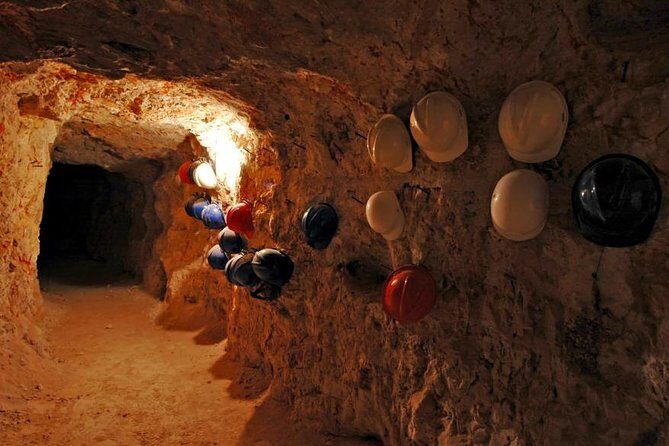
One of the standout features is the natural tunnel ride. You’ll squeeze through an underground passage as part of the countryside loop, and it’s one of those segments that makes the entire tour feel like a real adventure instead of a drive-through attraction.

A tunnel does two things for you:

  1. It breaks up the scenery fast, so the tour never feels repetitive.
  2. It adds that slight sense of focus where you slow down and ride smoother.

It’s not described as a technical climb, and the tour is positioned for beginners, but still: keep a steady grip and listen to your guide. If you’re tandem, the person driving should be extra mindful about how the quad moves at low speed, since you’re sharing balance.

The Waterfall Plunge Pool: Where You’ll Get Wet for Real

ATV Quad Bike Through Tunnel and Waterfall in Bali - The Waterfall Plunge Pool: Where You’ll Get Wet for Real
This is the part many people remember hardest. The route includes a waterfall plunge pool, where you’ll splash through as part of the ride. It’s not optional once you’re there. If the weather is dry, you’ll still get soaked enough to ruin your outfit if you come prepared in one single set of clothes.

So plan for this like it’s the main event (because it basically is):

  • Bring a changing set of clothes.
  • Expect mud on legs and shoes.
  • If you’re hoping to stay photo-ready, bring something you can tolerate getting ruined.

When I think about value, the best part is that the tour doesn’t just send you into the mess. You get a shower and changing room after riding. That’s a big deal in Bali, where you’ll likely want to rinse off before going out for dinner.

Also, there’s a practical note: the locker area uses a deposit of IDR 100k per person for locker and towel use. So if you want to minimize surprises, bring some cash and keep it handy.

Lunch and Photo Options: Simple, Included, and Usually Worth It

ATV Quad Bike Through Tunnel and Waterfall in Bali - Lunch and Photo Options: Simple, Included, and Usually Worth It
After the ride, you get time to shower off, change, and eat. Lunch is included: an egg sandwich plus fries. It’s not a gourmet masterpiece, but it’s right where it should be—after you’ve worked up an appetite and before you head back.

Photos and video are a separate purchase. The tour includes guides and staff who can take pics and videos for you, but you’ll need to pay if you want the files. If you’re on a tight schedule or you’re trying to keep costs controlled, you can skip buying them. If you’re doing this as a once-in-a-trip memory, it’s easy to justify since the most dramatic moments (tunnel and waterfall) are the hardest to capture on your own.

What’s Included (So You Can Budget Without Guessing)

The essentials are already baked into the price, which is why the cost feels reasonable for what you get.

Included:

  • Quad guide
  • ATV rental
  • Safety helmet and boots
  • Insurance (including equipment and personal injury coverage as stated)
  • Locker/changing room/shower facilities on-site
  • Lunch: egg sandwich + fries
  • Welcome drink

Not included:

  • Photos and video
  • Personal expenses

One small cost consideration: the locker/towel deposit (IDR 100k per person) is required for using those facilities. That’s not a huge expense, but it’s exactly the kind of detail that can throw off your day if you show up thinking everything is totally free.

Price and Value: Why About $33 Actually Makes Sense

At $33 per person, you’re paying for more than “someone takes you on an ATV.” You’re getting:

  • The ATV itself
  • A guide who handles safety briefing and pacing
  • Helmet/boots (not all ATV tours include this)
  • Insurance
  • Lunch
  • A rinse-and-change setup after you get muddy

That value gets even better if you’re comparing it to doing an off-road experience plus a separate guided tour plus lunch. Here, it’s one package, and the day is tight enough that you don’t feel like you lost an entire afternoon.

There are also group discounts mentioned, and the operation runs at a small size (max 15 travelers). If you’re traveling with friends or family, it can be a smart way to spread the cost while still keeping the day organized.

Pickup Timing: The Part That Can Confuse You

If you book the private transfer, you’re picked up at your chosen time window. Your driver may collect you from Ubud and much of south Bali. The time slot you see when booking is tied to when you should arrive at the venue, and pickup can be earlier depending on where you’re picked up from.

If you didn’t book transfer, you’ll go on your own to the meeting point at Kuber Bali Adventure. Either way, the activity ends back at the meeting point, but with pickup you’re typically returned to your resort.

This is the simple rule to avoid stress: assume pickup starts earlier than you think, especially if you’re staying farther from Payangan.

What to Bring (And What to Leave at Your Hotel)

The tour is built around getting dirty, so pack like you mean it.

Bring:

  • Changing clothes (seriously, don’t skip this)
  • Sunscreen
  • Some cash for the locker/towel deposit (IDR 100k per person)
  • Anything you need to keep comfortable after you shower

Wear:

  • Comfortable clothes you can move in
  • Closed-toe footwear is a safer choice since you’ll ride on rough terrain
  • Shorts might bounce around on the ATV, so you may find something with a little more coverage is more comfortable for the ride time (especially if the ground gets bumpy)

Skip:

  • Anything you can’t afford to get wet or muddy
  • Valuables you don’t want to keep in a locker

The Guides: What Makes This Feel Safe and Fun

A good ATV day is mostly about the guide’s vibe and competence. The tour includes an experienced guide and a safety briefing before you head out.

From the pattern of praised guides like Jerry, Andi, Wayan, Mateo, Pawah, Ari, Kana, Reta, Tom, and Gede, you can expect a few consistent good behaviors:

  • Clear instructions at the start, especially for first-timers
  • A steady pace that keeps you from feeling rushed
  • Help when someone gets stuck
  • Photo support so you don’t have to stop constantly

This matters most when the terrain gets steep or slippery. Even if you’re comfortable on bikes, off-road conditions change fast. A guide who keeps check points and helps the slower riders stays the difference between fun chaos and stressful chaos.

Who Should Book This ATV Quad Tour in Bali

This is a strong match if you want:

  • A short adventure (about 1.5 hours) with a real off-road payoff
  • Highlights that are not just scenic viewpoints, but tunnel and waterfall moments
  • A beginner-friendly setup with safety gear and an experienced guide
  • A day plan that includes lunch and a shower afterward

It’s also a great idea for couples and families who want shared action. Tandem riding works for kids (6+ with parent), and solo riders (13+) can go more freely with their own ATV.

Skip it if:

  • You hate getting dirty and don’t want to deal with wet clothes and mud
  • You’re pregnant (not permitted)
  • You can’t meet the weight limit of 150 kg

Should You Book the ATV Quad Bike Through Tunnel and Waterfall?

If you’re choosing between a “nice” Bali day and a more hands-on adventure, this one leans hard toward the adventure side, in a good way. The price around $33 feels fair because the package covers the ATV, guide, safety gear, insurance, lunch, and the cleanup part afterward.

Book it if you want a fast, off-road Bali experience that mixes rice fields, jungle, a tunnel, and a waterfall splash without needing years of biking confidence. You’ll love it even more if you’re the type who likes photos of yourself covered in mud, grinning like you did something brave.

Skip it if cleanliness is your priority or if you’re uncomfortable with slippery terrain and steep-ish sections. Otherwise, this is one of those Bali activities that turns into a story you’ll still laugh about later.

FAQ

How long is the ATV tour in Bali?

The duration is about 1 hour 30 minutes (approx.).

How much does the ATV quad bike tour cost?

It costs $33.00 per person.

Do I have to ride solo, or can I ride tandem?

You can choose a solo ride (aged 13+), or a tandem ride (aged 6+ with a parent). Tandem means two people ride one ATV, and you decide who drives.

What age limits apply?

Children under 6 are not permitted. Tandem is for ages 6 to 13 with a parent, and solo is for riders older than 13 up to age 65.

Is hotel pickup available?

Yes, pickup is offered as an option from Ubud and areas in south Bali, including Kuta, Canggu, Jimbaran, and Nusa Dua (and more). If you don’t book pickup, you’ll need to make your own way to the start point.

Where does the tour start?

The start point is Kuber BALI ADVENTURE Br Bayad, Jl. Bayad, Melinggih Kelod, Kec. Payangan, Kabupaten Gianyar, Bali 80572, Indonesia.

What’s included with the tour price?

Included are the quad guide, ATV rental, safety helmet and boots, locker/changing room/shower facilities, insurance, and lunch (egg sandwich and fries). A welcome drink is also included.

What do I need to bring?

Bring changing clothes, sunscreen, and some cash.

Are photos and videos included?

No. Photos and video can be purchased separately.

Full-Day Tour to Water Temples and UNESCO Rice Terraces in Bali

Full-Day Tour to Water Temples and UNESCO Rice Terraces in Bali - Price and Value: Why $39 Can Still Make Sense

Bali can feel like a swirl of scooters and traffic. This full-day private tour turns that chaos into a clean, door-to-door circuit, hitting three water-and-volcano temples plus the UNESCO rice terraces at Jatiluwih. I like the built-in flow (you’re not guessing routes or timing), and you get a driver who also acts like a guide for the story behind each place. The only real drawback: it’s a long day, and you’ll spend a lot of time in the car.

My favorite part is the mix. You’ll move from Lake Beratan’s lakeside “floating” temple to stepped rice terraces shaped by Bali’s farming culture, then finish with Tanah Lot’s ocean drama at sunset. If you want a fast way to see Bali’s best visuals without self-driving stress, this one makes sense. Just know that entry fees and even lunch depend on the option you choose.

Key Reasons This Tour Works So Well

Full-Day Tour to Water Temples and UNESCO Rice Terraces in Bali - Key Reasons This Tour Works So Well

  • Door-to-door private transport saves you from navigating Bali traffic for a full circuit of sights
  • UNESCO Jatiluwih rice terraces connect the scenery to the living “subak” irrigation system
  • Three very different temples: lake temple, volcano-slope temple, and sea temple
  • Sunset at Tanah Lot is built into the schedule, with access tied to low tide
  • Tour pace that protects your time: each stop gets about an hour to look, pray, and photograph
  • Guide help can be standout: many drivers also handle explanations and photo-friendly moments

A Ubud-to-West-and-North Day That Feels Like a Best-Of

Full-Day Tour to Water Temples and UNESCO Rice Terraces in Bali - A Ubud-to-West-and-North Day That Feels Like a Best-Of
From Ubud, the big challenge on Bali day trips is simple: distances add up fast. Roads are busy, turns are frequent, and “I’ll just rent a scooter” can turn into an anxiety spiral. This tour solves that with round-trip pickup and drop-off plus an air-conditioned minivan, so you can focus on scenery and temple etiquette instead of route math.

What makes it feel good is how the day is shaped. You’re not just checking boxes—you’re moving through a theme: water worship, living agricultural heritage, volcanic terrain, and then sea-based sunset. That arc helps the stops connect, instead of feeling like four random stops in one day.

Price and Value: Why $39 Can Still Make Sense

Full-Day Tour to Water Temples and UNESCO Rice Terraces in Bali - Price and Value: Why $39 Can Still Make Sense
At $39 per person, this is the kind of tour that earns its keep by doing two things cheaply: transportation and organization. You’re paying for someone else to handle the driving, timing, and site order. In Bali, those two tasks are often the most expensive part of a “DIY” day, because your time gets eaten by traffic and parking.

Still, the value depends on what you include:

  • Bottled water is included.
  • Lunch is included only if you select the lunch option.
  • Entry fees are included only if you choose the All Inclusive option.

So before you book, decide whether you want to minimize surprises. If you’d rather not track admissions, go All Inclusive. If you prefer flexibility, pick the option that keeps your budget simple and pay at sites.

The Long-Day Reality: How to Stay Comfortable on a 10-Hour Circuit

Full-Day Tour to Water Temples and UNESCO Rice Terraces in Bali - The Long-Day Reality: How to Stay Comfortable on a 10-Hour Circuit
This is listed as about 10 hours. That means you’ll likely start early and spend significant time on the road between Ubud’s central highlands and the western coast.

Here’s how I’d plan for it:

  • Dress in layers. Lake areas and temple zones can feel cooler than Ubud, especially when weather shifts.
  • Bring a small rain layer if you travel in rainy season. One common thread from good guide service is quick help with umbrellas when weather turns.
  • Wear grippy shoes. Temple paths can be slick, and you’ll be walking more than you expect between photo angles.

Also, keep your expectations realistic: this is a “see and learn” day, not a slow wandering retreat. If you’re the type who loves to linger for hours in one place, you’ll still enjoy it—you just have to let the pace work for you.

Stop 1: Ulun Danu Bratan Temple and the Lake-Beratan Effect

Full-Day Tour to Water Temples and UNESCO Rice Terraces in Bali - Stop 1: Ulun Danu Bratan Temple and the Lake-Beratan Effect
Ulun Danu Bratan is the first temple on the route, reached after roughly a 2-hour drive from the main tourist area. The setting is the headline: the temple complex is built on the edge of Lake Beratan, and from certain angles it really can feel like it’s sitting on the water.

What you’ll like here:

  • The scenery reads instantly. Water, temple roofs, misty lake vibes—no waiting for the payoff.
  • It’s a calmer “spiritual opener” compared with the busier coastal feel later in the day.

What to watch:

  • Admission isn’t automatically included unless you choose the right option.
  • The best views often come with a bit of walking and standing, so give your legs a break between photos.

This is also a smart first stop because you’re fresh before the bigger drives. A strong driver-guide can explain what you’re seeing as you arrive, so you understand the role of water in the temple setting instead of just photographing it.

Stop 2: Jatiluwih UNESCO Rice Terraces and Bali’s Subak System

Full-Day Tour to Water Temples and UNESCO Rice Terraces in Bali - Stop 2: Jatiluwih UNESCO Rice Terraces and Bali’s Subak System
Then comes Jatiluwih Green Land, about 40 to 60 minutes from the first stop. This is where the day shifts from temple architecture to living agriculture.

Jatiluwih is recognized by UNESCO for how the rice terraces preserve culture and land stewardship. But the more interesting part is the link to the subak irrigation system—the local water-management culture that helps farmers coordinate and maintain terrace rice production.

Why it’s worth your time:

  • The terraces don’t feel like a staged theme park. They’re a working agricultural landscape, with rice still growing where conditions allow.
  • The view can keep changing as you move. From one viewpoint you see layered hills; from another you notice the way paths and water lines shape the terraces.

Food tip: if you choose lunch, it’s described as an expansive buffet with views over the rice fields. That’s a big deal in Bali, because many meals are just meals. Here, the view is part of the meal.

Potential drawback:

  • This stop runs about an hour. It’s enough to absorb the terraces, but if you’re a serious photographer, you may want slightly more time than the schedule allows.

Stop 3: Luhur Batukaru on Volcano Slopes (and When Plans Adjust)

Full-Day Tour to Water Temples and UNESCO Rice Terraces in Bali - Stop 3: Luhur Batukaru on Volcano Slopes (and When Plans Adjust)
Luhur Batukaru Temple is next, reached after roughly 40 to 50 minutes. It sits on the slopes near Mount Batukaru, Bali’s second-highest volcano. The temple dates back to the 11th century, which gives the architecture a heavier historical feel than the “quick selfie stop.”

This stop is often less crowded than the biggest tourist temples, which can make it feel more contemplative. You’ll likely appreciate the contrast: Jatiluwih is about farming and water management; Batukaru connects that idea to volcanic terrain and temple practice on higher ground.

One smart consideration: ceremonies can affect access. In at least one real-world scenario shared by guests, Luhur Batukaru was closed due to a ceremony, and the guide adjusted the plan to still show a third temple—Taman Ayun Temple was used as a substitute.

So if you care about temple access, ask your driver-guide to keep the plan flexible. A good guide doesn’t panic; they adjust so your day stays meaningful.

Stop 4: Tanah Lot at Sunset, Plus the Low-Tide Catch

Full-Day Tour to Water Temples and UNESCO Rice Terraces in Bali - Stop 4: Tanah Lot at Sunset, Plus the Low-Tide Catch
The day ends at Tanah Lot Temple, about 1 hour from the volcano-slope stop. Tanah Lot is famous for its sea setting: the temple is on lava rock in the ocean, and access depends on low tide.

This matters because sunset time is the highlight. If the tide isn’t right, you may see less of the dramatic walkway effect and have to work with what’s available.

What you’ll want to do:

  • Arrive with time to watch the light shift. The ocean-side setting changes fast.
  • Bring a dry layer for late-day weather. Sea air can be cool.

Why Tanah Lot is a great finish:

  • The day has been inland and highland-heavy. Tanah Lot brings you back to the water story—this time as ocean worship and sunset spectacle.
  • After hours of temples and terraces, the setting feels like a reward, not just another checkmark.

Lunch by the Terraces: When Food Becomes Part of the Sight

Full-Day Tour to Water Temples and UNESCO Rice Terraces in Bali - Lunch by the Terraces: When Food Becomes Part of the Sight
If you select lunch, you’ll eat at a restaurant with rice-terrace views. The style is described as a buffet, and it’s set so you can enjoy the scenery while you eat.

A practical warning: included lunches can vary by operator and by season. Based on guest experiences with this kind of day, some restaurants can be great for views but inconsistent with seasoning. If you have strong preferences (spice level, dietary restrictions), consider bringing a small snack backup just in case.

Still, the view is a real plus. You’re not rushing from one photo angle to the next—you get a sit-down moment with the rice terraces still in front of you.

Guides and Driving: The Difference Between a Tour and a Good Day

On Bali roads, the driver matters. You’re passing through traffic-heavy areas, and you’ll want someone calm and practiced behind the wheel. Many people praised specific driver-guide styles, including people like Berata, Sakha, Wayan, Agus, Ardana, Dudy, Ma-de, Oka, Komang, Tia, Kris, Udi, Leo, and Putu.

I’d use that as a shopping lens when booking:

  • Choose a tour that makes the driver part of the experience, not just a taxi.
  • Bring questions. The better guides can explain what makes each temple special and how it connects to daily Balinese life.
  • If photography matters, ask for help. Several guests noted their guides took photos or assisted with practical needs like umbrellas in rain.

One more smart tip: tell your guide what kind of day you want. If you’re temple-focused, say so. If you’re photo-focused, mention it. Flexibility is one of the most valuable parts of a private format, especially on longer days.

What’s Included (and What You’ll Need to Budget for)

Here’s the clean picture based on what’s listed:

  • Included: bottled water, private driver/guide, hotel pickup and drop-off, private tour, air-conditioned minivan, and all taxes/fees/handling charges
  • Lunch: included only if you choose the lunch option
  • Entry fees: included only if you choose All Inclusive
  • Not included: alcoholic drinks

So your day-to-day spending is mostly about admissions (depending on your option) and personal items like drinks or snacks if you want them.

Who This Tour Is Best For

This tour is ideal if you:

  • Want a best-of Bali cultural day without self-driving
  • Like variety: temples plus terraced rice agriculture in one loop
  • Want a private format that can adjust to small changes (like ceremony closures)
  • Prefer a guided explanation so you understand what you’re seeing, not just where to stand for photos

It’s also a good fit for mixed-age groups, since the private door-to-door setup reduces stress. If you’re traveling with mobility limits, you can still go, but ask your guide how much walking each stop involves and plan your pace.

Should You Book This Bali Water Temples and UNESCO Rice Terraces Tour?

I’d book it if you want one organized, meaningful day in Bali—especially if you’re staying around Ubud and you don’t want to spend your holiday wrestling with traffic and navigation.

Go with caution if:

  • You’re very sensitive to long drives and early starts
  • You need guaranteed access to every single temple regardless of ceremonies (no tour can promise that in Bali)
  • You prefer a slow, unhurried schedule at one site rather than a full circuit

Final thought: if your goal is to leave Bali knowing the “why” behind its water temples and rice terraces, this is a solid value. The structure is tight, the sights are real, and the private format makes the day feel smoother than most DIY attempts.

Bali Snorkeling Tour at Blue Lagoon Beach – All-Inclusive

Blue Lagoon snorkeling is one of those days that feels relaxed, but still delivers serious marine sightings. You’ll go with an expert snorkeling instructor, hit two snorkel stops on Bali’s east coast (Blue Lagoon Beach plus Tanjung Jepun), and spend real time in the water looking for sea turtles, colorful fish, and other reef wildlife like moray eels and butterfly fish.

I especially like the door-to-water logistics: pickup from your Bali hotel area, a comfortable air-conditioned car, and round-trip transfers that take the stress out of getting to Padang Bay. Second, the tour keeps you fed and sorted—set-menu Balinese lunch, plus shower facilities and a changing area after snorkeling.

One thing to keep in mind: the day depends on conditions. Clear visibility is subject to weather, and some parts of the experience (like getting onto and off small boats) can feel a bit awkward if you’re less steady on your feet.

Quick hits before you go

Bali Snorkeling Tour at Blue Lagoon Beach - All-Inclusive - Quick hits before you go

  • Two snorkel sites on Bali’s east coast: Blue Lagoon Beach and Tanjung Jepun
  • Small-group feel with a maximum of 15 travelers
  • All equipment and lunch included, plus showers and changing room access
  • Wildlife spotting focus: sea turtles, reef sharks, lionfish, moray eels, butterfly fish, squid
  • Easy transport package: private air-conditioned car and round-trip hotel transfers

Blue Lagoon Beach: why the east coast works for snorkeling

Bali Snorkeling Tour at Blue Lagoon Beach - All-Inclusive - Blue Lagoon Beach: why the east coast works for snorkeling
Most people aim for the south and west coasts because that’s where the big-name beaches are. This tour nudges you to Bali’s east side instead, where you’ll often find fewer crowds and more of that “actually snorkel” rhythm.

Blue Lagoon itself sits around Padang Bay Village, and it’s about an hour from places like Kuta or the airport. That drive is the tradeoff. You’re spending time getting there, but you’re also getting out of the worst traffic pockets and into a part of Bali that tends to feel more focused on nature than on beach chaos.

What I’d expect in the water

Your guided time is built around swim-and-snorkel style exploring at the dive sites. You’re not just wandering around on your own—you’ll have instruction and guidance that helps you stay comfortable and pay attention to what’s around you.

The wildlife expectations are clear: sea turtles are a big target, and you may also spot reef sharks (conditions permitting), lionfish, squid, and other reef dwellers like moray eels and butterfly fish. If you’re a first-timer, that guidance matters because it helps you relax your breathing, learn how to move efficiently, and keep your focus on what the guide is pointing out.

The value case: $40 for pickup, gear, lunch, and showers

Bali Snorkeling Tour at Blue Lagoon Beach - All-Inclusive - The value case: $40 for pickup, gear, lunch, and showers
At $40 per person for a roughly six-hour day, the biggest value isn’t only the snorkeling. It’s that the tour bundles the stuff that usually eats your time and energy on your own:

  • round-trip transport in a private, air-conditioned car
  • all snorkeling equipment
  • set-menu lunch
  • shower facilities and a changing room
  • insurance
  • free Wi-Fi

You’re also getting a tour format that’s set up for planning. You don’t have to figure out where to store items, how to get to the shore/boat area, or what to do right after your last swim. That matters if you’re traveling with limited time in Ubud or you don’t want to spend half the day coordinating.

The one “small” thing you must remember

Swimwear isn’t included. Bring it. Also plan to pack change clothes and a towel—the tour provides shower and changing facilities, but you still need your own dry layer and something to wrap with afterward.

Stop 0: Puri Rai Restaurant briefing and reset time

Bali Snorkeling Tour at Blue Lagoon Beach - All-Inclusive - Stop 0: Puri Rai Restaurant briefing and reset time
Before you hit the water, you’ll gather at Puri Rai Restaurant, a convenient meeting spot near the beach. The point of this stop is simple: you get oriented, handle any last-minute questions, and settle in before heading out.

It also acts as a buffer for the day’s schedule. With an excursion that lasts about six hours, having a solid, nearby base helps the timing feel smoother—especially if you’re picked up from different hotel areas and you’re trying to get everyone coordinated.

Blue Lagoon Beach snorkeling: the main event

Bali Snorkeling Tour at Blue Lagoon Beach - All-Inclusive - Blue Lagoon Beach snorkeling: the main event
Blue Lagoon Beach (at Padang Bay Village) is where the day’s energy usually builds. This is the stop that many people come for, and it’s easy to see why: the water is described as clear and the reef area supports lots of colorful marine life.

What to expect on the boat and getting in/out

You’ll likely transfer out by boat to reach the best snorkeling spots. One practical consideration: getting on and off small boats can be tricky. Some boats use a metal ladder, and that step down and step up can feel difficult, especially for older travelers or anyone who’s not comfortable with uneven boarding.

This isn’t the fault of the tour—it’s the reality of working reefs and small craft. The good news is that staff are there to help, and the experience is still very doable for most people. If you think ladder steps might be an issue for you, tell the team right away before you board.

Marine life odds: what you should keep your eyes out for

The tour guidance focuses on reef and surface wildlife. On the water, I’d concentrate on:

  • sea turtles (slow, deliberate movement—watch for them before you chase fish)
  • butterfly fish and colorful reef fish near coral edges
  • moray eels if the guide points out crevices
  • the chance of larger sightings like reef sharks if conditions bring them close enough

Based on what people have described, sometimes you get exactly what you came for (like turtles), and sometimes you may see more of what’s at the first site rather than the second. In other words: don’t lock onto one animal as your only goal. The best days come from watching the whole scene.

Lunch and changing: why this matters more than you think

Bali Snorkeling Tour at Blue Lagoon Beach - All-Inclusive - Lunch and changing: why this matters more than you think
The tour includes a set menu lunch and access to showers and changing facilities. That combo sounds basic, but it’s the difference between a trip that drains you and a trip that feels complete.

After snorkeling, you’ll be damp, sun-exposed, and hungry. A proper meal on a schedule keeps you from turning “fun time” into “endless snack searching.” And shower access means you’re not stuck feeling sandy and salty for the rest of the day.

One more practical note: some days include small transfers between boat and the nearby lunch area—so pack your patience. It’s usually short and handled by staff, but it can be part of the flow.

Tanjung Jepun: the second snorkel site punch

Bali Snorkeling Tour at Blue Lagoon Beach - All-Inclusive - Tanjung Jepun: the second snorkel site punch
The itinerary includes a second snorkeling location: Tanjung Jepun. This is the sort of stop that changes the whole feeling of the day. Two separate sites mean you’re not limited to one reef patch and one kind of underwater visibility.

It also increases your odds of seeing different animals. If the first stop delivers turtles and colorful fish, the second may give you another angle on coral structure and schooling fish, and it can matter if you’re hoping for specific sightings like squid or other reef residents.

Water conditions and visibility

Clear visibility is tied to favorable weather. That’s the main variable you can’t control. If the day’s conditions are great, you’ll likely feel a lot more confident about movement and staying oriented underwater. If conditions are less ideal, focus shifts more to careful observation near coral and staying close to your guide’s instructions.

Drivers, guides, and the small details that make or break the day

Bali Snorkeling Tour at Blue Lagoon Beach - All-Inclusive - Drivers, guides, and the small details that make or break the day
A snorkeling trip succeeds or fails on how well the team runs the transitions: pickup timing, finding the right meeting point, helping you gear up, and guiding you calmly in the water.

The tour is offered with an expert snorkeling instructor, and the driver also plays a huge role. Many people highlight friendly drivers by name—examples include Soma, Johnny, Rukmana, Nova, Septa, Wayan, Deyoo, and Aldeii. Even when people had minor issues, the overall tone was that staff were kind, helpful, and focused on safety.

The best part: you’re not guessing

When guides spot something interesting, they actively call you over so you can see it without frantic flapping around the water. That guidance helps your eyes adjust faster and stops you from wasting energy on searching.

Things that can go wrong (and how you can plan around them)

Bali Snorkeling Tour at Blue Lagoon Beach - All-Inclusive - Things that can go wrong (and how you can plan around them)
No tour is perfect. Here are the most common friction points from real-world experience, and what you can do about them.

Pickup communication sometimes gets messy

One traveler noted a pickup-time change that wasn’t clearly communicated until later. The fix is simple: after you book, confirm the pickup time with the provider and keep your phone available the morning of. If you’re trying to avoid harsh sun, timing matters.

Boat access can be awkward

As mentioned, ladder boarding can be challenging for some people. If that’s you, consider wearing water-friendly slip-resistant footwear (not required, but it can help you feel steadier when you’re moving around).

Air-conditioning can be inconsistent

A couple of people mentioned the car AC wasn’t adequate for the comfort of passengers, especially those seated in the back. If AC sensitivity matters to you, ask if there’s room for adjustments before departure.

Litter and plastic show up sometimes

This is the hardest one to hear but also the most real. Some people reported seeing rubbish on the way in and plastic in the water. Even when there’s litter, the guide and crew can still do meaningful work like picking up plastic they notice. The best mindset is to treat this as a reef visit, not a fantasy postcard ocean.

Who this tour is best for

This is a great fit if you want:

  • a straightforward snorkeling day from Ubud-area pickup without planning transport yourself
  • a guided experience with instruction and wildlife focus
  • included gear, lunch, and shower/changing facilities
  • a smaller group day (maximum 15)

It’s also a decent option if you’re traveling with kids, as long as they meet the minimum age of 5 and you’re comfortable with the swim-and-snorkel format. One review highlighted how smoothly the day worked with children, thanks to helpful guides and included equipment.

If you don’t like boats, or you’re worried about ladder steps, tell the operator in advance. If the idea of wet gear changes and sun exposure stresses you out, pack your towel and change clothes early and you’ll feel much better.

Can you pair it with temples and waterfalls?

The tour offers upgrade options: an additional Ubud tour, a waterfall tour, or a visit to Gate of Heaven Lempuyang Temple. That’s a smart way to turn your “6-hour snorkeling block” into a fuller Bali day.

If you add on a temple stop, expect extra driving and a longer overall day. Also, be ready for crowds and walking on uneven ground at temple locations. The payoff is that you get both underwater nature and classic East Bali sightseeing in the same trip.

Should you book this Blue Lagoon snorkeling tour?

Book it if you want a guided, packaged snorkeling experience with pickup, equipment, lunch, and showers all handled. At $40, you’re paying mostly for convenience and structure, and that’s what tends to make these days feel easy.

Don’t book it if your top priority is a perfectly pristine, trash-free ocean view. You might still see great reefs and wildlife, but water conditions and debris can vary. Also skip it (or ask questions first) if boat boarding steps are a major concern for you or you’re extremely sensitive to car comfort like AC.

If you’re flexible, follow the guide’s instructions, and pack your change clothes, this is the kind of Bali snorkeling day that gives you photos, memories, and that calm feeling of being out on the reef with the right people guiding the way.

FAQ

How long is the Bali Snorkeling Tour at Blue Lagoon?

The tour runs for about 6 hours (approx.).

Does the tour include pickup from my hotel in Bali?

Yes. Pickup is offered, with round-trip transfers from your Bali hotel (or designated meeting point).

What snorkeling gear and meals are included?

All snorkeling equipment is included, along with a set menu lunch. Shower facilities and a changing room are also included.

Do I need to bring swimwear?

Swimwear is not included, so you should bring your own.

What are the age and fitness requirements?

The minimum age is 5 years, and travelers should have a moderate physical fitness level.

Is there free cancellation, and how does weather affect the tour?

Free cancellation is allowed up to 24 hours in advance for a full refund. The tour requires good weather, and if it’s canceled due to poor weather you’ll be offered a different date or a full refund.

Best of Bali Waterfalls: Tibumana, Tukad Cepung and Tegenungan

Best of Bali Waterfalls: Tibumana, Tukad Cepung and Tegenungan - Tibumana Waterfall: Jungle Descent and the Chance to Swim

Waterfall days in Bali are never boring.

This one stacks three very different falls into a single outing, with private door-to-door transport from Ubud and south Bali so you skip the stress of self-driving and navigation. I love how the stops are set up for photography, with guides who help you find the best angles and keep the day moving smoothly.

The main drawback is physical. You should expect steep stairs, rocky paths, and wet footing, and one or two sections can be slippery, especially after rain or when conditions are unsafe.

Key Highlights Worth Your Time

Best of Bali Waterfalls: Tibumana, Tukad Cepung and Tegenungan - Key Highlights Worth Your Time

  • Three distinct waterfalls: a cave view at Tukad Cepung, a jungle stair descent at Tibumana, and the bigger crowd-pleasing flow at Tegenungan
  • Private, door-to-door transport to handle Bali traffic and timing without guessing
  • Photo support from your guide, with several guides praised for taking great photos and spotting the best viewpoints
  • Included lunch and bottled water, plus all fees and taxes handled so you can focus on the scenery
  • Optional upgrades for east Bali, snorkeling, Ubud monkey forest, rice terrace swing, and water-garden stops

The Practical Reality: A Great Waterfall Day With Real Stairs

This is a photography-and-nature day, not a sit-on-a-bench day. The walking is part of the experience, but it adds up across three locations, with stairs down and paths that can be uneven or slippery.

The good news: the tour is private, so you can move at a pace that feels right for your group. Guides like Bagus, Ari, Made, Gusde, and Krisda show up in the feedback for a reason: they help you stay balanced on rough terrain and make picture time easier.

Tukad Cepung Waterfall: A Cave Waterfall You Have to Earn

Best of Bali Waterfalls: Tibumana, Tukad Cepung and Tegenungan - Tukad Cepung Waterfall: A Cave Waterfall You Have to Earn
Tukad Cepung is all about the surprise. You start with stairs and a jungle pathway, then you keep going along the river, working your way between rocks until the waterfall reveals itself under the cave.

Why it’s special is how the setting changes the sound and the light. That sheltered, hidden-in-the-valley feel makes it feel more dramatic than the typical open-air waterfall spot. The walk is also a good warm-up for the rest of the day.

Key consideration: this is one of the places where wet rocks matter. Wear footwear with grip, because you may end up walking in or right alongside shallow water depending on the route and conditions. If you’re worried about slipping, mention it early to your guide so they can help you find the safest path.

Tibumana Waterfall: Jungle Descent and the Chance to Swim

Best of Bali Waterfalls: Tibumana, Tukad Cepung and Tegenungan - Tibumana Waterfall: Jungle Descent and the Chance to Swim
Tibumana sits in the north east of Ubud area, and the vibe is more secluded. You take stairs and follow a pathway down into the greenery to reach the waterfall, where you can swim in fresh mountain water.

This stop is a nice balance after Tukad Cepung. Instead of a cave reveal, you get that jungle feel plus a more relaxed moment where the water actually invites you to cool off.

One practical note: swimming here is the kind of thing you’ll only do if you’re comfortable with uneven entry points. Bring water shoes, and keep an eye on where others are stepping. A guide can also help you time it—going earlier usually means fewer people scrambling around the same narrow areas.

Tegenungan Waterfall: The Bigger, Center-Stage Finale

Best of Bali Waterfalls: Tibumana, Tukad Cepung and Tegenungan - Tegenungan Waterfall: The Bigger, Center-Stage Finale
Tegenungan is the biggest waterfall on the list, and it’s also the closest to the action in terms of how easy it feels to reach the main viewing spots. You’ll have lots of photo angles here, and there are also spots that work well for swimming.

If your goal is that classic Bali waterfall look, this is where you’ll likely get it. It’s also a good place to pause and think about your day: you’ve done the cave, you’ve done the jungle stairs, and now you’re at the stop that feels like a grand finale.

Safety reality check: even when the walk feels manageable, you’re still dealing with rocks and water. Keep your footing, and don’t let picture opportunities push you into risky steps. A careful guide makes that difference between a fun swim and a rushed, uncomfortable one.

Door-to-Door Private Transport and Bali Traffic: The Real Value

Best of Bali Waterfalls: Tibumana, Tukad Cepung and Tegenungan - Door-to-Door Private Transport and Bali Traffic: The Real Value
The tour runs roughly 8 hours, and it’s structured around not wasting your time. You get hotel/port pickup and drop-off, and the transport is by air-conditioned minivan, which matters on a hot, humid day when you’re already walking.

If you’re staying in or near Ubud, this still helps a lot. If you’re farther out (Kuta and other south-coast areas can involve serious drive times), a private driver saves you from the stress of bus schedules, transfers, and wrong turns.

In the feedback, one theme pops up again and again: the drivers are good at handling roads and timing. A solid driver also means smoother transitions between the waterfall walks, which helps you arrive calmer and ready to go down those stairs.

Included Lunch and Food Stops: Fuel That Won’t Wreck Your Day

Best of Bali Waterfalls: Tibumana, Tukad Cepung and Tegenungan - Included Lunch and Food Stops: Fuel That Won’t Wreck Your Day
Lunch is included, and it’s usually the moment that makes the whole day feel worthwhile. You also get bottled water, so you’re not searching for hydration after a long stretch of stair climbing and wet paths.

Some tours include extra food moments like coffee/tea tasting, and that kind of stop can be a helpful reset between intense walking sections. The key is to eat enough to keep your energy steady, but not so much that you feel heavy during the later waterfall walk.

If you have a sensitive stomach, eat slowly and stick to what feels safest. Ask your guide when lunch is planned so you can pace your intake around the walking.

Photography Help: Getting the Shot Without the Scramble

Best of Bali Waterfalls: Tibumana, Tukad Cepung and Tegenungan - Photography Help: Getting the Shot Without the Scramble
This is a photography-friendly day, and it’s also where a great guide earns their keep. Many guides are praised for taking photos and helping guests find angles that look great without you having to scramble around slippery rocks.

They’ll often adjust where you stand, how you frame the waterfall, and when to move for better light. That’s especially useful at Tukad Cepung, where you’re dealing with a cave setting and changing illumination.

If you’re traveling solo or with a partner who doesn’t love photo-taking, a guide who understands how to pose people safely makes your day much easier. Plan to bring a small towel and consider how you’ll protect your phone or camera from splash zones.

Optional Add-Ons: Build an East Bali Day, Not Just Waterfalls

Best of Bali Waterfalls: Tibumana, Tukad Cepung and Tegenungan - Optional Add-Ons: Build an East Bali Day, Not Just Waterfalls
You can keep it to the three waterfalls, or you can upgrade. The add-ons listed are geared toward making the day feel broader than a single theme park-style loop.

Here are the main upgrade directions you can choose from:

  • East Bali additions (beyond the Ubud area focus)
  • Blue Lagoon snorkeling
  • Ubud Monkey Forest
  • Tegalalang Rice Terrace with a swing
  • Gates of Heaven and Tirta Gangga Water Garden

Timing note: the more you add, the more you should think about pace. One upgrade path that includes snorkeling was described as well organized, but it can also affect when you reach the later waterfall. If sunsets or low light bother you, ask your guide how the schedule will shift with your chosen add-ons.

What to Bring: Footwear and Comfort Decide Everything

This tour is worth doing if you’re ready for walking in and around water. You’ll want comfortable clothing that dries quickly and footwear with grip.

Based on practical tips from the day’s experience:

  • Water shoes or flip-flops with grip can help for rocky, stream-like sections (one waterfall route may involve walking in water)
  • A light layer can be useful if you get cool after swimming, especially under cave shade
  • If you’re prone to sore knees, take it slow on the stairs and ask your guide about the safest footing line

Also, if you’re joining the rice terrace swing option, there’s an age note: the jungle swing requires a minimum age of 10.

Who This Tour Fits Best

This is a smart pick for:

  • You want multiple waterfalls without driving yourself through Bali traffic
  • You like photography and want help finding good viewpoints
  • You’re okay with a moderate fitness level, including steep stairs and uneven paths

It might be less ideal if:

  • You have knee issues or mobility limits, since parts of the route can be steep and rocky
  • You hate wet footing and slippery surfaces (even with water shoes, it’s still a water-and-rock environment)
  • You want a low-walking day with lots of sitting

Value Check: Is $53 a Good Deal for This Day?

At about $53 per person, the value mostly comes from what’s included. You get private transport, hotel pickup and drop-off, air-conditioned minivan travel, bottled water, lunch, and all fees and taxes.

What you’re really paying for is time and convenience. Three waterfalls in a single day means you need efficient transitions, and the private driver model does that job. If you were to self-drive, you’d spend more on transport stress, parking friction, and time spent figuring out routes.

As always, your personal value depends on your tolerance for stairs. If you’re fit and ready for wet walking, you’ll likely feel like this is a very efficient way to see a lot of Bali beauty in one go.

Should You Book the Best of Bali Waterfalls Tour?

Book it if you want a focused day that hits three standout waterfall styles without the hassle of self-driving. The combination of private door-to-door transport, included lunch, and guides who help with photos makes it feel like a well-run outing rather than just a checklist.

Skip or choose a gentler approach if stairs and uneven wet terrain would make you miserable. Also, if you plan multiple upgrades, confirm how the schedule affects when you reach the later stops.

If you want my simple rule: go for it when you’re excited about walking for photos and happy to treat the stairs as part of the price of admission.

FAQ

Where does the tour start and do you pick up from hotels?

Pickup and drop-off are available from hotels/ports. The tour offers door-to-door round-trip private transport from Ubud and south Bali.

How long is the tour?

The duration is about 8 hours.

What waterfalls are included?

The tour includes Tukad Cepung Waterfall, Tibumana Waterfall, and Tegenungan Waterfall.

Is lunch included?

Yes. Lunch is included, along with bottled water.

Can I swim at the waterfalls?

Tibumana and Tegenungan are described as places where you can swim. As with any waterfall area, watch your footing and follow your guide’s safety advice.

Are there optional upgrades?

Yes. You can upgrade to add east Bali, snorkeling, Ubud Monkey Forest, Tegalalang Rice Terrace with a swing, or Gates of Heaven and Tirta Gangga Water Garden.

What is the cancellation policy?

Free cancellation is available. You can cancel up to 24 hours in advance of the experience for a full refund.

Body Massage Experience in Ubud Traditional Spa

Body Massage Experience in Ubud Traditional Spa - Personalize your massage oil and pressure (and watch the therapists adapt)

A massage can reset your whole day. In Ubud, this traditional spa experience feels like a quiet village pause: firm Balinese hands, a calm room with incense and music, and a setting that pulls you away from the center noise. I especially like the personal touch—you can fill out a preference form and choose your massage oil before you start.

I also like that you get real refresh time, not just the massage—cold towel on arrival, then warm herbal tea afterward in the Balinese Bale Wantilan lounge. One possible catch: the session is short enough that a few people wish it lasted longer, so if you want an extended, extra-heavy treatment, you may want to set expectations up front.

Key things that make this spa stop worth it

Body Massage Experience in Ubud Traditional Spa - Key things that make this spa stop worth it

  • Choice-based comfort: you pick massage oil and your preferred pressure
  • Practical refreshments: welcome herbal drink plus warm tea after
  • Serene setting cues: calming music, incense, and a clean massage room
  • After-care is included: shower facilities, plus time to unwind in a lounge
  • Staff who check in: therapists adjust based on how hard you want it
  • Easy logistics: pickup and drop-off from the Puri Lukisan Museum area

A village-style spa in Ubud that actually slows you down

Body Massage Experience in Ubud Traditional Spa - A village-style spa in Ubud that actually slows you down
Ubud is busy by Bali standards. This spa works because it doesn’t try to out-yell the town. You’re guided into a more peaceful pace—calm atmosphere, soft music, and that classic incense smell that signals you’re switching modes from travel to rest.

The massage rooms feel cared for and clean, and you’re treated with that respectful, Balinese-style flow where people help you get set up without making it awkward. In multiple experiences shared, staff also take care with modesty, using a sarong when needed so you stay comfortable throughout.

The welcome ritual: herbal drink, cold towel, and tea

The experience starts with a simple but effective reset. You’re welcomed at the spa and offered a herbal-style drink along with a cold towel. It’s a small thing, but in warm Ubud weather, it does the job fast: cools you down and makes you feel like someone thought about your comfort.

You’ll also have coffee and/or tea included, so you’re not stuck with only one option. After your massage, you get warm herbal tea again in the lounge area, which makes the end feel like a real unwind rather than a quick exit.

Personalize your massage oil and pressure (and watch the therapists adapt)

Body Massage Experience in Ubud Traditional Spa - Personalize your massage oil and pressure (and watch the therapists adapt)
This is one of the best parts of the whole deal: you don’t just get whatever the therapist guesses you want. You complete a massage form and choose your favorite oil and preferred pressure before you start.

Then the work happens with a lot of feedback. Several people highlighted that therapists check in during the session—asking if the pressure is right and focusing on areas with knots or tight spots. That kind of communication matters because Balinese massage can be pleasantly firm, but you still want it to feel right for your body.

Names that show up in excellent feedback include Putri and Asih, Luci and Ari, and Tika and Intan, plus Lusi and Tini. Those details aren’t just trivia: they point to consistent staff quality and a team that pays attention to what you’re asking for.

What the full-body massage feels like in practice

Body Massage Experience in Ubud Traditional Spa - What the full-body massage feels like in practice
You’re set up for a full-body massage experience, not a quick target session. The general feel—based on strong ratings and repeated comments—is firm hands with a focus on easing tension rather than making it gentle-smooth the whole way.

If it’s your first massage, this format can be a confidence builder. Multiple accounts describe feeling comfortable and cared for from the moment they arrived, including being kept covered when appropriate. If you’ve had massages before, the pressure-choice step helps you steer the intensity so you’re not stuck with a one-size setting.

One thing to watch: the overall activity is about 2 hours. That doesn’t mean you get a tiny massage, but it does mean you may feel like you could use a little more time if you love the deep relaxing part. For some, the massage felt perfect but too short.

After your massage: shower, Bale Wantilan lounge, and the fruit-plate question

Body Massage Experience in Ubud Traditional Spa - After your massage: shower, Bale Wantilan lounge, and the fruit-plate question
After the massage, you can freshen up with shower facilities and amenities. This is a big practical win if you’re continuing your day afterward, since you won’t have to rush back to your hotel and hope you can clean up quickly.

Then you relax in the lobby area called Balinese Bale Wantilan while you enjoy your warm herbal tea. It’s a comfortable setup for lingering a bit, letting your body cool down and your nervous system switch gears.

About the fruit plate: it’s listed as part of the refreshment experience, but at least one person noted that the fruit plate was missing even though it was mentioned. If that snack matters to you, I’d simply ask staff when you arrive, so you know what’s planned for your session.

Pickup and timing from the Puri Lukisan Museum area

Body Massage Experience in Ubud Traditional Spa - Pickup and timing from the Puri Lukisan Museum area
Logistics are handled for you, and that’s part of why the value feels strong. The meeting point is at Puri Lukisan Museum on Jl. Raya Ubud, and pickup/drop-off is described as from the Museum Puri Lukisan parking lot. The experience also offers 2-way transfers from central Ubud addresses.

Opening hours run daily from 10:00 AM to 10:00 PM. The activity window is listed as roughly 2 hours, so plan your schedule with buffer time—especially if you’re fitting this between sightseeing stops.

In real life, the “works-for-most-people” part matters too. This is a private tour/activity, meaning it’s only your group. That usually makes it easier to settle in without feeling rushed or squeezed into a shared schedule.

Price and value: why about $21 feels like a lot more than a plain massage

Body Massage Experience in Ubud Traditional Spa - Price and value: why about $21 feels like a lot more than a plain massage
At around $21, this isn’t just a budget massage. The value comes from the add-ons that would cost extra elsewhere: welcome drink, herbal tea after, coffee/tea, shower access, and round-trip pickup in the Ubud area.

In Bali, you can find massages for less, but you often trade away something—like comfort details, a proper cool-down routine, or smoother transport. Here, the experience is built like a full spa visit: arrive, reset, massage, shower, and then an actual unwind moment.

The private setting also shifts the value. A one-on-one vibe usually means you can get clearer about pressure preferences and timing. Even if you’re only comparing it to a basic massage spot, the inclusion of refreshments plus after-care helps justify the cost.

Who should book this spa (and who might want a different option)

Body Massage Experience in Ubud Traditional Spa - Who should book this spa (and who might want a different option)
This works especially well if you want:

  • A relaxing Balinese full-body session without having to negotiate everything on the spot
  • A calm, non-hype spa environment where staff focus on comfort
  • A first massage in Bali, or a reset day between temples and rice terraces

It may be less ideal if:

  • You want a very long session, because the activity is around 2 hours and a few people felt it didn’t last long enough
  • You expect the fruit plate to be guaranteed in every situation, since one report mentioned it wasn’t provided even though it’s listed

If you’re sensitive to pressure, don’t stay quiet. The entire setup supports you speaking up. Choosing your preferred pressure before you start is part of the design, and the therapists are described as willing to adjust.

Practical tips to get the most out of your session

  • Choose your oil and pressure thoughtfully. If you like firmer work, say so. If you want gentler, you can steer that too.
  • Plan to leave a little time afterward. Shower and tea take the edge off that post-massage stiffness.
  • If you’re heat-sensitive, take advantage of the cold towel early. It really helps before you settle into the room.
  • If fruit is part of your expectation, ask staff directly when you arrive, so you’re not guessing later.

Should you book Ubud Traditional Spa?

I think it’s a strong booking for most people who want a genuine Balinese massage experience in a quieter setting. The combination of massage customization, thoughtful hospitality (welcome drink, warm tea, lounge time), and practical after-care (shower facilities) makes it feel like a complete spa visit rather than a quick stop.

Book it if:

  • You like firm, skilled hands but want control over pressure
  • You want easy pickup from the central Ubud area
  • You want a calm, respectful experience that helps you reset

Skip or compare other options if:

  • You’re chasing a very long session
  • You know you want a specific snack or add-on and you hate uncertainty

FAQ

FAQ

Where is the meeting point for this spa experience?

The meeting point is Puri Lukisan Museum, Jl. Raya Ubud, Ubud, Bali (with pickup/drop-off described at the Museum Puri Lukisan parking lot area).

How long does the massage experience take?

The duration is approximately 2 hours.

Is pickup and drop-off included?

Yes. Pickup and drop-off service is included at central Ubud addresses, with pickup/drop-off described at the Museum Puri Lukisan parking lot.

What is included in the massage?

You get a full-body massage, plus refreshment drinks (a welcome drink and warm herbal tea afterward). Shower facilities and amenities are also included.

Can I choose the massage oil and pressure?

Yes. You complete a massage form to choose your preferred massage oil and your preferred pressure.

Is this a private experience or shared with others?

This is a private tour/activity, so only your group participates.

What happens after the massage?

After your massage, you can relax at the lobby area called Balinese Bale Wantilan and enjoy warm herbal tea. Shower facilities are available as well.

What are the opening hours?

Opening hours are listed as Monday through Sunday from 10:00 AM to 10:00 PM.

Can I cancel for a full refund?

Yes. Free cancellation is available up to 24 hours in advance of the experience’s start time for a full refund.

Nusa Penida All-Inclusive Day Trip

Kelingking looks impossible up close. This Nusa Penida all-inclusive day trip packs in the island’s most famous viewpoints—Broken Beach (Pasih Uug), Angel’s Billabong, Kelingking, and Crystal Bay—using a driver who maps the route for the no-signal reality of Penida. It’s a long day, but it’s built for big photo moments with hotel-to-harbor-to-port flow.

I like that you get 2-way hotel transfers plus an included Indonesian lunch, so you’re not trying to figure out food and timing on the fly. I also like the private driver-guide on the island, since they know where to stand and when to move for your shots. One caution: the schedule is tight and some stops can feel crowded, so expect shorter-than-ideal hanging time at the most popular angles.

Key things I’d bank on before you go

Nusa Penida All-Inclusive Day Trip - Key things I’d bank on before you go

  • Private driver-guide for your group on Penida (route planning matters when cell signal is weak)
  • Fast boat from Sanur (Mertasari Harbor) with an about 30-minute ride
  • The big four photo stops: Pasih Uug/Broken Beach, Angel’s Billabong, Kelingking, and Crystal Bay
  • Included admission tickets and a planned stop-by-stop route (great if you hate logistics)
  • Lunch at an Indonesian restaurant plus time to cool off at Crystal Bay’s swimming/snorkeling area

A 12-hour plan built around Sanur’s fast boat

Nusa Penida All-Inclusive Day Trip - A 12-hour plan built around Sanur’s fast boat
This trip starts the way Penida trips often must: early. Pickup from Ubud is set for 7:00, and then you head to Mertasari Harbor at Sanur for the fast boat crossing. The boat ride itself is about 30 minutes, but the whole day is closer to 12 hours total, because Penida is rugged and the distances add up.

What makes this experience interesting is the rhythm. You’re not just hopping between viewpoints—you’re doing it with a driver who plans the route for the island’s road reality and the fact that service can be spotty. That’s a quiet win. It means less time asking directions and more time standing in the right place for the iconic angles.

From Ubud pickup to the port: your morning checklist

Nusa Penida All-Inclusive Day Trip - From Ubud pickup to the port: your morning checklist
Your morning is mostly transportation plus check-in. After hotel pickup, you’ll drive to Sanur Beach and then handle check-in/registration before boarding. The process can take a bit of time, and in practice it can also feel like you’re waiting at the edges of the schedule, especially when you’re trying to time breakfast and lines.

Bring the boring stuff. Sun protection matters because many Penida viewpoints are exposed cliffs. Closed-toe shoes help if you end up walking uneven paths around the viewpoints. And if you’re even slightly sensitive to choppy water, it’s smart to come prepared for a fast-boat day.

On the positive side, several people like that once they reached the port area, things felt handled. They’re moving people between steps constantly, and your job is basically to follow directions and be at the meeting points on time.

Broken Beach (Pasih Uug) and Angel’s Billabong: the cliff-pool combo

Nusa Penida All-Inclusive Day Trip - Broken Beach (Pasih Uug) and Angel’s Billabong: the cliff-pool combo
Your first major stop is the Penida “wow” duo: Broken Beach (Pasih Uug Beach) and Angel’s Billabong. Broken Beach is known for a sea arch and a circular-feeling cliff cove. Angel’s Billabong is a natural infinity pool—a spot that looks tailored for photos, but also rewards you for taking a few minutes to just watch the water move.

Why these two work so well on the same day: they give you two different kinds of drama. Broken Beach is about the cutout shapes and tunnel energy, while Angel’s Billabong is about framing a pool-like calm against the rock chaos. Put together, it’s the island’s “from every angle” look.

Practical note: these viewpoints can be busy. Even if the plan includes around an hour at each stop, crowd flow can shrink that in real life. I’d aim to arrive ready to shoot early, then slow down if you find a calmer pocket.

Kelingking Beach and the T-Rex cliff: the stop that sets the tone

Nusa Penida All-Inclusive Day Trip - Kelingking Beach and the T-Rex cliff: the stop that sets the tone
Then comes Kelingking Beach, the one people talk about before they even arrive. It’s also known for the T-Rex-shaped cliff and those gold-and-green views that look like a screensaver. The plan gives you time for photos and then a short break before moving on.

Here’s the trade-off with Kelingking: it’s popular for a reason, which means it can be packed. Lines form for the best angles, and some visitors find that getting the shot takes longer than expected. If your main goal is only the classic postcard angle, you’ll still get it—but don’t expect a quiet, slow stroll unless you’re okay with waiting your turn.

The good news is that a strong driver-guide experience really shows here. People liked guides who helped with photo positioning and who kept the day moving without making you feel lost. If you’re the type who cares about getting the view from the right spot, this part is worth doing with a driver rather than trying to self-navigate.

Crystal Bay: a calmer ending with swimming and coral potential

Nusa Penida All-Inclusive Day Trip - Crystal Bay: a calmer ending with swimming and coral potential
Your last sightseeing stop is Crystal Bay. It’s described as a beach with white sand areas and palm trees, and it’s also where people go for diving and snorkeling spots. In the trip plan, this is where you take a break and enjoy some ocean time before heading back toward the port.

The key thing to understand is that Crystal Bay can feel like the “reward chapter” after the cliff-heavy points earlier in the day. You get a chance to relax your legs after all the viewing and walking. It also gives you a different photo vibe—more beach textures than cliff shapes.

If you want to actually swim or snorkel, keep expectations flexible. The day’s pace, water conditions, and timing at the dock can influence how long you get. But even a short reset here can make the whole trip feel more balanced.

The real value: private guiding on tough roads (and the photos)

Nusa Penida All-Inclusive Day Trip - The real value: private guiding on tough roads (and the photos)
On Penida, the road conditions are part of the story. The island has rough driving, steep angles, and lots of switching between viewpoints. That’s exactly where a driver-guide matters. Several people praised guides who took their time to get everyone to the best photo positions and who helped with tons of pictures.

Guide names that came up in feedback include Maha, Kass, Sigi, Angga, Wyon, Soso, and Rai. The big takeaway from their mentions isn’t just friendliness. It’s the practical help: making sure you’re safe moving from spot to spot and helping with the timing for photos.

In an ideal world, your guide also helps you avoid dead time. The better ones keep you from rushing blindly, and they plan around the day’s constraints—like how fast lines move at Kelingking or how long it takes to get people to the next point.

One caution from feedback: a few people felt the day became rushed at certain spots, with short windows for photos. That can happen when the island is busy or when the overall schedule slips due to earlier delays. If you know you get hangry when things run tight, plan to treat this as a high-energy highlights day, not a slow nature retreat.

Price and logistics: is $73 worth it?

Nusa Penida All-Inclusive Day Trip - Price and logistics: is $73 worth it?
At $73 per person, the value mainly comes from what you’re not doing yourself. You’re paying for:

  • Round-trip hotel transfers
  • Fast boat tickets from Sanur to Penida (and back)
  • Admission tickets tied to the stops
  • An included Indonesian restaurant lunch
  • A private driver-guide on Penida for your group

So you’re not just buying sightseeing—you’re buying time, organization, and a driver who handles the route. On Penida, that has real value. It’s not like a city bus stop where you can wander and still make it work.

Where the price can feel less satisfying is when you end up with shorter viewing time at crowded points or when the day’s travel time dominates your day. Some reviews described extra time loss on the way to the harbor or tight stops at major attractions. That doesn’t mean the plan is bad—it means you should go in expecting the island’s popularity and geography to shape your experience.

My rule of thumb: if you want the classic Penida icons and you prefer not to stress about transport, this price can make sense. If you’re chasing a slow, quiet visit with long beach hangs, you may feel like the day is too packed for what you’re looking for.

Lunch at an Indonesian restaurant: expect simple, not fancy

Nusa Penida All-Inclusive Day Trip - Lunch at an Indonesian restaurant: expect simple, not fancy
Lunch is included at an Indonesian restaurant. Feedback on the meal varied. Some people said the lunch was good and that dishes like chicken satay were a solid pick. Others found lunch mediocre or not worth the stress of the day.

How to handle this? Treat lunch as fuel. Don’t plan your day around it being the highlight. If you’re picky with spice or have a sensitive stomach, it may help to eat lightly early and keep water handy.

Port day reality: lines, waiting, and boat comfort

This is one of those trips where the “fun” starts before the island. The port area has lots of people moving through check-in and boarding. People described it as understandable but tiring, and in some cases they encountered waiting before boarding.

Boat comfort can vary depending on boat load and day conditions. Some reports praised the comfortable fast boat ride and plenty of seating. Others described boats that felt packed tightly. There’s also a small but important safety reminder: if you’re sensitive to chaotic boarding or rough water, keep your posture calm, and hold on when things get bouncy.

You’re paying for convenience, but you’re still doing a shared transport day between islands. That’s the trade.

Who this trip fits best

This is a strong fit if you:

  • Want a highlights itinerary focused on Penida’s most famous spots
  • Appreciate a driver-guide who handles route planning and photo positioning
  • Prefer hotel transfers and an organized day over doing everything yourself

It may be less ideal if you:

  • Want long, quiet time at each viewpoint
  • Hate crowds at the most popular angles
  • Are booking strictly for one activity and worry about time conflicts (for example, trying to add extra activities on top of the sightseeing schedule)

If you do best with structured chaos—early pickup, lots of moving, and photos as the main goal—you’ll likely enjoy this.

Should you book this Nusa Penida all-inclusive day trip?

I’d book it if your top priority is hitting Kelingking Beach, Broken Beach, Angel’s Billabong, and Crystal Bay in one organized day without negotiating transport. The included transfers, lunch, admissions, and island guiding make the day feel manageable—even when Penida is anything but easy.

Skip or rethink it if you’re hoping for a relaxed pace, lots of downtime, or a nearly empty-feeling viewpoint. Penida’s fame shows up fast: crowds and short photo windows can shrink your time at the best spots.

My final advice is simple: come for the icons, plan for a full day, and trust a good guide to do the hard part—getting you safely to the views and helping you find the best angles quickly.

FAQ

How long is the Nusa Penida day trip from Ubud?

It lasts about 12 hours.

What time is hotel pickup in Ubud?

Pickup is listed for 7:00 AM.

Where does the fast boat depart from?

The trip uses Mertasari Harbor at Sanur Beach.

How long is the boat ride to Nusa Penida?

The journey by fast boat is about 30 minutes after check-in and registration.

Is hotel pickup and drop-off included?

Yes. The trip includes 2-way hotel transfers.

Which sights are included on the island?

You visit Broken Beach (Pasih Uug), Angel’s Billabong, Kelingking Beach, and Crystal Bay.

Is lunch included?

Yes. Lunch is included at an Indonesian restaurant.

Are admission tickets included for the stops?

Yes. The itinerary lists admission ticket included for the stops.

Is this a private tour?

Yes. It’s described as private, with only your group participating.

What if the weather is bad?

This experience requires good weather. If it’s canceled due to poor weather, you’ll be offered a different date or a full refund.

Can I cancel for a full refund?

Yes. You can cancel up to 24 hours in advance for a full refund.

Tanah Lot and North Bali Tour: Scenic Journey

Tanah Lot and North Bali Tour: Scenic Journey - Private car comfort: why the A/C van matters more than you think

Waking up early pays off in Bali. This private day tour stitches together temples, twin crater lakes, and a UNESCO rice-terrace lunch in one smooth route, with hotel pickup and an English-speaking driver who doubles as your guide and photo helper.

What I really liked: the timing. You get to big sights like Ulun Danu Beratan and Tanah Lot with fewer crowds, which makes photos easier and the whole day feel less rushed. I also love that the day includes time for nature moments like Banyumala Twin Waterfalls where you can actually swim, plus the UNESCO Jatiluwih terraces for lunch with views. One thing to consider: this is a long day with walking and stairs, and the waterfall approach can be steep and a bit slippery.

Key things that make this tour worth your time

Tanah Lot and North Bali Tour: Scenic Journey - Key things that make this tour worth your time

  • 6:00 am start helps you beat heavy traffic and crowd peaks
  • Private car + A/C keeps the day comfortable during long drives
  • Driver-guide-photographer means more usable photos with less guesswork
  • Waterfalls with swimming plus time to cool off and reset
  • UNESCO Jatiluwih gives you a proper lunch-with-views stop
  • Multiple iconic temples: Ulun Danu Beratan, Pura Batu Bolong, Tanah Lot

The 6:00 am start that turns crowds into calmer photos

Tanah Lot and North Bali Tour: Scenic Journey - The 6:00 am start that turns crowds into calmer photos
This tour begins at 6:00 am, and that is not a random marketing trick. Bali traffic can be real, and starting early lets your day run on cleaner roads and lighter lines at popular spots. You’ll feel the difference right away when you reach the first temple areas while other people are still rolling out of bed.

It also changes the vibe. Tanah Lot at the end of the day is usually the big draw, but arriving earlier in the morning for the lake temple section means your day has breathing room. That matters because you’re not just hopping between one or two photos. You’re doing an all-day loop with multiple outdoor stops.

Plan for a long stretch of time in a car. This is listed as about 8 to 10 hours, so treat it like a full-day excursion, not a quick jaunt. Bring water (it’s provided), wear comfy shoes, and expect to move between levels at temples and viewpoints.

Private car comfort: why the A/C van matters more than you think

Tanah Lot and North Bali Tour: Scenic Journey - Private car comfort: why the A/C van matters more than you think
This is a private tour, so you’re not sharing your van with strangers. You’ll have a comfortable air-conditioned vehicle, plus fuel and parking fees are included, which keeps the day simple and predictable.

More importantly, the driver is not only driving. Your guide handles navigation and timing, and they act as your photographer too. That sounds like a sales pitch, but on a route like this, it helps. You’re balancing temple rules, viewpoint angles, and short time windows. Having someone who can position you for photos without turning the whole stop into a traffic jam is a big quality-of-life upgrade.

From the reviews, guides on this route get praised for being patient and careful on the road, and for adjusting pacing to what your group can handle. You might encounter names like Komang Godoh, Ngurah, Dede, Agung, Eka, or Yogakamareka in the guide mix. If you can request, it’s worth asking about your preferred guide style, especially if you care about photography.

Ulun Danu Beratan: temple-on-the-lake feels like a postcard

Tanah Lot and North Bali Tour: Scenic Journey - Ulun Danu Beratan: temple-on-the-lake feels like a postcard
The day kicks off with Ulun Danu Bratan (Ulun Danu Beratan), a lakeside temple dedicated to Dewi Danu, the goddess of the lake formed by volcanic activity about 30,000 years ago. Even if you don’t get deep into mythology, you’ll feel the setting. The temple sits by the water in a way that makes the whole scene look layered, like the lake is part of the architecture.

You get about 1 hour 30 minutes, and admission is included. That timing gives you room to slow down. Instead of rushing in, snapping one photo, and leaving, you can find a few angles and let the view settle.

Possible drawback: it can be misty or cool near water, depending on conditions. Pack light layers if you’re sensitive to early-morning weather. Also, plan to follow local guidance on where you can step and stand. Temples often have boundaries, so go in ready to enjoy the moment, even if you can’t access every corner.

Buyan Lake and Tamblingan Lake: crater-lake panoramas for your camera roll

Tanah Lot and North Bali Tour: Scenic Journey - Buyan Lake and Tamblingan Lake: crater-lake panoramas for your camera roll
Next you’ll spend time at the twin crater lakes: Buyan Lake and Tamblingan Lake. The tour sets aside around 30 minutes for each lake stop, with admission tickets included. These are the kinds of places where small changes in your position can completely change the photo. One minute you’re shooting across the water; the next minute you’re capturing the hills that frame it.

You’ll also see these lakes connected by the drive through the highlands. The route matters here. It’s not one flat viewpoint. The scenery breaks into sections, so your driver-guide can time stops so you get variety without wasting hours.

Tip: bring a light towel or keep an extra shirt in your day bag. Weather around lakes can shift, and you might be surprised by how quickly you feel chilly after being in the heat.

Banyumala Twin Waterfalls: the swim is the payoff, but mind the steps

Tanah Lot and North Bali Tour: Scenic Journey - Banyumala Twin Waterfalls: the swim is the payoff, but mind the steps
Banyumala Twin Waterfalls is one of the best parts of the day because it combines scenery with a real chance to cool off. The tour includes swimming at the waterfalls, and they specifically tell you to come with swim suits and towels.

The time block here is about 2 hours, including the walk to reach the falls and time on-site. The water is described as crystal clear, and that’s exactly what you want after a full morning of temple and lake viewing.

Here’s the honest consideration: reaching the falls involves a journey with steep walking and treacherous steps in parts. People mention a lack of handrails in some sections and steep stairs back up. If you don’t like heights, slippery steps, or strenuous uphill returns, you may want to treat this as a photo-and-rest stop rather than a swim-first plan.

If you do swim, you’ll be glad you brought a suit. If you don’t, at least plan time to stand near the falls and let the sound reset your brain. It’s a good contrast to the temple pacing.

Jatiluwih Green Land: UNESCO terraces plus a lunch-with-views break

Tanah Lot and North Bali Tour: Scenic Journey - Jatiluwih Green Land: UNESCO terraces plus a lunch-with-views break
Then comes Jatiluwih Green Land, the UNESCO World Heritage rice terrace area. This stop includes a 2-hour window and lunch with a view. The terraces are built on contoured slopes, irrigated through a communal water system developed by Balinese farmers, so it’s not just pretty. It’s also a real working landscape tied to tradition and daily life.

This is one of the best-value stops on the route because you get time to slow down. You can do a short stroll if you’re up for it, then eat without rushing. Lunch here feels like part of the attraction, not a fuel stop.

Crowds can happen at Jatiluwih, so timing helps. Your early start and private routing typically reduce your stress level versus arriving later in the day. Still, wear shoes you trust for uneven ground. You don’t need hiking boots, but you do want grip.

Wanagiri Hidden Hills and rural viewpoints: quick stops that add variety

Tanah Lot and North Bali Tour: Scenic Journey - Wanagiri Hidden Hills and rural viewpoints: quick stops that add variety
On the way between lakes and waterfalls, there’s usually a photo stop at Wanagiri Hidden Hills, known for spectacular views of Buyan Lake. Even if the stop is short, it adds variety. Instead of only seeing temples and water from one angle, you get those sweeping highland perspectives.

Your guide can also be flexible with small breaks like a coffee stop at a viewpoint. It’s not guaranteed as a fixed part of every schedule, but you’ll likely appreciate the chance to stretch your legs and grab a drink before the next drive.

These brief stops matter because they keep the day from feeling like a checklist. It becomes a route you can enjoy.

Pura Batu Bolong: the dark coral rock with a hole in the middle

Tanah Lot and North Bali Tour: Scenic Journey - Pura Batu Bolong: the dark coral rock with a hole in the middle
After lunch and more driving, the tour includes Pura Batu Bolong in the Tabanan Regency area. This temple is known for the unusual look of a dark coral stone with a hole through it, which is why it’s often described as Batu Bolong.

You’ll get about 30 minutes here, and admission is included. The time is just enough to take in the view and photos, without forcing you to stay through weather changes.

What to expect: this stop is more about your eyes than your legs. You’ll likely walk a bit around the temple area, then pause for pictures and explanations. If you like cultural context, a good guide makes a short stop feel worth it.

Tanah Lot at the end: sea-temple drama and practical tide thinking

Finally, the day finishes at Tanah Lot Temple, one of Bali’s best-known sea temples. It sits on a rock just offshore in the Indian Ocean, and it’s considered an important directional temple. Your stop here is about 1 hour, with admission included.

This is the part of the day where timing really matters. Even though you’re starting early in the morning, you still want a calm end-of-day experience instead of sprinting through a crowd. People like this tour specifically because they tend to reach big sights earlier than the heaviest peak.

Practical note: you might not get as close to certain temple sections as you expect, depending on rules and conditions. That’s normal for sacred sites. Go with the mindset that you’re photographing the whole scene, not just chasing one perfect shot near the rock edge.

Price and what $100 buys in a private day

At $100 per person, this tour can feel like a solid deal if you compare it to the cost of cobbling together separate transport, paid entrance fees, and a full-day driver on your own. Here, you get a private A/C car, fuel and parking, an English-speaking guide/photographer, lunch, bottled water, and admission tickets included at each itinerary stop.

The big value is how much you pack into one day without turning it into a stress-fest. You’re not only seeing Tanah Lot. You’re also covering the lake temple area, crater lakes, waterfalls (with swimming), and UNESCO rice terraces.

If you hate early starts, or if you’re short on energy for long walking and stairs, you might choose a smaller, slower route instead. But if you want a well-paced full-day overview of North and West Bali, this one is priced like it expects you to do it all.

Who should book this tour, and who might skip it

Book it if you want:

  • A first-time Bali day that mixes culture and nature in one loop
  • A private guide who can manage timing and help with photos
  • The chance to swim at Banyumala Twin Waterfalls
  • UNESCO Jatiluwih terraces without planning logistics yourself

Consider skipping or tailoring the day if:

  • You don’t do well with steep stair walking or slippery steps
  • You prefer fewer stops and a slower pace
  • You want to focus only on beaches or only on temples

It helps if you’re comfortable spending a full day in a car. The reward is that the route connects several high-impact sights with less decision-making.

Should you book the Tanah Lot and North Bali tour?

If you can handle a 6:00 am start and you’re okay with stairs at the waterfalls, I think this is a smart way to spend a day. You get the iconic endings at Tanah Lot, plus the less predictable North Bali mix: lake temple atmosphere, twin crater lakes, a swimming waterfall stop, and UNESCO rice terraces for lunch.

If you’re sensitive to strenuous walking, you can still enjoy the scenery, but you should treat Banyumala as a stop you approach carefully. For most people, the combination of timing, included admissions, and a private guide makes it feel like good value.

FAQ

What time does the tour start?

The tour start time is 6:00 am.

Where do you get picked up?

Pickup is offered from your hotel, villa, or apartment in Ubud or many south Bali locations.

How long is the tour?

It runs about 8 to 10 hours.

Is this a private tour?

Yes. It’s private, and only your group participates.

Who drives and guides you?

You’ll have an English-speaking driver/guide, and they also act as a photographer.

What major stops are included?

You’ll visit Ulun Danu Beratan, the twin lakes (Buyan and Tamblingan), Banyumala Twin Waterfalls, Jatiluwih Green Land, Pura Batu Bolong, and Tanah Lot Temple. There can also be a photo stop at Wanagiri Hidden Hills.

Are entrance tickets included?

Yes. Admission tickets are included for the listed stops.

Is lunch included?

Yes, lunch is included.

Can I swim at the waterfalls?

Swimming is part of the experience at Banyumala. Bring swim suits and towels.

Is there free cancellation?

Yes. You can cancel up to 24 hours in advance for a full refund.

Best of Ubud 1-Day Private Tour

Best of Ubud 1-Day Private Tour - Your 8:30am Start and the 8–9 Hour Reality

One day can hit Ubud’s best in one loop.

This private driver-guide plan links Celuk’s craft village, the classic Balinese carvings at Batuan Temple, the jungle roar of Tegenungan Waterfall, and the photo-famous rice terraces at Tegalalang. You also get dedicated time at Ubud Monkey Forest and a quick look around central Ubud, with guides like Oka, Sudi, and Gede often stepping in as driver, storyteller, and on-the-spot photo helper.

I love two things about this style of Ubud day. First, it saves you from hopping between far-flung sights with slow public transit. Second, the price already covers entry/admission fees for the main stops plus bottled water—so you’re not doing money math every time you arrive at a gate.

One consideration: it’s a full 8–9 hour push. You’ll do some walking at temples, terraces, and the Monkey Forest, and the schedule gets tighter if traffic runs hot—so pack water, wear grippy shoes, and keep your expectations flexible for short breaks.

Key things that make this Ubud day work

Best of Ubud 1-Day Private Tour - Key things that make this Ubud day work

  • Private transport solves Ubud’s sprawl: the headline sights sit outside the center.
  • Celuk Village is a real craft stop: silver/gold work, wood carving, and painting options.
  • Batuan Temple rewards slow looking with its classical Balinese-style carvings.
  • Tegenungan + Tegalalang give you both waterfall power and terraced-rice views in one day.
  • Monkey Forest is best with a guide mindset: rules, timing, and photo help matter.
  • Central Ubud time is built in for the Art Market and Ubud Palace.

Why This Private Ubud Loop Makes Sense

Best of Ubud 1-Day Private Tour - Why This Private Ubud Loop Makes Sense
Ubud is not one compact “walk everywhere” place. It’s a cluster of neighborhoods and countryside hits that spread out into rice valleys, temple grounds, and craft villages. A private setup matters because it keeps you moving efficiently without the stress of timing buses or squeezing into shared vans.

I also like that your day mixes big-name scenery with cultural stops. One minute you’re looking at temple details. Next minute you’re watching water crash over stone at Tegenungan. Then you’re back in rice-terrace country, where the view is the whole point.

The tone here is practical. You’re not just touring for a checklist. A good guide will help you spot what to notice—like how temple carvings tell a story, or why certain viewpoints at the rice terraces feel better for photos.

Your 8:30am Start and the 8–9 Hour Reality

Best of Ubud 1-Day Private Tour - Your 8:30am Start and the 8–9 Hour Reality
You start at 8:30am, and the day runs about 8 to 9 hours. That means an early morning pickup from your hotel area, followed by a steady rhythm of driving and visiting.

The best part of the long day is variety. You get waterfall, terrace, temple, and a forest encounter—plus short breaks in central Ubud. The tradeoff is fatigue. By late afternoon, you’ll feel the walking and waiting, especially around popular photo stops and temple entrances.

If you’re the type who loves to linger, I’d still keep your pace reasonable. This tour is designed to fit multiple regions into one day, so you’ll want to choose where you stretch your time. A flexible guide can help you adjust, but it can’t cancel traffic or sudden weather.

Celuk Village: Crafts You Can Actually Shop With Your Eyes

Celuk Village is the art village stop, where you can choose the kind of craft you want to see and buy. The focus options include silver/gold, wood carving, and painting.

This is a good first stop because you’re fresh, alert, and still thinking in “learning mode.” Temple and waterfall days can blur together, but craft villages add a different kind of context. You also get a full 1 hour here, which is enough time to look around without feeling rushed.

Practical tip: go in with a simple plan. If you love small items, check jewelry-making and metalwork. If you like texture, wood carving catches the light in a way flat souvenirs can’t. If you’re into art, painting stalls help you compare styles quickly.

Batuan Temple: Classic Balinese Carvings Up Close

Best of Ubud 1-Day Private Tour - Batuan Temple: Classic Balinese Carvings Up Close
Batuan Temple (Pura Puseh Desa Batuan) is a traditional Hindu temple built in a classical Balinese style, known for elaborate carvings. You get 1 hour at this stop, including entry.

This is the stop that rewards slow attention. Instead of just snapping a few pictures, you’ll want to look at the layered carvings, the architectural details, and the way the temple complex feels lived-in rather than staged for tourists.

One smart way to enjoy it: use your guide’s explanations in the moment. Even if you only catch a few points, it changes your eye from tourist mode to observer mode. In a lot of Bali tours, the temple becomes background. Here, it can be the highlight.

Tegenungan Waterfall: Jungle Scenery With a Wet-Feet Risk

Best of Ubud 1-Day Private Tour - Tegenungan Waterfall: Jungle Scenery With a Wet-Feet Risk
Tegenungan Waterfall is your 1 hour nature stop, built around the foaming water and lush surroundings. It’s a satisfying change from temples and shops, because the waterfall forces your attention to one thing: sound, motion, and that constant green backdrop.

This is also a stop where conditions matter. You may want quick-dry clothing or at least be ready for spray and wet steps. If you’re bringing sandals, consider shoes with grip. The point isn’t to “be tough.” It’s to keep your footing calm so you can enjoy the view.

Photo note: guides can help you time viewpoints, so you get the waterfall look without standing in the worst crowds for too long. Many of the stories I’ve heard from guides like Tegeg and Aris center on helping people get solid shots while you keep moving.

Tegalalang Rice Terrace: Terraces That Make Time Feel Different

Best of Ubud 1-Day Private Tour - Tegalalang Rice Terrace: Terraces That Make Time Feel Different
Tegalalang Rice Terrace is one of those places where the view grabs you by the brain. You get 1 hour here, and it’s a favorite for nature lovers because the terraced paddies are basically designed for looking.

What I like about pairing this with a waterfall stop is how different your senses get. At Tegenungan, you’re reacting to sound and mist. At Tegalalang, you’re reading the lines of the terraces—walking paths, levels of green, and the way the light hits leaves and water.

A helpful mindset: don’t rush. Even if you only explore the main viewpoints, giving yourself time helps you notice how the terrain folds. You can also shift your walking style: some spots are better from up a little higher, others feel best closer to the edges (where available).

Sacred Monkey Forest Sanctuary: A Fun Stop That Needs Common Sense

Best of Ubud 1-Day Private Tour - Sacred Monkey Forest Sanctuary: A Fun Stop That Needs Common Sense
Ubud Monkey Forest Sanctuary is a protected reserve and temple complex sheltering hundreds of long-tailed Balinese macaques. You get 1 hour there, including entry.

This can be the most memorable part of the day, but it also needs the right expectations. The monkeys are curious and fast. They’re not a zoo exhibit you ignore. You’ll want to keep your personal space clean: hold onto bags, watch your pockets, and avoid sudden moves near them.

It’s also a stop where your guide’s job is more than explaining. A good guide acts like a buffer—helping you decide where to stand, keeping you safe, and guiding your photo timing. Many guide stories mention this “monkey first security guard” role, especially around Sudi and other guides who helped visitors manage encounters smoothly.

If you want the best photos, don’t just hunt for a monkey. Watch the rhythm: where monkeys tend to gather, when they pause, and which angles keep you from standing where they want to pass through.

Free Time in Ubud: Art Market and Ubud Palace Break the Day Up

Best of Ubud 1-Day Private Tour - Free Time in Ubud: Art Market and Ubud Palace Break the Day Up
The tour gives you 30 minutes in the Ubud center for the Art Market and 30 minutes for Ubud Palace. This is a nice design choice. After temples, waterfall, and terraces, a short city block gives you a reset—and a chance to buy small gifts without turning the whole day into shopping.

At the Art Market, you’ll find multiple buildings and a long street where vendors set up shop for the day. At Ubud Palace, you’re seeing the crafted royal compound that has been the home of Ubud’s royal family since the late 19th century.

In this slot, I recommend you keep your goals small. If you try to do everything—market, palace, photos, food—it’s easy to feel rushed. Better to decide: either shop for a couple items and enjoy the atmosphere, or focus on photos and architecture. The limited time keeps you from overthinking.

How the Included Fees Change the Value of This Tour

At $54.68 per person for about 8–9 hours, this is one of those tours that can actually feel fair—because several costs are baked in. Your price includes a private air-conditioned vehicle, entry/admission fees for the stops, bottled water, parking fees, and gas/petrol.

Food and drink are not included, and gratuities are optional. That’s normal. But the key value play is admissions. Since you’re paying for multiple attractions in one day, covering entry tickets inside the package reduces the chance you’ll get hit with surprise expenses late in the schedule.

Also, this kind of itinerary is hard to do efficiently on your own. Even if you could hire a driver, you’d still be coordinating stops, timing, and entrance logistics. Here, the structure does the heavy lifting, and your guide adds the context.

Pickup Areas and What You Should Expect From the Vehicle

Pickup is offered from a long list of areas: Sanur, Ubud, Kuta/Legian, Seminyak, Canggu, Jimbaran, Nusa Dua, Benoa & Denpasar. That range matters because it opens the tour to more than just travelers who stay right in central Ubud.

You’ll travel in a private, air-conditioned vehicle. For an 8–9 hour day, that comfort isn’t luxury—it’s sanity, especially when traffic can slow things down.

One more practical point: this is set up for your group only. So you’re not waiting on other schedules. That helps keep the day moving, even if you decide to take a little extra time in one place.

Guide Quality: Why Names Like Oka, Sudi, and Gede Matter

In Bali, the driver-guide is often the whole experience. With this tour style, guides can be more than a translator. They can act like a travel operator in real time.

I’ve seen mentions of guides such as Oka, Sudi, Gede, Aris, Tegeg, Rio, Darma, and Rika—and the common thread is clear: they help pace the day, answer questions, and manage the photo-heavy moments so you spend energy on the sights rather than logistics.

The best guides also bring small extras that improve the day without making it weird. For example, help with rainy conditions, umbrellas, and fast photo setups show up in guide stories. And when the day is stuck in traffic, a guide who can keep you informed makes the time feel less wasted.

Small Drawbacks to Plan For (Without Killing the Fun)

Nothing is perfect, and the most realistic downsides are simple:

  • You’re packing a lot into one day, so you may have to trade “wander time” for “see everything time.”
  • The Monkey Forest and some temple areas can mean walking on uneven ground.
  • Traffic can stretch your schedule. Some people handle this fine, others want slower pacing.

If you’re the type who hates schedule pressure, you can still enjoy this tour—just pick the places you want to linger. Use the free time in central Ubud to breathe. Then, if you want maximum value, treat the waterfall and terrace stops as your main “slow looking” moments.

Who Should Book This Ubud Day Tour

This is a strong match if you want:

  • a one-day plan that hits the big Ubud sights,
  • private transport and an English-speaking guide/driver,
  • included entry fees and a full-day structure,
  • a mix of culture, scenery, and a playful Monkey Forest stop.

It’s especially good for first-timers who don’t want to spend their vacation building an itinerary from scratch.

If you already know Ubud well and you want long, deep time in one area, you might prefer a slower, single-neighborhood plan. But if you’re in town briefly or you want the highlight loop with minimal hassle, this works.

Should You Book the Best of Ubud 1-Day Private Tour?

If your goal is to see Ubud’s essentials without the stress of arranging rides, this is an easy yes. The combination of private transport, admissions included, and a route that covers crafts, temple details, waterfall drama, rice-terrace views, Monkey Forest encounters, and quick central Ubud time is a solid way to spend a short visit.

Book it if you:

  • want an organized day with a guide who can help with pacing and photos,
  • appreciate cultural plus scenic stops,
  • like the idea of spending 8–9 hours moving through different sides of Ubud.

Skip it if you hate schedule pressure, you’re not comfortable with walking uneven paths, or you want a slower day with fewer stops. For most people, though, it’s one of the best ways to get a lot of Ubud into one clean, efficient loop.

FAQ

How long is the Best of Ubud 1-Day Private Tour?

It runs about 8 to 9 hours.

What time does the tour start?

The start time is 8:30am.

Where does pickup happen?

Pickup is offered from Sanur, Ubud, Kuta/Legian, Seminyak, Canggu, Jimbaran, Nusa Dua, Benoa & Denpasar.

What’s included in the price?

The tour includes a private air-conditioned vehicle, pickup and drop-off, an English speaking guide (who also serves as a driver), entry/admission fees, bottled water, parking fees, and gas/petrol.

Are food and drinks included?

No. Food and drink are available for purchase.

If I cancel, do I get a refund?

Yes, free cancellation is available. You can cancel up to 24 hours in advance for a full refund, based on the experience’s local time.

Uluwatu Sunset, Kecak Dance, and Dinner Jimbaran Beach

Uluwatu Sunset, Kecak Dance, and Dinner Jimbaran Beach - Jimbaran Beach dinner: set seafood by the water, and how to set expectations

Cliff views and chants make a great Bali night. This tour strings together Uluwatu Temple, the famous Kecak and Fire Dance, and a candlelit-style seafood stop by the sea, timed for late-afternoon light and sunset energy.

I especially like the combo of cliff-top scenery plus a Kecak show where the sound comes from the performers themselves, not speakers. I also like that you get hotel pickup and drop-off plus a set seafood dinner in Jimbaran, so you’re not spending your evening hopping between places. The one real heads-up: wild monkeys at Uluwatu can grab items fast, so you need to keep sunglasses and small stuff secure.

Key things I’d plan around

Uluwatu Sunset, Kecak Dance, and Dinner Jimbaran Beach - Key things I’d plan around

  • A sunset show with real momentum: Kecak is built from synchronized shouts and performance rhythm, not a background soundtrack.
  • Uluwatu Temple has meaning: the temple is tied to Mpu Kuturan, said to have arrived on Bali around 1039 AD.
  • Jimbaran dinner is a set meal: it’s served as a seafood menu rather than a free-for-all, even though Jimbaran is known for choosing seafood cafés.
  • Monkey-proof habits matter: guides actively warn you, and in a few cases help recover stolen items.
  • Traffic can stretch your day: routes from parts of Bali can run long, which affects how much time you get at the temple.

Uluwatu Temple: Mpu Kuturan’s legacy and the monkey reality

Uluwatu Temple sits on a cliff, and that alone changes how the place feels. You also get the story behind it: the temple is connected to Mpu Kuturan, a holy figure linked to Bali’s early religious landscape, with his arrival dated to about 1039 AD.

Your time here is about 1 hour and the admission ticket is included. In practice, this is the part of the night where your guide sets the tone. You’re not just walking from viewpoint to viewpoint; you’re usually hearing about statues and legends tied to the temple setting, which helps you understand what you’re seeing while you’re also watching the ground and the trees.

Now, the serious part: Uluwatu is famous for monkeys, and they’re not passive. In multiple experiences, the bigger issue isn’t just them being around—it’s them snatching small items like sunglasses. A good guide will warn you at the start, keep an eye on the group, and steer you through the temple grounds with more caution than you’d manage on your own.

My practical advice: keep valuables zipped, put sunglasses in a bag you can hold, and don’t dangle phones or camera straps at monkey height.

Kecak and Fire Dance: CHAK voices, Ramayana drama, and real sunset timing

Uluwatu Sunset, Kecak Dance, and Dinner Jimbaran Beach - Kecak and Fire Dance: CHAK voices, Ramayana drama, and real sunset timing
The Kecak and Fire Dance is why people put Uluwatu high on their Bali list. This show features roughly 50 performers who create the rhythm by shouting CHAK, and the storyline draws from the Ramayana—specifically Sri Rama’s journey.

What makes Kecak unusual is that it’s crowd-driven in a good way. The performance doesn’t just happen on a stage; it’s built from a coordinated sound engine, and the heat of the moment ramps as the sun drops behind the cliffs. The “Fire Dance” portion keeps the energy high after the Kecak rhythm takes over.

Your time at the performance is about 1 hour, and admission is included. One thing to know: the seating can be uncomfortable because you’re sitting for a while in a theater-style setup. If your body runs tight after a long sit, you’ll want to plan for that. In a couple of real-world cases, the theater conditions plus long sitting were the one part that dragged, even when the show itself was outstanding.

Timing matters too. Bali traffic can be unpredictable, and if you get delayed, you might lose some temple time before the show. I’d treat this as a sunset event first and a temple visit second—meaning: if the car is late, try to keep the show arrival as your priority.

What I love about the show’s storytelling: the performance elements are dramatic and easy to follow even if you don’t know the Ramayana. Your eyes catch on the demon king character and the stylized flirtatious deer moments, while the beatboxing male voice choir vibe adds a modern-sounding twist to an ancient tale.

Jimbaran Beach dinner: set seafood by the water, and how to set expectations

Uluwatu Sunset, Kecak Dance, and Dinner Jimbaran Beach - Jimbaran Beach dinner: set seafood by the water, and how to set expectations
After the dance, the tour moves you to Jimbaran Beach for dinner by the sea. This is one of those Bali nights where the location does half the work: you’re eating seafood with the beach atmosphere around you, and the whole area is lined with local seafood cafés that feel like a night market.

Here’s the important detail for your expectations: your dinner is a set menu of fresh-caught seafood. That means you’re not choosing each item individually from a live display the way you might at a free-form Jimbaran dinner.

In good cases, the meal comes as a satisfying spread—people have described seafood plus sides like rice, veggies, coconut, fruit, and water. In other cases, the dinner landed with a more mixed vibe. That’s the tradeoff with set menus: you get the convenience, but you’re taking the restaurant’s default choices.

My way to make this stop a win: go in expecting a well-meaning “seafood dinner experience” rather than a fine-dining tasting menu. If you want more variety or a specific seafood item, you may be able to add extras in the restaurant. (One dinner experience included an extra lobster order requested on top.)

If dinner quality is a major priority for you, I’d treat this as the end-of-night payoff: great location and solid seafood when it hits, but not something I’d bet my whole trip on.

The real value: transfers and pacing from Ubud and South Bali

Uluwatu Sunset, Kecak Dance, and Dinner Jimbaran Beach - The real value: transfers and pacing from Ubud and South Bali
This tour is built for people who hate stress. You get 2-way transfers from many hotels across south Bali and Ubud, and you’re picked up directly by your chauffeur. That matters on a night like this because you’re dealing with sunset timing and roads that can get crowded.

The total duration is about 7 hours. On paper that’s a manageable evening. In real life, it can feel longer depending on where you start and traffic levels. One person reported roughly 3 hours to reach Uluwatu from their pick-up point in northern Ubud, and about 2.5 hours back. Your drive time may be different, but plan mentally for “Bali traffic” as part of the deal.

Also, keep a little flexibility in your expectations. If the car is delayed, you can end up with less temple time and more focus on arriving for the show. Guides usually work to solve this by getting you checked in fast and moving you through the night in the right order.

One more value point: the tour is private in the sense that only your group participates. That usually means less wandering around with strangers and fewer surprises when it’s time to find your seats and meet up after the performance.

Monkey-proof planning: how to protect your stuff without killing the vibe

Uluwatu Sunset, Kecak Dance, and Dinner Jimbaran Beach - Monkey-proof planning: how to protect your stuff without killing the vibe
Uluwatu monkeys are not a cute backdrop you can ignore. They’re smart, quick, and opportunistic. Your best move is to treat them like a moving hazard: small items are the target, and hands-off behavior is the safest behavior.

Here’s what I recommend based on how guides handle it:

  • Keep sunglasses and phones secured in a bag or zipped pocket.
  • Don’t carry food in open hands.
  • Listen to the guide’s monkey warnings and follow the route they suggest.

In several real experiences, guides acted like a “protector,” not just a commentator. There were cases where sunglasses were snatched and then recovered with help from the guide. That doesn’t mean you can relax, but it does mean good local guidance really improves safety.

If you’re the type who hates dealing with animals in close quarters, this is the one part of the night that can decide whether you love it or regret it. You’re not just watching the temple—you’re sharing it with wildlife that treats your attention like a chance for a grab.

Price and what you’re actually paying for at $35

Uluwatu Sunset, Kecak Dance, and Dinner Jimbaran Beach - Price and what you’re actually paying for at $35
At $35 per person, the biggest value isn’t the temple or the show by itself. It’s the way the tour bundles the expensive logistics: hotel pickup and drop-off, admission tickets, and a set dinner into one ticketed evening.

You’re also getting structure. Instead of you figuring out timing for a sunset dance plus getting to Jimbaran after, the tour handles the order and the movement. When Bali traffic goes sideways, the tour’s driver effort becomes the real service.

There are also group discounts mentioned, which can help if you’re traveling with friends or a small group. And the tour uses a mobile ticket, which is usually simpler than printing paperwork on vacation.

When might it feel like too much? If you’re far from the pick-up zone, you could spend a large chunk of the evening in the car. If you don’t like long sitting during the Kecak performance, the theater time could feel like the least fun part of the night. And if dinner quality matters most to you, remember set menus can be a hit or miss.

One more practical note: if you’re hoping to add GWK (Garuda Wisnu Kencana) to the same day, that’s not part of what’s included. You’d need to ask separately and adjust timing.

Who should book this Kecak sunset + Jimbaran dinner tour

Uluwatu Sunset, Kecak Dance, and Dinner Jimbaran Beach - Who should book this Kecak sunset + Jimbaran dinner tour
Book it if you:

  • Want a classic Uluwatu evening with Kecak at sunset as the headline
  • Prefer hotel pickup over trying to manage local transport at night
  • Like cultural performance storytelling, even if you’re not deep into Ramayana details
  • Want dinner included so the night has a natural finish

Skip or reconsider if you:

  • Have trouble with long sitting in a theater setup
  • Get stressed by monkey encounters and fast-moving wildlife
  • Hate long drives and would rather keep more time in one area

A final point on guides: people often highlight drivers who are early, organized, and calm in traffic, plus guides who warn you about monkeys and get you seated correctly. Names that came up include Jacky Made Pade, Mur, Wayan (including Wayan Netra), Surya, Naya, Nyoman, Agus, Suta, and Rudy. You won’t always get the same person, but the pattern is consistent: the guide matters when the venue is crowded and when you need monkey-proof habits.

Should you book it?

Uluwatu Sunset, Kecak Dance, and Dinner Jimbaran Beach - Should you book it?
If your goal is a memorable Bali sunset evening without handling logistics, I’d book this. The Kecak show with the sunset behind the performers is the kind of experience that feels hard to recreate on your own, and the included transfers make the whole night easier.

Just go in with two clear expectations: you’ll share Uluwatu with monkeys, and the theater seating isn’t built for comfort. If you can handle those realities, this is strong value for a full night—temple, show, and a seafood dinner—under one plan.

FAQ

What does the $35 price include?

The price covers hotel pickup and drop-off (2-way transfers), admission tickets for Uluwatu Temple and the Kecak and Fire Dance, and a set menu seafood dinner at Jimbaran Beach. You also receive a mobile ticket.

How long is the tour?

The experience runs about 7 hours.

Is it a private tour?

Yes. It’s listed as a private tour/activity, so only your group participates.

Where can you be picked up from?

Pickup is offered from many south Bali and Ubud hotels.

What happens at Uluwatu Temple?

You visit Uluwatu Temple with the admission ticket included. The tour includes background on the temple’s connection to Mpu Kuturan and time to explore the grounds.

What is the Kecak and Fire Dance like?

The Kecak is performed by about 50 men who shout CHAK, based on the Ramayana story of Sri Rama. The overall performance includes dramatic characters and a fire element, and it’s paired with sunset timing.

What kind of dinner do you get in Jimbaran?

You get a set menu featuring fresh-caught seafood. Dinner is served at Jimbaran Beach, where the area is known for seafood cafés and night-market-style choices, but your meal is the tour’s preset menu.

Do I need to worry about monkeys at Uluwatu?

Yes. Uluwatu Temple has wild monkeys, and there are warnings about them. Some incidents involve items being stolen like sunglasses, so you should keep valuables secured and follow your guide’s instructions.

Is cancellation free?

Cancellation is free up to 24 hours before the experience starts for a full refund. If you cancel less than 24 hours before, the payment is not refunded.

Bali: Ubud Palace Legong Dance Show Ticket

Bali: Ubud Palace Legong Dance Show Ticket - What makes Legong Kraton feel so precise

Legong at Ubud is pure wrist-and-eye magic. This Legong Kraton show is a window into Bali’s old court traditions, performed by young dancers in gold costumes while a live gamelan orchestra drives every beat. It’s staged right in Ubud, so the cultural payoff feels close to the city, not tucked away in a hard-to-reach corner.

I particularly like how the dance is built on tiny hand gestures and controlled facial expressions, so the performance reads even if you don’t know the language. I also love the value: at about $6, you’re getting a full classical-dance experience with live music and real storytelling energy.

One thing to plan around: it gets crowded fast, and filming phones can interfere with the view and mood. Seats are limited, and the best spots are earned by arriving early.

Key things to know before you go

Bali: Ubud Palace Legong Dance Show Ticket - Key things to know before you go

  • Go early for seats: arrive about 45–60 minutes before showtime if you want a clear view.
  • It’s outdoor seating: comfortable enough when weather cooperates, but it can get hot and tight.
  • Read the story aids: pamphlets help you follow who is who and what’s happening.
  • Expect crowds and phone lights: people filming is a real distraction during parts of the show.
  • Stage location may surprise you: the performance is not always on the palace main grounds.
  • Bring cash and a camera: cash is useful for on-site purchases, and photography is part of the fun.

Ubud Palace Legong Kraton: a classic Bali dance in practical terms

Bali: Ubud Palace Legong Dance Show Ticket - Ubud Palace Legong Kraton: a classic Bali dance in practical terms
If you want one Bali night that feels distinctly Balinese (not just a generic show), Legong Kraton is a smart pick. This dance is one of Bali’s most revered classical court styles, originally performed in royal settings and shaped by court discipline and symbolism. You’ll see that formality immediately: the dancers don’t move like a casual performance. They move like they’ve trained for exact timing, exact angles, and exact expression.

This show lasts about 90 minutes, so it’s long enough to feel like a real event, not a quick photo stop. It’s also simple logistically: you go straight to the ticketing counter at Ubud Palace, get sorted, and take your place for the performance.

The other reason I think this works well for most travelers: it’s not only about steps. It’s about story. Legong is traditionally linked to a royal tale of love, conflict, and destiny, supported by the rhythm of a gamelan ensemble and the dancers’ facial work. Even if your understanding is basic, you can still track the emotions and the turning points.

What makes Legong Kraton feel so precise

Bali: Ubud Palace Legong Dance Show Ticket - What makes Legong Kraton feel so precise
Legong is famous for its delicate, controlled technique—especially the hands. Those gestures aren’t decoration. They act like punctuation in the story, letting the dancers show meaning with small movements. The choreography also includes fast, precise actions that can look effortless from the audience, even though they’re anything but.

A key visual element is the costume work: you’ll typically see young female dancers wearing elaborate gold outfits and ornate headdresses. The look matters because the dance is designed to be read from a distance—costume detail helps the characters stand out, and the bright gold intensifies how the movements register in the light.

Then there’s the gamelan. The music isn’t a background soundtrack; it’s the engine of the performance. You’ll feel the orchestra’s rhythms cue changes in the dancers’ energy and timing. If you like traditional instruments, this show delivers without needing extra context.

If you want one small homework shortcut, take it: pick up and read the story notes or pamphlets handed out on site. A few minutes of reading helps you follow who’s who and why certain scenes matter. Without it, the dance still works visually—but you’ll connect fewer dots.

Finding your seat at Ubud Palace: timing is everything

Bali: Ubud Palace Legong Dance Show Ticket - Finding your seat at Ubud Palace: timing is everything
Your ticket is valid for the selected date, and you’ll want to show up ready to stand in line without stress. Meeting point is straightforward: head directly to the ticketing counter at Ubud Palace.

Now for the real ticket hack: seating fills early. Multiple people note the venue packs up quickly, and if you arrive late, you may end up standing or watching from angles that cut off the view. A good rule is to arrive about 45–60 minutes early. If you’re picky about photos or you want a front-area sightline, go even earlier.

Also pay attention to how you get in. Some bookings can route you through a different entrance on the other side of the complex. It’s not hard, but it can be confusing if you assume there’s only one obvious path.

One more practical point: seats can be limited, and some areas may involve floor viewing. There are mats placed near the front in at least some setups, but access may require buying a drink from the vendors nearby. Plan a small budget for that if you care about sitting close.

The show itself: what happens during the 90 minutes

Once you’re seated, the pacing feels like a proper performance, not a rushed lineup. The dancers use strong facial expressions, quick eye focus, and controlled posture to communicate the story in layers. That can be especially striking if you’ve been reading or learning basic Balinese themes during your trip.

A common tip that keeps repeating for a reason: arrive early because the show starts and fills in around you. By the time the performance is underway, the crowd noise drops into a shared attention—but only if people aren’t constantly blocking lines of sight. Keep your expectations realistic: yes, you’ll see plenty of phones raised. If you’re the type who wants a quiet, focused experience, choose your seating spot strategically and be ready to mentally filter the filming.

The show is also long enough that you’ll notice fatigue if you’re standing. A few people mention the length and suggest that you can leave if you need to step out. That flexibility matters if you’re traveling with kids, or if you’re sensitive to heat.

If you go for an evening show (like the popular 7pm slot), plan your dinner timing. One schedule example puts the end around 9:15. So treat it like a real dinner-shift decision, not a casual activity.

Cost and value: is $6 really enough?

For around $6 per person, this is one of the most affordable ways to watch a serious classical performance in Bali. The value comes from three things:

  • You get live music, not canned audio.
  • You get costumed dancers with trained technique.
  • You get a full 90-minute show rather than a short “highlight reel.”

Even if the venue setup isn’t perfect, the core experience is strong: ornate costumes, intricate choreography, and the gamelan rhythms that make the dance come alive. At this price point, you’re not paying for transportation or a guide. You’re paying for access to the performance itself, and that’s exactly what you should compare it to.

One balanced note: the infrastructure isn’t always what you’d expect for comfort. Some seating areas are basic, and the venue can feel crowded or tight. If you expect theater-style comfort, adjust your mindset: think cultural event first, comfort second.

Crowds, filming, and comfort details that affect your view

This show has a big draw, and that means crowds. The most common downside is simple: people filming the entire performance can be distracting. Phone screens and raised arms can partially block the view, especially if you end up in a lower-seated or side position.

Where you sit changes what you see. Several people mention the side sections can offer better angles with fewer obstructions. Others point out the show is mostly presented toward the front, so sitting on the wrong side can make parts feel less clear.

Weather matters too. Since the performance is held outdoors, it can feel great when the air is comfortable—but it can also be hot, especially when the crowd density traps warmth. If you run warm, bring a small fan or something similar.

Toilets and food are another practical reality check. One person notes there was no toilet available, so don’t count on facilities being easy. For drinks, vendors sell refreshments inside the venue area. That’s convenient, and it also supports the small ecosystem around the show.

Where the show is staged (and why that matters)

One detail that can surprise you: the performance may not be happening on the palace main stage you picture. Some mention the show is staged on a setup across the road rather than inside the palace grounds. It still connects to the Ubud Palace experience, but your mental map may not match the physical one.

That’s why arriving early helps more than you’d think. When you have time, you can find the correct entrance, locate seating areas, and avoid wandering around when the venue is already packed.

Who should book this Legong ticket, and who might skip it

Bali: Ubud Palace Legong Dance Show Ticket - Who should book this Legong ticket, and who might skip it
I’d book this if you want:

  • A true Balinese classical dance in one focused evening block
  • Live gamelan music as part of the experience
  • A low-cost cultural activity that doesn’t require a complex itinerary

You might reconsider if:

  • You hate crowds and don’t want to deal with constant phone filming
  • You need theater-like comfort (limited seating and basic viewing are common)
  • You’re very short on time and can’t arrive early

Kids are charged at the same rate as adults, so it’s not a discounted family ticket. On the bright side, the performance is visually engaging, and the costumes and music tend to hold attention.

Should you book Ubud Palace Legong Kraton?

Bali: Ubud Palace Legong Dance Show Ticket - Should you book Ubud Palace Legong Kraton?
Yes, if you’re willing to play the seating game. For about $6, you’re getting a genuine classical performance with ornate costumes and live gamelan backing. The biggest risk is not the dance—it’s view quality and crowd distraction. If you arrive early, read the story notes, and accept the outdoor-venue reality, this is a high-value Bali night.

If you’re the type who wants comfort first, bring earplugs or choose a spot with a clean line of sight and plan a quick rest break. But for most people, this is one of the easiest ways to experience Bali’s traditional court dance style without paying tour-package prices.

FAQ

Where is the meeting point for the Legong dance ticket?

You should head directly to the ticketing counter at Ubud Palace.

How long is the Legong Kraton show?

The show runs for about 90 minutes.

Is hotel pickup or drop-off included?

No. Hotel pick-up and drop-off are not included.

What should I bring to the show?

Bring a camera and cash.

Are children charged the same as adults?

Yes. Children are charged at the same rate as adults.

Can I get a refund if my plans change?

No. The activity is non-refundable.

Is the performance held outdoors?

Yes, it’s staged on an outdoor stage, so plan for open-air conditions.

Best of Ubud Full-Day Tour with Jungle Swing

Best of Ubud Full-Day Tour with Jungle Swing - Tegalalang Rice Terraces: Farmer Life Views With a Short Walk

One day, and Ubud feels huge. This full-day circuit blends classic Ubud stops with the big-ticket jungle swing moment, plus temple and waterfall time. What I like most is the private setup, which keeps the day from feeling like a cattle drive, and the way the schedule hits several top sights without rushing you into one line after another. The one catch: it’s still a long day, and traffic can make the pacing a little hectic.

You’ll start in central Ubud (pickup from many Ubud and south Bali locations), roll north for the terraces, then return through temples, a waterfall swim break, and a couple of culture stops like the art market and Ubud Palace. The swing has a minimum age of 9, so it’s worth planning that in advance if you’re traveling with kids.

Why This Ubud Full-Day Circuit Works (Even If You’re Short on Time)

Best of Ubud Full-Day Tour with Jungle Swing - Why This Ubud Full-Day Circuit Works (Even If You’re Short on Time)
If you want the Ubud highlights in one go, this tour makes sense. It’s built around the major wow moments: Monkey Forest, the Tegalalang Rice Terraces, a jungle swing through the trees, and Tegenungan Waterfall. Then it adds meaningful spiritual and cultural stops like Tirta Empul Temple and Ubud’s art market.

The private format matters more than you might think. You get undivided guide attention, and you’re not stuck waiting for the slowest person in a group. That flexibility is also useful when weather or roads slow things down. In the real world, Ubud traffic happens, and this kind of day is when your driver’s route sense and pacing show up.

Private Pickup and an Air-Conditioned Minivan That Makes the Day Feel Easier

The tour includes hotel pickup and drop-off, and it uses an air-conditioned minivan. That sounds like a small comfort until you’re doing hours of moving between sights. In Bali’s heat, having shade and AC for the transitions helps you show up fresh.

It’s also truly private: only your group rides in the van. If you’re traveling as a family, as a couple, or with friends and you want to talk, ask questions, or take photos without timing everyone else, this setup fits well.

One more practical note: the day is long (about 10 hours), and the itinerary includes both included sites and quick local stops. So plan your energy like you would for a road-trip day—water helps, and you’ll want to eat something satisfying during the lunch window.

Sacred Monkey Forest Sanctuary: Shade Walks and Close-Up Nature

Best of Ubud Full-Day Tour with Jungle Swing - Sacred Monkey Forest Sanctuary: Shade Walks and Close-Up Nature
Your day begins at Sacred Monkey Forest Sanctuary for about an hour. This is a thick, shaded forest where you can see wildlife up close: monkeys plus birds, lizards, and butterflies. The path is your main experience—walk under the canopy, pause for photos, and enjoy how different this feels from the open rice-terrace views later in the day.

The main consideration here is also the easiest to handle: you’ll be in an animal habitat, so keep your focus on your surroundings, move steadily, and don’t treat it like a silent museum. It’s living nature.

Tegalalang Rice Terraces: Farmer Life Views With a Short Walk

Best of Ubud Full-Day Tour with Jungle Swing - Tegalalang Rice Terraces: Farmer Life Views With a Short Walk
Next comes Tegalalang Rice Terrace, about 45 minutes north of Ubud. The point of this stop is the real working-feel of the terraces: you’ll see traditional farmer activity as part of the scenery, then take a short walk through the green fields.

I love that this is not a marathon hike. You still get that “I’m really here” rice-terrace perspective, but you can keep moving toward the swing and the rest of your day without exhausting yourself early.

Jungle Swing: The Main Event (Plus the 9+ Minimum)

Best of Ubud Full-Day Tour with Jungle Swing - Jungle Swing: The Main Event (Plus the 9+ Minimum)
The jungle swing is the headliner. A swing ticket is included, and there’s a minimum age of 9 to join. Even if you don’t swing, this is often a prime photo stop, since the setting mixes trees, height, and that classic Ubud “soaring” view.

How you handle it depends on your comfort level. Some people love it immediately; others hover near the edge and need a few minutes of encouragement. Either way, build in time for the swing session and for photos, because this moment tends to be the one you’ll remember later when you’re back home comparing notes with friends.

D Alas Warung Lunch Break: Food in a Natural Setting

Best of Ubud Full-Day Tour with Jungle Swing - D Alas Warung Lunch Break: Food in a Natural Setting
Between the terrace and the temple/waterfall stretch, you’ll stop at D Alas Warung Restaurant for about an hour. The vibe here is explicitly nature-focused—this is the part of the tour designed to reset you before the next big sightseeing block.

Lunch is included only if you choose the option that adds it. If you’re booking the transport-only version, you’ll want to plan for your own meal costs. Either way, try to treat this meal as your fuel for the second half of the day, not just a quick bite.

Tirta Empul Temple: Watching (and Possibly Joining) a Holy Spring Blessing

Best of Ubud Full-Day Tour with Jungle Swing - Tirta Empul Temple: Watching (and Possibly Joining) a Holy Spring Blessing
Tirta Empul Temple is one of those stops where you’re not just sightseeing. You’ll visit a holy spring temple where Balinese people perform a blessing ritual before they pray at the main temple.

A key detail I like is that you can see the ritual and may even experience the blessing itself, depending on how it’s offered during your visit. That turns a normal cultural stop into a moment with real meaning and local context.

Give yourself this hour. The value isn’t only the buildings—it’s the fact that you’re observing a living spiritual practice, not a staged show. Keep your posture respectful, take your time, and let the atmosphere sink in.

Tegenungan Waterfall: Green Surroundings and a Swim-Ready Stop

Best of Ubud Full-Day Tour with Jungle Swing - Tegenungan Waterfall: Green Surroundings and a Swim-Ready Stop
Then comes Tegenungan Waterfall for about 45 minutes. The setting is described as fresh and green, and the stop is designed for both views and closeness. You can take a short walk to get nearer to the falls, or stay higher for the view.

Your day-plan includes a swim. That means shoes or sandals you can handle getting wet, and a towel or quick-dry plan if you have one. If you’d rather just watch and cool off at the edges, you still get the waterfall atmosphere without committing to a full-on dip.

Ubud Traditional Art Market and Ubud Palace: Culture at Your Own Pace

Best of Ubud Full-Day Tour with Jungle Swing - Ubud Traditional Art Market and Ubud Palace: Culture at Your Own Pace
After the waterfall, you shift into lighter, shorter culture stops:

  • Ubud Traditional Art Market (about 30 minutes): a lively hub where vendors show fresh produce, spices, and crafts. The best part is the mix of locals and visitors, which gives you a more everyday feeling than the major landmarks.
  • Ubud Palace (about 30 minutes): the king palace area, with gardens and intricate architecture. It’s a compact visit, so it works well when you’re tired from the full day but still want to see the royal-era center of Ubud.

Because these are shorter stops, you can choose how deep you want to go. If you’re shopping, keep it quick and focused. If you’re photographing, aim for calm angles early before the afternoon crowd swell.

Price and Value: What $56.05 Gets You for a Full Circuit

At $56.05 per person, the big question is value. Here’s what you’re paying for in practical terms:

  • Full-day logistics: private pickup and drop-off plus an air-conditioned minivan
  • Multiple major Ubud “anchor stops” that would each take time to arrange on your own
  • The jungle swing ticket
  • Bottled water
  • All fees and taxes are listed as included

The schedule also includes admission tickets for several big sights (Monkey Forest, Tegalalang Rice Terrace, Tirta Empul Temple, and Tegenungan Waterfall). The market and palace stops are free, so the day isn’t only paid attractions—it mixes paid highlights with local culture.

The one variable to watch is lunch. Lunch is only included if you choose the lunch option. If you’re sensitive to surprise costs, confirm your selected package before you go.

Pacing, Traffic, and How to Get the Best Version of This Day

This kind of day is always a timing game in Ubud. Roads and schedules can slip, and rain can change the order or how long you stay at each place. The good news is that the tour is private, and that usually makes it easier to adjust without destroying your whole day.

Two tactics I’d use:

  1. Aim for an early start. When you hit key sights earlier, queues tend to be shorter and the photos look better.
  2. Keep expectations realistic. You’re packing in a lot: forest, terraces, swing, temple, waterfall, market, and palace. If you want maximum calm, this may feel like a “see a lot” day rather than a slow meander.

Who Should Book This Tour (and Who Might Skip It)

This tour is a strong match if:

  • You’re doing Ubud as a first-time stop and want the main highlights in one day
  • You like having a plan, but not having to drive or figure out routes
  • You want the jungle swing without spending extra time arranging transportation
  • You’re okay with a 10-hour day that moves

You might skip or adjust plans if:

  • You’re very sensitive to long travel days and don’t want back-to-back sightseeing
  • Your group includes someone not comfortable with heights, since the swing is a centerpiece
  • You prefer deep, slow study of one area instead of a quick tour of several

Should You Book the Best of Ubud Full-Day Tour With Jungle Swing?

If your goal is maximum Ubud in one day and you want the jungle swing plus temple and waterfall stops without planning transportation yourself, I think this is an easy yes. The private van and pickup/drop-off lower the stress level a lot, and the itinerary includes enough variety that the day doesn’t feel repetitive: forest, terraces, spirit, water, then local culture.

Just go in knowing it’s a full day with real-world traffic and weather. If you can handle that, you’ll come away with a stack of memorable moments that cover the broad Ubud picture.

FAQ

How much does the Best of Ubud Full-Day Tour with Jungle Swing cost?

The price is $56.05 per person.

How long is the tour?

It lasts about 10 hours.

Where does the tour take place?

The tour takes place in Ubud, Indonesia.

Is hotel pickup and drop-off included?

Yes. Hotel pickup and drop-off are included.

Is this tour private?

Yes. It’s a private tour/activity, and only your group participates.

What are the requirements for joining the jungle swing?

The minimum age to join the swing is 9 years.

What’s included in the tour price?

Included items are bottled water, hotel pickup and drop-off, a private tour, air-conditioned minivan transport, the jungle swing ticket, and all fees and taxes. Lunch is included only if you select the lunch option.

Can I cancel for a full refund?

Yes. Free cancellation is available up to 24 hours in advance for a full refund.

All-Inclusive Ubud Private Tour

All inclusive Ubud private tour - Pickup at 8:00 am and why timing matters in Ubud

Ubud looks amazing from the start. This private day tour strings together classic sights you actually want to photograph, from the Monkey Forest to Tirta Empul’s holy springs. Guides often help you understand what you’re seeing, like how the subak irrigation system shapes the rice fields.

I especially like two parts: the pickup and air-conditioned transport that keep you from wrestling with Ubud’s traffic, and the way your driver/guide plays personal photographer. In the reviews, guides such as Guna, Eka, Enawan, and Indra come up again and again for clear English and great photo timing.

One thing to plan for is the pace. It’s a full 8 to 10 hours, with several stops that can involve steps, crowds, and a lot of outdoor time in the sun, so pack for a long day rather than a leisurely stroll.

Key things that make this tour worth your time

  • Private driver/guide with mobile photo help so you’re not guessing angles all day
  • Monkey Forest with real macaques plus a guided walking format through the key areas
  • Tegalalang rice terraces explained through subak so the scenery has meaning
  • Lunch with jungle views and the included swing experience with dress support
  • Tirta Empul holy springs focused on purification at the fountains
  • Tegenungan waterfall for a final, loud, forest-backed photo moment

Batuan Bali Native House: starting with living culture, not just views

All-Inclusive Ubud Private Tour - Batuan Bali Native House: starting with living culture, not just views
If you want Ubud to feel more than a photo run, this first stop helps. You’ll visit a traditional-style Bali house compound in Batuan, where the guide walks you through how Balinese families organize daily life around shared spiritual ideas.

The big theme you’ll hear about is TRI HITA KARANA—the balance between people, the natural world, and the spiritual order. That matters because later in the day you’ll see water systems, temple rituals, and irrigation practices that all connect back to the same worldview.

Practical note: this is billed with a free admission ticket, so you’re not paying extra just to get context. The visit is also a good warm-up for how your guide likes to explain—short, direct, and tied to what you’re looking at on-site.

Monkey Forest in Ubud: how to enjoy the macaques (without turning it into chaos)

All-Inclusive Ubud Private Tour - Monkey Forest in Ubud: how to enjoy the macaques (without turning it into chaos)
The Sacred Monkey Forest Sanctuary is the one you can’t fake. You step into a lush area filled with almost 900 Bali long-tail macaques, and it feels like a movie set even when you’re not trying.

You’ll follow a guided walking route that covers the signature spots, including areas like the dragon bridge, river canyon viewpoints, and the monkey temple. Your driver/guide also shows you how to interact safely, which is the part that saves your day. Even if you’re used to animals, you’ll still want to follow the basic rules: keep your items secure, don’t tease the monkeys, and avoid sudden movements when they get close.

This is also where having a guide who can time photos is a real advantage. In multiple reviews, guides (including Guna, Eka, Enawan, and Komang Godoh) were praised for being helpful with photos—standing in the right place at the right moment is half the work at a fast-moving site like this.

One consideration: monkey forests can be crowded and noisy. If you’re sensitive to chaos or you don’t like animal-adjacent crowds, plan your mindset for a lively experience.

Tegalalang rice terraces and the subak system: scenery with a real reason

All-Inclusive Ubud Private Tour - Tegalalang rice terraces and the subak system: scenery with a real reason
Then you’ll move to Tegalalang Rice Terrace, one of Ubud’s most recognizable views. This stop isn’t only about the photo-worthy rows. The best part is how your guide explains the ancient irrigation system called subak—how water distribution and farming rhythms are managed through community traditions rather than just technology.

This is where Ubud starts to feel coherent. You see how the same idea—respect for water and balance—shows up again and again, from farm life to temple springs. Your guide helps you connect the dots so you’re not staring at greenery without knowing why it looks the way it does.

You’re also getting some height and wide sight lines here, which makes it a strong pause in the schedule. Try to time your walking so you’re not only photographing from one spot. If you can, give yourself a few minutes to watch how locals and visitors move across the terraces; it helps you choose the best angles without rushing.

D Alas Warung lunch plus the swing: the fun break that still fits the culture

Lunch at D Alas Warung Restaurant is more than a meal break. It’s positioned with outback-style jungle views, so you’re eating while the scenery keeps going. That sounds simple, but in a packed day it matters. A scenic lunch helps you reset and refuel before the spiritual and waterfall parts.

This is also where the tour leans into the “Ubud moment” that people talk about: the Ubud Swing experience, with various dress included. You’ll likely dress for the activity and get the classic photo set with the rice-field or jungle backdrop vibe.

A quick reality check: this stop can be a highlight, but it can also be the most time-sensitive one. If you’re particular about your photos—like you want clean shots without lots of people—ask your guide about timing and where to stand. The reviews consistently mention guides who manage photos well, and you’ll feel that advantage here.

What you’ll get out of it: a fun break that doesn’t feel randomly tacked on. It also gives your guide a chance to slow things down for a moment, so the rest of the day stays enjoyable rather than just “more stops.”

Tirta Empul holy springs: watching purification with the right expectations

All-Inclusive Ubud Private Tour - Tirta Empul holy springs: watching purification with the right expectations
Next comes Tirta Empul Temple, famous for its natural springs and purification rituals. This isn’t presented as a quick photo spot; it’s focused on the spiritual meaning of water.

At the holy spring fountains, you’ll observe how local Hindu practice body purification through water as part of a ceremony. The guide helps explain the context, including how the springs relate to older irrigation systems in the wider Ubud area. You’ll also hear about the springs’ long historical connection and how the area links to the ancient water management story that made Ubud agriculture work for generations.

A key piece of advice: act like you’re visiting a working sacred site, not a theme park. Keep your voice down, follow the flow of people around the fountains, and be patient if the space gets busy. If you go in expecting something active and staged for your camera, it can feel underwhelming. If you go in prepared to watch and understand, it lands well.

This is also one of the emotional stops in the day. In reviews, people described it as a moving purification experience and remembered the feeling it created. You don’t need to be spiritual to appreciate the seriousness and the routine people bring to it.

Tegenungan waterfall: the final roar and the last big photo payoff

All-Inclusive Ubud Private Tour - Tegenungan waterfall: the final roar and the last big photo payoff
To close your day, you’ll head to Tegenungan Waterfall, a roughly 15-meter cascade set in lush greenery. This is the stop that gives you speed and drama. The sound is immediate, and the surrounding forest makes it feel like a reset button after the temple’s stillness.

You’ll have time to take in the view and get your final photos. This is also a practical moment to check your daypack setup: water, tissues, and anything that needs to stay dry should be handled before you get too close to the misty areas.

One consideration: it’s a waterfall, so footing and wet surfaces may be part of your experience. Wear shoes you trust. Your guide can help you decide where to stand safely.

Price and value: what you’re really paying for

All-Inclusive Ubud Private Tour - Price and value: what you’re really paying for
At $100 per person for a private 8 to 10 hour day, the value comes from what’s bundled. This isn’t just transportation. You’re getting:

  • All fees and taxes included
  • Lunch included, plus bottled water
  • Private transportation in an air-conditioned vehicle
  • A private driver/guide who can act as a photo helper
  • Ubud Swing experience included, with dress support
  • Balinese house compound visit included

When you price those separately, private touring can get expensive fast, especially once you add entry fees, paid guides, and transport. Here, you’re paying a single rate that lets you spend time where it matters—at the sites—rather than budgeting your day stop-by-stop.

Also, the tour is private for your group, which means you can move at the pace your guide thinks works best. In the reviews, people repeatedly mention feeling well taken care of, with enough time at each stop rather than being shoved along.

There are also group discounts mentioned, but the experience is still described as private. In plain terms: if you’re traveling with others and want private access, it can work out even better.

Timing, transport, and how to make the day feel smooth

All-Inclusive Ubud Private Tour - Timing, transport, and how to make the day feel smooth
This tour runs about 8 to 10 hours, and you’ll be picked up from your hotel, villa, apartment, or even from the port or the airport if that’s where you’re starting. If you’re staying in southern Bali, round-trip transport from select areas is part of the setup, which is a big deal for reducing wasted time.

Here’s what helps you enjoy a long day like this:

  • Bring sunscreen and something for the heat. You’ll be outside for long stretches.
  • Wear shoes you can walk in. Monkey Forest and waterfall zones usually involve uneven ground.
  • Have a simple plan for your phone and camera. Your guide can help with photos, but you should still keep your gear easy to grab.

In multiple reviews, drivers and guides were praised for being punctual and organized with tickets. That matters because it prevents the most annoying kind of travel day: waiting in lines with a tired group.

Who should book this private Ubud tour

All-Inclusive Ubud Private Tour - Who should book this private Ubud tour
This tour is a strong fit if you:

  • Have one day (or less) to see Ubud’s best-known sights
  • Want a private guide rather than hoping shared tour timing works out
  • Care about photos, but also want your guide to explain what you’re looking at
  • Like a mix of nature, culture, and spiritual sites in a single day

It’s also been recommended for honeymoon trips and first-time Bali visits, mostly because it covers a lot without feeling random. People also mention enjoying the personal service and photo help, especially on action stops like the monkey forest and swing.

If you’re the type who hates crowded sites, you might find Monkey Forest a challenge. But if you go in with patience and follow your guide’s safety tips, it’s often exactly the kind of energetic Ubud experience you came for.

Should you book this Ubud private day tour?

Yes, if you want a full Ubud hit with private transport, included entries, lunch, and the swing already handled. This is one of those days that can save you real stress: you’re not trying to stitch together rides, tickets, and timing across multiple sites.

I’d skip it (or at least rethink) if you:

  • Prefer slow travel and long downtime
  • Don’t want to deal with crowds or animal-adjacent areas
  • Want a lighter day with fewer moving parts

If you book, you’ll get the best results when you treat it like a guided program: listen to your guide’s instructions at the macaques, show respect at Tirta Empul, and let the schedule carry you instead of trying to squeeze in extra stops.

FAQ

What is the duration of the All-Inclusive Ubud Private Tour?

It runs about 8 to 10 hours.

What does the tour cost?

It is $100.00 per person.

Is pickup available?

Yes. Your driver/guide collects you from your hotel, villa, apartment, port, or airport, depending on what you chose.

Is lunch included?

Yes, lunch is included.

Are entrance fees included?

Yes. All fees and taxes are included.

What are the main stops during the day?

You’ll visit Batuan (Balinese house compound), Sacred Monkey Forest Sanctuary, Tegalalang Rice Terrace, Tirta Empul Temple, and Tegenungan Waterfall. A lunch stop at D Alas Warung is included, and the day also includes a Ubud Swing experience.

Is the Monkey Forest guided?

Yes, you get a guided walking tour at the Sacred Monkey Forest Sanctuary.

Is the Ubud Swing experience included?

Yes, the swing experience is included, with various dress included.

Is this tour private or shared?

It’s private. Only your group participates, though group discounts may be available.

What is the cancellation policy?

Free cancellation is available up to 24 hours before the experience start time for a full refund. If you cancel less than 24 hours before, you won’t receive a refund.