
Tanah Lot and Jatiluwih Unesco Rice Terrace Private Tour
Two Bali icons in one long, scenic day.
This tour strings together Tanah Lot with UNESCO-level scenery at Jatiluwih—so you get temple drama, plus rice-terrace scale that’s hard to grasp from photos. I like that the day keeps moving at a comfortable pace (not a whip-and-finish schedule), and I also like that it’s built as a private experience with an AC car and real time at each site.
The main thing to consider is the length: you’re looking at about 8 to 10 hours, and it depends on good weather to deliver the views you came for. If you’re sensitive to long car rides or hot sun, plan your energy accordingly.
You’ll start with Tanah Lot’s seaside temple setting, then climb into the Jatiluwih rice-terrace region, and finish with Luhur Batukaru and Taman Ayun. Along the way, you get entry fees, a sarong for temple visits, and bottled water—small details that matter when you’re on the move all day.
In This Review
- Key highlights to know before you go
- Why this route hits the right Bali notes in one day
- Getting from Ubud: AC pickup and how to survive a 8–10 hour day
- Stop 1: Tanah Lot Temple and the Batu Bolong coastal moment
- Stop 2: Jatiluwih Green Land UNESCO terraces from 700 m altitude
- Stop 3: Luhur Batukaru Temple in a calm forest setting
- Stop 4: Taman Ayun Temple, the royal temple built in 1634
- Included items that actually reduce travel friction
- Price and value: is $65 per person a smart buy?
- The guide factor: explanations that make the sites click
- Practical tips for a smoother day at temples and terraces
- Should you book this Tanah Lot and Jatiluwih private tour?
Key highlights to know before you go

- Tanah Lot’s 16th-century seaside setting plus the nearby Batu Bolong area for extra atmosphere
- Jatiluwih is UNESCO World Heritage (since 2012) with sweeping views from about 700 m altitude
- Two more temple stops: Luhur Batukaru (forest calm) and Taman Ayun (royal family temple, built 1634)
- Private-only group so you’re not squeezed into a fast-moving crowd
- Entrance tickets, sarong, and bottled water included, so you avoid a lot of on-the-spot hassles
Why this route hits the right Bali notes in one day
Bali has plenty of temple visits and plenty of rice terraces. The trick here is that this day connects them in a way that makes each stop feel like it adds something, not repeats the same sight. Tanah Lot gives you the coast-and-religion postcard moment, and then Jatiluwih shifts the mood into wide open farmland and mountain air.
I also like that the stops cover different “roles” of place: sacred coastal architecture first, then a working agricultural landscape recognized globally, then two more temples in distinct environments. That variety is a big reason this tour is a favorite.
Getting from Ubud: AC pickup and how to survive a 8–10 hour day
You get pickup offered, and you’ll ride in a comfortable car with AC. That matters on Bali’s warmer parts of the day, especially when you’re stacking multiple sites into one outing.
Plan to use the ride time well. If you’re the type who wants to take quick phone photos, you’ll burn time at viewpoints; if you slow down for a few minutes of looking instead, the whole day feels smoother. With a 1 hour 45 minute block at Jatiluwih and shorter temple stops (about 45 minutes each), you’ll likely spend a mix of time walking paths and pausing for views.
One practical note: because the experience requires good weather, your guide may emphasize viewing opportunities and timing depending on cloud cover and conditions. If skies are clear, the whole day tends to feel more dramatic—especially at the terrace viewpoints.
Stop 1: Tanah Lot Temple and the Batu Bolong coastal moment
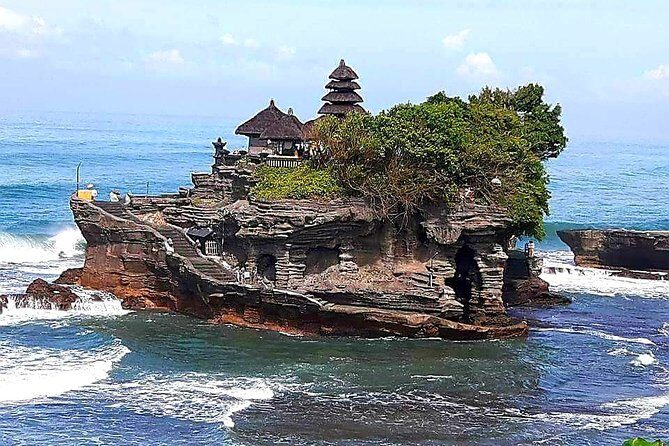
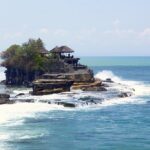
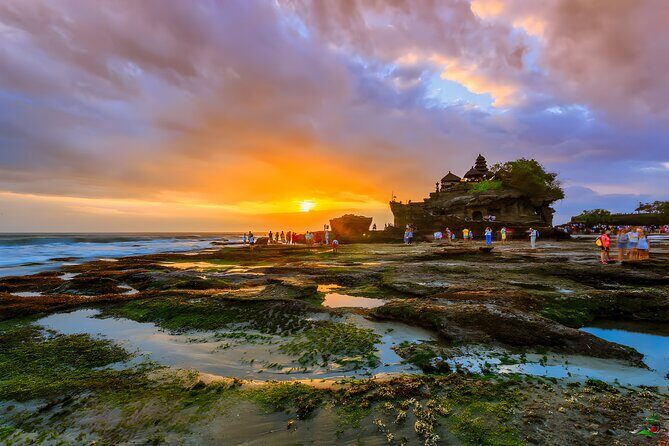
Tanah Lot is built in the 16th century and positioned over the water, which is why it’s so famous. When you’re there in person, it’s not just a temple you see—it’s a temple you can feel as part of the seascape. Waves and shoreline energy give the place a living, changing feel.
Right next to it, you’ll also find Batu Bolong (another nearby temple area). Even if you just take a few minutes to look around, that nearby setting helps explain why this stretch of coast became such a spiritual focal point.
What I like about starting here: Tanah Lot sets a clear “Bali mood” for the rest of the day. After you’ve seen the sacred seaside drama, switching to rice terraces feels like a natural move inland rather than a random stop.
Potential drawback: seaside locations can be windy and uneven underfoot. Wear shoes you can trust, and keep an eye on footing if you’re near wet areas.
Stop 2: Jatiluwih Green Land UNESCO terraces from 700 m altitude
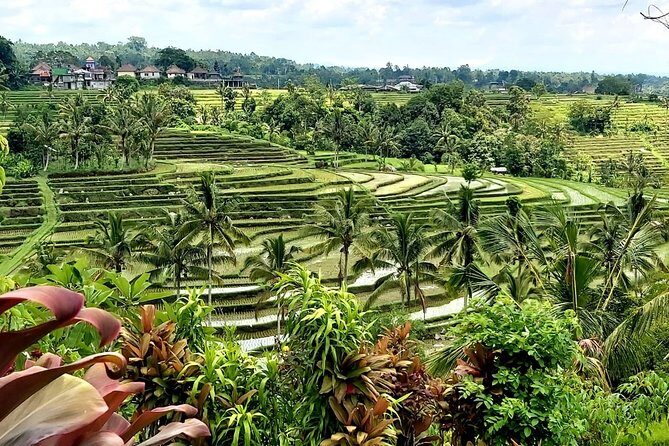
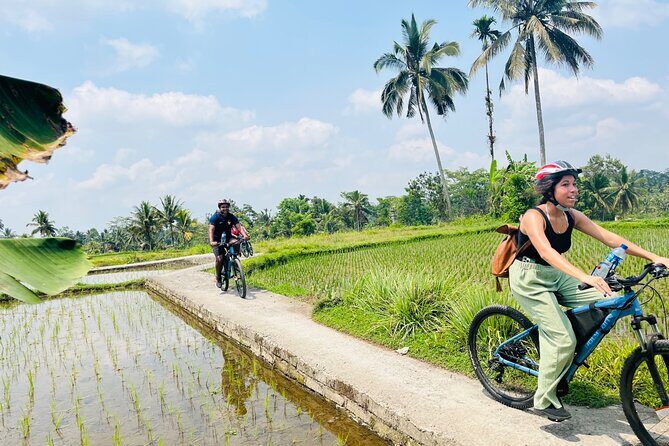
Jatiluwih is the largest rice field in Bali, and the setting is genuinely part of the story. It sits at the foot of Mount Batukaru and reaches around 700 meters in altitude, so you often get cooler air and wider, clearer views than you’d expect in the lowlands.
This is also a UNESCO World Heritage site recognized since 2012, which matters because it’s not just pretty—it’s a landscape shaped by long-running farming knowledge. When you stand on a terrace edge and look across the slopes, you start to understand how the irrigation and rice-growing pattern create that stepped rhythm.
Your stop here is 1 hour 45 minutes, which is enough time to do two useful things:
- walk some of the paths to get perspective at different angles
- pause long enough to actually take in the scale
I’ve found that Jatiluwih works best when you don’t rush. If you keep moving constantly, you miss the “in-between” views—those moments where the terraces look different as the light shifts.
Potential drawback: it can still feel warm, even if it’s higher up. And because this is a terrace landscape, you’ll be walking on uneven ground. If you have knee issues, take it slow and stick to flatter paths.
Stop 3: Luhur Batukaru Temple in a calm forest setting
After the open terrace views, Luhur Batukaru Temple brings you into a quieter, more secluded atmosphere. It’s located at the foot of Mount Batukaru in a forest area, so the vibe is less “coastal show” and more peaceful, grounded stillness.
This stop is around 45 minutes, which is a good amount of time for looking, absorbing, and taking photos without turning it into a long detour. The forest setting also helps you reset after the busier sightlines of Jatiluwih.
What you’ll likely notice here is the contrast. Rice terraces are human-shaped farmland. A temple like this is about place, ceremony, and tradition—so you start seeing Bali as more than “scenery.”
Potential drawback: forest locations can mean shaded areas with damp ground after rain. Again, good shoes help more than you’d think.
Stop 4: Taman Ayun Temple, the royal temple built in 1634
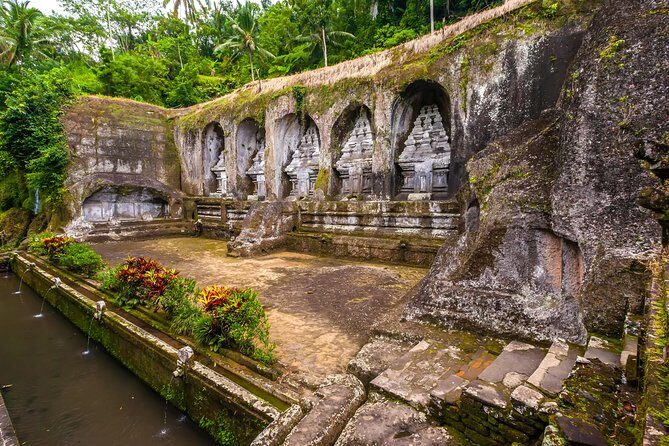
Taman Ayun is a royal family temple built in 1634, and it’s known for its garden surroundings. That garden setting makes the temple feel cared for and intentional, not just built and left to time.
This stop is also about 45 minutes, which works well as a closing chapter. By the time you reach Taman Ayun, you’ve already seen coastal temple energy (Tanah Lot), terrace-scale farming (Jatiluwih), and forest calm (Luhur Batukaru). Taman Ayun’s landscaped environment gives your brain a softer landing before heading back to your hotel.
If you care about the cultural side of Bali—not only the views—this is the kind of stop that helps you connect the dots between religion, royal lineage, and how sacred space is arranged.
Potential drawback: gardens are lovely, but if you’re hoping for nonstop dramatic views like Tanah Lot, you’ll need to switch into a slower mode—watching details, layout, and how the temple sits within the garden.
Included items that actually reduce travel friction
This tour is priced to include several “day-trip headaches”:
- Sarong to use for temple entry
- Entrance fees
- Bottled water
- Parking fees, petrol, and tax
- AC transport in a comfortable car
For many people, the biggest value is simple: you don’t have to coordinate sarongs, tickets, or last-minute payments at each stop. That means fewer interruptions and more time looking at what you came for.
The only common downside with tours like this is that meals are not included. You’ll want to eat on your own schedule—either before you go or during breaks you control. If you’re prone to getting hangry, plan for it.
Price and value: is $65 per person a smart buy?
At $65 per person, this tour sits in a range that can feel like a bargain or like a miss depending on what you’d do otherwise. Here’s the value math you can use:
You’re paying for:
- private transportation with AC
- admission fees across multiple major sites
- sarongs and bottled water
- a full-day route that would be annoying to stitch together yourself
If you were to drive and coordinate entrances on your own, the cost could add up quickly once you price parking, fuel, and tickets. Plus, you’d still need to manage timing between Tanah Lot, the Jatiluwih region, and two more temples. This itinerary is designed to do that in one pass.
Who gets the best deal from this price:
- couples and small groups who want a calmer pace than a bus tour
- people who want “high sights” without planning stress
- anyone who values explanations while still moving efficiently
The guide factor: explanations that make the sites click
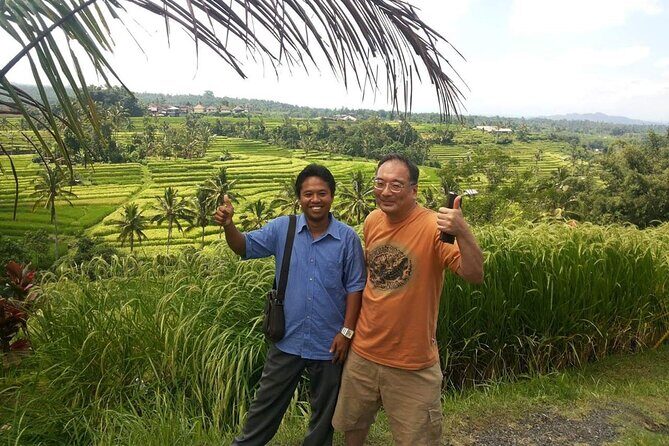
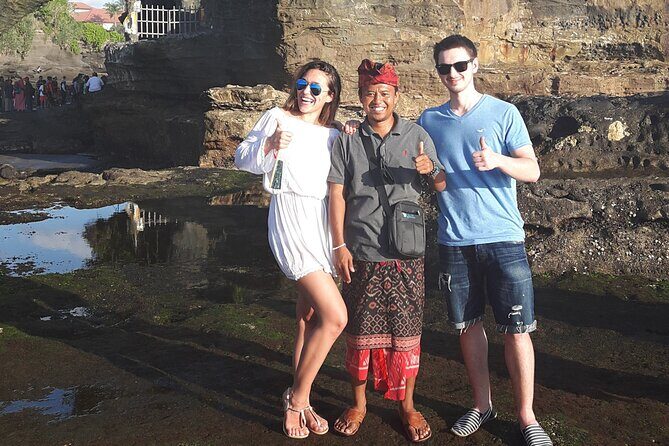
One of the strongest themes in the experience is how much guides help you connect the places. In particular, guides such as Agung, Kotaro, and Ketut come up in examples, and the consistent idea is that they take time to explain traditions and the connections between Bali’s history, religion, and culture.
That’s not just nice-to-have. When you understand why a temple is placed where it is, and how the landscape relates to religious and cultural practice, the sites feel more than visual stops. Even small explanations—like what makes Tanah Lot’s location meaningful or how the terraces fit into the wider region—can change your entire day’s satisfaction.
Practical tips for a smoother day at temples and terraces
Here are the “use it on the ground” tips I’d give you for this kind of route:
- Use the sarong they provide, and bring clothing that’s comfortable under it.
- Wear shoes you can walk in on uneven, sometimes damp paths (especially around terrace edges and temple areas).
- Bring a light layer if you get chilly in the higher terrace region or in shaded forest areas.
- Plan your photos with patience. Short stops are timed well, but the best shots usually take a minute to find a calm angle.
- Watch the weather. The experience depends on good conditions, and cloudy or stormy weather can affect visibility and comfort.
And a small behavioral tip: when a guide asks you to look at something specific (layout, materials, or the way the landscape is shaped), it’s usually worth leaning into it. That’s where the day stops being “a list of places” and starts being a story.
Should you book this Tanah Lot and Jatiluwih private tour?
If you want a full Bali highlights day that combines temples + UNESCO rice terraces without the headache of self-planning, I think this is an easy yes. The route makes sense, the included items reduce friction, and the private-only setup keeps the pace comfortable.
Book it if:
- you’re starting from Ubud and want pickup
- you care about culture and want explanations along the way
- you’d rather spend time at a few big sites than rush through many small ones
Skip or reconsider if:
- you dislike long days (8 to 10 hours)
- you’re only interested in one type of sight (either temples or rice terraces)
- you’re traveling at a time when weather is likely to be unreliable and you can’t be flexible
If your goal is a day that feels both scenic and meaningful, this itinerary is built for exactly that.
More Rice Terrace Tours



More Tanah Lot Temple Tours


More Ubud Tours




Rice Terrace Tours: how the alternatives stack up
 ★ 5.0
★ 5.0Ubud: Monkey Forest, Jungle Swing, Rice Terrace, and Water Temple
 ★ 5.0
★ 5.0Full-Day Tour to Water Temples and UNESCO Rice Terraces in Bali

The lists this tour appears in