
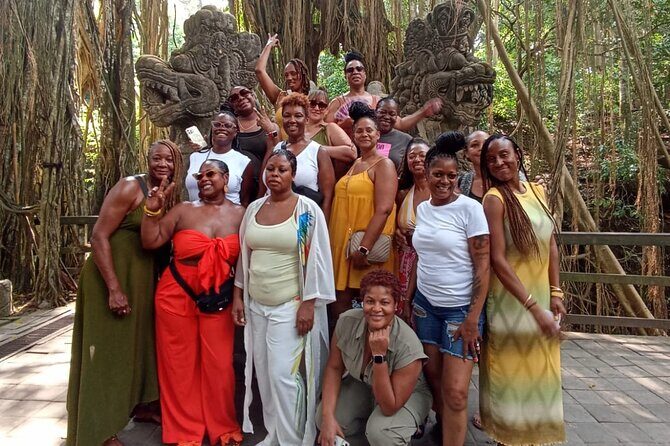
Ubud Monkey Forest Sanctuary Entrance Ticket All Inclusive
One small forest, big monkey energy.
This all-inclusive visit gets you into the Sacred Monkey Forest Sanctuary for a guided walk through shaded paths, Hindu temple corners that are still active, and sacred pools. I like the way having a professional guide turns the forest from scenery into something you can actually read and understand, and I also like the door-to-door pickup option so you’re not wrestling with local logistics. The one drawback to plan around: the outing can run longer than the advertised 1–2 hours once travel time and traffic get involved.
You’re looking at a straightforward day plan—about 1–2 hours on site—with a small group size (up to 14) and an included admission ticket. The forest is not flat, so expect walking and steep hills as part of the deal. If you’re tight on time, build in slack or choose a calmer schedule.
In This Review
- Key Things to Know Before You Go
- Sacred Monkey Forest Sanctuary: What You’re Really Seeing in Ubud
- What the Guide Adds on the Trails (Adi, Dewa, and Made in Action)
- Monkey Time: Photos, Temples, and How to Make It Feel Worth It
- Door-to-Door Pickup: The Hidden Value (and the Time Trap)
- Price and Value: Is $36.67 Fair for What You Get?
- How Long You Should Plan for (and Why “2 Hours” Can Slip)
- Who This Ubud Monkey Forest Visit Fits Best
- Should You Book This Ticket + Pickup Tour?
- FAQ
- FAQ
- How long does the Sacred Monkey Forest visit take?
- Is the entry ticket included?
- Do I get hotel pickup?
- What group size should I expect?
- Is a mobile ticket used?
- Is a guide included?
- What should I wear or prepare for?
- Is this activity suitable for most people?
- What happens if weather is bad?
- How does cancellation work?
Key Things to Know Before You Go

- A guide you’ll actually feel: names mentioned in real experiences include Adi, Dewa, and Made, and each added context and helped with photos.
- Admission included: your entry ticket is part of the package, so you’re not budgeting extra at the gate.
- Temples and sacred pools in the middle of the trees: this is not just a monkey zoo stroll.
- Lots of walking, some steep sections: wear footwear that can handle uneven ground and hills.
- Small group size (max 14): it helps keep the experience moving instead of turning into a shuffle.
- Optional photo add-ons exist: there’s often a paid monkey selfie picture option for those who want it.
Sacred Monkey Forest Sanctuary: What You’re Really Seeing in Ubud
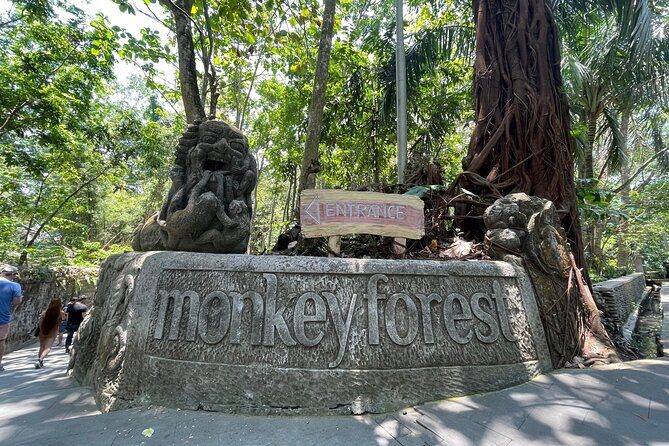
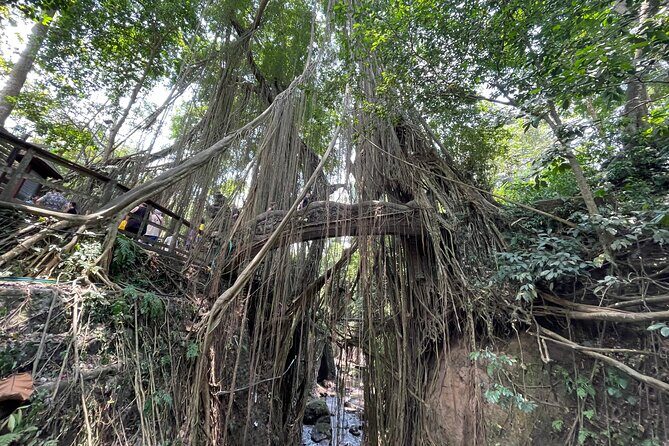
At first glance, the Sacred Monkey Forest Sanctuary looks like exactly what you’d expect: a lush, shaded forest full of long-tailed monkeys, right in the middle of Ubud. But the experience is more layered once you slow down and follow the path logic—because the forest is also wrapped around heritage buildings and Hindu worship spaces that are still in use.
Here’s what that means for you on the ground:
You’ll walk through cool, tree-covered paths while your guide points out what’s going on around you, not just the monkeys. As you move along, you may see sacred places used for Hindu worship, ancient relics, and sacred pools that are described as wish-granting. The setting turns a “look at monkeys” stop into a cultural walk where the animals are only one part of the story.
The monkeys themselves are the headline. Expect to see multiple monkey groups at different points along the trails. Many people come for the close-up chaos—monkeys climbing, watching, and doing what monkeys do—but the “why” matters here too: the sanctuary has an ecosystem and environment angle, and the guide’s explanations help you connect the animals to the place.
What the Guide Adds on the Trails (Adi, Dewa, and Made in Action)
A guide is the difference between wandering and getting something useful out of your time. In the experiences shared, the guides weren’t just name badges. They were actively guiding pace, attention, and photo chances.
Adi comes up with a particularly memorable moment: spotting a camouflaged kimoda dragon. Even if you’re only half-interested in that kind of detail, it’s a perfect example of the real value—guides help you notice things you’d miss because you’re busy looking at the obvious.
Dewa is repeatedly described as arriving early, explaining history as you go, and staying engaged while helping people get good photos. That matters more than it sounds. If the monkeys are “everywhere,” it’s easy for your photos to become a bunch of blurry guesses. A good guide helps you find the right angles and timing without you spending your whole visit chasing your own shadow.
Made is another standout name. People describe his guidance as making the experience better, with that simple, practical effect: you feel safe in the flow, and the forest stops being random.
If you book this with the guide included, treat that guide like part of the attraction—not a background service. Ask short questions. Listen when they point out specific spots. Your time in the forest is limited, so the best use of it is learning while you walk.
Monkey Time: Photos, Temples, and How to Make It Feel Worth It
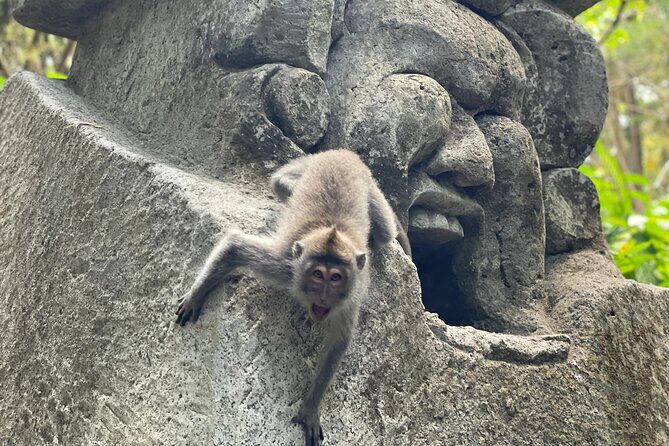
The sanctuary is built for close encounters, which means it’s also built for photos—monkey selfies, statues, and little moments where the setting looks like a postcard until a monkey decides to do something else.
You can expect:
- Monkeys across different groups along the paths, not all clustered in one “viewing area.”
- Temples and statues that give you non-monkey picture options, especially when you want a break from monkey attention.
- A steady rhythm of stops, where the guide brings you toward sacred corners and notable structures.
There’s also an optional paid photo add-on that pops up in real experiences: a paid monkey selfie picture. If you like the idea of having a framed, ready-to-share souvenir, it can be worth it. Just know it’s extra, and it may take a little time to arrange.
One more practical reality: this is a forest, not a flat park. You’ll do real walking, including steep sections. That affects how you pace your photos. If you rush, you’ll miss both views and context. If you go too slow, you’ll run out of time. The sweet spot is to follow the guide’s pace and pause when you’re at a natural viewing point.
Door-to-Door Pickup: The Hidden Value (and the Time Trap)
The most underrated feature here is the door-to-door pickup. When this works well, it makes your whole day easier: no guessing where the entrance is, no managing timing, and no figuring out transport after you’ve finished walking among monkeys and temples.
In the experiences shared, pickup is described as smooth and on time. For people staying around Seminyak areas, this kind of service can be a big quality-of-life upgrade—especially in Bali traffic, where timing can slide quickly.
Now for the time trap: one experience notes that a plan listed as about 2 hours expanded because of driving time out and back. That’s not unusual. Travel time between areas in Bali can balloon when traffic decides to make your schedule its hobby.
So here’s how I’d plan it:
- Treat 1–2 hours on site as the “inside the forest” piece.
- Assume the total door-to-door window might be longer, depending on where you start.
If you’re staying in the south and you have flexibility, leaving earlier helps. If you’re visiting on a day when you already have tight plans, this is the part to double-check before you commit.
Price and Value: Is $36.67 Fair for What You Get?
At $36.67 per person, you’re paying for more than just entry. Your ticket includes admission to the sanctuary, and the experience is set up with pickup (private transportation services are mentioned) plus a guided walk.
That combination is the value. Many stand-alone ticket prices only cover the gate. Here, the package structure helps you buy “less effort,” which is often what you’re really paying for in Ubud: time saved, logistics simplified, and a guide translating the place while you’re there.
Also worth noting:
- The group limit is small (up to 14). Small often means less herding and more attention.
- There’s mention of group discounts and mobile ticketing, which usually translates to smoother check-in.
If you love wildlife and temples but dislike spending your day figuring out transportation, this package is priced like a convenience buy. If you’re the type who enjoys DIY wandering and don’t mind planning transport yourself, you might find cheaper gate-only entry elsewhere—but you’d lose the guide-led context and the pickup simplicity.
How Long You Should Plan for (and Why “2 Hours” Can Slip)
The on-site visit is described as about 1–2 hours. That’s a realistic window for a guided walk that includes temple areas and time to see multiple monkey groups.
But your total day depends on travel. One experience specifically calls out that the drive time pushed the schedule longer than expected. That’s why I suggest you treat the official time as a “forest time,” not the entire day clock.
If you want the calmest experience, choose a time slot where you’re not forced to rush. Wear shoes for walking and steep hills. Bring water if you know you’ll be out longer than planned.
Who This Ubud Monkey Forest Visit Fits Best
This experience is a strong fit if you:
- Want a guided explanation of what you’re seeing in the sanctuary’s sacred spaces.
- Appreciate door-to-door pickup and a smooth start.
- Like wildlife, but also like having context so it feels more than a photo stop.
- Prefer smaller groups (max 14) over big tour chaos.
It’s also a decent choice for people who want something doable in a short window. You can keep your day flexible because the main activity is focused and not overly long.
It may feel less ideal if:
- You have a strict schedule that won’t tolerate traffic.
- You don’t want to walk steep sections (the sanctuary involves climbing and uneven terrain).
- You’re expecting a “sit and watch” experience. This is more walking than lounging.
Should You Book This Ticket + Pickup Tour?
I’d book it if you want the easy button: entry included, guide-led meaning, and pickup that saves you the hassle of coordinating transport in Ubud traffic.
Skip or reconsider if you’re traveling with a very tight itinerary and can’t risk schedule drift. In that case, you might prefer a plan that doesn’t depend on round-trip timing.
If your goal is to see monkeys plus the temple-and-sacred-pool side of the sanctuary, the guided format is the reason this feels worth it. Guides like Adi and Dewa (and Made, based on shared experiences) can turn a “walk through trees” stop into a story you understand while you’re standing in it.
FAQ
FAQ
How long does the Sacred Monkey Forest visit take?
The experience is listed as about 1 to 2 hours.
Is the entry ticket included?
Yes. Admission to the Sacred Monkey Forest Sanctuary is included.
Do I get hotel pickup?
Pickup is offered, and door-to-door pickup using private transportation services is mentioned.
What group size should I expect?
This activity has a maximum of 14 travelers.
Is a mobile ticket used?
Yes, it’s listed as a mobile ticket.
Is a guide included?
Yes. You’ll be accompanied by a professional guide during the visit.
What should I wear or prepare for?
Expect walking, including steep hills, since the sanctuary is described as vast with many temples and statues.
Is this activity suitable for most people?
It’s listed that most travelers can participate.
What happens if weather is bad?
The experience requires good weather. If canceled due to poor weather, you’ll be offered a different date or a full refund.
How does cancellation work?
Free cancellation is available up to 24 hours in advance for a full refund.
More Tour Reviews





More Monkey Forest Tours




More Ubud Tours
Monkey Forest Tours: how the alternatives stack up
 ★ 5.0
★ 5.0Ubud: Monkey Forest, Jungle Swing, Rice Terrace, and Water Temple







The lists this tour appears in