
UNESCO Sites Cultural Walking Tour in Bali
Two UNESCO temples in one morning-long walk.
This Ubud tour is interesting because it mixes spiritual practice with hands-on scenery and farming know-how, all with a guide who talks like a person, not a script. I love starting at Tirta Empul Temple for the sacred purification ritual, and I also really liked the way the day turns into a living lesson through the Subak irrigation system while you stroll rice paddies. One thing to keep in mind: the pace is active and the route is not ideal if you have back, heart, or pregnancy-related concerns.
You also get real “Bali day” comforts built in. Pickup from Ubud is included, and the day includes mineral water plus coconut water, a light breakfast and Balinese lunch, and temple cloths for the ritual. With a maximum of 20 travelers, it usually feels like a group you can actually ask questions in, not a cattle train.
In This Review
- Key Things You’ll Remember
- Tirta Empul Purification Ritual: Start With Meaning
- Temple Cloths and Respectful Holy Spring Steps
- Friends in Bali: Breakfast, Lunch, and a Breather From Walking
- Rice Paddies and Subak: Learning From the Water System
- Gunung Kawi Sebatu Cave Temple: Calm, Story-Filled, and Atmospheric
- Price and Value at $58: What You’re Actually Getting
- How the Day Flows in Real Life (and Who It Suits)
- Should You Book This UNESCO Walking Day?
- FAQ
- How long is the UNESCO Sites Cultural Walking Tour in Bali?
- Where does the tour start and what time does it begin?
- Is hotel pickup included?
- What’s included for temple visits and the purification ritual?
- Are meals included?
- How many people are in the group?
Key Things You’ll Remember
- Purification ritual at Tirta Empul Temple with an escort and the right temple cloth setup
- Light breakfast and Balinese lunch served during the middle stop, with views and a breather
- Subak irrigation lesson while walking rice paddies, not just a lecture
- Gunung Kawi Sebatu cave temple visit, with a slower, more atmospheric feel than typical ruins
- Small group size (max 20), which helps your guide keep things personal
- Solid value package at $58, since transport, guide time, temple access, and meals are bundled
Tirta Empul Purification Ritual: Start With Meaning
The day kicks off at Tirta Empul Temple, one of Bali’s most famous spiritual places. Your guide shares history and context first, then escorts you for the purification ritual at the holy spring. It’s scheduled for about two hours, and admission is included.
What makes this stop work so well is that you’re not just looking. You’re learning what the ritual is for and participating in a structured way with temple cloth provided for the visit and the holy spring portion. Even if you are not religious, the focus on intention and respectful conduct gives the whole experience a grounded feel.
Also, if you’ve been traveling and you’re tired of “photo, next, repeat,” this is a nice change. You’ll have time to slow down and follow the flow, and your guide helps you understand what you’re seeing before you’re asked to do anything.
Temple Cloths and Respectful Holy Spring Steps
A small detail on this tour matters more than it sounds: you get the Balinese cloths for your temple visit and for the purification bath in the holy spring. That removes a common stress for visitors who worry about what to wear or how to do it right.
Use your guide as your safety net. You’ll be escorted, and the tour is set up so you don’t feel lost in the middle of a sacred space. Plan to go calmly, follow instructions, and keep your camera put away unless your guide signals it’s okay.
Here’s the practical consideration: because this includes a holy spring purification bath, it’s not a dry-and-tidy experience. If you know you’re sensitive to cold water or you just don’t like wet rituals, you might want to think twice about the portion of the ritual itself. Either way, your guide will explain what to expect before it happens.
Friends in Bali: Breakfast, Lunch, and a Breather From Walking
Between the two major temple/cave blocks, you get a midday reset at Friends in Bali. You’ll be served a light breakfast and then a Balinese lunch, and the stop is about one hour.
This is a smart structure for a walking day. Two hours at Tirta Empul can set your legs and your head spinning, and then you get real food instead of the usual rushed snack situation. It also gives your guide time to answer questions about daily life and customs—something that came up in the feedback about how guides like Wayan, Nyoman, and Dewa helped people understand Bali beyond surface stops.
One mild drawback: if you’d prefer to keep moving nonstop, the meal stop will feel like a pause. But for most people, it’s exactly what keeps the day enjoyable instead of exhausting.
Rice Paddies and Subak: Learning From the Water System
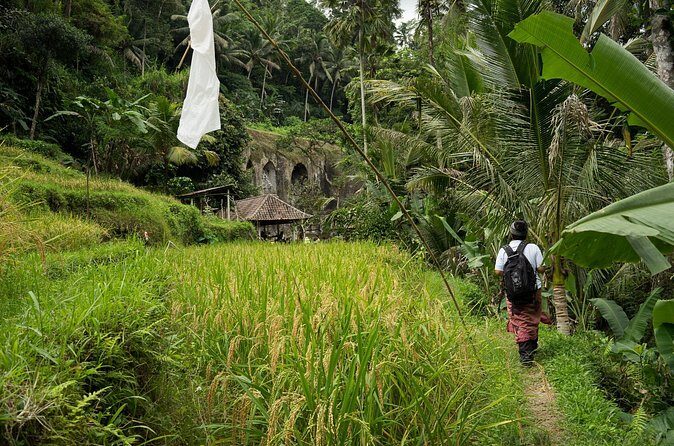
After the temple start, you spend time walking through rice paddies and learning about Subak, the traditional irrigation system. This part is about two hours and is paired with the Gunung Kawi Sebatu Temple visit.
Subak is not just an irrigation channel. It’s a way communities coordinate water use for rice farming, guided by local knowledge and traditional water-temple practices. The tour frames it as a living system, and the walking component matters because you can see how the landscape supports how the water is managed.
Why this feels worth your time: you’re seeing a working agricultural system while your guide explains the idea behind it. If you only read about Subak later, it’s easy to miss the practical logic. In person, it clicks faster because you can connect the explanation to what’s around you.
One practical note: you’ll want comfortable shoes. You’ll be walking through rice fields, and it’s simply not the time for anything fragile or overly slick.
Gunung Kawi Sebatu Cave Temple: Calm, Story-Filled, and Atmospheric
Gunung Kawi Sebatu Temple is the day’s second main highlight, with a cave temple setting that feels different from open-air sites. You’ll spend about two hours here, and admission is included.
The tour includes learning and exploration on-site, plus the walk through the rice paddies before you settle into the temple area. The cave environment tends to slow things down. It’s easy to feel the change in pace as you go from brighter farmland paths into a more shaded, still-feeling space.
A common way guides bring this place alive is through stories and context—how people understood sacred spaces, and why cave temples became important landmarks. If you like temples where you can pay attention to details instead of just rushing for the biggest viewpoint, this stop fits that style well.
Price and Value at $58: What You’re Actually Getting
At $58 per person for about six hours, the value here comes from the bundle. You’re getting:
- hotel pickup and drop-off from Ubud
- guiding fee plus a guide who escorts you through the ritual portion
- admission included for Tirta Empul and Gunung Kawi Sebatu
- a light breakfast, Balinese lunch, and mineral plus coconut water
- Balinese cloths for the temple visit and the purification bath
- a charity contribution to a local school
If you tried to assemble this yourself, the hardest parts to price are usually transport plus a guide who can explain what you’re doing. Temple admissions and meals add up fast, and the cloth setup means less worry on your side.
So yes, it’s not a bargain price, but it’s also not just a “walking tour” label. It’s a full cultural day with clear inclusions that make the $58 feel more like a package deal than a stripped-down tour.
How the Day Flows in Real Life (and Who It Suits)
The tour runs from 8:30 am and ends back at the meeting point in Ubud area. It moves at a moderate physical pace, and the guidance is pretty direct: you should have moderate fitness for this day.
It’s not recommended for participants with back problems, heart complaints, other serious medical conditions, or for pregnant women. That’s the one big “read this carefully” warning, because the route includes walking through rice paddies and visiting a cave temple setting.
Who I think enjoys it most:
- people who like culture that includes practice, not just sightseeing
- first-time visitors who want context and guidance through temple etiquette
- travelers who prefer small-group energy (max 20) and conversation with a real Bali guide
If you want a laid-back, mostly seated day, you might find the walking segments too active.
Should You Book This UNESCO Walking Day?
If you care about doing fewer, better things with guidance, I’d book it. The strongest reasons are the purification ritual at Tirta Empul, the practical Subak learning while you walk, and the cave temple experience at Gunung Kawi Sebatu. Add in the included meals, temple cloths, and Ubud pickup, and this becomes a very workable way to spend your Bali day without juggling a pile of logistics.
I’d skip it only if the holy spring purification bath makes you uncomfortable, or if your health situation matches the tour’s non-recommended categories. If you’re in the “moderate fitness, respectful temple curiosity” camp, this is a solid value day in Ubud. And since free cancellation is offered up to 24 hours in advance, you can book with less pressure and keep your plans flexible.
FAQ
How long is the UNESCO Sites Cultural Walking Tour in Bali?
It lasts about 6 hours.
Where does the tour start and what time does it begin?
It starts in Ubud, and the start time is 8:30 am.
Is hotel pickup included?
Yes. Hotel pickup and drop-off from Ubud are included.
What’s included for temple visits and the purification ritual?
Balinese cloths are provided for the temple visit and for the purification bath in the holy spring.
Are meals included?
Yes. You’ll get a light breakfast and a Balinese lunch.
How many people are in the group?
The tour has a maximum of 20 travelers.
More Tours





More Tour Reviews


More Ubud Tours
Ubud Tours: how the alternatives stack up

 ★ 5.0
★ 5.0Ubud: Monkey Forest, Jungle Swing, Rice Terrace, and Water Temple


The lists this tour appears in