
Review · Bali Waterfalls Tours
Bali Breathtaking Waterfall Tour
Private waterfall day, planned for you. This private Kuta-based outing strings together Kanto Lampo Waterfall, Tibumana Waterfall, Penglipuran Village, Tirta Empul Temple, and the Tegalalang rice terraces, with a local guide and air-conditioned private transport. You also get pickup offered and a mobile ticket, so you’re not stuck juggling papers before you even reach Ubud.
I really like two things about this format. First, you’re not crammed into a bus plan; you get undivided attention from your guide, and that makes it easier to ask questions and adjust pacing. Second, the route focuses on visually strong stops that pair nature with culture, so you’re not just driving past things.
One thing to watch: several stops have admission fees that are not included, and lunch and dinner are also on your dime. On top of that, the tour requires good weather, so rain plans can shift.
In This Review
- Key Things That Make This Tour Work Well
- From Kuta: How the Day Gets Packed (In a Good Way)
- Kanto Lampo Waterfall: A Waterfall With a Backstory
- Tibumana Waterfall: Straight Water in Jungle Surroundings
- Penglipuran Village: Traditional Life That Still Feels Like Home
- Tirta Empul Temple: Purification Rituals and Three Courtyard Zones
- Tegalalang Rice Fields: Quick Time, Big Views, Free Entry
- Price and Value: What $25 Really Buys You
- Why a Private Guide Matters: Gede’s Practical Style
- Timing Tips That Make the Day Feel Easier
- Lunch, Coffee, and Where Meals Fit In
- What You’ll Miss If You Don’t Choose This Format
- Should You Book This Bali Waterfall and Culture Tour?
- FAQ
- Is pickup offered on this tour?
- Where does this tour start from?
- How long is the Bali Breathtaking Waterfall Tour?
- Is this a private tour or shared group?
- What’s included in the price?
- Are entrance tickets included for the attractions?
- Is lunch included?
- Does the tour run in bad weather?
- Can I request a baby seat?
Key Things That Make This Tour Work Well

- Private guide time means you can slow down for photos and ask real questions without feeling rushed
- Kanto Lampo and Tibumana cover two very different waterfall styles in one long day
- Tirta Empul gives you more than sightseeing, with a dedicated purification setting and multiple courtyard zones
- Penglipuran Village is built around traditional daily life, not just a photo stop
- Tegalalang terraces are a fast win for classic scenery, and entry is free
- Gede’s approach (careful, accommodating, and even helpful with photos) is a big reason people keep booking him
From Kuta: How the Day Gets Packed (In a Good Way)
This is a full-day private tour, usually around 9 to 10 hours, built to cover a lot without making you do the planning grind. You start from Kuta with private transportation, so you’re not relying on public transit timing. Pickup is offered, which matters in Bali when the roads and parking can turn an easy schedule into a stressful one.
The itinerary is simple: waterfalls first, then villages and temples, then rice terraces. That order is practical because waterfall light and energy tend to be best earlier, and by the time you hit the temple and village sites you’ll be settled into the day’s cultural rhythm.
Because it’s private, you’re also not locked into one fixed pace. If you want more time at a viewpoint or you need a slower rhythm for your group, the guide can tailor the plan within the general flow.
Kanto Lampo Waterfall: A Waterfall With a Backstory
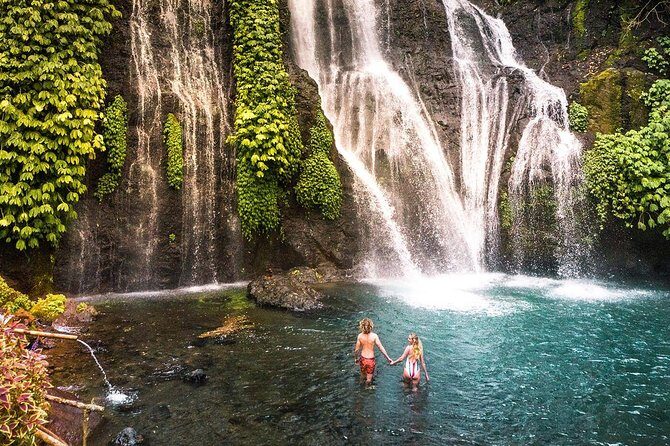
Kanto Lampo Waterfall is where the day gets dramatic right away. It’s tied to a local geological story: the waterfall formed after the Kanto Lampo river region was hit by an avalanche. You’ll be in the Kelod Kangin hamlet of Beng village in Gianyar, Bali.
Expect about 1 hour here, and plan for that hour to be mostly about photos and soaking in the sound. This isn’t one of the biggest-name waterfalls people rush to from across the island, which is exactly why it can feel satisfying: you’re seeing something scenic without the same level of hype.
Admission tickets are not included for this stop. So if you’re working on a tight budget, factor that in early and keep a little cash or card handy.
Tibumana Waterfall: Straight Water in Jungle Surroundings
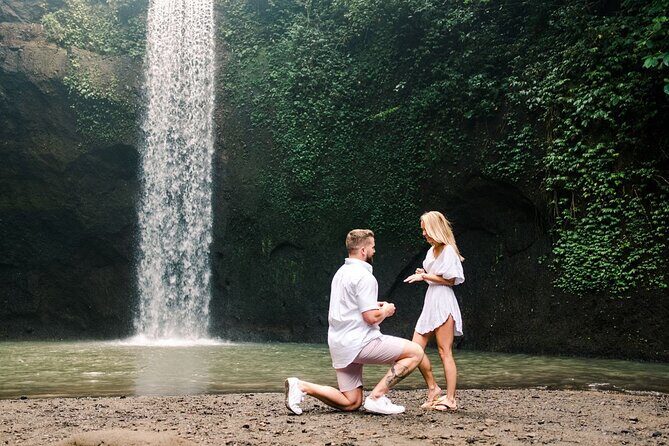
Next is Tibumana Waterfall, one of the Ubud-area waterfalls that tends to impress for its look. The vibe here is jungle-forward, with a curtain-like drop that falls down in a more straight, clean stream than the softer, wider cascades you might see elsewhere.
You’ll get about 1 hour at Tibumana. That’s enough time to get a couple of angles without turning it into a rushed checkpoint, especially on a private tour where you’re not sharing the best spots with dozens of strangers.
Again, admission is not included. The good part is that you can decide how much time you want for photos before you move on to the more structured cultural stops.
Penglipuran Village: Traditional Life That Still Feels Like Home
After the waterfalls, the tour shifts gears to Penglipuran Village, a place known for preserving traditional Balinese culture in day-to-day life. This is one of the reasons I like adding a village stop to a Bali day: you get the human scale of the island, not just scenic viewpoints.
You’ll spend about 1 hour here. What stands out is the layout and architecture—especially the way buildings and land management follow traditional Balinese planning concepts. It feels more like you’re walking through lived-in culture than reading a bunch of signs and moving on.
Admission tickets are not included for Penglipuran. If you’re doing this as part of a longer Bali trip, the village visit is also a nice contrast to the more “camera-first” nature stops earlier in the day.
Tirta Empul Temple: Purification Rituals and Three Courtyard Zones
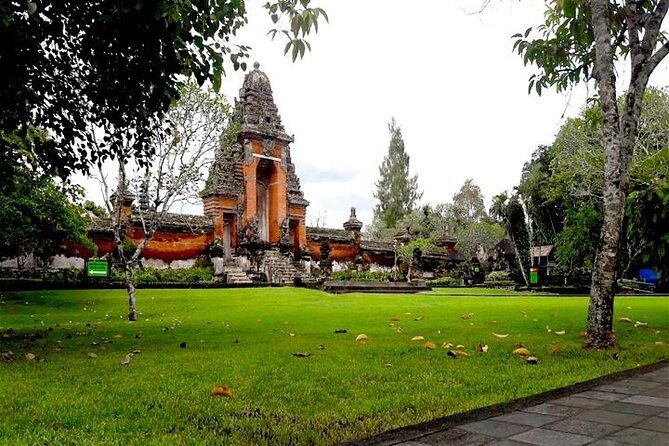
Tirta Empul Temple is a major cultural stop, and it’s also one of the most meaningful places on the route. The temple complex is dedicated to Hindu purification rituals, which is a reminder that you’re visiting a living religious space, not just an attraction.
You’ll have around 2 hours 30 minutes here, which is generous compared to many temple visits. The complex is divided into three areas: front, secondary, and inner courtyard. That structure helps you understand the flow of the space and gives you time to observe without rushing.
Admission tickets are not included. Also, because this is a ritual-focused site, it’s worth keeping your behavior calm and respectful—quiet footsteps, modest clothing, and no loud voice. If you’re unsure, you can follow your guide’s cues.
This is also one of the best stops to ask questions. A good guide can explain what you’re seeing without turning it into a lecture.
Tegalalang Rice Fields: Quick Time, Big Views, Free Entry

The final scenic stop is Tegalalang, the classic terraces in the Ubud area. You’re heading to a valley with lookout points over layered rice fields and surrounding green scenery.
This stop is about 50 minutes, so it’s designed for quick photos and a relaxed walk without turning the day into a slow hiking project. Entry is marked as free, which is a nice bonus at the end of a day where other stops have fees.
The rice terraces at Tegalalang also connect to the wider rice-field area around Ubud. Pejeng and Campuhan are mentioned as part of the broader group of terrace viewpoints, so you’re seeing the type of scenery that defines the region.
If you get photos you like quickly, use the extra minutes to step back from the crowds and look at how the terraces stack with depth. That’s where the scenery makes sense.
Price and Value: What $25 Really Buys You
On paper, $25 sounds like a bargain for a full-day private experience with multiple major stops. The key is what’s included: private transportation is covered, and the tour is private for your group.
What’s not included is where your budget planning matters. Admission tickets are not included for Kanto Lampo, Tibumana, Penglipuran, and Tirta Empul. Lunch and dinner are also not included, though you can stop around meal time and pay yourself.
So the value math looks like this: if you’re comfortable paying entrance fees for a handful of top stops, the cost of the private format can feel like a win. If you want a predictable all-in price with zero surprises, this setup may feel less tidy.
Still, for a first Bali day built around iconic nature and culture, private transport alone can save you a ton of hassle. You’re paying for time, access, and someone to handle the route so you can focus on enjoying the sights.
Why a Private Guide Matters: Gede’s Practical Style
This tour is powered by your guide experience, and the name that shows up repeatedly is Gede. Based on feedback, he’s not just a driver who knows roads. He shows up as a guide who can explain what you’re seeing, adapt to your requests, and help with photos.
One reason people keep booking him is the combination of friendliness and careful attention. There’s specific praise for being ethical and careful, plus making a real effort to accommodate special needs and mobility considerations. That’s meaningful, because in Bali, the day can change fast depending on surfaces, crowds, and timing.
He’s also described as a photographer, which is handy if you want sharper shots without you acting like a full-time camera operator. Even simple guidance—where to stand, what angle works, when to wait a moment—can make the difference at viewpoints.
Timing Tips That Make the Day Feel Easier
You can’t fully control weather or crowds, but you can control your readiness. This tour requires good weather. If conditions are poor, the plan can be changed to a different date or you can get a full refund, so don’t stress—just be ready to move.
Wear shoes that handle wet and uneven ground. Waterfall areas often mean slippery spots, and rice terraces and temple areas can vary in footing. If you’re traveling with kids or older adults, plan to go slower and let the guide set the rhythm.
Also, bring a plan for admission. Since multiple stops have fees not included, you’ll have a smoother day if you track what you expect to pay before you arrive. Your guide can usually help you understand what to handle on-site.
Lunch, Coffee, and Where Meals Fit In
Lunch is not included, but the tour can stop around lunch time, and you pay directly. That flexible setup is good in Bali, where the best meal spot can depend on timing and what’s nearby at that moment.
In at least one account, Gede helped arrange a great restaurant stop and even guided someone toward trying Luwak coffee. You shouldn’t assume every meal stop will be the same, but it does show the kind of value you can get: food planning that isn’t just random.
For dinner, the tour can also stop, but again you pay yourself. This matters if you’re trying to keep an overall daily budget. Plan for one paid meal during the tour and decide in advance what you’ll do for dinner afterward.
What You’ll Miss If You Don’t Choose This Format
If you’re someone who loves solo wandering and building your own route from scratch, you might find this kind of private itinerary too structured. You’ll have less freedom to take wild detours or extend a random café stop for hours.
Also, if you want only a single waterfall and no cultural stops, this schedule packs in a lot more than just water. That’s not a problem if you like variety, but if your main goal is only waterfalls, you’ll spend time transitioning between sites.
The tradeoff is that the private format keeps the day efficient and reduces the mental load of figuring out transport on your own.
Should You Book This Bali Waterfall and Culture Tour?
Book it if you want a well-paced day that mixes waterfalls, village life, a major purification temple, and famous rice terraces without spending your energy on route planning. The private guide approach is a big deal here, especially if you value thoughtful explanations or you want help with photos.
Skip it or reconsider if your budget can’t handle separate admission fees at multiple stops, or if you’re traveling at a time when you expect rain. Since the tour depends on good weather, you’ll want a little flexibility in your Bali schedule.
If you do book, go in with one mindset: this is a full day. Plan for a slightly long itinerary, wear good shoes, keep cash or card for admissions and meals, and let Gede manage the flow. You’ll get a Bali day that feels like you’re seeing the island through a local lens rather than chasing a checklist.
FAQ
Is pickup offered on this tour?
Yes. Pickup is offered as part of the experience.
Where does this tour start from?
The tour is based in Kuta, Indonesia.
How long is the Bali Breathtaking Waterfall Tour?
It runs about 9 to 10 hours.
Is this a private tour or shared group?
It’s a private tour. Only your group participates.
What’s included in the price?
Private transportation is included.
Are entrance tickets included for the attractions?
No. Admission tickets are not included for Kanto Lampo Waterfall, Tibumana Waterfall, Penglipuran Village, and Tirta Empul Temple. Tegalalang rice fields are listed as free.
Is lunch included?
Lunch is not included, but you can stop around lunch time and pay for it yourself.
Does the tour run in bad weather?
This experience requires good weather. If it’s canceled due to poor weather, you’ll be offered a different date or a full refund.
Can I request a baby seat?
Yes. A baby seat can be requested.
More Tour Reviews






More Bali Waterfalls Tours





More Kuta Tours
Bali Waterfalls Tours: how the alternatives stack up
 ★ 5.0
★ 5.0Best of Bali Waterfalls: Tibumana, Tukad Cepung and Tegenungan

The lists this tour appears in