
Balinese Traditional Food Cooking Class with Ubud Monkey Forest and SPA
Ubud, cooked and massaged, in one day. What makes this day feel special is the whole arc: you start with ingredients in the area around Ubud, cook authentic Balinese dishes you’ll eat for lunch, then head to the Sacred Monkey Forest Sanctuary and finish with a proper 2-hour spa treatment. I especially like the small-group cooking setup and the fact that you get hotel pickup and a private driver to keep the day moving without stress.
One possible drawback to keep in mind: the cooking portion is not private, so you’ll share the class with other people, even though the rest of the day is handled privately.
In This Review
- Key highlights worth clocking
- How the morning market-and-rice prep makes your cooking class better
- Cooking Balinese recipes you can actually repeat at home
- Sacred Monkey Forest Sanctuary at 1 pm: monkeys, trees, and calm-but-real nature
- The 2-hour spa treatment: massage plus scrub, not just a quick unwind
- Price and value: what $135 buys you in a full-day Bali plan
- Who should book this day, and who might want to skip it
- Should you book this Bali cooking, monkeys, and spa day?
- FAQ
- What time is hotel pickup?
- What happens first after pickup?
- Is the cooking class private?
- What is included in the spa treatment?
- Is lunch included?
- How does cancellation work?
- How large is the group?
Key highlights worth clocking
- Market to rice farm context before you start cooking
- You eat what you make after learning the recipes
- Sacred Monkey Forest Sanctuary with long-tail macaques and culturally important trees
- 2-hour spa reset that includes both massage and scrub
- Private transport with punctual guidance to manage a long day smoothly
- Max 15 travelers overall for a less crowded feel
How the morning market-and-rice prep makes your cooking class better
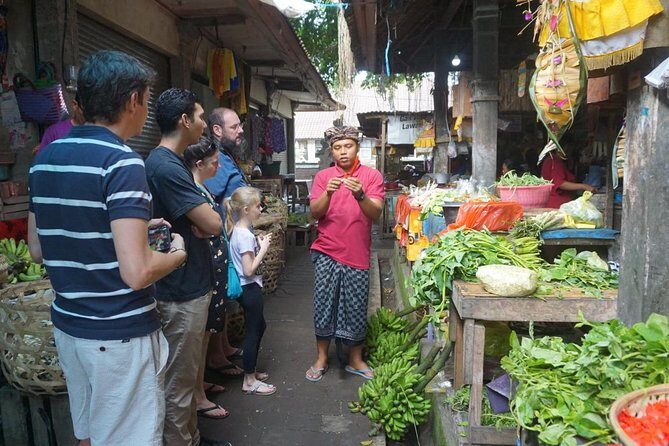
Balinese cooking isn’t just about a handful of spices. This day plan builds understanding in the morning, so the recipes land in your head fast. You’re collected from your hotel at 7:00 am, then you meet your guide and head into the local market around 8:30 am to look at ingredients in a real, practical way. This isn’t a lecture-only start. You’re seeing what people actually buy and use, which helps later when you’re trying to recreate flavors at home.
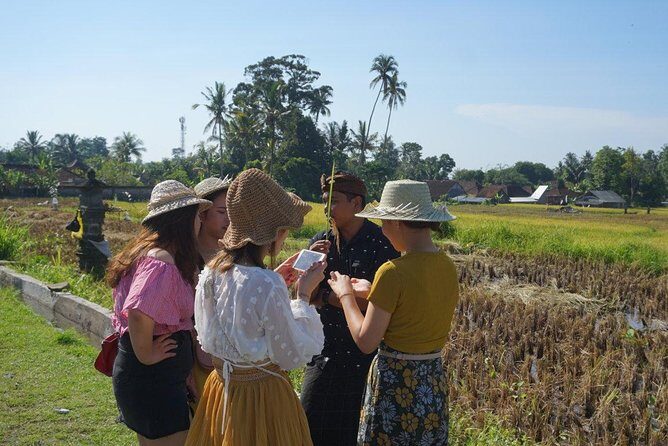
Then the plan shifts to the farming side. You meet farmers and learn how rice is grown. Even if you’ve cooked before, knowing where a core ingredient comes from changes how you think about the dish. It also makes the experience more grounded than a typical cooking class where everything starts on a kitchen table.
Why I like this format: it turns cooking into a full-sensory lesson. You’re not just measuring and watching—you’re connecting the ingredients to the island’s food system. And since bottled water is provided and transport is handled, you can focus on the food rather than the logistics.
Practical note: you’ll be up early. If you’re the type who needs a slow start, plan to go to bed on time.
Cooking Balinese recipes you can actually repeat at home
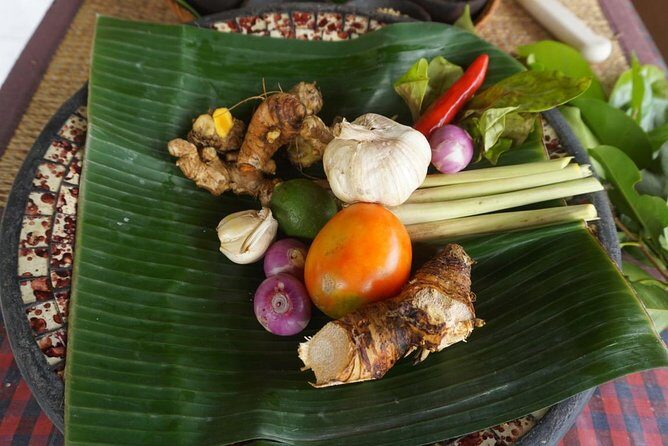
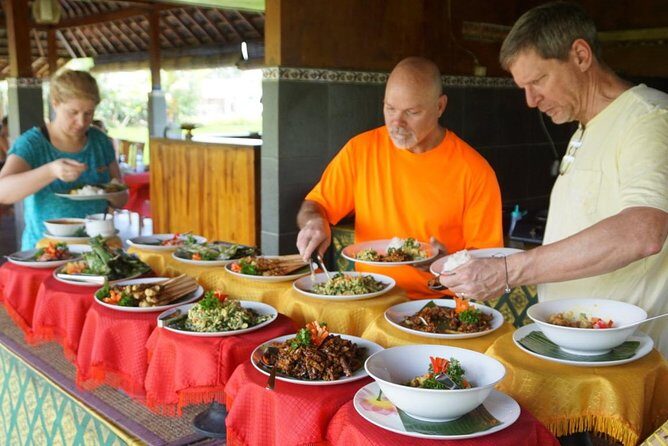
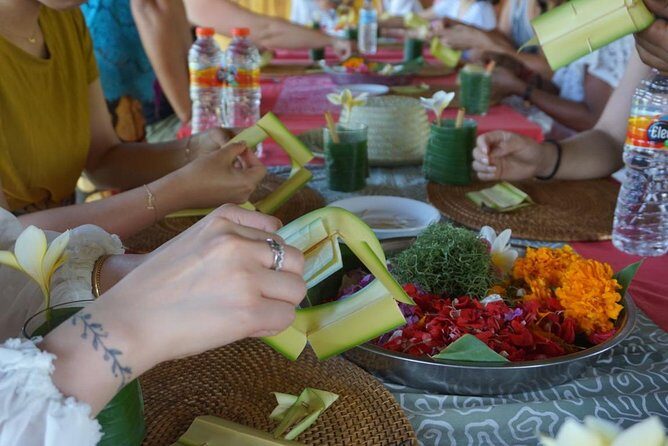
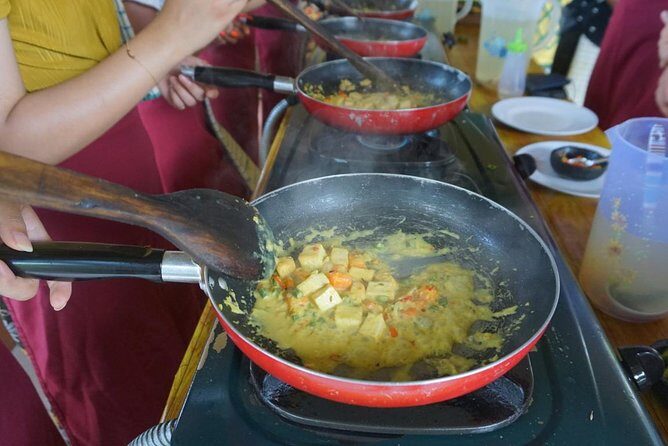
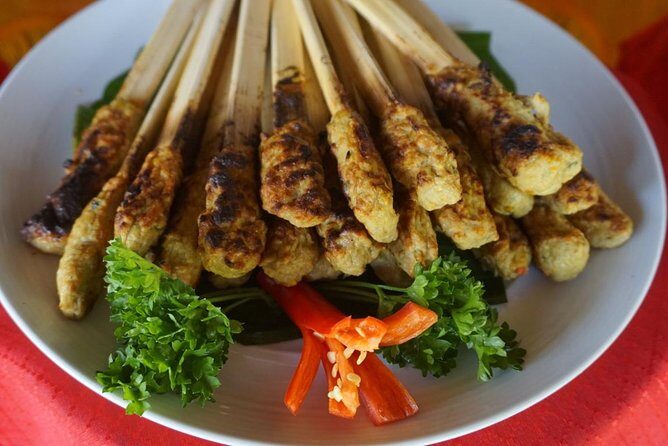
The cooking class is where the day’s value really shows. You’ll learn to make several menu items from authentic Balinese recipes using the ingredients you’ve been introduced to earlier. The promise here is simple: you’ll be able to taste your way through what you cook, because lunch is included, and you dine on your own culinary creations.
This matters more than it sounds. Many cooking tours end with you taking a few photos and leaving. Here, you get the payoff: you learn, you cook, and then you eat the results while the flavors are still fresh in your mind. That’s what makes a cooking class useful after you go home.
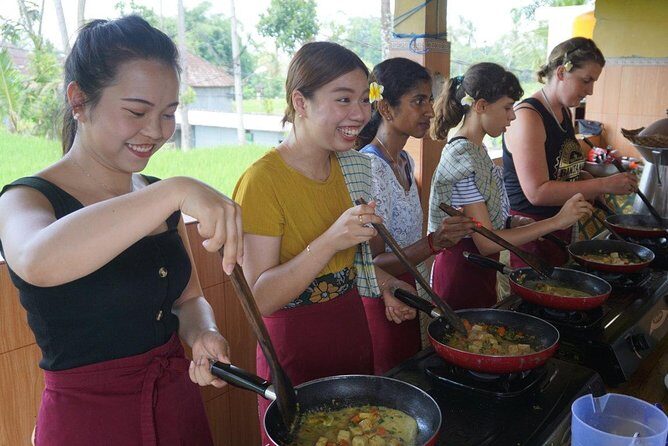
Also, the class is capped for a small-group feel. The overall experience has a maximum of 15 travelers, and even though the cooking class itself is not private, the group size helps keep the experience interactive. You should expect time for questions and personal guidance from the instructor, especially around seasoning and balancing flavors—what makes Balinese food taste like Balinese food.
What to watch for: because it’s not private, you may not get the same one-on-one attention you’d get in a fully private cooking workshop. If you want very hands-on coaching for a specific dish (or you have food constraints), you’ll want to ask about that before booking.
Sacred Monkey Forest Sanctuary at 1 pm: monkeys, trees, and calm-but-real nature
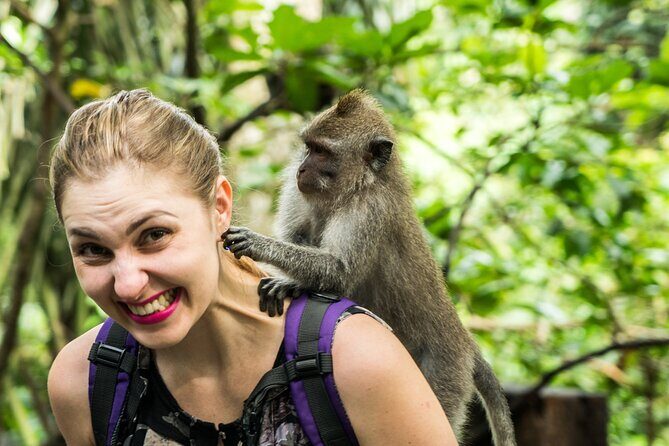
After your lunch, the day shifts gears. Around 1:00 pm, you go to the Sacred Monkey Forest Sanctuary in Ubud to see the long-tail macaques—hundreds of them—living in a lush forest setting. This is not a quiet zoo vibe. It’s a real, living space where monkeys move through the area as you walk the paths.
Here’s what makes this stop interesting beyond the obvious monkeys. The forest has at least 115 species of trees, and some of those are tied to Balinese culture—sacred roles and materials used during rituals. That means you’re not only looking at animals. You’re also absorbing a layer of cultural geography, where the plants themselves matter.
The forest area is home to around 900 monkeys, so you should expect the “active” energy you’d associate with a place like this. The good news: the tour description frames it as a calm, lush forest rather than a frantic free-for-all, and your private driver helps keep your arrival and departure on track.
Timing also matters. You finish around 2:00 pm and then head to the spa, so you’re not trying to fit everything into the late afternoon rush. If you’re sensitive to crowds or noise, try to stay patient and keep your attention on your walk rather than the monkeys as spectacle.
Personal safety note (always useful in monkey areas): keep small items secured and be mindful of your hands when you stop for photos. Even a calm sanctuary can still be unpredictable.
The 2-hour spa treatment: massage plus scrub, not just a quick unwind
By mid-afternoon, your body will appreciate the switch to relaxation. The spa portion is scheduled right after your monkey forest visit, and it includes a 2-hour treatment:
- 1 hour body massage
- 1 hour body scrub
This is the kind of timing I like for Bali. Too many tours stack massage moments into a short window. Here, you get enough time for your muscles to actually loosen and for the scrub to leave you feeling refreshed rather than briefly “spa-scented.”
The treatment is guided by trained therapists, and the spa uses products made from blended natural ingredients with selected natural oils, herbs, and spices. Even if you’re not a spa connoisseur, that matters because it usually means fewer harsh surprises and a more soothing experience overall.
One more thing: the massage and scrub together make the spa feel complete. The massage addresses tension; the scrub helps with that smooth, post-treatment reset. If you’re planning a next evening out in Ubud after a day like this, this is a strong way to get your energy back.
What to consider: a body scrub can feel intense if you’re used to very gentle treatments. If you have sensitive skin, ask the therapists how they handle pressure and product choice.
Price and value: what $135 buys you in a full-day Bali plan
At $135 per person for about 10 hours, you’re paying for more than a class. You’re effectively paying for a whole-day structure: hotel pickup and drop-off, private transport, a cooking guide, market and farm visits, lunch, and the spa treatment.
Let’s break down the value in plain terms:
- Private driver + hotel logistics: You’re not navigating transfers between a market, farming area, monkey forest, and spa on your own. That time savings is real, especially in Ubud traffic.
- Included lunch: Food is part of the learning loop. You’re not buying lunch separately or leaving hungry after a “demo” class.
- Spa included, 2 full hours: Many tours include a short add-on. Here you get massage and scrub, which is usually what people want when they book a spa experience.
- Small-group cooking: Even though the cooking class isn’t private, the overall experience is limited (max 15 travelers), which supports the chance for real instruction.
Could you do these things separately for less money? Maybe, but it takes planning and coordination, and you’d still be trying to stitch together timing across multiple locations. For a lot of visitors, the value is in reducing friction: you show up, you follow a plan, and the day clicks.
Also, you’ll see the word “mobile ticket.” In practice, that typically means you won’t be juggling paper vouchers. It’s a small detail, but on a long day, anything that reduces admin is worth something.
Who should book this day, and who might want to skip it
This experience is a great fit if you:
- Want a hands-on Bali cooking class where you eat what you make
- Like cultural context (market ingredients plus how rice farming feeds the island)
- Want an outdoor stop that’s more than a viewpoint (the Sacred Monkey Forest Sanctuary is active and alive)
- Plan to spend the rest of the day in comfort after a full morning and early afternoon
It might be less ideal if you:
- Need a fully private cooking class (the cooking portion is not private)
- Don’t enjoy animal-focused activities or you get stressed in areas with lots of movement
- Prefer shorter days. This is a full 10-hour rhythm, starting at 7:00 am
One more tip: if you’re celebrating something or simply want a smoother experience, the private driver helps a lot. In one example from recent day-of service, the driver Dananjaya was noted for being on time and patiently waiting through the stops. That’s exactly the kind of reliability that makes a long itinerary feel easy.
Should you book this Bali cooking, monkeys, and spa day?
I’d book it if you want a single day that checks multiple boxes with minimal planning: learn real Balinese flavors, eat your results, see the Sacred Monkey Forest Sanctuary, and then give yourself a real spa reset. The mix is well-paced, and the inclusion of both lunch and a 2-hour massage-and-scrub treatment makes the price feel more justified than add-on-heavy tours.
I’d think twice if you’re picky about privacy for the cooking class or you really don’t want to spend time in an area with a lot of monkeys moving around. In that case, look for a fully private cooking option or a quieter add-on than the forest.
FAQ
What time is hotel pickup?
Pickup is scheduled for 7:00 am from your hotel in Bali.
What happens first after pickup?
You meet your guide and go to a local market around 8:30 am, then you meet farmers to learn about rice cultivation.
Is the cooking class private?
No. The cooking class is not private, but the tour and spa services are handled privately.
What is included in the spa treatment?
The spa treatment is 2 hours total: 1 hour body massage and 1 hour body scrub.
Is lunch included?
Yes. Lunch is included with the cooking class.
How does cancellation work?
You can cancel for a full refund up to 24 hours in advance of the experience start time.
How large is the group?
The experience has a maximum of 15 travelers.
More Balinese Cooking Classes
More Monkey Forest Tours


More Ubud Tours

Monkey Forest Tours: how the alternatives stack up
 ★ 5.0
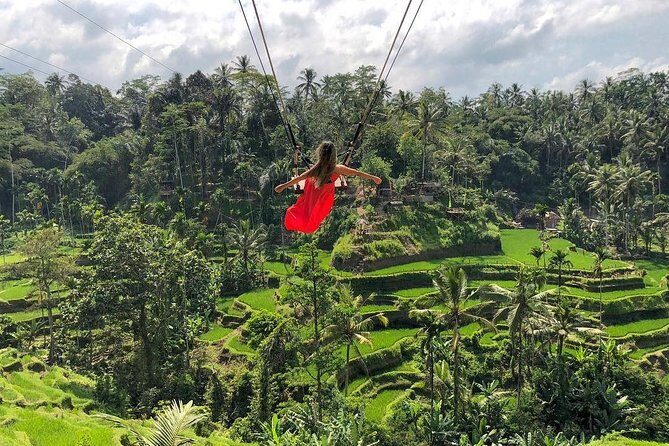
★ 5.0Ubud: Monkey Forest, Jungle Swing, Rice Terrace, and Water Temple


The lists this tour appears in