Bali White Water Rafting – Infinity

Bali White Water Rafting - Infinity - Getting started at Infinity Bali Adventure: welcome drink, gear, and stairs

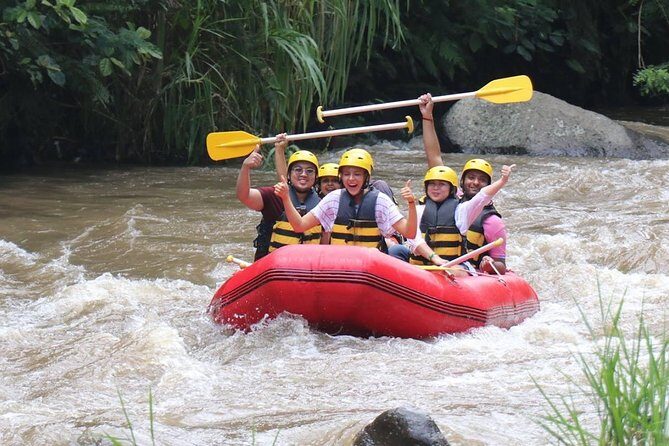
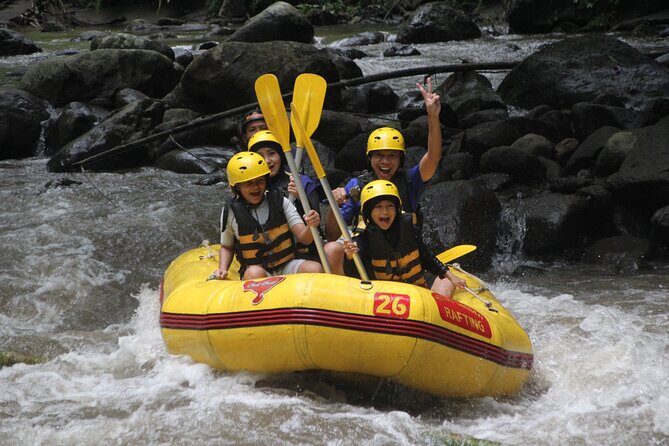
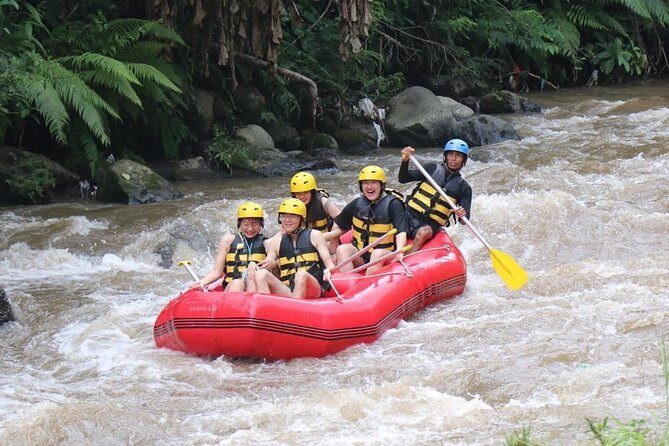
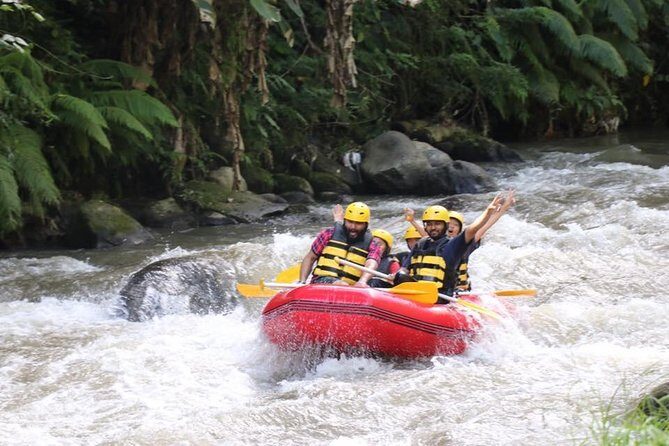
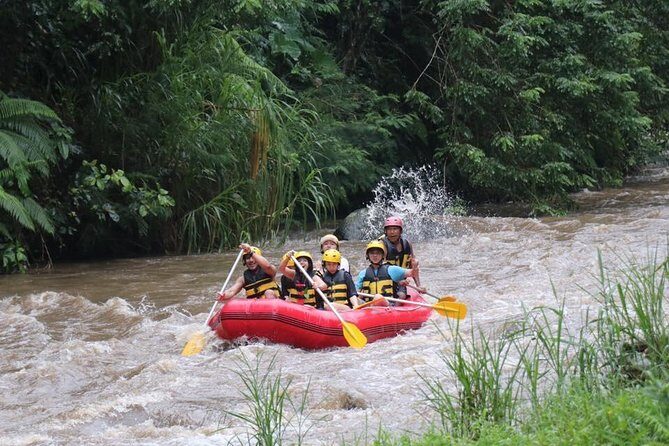
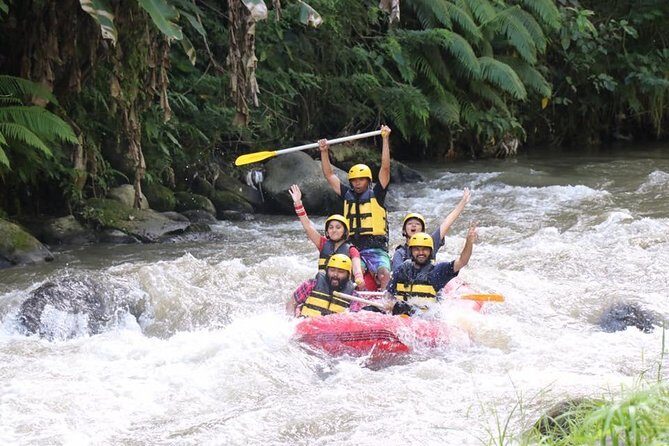
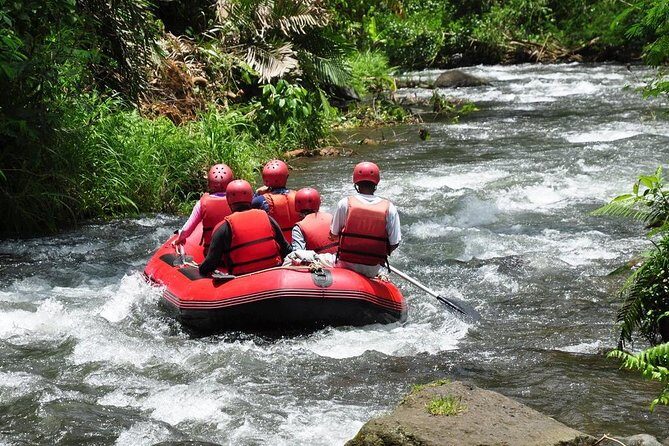
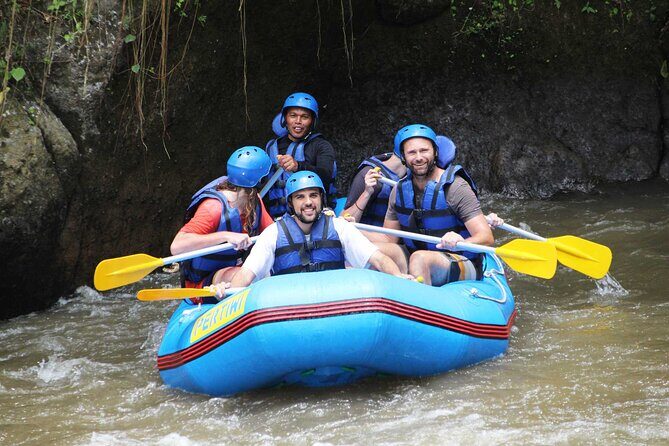
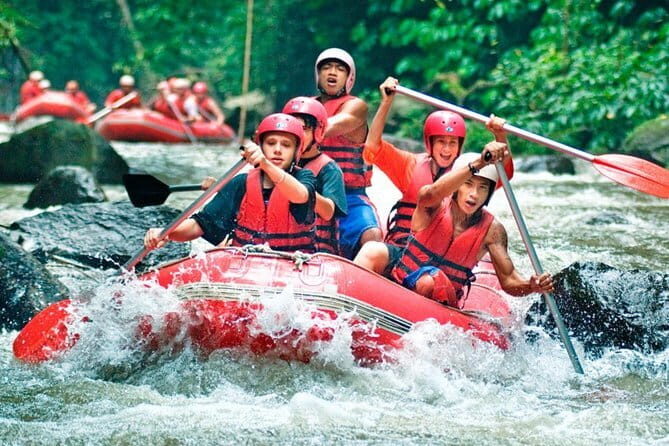
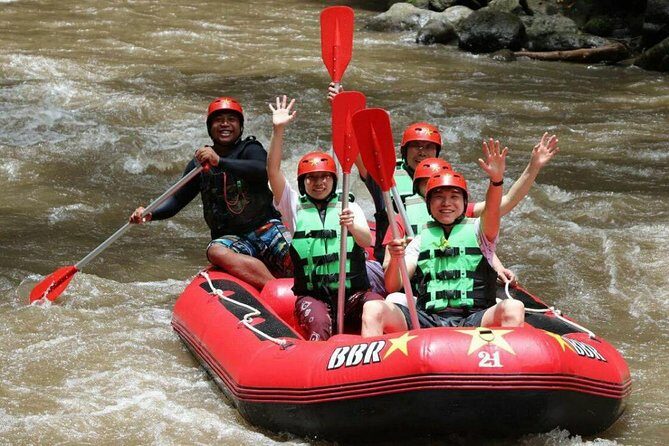
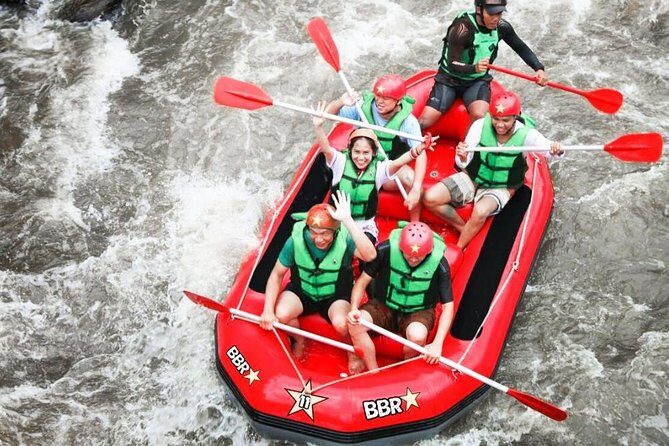
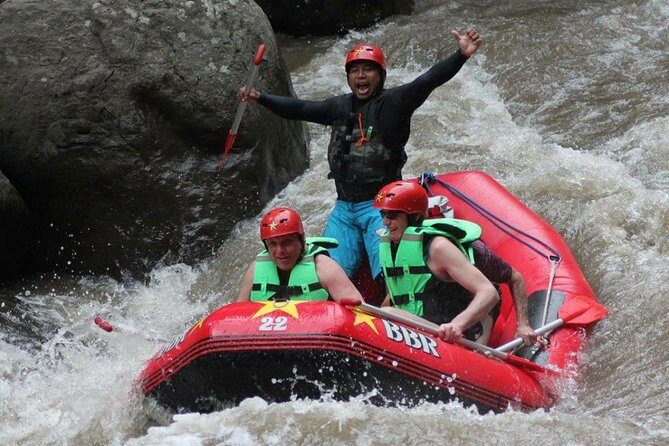
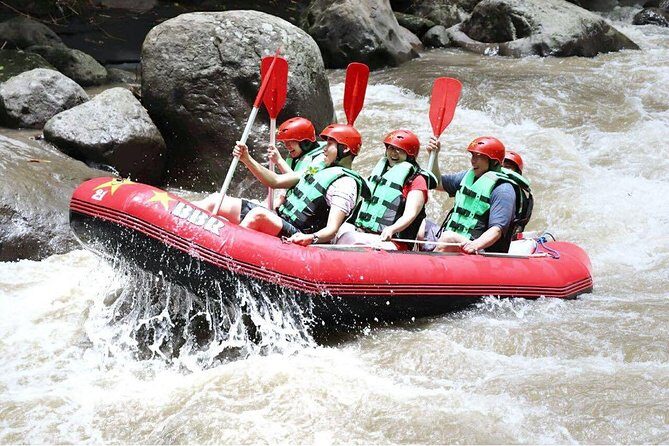
White-water rafting in Bali is the rare activity that feels both scenic and seriously fun. This one runs on the Ayung River, Bali’s longest rafting route, with Grade II–III rapids plus waterfalls, river beaches, and wildlife along the way. I really like that you get proper safety training and gear (helmet and life jacket) before you touch the water, and I also like that the day includes a buffet lunch after you’ve showered and changed.

The only real heads-up: you’ll be dealing with stairs on the way down to the river, so wear footwear with real grip. If timing is tight, it’s also smart to build in some cushion—some schedules can run a bit slower than the printed start.

Key highlights
Bali White Water Rafting - Infinity - Key highlights

  • Ayung River (Bali’s longest route): a full outing that mixes thrills with countryside scenery
  • Safety briefing plus gear: helmet and life jacket, with the guide coaching you before departure
  • Grade II–III rapids with swim chances: quiet stretches let you cool off, while rapids keep it exciting
  • Buffet lunch with views: you eat after you’ve changed, so the day feels complete, not rushed
  • Departure times you can match to your day: you can choose a slot that fits your body clock
  • Guides praised for fun and accommodation: examples include Monte Carlo, Aru, and Dana

Why the Ayung River rafting feels like a Bali day out
Bali White Water Rafting - Infinity - Why the Ayung River rafting feels like a Bali day out
The Ayung River trip is set up to feel like more than just a “thrill ride.” You’re rafting through lush Ubud countryside, and the river itself does the work: you pass waterfalls, river beaches, and stretches where you can spot wildlife. It’s the kind of route where you’re not staring at the back of a person in front of you the entire time. You get moments to look up, point out scenery, and still stay focused on paddling.

The rapids are listed as Grade II–III, which is perfect for most first-timers who want real white water without feeling like they’re in danger. You’ll likely get a mix of pushing through moving water and calmer sections where your guide keeps things organized and lets you catch your breath.

Getting started at Infinity Bali Adventure: welcome drink, gear, and stairs
Bali White Water Rafting - Infinity - Getting started at Infinity Bali Adventure: welcome drink, gear, and stairs
The action starts at Infinity Bali Adventure, Jl. Raya Kedewatan No.44, in Kedewatan near Ubud. The activity ends back at the same meeting point, which keeps the logistics simple.

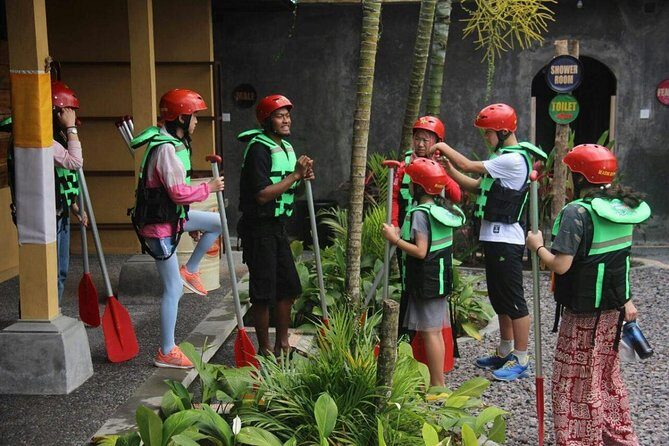
When you arrive, you’ll get a welcome drink, then your guide runs a safety briefing. After that comes the practical part: you’ll be fitted with a life jacket and helmet, and you’ll be shown how to hold the paddle and follow commands. Then it’s down to the river.

One important detail: there are a lot of steps down to the water. That’s why good footwear matters. Skip flip-flops. Go with something that grips and won’t easily slip when wet or dusty.

The safety briefing that keeps the thrills in check

Even if you’ve never rafted before, the setup here is designed to make you feel ready fast. The guide provides training and stays with the group in the raft, and the route is managed with the right equipment—helmet, life jacket, and a proper guide-led start.

You’re also covered by insurance, which is a nice extra layer when you’re doing an activity that involves moving water. And because you’re moving through Grade II–III sections, the safety briefing isn’t just paperwork. It’s the difference between paddling with confidence and paddling with worry.

This operator builds in a “learn first, then go” rhythm. You don’t just jump in and hope for the best—you get coached, fitted, and briefed so you know what to do when the river gets more active.

On the water: Grade II–III rapids, waterfalls, wildlife, and swim chances

Once you hit the river, the Ayung route keeps a steady pace of scenery and action. You’ll raft past jungle views, and you can expect wildlife sightings along the way when conditions are right. The river also includes river beaches—places where the water slows enough that you can take it in and see what’s happening around you.

Waterfalls are a highlight. You’ll glide past them as part of the river’s natural scenery rather than treating them like a detour. And there are also hidden waterfall moments—short surprises where the route opens up and the scenery changes quickly.

Swimming is part of the experience on quiet stretches. The key is that it’s not nonstop chaos. The river alternates between lively segments and calmer sections, which is great if you want a thrill but still want a break. If you’re traveling with kids or you’re a first-timer, those calmer stretches can make the whole day feel more manageable.

Timing, group size, and how the schedule affects your day

This outing is listed at about 3 hours (including the core raft time, plus the surrounding activity flow). Departure times are offered in a range, so you can pick something that fits your energy—morning, midday, or later depending on what’s available.

One thing to keep in mind: white-water rafting days can have small timing hiccups. In practice, you might face a wait after the scheduled start time before the rafting begins. You might also find a longer rest break during the session. Neither should derail the day, but it means you shouldn’t plan your next stop with zero buffer.

Group size is capped at 99 travelers, and you’ll be part of a larger day overall. That can be totally fine if the operation keeps organization tight (and it typically does). Just know you’ll be moving as a group through check-in, briefing, equipment, and the descent.

My practical advice: schedule something flexible right after your lunch stop. Then you can take it easy if the timeline runs long by a bit.

Buffet lunch with a view: what happens after the rafting
Bali White Water Rafting - Infinity - Buffet lunch with a view: what happens after the rafting
The day doesn’t end when the raft lands. After you finish, you’ll have time to change and shower, which makes a big difference in comfort. Then you head to a local restaurant for a buffet lunch with spectacular views.

Lunch is a real part of the value here. You’re not paying for a quick snack; you’re getting a full meal after the wet, active part of the day. Bottled water is included too, so you’re not scrambling for hydration after you’re already paddling.

If you’re the type who hates “I’m hungry and gross” after active tours, this sequence helps: raft, clean up, eat. It’s the kind of flow that makes the experience feel like a complete outing rather than a roadside stunt.

Price and value: about $47 for raft time, lunch, and insurance
Bali White Water Rafting - Infinity - Price and value: about $47 for raft time, lunch, and insurance
At around $47, this is one of those Ubud activities that looks like a bargain once you total what’s included. Your price covers:

  • Guide and safety equipment
  • Lunch (buffet)
  • Bottled water
  • Insurance

That combination is the real value. Rafting tours often nickel-and-dime you for gear, guides, and food. Here, you’re getting the core experience plus a proper meal. The included insurance also matters because you’re dealing with moving water, even on a manageable grade range.

The one item that’s not included is photos. Some guides handle photos and videos during the rafting, and that sounds great—but if you want that service, plan on paying extra if it’s offered. You can still enjoy the day without photos, but it’s better to be mentally prepared.

Also note: you’ll receive a mobile ticket, and confirmation happens at booking time, which reduces the stress once you’re in Bali.

Guides make the mood: Monte Carlo, Aru, and Dana as examples

A rafting guide’s style affects everything: pace, comfort, and whether the group feels excited or anxious. In examples from past runs, guides such as Monte Carlo, Aru, and Dana have been singled out for being funny, approachable, and accommodating.

That matters because rafting is partly teamwork and partly momentum. When the guide keeps things upbeat while staying organized, you’re more likely to relax into it—listen for commands, paddle when you’re told, and enjoy the scenery without fighting the experience.

Even if you’re quieter or new to rafting, a good guide helps everyone feel included. It’s also a confidence boost when the guide can explain what you’re doing in plain terms and then keeps the safety rhythm steady.

Who this rafting trip suits best in Ubud

This is built for a wide range of travelers. The trip notes that most people can participate, and it’s the kind of activity that works well for:

  • First-time rafters who want real white water (Grade II–III) with coaching
  • Families looking for a “Bali highlight day” where the guide controls the flow
  • Couples who want something active but not overly technical

One family example involved an 11-year-old, and the operation emphasized helpful instruction and a memorable experience. Honeymooners have also done it as a day-trip activity, which makes sense: you get views, thrills, and a satisfying lunch after.

The one group that should think twice is anyone with mobility issues—those stairs down to the river can be a problem. And if you have foot or balance concerns, you’ll want to plan for careful footwear and take your time.

Should you book this Ayung River rafting experience?

Book it if you want:

  • A true Ubud adventure that mixes scenery with Grade II–III thrills
  • Safety-first guidance with helmet and life jacket, plus instruction before you go
  • Lunch included so your day ends with a real meal, not a snack
  • Flexible departure times so you can match the activity to your schedule

Skip or reconsider if:

  • You’re sensitive to steps and wet conditions
  • You strongly want included photos (since photos aren’t included)
  • Your schedule is extremely tight and you can’t handle a possible wait or a longer rest break

If you like active days with clear organization and good value, this is the kind of rafting trip that fits well into a Bali itinerary. You’ll spend hours on the river, then finish with shower-and-lunch comfort—exactly the combo that turns rafting from a “maybe” into a “yes, do it.”

FAQ

How long is the Bali White Water Rafting on the Ayung River?

The experience runs for about 3 hours (approx.).

Where do I meet for the rafting trip in Ubud?

The meeting point is Infinity Bali Adventure, Jl. Raya Kedewatan No.44, Kedewatan, Kecamatan Ubud, Kabupaten Gianyar, Bali 80571, Indonesia. The trip ends back at the meeting point.

What river will we raft and what difficulty level is it?

You raft on the Ayung River, and the white water is listed as Grade II–III.

What’s included in the price?

It includes rafting guide, lunch, bottled water, all safety equipment (helmet and life jacket), and insurance.

Do I need to bring my own safety gear?

No. All safety equipment is included, including a helmet and life jacket.

Is lunch provided after the rafting?

Yes. After changing and showering, you’ll have a buffet lunch at a local restaurant with views.

Are photos included?

No. Photos are listed as not included. Some guides may take photos and videos during the rafting, but you shouldn’t count on them being included in the price.

Affordable ATV Quad Bike Adventure In Ubud

Affordable ATV Quad Bike Adventure In Ubud - Slot Time and Pickup: How the Day Actually Flows

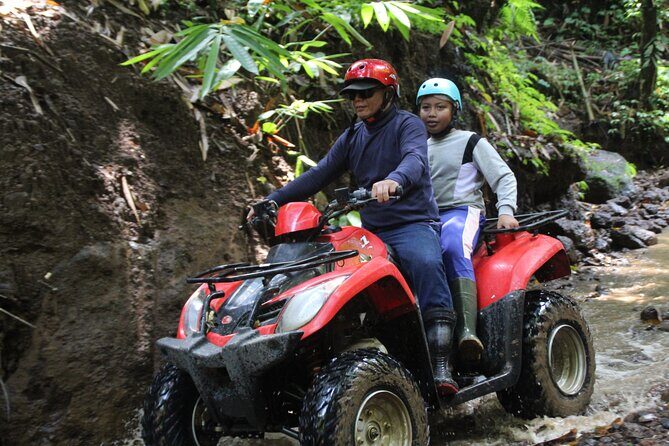
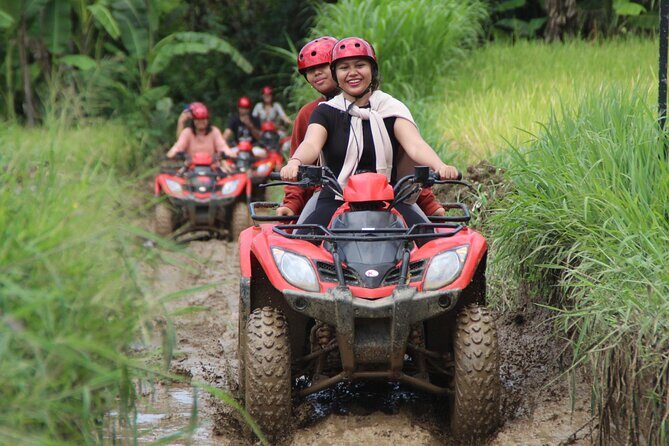
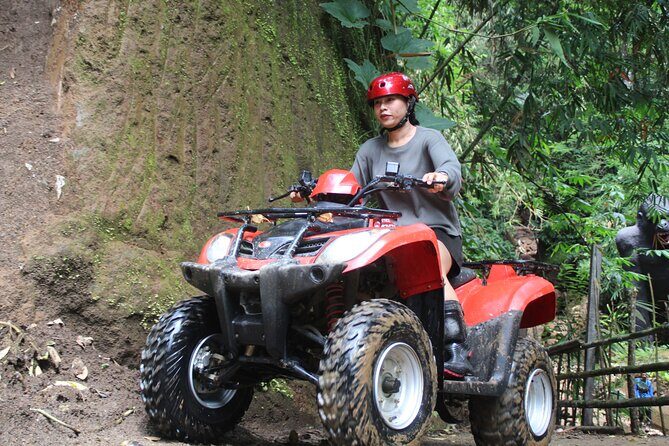
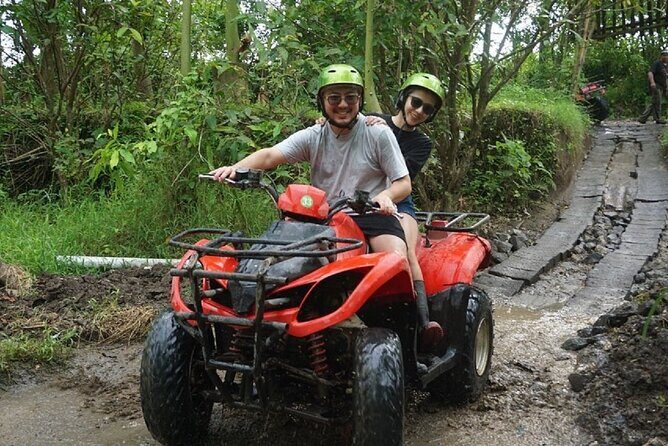
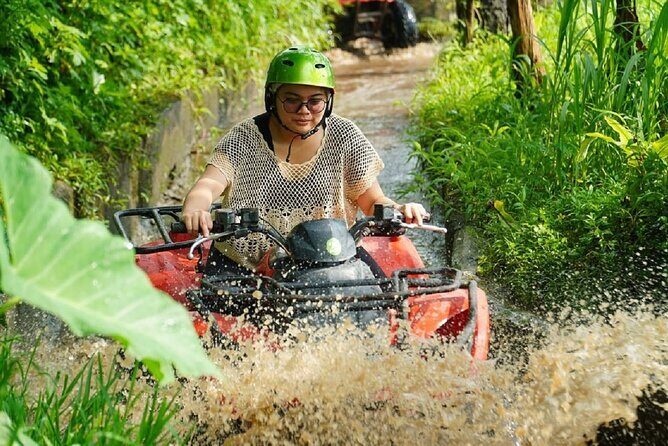
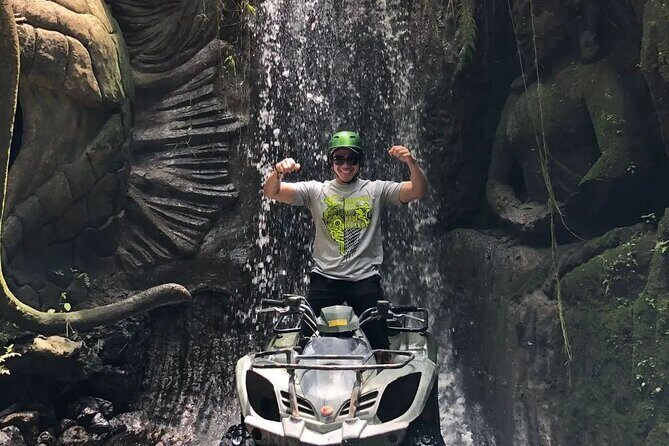
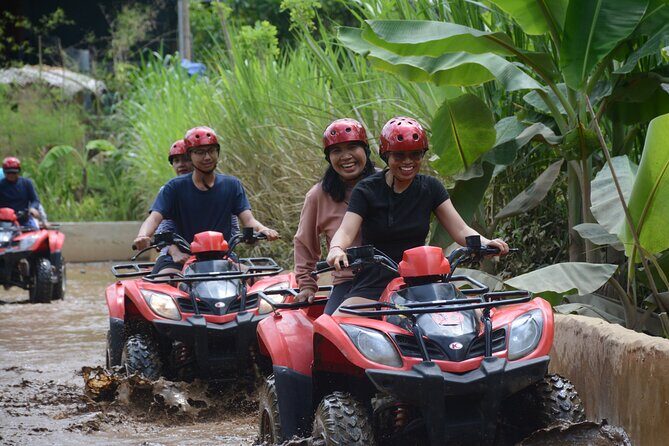
Ubud gets wilder on a quad bike trail. This Affordable ATV Quad Bike Adventure sends you through countryside scenes you’d normally drive past: jungle paths, rice fields, river sections, muddy stretches, and even a tunnel—then finishes with time to rinse off and eat.

What I like most is the mix of real terrain and real support. You get a safety briefing plus helmet and boots, and the ride is paced with an experienced guide; in the trip you’ll hear names like Fierceboy18, known for staying patient and making riders feel secure. The other big win is variety: jungle uphills and downhills, wet tracks, river time, and photo stops including a gorilla statue viewpoint.

One consideration: don’t expect a gorilla cave exit as part of this exact route. If you’re picturing a specific gorilla cave track, the operator clarifies this isn’t that route, so plan your expectations around the listed ATV features and photo points instead of a cave detour.

Key things to know before you go

Affordable ATV Quad Bike Adventure In Ubud - Key things to know before you go

  • 10 km ride on a mixed terrain loop: jungle, rice paddies, river sections, mud, tunnel, and up-and-down hills
  • Safety gear and insurance included: helmet, boots, safety setup, and paperwork for insurance cover
  • Solo or tandem rides with clear age rules: solo 13+ and tandem 6+ (tandem means two people per one bike)
  • Pickup can save time: covered areas include Ubud, Denpasar, Kuta Utara, Canggu, Jimbaran, Seminyak, and Nusa Dua
  • You’ll shower and change before lunch: lockers, towel, changing room, and shower facilities are part of the package
  • Gorilla statue photo stop is built in: but a gorilla cave exit isn’t part of this track

ATV Trail in Ubud: 10 km of Jungle, Rice Fields, Tunnel, and Mud

Affordable ATV Quad Bike Adventure In Ubud - ATV Trail in Ubud: 10 km of Jungle, Rice Fields, Tunnel, and Mud
This is the kind of Ubud activity that feels like the countryside you came for, not a fenced-in theme ride. The route is about 10 km long and built from multiple terrain types: jungle tracks, rice paddies, muddy sections, and river scenery, plus a tunnel and a gorilla statue photo spot.

The best part is that the track tells a story. You start with more open, countryside views, then shift into messier terrain where the bike handling matters more—mud, wet tracks, and uneven ground that makes the ride feel like an actual adventure rather than a slow cruise.

And yes, you’ll get that classic “I can’t believe this is in Ubud” moment when the track drops into river and wet sections. It’s not about speed. It’s about control, balance, and laughing when your clothes take the hit.

Slot Time and Pickup: How the Day Actually Flows

Affordable ATV Quad Bike Adventure In Ubud - Slot Time and Pickup: How the Day Actually Flows
The tour runs about 1.5 hours on the ATV (listed as 1 hour 30 minutes, approximately 2 hours total including prep and turnaround). You’ll see a time slot on your booking. That slot is your target arrival time at the venue, but pickup typically happens earlier depending on how far you are.

If you book with transfer, you’ll have a driver collect you from your hotel or villa. Pickup coverage includes Ubud, Denpasar, Kuta Utara, Nusa Dua, Jimbaran, Seminyak, and Canggu. If you don’t book transfer, you’ll need to make your own way to the ATV location.

This matters because Bali timing can swing. A structured pickup + slot system helps you avoid showing up too early, then waiting around while the group process moves on.

When you arrive, you’ll get a welcome drink, fill in paperwork for the included insurance, then get geared up. After that comes the short safety briefing and the ride itself.

Solo vs Tandem: Age Rules and Sharing One Bike

Affordable ATV Quad Bike Adventure In Ubud - Solo vs Tandem: Age Rules and Sharing One Bike
The operator offers two ride formats, and the difference is important for planning. Choose a solo ride (age 13+) or a tandem ride (age 6+), where tandem means two people share one bike—one rider controls, and one passenger sits behind.

Tandem bookings have a specific rule: you must book in multiples of 2 (2, 4, 6, 8 travelers). That means family groups and friend groups need to coordinate number counts so everyone can ride in the format they want.

If you’re traveling with younger kids, tandem can be a good way to keep the day together. You still get the full scenery, but you don’t have to wrestle with separate equipment or split up your group.

Gear, Safety Briefing, and Guides Who Keep It Feeling Comfortable

Affordable ATV Quad Bike Adventure In Ubud - Gear, Safety Briefing, and Guides Who Keep It Feeling Comfortable
You get the essentials that matter most for a muddy ATV day: safety helmet, boots, and the rest of the safety equipment setup. There’s also included insurance cover, plus a structured safety briefing before you roll out.

This is where the reviews really line up with the operational details. Guides like Fierceboy18 are repeatedly described as patient and helpful—exactly what you want if you’re a beginner or if you’re still getting your balance with the bike’s controls.

You’re also riding in a group, so the guide’s role is more than just pointing forward. They manage pace on uphills and downhills, handle the turns through narrower terrain, and keep the group together as you move between jungle, rice paddies, tunnel sections, and wet track segments.

A quick practical tip: wear clothes that you don’t mind getting ruined. The muddy nature of the route is part of the point, and old clothes will make the experience feel fun instead of stressful.

What You’ll Actually Ride Past: Gorilla Statue, Rice Paddies, River, and a Tunnel

The route is built around variety, not one long repeat track. Here’s what you should picture as you move through the Ubud countryside.

Jungle and hills: you’ll ride through natural jungle paths with up and downhill sections. That change in slope is what makes the ride feel active.

Rice paddies: you pass through rice field scenery (and yes, it’s as visually “Bali” as you hope). This is also where the track may look simpler at first, then surprise you once you hit wetter patches.

Mud and wet track: the adventure includes muddy and muddy-adjacent sections. Expect that gear keeps you safer, but your clothes still pay the price unless you dress for it.

River segment: there’s a long river part listed as part of the track. This is usually where riders have the biggest reaction—splashing, slower movement, and that handheld-photo moment you’ll want even if you usually hate selfies.

Tunnel and gorilla statue photo stop: the tunnel adds a fun change of pace, and there’s a photo opportunity at a gorilla statue viewpoint. Don’t overthink it—build in time to stop, frame the shot, and take a breath before you move on.

One caution, mentioned clearly by the operator after confusion: the route does not include a gorilla cave exit. If you’ve seen videos that focus on a gorilla cave, treat those as a different track or a different operator’s route.

Lunch Buffet, Showers, and Getting Back in One Piece

After the ride, you’ll have time to shower off the mud and change your clothes. The package includes locker, towel, changing room, and shower facilities, so you’re not left improvising with baby wipes and hope.

Then there’s lunch: a buffet is included. This is a nice rhythm reset after you’ve been concentrating on balance, braking, and navigating wet patches. It also gives the group a chance to compare gear choices and laugh about how muddy everyone got.

Once lunch wraps, your driver brings you back. The tour ends back at the meeting point if you’re not on transfer, but with pickup you’ll generally go back to your hotel area after the day’s core steps are complete.

Also worth knowing: photos and video are not included. If you care about having an official set of ride moments, plan for the cost ahead of time, or at least bring your phone in a way you trust for wet conditions.

Price and Value: Why $33 Can Feel Like a Bargain

At $33 per person, the headline price is hard to ignore. But the real value is in what’s bundled.

You’re paying for more than ATV rental. The package includes:

  • quad guide
  • helmet and boots (plus safety equipment)
  • insurance cover with included paperwork
  • shower/changing setup and lockers
  • welcome drink
  • lunch buffet

That list changes the math. Many budget adventures cut corners on safety gear or skip the meal and rinse facilities. Here, you’re set up for a full activity cycle: gear up, ride, get muddy, clean up, eat, and go home.

The trade-off is that “extra” items cost extra. Photos/video aren’t included, personal expenses aren’t included, and you should dress expecting mud. But those are normal for ATV tracks, and they don’t usually feel like surprises once you see the wet track and river sections.

Who This ATV Ride Fits Best (and Who Should Skip It)

This ATV experience is designed for beginners and experienced riders alike. That makes it a strong match if you’re new to ATVs in Bali and want something with structure: safety briefing, guide pacing, and gear.

It also fits couples and small groups who want an outdoor day without hiring separate transport for multiple stops. With a maximum of 20 travelers, it won’t feel like you’re swallowed by a huge crowd.

A big “no” to note: pregnant travelers are not allowed. If that applies to your group, look for a different activity that matches your needs.

If you’re sensitive to mess, you’ll still have fun—but you’ll want to treat this as a hands-on mud day. Old clothes, sunscreen, and a plan to change afterward make the experience comfortable.

Finally, it’s near public transportation, which can help if you’re not using pickup—though transfer is generally the easiest route if you want less hassle.

Should You Book This Ubud ATV Quad Bike Adventure?

Book it if you want an outdoor Ubud day that feels active: hills, jungle paths, rice fields, mud, river scenery, and a tunnel, wrapped in safety support and a real cleanup setup afterward. The included lunch and shower facilities alone make it easier to enjoy the messy parts without worrying about what happens next.

Skip it (or adjust expectations) if your main goal is a specific gorilla cave exit. This route focuses on the gorilla statue photo spot and the listed tunnel/track segments, not that cave variation.

If you’re traveling with kids, check the solo vs tandem setup early so your group numbers work for tandem booking. And if you’re on a tight schedule, the pickup coverage plus slot-based arrival timing makes planning simpler.

If you want one affordable, high-action way to see Ubud’s countryside beyond rice field viewpoints from the road, this ATV ride is a smart pick.

FAQ

What’s the duration of the ATV ride?

You’ll ride for about 1 hour 30 minutes (approx.). The overall activity time is listed as about 2 hours when you include pickup/prep and the post-ride part.

Is there a solo ride option and a tandem ride option?

Yes. Solo ride is for ages 13 to 65. Tandem ride is for ages 6 to 12 when riding with a parent. Tandem means two people share one bike.

What areas do you pick up from in Bali?

Pickup areas include Ubud, Denpasar, Kuta Utara, Nusa Dua, Jimbaran, Seminyak, and Canggu. The operator also mentions pickup from Ubud, Kuta, Canggu, Jimbaran, Nusa Dua, and more.

What’s included in the price?

The included items are quad guide, insurance cover, helmet and boots/safety equipment, locker/towel/changing room/shower facilities, welcome drink, and lunch buffet.

What should I bring for the tour?

Bring changing clothes and sunscreen. It’s also smart to wear old clothes you don’t mind getting muddy.

Are pregnant travelers allowed?

No. Pregnant travelers are not allowed for this activity.

Bali-Customized Private Day Tour

Bali-Customized Private Day Tour - Stop 3: Ulun Danu Bratan Temple and the cooler north-side rhythm

One day, four Bali moods. This customized private day tour from Ubud lets a local guide shape your route around what you care about, from temples and waterfalls to beaches and photo stops. I especially like the stress-free hotel pickup and drop-off, and the fact that you’re not locked into one rigid agenda.

The main thing to plan for: admission tickets are not included for most stops, and Ulun Danu Bratan Temple has a listed entrance fee, so you’ll want a little extra cash/card ready.

Key points I’d highlight before you go

  • Private guide, private group means you can slow down, speed up, or swap stops based on your preferences
  • Hotel pickup and drop-off keeps the day simple and low-stress
  • AC vehicle with bottled water helps the long 9–10 hour loop feel manageable
  • Photo-friendly timing and stops across temples, rice terraces, and sea cliffs
  • Stroller-accessible design makes it easier for families moving through busy areas

A Bali private day tour that starts with easy pickup in Ubud

This is the kind of Bali day trip that works well when you want variety without the hassle of planning every turn. You tell your live guide what you’re after—temples, beaches, waterfalls, more culture, more viewpoints—and the itinerary gets tailored around that. The promise here is straightforward: you show up, share preferences, and your driver handles the routing in a comfortable AC vehicle.

One reason I like this setup is that it keeps decision-making in your hands. Instead of feeling stuck in a scripted loop, you can prioritize the parts that match your energy level that day—say, a slower temple-and-view day versus a beach-and-photos day. With a private group, you’re not fighting for time slots or waiting on strangers.

And yes, there are plenty of photo moments baked into the route. You move through places that are naturally photogenic: Ubud’s famous sights, Uluwatu’s temple-and-coast vibe, and the northern and eastern temple areas that tend to look great in morning light and overcast conditions.

Price and value: what $41 per person really buys you

At $41 per person, the cost feels most reasonable if you view it as paying for the day’s transportation and guided routing—not for admission tickets. This price includes a live tour guide, the AC vehicle, petrol, parking fees, and bottled water. In practice, that means fewer logistics headaches for you: you’re not arranging your own driver, figuring out parking, or negotiating your route block by block.

Admissions are the separate line item. The tour lists admissions as around $1 to $5, plus a specific entrance fee for Ulun Danu Bratan Temple: $5 per person. So your total day cost can rise a bit depending on which exact sights your guide includes in the time you have.

Where it becomes good value is when you’re splitting the day cost across a group. The listing mentions group discounts, so traveling with others can lower the effective per-person price. If you’re traveling solo or as a couple, it still can work out well because you’re paying for privacy and time efficiency, not just a seat on a bus.

Stop 1: Ubud with Monkey Forest, rice terraces, temples, and coffee farm time

Bali-Customized Private Day Tour - Stop 1: Ubud with Monkey Forest, rice terraces, temples, and coffee farm time
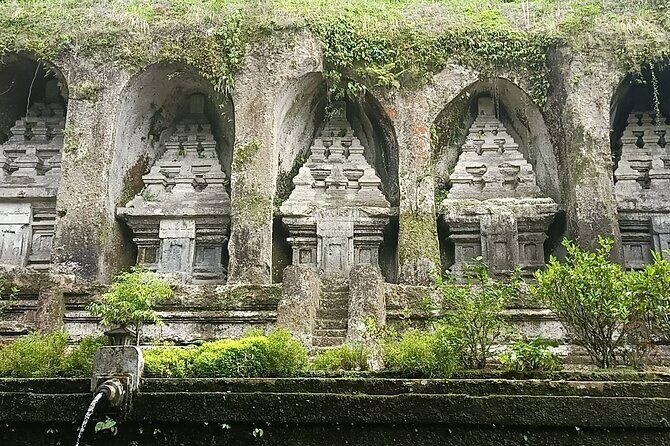
Ubud is your first big hit of the day, and you get about 2 hours here. The route gives your guide flexibility to pull from several classic Ubud-area options such as Monkey Forest, a coffee farm, Tegalalang rice terrace, Tirta Empul Temple, Gunung Kawi Temple, and Goa Gajah Temple. You can also include waterfalls and garden-style sights like Taman Ayun.

What makes this portion work is how varied it is in a compact timeframe. In a single stop you can cover wildlife (monkeys), viewpoints (rice terrace perspectives), and temple culture (Tirta Empul and other sites). If you’re the type who likes a “see a lot fast, then decide what you’d return to later,” Ubud is the right place to start.

A small consideration: 2 hours sounds short once you’re actually at multiple sites. Your guide’s job is to keep it flowing, but you’ll still want to choose what matters most—rice terrace photos, temple time, or the coffee farm experience. If you try to do everything listed, you may feel rushed.

Ticket note: this first stop is marked as admission ticket free, which helps keep your early costs down. Still, you might encounter small paid activities depending on the exact choices made inside the Ubud block.

Stop 2: Uluwatu for temple views and beach breaks

Bali-Customized Private Day Tour - Stop 2: Uluwatu for temple views and beach breaks
After Ubud, you head to Uluwatu for another 2 hours. This stop is set up for coastal drama and sea-air views, with options that include Uluwatu Temple, Kecak Fire Dance, and a set of beaches such as Balangan Beach, Suluban Beach, Melasti Beach, and Thomas Beach. You can also include scenic cliff viewpoints like Karang Boma Cliff, plus an option for Nusa Dua Watersport.

This is the segment where your preferences matter a lot. If you want classic temple-and-sunset-style viewing, focus on the Uluwatu Temple side and pair it with one beach that fits your comfort level. If you want photos over choreography, prioritize the coastline viewpoints and spend less time waiting around for scheduled experiences.

A practical drawback to keep in mind: you only have 2 hours here. Beaches can be relaxing, but they can also eat time if you’re walking, taking photos, and switching locations. If your plan is mostly photo-driven, ask your guide to pick one beach stop and one main viewpoint so you don’t bounce between too many spots.

Ticket note: Uluwatu is also listed as admission ticket free for this portion. That’s helpful for budgeting. For anything that functions like a paid experience, the tour’s general rule still applies: admissions are not fully included across all activities.

Stop 3: Ulun Danu Bratan Temple and the cooler north-side rhythm

Bali-Customized Private Day Tour - Stop 3: Ulun Danu Bratan Temple and the cooler north-side rhythm
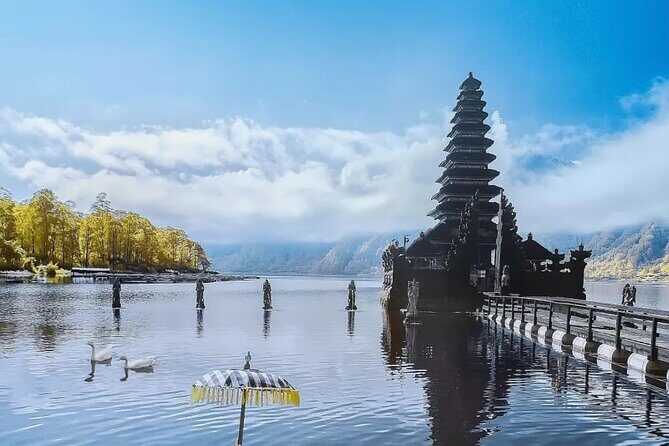
The day shifts north with Ulun Danu Bratan Temple, plus surrounding nature and scenery options. You’ll have about 3 hours for this part, and the route can include sights such as Munduk Waterfalls, Banyumala Waterfalls, Sekumpul Waterfalls, Handara Gate, and Jatiluwih (Jatiluwih rice terrace is listed). Your guide also includes Ulun Danu Bratan itself.

This is where the tour tends to feel more like a “scenic change of pace.” Instead of temples and coastline, you get forest-and-water vibes and wider views. The exact blend depends on what you choose, but the overall theme is clear: nature + iconic views.

Here’s the cost detail you should plan for. This stop is marked as admission not included, and the listing gives a specific entrance fee: Ulun Danu Bratan Temple is $5 per person. If you’re trying to keep expenses tight, treat this as your main predictable add-on.

A time consideration: waterfalls and gates often work best when you’re ready to walk a bit and keep a steady pace. If you’re traveling with kids or you need a slower rhythm, tell your guide early so they can balance viewpoints versus movement.

Stop 4: Lempuyang Temple area with east Bali classics

Bali-Customized Private Day Tour - Stop 4: Lempuyang Temple area with east Bali classics
The final leg goes east to the Lempuyang Temple area, again with 3 hours. The route can cover Besakih Temple, Lempuyang Temple, Tirta Gangga, and a mix of seaside and cultural stops like Virgin Beach, Taman Ujung, Amed, and Tenganan Ancient Village.

This part of the day is often the most visually dramatic because it combines temple architecture with scenery that feels wider and more spread out than central Bali. It’s also a good time to focus on culture if that’s your priority, since this list includes both major temple names and heritage-style village viewing options.

The drawback here is the same theme as the whole day: you’re doing a lot across a long 9–10 hour window. Even though you get 3 hours, the farthest-feeling areas are usually where movement time adds up. If you want a calm final stop, decide what you want most—Lempuyang Temple time, a heritage village look, or Tirta Gangga-style gardens—and let your guide build around that.

Ticket note: the east Bali area portion is marked as admission ticket not included, so you’ll likely pay at least one entrance depending on what you select. The tour also lists admissions around $1 to $5, so plan for small adds rather than one massive bill (except for the Ulun Danu fee earlier).

Comfortable transport and photo strategy across a 9–10 hour loop

Bali-Customized Private Day Tour - Comfortable transport and photo strategy across a 9–10 hour loop
The most practical strength of this tour is how it handles the hard part: travel. With pickup and drop-off, you avoid the scattershot logistics that can turn a fun day into stress. The included AC vehicle matters in Bali because the day can get hot and humid, and you’ll appreciate having bottled water available during the drive.

This day is designed around a simple rhythm: you change locations, you stop for key sights, and you repeat. With four main zones (Ubud, Uluwatu, Ulun Danu Bratan area, and Lempuyang east side), you’re not stuck at one crowded place all day. That’s a big deal if you want variety, and it helps keep your energy from draining in one spot.

Photo-wise, you’ll get the kinds of scenes that are easy to frame: temple exteriors, rice terrace angles, waterfall-and-forest scenery, and cliff-and-coast viewpoints. Because your itinerary is customizable, you can also guide the day toward your preferred style. If you like wide shots, you’ll want more viewpoint time. If you like temple details, you’ll want enough minutes on each temple stop to actually look around.

One more note that’s worth valuing: stroller-accessible is explicitly listed. If you’re traveling with a stroller, that’s a real advantage because many day tours become difficult fast in busy, uneven areas. You should still expect some walking, but having the tour labeled as stroller-accessible is a helpful sign.

Who this Bali private day tour is for (and who should think twice)

Bali-Customized Private Day Tour - Who this Bali private day tour is for (and who should think twice)
This tour fits you well if you want:

  • A private guide and vehicle, not a group bus experience
  • A one-day overview of major Bali regions, including Ubud, Uluwatu, and the north/east temple areas
  • Flexibility to choose between temples, beaches, waterfalls, and photo stops

It also makes sense if you’re traveling with family and need a stroller-accessible option. And if you want maximum comfort, the AC vehicle plus bottled water included are practical wins.

Think twice if you dislike paying extra on the day. Admissions are not included for most stops, and Ulun Danu Bratan has a specific entrance fee of $5 per person. If you want a fully all-in-one day with zero extra spending, you’ll probably feel the add-ons.

Finally, consider the pace. The itinerary totals about 9 to 10 hours, with multiple stop blocks. If you like ultra-slow travel, you may prefer fewer zones on one day. If you like a packed day with flexibility, this is built for that.

The kind of guide experience you’ll want on a customized day

Bali-Customized Private Day Tour - The kind of guide experience you’ll want on a customized day
The reviews focus on one clear theme: the guide and driver experience matters. One name that stands out in recommendations is Ade, mentioned as someone people strongly recommend for being both courteous and well-prepared. While you can’t assume you’ll be paired with the same person, it’s a good sign that the provider’s team can deliver a calm, respectful day rather than a rushed script.

What you can count on from the format is that you’re working with a live guide who’s there to guide your choices and help manage the flow. On a day like this, the guide’s role isn’t just pointing out sights—it’s keeping the timing realistic and tailoring the day so the stops match your interests.

FAQ

FAQ

How long is the Bali-Customized Private Day Tour?

It runs about 9 to 10 hours.

Where does the tour start?

The tour is based in Ubud, Indonesia, with hotel pickup offered.

Is this tour private?

Yes. It’s a private tour/activity, and only your group participates.

Is there an AC vehicle?

Yes. AC vehicle is included.

What’s included in the price?

Included items are bottled water, AC-vehicle, live guide tour, parking fee, and petrol.

Are admission tickets included?

No. Admission tickets are listed as not included, with typical admissions around $1 to $5.

What entrance fee should I expect for Ulun Danu Bratan Temple?

The tour lists the entrance fee for Ulun Danu Bratan Temple as $5 per person.

Does the tour offer hotel drop-off?

Yes. Pickup and drop-off are included.

Is the tour stroller-accessible?

Yes, the tour is listed as stroller-accessible.

Is free cancellation available?

Yes. You can cancel for a full refund up to 24 hours in advance.

When do most people book?

On average, this tour is booked 55 days in advance.

Should you book this Bali private day tour?

I’d book it if you want a full-day Bali highlight mix from Ubud with the flexibility of a customized private itinerary. The combo of hotel pickup/drop-off, AC comfort, a live guide, and multiple regions (Ubud → Uluwatu → Ulun Danu Bratan area → Lempuyang east side) gives you a strong “see a lot, pick what you care about” style day.

I’d hold off if you hate paying extra for entrances, since admissions aren’t included and Ulun Danu Bratan has a listed fee. Also, if you prefer slower travel with fewer location changes, you may feel this one is a bit packed.

If your goal is variety plus control—without the stress of driving and planning—this is the kind of day tour that tends to work well.

natural holy waterfalls healing tour.

natural holy waterfalls healing tour. - Beji Griya Waterfall: sacred calm, ceremony access, and real quiet time

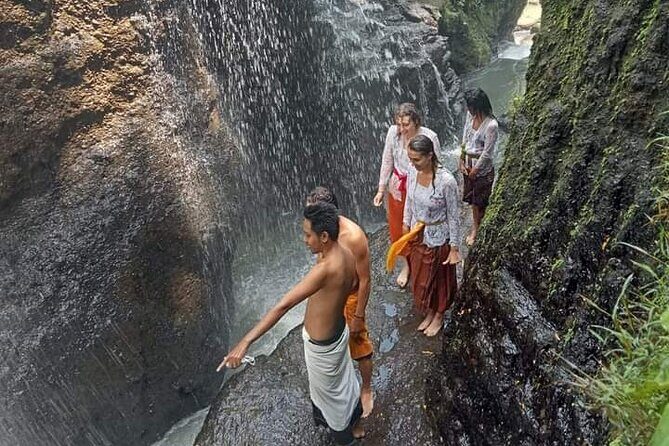
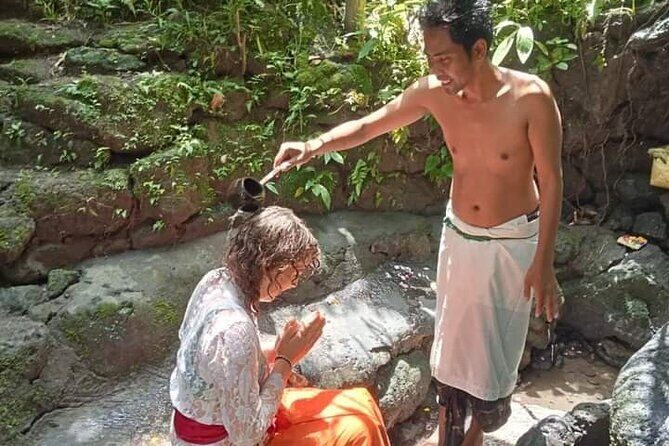
Silence and water do a lot. This natural holy waterfalls healing tour in Ubud is built around melukat, a local practice meant to cleanse the mind and soul. You’ll spend the day moving through sacred spaces, quiet nature, and Balinese ceremony moments, all wrapped in a “feel better” rhythm that’s as much about slowing down as it is about healing.

What I like most is the strong sense of calm at Beji Griya Waterfall—think rice-field scenery, hidden canyon vibes, and Balinese architecture that makes the whole place feel intentionally peaceful. I also like the value for your time: the tour folds in the ceremony admission, Balinese ceremony dress, mineral water, herbal tea, plus lunch at the famous Tegalalang rice terraces. One possible drawback: this experience depends on good weather, so if rain hits, you may be rescheduled or offered a refund.

Key Things That Make This Healing Waterfall Tour Work

natural holy waterfalls healing tour. - Key Things That Make This Healing Waterfall Tour Work

  • Melukat-style purification you can treat as a spiritual reset, not just a sightseeing stop
  • Beji Griya Waterfall with a long, unhurried session in a quiet sacred setting
  • Uma Pakel Agro Tourism for a jungle-view herbal tea break (swing and bird nest are optional)
  • Tegalalang Rice Terrace lunch included, so you’re not hunting for food mid-ceremony
  • Pickup + private car with guide and driver, only your group goes
  • $35 price point that includes more than typical “admission-only” tours

Melukat in Ubud: what the healing-water ceremony is about

natural holy waterfalls healing tour. - Melukat in Ubud: what the healing-water ceremony is about
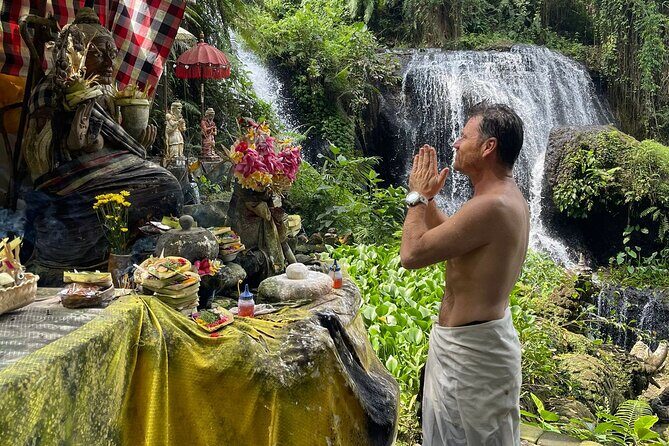
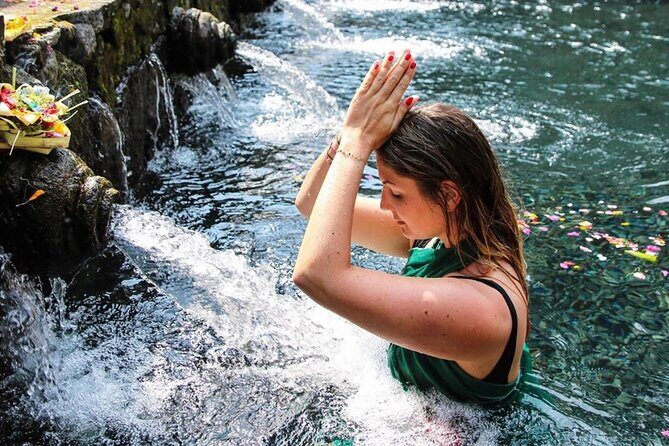
This tour is centered on melukat, a traditional Balinese cleansing ritual using natural holy water. The purpose isn’t framed as a casual dip in a waterfall. It’s described as a way to spiritually purify, remove afflictions or blockages, and support protection from negative forces—often with an idea of aura healing along the way.

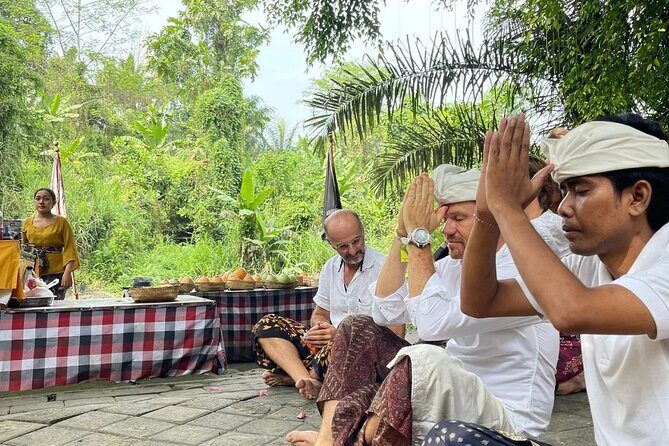
Here’s the practical way to think about it: you’re signing up for a structured, guided day that mixes ceremony with calm nature. Even if you’re not chasing a specific belief, you may still enjoy the “ritual pacing.” The ceremony dress included also signals that you’re meant to participate respectfully, so it’s not just photo time.

If you tend to get impatient, I’d treat this like a slow-travel day. The most satisfying parts happen when you stop rushing: listen to the quiet, follow your guide’s cues, and let the waterfall setting do its work.

Beji Griya Waterfall: sacred calm, ceremony access, and real quiet time

natural holy waterfalls healing tour. - Beji Griya Waterfall: sacred calm, ceremony access, and real quiet time
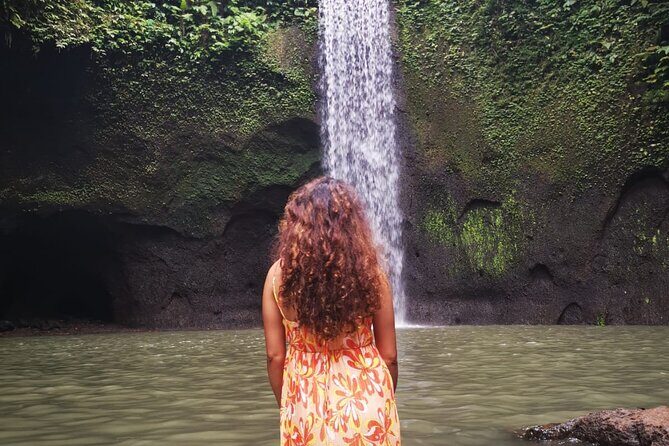
Beji Griya Waterfall is the heart of the day, with about 2 hours set aside for the purification experience. The setting is described as a holy place filled with silence, wrapped in natural beauty—rice fields, hidden canyons, waterfalls, and Balinese architectural details.

That combination matters. Waterfalls in Bali can turn into photo-chaos if you arrive late. Here, the point is different: you’re going for a healing ceremony admission, and you’re there long enough to actually settle into the atmosphere.

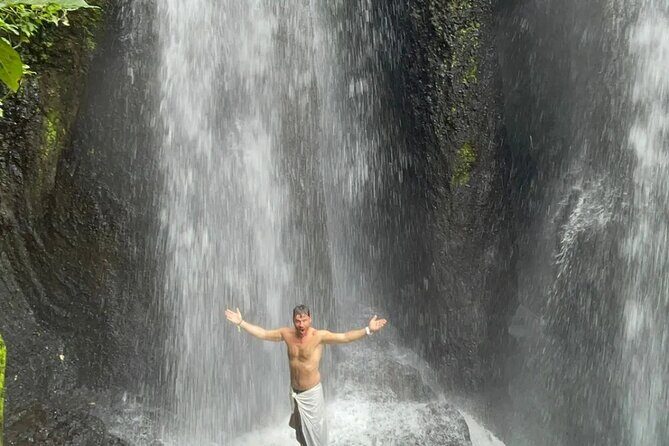
One detail worth noting: one of the experiences described under cleansing involved passing under two cascades, which sounds like part of the refresh and purification rhythm. Whether that’s exactly what you experience depends on how the ceremony is guided that day, but the tour clearly aims for a meaningful water-based component.

Practical tips I’d follow:

  • Wear shoes that handle wet stone. You’ll likely be moving around uneven ground.
  • Bring your mindset for quiet. This is not a loud party stop.
  • Use your time well. The tour includes the ceremony entry, but you still get best results when you treat the moments as moments, not interruptions.

Uma Pakel Agro Tourism: herbal tea, jungle views, and optional photo add-ons

natural holy waterfalls healing tour. - Uma Pakel Agro Tourism: herbal tea, jungle views, and optional photo add-ons
Next you shift from sacred waterfall calm to a more relaxed, scenic break at Uma Pakel Agro Tourism for about 1 hour. This is the “breathe and regroup” stop.

You’ll be able to enjoy traditional herbal tea with jungle views. That’s a smart pairing after a purification ceremony—warm or herbal drinks help you feel less chilled and more human, especially if the waterfall section left you damp.

There’s also the giant swing and bird nest area for photos, but admission is not included. If you’re the type who wants the photos, you can budget extra. If not, you can still enjoy the tea and the scenery without paying for the swing and nest entries.

The biggest value here is the pacing. This stop stops the day from becoming all ceremony all the way through.

Tegalalang Rice Terrace lunch: a full meal with a Balinese-food reset

natural holy waterfalls healing tour. - Tegalalang Rice Terrace lunch: a full meal with a Balinese-food reset
Then it’s time for lunch at Tegalalang Rice Terrace (about 1 hour). You get lunch there—Balinese traditional food—paired with one of Bali’s most photographed rice terrace panoramas.

This matters more than it sounds. After water time, temples, and ceremony dress, having a sit-down meal included helps you avoid the usual vacation scramble. You also get a scenic reward right after the spiritual focus, which gives the day a satisfying arc: purify, rest, then recharge with food and views.

A good way to enjoy this hour:

  • Eat slowly and hydrate. You’re coming off a wet or humid environment.
  • Use the light. Midday can be harsh, but the terraces still photograph well if you move to shaded angles.
  • Keep your camera ready, but don’t turn lunch into a full-time job. The value is the meal after ceremony effort.

Price and value: why this tour can feel like a bargain at $35

natural holy waterfalls healing tour. - Price and value: why this tour can feel like a bargain at $35
The price is listed at $35, and for a 5 to 6 hour experience, the inclusions are what make it feel like more than a cheap add-on.

Here’s what you’re getting included:

  • Healing ceremony admission
  • Balinese ceremony dress
  • Mineral water
  • Traditional herbal tea
  • Lunch at Tegalalang rice terraces
  • Private car, guide, and driver

On paper, it looks like a “few stops + admissions” deal. In practice, the value comes from the combination: you’re paying for a guided day with transport and multiple built-in cultural stops, not just entry tickets.

Two other value boosters:

  • Pickup is offered, which saves time and hassle in Ubud.
  • It’s set up so your group participates privately, so it’s not a cattle-car situation.

Group discounts are also mentioned, which can make the per-person cost even better if you’re traveling with friends or family. And since there’s a mobile ticket, you’re not stuck printing anything.

Timing, pickup, and weather: what to watch before 10:00 am

natural holy waterfalls healing tour. - Timing, pickup, and weather: what to watch before 10:00 am
The tour starts at 10:00 am. With hotel pickup offered, it’s easy to plan your morning like a normal travel day: breakfast, a little buffer time, then out the door.

One consideration: the experience requires good weather. If conditions aren’t right, you’ll be offered a different date or a full refund. That means your best bet is not scheduling anything tight right after the tour day.

Also, one practical thing I’d do: be ready at the lobby earlier than you think. Even though pickup is part of the service, timing can go sideways in busy Ubud traffic. A buffer hour isn’t silly here—it’s calm insurance.

Because the day includes wet-and-sacred elements, weather affects more than views. It can change how comfortable the waterfall section is and whether the ceremony route runs as planned.

Who this healing waterfall tour suits best (and who should skip it)

natural holy waterfalls healing tour. - Who this healing waterfall tour suits best (and who should skip it)
This tour is a good fit if you:

  • Want a calmer, spiritual day that mixes nature and ceremony
  • Like guided experiences with included entrances and meals
  • Prefer privacy over sharing space with strangers
  • Enjoy Balinese culture cues like ceremony dress and temple-style cleansing

The tour data also says most travelers can participate and that service animals are allowed, which is helpful for planning.

You might reconsider if you:

  • Need a strictly rigid itinerary no matter the weather. This one can shift with conditions.
  • Want only “big adventure” thrills. This is more about ritual, respect, and nature pacing than adrenaline.

Should you book this natural holy waterfalls healing tour?

natural holy waterfalls healing tour. - Should you book this natural holy waterfalls healing tour?
I’d book it if you’re traveling to Ubud for more than Instagram scenery. The blend of melukat-style purification, a long quiet stop at Beji Griya Waterfall, a decompression break with herbal tea, and an included lunch at Tegalalang rice terraces is exactly the kind of day that turns into a good story instead of a checkbox.

Booking especially makes sense at this price because you’re not paying separately for ceremony entry, dress, tea, mineral water, lunch, and transport. The tour is built to handle the “messy middle” of the day—so you can focus on experiencing it.

One more smart move: go in with flexibility. If the weather doesn’t cooperate, rescheduling or a full refund is part of the deal, and that’s better than forcing a wet walk on a day that doesn’t support it.

FAQ

FAQ

Where is this healing waterfall tour located?

It’s in Ubud, Indonesia.

How long is the tour?

It runs about 5 to 6 hours.

What time does the tour start?

The start time is 10:00 am.

Is hotel pickup included?

Pickup is offered, and you can arrange it by providing your hotel during booking.

What are the main stops on the tour?

The tour includes Beji Griya Waterfall, Uma Pakel Agro Tourism, and Tegalalang Rice Terrace.

What does the tour include for the healing ceremony?

It includes healing ceremony admission and Balinese ceremony dress.

Is lunch included?

Yes. Lunch at Tegalalang Rice Terrace with Balinese traditional food is included.

What’s included besides admission and lunch?

You’ll also get mineral water, a traditional herbal tea, and private car service with a guide and driver.

What is not included?

Not included are personal shopping and admission to the giant swing and bird nest.

Is the tour affected by weather?

Yes. The experience requires good weather. If it’s canceled due to poor weather, you’ll be offered a different date or a full refund.

What is the cancellation policy?

You can cancel for a full refund up to 24 hours before the experience’s start time (local time). If you cancel less than 24 hours before, the amount paid won’t be refunded.

If you want, tell me your travel dates and whether you’re more into the spiritual side or the scenic-photo side, and I’ll help you plan the best way to structure your Ubud day around this tour.

Private Ubud Tour

Private UBUD Tour - Barong dance: the cultural performance stop that sets the tone

A full day in Ubud, properly timed. This private tour strings together the big Ubud sights in one smooth circuit, with comfort built in and just enough structure to keep you from wasting time. You’ll move through rice-terrace views, temple stops, a volcano viewpoint area, and a final waterfall, all with a driver who can keep the day running.

I especially like two things: the private air-conditioned vehicle (it matters in Bali heat and traffic), and the included extras like bottled water plus Wi‑Fi onboard. The morning is also flexible, so you can usually fit this highlight day into your plan without a strict start time.

One thing to consider: it’s about a 10-hour day with a lot of moving parts. If you want long, slow breaks at every stop, you might find the pacing a bit busy, especially in midday heat.

Key things worth knowing before you go

Private Ubud Tour - Key things worth knowing before you go

  • Private vehicle comfort: air-conditioned transport and an on-the-ground driver setup for a full day loop.
  • Included on-tour essentials: bottled water, sarong, donation, and Wi‑Fi in the car.
  • A classic Ubud highlight route: Tegalalang Rice Terrace, Ubud Swing, Gunung Kawi, Kintamani/Mt. Batur, Tirta Empul, Tegenungan Waterfall.
  • Guide quality shows up: in reviews, people praise Ketut and his team for energy, punctuality, and explaining what you’re seeing (including some Spanish).
  • Temple etiquette is handled: the sarong and donation support you for temple visits, including Tirta Empul.
  • Weather matters: the tour is described as requiring good weather, especially for the later waterfall stop.

The Ubud circuit: timing, pickup, and how to keep it relaxed

Private Ubud Tour - The Ubud circuit: timing, pickup, and how to keep it relaxed
This tour is built for a one-day overview of Ubud. Pickup is in Ubud, and the itinerary is scheduled like this: hotel departure around 09:00, then stops roughly at 10:00 Tegalalang Rice Terrace, 11:00 Ubud Swing, 12:00 Gunung Kawi Temple, 13:00 Kintamani Volcano area (Mt. Batur), 15:00 Tirta Empul Temple, 17:00 Tegenungan Waterfall, with a return to your hotel around 19:00.

That timeline is useful because it takes the hardest part—sequencing Ubud—off your shoulders. You’re not bouncing between far-flung sights with guesswork. Still, you should plan on a full day of walking, queueing at popular viewpoints, and occasional waiting while you shift from one place to the next.

If you want the day to feel more relaxed, I’d treat the early hours as your priority. Go into the first half ready for photos and viewpoints, and then keep expectations realistic for the later stops. You’ll likely be tired by the time you reach Tegenungan, so save your big energy for the waterfall moment.

Tegalalang Rice Terrace and Ubud Swing: views plus photo time

Private Ubud Tour - Tegalalang Rice Terrace and Ubud Swing: views plus photo time
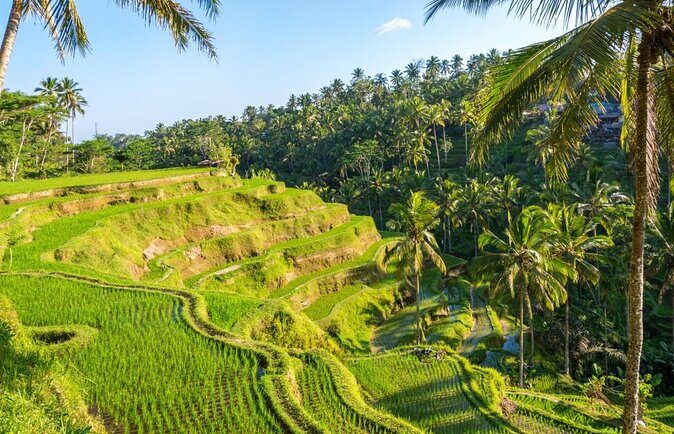
The morning starts at Tegalalang Rice Terrace, one of those places where Bali’s “green” looks almost unreal. Even if you’ve seen photos before, being there in person gives you scale: the terraces step down in layers, and you can spot the way water management shapes the whole scene.

Practical tip: wear shoes you can trust. The paths around terraces can be uneven, and the ground can be slick depending on weather. Also, bring sun protection for the earlier hours. The comfort of the A/C vehicle is great, but you’re still outdoors for views here.

Then you head to Ubud Swing. This is the spot built for the iconic photo: you’ll get elevated angles over the valley and a fun, slightly theatrical break from temple visiting. The best way to enjoy it is to think of it as a timed stop—get your shots done, do one or two variations, and don’t linger too long if the line grows.

Why it works in a one-day itinerary: rice terrace plus swing hits the “Ubud visuals” early, when you still have energy and before the day gets hot and crowded.

Gunung Kawi Temple: rock shrines and respectful visiting

Private Ubud Tour - Gunung Kawi Temple: rock shrines and respectful visiting
Next up is Gunung Kawi Temple. This stop feels different from the rice fields and photo swings because it leans into stone, age, and a more grounded religious atmosphere. You’re not just looking for views—you’re walking through a temple environment where the focus is worship and respect.

Here’s what I’d keep in mind: temples in Bali usually expect proper manners. You’ll get a sarong as part of the tour inclusions, which helps you meet basic dress expectations without scrambling last-minute. Even with the sarong provided, go slower than you think you need to. Temple paths often mean uneven ground and moments where you want to stop and look carefully.

A good guide matters here because they can point out what you’re actually seeing. In the reviews, the experience stands out for how guides explain things and how friendly they are while staying professional. That combination helps the temple stop feel meaningful instead of just another checkbox.

Kintamani and Mt. Batur: the volcano viewpoint block

After Gunung Kawi, the tour heads toward Kintamani Volcano (Mt. Batur). This is the viewpoint-style portion of the day: big horizons, volcanic scenery, and that classic Bali “how did it get this dramatic” reaction.

This leg is one of the reasons the tour is worth doing as a packaged day. Getting there on your own is doable, but doing it smoothly—without timing mistakes—makes the experience easier. Also, if weather shifts, the guide’s judgment about pacing and viewpoint timing can matter.

What to plan for: you’ll likely feel the temperature change as you move away from Ubud’s heat. Bring a light layer if you run cold, because high points can feel cooler than you expect.

Even if you’ve seen volcano photos before, the Kintamani stop works because it gives your day a “big picture” reset. You go from terraces and temples to a wide open view, then later back into water and worship at Tirta Empul.

Tirta Empul Temple: holy water, sarong, and donation

At 15:00, you’ll reach Tirta Empul Temple, one of Bali’s best-known holy water sites. This is where the tour’s included sarong and donation become more than a line item. They support temple etiquette so you can participate respectfully and without last-minute scrambling.

The feel here is different from a scenic viewpoint. You’re witnessing a living spiritual place. It helps to go in with a quiet mindset. Don’t treat it like a photo set only. If you want photos, get them, but also watch what people are doing and why.

In reviews, people specifically praised the way the guide could talk about culture and even describe ceremonial moments, including a purification ritual. That kind of guidance can change the whole temple experience. Instead of wondering what’s happening, you understand the purpose.

Practical tip: be ready for water and changing conditions around the holy water areas. You might get wet, so keep your phone safely protected and don’t wear shoes you’ll regret.

Tegenungan Waterfall: finish with the splash

The final big nature stop is Tegenungan Waterfall around 17:00. This is your payoff moment: water sound, spray in the air, and a strong visual ending after temples and viewpoints.

This stop is also where weather can make or break your day. The tour notes that good weather is required, and if conditions aren’t right, you may be offered another date or a refund. That’s not just fine print—rain or poor visibility can change how enjoyable the waterfall area is.

Plan for a bit of extra energy here. You might need to walk on slick ground and manage stairs or paths depending on water flow. If you’re doing the day as a highlight tour, keep your expectations focused: enjoy the waterfall, take your photos, and then let the transport handle the long ride back.

Price and included perks: do you really get $36 worth

At $36 per person for an approx. 10-hour private tour, this is the kind of price that feels reasonable only if the logistics are handled well. The big value isn’t just the places—it’s the smooth routing and the comfort of a private A/C vehicle for a full circuit.

Here’s what you’re effectively paying for:

  • Time savings: one driver setup for multiple major sights.
  • Comfort: A/C car plus bottled water.
  • Temple readiness: sarong and a donation included for temple visits.
  • Convenience: pickup from Ubud and onboard Wi‑Fi.
  • Flexibility in the morning: you can usually choose a start time that fits your schedule.

There are also hints of real on-the-ground service quality in the reviews. People praised guides like Ketut and drivers like Riky and Putu for being punctual, friendly, funny, and attentive—especially when they adapted the day or helped with photos and explanations. That matters because a private tour rises or falls on how well the guide reads your energy and keeps the day moving.

If you’re cost-focused, this is a smart pick. If you’re a slow-travel type who wants one or two places only, you might feel “rushed” by the number of stops. But for a first Ubud visit, it’s a strong way to get oriented fast.

Should you book this private Ubud highlight day?

Book this tour if you want a clean, efficient one-day overview of Ubud and you like having comfort and temple etiquette taken care of for you. It’s a great match for couples, small groups, and anyone who wants the major sights—rice terraces, a swing-photo break, two temples, Mt. Batur views, and Tegenungan Waterfall—without spending your brainpower on routing.

Skip it (or rethink pacing) if you’re the kind of person who needs long, quiet time at each stop. The day is full, and the later waterfall and temple periods can feel rushed if you stop for everything.

If you do book, my best advice is simple: protect your energy early, plan for outdoor sun and some wet conditions later, and let your guide lead the flow. The value here is not just where you go—it’s how smoothly the day connects.

FAQ

Is this tour private or shared?

This is a private tour/activity, meaning only your group will participate.

How long is the Ubud highlights tour?

The duration is listed as 10 hours (approx.).

What is included in the tour?

It includes pickup, bottled water, sarong, a donation, and Wi‑Fi onboard.

Where does the tour start?

The meeting point/start location is Ubud, Gianyar Regency, Bali, Indonesia, with pickup offered from Ubud.

What stops are included and when does it run?

The schedule runs roughly as: 09:00 start from hotel, 10:00 Tegalalang Rice Terrace, 11:00 Ubud Swing, 12:00 Gunung Kawi Temple, 13:00 Kintamani Volcano (Mt. Batur), 15:00 Tirta Empul Temple, 17:00 Tegenungan Waterfall, and back to hotel around 19:00.

What if the weather is bad?

The tour requires good weather. If it’s canceled due to poor weather, you’ll be offered a different date or a full refund.

Bali best waterfall

Bali best waterfall - Hotel pickup in Ubud: the quiet win

Waterfalls, minus the hassle. This private Ubud day is built to hit four standout falls in one go: Tukad Cepung, Tibumana, Kanto Lampo, and Tegenungan. You get a driver/guide to handle the roads, and you’re not stuck waiting on a big group rhythm.

Two things I really like are the Wi‑Fi on board (so you can post and message without roaming charges) and the smooth hotel-to-falls-to-hotel flow with an air-conditioned vehicle. One consideration: this experience really depends on weather, and rain can change what looks and feels good on the day.

Key reasons this waterfall tour is worth your time

Bali best waterfall - Key reasons this waterfall tour is worth your time

  • Private driver/guide in an A/C vehicle so your day stays efficient
  • Onboard Wi‑Fi to stay connected without worrying about mobile data
  • Four different waterfall styles in one route: cliff water, rock cascades, and popular Ubud favorites
  • Entrance tickets included plus parking fees, so you avoid extra stops for payments
  • Flexibility with timing and alternates when conditions shift (your guide can help you adapt)

A full waterfall day that doesn’t feel like a marathon

If you only have one day in Ubud, this tour format makes sense. Instead of choosing one waterfall and losing a half day to transit, you stack four sights into a roughly 10-hour block with about 1 hour at each stop. That timing is long enough to soak it in, short enough to keep the day moving.

The private part matters. Bali traffic can be unpredictable. With a dedicated driver, you’re not juggling other people’s delays, bathroom breaks, or photo stops. You’re free to keep your own pace, and your guide can steer the day based on what the light and crowds are doing.

I also like the practical comfort choices here: bottled water, an air-conditioned vehicle, and a driver who speaks English. It’s not glamorous, but it helps you stay human from the first pickup until you’re back at your hotel.

Price and value: $35 that’s mostly “getting there” done for you

Bali best waterfall - Price and value: $35 that’s mostly “getting there” done for you
At $35 per person, this tour is priced like a smart day plan rather than a splurge. The key value isn’t just the waterfalls. It’s that most of the common add-ons are already wrapped in:

  • private transportation with A/C
  • parking fees
  • entrance tickets for each stop
  • bottled water
  • Wi‑Fi on board
  • an English-speaking driver

So what you pay for is basically the hard part: coordinated transport plus access. If you tried to DIY four waterfalls from Ubud, the spending would creep up fast once you factor in entrance fees, parking, and the time cost of driving between sites.

Also, this is the kind of tour that gets booked ahead. The average booking window listed is about 50 days in advance, which is a hint that timing matters if your schedule is tight.

Hotel pickup in Ubud: the quiet win

Bali best waterfall - Hotel pickup in Ubud: the quiet win
Starting with pickup from your Ubud hotel is one of those details you don’t fully appreciate until you’ve done the alternative. Finding your own rides between sites, especially when you’re trying to do multiple stops, can turn into stress—fast.

With pickup handled, you can do the fun part right away: water sounds, cliff views, and quick photo opportunities without playing logistics roulette. You also get round-trip transfers, which means you won’t be scrambling at the end of the day to figure out how to get back.

For a private tour, the feel is also calmer. It’s not loud, not rushed by strangers, and you don’t have to negotiate group timing.

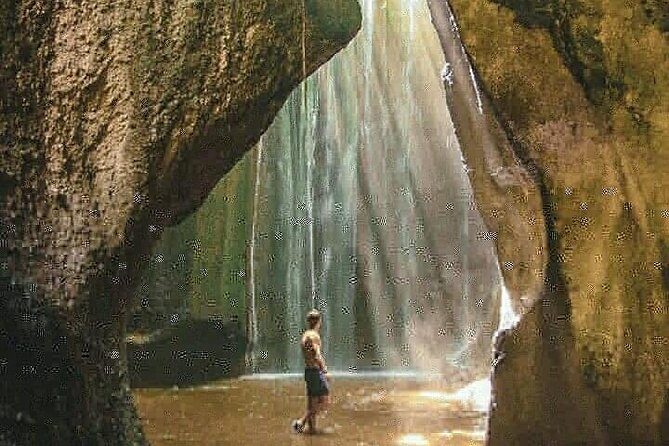
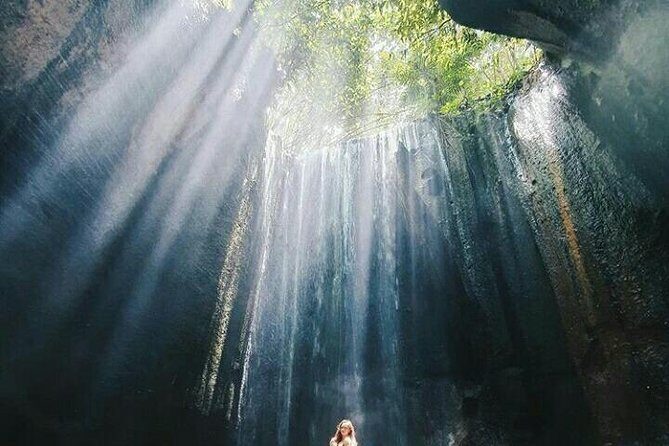
Tukad Cepung: light through the waterfall in a cliff setting

Bali best waterfall - Tukad Cepung: light through the waterfall in a cliff setting
Stop one is Tukad Cepung Waterfall, and the setting is part of the magic. This waterfall sits between cliffs, and the design of the place makes the water feel framed—like it’s dropping inside a natural space rather than just falling in open scenery.

The tour description also highlights the way light sparkles through the falling water. That’s the sort of detail you’ll actually notice as you look around: when the light hits the droplets and mist, the scene looks more dimensional than a plain straight-on waterfall view.

Practical tip for this stop: you’ll likely want to keep your camera ready, but don’t stay glued to your lens. Look up and around too. Cliff-sided waterfalls can give you multiple angles just by changing where you stand.

Time-wise, you’re only there for about 1 hour. That’s enough to settle in, watch the water, and grab a few photos without turning it into a long hike day.

Tibumana Waterfall: another Ubud favorite in a tight schedule

Bali best waterfall - Tibumana Waterfall: another Ubud favorite in a tight schedule
Next is Tibumana Waterfall. The tour notes it as one of Bali’s best waterfalls, and in a route like this, that matters: you’re not filling time with “okay” stops. You’re hitting places that tend to deliver the classic Ubud waterfall experience.

You’ll have around 1 hour here with the entrance ticket included. That timeframe is useful because it keeps your energy steady. You can arrive, walk in at an easy pace, look for your best viewpoint, then step back when you’ve seen enough.

A small consideration: waterfalls in Bali can feel slippery around the edges depending on weather. If it has rained recently, wear shoes you trust on uneven ground and take your time where paths look damp.

Kanto Lampo Waterfall: a rock-cascade look that loves photos

Bali best waterfall - Kanto Lampo Waterfall: a rock-cascade look that loves photos
After Tibumana, the route goes to Kanto Lampo Waterfall. This one is described as water tumbling over a cascade of rocks. That detail is exactly why Kanto Lampo is such a popular stop: the waterfall doesn’t just drop; it moves across rock textures, creating a more layered look.

Expect a photography-forward vibe here. Rock-cascade waterfalls often give you better compositions from slightly different heights or positions. If your guide helps you pick where to stand, it can make your photos look less like a generic waterfall shot and more like a scene.

You’ll have about 1 hour again, so treat it like a focused visit. Get a few angles, then spend a little time just watching the water flow and how it changes with the light.

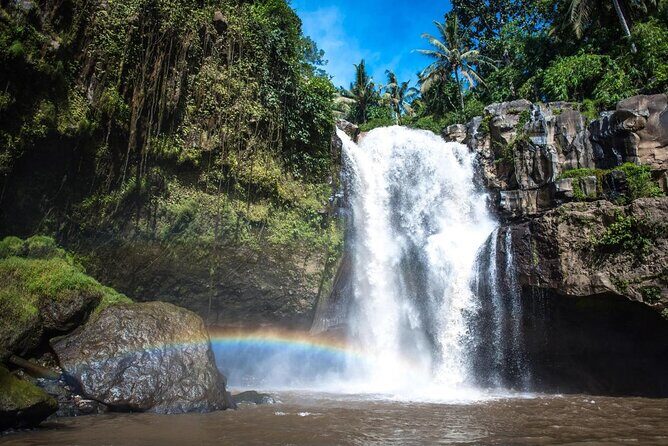
Tegenungan Waterfall: the big-name finish with a full-day payoff

Bali best waterfall - Tegenungan Waterfall: the big-name finish with a full-day payoff
The last stop is Tegenungan Waterfall, another classic Ubud waterfall. The description calls it one of the best in Bali, and the structure of this tour puts it near the end—when you’re ready to enjoy the payoff after three earlier stops.

Because you’ll still be there for about 1 hour, you can slow down a bit at the end. This is a good moment to think about what you liked most earlier—cliffs, cascades, or the general “Bali waterfall” feeling—and then choose how you want to experience Tegenungan.

If you get tired, don’t fight it. This tour design includes comfortable transportation and a controlled number of stops, so you can conserve energy without turning the day into work.

How this private guide day stays flexible if conditions change

Bali best waterfall - How this private guide day stays flexible if conditions change
One quiet strength of this tour is adaptability. In the feedback provided, guides were described as kind, detailed, and flexible, including an example of bringing an alternate waterfall when conditions shifted.

You can’t assume an exact swap will happen every time, but it tells you the mindset: the guide isn’t just driving a rigid checklist. They’ll try to help you get good results from the day you actually have.

That flexibility is valuable in Bali because weather can change quickly. And the tour itself notes that good weather matters. If it’s canceled due to poor weather, you should expect an option for a different date or a full refund.

The pacing that keeps you sane for four waterfalls

Four waterfalls sounds like a lot, but the schedule keeps it manageable: roughly 10 hours total with ticketed stops and a driver handling transit. The rhythm is basically:

  • short drive segments with rest breaks in the car
  • about 1 hour at each waterfall
  • enough time to see each place without feeling rushed to the next pickup

That’s the sweet spot. Too many waterfall tours are either packed in like a sprint, or they drag so long you lose the joy. This one tries to land in the middle.

If you want your photos to look better, pick one stop to be your “slow and steady” one (often Tukad Cepung because of that light-through-water effect), and treat the other stops as efficient sightseeing. You’ll come away with variety without burnout.

What’s included vs. what you’ll have to plan

Here’s the practical breakdown.

Included:

  • Bottled water
  • Air-conditioned vehicle
  • Wi‑Fi on board
  • Private transportation
  • Parking fees
  • Driver speaks English
  • Entrance tickets

Not included:

  • Lunch
  • Dinner

So yes, you’ll need to eat on your own. The good news is that having lunch unscheduled can be a plus: you can choose something quick near one of the areas you pass through, or you can keep a light snack ready and eat later. Either way, you’re not forced into one specific restaurant.

What to bring (common-sense, not fancy):

  • footwear you’re comfortable walking on if it’s damp
  • a small towel or quick-dry layer if you get splashed
  • a dry bag or zip pouch for your phone and camera

Who this tour fits best

This is a great match if:

  • you want multiple top waterfalls without self-driving
  • you like the calm feel of a private group day
  • you care about practicality: A/C transport, tickets included, and Wi‑Fi
  • you’re booking from Ubud and want round-trip pickup

It’s also a smart choice if you don’t want to gamble your whole day on routing, parking, and figuring out where to go next.

If you prefer a super long, slow hike experience where you spend half the day at one location, you might find the 1-hour stops feel a bit brief. But for most people, variety is the point—and this route delivers it.

Should you book this Bali best waterfall day?

Yes, I’d book it if your goal is a smooth, efficient waterfall day with four different places and minimal logistics stress. The combination of hotel pickup, private transport, entrance tickets, and onboard Wi‑Fi makes it feel like the day is handled for you.

I’d only hesitate if your trip is very weather-dependent and you can’t be flexible about rain. Since the tour requires good weather, it’s worth having a backup plan in your overall Bali schedule.

If you want one strong Ubud activity that’s actually built to deliver results, this is a solid pick: clear route, clear stops, and a guide who’s ready to help your day work out well.

FAQ

Which waterfalls are included on this tour?

The tour includes Tukad Cepung, Tibumana, Kanto Lampo, and Tegenungan waterfalls.

How long does the Bali best waterfall tour take?

The duration is approximately 10 hours total.

Do I get hotel pickup in Ubud?

Yes. The tour includes round-trip transfers from Ubud hotels.

Is Wi-Fi available during the drive?

Yes. There is Wi‑Fi on board.

Is this tour private or shared with other people?

It’s a private tour. Only your group participates.

Are entrance tickets included?

Yes. Entrance tickets are included.

Does the price include lunch?

No. Lunch and dinner are not included.

What else is included besides the driver and car?

Included items are bottled water, an air-conditioned vehicle, Wi‑Fi on board, private transportation, parking fees, and a driver who speaks English.

What happens if weather is poor?

The experience requires good weather. If it’s canceled due to poor weather, you’ll be offered a different date or a full refund.

How does cancellation work?

Free cancellation is available up to 24 hours in advance for a full refund. If you cancel less than 24 hours before the start time, it isn’t refunded.

Bali Airport: One-Way Private Transfer To/From Hotel

Bali Airport: One-Way Private Transfer To/From Hotel - The drive timing: planning for 25 minutes to 2h45

Finding your ride shouldn’t be stressful. This private transfer keeps your start (or finish) in Bali simple: your driver is waiting in the arrivals area with a name sign, then helps with bags and takes you straight to your hotel. I love the meet-and-greet pickup and I love the flat-fee approach that avoids taxi meters and surprise costs.

The one thing to keep an eye on is pickup accuracy. In one bad moment, a driver went to the wrong spot because of a similarly named hotel, which caused delays. So double-check your exact hotel name and address and be ready with clear meeting instructions.

Key things to know before you book

Bali Airport: One-Way Private Transfer To/From Hotel - Key things to know before you book

  • Signboard meeting at DPS: Your driver waits in arrivals holding your name, so you can get moving fast.
  • Flat fee, no meters: You know the cost up front, which makes budgeting easier.
  • English-speaking driver + luggage help: You’re not wrestling bags while figuring out Bali traffic.
  • 24-hour service: Useful if your flight lands late or leaves super early.
  • Ubud-friendly coverage: The service explicitly includes Ubud and nearby areas (plus most of southern and central Bali).
  • Real people, real backup plans: When roads get messy, at least some drivers work hard to make it work.

Why DPS-to-Ubud private pickup is worth paying for

Bali’s Denpasar Airport (DPS) is busy. Even when everything goes smoothly, you still face the time sink of finding a car, negotiating, and then hoping the ride price stays reasonable. This one-way private transfer is built to remove those small frictions that add up when you’re tired, jet-lagged, or traveling with luggage.

You get a door-to-door experience. That matters because the “easy part” of arrival is rarely the airport itself. It’s what happens immediately after you clear customs: walking out, scanning faces, deciding which line to stand in, and then trying to communicate through noise and confusion. Here, you skip the queue. A driver is supposed to be in the arrivals area with a name sign, and you’re met right as you step off the plane.

The other big reason this tends to feel like good value: the price is a flat fee and not a meter. In Bali, meters and pricing can be a mixed bag depending on who you’re dealing with and how the ride starts. A fixed price helps you keep your head clear on day one.

The meet-and-greet at DPS: what “fast” looks like in real life

Bali Airport: One-Way Private Transfer To/From Hotel - The meet-and-greet at DPS: what “fast” looks like in real life
The service’s meeting style is the heart of the experience. When you arrive at DPS, your driver waits in the arrivals area holding a signboard with your name. You’re not left guessing. And if your flight is delayed or you land early, the setup is meant to handle that without you needing to chase updates.

A few practical details make this feel reassuring:

  • You’ll get help with luggage right away.
  • You’re escorted to the vehicle, so you’re not wandering with bags through parking areas.
  • Drivers are English speaking, which helps with simple clarifications like where to stop, what lane to take, or where to wait if traffic tightens.

In actual use, drivers named Dastra, Cok De, Krisna, and Juli were all described as easy to find and strong on communication. That theme shows up again and again: clear pickup instructions and a professional approach. One person even said the driver stayed patient while customs took longer than expected.

Tip: when you choose your pickup point in Bali, be specific. If your hotel has multiple entrances or towers, use the exact spot where taxis normally drop off.

The drive timing: planning for 25 minutes to 2h45

Bali Airport: One-Way Private Transfer To/From Hotel - The drive timing: planning for 25 minutes to 2h45
The transfer time range is wide: about 25 minutes to 2 hours 45 minutes. That’s not unusual in Bali. A short trip can turn long fast depending on traffic, weather, and where your hotel sits relative to DPS.

For Ubud especially, expect that your “time on the road” can be very different on different days. Ubud is inland and the roads can get slow, even when nothing seems broken. If you’re sensitive to time pressure, treat the high end of the duration range as your real-life planning window.

This is one place where having a private driver can actually reduce stress. You’re not switching transport methods mid-trip, and you don’t have to re-negotiate on the fly. If something goes wrong, you’re dealing with one point of contact.

And when things truly go sideways, at least some drivers have shown they’ll work the problem. One experience described a situation with flooding that blocked the usual route. The provider sent a replacement driver (the brother of the original driver, according to that story), and they still got the passenger to the airport in time. That’s the kind of effort you’re paying for.

Vehicles and group fit: private doesn’t always mean small

Bali Airport: One-Way Private Transfer To/From Hotel - Vehicles and group fit: private doesn’t always mean small
This is a private car transfer, not a shared shuttle. Your group goes together, which is great if you want control over timing and you’d rather not wait around for strangers to arrive.

The vehicle capacity is listed as up to 4 passengers, and for luggage-heavy situations, up to 10 passengers with luggage (as stated by the service). That tells you the provider is thinking about real packing, not just body count.

So who is this best for?

  • Couples and small families who want a direct ride to a hotel in Ubud.
  • Small groups who don’t want to play taxi musical chairs after a long flight.
  • Larger parties who want one organized pickup instead of splitting into multiple taxis.

If you’re traveling with kids, big backpacks, or surf gear, luggage space is usually the make-or-break issue. This service includes luggage assistance, which helps at both ends: getting bags in and getting you on the road without delay.

Bali coverage zones: will your hotel be included?

Bali Airport: One-Way Private Transfer To/From Hotel - Bali coverage zones: will your hotel be included?
The coverage is clear and structured by zones. For most visitors aiming at Ubud, you’ll likely fall into Zone 3, which includes Ubud, Payangan, Uluwatu, Pecatu, Tabanan, and Tanah Lot.

The rest of the service covers much of southern and central Bali too:

  • Zone 1: Kuta, Legian, Seminyak, Jimbaran, Benoa & Nusa Dua
  • Zone 2: Canggu, Kerobokan, Ungasan, Sanur & Denpasar
  • Zone 3: Ubud and surrounding areas (listed above)
  • Zone 4: Candidasa, Padangbai, Manggis, Bangli & Klungkung
  • Zone 5: Amed, Tulamben, Karangasem & Medewi
  • Zone 6: Singaraja, Bedugul & Lovina

That zone list matters because airport transfers are where “almost” can ruin your day. You want to know your specific destination is covered, not hope it’s close enough. With these zones spelled out, it’s easier to check whether your hotel area is included before you commit.

Included value: what you actually get for the money

Bali Airport: One-Way Private Transfer To/From Hotel - Included value: what you actually get for the money
At $9.16 per person (price shown per person), this can feel surprisingly affordable compared to the hassle and uncertainty of taxis. But value isn’t just the headline cost. It’s what’s bundled into that fee.

Included items:

  • Transport by private vehicle
  • 1-way transfer between Bali’s Denpasar Airport (DPS) and your hotel
  • English speaking driver
  • Meet and Greet service
  • Luggage assistance
  • Airport parking fees
  • Fuel

Not included:

  • Gratuities (optional)
  • Excess luggage charges where applicable

Why this bundle matters: parking fees and fuel are the kinds of costs that can quietly inflate taxi or “driver quote” situations. Here, those basics are covered, and you’re paying for the whole chain: driver + vehicle + airport entry logistics.

Also, you get group discounts and a mobile ticket. The group discount is useful if you’re traveling with friends and you’d otherwise book separately. The mobile ticket makes it easier to keep your confirmation handy for pickup.

Driver communication and helpful extras you can use

Bali Airport: One-Way Private Transfer To/From Hotel - Driver communication and helpful extras you can use
One reason airport transfers can feel “worth it” is the tone of the driver. You’re arriving in a new country. You want calm, not chaos.

In the feedback you provided, the most praised driver behaviors were:

  • On-time pickup (some drivers arrived early)
  • Clear communication about where to meet
  • Patient waiting during flight delays and customs delays
  • Friendly, professional handling of luggage and navigation

Names like Aris, Rio, Guna, Iam, Susy, and Arya show up in strong feedback. A couple of notes worth keeping in mind:

  • Some drivers gave helpful tips for the area during the drive.
  • Some rides came with patient flexibility when flights changed time.
  • Communication was often described as proactive: where to meet, what to expect, and confirmation that pickup was still happening.

You can make this experience even smoother by doing two simple things:

  1. Share an accurate pickup point in your hotel area (not just the hotel name).
  2. Keep your phone ready right after you land, especially if your flight timing changes.

Arrival vs departure: same concept, different stress points

Bali Airport: One-Way Private Transfer To/From Hotel - Arrival vs departure: same concept, different stress points
This service runs both ways:

  • Arrival transfer: DPS to your hotel
  • Departure transfer: hotel to DPS

The key difference is what stress looks like.

For arrival, the stress is navigating airport exit and finding transport fast. That’s exactly what the name sign and meet-and-greet style target.

For departure, the stress is time management. You want to leave your hotel with enough buffer to reach DPS, deal with traffic, and handle airport procedures without panic. A punctual pickup helps you start your departure day with momentum instead of scrambling.

The service also lists a 24-hour schedule, so you’re not stuck hunting for transport if your flight is at an odd hour. That’s a real advantage for early mornings and late landings.

Who should book this Bali airport transfer?

This one-way private transfer is a great match if you want:

  • A fast start in Ubud without taxi line uncertainty
  • A predictable, up-front price (flat fee, no meters)
  • A driver who meets you at the airport with a sign
  • Luggage help, especially if you’re arriving with more than a small day bag

It’s also a strong pick for first-time Bali visitors because the main pain point is usually not the ride itself. It’s the first 30–60 minutes in a new place.

I’d be slightly more cautious if:

  • Your hotel has a confusing name or multiple locations, or
  • You’re arriving at a busy resort area where pickup points matter a lot

That’s not a reason to avoid it. It just means your instructions need to be clear.

Quick checklist before your pickup day

If you want this transfer to go as smoothly as it’s designed to, do this:

  • Confirm the exact pickup location in your Ubud hotel area (which entrance or lobby).
  • Keep your phone available after landing.
  • Plan for possible traffic when estimating travel time using the upper range (especially for Ubud).
  • Have a plan for luggage count so you don’t get surprised by excess luggage rules.

Small prep steps turn this into a low-stress start.

Should you book Bali 4U Tours for your one-way airport transfer?

I’d book this if your priority is easy, door-to-door transport with a real meet-and-greet at DPS. The combination of a flat-fee setup, English-speaking drivers, and luggage help is what makes it feel like more than just “a car ride.”

If you’re traveling to or from Ubud, this service is directly built for that corridor. And if your flight timing is uncertain, the documented pattern of drivers waiting for delays and communicating clearly is exactly what you want.

Only skip it if you strongly prefer to negotiate on the spot, or if you know your hotel pickup location is likely to be ambiguous. In that case, private can still work, but you’ll need extra care with the pickup details.

FAQ

FAQ

Is this transfer one-way or round-trip?

It’s a one-way transfer between Bali’s Denpasar International Airport (DPS) and your hotel in the listed coverage zones.

Do I get picked up at the airport arrivals area?

Yes. Your driver meets you in the arrivals area holding a signboard with your name.

Is the driver required to speak English?

Yes. The service includes an English speaking driver.

Will I get help with my luggage?

Yes. Luggage assistance is included as part of the transfer.

What areas around Bali are covered, including Ubud?

The service lists zone coverage that includes Ubud (Zone 3) and several other areas across southern and central Bali, such as Kuta/Seminyak/Canggu/Sanur and more.

What is the typical travel time from DPS to Ubud?

The listed duration range is about 25 minutes to 2 hours 45 minutes, depending on traffic and where your hotel is located within the zone coverage.

Do I need to pay extra at the airport for parking or fuel?

No. Airport parking fees and fuel are included.

What are my cancellation options?

You can cancel for a full refund up to 24 hours in advance. If you cancel less than 24 hours before the experience starts, the amount paid is not refunded.

Mount Batur Sunrise Trekking Private Guide

Mount Batur Sunrise Trekking Private Guide - The 4-hour trek: how hard it really is (and how to handle it)

Sunrise on an active volcano is a fast fix. A private guide takes you up to the Mt. Batur crater rim for that first light over the volcano and lake, plus a volcanic steam breakfast that feels oddly clever for a morning that starts too early. If your driver is Hendra, you’re also likely to get an early pickup and helpful timing tips that make the whole outing run smoother.

The climb is very doable, but it’s not a walk in the park. I like that you can hike at your own pace with a local guide, and you also get practical extras like a flashlight and bottled water. One drawback to plan for: sunrise depends on the sky, and a cloudy morning can dull the view even when the hike is still worth it.

Key things to know before you go

Mount Batur Sunrise Trekking Private Guide - Key things to know before you go

  • Crater-rim sunrise on an active volcano, with views over the crater and nearby Lake Batur
  • Breakfast cooked in volcanic steam, simple but filling after the climb
  • Private guide + flashlight + water, so you’re not scrambling for basics in the dark
  • Hike timing that leaves room to add extras later (hot springs, temples, rice terraces, waterfall)
  • A real workout with a steady pace, often around 1.5 hours up and 1 hour down for many hikers

Mt. Batur sunrise: Bali’s signature that starts with a climb

Mount Batur Sunrise Trekking Private Guide - Mt. Batur sunrise: Bali’s signature that starts with a climb
Mt. Batur sunrise trekking is one of those Bali experiences people talk about for a reason: you get an active-volcano viewpoint without needing technical gear. You’re going up while most of Bali is still half asleep, then you’re rewarded with that quiet moment when the sky lightens and the crater area comes into focus.

What makes this version stand out is the pace and structure. You’re not trying to coordinate a group tour crush or guess where to go in the dark. You’ve got a local private guide, and the plan includes a light breakfast at the top, so your morning isn’t just exercise for exercise’s sake.

One more thing I appreciate: the experience is built as a modular morning. The trekking part runs about 4 hours, and once you’re back down early, you can tack on other stops like hot springs, rice terraces, and temples. That’s a big deal in Bali, where transportation time can eat your day if you’re not careful.

The 4-hour trek: how hard it really is (and how to handle it)

Mount Batur Sunrise Trekking Private Guide - The 4-hour trek: how hard it really is (and how to handle it)
You’ll start from a designated trekking agency meeting point at Mt. Batur, and then you’ll hike to the crater rim for sunrise. The hike is generally considered strenuous enough to take seriously, but not so extreme that it’s only for elite athletes. The experience calls for moderate physical fitness, which matches what the climb feels like in practice.

A good real-world reference point: many hikers take about 1.5 hours up and around 1 hour back down. That doesn’t mean you’ll move exactly that fast, but it does tell you something important: you’ll want a steady pace, not a sprint. Going slower at the start pays off at the end, especially if the sky is cloudy and you’re waiting for the light to break.

Bring the mindset of a mountain walk, not a gym workout. Your guide can set expectations for stops and breathing rhythm, and you’ll have a flashlight for visibility. It’s also smart to plan for cooler temperatures early in the morning—sunrise starts in the dark, and the climb begins before you’re warmed up.

Quick practical tips

  • Wear shoes with decent grip for dirt and uneven sections.
  • Pace yourself so your legs aren’t wrecked before breakfast.
  • If the sky looks questionable, keep going anyway. The effort still feels worth it, even when the sunrise isn’t perfect.

Volcanic steam breakfast and the included “you’ll be glad for this” gear

The breakfast is not a fancy brunch spread. It’s a light breakfast cooked in volcanic steam, and it works because it’s timed to your effort. After hiking up, you’re hungry, and after eating, you’re ready for the next part of the day.

Included items also matter more than people think on a pre-dawn trek:

  • Flash light: you’re not relying on your phone battery or guessing where the path is.
  • Bottled water: dehydration sneaks up on you at altitude and in cool morning air.
  • Air-conditioned vehicle: that matters on Bali mornings when you’ll be sweating again later.

The breakfast plus gear combo is part of the value of booking a guided sunrise trek instead of trying to DIY it. DIY can be cheaper, but you pay in stress: timing, finding the right route, and dealing with visibility. Here, the plan is built for the morning you want.

Kintamani and the Lake Batur viewpoints: where the day widens

Mount Batur Sunrise Trekking Private Guide - Kintamani and the Lake Batur viewpoints: where the day widens
Once you’ve finished the crater rim sunrise portion, the rest of the route leans into “Batur country” scenery and nearby highlights. Kintamani is often the base region people connect with when they think of Mt. Batur, and it’s where you’ll get that broader sense of the area.

You also get a stop focused on Lake Batur (Danau Batur). That’s important because the crater rim gives you the volcano story. Lake Batur gives you the wider context: volcanic terrain, water in the bowl, and the sense of scale that makes the whole morning feel real.

Even if sunrise is partly cloudy, this is where you can still come away with something satisfying. Clouds don’t erase the terrain; they change how it looks. With the right light, the lake and surrounding area can still look dramatic and calm at the same time.

The cultural stop swing: Istana Tampak Siring and Tirta Empul

Mount Batur Sunrise Trekking Private Guide - The cultural stop swing: Istana Tampak Siring and Tirta Empul
This tour can include heritage stops after the hike. Two named highlights in the plan are Istana Tampak Siring and Tirta Empul Temple.

Here’s how I’d frame them for your expectations:

  • Istana Tampak Siring is a heritage-style stop where you can get a break from volcanic views and shift gears to local history and architecture.
  • Tirta Empul is a temple stop that adds a distinctly Balinese element after your morning adventure.

The practical takeaway: these stops work well for people who don’t want a one-note day. You get action first, then culture. It’s also the kind of pairing that makes sense if you’re staying around Ubud and want to see more than just one region.

The only caution is time and energy. Your legs will be working for the volcano part. If you choose additional stops, go in with the attitude that you’ll enjoy them, but you might want slower walking and short breaks rather than rushing through everything.

Hot springs at Batur Natural Hotspring: the recovery bonus

Mount Batur Sunrise Trekking Private Guide - Hot springs at Batur Natural Hotspring: the recovery bonus
After a hike, the idea of a natural hotspring is hard to resist. If you choose the hot springs option, the goal is straightforward: loosen up, sit down, and let your body cool down from exertion.

This stop can feel especially valuable if you’re the type who plans active days back-to-back. Even if your hiking day wasn’t brutal, your calves and thighs will appreciate a warm break. And because the trek ends early, you can actually enjoy the hot springs without feeling like you’re only stopping for a quick dip and then immediately sprinting to the next thing.

Potential drawback to consider: hot springs can be slippery and you’ll likely be walking on natural surfaces. Bring practical footwear and keep your balance steady. If you prefer very controlled environments, you might find this less “spa-like” and more “natural place in use,” but that’s part of the appeal.

Tegalalang Rice Terrace: slow down and switch your eyes

Mount Batur Sunrise Trekking Private Guide - Tegalalang Rice Terrace: slow down and switch your eyes
Next up in the plan is Tegalalang Rice Terrace. Rice terraces are a Bali classic, but the way they work here is different: you’re not seeing them from the back of a bus. You’ve already climbed a volcano that morning, so your eyes get a chance to rest and re-focus on something gentler.

Rice terraces are also a good “reset” between active and cultural stops. After steep steps and uneven paths, flat-ish walking and wide views can feel like a relief.

The main consideration is crowds and timing. Sunrise mornings can mean you end up moving through the day at a set rhythm. If you arrive while the area is busy, you’ll want patience and a willingness to take photos fast and then enjoy the view without staring at the same spot for too long.

Kanto Lampo Waterfall: when the day turns from sunrise to splashes

Mount Batur Sunrise Trekking Private Guide - Kanto Lampo Waterfall: when the day turns from sunrise to splashes
The final named highlight is Kanto Lampo Waterfall. This is where the day turns playful again. After temples, views, and terraces, the waterfall adds motion and sound, plus the chance to cool off if conditions allow.

Waterfall stops can come with a few practical realities:

  • You may get wet from mist or spray.
  • Paths can be uneven.
  • Photos often require careful footing, not just good angles.

If you’re booking the trekking plus add-ons, this waterfall stop is a nice payoff. Your legs are already tired, but the reward is visual and sensory. It’s one of those endings that feels like you really did more than just chase sunrise and go home.

Transfers and private comfort: getting from Ubud (and beyond) without stress

This is a private tour/activity, and you’re hiking as your group only. That matters because it changes the whole feel of the day. Instead of waiting on strangers or rushing to keep a big group together, your guide can work around your pace.

Pickup is offered, and the plan includes an air-conditioned vehicle. There’s also an upgrade for transfers from several popular bases, including Ubud, Seminyak, Nusa Dua, Sanur, or Canggu. This is worth considering if you don’t want to spend your morning juggling your own rides while trying to make a sunrise deadline.

One extra point: the tour’s meeting point is at the Mt. Batur trekking agency area (Q9FV+MWX, Jl. Bukit Catu, Songan A, Kec. Kintamani). If you’re staying far from Kintamani, paying for transfers (or at least planning your departure route carefully) can save you from a stressful scramble.

Price and value: is $17.11 actually fair for a sunrise trek?

The price listed is $17.11 per person, and it’s a private-guided sunrise trekking experience with included basics like:

  • local guide
  • light breakfast at the top
  • flashlight
  • bottled water
  • air-conditioned vehicle

That’s an unusually low number for anything involving Mt. Batur sunrise, which can make you wonder what you’re getting for the money. Here’s the balanced way to look at it:

You’re paying mainly for logistics and guidance: getting you up on time, feeding you after, and making sure you’re not guessing with a headlamp at 5 a.m. You also get the chance to add other named stops as options, which can turn one morning trek into a fuller day.

What you’re not getting is premium “resort-level” comfort or a long, multi-hour curated museum tour. This is a working adventure: hike first, eat, then possibly move on to temples, rice terraces, hot springs, and a waterfall.

If you’re budget-conscious, this price can feel like a win. If you’re hoping for a gentle, fully cushioned experience where nothing is physically demanding, you might want to mentally adjust your expectations about the hike.

Who should book this Mt. Batur sunrise trek?

This experience fits best if you:

  • want the Mt. Batur sunrise with minimal confusion
  • are okay with a workout that can take around 2.5 hours total for many hikers (up plus down)
  • like the idea of a short morning activity that leaves time for additional Bali highlights

It’s also a strong choice for first-time hikers to Bali’s volcano experience, as long as you’re honest with yourself about fitness. The requirement is moderate, and the flashlight + guide reduces stress. Still, your legs will know you hiked.

If you’re traveling with someone who hates early starts, be kind to yourself here. Sunrise treks start with an alarm. The payoff is worth it for most people who enjoy views and quiet nature moments.

Should you book it?

Book it if you want a straightforward, guide-led way to experience Mt. Batur sunrise and you like the idea of bundling hot springs, temples, rice terraces, and a waterfall after you’re done. The included breakfast cooked in volcanic steam, plus practical items like a flashlight and water, make it feel built for the real conditions of a pre-dawn climb.

Skip it or reconsider if you’re mainly looking for a very easy walk, or if you know you’ll be upset by cloudy skies. Sunrise is weather-dependent, and the climb still takes effort even when the sky doesn’t fully cooperate.

If you’re the kind of traveler who likes a plan with time-efficient options, this is a solid way to turn one early morning into a full, varied Bali story.

FAQ

How long is the Mt. Batur sunrise trekking experience?

The trek is listed at about 4 hours.

Is breakfast included?

Yes. You’ll have a light breakfast cooked on the top of the volcano.

Does the tour include a guide?

Yes. A local guide is included.

Is pickup offered?

Pickup is offered, and the experience includes an air-conditioned vehicle.

Is it a private tour?

Yes. It’s a private tour/activity, and only your group participates.

What gear is provided for the hike?

A flash light and bottled water are included.

What fitness level do I need?

The experience asks for a moderate physical fitness level.

Where does the tour start and end?

It starts at the Mt. Batur Trekking Agency Start Point (Q9FV+MWX, Jl. Bukit Catu, Songan A, Kec. Kintamani, Kabupaten Bangli, Bali 80652, Indonesia) and ends back at the meeting point.

Do I need good weather for this to run?

Yes. The experience requires good weather. If it’s canceled due to poor weather, you’ll be offered a different date or a full refund.

Can I get a refund if I cancel?

There’s free cancellation. You can cancel up to 24 hours in advance for a full refund. If you cancel less than 24 hours before the start time, the amount paid is not refunded.

Best White Water Rafting in Bali

Best White Water Rafting in Bali - Guides and safety gear: what you’re really paying for

The Ayung delivers real white-water thrills.

This Ayung River rafting trip is built for action without making it complicated. You’ll spend about two hours on the water tackling roughly 33 rapids, with jungle scenery and a stop to discover a hidden waterfall along the way.

I also like how smoothly they set you up before you hit the current. Guides such as Yusik and Andy keep things friendly and clear, and you get the right safety gear plus a real, included meal afterward. Lunch and bottled water make the day feel complete, not like you only paid for paddling.

One consideration: there’s a bit of physical effort. You’ll climb down before rafting and climb back up after, so bring the mindset that you’ll work your legs a little.

Key things to know before you go

Best White Water Rafting in Bali - Key things to know before you go

  • About 33 rapids over roughly two hours on Bali’s longest river
  • Intro briefing and safety equipment so you start confident, not confused
  • Hidden waterfall stop for a scenic breather along the river
  • Lunch + bottled water included to refuel after you get soaked
  • Friendly, funny guides like Yusik and Andy (names you might hear)

Ayung River rafting from Ubud: why this route is a smart choice

Best White Water Rafting in Bali - Ayung River rafting from Ubud: why this route is a smart choice
If you want the classic Bali rafting feel, the Ayung River is a strong bet. It’s known as Bali’s longest river, and this trip is designed around the kind of stretch that lets you experience white water without turning it into a long, complicated ordeal.

The route is timed so you’re not stuck waiting around all day. Real paddling is the focus: about two hours on the river. During that time, you’ll face around 33 rapids, which is enough action to feel like you actually did something, not just floated past the highlights. And the scenery angle matters too—this trip includes jungle views and a chance to discover a hidden waterfall along the way.

Your 3-hour day plan: briefing, gearing up, and paddling time

Plan on about 3 hours total from start to finish. It’s structured so the day moves in a clear sequence: meet up, gear up, raft, then eat.

1) Arrive and get assisted at the meeting point

You start at Bali Tarantula Adventure (Bongkasa Pertiwi, Abiansemal, Badung Regency, Bali). When you arrive, you’ll be assisted for the experience ahead of time, so you’re not left guessing what happens next.

2) Intro briefing and safety setup

Before you paddle, you’ll get a briefing about how the rafting works and what to expect. Then you’ll don the safety equipment. This matters because the Ayung can feel like “real white water” once you’re in it—having the basics explained first makes the whole trip more fun and less stressful.

3) About two hours on the water

You’ll raft for about two hours and tackle roughly 33 rapids. The pace is active. You’ll be working with the rest of the group and navigating the river’s faster sections, while also getting breaks where you can look around at the jungle scenery.

4) Finish the rafting and head to lunch

When you’re done, the tour ends at the same meeting point where you started. Lunch comes right after rafting, which is a big quality-of-life win after being wet, cold-ish, and hungry.

Guides and safety gear: what you’re really paying for

Best White Water Rafting in Bali - Guides and safety gear: what you’re really paying for
On a rafting day, the guide setup is the difference between you enjoying the river and you spending the whole time bracing yourself. This tour includes a guide and all safety equipment, so you don’t need to hunt down gear or figure out what’s standard.

The human side shows up in the details from real experiences. People mention guides like Yusik and Andy for being accommodating, fun, and on the ball—exactly what you want when you’re learning the basics. There are also mentions of driver support like Arsana and Okta, with local knowledge and helpful patience while you finish your activities.

Also, look for small extras. One review mentioned towels, plus water and lunch after rafting. Even if you expect a basic setup, it’s comforting to know the practical stuff tends to be handled.

The hidden waterfall along the Ayung: the scenic payoff

Best White Water Rafting in Bali - The hidden waterfall along the Ayung: the scenic payoff
This is one of the most appealing parts of the trip: you’re not just chasing rapids. You’ll discover a hidden waterfall along the river during your rafting route.

Why that matters: white-water trips can sometimes blur together into one long adrenaline session. Having a scenic moment on the way gives you a different kind of memory. It’s also a natural photo break—just know that official tour photos aren’t included, so plan on your own phone or whatever you’re carrying.

If you want to make the waterfall moment easier, keep your phone handy in whatever way your guide suggests. In one experience, the guide kept a phone in a waterproof bag and helped take pictures at the middle of the waterfall.

Lunch after the raft: included fuel that actually helps

Best White Water Rafting in Bali - Lunch after the raft: included fuel that actually helps
You’ll get lunch after the rafting. The menu isn’t described as fancy, but that’s okay. The real point is timing and practicality: you’re wet and you’ve been paddling, so having a meal ready keeps the day from dragging.

Bottled water is also included. That sounds basic, but in Bali heat and humidity, it’s the difference between feeling refreshed and feeling wiped out. And if you’re the type who doesn’t like to hunt for food right after a tour, the included meal is a big value point.

Price and group size: is $36.70 good value?

Best White Water Rafting in Bali - Price and group size: is $36.70 good value?
At $36.70 per person, this tour is priced for people who want the essentials: a guided rafting experience, safety equipment, about two hours of real time on the water, and lunch.

What makes it feel like value:

  • You’re not paying separately for gear or a guide. Those are built into the price.
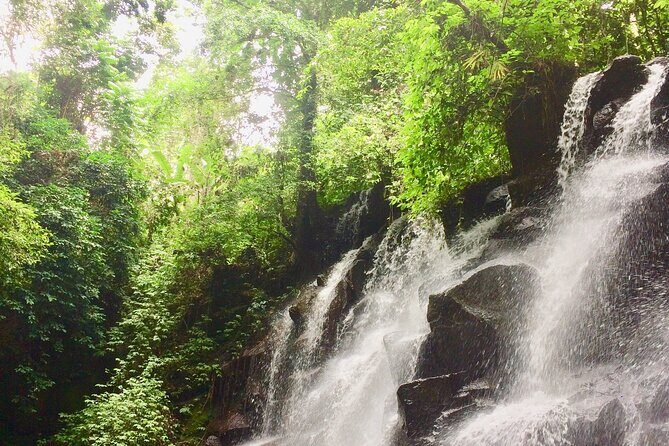
  • Lunch and bottled water are included, which usually saves you money and time later.
  • The rapids-to-time ratio is strong: about two hours of rafting with around 33 rapids.

Group size is capped at a maximum of 90 travelers. That doesn’t mean you’ll be rafting in a crowd, but it can affect how quickly you move through check-in and setup. If you’re trying to stay flexible, earlier starts can feel smoother, but the key is that the tour is organized and guided.

One more practical note: this is commonly booked around 18 days in advance on average. If you’re traveling in a busier season or you care about a specific date, booking ahead is a smart move.

What to expect on the river (and the one physical downside)

Best White Water Rafting in Bali - What to expect on the river (and the one physical downside)
Rafting is active, and the Ayung route here is made for people who want something more than a calm float. You’ll paddle for about two hours and hit a run of rapids—roughly 33—so you should expect wet excitement.

The downside is not about safety; it’s about body mechanics. One clear theme from real experiences: you have to climb down before the rafting and climb back up after. That can be tiring, especially if you’re carrying a bag or if you’re not used to uneven steps.

If you’re going with friends or family, plan for this as part of the day. Wear footwear you’re comfortable getting wet, and keep your phone and valuables secure.

Photos: what’s included, what’s not, and how to plan for action shots

Best White Water Rafting in Bali - Photos: what’s included, what’s not, and how to plan for action shots
Official photos are not included. That’s pretty normal for rafting trips, and it’s smart to know before you go so you’re not surprised by extra costs.

Still, you may be able to get help with your own phone. One experience described the guide keeping a phone in a waterproof bag and taking pictures near the waterfall area. If you want shots, ask your guide what the safest option is for your phone during the trip.

Who this rafting tour suits best

This one is positioned as something most travelers can participate in, and the river flow here seems to work for families too. One review specifically said the flow rate was suitable for riding with children, with scenery that made the time worthwhile.

So who should go:

  • First-timers who want real rapids but still want clear guidance
  • People who prefer a structured tour with gear and lunch handled for them
  • Families who want a fun rafting day and are okay with the climb down/up

Who might reconsider:

  • Anyone who’s uncomfortable with wet conditions and the physical effort of climbing down and up around the rafting area

If you’re unsure, think of it as a fun day of motion, not a relaxed spa activity.

Booking and cancel/weather reality (quick and practical)

This experience needs good weather. If conditions aren’t right, you’ll be offered a different date or a full refund.

Also, cancellation is free up to 24 hours in advance. If you’re close to your departure date, you’ll want to be mindful that weather can affect whether you go.

Should you book this Ayung rafting tour?

I’d book it if you want a guided Ayung River rafting day in Ubud that’s timed well: about two hours on the water, about 33 rapids, plus lunch and bottled water. It’s also a good fit if you care about friendly, capable guides—names like Yusik and Andy come up for a reason.

Skip it if you strongly dislike any physical exertion (that climb down and back up is real), or if you were counting on official tour photos being included. Otherwise, it’s a solid way to experience Bali’s white water without turning your vacation into logistics.

FAQ

How long is the rafting tour in Ubud?

The tour is about 3 hours total. You’ll spend approximately 2 hours rafting on the Ayung River.

How many rapids will we go through?

You’ll tackle about 33 rapids during the two hours on the river.

What’s included in the price?

The price includes the river rafting experience, a rafting guide, all safety equipment, lunch, and bottled water.

Are photos included?

No. Photos are not included.

Where is the meeting point?

You start at Bali Tarantula Adventure on Bongkasa Pertiwi, Abiansemal, Badung Regency, Bali, Indonesia. The activity ends back at the meeting point.

Is lunch provided?

Yes. Lunch is included after you finish rafting.

Can children participate?

Most travelers can participate, and there are mentions that the flow rate can be suitable for riding with children.

West Nusa Penida Island – Instagram Tour

West Nusa Penida Island - Instagram Tour - Pasih Uug (Broken Beach) and Angel’s Billabong: The Limestone Meets the Ocean

Nusa Penida in one long, photo-packed day. This West Nusa Penida Instagram Tour is built around the western cliff-and-coast views people post nonstop: Broken Beach (Pasih Uug), Angel’s Billabong, Kelingking Beach, and Crystal Bay. I especially like the way the day flows from one iconic viewpoint to the next, and how you get lunch included so you’re not hunting food. One thing to plan for: the speedboat harbors and boarding can involve getting on and off from the water, so bring a towel and an extra set of clothes just in case.

What makes this tour feel different is the pacing. It’s a private setup, so you’re not stuck rushing through famous spots with a crowd. You get to spend time taking photos where you want, then the private car handles getting you between viewpoints on the island.

Just know the timing is early and full. You start around 6:30am and typically get back close to 18:30, which is great for seeing highlights in daylight—but it is a long day in the sun.

Key Highlights You’ll Care About

West Nusa Penida Island - Instagram Tour - Key Highlights You’ll Care About

  • Western Nusa Penida route focused on Pasih Uug, Angel’s Billabong, Kelingking Beach, and Crystal Bay
  • Lunch included so you won’t waste time figuring out where to eat
  • Speedboat from Sanur plus return fast boat tickets to keep the day moving
  • Private car on the island for efficient hopping between viewpoints
  • Private tour pace for photos, not a rushed group schedule
  • Be ready for water boarding with a towel and spare clothes

Why the Western Side of Nusa Penida Is the Photo Magnet

If you’re choosing just one day on Nusa Penida, the western stretch makes a strong case. The views here are all about dramatic limestone shapes meeting ocean water. This tour leans into that exact look—so you’re not spending the day driving around hoping you’ll find something “Instagram-worthy.”

The sequence matters. Sites like Broken Beach (Pasih Uug) and Angel’s Billabong sit close enough together that you can get multiple wow moments without backtracking across the island. Then the plan shifts toward Kelingking Beach—arguably the main reason people come—before ending with Crystal Bay, which is more of a coastal cove vibe.

I like that the tour doesn’t just toss you at one famous spot. It strings several “big ticket” viewpoints together in a way that feels like a greatest-hits album—except you’re standing in the middle of the scenery, not scrolling past it.

Getting to Nusa Penida: Sanur Fast Boat and Door-to-Door Transfers

West Nusa Penida Island - Instagram Tour - Getting to Nusa Penida: Sanur Fast Boat and Door-to-Door Transfers
The day starts with pickup from Ubud and much of south Bali. That matters more than it sounds. Nusa Penida is not a quick hop. When transport is handled for you, you waste less time coordinating, and you start the day calmer—especially at 6:30am.

From there, you head to Sanur Harbour for the speedboat crossing. The tour includes return fast boat tickets (Sanur–Nusa Penida), which is a big part of the value. Most people underestimate how much energy a day like this costs just getting there and back, so having it packaged is one less headache.

On Penida, you use a private car to reach the western destinations. That’s the practical upgrade. Without it, you’d be juggling local transport schedules with limited time. With it, you get a smooth chain: boat to Penida, car to viewpoints, then boat back.

One practical note: the harbor can involve stepping on/off the boat from the water. I’d plan for that. Pack a small towel and something dry in a bag you can keep under control. It’s a simple move, and it makes the whole day feel less stressful.

Pasih Uug (Broken Beach) and Angel’s Billabong: The Limestone Meets the Ocean

West Nusa Penida Island - Instagram Tour - Pasih Uug (Broken Beach) and Angel’s Billabong: The Limestone Meets the Ocean
A lot of Nusa Penida’s appeal is how the rock formations look almost engineered by nature—limestone arches, cliffs, and natural pools where waves hit in theatrical ways. This tour hits two of the area’s most recognizable formations early.

Pasih Uug (often called Broken Beach) is known for a distinctive arch-like coastal rock formation. The view isn’t just pretty—it’s structural. You’re looking at a “frame” made by cliffs and ocean, which is why photos here tend to look dramatic even when you’re using a phone.

Right after, the day turns toward Angel’s Billabong, another southwestern cliff-edge formation. The concept is simple but striking: a natural infinity-pool effect where the water and rock edges create a clean, photo-friendly boundary. If you like ocean views with a strong foreground shape, you’ll probably keep looking for different angles.

Timing is important here. These places reward you for lingering—not sprinting. Since the tour is private, you can slow down for the shots you actually want, whether that’s wide shots showing the rock shape or tighter framing for textures and edges.

The only consideration I’d flag is the overall day temperature and sun. These stops are coastal and open. Bring sun protection and stay aware of how long you’re in exposed areas.

Kelingking Beach: The Main View You Came For

West Nusa Penida Island - Instagram Tour - Kelingking Beach: The Main View You Came For
Kelingking Beach is the stop most people talk about, and for good reason. Even though it’s described as a hidden beach in the village of Bunga Mekar, what draws you in is the sheer, recognizable viewpoint.

From the perspective areas, Kelingking looks like a giant claw-like ridge dropping toward a long stretch of sand. That’s why it’s so easy to see why it’s everywhere on social media. It’s also why your photo setup matters: the best results often come from taking a few minutes to find the exact vantage point where the ridge and coastline line up.

This is also where the tour includes lunch—often referred to as Kelingking Beach Lunch. That’s a smart inclusion because it keeps you from spending your most valuable island time searching for a meal elsewhere. It also means you’re likely eating close to the scenery, which helps the day feel cohesive rather than broken up by logistical detours.

How much time you spend here is a personal call. If you want lots of shots, this is your moment. If you prefer a quick hit and move on, you can still enjoy the view without turning it into a long day-long break.

One more practical thing: Kelingking’s viewpoint areas can mean walking on uneven or sloped surfaces depending on where you stop. Wear shoes you’re comfortable with, not flip-flops.

Crystal Bay: A More Relaxed Coast Break (With Water-Time Potential)

West Nusa Penida Island - Instagram Tour - Crystal Bay: A More Relaxed Coast Break (With Water-Time Potential)
After the cliff-heavy energy of Kelingking and the dramatic rock formations near it, Crystal Bay feels like a change of pace. Crystal Bay is described as a secluded cove on the west coast with a stretch of sand around 200 meters.

What I like about this stop is the contrast. You shift from iconic cliff shapes to a cove setting that feels calmer and more “beach day” than “lookout day.” Since it’s a more accessible bay thanks to well-developed roads, it’s also the kind of stop where you can settle your body and take in the ocean without feeling like everything is perched above you.

There’s also a water-time element some groups report during the day. In at least one account, snorkeling was a highlight and included a manta encounter. The key takeaway for you: if snorkeling or a water break is part of what you’re hoping for, this tour has the type of coastal stop where it can happen. That said, don’t assume it will match every day perfectly—water plans can depend on conditions and timing.

If you’re the kind of traveler who likes to alternate between picture-taking and actual relaxing, Crystal Bay is where that balance shows up.

Price and Value: What You’re Really Paying for at $80

West Nusa Penida Island - Instagram Tour - Price and Value: What You’re Really Paying for at $80
At $80 per person, this tour isn’t trying to be the cheapest way to see Penida. Instead, it packages the stuff that usually costs you time and effort.

Here’s what your money is doing:

  • Hotel pickup and drop-off (Ubud and much of south Bali): saves you from early-morning transport scrambling
  • Return speedboat tickets between Sanur and Penida: avoids the risk of missing logistics
  • Private car on the island: keeps the day efficient
  • Lunch included: reduces one of the biggest hidden costs—time lost finding food
  • Island taxes and included admission tickets at stops: means less on-the-spot paying

The “hidden” benefit is the schedule compression. On Nusa Penida, one bad day of logistics can ruin the plan. This tour’s whole value is that it’s designed to get you to multiple highlights in a single day without you playing transport roulette.

If you’re traveling as a group, keep an eye on the mention of group discounts in the pricing approach. Private doesn’t always mean expensive per person, especially when the operator offers discounts for group size.

Who Should Book This Tour (and Who Should Slow Down)

West Nusa Penida Island - Instagram Tour - Who Should Book This Tour (and Who Should Slow Down)
This tour fits you best if:

  • You want a one-day highlights route on western Nusa Penida
  • You care more about ticking off major viewpoints than building your own schedule
  • You prefer a private experience where you can pause for photos without pressure
  • You want the convenience of door-to-door transfers and an included meal

It may be less ideal if:

  • You hate early mornings and long travel days. You’re starting around 6:30am and returning about 18:30
  • You want a relaxed, flexible day with no ticking-clock structure. This is built for seeing multiple sites, not wandering casually

It’s also worth knowing it’s described as suitable for most travelers. Still, the day involves car transfer and speedboat time, plus coastal stop areas where you may do some walking and moving around.

Should You Book the West Nusa Penida Instagram Tour?

West Nusa Penida Island - Instagram Tour - Should You Book the West Nusa Penida Instagram Tour?
Yes—if your goal is a full-day run through Nusa Penida’s best-known western views with the stress removed. The tour’s value is in the packaging: fast boat, private island car, lunch, and included entry/taxes. For $80, that’s a fair trade when you consider how much time and coordination it normally takes to assemble all those pieces yourself.

I’d also book it if you’re the type who wants to take photos at your pace. The private format is the difference between getting a few decent shots and actually getting the angles you want at each viewpoint.

My final advice: go prepared for a long day and bring a towel plus dry clothes for possible water boarding at the harbor. Do that, and you’ll spend more of your energy on the scenery—and less on worrying about the logistics.

FAQ

What time does the tour start?

The tour starts at 6:30am, with hotel pickup before you head to the port.

How long is the West Nusa Penida Instagram Tour?

The total duration is about 12 hours, and you return to your hotel around 18:30.

Where is pickup offered?

Pickup is offered in Ubud and much of south Bali, with door-to-door transfers included.

How do you travel to Nusa Penida?

You take a speedboat from Sanur Harbour to Nusa Penida, and return by fast boat to Sanur.

Is this a private tour?

Yes. It’s described as a private tour/activity, so only your group participates.

What sights are included?

The day includes Pasih Uug (Broken Beach), Angel’s Billabong, Kelingking Beach, and Crystal Bay.

Is lunch included?

Yes. Lunch is included as part of the experience.

Are admission tickets and taxes included?

Yes. Island taxes and admission tickets for the stops are included.

Can I cancel for a full refund?

Free cancellation is available. You can cancel up to 24 hours in advance for a full refund.

Ubud Instagram Tour – Stunning Views & Flexible Itinerary

Ubud Instagram Tour – Stunning Views & Flexible Itinerary - The rhythm of an 8–12 hour private day

That Instagram day you planned can be practical.

This private Ubud tour is built around choosing your own photo stops and fitting them into a smooth, full-day route. I like that you’re not stuck in a rigid checklist, and you travel in comfort in an air-conditioned car with a dedicated driver to keep things moving.

Two things I really like: first, you get real flexibility. You can list up to 5 places in advance, and then adjust the plan day-of with your driver so you’re not rushing just for the next photo. Second, the guides drive the experience, not just the vehicle: drivers such as Agung, Agung Nama, Gusti, and Kadek have been highlighted for patience and strong English, plus help with reworking the itinerary when timing or mood shifts.

One drawback to weigh: entrance fees add up fast because admission is not included in the $18 price. Also, you’ll be on the go for roughly 8 to 12 hours, so this is best for people who don’t mind a long, sun-and-stairs day.
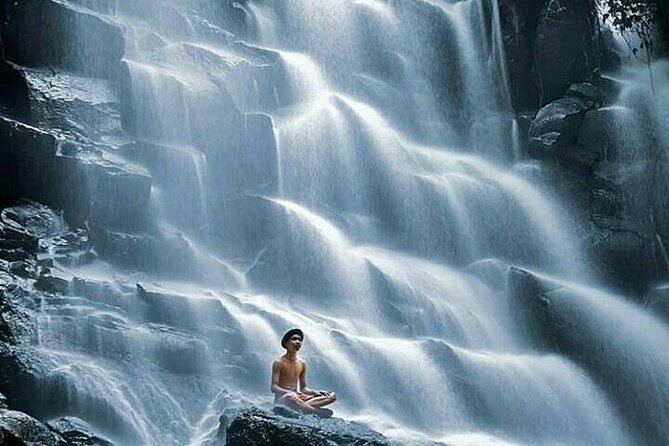
Key points

Ubud Instagram Tour – Stunning Views & Flexible Itinerary - Key points

  • Private, flexible itinerary: pick up to 5 stops and adjust with your driver
  • Air-conditioned transport: less stress between photo locations
  • English-speaking driver support: helpful pacing and cultural context
  • Photo icons included: gates, swing spots, terraces, waterfalls, and temples
  • Entrance fees are separate: budget for IDR/USD admissions per site

How an Instagram tour becomes a smart Bali plan

Ubud Instagram Tour – Stunning Views & Flexible Itinerary - How an Instagram tour becomes a smart Bali plan
This tour is Instagram-shaped on purpose, but the value is how it’s organized. You’re not trying to do half a day alone with maps, traffic, and parking headaches. Instead, you’re paying for transport + an English-speaking driver + the freedom to choose.

That flexibility matters in Bali, because light, crowds, and weather can change your day. Your best shot at those “can’t-miss” views comes when you’re not locked into one schedule. With this setup, you can shift priorities while the driver keeps routing sensible.

The private format is also a quiet quality-of-life upgrade. You can linger where you want, skip what doesn’t spark your interest, and still feel like the day has structure.

Price and value: $18 is the start, not the total

The base price is listed at $18 per person, and that’s for the tour experience itself. What you’ll likely pay extra is entrance admission at the stops you select.

That’s not a deal-breaker, but it changes the math. For example, Lempuyang Temple (Gates of Heaven) is listed separately at $8 per person, Tirta Gangga Water Palace at $5 per person, and Besakih Temple at $8 per person. In IDR, many other photo sites show admission in the tens of thousands of rupiah.

So here’s the value equation I’d use: if your plan includes multiple paid photo locations, this tour can still be a bargain because you’re also getting private transport and an English-speaking driver. If you only want one or two paid stops, you might compare against simpler transfers.

The rhythm of an 8–12 hour private day

Ubud Instagram Tour – Stunning Views & Flexible Itinerary - The rhythm of an 8–12 hour private day
Expect a long day, roughly 8 to 12 hours. The best way to enjoy it is to plan for “enough time” at each stop, not marathon photo sessions at all of them.

Your driver will pick up and return you, and bottled water is included. That sounds small, but it matters when you’re hopping between Ubud-area sites and more distant viewpoints.

Also, you can extend time for USD 5 per extra hour within the service area, which is a helpful safety valve if you fall in love with one location or want a calmer pace.

Where the tour operates: which areas you can get picked up

Ubud Instagram Tour – Stunning Views & Flexible Itinerary - Where the tour operates: which areas you can get picked up
Pickup and return transfers are offered, with the service area listed as: Ubud, Gianyar, Denpasar, South Badung, Bangli, and Tabanan. If you’re outside that zone, the plan can still reach farther, but there’s a surcharge for areas such as Gilimanuk, Lovina, or Amed (Karangasem regency).

Why this matters: Bali traffic can be unpredictable. Staying within the stated service areas usually keeps the day closer to the 8–12 hour window.

Picking your 5 stops without backtracking chaos

Ubud Instagram Tour – Stunning Views & Flexible Itinerary - Picking your 5 stops without backtracking chaos
Your instructions are to list up to 5 places in the remarks section, and keep them along one route so the itinerary can be prepared smoothly. That’s a big clue about how the tour works behind the scenes: they’re trying to avoid zigzagging across the island.

My practical approach: group your stops by area. For instance, keep nearby Ubud-style sights together, then select one longer-direction day if you’re also going for viewpoints like the Gates of Heaven.

If you’re unsure, ask your driver to confirm the order once you arrive. One of the most praised parts of the day is exactly this kind of real-time itinerary adjustment, with patience rather than pressure.

Monkey Forest and Goa Gajah: early cultural hits near Ubud

Ubud Instagram Tour – Stunning Views & Flexible Itinerary - Monkey Forest and Goa Gajah: early cultural hits near Ubud
Sacred Monkey Forest is one of the classic warm-up stops. It’s fun, it’s chaotic in the way that only monkey energy can be, and it’s visually high-impact. One warning that’s worth taking seriously: they like shiny things, so keep valuables zipped away and be ready for attention.

Then there’s Goa Gajah, also known as the Elephant Temple. The idea here is not just a quick temple peek: you typically get the elephant cave area and a jungle-like garden setting, plus a restaurant on-site. It’s a nice break from purely “photo posing” because you’re moving through a more atmospheric space.

What to watch for: temple and cave areas tend to be where you’ll slow down naturally, which can be good for photos but can also eat time. Build in pacing.

Rice terraces and the outfit tip that actually helps

Ubud Instagram Tour – Stunning Views & Flexible Itinerary - Rice terraces and the outfit tip that actually helps
Tegalalang Rice Terraces are a must if you like classic Bali visuals. You can walk through the terraces, and the experience is tied to the everyday rhythm of rice farming.

A practical tip from real-world advice: bring a long dress and wear shorts underneath, or you can rent a dress there. This is the kind of detail that saves you from last-minute awkwardness and helps you blend in with less hassle.

Also, this is a stop where you’ll want comfortable footwear and a steady pace. The views are amazing, but the ground can be uneven in spots.

Waterfalls: jungle drama with different vibes

Ubud Instagram Tour – Stunning Views & Flexible Itinerary - Waterfalls: jungle drama with different vibes
If you pick Nung Nung Waterfall, you’re choosing a jungle-set cascade that some people consider more out-of-the-way than the busiest waterfall routes. The tradeoff is simple: it can feel more “hidden” because it’s less on the main tourist circuit.

The itinerary also includes a separate “most popular waterfall” option (admission listed separately). The value of that choice is recognition: if you want the big, widely photographed waterfall moment, this is usually the kind of stop that delivers the classic payoff.

What to consider: waterfalls are weather-dependent. If conditions aren’t ideal, you might need to adjust priorities with your driver rather than forcing it.

Handara Gate and Bali Swing: photo time that requires planning

Handara’s Gate is all about the famous entrance look. It’s popular for a reason: the framing is built for photos, and the scene is dramatically “postcard” compared with ordinary roadside Bali.

Then comes Bali Swing, where the goal is the perfect shot in a park setting. These places can feel like a photo factory, so go in with a mindset that mixes patience and good timing.

Here’s my advice: if you’re aiming for shots that look effortless, don’t rush. Spend enough time choosing an angle, then do your swing poses. If you do everything at max speed, the day gets tiring faster than you think.

Entrance fees are listed as extra here too, so treat it as a paid-photo investment. Worth it if you want that specific iconic image.

Water temples and stone-walking ponds: spiritual photos with real behavior

This tour offers two different water-related temple experiences in the mix.

One is described as a favorite water temple tradition where you can experience Balinese spiritual practices. Another is a water temple where you can walk on stones in the water ponds, which is exactly the kind of shot that looks simple but takes attention and balance.

If you’re also considering Tirta Gangga Water Palace, note it’s listed as an admission fee that’s not included (shown as $5 per person). This is one of those places where the photos look structured because the setting is designed for reflective water and calm movement.

What to keep in mind: water temple behavior matters. You’ll want to follow any rules in the area and move respectfully. The whole experience gets better when you treat it as a place first and a photo stop second.

Gates of Heaven (Lempuyang): the long view day

The Gates of Heaven are tied to Lempuyang Temple, and that stop comes with its own admission cost (listed at $8 per person). The viewpoint setup is famous: you’re photographing iconic gates with a sky-and-mountain backdrop that makes your brain think it’s a movie frame.

This is also a “show up ready” stop. It’s the kind of location where weather, timing, and crowd flow can affect how your photos turn out.

If you choose this, give it the time it deserves in your 5-stop plan. Don’t pair it with five other major paid photo stops back-to-back unless you genuinely like switching locations constantly.

How your driver changes everything (names you might get)

The best experiences on this kind of day tour aren’t just about sights. They’re about whether someone can keep you calm while navigating timing, traffic, and your personal preferences.

In the feedback that comes with this tour style, drivers like Agung, Agung Nama, Gusti, and Kadek show up as standout names. Common themes: strong English, patience, and the ability to explain local culture and how to approach each place.

One especially useful pattern is itinerary problem-solving. If your plan needs a swap—because a site is not ideal at that moment, or because you want to spend longer somewhere—this tour’s model is built to handle that with flexibility rather than friction.

What to bring so the day feels smooth

You’ll be outdoors a lot, and you’ll bounce between temples, terraces, and viewpoints. I’d pack like this:

  • Comfortable shoes for uneven walkways
  • A plan for temple clothing: the long-dress tip for rice areas is real, and renting or using one can help
  • Sun protection and water (water is included, but you’ll still feel the heat)
  • Some local currency for small on-site needs, especially where dress rentals or snacks may appear

And for Monkey Forest: if something looks shiny, keep it secured. Yes, it sounds silly. It still matters.

Tips for booking: who this tour is best for

This works best if you want a private day with photo icons but hate rigid schedules. It’s ideal for couples, small groups, or solo travelers who want to aim for specific shots like terraces, gates, swing poses, and temple views without managing transportation stress.

If you’re the type who wants “only temples” or “only nature,” you can still use the flexibility. Just choose your 5 stops to match your energy level.

If you’re chasing a very exact shot list, remember entrance fees vary by stop. Pick the places you truly care about, then let the driver handle the order.

Should you book the Ubud Instagram Tour?

I’d book it if your priority is a private, flexible day built around iconic photo stops, and you value having a driver who can guide and adapt the plan. The $18 base price is a strong entry point, and when you add private transport plus English support, it can feel like good value even with separate entrance fees.

I’d skip or rethink it if you want a low-spend day with minimal paid sites, because admission costs can stack up quickly. Also, if you dislike full-day schedules, this one is long by design.

If you do book, make your list of up to 5 stops reflect what you actually want to see, then give your driver room to reorder things based on timing and weather. That’s where the day tends to feel effortless rather than rushed.

FAQ

What’s included in the $18 per person price?

The included items are hotel pickup and return transfers, a private air-conditioned vehicle, an English-speaking driver, and bottled water. Entrance fees are not included.

How many places can I visit?

You can list up to 5 places you want to visit in the remarks section. The itinerary is arranged along one route to prepare your day smoothly.

Is this tour private or shared?

This is a private tour. Only your group participates.

Are entrance tickets included?

No. Entrance fees are extra and vary by stop. The tour lists examples such as Lempuyang Temple, Tirta Gangga Water Palace, and Besakih Temple as separate admission costs.

Can I customize my itinerary?

Yes. The itinerary is flexible, and you can change or add destinations with your driver (within the service area and route planning).

Where does the pickup service cover?

Pickup and return transfers are available in Ubud, Gianyar, Denpasar, South Badung, Bangli, and Tabanan. Other areas like Gilimanuk, Lovina, or Amed Karangasem can be reached with a surcharge.

What if the weather is poor?

This experience requires good weather. If it’s canceled due to poor weather, you’ll be offered a different date or a full refund.

Mount Batur Sunrise Trekking Sharing Group

Mount Batur Sunrise Trekking Sharing Group - Volcanic-Steam Breakfast: Bread, Bananas, and Eggs Done the Most Bali Way

Sunrise at an active volcano is a rare plan. This Mount Batur experience is built around one big payoff: seeing the sun rise over Bali’s volcanic views from high on the mountain, then fueling up with a breakfast cooked using volcanic steam. Add door-to-door pickup and a guided trek, and it becomes a simple way to do something dramatic without doing a lot of logistics.

I especially love how practical this feels for a long morning. You get hotel pickup and drop-off, bottled water, and coffee or tea, so you’re not scrambling right when you’re sleepy and cold. And the fact that you’re hiking with a dedicated local trekking guide means you can focus on footing and timing, not guesswork.

One thing to consider: the experience runs early and relies on smooth pickup timing. A cancellation or missed contact can be frustrating in the dark, so you’ll want to double-check your confirmation details and keep your phone handy.

Key points

  • Sunrise from Mount Batur: a classic Bali viewpoint with an early-morning start.
  • Volcanic-steam breakfast: bread, bananas, and eggs cooked right in the volcano’s heat.
  • Dedicated local guide for safety: you follow a route meant for trekkers, not lone-wolf wandering.
  • Door-to-door transportation from Ubud: fewer steps between you and the trail.
  • Coffee plantation stop afterward: a relaxed cultural add-on before you head back.
  • Strong value at $21: breakfast, water, and guiding are part of the deal.

Mount Batur Sunrise: What Makes This Trip Feel Worth $21

For $21, this is one of those trips that feels more like a package deal than a tour with add-ons. You’re paying for a sunrise hike experience, but you also get the “supporting cast”: pickup, bottled water, and breakfast, plus a coffee/tea stop later.

The real reason this works is timing and simplicity. You don’t have to coordinate rides to a specific trailhead, figure out what time to meet, or arrange a guide. The day is structured so you’re hiking when it’s dark enough for sunrise, then eating and relaxing on the way back.

Also, I like that it’s described as a private tour/activity. That matters if you dislike big groups and prefer a smaller, more controllable pace. You’ll still be with people on the hike, but it’s not set up like a mass event.

Getting From Ubud to the Volcano Without Turning Your Morning Into Chaos

Mount Batur Sunrise Trekking Sharing Group - Getting From Ubud to the Volcano Without Turning Your Morning Into Chaos
This tour includes hotel pickup and drop-off in the Ubud area, and that’s not a small detail. In Bali mornings, traffic and timing can change fast, and sunrise hikes punish delays. With pickup built in, you can plan your sleep and breakfast-at-home schedule without guessing.

You’ll also get bottled water and coffee and/or tea as part of the included items, which helps after the climb. In practical terms: you can keep moving, then warm up and rehydrate without hunting for a shop at the worst possible moment.

There’s also a mobile ticket involved. That usually means you can keep everything on your phone, and you’re not digging through paper in the dark. Still, keep a screenshot or offline access just in case your signal acts up.

The Sunrise Hike: How the Guide Changes the Whole Experience

Mount Batur Sunrise Trekking Sharing Group - The Sunrise Hike: How the Guide Changes the Whole Experience
The hike is the core of the day, and the tour’s biggest advantage is the dedicated local trekking guide. Even if you’re an experienced walker, a guide matters on a volcano trek. You’re managing steep sections, changing ground, and a schedule where you can’t really afford to get lost.

Most travelers can participate, so this isn’t marketed as an extreme technical climb. That said, “can participate” doesn’t mean “easy.” Expect uneven steps and an early start that feels sharper than you think until you’re moving.

Here’s what you should expect from a guided sunrise trek like this:

  • A steady pace aimed at getting you into position for sunrise.
  • Guidance on where to step, plus timing cues so you’re not rushing or lingering.
  • A focus on safety over “speed contests.”

One review stands out for the human factor: a driver named Agoesp was described as super helpful, and he stayed attentive all the way back to make sure everyone got safely to the hotel. That’s the kind of service that makes the whole day feel calmer—especially when you’re tired and it’s still early.

Waiting for Sunrise: Why This Part Feels So Special

Sunrise is the obvious draw, but the real experience is the transition into it. You’re climbing in darkness, then slowly moving into light, and suddenly the views make sense. The contrast is what people remember: the mountain path, then the wide-open sky breaking over Bali.

This tour is centered on watching the sun rise over Bali from the heights of an active volcano. That means you’re not just seeing a sunrise from a roadside viewpoint. You’re up high enough that the morning feels like it belongs to the mountain, not the town below.

You’ll also be in the volcanic area where terrain shapes what you see. Instead of thinking of it as scenery you pass through, treat it like a living environment: heat, rock, and the sense you’re standing on something active.

Volcanic-Steam Breakfast: Bread, Bananas, and Eggs Done the Most Bali Way

Mount Batur Sunrise Trekking Sharing Group - Volcanic-Steam Breakfast: Bread, Bananas, and Eggs Done the Most Bali Way
After the hike, breakfast is not an afterthought here. It’s the showpiece of comfort. The plan includes a simple meal—bread, bananas, and eggs—cooked in volcanic steam.

That detail is why this tour feels more authentic than a standard breakfast stop. You’re eating something warm and fresh because of the mountain’s heat, not because someone microwaved it in a kitchen.

A few practical notes to set expectations:

  • The meal is likely quick and straightforward, not fancy.
  • It’s probably warm and satisfying right after you’re cold from the climb.
  • You’ll want to eat before you fully freeze again on the return.

This is also a great moment to reset your energy. You’ve done the hardest part—getting up to sunrise—then you reward yourself with something that feels like a story, not just calories.

Kintamani and the Coffee Plantation Stop: Culture While You’re Still Awake

Mount Batur Sunrise Trekking Sharing Group - Kintamani and the Coffee Plantation Stop: Culture While You’re Still Awake
After sunrise and breakfast, you move toward Kintamani, a nearby small town area around the volcano. Even if you don’t spend long wandering, it’s part of the day’s rhythm: hike, eat, then switch from physical effort to local atmosphere.

Then there’s the traditional coffee plantation visit, which includes coffee and/or tea as part of what’s included. This is a nice counterbalance. Sunrise treks can make the day feel like one long sprint, but a plantation stop lets you slow down and focus on taste and stories.

One review praised the driver for sharing information about Bali’s culture during the trip, especially while heading to the coffee plantation. That kind of commentary can turn a short stop into something meaningful, even if you’re not buying anything.

Keep your expectations realistic: this is an add-on, not a full-day deep dive into coffee history. Still, it’s a solid way to round out the day with something distinctly Bali.

Door-to-Door Return: The Best Time to Stop Trying to Plan

Mount Batur Sunrise Trekking Sharing Group - Door-to-Door Return: The Best Time to Stop Trying to Plan
The total duration is about 10 hours (approx.), and it’s structured as a round trip. That’s a long morning, but sunrise tours are like that. You’re trading a chunk of the day for a peak moment you can’t easily replicate on your own.

Because pickup and drop-off are included, you can stop worrying about what you’ll do afterward. When you get back, your priorities become simple: shower, eat something normal, and rest.

This kind of day also rewards people who keep their plan light for the rest of the day. If you’ve booked another appointment or dinner that needs punctuality, build in breathing room.

Price and Logistics: What’s Included, What Isn’t, and the Real Value

Mount Batur Sunrise Trekking Sharing Group - Price and Logistics: What’s Included, What Isn’t, and the Real Value
At $21, the value is tied to what’s bundled. You’re getting:

  • Breakfast (bread, bananas, eggs cooked in volcanic steam)
  • Bottled water
  • Driver/guide
  • Hotel pickup and drop-off
  • Coffee and/or tea
  • Fuel surcharge

Not included: alcoholic drinks, which are available to purchase. That’s pretty common, and it’s worth noting because it keeps the package price lower. If you want alcohol later, you can add it with less guilt because it’s not baked into the hike cost.

The “real value” question is whether you want to pay someone to handle the early coordination and safety support. If you’d rather spend that time enjoying the moment instead of planning transport and guide arrangements, this price makes sense.

Group Setup and Safety: Private Tour, Shared Steps

Mount Batur Sunrise Trekking Sharing Group - Group Setup and Safety: Private Tour, Shared Steps
This is listed as a private tour/activity, meaning only your group participates. That’s good for comfort and control, especially if you want a less chaotic feel.

Still, you’re hiking in a popular destination zone, so you should expect to share some space with others near the sunrise area. The tour’s safety focus comes from the guide and the guided route, not from you having the entire mountain to yourself.

Also, children must be accompanied by an adult. And while “most travelers can participate,” you should still think about the physical demands of an early, steep hike. Bring good shoes and take it slow when your breathing spikes.

One Reality Check: Pickup Timing and Communication Can Matter

A strong review praised smooth service and attentive help from the driver, including the safe return to the hotel. That aligns with what you want from sunrise tours.

But there’s also a cautionary case in the feedback: one unhappy experience described a situation where the guide did not show up, and the customer waited about three hours after booking. The response referenced trouble contacting on a phone.

So here’s the practical takeaway: don’t treat sunrise pickup like a casual taxi. Before the morning, make sure your contact details are correct, and confirm you can be reached. Keep your phone charged and nearby. If you’re traveling with a SIM you’re not sure about, top up in advance or ensure you can access messages.

This doesn’t mean the tour is consistently unreliable. It just means you’ll protect yourself by being ready.

Who This Mount Batur Sunrise Trek Suits Best

This is a great fit if you want:

  • A bucket-list sunrise without heavy planning
  • A guide-led volcano hike for safety and timing
  • A morning that includes breakfast made from volcanic steam
  • A day that ends with a coffee plantation stop and a relaxed return

It’s especially good for couples and small groups who value door-to-door convenience. It’s also a solid option if you’re staying in Ubud and don’t want to spend your precious early hours hunting for transport.

If you’re the type who hates early starts or is picky about tour reliability, you’ll need to weigh that. Sunrise means early, and early means timing is everything.

Should You Book This Mount Batur Sunrise Trek?

If you’re chasing one of Bali’s most memorable mornings, I’d say yes—especially for the value. The combination is hard to beat: sunrise from Mount Batur, a volcanic-steam breakfast, and a guided hike with pickup included.

Book it if you want guided safety, you like structured days, and you’re okay committing most of your day to a 10-hour loop. Book it even more if you want someone else to handle pickup and the coffee stop so you can just enjoy the mountain morning.

Hold off if you’re highly sensitive to timing problems or you can’t reliably handle early communication. In that case, you’ll want extra confirmation and clear contact before you go.

FAQ

How long is the Mount Batur sunrise trekking experience?

It’s approximately 10 hours.

Do you get hotel pickup and drop-off?

Yes. The tour includes hotel pickup and hotel drop-off, plus a driver/guide.

What is included in breakfast?

Breakfast is included and is cooked in volcanic steam. It includes bread, bananas, and eggs.

Is coffee or tea included, and is there a coffee plantation stop?

Yes. The tour includes coffee and/or tea and includes a traditional coffee plantation stop.

Are alcoholic drinks included?

No. Alcoholic drinks are not included, though they may be available to purchase.

Is this tour private, and can children join?

It’s described as a private tour/activity, meaning only your group participates. Children must be accompanied by an adult.

Mount Batur Jeep Sunrise and Black Lava Tour

Mount Batur Jeep Sunrise and Black Lava Tour - The Early Morning Reality: Pickup, Timing, and Getting a Good View

Waking up for sunrise pays off here. This Mt Batur Jeep sunrise + Black Lava morning is built for early light, big views, and zero trekking. You ride up in a 4WD jeep, watch the sky change, eat breakfast near the summit, then head into the black volcanic terrain that looks almost sci-fi.

Two things I really like: the driver-as-photographer setup (so you’re not fiddling with your phone), and the summit breakfast while you’re still high up and wide awake. One thing to consider: it’s an early start, so you’ll want to plan for a serious wake-up call and a dark, cold-ish morning vibe.

Key Highlights You’ll Care About

Mount Batur Jeep Sunrise and Black Lava Tour - Key Highlights You’ll Care About

  • 4WD jeep access means no trekking to the sunrise viewpoint
  • Driver doubles as your photographer, helping you get the classic sunrise shots
  • Breakfast at the summit so you’re eating while the views are still the star
  • Black lava fields after sunrise for that dramatic volcanic contrast
  • Air-conditioned transfers plus a comfortable ride early in the day
  • Private tour feel with only your group, even though there are group discounts available

Why This Jeep Sunrise Works (No Trek, Big Payoff)

Mount Batur Jeep Sunrise and Black Lava Tour - Why This Jeep Sunrise Works (No Trek, Big Payoff)
Mount Batur is famous for a reason. But the usual way people do it involves a hike at night, heavy boots, and a lot of willpower. This tour takes that pressure off you. Instead of walking, you get transported by 4WD jeep to the sunrise viewpoint area, then continue by vehicle into the volcanic black lava fields afterward.

That shift matters. You still get the main “I can’t believe I’m here” moment—sunrise over Bali—but you spend your energy on being present, not marching in the dark. If you’re short on time, recovering from other activities, or you just don’t want a steep trek, this format is a smart match.

Also, the morning is paced in a way that feels practical. You’re not waiting around for hours with nothing to do. You’re moving from pickup to viewpoint to breakfast, then onward to the lava terrain.

The Early Morning Reality: Pickup, Timing, and Getting a Good View

Mount Batur Jeep Sunrise and Black Lava Tour - The Early Morning Reality: Pickup, Timing, and Getting a Good View
This is an around-8-hour experience overall, with about 4 hours spent at the destinations, and the rest for travel time. That means you’re signing up for a proper morning schedule, not a casual late start.

One detail I think you’ll feel: pickups can be very early. In one example from the tour experience, people reported waking up around 2am and getting picked up around 2:30am from Seminyak. Even if your exact pickup time differs, you should expect that “alarm is rude” feeling.

The upside is that early arrival can help you get a better sunrise spot. One of the recurring wins in people’s stories is how drivers handled timing so they could reach the best viewing position. If sunrise is the headline for you, arriving early is part of the product.

And yes, you’ll likely be in a dark early drive and then at altitude during sunrise. Bring layers you can handle in both situations. The tour itself includes air-conditioned transfers, but weather still has its own ideas at dawn.

Mount Batur Sunrise: What the Summit View Is Like

Mount Batur Jeep Sunrise and Black Lava Tour - Mount Batur Sunrise: What the Summit View Is Like
Once you reach the Mount Batur sunrise area, the goal is simple: watch the sky change while you’re up high enough to feel the scale of the island. This is the moment that makes people book the whole morning.

The viewpoint setup is the key difference from trekking tours. You aren’t spending the hardest part of the day climbing. You’re arriving, finding your angle, and then settling in for sunrise. That’s a big deal if you’re traveling with less hiking experience, or if you just want to enjoy the view without turning it into a workout.

Then comes breakfast at the summit. This is one of those “small detail that becomes the whole memory” choices. Eating up there means you’re not rushing away immediately after sunrise. You get to refuel, enjoy the scene a bit longer, and keep the morning feeling like a reward instead of a chore.

Your driver also acts as your photographer. That means you’re more likely to get the kind of photos that match the effort you’re making—classic sunrise frames with you included. People specifically praised drivers like Dewa, Yasa RJA, and Beli Bangor/Bangol for this “driver with camera” approach.

Breakfast + Coffee/Tea: Fueling the Next Part of the Morning

Mount Batur Jeep Sunrise and Black Lava Tour - Breakfast + Coffee/Tea: Fueling the Next Part of the Morning
Breakfast isn’t just a line in a list here. In a sunrise tour, timing is everything. If breakfast is too early, you feel sick. If it’s too late, sunrise is over and the day is moving on.

This tour includes breakfast and also includes coffee and/or tea, which is exactly what you want before the next phase of the day. You’ll be switching from viewing mode to exploring mode, and warm drinks help you get comfortable while you’re still near the viewpoint area.

Also, it helps psychologically. Sunrise mornings can feel intense—very early wake-ups, big expectations. Having food and a drink right after the main highlight turns it into a calmer, more complete experience.

One note from the experience stories: some people liked an ending that involved a coffee plantation area. The tour info you’re given specifically includes coffee/tea, so don’t assume a plantation stop is guaranteed. But it’s worth asking your driver if they’re planning an extra coffee-related stop on your route.

Into the Black Lava Fields: The Off-Road Part Without the Sweat

Mount Batur Jeep Sunrise and Black Lava Tour - Into the Black Lava Fields: The Off-Road Part Without the Sweat
After sunrise and breakfast, you continue into the Black Lava fields. This is where the morning gets more adventurous in a visually dramatic way.

Instead of trekking across the volcanic terrain, you travel by 4WD jeep through the off-road areas. That means you still experience the unreal texture and color of the volcanic ground—dark rock, sharp edges, and that “other-world” feeling—without turning the day into a long hike.

For photography lovers, this part is gold. There’s contrast everywhere: bright morning sky above, black volcanic ground below, and often the landscape pulling your eyes into the frame. The driver-photoshooter element really matters here because the most photogenic angles are often the ones you don’t think to take on your own while you’re trying to stay balanced in vehicle motion.

If you tend to get carsick, bring the usual travel precautions. The tour is a jeep ride through volcanic roads, and you might find it a bit bumpy. The upside is that you’re seeing more terrain than a purely walking tour, with less physical effort.

The Drivers: Why People Keep Mentioning Names

Mount Batur Jeep Sunrise and Black Lava Tour - The Drivers: Why People Keep Mentioning Names
A standout feature of this experience is the driver role. The driver isn’t only driving. They also work like your personal photographer.

In the experience stories, names came up again and again:

  • Bangol/Beli Bangol (often praised as helpful and a very good cameraman)
  • Beli Bangor (credited for being both driver and photographer)
  • Yasa RJA (praised as fun, kind, and top-notch at sunrise photo timing)
  • Dewa (described as one of the best drivers, with good communication and early arrival)
  • Surya Buffalo (noted for English and helpful recommendations without added cost)

When the driver is strong, it changes your trip from a checklist into a shared experience. You get more guidance on where to stand, how to frame shots, and when to shift positions for changing light.

And practical bonus: in one example, a driver messaged when arriving at the lobby, and pickup was early so guests could get the best sunrise spot. That’s exactly the kind of small service detail that saves stress at a chaotic early hour.

What’s Included in the $40 Price (And Why It Feels Fair)

Mount Batur Jeep Sunrise and Black Lava Tour - What’s Included in the $40 Price (And Why It Feels Fair)
At $40 per person, this tour sits in the “good value for a signature Bali moment” category, mainly because of what’s folded into the day.

You’re getting:

  • Breakfast
  • 4WD jeep ride to the sunrise viewpoint area and into the black lava fields
  • Air-conditioned vehicle for transfers
  • Driver as personal photographer
  • Coffee and/or tea
  • An admission ticket included for the Mount Batur portion listed as 4 hours at destinations

When you’re comparing tours, watch for the difference between “transport only” versus “transport + sunrise + food + guided photo help.” This one blends those. The driver doing the photography doesn’t sound important until you realize how hard it is to take great sunrise photos alone when you’re juggling timing, cold air, and the crowd flow.

Not included is only personal expenses, which is refreshingly simple. That keeps the spending predictable.

One more value point: it’s described as private, meaning only your group participates. That often means less waiting and more control over the pacing—useful on a dawn schedule.

Logistics That Make a Difference: Private Tour, Mobile Ticket, Meeting Point

Mount Batur Jeep Sunrise and Black Lava Tour - Logistics That Make a Difference: Private Tour, Mobile Ticket, Meeting Point
This is set up as a private tour/activity, so only your group participates. That can be a big deal if you don’t want to feel rushed by a larger group.

It also includes a mobile ticket and confirmation at booking. You’ll start at:

Trikaya Strawberry, Br. Dajan Umah, Jl. Nusantara, Pengotan, Kec. Bangli, Kabupaten Bangli, Bali 80614, Indonesia

And the activity ends back at the meeting point. Even if your pickup is offered, the plan is still structured around that meeting point start/end.

Also, the tour notes group discounts. If you’re traveling with friends, it’s worth checking if pricing adjusts based on group size.

Who Should Book This Tour (And Who Might Skip It)

This is a great fit if:

  • You want Mount Batur sunrise but don’t want trekking in the dark
  • You care about photos and appreciate a driver who helps you get them
  • You like the idea of combining sunrise views with black lava exploration
  • You prefer a structured morning with food included, rather than piecing together transport

You might skip it if:

  • You’re the type who wants a long walking/hiking challenge as part of your travel identity (this version is specifically “no trekking required”)
  • You dislike very early starts and can’t handle a wake-up schedule around 2am/2:30am style timing

Tips to Get More Out of Your Mt Batur Morning

I’d plan for comfort first. Sunrise happens fast, and you don’t want to spend it adjusting your clothes.

Bring:

  • A light jacket or layers for dawn air
  • Sunglasses (the brightness ramps up quickly once sunrise hits)
  • A phone camera plan that doesn’t rely on you being the only person taking photos

Then go with the flow. Let your driver—especially if they’re one of the praised photographers like Yasa RJA or Beli Bangol/Bangor—direct simple positioning. Changing angles at the right moment is the difference between average sunrise shots and the wow-factor ones.

Finally, treat the lava part as its own experience. People often fixate on the sunrise and rush the rest. But the black volcanic terrain is what makes the tour feel like more than just a sunrise viewpoint.

Should You Book the Mount Batur Jeep Sunrise + Black Lava Tour?

If your priority is a classic Bali sunrise without trekking, this is an easy yes. The jeep access, the summit breakfast, the included coffee/tea, and the driver-turned-photographer model are a strong package for the money.

Book it when:

  • You want value and simplicity
  • You want photos without the stress
  • You want sunrise plus volcanic scenery in one morning

Pass or reconsider if:

  • You want a full-on hiking day
  • You can’t do very early pickup times
  • You hate riding on rough terrain (you might find it a bit jostling on volcanic roads)

One last practical point: because the entire experience hinges on sunrise timing, choose this tour when you’re confident you can get up early and ready. If you can, you’ll likely walk away with the exact kind of memory that makes Bali feel dramatic in the best way.

FAQ

How long is the Mount Batur Jeep Sunrise and Black Lava Tour?

The full tour package is about 8 hours total, with around 4 hours spent at the destinations and the remaining time for travel.

Is there trekking involved?

No. This tour is designed so you can reach the sunrise viewpoint by 4WD jeep, without trekking.

What’s included in the price?

The tour includes breakfast, air-conditioned vehicle transfers, the 4WD jeep ride to the sunrise viewpoint and Black Lava fields, coffee and/or tea, and a driver who can act as your personal photographer. An admission ticket is included for the Mount Batur portion listed.

Do you provide pickup?

Pickup is offered. The experience also notes a specific meeting point, and it ends back at that meeting point.

Is this tour private?

Yes. It’s described as private, so only your group participates.

Can I cancel for free?

Yes. You can cancel for a full refund up to 24 hours before the experience starts. If you cancel less than 24 hours before, the amount paid isn’t refunded.

The Best Highlight Ubud Tour

The Best Highlight Ubud Tour - Stop 1: Tegenungan Waterfall for your first big view

Ubud in one day, minus the stress. This tour lets you customize the sights you hit, so your schedule matches your energy. I also like the round-trip hotel pickup and air-conditioned ride that helps you survive Ubud heat in one piece.

Its real strength is how the guide runs the day. I’ve seen reviews call out Lanang’s friendly professionalism, and Wayan Landung (Satya) for being especially accommodating when plans needed adjustment. One possible drawback: the big ticket items are the entrance fees (and some activities cost extra), so the final total is higher than the base $45.

Key highlights you’ll feel from the start

The Best Highlight Ubud Tour - Key highlights you’ll feel from the start

  • You pick the route: choose which stops to include, from waterfalls to temples and Ubud center.
  • Pickup and AC transfer: round-trip hotel pickup and an air-conditioned vehicle to cut down time stuck in traffic.
  • Bottled water included: hydration is handled for you, which matters when you’re walking in the sun.
  • A guide who explains what you’re seeing: you’re not just dropped off at photo spots.
  • Crafts plus culture in one sweep: Batuan Temple, Celuk Village, and Tirta Empul cover very different sides of Ubud.
  • Great guide feedback: reviews specifically mention Lanang and Wayan Landung (Satya) for warmth and flexibility.

How the customizable Ubud Highlight route fits your day

The Best Highlight Ubud Tour - How the customizable Ubud Highlight route fits your day
The Best Highlight Ubud Tour is built for people who don’t want a rigid checklist. Instead, you select the sights you want, and the driver/guide moves you between them in a private, air-conditioned car. That means you can go full-on with the classic circuit, or trim it down if you’re only here for a short time.

What I like most is that this format respects how Ubud actually feels. One hour you’re in a temple courtyard with cool shade, the next you’re staring at a waterfall view in strong sun. When your itinerary is adjustable, you spend energy on the parts you care about instead of rushing through everything.

You also get a helpful amount of structure. The tour lists each stop with a rough time window, from a focused hour at temples and villages to a longer half-day style stretch at Tirta Empul. So you’ll have a sense of how the day flows, even if you choose fewer stops.

Pickup, timing, and staying cool between stops

Let’s be honest: in Bali, getting from place to place can be half the battle. This tour reduces that pain with round-trip hotel pickup and an English-speaking driver. You’re not figuring out gates, parking, or how long transfers take while you sweat through your shirt.

Bring expectations that the day is active. Even when you’re not hiking, you’ll be walking through temple areas, village lanes, and paths near the waterfall and rice terraces. You’ll also want to move quickly when the light is good, especially at Tirta Empul and Tegalalang.

Also, this experience depends on good weather. If conditions are poor, you should expect the tour to be rescheduled or refunded, so it’s smart to build in some flexibility on your Ubud schedule.

A nice practical detail: bottled water is included, plus fuel and parking fees are covered. You won’t be stopping just to solve logistics.

Stop 1: Tegenungan Waterfall for your first big view

The Best Highlight Ubud Tour - Stop 1: Tegenungan Waterfall for your first big view
Tegenungan Waterfall is the opening act, with about 1 hour on site. The tour description also notes that your guide escorts you along the way to get a nice view before you reach the falls.

This is a great first stop because it sets the tone. You’ll arrive primed for photos and scenery, and you’ll get your waterfall fix early before fatigue catches up. It also helps if you later decide to shorten the rest of the day.

The main thing to plan around is that waterfall stops tend to get damp. In at least one review, the guide went out of their way to keep guests comfortable when it was showery. That’s a good sign: you’ll likely get practical help navigating the wet parts.

Entrance fees for Tegenungan are not included. Budget IDR 30K per person if you’re doing this stop.

Stop 2: Batuan Temple and what to look for in the details

The Best Highlight Ubud Tour - Stop 2: Batuan Temple and what to look for in the details
Next up is Batuan Temple, also set for about 1 hour. The tour’s focus here is the Balinese temple setting and the chance to take photos with Balinese temple architecture and art.

Batuan is a good stop if you like the craft side of Balinese culture. It’s not just one dramatic photo angle; you’ll likely see repeated patterns, carved details, and the kind of artistry that makes temples feel like living works of culture.

A drawback to note: like other temples on this route, you pay the entrance fee separately. Plan for IDR 30K per person.

If you’re the type who wants quick explanations, this is a strong use of your guide time. A short, clear briefing can help you notice what matters instead of treating it like just another entrance ticket and a few snapshots.

Stop 3: Celuk Village for carving, painting, and silver work

The Best Highlight Ubud Tour - Stop 3: Celuk Village for carving, painting, and silver work
Celuk Village is the craft break in the itinerary, with about 1 hour. Here you can visit traditional Balinese wooden carving, art painting, and a silver smith scene.

What makes Celuk valuable on this tour is variety. Temples and waterfalls are visually powerful, but they don’t show you how people make the objects and art that fill Balinese everyday life. Celuk gives you that missing context.

Also, it’s one of the easier stops financially. The info you’re given says there’s no entrance fee for Celuk Village, so you can spend more of your budget on the stops that charge higher ticket prices.

One small consideration: craft areas can include shopping pressure depending on where you go. The tour is private and guided, so you should feel better supported. Still, decide ahead of time whether you’re browsing or buying, so you don’t get swept into a bigger spending mood.

Stop 4: Tegalalang Rice Terrace, with swings and coffee luwak as add-ons

The Best Highlight Ubud Tour - Stop 4: Tegalalang Rice Terrace, with swings and coffee luwak as add-ons
Tegalalang Rice Terrace is famous for a reason. You’ll spend about 1 hour here, and you’ll get the famous view plus moments that often include activities like swinging. The tour description also mentions a coffee luwak testing experience.

Here’s the key practical point: the swing activities and coffee luwak testing cost extra. The listed add-on price is $32 per person and is separate from the entrance fee.

Entrance fees for Tegalalang are IDR 25K per person (not included in the base price). If you’re doing the swing or coffee, budget for both the paid activities and the entrance ticket.

Is it worth it? If you want those big photo moments and don’t mind paying for the experience side, this is one of the more fun stops. If you prefer just views and photos without paid add-ons, you can treat it like a scenic walk and still get a lot out of the terraces.

One more thing: timing matters. Rice terraces look best when the light is clear and you’re not racing your way through. With a private car and a guided day plan, you can usually manage your pace better than on random group tours.

Stop 5: Tirta Empul Temple and the holy spring purification

The Best Highlight Ubud Tour - Stop 5: Tirta Empul Temple and the holy spring purification
Tirta Empul is the longest stop on the route, with about 2 hours. This is where the tour shifts from scenic Ubud to spiritual practice. You’ll visit the holy spring, and the guide explains how to step into the temple area.

The phrase you should keep in mind is purification in the holy bath. Even if you don’t participate in the water ritual, you’ll still understand the purpose of the place by watching how people move through it and how the space is organized.

Entrance fees for Tirta Empul are IDR 75K per person (not included). The time here is a sign that the site deserves more than a quick look.

A consideration: this stop is often more meaningful than it looks. Dress and respectful behavior matter at temples like this, and it helps to have your guide explain what you should do and where to go.

If you’re traveling with someone who’s more into culture than scenery, Tirta Empul is the stop that tends to land hardest.

Stop 6: Sacred Monkey Forest Sanctuary at the heart of Ubud

The Best Highlight Ubud Tour - Stop 6: Sacred Monkey Forest Sanctuary at the heart of Ubud
Next comes the Sacred Monkey Forest Sanctuary, with about 1 hour. The tour is straightforward: you’ll see lots of monkeys in the forest right in the heart of Ubud.

This is a fun change of pace after temples and water. It’s also good if you want a Ubud experience that feels a little wild and spontaneous compared to the more structured cultural stops.

Entrance fees are separate: plan for IDR 100K per person for the monkey forest.

A practical note: animal areas can mean fewer quiet corners and more attention required. The upside is that it’s memorable, especially if you like seeing nature and wildlife in an urban cultural setting.

Because this tour is private, your guide can help you navigate the flow more comfortably than if you were trying to figure it out alone.

Stop 7: Ubud center and Ubud Palace for a classic finish

The last stop loops you back into the city with Ubud Palace and Ubud center. You’ll spend about 1 hour here, and the tour info says it’s free (no entrance fee for this portion).

This is a smart ending. After temples, terraces, and forests, you get architecture and a sense of the town’s center. The palace is known for traditional architecture, and it’s a good moment to slow down, grab photos that aren’t tied to water or animals, and reset before dinner.

If you chose fewer earlier stops, Ubud center can also fill the final hour with low-stress sightseeing. If you picked the full circuit, it’s a relief to end on something that feels less physically intense.

Price, entrance fees, and what you should budget upfront

The base price is $45 per person, and it includes helpful items like English-speaking driver, fuel surcharge, parking fees, and bottled water. Those inclusions matter. In Bali, it’s common to feel nickel-and-dimed by small transport costs or extra fees. Here, the core transport and driver expenses are handled.

But you do need to plan for what’s not included. The tour lists these as separate costs:

  • Lunch and dinner: not included.
  • Swing activities and coffee luwak testing: $32 per person.
  • Entrance fees for most major stops.

Here are the entrance fees you’ll likely pay if you do the full set of paid sights:

  • Tegenungan Waterfall: IDR 30K
  • Batuan Temple: IDR 30K
  • Tegalalang Rice Terrace: IDR 25K
  • Tirta Empul Temple: IDR 75K
  • Sacred Monkey Forest Sanctuary: IDR 100K

Celuk Village is listed as no entrance fee, and Ubud Palace is free.

If you’re doing everything with paid entry, those entrance fees add up to IDR 260K (before any currency conversion). Add the $32 per person for swing and coffee luwak if you want them, and your total day cost starts to depend on how many add-ons you choose.

My advice: decide early whether you want the swing and coffee. They’re the biggest optional expense. If you’re mainly after the classic sights, you can keep it tighter and still get plenty out of the day.

Also, if you’re a solo traveler, the minimum booking is 2 people, and there’s an added $30 fee if you’re one participant. That’s not unusual, but it does affect value if you’re traveling alone.

Who this Ubud tour is best for (and who should skip it)

This tour works especially well if you want:

  • a private day with your own pace
  • key Ubud highlights without the stress of figuring out transfers
  • a guide who can explain what you’re seeing (and help you stay comfortable)

It’s also a good match for couples and small groups who want to split the cost of a private car. Reviews strongly suggest the guides are personable and flexible, and that you’ll be supported if your day needs minor adjustments.

You might want to think twice if:

  • you hate paying separate entrance fees, because the big sites charge tickets
  • you’re hoping for a long, slow day with zero walking
  • you’re booking in a window where weather could be unreliable, since the tour depends on good conditions

If your ideal Ubud day is a mix of temples, crafts, terraces, and a couple of signature nature stops, this is a solid value.

Should you book the Best Highlight Ubud Tour?

If you like the idea of getting multiple Ubud highlights in one organized day, with pickup, AC comfort, and a guide to translate the sights into something you actually understand, I’d say book it. The $45 base price looks attractive, and once you see that the transport and bottled water are included, the value makes sense.

Just go in with realistic budgeting for entrance tickets and any add-ons like swing and coffee luwak. If you do that, you’ll end up with a full, satisfying Ubud day that feels guided, not rushed.

Ubud : ATV Temple Run Adventure

Ubud : ATV Temple Run Adventure - The ATV Ride: Mud, Water, and Those Caves and Dragon Tracks

Off-road chaos with a pretty good plan. This Ubud ATV Temple Run adventure mixes a guided all-terrain ride with Bali stops that feel more local than the usual photo loop. You’ll also get a real dose of riding time, then cool down at Tegenungan Waterfall and finish with Bali coffee and spice tasting in rice-country.

Two things I really like: first, the safety focus. You get helmet and boots, and an instructor helps you handle the machine. Second, the day is built for different comfort levels, including the option to ride as a passenger instead of white-knuckling the controls the whole time. One drawback to consider: the schedule can stretch from 2 to 10 hours depending on what you choose, so if you’re timing dinner or a show, plan extra buffer time.

Key Highlights to Know Before You Go

  • Private, guided setup with only your group participating
  • Instructor-led ATV riding with helmet and boots provided
  • Mix of adrenaline and downtime, including lunch and a pool stop
  • Tegenungan Waterfall is the last stop, with swimming/relaxing time at Omma river club
  • Bali coffee and spice tasting at Lumbung Sari Agroo with rice-field views
  • Weather-dependent day with options if the ride can’t run due to poor conditions

Why This Ubud ATV Day Feels Like More Than a Tourist Checklist

Ubud : ATV Temple Run Adventure - Why This Ubud ATV Day Feels Like More Than a Tourist Checklist
Ubud has no shortage of tours. But this one has a simple hook: you’re doing real off-road riding, not just watching someone else do it. The route is described as countryside outside Ubud with forests, rivers, and challenging terrain, plus muddy tracks. If you like to move through a place, not just stand next to it, you’ll get your money’s worth here.

What makes it work is the rhythm. The ATV portion is the main event, then the day slows down. You’ll get food, a place to wash off (locker and shower facilities are included), and time to hang out at a waterfall that actually feels like a payoff after the dirt.

The tour also comes with a human touch. In the reviews, the guide Bhaskara gets praised for being professional, friendly, and respectful of different riding abilities. That matters because ATV days are half technique, half confidence.

Starting at Surya Bintang Adventures: Gear, Briefing, and the Real Start Time

Ubud : ATV Temple Run Adventure - Starting at Surya Bintang Adventures: Gear, Briefing, and the Real Start Time
Most of your day kicks off at Surya Bintang Adventures in Payangan area. This is where the instructor helps you get set up and ready to ride. You’ll get helmet and boots, and the team provides locker, towel, shower, and toilet facilities. That’s a big deal in Bali, because muddy riding without a decent place to rinse up can turn into a sweaty commute.

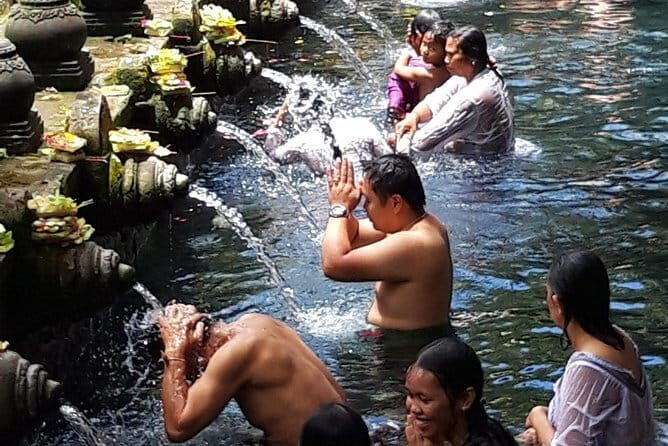
Also, expect a proper introduction before you start moving fast. People who are new to off-road rides especially seem to do well when the guide takes time to show how to steer and what to expect. One review specifically noted it was fine for beginners because the guide adjusted to different ability levels.

If you’re pairing ATV with rafting, this is also where that option lives. The day description includes rafting (2.5 hours) as part of selected options, so you might be doing the ATV and then switching gears into water action.

Practical tip

Wear something you don’t mind getting wet and dirty. You’ll be changing from “tour mode” to “riding mode” fast.

The ATV Ride: Mud, Water, and Those Caves and Dragon Tracks

Ubud : ATV Temple Run Adventure - The ATV Ride: Mud, Water, and Those Caves and Dragon Tracks
The ride itself is the headline. You’re riding an all-terrain vehicle through the kind of countryside most visitors don’t bother to reach on foot. The route description highlights forests, rivers, and challenging terrain, plus muddy tracks. Some of the adventure focus is described as racing around dragon caves and waterfalls, which is exactly the sort of theme that turns a normal trail into a story.

Here’s the honest part: this is not a lazy parade ride. One review called it a more serious off-road ride than people might expect, mentioning that steering forces are real at times. If you’re not confident driving, you can choose to ride as a passenger. That option can be the best way to enjoy the terrain without turning the whole day into a stress test.

What to expect on the ground

You’ll likely be dealing with:

  • loose, muddy sections
  • uneven surfaces
  • water crossings or wet areas (the itinerary includes rivers and waterfalls, so plan for damp)

The good news is that you’re not thrown in blind. The instructor’s job is to help you ride safely, and the equipment is included.

After the Ride: Pool Time, Snacks, and a Proper Lunch

Ubud : ATV Temple Run Adventure - After the Ride: Pool Time, Snacks, and a Proper Lunch
ATV days can be tiring in a very specific way. Your legs do the work, your arms feel the vibration, and your shirt becomes a souvenir. This tour builds in a recovery window so you don’t just rush off to the next stop still vibrating.

The day includes time to decompress with snack and drink, and it also mentions pool access as part of the downtime. That’s a smart move in Ubud heat, and it gives you a chance to reset before the waterfall portion.

Lunch is included, and the menu gets specific: fried rice, fried noodles, sandwich, and crispy duck. Even if you’re not a duck person, you’ll have options. The inclusion matters because it keeps you from hunting down food right after the ride.

And because showers and towel facilities are listed, you’re not stuck smelling like ATV forever. You’ll actually be able to transition to Tegenungan Waterfall without feeling like you left your body behind on the track.

Tegenungan Waterfall Last: Omma River Club and Swim Time

Ubud : ATV Temple Run Adventure - Tegenungan Waterfall Last: Omma River Club and Swim Time
After the adrenaline, you end at Tegenungan Waterfall. The schedule notes this is the last place you visit, and you’ll have time to swim and relax on the river club Omma with views of the waterfall and valley.

Ending the tour here makes sense. The waterfall is a natural cooling-off point. It’s also the kind of place where being later in the day can feel better because you’re already in relaxed mode after lunch and a shower.

One key consideration: your body will be part of the plan. Since swimming is included as an activity option, you might want to have dry clothes ready. The tour doesn’t spell out what you can bring or what’s available on-site beyond showers earlier, so be ready to manage the basics yourself.

Lumbung Sari Agroo: Bali Coffee and Spice Tasting in Rice Fields

Ubud : ATV Temple Run Adventure - Lumbung Sari Agroo: Bali Coffee and Spice Tasting in Rice Fields
Not every stop has to be thrilling to be worth it. The Lumbung Sari Agroo stop is where the day shifts from mud and water to flavors and local production.

Here’s what’s included: a guide explains different types of Bali coffee and spices, and you’ll do tasting. The description highlights testing of Bali coffee along with the view of rice fields. So you get the idea of how these products are grown and used, not just a quick sip and then back to your phone.

This stop is also a good balance for people who want one calm hour to recover from the physical parts of the day. It’s listed as 1 hour, which is short enough to feel manageable.

What to listen for

Pay attention when the guide describes coffee and spices. The best part of tasting isn’t just the flavors. It’s the explanation that helps you understand why people in Bali use certain spices in everyday food.

How the Price Works: Where $27.49 Per Person Feels Like Value

Ubud : ATV Temple Run Adventure - How the Price Works: Where $27.49 Per Person Feels Like Value
At $27.49 per person, this tour sits in the budget-friendly zone for the Ubud adventure scene. The value comes from stacking experiences: you’re paying for 1.5 hours of ATV ride, guided support, protective gear, insurance, and a full lunch.

You’re also getting practical extras that people often forget to price in elsewhere:

  • locker, towel, shower, and toilet facilities
  • hotel pickup and drop-off if you choose that option
  • snack and drink during the day

And there’s a reason the reviews lean positive on the guide quality. When the instruction is good and the group feels safe, you’re more likely to enjoy the ride instead of struggling through it.

One thing to keep in mind: the duration is listed as 2 to 10 hours. That means your final “value feeling” depends on whether you add rafting, and how long the overall plan runs that day.

Private Tour Comfort: Less Waiting, More Focus on Your Group

Ubud : ATV Temple Run Adventure - Private Tour Comfort: Less Waiting, More Focus on Your Group
This is a private tour/activity, so only your group participates. In real life, that changes the vibe. You’re not sharing instructions with strangers. The guide can adjust pacing based on your comfort level, including helping beginners and supporting different riding skills.

If your group includes a mix of confident drivers and first-timers, private can be the difference between a fun day and a tense one. One review specifically praised how helpful and respectful the guide was when dealing with different abilities.

Also, you’ll find this setup works well for:

  • couples who want a calmer experience
  • friends who want one shared activity day
  • families where some people prefer riding as passenger rather than driving

The Real-World Tips That Make This Day Easier

Ubud : ATV Temple Run Adventure - The Real-World Tips That Make This Day Easier
Based on what the tour details and ride-focused reviews emphasize, here are a few practical moves that can save your mood.

Choose your ride style early. If you’re nervous about steering, consider riding as a passenger. It’s built into the experience, and it lets you enjoy the terrain without forcing you to learn off-road technique on hard mode.

Plan for physical effort. The tour asks for moderate physical fitness. That’s honest: ATV days ask your legs and core to work, plus the ground can be uneven and muddy.

Bring a strategy for water and laundry. You’ll have showers at the ATV location, which helps. Still, bring something dry for after swimming time at Tegenungan.

Use the guide. The guide isn’t just there to point. In the reviews, Bhaskara gets credited with being professional and knowledgeable and for keeping the ride comfortable for beginners. Treat him like the owner of the steering wheel lesson.

Should You Book This Ubud ATV + Waterfall Combo?

I’d book this if you want a day that mixes action with actual relaxation. The ATV part gives you movement, the waterfall gives you the cooling break, and the coffee/spice stop adds a cultural flavor that doesn’t feel forced.

Skip it if you’re chasing a low-effort day with mostly walking and shopping stops. This tour is designed around getting muddy and moving. Also, if you’re very time-tight, remember the day can run from 2 to 10 hours depending on what’s selected.

If your group is excited for off-road riding but you’re unsure about comfort, this tour’s built-in option to ride as a passenger makes it easier to match different confidence levels in one plan.

FAQ

How long is the ATV portion?

The tour includes 1.5 hours of ATV ride.

Is hotel pickup and drop-off included?

Hotel pickup and drop-off are included if you select the option. It’s described as pickup offered for a more seamless experience.
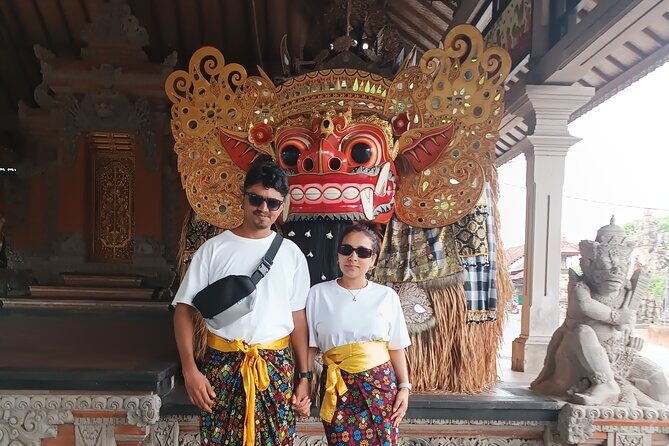
Can I ride solo or as a passenger?

Yes. You can choose between riding solo or as a passenger.
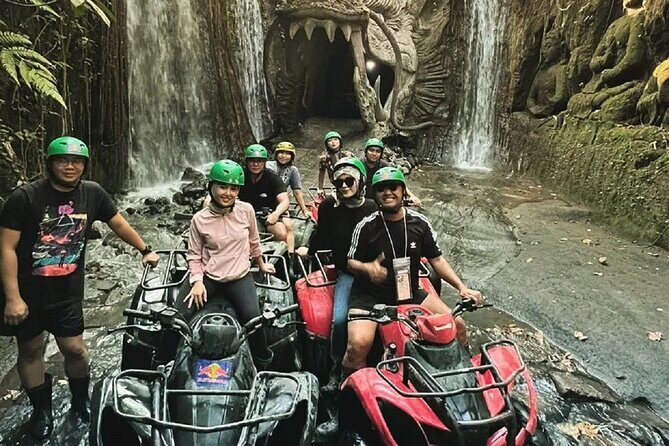
What food is included during the tour?

Lunch is included, with options such as fried rice, fried noodles, sandwich, and crispy duck.

Where does the tour go after the ATV ride?

After ATV time, the schedule includes Tegenungan Waterfall (with swimming/relaxing at Omma river club) and Lumbung Sari Agroo for Bali coffee and spice tasting.

What happens if bad weather cancels the activity?

The experience requires good weather. If it’s canceled due to poor weather, you’ll be offered a different date or a full refund.