
Gianyar Market Visit & Cooking Class in Ubud with Kadek & Putu
A kitchen lesson in Bali starts at the market.
This 4-hour experience with Kadek & Putu turns Balinese cooking into something you can repeat at home: you’ll shop with your hosts in Gianyar for the fruits, vegetables, and herbs that show up in traditional dishes, then cook together in a family compound and eat what you make.
I especially like the hands-on pace. You’re not just watching—people highlight that you chop and cook step by step, with ingredient breakdowns that make the flavors easier to recreate later. The second win is the meal itself. You’ll sit down to an authentic spread that can include satay, stir-fried vegetables, steamed fish, rice, and a dessert like black sticky rice pudding with fresh coconut cream or fried banana with coconut and palm sugar.
One thing to consider: the menu can shift with the season, so if you’re hoping for a specific dish every time, you’ll want to ask when you book. Also, pickup and drop-off are only included for Ubud hotels (outside Ubud may cost extra).
In This Review
- Key points worth knowing
- From Ubud pickup to the Gianyar market start
- Gianyar Market: fruits, veg, and herbs you’ll recognize in your dishes
- A quick garden stop that makes the ingredients feel real
- Cooking with Kadek and Putu: from chopping to the finished dish
- Typical dishes you may make
- The Balinese meal: satay, vegetables, fish, and dessert you made yourself
- Price and logistics: is $80 good value in Bali?
- Vegetarian and dietary needs: what you can control when booking
- Who should book this Ubud market-to-kitchen class?
- Should you book Gianyar Market Visit & Cooking Class with Kadek & Putu?
- FAQ
- Can I get pickup and drop-off from my hotel in Ubud?
- How long is the cooking class in total?
- What do we do in the Gianyar Market?
- Do we cook the food from scratch?
- What kinds of dishes and desserts are included?
- Are there vegetarian options?
- Can I request vegan or vegetarian versus meat dishes?
- Are alcoholic beverages included?
- What should I do if I have allergies or dietary restrictions?
- Is cancellation free?
Key points worth knowing
- Gianyar Market sourcing first: you’ll hunt down seasonal ingredients used in Balinese cooking
- Putu’s hands-on teaching style: people mention ingredient-by-ingredient explanations as you cook
- Family compound cooking: you’ll make dishes from scratch, then eat them right away
- Seasonal fruit juice stop (optional): Kadek can show a small garden and offer fresh juice from picked fruit
- Vegetarian choice available: you can request vegetarian options when booking
- Round-trip transport within Ubud: pickup and drop-off are part of the package
From Ubud pickup to the Gianyar market start
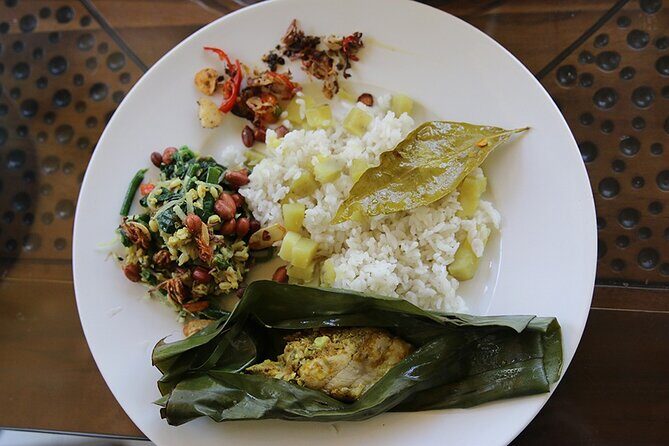
The day flows in a simple, no-drama way. Kadek picks you up from your Ubud hotel, then you head to Gianyar for the market portion. The whole experience is designed around one idea: if you understand what you’re buying and why it matters, the cooking makes more sense—and your results at home feel less like a guess.
This is also set up as a private, personalized experience. Your group is the only group participating, which matters in a hands-on cooking class. You can ask questions, move at a comfortable rhythm, and get more out of the ingredient talk.
A practical note: the tour includes round-trip transport only within Ubud. If your hotel is outside the included area, budget an extra charge and confirm the pickup point in advance.
Gianyar Market: fruits, veg, and herbs you’ll recognize in your dishes
The market visit isn’t just a stroll. It’s structured around Balinese flavors and what those flavors actually come from. Kadek shows you regional fruits, vegetables, and herbs used in everyday cooking. If you’ve ever tasted a dish here and thought, I want to recreate that, this part is your shortcut.
In the class setup, Putu joins the market time as well, and people mention that you don’t just look—you try different foods along the way. That tasting piece is valuable because it links smell and taste to the cooking steps you’ll do later.
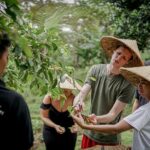
You’ll also get seasonal fruit context. Kadek can show local fruit and vegetables growing at his place (a few doors down from his sister’s home), then offer a fresh juice made from just-picked seasonal fruits like mulberry, passion fruit, papaya, mango, or jackfruit. That matters because Balinese sweets and savory dishes often lean on fruit for aroma and sweetness balance.
One gentle caution: markets move fast and stalls can get crowded. Wear comfortable shoes, keep your phone secured, and treat it like a working market—not a showroom.
A quick garden stop that makes the ingredients feel real
That optional garden stop is one of the smartest touches in this whole experience. Even if you only spend a short time there, it changes how you see the ingredients. Instead of buying herbs and produce as supermarket items, you learn how seasonal growth translates to what’s available on a given day.
You’re also not stuck waiting. Kadek offers juice while you walk through what’s growing, and that gives you a feel for the seasonal side of the menu. Since the cooking menu can vary depending on the season, this is the background that helps the meal feel coherent.
If you’re the type who likes food and gardening, you’ll probably love this add-on. If you’re not, it still serves a purpose: you come away with ingredient reasoning, not just ingredient names.
Cooking with Kadek and Putu: from chopping to the finished dish
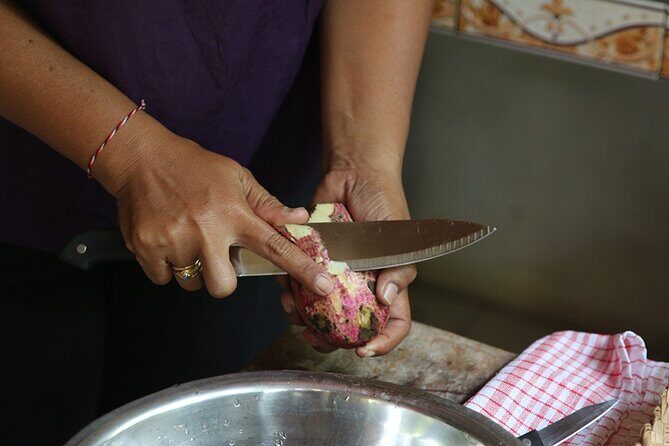
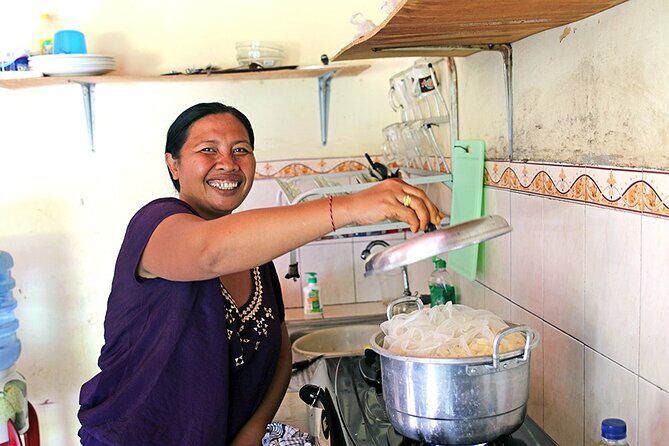
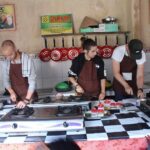
Back in the family compound, the class turns fully hands-on. You’ll cook traditional Balinese dishes from scratch with Kadek’s sister, Putu, and members of their family. This is the part that makes the class worth doing instead of just eating.
Here’s what I think is the key: people describe the teaching as step-by-step, including a breakdown of ingredients as you cook. That ingredient logic is what you want if you plan to make these dishes again later. When you know what a spice, herb, or base ingredient is doing in the dish, you’re less likely to get stuck when you substitute something at home.
You can also expect a cozy, practical rhythm. You’ll move from prep to cooking, then return to the same table to eat. And yes, you’ll likely work up an appetite because the class involves real kitchen time—not only instructions.
Typical dishes you may make
Menus can shift with the season, but the cooking examples include dishes like piquant chicken satay, stir-fried vegetables, and steamed fish, plus rice. For dessert, the class often includes either black sticky rice pudding with fresh coconut cream or fried banana with grated fresh coconut and palm sugar.
One review detail worth noting: someone noted they cooked five dishes, so plan on a fuller session rather than a single demo.
The Balinese meal: satay, vegetables, fish, and dessert you made yourself
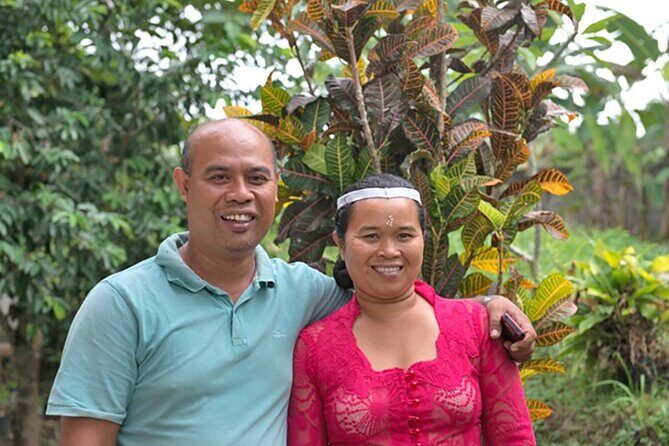
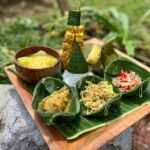
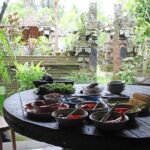
After cooking, you eat a true home-cooked Balinese meal. This is where the experience clicks. You’re not standing in a line and hoping the dish matches your memory—you’re sitting down with the flavors you just helped create.
The meal can include a range of comforting favorites: satay with a spicy kick, vegetable dishes (stir-fried), rice, and sometimes steamed fish. Then dessert arrives, often with either the chewy-sweet feel of black sticky rice pudding and coconut cream or the warm crunch-soft contrast of fried banana with coconut and palm sugar.
Dessert is part of the point here. Balinese sweets aren’t just sweet; they’re flavored with textures and aromas that depend on local ingredients. Recreating that at home is exactly what makes this style of class useful.
And one nice bonus: alcoholic beverages are included. If you drink, you won’t have to track down a separate bill.
Price and logistics: is $80 good value in Bali?
At $80 per person, you’re paying for more than a cooking session. You’re getting:
- Market time in Gianyar with your hosts
- Cooking from scratch in a family compound
- A homecooked meal (not just “snacks”)
- Alcoholic beverages
- Pickup and drop-off for Ubud hotels only
In Bali, lots of cooking experiences focus on the cooking part and treat the shopping as an optional add-on. Here, the ingredient sourcing is built in. That’s where your money starts working for you: you learn what you buy and how you choose it, not only how you stir it.
Also, the private setup matters. If you’re traveling as a couple or a small group, you’ll likely feel the value more than you would with a large group class. You can ask questions and get practical help without a teacher juggling multiple tables.
If your hotel is outside Ubud, confirm the extra transport cost ahead of time. That’s the main variable that can change the real value of the price.
Vegetarian and dietary needs: what you can control when booking
If you eat vegetarian or avoid certain foods, this class is designed to handle it. A vegetarian option is available—just advise at booking. People also mention you can choose between vegan/vegetarian and meat dishes, depending on what you want.
That flexibility matters because some Balinese menus can be built around fish paste or meat-based seasoning. The class doesn’t force you into a one-size-fits-all menu. It’s better to message your needs early so the hosts can plan the ingredients and steps.
For allergies and restrictions, the instruction is clear: let the provider know when booking. Since the menu may vary seasonally, don’t wait until you arrive to raise dietary concerns.
Who should book this Ubud market-to-kitchen class?
This is a good fit if you want:
- Hands-on cooking with real ingredient explanations
- A market visit that makes the cooking make sense
- A family-run Bali experience where the food is the center of the day
- A dessert and meal setup that feels complete, not chopped up
It’s also ideal if you’re coming to Bali mainly for food. The whole structure—market shopping, optional garden context, then cooking—turns the day into one story. You’ll taste and learn in a tight loop.
If you’re short on time, remember the session is about 4 hours. That’s not a full-day excursion, so it works well with other Ubud plans. If you hate markets, this one might still work because it’s practical and focused on cooking ingredients, but you’ll still be walking through Gianyar’s stalls.
Should you book Gianyar Market Visit & Cooking Class with Kadek & Putu?
I’d book it if you care about repeating Balinese dishes at home and you like a class that teaches the ingredients, not just the steps. The biggest strengths are the market-first approach and the hands-on cooking style with ingredient breakdowns led by Putu and Kadek. Add in the home-cooked meal, plus optional fresh fruit juice from seasonal picks, and you get a full food day without feeling like you’re on a factory tour.
Skip it (or at least ask more questions before booking) if you need a very specific menu every time or you’re sensitive to market crowds and walking. Because the menu can vary with the season, it’s best to be flexible and treat the class as a real local snapshot.
If you want Bali food you can actually cook yourself later, this is one of the more practical ways to spend your time in Ubud.
FAQ
Can I get pickup and drop-off from my hotel in Ubud?
Yes. Pickup and drop-off are included for Ubud hotels only. If your hotel is outside Ubud, there may be an additional charge.
How long is the cooking class in total?
The experience runs about 4 hours.
What do we do in the Gianyar Market?
You’ll explore the market with Kadek and/or Putu to look for local fruits, vegetables, and herbs used in Balinese cooking.
Do we cook the food from scratch?
Yes. You’ll make traditional Balinese dishes from scratch, then sit down to eat the meal you cooked.
What kinds of dishes and desserts are included?
Dishes can include items like chicken satay, stir-fried vegetables, steamed fish, and rice. Dessert examples include black sticky rice pudding with coconut cream or fried banana with grated fresh coconut and palm sugar, depending on the season.
Are there vegetarian options?
Yes. Vegetarian options are available, but you should advise the provider at booking.
Can I request vegan or vegetarian versus meat dishes?
The experience can accommodate vegan/vegetarian versus meat choices if you note your preference when booking.
Are alcoholic beverages included?
Alcoholic beverages are included with the meal.
What should I do if I have allergies or dietary restrictions?
Let the provider know at booking so they can adjust for allergies, restrictions, or cooking preferences. The menu may vary by season.
Is cancellation free?
Yes. Free cancellation is allowed up to 24 hours before the experience start time for a full refund.
More Tour Reviews






More Balinese Cooking Classes


More Ubud Tours
Ubud Tours: how the alternatives stack up


 ★ 5.0
★ 5.0Ubud: Monkey Forest, Jungle Swing, Rice Terrace, and Water Temple




The lists this tour appears in