
Jatiluwih full day e-bike cycling with lunch & trekking program
Two wheels and rice terraces. Perfect mix.
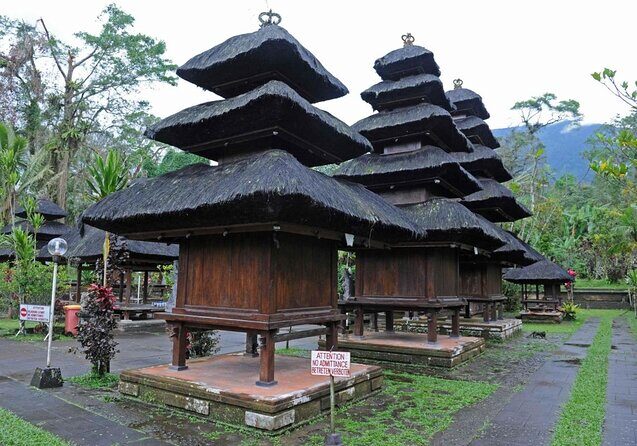
This full-day e-bike and trek program turns Jatiluwih into a morning-and-afternoon story: you ride from Batukaru Temple through jungle and bamboo, then hit the UNESCO rice terraces, followed by a countryside lunch and a later trek that gets you away from the main foot traffic. I especially like how the electric bike keeps the pace comfortable, even when the roads get a bit bumpy. I also love lunch in the rice fields at Green Cafe. One drawback to consider: the afternoon trekking is real walking on uneven paths, so you’ll want good shoes and some patience with climbs.
What makes it feel worth the day is the balance of effort and reward. You’re not just sightseeing—you’re moving through working farmland with local guides, and the max group size of 12 helps keep it from turning into a rush-and-vanish parade. It runs about 7 hours total, with pickup available in the Ubud area and a 10:00 am start.
In This Review
- Key highlights to know before you go
- Jatiluwih by e-bike: from Batukaru Temple to UNESCO rice terraces
- What the ride feels like: jungle, bamboo, villages, and rice-farm details
- Green Cafe lunch in the rice fields: traditional, simple, and well-timed
- The 2 to 2.5 hour trek: off-path rice terraces and a river route
- Guides and group size: why a small team changes the day
- Price and value: what you get for $88
- What to wear and bring for a smooth day
- Who this e-bike and trek day fits best
- Should you book this Jatiluwih e-bike and trekking tour?
- FAQ
- How long is the full-day experience?
- What time does the tour start?
- Is hotel pickup and drop-off included?
- What’s included for lunch?
- Do I need experience riding an e-bike?
- Can I cancel and get a refund?
Key highlights to know before you go
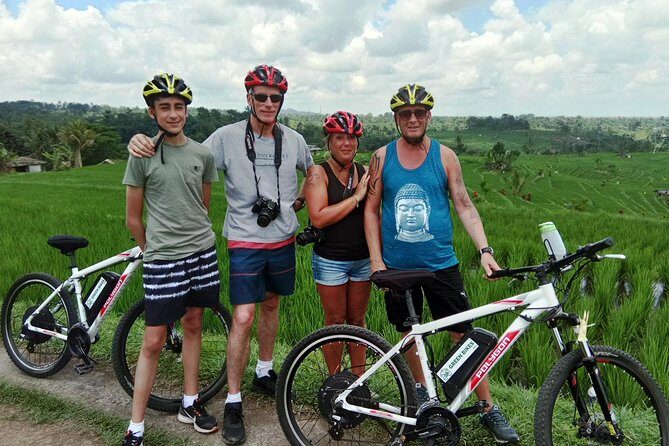
- Electric mountain bikes for UNESCO Jatiluwih: less strain, more time for photos and questions
- Batukaru Temple to the rice terraces: start in a cooler, greener zone before the views open up
- Green Cafe lunch in the fields: a traditional Balinese meal served where you can actually see the rice
- 2 to 2.5 hours of post-lunch trekking: a quieter follow-up when many groups are already done
- Local guide energy: guides from the area share how farming and village life work
- Small group cap of 12: more breathing room on both the ride and the trek
Jatiluwih by e-bike: from Batukaru Temple to UNESCO rice terraces
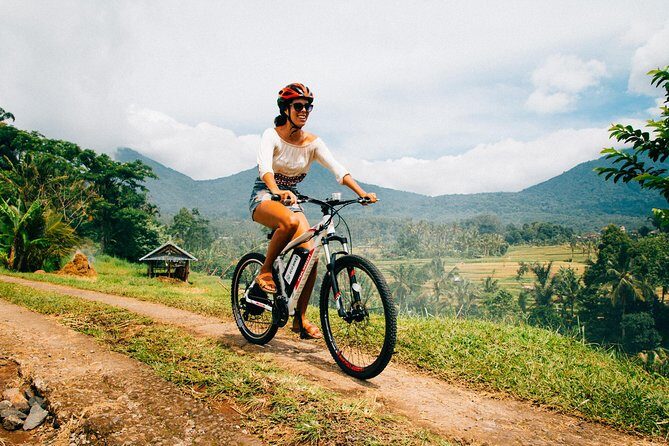
The day starts with a simple idea: use an electric bike to do the fun parts of the route without paying for it with exhaustion. You’ll head out from Batukaru Temple, then roll onto small, quiet roads toward Jatiluwih in the valley of four extinct volcanoes. That mix matters. Early on, you’re still in the calmer, greener stretch where the air feels different from the busier rice-terrace zones.
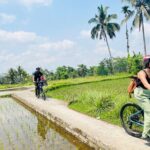
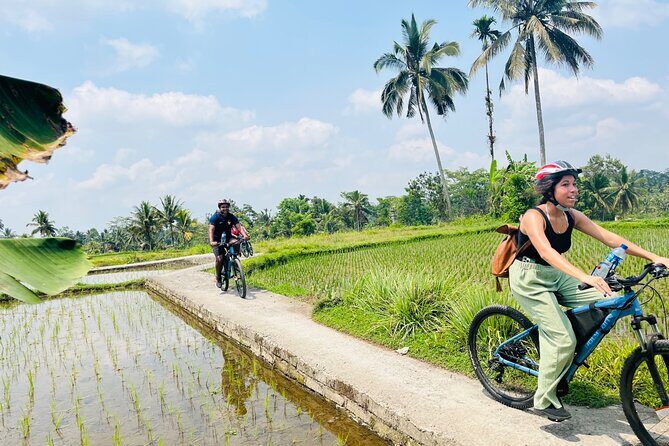
Once you reach the Jatiluwih area, the terrain becomes a working showcase. You cycle through dense jungle patches, a giant bamboo forest, small streams, and stretches where farmers are actively tending rice. This is not the kind of UNESCO spot where you just point at scenery from a viewpoint. You ride through it, so the terraces don’t feel like a distant postcard—they feel like a place people live and farm every day.
You’ll also get a big confidence boost from the equipment. The bikes are electric mountain bikes, and the experience is designed for people who want to travel actively but don’t want to muscle every hill. Even if you’re not a cyclist, the bike assistance helps you stay in the moment.
What the ride feels like: jungle, bamboo, villages, and rice-farm details
The cycling portion is about 2 hours, and it’s structured to keep the day flowing. The route doesn’t just jump between attractions. It layers environments so you’re constantly changing what you’re looking at: jungle shade, bamboo textures, village life along the way, and then the open terraces when you get closer to Jatiluwih.
Here’s what I think you’ll notice most once you’re rolling:
- You move like a local: small roads and gentle turns make the ride feel human-scale, not like a big bus tour.
- The bamboo forest adds a cool reset: even on a warm Bali day, shaded bamboo sections help you catch your breath.
- Rice farming is the main character: you’ll see farmers working traditional practices, which makes the terraces feel more grounded.
A small but important practical point: you’ll get a helmet and you’ll likely get a quick rundown on the e-bike controls before you start. The goal is easy handling. The bike support is there to smooth out the effort, so you can focus on the route and the sights instead of checking your legs every few minutes.
One consideration: the paths and roads can involve uneven edges and typical rural bike-riding moments. You don’t need to be an athlete, but you should pay attention and wear shoes with decent grip.
Green Cafe lunch in the rice fields: traditional, simple, and well-timed
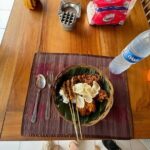
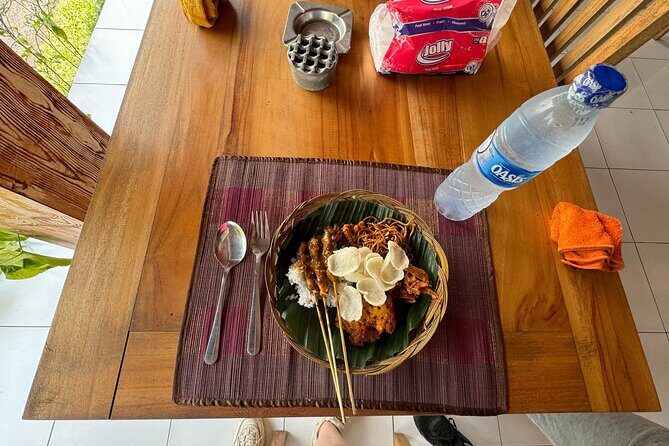
Lunch is a highlight for a reason: it’s served in the rice fields, not in some distant building where the view is only a promise. At Green Cafe, you’ll get a traditional Balinese nasi combo, and you’ll also have coffee or tea along with water included.
Timing helps too. You ride in the morning when the rice terraces look their clearest, then lunch gives you a real reset before the trek. That means your legs aren’t totally fried, and your head is in the right place for walking after eating.
What I like about this setup is that it supports the whole point of doing the day this way. The lunch stops you from turning the trip into a pure activity schedule. You sit, you eat, and you can watch the farmland around you.
Alcohol is not included, but you can purchase it. So if you want a cold drink after the ride, it’s your call—but you won’t feel forced into anything.
The 2 to 2.5 hour trek: off-path rice terraces and a river route
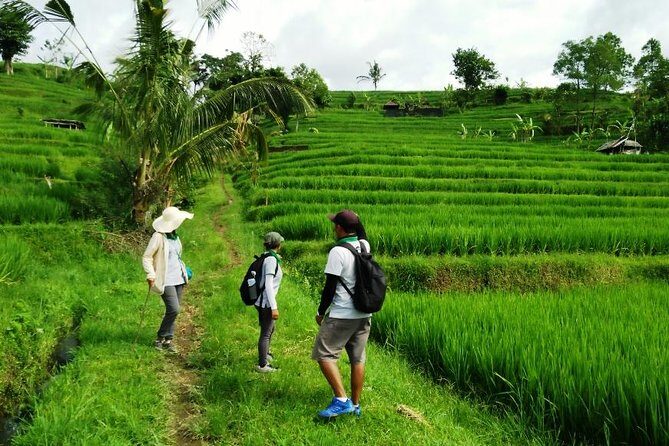
After lunch, you switch gears from cycling to walking. The trek runs 2 to 2.5 hours, and it’s aimed at getting you away from the most crowded viewing spots. The goal is to walk through rice fields and then head down through more natural terrain toward a river.
This is the part of the day where the experience turns from scenic to personal. When you’re trekking, you notice the textures: irrigation edges, narrow trails, and the way the terraces change as you go lower. And because this part is scheduled after lunch, the timing often means you’re not competing with the biggest wave of foot traffic.
One useful thing to keep in mind: the trek is described as going off the beaten path, which usually means uneven ground and fewer built-up surfaces. Bring shoes you can trust. You don’t need hiking boots, but you do need traction and comfort.
If you enjoy nature and you like walking when the route feels more local than touristy, this afternoon segment is why the day works.
Guides and group size: why a small team changes the day
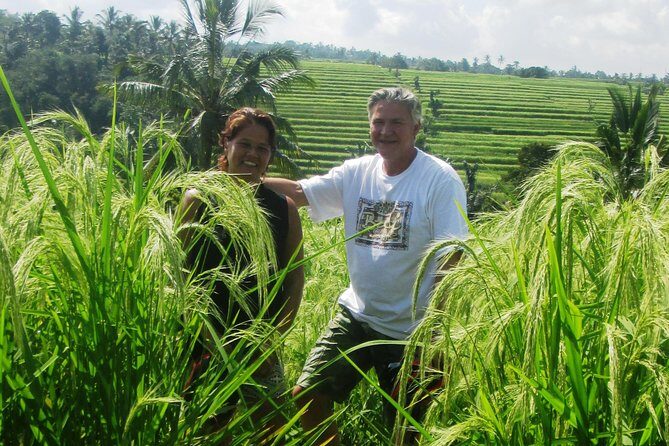
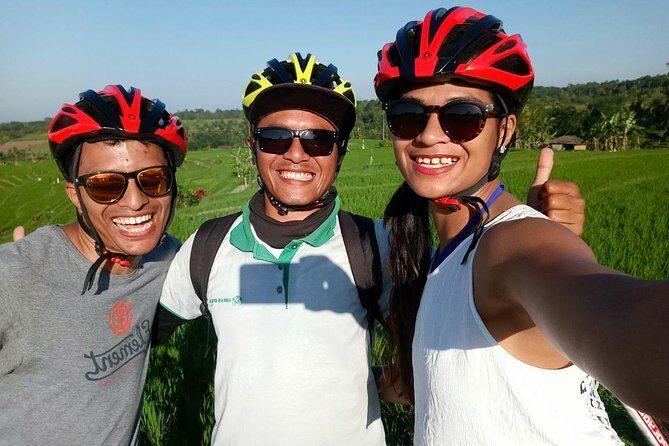
The guides on this kind of tour can make or break the experience, and here that’s not just talk. The cycling guides are local to the area, and they can answer questions about what you’re seeing—rice farming, village life, and how the terraces function in everyday terms.
On top of that, the group size is capped at 12 travelers. That sounds like a small detail until you’re on a narrow trail or waiting at a roadside moment. Smaller groups generally mean fewer stops that drag, less waiting, and more space for questions. It also makes it easier to keep a steady pace on both the e-bike ride and the trek.
I also like that the tour includes travel insurance. You’re not going to plan for every bump, but having that safety net makes the day feel more relaxed.
Price and value: what you get for $88
At $88 per person, you’re paying for more than just a bike and a ticket. The value comes from the package nature of it: hotel pickup and drop-off, a private-feeling small-group experience, the e-bike use, helmet, a local guide, lunch, trekking time, bottled water and beverages, and transport by air-conditioned minivan. Insurance is included too.
Let’s put it in practical terms. If you tried to build this yourself in Ubud, you’d likely pay separately for a guide, a bike rental, transportation across the area, and a meal spot that actually fits the schedule. Here, the day is designed so your food and walking happen at the right time, instead of you guessing and losing time.
A small extra note: admission and fees are handled, and site access is part of what’s included. That removes one more stress point on the day when you’d rather just ride and walk.
What to wear and bring for a smooth day
You’ll have a cycling morning and a walking afternoon, so dress for both.
I’d plan around three things:
- Comfortable shoes with grip for trekking
- Comfortable clothes you can move in during the ride
- Sun protection since you’ll be outside much of the day
Sunscreen is explicitly advised, and it’s smart. You’ll also want to hydrate—bottled water and beverages are included, but you’ll still sweat during the bike ride and walk.
If you’re tall, good news: the tour asks for guests to be at least 150 cm, because there aren’t small bikes available. If you’re shorter, you may not fit their equipment.
Who this e-bike and trek day fits best
This is a strong choice if you want:
- A fun, active Bali day that doesn’t require advanced fitness
- More than just a viewpoint stop (you ride through rice terraces and then trek)
- A day with local guidance and practical pacing
You might want to skip it (or at least rethink timing and shoes) if:
- You hate uneven trails or you’re not comfortable walking for 2 to 2.5 hours
- You want a fully relaxed, sit-down sightseeing schedule only
For most people, though, it’s a great middle path: you get movement and nature without turning the day into an all-out workout.
Should you book this Jatiluwih e-bike and trekking tour?
If your ideal Bali day includes rice terraces, local food, and a quieter walk away from the main crowds, I’d say yes. The combination of electric cycling + a later trek is the secret sauce: the bike makes the UNESCO portion feel doable, then the trek gives you that deeper, feet-on-the-ground feeling that’s hard to get from a short car stop.
Book it if you’re excited to see Jatiluwih as a working place—rice farmers, bamboo groves, village roads—not just a photo backdrop. And if you pick comfortable shoes and show up ready for a real (but manageable) walk, this one tends to feel like a full-day win.
FAQ
How long is the full-day experience?
It runs about 7 hours total, including the morning e-bike ride, lunch, and an afternoon trekking segment.
What time does the tour start?
The start time is 10:00 am.
Is hotel pickup and drop-off included?
Yes. Hotel pickup and drop-off are included.
What’s included for lunch?
Lunch is a traditional Balinese nasi combo at Green Cafe. It includes water and coffee or tea.
Do I need experience riding an e-bike?
No experience is required. The bikes are easy to use electric mountain bikes, and you’ll have helmets provided.
Can I cancel and get a refund?
Free cancellation is available. You can cancel up to 24 hours in advance for a full refund. If you cancel less than 24 hours before the start time, the amount paid is not refunded.
More Tour Reviews




More Rice Terrace Tours

More Ubud Tours
Rice Terrace Tours: how the alternatives stack up
 ★ 5.0
★ 5.0Ubud: Monkey Forest, Jungle Swing, Rice Terrace, and Water Temple
 ★ 5.0
★ 5.0Full-Day Tour to Water Temples and UNESCO Rice Terraces in Bali
The lists this tour appears in