
Myth of Pejeng Walking Tour
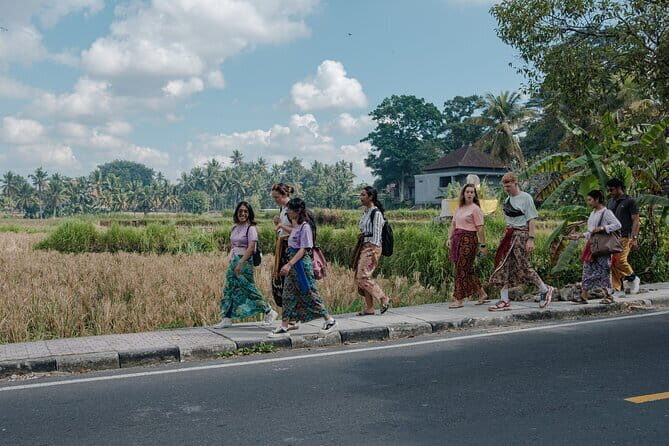
Myth meets temples in small-town Pejeng. This 2-hour walking tour strings together four meaningful stops around Pejeng, turning local legends into something you can see with your own eyes. I love the story-first approach that connects myths with real artifacts and sacred places, and I love the focused small-group feel that makes it easy to ask questions. The main catch: there are uneven steps and steep stretches, so you’ll want decent mobility before you sign up.
A big plus is the size: the tour tops out at 8 travelers, and that makes the pace feel unhurried. Start time is 8:30 am, with the meeting point at Indomaret Pejeng on Jl. Raya Dr. Ir. Sukarno No.552 in Bedulu, Blahbatuh. You should also know this tour does not include pickup or drop-off, so plan to arrive on your own.
It runs rain or shine. If there’s severe weather like an intense downpour, they’ll call you before start, and you’ll still treat it like part of the Bali day. For temple etiquette, you’ll need modest dress with a sarong that covers the legs below the knee, and the tour also asks you to bring a reusable water bottle to help reduce plastic waste.
In This Review
- Key highlights worth your attention
- Pejeng’s myth trail: what this 2-hour walk really connects
- Meeting point and the 8:30 am start in Bedulu
- Temple stop 1: Pura Penataran Sasih and the bronze kettle drum
- Temple stop 2: Pura Pusering Jagat and the directional temple idea
- Temple stop 3: Kebo Edan’s Bhairawa statue and unusual origins
- Arca Building Archaeological Museum: giant sarcophagi and pre-Hindu context
- Special access, coffee, and the small costs that matter
- Temple etiquette: sarong rules and how to avoid awkward moments
- Walking reality check: steps, surfaces, and pacing that fits most people
- Guides who keep the story clear (Joe, Bagus, and Win)
- Value check: why $21.40 can feel fair (or not)
- Should you book the Myth of Pejeng Walking Tour?
- FAQ
- How long is the Myth of Pejeng Walking Tour?
- How much does it cost?
- What time does the tour start?
- Where do I meet the tour and where does it end?
- Is pickup or drop-off included?
- What’s included in the price?
- What should I wear or bring for temple visits?
- What if it rains?
Key highlights worth your attention
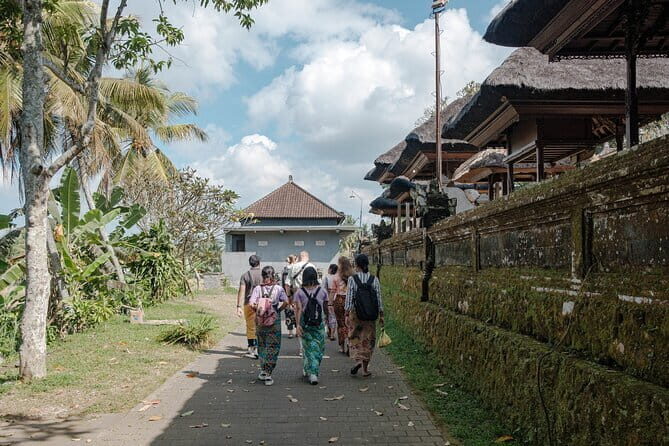
- A myth thread through four real sites: each stop ties into local stories and objects you can actually visit
- Small-group access (max 8): easier questions, calmer timing, and less crowd stress
- Bronze kettle drum, Bhairawa statue, and sarcophagi: you’ll see a mix of sacred and pre-Hindu material culture
- Sarong and sash support: you’re not expected to figure it out alone at the gate
- Coffee, tea, and a snack included: a nice reset after temple time
- Special access to a Balinese compound: one of those “this isn’t just a look-and-leave” touches
Pejeng’s myth trail: what this 2-hour walk really connects
This is not a long grind through Ubud. It’s a short walk built around a single theme: the myths of Pejeng, explained as you move between temples and ancient sites. In practice, that means you get the story first, then the object, statue, or structure makes sense right away.
The tour’s best trick is how it balances sacred places with older layers of Balinese life. You’re not only seeing Hindu-era temples; you’re also stepping into a museum-like stop with big pre-Hindu artifacts. That mix helps you understand why people in Bali take myths so seriously: they’re tied to where objects were found, what they were used for, and how communities interpret meaning.
With a small group, the guide can slow down when questions come up. That matters because some of the symbolism can be hard to catch if you’re trying to rush and take photos at the same time. I like that the tour is short enough that you still feel human at the end.
Meeting point and the 8:30 am start in Bedulu
You’ll meet at Indomaret Pejeng near Bedulu, Blahbatuh, with the start at 8:30 am. That early timing is one reason this tour works: temples are calmer, the lighting is better for seeing carvings, and you’re less likely to hit the hottest part of the day right on top of your walking.
Because there’s no pickup, you’ll want to think about how you’re getting there before you book. If you’re staying in central Ubud, it’s still doable, but you should give yourself buffer time so you’re not sprinting to the meeting point.
The tour ends around the Museum Arkeologi area (listed as Museum Arkeologi F7JV+563). That means you usually finish somewhere convenient for continuing your day on your own.
Temple stop 1: Pura Penataran Sasih and the bronze kettle drum
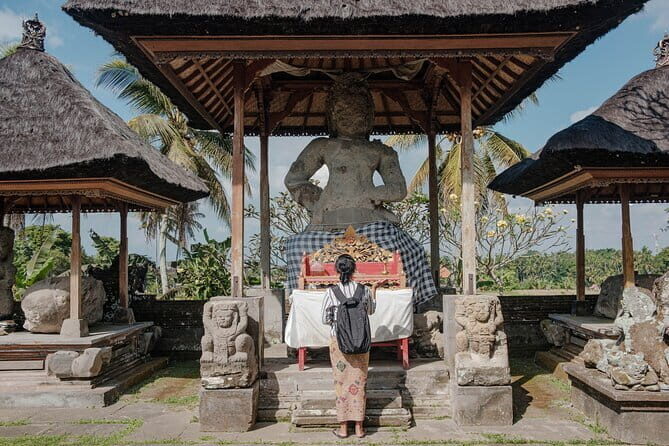
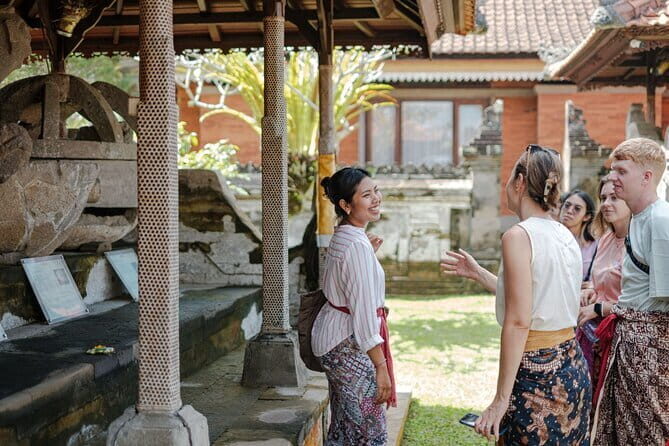
Stop one is Pura Penataran Sasih, one of Bali’s oldest temples. The first thing you’ll notice is the vibe: guests wear traditional sarongs and sashes for entry, and the tone is clearly religious, not touristy.
Here’s what makes this stop memorable: you’ll have exclusive access to one of Southeast Asia’s largest bronze kettle drums. That’s not a “point-and-shoot” artifact. Your guide’s job is to explain how it fits into local belief systems and temple traditions, so it turns into an actual story you can remember.
A small caution: you’ll still be walking inside and around temple grounds, so wear footwear that’s stable. If your shoes grip poorly on stone, your legs will notice.
Temple stop 2: Pura Pusering Jagat and the directional temple idea

Next up is Pura Pusering Jagat, one of Bali’s six main Kahyangan temples. This one is connected to the island’s directional concept—believed to be at the center—so the carvings and layout matter more than you might expect.
The guide focuses on the “why” behind what you see: how a complex directional belief system plays out in temple design and how people relate to sacred geography in daily life. Even if you’re not reading every inscription, the explanation helps you understand the overall logic of the place.
This stop is around 20 minutes, so it’s not rushed, but it’s also not a long sit-down. Come with curiosity and you’ll get more out of it.
Temple stop 3: Kebo Edan’s Bhairawa statue and unusual origins

Then the walk shifts to the Kebo Edan Temple, nicknamed the Temple of the Crazy Buffalo. This small temple is known for a 13th-century Bhairawa statue, and the story around it is what makes the visit stick in your memory.
You’ll hear theories about the statue’s unusual origins, including that it was recovered from nearby rice fields. That detail turns the statue from an abstract sculpture into something tied to land, farming, and how artifacts sometimes resurface through local history.
This stop is another about 20 minutes, and the tone tends to feel more focused than expansive. It’s ideal if you like your cultural stops specific, with clear takeaways instead of vague sightseeing.
Arca Building Archaeological Museum: giant sarcophagi and pre-Hindu context
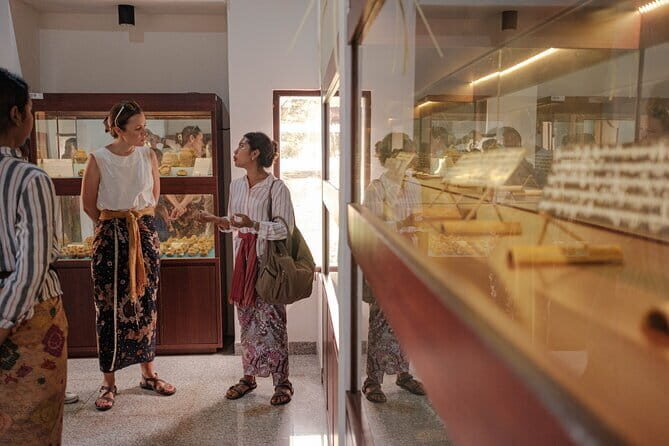
Your final stop is the Arca Building Archaeological Museum, and it’s a real change of pace. Instead of temple structures and offerings, you step into an open courtyard where you can see giant sarcophagi and learn about pre-Hindu Bali.
The tour frames this as a window into ancient Balinese life and customs. Even if your interest is mainly mythology, this stop gives you the physical background: these aren’t just stories floating in the air. They’re connected to earlier periods and to how communities treated remains, material objects, and ritual meaning.
This is listed at around 30 minutes, which feels right. You need a little extra time here because you’ll want to look closely at size and details, not just listen from a distance.
Special access, coffee, and the small costs that matter
This tour includes more than admission tickets. You get temple donations listed as Rp 60,000, plus a local guide experience and a Balinese coffee, tea, and snack.
That snack piece is practical. Two hours around temples and walking can dry you out, and the included drink gives you a breather without needing to hunt for food mid-tour. It’s also one of the reasons this feels good value for the price.
There’s also special access to a Balinese compound, which you should think of as the difference between “seeing” and “being shown.” You get to move with the guide’s understanding of what matters, not just what looks best on a photo.
Temple etiquette: sarong rules and how to avoid awkward moments

Temple etiquette here is straightforward: Balinese temples are sacred, and both men and women need to dress modestly with a sarong covering the legs below the knee. You can bring your own sarong or use one provided, and the tour includes sarong and sash use.
To avoid last-minute scrambles, plan to arrive already dressed for walking and bring a light layer for after. You’ll likely be asked to adjust clothing for entry, and it’s easier if your shoes and pants situation is already practical.
Also, remember that you’re moving around religious spaces. Keep your behavior calm, follow your guide’s instructions, and treat photos like a privilege, not a right.
Walking reality check: steps, surfaces, and pacing that fits most people
This is an urban walk around historic landmarks, so you should expect uneven temple stairs, steep gradients, and patchy sidewalks. The tour is labeled as doable for most travelers, but the key word is capable. If you’re worried about stairs, this is where you need to be honest with yourself.
The good news is it’s only around 2 hours, and the route is split into four focused stops rather than one long march. With a small group of up to 8, the guide can slow down if someone needs extra time.
It’s also wise to think about heat and sun, even on a morning start. The tour advises you to bring water and includes a reusable bottle reminder to reduce plastic waste.
Guides who keep the story clear (Joe, Bagus, and Win)
Part of what makes this tour work is how the guide handles questions. In guides like Joe and Bagus, you’ll find people who explain what you’re seeing instead of throwing facts at you. They also seem comfortable answering follow-up questions, which helps the myth side land for first-timers.
Another guide mentioned is Win, who was described as prepared and attentive, including helping with proper attire and bringing items like sunblock and bug repellent. That kind of thoughtful support makes a difference when you’re stepping between sacred spaces and open areas.
Bottom line: if you like your guides to translate the symbols into human terms, this tour is built for that style.
Value check: why $21.40 can feel fair (or not)
At $21.40 per person for about two hours, this isn’t a bargain you’d call “cheap,” and it’s not a premium experience either. The value comes from what you actually get in return: a local English-speaking guide, temple donations, admission tickets included at each stop, sarong and sash support, and a small food-and-drink break.
You’re also paying for access—like the bronze kettle drum stop and the special access to a Balinese compound. If you’ve ever done a temple tour where you’re shuffled past everything with no context, you can see why this structure helps.
The only reason value might not feel great is if you’re expecting a mostly scenic walk or a big “Ubud highlights” route. This is very specific to Pejeng’s myths and sacred sites. If that’s what you want, the price makes sense. If you want a broader set of sights, you might compare against other Ubud tours.
Should you book the Myth of Pejeng Walking Tour?
You should book if you want a short tour with strong storytelling, and you like cultural stops that connect myth to objects. The combination of temples plus the Arca Building Museum makes it harder to get bored, and the small group size helps you actually understand what you’re seeing.
I’d skip or consider an easier alternative if you’re sensitive to stairs and uneven ground. Even though the walking time is short, the terrain is real, and the tour doesn’t hide that fact.
If you’re starting your Bali trip and want a guided lens for religion, symbols, and local thinking, this is a good pick. Go early, wear proper shoes, and come with questions. The myth will make more sense once you stand in front of the artifacts.
FAQ
How long is the Myth of Pejeng Walking Tour?
It runs for about 2 hours (approx.).
How much does it cost?
The price is $21.40 per person.
What time does the tour start?
The start time is 8:30 am.
Where do I meet the tour and where does it end?
You meet at Indomaret Pejeng, Jl. Raya Dr. Ir. Sukarno No.552, Bedulu, Blahbatuh, Gianyar, Bali. The tour ends at Museum Arkeologi (listed as F7JV+563, Bedulu, Blahbatuh).
Is pickup or drop-off included?
No. The tour does not provide pickup or drop offs from your accommodation.
What’s included in the price?
Included are a local English-speaking guide, guided walking tour, temple donations (Rp 60,000), Balinese coffee/tea and snack, admission tickets at stops, special access to a Balinese compound, and sarong and sash.
What should I wear or bring for temple visits?
You’ll need a sarong that covers the legs below the knee. You can bring your own or use one provided, and the tour also asks you to bring a reusable bottle for water refills.
What if it rains?
The tour operates rain or shine. If conditions are severe (like an intense downpour), the provider will call you before the start.
More Tours





More Tour Reviews



More Ubud Tours
Ubud Tours: how the alternatives stack up

 ★ 5.0
★ 5.0Ubud: Monkey Forest, Jungle Swing, Rice Terrace, and Water Temple



The lists this tour appears in