
Nusa Penida Try Scuba Diving Program – for Non-Certified Divers
Your first underwater breath feels surprisingly doable.
This try-scuba program in Nusa Penida is built for non-certified people, with pool training first and a very small instructor ratio in open water (no more than 2 participants per instructor). I also like that the basics are taught step by step, including breathing underwater and simple underwater skills before you head out to see coral and tropical fish. The main thing to consider: you must pass a 200-meter swim and a 10-minute float in water too deep to stand in, so come ready for that physical check.
You’ll start at Pure Dive Resort at 10:30 am, get a thorough 30–40 minute briefing, practice in the training pool, then move to the beach right across the road for short transfers to the best conditions at the time. The good news is that all essential gear is included, and the day is capped at 10 travelers, so it doesn’t feel like cattle-herding.
In This Review
- Key things I’d underline before you book
- Entering The Day at Pure Dive Resort (10:30 am)
- The 30–40 Minute Briefing: What You’ll Be Taught Before Any Water Work
- Pool Training First: How the Program Builds Confidence Fast
- Step 1: Mandatory swim and float tests
- Step 2: Breathing underwater and basic skills
- Safety Rules That Matter Most in Open Water
- Getting to the Reef: Boats Waiting Across the Road
- What Your Underwater Time Feels Like (35–55 minutes, typically)
- Gear Included: The Stuff You Should Expect to Hold
- Instructors Who Keep You Calm: Names You’ll Hear in the Water
- Price and Value: Is $120 Worth It?
- Who Should Book This and Who Should Think Twice
- Small Details That Make or Break Your Experience
- Should You Book This Try Scuba Program?
- FAQ
- What happens before I get into open water?
- How many participants will be with each instructor?
- What’s the maximum depth?
- Is scuba gear included, and is a computer provided?
- Do I need scuba certification already?
- What if the weather is bad?
Key things I’d underline before you book
- Pool first, ocean second: you train in a purpose-built scuba pool before you go into open water.
- Safety is tight: maximum 2 participants per instructor during the open-water part.
- Tests you can plan for: a 200 m swim and 10-minute float are mandatory.
- A hard limit on depth: the open-water session won’t exceed 12 meters.
- Gear is included (mostly): standard scuba gear comes with the tour, but an underwater computer isn’t included.
- Short, focused underwater time: your time in the water is typically 35–55 minutes depending on air use.
Entering The Day at Pure Dive Resort (10:30 am)
This is a half-day format that starts at Pure Dive Resort in Nusa Penida. Your schedule begins at 10:30 am, and the activity returns you back to the same meeting point. On paper, that’s simple. In practice, it’s a big deal: you spend your energy on the water skills and the reef time, not on a long day of transfers.
You’ll likely get there, check in, and then the staff moves you into the day’s rhythm: briefing, pool practice, then the open-water portion. The program also uses a mobile ticket, which is handy when you’re juggling phone maps in a place where Wi-Fi isn’t always consistent.
Because the group is limited to up to 10 travelers, you’re less likely to feel rushed during setup or briefing. That matters when you’re new and trying to focus on breathing and equipment basics without distractions.
The 30–40 Minute Briefing: What You’ll Be Taught Before Any Water Work
Before you jump into the pool, you get a detailed 30–40 minute briefing covering the experience end-to-end. The briefing is where you’ll learn what to do, what can go wrong, and how to prevent it—especially around the skills that make first-time scuba feel less mysterious.
Based on the program info, expect this briefing to cover:
- breathing underwater
- equalisation (how to manage pressure)
- how your equipment should fit and function
- safety rules for the day
I like this structure because you’re not just handed gear and told to follow along. You get the mental checklist first, then you train the actions in a controlled environment.
And the reviews back up the “calm, step-by-step” approach. People repeatedly mention patience from instructors and feeling confident because they were guided through each moment, not left to guess.
Pool Training First: How the Program Builds Confidence Fast
The pool practice is the core of why this program works for non-certified people. It’s not a token warm-up. It’s a progression.
Step 1: Mandatory swim and float tests
Before you do underwater breathing work, the program requires two tests:
- a 200-meter swim
- a 10-minute float in water too deep to stand in
These aren’t there to be tough for the sake of it. They’re there so the instructor can keep every participant safe and so you can build the right comfort level before you start using scuba gear.
If swimming isn’t your strong suit, don’t assume you can “power through” on the day. You’ll want to be ready for steady swimming and the ability to float without panicking.
Step 2: Breathing underwater and basic skills
After passing the tests, you move into training breathing underwater under the supervision of a certified instructor. Then you practice simple underwater skills—specifically including clearing water from your mask, plus the basic mechanics that make you feel in control.
This is where a lot of first-time people either relax… or spiral. A good instructor course-corrects early. Reviews highlight patient coaching from names like Budi (Budiana), Axel, and Denis, with the common theme that they stay close, explain calmly, and help you get comfortable with breathing rhythm.
That coaching style is not a “nice bonus.” It’s the difference between leaving the water thinking I can do this again versus leaving thinking I got lucky this time.
Safety Rules That Matter Most in Open Water
When you finally head out, the program keeps the safety framework consistent.
The key open-water points:
- direct supervision at all times
- a maximum of two participants per instructor
- a maximum depth of 12 meters
That small ratio is a huge value. It means your instructor can actually watch your breathing, check your equipment comfort, and guide you through adjustments without spending all day managing a bigger group.
Also, the depth limit is a smart constraint for non-certified participants. It reduces the stress and complexity for your first reef experience while still giving you a real look at coral and fish life.
Getting to the Reef: Boats Waiting Across the Road
Right after the pool and training part, you transition to the beach area. The boats are waiting across the road, on the shore. That means less time schlepping gear and fewer “where are we going next” moments.
There’s also a short ride to the dive site, using the best conditions at the moment. While you can’t control weather, the ability to select better conditions is what often turns a good first-time day into a great one—less churn, better visibility, and a smoother experience for beginners.
What Your Underwater Time Feels Like (35–55 minutes, typically)
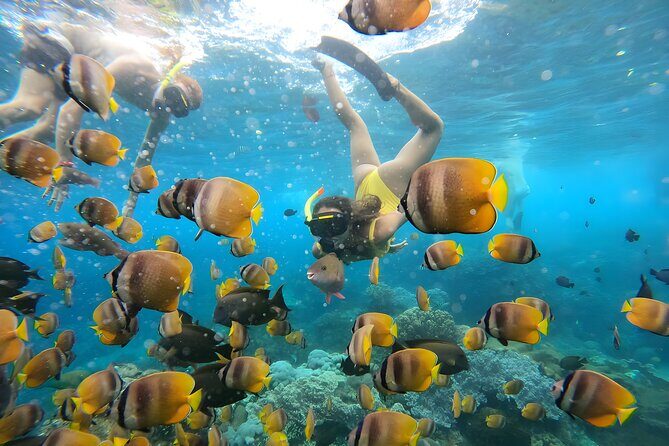
Your underwater session normally lasts 35–55 minutes, depending on air consumption. For first-timers, this timing is usually perfect: long enough to see coral and tropical fish clearly, but not so long that you feel mentally strained.
Because your maximum depth is capped at 12 meters, you’re not chasing extremes. You’re learning how the body behaves when you’re breathing underwater and moving at a slow, controlled pace.
A detail I appreciate: you’re not expected to “perform.” The goal is safe breathing, comfortable mask clearing, and following instructor cues. That’s why this format works as a first exposure.
Gear Included: The Stuff You Should Expect to Hold
Included in the program:
- a full set of standard diving gear
- all fees and taxes
- diving insurance
Two important practical notes:
1) A dive computer isn’t included. The tour lists that the computer is not part of the package. If you personally want to track time/depth/air usage on an onboard computer, you’ll need to arrange that outside the included setup.
2) You shouldn’t need to invest in a mask for this activity. The program explicitly says you don’t need to buy a mask to do the experience, since basic gear is provided.
The “standard gear included” piece is value for your wallet and your sanity. Buying equipment for a one-time try is where beginners often lose money.
Instructors Who Keep You Calm: Names You’ll Hear in the Water
The reviews emphasize instructors who are patient and present—exactly what you want for a first underwater experience.
You’ll see strong mention of:
- Budiana (Budi) for exceptional patience and careful instruction
- Axel for friendly, professional support before and during the session
- Denis for kindness, teaching useful new skills, and strong organization
One review also highlights that the relaxed pace helps with air consumption and avoiding accidental contact with the reef. That’s both practical and respectful: slow, controlled movements mean less panic, steadier breathing, and less chance of damaging coral with hands or fins.
Even if you’re nervous, these instructors are clearly trained to turn fear into focus. If you’ve been scared of what’s underneath, that matters more than any marketing line.
Price and Value: Is $120 Worth It?
At $120 per person for about 4 hours, this program sits in the “you pay to get real experience, not to complete certification” category.
Here’s what your money is buying you:
- Professional training: briefing plus pool practice with a certified instructor
- Real equipment support: standard scuba gear included
- Structured safety: small open-water ratio and depth limits
- Insurance: diving insurance included
- Guided reef time: a supervised underwater experience with coral and fish
If you were to pay for equivalent instruction and then figure out your own gear, you’d likely spend more in both time and money. And if you’re not sure you even like scuba, this half-day try is cheaper than jumping into a full certification path that’s “time-consuming and expensive.”
So yes, I think it’s good value—especially because it’s designed specifically for non-certified people, with tests and a controlled progression that makes the experience safer.
Who Should Book This and Who Should Think Twice
This program is aimed at people who want to try scuba without having to start from scratch with certification.
You’ll be a good fit if you can:
- swim 200 meters
- float for 10 minutes in water too deep to stand in
- handle moderate physical fitness
- manage your health well (no issues with your respiratory system, sinuses, or ears)
You should think twice if you can’t meet those swim/float requirements or if you have relevant medical concerns related to breathing or pressure changes.
Also, since you’ll be in open water with a short boat transfer, bring a realistic mindset. This isn’t “just snorkel and float.” It’s scuba with breathing equipment and a learning curve. The upside is that the course is structured to make that curve manageable.
Small Details That Make or Break Your Experience
A few practical notes based on how this program is set up:
- Start time matters: 10:30 am means you’ll want to be on time so your briefing and pool progression don’t get rushed.
- Group size stays small: capped at 10 travelers, with 2 participants per instructor during open water. Less chaos, more attention.
- Your gear experience is provided: standard gear is included, so you’re not juggling rentals.
- Bring the right mindset: if you’re scared, know the training pool and safety setup are there to help you get comfortable before you go out.
One review also suggests this works well as a milestone experience—people felt they were taking a major step without being abandoned in uncertainty.
Should You Book This Try Scuba Program?
If you’re non-certified and you want a structured first underwater experience with safety front-and-center, I’d say book it. The pool tests and skills practice are the kind of preparation that reduces panic, and the small instructor ratio plus depth limit makes it feel controlled.
You should only hesitate if:
- you can’t confidently pass the 200-meter swim and 10-minute float
- you have health concerns that affect breathing, sinuses, or ears
- you’re strongly dependent on having your own underwater computer (since it’s not included)
For most people, this is a smart way to find out if scuba is your thing—without committing to certification right away.
FAQ
What happens before I get into open water?
You’ll get a detailed 30–40 minute briefing, then practice in a purpose-built scuba training pool. The pool work includes mandatory tests: a 200-meter swim and a 10-minute float in water too deep to stand in, before you practice breathing underwater and simple skills.
How many participants will be with each instructor?
In open water, there’s a safety rule of no more than two participants per instructor, and you’re directly supervised at all times.
What’s the maximum depth?
The program states the maximum depth in open water will not exceed 12 meters.
Is scuba gear included, and is a computer provided?
A full set of standard diving gear is included, and a mask purchase isn’t required. An underwater computer is not included.
Do I need scuba certification already?
No. This program is specifically described as a try scuba option for non-certified divers, led by a certified instructor.
What if the weather is bad?
This experience requires good weather. If it’s canceled due to poor weather, you’ll be offered a different date or a full refund.
More Scuba Diving Tours
More Tour Reviews
- ️Nusa Penida by Private Boat – Snorkeling 4 spots, Swim with Mantas + Land Tour
★ 5.0 · 6,424 reviews
More Nusa Penida Tours
- ️Nusa Penida by Private Boat – Snorkeling 4 spots, Swim with Mantas + Land Tour
★ 5.0 · 6,424 reviews
Nusa Penida Tours: how the alternatives stack up
 ★ 5.0
★ 5.0Nusa Penida day trip: boat, 4 snorkeling, Manta rays & Land tour
The lists this tour appears in