
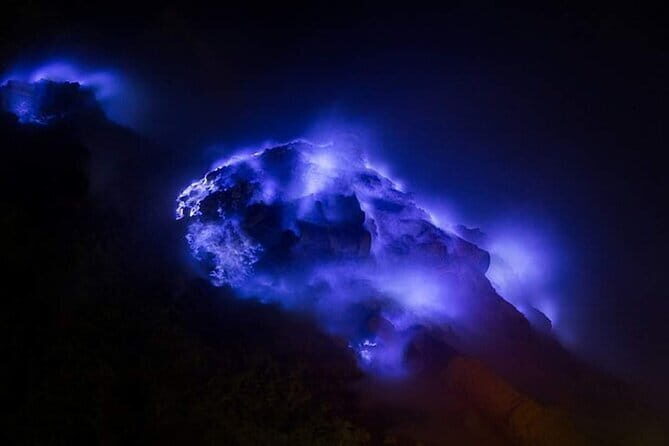
Overnight Mount Ijen Blue Fire Trekking Tour From Bali
A night trek to Ijen feels like a mission. This guided, small-group trip takes care of the messy logistics so you can focus on one wild goal: seeing the famed blue flames at Mount Ijen. You’ll ride out from Bali, cross by ferry, then climb in the dark with a guide setting the pace and the route.
I especially like that pickup and drop-off are built in across many Bali areas, plus the essentials for the hike are handled: entrance fees, ferry ticket (return public ferry), flashlight, and a gas safety mask. And you get a real human plan for the route instead of wandering in your own guessing game.
One possible drawback is that the blue flames and crater views depend on conditions. In at least one account, the flames were not visible and the lake was hard to see, even though the overall volcano views still felt worthwhile.
In This Review
- Key Things to Know Before You Go
- Why a Night Hike to Mount Ijen Feels Like a Different Kind of Bali Trip
- Starting in Bali: Pickup Stops, Transfer Rhythm, and What to Expect Before the Ferry
- Gilimanuk to Ketapang: The Ferry Crossing That Breaks Up the Journey
- The Ijen Crater Standpoint Walk: How the Night Hike Actually Feels
- Blue Flames at Ijen: Your Best Odds for the Glow
- The Group Dynamic: Max 18 People, Real Guidance, and a Long Shared Day
- Cost and Value: What $144 Covers (And What It Doesn’t)
- Itinerary Walkthrough, Step by Step: From Bali Pickup to Back-at-Hotel Ending
- Pickup and drive to Gilimanuk
- Ferry crossing: Gilimanuk to Ketapang
- Transfer and approach to Mount Ijen
- The crater stop: blue flames moment
- Return crossing and drive back to Bali
- Who This Trek Is Best For (And Who Should Think Twice)
- Should You Book This Overnight Ijen Blue Fire Tour From Bali?
- FAQ
- What areas in Bali are pickup available from?
- How long is the overnight Mount Ijen tour?
- Is the ferry crossing included?
- What safety equipment is provided?
- What is the hiking time to the crater standpoint?
- What’s included in the price, and what’s not?
- Is there a refund if I cancel?
Key Things to Know Before You Go
- Overnight timing (16–18 hours): you’re signing up for a long day that starts with early pickup and ends back in Bali.
- Safety gear included: you get a respirator-style gas mask and a flashlight for the night hike.
- Logistics are organized: hotel transfers, ferry crossing (Gilimanuk to Ketapang and back), parking, and entrance fees are covered.
- Small group cap: maximum 18 travelers, with a guide keeping the group together.
- Views aren’t guaranteed: blue flames can be elusive, especially if visibility or conditions aren’t favorable.
- Meals are not included: you’ll want to plan what you eat before and after the hike.
Why a Night Hike to Mount Ijen Feels Like a Different Kind of Bali Trip
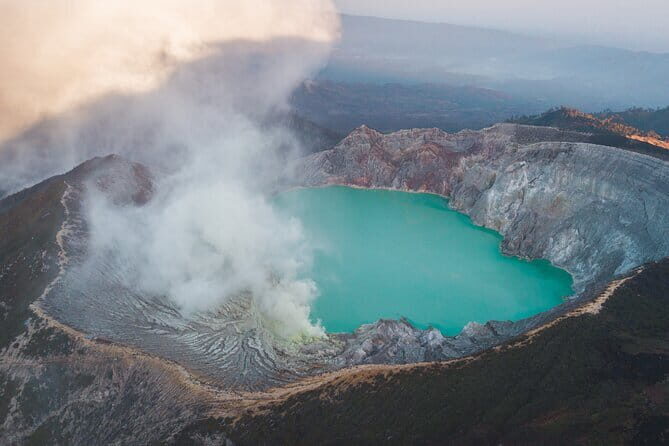
Mount Ijen is not the usual Bali postcard day. This is a crater hike in the dark, built around a narrow window when conditions can be right for the famous glow. The experience is interesting because it’s part outdoors adventure, part science-lab vibes, and part teamwork with strangers who become your unofficial hiking crew.
What makes the tour work for most people is that it treats the hard parts as hard parts. You don’t have to figure out crossings, entrance paperwork, or how to get from Bali to the trailhead. The itinerary is designed around getting you to the Ijen crater standpoint via a ferry leg and a guided ascent.
The other thing I like is how practical it is about safety and visibility. You’re not walking into a harsh environment blind. You’ll be given a gas mask and a flashlight, and you’ll follow a trekking guide to keep your group moving on the best route.
Starting in Bali: Pickup Stops, Transfer Rhythm, and What to Expect Before the Ferry
This tour begins with pickup from a wide list of Bali areas: Nusa Dua, Uluwatu, Jimbaran, Kuta, Seminyak, Canggu, Sanur, Ubud, Denpasar, and the Gianyar area. It’s a smart setup if you’re staying outside the usual tourist center, because you don’t need to sprint across the island to meet a van.
The big “yes” here is convenience. You’ll drive toward Gilimanuk (the Bali side ferry port) for about 4 hours, and then you transition into the ferry crossing. That means the first major block is all about getting you positioned for the night hike without you doing route planning.
One detail to watch: pickup from the Uluwatu area may include an extra fee of IDR 200,000 per car. If you’re staying there, it’s worth double-checking this in advance so you’re not surprised later.
Also, consider that the total day is roughly 16–18 hours. That long stretch is part of the experience. If you’re the type who likes to sleep in and move slowly, you’ll still have fun, but you’ll need to manage fatigue.
Gilimanuk to Ketapang: The Ferry Crossing That Breaks Up the Journey
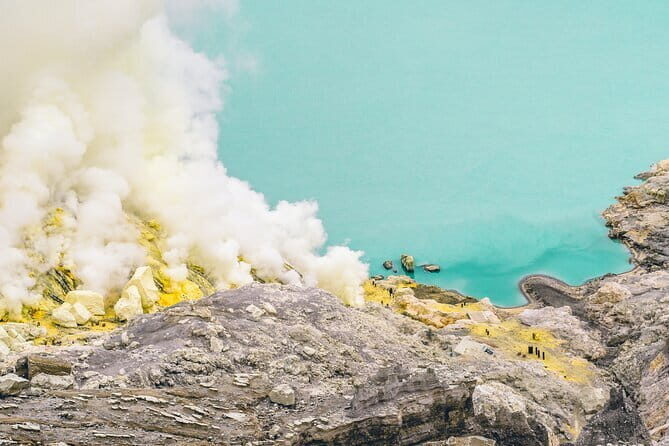
Once you reach Pelabuhan Gilimanuk Bali, you cross by ferry toward Ketapang Harbor in West Java. The ferry stop is listed as 1 hour, and then you meet the driver on the West Java side.
This ferry leg matters more than it sounds. It turns a potentially chaotic island-to-island transfer into something predictable. It also keeps the day from feeling like a never-ending bus ride, which matters on a trek tour where you’re going to spend the later hours climbing in the dark.
From Ketapang, you’ll switch back to a road transfer to reach Mount Ijen. The journey to the crater area is about 1.5 hours, so you’ll go from water to highway to mountain darkness fairly smoothly—assuming you keep your energy up during the transit.
The Ijen Crater Standpoint Walk: How the Night Hike Actually Feels
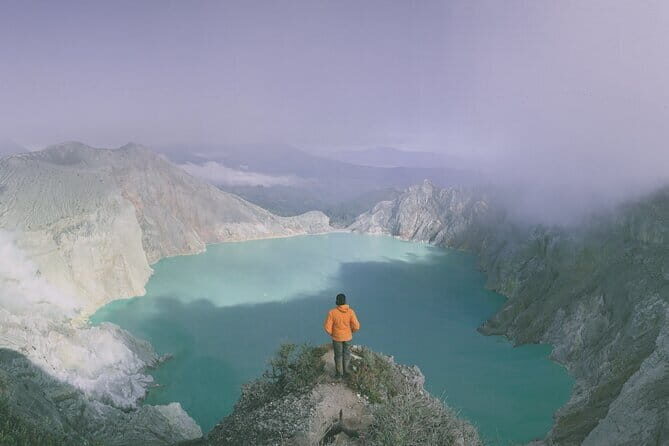
After you arrive near the crater, you’ll do two time blocks: a drive/approach segment of around 1.5 hours, then the hike itself—about 90 to 120 minutes from the foot of the route up to the crater viewpoint/standpoint.
That’s the heart of the trip. Even if you’re in decent shape, this is an up-and-up hike in the dark, so pace matters. The guide helps you avoid a common mistake: going out too fast early, then slowing down later and turning the last part into stress.
What you’ll be carrying matters too. You’ll want to bring what you can from the start: comfortable shoes with grip, layers for cool high-elevation air, and a way to keep your hands warm. The tour provides a flashlight, which is great because it means you don’t have to hunt down a headlamp right before departure.
The tour also includes the respirator gas safety mask, which is there for a reason. Crater areas can be hazy and harsh, and this gear is one of the clearest signs that the operator takes your safety seriously. Still, you should treat the hike like it’s active effort, not just sightseeing—move steadily, keep your breathing calm, and listen to your guide.
Blue Flames at Ijen: Your Best Odds for the Glow
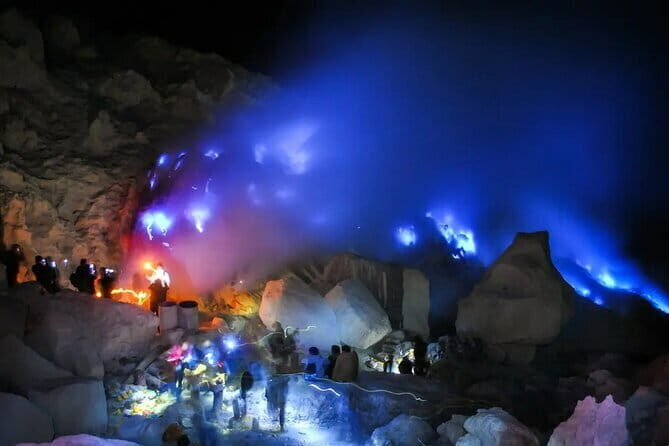
Let’s be honest: the blue flame moment is the headline. This tour is built around checking out the blue flames at Mount Ijen with a guided group.
Here’s the key thing I’d tell you before you go: plan your expectations so you don’t feel crushed if conditions aren’t perfect. One account described a trip where the views were nice, but the blue flames were not seen and the lake was barely visible. That’s the kind of experience you can’t fully control, because visibility and crater conditions matter.
What you can control is how you show up:
- Arrive ready and rested enough for the hike, since tiredness makes everything feel harder.
- Follow the guide’s route and timing, rather than trying to break off for a better angle.
- Stay alert at the standpoint and keep your attention on what your guide is pointing out.
If the conditions are right, you’ll get that surreal glow and crater atmosphere that people talk about. If not, you’ll still be at a real volcano crater at night with a guide-run plan—often enough to make the whole effort feel justified.
The Group Dynamic: Max 18 People, Real Guidance, and a Long Shared Day

This is a group tour with a maximum of 18 travelers, and it’s described as private in the sense that only your group participates. That’s a helpful balance: you get the ease of a group schedule, but it’s not so big that you’re constantly waiting and lost in the crowd.
I like the small cap because it usually means better pacing on a hike like this. You’ll want everyone to stay together for safety and coordination, especially on a night ascent. A guide can also manage the flow at the viewpoint so you’re not stuck watching the same small section for half the stop.
Also, since it’s a long day (16–18 hours), you’ll appreciate the structure. You don’t just show up and figure it out. You get bottled water, a clear set of stops, and a plan for when you switch between ferry and car.
Cost and Value: What $144 Covers (And What It Doesn’t)
At $144 per person, this tour is priced like a logistics-managed overnight excursion, not a cheap transfer-only ticket. And honestly, that’s where the value comes from.
Here’s what’s included:
- Hotel transfer for many Bali areas (listed pickup zones)
- Bottled water
- Respirator gas safety mask
- Trekking guide
- Ferry ticket return (public ferry)
- Entrance fee to Mount Ijen
- Parking fees
- Flashlight
Not included:
- Meals
- Alcoholic drinks (sold separately)
- The Uluwatu pickup extra fee (IDR 200,000 per car) and pickup from other areas not listed
That inclusion list is the part that matters. Entrance fees, ferry transport, and a guide cost money, and those are exactly the items that add up if you try to cobble together your own route. When the tour includes the ferry ticket return and the mask, you’re also avoiding those annoying last-minute shopping runs.
So the question isn’t just whether $144 sounds reasonable. It’s whether you’d rather spend your time planning transport and safety gear—or letting someone else handle it while you focus on the hike.
Itinerary Walkthrough, Step by Step: From Bali Pickup to Back-at-Hotel Ending
Here’s how the day flows in plain terms:
Pickup and drive to Gilimanuk
You’re collected from a wide range of Bali locations and head toward Gilimanuk harbor, roughly 4 hours away. This is the “get in position” part of the day.
Ferry crossing: Gilimanuk to Ketapang
At Pelabuhan Gilimanuk, you cross by ferry (about 1 hour), then transition to the driver on the Ketapang side.
Transfer and approach to Mount Ijen
From Ketapang, the journey to the Ijen area is about 1.5 hours. Then comes the hike time: 90–120 minutes to reach the crater standpoint.
The crater stop: blue flames moment
This is where you check for blue flames and crater views. The stop includes entry fees, and your guide handles the route and timing at the viewpoint.
Return crossing and drive back to Bali
Afterward, you cross back (Ketapang to Gilimanuk), then drive back to your Bali hotel area. The experience ends back at the meeting point zone where pickup began.
A quick practical tip: because the total day is long, bring patience for traffic and the ferry timetable. This is one of those tours where you’re not in full control of daylight shifts, but you are in full control of preparing your body and gear.
Who This Trek Is Best For (And Who Should Think Twice)
This tour fits best if you:
- Can handle a moderate fitness level hike (the hike is 90–120 minutes up, in the dark)
- Are comfortable with a long day: 16–18 hours
- Want a guided, logistics-managed route rather than arranging ferry + transport + entry yourself
- Care about crater views enough to make the effort worth it, even if the flames are not guaranteed
It may not be ideal if you:
- Get stressed by early starts and long travel blocks
- Prefer daylight hiking only
- Are very sensitive to hazy environments and would rather skip any crater-area exposure, even with a mask provided
Minimum age is 15, so if you’re traveling with younger teens, double-check whether it fits your group’s comfort with long, active nights.
Should You Book This Overnight Ijen Blue Fire Tour From Bali?
I’d book it if you want a guided overnight Ijen experience where most of the hard logistics are handled for you: ferry transport, entrance fees, parking, gas mask, and flashlight. The price makes sense because it packages safety + transport + guiding into one ticket.
I’d think twice if your whole trip depends on seeing blue flames with absolute certainty. Even with a top operator, crater conditions can change. If you’re okay with a genuine volcano night experience—guided, structured, and scenic even when the flames are faint—you’re in the right mindset.
If you’re unsure, this is the kind of tour where your decision should come down to one question: do you want to spend your vacation on planning and gear shopping, or do you want to spend it standing at a crater in the night with a plan?
FAQ
What areas in Bali are pickup available from?
Pickup is available from several areas including Nusa Dua, Uluwatu, Jimbaran, Kuta, Seminyak, Canggu, Sanur, Ubud, Denpasar, and the Gianyar area. The tour also lists Ubud, Gianyar Regency as the meeting point area.
How long is the overnight Mount Ijen tour?
The duration is about 16 to 18 hours.
Is the ferry crossing included?
Yes. The tour includes a return public ferry ticket, crossing from Gilimanuk to Ketapang and back.
What safety equipment is provided?
You receive a respirator gas safety mask for the mountain and a flashlight for the hike.
What is the hiking time to the crater standpoint?
After arriving at the Ijen route, the hike to the crater standpoint takes about 90 to 120 minutes.
What’s included in the price, and what’s not?
Included: hotel transfers (listed areas), bottled water, gas mask, trekking guide, return ferry ticket, Mount Ijen entrance fee, parking fees, and flashlight. Not included: meals and alcoholic drinks.
Is there a refund if I cancel?
No. This experience is non-refundable and cannot be changed for any reason. If it’s canceled because a minimum number of travelers isn’t met, you’ll be offered a different date/experience or a full refund.
More Tours



More Tour Reviews

More Ubud Tours
Ubud Tours: how the alternatives stack up

 ★ 5.0
★ 5.0Ubud: Monkey Forest, Jungle Swing, Rice Terrace, and Water Temple
The lists this tour appears in