
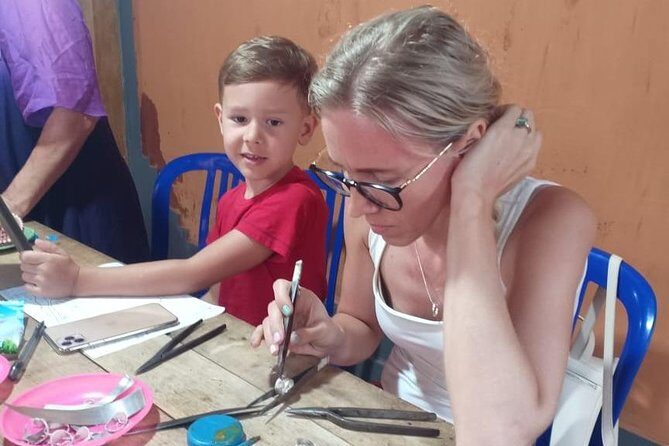
Silver Smith Class With Local Balinese
Your own silver piece starts with a simple choice. This private silver jewelry making class runs in the countryside outside Ubud, where you listen to the steps, pick a design (ring, bracelet, earrings, or necklace), and then learn the process of burning, smoothing, and sharpening silver with dedicated coaching from Karuna Kania Bali Tours. I especially love the private, full-attention instructor setup and the fact that you leave with the jewelry you made.
One thing to plan for: this is a long sit-down workshop. Think about comfortable clothes and settling in for about 3 hours.
In This Review
- Quick hits before you go
- Silver Smith Workshop Outside Ubud: a real Bali souvenir you can wear
- Choosing your ring, bracelet, earrings, or necklace in Ubud
- The metal work cycle: burn, smooth, sharpen (and why it’s the point)
- Snacks and certificate: what’s actually included in the price
- Price and value for a private 3-hour silver class
- Timing in Ubud: morning or afternoon, plus a real-world schedule
- Pickup, meeting point, and getting there without stress
- Comfort and focus: a long sit-down Bali workshop works best when you’re ready
- Who this private silver jewelry class is best for
- Should you book this Silver Smith Class with Local Balinese?
- FAQ
- How long does the Silver Smith class last?
- What types of jewelry can I make?
- Is this workshop private?
- What is included in the price?
- What is not included?
- Is pickup available?
- Can I choose the design?
- Are gemstones available for my jewelry?
- Where is the meeting point?
- Can I get a full refund if I cancel?
Quick hits before you go
- Private class in the Ubud countryside: only your group, with instructor attention focused on you
- Design choice first: you select what you want to make, then follow the making process
- Burn, smooth, sharpen: hands-on practice through the key stages of silver smithing
- Gemstones and multiple design options: there are plenty of choices, including stone options if you want them
- Coffee/tea plus a snack: fried bananas and drinks are included to keep you going
Silver Smith Workshop Outside Ubud: a real Bali souvenir you can wear
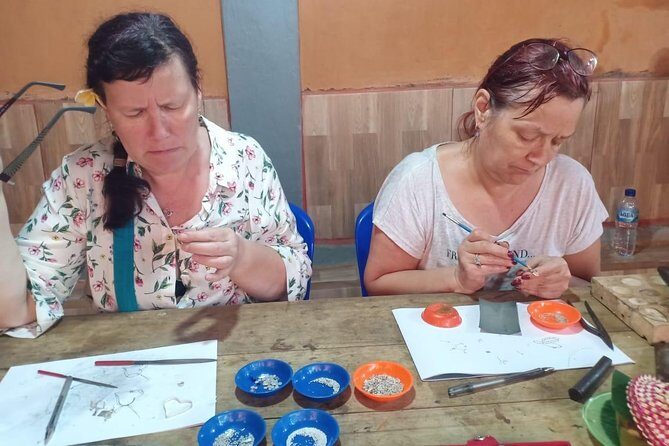
If Bali is about making memories you can actually hold, this workshop delivers. You’re not just watching someone else work. You pick a piece to create, then go through the core steps of silver jewelry making, with a private instructor guiding you the whole time.
What makes this feel special is the setting and the pace. The class happens in the countryside outside Ubud, which means you get out of the constant traffic pattern and into a slower rhythm. It also helps the vibe: you’re doing careful craft work, not sprinting between photo spots.
And because it’s private, you’re not competing with a crowd or waiting your turn. The instructor can explain, correct, and encourage based on what you’re doing right then.
The main tradeoff is time. Expect a 3-hour sit-down activity. You’ll be seated for the making process, so it’s best when you want to slow down rather than cram in more driving.
Choosing your ring, bracelet, earrings, or necklace in Ubud
The class starts with a listening-and-planning phase. First, the guide/instructor talks you through the steps and what to expect. Then you choose a design: rings, necklaces, bracelets, or earrings.
That planning step matters more than you might think. When you’re making metalwork, your end shape affects what you do next. Picking your piece early helps the instructor tailor guidance as you go, so you’re not scrambling mid-process.
You also get choice beyond just the jewelry type. There are lots of design options, and you can build something your own way. If you want to add color or sparkle, the class offers gemstones to choose from. This is a good moment to decide your style while you’re still fresh and able to focus.
If you’re the type who likes concrete goals, this is ideal. You start with a clear outcome: you’ll walk away with a finished silver item suited to your taste.
The metal work cycle: burn, smooth, sharpen (and why it’s the point)
After you choose your design, you jump into the real craft part. The workshop gives you a guided sequence that includes burn, then smooth, then sharpen. That’s the heart of this experience.
Here’s how I’d think about those stages as a practical beginner:
- Burn is where you heat and work the silver so it can take shape and hold the form you’re building. It’s the step that turns a flat idea into something that behaves like jewelry.
- Smooth is about removing roughness and refining edges. This is the stage where your piece starts to look clean and wearable instead of handmade-and-wild.
- Sharpen is about getting lines and contact points crisp. For rings and earrings especially, this is what helps the final look feel intentional.
Even if you’re new to metalwork, the class is built for learning. You’re not expected to already know how to handle tools. The instructor talks through the process first, then helps you execute the steps while you’re making your own design.
This is also where the private format shows its value. If you get confused, you don’t have to wait for the next group session. You can ask, adjust, and move on with confidence.
At the end, you’ll have a piece that’s recognizably yours—chosen by you, shaped by you, and finished with the instructor’s help on the key finishing moves.
Snacks and certificate: what’s actually included in the price
You’re getting more than instruction. The price includes several concrete perks that help make the whole session feel like a complete experience, not just paid labor.
Included items:
- Coffee and/or tea, plus a snack (fried bananas)
- A certificate of completion
- The jewelry you make
That last one is big. Many “hands-on” activities include instruction but not the product. Here, the jewelry is included, so your payment ties directly to something you take home and wear.
The certificate also adds a nice finish to the day. It’s listed as a certificate silver class from bali purma. It won’t replace a passport stamp, but it does give the workshop a real sense of closure.
And the snacks help more than you’d expect. You’ll be seated for about 3 hours, and having coffee or tea with something like fried bananas keeps your energy steadier while you concentrate.
Price and value for a private 3-hour silver class
At $47.00 per person, this workshop lands in the range of a thoughtful, skill-based Bali activity—especially because it’s private and you keep the finished jewelry.
Here’s the simple value math that matters for most people:
- You get a private instructor (not a group class)
- You get a take-home item (the jewelry you make)
- You get refreshments (coffee/tea and snack)
- You get a completion certificate (bali purma)
If you compare this to doing something similar in a larger, more tourist-heavy setting, the private instruction and the product inclusion are what tip it toward good value. You’re paying for time, materials and guidance, and the experience ends with an item that’s meaningful.
One practical tip: confirm what pickup means for your day. The listing says pickup is offered, but also that transport is not included. That usually means pickup may be optional or dependent on your schedule. If you want door-to-door ease, ask at booking time what the pickup covers.
Timing in Ubud: morning or afternoon, plus a real-world schedule
You can choose a morning or afternoon class. That flexibility helps you fit it around Ubud plans like meals, temple time, or a spa visit.
The class duration is listed as 3 hours (approx.). In real life, craft classes can run slightly under or over, depending on what you choose to make and how quickly you pick up each step. Build a little buffer into your itinerary so you don’t feel rushed.
There’s also a “start with learning” rhythm. You’re not dropped into tool work immediately. You spend time listening to the steps, choosing your design, and getting oriented. Then you move into the burn/smooth/sharpen process.
If you hate scheduling surprises, schedule a lighter block afterward—something where you can sit and enjoy your new jewelry without rushing to the next stop.
Pickup, meeting point, and getting there without stress
The experience starts in Ubud, Gianyar Regency, Bali, Indonesia. It’s also described as near public transportation, and access is listed as easy.
That’s useful because not everyone wants to rely entirely on a driver. If you’re staying in central Ubud, you should be able to reach the meeting area without a complicated plan. If you’d rather reduce decisions, the class also notes that pickup is offered—so you can ask for a pickup option that fits your accommodation and timing.
You’ll receive confirmation at the time of booking, and the experience uses a mobile ticket. That’s helpful for day-of logistics: you can keep everything on your phone.
Transport isn’t listed as included, but pickup may be the best compromise. Just don’t assume it’s automatically included for every booking. Verify what’s included in your exact arrangement.
Comfort and focus: a long sit-down Bali workshop works best when you’re ready
This activity needs a long sit-down. That detail shouldn’t be brushed off. Jewelry making is about control and patience, which means lots of time seated at your work.
To make the experience enjoyable, show up ready to focus:
- Wear comfortable clothes for sitting and steady craft work
- Bring a small mindset shift: this is not a quick walk-through activity
- Treat it like a mini workshop, not a photo stop
If you’re traveling with someone who expects an active adventure, this might surprise them. One of the best moments I’ve seen in craft experiences is when a person arrives thinking they’ll be bored—and then ends up enjoying the step-by-step guidance and the hands-on payoff. That “surprised by fun” feeling comes up often with patient, friendly workshops like this.
Who this private silver jewelry class is best for
This is a great fit if you want a Bali souvenir with actual skill and personal meaning. It’s especially good for:
- Couples or friends who want time together with one guided activity
- Beginners who want a clear start, then hands-on practice
- People who prefer private instruction over group tours
- Anyone who likes practical crafts and likes wearing what they make
It’s also a solid choice if you want something different from standard Ubud shopping. A self-made silver ring or set of earrings beats a generic trinket almost every time.
If you dislike sitting for a few hours, or you’re only interested in short activities, you may prefer a faster Bali workshop. But if you’re okay slowing down, this class is built for that.
Should you book this Silver Smith Class with Local Balinese?
Yes, I think you should book it if you want a private, hands-on silver jewelry workshop outside Ubud and you care about taking home something you made yourself. The combination of design choice, the burn/smooth/sharpen skill sequence, and the fact that the jewelry is included makes the price feel grounded.
Skip it if your schedule can’t handle a seated 3-hour session, or if you want a quick activity with zero craft focus. But if you’re the type who enjoys learning a new skill, even for the first time, this is the kind of Bali experience that turns into a story you can wear.
If you do book, my practical advice is simple: decide what you want to make ahead of time (ring, necklace, bracelet, or earrings), and plan to enjoy the process—not just the final product.
FAQ
How long does the Silver Smith class last?
The class lasts about 3 hours.
What types of jewelry can I make?
You can make designs such as rings, necklaces, bracelets, or earrings.
Is this workshop private?
Yes. It’s a private tour/activity, so only your group participates.
What is included in the price?
Coffee and/or tea with a snack (fried bananas), a certificate of completion (from bali purma), and the jewelry you make are included.
What is not included?
Lunch is not included. Transport is also listed as not included in general.
Is pickup available?
Pickup is offered, but transport is listed as not included. It’s best to confirm pickup details when you book.
Can I choose the design?
Yes. You listen to the instructor first, then choose your design before the making process begins.
Are gemstones available for my jewelry?
Gemstones are available to choose from.
Where is the meeting point?
The start point is in Ubud, Gianyar Regency, Bali, Indonesia.
Can I get a full refund if I cancel?
Yes. You can cancel up to 24 hours in advance for a full refund. Canceling less than 24 hours before the start time is not refunded.
More Workshops & Classes





More Tour Reviews






More Ubud Tours
Ubud Tours: how the alternatives stack up


 ★ 5.0
★ 5.0Ubud: Monkey Forest, Jungle Swing, Rice Terrace, and Water Temple



The lists this tour appears in