
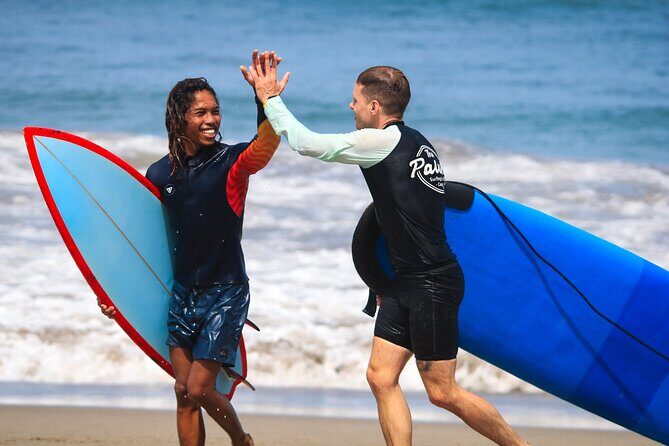
Surf Canggu: Unforgettable Lessons for Beginners & Pros in Bali!
Two hours can change how you see the ocean. This private surf lesson at Batu Bolong Beach is built around getting you comfortable fast, with a safety talk, a warm-up, then plenty of time actually practicing instead of standing around. I especially like the 1-on-1 coaching feel, and the schedule that sends you into the water for about 1 hour and 30 minutes. One consideration: you’ll want to plan for the fact that the activity requires good weather, and towel/sunscreen are not included.
For many people, Bali surfing starts with nerves. Here, you get a clear setup first: a roughly 30-minute session covering surf conditions plus how to paddle and stand up, then stretches to get your body ready. You’re also not stuck hunting for gear, because the lesson includes the surfboard and rash guard, which makes it easy to show up and focus on learning.
In This Review
- Key things to know before you paddle
- Batu Bolong Beach is a smart classroom for first-timers
- The 2-hour lesson plan that squeezes real practice in
- What happens in your safety briefing (and why you’ll feel less panicky)
- Stretching first: the small step that helps your pop-up
- In the water: reps, feedback, and learning how to read waves
- Board choice: why bigger boards make learning easier
- Equipment included: a smooth start without last-minute shopping
- The meet-up spot in Canggu: easy to find, close to transit
- Is a private lesson worth $25.50? (When it works for your learning)
- Who this lesson fits best (and who might want a different format)
- Weather and water conditions: plan for the reality of Bali days
- A quick note on confidence: coaching style matters
- Should you book this surf lesson at Arie SurfCanggu?
- FAQ
- How long is the surf lesson?
- Where does the lesson take place?
- What is included in the price?
- What is not included?
- Is this a private lesson?
- How much time do I spend practicing in the water?
- Do I need to bring my own surf gear?
- Where is the meeting point?
- What if the weather is bad?
- Can I cancel after booking?
Key things to know before you paddle
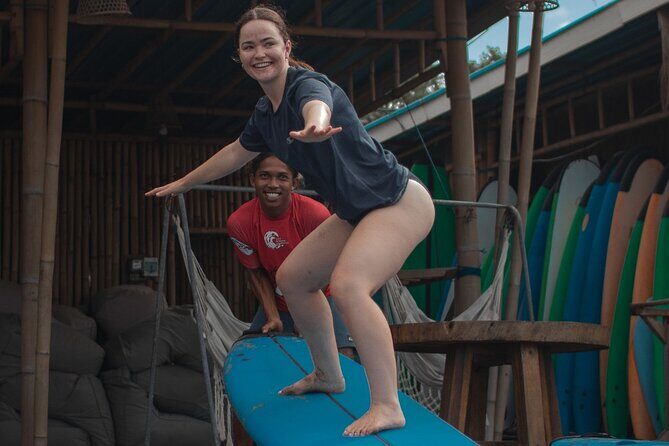
- Private, one-on-one focus so your instructor can tailor tips to what you’re doing wrong and right
- Time in the water is the point with about 1h30 of practice after a 30-minute intro
- Gear is included: surfboard and rash guard, plus bottled water
- Bigger boards help early if you’re tempted to go too small too fast
- Batu Bolong Beach coaching aims at learning fundamentals first, then building confidence
- Small overall group size (max 15 travelers), even though the lesson is personally guided
Batu Bolong Beach is a smart classroom for first-timers
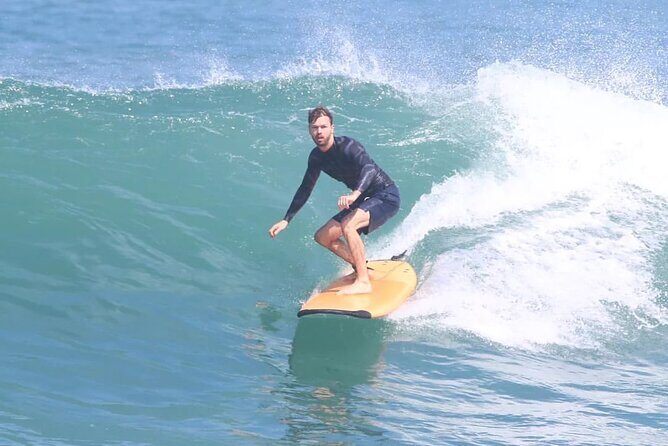
Batu Bolong Beach sits in Canggu’s surf zone, where the vibe is relaxed but the water is still real. For a beginner, that matters. You’re learning with a spot that’s close to where people actually surf, so the basics you practice (paddling, positioning, standing up) feel transferable right away.
What I like about this lesson’s setup is how it treats the ocean like a place you can read, not a mystery you have to fear. Before you get in, you’ll get a safety briefing and talk about surf conditions, plus specific technique guidance for how to paddle and stand up. That’s the difference between a lesson that just throws you in and one that helps you understand what you’re doing while you’re doing it.
The 2-hour lesson plan that squeezes real practice in
This is a short lesson by design, around 2 hours total. The timing is simple and practical:
- 30 minutes: explanation, safety briefing, surf conditions, and technique basics (paddle + stand up). You also stretch so your body is warm and ready.
- 1 hour 30 minutes: you’re in the water practicing while your instructor is with you the whole time.
That split is valuable because surfing skill is mostly repetition. You need time to try, fail, adjust, and try again before your session ends. If you’re newer, the intro period helps you avoid common panic moves—like rushing your pop-up or paddling at the wrong angle. If you already surf, that structure still works because your coach can focus on one or two fixes rather than trying to cover everything at once.
What happens in your safety briefing (and why you’ll feel less panicky)
You’ll start with a safety talk that covers surf conditions and the key techniques for paddling and standing up. It’s not just rules for rules’ sake. The goal is to help you understand how to handle yourself in the water—especially if waves and currents feel intimidating at first.
From the way the instructors teach, it’s clear they prioritize comfort and clarity. In particular, the coaching style described by past students emphasizes feeling safe and respected, even when you’re scared or not confident yet. That matters because if you’re mentally tense, your paddling gets sloppy and your pop-up timing falls apart.
Stretching first: the small step that helps your pop-up
The warm-up stretch is easy to overlook, but it’s the kind of detail that pays off. Surfing uses your shoulders, core, and legs in quick bursts—paddle, lift, pop-up, balance. A brief stretch session helps you move better once you’re out there, instead of trying to learn technique with cold, stiff muscles.
You don’t need a fitness routine here. You just need your body to be ready for the stop-and-go effort.
In the water: reps, feedback, and learning how to read waves
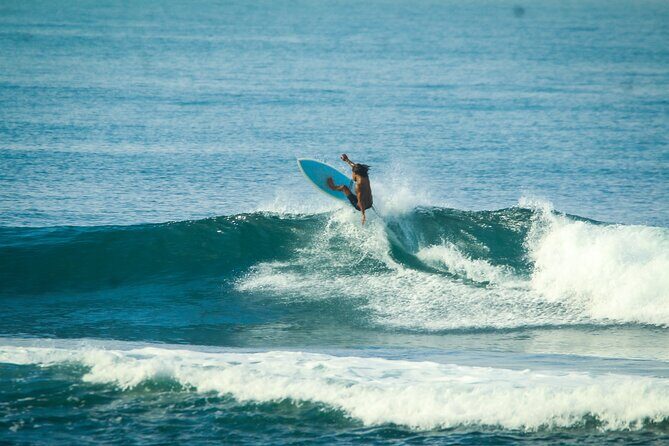
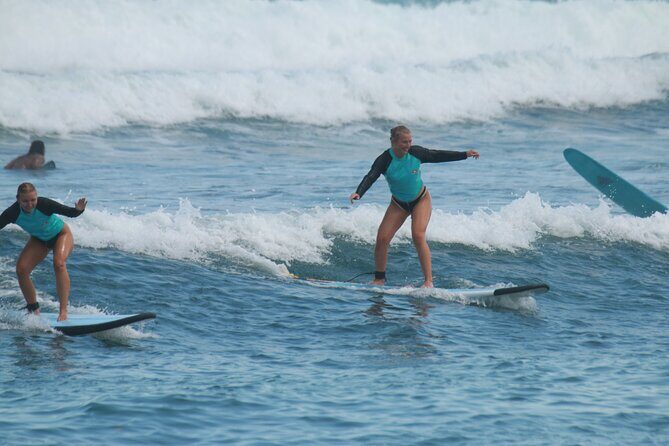
Once you’re out, the lesson shifts from talking to doing. You get plenty of practice time, with the instructor present the entire session. That’s where the improvements tend to happen quickly, because your coach can correct you in real time.
A helpful detail for beginners: you’ll be learning fundamentals in a way that builds confidence. If you can’t paddle yet, or you’re struggling to stand, you’ll still get worked through in a step-by-step way. The teaching approach described by students focuses on both what’s wrong and what’s correct, sometimes even with demonstration. That kind of “show it, then adjust it” method usually sticks faster than verbal tips alone.
Board choice: why bigger boards make learning easier

Here’s one beginner surfing tip that’s worth taking seriously: bigger boards are cool too. Many people jump to a smaller board as soon as possible. The problem is that smaller, shorter boards can feel harder to control at the exact time you need stability to learn timing.
A larger board helps you:
- Develop balance while you learn the pop-up sequence
- Get more opportunities to catch waves early
- Feel less frustrated when you’re still mastering paddling and positioning
If you’re learning for the first time, your priority is catching more waves and building muscle memory. You’ll thank yourself later when you move to something smaller with more control.
Equipment included: a smooth start without last-minute shopping
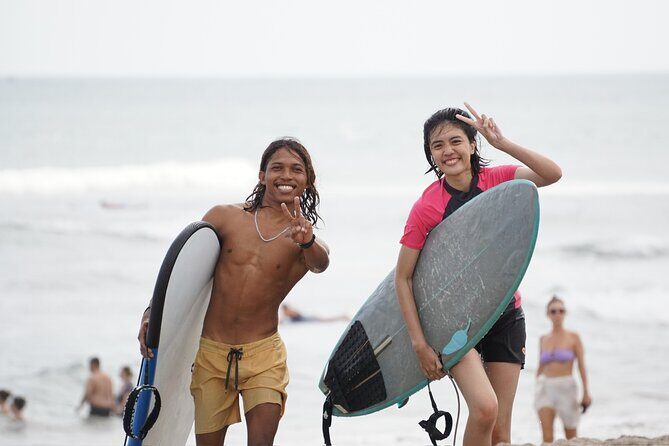
This lesson takes the friction out of getting on the water. Included items are:
- Surfboard
- Rash guard
- Bottled water
What’s not included:
- Towel
- Sunscreen
So plan to bring a towel and your own sunscreen if you use it. Also, think about swimwear and how you’ll dry off after. The best sessions feel simple: show up, get geared up, and focus on learning.
The meet-up spot in Canggu: easy to find, close to transit
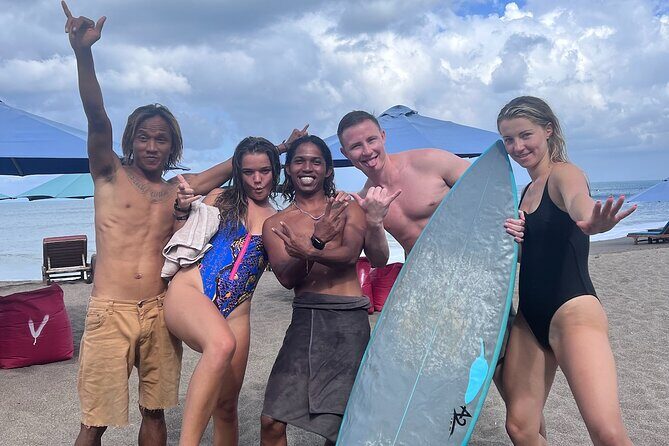
You’ll start at Arie SurfCanggu in Kuta Utara (Canggu area): Arie SurfCanggu, Kuta Utara, Badung Regency, Bali 80362, Indonesia. The activity ends back at the meeting point.
It’s also listed as being near public transportation, which is useful if you don’t want to rely entirely on rides each time you head to the beach.
Is a private lesson worth $25.50? (When it works for your learning)
At $25.50 per person, the value comes from a few practical things that matter on a short session:
- Your instructor is focused on you, not a crowd
- You get about 1.5 hours of direct practice time in the water
- Gear is provided, so you don’t add rental or shopping costs
- The coaching targets fundamentals first, which tends to speed up progress for beginners and helps intermediates correct common issues
You’re not buying hours of theory. You’re paying for time where you can actually try surfing skills and get feedback immediately. That’s a smart use of money if your goal is progress, not just a beach activity.
Who this lesson fits best (and who might want a different format)
This one works well if you:
- Are a true beginner who needs safe, clear guidance
- Want individualized correction and encouragement in the water
- Already surf and want help sharpening basics like paddling and standing timing
A small note for expectations: because you’re working on fundamentals in a compact time window, you probably won’t leave with advanced tricks. That’s not the point. The lesson is designed to get you confident, moving, and catching waves sooner.
Weather and water conditions: plan for the reality of Bali days
This experience requires good weather. If weather causes cancellation, you’ll be offered a different date or a full refund. That’s exactly what you want for a surf lesson—no pretending the ocean will cooperate.
Also, treat the day like a short window. Surf windows can change, and the water is the boss. Build in a little flexibility so you can reschedule if needed.
A quick note on confidence: coaching style matters
Some surf lessons teach technique. This one also aims to teach comfort. Past students highlighted that their instructor made them feel safe and respected their wishes, even when they were scared of the ocean and waves. That kind of supportive coaching is especially important for first-time surfers.
If you’re the type who freezes when water feels unpredictable, you’ll likely appreciate a teaching style that gives you clear next steps. If you’re already surfing, you may still benefit from that calm, structured approach—because confidence often improves paddling decisions and pop-up timing.
Should you book this surf lesson at Arie SurfCanggu?
Book it if you want a short, structured lesson where you spend most of your time practicing with hands-on guidance. The combination of 1-on-1 coaching, gear included, and a schedule that gets you into the water for about 1 hour and 30 minutes makes this a strong value, especially for beginners.
Skip it (or consider a different option) if you’re looking for a long, exploratory surf day focused on advanced maneuvers. This lesson is about fundamentals, safety, and getting you to your feet with better odds.
FAQ
How long is the surf lesson?
The surf lesson is approximately 2 hours total.
Where does the lesson take place?
The lesson happens at Batu Bolong Beach in Bali.
What is included in the price?
It includes bottled water, a surfboard, and a rash guard.
What is not included?
A towel and sunscreen are not included.
Is this a private lesson?
Yes. It’s a private one-on-one surf lesson.
How much time do I spend practicing in the water?
After an initial about 30-minute safety and technique session, you’ll have about 1 hour and 30 minutes to practice in the water.
Do I need to bring my own surf gear?
No. The surfboard and rash guard are provided. You should bring a towel and sunscreen.
Where is the meeting point?
The start point is Arie SurfCanggu, Kuta Utara, Badung Regency, Bali 80362, Indonesia, and you return to the meeting point at the end.
What if the weather is bad?
The experience requires good weather. If canceled due to poor weather, you’ll be offered a different date or a full refund.
Can I cancel after booking?
You can cancel for free up to 24 hours in advance for a full refund. If you cancel less than 24 hours before the start time, the amount paid is not refunded.
More Tour Reviews





More Canggu Tours






More Seminyak Tours
Seminyak Tours: how the alternatives stack up
 ★ 5.0
★ 5.0Bali Full-Day Traditional Village Sightseeing Trip All Inclusive
 ★ 5.0
★ 5.0Experts Bali Driver : Best Bali Private Driver for Tour in Bali




The lists this tour appears in