
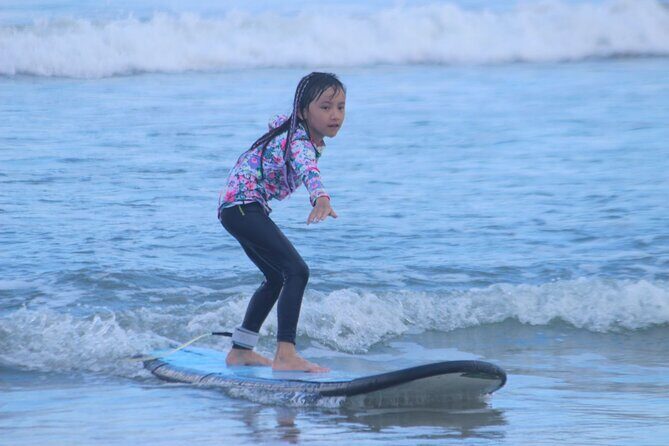
Surfing Activity with Beginner and Intermediate Lesson
Surfing in Kuta is a fast way to learn.
This lesson at Galaxy Surf Bali is built for one thing: getting you on a board with clear instruction and strong safety focus, right at the beach area that’s described as the safest place to start. The coolest part for me is that you can choose between a beginner session in shallow water and an intermediate session that takes you farther out toward the lineup.
Two things I really like about this experience are the tight coaching style and the added media. Coaches are experienced and surf life saving certified, and you’ll get free photos and videos of you riding the waves. One possible drawback to keep in mind: the ocean is weather-dependent, and the lesson runs about 90 minutes, so if conditions are rough you may need to reschedule.
Key things to know before you book
- Two lesson levels: beginner in shallow water, intermediate out toward the lineup for green waves
- Ages 4 to 60 for beginner, including non swimmers
- Certified, safety-focused instructors trained in surf life saving
- Free photos and videos during your session
- Private group only: just your group participates
- Weather matters: if it’s canceled for poor conditions, you’ll be offered a new date or a full refund
In This Review
- First Steps at Galaxy Surf Bali on Kuta Beach
- Beginner Lesson: Shallow Water, Foam Waves, and Non-Swimmer Friendly Coaching
- Intermediate Lesson: Lineup Skills, Etiquette, and Green-Wave Technique
- The 90-Minute Flow: What Usually Happens During Your Session
- Photos and Videos Included: A Big Part of the Value
- Instructor Quality: What You Can Expect From Coaches Like Sardo
- Who This Surf Lesson Fits Best (and Who Should Pick Beginner First)
- Price at About $18.24: Does This Feel Like Real Value?
- Practical Tips for Your Day at Kuta (So You Enjoy It More)
- Should You Book Galaxy Surf Bali?
- FAQ
- How long is the surf lesson?
- Where does the activity start?
- Is there a beginner option for people who can’t swim?
- What’s different about the intermediate lesson?
- Do you include photos or videos?
- Is this a private group experience?
- What happens if the weather is bad?
First Steps at Galaxy Surf Bali on Kuta Beach
Galaxy Surf Bali is located on Jl. Pantai Kuta, right at Kuta Beach. That location matters because for surfing lessons, you want a spot where the learning zone is predictable and the instructors can manage safety in the water. In this case, the program is set up around the beach area described as the safest place to learn.
Your experience starts and ends back at the meeting point, so you’re not dealing with long transfers or guesswork about where to be when. The tour runs about 1 hour 30 minutes, which is a helpful time window: long enough to get instruction, make attempts, and actually feel progress, but not so long that a first-time surfer gets exhausted or frustrated.
You’ll also get a mobile ticket. That’s a small detail, but it tends to make the day smoother, especially when you’re already juggling sun, sand, and ocean gear. Plus, the provider notes it’s near public transportation, so you’re not locked into a private driver if you’re staying nearby.
One more practical point: this is described as a private tour/activity, meaning only your group participates. That can be a big deal if you’re traveling with friends or family and want a more personal pace, rather than sharing attention with a larger mixed crowd.
Beginner Lesson: Shallow Water, Foam Waves, and Non-Swimmer Friendly Coaching
The beginner session is designed to get you comfortable fast. It’s suitable for people age 4 to 60, and crucially, non swimmers are allowed. That single detail is a strong signal that the coaching plan is built around safety and confidence-building rather than just tossing you into the deep end and hoping for the best.
Here’s what your beginner lesson includes, in plain terms:
- ocean knowledge and safety basics
- how to stand up on the board
- how to ride waves
- how to paddle
- how to catch the waves
The program specifically mentions that your instructor will teach you in shallow water, where you’ll ride the foam waves. Foam waves are ideal for beginners because they’re typically less intimidating than the bigger sets you see farther out. You can focus on board control—paddling timing, standing up technique, and maintaining balance—without feeling like you’re fighting for survival against rough conditions.
Another benefit: the coaching emphasis isn’t only on physical movement. You get guidance on ocean understanding and safety, which helps you make better choices in the water during your attempts. That matters even after the lesson ends, because surfing is as much about reading conditions as it is about stance and paddling.
If you’re new-new to surfing, I’d see this beginner option as your best value. It’s purpose-built. You’re not paying to learn in theory. You’re paying to practice in a zone where instructors can help you succeed.
Intermediate Lesson: Lineup Skills, Etiquette, and Green-Wave Technique
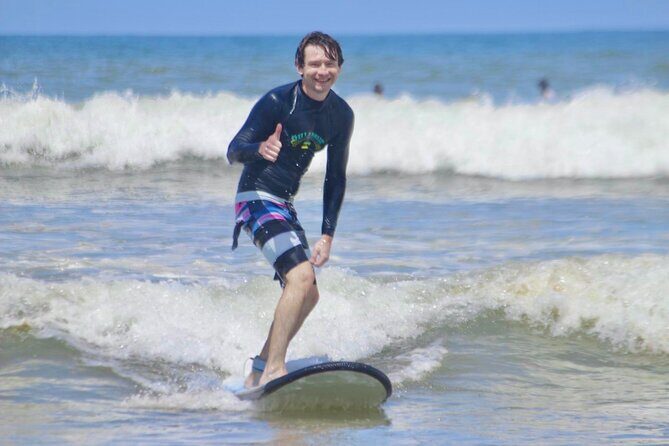
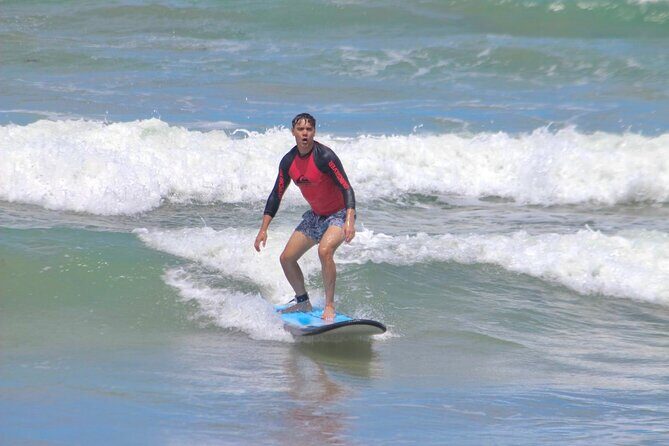
If you can already paddle, catch a small wave, and stand up with some consistency, the intermediate lesson is where this program shifts gears. The big change is the environment: instructors say they’ll take you out to the lineup, and you’ll work on catching green waves.
This session covers more advanced skills, including:
- surfing etiquette
- paddling technique
- how to pass breaking waves
- positioning yourself on the lineup
- riding waves properly
- turning and carving turns
That list is more than buzzwords. For intermediate surfers, the hardest part often isn’t just balance—it’s where to wait, how to move through breaking zones safely, and how to position yourself so you’re not constantly in the wrong spot. Teaching etiquette also helps because you’re sharing water with other surfers, and your movement affects everyone’s safety.
You’ll also learn turning and carving turns, which are the next step after basic straight riding. Even if you only get a few clean attempts during the 90 minutes, you’ll leave with a clearer mental picture of what to work on next.
One consideration for intermediate: since the lesson includes going out toward the lineup and working on green waves, you should feel genuinely ready for more time in the water. If you’re unsure, the beginner level is still the better start—especially if you want to build confidence the right way.
The 90-Minute Flow: What Usually Happens During Your Session
The program runs about 90 minutes, so the coaching needs to be efficient. While the exact minute-by-minute schedule isn’t spelled out, the structure is clear: you start with safety and instruction, you practice the core movements, and then you progress to wave-catching and riding attempts.
For beginners, you’ll spend the session working through foundational steps like standing up and paddling, using shallow water and foam waves to make each try manageable. For intermediates, you’ll do more instruction tied directly to what you need in the lineup: paddling mechanics, how to handle breaking waves, and how to position yourself to catch the right waves.
Either way, the lesson format is built for repetition. That’s what drives learning in surfing: multiple attempts with real-time corrections. If you’re the type who learns by doing, this setup is a good match.
Photos and Videos Included: A Big Part of the Value
Let’s talk value, because this is where Galaxy Surf Bali’s package feels especially smart for the price. The program includes free photos and videos of you while you’re riding the waves.
Why does that matter? Because first-time surfing has a weird problem: you can’t always tell what your body is doing from the inside. When you get footage, you can actually see:
- how stable your stance was
- whether you stood up too early or too late
- how your paddling timing matched the wave
- what you did right when it finally clicked
And from a travel perspective, it’s also simple joy. You get proof of progress without having to ask a friend to shoot shaky video through spray. You can keep the visuals and use them later when you practice again.
In the reviews, people also highlight this as a reason they felt they got a great deal: you’re not only paying for instruction, you’re leaving with media. When a lesson includes both coaching and documentation, it makes the whole thing feel more complete.
Instructor Quality: What You Can Expect From Coaches Like Sardo
The strongest praise in the reviews centers on the instructors themselves. One coach named Sardo comes up repeatedly, and the comments describe him as attentive and supportive, making learning fun and easy.
If you see his name in your booking context or get assigned to him, that’s a promising sign. People specifically credit him with helping them stand up quickly, and with turning a tough first attempt into a confidence-building experience by the end of their holiday.
Even beyond the named coach, the program states that instructors are experienced and certified in surf life saving. That matters because beginner lessons depend on safety judgment in the water. It’s one thing to teach technique; it’s another to understand risk, currents, and how to manage beginners safely.
So when you’re choosing a surf lesson in Bali, I’d weigh instructor quality heavily. In surfing, your progress is tied directly to what someone corrects, how quickly they correct it, and whether they can keep the learning zone safe.
Who This Surf Lesson Fits Best (and Who Should Pick Beginner First)
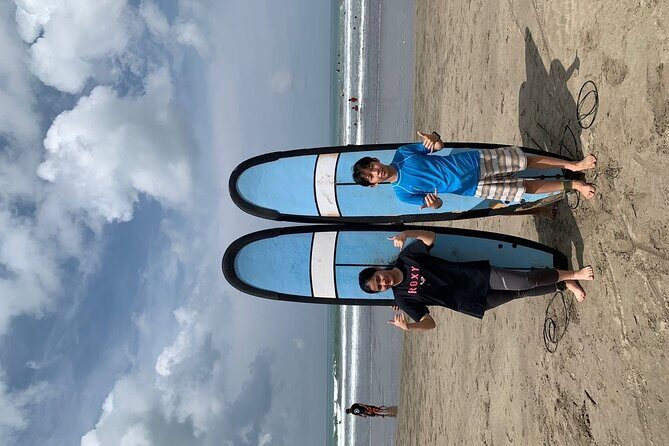
This experience is a strong match if you want:
- a structured way to learn at Kuta Beach
- a choice between beginner and intermediate training
- coaching that covers safety, not just tricks
- free photos and videos as part of the package
It also fits families and wider age ranges on the beginner track, since ages 4 to 60 are listed. If you’re traveling with mixed surfing experience, you can also think about how the two levels map to your group’s comfort. Beginners get shallow water foam-wave practice; intermediates work toward the lineup and turning.
Who should consider beginner first? If you’re nervous in open water, if you’re a non swimmer, or if you’ve never stood up on a board before, the beginner lesson is the clear fit because non swimmers are explicitly allowed and instruction happens in shallow water.
If you’re already comfortable catching small waves and handling some time outside the shallow area, the intermediate lesson may feel more rewarding. Just be honest with your current skill level, because intermediate coaching assumes you can manage more ocean exposure and more setup time in the lineup.
Price at About $18.24: Does This Feel Like Real Value?
At $18.24 per person, this is priced in a way that can be genuinely appealing—especially in a place like Kuta where you’ll see a wide range of surf lesson costs. The real question isn’t the number; it’s what you get for that number.
Here’s the value equation in this case:
- You get a full 90-minute lesson.
- You get instruction tailored to your level (beginner shallow foam waves vs intermediate lineup green waves).
- You get free photos and videos, which many separate providers charge extra for.
- Your instructor is described as experienced with surf life saving certification.
So for a budget-minded learner, it can feel like a smarter package than buying a barebones intro class. The media component alone can make the lesson feel more “complete,” because it captures your progress immediately.
If your goal is a quick confidence boost plus a few tangible souvenirs of learning, this price makes a lot of sense.
Practical Tips for Your Day at Kuta (So You Enjoy It More)
You’ll have a better experience if you show up mentally ready for practice, not perfection. Surfing is physical and sometimes a little messy in the first attempts. That’s normal. Focus on the instructor’s cues and your own safety first.
Here are practical things you can do before and during:
- Plan for weather-dependent conditions. The provider notes the experience needs good weather; if it’s canceled for poor weather, you’ll be offered another date or a full refund.
- Bring a flexible mindset if you’re intermediate. The lineup and passing breaking waves are part of the curriculum, not extras.
- Wear swim-ready clothing you’re comfortable getting wet and sandy.
- Listen closely during the safety and ocean knowledge part. Those basics often affect how smoothly your wave-catching goes.
- If you want the best learning outcome, go in ready to try multiple times. The lesson format is built around that repetition.
Also, since this ends back at the meeting point, you can structure your rest of the day without a complicated schedule. It’s a neat “one fixed block” activity.
Should You Book Galaxy Surf Bali?
I’d book this if you want a clear path into surfing at Kuta Beach, with safety-forward coaching and a lesson length that respects your time. The beginner track is especially compelling because non swimmers are allowed, and the teaching is done in shallow water on foam waves.
I’d think twice only if you’re extremely sensitive to ocean time in variable conditions. The program requires good weather, and the intermediate option involves going out toward the lineup, which means you should honestly match it to your ability and comfort level.
If you’re looking for a lesson that feels like more than just “try once and hope,” the included photos and videos plus the emphasis on instruction quality (including coaches like Sardo) makes this package hard to beat for the price.
FAQ
How long is the surf lesson?
The lesson lasts about 1 hour 30 minutes.
Where does the activity start?
It starts at Galaxy Surf Bali on Jl. Pantai Kuta, Kuta, Bali, and it ends back at the meeting point.
Is there a beginner option for people who can’t swim?
Yes. The beginner surf lesson allows non swimmers and is listed for ages 4 to 60.
What’s different about the intermediate lesson?
Intermediate students are taken out to the lineup to catch green waves, and they learn etiquette, paddling technique, passing breaking waves, positioning, riding properly, and turning/carving.
Do you include photos or videos?
Yes. You get free photos and videos of you riding the waves during your session.
Is this a private group experience?
Yes. It’s described as private, so only your group participates.
What happens if the weather is bad?
The experience requires good weather. If it’s canceled due to poor weather, you’ll be offered a different date or a full refund.
More Workshops & Classes





More Tour Reviews





More Kuta Tours
Kuta Tours: how the alternatives stack up
 ★ 5.0
★ 5.0Nusa Penida day trip: boat, 4 snorkeling, Manta rays & Land tour





The lists this tour appears in