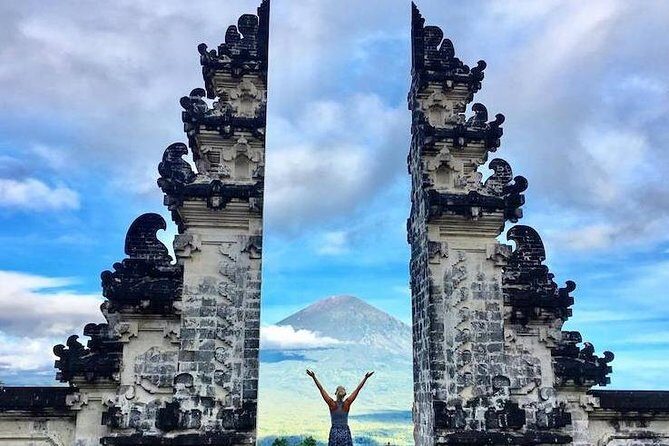
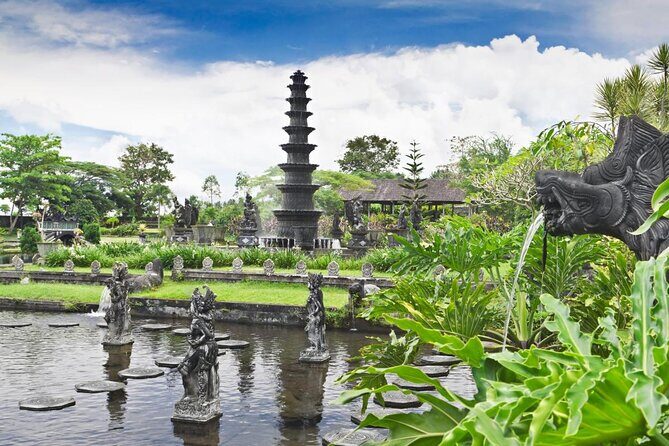
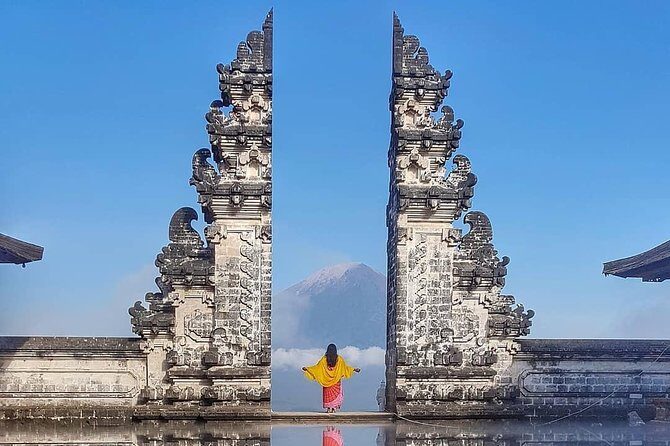
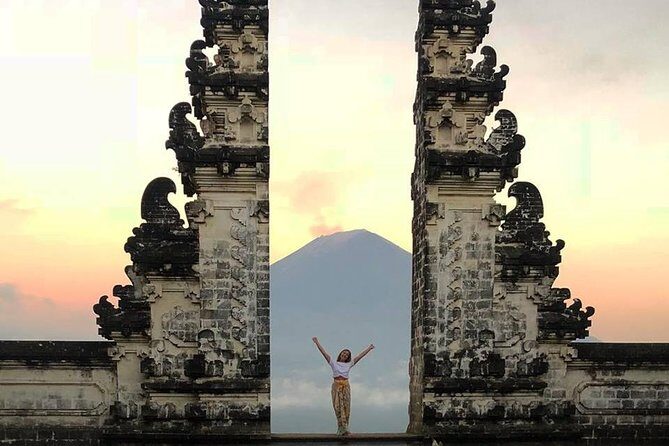
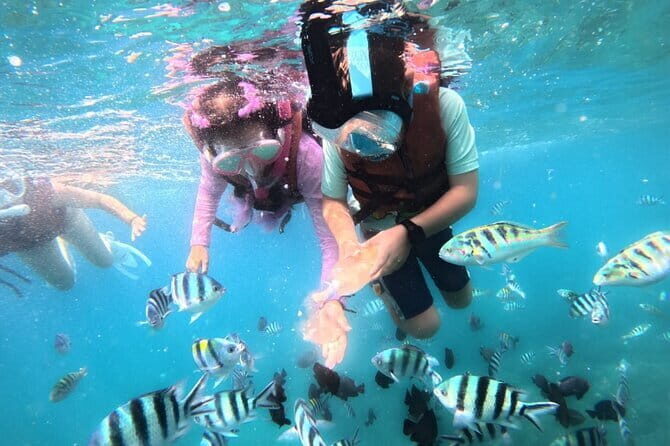
Uluwatu Temple Scenic Beaches and Fire Kecak Dance Tour

Uluwatu Temple Scenic Beaches and Fire Kecak Dance Tour - Padang Padang Beach: Golden Sand, Turquoise Water, and a Tight Time Budget

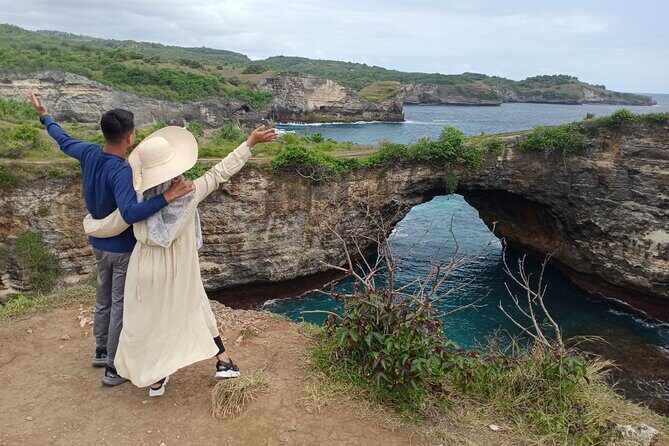
Uluwatu is one of Bali’s most dramatic backdrops. This tour strings together cliffside temple views and Bali beach scenery in one efficient day, with convenient pickup from Seminyak. I like the built-in focus—beach time first, then Uluwatu Temple, then the Kecak Fire performance—so you’re not bouncing around aimlessly. I also like the small-group feel (up to 15), which usually means fewer delays and more time actually looking at where you are. One consideration: the Kecak and Fire show ticket is not included, so you’ll need to budget extra for that part.

What makes it practical is the stuff that’s already handled. Entrance fees for Uluwatu Temple, Padang Padang Beach, and Suluban Beach are included, along with bottled mineral water and pickup/drop-off. That turns a potentially complicated day into a mostly plug-and-play plan—especially if you’re not in the mood to arrange drivers for each stop.

The itinerary runs about 10 hours, which is a full day by Bali standards. If you’re hoping for long, slow beach lounging with zero rushing, you might find the pacing a bit tight. That said, if you want the classic Uluwatu highlights without the stress, it’s a solid choice.

Key Things to Know Before You Go
Uluwatu Temple Scenic Beaches and Fire Kecak Dance Tour - Key Things to Know Before You Go

  • Small-group flow (max 15) keeps the day moving without the chaos of big buses.
  • Entrance fees + water are included, so you only add a couple of extras.
  • Suluban Beach is accessed by stairs through a cave area, so comfy footwear matters.
  • Uluwatu Temple comes with monkey attention, and your guide may help you manage belongings.
  • Kecak and Fire show timing is the core event, and you’ll handle the ticket separately.
  • Jimbaran Bay is a dinner stop, not a full meal package, so plan your own seafood budget.

Why This Uluwatu Day Starts in Seminyak and Ends at Jimbaran Bay

If you’re staying in Seminyak, the biggest headache on Bali day trips is usually logistics: finding a driver, coordinating times, and then re-coordinating when traffic shifts. This tour reduces that to one pickup and one return, with round-trip transportation from your hotel handled for you. That alone makes it worth a look, especially when you want to see more than just one beach and call it a day.

The shape of the day also makes sense. You get beach scenery on the Bukit Peninsula first, then you move to Uluwatu Temple for sunset-vibe energy and the cliffside atmosphere. After that, the day finishes with time at Jimbaran Bay—perfect if you want grilled seafood without forcing it into your hotel area plans.

The total time is around 10 hours, so think of it as a “see the highlights” day, not a “settle in” day. If you pack light, stay hydrated, and keep your phone charged for photos, you’ll use that time well.

Uluwatu Temple: Sea Temple Views, Architecture, and Monkey-Proofing
Uluwatu Temple Scenic Beaches and Fire Kecak Dance Tour - Uluwatu Temple: Sea Temple Views, Architecture, and Monkey-Proofing

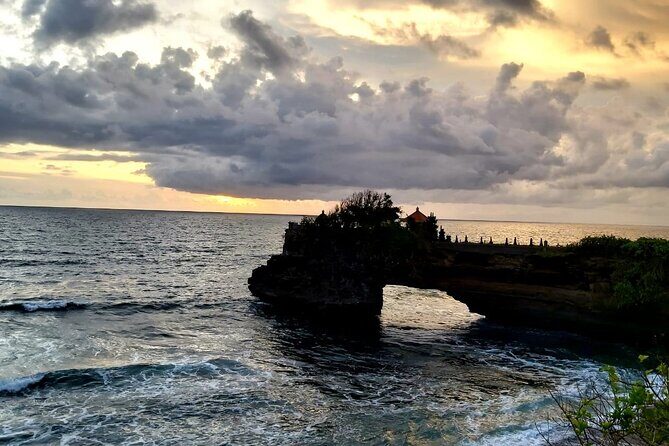
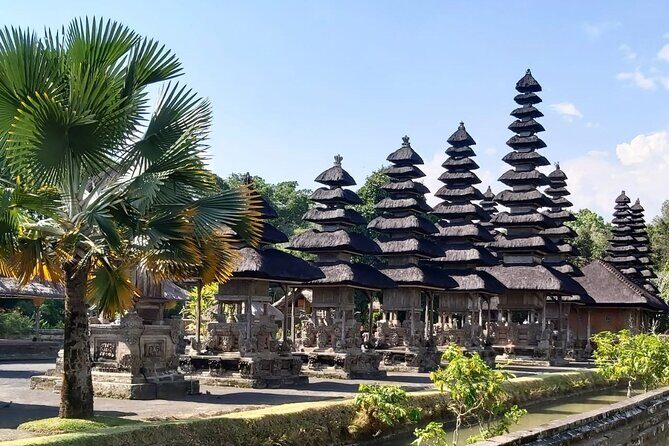
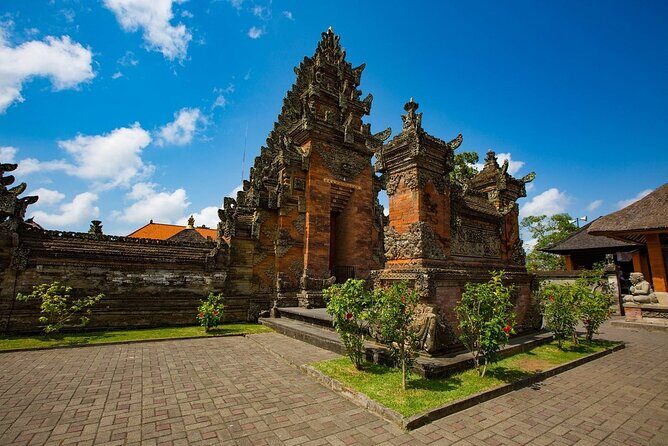
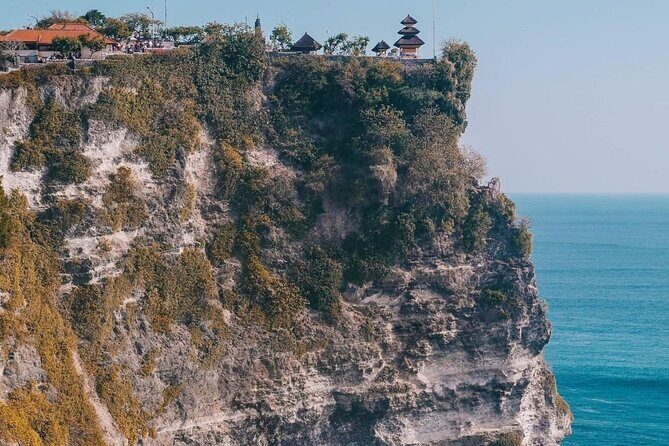
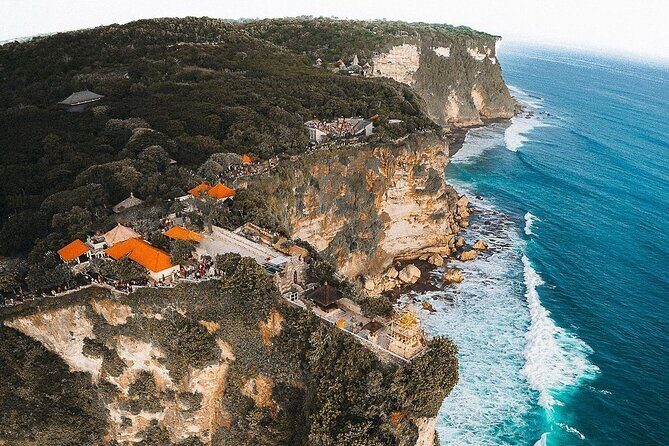
Uluwatu Temple is a sea temple perched on a cliff, so even before you start admiring details, you feel that ocean scale. Expect a setting built for views: ocean horizon, waves far below, and traditional Balinese temple architecture perched right on the edge. Your visit time is about 2 hours, which is enough to soak in the scenery and move through the main areas at an unhurried pace.

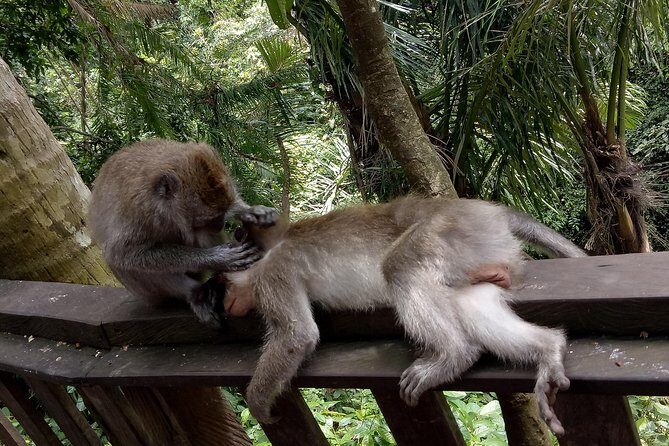
Now, the practical reality: monkeys. They’re part of the Uluwatu experience. One thing I really like about this kind of tour is that you’re not walking in alone, trying to figure out monkey behavior while also juggling bags and cameras. In past runs, guides such as Made and Pak Yogi have been specifically noted for helping keep belongings secure—exactly what you want when small “helpers” decide they like your snack bag.

A few simple ways to stay comfortable at Uluwatu:

  • Keep valuables zipped or in a bag that’s not dangling.
  • Avoid holding food in your hands for long periods.
  • Think in terms of photos without “temptation mode” (don’t make it easy for curious hands).

Also, if you care about photos, this is the kind of place where having a guide who will help you frame shots can make a difference. Guides like Juna and Wayan have been praised for taking photos/videos and keeping things smooth and on time.

Padang Padang Beach: Golden Sand, Turquoise Water, and a Tight Time Budget
Uluwatu Temple Scenic Beaches and Fire Kecak Dance Tour - Padang Padang Beach: Golden Sand, Turquoise Water, and a Tight Time Budget

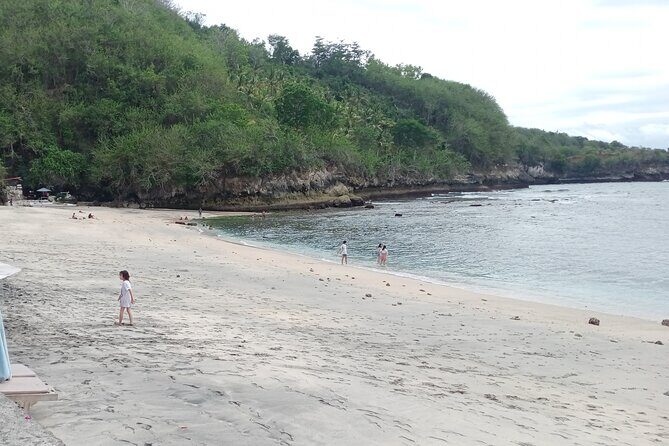
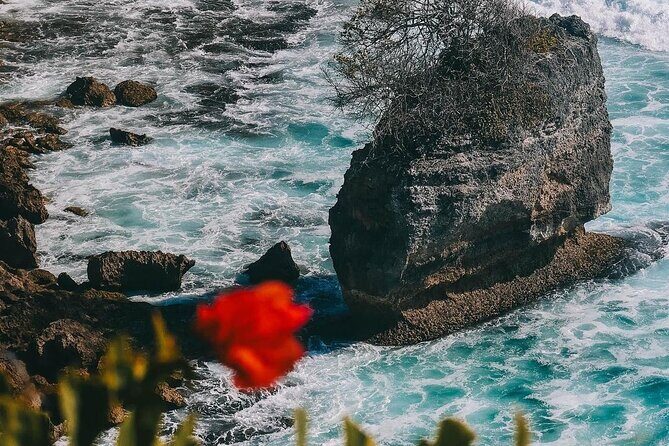
Padang Padang Beach is the classic “postcard beach” kind of stop: clear, bright water and dramatic coastal rock formations. Your time here is about 2 hours, which is a good amount if you want to enjoy the beach but still stay ready for Uluwatu Temple and the Kecak Fire show.

Two things I like about including Padang Padang in this route:

  • It’s visually strong, so even if the day runs full, you still feel like you got value from the time.
  • It helps break up the day so you’re not going temple-to-temple with no reset.

The downside is timing. With only a couple of hours, you’ll want to do the “must dos” quickly: check the view spots, take a few photos, then actually sit down and relax. If you arrive and immediately spend an hour searching for the perfect towel spot, you might feel rushed later.

So, treat Padang Padang like a highlight stop. Grab water (you’ll have bottled water included), find a sunshade area if needed, then plan to move on when it’s time.

Suluban Beach (Blue Point): Cave Steps, Cliff Views, and Good Shoes

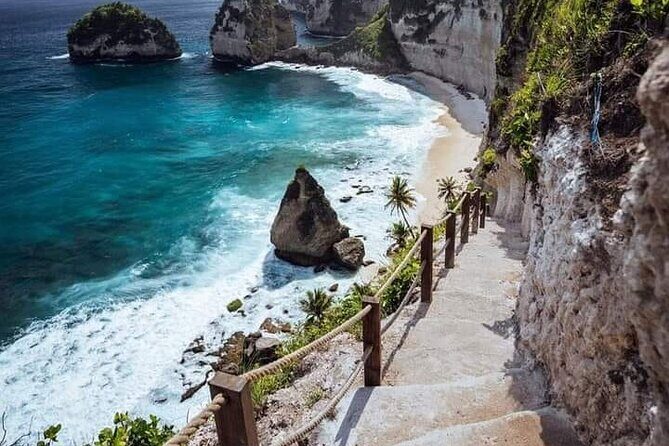
Suluban Beach is one of the most interesting ways to do a beach on Bali’s Bukit Peninsula because the access is part of the story. You reach it via stairs through a cave-like route area, and once you’re down there, the view and the water feel tucked in and special.

Your time here is also about 2 hours, so you can enjoy the beach and walk around a bit without feeling like you’re on a strict clock all day. But the cave/stairs approach is the big consideration. This is where I tell people: wear shoes you trust. Flip-flops are tempting, but stairs and uneven steps can get annoying fast.

The tour includes the entry fee, which is helpful because it means you don’t have to sort out costs while you’re already thinking about directions. Once you’re there, expect a calmer feel than the most crowded beaches—more “stop, look, relax” than “constant action.”

One more practical note: bring your items in a way that makes sense down there. Stairs plus bags can turn into a minor workout. Keep what you need within reach and secure the rest.

Kecak and Fire Dance: The Show Ticket Is Separate, So Plan Your Spend
Uluwatu Temple Scenic Beaches and Fire Kecak Dance Tour - Kecak and Fire Dance: The Show Ticket Is Separate, So Plan Your Spend

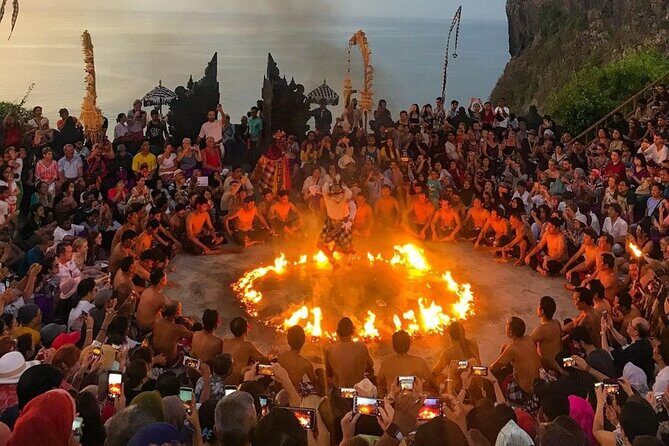
The Kecak and Fire Dance is the cultural anchor of the day. The performance happens at Uluwatu Temple’s cliffside setting, and that matters. It’s not just a show in a theater—it’s tied to the temple atmosphere and the surrounding ocean view energy.

Here’s the part you must know: the Kecak and Fire Dance ticket is not included. The tour handles transportation and timing around the performance, but you’ll pay for the show separately. In one referenced example, the schedule was built around a 6 pm Kecak Fire Dance, so if you’re picky about timing, ask the provider what show time you’re booked for when you confirm.

Even without the ticket included, this still feels like good value because you’re not paying again for multiple attractions. You’re adding only the one big cultural ticket plus your dinner.

If you want to reduce stress:

  • Keep your cash/phone ready for the ticket purchase at the right moment.
  • Ask your guide for a quick plan for the timing (when to enter, when to meet back up, etc.).
  • Go in ready to watch, not to multitask. This show works best when you pay attention.

In the past, guides like Made have also been mentioned as helpful with the overall day, including managing the monkey situation and keeping the schedule smooth. That matters here because the show timing is the “clock” of the evening.

Jimbaran Bay Dinner: Beachfront Seafood Is Worth It, But It’s On You

After the show, you’ll get time at Jimbaran Bay. This is where many people go for grilled seafood right along the waterfront. The catch: dinner fees are not included, so you pay your own meal.

In other words, this stop is more about the location and the option. You get the chance to eat where the famous Jimbaran vibe happens, without having to arrange an extra detour by yourself.

Because the tour only allocates a short window for this part, I’d treat it like this:

  • Decide what you want to eat quickly.
  • Don’t plan on a long, fancy “three-course discovery mission.”
  • Come hungry, but don’t assume you’ll have unlimited time.

Also, if monkeys are your theme for the day, keep an eye on your food again at the end of the evening. The crowd energy can make it harder to manage distractions.

Group Size, Driver-Guide Style, and How the Day Stays Smooth

This is a small-group tour with a maximum of 15 travelers, and that number changes the whole feeling. Big groups can mean long lines, lots of waiting, and people constantly losing sight of the plan. With a smaller crew, you tend to move together more naturally and spend less time “standing around pretending nothing is happening.”

You’ll also have an English-speaking driver and tour guide, and the guide quality matters here because your day includes:

  • navigating multiple sites,
  • timing the performance,
  • and dealing with Uluwatu’s monkey reality.

In the feedback tied to this kind of tour, certain guide names come up often—Made, Ketut, Pak Yogi, Juna, and Wayan. You’ll notice a shared theme: helping with photos and keeping the day comfortable, including being attentive about belongings and timing. If you’re the type who likes your trip “run smoothly,” this tour is built for that.

A personal photo and video moment can also be a real value add. Juna and Wayan have been noted for excellent photo handling, and that can turn Uluwatu views from nice memories into actual keep-worthy pictures.

Price and Value: Why $24.65 Works Better Than It Seems

At $24.65 per person, this tour price is attractive—but the real value is in what it includes. Your fee covers:

  • private round-trip hotel transportation from Seminyak,
  • bottled mineral water,
  • parking, fuel,
  • and entrance tickets for Padang Padang Beach, Suluban Beach, and Uluwatu Temple.

That means your day isn’t just “a driver takes you places.” You’re paying for admission and logistics. The only clear add-ons listed are:

  • Kecak and Fire Dance ticket
  • dinner fees at Jimbaran Bay

So the math looks like this: you’re mostly buying the structure—transport + multiple entrances—and then adding two reasonable extras. If you’d otherwise be paying separately for a driver and each entry fee, the package becomes much more sensible.

One caution: because the Kecak ticket isn’t included, your final total depends on that add-on and your dinner choices. But for planning value, you can budget it as a mostly fixed day.

Who Should Book This Uluwatu Tour?

This works best for:

  • people staying in Seminyak who want a one-day Uluwatu experience without arranging everything,
  • travelers who want both beach time and a cultural show in the same schedule,
  • and anyone who appreciates small groups (max 15) and an English-speaking guide.

It may not be your best fit if:

  • you want to spend half a day lounging at one beach (the stops are shorter),
  • you dislike evening schedules (the Kecak show is the centerpiece and it’s timed),
  • or you’re uncomfortable with cave/stairs access at Suluban Beach.

Most travelers can participate, but wear footwear that makes stairs easier, and be prepared for a full-day run.

Should You Book This One?

I’d book this tour if your goal is clear: Uluwatu Temple + two signature beaches + the Kecak Fire show, without the hassle of coordinating transport and entry fees. The small-group size, included admissions, and water make the day feel organized, and the route is built around the best-known Uluwatu sights on the Bukit Peninsula.

Skip it only if you’re mainly after a slow, beach-only Bali day. This is a “highlights in one go” itinerary, and it rewards travelers who like structure and photos and don’t mind moving between sites.

FAQ

Is hotel pickup and drop-off included?

Yes. The tour includes convenient hotel pickup and drop-off from Seminyak, with private round-trip transportation.

How long is the tour?

The duration is approximately 10 hours.

What entrance fees are included?

Entry tickets to Padang-padang Beach, Suluban Beach, and Uluwatu Temple are included.

Is the Kecak and Fire Dance ticket included?

No. The Kecak and Fire Dance ticket is not included.

Is dinner included at Jimbaran Bay?

Dinner fees are not included. You can enjoy dinner at Jimbaran Bay at your own expense.

How big is the group?

The tour has a maximum of 15 travelers.
Tanah Lot And Ubud – Full Day Private Tour

Tanah Lot And Ubud - Full Day Private Tour - Tanah Lot Temple: ocean air, two temple spaces, and the sarong detail

Bali fits in one full day. This private route strings together Tanah Lot temple views, Ubud’s monkey forest, and the Tegalalang rice terrace so you get variety without hunting for transport. It’s built for people who care about Balinese spirituality, but also want recognizable Ubud highlights in the same schedule.

Two things I really liked: hotel pickup and drop-off that saves time, and the English-speaking guide who keeps the day organized while still letting you move at your pace. The temple stop includes a sarong, which matters in Bali and saves you from scrambling for one at the entrance.

The main trade-off is simple: it’s a long day, around 8–10 hours, and lunch isn’t included. If you’re picky about meal timing, plan ahead so the day doesn’t feel rushed.

Key highlights at a glance

Tanah Lot And Ubud - Full Day Private Tour - Key highlights at a glance

  • Tanah Lot Temple by the ocean with a sarong provided so you can focus on the experience
  • Sacred Monkey Forest Sanctuary in the middle of Ubud, with plenty of photo chances
  • Ubud Palace and the Traditional Art Market as quick cultural stops you can actually fit in
  • Tegalalang Rice Terrace for big views and the chance to walk among the greenery
  • Private, A/C transport with an English-speaking driver/guide who can adjust your pacing

Why this one-day Tanah Lot and Ubud plan makes sense

Tanah Lot And Ubud - Full Day Private Tour - Why this one-day Tanah Lot and Ubud plan makes sense
This tour works because it’s designed around clustering. You’re based in Ubud, so you can see a coastal temple at the ocean and still hit key Ubud sights the same day. The route is also paced so each stop has enough time to feel real, not just a quick walk-by.

You’ll get a blend of spirituality and everyday Ubud life. Tanah Lot is all ritual and ocean drama. Ubud is markets, temples, and the Monkey Forest area where nature is close enough that the day feels more spontaneous.

The private format changes how the day feels. Instead of waiting around for other people, you can slow down when you want photos, or speed up when traffic or heat starts to wear you down. That flexibility is especially valuable in Bali, where timing can swing a lot.

Pickup, private A/C, and why that matters in Bali

You start with round-trip transfers from your hotel, using a private vehicle with air conditioning. For a full-day itinerary, that’s not a luxury detail—it’s what keeps your energy up for temple walks and the rice terrace viewpoints.

In practice, the A/C ride also gives your guide a chance to explain what’s ahead. You’re not just dropped at a gate and left to figure things out. And because it’s private, the guide can adapt the flow if you want extra time somewhere or prefer different photo angles.

It’s also reassuring that the tour includes an experienced English-speaking driver/guide and fuel surcharge. That means less logistical friction and fewer cost surprises as the day goes on.

Tanah Lot Temple: ocean air, two temple spaces, and the sarong detail

Tanah Lot And Ubud - Full Day Private Tour - Tanah Lot Temple: ocean air, two temple spaces, and the sarong detail
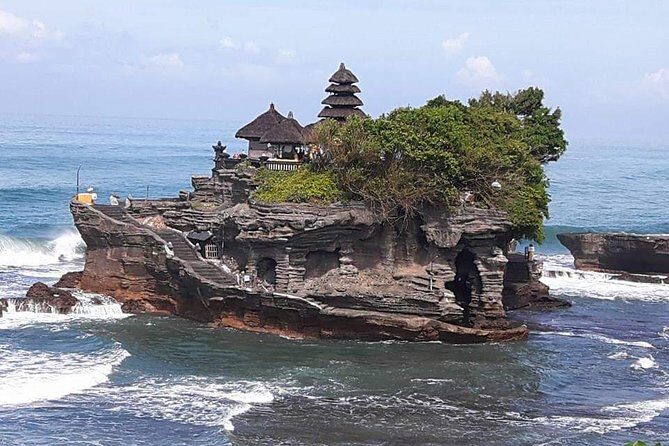
Tanah Lot Temple is the anchor of this day. You’re going to a historical, holy site located by the Indian Ocean, and the ocean is part of the experience whether you’re watching waves or catching that salty breeze during your walk.

At Tanah Lot, you’re not just seeing one structure. The area includes two temple spaces: Tanah Lot Temple and Batu Bolong Temple. That matters because people sometimes expect a single photo spot. Here, you’ll have a more complete feel for the temple complex as you move around.

The tour includes a sarong to use for temple visits. Even if you travel light, that’s a big win. Temple dress expectations can be a hassle, and having the sarong provided removes one common stress point.

How to enjoy it more: take your time at the viewpoints. A temple visit here isn’t only about buildings—it’s about the setting. The guided pacing helps you decide when to move on and when to slow down for the best angles.

Sacred Monkey Forest Sanctuary: nature close up, and time to wander

Tanah Lot And Ubud - Full Day Private Tour - Sacred Monkey Forest Sanctuary: nature close up, and time to wander
Next comes the Sacred Monkey Forest Sanctuary in the heart of Ubud. The description hints at the vibe: a small, cooler forest with a bit of rain-feel, home to groups of monkeys and other tropical animals. Translation: you’ll likely feel like you’re walking through a live nature habitat, not a groomed zoo setting.

You get about an hour at this stop. That’s enough time to do a loop, find calmer spots, and take photos without turning it into a marathon. The key is to treat it like a gentle walk in a wet forest. If it’s drizzly, you’ll want shoes that handle slick paths.

Because monkeys are part of the environment, the real value of having a guide is practical. An experienced guide can help you navigate where to linger and where to keep moving. It keeps the time safer and more relaxed.

If you care about animal encounters but don’t want the day to become chaotic, this hour-and-a-bit window is a smart length. You get the “wow” factor without losing the rest of the day to it.

Ubud Palace and the Traditional Art Market: culture without the time sink

Tanah Lot And Ubud - Full Day Private Tour - Ubud Palace and the Traditional Art Market: culture without the time sink
Ubud Palace is a short stop (about 20 minutes), and that’s exactly what makes it useful in a full-day itinerary. You’re getting a snapshot of heritage and historical architecture tied to Balinese culture. You’re not trying to do everything; you’re getting oriented.

Then you head to the Ubud Traditional Art Market. This is where the day shifts from temple calm to everyday trade and crafts. The market sells various handicrafts, and many come from Bali while some come from other parts of Indonesia. It’s a reminder that Ubud isn’t only spiritual tourism—there’s also a working arts economy here.

You get about 40 minutes at the art market. That’s enough time to browse, compare, and pick up small items if you want something real. The best part: admission here is free, so you’re spending time, not tickets.

A quick caution that’s still practical: markets move fast. If you want to buy, set a small budget in your head before you walk in. It keeps you from overspending when you spot something you like.

Tegalalang Rice Terrace: walking for views, not just photos

Tanah Lot And Ubud - Full Day Private Tour - Tegalalang Rice Terrace: walking for views, not just photos
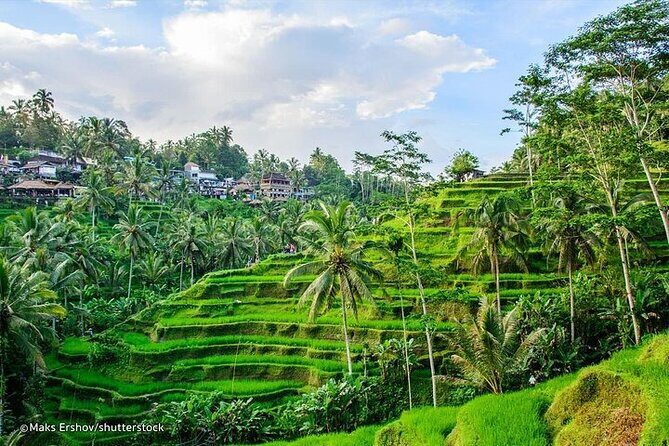
Tegalalang Rice Terrace is the big view stop of the day. You’ll see rice terraces, coconut trees, and jungle views. It’s the kind of scene that makes you stop talking for a second because the scale is hard to capture from one spot.

You’ll get about an hour here, including the chance to walk and take photos. That walking part is often the difference between seeing “a viewpoint” and actually feeling how the terrace system fits into the land. The tour format gives you enough time to move through parts of the area instead of staying glued to one platform.

One practical note: this is a full-day tour and lunch isn’t included. If you’re sensitive to meal timing, consider having a light snack before you arrive at the rice terrace so the rest of the day stays comfortable. The scenery is great, but you’ll still want energy for the walk.

If your priority is photos and scenery, this stop delivers. If your priority is strict “no walking,” you might want to plan your pace carefully, since the experience includes time among the terraces.

Guides make the difference: flexibility and clear explanations

Tanah Lot And Ubud - Full Day Private Tour - Guides make the difference: flexibility and clear explanations
Private tours live or die by the guide, and this one has a strong track record in that department. I love how guides like Agung and Ketut tend to connect the dots for you as you drive. You’re not just seeing stops—you’re getting the context for what you’re looking at.

What also stands out is flexibility. In real Bali conditions, timing can change because of traffic or weather. The guide can adjust stops if your interests shift during the day, and that matters when you only have one day to cover Ubud plus Tanah Lot.

There’s also a human side to the best guiding. Some guides helped with group photo angles, and others stayed responsive when schedules needed tweaking so the day stayed smooth. That’s not just “nice”—it affects your stress level.

If you value clear English explanations and a driver who can handle traffic without making you feel rushed, this tour leans in that direction.

Price and value: what $59 buys you (and what it doesn’t)

Tanah Lot And Ubud - Full Day Private Tour - Price and value: what $59 buys you (and what it doesn’t)
At $59 per person, the price is mostly about saving time and outsourcing the hard parts. You’re paying for a private A/C vehicle, hotel pickup and drop-off, an English-speaking driver/guide, and temple support items like the sarong.

Entrance tickets are included for several stops:

  • Tanah Lot Temple
  • Sacred Monkey Forest Sanctuary
  • Ubud Palace
  • Tegalalang Rice Terrace

The Traditional Art Market is free. So most of the ticket-cost headaches are handled for you.

What’s missing: lunch. The good news is that this is easy to plan. You can eat based on your preferences, dietary needs, and timing. The only real risk is letting hunger decide your day. If you plan a meal near your schedule, lunch becomes a choice, not a problem.

Who gets the best value? If you’re traveling with someone and want a smooth day without multiple tickets, separate drivers, or figuring out timing, private transport is often worth it. It also makes sense if you want to move beyond the usual “tick-the-box” tour pace.

Is this tour right for you?

This is a great fit if you want a single-day highlight run from Ubud that includes both temples and classic Ubud scenery. It also works well if spirituality is part of your interest—Tanah Lot and the Monkey Forest are built into the itinerary for that reason.

It’s especially good for couples, families of small size, and groups who prefer a private vehicle. Because it’s private, only your group participates, so you’re not stuck with loud mismatched pacing.

It might be less ideal if you hate long drives or you need a very strict schedule. The day runs roughly 8–10 hours, so you’ll be active and moving through several areas. Also, since lunch isn’t included, you should be ready to plan food.

Should you book this Tanah Lot and Ubud private tour?

If you’re aiming for a full day that feels organized, spiritual, and visually rewarding, I’d say yes. The combination of hotel pickup, a private A/C vehicle, English-guided stops, and included temple tickets makes it strong value for one day.

I’d book it if:

  • you want Tanah Lot plus Ubud highlights without juggling transport
  • you like having a guide explain what you’re seeing
  • you’re okay spending a full day moving from place to place

I’d think twice if:

  • you need lunch included at a set time
  • you’re sensitive to a long, busy day (8–10 hours)

FAQ

How long is the Tanah Lot and Ubud full-day private tour?

The tour runs about 8 to 10 hours.

Is hotel pickup and drop-off included?

Yes. You get pickup and drop-off from your hotel.

Are entrance tickets included for the stops?

Yes for Tanah Lot Temple, Sacred Monkey Forest Sanctuary, Ubud Palace, and Tegalalang Rice Terrace. The Traditional Art Market stop is free.

Is lunch included?

No. Lunch is not included.

Is this a private tour?

Yes. It’s private, meaning only your group participates.

What happens if I cancel?

You can cancel for a full refund if you cancel at least 24 hours before the experience starts. If you cancel less than 24 hours before, the amount paid isn’t refunded.

Private Nusa Penida Snorkeling Tour

Private Nusa Penida Snorkeling Tour - Kelingking Beach: classic views, plus a lunch stop that breaks the day up

A private Nusa Penida day is fast and flexible. You start with hotel pickup from areas like Seminyak/Canggu, Ubud, or Nusa Dua, then hop by speedboat from Sanur so you spend more time on the island. The thing I like most is that the guide and captain can adjust the route to match what you want to see, and the snorkel plan focuses on Manta Bay plus other top reef spots without you stitching together transport between sites.

My one real consideration: mantas and clear water depend on conditions, and you may find popular bays can feel crowded and messy at times. So go with the right mindset: you’re booking great snorkeling chances, not a guaranteed postcard underwater show every minute.

Key things I’d highlight before you go

Private Nusa Penida Snorkeling Tour - Key things I’d highlight before you go

  • Private pacing with guide + captain so you can adjust where you spend your time
  • Speedboat from Sanur to save hours of slow travel
  • Kelingking Beach early photo stop before the day gets fully busy
  • Snorkel route built around manta and reef life including Manta Bay and Crystal Bay
  • Lunch stop with big viewpoints at Green Kubu / Amarta area (including infinity-pool views)
  • Included gear and bottled water so you’re not scrambling with rentals

Private Nusa Penida snorkeling: the value of going off-script

This tour is built for people who want Nusa Penida to feel like your day, not a fixed checklist inside a big group. You’re not stuck waiting around for everyone else to finish photos, walk up and down steps, or argue over where to snorkel longer.

You also get a smart rhythm: land travel on Bali in an air-conditioned vehicle, a morning speedboat hop to Nusa Penida, then island driving and short transfers handled for you. That adds up. Instead of spending your energy on logistics, you spend it on viewpoints, lunch, and water time.

And yes, the snorkeling stops are the point. The plan targets manta territory at Manta Bay, then moves through well-known reef areas like Crystal Bay, Gamat Bay, and Wall Point—each one with a different underwater vibe depending on the day.

Morning pickup in Bali, then the Sanur speedboat jump

Private Nusa Penida Snorkeling Tour - Morning pickup in Bali, then the Sanur speedboat jump
The day starts early. Pickup is around 6:00am depending on where you’re staying (Seminyak/Canggu, Ubud, Nusa Dua), and you’re driven to Sanur. The speedboat generally departs at 7:30am, with a trip time listed at about 60 minutes, though season and availability can shift departure timing.

Why I think this is worth it: Nusa Penida isn’t next door, and slow travel eats your snorkeling window. By structuring the day around that speedboat, you lose less time to ferry schedules and road transfers.

A practical tip: because the day is long (about 12 hours total), bring patience for morning timing. Early is the trade-off that gives you enough daylight to snorkel at multiple sites.

Kelingking Beach: classic views, plus a lunch stop that breaks the day up

Private Nusa Penida Snorkeling Tour - Kelingking Beach: classic views, plus a lunch stop that breaks the day up
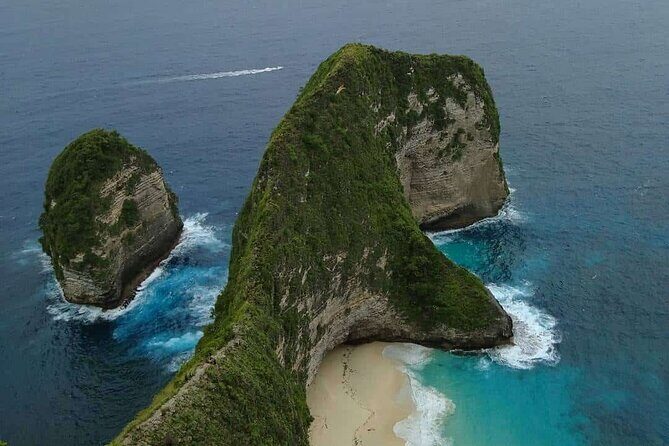
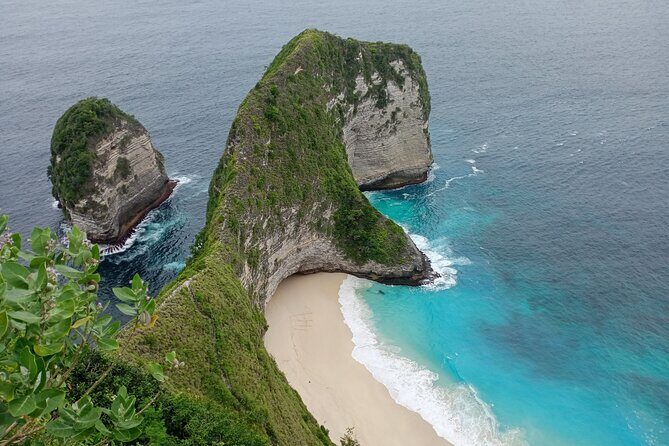
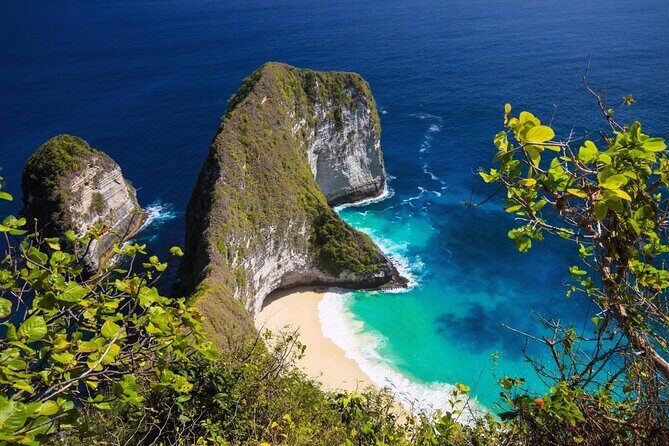
Kelingking Beach is your first major island moment. After your speedboat arrives and you’re met on the Nusa Penida side, you get transferred and then taken to the viewpoint area. This stop is famous for a reason: it’s the kind of dramatic cliff view that makes people stop, frame the shot, and forget the heat of the day for a minute.

The itinerary includes about 2 hours 30 minutes here (including the idea of an admission ticket being included). That timing matters because Kelingking isn’t just a quick look. You want enough time for photos and a careful walk without rushing your breathing or your footing.

Then you head to lunch at the Amarta/Green Kubu area. One of the nicer parts of this tour is that lunch isn’t stuck in some back-room restaurant. The plan calls out Green Kubu with an infinity pool view, plus a chance—if skies are clear—to see Mount Agung from the restaurant.

Green Kubu / Amarta lunch: infinity-pool views to reset your pace

Private Nusa Penida Snorkeling Tour - Green Kubu / Amarta lunch: infinity-pool views to reset your pace
Stop 3 is where the day feels like it gets human again. You’re told the lunch is around Green Kubu, with an infinity pool and broad views toward Nusa Ceningan and Nusa Lembongan. If the weather cooperates and there’s no cloud cover, the plan even notes a view of Mount Agung.

This matters because snorkeling on Nusa Penida can be physically and visually intense. You’ll likely be moving fast, then suddenly focusing hard underwater. A proper sit-down lunch with a view gives you a mental reset before the water portion.

Also, this stop is scheduled for about 2 hours—which gives you time to eat without feeling like you’re eating on a timer. Your guide and captain also have room to adjust the timing based on sea conditions.

The snorkeling route: Manta Bay, Crystal Bay, Gamat Bay, Wall Point

Private Nusa Penida Snorkeling Tour - The snorkeling route: Manta Bay, Crystal Bay, Gamat Bay, Wall Point
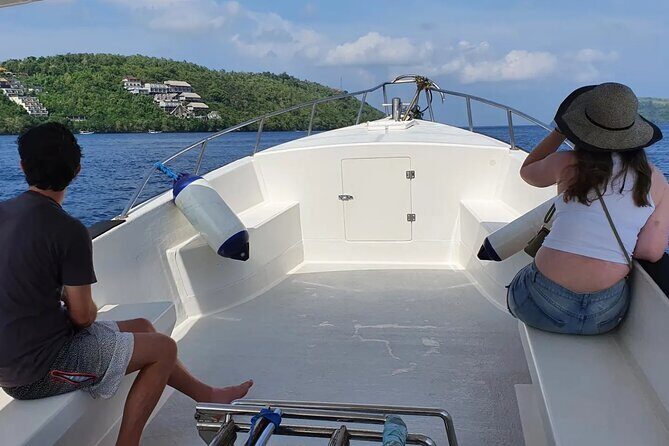
This is where the tour earns its keep. You’ll be taken to the harbor, walked over to your waiting private boat, and provided with snorkeling equipment plus mineral water for the boat trip.

From there, the listed snorkel sequence is:

  • Manta Bay: a famous feeding spot for mantas
  • Crystal Bay: known as one of Nusa Penida’s most famous snorkeling spots (also a well-known area for people who do scuba)
  • Gamat Bay: another reef-rich area on the route
  • Wall Point: a coral reef site with colorful fish

A key point I’d underline: mantas are a top draw, but marine life is never fully predictable. I’d treat this as your best shot at the kind of manta encounter Nusa Penida is famous for, not as a guarantee.

What you can control is how you use your time underwater. A private setup makes that easier. If you’re a stronger swimmer, you can stay calmer and longer. If you want slower, more observation time, the route customization helps.

Crowds, trash, and visibility are the wildcard

Not every snorkeling bay is pristine, and not every day has perfect water clarity. One experience in the set mentions Manta Bay being crowded and having rubbish in the water. Another mentions poor visibility and stronger currents with colder water.

None of this means you should skip the tour. It means you should show up informed:

  • Expect conditions to vary. Visibility and currents can change the feel of each stop.
  • Bring flexibility for which sites feel best that day.
  • If snorkel gear quality matters to you, consider bringing your own. One account noted the boat equipment felt poor.

In other words, the itinerary is solid; the sea is the boss.

Getting back to Bali: speedboat + private vehicle, end-to-end coverage

Private Nusa Penida Snorkeling Tour - Getting back to Bali: speedboat + private vehicle, end-to-end coverage
After snorkeling, your driver waits at the harbor and then organizes the public boat back to Bali. You return to Sanur, and from there the private vehicle brings you back to your hotel or villa.

The tour timing lists:

  • Around 60 minutes on the outbound speedboat
  • 1 hour plus driving for the return to your area (with the overall day at about 12 hours)

This last part is underrated. When you’re tired from snorkeling, you don’t want to hunt down rides, find meeting points, or negotiate the timing of multiple transfers. This tour keeps you in motion with minimal decision-making on your end.

Price and logistics: when $157.84 feels fair

Private Nusa Penida Snorkeling Tour - Price and logistics: when $157.84 feels fair
At $157.84 per person, this tour isn’t the cheapest way to see Nusa Penida. But it also isn’t just a boat ticket.

You’re paying for a bundled day that includes:

  • Air-conditioned vehicle on Bali for pickup and drop-off
  • Speedboat transfer from Sanur to Nusa Penida
  • Lunch at the included restaurant stop
  • Snorkeling equipment and bottled water
  • All fees and taxes, according to what’s listed
  • A truly private setup for your group

If you tried to replicate this yourself—driver, boat tickets, gear rentals, and scheduling—costs can climb quickly. The biggest “value” win is time and friction. You’re spending the day where it counts: Kelingking for views, then several snorkel bays without playing transport roulette.

One more detail: it’s often booked about 19 days in advance on average. If you have a tight schedule, planning ahead helps.

Who this Nusa Penida private snorkeling day suits best

Private Nusa Penida Snorkeling Tour - Who this Nusa Penida private snorkeling day suits best
This tour makes the most sense if you:

  • Want private pacing instead of large-group timing
  • Care about snorkeling spots like Manta Bay and reef areas such as Crystal Bay and Wall Point
  • Appreciate hotel pickup so you don’t add stress to an early start
  • Prefer a structured day with flexibility inside it

It may not be ideal if you hate early mornings or you’re very sensitive to changing sea conditions. The tour is listed for people with moderate physical fitness—not extreme hiking, but the schedule involves transfers and some walking.

Should you book it?

If you want a well-timed, private way to experience Nusa Penida snorkeling while also ticking off Kelingking Beach and a view-heavy lunch, this is a strong choice. The overall track record here is excellent: 4.8 rating with 90% recommended, plus plenty of praise for flexible guides and a smooth day.

I’d still go in with eyes open about two things: water conditions can affect visibility and marine-life sightings, and some popular bays can feel crowded and not perfectly clean. If that’s the kind of reality you can handle, you’re likely to love the structure, the private pace, and the chance to snorkel multiple sites in one long but organized day.

FAQ

Where does pickup happen, and do you get dropped back after the tour?

Pickup is offered from Bali areas including Seminyak, Kuta, and the surrounding region, plus other areas like Canggu, Ubud, and Nusa Dua. The tour ends back at the meeting point with private transport, taking you back to your villa or hotel.

Is this tour private or shared?

This is a private tour/activity. Only your group participates.

How long does the speedboat ride take, and when does it usually leave?

After pickup and travel to Sanur, you board the 7:30 am speedboat. The boat trip is listed as about 60 minutes (departure times can change depending on season and availability).

Which snorkeling sites are included on Nusa Penida?

The snorkeling portion includes Manta Bay, Crystal Bay, Gamat Bay, and Wall Point.

What’s included for snorkeling and meals?

Included items are snorkeling equipment, lunch, bottled water, and all fees and taxes.

What if the weather is bad, or I need to cancel?

The experience requires good weather. If it’s canceled due to poor weather, you’ll be offered a different date or a full refund. Cancellation is free, and you can cancel up to 24 hours in advance for a full refund.

Bali Ubud Zipline and ATV Quad Bike Adventure

Bali Ubud Zipline and ATV Quad Bike Adventure - Where the adventure starts: Gorilla ATV Adventure meeting point

Two big thrills in one day means fewer decisions. This Bali Ubud adventure pairs a zip-line run above the Tegalalang Rice Terraces with an ATV quad bike at Gorilla trails, and the guides (names like Donny, Jero, John, Yaya, and Alit pop up) tend to keep things moving and fun. I like that you get both the sky-view moment and the hands-on dirt-and-splash moment, with safety gear and a driver guide included.

The zip-line stop at Uma Ceking Resto And Swing sets you up for standout views, while the quad ride keeps the adrenaline going with photo-friendly stops and patient instruction when you need it. One watch-out: the mud is real on the ATV side, and the ride between stops can feel like a stretch if you skip hotel pickup.

Key things to know before you go

Bali Ubud Zipline and ATV Quad Bike Adventure - Key things to know before you go

  • Zip-line over Tegalalang Rice Terraces for big views without needing hike stamina
  • ATV quad biking at Gorilla ATV Adventure with a real driver guide and safety gear
  • Uma Ceking Resto And Swing adds the swing/zip-line feel in one stop
  • Lunch is included (fried rice or fried noodles) plus water and coffee/tea
  • Weight and age limits apply (zip-line 40–100 kg; ATV 90 kg per person; age 12–50)

Ubud zip-line over Tegalalang and then ATV fun in one day

Bali Ubud Zipline and ATV Quad Bike Adventure - Ubud zip-line over Tegalalang and then ATV fun in one day
This is a classic Ubud combo: you start with a zip-line run that gives you a calmer kind of adrenaline, then you switch to the louder, stickier fun of a quad ride through Bali terrain. If you’ve got limited time in Ubud and you want more than one “wow” moment, this hits both sides—views and action—without dragging you all day.

The day is designed for a smooth flow. Hotel pickup (if you choose it) helps you avoid wasting your vacation time getting in the right place at the right time. Then you roll from the zip-line area near Tegalalang to Gorilla ATV Adventure for the quad portion, with lunch built in so you’re not running on fumes.

Where the adventure starts: Gorilla ATV Adventure meeting point

Bali Ubud Zipline and ATV Quad Bike Adventure - Where the adventure starts: Gorilla ATV Adventure meeting point
Most days begin at Gorilla ATV Adventure, at Jl. Raya Payangan No.199, Puhu, Kec. Payangan, Kabupaten Gianyar, Bali 80572, Indonesia. If you did not select pickup, that meeting point matters—because you’ll need to get yourself there and then back again after the activities.

If you’re staying in Ubud town, pickup is usually the easiest choice. It reduces the “where do we go next?” stress, and it helps you arrive with enough time to gear up and start without feeling rushed. The tour also notes a private setup for your group, so you’re not sharing the day with a huge crowd beyond your own party.

Stop 1: Tegalalang Rice Terrace zip-line at Uma Ceking Resto and Swing

Bali Ubud Zipline and ATV Quad Bike Adventure - Stop 1: Tegalalang Rice Terrace zip-line at Uma Ceking Resto and Swing
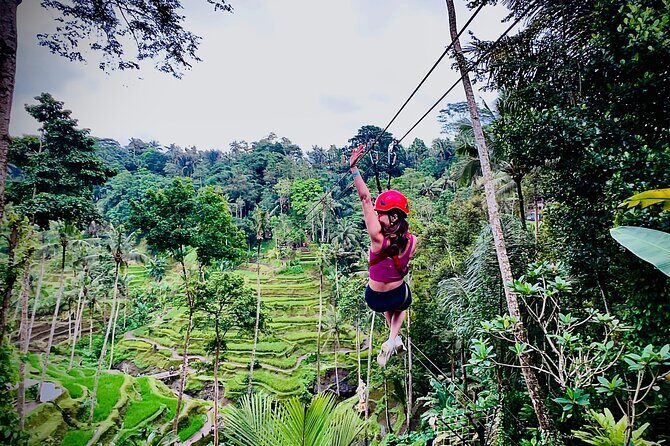
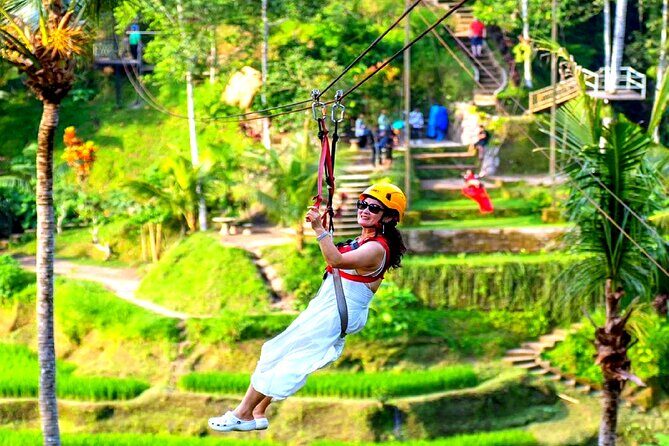
Your first activity centers around the Tegalalang Rice Terrace area, with the zip-line experience at Uma Ceking Resto And Swing. This part is about getting that sky-level perspective. You’ll slide above the rice terraces and see the patterns of the fields below, plus the surrounding greenery and valley views.

Why this stop works: you get a high-reward photo moment early, while you still feel fresh and not yet tired from the ATV. It’s also a nice change of pace from “just driving,” because the zip-line is the sort of thrill where the guide handles most of the technical stuff. You focus on enjoying the ride and catching your best angles.

What to consider: the zip-line has strict limits. The minimum weight is listed at 40 kg, and the maximum weight is 100 kg. If you’re near the edge of those numbers, double-check before you go so the day doesn’t get derailed at the last second.

Stop 2: Gorilla ATV Adventure quad biking and muddy-road reality

Bali Ubud Zipline and ATV Quad Bike Adventure - Stop 2: Gorilla ATV Adventure quad biking and muddy-road reality
After the zip-line, you shift into ATV mode at Gorilla ATV Adventure. This is the part that usually gets your heartbeat going faster: you’re on quad bikes navigating Bali terrain, with a driver guide to lead the route and keep you safe.

Expect the “this is real dirt” part. One clear heads-up: you’ll likely get muddy on the quad ride. That’s not a reason to skip it—it’s a reason to wear clothes you don’t mind getting stained. Think long pants and closed shoes, and bring a simple plan for cleaning up when you’re done.

I also love that the ride includes real guidance, not just a quick instruction and go. Guides have been described as patient and accommodating, even when someone in the group isn’t ready to ride on their own. You can also get help with photos during the day, so you’re not stuck stopping awkwardly while your friends are doing all the fun frames.

One practical tip from the way the ATV rides are set up: if you can ride solo, you might find it easier to handle than doing a shared setup on the same ATV. If you’re planning your group, consider that comfort and control matter more on a dirt route than in a paved area.

The optional coffee plantation stop (and when to choose it)

Bali Ubud Zipline and ATV Quad Bike Adventure - The optional coffee plantation stop (and when to choose it)
There’s an optional Coffee Plantation stop in the flow. That means you can add a short cultural and taste component without making the day collapse into a long bus trip.

If you love coffee stories and want a quieter moment between the adrenaline parts, this can be a good add-on. If your priority is maximizing action time, you may prefer to keep it lean and go straight from the ATV back toward the finish.

Lunch, water, and coffee/tea: plan your energy like a local

Bali Ubud Zipline and ATV Quad Bike Adventure - Lunch, water, and coffee/tea: plan your energy like a local
Food is included, which is a big deal for value and comfort. You’ll get lunch with fried rice or fried noodles, plus bottled water and coffee or tea.

This matters because the ATV segment can be a workout—heat, vibration, and holding on through uneven ground add up. If you show up underfed, the day can feel harder than it needs to. A hearty lunch helps you stay cheerful for both the zip-line session and the muddy quad ride.

What I’d recommend: eat what they serve at lunch and don’t treat it like a snack. Then drink your water during the gaps. It’s a short day on paper (about 6 hours), but it can feel longer when you’re moving and sweating.

Pickup, transfers, and the pacing between the two main activities

Bali Ubud Zipline and ATV Quad Bike Adventure - Pickup, transfers, and the pacing between the two main activities
The tour runs for about 6 hours, including the main parts: pickup (if selected), zip-line, ATV, and then drop-off. The schedule is structured to keep you from waiting around too long, and the guides typically help you keep the day organized.

One consideration to take seriously: the distance between the zip-line area and the ATV location can be noticeable. If you’re not using pickup and you’re trying to get around on your own, you’ll need to plan transportation so you don’t arrive late to gear-up time. If your schedule is tight, pickup is the simple fix.

Near public transportation is listed as a helpful note, but “near” doesn’t automatically mean “easy” in Bali traffic. If you want less hassle, choose the option that brings you from hotel to activity and back.

Safety gear, insurance, and the limits you can’t ignore

Bali Ubud Zipline and ATV Quad Bike Adventure - Safety gear, insurance, and the limits you can’t ignore
This experience includes all safety gear plus an insurance component. That’s the bare minimum you want for a combo day with both a zip-line and an ATV ride, and it’s included here.

The other safety reality is physical limits. The tour lists:

  • Zip-line rider weight: minimum 40 kg, maximum 100 kg
  • ATV tandem rider weight: maximum 90 kg per person
  • Age range: 12 to 50 years old

These numbers are not “soft suggestions.” They’re conditions of the activity. If you’re traveling with kids, or if anyone in your group is close to the weight limits, check carefully before you lock in the plan.

Also, because the zip-line has a minimum weight, very small riders might not qualify even if they seem confident. Planning ahead prevents heartbreak at check-in.

Price and value: what $23.22 buys you in Ubud

At $23.22 per person, the big question is whether it’s just “cheap thrills” or whether you’re actually getting real extras. Here, you’re not only paying for the zip-line and ATV.

The price includes:

  • Pickup and drop-off to your hotel if that option is selected
  • Lunch (fried rice or fried noodles)
  • Safety gear
  • Professional driver guide
  • Bottle water plus coffee or tea
  • Insurance

That package is what makes it feel like a deal. Many ATV experiences charge you separately for guide support, safety gear, and food. Here, those items are bundled, so you can budget the day without surprise add-ons beyond personal spending and tips.

Balance note: you’re paying for a busy, action-packed day. If you’re looking for long scenic stops, slow pacing, or lots of downtime, this isn’t that kind of tour. But if your goal is a compact Ubud adventure with two headline activities, this is priced like a practical win.

Who should book this Bali Ubud zip-line and ATV adventure

This fits best if you want:

  • A zip-line view without a hike
  • ATV fun that’s guided and structured
  • A day that includes lunch and drinks
  • A private setup for your group (so your day doesn’t get tangled with strangers)

It’s also a good match for couples and small friend groups who like to ride, take photos, and keep moving. The presence of guides who help with instructions and photo moments can make a big difference if you’re not experienced.

Who might think twice: if you hate getting dirty, or you want a super clean, minimal-mess day, the ATV portion will challenge your comfort level. Also, if anyone in your group falls outside the age or weight limits, you may want to choose a different activity plan rather than gamble on last-minute eligibility.

Should you book this tour?

Yes, I think you should book it if you want two major Ubud experiences packed into one solid day with meals, drinks, insurance, and safety gear included. It’s a straightforward way to get both sky views and quad-bike adrenaline without building a complicated itinerary.

Book it sooner if your dates are busy, since this is the kind of combo that people come back for. And if you do book, show up ready for mud: wear clothes you can sacrifice, bring closed shoes, and plan to hydrate before and during the ATV ride.

FAQ

How long is the Bali Ubud zip-line and ATV quad bike adventure?

The duration is listed as approximately 6 hours.

Is hotel pickup and drop-off included?

Pickup and drop-off to your hotel are included if you select that option. If not, the activity ends back at the meeting point.

What’s included in the price?

The tour includes pickup/drop-off (if selected), lunch (fried rice or fried noodles), all safety gear, a professional driver guide, bottled water plus coffee or tea, and insurance.

Is lunch included, and what do you get?

Yes. Lunch is included as fried rice or fried noodles.

Is there a coffee plantation stop?

A coffee plantation stop is optional as part of the experience.

What are the weight limits for the zip-line and ATV?

Zip-line weight limits are listed as a minimum of 40 kg and a maximum of 100 kg. For the ATV tandem ride, the maximum is 90 kg per person.

What are the age limits?

The participant must be between 12 and 50 years old.

Is this a private tour?

Yes. It’s a private tour/activity, and only your group will participate.

What’s the cancellation policy?

Free cancellation is available up to 24 hours in advance for a full refund. If you cancel less than 24 hours before the experience start time, the amount paid is not refunded.

Explore Bali’s Hidden Gems In a Classic Vw Convertible

Explore Bali's Hidden Gems In a Classic Vw Convertible - What $50 gets you (and what it does not)

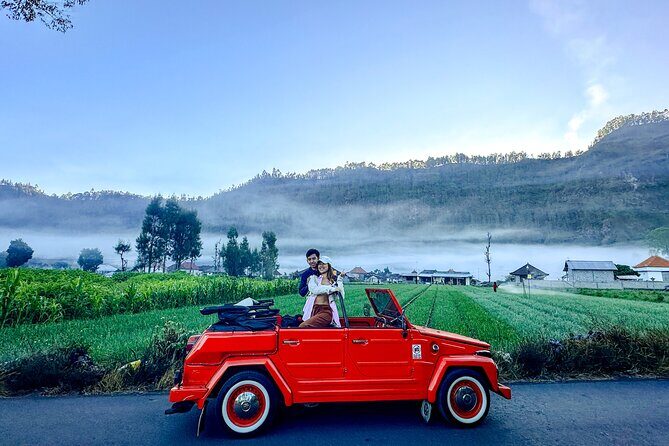
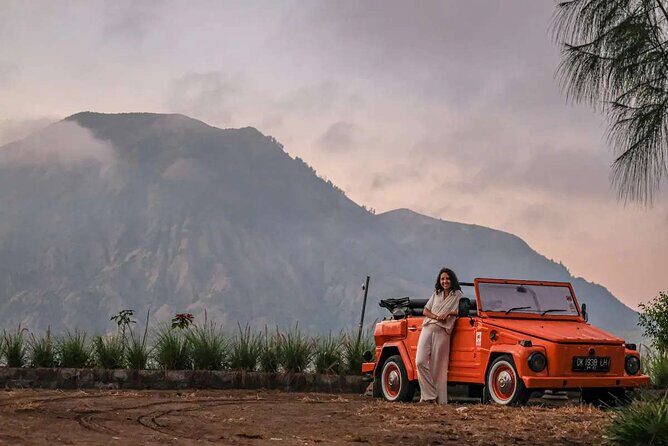
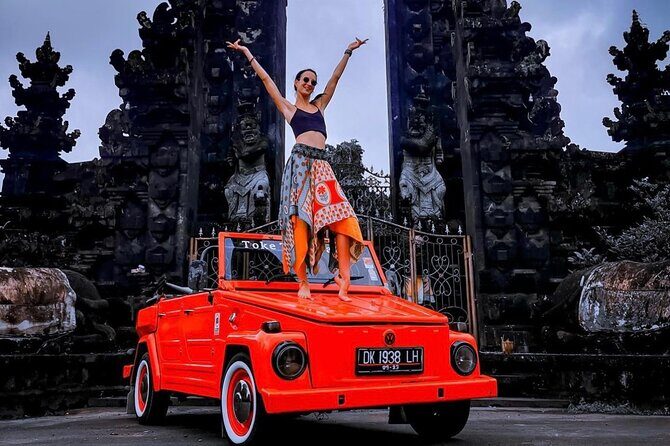
Riding Bali with the roof down changes the whole rhythm of the day. This vintage Volkswagen convertible tour is built for an easygoing pace: you get a professional driver up front, you see Ubud’s big-name highlights, and you can shape the route around what you care about most.

What I like most is the combo of open-air sightseeing and practical guidance. The day includes classic stops like Tegalalang Rice Terraces and Tirta Empul Temple, and the driver also brings cultural context at key moments. In past days, guides such as Putu and Made were praised for explaining Balinese culture clearly, while Toke was highlighted for picture-taking and picking spots that match expectations.

One drawback to think about: it is an outdoor-style ride and some sights depend on weather. If it rains, you may feel it more in an open vehicle, and the timing can get messy. Also, entrance tickets and lunch are not included, so plan on extra cash.

Key reasons this day feels worth it

Explore Bali's Hidden Gems In a Classic Vw Convertible - Key reasons this day feels worth it

  • Vintage VW convertible with a relaxed feel as you move around Ubud
  • Professional driver focused on a smooth ride and making sense of stops
  • A balanced route: dance performance, art village, waterfall, holy spring temple, rice terraces
  • Private tour means only your group participates and the day can be adjusted
  • Clear inclusions like bottled water, parking fees, and transportation

A vintage VW convertible that makes Ubud feel like a movie

Ubud can be a lot. Traffic, scooters, sudden turns, and the feeling you need to plan everything yourself. This tour strips that stress away with one main idea: have a pro driver handle the roads while you focus on the sights.

The convertible format matters. With the shade down, you still get fresh air and better sightlines for photos and quick looks as you pass through neighborhoods and rural stretches. That open feeling is also why rain changes the experience fast. If you go on a drizzly day, expect the day to feel less comfortable and some viewpoints may be harder to enjoy.

The good news is the day is structured with a mix of outdoor and indoor stops. You start with a cultural performance, then hit an art area, move to nature, and end with scenery that usually still works even if clouds roll in.

The 8-hour route, stop by stop

Explore Bali's Hidden Gems In a Classic Vw Convertible - The 8-hour route, stop by stop
This is a full-day plan (about 8 hours) centered on Ubud and nearby classics. It is designed so you are not just driving between far-flung places; you get time set aside at each stop.

A key practical point: entrance tickets are not included. So when you arrive at performances, temples, and viewpoints, you will want to be ready to pay on-site. Lunch is also not included, which means you should plan where you want to eat or ask your driver for a sensible option when timing gets tight.

Here is how the day typically flows:

Stop 1: Barong & Kris Dance (traditional performance)

You’ll begin at the Barong & Kris Dance, a traditional Balinese performance that mixes myth, symbolism, and storytelling. The dance centers on the mythological animal spirit Barong, described as a leader of the spirits who can protect humans. The performance style is a big part of why people choose this tour. It sets context for the rest of the day because many Balinese sacred sites and rituals connect back to this blend of myth and belief.

Plan for about 2 hours here. That is enough time to watch without feeling rushed, even if you are stopping to take a few photos and then reposition to get a clear view.

Main consideration: the entrance ticket for the dance is not included, so you’ll pay separately. If you are sensitive to being in a venue for that long, pick the best seating you can early, then settle in.

Stop 2: Celuk Village (silver and craft lanes)

Next comes Celuk Village, one of the areas known for crafts. This stop is a chance to see how Balinese artisans work, especially fine silver jewelry. The tour wording also points out that along the way you may pass other craft villages such as Batubulan for batik and Mas for wood carving.

This is the part of the day that can be surprisingly enjoyable if you like making sense of what you see. Even if you do not buy, you can look at how materials are shaped and how workshops differ from store fronts.

Time is about 1 hour. That’s a good length because you can browse, ask a few questions, and still have the day energy to enjoy the more active stops.

Main consideration: this area is mostly shopping and workshops, so it helps to go with a plan. If you want souvenirs, bring a budget. If you mostly want photos and a feel for the craft, set a mental limit so you do not spend your entire hour stuck deciding.

Stop 3: Tegenungan Waterfall (walk, look, and possible swim)

Then you head to Tegenungan Waterfall, described as one of the biggest and most famous waterfalls in Bali. The plan includes a little trek, and swimming is possible depending on conditions.

This is a great change of pace after crafts and performance. The sound and the open space do something for the day’s mood. In dry weather, it’s usually easy to spend time taking photos from a few angles and then moving closer for the best views.

The stop is about 1 hour, which is enough for a short trek, a look around, and a quick swim if you want it.

Main drawback to consider: this is an outdoor stop with a “works best with good weather” vibe. If it is raining, visibility can drop and the experience can feel less comfortable. Also, the water area can be slippery. Bring shoes that can handle uneven ground.

Stop 4: Tirta Empul Temple (holy spring water rituals)

After the waterfall, you go to Tirta Empul Temple, a holy spring water temple complex. Plan for at least 30 minutes to 1 hour to explore the site at a comfortable pace.

One detail that matters a lot here: you will need to put on a sarong before entering the temple area. It is a sacred site rule, and your driver will likely help you understand when it is required. If you forget, it can slow down your entry, so I’d treat this as a “ready your basics” moment.

This stop is valuable because it connects the day’s earlier cultural theme to a place where people still practice. Even if you are not joining rituals, you’ll see how water, worship, and temple space come together.

Main consideration: entrance tickets are not included here either, so plan for that cost. Also, temples often have areas where you should move carefully and follow local directions on where to stand and how to observe.

Stop 5: Tegalalang Rice Terrace (subak irrigation views)

You finish at Tegalalang Rice Terrace, a set of rice paddies near Ubud known for their terraced layout. The tour notes the traditional Balinese irrigation system called subak, which is a great detail because it helps you read the terraces as more than just a view.

Instead of thinking only about photos, think about the system. Subak links water management, community coordination, and farming. That makes the terraces feel less like a postcard and more like a living agricultural landscape.

Time here is about 1 hour. If you arrive when the light is right, you’ll get strong photo contrast and a clear sense of depth. If you arrive in heavy cloud or drizzle, the view can look softer. Either way, it’s worth slowing down and looking at the water channels and the terracing edges.

Main consideration: entrance tickets are not included. Also, terraces can involve steps and uneven paths, so comfortable footwear helps.

What $50 gets you (and what it does not)

Explore Bali's Hidden Gems In a Classic Vw Convertible - What $50 gets you (and what it does not)
At about $50 for the tour, the value mostly comes from what’s included: private transportation, bottled water, parking fees, and a professional driver. For an 8-hour day with multiple stops, that kind of structure can be a good deal compared to piecing together separate transport and guide services.

But you should also know what is not included:

  • Lunch
  • Entrance tickets for the dance, waterfall areas if ticketed, temple, and rice terraces
  • Pickup outside Ubud area

This is why the best way to judge the cost is total day math. Even if you feel the base price is fair, your final spend depends on tickets and what you pay for lunch. If you like to eat at nicer places, you’ll pay more. If you go simple, you can keep the day costs controlled.

One small heads-up from real-world experience: when schedules shift due to weather, misunderstandings can happen about any extra costs. The safest move is to ask early how additional time or route changes are handled if rain makes a stop less workable.

The driver factor: why the ride feels personal

Explore Bali's Hidden Gems In a Classic Vw Convertible - The driver factor: why the ride feels personal
This is listed as a private tour, so only your group participates. That matters more than it sounds. In Ubud, time gets eaten up by traffic and stopping for photos. A driver who keeps the day organized helps you see more without feeling like you’re sprinting.

The driver is also part guide, part translator of culture. In examples from past days, guides such as Putu and Made were praised for explanations of Balinese culture, and Toke was singled out for matching spots to expectations and taking great photos.

What you should do: set expectations before you start. Tell your driver what you care about most—dance, temples, waterfalls, rice views—and ask for the order that best fits your comfort level. This tour explicitly allows itinerary flexibility, so you can steer the day toward what will make you happiest.

Weather, timing, and how to avoid a soggy day

Explore Bali's Hidden Gems In a Classic Vw Convertible - Weather, timing, and how to avoid a soggy day
This tour needs good weather. That’s not just a disclaimer; it affects comfort and what you can actually enjoy at outdoor stops like Tegenungan Waterfall and the rice terraces.

If rain shows up:

  • You may still be able to visit, but the photos and walking can be less enjoyable.
  • You may feel more uncomfortable riding in an open vehicle.
  • Timing may shift if your driver decides a stop is not working at the moment.

A practical move is to dress like you plan to walk: quick-dry clothes, a light layer, and footwear that can handle wet paths. Also, pack a small umbrella or rain cover if you have space.

Who this tour suits best

Explore Bali's Hidden Gems In a Classic Vw Convertible - Who this tour suits best
This one is a strong fit if you want:

  • A single full-day plan that covers both culture and scenery
  • To move around Ubud without renting a scooter
  • A more relaxed pace than a strict bus tour
  • A photo-friendly vehicle experience with a vintage look

It may be less ideal if:

  • You hate outdoor conditions and want climate control at all times
  • You prefer a fully guided, ticket-included package with zero extras
  • You only want the most famous viewpoints and nothing else

If you’re a couple, solo traveler, or small group, private transport is usually where you get the biggest comfort payoff.

Should you book it?

Explore Bali's Hidden Gems In a Classic Vw Convertible - Should you book it?
I’d book this tour if you want an easy way to see Ubud’s core highlights with a professional driver, and you like the idea of riding through Bali in a vintage VW convertible with better views. The mix of performance, craft area, waterfall, temple, and rice terraces gives you variety, and the private format helps keep the day smooth.

Skip or be cautious if weather sensitivity is a major issue for you, because the day depends on outdoor time. Also, budget for entrance tickets and lunch so you do not get surprised when you reach each stop.

If you’re traveling when skies are likely to cooperate and you want a day that feels both scenic and culturally grounded, this is a solid choice.

FAQ

Explore Bali's Hidden Gems In a Classic Vw Convertible - FAQ

FAQ

Is this tour private?

Yes. It’s a private tour/activity, and only your group will participate.

How long is the Bali VW convertible tour in Ubud?

The duration is about 8 hours.

Where does the tour start?

The start is in Ubud, Gianyar Regency, Bali, Indonesia.

What is included in the price?

Included are private transportation, bottled water, parking fees, and a professional driver.

Are entrance tickets included?

No. Entrance tickets are not included for stops like the Barong & Kris Dance and other listed attractions.

Do you offer pickup?

Pickup is offered. Pickup outside of the Ubud area is not included.

Do I need to wear a sarong at Tirta Empul Temple?

You will need to put on a sarong before entering Tirta Empul Temple.

What happens if the weather is poor?

The experience requires good weather. If it’s canceled due to poor weather, you’ll be offered a different date or a full refund.

Uluwatu Silver Class: A Unique Jewelry-Making Experience in Bali

Uluwatu Silver Class: A Unique Jewelry-Making Experience in Bali - The Workshop Flow: Design Choice, Melting Silver, Shaping, and Polish

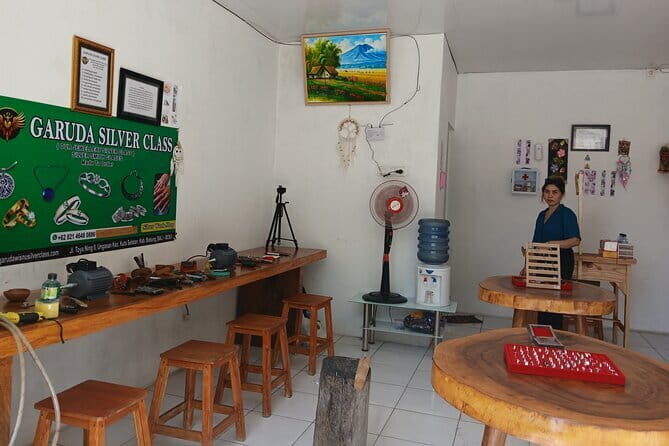
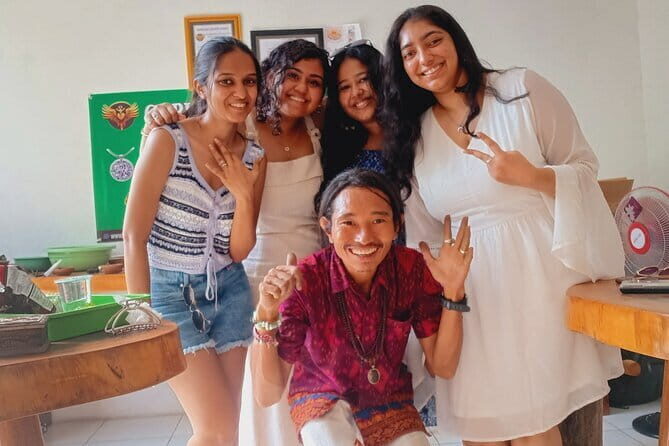
Make silver jewelry feel possible fast. This Uluwatu-area workshop guides you through creating silver jewelry from scratch, with you making the decisions and doing the hands-on steps. I love the hands-on pace from design to finishing, and I love that you take home your own silver piece (about 1–5 grams depending on your design).

There’s also a very Bali-friendly payoff: you can pair it with an afternoon near Uluwatu beaches or a sunset plan around the Uluwatu area shows. The main thing to consider is language. One instructor’s English can be limited, so if you want specific details, come with a simple plan in mind and be ready for teamwork and gestures.

Key Things I’d Put on Your Must-Do List

Uluwatu Silver Class: A Unique Jewelry-Making Experience in Bali - Key Things I’d Put on Your Must-Do List

  • Design-first process: you start by choosing your design, not by being handed a preset template
  • You’ll work through the real stages: melting silver grains, forming wire or plate, shaping, soldering, sanding, polishing
  • Your piece is yours: one participant makes one jewelry piece, and you can’t share silver with another person
  • Silver weight is part of the deal: you take home 1–5 grams (final weight depends on the design)
  • Extra costs are optional but clear: gemstones add IDR 100K–500K, and going over 5 grams costs IDR 100,000 per extra gram
  • Private, small-group feel: only your group participates, so you’re not stuck competing for attention

What You Make and What You Take Home for $45.82

Uluwatu Silver Class: A Unique Jewelry-Making Experience in Bali - What You Make and What You Take Home for $45.82
At about $45.82 per person, this is one of those Bali activities where the price mostly goes to two things you can actually hold later: guided time with silversmiths and the silver itself. You’re not paying for a photo moment. You’re paying to go from raw silver grains to a finished piece you can wear or gift.

Here’s the practical core of the value:

  • You take home real silver: the included take-home amount is 1–5 grams, depending on what you design
  • Final weight can vary: heavier or more complex designs may land closer to the higher end of that range
  • If your piece uses less than 5 grams, it’s still treated as 5 grams for usage accounting: meaning you shouldn’t expect to be able to stretch beyond the allotted silver expectations by choosing a tiny design and then adding more later

You also get small comforts that matter when you’re standing and working for a while:

  • snack and mineral water are included
  • free Wi‑Fi is included
  • it’s a mobile ticket, which saves time if you’re juggling beaches and buses

The takeaway

If you like souvenirs that are personal and not mass-produced, this is a solid use of time. The only reason it won’t feel like a win is if you’re expecting a full custom jewelry service with unlimited materials. This workshop is built around making one included piece, then letting you refine it in the time you have.

The Workshop Flow: Design Choice, Melting Silver, Shaping, and Polish

Uluwatu Silver Class: A Unique Jewelry-Making Experience in Bali - The Workshop Flow: Design Choice, Melting Silver, Shaping, and Polish
Think of this class as a guided “maker’s route.” It’s not just one trick demo. The session is structured to walk you through each major step of turning silver into jewelry.

The flow typically runs 1.5 to 3 hours (and that time window is what you’re really buying). Your exact timing depends on your design and how quickly you move through each stage.

1) Choose your design

You start by selecting a design. This is important because the workshop later makes decisions for you about what’s practical to form and finish within the included silver weight. If you want a piece that feels like you, decide early on a shape style you can clearly describe or show.

2) Materials and tools basics

Next you get an intro to the materials and tools. Even with limited shared language, this part helps you understand what the team expects from you during the hands-on steps. It also makes the later stages less mysterious—especially the stages with heat and metal-forming.

3) Melting silver grains

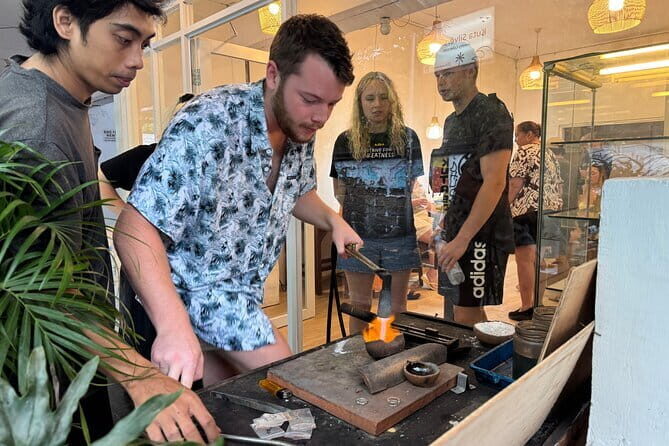
You move into melting silver grains. In a good workshop setup, this is one of the moments that feels like actual transformation: the raw becomes a workable metal. The guidance matters here because you’re not doing this as a trained silversmith; you’re learning the workflow while the studio keeps things moving safely and efficiently.

4) Form wire or plate

After melting, you’ll form silver into something you can work with—either wire or plate. This choice affects how your final piece looks and how it can be shaped. Wire styles often lend themselves to rings, bracelets, or banded looks. Plate-based looks tend to guide your shaping and soldering choices differently.

5) Shape and build the form

Then you shape the jewelry. This is where the class shifts from technical steps to personal style. Even if your design is simple, shaping is how your piece starts to look like jewelry instead of a metal experiment.

6) Soldering

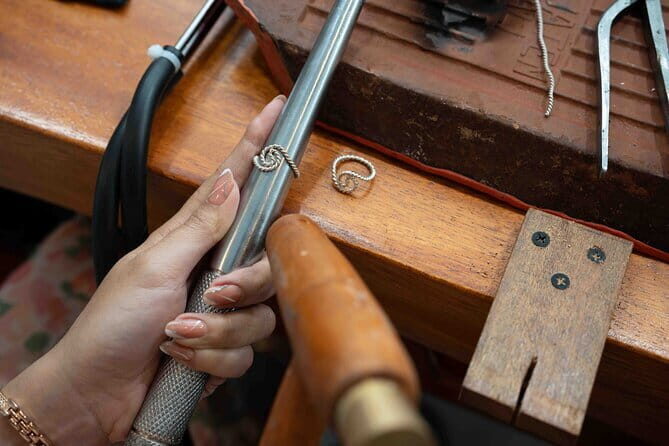
Soldering is the step that helps pieces hold together. It’s also where you’ll likely feel the difference between a nice concept and a wearable result. The studio guidance is what turns your metal parts into a single solid piece.

7) Sanding and polishing

Finally comes sanding and polishing. This is where the workshop earns its keep. Polishing can make a huge visual difference, turning rough metal into something that looks finished and intentional.

What you should expect at the end

By the end of your session, you should walk away with a finished piece of your own design made in the class. Each participant can make only one jewelry piece, and that piece is directly yours.

A Bali Day Plan: Timing Around Uluwatu Beaches and the Kecak Sunset

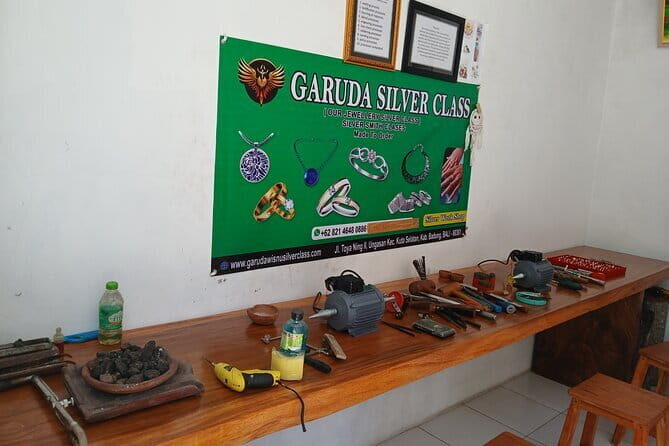
The meeting point is at Garuda Silver Class, Jl. Toya Ning II, Ungasan, Kec. Kuta Sel., Kabupaten Badung, Bali 80361. The activity ends back at the meeting point, so you’re not signing up for a long circuit.

The workshop’s location is one of its sneaky advantages. It’s close to a cluster of well-known Uluwatu-area spots. The info provided lists proximity to:

  • Balangan Beach
  • Melasti Beach
  • Pandawa Beach
  • Nyang-Nyang Beach
  • Uluwatu Beach

It’s also close to the Garuda Wisnu Kencana Culture Park, plus the Kecak Dance performance at Uluwatu during sunset.

How I’d schedule it

  • If you love beaches: do the workshop earlier, then head to the water for a calmer post-class vibe.
  • If you love culture at sunset: pick a session that gives you time to get to Uluwatu for the Kecak timing.

Transportation reality check

The class is near public transportation, but the listing also says shuttle is not included. That means you’ll want to plan your own ride or route. If you’re pairing it with beach stops, build in extra time for traffic, not just for the workshop.

Costs and Limits That Can Catch You Off Guard

Uluwatu Silver Class: A Unique Jewelry-Making Experience in Bali - Costs and Limits That Can Catch You Off Guard
This is where you’ll feel the most difference between “fun class” and “final bill.” The base price includes materials and tools, but some upgrades and extra metal use can change the total.

What’s included

  • all necessary materials and tools
  • snack and mineral water
  • free Wi‑Fi
  • take home 1–5 grams of silver (final weight depends on the design)
  • your design and the piece you make is yours
  • one piece per participant

What is not included (and how it’s charged)

  • Gemstones cost extra: from IDR 100K to 500K, depending on type and size
  • Overweight silver fee: if you go beyond the 5 gram limit, there’s an additional IDR 100,000 per gram
  • No sharing silver: you can’t share silver with another person
  • No shuttle: you’ll handle transportation

The one detail that’s easy to misread

“If your silver jewelry less than 5 grams, the usage will still be accounted for as 5 grams.”

What this suggests in practice is that the included silver allowance is treated as a minimum accounting amount of 5 grams. So even if your design ends up using less, you shouldn’t assume you’ll get a free way to add extra silver beyond the stated limit.

Language and expectations

One review noted limited English from an instructor, even though the team was friendly. So: if you have a very specific design idea, bring it as a clear sketch or a simple visual reference. Keep it simple enough that the workshop can translate it into something workable in the time you have.

Who This Private Silver Class Fits Best

Uluwatu Silver Class: A Unique Jewelry-Making Experience in Bali - Who This Private Silver Class Fits Best
This is a good fit for people who:

  • want a hands-on craft where you make the final product
  • like meaningful souvenirs you can actually wear
  • prefer a private setup where only your group participates
  • are comfortable spending up to about 3 hours focused on one project

It’s also family-friendly in the sense that the class is structured for novices—experienced silversmiths guide each step, including the stages that sound technical on paper.

Who might not love it

Skip or rethink if:

  • you’re hoping to make multiple pieces in one session (the class allows one piece per participant)
  • you expect shuttle service included
  • you need very precise design execution and you don’t want to communicate with help from gestures or simpler explanations

Getting the Most Out of Your Session (Bring Ideas, Not Complex Plans)

Uluwatu Silver Class: A Unique Jewelry-Making Experience in Bali - Getting the Most Out of Your Session (Bring Ideas, Not Complex Plans)
You’ll get better results when your design is realistic for a workshop timeline. A few practical tips based on how these classes are usually run and on what’s stated:

  • Plan for a single finished piece. Don’t treat it like a buffet where you try five concepts
  • Decide whether you want a basic silver-only design or you’re open to optional gemstones (IDR 100K–500K range)
  • If you’re aiming to stay within the intended silver amount, keep your design within what feels compact and wearable
  • Bring your expectations down to the time reality: you’re going through design, melting, forming, shaping, soldering, sanding, and polishing in one sitting

Also, since language can vary, keep a backup plan: a design that’s easy to describe even without perfect shared wording.

Should You Book the Uluwatu Silver Class?

Uluwatu Silver Class: A Unique Jewelry-Making Experience in Bali - Should You Book the Uluwatu Silver Class?
Book it if you want a Bali souvenir that’s personal and made through a full process, not a quick demo. At $45.82, with materials, tools, snack, mineral water, and free Wi‑Fi included—and with you taking home 1–5 grams of silver—the value is strong if you’re the type who likes crafts and tangible keepsakes.

Don’t book if you:

  • want a shuttle-included package
  • plan to exceed the 5 gram silver limit
  • want multiple pieces in one trip
  • need extremely detailed design work with lots of back-and-forth in a specific language

One last point: you can cancel for a full refund if you cancel at least 24 hours before the experience start time. That gives you flexibility if your Bali schedule shifts.

FAQ

Uluwatu Silver Class: A Unique Jewelry-Making Experience in Bali - FAQ

How long is the Uluwatu Silver Class?

The class runs about 1.5 hours to 3 hours, and the tour summary notes a duration of approximately 3 hours.

What’s included in the price?

Included are all necessary materials and tools, a snack, mineral water, and free Wi‑Fi. You also take home your silver jewelry (starting from 1–5 grams, depending on your design).

Can I make more than one piece during the class?

No. Each participant can make only one silver jewelry piece.

Are gemstones included?

Gemstones are not included. If you want them, there’s an additional charge of IDR 100K to 500K, depending on the type and size.

Is there a shuttle from nearby areas?

No. Shuttle is not included, so you’ll need to arrange your own transport.

Where does the class start, and where does it end?

It starts at Garuda Silver Class, Jl. Toya Ning II, Ungasan and ends back at the same meeting point.

HOT PROMO. Semi Private Lessons (1 Coach/2 Guests)

HOT PROMO. Semi Private Lessons (1 Coach/2 Guests) - What Semi-Private Actually Means (1 Coach/2 Guests)

Learning to surf is easier here.

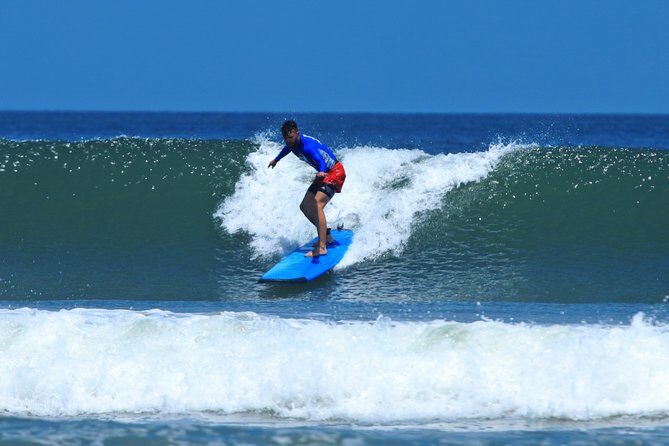
This semi private setup on Kuta Beach is built around fast feedback: you get “pro tips” aimed at both first timers and experienced surfers, and you can pick a start time that fits your day. I like that the group stays small (up to 15 overall), so your instructor can keep an eye on what you’re doing, not just do a quick demo and disappear. One thing to consider: this package requires a minimum of two people to book, so you’ll need a friend or partner to match your session.

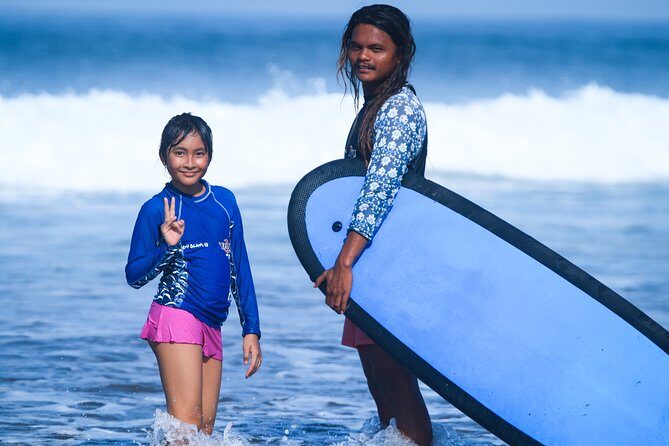
What I love most is the teaching style and the follow-through. You get personalized attention with 1 surf coach for 2 guests, plus free surfing pictures and a free online training course to help you practice after you dry off. The gear is also handled for you, so you’re not hunting around for a board lease on the beach.

The main drawback is simple logistics. You’ll want to bring your own sunscreen and towels (and kids need surf shirts), and you may run into small extra costs nearby for things like drop-off parking around the meeting area.

Key things to know before you go

HOT PROMO. Semi Private Lessons (1 Coach/2 Guests) - Key things to know before you go

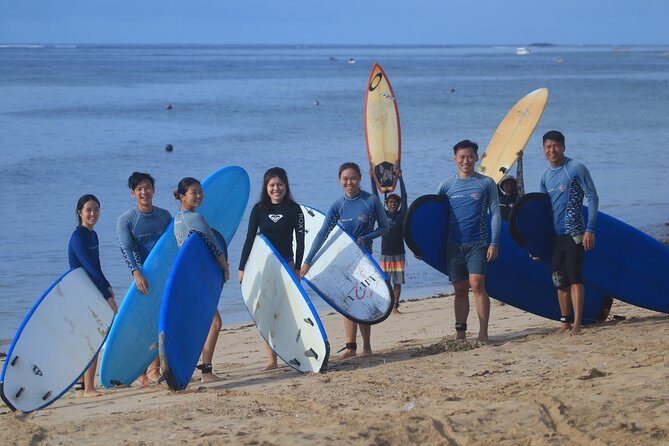
  • 1 coach for 2 guests means more hands-on feedback than a big-group lesson
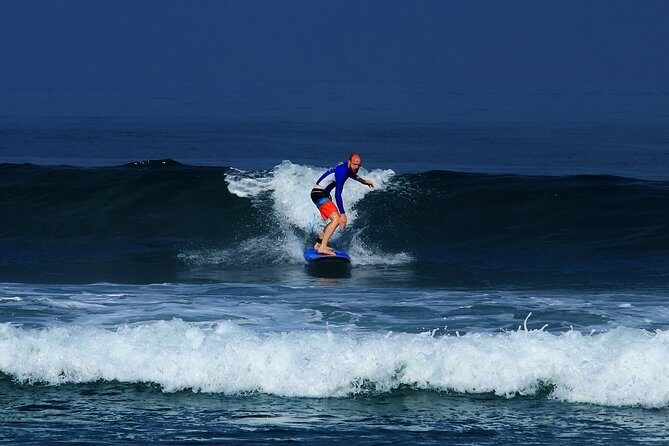
  • Kuta Beach session focuses on riding the famous waves in a controlled, coached way
  • Beginners and experienced surfers are both welcome, so the lesson can match your level
  • Free photos + free online training course give you something to study after your waves
  • Surf equipment included (board, leash, rashies), plus showers and toilets on hand

Kuta Beach in a 2-Hour Semi-Private Lesson

HOT PROMO. Semi Private Lessons (1 Coach/2 Guests) - Kuta Beach in a 2-Hour Semi-Private Lesson
Kuta is the kind of place where you can feel the ocean before you even see it. The waves are the star, and this lesson is designed to help you get on your board and start building real surf habits, not just take a few wobbly rides.

The whole experience runs about 2 hours, which is the sweet spot for learning without turning your day into a full-time surf saga. You’ll also have options for timing since you can choose a start time that works for you, which matters when you’re balancing beach time with everything else in Bali.

This isn’t a one-size-fits-all “everyone does the same drill” model. The info is clear that the lesson can be tailored for beginners or experienced surfers, so you should feel like the coaching matches what you need, whether that’s learning basic stability or improving how you approach and ride.

And yes, it’s at Kuta Beach. That’s a big part of the appeal. You’re not traveling somewhere generic and quiet; you’re learning in the place most people picture when they think of surfing in Bali.

What Semi-Private Actually Means (1 Coach/2 Guests)

HOT PROMO. Semi Private Lessons (1 Coach/2 Guests) - What Semi-Private Actually Means (1 Coach/2 Guests)
Here’s the key point: you’re not doing this as part of a random crowd of strangers. This booking is semi-private, with 1 coach for 2 guests. In practice, that means the instructor can watch you more closely and give specific pointers, instead of splitting attention across a large set of participants.

It also means you’ll probably learn faster, because you get feedback at the moment it matters: while you’re still thinking about what you just did. Surfing rewards quick correction, and this setup is built for that.

One more rule that affects your planning: the booking requires a minimum of two people. So if you’re traveling solo, you’ll need to bring a friend or partner to make the package work. If you already have someone to share the plan with, it’s a nice way to keep costs reasonable while still getting the instructor attention you want.

Coach + Small Group Size: How the Learning Feels Different

The lesson highlights personalized attention and keeps things small, with a group limit of 15. That matters because surf lessons can get chaotic fast when the group is large. More people means more waiting, less time riding, and more chance you end up guessing what to fix next.

The reviews back up the “real coaching” vibe. People describe the instructor as great with clear explanations and lots of pointers. One review specifically calls out how quickly the coach had them standing up, and another mentions expert advice for brand-new surfers. That’s what you’re looking for if you want your lesson to translate into real progress, not just a fun beach afternoon.

If you’re experienced, you’re not locked out either. The lesson is described as suitable for surfers who already have skills. In that case, your best bet is to show up knowing what you want to improve, like balance, consistency, or how you handle takeoff. The more clearly you can communicate your goal, the more useful the feedback will be.

Also, there’s a small but important detail: the lesson is structured as a private tour/activity for your group, meaning it’s not a free-for-all with unrelated participants. That keeps the experience focused.

Gear, Photos, Showers, and the Extras That Actually Matter

Let’s talk practical value, because this is where the lesson earns its low price.

You get surf equipment included: surf board, leash, and rashies. That removes one of the biggest headaches for beginner surfers. You don’t want to spend your first surf day figuring out equipment basics while you’re trying not to get dumped by the first set of waves.

You also get free surfing pictures. This is not just a casual “someone may take photos” situation. Multiple reviews mention that the team takes photos during the session, and those images become a nice memory and a useful reference for what your stance looked like.

Then there’s the coaching bonus: a free online training course. Even without details on what’s inside that course, the concept is solid. You’ll get something you can review after the lesson, when your body isn’t ready to wipe your brain with saltwater. That helps the lesson stick.

On-site comfort matters too. You’ll have access to free public showers and free public toilet, plus a security safe for valuables. If you’re carrying a phone, wallet, or camera, a safe is one less stress point.

What’s not included is also worth noting. You’ll want to bring sunscreen and towels. And if you’re bringing kids, the lesson says they don’t stock surf shirts for children, so plan to pack that if your child needs it. (It’s easy to forget sun protection until you’re already on the beach.)

Your Kuta Beach Session: What Happens on the Day

HOT PROMO. Semi Private Lessons (1 Coach/2 Guests) - Your Kuta Beach Session: What Happens on the Day
There’s one main stop: Kuta Beach, Bali. You’ll start and end at the meeting point in the Legian area: T-brother Surf (75R8+2PV), Legian, Kuta, Badung Regency, Bali.

Since the lesson is about 2 hours, you should expect a tight flow: check in, get your gear, meet your coach, then hit the water with coaching designed for your level. The key promise is pro tips tailored to your ability, so you can focus on making changes that improve how you ride.

Because the group is small, you shouldn’t feel like you’re constantly watching other people. The reviews mention standing up quickly and getting lots of instruction, which usually means the coach is correcting technique while you’re actively trying.

You’ll also be in photo territory. The lesson includes free surfing pictures, so the team is set up to capture your attempts during the session. That’s a big plus if you want something to remember the moment you finally nailed a ride.

After the surf time, it makes sense to rinse off. The lesson includes free public showers, so you can clean up right after you finish. Then you’re back at the meeting point, so you can keep moving with your Bali day instead of getting stuck in another long transition.

One final detail that affects your planning: the activity runs Monday to Sunday from 8:00 AM to 5:00 PM. That’s helpful if you want a morning session, or if you’re trying to time your lesson before it gets too hot.

Price Check: What $13.75 Per Person Really Buys You

At $13.75 per person, this is priced like a bargain compared to many surf experiences. But you can’t judge surf value on price alone. You judge it on what you’re getting without extra add-ons.

Here’s what supports the value:

  • Equipment included (board, leash, rashies)
  • Coaching included with a 1 coach/2 guests format
  • Free surfing pictures
  • Free online training course
  • Showers, toilets, and a valuables safe

When lessons charge “cheap” but then nickel-and-dime you for gear, photos, or basic comfort, the low price stops being a deal. This one looks like it keeps the essentials inside the ticket.

There is one pricing-related catch: the package needs a minimum of two people. So the value is best when you already have a buddy to surf with. If you’re traveling solo, you’ll need to solve that pairing first or look for another format.

Still, if you do have a partner, this looks like a smart way to learn without blowing your Bali budget. And the review pattern—people describing fast progress, great instruction, and clear explanations—suggests you’re paying for results, not just board rental time.

Who Should Book This Lesson (and Who Might Want Another Option)

HOT PROMO. Semi Private Lessons (1 Coach/2 Guests) - Who Should Book This Lesson (and Who Might Want Another Option)
This is a great fit for:

  • First-time surfers who want expert guidance and clear instructions
  • Couples, partners, or friends who can meet the minimum of two people
  • Surfers who already ride and want targeted pro tips to refine technique
  • People who like small, manageable groups where the coach can actually focus on you

It may be less ideal if:

  • You’re solo and don’t have someone to pair with
  • You’re expecting towels or sunscreen to be included (they’re not)
  • You’re traveling with kids who need surf shirts (the listing says they don’t stock them for children)

Also, the experience notes a moderate physical fitness level. That doesn’t mean you need to be an athlete, but surfing involves getting up and down, paddling, and handling balance. If you have mobility concerns, it’s worth thinking about what moderate effort looks like for you.

And if you rely on public transportation, the meeting area is described as near public transportation, which is handy in Kuta/Legian where traffic can be unpredictable.

Planning Tips for a Smooth Kuta Surf Day

HOT PROMO. Semi Private Lessons (1 Coach/2 Guests) - Planning Tips for a Smooth Kuta Surf Day
A few practical things will make the day easier.

Bring:

  • Sunscreen
  • Towels
  • Kids surf shirts, if needed
  • Some small money, since you’re advised to bring it

Wear:

  • Rash-protective swim gear is typically a good idea. The lesson supplies rashies, but you still want a comfortable base for your session.

Expect:

  • A start-time schedule within 8:00 AM–5:00 PM
  • Weather dependence. The experience requires good weather, and if conditions are poor you’ll be offered a different date or a full refund.

Small heads-up from real-world details: one review mentions a parking charge during drop-off near the area. Nothing that should stop you, but it’s smart to plan around it so you don’t get surprised when you’re trying to unload gear quickly.

Should You Book This Surf Lesson in Kuta?

Yes, you should book this if you want a real coaching surf session at a price that’s hard to beat. The mix of 1 coach/2 guests, small-group limits, and the fact that you leave with photos plus an online training course makes it more than just a “try surfing” activity.

Book it especially if:

  • You’re traveling with a friend or partner and can meet the minimum of two people
  • You want clear pro tips and you like the idea of learning with close supervision
  • You value getting your gear handled and having basic comforts like showers and toilets ready

Skip it (or look elsewhere) if you’re going solo, expecting towels/sunscreen to be included, or you need specific children’s clothing that isn’t stocked.

If you want Kuta waves plus practical feedback, this is a strong option.

FAQ

How many people are in each semi-private lesson?

This package is 1 surf coach for 2 guests, and it requires a minimum of two people to book.

How long is the surfing lesson?

The lesson is about 2 hours.

Where does the lesson take place?

The surf lesson is on Kuta Beach, Bali. The meeting point is T-brother Surf (75R8+2PV), Legian, Kuta.

What do I need to bring?

The lesson does not include sunscreen or towels. It also advises bringing some small money. Kids may need surf shirts since they are not stocked for children.

Is the lesson only for beginners?

No. It’s described as suitable for beginners and experienced surfers.

What surf gear is included?

You get surf equipment, including a surf board, leash, and rashies.

Does the activity include photos?

Yes. You get free surfing pictures.

Is there an online learning component?

Yes. The package includes a free online training course.

Is this a private activity?

It’s described as a private tour/activity, meaning only your group will participate.

What if the weather is bad?

The experience requires good weather. If it’s canceled due to poor weather, you’ll be offered a different date or a full refund.

Nusa Penida East And West Full Day Private Guided Tour

Nusa Penida East And West Full Day Private Guided Tour - Lunch at Happy Cafe Penida: Fuel Without Detours

Penida in one long photo day. This private guided outing strings together east-and-west cliff beaches like Diamond and Kelingking, with a human guide who helps you time your shots. It’s built for people who want the highlights without doing the hard logistics between stops.

I like two things a lot. First, the breakfast box and coffee break near Diamond come with a view, so you start the day already in the mood. Second, you stay fueled with mineral water and a restaurant lunch at Happy Cafe Penida, with Indonesian options like nasi goreng or fried rice (including a seaweed-flavored mix).

One consideration: it’s a 10-hour day with about an hour at each major viewpoint. If you want long, slow beach time, or you hate crowds at photo spots, you’ll need to accept a more “see, shoot, move” pace.

Key Things To Know Before You Go

  • Private, your-group tour with a guide and driver, so the pace is yours
  • Hotel pickup and return from south, central, and east Bali (2-way transfers)
  • East + West Penida in one run: Diamond, Atuh, Kelingking, Broken, Crystal Bay
  • Food and drinks included: breakfast box, mineral water, and a restaurant lunch
  • Photo-focused guidance from the driver-guide (in past days, guides like Artha or Komang were praised for framing you well)

What a 10-Hour Private Penida Day Really Means

Nusa Penida East And West Full Day Private Guided Tour - What a 10-Hour Private Penida Day Really Means
This tour is all about concentration: a full day where the focus is cliff-backed beaches, big viewpoints, and quick stops that add up fast. You’re not wandering randomly. You’re going point to point, with just enough time at each place to take your photos, enjoy a break, and keep the momentum going.

The private format matters here. On Penida, transfers and navigation take time, and parking/viewpoint queues can get annoying. A private guide helps you move efficiently, stay on schedule, and get positioned at the spots that have the best angles.

Expect a day that feels “busy,” even if everything is smooth. Diamond Beach and Kelingking Beach are high-viewpoint type locations, so you’ll likely spend time standing and waiting. Crystal Bay gives you a different tempo, with a sand-and-water vibe and the option to swim.

Hotel Pickup, Harbor Transfers, and Staying On Schedule

Nusa Penida East And West Full Day Private Guided Tour - Hotel Pickup, Harbor Transfers, and Staying On Schedule
The tour includes 2-way private transfers from a wide range of Bali hotels across south, central, and east Bali. That’s a big part of the value: Penida days can be exhausting if you’re piecing together boats, shuttles, and ride-hailing.

In some cases, the smoothness comes from how the day flows—pickup, then a coordinated handoff as you transition toward Penida, and back again afterward. You’ll want to be ready at your hotel on time so the driver can build in buffer for traffic and road conditions.

Roads on Penida can be bumpy, and a driver who knows the potholes makes a real difference. In past experiences with guides like Artha or Komang, people highlighted safe driving and confidence in handling rough stretches. That’s not just comfort—it also helps you arrive at viewpoints without feeling rattled.

Quick tip: when you meet your driver, do a 30-second check that everyone agrees on the day’s stop order and timing. One bad experience involved a driver who seemed unsure of the plan, and that’s the kind of problem you can prevent early.

East Penida Start: Diamond Beach and Atuh Beach

You start with Pantai Diamond (Diamond Beach) on the east side. This is a viewpoint-first stop, with time to take pictures and a coffee break plus a breakfast box that’s served above the hill overlooking the view. Eating with the horizon in front of you is a small thing, but it sets the tone—like you’ve already arrived in Penida mode before you even hit the next viewpoint.

Diamond Beach is also one of those places where timing matters. If light is harsh when you arrive, you’ll still get your photos, but you’ll feel the difference of having a guide help you find the best spots to stand and shoot.

Next up is Atuh Beach, another dramatic cliff-and-ocean scene. The pitch here is simple: clear ocean water, tall cliffs, and a viewpoint spot where your photos look like they’re taken from higher ground on purpose. Atuh is the kind of place where a calm guide can help you get the shot you want without rushing every movement.

Each of these stops has about an hour in the schedule. That’s enough time for photos and a breather, but not enough time to turn it into a beach day. If you love lingering, you’ll probably feel the push to move on.

Lunch at Happy Cafe Penida: Fuel Without Detours

Nusa Penida East And West Full Day Private Guided Tour - Lunch at Happy Cafe Penida: Fuel Without Detours
Between the big cliff stops, you land at Happy Cafe Penida for lunch. The tour focuses on not making you hunt for food. You get an included restaurant meal—Indonesian nasi goreng (or fried rice), with a seaweed flavor mixed into the packaged lunch plan.

The menu isn’t limited to one lane. You might also find Indonesian and western options available at the café, which helps if your group doesn’t all want the same style of rice dish.

This lunch stop is more important than it sounds. Penida can wear you down with sun, walking between viewpoints, and waiting in lines for photos. A proper sit-down meal and hydration lets you keep energy for Kelingking and Broken Beach, which are usually the emotional peak of the day.

One caution from real-world experience: the tour listing says breakfast box, coffee break, mineral water, and lunch are included. If any item is missing on the day, bring it up right away at pickup or early in the tour—don’t wait until you’re back at the harbor. That’s where issues are easiest to fix.

Kelingking Beach and Broken Beach: Big Views, Myth, and Photo Timing

Nusa Penida East And West Full Day Private Guided Tour - Kelingking Beach and Broken Beach: Big Views, Myth, and Photo Timing
Kelingking Beach is the star stop for a lot of people, and the tour builds around getting you into the right position. You’ll be guided to a best-view spot above the hill to look out over the Kelingking cliff formation. Your guide also shares the local myth story connected to Kelingking Beach, which turns the view from just a photo into something with local context.

Practical note: this is a viewpoint experience. You’ll spend time waiting for the crowd to thin, and you’ll likely want someone helping you manage the timing. In past days with guides like Artha or Komang, people praised them for stepping in with photo help and for staying patient when queues formed—waiting in shade while others took turns is a real quality-of-life upgrade.

After Kelingking, you go to Broken Beach (Pasih Uug Beach). The draw here is the dramatic “hole in a hole” rock formation. From the viewpoint, it looks like the coastline has been carved out in layers, with the sea visible through openings. It’s not a beach you flop down on. It’s a look-from-here and photograph-from-here moment, and that’s exactly what this stop is set up for.

Again, you’re working on about an hour here. That’s enough for multiple angles and a few group shots, but not enough to treat it like a long hike or a lingering picnic.

Crystal Bay: A More Relaxed Finish With Swim-Optional Water

Nusa Penida East And West Full Day Private Guided Tour - Crystal Bay: A More Relaxed Finish With Swim-Optional Water
Crystal Bay closes out the west side. This stop shifts the vibe: you get a white-sand beach feel and the option for swimming in cleaner-looking water (the tour notes the possibility to swim). It’s one of the places where you can swap “all cliff photos, all the time” for something slightly more normal.

There are practical comforts mentioned here too: restroom or changing room access is available. That matters if you actually plan to get in the water rather than just dip your toes.

The time you get is still about an hour, so if swimming is on your list, be ready to move quickly. You’ll want to protect your time the same way you did at the cliff viewpoints: change, swim briefly if conditions allow, and then refuel your energy so you’re not drained for the return.

Price and Value at $65.87 Per Person From Seminyak

Nusa Penida East And West Full Day Private Guided Tour - Price and Value at $65.87 Per Person From Seminyak
At $65.87 per person, the best way to judge value is what you’re not paying for. This tour includes:

  • Private 2-way transfers from hotels in south, central, and east Bali
  • Admission tickets for each stop
  • A breakfast box plus a coffee break near Diamond
  • Mineral water
  • Restaurant lunch at Happy Cafe Penida

If you tried to piece that together on your own, you’d likely end up paying for transport plus tickets plus food anyway, then spending your day solving problems instead of enjoying the island.

The “private” part also changes the cost-benefit math. Yes, it’s more expensive than basic shared options (that’s usually how private works), but you also get flexibility in pacing, and you’re not negotiating the mess of meeting points and delays.

One more detail: the tour lists mobile ticket and group discounts. So if you’re booking with friends (your own group size), it may be worth checking whether any discount applies to your exact situation.

Also, this tour tends to be booked ahead—on average about 18 days in advance. That doesn’t mean you must book instantly, but it does suggest you’ll have a smoother time picking a day if you plan a couple of weeks out.

Who This Nusa Penida East and West Tour Fits Best

Nusa Penida East And West Full Day Private Guided Tour - Who This Nusa Penida East and West Tour Fits Best
This is a strong match if you:

  • Want both sides of Penida in one day without planning transport between spots
  • Care about photo angles at Diamond, Kelingking, and Broken Beach
  • Like having food solved for you with a breakfast box and a included lunch stop
  • Prefer a pace where the guide helps you manage time and queues rather than you doing it alone

If you hate tight schedules, or you want to spend a full half-day on a single beach, you might prefer a different style of tour with fewer stops. The stops are efficient by design, and the cliff viewpoints drive that efficiency.

Finally, if safe driving is a priority for you, look for the driver-guide who treats Penida roads like something they’ve handled before. In past experiences, safety and pothole knowledge were praised—exactly the kind of confidence you want when you’re far from home.

Should You Book This Tour?

Yes, if you want a high-visibility Penida day with your meals and admissions handled, and you’re happy with an efficient “hit the highlights” pace. The included breakfast box, mineral water, and lunch help a lot, and the east-to-west routing saves you from picking just one side.

Book with extra attention if you’re picky about inclusions. The tour states breakfast, water, and lunch are included, but one unhappy experience reported missing items and a driver who wasn’t fully on top of the stops. A quick inclusion check at pickup helps.

If you’re ready to trade slow beach time for big cliff photos and a well-paced day, this is a solid choice.

FAQ

How long is the Nusa Penida East and West full day private guided tour?

It runs for approximately 10 hours.

Where is pickup offered, and where do you drop off?

Pickup and drop-off are offered from hotels in south, central, and east Bali, with 2-way private transfers included.

What’s included for food and drinks?

You get a breakfast box (with a coffee break at Diamond Beach) and mineral water, plus a restaurant lunch at Happy Cafe Penida.

What kind of lunch is served at Happy Cafe Penida?

The packaged lunch is described as Indonesian nasi goreng or fried rice with a seaweed flavor mixed in. The café also offers Indonesian menu and western menu options.

Which beaches and viewpoints are included?

The tour visits Diamond Beach, Atuh Beach, Kelingking Beach, Broken Beach (Pasih Uug), and Crystal Bay, with Happy Cafe Penida for lunch.

Is swimming allowed at Crystal Bay?

The tour notes there is a possibility to have swimming at Crystal Bay. Restroom or changing room access is available.

Are admission tickets included?

Yes. Admission tickets are listed as included for the stops.

Is this tour private?

Yes. It’s a private tour/activity, and only your group participates.

Can I cancel for a full refund?

Free cancellation is available. You can cancel up to 24 hours in advance for a full refund.

All-Inclusive Lempuyang Temple Gate Of Heaven Tour

All-Inclusive Lempuyang Temple Gate Of Heaven Tour - Tirta Gangga: the royal water palace for photos and calm walking

East Bali has a talent for dramatic framing. This day trip strings together Lempuyang Temple and Mount Agung views, plus Tirta Gangga and Tenganan for a side of Bali most people skip. You also get a clear look at how religion shows up in everyday spaces, not just photo spots.

I like that it’s built around three distinct places in one smooth circuit: a sacred temple viewpoint, a royal water palace for photos, and an older traditional village culture stop. I also like the practical setup: hotel pickup and drop-off, an English-speaking driver/guide, and entrance tickets bundled in.

One thing to plan for is the time: expect an 8 to 10 hour outing. It’s a full day, so you’ll want comfortable shoes and a patient mindset for temples and viewpoints.

Key highlights to know before you go

All-Inclusive Lempuyang Temple Gate Of Heaven Tour - Key highlights to know before you go

  • Mount Agung between the gates: Lempuyang Temple’s iconic “heaven’s gate” perspective is the headline moment.
  • Tirta Gangga photo time: A royal water palace stop that’s made for scenic wandering and pictures.
  • Bali Aga at Tenganan: Traditional ancient village culture, with a different feel from the coastal tourist zone.
  • Small groups, personal guiding: Maximum 15 travelers, often with a guide who answers questions and adjusts to your pace.
  • Tickets and basics included: Entrance fees, bottled water, and private transport make budgeting simpler.
  • English-speaking driver/guide support: You’re not stuck guessing; you get context while you travel.

Lempuyang and East Bali: why this route works

All-Inclusive Lempuyang Temple Gate Of Heaven Tour - Lempuyang and East Bali: why this route works
This tour is interesting because it targets a common Bali problem and solves it: you get pulled between landmarks without context. Here, the day is arranged so you move from one kind of place to another—sacred worship, royal-era water gardens, and a traditional village—so the culture doesn’t feel like a checklist.

Also, the order matters for your brain. You start with the big religious viewpoint at Lempuyang Temple, then shift to Tirta Gangga for softer, scenic walking. The day ends at Tenganan Ancient Village, which helps you notice how long-running traditions still shape daily life.

One more smart touch: you’re not only doing the headline stop. The “Escape the tourist trail” theme is real in the sense that you’ll spend time in East Bali rather than stacking only the same crowded circuit.

Lempuyang Temple: Mount Agung framed by heaven’s gate

Lempuyang Temple is one of Bali’s oldest temple areas, built around worship tied to Mount Lempuyang and the broader sacred geography of the island. The experience here is equal parts spiritual space and photo stage. You’ll spend about 1 hour on site with time to take pictures and also just slow down in the temple setting.

The main visual payoff is seeing Mount Agung framed by the towering temple gates—often called heaven’s gate. That framing is what makes this stop feel like more than just another temple visit. You’re not only looking at a temple; you’re looking at a temple designed to create a view.

Practical tip: treat this hour like two mini-blocks. First, get oriented—walk to the spots that give you the gate-and-volcano perspective. Then switch roles: stop chasing every angle and spend a few minutes actually looking at the site details and how worship is practiced around you.

What I’d watch for is your energy. Lempuyang is the day’s centerpiece, so it’s where you’ll want to be most ready for patience—temple spaces ask for it, and your photos will be better if you’re not rushing.

Tirta Gangga: the royal water palace for photos and calm walking

All-Inclusive Lempuyang Temple Gate Of Heaven Tour - Tirta Gangga: the royal water palace for photos and calm walking
After Lempuyang, you go to Tirta Gangga, described as a beautiful water palace and known for excellent photo opportunities. This stop is about contrast. Instead of one major viewpoint, you get an atmosphere you can roam through, with garden-like areas and water features that make the scene feel cooler and more open.

You’ll have about 1 hour here, and it’s time well spent if you take a slower approach. Rather than running from one camera angle to the next, try mixing wide shots (showing the water palace layout) with close-ups (details in the grounds and the way the water features sit in the space).

If you’re the kind of traveler who likes learning while you photograph, this is where the guide’s storytelling can make a big difference. Several guides associated with this tour style are praised for being patient and informative with culture explanations, and Tirta Gangga is an easy place to ask questions because it connects to how royal and religious life historically blended.

If you want a simple plan: save your most effort-heavy shots for the gate moment at Lempuyang, then let Tirta Gangga become your relaxed “wander and frame” part of the day.

Tenganan Ancient Village: Bali Aga traditions in a living setting

All-Inclusive Lempuyang Temple Gate Of Heaven Tour - Tenganan Ancient Village: Bali Aga traditions in a living setting
The final major stop is Tenganan Ancient Village, home to the Bali Aga, often described as a traditional old village. This part of the tour is valuable because it shifts you out of the modern tourist rhythm.

You’ll also get about 1 hour here. The key is to treat this as a cultural encounter, not a quick photo sprint. In a village setting, the best experiences come from watching how people live and listening to the cultural explanation your guide shares as you move through the area.

One reason this stop gets strong appreciation is that it rounds out the day. Lempuyang gives you a sacred landscape view. Tirta Gangga gives you a heritage “royal” space with water beauty. Tenganan brings it back to everyday tradition, showing that Bali’s culture isn’t only preserved for visitors.

Practical note: your time is limited, so if there’s something specific you want to know—customs, daily life, the basic idea of Bali Aga traditions—ask early in the visit. You’ll get more out of the hour if your questions are driving your attention.

The day’s flow from Kuta: timing, group size, and comfort

All-Inclusive Lempuyang Temple Gate Of Heaven Tour - The day’s flow from Kuta: timing, group size, and comfort
This is an 8 to 10 hour tour from Kuta with hotel pickup and drop-off and private transport with an English-speaking driver/guide. That matters because long Bali days can become tiring if you’re stuck coordinating taxis or figuring out tickets mid-trip.

A big plus here is the max group size: up to 15 travelers. That keeps the experience more manageable than a large coach day. It also means your guide can actually guide, not just herd. In the feedback for this tour, guides like Ketut, Wah, Leo, and Dewa come up repeatedly for being kind, professional, and willing to answer questions—and that’s exactly what you want with a multi-stop route.

What you should plan around is the rhythm. You’ll be moving between three different environments:

  • temple viewpoints (Lempuyang)
  • water garden wandering (Tirta Gangga)
  • traditional village time (Tenganan)

For comfort, focus on:

  • good shoes (you’ll be on your feet at all three stops)
  • a light layer (temple areas and shaded village routes can feel cooler than the midday sun)
  • a small bag with essentials so you’re not constantly digging during photos

Price and inclusions: is $75 worth it?

All-Inclusive Lempuyang Temple Gate Of Heaven Tour - Price and inclusions: is $75 worth it?
At $75 per person, the deal works best if you like simplicity. You’re paying for more than the sights. The tour includes private transport, an English-speaking driver/guide, hotel pickup and drop-off, entrance tickets, fuel and parking, and bottled water.

That “tickets included” part is underrated value. In Bali, entrance fees and on-the-spot add-ons can add up fast, especially when you’re doing multiple stops. Bundling it keeps the day easier to manage.

What’s not included is alcoholic drinks, which is standard for tours like this. You can buy what you want, but you’re responsible for it.

The other value lever is the guide interaction. When guides are patient and informational, you don’t just collect images—you learn what you’re looking at. Feedback for this tour highlights guides who took time for photo requests and explained Balinese culture as you traveled between locations. That’s not just nice service; it changes how satisfying the day feels.

If you’re trying to compare options, ask yourself: do you want to spend your day organizing transport and tickets, or do you want a driver/guide to handle the moving parts so you can focus on the sights? This price leans toward the second option.

Dress code and the sarong reality at temples

All-Inclusive Lempuyang Temple Gate Of Heaven Tour - Dress code and the sarong reality at temples
Dress code is listed as smart casual, and you’ll need a sarong. This is one of those Bali rules that can derail your day if you show up underprepared.

So do this before you head out: plan what you’ll wear that works for temples. Smart casual usually means:

  • shoulders and legs covered in a respectful way
  • comfortable clothing you don’t mind adjusting for temple rules

If you don’t have a sarong ready, you might be asked to handle it onsite—so bring one if you can. It’s cheap insurance against awkward last-minute stops and delays.

The good news: this isn’t presented as a super-restrictive situation. It’s framed as a normal part of visiting places of worship in Bali, and most people can participate comfortably as long as they follow the dress expectations.

Photography strategy: three different “asks” for your camera

All-Inclusive Lempuyang Temple Gate Of Heaven Tour - Photography strategy: three different “asks” for your camera
Each stop wants a different type of photography approach, so don’t use one shooting style for the whole day.

Lempuyang Temple (the gate frame)

Your job here is framing. The big moment is Mount Agung framed by the towering gates. When you arrive, move calmly, pick your angle, then pause long enough to feel what’s in front of you. The view is the point, but temples reward patience.

Tirta Gangga (the walkabout photos)

This is more about soft-scene variety. Expect water features and palace-garden style visuals. Here, you’ll get better results by mixing:

  • wide establishing shots
  • medium shots showing paths and water elements
  • detail photos that catch texture and arrangement

Tenganan Ancient Village (respect-first photos)

In a village setting, your photos should reflect that you’re there to observe respectfully. Take your time, ask your guide when you’re unsure about what’s appropriate, and keep the experience human rather than purely camera-driven.

Also, in feedback for this tour, guides like Ketut are praised for being patient and helping take incredible photos. If that matters to you, it’s a strong sign to choose a guided option like this instead of figuring it out solo.

Who should book this tour?

This tour fits best if you want a structured East Bali day without the stress. It’s especially good for:

  • first-time visitors to Bali who want more than just beaches and shopping
  • travelers who care about culture explanations, not only photos
  • people who prefer an English-speaking guide and a simple plan
  • anyone who likes a small group day (maximum 15)

It’s also a solid pick if you like the idea of seeing three different cultural settings in one outing: temple religion, royal heritage gardens, and traditional Bali Aga village life.

You might skip it if you’re the type who wants total freedom with no set route. The day is built around three scheduled stops and a full-day window, so if you want to linger for half a day at one place, this format may feel a bit tight.

Should you book the All-Inclusive Lempuyang Gate of Heaven Tour?

My take: yes, if you want a well-organized East Bali circuit with fewer logistics headaches. The strongest reason to book is the combination of included entrance tickets, private transport, and a guide who explains what you’re seeing. The sights themselves line up well too: heaven’s gate framing at Lempuyang, then Tirta Gangga’s photogenic water palace feel, then Tenganan’s traditional village culture.

If your priorities are only beaches or only one big landmark, you could design a cheaper, more minimal day. But if you want one day that feels like it actually covers East Bali, this is a good value at $75—especially because the “all-in” setup keeps your spending predictable.

FAQ

FAQ

What’s the price per person?

The tour costs $75.00 per person.

How long is the tour?

It runs about 8 to 10 hours.

Is pickup available from my hotel?

Yes. Hotel pick up and drop off are included.

Is there an English-speaking guide?

You’ll have a private transport with an English speaking driver/Guide.

Are entrance tickets included?

Yes. Entrance Ticket is included for the stops.

What about the sarong and dress code?

Dress code is smart casual, and you’ll need a sarong.

How big is the group?

The tour has a maximum of 15 travelers.

Are drinks included?

Alcoholic drinks are not included, though you can purchase them.

How does cancellation work?

You can cancel for free up to 24 hours in advance for a full refund.

Do I get tickets on my phone?

Yes. Mobile ticket is included.

Try Freediving on Nusa Penida

Try Freediving on Nusa Penida - What You Learn First: 1.5 Hours of Breath-Hold Basics in the Classroom

One calm morning can change your swimming. On Nusa Penida, this try-course turns basic snorkeling into smarter breath-hold habits, with an instructor, max four people, and underwater photography so you keep the good moments.

I love the structured 1.5-hour classroom start, where you learn the why before you try the what. I also love that you practice right afterward on a real home reef close to the school, so the skills stick fast.

The main catch: there’s no hotel pickup, and the session runs as a morning block (8:30 AM to about noon). If you’re staying far away, you’ll want a plan to get to the meeting point in Ped.

Key things that make this course worth your time

Try Freediving on Nusa Penida - Key things that make this course worth your time

  • Max 4 travelers keeps the instructor focused on your technique and comfort in the water.
  • 1.5 hours of breath-hold theory first means you’re not guessing while you’re wearing your gear.
  • Practice on the home reef in front of the school keeps it simple and close to safety.
  • Underwater photography included gives you a way to remember what you saw without relying on perfect timing.
  • Equipment + digital materials included so you can review what you learned later (and pack less on day one).

Morning Session on Nusa Penida: 3 Hours, 8:30 AM Start, Back to the Meeting Point

Try Freediving on Nusa Penida - Morning Session on Nusa Penida: 3 Hours, 8:30 AM Start, Back to the Meeting Point
This is a half-day experience that runs as a tight morning session, generally 8:30 AM to about 12:00 PM. You’ll finish back at the meeting point, which makes it easy to fold into a Bali/Nusa Penida itinerary without turning your day into a logistics puzzle.

The total time is around 3 hours, with the first part spent in a classroom and the rest in the water. That flow matters: you’ll learn basics first, then apply them while things are still fresh.

The Meeting Point in Ped, Nusa Penida (and Why Getting There Matters)

The course starts at the school location on Jl. Ped – Buyuk No., Desa Ped, Kec. Nusa Penida. Since hotel pickup and drop-off aren’t included, treat this like a true meeting-point activity: you’ll want to arrive early enough to get settled.

Because it’s a morning schedule, it also helps to keep your day plan flexible afterward. Once you’ve been in the water and in gear, you won’t want to race across the island.

What You Learn First: 1.5 Hours of Breath-Hold Basics in the Classroom

Try Freediving on Nusa Penida - What You Learn First: 1.5 Hours of Breath-Hold Basics in the Classroom
The first one and a half hours are in a classroom. This is where you get the basic theory and practical aspects of breath-hold underwater technique, laid out in a way that supports beginners.

I like this setup because it reduces the usual panic factor. When you understand what you’re trying to do—before you try—it’s easier to stay calm, follow cues, and move at your own pace.

You also get digital learning materials as part of the experience. That’s useful because you can review the key points after you dry off and decompress.

Then You Hit the Water: Practice on the Home Reef Right in Front of the School

Try Freediving on Nusa Penida - Then You Hit the Water: Practice on the Home Reef Right in Front of the School
After the classroom, you’ll go into the water and practice your new skills on the school’s home reef right in front of the location. This matters because you’re not sent off on a complicated chase for extreme conditions.

The training is designed for people who want to improve how far and how long they can comfortably swim with better control. In other words, it’s aimed at seeing more of the reef—without needing the kind of focus that comes with very deep, line-based descents.

And yes, you’ll still feel the magic. The whole point is that calm, controlled breath-hold effort opens up your view and changes the way you move through the water.

Instructor Attention in a Max-Four Group: Safety That Feels Real

Try Freediving on Nusa Penida - Instructor Attention in a Max-Four Group: Safety That Feels Real
One of the biggest strengths here is the tiny group size (maximum four travelers). With fewer people, you get more hands-on feedback and clearer instruction timing, which helps you build confidence instead of rushing.

The reviews back this up with real names and real impressions. Instructors like Roberto and Chiarra are described as calm, patient, and focused on making the sport make sense for beginners. Heiko gets praise for creating a sense of safety and staying steady through the learning steps.

That calm tone isn’t just nice. In breath-hold training, comfort and safety awareness are part of the skill. When your instructor stays quiet, clear, and attentive, you tend to breathe easier—literally and mentally.

Also, the experience lists moderate physical fitness as the baseline. If you can handle a workout-level morning and can comfortably swim, you’ll likely fit right in.

Underwater Photography Included: How to Save the Moment Without Stress

Try Freediving on Nusa Penida - Underwater Photography Included: How to Save the Moment Without Stress
This experience includes underwater photography, which is a smart add-on for a beginner course. In a typical snorkeling day, you’re either focused on staying buoyant or focused on taking pictures. Here, you can shift from constant gear management to actually enjoying what you’re seeing.

It also gives you a memory you might not get from your phone in saltwater conditions. Nusa Penida’s underwater scenes can be fast and surprising, and having photo support helps you capture the best bits.

Marine Life on Nusa Penida: Expect Responsible Behavior and Good Care

Try Freediving on Nusa Penida - Marine Life on Nusa Penida: Expect Responsible Behavior and Good Care
This specific course is centered on learning technique and practicing close to the home reef, not on a long open-water expedition. But the school’s approach to marine life shows up in their broader work around the island.

One review mentions manta sightings and highlights that the care for the mantas’ wellbeing is treated as a priority. That tells me the team isn’t just chasing photo moments—they’re thinking about how people interact with animals in the water.

Even if your morning training is more about technique than mantas, it’s reassuring to know the culture around you in the water is respectful and safety-minded.

Value Check: Does $150 Make Sense for 3 Hours in a Tiny Group?

Try Freediving on Nusa Penida - Value Check: Does $150 Make Sense for 3 Hours in a Tiny Group?
At $150 per person for about 3 hours, you’re not just paying for time in the water. You’re paying for the structure: classroom coaching, equipment support, instructor attention in a max-four setup, and the included learning materials.

The price includes freediving equipment (so you’re not renting gear separately), plus drinking water and the digital learning materials. Those details reduce friction, especially when you’re already packing for Nusa Penida days.

What’s not included is transportation to and from attractions (and there’s no hotel pickup). So the real value depends on how easy it is for you to reach the Ped meeting point. If you can get there smoothly, this course is a strong way to turn snorkeling into a more capable underwater skill.

Who This Course Fits Best (and Who Might Skip It)

This course fits best if you:

  • want a beginner-friendly intro focused on comfort and technique
  • like a structured start (classroom first, water practice second)
  • want more time seeing reef while snorkeling, not trying to go very deep on a line
  • appreciate a calm instructor presence (multiple reviews mention patient, steady coaching)

You might consider skipping if:

  • you don’t want to handle the logistics of getting to Ped without pickup
  • you expect a full-day adventure or a long expedition-style plan
  • your physical limits make water practice uncomfortable (the course asks for moderate fitness)

Families should also note the minimum age. The course lists a minimum age of 4 years old, and children must be accompanied by an adult.

Practical Notes That Will Make Your Morning Easier

Timing

The course runs in the morning window, typically 8:30 AM to 12:00 PM. Give yourself time to arrive, settle, and get into gear without rushing.

What’s included

You’ll have equipment, drinking water, and digital learning materials. Underwater photography is also part of the experience highlights.

What’s not included

Hotel pickup and drop-off aren’t included, and transportation to/from attractions is also not listed. Plan on being responsible for getting yourself to the meeting point.

Should You Book This Nusa Penida Try Course?

I’d book this if you want a calm, structured way to improve your underwater control without making it complicated. The max-four coaching, the classroom-to-water flow, and the emphasis on staying close to the reef make it a practical first step for people who already like snorkeling but want more range and confidence.

Book it with extra care if you’re worried about travel to Ped. Since there’s no pickup, the experience value depends on how smoothly you can get there and back.

If you want a morning lesson that feels personal, safe, and actually teaches you something you can use on future reef swims, this is a solid choice.

FAQ

How long is the Try course on Nusa Penida?

The experience lasts about 3 hours (approximately).

What happens during the first part of the course?

You spend about one and a half hours in a classroom, learning the basic theory and practical aspects of breath-hold underwater technique.

Where do you practice the skills?

You practice on the home reef right in front of the school after the classroom session.

How big is the group?

The tour has a maximum of four travelers, so the instructor can pay close attention.

What is included in the price?

The listed inclusions are drinking water, freediving equipment, and digital learning materials.

Is underwater photography part of the experience?

Yes. Underwater photography is listed as one of the highlights.

Is hotel pickup and drop-off included?

No. Hotel pickup and drop-off are not included.

What are the age requirements for kids?

The minimum age is 4 years old, and children must be accompanied by an adult.

Can I get a full refund if I cancel?

Yes. You can cancel up to 24 hours in advance for a full refund.

Private Tour to Sumampan Waterfall, Monkey forest, Rice terraces and Swing

Private Tour to Sumampan Waterfall, Monkey forest, Rice terraces and Swing - Sumampan Waterfall: Nature Time That Doesn’t Feel Like a Grind

Ubud can feel like a lot. This tour pulls you into the real inland Bali side in one long, well-paced day. You’ll ride with a driver, then hop from waterfall views to sacred spots, monkey encounters, and the famous rice-country photos—without the stress of figuring out timing and tickets.

Two things I really like here are how much is packed in (you get big hits like the Sacred Monkey Forest Sanctuary and Tegallalang Rice Terraces) and the fact that entrance fees are included, so your day stays simple. Plus, you’re not stuck on the beach or doing the same two-photo routine.

One consideration: it runs about 8 to 10 hours, so it’s not ideal if you want a slow, laid-back day. You’ll be walking on uneven ground at several stops, and the monkey areas require you to keep your guard up.

Key Highlights You’ll Actually Care About

  • Entrance fees handled for a smoother day: Less ticket hassle while you move between major Ubud sights
  • Jungle views plus a photo swing: D’Alas Swing is built for that iconic Instagram-style moment
  • Wildlife with real rules: The monkey forest is a working sanctuary, so behavior matters
  • Culture stops beyond temples: Art market time and a painting demonstration help round out the day
  • Long enough for variety, not for slowness: Plan for a full day with several 30–45 minute blocks

A Full Ubud Day Built Around Water, Wildlife, Rice, and Art

Private Tour to Sumampan Waterfall, Monkey forest, Rice terraces and Swing - A Full Ubud Day Built Around Water, Wildlife, Rice, and Art
This is a private tour based in Ubud that’s designed to help you see a lot of Bali beyond the beach strip. The formula is straightforward: you start with a nature highlight, you hit a sacred temple area, then you swing through wildlife and rice landscapes before finishing with art and shopping time.

What makes it feel practical is the pacing. Most stops are around 30 to 45 minutes, which is long enough to enjoy the experience and take photos, but short enough that you don’t lose the day to waiting around. You’re also traveling in an air-conditioned private car with pickup offered from Kuta and other select locations, which matters because Ubud traffic can make “quick stops” turn into time sinks.

The other big plus is that entrance tickets are included, plus you get bottled water. That combo is real value. It means you can spend your energy on the sights instead of tracking down places, negotiating prices, or worrying you missed a ticket desk.

If you want a one-day “great hits” tour that still touches culture and nature (not just temples for temples’ sake), this format is a good fit.

Pickup, Timing, and What 8–10 Hours Feels Like

Private Tour to Sumampan Waterfall, Monkey forest, Rice terraces and Swing - Pickup, Timing, and What 8–10 Hours Feels Like
The day starts at 8:30 am, and you’re looking at roughly 8 to 10 hours total. That timing is intentional. Early morning helps with heat, and it gives you a better chance at calmer conditions at places that get crowded later.

Because it’s private, your group sets the rhythm. You’ll still follow the planned order, but you’re not trapped behind a big bus schedule. Private also tends to help with photo time and small adjustments, like if someone needs a bathroom break or if the view is blocked by a passing cloud.

One more detail that can affect your comfort: the schedule includes multiple walking segments. The monkey forest and rice terraces are particularly “stroll-and-steps” places, and the waterfall area can mean damp ground. Wear shoes you trust—not flip-flops—and you’ll feel better.

Sumampan Waterfall: Nature Time That Doesn’t Feel Like a Grind

Private Tour to Sumampan Waterfall, Monkey forest, Rice terraces and Swing - Sumampan Waterfall: Nature Time That Doesn’t Feel Like a Grind
Your first real payoff is Sumampan Waterfall, about 45 minutes into the plan. It’s described as a more out-of-the-way waterfall, and that’s part of the appeal. Instead of feeling like you’re repeating the same Bali waterfall loop, you’re going somewhere that feels tied to a local village setting.

Expect a scenic walk and a classic waterfall viewpoint. The big win here is mood. When Bali tours are all temples and photo stops, it’s easy to feel “busy” without feeling connected. A waterfall break resets the pace. You also get a chance to cool off before the day gets more intense at wildlife and photo-heavy sites.

Practical tip: bring a light layer or rain-friendly gear. Waterfall mist can make the air feel cooler, but the path can also get slick. If you’ve got a camera or phone you care about, keep it secure and consider a small dry bag.

Admission is included, so you can treat this as a true stop, not a “quick peek.”

Puseh Batuan Temple: A Temple Photo Stop with Real Gate Energy

Next up is Puseh Batuan Temple (around 30 minutes). This is a short, focused cultural stop, and it’s timed well. You’re not overwhelmed with history lectures, but you’re given enough time to walk around and catch images in front of the gate and within temple areas.

Batuan is known for its strong arts and cultural scene, and the temple stop helps you anchor the day in local religious life rather than only doing scenic nature and photo attractions.

How to approach it: think of this as a respectful viewpoint walk. You’ll likely be taking pictures, but move at a calm pace. Temples are still active cultural spaces, so follow local cues about where you can stand and what areas you should avoid.

Also, bring the same practical mindset as the waterfall: you’ll likely be walking on stone or uneven ground. Comfortable shoes win again.

Sacred Monkey Forest Sanctuary: Fun, But Manage Your Behavior

Private Tour to Sumampan Waterfall, Monkey forest, Rice terraces and Swing - Sacred Monkey Forest Sanctuary: Fun, But Manage Your Behavior
No Ubud day tour is complete without a monkey stop, and here it’s the Sacred Monkey Forest Sanctuary (also known as the Sacred Monkey Forest of Padangtegal). This is one of Ubud’s biggest wildlife draws, and for good reason: you’re walking through a natural forest sanctuary with grey long-tailed macaques all around.

You’ll have around 45 minutes at this stop. That’s enough time to see the main areas, watch monkeys interact, and still get your photos without rushing. The key is that this isn’t a zoo show. It’s a real habitat, and monkeys are free-ranging, which means you need to be smart.

I recommend you:

  • Keep your hands to yourself and avoid sudden movement.
  • Keep bags closed and secured.
  • Don’t tease or feed monkeys (and don’t carry food where they can grab it).

If you go in calm and respectful, the experience is a lot of fun. If you go in loud, snack-out, or curious in the wrong way, it can feel stressful fast.

A small humor note: these monkeys look cute and cheeky, but they’re also fast and quick to investigate. Plan for that, and you’ll enjoy the spectacle more.

Tegallalang Rice Terraces and D’Alas Swing: Big Views, Big Photo Payoff

Private Tour to Sumampan Waterfall, Monkey forest, Rice terraces and Swing - Tegallalang Rice Terraces and D’Alas Swing: Big Views, Big Photo Payoff
The heart of the photo block is Tegallalang Rice Terrace (about 45 minutes). These rice fields are north of Ubud, in the Tegallalang area, and they’re famous for layered, scenic views. This is the “slow your camera down” stop. You’ll want to pause, check angles, and enjoy how the terraces change shape as you move.

Then it’s on to D’Alas Swing in the same Tegallalang region (about 30 minutes). This is a jungle swing setup where you can soar for that classic wide-view shot.

Here’s how to think about it honestly: rice terraces give you nature beauty without a performance. The swing is more of a staged activity. If your priority is photos and wow-factor, the combo is powerful because you get both the landscape and the dramatic “soaring” shot.

Practical considerations:

  • Wear shoes with grip. Terrace paths can be uneven.
  • Be aware the swing experience can be physical—nothing extreme, but it’s still a short thrill.
  • Have your camera ready, but also listen to staff about how to position safely.

Admission is included for both the terrace stop and the swing activity. That matters for value, because these are the types of places where extra charges can sneak in when you book a less organized day.

Lunch Stop at D’Alas Warung Restaurant: A Scheduled Break, Not a Free Meal

Private Tour to Sumampan Waterfall, Monkey forest, Rice terraces and Swing - Lunch Stop at D’Alas Warung Restaurant: A Scheduled Break, Not a Free Meal
Between rice and shopping, you get a lunch stop at D’Alas Warung Restaurant with views of jungle and rice paddies (about 1 hour). The schedule includes this set-meal experience as part of the day flow, but lunch is listed as not included.

So here’s the honest expectation: you’ll have a proper break, but you should budget for lunch on your own. The upside is that you won’t be hunting for food during peak times, and the restaurant location is part of the pleasure.

If you want the day to stay smooth, decide your meal priorities in advance:

  • Go for something that won’t upset your stomach right before more walking.
  • Hydrate. You already get bottled water, but tropical heat is still real.
  • Don’t load up on heavy extras if you still want energy for the market.

Ubud Art Market and Painting at Dewa Putu Toris: Culture You Can Take Home

Private Tour to Sumampan Waterfall, Monkey forest, Rice terraces and Swing - Ubud Art Market and Painting at Dewa Putu Toris: Culture You Can Take Home
The second half of the day leans into art, which is where Ubud feels uniquely different from many other Bali areas.

First, you stop at Ubud Traditional Art Market for about 30 minutes. This is where you can browse for souvenirs for friends and family. The time is short enough that you won’t get lost for hours, but long enough to pick up a few pieces if you see something you like.

Then you shift to Dewa Putu Toris, where you can see how Balinese make beautiful paintings (about 45 minutes). This kind of hands-on style viewing gives you more context than just buying a finished product. You’re spending time watching craft in action, which makes your purchases feel more meaningful.

One extra cultural thread: the overall tour theme is art villages, including Mas (wood carving) and Batuan (painting). Even if the day’s exact order feels focused on certain stops, you’re still getting the message: this region is a creative hub, not just a tourist photo zone.

My practical advice for the market portion:

  • Look first, then buy. Walk the area once before you commit.
  • If you’re buying art, think about how you’ll transport it back.
  • Have small bills ready so checkout is fast.

Value and Price: What $57 Buys You in Real Life

Private Tour to Sumampan Waterfall, Monkey forest, Rice terraces and Swing - Value and Price: What $57 Buys You in Real Life
At $57 per person, this is positioned as a budget-to-midrange private day. The real question is whether you’re paying for convenience—or for actual included costs.

Here’s what’s covered:

  • All entrance tickets
  • Bottled water
  • Air-conditioned private car
  • Tour guide
  • Pickup offered from Kuta and other select areas
  • Mobile ticket

And here’s what’s not:

  • Lunch (you’ll pay for it at the restaurant stop)
  • Personal expenses

Value-wise, entrance fees and transport are usually the biggest budget drains for a day like this. When those are handled up front, you get a more predictable cost and less decision fatigue. That’s why this price can work well for families and mixed-age groups too—you’re not paying extra for every single stop.

Also, it’s booked fairly in advance (on average about 25 days), which often indicates people like the day plan. That’s not a guarantee, but it’s a sign the route is popular.

If you’re traveling as a couple, the private car can still feel like solid value compared to piece-by-piece tickets and rides. If you’re a solo traveler, you may want to double-check whether the private format meets your expectations—but the included entrances make it easier to justify.

Who This Tour Suits Best (And Who Might Want Something Else)

This fits best if you:

  • Want a one-day Ubud highlights route that includes nature, wildlife, and art
  • Prefer a driver who handles routing and timing
  • Like photos, but still want real culture stops (temples and art)

It may be less ideal if you want:

  • A slow and quiet day with minimal movement
  • Only one or two major stops (this is a “see a lot” plan)
  • A totally relaxed itinerary with no walking on uneven ground

Families can do well here too. The schedule is broken into manageable chunks, and several stops are visual and lively. Just keep in mind the monkey forest requires common-sense caution, especially for kids.

Should You Book This Ubud Private Tour?

If you’re craving variety—waterfall views, monkeys, rice terraces, a jungle swing, plus art market time—this is a smart book. The best reason is the structure: entrance fees, transport, and guiding are bundled, so the day stays smooth even when you’re bouncing between different environments.

Book it if your goal is to leave Ubud feeling like you saw more than just temples or resort areas. Skip it if you’re trying to protect your energy for a multi-day, ultra-slow Bali pace.

Either way, go in with the right expectations: you’ll be out for most of the day, you’ll walk on mixed terrain, and you’ll get your money’s worth by enjoying each stop instead of rushing them.

FAQ

How long is the tour?

It runs about 8 to 10 hours.

What time does the tour start?

The start time is 8:30 am.

Where does pickup happen?

Pickup is offered from Kuta and other select locations.

Are entrance fees included?

Yes. Entrance tickets are included.

Is lunch included?

Lunch is not included, even though there is a lunch stop at a restaurant during the tour.

Is this tour private?

Yes. It’s a private tour/activity, with only your group participating.

Is there free cancellation?

Yes. You can cancel up to 24 hours in advance for a full refund.

Mount Batur Jeep Tour

Mount Batur Jeep Tour - Ubud hotel pickup and a smooth start in an air-conditioned vehicle

Cold morning. Big sky. That’s the point.

This Mount Batur Jeep Tour is built around seeing the sun rise from Gunung Batur, then spending the next hours riding into the black sand and lava zones without climbing the volcano. You start very early, you’ll likely feel the chill, and you’ll be rewarded with wide-open views over Kintamani.

I especially like two things. First, you get private, guide-led attention from a Jeep setup that keeps things organized when you’re tired and it’s still dark. Second, the sunrise viewing comes with breakfast right on the mountain, so you’re not just staring at the horizon—you’re actually set up to enjoy it.

The main drawback is the schedule. Expect an around 2:30 am pickup and a cold start, and the plan depends on good weather for sunrise viewing.

Key Things You’ll Notice on This Mount Batur Jeep Tour

Mount Batur Jeep Tour - Key Things You’ll Notice on This Mount Batur Jeep Tour

  • Private tour feel with only your group in the Jeep activity
  • Sunrise + breakfast arranged at the viewing area, not just a quick stop
  • 4WD comfort for getting around the rough Mount Batur terrain
  • Black sand desert and lava rock time for photos with dramatic backgrounds
  • Short on-foot exploring so you can stretch your legs near the volcanic ground
  • Personal photo stops so you’re not stuck taking pictures from one single angle

How the Early Jeep Start Sets You Up for Sunrise

Mount Batur Jeep Tour - How the Early Jeep Start Sets You Up for Sunrise
The tour begins with pickup from your specified hotel in Ubud at about 2:30 am. Then it’s roughly two hours of travel to the black sand starting area, so you’re arriving while it’s still early and dim.

Around 5:00 am, you head up in a 4WD Jeep toward the sunrise area. This timing matters because Mount Batur sunrise is a narrow window—you want to arrive before the light changes and not be doing last-minute logistics in the dark.

You’ll also be glad the tour is private. With your own group, you spend less time waiting around and more time watching the sky transition from night to pale gray to gold.

Price and Time: Why $35 Can Make Sense for the Sunrise

Mount Batur Jeep Tour - Price and Time: Why $35 Can Make Sense for the Sunrise
At $35 per person for an approximately 7 to 8 hour outing, this isn’t priced like a luxury day. But it also isn’t pretending you’re getting a half-day experience. You’re paying for three practical things:

  • Early transportation from Ubud and back
  • 4WD Jeep access across volcanic terrain
  • A sunrise viewing window with breakfast built in

For many people, the value is simple: you get Mount Batur’s biggest moment—sunrise—without needing a full-on climb. The tour also includes time exploring the black sand/lava areas afterward, which makes the day feel like more than just a sunrise photo stop.

If you’re trying to do sunrise anyway, skipping the effort of a trek is often the most cost-effective choice you’ll make.

The Drive From Ubud to the Black Sand Start Point

Right after pickup at about 2:30 am, the ride is around two hours before you reach the black sand start area. That’s a big chunk of the total day, so treat it like part of the experience, not just the commute.

You’ll likely want to dress smart for the early hours. Even when Bali is warm later in the day, mornings at elevation can feel chilly. Bring something you can zip on quickly—because once you stop moving, the cold sneaks in.

The ride also helps you avoid feeling rushed. By the time you’re at the start point, the sunrise part is already in motion, and you’re joining the group at the right time instead of scrambling.

Sunrise on Mount Batur: Breakfast, Photo Spots, and the Cold Factor

Mount Batur Jeep Tour - Sunrise on Mount Batur: Breakfast, Photo Spots, and the Cold Factor
The heart of the day is the sunrise segment. Around 5:00 am, you’re in a 4WD Jeep heading toward the viewing area, and the plan is to enjoy sunrise while having breakfast.

This setup is a big deal. Sunrise at Mount Batur is not only about sightlines—it’s about having the time and comfort to actually watch. Breakfast means you’re not standing around hungry while the light shifts.

Also, follow the simple advice: bring a camera and a jacket. Multiple drivers and guides have clearly worked with the cold reality of early starts, and you’ll thank yourself when your hands aren’t stiff and your photos come out sharper.

Once you’re at the sunrise spot, there are also many photo spots. That’s useful because Mount Batur looks different as the light grows. If you only take pictures at one time, you’ll miss the best colors as the sky warms up.

Morning Views After Sunrise: Black Sand, Lava Rock, and Kintamani

Mount Batur Jeep Tour - Morning Views After Sunrise: Black Sand, Lava Rock, and Kintamani
After sunrise, the timing shifts into exploration. Around 7:00 am, you head back out in the 4WD Jeep to spend time in the black sand / black lava areas of Gunung Batur.

This is where the tour becomes more than a sunrise moment. You’ll ride through volcanic terrain and stop for photos with dramatic backgrounds: black sand desert stretches, lava rock textures, cliffs, and views toward green Kintamani in the distance.

One thing I like about this part is that it gives you variety. You’re not stuck with only one viewpoint. The day moves from horizon-watch to ground-detail, and that keeps the hours from feeling repetitive.

There’s also a chance to explore on foot. The important practical takeaway: you can get the feel of the volcanic landscape without committing to a full trek. You’ll have better photos when you’re walking a bit, but you still keep control of your energy for the ride and return.

The Return Around 8:30 am and Getting Back to Ubud

Mount Batur Jeep Tour - The Return Around 8:30 am and Getting Back to Ubud
After the black sand/lava exploration (finishing around 8:30 am), the tour returns to the 4WD Jeep and goes back to the start point. From there, you transfer back to your hotel.

This timing is one reason the tour fits a broad range of schedules. You’re not spending your entire day climbing or stuck up high all morning. You get the main payoff, then you’re back down in time to use the rest of your day however you want.

If you’ve got other plans in Ubud, this structure helps. Sunrise tours can swallow a full day, but this one builds in a clear return timeline.

The Guide Factor: Safe Driving and Personal Touch

Mount Batur Jeep Tour - The Guide Factor: Safe Driving and Personal Touch
Even with the same route on paper, the day can feel very different depending on the driver. The good news is that the people you’ll meet on this tour are repeatedly described as careful, friendly, and punctual.

I noticed multiple guide names showing up in the feedback: Pur and Jerry, Joe, and Ketut. These guides are described as driving safely and taking good care of the group, which matters a lot when you’re on rough roads early in the morning.

Some guides also make smart small adjustments. For example, there’s mention of drivers stopping at extra photo-friendly spots on the way back, and another guide offering additional destination ideas like a waterfall or temple depending on how the sky looks.

You don’t need fancy improvisation for this tour to be good, but it’s a plus. When the weather clouds roll in, having a guide who wants you to still have the best day makes a real difference.

Because the tour is private for your group, you’re more likely to get that hands-on attention instead of being squeezed into a one-size-fits-all plan.

What to Bring for Mount Batur Sunrise in Real Life

Mount Batur Jeep Tour - What to Bring for Mount Batur Sunrise in Real Life
You’ll be outside early, you’ll ride in open or semi-open conditions depending on the Jeep setup, and you’ll take pictures in changing light. Pack for motion and cold.

Here’s what you should strongly consider:

  • A warm jacket for the early hours
  • A camera (sunrise photos here can be spectacular)
  • A hat or cap if you get sun after sunrise
  • Comfortable shoes since there’s a bit of walking

Simple tip: layer up. If you overpack with a thick coat, you’ll cook after sunrise. If you underpack, you’ll freeze before the light arrives. Layers are the sweet spot.

Who This Jeep Tour Is Best For (and Who Might Skip It)

This is ideal if you want Mount Batur sunrise but don’t want the steep effort of trekking up the volcano. The tour is specifically positioned as an easier alternative that still gets you to the key viewpoints.

It also suits you if:

  • You like a plan that’s organized down to pickup timing
  • You want private guidance and fewer hassles
  • You want a mix of sunrise views plus black sand/lava exploration
  • You’re okay with an early morning start

You might skip it if you’re the type who wants a long, physically demanding hike experience for its own sake. This tour prioritizes access and viewing, not a strenuous summit push.

Most people can participate, and service animals are allowed, which can help with planning for certain needs.

My Practical Decision: Should You Book This Mount Batur Jeep Tour?

Yes, I’d book it if sunrise is on your Mount Batur checklist and you’d rather spend your energy on enjoying the day than earning it with a hard climb. For the price, you’re getting a clear sunrise schedule, breakfast at the viewing area, and meaningful time in the black sand and lava zones.

Before you hit confirm, do two quick sanity checks:

  • Be ready for a very early start and cold morning conditions—bring a jacket.
  • Keep expectations flexible about weather. The experience is described as requiring good weather, and if conditions aren’t right, you’ll be offered a different date or a refund.

If you want the big moment with less friction, this is a strong way to do Mount Batur from Ubud.

FAQ

What time does the Mount Batur Jeep Tour pickup happen?

Pickup from your hotel in Ubud is at around 2:30 am, with about two hours of travel before reaching the black sand start point.

What time do we reach the sunrise area?

The Jeep ride to the sunrise spot starts around 5:00 am, so you’re positioned for sunrise before it fully breaks.

Is breakfast included during sunrise?

Yes. The plan includes breakfast while watching the sunrise from Mount Batur.

Do I need to hike to see the sunrise?

No. This is a Jeep tour and is described as an easier alternative to trekking. There is also a chance to explore on foot, but it’s not presented as a full volcano trek.

What will we see after sunrise?

After sunrise, you’ll head by 4WD Jeep to explore the black sand and black lava areas, with photo stops and views toward Kintamani.

How long is the tour?

The tour runs about 7 to 8 hours in total.

Is it a private tour?

Yes. It’s listed as a private tour/activity, meaning only your group participates.

Is there any guidance on what to bring?

Bring a camera and a jacket, since it’s typically cold in the morning.

What happens if the weather is bad?

The experience requires good weather. If it’s canceled due to poor weather, you’ll be offered a different date or a full refund.

Can I bring a service animal?

Yes. Service animals are allowed.

Ubud Sightseeing, Holy Water Temple & Waterfall

Ubud Sightseeing, Holy Water Temple & Waterfall - Private driver route: how you fit Tirta Empul, Tegenungan, and rice terraces in 5–7 hours

Ubud days can turn into a blur. This one is designed as a private route that threads together temples, waterfalls, rice terraces, and a coffee-farm photo stop in about 5–7 hours. I like that it includes pickup and drop-off from your Ubud accommodation, so you spend less time figuring out transport and more time enjoying the stops.

My favorite part is the mix: you get the visual punch of Tegenungan Waterfall and Tegalalang Rice Terrace, then you slow down for Tirta Empul, a working ritual site. The one thing to plan around is that entrance fees and lunch aren’t included, so your final budget will be slightly more than the $40 tour price.

Private driver, gentle pacing, and a route you can tweak

Ubud Sightseeing, Holy Water Temple & Waterfall - Private driver, gentle pacing, and a route you can tweak
Because you’re traveling with a private driver, the day doesn’t feel like a cattle-car sightseeing shuffle. Your host is listed as Agus Indrawan, and the best value here is the flexibility: if timing or traffic would make one photo spot easier, you can usually adjust a little during the day rather than sticking to a rigid script.

You’ll start between 07:00 and 08:00, then hit five key experiences across central-southern Ubud. It’s a lot for one day, but it’s also a smart way to sample Bali’s culture and scenery without overplanning.

Key highlights that make this tour worth it

Ubud Sightseeing, Holy Water Temple & Waterfall - Key highlights that make this tour worth it

  • Private driver logistics mean less stress and more time at viewpoints
  • Tirta Empul brings you to a famous holy water cleansing temple
  • Coffee farm stop at Kumulilir includes tastings and a jungle swing photo moment
  • Tegenungan Waterfall delivers big scenery in a single hour break
  • Tegalalang Rice Terrace gives you a classic Ubud view with time to wander

Private driver route: how you fit Tirta Empul, Tegenungan, and rice terraces in 5–7 hours

Ubud Sightseeing, Holy Water Temple & Waterfall - Private driver route: how you fit Tirta Empul, Tegenungan, and rice terraces in 5–7 hours
This is a classic “Ubud in one day” approach, built around a simple idea: group a handful of standout places into one efficient loop. You’ll begin with pickup inside the Ubud area and end back where you started, which matters because Ubud traffic and short distances can still eat time.

The schedule is paced with about one hour per stop, which sounds quick until you remember how these places work. Waterfalls, temples, and rice terraces each have their own rhythm—walk time, photo time, and a little downtime to cool off. With a private driver, you’re not stuck waiting for everyone else’s gate tickets and snack runs.

For you, the practical advantage is control. You can take the day at a comfortable walking pace, ask questions about what you’re seeing, and move on when you’re ready. For many visitors, that’s the difference between a day that feels rushed and one that actually lands.

Dewa Putu Toris artisan art stop: a creative start before the scenery

Ubud Sightseeing, Holy Water Temple & Waterfall - Dewa Putu Toris artisan art stop: a creative start before the scenery
The morning begins at Dewa Putu Toris, focused on artisan art painting and local craftsmanship. The description highlights seeing the talents of around 200 artisans in Ubud, so this isn’t just a single artist booth—it’s framed as a larger creative community display.

Why this stop works: it gives context before you hit the temples and landscapes (literal views, plus cultural meaning). You’ll have about an hour here, and it’s a good moment to slow down, look closely, and understand how Ubud’s creative side connects to everyday life.

Potential drawback: if you’re not interested in art demonstrations or shop-style stops, it can feel like a pause between the bigger wow-moments. If that’s your style, treat it as a quick visual warm-up rather than a must-buy stop.

Tegenungan Waterfall: the photo-ready break with one-hour breathing room

Next up is Tegenungan Waterfall, in the southern Ubud area. You’ll get about an hour here to enjoy the views and take photos, with the day’s pace still under control because your driver handles the transitions.

What to expect: waterfalls are one of those places where conditions change fast. You may get better sightlines at different angles depending on where you stand, and water activity can make paths feel slippery. This is a place where your best strategy is to get a few key photos early, then explore the surroundings for alternate viewpoints.

Value for money: even with entrance fees not included, this is one of the stops that justifies the entire tour concept. It’s visually dramatic and requires less explanation than a temple, so you feel the payoff quickly.

Tirta Empul Temple: visiting the holy water cleansing site respectfully

Ubud Sightseeing, Holy Water Temple & Waterfall - Tirta Empul Temple: visiting the holy water cleansing site respectfully
Tirta Empul Temple (in Tampak Siring village) is the cultural anchor of the day. The description calls it one of the most ritual cleansing temples, and that’s the key. This isn’t just a scenic monument—it’s a living religious site where people come for purification.

You’ll have about an hour here. That’s enough time to appreciate the setting, observe the ritual spaces from appropriate areas, and understand why the temple is famous for cleansing holy water. The biggest practical tip is mindset: treat this as a place of worship first. Move calmly, follow signage and staff guidance, and keep an eye on where you’re allowed to stand and take photos.

Possible drawback: because it’s a ritual site, you may feel like you’re learning mostly through observation rather than a guided explanation. If you want more context, ask your driver questions on the way there. A good private driver can help you connect the dots between what you see and what it means.

Kumulilir coffee and tea tasting plus the jungle swing photo moment

Ubud Sightseeing, Holy Water Temple & Waterfall - Kumulilir coffee and tea tasting plus the jungle swing photo moment
After temples, the day shifts to the senses at Kumulilir. This is a coffee farm stop focused on tastings from coffee and tea. The tour overview also mentions a jungle swing, so you can expect a playful photo opportunity alongside sampling.

You’ll likely have about an hour here. That’s a reasonable amount of time: long enough to try a few tastings and enjoy the view, but short enough that you don’t lose the momentum of the day.

How to get the most out of this stop:

  • Approach tastings like a guided experiment. Try what’s offered and compare flavors rather than just grabbing a single drink.
  • Use the jungle swing area for photos early, before the crowd energy builds around peak timing.

Budget note: entrance fees are not included, so if Kumulilir charges separately, that will be on your tab. Still, the value is in the combination—coffee/tea tasting plus a fun, Bali-style photo moment.

Tegalalang Rice Terrace: classic Ubud views with time to wander

Then you reach Tegalalang Rice Terrace in Tegalalang village. This is one of Ubud’s most recognizable views, and you’ll have about an hour here to take in what makes the terraces famous and unique.

What I like about this stop in a day-tour format: rice terraces reward a slow approach. Even within an hour, you can walk to different viewpoints and find angles that show depth and layers rather than just a flat postcard view.

Practical consideration: rice terrace paths can be uneven and muddy after rain. Wear shoes that give grip, and keep your phone-handling smooth so you don’t slip while trying to frame the perfect shot.

Finishing back in Ubud: making the day feel like a complete circuit

Ubud Sightseeing, Holy Water Temple & Waterfall - Finishing back in Ubud: making the day feel like a complete circuit
The tour loops back to Ubud afterward, aiming to complete everything with a start time between 07:00 and 08:00. The phrasing about visiting the combined destination around central Bali suggests you’re getting a broad central Ubud sampling rather than just one neighborhood.

This matters because it helps you leave the day with a balanced set of memories: at least one big nature moment, one major cultural site, and one signature Ubud view. Instead of “temples only” or “waterfall only,” you get variety without changing hotels or planning a second full day.

Price and logistics: what the $40 covers (and what costs extra)

At $40 per person, this is positioned as an affordable way to cover multiple famous stops with a private driver. The included items are the big value drivers: pickup from the Ubud area, private tour service, and mineral water supply.

Here’s what you should mentally budget on top:

  • Entrance fees are not included. That means Tirta Empul, Tegenungan Waterfall, and rice terraces (and possibly the coffee/art stops) may each have their own ticket costs.
  • Lunch isn’t included. Plan a meal stop of your own or eat near one of the areas after the main sightseeing ends.
  • If you’re out of the Ubud area, there’s an extra $10 per car charge.

Also worth noting:

  • You’ll use a mobile ticket.
  • Confirmation is received at the time of booking.
  • This is a private tour/activity, meaning only your group participates (so you’re not joining random strangers for “public tour vibes”).

Is $40 still a good deal with entrance fees extra? Usually yes, because your biggest cost saver is the private driver covering multiple stops in one day. Entrance tickets might be the difference between “cheap” and “normal,” but private transport makes the whole day practical.

How to plan your day so it doesn’t feel rushed

Because this is a 5–7 hour day with multiple one-hour stops, your success plan is simple: show up ready. Start with a little patience and smart basics.

Do these and you’ll be happier:

  • Eat a light breakfast before pickup so you don’t feel snack-cranky during the temple or rice terrace portion.
  • Bring water (you get mineral water, but extra is helpful if you run warm).
  • Wear shoes with grip for uneven ground at the waterfall and terraces.
  • Bring something to protect from sun, because outdoor time stacks up fast.

If you prefer a more laid-back pace, tell your driver early that you’d rather linger at one scenic stop and shorten another. The private setup is there for that kind of adjustment.

Who this tour is best for

This Ubud day tour is a strong fit if you want:

  • A private way to see the biggest Ubud highlights without renting a scooter
  • The culture-meets-nature mix of Tirta Empul, Tegenungan Waterfall, and Tegalalang Rice Terrace
  • A photo-friendly coffee farm moment at Kumulilir

It’s also a good option if you’re traveling with people who dislike changing plans constantly. Because you’re on one loop, you can keep your schedule stable.

It may not be ideal if you hate temple visits, don’t enjoy art/coffee stops, or want a slower, single-area day with long wandering time. This is designed for coverage.

Should you book this Ubud sightseeing, Holy Water Temple & Waterfall tour?

I’d book it if your goal is a high-value, first-time Ubud day that hits multiple famous places without logistical headaches. The private driver + pickup/drop-off setup makes the day feel doable, and the itinerary mix keeps it from becoming one-note tourism.

I’d think twice if you’re sensitive to extra costs, since entrance fees and lunch are on you. Also, if you want a very deep cultural experience with lots of formal explanation at each stop, you’ll need to rely on questions and on-the-fly conversation rather than expecting that every location will be fully interpreted for you.

Bottom line: for a single day in Ubud, this is a practical way to see the headline sites—while still having enough time to enjoy them, not just pass through.

FAQ

Is pickup and drop-off included?

Yes. The tour includes pickup and drop-off from your accommodation in the Ubud area.

How long is the tour?

The duration is about 5 to 7 hours.

Are entrance fees included?

No. Entrance fees are not included.

What about lunch?

Lunch isn’t included.

Do I need to buy a separate ticket?

You’ll receive a mobile ticket, but entrance tickets are not included in the tour price.

What if my group is only one person?

If you’re the only person, you may be asked to join with someone else. If not, there can be an extra 250K charge.

What if I cancel?

You can cancel for free up to 24 hours in advance for a full refund. If the minimum traveler number isn’t met, the experience may be canceled and you’ll be offered a different date/experience or a full refund.

Ubud Shamanic Healing and Purification Ceremony

Ubud Shamanic Healing and Purification Ceremony - Pura Mengening and the melukat pools: holy water, cool springs, and offerings

A ceremony, a spring, and a reset. This Ubud experience pairs a traditional balian healer with a holy-water purification at Pura Mengening, so you get both spiritual context and specific, hands-on steps. I like the structure—about an hour with the healer, then about an hour at the temple pools—and I like that the price includes transport and entry fees. One real consideration: Mengening Temple involves stairs, so if you have mobility limits, plan carefully.

The appeal here is balance. You’re not just looking at temples from the outside; you’re guided through making offerings and doing self-cleaning in cool, clear spring water, at a site described as less crowded than other purification temples in the area. And when your driver-guide is on point (one recent group had a guide named Tude), the whole day feels smooth and understandable rather than mysterious or confusing.

Key things to know before you go

Ubud Shamanic Healing and Purification Ceremony - Key things to know before you go

  • Two focused stops: shamanic healing in Ubud, then melukat purification at Pura Mengening
  • Less-crowded purification: Mengening Temple is promoted as quieter than alternatives nearby
  • Real temple ritual basics: you’ll make offerings and bathe in the sacred spring pool
  • Included entry and transport: private transportation plus tickets and bottled water
  • Stairs are part of the deal: the temple route can be challenging for some people

Healing with a balian in Ubud: what that first hour really is

Ubud Shamanic Healing and Purification Ceremony - Healing with a balian in Ubud: what that first hour really is
The day starts in Ubud with a shamanic healing session led by a traditional healer, known as a balian. This form of healing is rooted in Balinese spiritual belief, mixing elements of animism and Hindu influence with traditional medicinal ideas. In plain terms, it’s a cultural way of addressing imbalance—sometimes mental, sometimes physical—using ritual, prayer, and healing practices tied to the spirit world.

What’s likely to happen in that first stop is a guided ritual format. The description of the process points to a few common elements: prayers and ceremony, possible herbal remedies, and the use of symbolic tools like talismans or crystals. Some healers may also use trance-like states through chanting or meditation, but you should think of that as something the balian may do rather than a guaranteed script for everyone.

Also note the pacing. This stop is about an hour, and the admission ticket is listed as free for this part. That matters because it helps set expectations: you’re not committing to a day-long healing ceremony with no breaks. It’s a concentrated introduction that can feel powerful precisely because it stays focused.

From a practical standpoint, your biggest job is to show up with an open mind and a calm body. If you’re unsure what to do, this tour is set up with transportation and guidance, and the experience is designed so you aren’t stuck trying to figure out the logistics alone. If you’ve ever worried about whether you’re doing a ritual the right way, that’s the value of having a local helper with you.

Pura Mengening and the melukat pools: holy water, cool springs, and offerings

Ubud Shamanic Healing and Purification Ceremony - Pura Mengening and the melukat pools: holy water, cool springs, and offerings
After Ubud, the day moves to Pura Mengening (also spelled Pura Mengening), in the village of Saraseda, Tampaksiring, Gianyar regency. This temple is described as having natural scenery and a notably cool atmosphere—something you’ll appreciate once you’re standing near the spring pools.

Here’s the core purpose: melukat. That’s the self-cleaning ritual using holy water, and it’s also the place where people request tirtha, meaning holy water used for Hindu ceremonies. In other words, this isn’t just a tourist photo stop. The temple is operating as a living spiritual site.

Inside the purification area, there’s a pool for self-cleaning, split into two sections: one for women’s bathing and one separate pool for men. The water is described as cool and clear. It’s also tied to history, with springs said to have existed since the 11th century.

Before you enter the bath pool, you’re expected to present canang and incense, then bathe and pray for coolness—physically and spiritually. That’s the rhythm to keep in your mind: offering first, then water, then a short prayer moment.

One subtle but important detail: canang and incense are mentioned as expected items. The tour description doesn’t say they’re provided, so don’t assume they’re included. If you want to avoid awkwardness, ask in advance what you need to bring for offerings, or whether your guide provides them as part of your ritual setup.

Another plus for your peace of mind: Mengening Temple is promoted as less crowded than other purification temples in the area. If you’re sensitive to crowds or noise, that quiet factor can make a big difference in how meaningful the bathing portion feels.

The stair reality at Mengening Temple (and how to plan for it)

Ubud Shamanic Healing and Purification Ceremony - The stair reality at Mengening Temple (and how to plan for it)
One review highlighted a tough point: the second part of the experience involved a lot of stairs up and down, which was extremely difficult for an older person with a slight disability. That’s not a small footnote. It’s a real factor you should take seriously.

So here’s what I’d do if I were planning your day:

  • Wear shoes with good grip. Even if it looks dry, temple areas can be slick near water.
  • Move slowly and plan extra time for footing.
  • If you have any mobility concerns, consider whether you can handle repeated stair sections.

The good news is that the tour includes private transportation, bottled water, and a guide/driver who should help keep the day organized. But transportation doesn’t erase the fact that you still have to walk those steps once you’re at the temple.

If you’re deciding between this and another purification option, ask yourself a simple question: can you comfortably manage stairs in a cool, temple-like environment where you’ll be going up and down at least a few times? If the answer is uncertain, it’s worth reaching out to the operator before booking.

Price and value: why $50 can make sense for this kind of morning

Ubud Shamanic Healing and Purification Ceremony - Price and value: why $50 can make sense for this kind of morning
At $50 per person, this isn’t a “cheap add-on,” but it also isn’t a luxury spa price. The value comes from what’s included: private transportation, bottled water, entrance fees/tickets, and a structured two-stop experience.

For many people, the biggest cost isn’t just the price tag—it’s the hassle factor. If you tried to piece this together on your own, you’d be paying for transport anyway, and you’d also need to find the right place for the melukat and learn what’s expected at the pools. This tour wraps those pieces together with a local-style approach and tickets already handled.

There’s also a practical timing angle. The tour starts at 8:30 am, when Ubud is often less busy and the day can feel calmer. That makes it easier to stay focused through the ritual steps rather than spending the morning stuck in traffic or searching for the right entrance.

What’s not included is lunch. So you’ll want a plan for food either before you go (if you can manage it) or after you finish around mid-day. Bringing a snack might help if you tend to get hungry, but don’t treat the day as a full “breakfast-to-dinner” package.

A smooth 8:30 a.m. start in Ubud: the day’s rhythm

Ubud Shamanic Healing and Purification Ceremony - A smooth 8:30 a.m. start in Ubud: the day’s rhythm
This experience begins at 8:30 am in Ubud, and it ends back at the meeting point. Duration is listed broadly—about 1 to 10 hours—which likely reflects how long the healing process and bathing preparation take for each group.

The timing is part of why this works. Starting early keeps the temple visit from feeling rushed, and it gives you a better chance of enjoying the cool temple setting. It also helps if your group wants the rest of the day open afterward for Ubud wandering, cafés, or a slower sunset plan.

Also, this is set up as a private tour/activity for your group only. That means you’re not getting pulled around behind strangers, and it can make ritual-based experiences feel more respectful. If you want to ask questions, take your time, or simply keep a quieter pace, private format helps.

If your group is the type that likes clear communication, you’ll probably appreciate how the guide/driver can keep things comfortable and understandable. One group specifically noted that their driver-guide, Tude, was conversational and very informative, and made sure they knew exactly what they were doing.

Respectful etiquette for offerings and temple bathing

This is one of those days where showing respect matters as much as showing up. The ceremony isn’t complicated, but it is serious to the people who use the site.

Here’s what you can do to keep things respectful and low-stress:

  • Treat the melukat pool as a ritual space, not a sightseeing platform.
  • Expect separation between women’s and men’s bathing pools and follow the directions you’re given.
  • Be ready to present canang and incense before bathing, then pray for coolness as described.

Because the offering steps are explicitly mentioned, don’t come in assuming you can improvise. If you’re unsure about what canang is or how incense is used here, ask your guide before you start the temple portion. The goal is to participate without turning it into a performance for your own curiosity.

Also remember: you’re dealing with cool spring water. Dress with practicality in mind—something you can change into and out of without turning your day into a wardrobe disaster.

Who should book this shamanic healing and purification ceremony?

This tour fits best if you want a structured, spiritual experience in Ubud that includes real participation. It’s also a good choice if you prefer fewer crowds and you like the idea of combining two different parts of Balinese tradition: a balian healing session and a holy-water melukat at a spring temple.

Book it if:

  • You’re interested in Balinese spirituality and want a guided way to participate.
  • Your group values a private setup and clear guidance through the ritual steps.
  • You’d rather do one well-planned morning than piece together multiple stops on your own.

Be cautious if:

  • You have difficulty with stairs or frequent up-and-down walking. Mengening Temple can involve a lot of steps.
  • You’re expecting a relaxed, minimal-walking “easy” day. It’s more active than it sounds.
  • You want lunch included. You’ll need to handle food separately.

One more thought: this experience is promoted for “most travelers,” but “most” doesn’t mean “all.” I’d treat it as a moderate activity level due to the temple steps and the physical realities of bathing.

Should you book Ubud Shamanic Healing and Purification Ceremony?

If your goal is a morning that feels culturally grounded—half spiritual healing, half holy-water purification—and you’re okay with stairs, I think it’s a strong booking. The combination of private transport, included entry, and a clear two-stop flow makes it good value for the type of access you’re seeking. The high rating (4.9) and the fact that 97% recommend it also suggest most people leave feeling the day delivered what they came for.

But make your call based on your body and your expectations. If stairs are a deal-breaker, look for an alternative with less walking. If you can handle steps and you want to take part respectfully, this is the kind of Ubud experience that can stick with you because you’re not just watching—you’re participating in the ritual at the spring itself.

FAQ

Where is the tour located?

It takes place in Ubud, Bali, with the healing session in Ubud and the purification blessing at Pura Mengening in Tampaksiring (Gianyar regency).

How much does it cost?

The price is $50.00 per person.

How long is the experience?

Duration is listed as approximately 1 to 10 hours, depending on how the day’s activities go.

What time does the tour start?

The start time is 8:30 am.

Is this a private tour?

Yes. It’s described as private, with only your group participating.

Is pickup included?

Pickup is offered, and transportation is included as private transportation.

What is included in the price?

The tour includes private transportation, bottled water, and entrance fees/tickets.

What isn’t included?

Lunch is not included.

What happens at Pura Mengening?

It’s a place for melukat (self-cleaning with holy water) and for requesting tirtha (holy water for ceremonies). The pool area includes a bath pool divided into women’s and men’s sections, and you’re expected to present canang and incense before bathing and prayer.

Does the tour depend on weather?

Yes. The experience requires good weather. If it’s canceled due to poor weather, you’ll be offered a different date or a full refund.

Bali Blue Lagoon Snorkeling Tour All Inclusive

Bali Blue Lagoon Snorkeling Tour All Inclusive - Hotel pickup and getting to the boat on time

That water comes with a mission. This all-inclusive Bali snorkeling day is built around two major stops in Padangbai, so you get more than one reef scene without organizing transport, gear, or timing yourself.

I like that hotel pickup is part of the deal for many areas (Seminyak, Canggu, Ubud, Denpasar, and more). I also love the way the guide works the day for you, with real instruction and extra attention to what you should look for underwater.

One thing to keep in mind: conditions can include a strong current, so if you’re new, you’ll want to pay close attention to the safety demo and how the guide tells you to swim.

Key things I’d clock before you go

Bali Blue Lagoon Snorkeling Tour All Inclusive - Key things I’d clock before you go

  • Two snorkel spots in one trip: Blue Lagoon plus Tanjung Jepun from the same base in Padangbai
  • Pro instruction to improve your odds: the guide actively helps you spot fish and marine life
  • Lunch is included: you eat after snorkeling, not on some random schedule
  • Pickup covers many Bali beach areas: Ubud, Canggu, Seminyak, Denpasar, Legian, Kuta, Jimbaran, Sanur, Nusa Dua
  • Smallish group size: capped at 50 travelers, so it stays organized
  • Current can be strong: plan to follow the guide’s guidance, especially as a first-timer

Why Padangbai is set up for a smooth snorkeling day

Bali Blue Lagoon Snorkeling Tour All Inclusive - Why Padangbai is set up for a smooth snorkeling day
Padangbai is the launch point for this tour’s two-water plan: Blue Lagoon and Tanjung Jepun. That matters because good snorkeling in Bali often means travel logistics, and this format reduces the headache. You’re driven to Padangbai, then you board a traditional boat for the water time, which keeps the day from turning into a patchwork of taxis and waiting around.

What I like is the balance of “wow reef” and “practice-friendly” conditions. Blue Lagoon is the headline reef experience, while Tanjung Jepun is described as calm, which is exactly what you want when you’re still figuring out buoyancy and mask comfort.

The tour also builds in time to do this without rushing. The whole day runs about 6 hours, including pickup and return, so you’re not stuck on the move from morning to night.

Hotel pickup and getting to the boat on time

Bali Blue Lagoon Snorkeling Tour All Inclusive - Hotel pickup and getting to the boat on time
Pickup is one of the biggest value adds here. If you’re staying in the covered areas, you skip the figuring-out part and show up ready to snorkel. The covered pickup list includes Ubud, Canggu, Denpasar, Legian, Kuta, Jimbaran, Nusa Dua, Sanur, and Seminyak.

If your hotel is outside the pickup area, there’s an extra fee: IDR 300k. It’s not complicated, but it is one of those details worth checking before you book so you’re not surprised later.

Your meeting point is listed at Jalan Kayu Aya in Seminyak. Since pickup is offered for many hotels, this is mainly useful if you’re not in a pickup zone or you prefer to self-arrange. Either way, the activity ends back at the same meeting point.

I’d also mentally plan for a group vibe. With a maximum of 50 travelers, it’s not a tiny private charter, so you’ll move together and listen to the guide for the key moments.

Blue Lagoon snorkeling: coral reef, fish, and turtle odds

Blue Lagoon is the first underwater stop. The description is straightforward: you’re looking at coral reef and tropical fish, with a chance of seeing sea turtles and other marine life depending on conditions and luck.

I love this kind of setup because it gives you a clear target. You don’t need to be a marine biologist. You just need to snorkel well enough to stay calm, and the guide focuses on maximizing your chances of spotting wildlife.

Expect the water to feel lively around the reef. You’ll see things like angelfish and clownfish if conditions are right. The guide angle matters too: with a professional instructor at your side, you get better help on things like how to position yourself, how to breathe steadily, and how to avoid wasting energy in currents.

A small reality check: one review notes the ocean current can be strong, especially relevant for first-timers. That doesn’t mean you can’t go. It means you should treat the initial instruction seriously. Get your breathing under control, follow the guide’s cues, and don’t fight the water.

Tanjung Jepun snorkeling: a calmer second stop that builds confidence

Bali Blue Lagoon Snorkeling Tour All Inclusive - Tanjung Jepun snorkeling: a calmer second stop that builds confidence
After Blue Lagoon, the tour shifts to Tanjung Jepun. This is where the itinerary becomes beginner-friendly by design. Tanjung Jepun is described as having calm waters, plus lots of colorful fish.

This is smart because most people learn in layers. You go from “first snorkel” to “second snorkel,” and the second stop is a chance to relax and focus more on what you’re seeing than on how you’re keeping afloat.

If you’re new to snorkeling, Tanjung Jepun can be the moment where things click: the water is less demanding, you have time to settle into the rhythm, and you get more chances to enjoy fish watching without feeling like you’re constantly correcting your position.

And if you’re more experienced, it still makes sense. A calmer site means you can take in the reef environment and observe fish movement more comfortably, instead of spending all your energy adapting to rougher conditions.

What the pro instructor actually changes for you

Bali Blue Lagoon Snorkeling Tour All Inclusive - What the pro instructor actually changes for you
A guide can be the difference between a good snorkel and a frustrating one. This tour includes a professional instructor, and the goal is clear: maximize your chances of seeing marine life and make the experience work for both beginners and seasoned snorkelers.

In practical terms, that usually means:

  • A quick setup so you know how to use the gear correctly
  • Help spotting what to look for (fish types and reef patterns)
  • Ongoing guidance during the water time, especially if current changes

The tour description even calls out that the guide helps you spot marine life like turtles or sharks if luck and conditions line up. You should treat that as a possibility, not a guarantee, but the guide’s role is still real: they help you actually notice what’s around you.

One thing I’d take from the experience notes is the importance of the safety and technique demo for first-timers. If you want the best day, ask questions before you enter the water, and then follow the guide’s instructions to the letter. When current is strong, small adjustments make a big difference.

Also, don’t forget the human factor. One review praised a guide named Bayu for being friendly and even chatting during the ride. That doesn’t replace good snorkeling, but it does make the time between stops feel like part of the day, not downtime.

The boat ride, timing, and how to plan your comfort

Bali Blue Lagoon Snorkeling Tour All Inclusive - The boat ride, timing, and how to plan your comfort
You’ll ride a traditional boat from Padangbai between snorkeling spots. Boat time is typically when the group gets organized, and it’s also where the guide sets expectations for the water.

Some practical comforts:

  • Bring or use the provided essentials properly so you don’t spend your snorkeling time fixing straps
  • Listen when the guide talks about water movement and how to handle it
  • If you’re prone to cold or motion discomfort, plan accordingly since you’ll be on the water and in and out of the boat

A couple of reviews mention a comfortable ride and quick start. That’s what you want from a tour like this: less waiting, more water time.

And yes, photos come up too. One review notes photos can be taken if you arrange it. So if you want pictures, bring up the request calmly and early, before you’re already geared up and focused on the water.

Lunch after snorkeling: included, local, and actually useful

Bali Blue Lagoon Snorkeling Tour All Inclusive - Lunch after snorkeling: included, local, and actually useful
After you’ve done the snorkeling sessions, you sit down for lunch, which is included. Bottled water is also included, so you’re not scrambling for hydration at the end of the trip.

This isn’t just a perk. Eating after snorkeling is part of the value because you’ll be hungry, and you may not want to figure out a meal while everyone else is already moving on.

Lunch being local is what I’d expect from a tour that’s built for the day. It gives you something to recover with and keeps your schedule simple: snorkel, eat, head back.

Price and value: $42 all inclusive, and what that covers

Bali Blue Lagoon Snorkeling Tour All Inclusive - Price and value: $42 all inclusive, and what that covers
At $42 per person, this tour is in the category where you’re buying convenience as much as you’re buying snorkeling time. The included items are the key:

  • Hotel pickup for covered areas
  • Professional instructor guidance
  • Lunch
  • Bottled water

That combination is why the price can make sense. If you tried to self-arrange a day with transport to Padangbai, gear, a guide, boat access, and then food, it can quickly turn into more hassle than you want, and often costs more once you add up all pieces.

The only real “gotcha” is pickup outside the covered areas with the IDR 300k extra fee. If you’re inside the list, you’re in the sweet spot for value.

One more detail that affects value: group discounts and a mobile ticket are mentioned in the tour info. Even if you don’t think about it day-to-day, the structure tends to make it easier to coordinate without paperwork chaos.

Who this tour is best for

This is a strong pick if you want:

  • Two snorkeling sites in one organized day
  • Guided help that benefits beginners
  • A simple schedule with lunch included
  • Hotel pickup that removes transportation friction

It also fits well if you’re staying in Seminyak, Canggu, Sanur, Denpasar, Jimbaran, Nusa Dua, Kuta, Legian, or Ubud and want an all-in plan.

If you’re a first-timer, plan to treat the technique and current info as your top priority. Strong current is the one caution that shows up, and your best strategy is to follow the guide’s demo closely.

If you’re an experienced snorkeler, you may already know how to handle mask fit and breathing. In that case, you’ll probably enjoy how the day splits between a reef-focused stop and a calmer second stop, which is a good way to keep the experience comfortable.

Optional upgrade: adding two Ubud waterfalls

There’s an upgrade option to add visits to two Ubud waterfalls: Kanto Lampo and Tibumana. If you want your day to include more than water-and-fish, this is the pathway.

Just be aware that adding waterfalls changes the balance of time. You’ll trade some snorkeling-only focus for extra sightseeing. If you’re booking primarily for marine life, you might prefer the standard version so the day stays tight around the two snorkel sites.

Should you book Bali Blue Lagoon Snorkeling All Inclusive?

I’d book it if you want a well-structured snorkeling day with pickup, instructor guidance, and lunch included, especially if you’re staying in the Seminyak–Canggu–Ubud wider area. The two-stop format is the big win: Blue Lagoon for reef life, then Tanjung Jepun for a calmer second session.

Skip it or reconsider if you’re very worried about currents and you hate any possibility of strong water movement. It doesn’t sound like a deal-breaker for most people, but the current note matters, and you’ll need to be willing to follow the guide’s instructions.

If you’re aiming for an easy, organized Bali snorkeling outing with a pro keeping things on track, this one is a solid value at $42—and the guide-led attention to spotting marine life is the part that can turn a casual snorkel into a memorable one.

FAQ

How long is the snorkeling tour?

The experience runs about 1 day and 6 hours (approximately).

Where does the tour start and end?

It starts at Jalan Kayu Aya in Seminyak and ends back at the same meeting point.

Do they pick me up from my hotel?

Pickup is offered for select hotels in covered areas such as Ubud, Canggu, Denpasar, Legian, Kuta, Jimbaran, Nusa Dua, Sanur, and Seminyak.

What happens if my hotel is outside the pickup area?

Pickup outside the covered area is charged an additional fee of IDR 300k.

What’s included in the price?

The tour includes bottled water, lunch, a professional instructor, and pickup in the covered areas.

Which snorkeling spots are visited?

You snorkel at two locations in Padangbai: Blue Lagoon and Tanjung Jepun.

Are there limits on group size?

Yes. The maximum is 50 travelers.
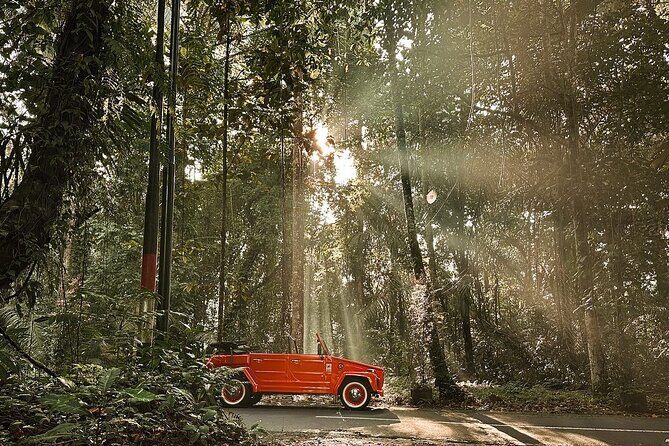
Can I cancel for a full refund?

Yes. Free cancellation is available, and you can cancel up to 24 hours in advance for a full refund. If you cancel less than 24 hours before the start time, the amount paid is not refunded.