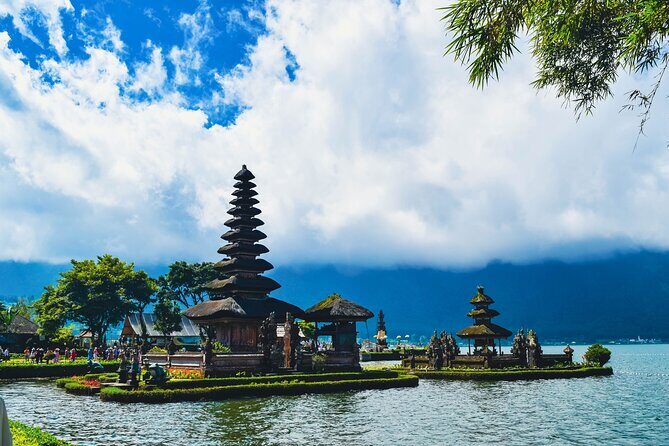
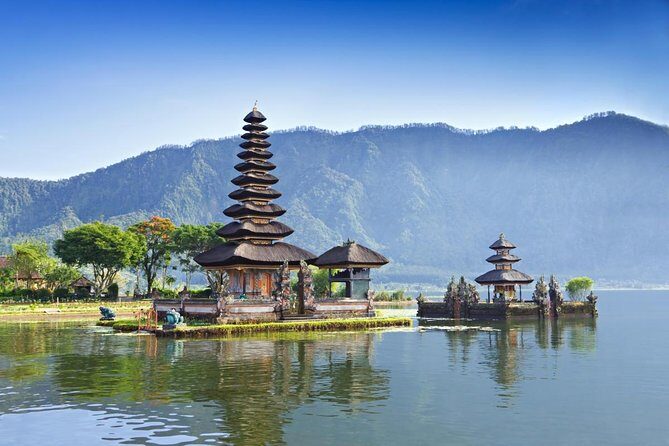
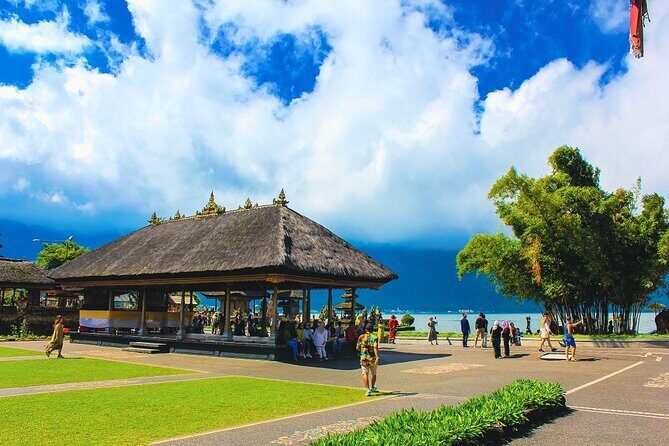
Ubud Sightseeing, Holy Water Temple & Waterfall

Ubud Sightseeing, Holy Water Temple & Waterfall - Private driver route: how you fit Tirta Empul, Tegenungan, and rice terraces in 5–7 hours

Ubud days can turn into a blur. This one is designed as a private route that threads together temples, waterfalls, rice terraces, and a coffee-farm photo stop in about 5–7 hours. I like that it includes pickup and drop-off from your Ubud accommodation, so you spend less time figuring out transport and more time enjoying the stops.

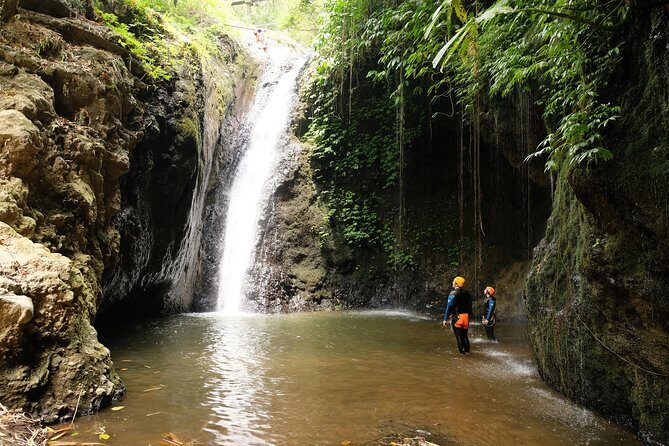
My favorite part is the mix: you get the visual punch of Tegenungan Waterfall and Tegalalang Rice Terrace, then you slow down for Tirta Empul, a working ritual site. The one thing to plan around is that entrance fees and lunch aren’t included, so your final budget will be slightly more than the $40 tour price.

Private driver, gentle pacing, and a route you can tweak
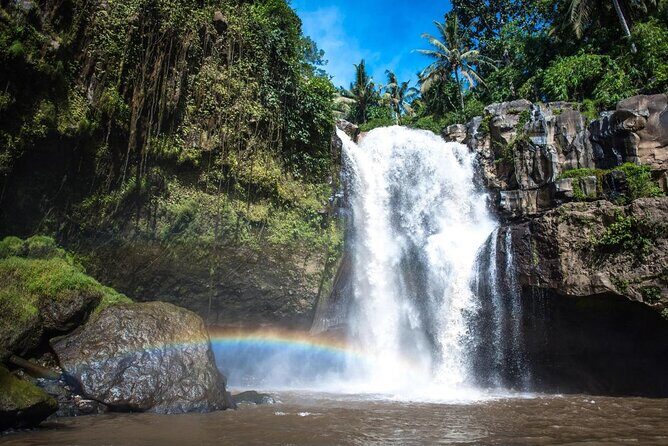
Ubud Sightseeing, Holy Water Temple & Waterfall - Private driver, gentle pacing, and a route you can tweak
Because you’re traveling with a private driver, the day doesn’t feel like a cattle-car sightseeing shuffle. Your host is listed as Agus Indrawan, and the best value here is the flexibility: if timing or traffic would make one photo spot easier, you can usually adjust a little during the day rather than sticking to a rigid script.

You’ll start between 07:00 and 08:00, then hit five key experiences across central-southern Ubud. It’s a lot for one day, but it’s also a smart way to sample Bali’s culture and scenery without overplanning.

Key highlights that make this tour worth it
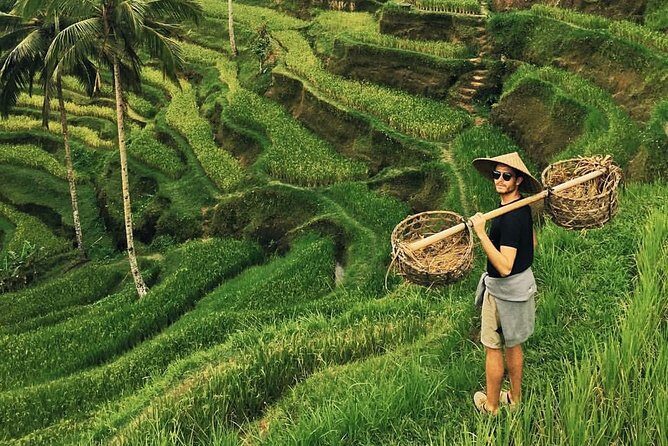
Ubud Sightseeing, Holy Water Temple & Waterfall - Key highlights that make this tour worth it

  • Private driver logistics mean less stress and more time at viewpoints
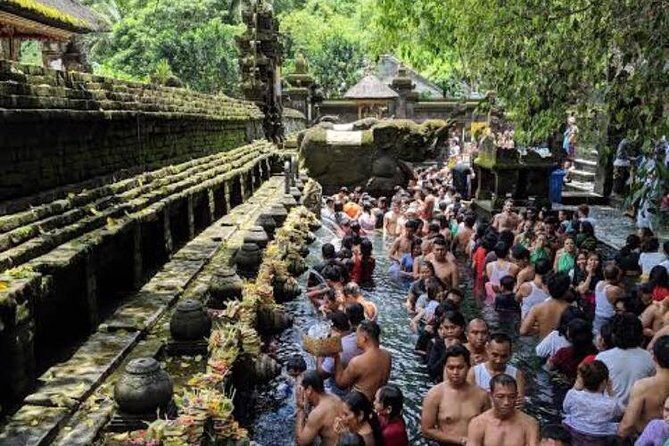
  • Tirta Empul brings you to a famous holy water cleansing temple
  • Coffee farm stop at Kumulilir includes tastings and a jungle swing photo moment
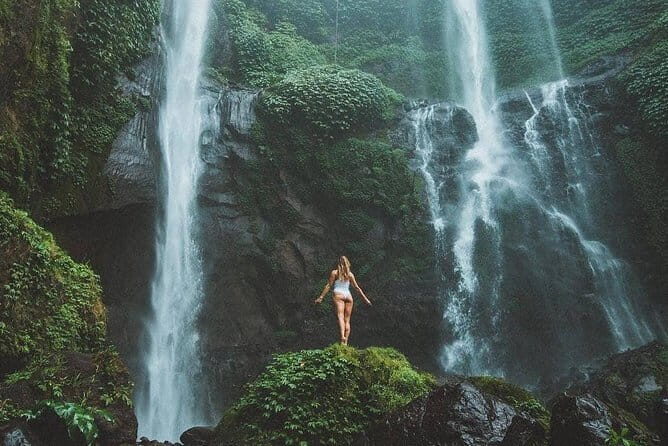
  • Tegenungan Waterfall delivers big scenery in a single hour break
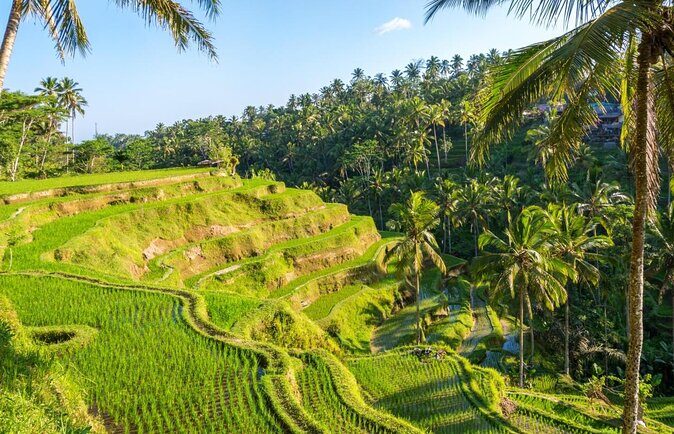
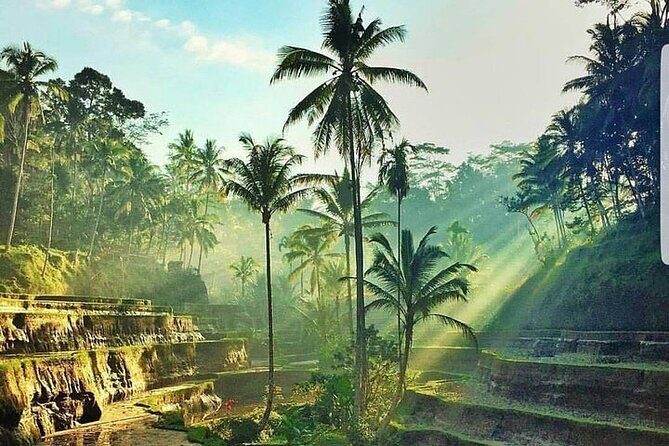
  • Tegalalang Rice Terrace gives you a classic Ubud view with time to wander

Private driver route: how you fit Tirta Empul, Tegenungan, and rice terraces in 5–7 hours
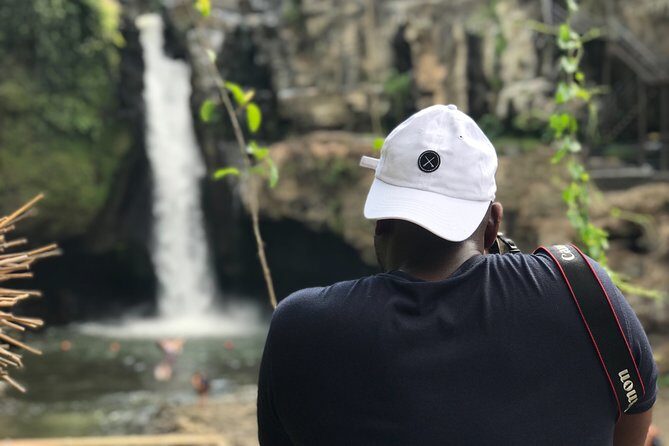
Ubud Sightseeing, Holy Water Temple & Waterfall - Private driver route: how you fit Tirta Empul, Tegenungan, and rice terraces in 5–7 hours
This is a classic “Ubud in one day” approach, built around a simple idea: group a handful of standout places into one efficient loop. You’ll begin with pickup inside the Ubud area and end back where you started, which matters because Ubud traffic and short distances can still eat time.

The schedule is paced with about one hour per stop, which sounds quick until you remember how these places work. Waterfalls, temples, and rice terraces each have their own rhythm—walk time, photo time, and a little downtime to cool off. With a private driver, you’re not stuck waiting for everyone else’s gate tickets and snack runs.

For you, the practical advantage is control. You can take the day at a comfortable walking pace, ask questions about what you’re seeing, and move on when you’re ready. For many visitors, that’s the difference between a day that feels rushed and one that actually lands.

Dewa Putu Toris artisan art stop: a creative start before the scenery
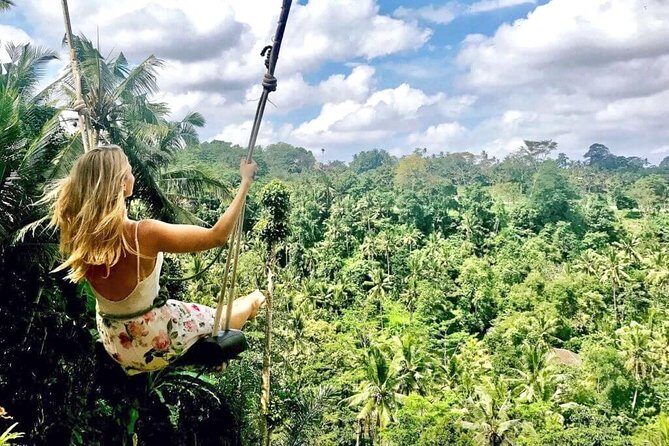
Ubud Sightseeing, Holy Water Temple & Waterfall - Dewa Putu Toris artisan art stop: a creative start before the scenery
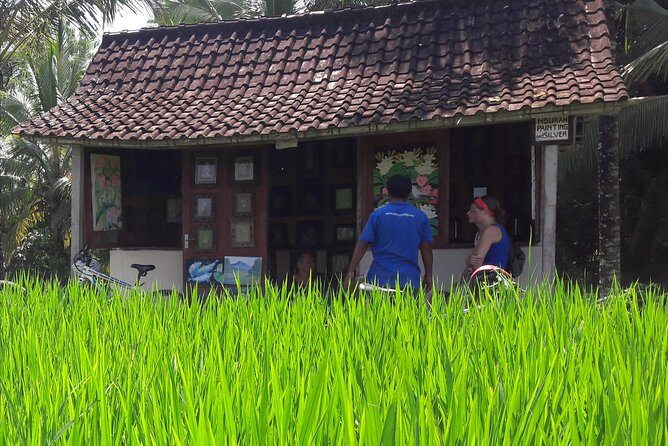
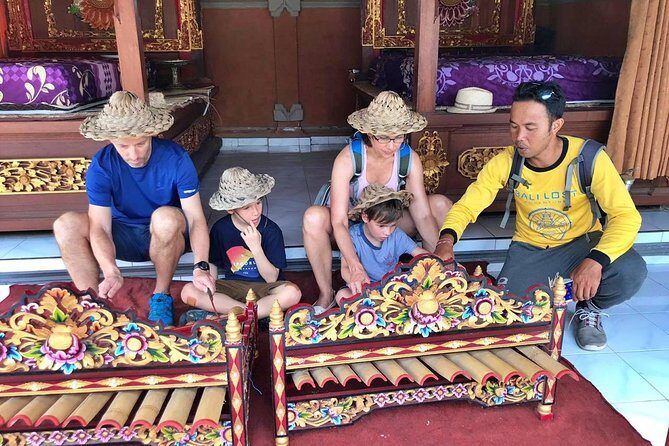
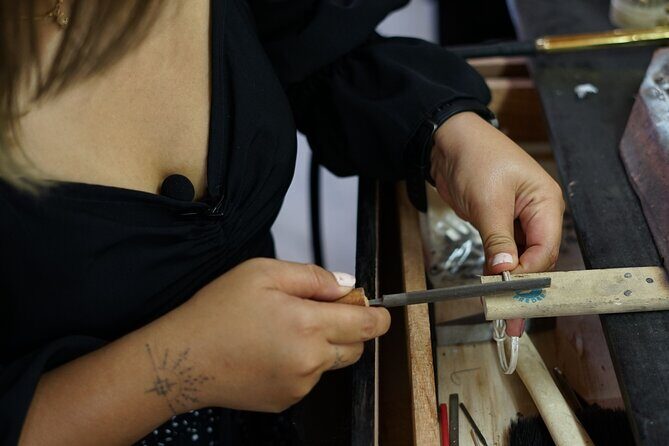
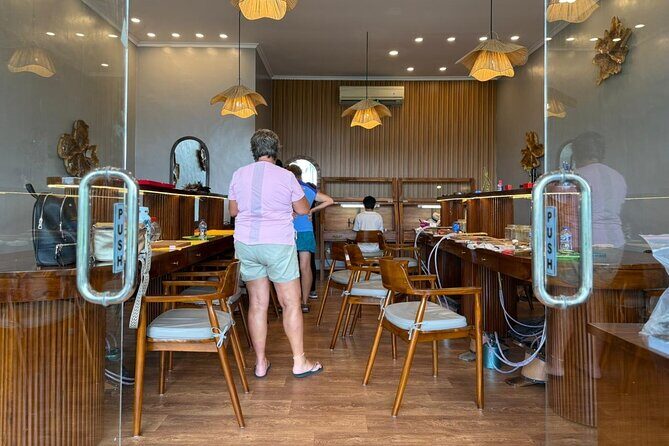
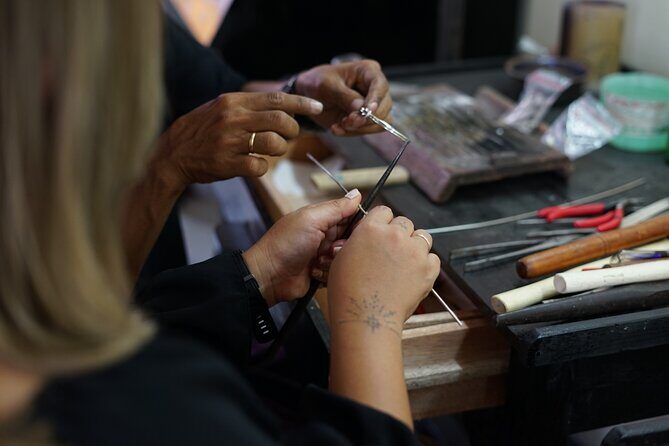
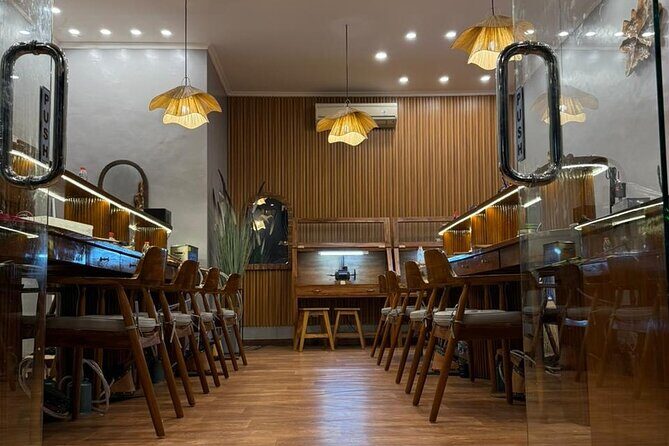
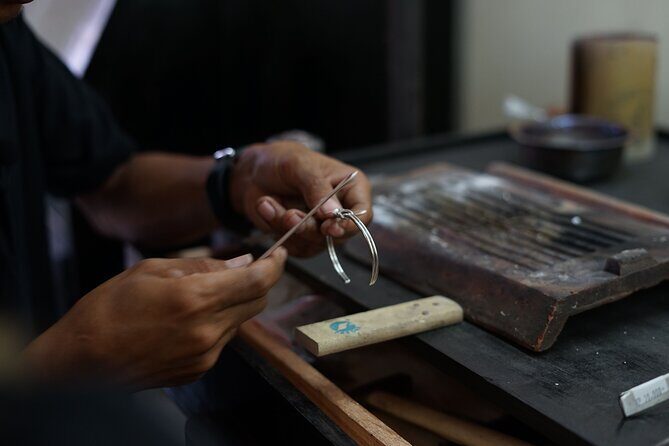
The morning begins at Dewa Putu Toris, focused on artisan art painting and local craftsmanship. The description highlights seeing the talents of around 200 artisans in Ubud, so this isn’t just a single artist booth—it’s framed as a larger creative community display.

Why this stop works: it gives context before you hit the temples and landscapes (literal views, plus cultural meaning). You’ll have about an hour here, and it’s a good moment to slow down, look closely, and understand how Ubud’s creative side connects to everyday life.

Potential drawback: if you’re not interested in art demonstrations or shop-style stops, it can feel like a pause between the bigger wow-moments. If that’s your style, treat it as a quick visual warm-up rather than a must-buy stop.

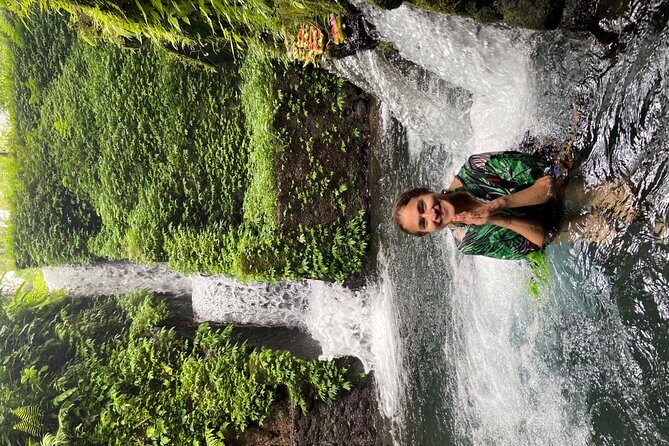
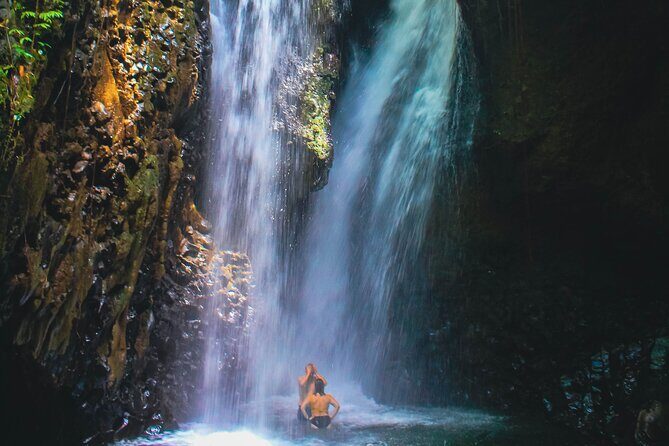
Tegenungan Waterfall: the photo-ready break with one-hour breathing room

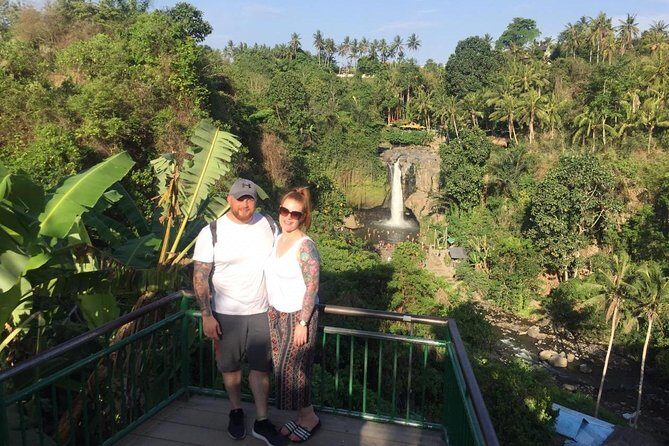
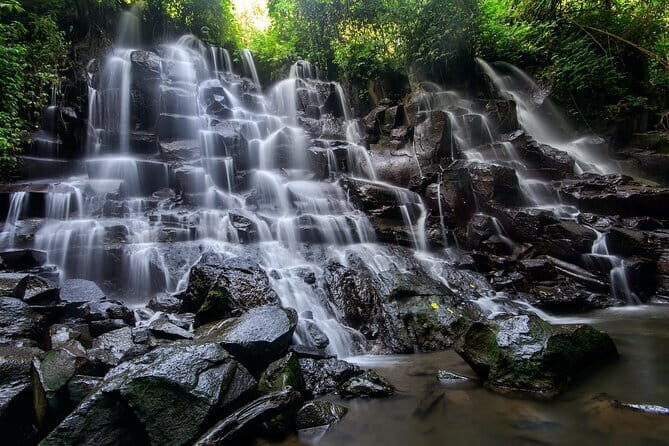
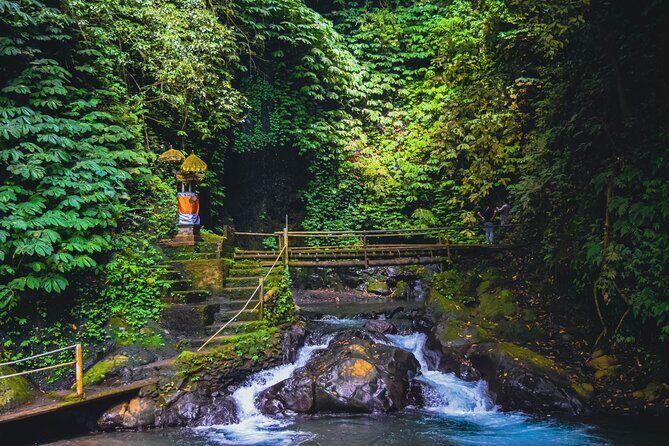
Next up is Tegenungan Waterfall, in the southern Ubud area. You’ll get about an hour here to enjoy the views and take photos, with the day’s pace still under control because your driver handles the transitions.

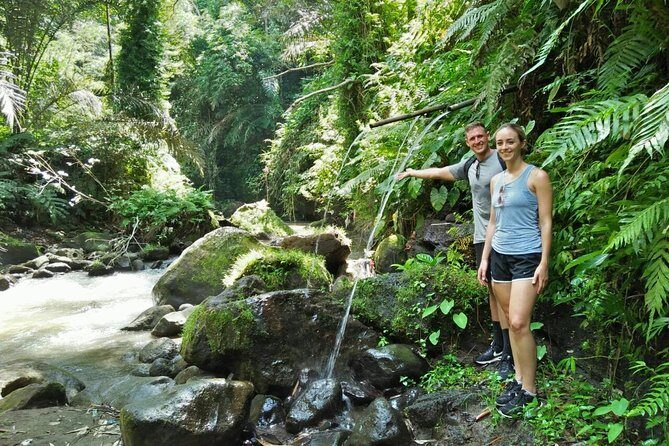
What to expect: waterfalls are one of those places where conditions change fast. You may get better sightlines at different angles depending on where you stand, and water activity can make paths feel slippery. This is a place where your best strategy is to get a few key photos early, then explore the surroundings for alternate viewpoints.

Value for money: even with entrance fees not included, this is one of the stops that justifies the entire tour concept. It’s visually dramatic and requires less explanation than a temple, so you feel the payoff quickly.

Tirta Empul Temple: visiting the holy water cleansing site respectfully
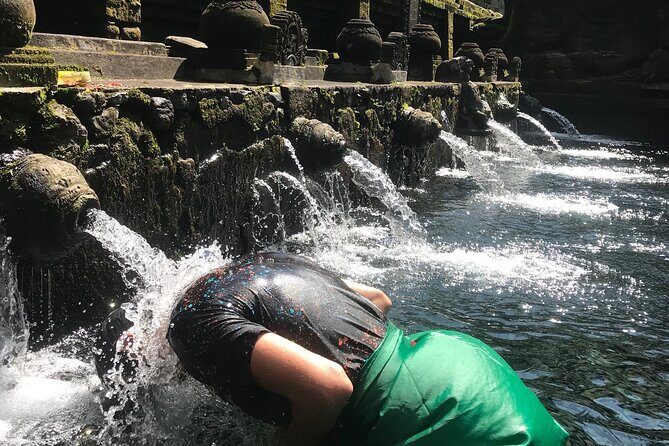
Ubud Sightseeing, Holy Water Temple & Waterfall - Tirta Empul Temple: visiting the holy water cleansing site respectfully
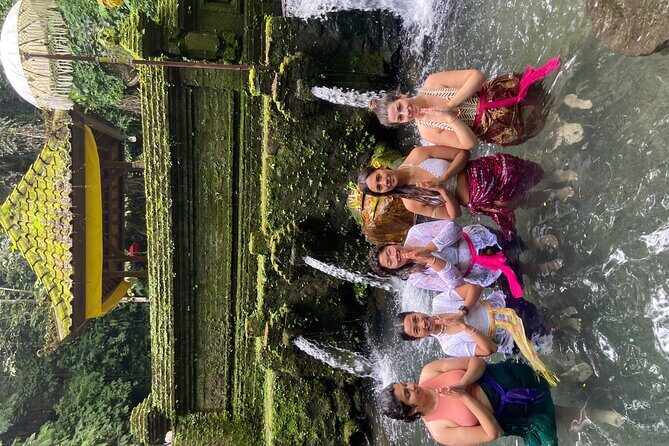
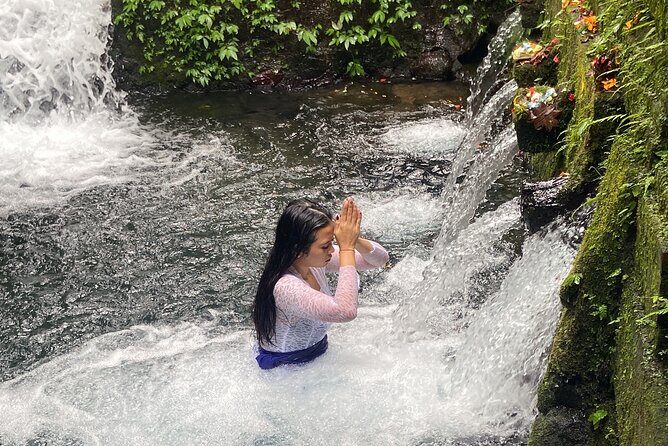
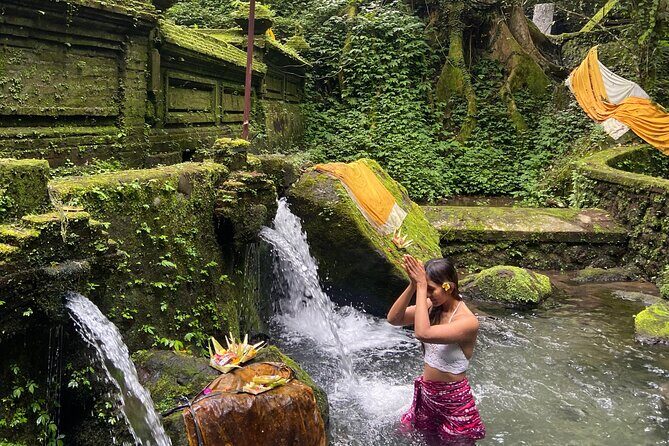
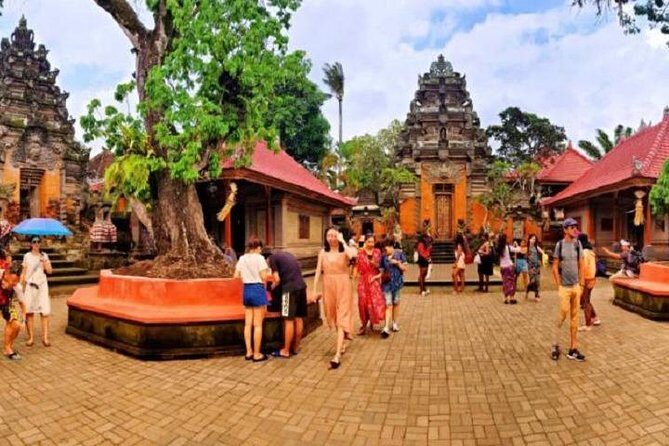
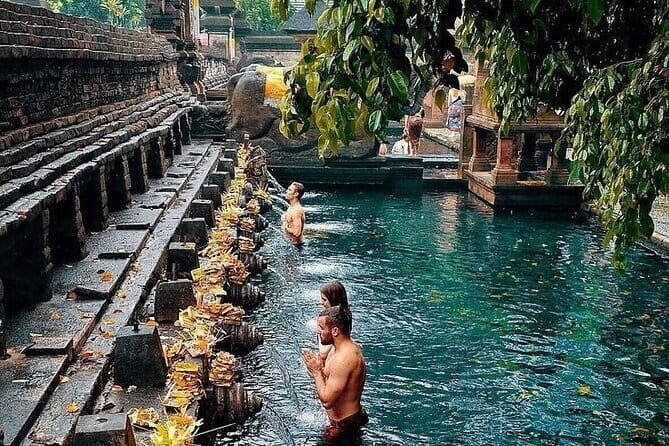
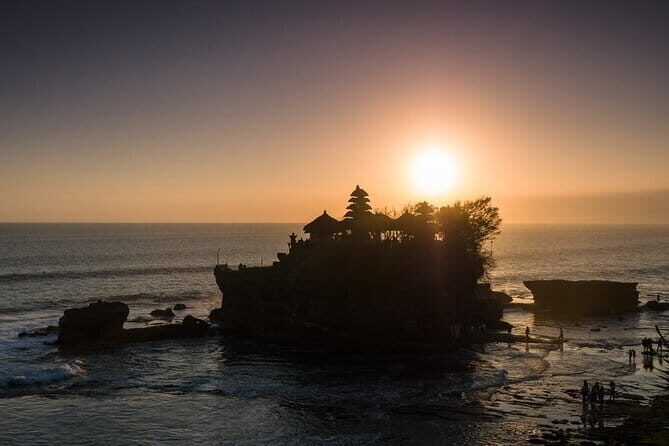
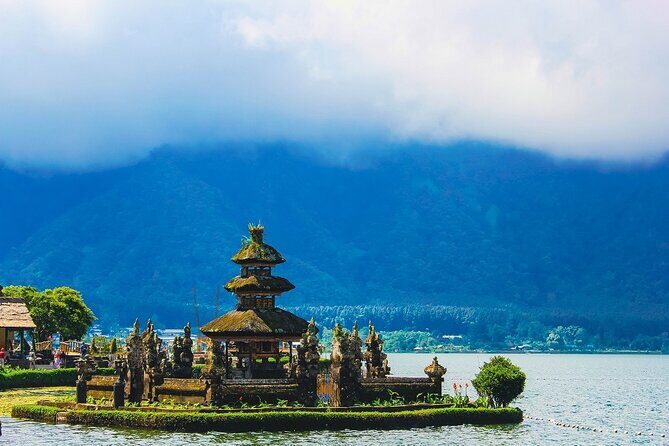
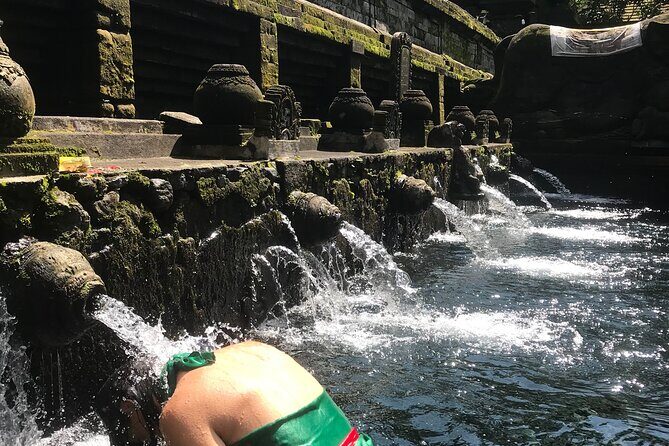
Tirta Empul Temple (in Tampak Siring village) is the cultural anchor of the day. The description calls it one of the most ritual cleansing temples, and that’s the key. This isn’t just a scenic monument—it’s a living religious site where people come for purification.

You’ll have about an hour here. That’s enough time to appreciate the setting, observe the ritual spaces from appropriate areas, and understand why the temple is famous for cleansing holy water. The biggest practical tip is mindset: treat this as a place of worship first. Move calmly, follow signage and staff guidance, and keep an eye on where you’re allowed to stand and take photos.

Possible drawback: because it’s a ritual site, you may feel like you’re learning mostly through observation rather than a guided explanation. If you want more context, ask your driver questions on the way there. A good private driver can help you connect the dots between what you see and what it means.

Kumulilir coffee and tea tasting plus the jungle swing photo moment
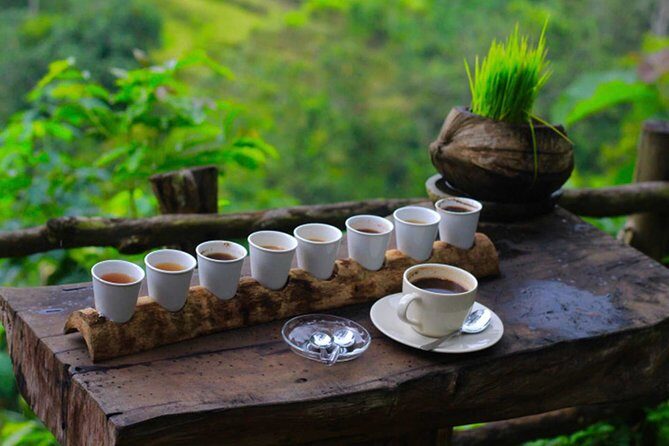
Ubud Sightseeing, Holy Water Temple & Waterfall - Kumulilir coffee and tea tasting plus the jungle swing photo moment
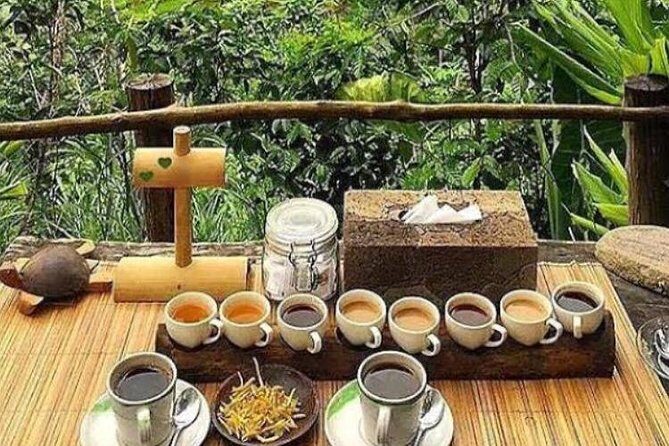
After temples, the day shifts to the senses at Kumulilir. This is a coffee farm stop focused on tastings from coffee and tea. The tour overview also mentions a jungle swing, so you can expect a playful photo opportunity alongside sampling.

You’ll likely have about an hour here. That’s a reasonable amount of time: long enough to try a few tastings and enjoy the view, but short enough that you don’t lose the momentum of the day.

How to get the most out of this stop:

  • Approach tastings like a guided experiment. Try what’s offered and compare flavors rather than just grabbing a single drink.
  • Use the jungle swing area for photos early, before the crowd energy builds around peak timing.

Budget note: entrance fees are not included, so if Kumulilir charges separately, that will be on your tab. Still, the value is in the combination—coffee/tea tasting plus a fun, Bali-style photo moment.

Tegalalang Rice Terrace: classic Ubud views with time to wander

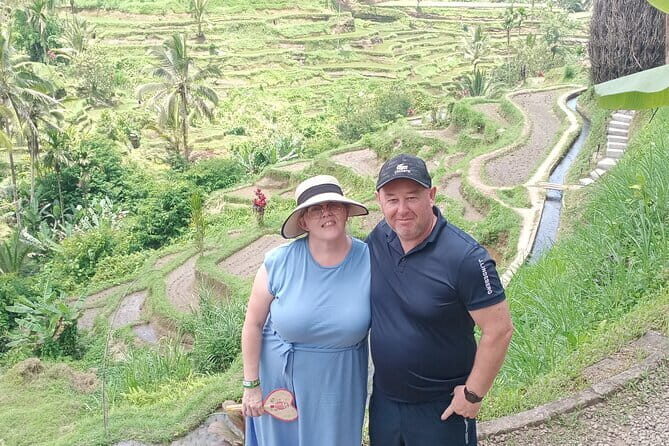
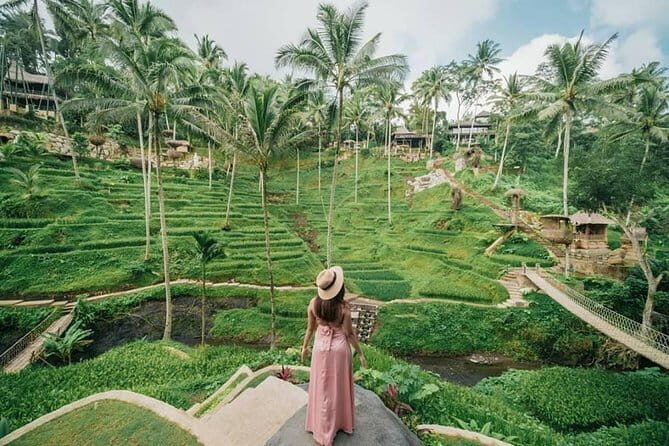
Then you reach Tegalalang Rice Terrace in Tegalalang village. This is one of Ubud’s most recognizable views, and you’ll have about an hour here to take in what makes the terraces famous and unique.

What I like about this stop in a day-tour format: rice terraces reward a slow approach. Even within an hour, you can walk to different viewpoints and find angles that show depth and layers rather than just a flat postcard view.

Practical consideration: rice terrace paths can be uneven and muddy after rain. Wear shoes that give grip, and keep your phone-handling smooth so you don’t slip while trying to frame the perfect shot.

Finishing back in Ubud: making the day feel like a complete circuit
Ubud Sightseeing, Holy Water Temple & Waterfall - Finishing back in Ubud: making the day feel like a complete circuit
The tour loops back to Ubud afterward, aiming to complete everything with a start time between 07:00 and 08:00. The phrasing about visiting the combined destination around central Bali suggests you’re getting a broad central Ubud sampling rather than just one neighborhood.

This matters because it helps you leave the day with a balanced set of memories: at least one big nature moment, one major cultural site, and one signature Ubud view. Instead of “temples only” or “waterfall only,” you get variety without changing hotels or planning a second full day.

Price and logistics: what the $40 covers (and what costs extra)

At $40 per person, this is positioned as an affordable way to cover multiple famous stops with a private driver. The included items are the big value drivers: pickup from the Ubud area, private tour service, and mineral water supply.

Here’s what you should mentally budget on top:

  • Entrance fees are not included. That means Tirta Empul, Tegenungan Waterfall, and rice terraces (and possibly the coffee/art stops) may each have their own ticket costs.
  • Lunch isn’t included. Plan a meal stop of your own or eat near one of the areas after the main sightseeing ends.
  • If you’re out of the Ubud area, there’s an extra $10 per car charge.

Also worth noting:

  • You’ll use a mobile ticket.
  • Confirmation is received at the time of booking.
  • This is a private tour/activity, meaning only your group participates (so you’re not joining random strangers for “public tour vibes”).

Is $40 still a good deal with entrance fees extra? Usually yes, because your biggest cost saver is the private driver covering multiple stops in one day. Entrance tickets might be the difference between “cheap” and “normal,” but private transport makes the whole day practical.

How to plan your day so it doesn’t feel rushed

Because this is a 5–7 hour day with multiple one-hour stops, your success plan is simple: show up ready. Start with a little patience and smart basics.

Do these and you’ll be happier:

  • Eat a light breakfast before pickup so you don’t feel snack-cranky during the temple or rice terrace portion.
  • Bring water (you get mineral water, but extra is helpful if you run warm).
  • Wear shoes with grip for uneven ground at the waterfall and terraces.
  • Bring something to protect from sun, because outdoor time stacks up fast.

If you prefer a more laid-back pace, tell your driver early that you’d rather linger at one scenic stop and shorten another. The private setup is there for that kind of adjustment.

Who this tour is best for

This Ubud day tour is a strong fit if you want:

  • A private way to see the biggest Ubud highlights without renting a scooter
  • The culture-meets-nature mix of Tirta Empul, Tegenungan Waterfall, and Tegalalang Rice Terrace
  • A photo-friendly coffee farm moment at Kumulilir

It’s also a good option if you’re traveling with people who dislike changing plans constantly. Because you’re on one loop, you can keep your schedule stable.

It may not be ideal if you hate temple visits, don’t enjoy art/coffee stops, or want a slower, single-area day with long wandering time. This is designed for coverage.

Should you book this Ubud sightseeing, Holy Water Temple & Waterfall tour?

I’d book it if your goal is a high-value, first-time Ubud day that hits multiple famous places without logistical headaches. The private driver + pickup/drop-off setup makes the day feel doable, and the itinerary mix keeps it from becoming one-note tourism.

I’d think twice if you’re sensitive to extra costs, since entrance fees and lunch are on you. Also, if you want a very deep cultural experience with lots of formal explanation at each stop, you’ll need to rely on questions and on-the-fly conversation rather than expecting that every location will be fully interpreted for you.

Bottom line: for a single day in Ubud, this is a practical way to see the headline sites—while still having enough time to enjoy them, not just pass through.

FAQ

Is pickup and drop-off included?

Yes. The tour includes pickup and drop-off from your accommodation in the Ubud area.

How long is the tour?

The duration is about 5 to 7 hours.

Are entrance fees included?

No. Entrance fees are not included.

What about lunch?

Lunch isn’t included.

Do I need to buy a separate ticket?

You’ll receive a mobile ticket, but entrance tickets are not included in the tour price.

What if my group is only one person?

If you’re the only person, you may be asked to join with someone else. If not, there can be an extra 250K charge.

What if I cancel?

You can cancel for free up to 24 hours in advance for a full refund. If the minimum traveler number isn’t met, the experience may be canceled and you’ll be offered a different date/experience or a full refund.

Ubud Shamanic Healing and Purification Ceremony

Ubud Shamanic Healing and Purification Ceremony - Pura Mengening and the melukat pools: holy water, cool springs, and offerings

A ceremony, a spring, and a reset. This Ubud experience pairs a traditional balian healer with a holy-water purification at Pura Mengening, so you get both spiritual context and specific, hands-on steps. I like the structure—about an hour with the healer, then about an hour at the temple pools—and I like that the price includes transport and entry fees. One real consideration: Mengening Temple involves stairs, so if you have mobility limits, plan carefully.

The appeal here is balance. You’re not just looking at temples from the outside; you’re guided through making offerings and doing self-cleaning in cool, clear spring water, at a site described as less crowded than other purification temples in the area. And when your driver-guide is on point (one recent group had a guide named Tude), the whole day feels smooth and understandable rather than mysterious or confusing.

Key things to know before you go

Ubud Shamanic Healing and Purification Ceremony - Key things to know before you go

  • Two focused stops: shamanic healing in Ubud, then melukat purification at Pura Mengening
  • Less-crowded purification: Mengening Temple is promoted as quieter than alternatives nearby
  • Real temple ritual basics: you’ll make offerings and bathe in the sacred spring pool
  • Included entry and transport: private transportation plus tickets and bottled water
  • Stairs are part of the deal: the temple route can be challenging for some people

Healing with a balian in Ubud: what that first hour really is

Ubud Shamanic Healing and Purification Ceremony - Healing with a balian in Ubud: what that first hour really is
The day starts in Ubud with a shamanic healing session led by a traditional healer, known as a balian. This form of healing is rooted in Balinese spiritual belief, mixing elements of animism and Hindu influence with traditional medicinal ideas. In plain terms, it’s a cultural way of addressing imbalance—sometimes mental, sometimes physical—using ritual, prayer, and healing practices tied to the spirit world.

What’s likely to happen in that first stop is a guided ritual format. The description of the process points to a few common elements: prayers and ceremony, possible herbal remedies, and the use of symbolic tools like talismans or crystals. Some healers may also use trance-like states through chanting or meditation, but you should think of that as something the balian may do rather than a guaranteed script for everyone.

Also note the pacing. This stop is about an hour, and the admission ticket is listed as free for this part. That matters because it helps set expectations: you’re not committing to a day-long healing ceremony with no breaks. It’s a concentrated introduction that can feel powerful precisely because it stays focused.

From a practical standpoint, your biggest job is to show up with an open mind and a calm body. If you’re unsure what to do, this tour is set up with transportation and guidance, and the experience is designed so you aren’t stuck trying to figure out the logistics alone. If you’ve ever worried about whether you’re doing a ritual the right way, that’s the value of having a local helper with you.

Pura Mengening and the melukat pools: holy water, cool springs, and offerings

Ubud Shamanic Healing and Purification Ceremony - Pura Mengening and the melukat pools: holy water, cool springs, and offerings
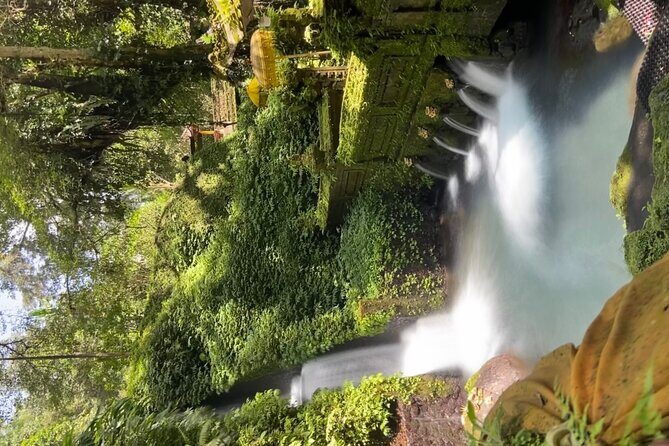
After Ubud, the day moves to Pura Mengening (also spelled Pura Mengening), in the village of Saraseda, Tampaksiring, Gianyar regency. This temple is described as having natural scenery and a notably cool atmosphere—something you’ll appreciate once you’re standing near the spring pools.

Here’s the core purpose: melukat. That’s the self-cleaning ritual using holy water, and it’s also the place where people request tirtha, meaning holy water used for Hindu ceremonies. In other words, this isn’t just a tourist photo stop. The temple is operating as a living spiritual site.

Inside the purification area, there’s a pool for self-cleaning, split into two sections: one for women’s bathing and one separate pool for men. The water is described as cool and clear. It’s also tied to history, with springs said to have existed since the 11th century.

Before you enter the bath pool, you’re expected to present canang and incense, then bathe and pray for coolness—physically and spiritually. That’s the rhythm to keep in your mind: offering first, then water, then a short prayer moment.

One subtle but important detail: canang and incense are mentioned as expected items. The tour description doesn’t say they’re provided, so don’t assume they’re included. If you want to avoid awkwardness, ask in advance what you need to bring for offerings, or whether your guide provides them as part of your ritual setup.

Another plus for your peace of mind: Mengening Temple is promoted as less crowded than other purification temples in the area. If you’re sensitive to crowds or noise, that quiet factor can make a big difference in how meaningful the bathing portion feels.

The stair reality at Mengening Temple (and how to plan for it)

Ubud Shamanic Healing and Purification Ceremony - The stair reality at Mengening Temple (and how to plan for it)
One review highlighted a tough point: the second part of the experience involved a lot of stairs up and down, which was extremely difficult for an older person with a slight disability. That’s not a small footnote. It’s a real factor you should take seriously.

So here’s what I’d do if I were planning your day:

  • Wear shoes with good grip. Even if it looks dry, temple areas can be slick near water.
  • Move slowly and plan extra time for footing.
  • If you have any mobility concerns, consider whether you can handle repeated stair sections.

The good news is that the tour includes private transportation, bottled water, and a guide/driver who should help keep the day organized. But transportation doesn’t erase the fact that you still have to walk those steps once you’re at the temple.

If you’re deciding between this and another purification option, ask yourself a simple question: can you comfortably manage stairs in a cool, temple-like environment where you’ll be going up and down at least a few times? If the answer is uncertain, it’s worth reaching out to the operator before booking.

Price and value: why $50 can make sense for this kind of morning

Ubud Shamanic Healing and Purification Ceremony - Price and value: why $50 can make sense for this kind of morning
At $50 per person, this isn’t a “cheap add-on,” but it also isn’t a luxury spa price. The value comes from what’s included: private transportation, bottled water, entrance fees/tickets, and a structured two-stop experience.

For many people, the biggest cost isn’t just the price tag—it’s the hassle factor. If you tried to piece this together on your own, you’d be paying for transport anyway, and you’d also need to find the right place for the melukat and learn what’s expected at the pools. This tour wraps those pieces together with a local-style approach and tickets already handled.

There’s also a practical timing angle. The tour starts at 8:30 am, when Ubud is often less busy and the day can feel calmer. That makes it easier to stay focused through the ritual steps rather than spending the morning stuck in traffic or searching for the right entrance.

What’s not included is lunch. So you’ll want a plan for food either before you go (if you can manage it) or after you finish around mid-day. Bringing a snack might help if you tend to get hungry, but don’t treat the day as a full “breakfast-to-dinner” package.

A smooth 8:30 a.m. start in Ubud: the day’s rhythm

Ubud Shamanic Healing and Purification Ceremony - A smooth 8:30 a.m. start in Ubud: the day’s rhythm
This experience begins at 8:30 am in Ubud, and it ends back at the meeting point. Duration is listed broadly—about 1 to 10 hours—which likely reflects how long the healing process and bathing preparation take for each group.

The timing is part of why this works. Starting early keeps the temple visit from feeling rushed, and it gives you a better chance of enjoying the cool temple setting. It also helps if your group wants the rest of the day open afterward for Ubud wandering, cafés, or a slower sunset plan.

Also, this is set up as a private tour/activity for your group only. That means you’re not getting pulled around behind strangers, and it can make ritual-based experiences feel more respectful. If you want to ask questions, take your time, or simply keep a quieter pace, private format helps.

If your group is the type that likes clear communication, you’ll probably appreciate how the guide/driver can keep things comfortable and understandable. One group specifically noted that their driver-guide, Tude, was conversational and very informative, and made sure they knew exactly what they were doing.

Respectful etiquette for offerings and temple bathing

This is one of those days where showing respect matters as much as showing up. The ceremony isn’t complicated, but it is serious to the people who use the site.

Here’s what you can do to keep things respectful and low-stress:

  • Treat the melukat pool as a ritual space, not a sightseeing platform.
  • Expect separation between women’s and men’s bathing pools and follow the directions you’re given.
  • Be ready to present canang and incense before bathing, then pray for coolness as described.

Because the offering steps are explicitly mentioned, don’t come in assuming you can improvise. If you’re unsure about what canang is or how incense is used here, ask your guide before you start the temple portion. The goal is to participate without turning it into a performance for your own curiosity.

Also remember: you’re dealing with cool spring water. Dress with practicality in mind—something you can change into and out of without turning your day into a wardrobe disaster.

Who should book this shamanic healing and purification ceremony?

This tour fits best if you want a structured, spiritual experience in Ubud that includes real participation. It’s also a good choice if you prefer fewer crowds and you like the idea of combining two different parts of Balinese tradition: a balian healing session and a holy-water melukat at a spring temple.

Book it if:

  • You’re interested in Balinese spirituality and want a guided way to participate.
  • Your group values a private setup and clear guidance through the ritual steps.
  • You’d rather do one well-planned morning than piece together multiple stops on your own.

Be cautious if:

  • You have difficulty with stairs or frequent up-and-down walking. Mengening Temple can involve a lot of steps.
  • You’re expecting a relaxed, minimal-walking “easy” day. It’s more active than it sounds.
  • You want lunch included. You’ll need to handle food separately.

One more thought: this experience is promoted for “most travelers,” but “most” doesn’t mean “all.” I’d treat it as a moderate activity level due to the temple steps and the physical realities of bathing.

Should you book Ubud Shamanic Healing and Purification Ceremony?

If your goal is a morning that feels culturally grounded—half spiritual healing, half holy-water purification—and you’re okay with stairs, I think it’s a strong booking. The combination of private transport, included entry, and a clear two-stop flow makes it good value for the type of access you’re seeking. The high rating (4.9) and the fact that 97% recommend it also suggest most people leave feeling the day delivered what they came for.

But make your call based on your body and your expectations. If stairs are a deal-breaker, look for an alternative with less walking. If you can handle steps and you want to take part respectfully, this is the kind of Ubud experience that can stick with you because you’re not just watching—you’re participating in the ritual at the spring itself.

FAQ

Where is the tour located?

It takes place in Ubud, Bali, with the healing session in Ubud and the purification blessing at Pura Mengening in Tampaksiring (Gianyar regency).

How much does it cost?

The price is $50.00 per person.

How long is the experience?

Duration is listed as approximately 1 to 10 hours, depending on how the day’s activities go.

What time does the tour start?

The start time is 8:30 am.

Is this a private tour?

Yes. It’s described as private, with only your group participating.

Is pickup included?

Pickup is offered, and transportation is included as private transportation.

What is included in the price?

The tour includes private transportation, bottled water, and entrance fees/tickets.

What isn’t included?

Lunch is not included.

What happens at Pura Mengening?

It’s a place for melukat (self-cleaning with holy water) and for requesting tirtha (holy water for ceremonies). The pool area includes a bath pool divided into women’s and men’s sections, and you’re expected to present canang and incense before bathing and prayer.

Does the tour depend on weather?

Yes. The experience requires good weather. If it’s canceled due to poor weather, you’ll be offered a different date or a full refund.
Bali Blue Lagoon Snorkeling Tour All Inclusive

Bali Blue Lagoon Snorkeling Tour All Inclusive - Hotel pickup and getting to the boat on time

That water comes with a mission. This all-inclusive Bali snorkeling day is built around two major stops in Padangbai, so you get more than one reef scene without organizing transport, gear, or timing yourself.

I like that hotel pickup is part of the deal for many areas (Seminyak, Canggu, Ubud, Denpasar, and more). I also love the way the guide works the day for you, with real instruction and extra attention to what you should look for underwater.

One thing to keep in mind: conditions can include a strong current, so if you’re new, you’ll want to pay close attention to the safety demo and how the guide tells you to swim.

Key things I’d clock before you go

Bali Blue Lagoon Snorkeling Tour All Inclusive - Key things I’d clock before you go

  • Two snorkel spots in one trip: Blue Lagoon plus Tanjung Jepun from the same base in Padangbai
  • Pro instruction to improve your odds: the guide actively helps you spot fish and marine life
  • Lunch is included: you eat after snorkeling, not on some random schedule
  • Pickup covers many Bali beach areas: Ubud, Canggu, Seminyak, Denpasar, Legian, Kuta, Jimbaran, Sanur, Nusa Dua
  • Smallish group size: capped at 50 travelers, so it stays organized
  • Current can be strong: plan to follow the guide’s guidance, especially as a first-timer

Why Padangbai is set up for a smooth snorkeling day

Bali Blue Lagoon Snorkeling Tour All Inclusive - Why Padangbai is set up for a smooth snorkeling day
Padangbai is the launch point for this tour’s two-water plan: Blue Lagoon and Tanjung Jepun. That matters because good snorkeling in Bali often means travel logistics, and this format reduces the headache. You’re driven to Padangbai, then you board a traditional boat for the water time, which keeps the day from turning into a patchwork of taxis and waiting around.

What I like is the balance of “wow reef” and “practice-friendly” conditions. Blue Lagoon is the headline reef experience, while Tanjung Jepun is described as calm, which is exactly what you want when you’re still figuring out buoyancy and mask comfort.

The tour also builds in time to do this without rushing. The whole day runs about 6 hours, including pickup and return, so you’re not stuck on the move from morning to night.

Hotel pickup and getting to the boat on time

Bali Blue Lagoon Snorkeling Tour All Inclusive - Hotel pickup and getting to the boat on time
Pickup is one of the biggest value adds here. If you’re staying in the covered areas, you skip the figuring-out part and show up ready to snorkel. The covered pickup list includes Ubud, Canggu, Denpasar, Legian, Kuta, Jimbaran, Nusa Dua, Sanur, and Seminyak.

If your hotel is outside the pickup area, there’s an extra fee: IDR 300k. It’s not complicated, but it is one of those details worth checking before you book so you’re not surprised later.

Your meeting point is listed at Jalan Kayu Aya in Seminyak. Since pickup is offered for many hotels, this is mainly useful if you’re not in a pickup zone or you prefer to self-arrange. Either way, the activity ends back at the same meeting point.

I’d also mentally plan for a group vibe. With a maximum of 50 travelers, it’s not a tiny private charter, so you’ll move together and listen to the guide for the key moments.

Blue Lagoon snorkeling: coral reef, fish, and turtle odds

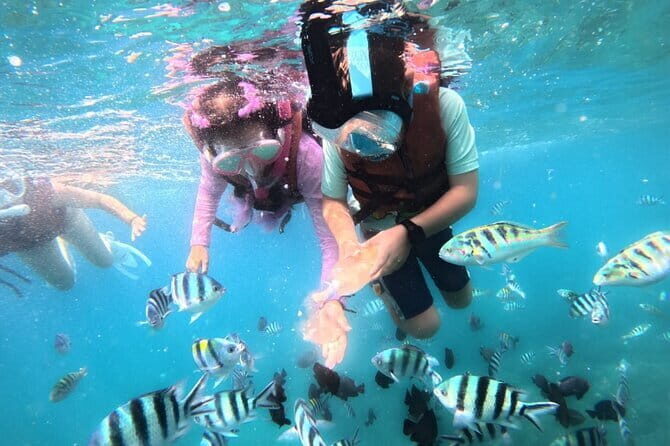
Blue Lagoon is the first underwater stop. The description is straightforward: you’re looking at coral reef and tropical fish, with a chance of seeing sea turtles and other marine life depending on conditions and luck.

I love this kind of setup because it gives you a clear target. You don’t need to be a marine biologist. You just need to snorkel well enough to stay calm, and the guide focuses on maximizing your chances of spotting wildlife.

Expect the water to feel lively around the reef. You’ll see things like angelfish and clownfish if conditions are right. The guide angle matters too: with a professional instructor at your side, you get better help on things like how to position yourself, how to breathe steadily, and how to avoid wasting energy in currents.

A small reality check: one review notes the ocean current can be strong, especially relevant for first-timers. That doesn’t mean you can’t go. It means you should treat the initial instruction seriously. Get your breathing under control, follow the guide’s cues, and don’t fight the water.

Tanjung Jepun snorkeling: a calmer second stop that builds confidence

Bali Blue Lagoon Snorkeling Tour All Inclusive - Tanjung Jepun snorkeling: a calmer second stop that builds confidence
After Blue Lagoon, the tour shifts to Tanjung Jepun. This is where the itinerary becomes beginner-friendly by design. Tanjung Jepun is described as having calm waters, plus lots of colorful fish.

This is smart because most people learn in layers. You go from “first snorkel” to “second snorkel,” and the second stop is a chance to relax and focus more on what you’re seeing than on how you’re keeping afloat.

If you’re new to snorkeling, Tanjung Jepun can be the moment where things click: the water is less demanding, you have time to settle into the rhythm, and you get more chances to enjoy fish watching without feeling like you’re constantly correcting your position.

And if you’re more experienced, it still makes sense. A calmer site means you can take in the reef environment and observe fish movement more comfortably, instead of spending all your energy adapting to rougher conditions.

What the pro instructor actually changes for you

Bali Blue Lagoon Snorkeling Tour All Inclusive - What the pro instructor actually changes for you
A guide can be the difference between a good snorkel and a frustrating one. This tour includes a professional instructor, and the goal is clear: maximize your chances of seeing marine life and make the experience work for both beginners and seasoned snorkelers.

In practical terms, that usually means:

  • A quick setup so you know how to use the gear correctly
  • Help spotting what to look for (fish types and reef patterns)
  • Ongoing guidance during the water time, especially if current changes

The tour description even calls out that the guide helps you spot marine life like turtles or sharks if luck and conditions line up. You should treat that as a possibility, not a guarantee, but the guide’s role is still real: they help you actually notice what’s around you.

One thing I’d take from the experience notes is the importance of the safety and technique demo for first-timers. If you want the best day, ask questions before you enter the water, and then follow the guide’s instructions to the letter. When current is strong, small adjustments make a big difference.

Also, don’t forget the human factor. One review praised a guide named Bayu for being friendly and even chatting during the ride. That doesn’t replace good snorkeling, but it does make the time between stops feel like part of the day, not downtime.

The boat ride, timing, and how to plan your comfort

Bali Blue Lagoon Snorkeling Tour All Inclusive - The boat ride, timing, and how to plan your comfort
You’ll ride a traditional boat from Padangbai between snorkeling spots. Boat time is typically when the group gets organized, and it’s also where the guide sets expectations for the water.

Some practical comforts:

  • Bring or use the provided essentials properly so you don’t spend your snorkeling time fixing straps
  • Listen when the guide talks about water movement and how to handle it
  • If you’re prone to cold or motion discomfort, plan accordingly since you’ll be on the water and in and out of the boat

A couple of reviews mention a comfortable ride and quick start. That’s what you want from a tour like this: less waiting, more water time.

And yes, photos come up too. One review notes photos can be taken if you arrange it. So if you want pictures, bring up the request calmly and early, before you’re already geared up and focused on the water.

Lunch after snorkeling: included, local, and actually useful

Bali Blue Lagoon Snorkeling Tour All Inclusive - Lunch after snorkeling: included, local, and actually useful
After you’ve done the snorkeling sessions, you sit down for lunch, which is included. Bottled water is also included, so you’re not scrambling for hydration at the end of the trip.

This isn’t just a perk. Eating after snorkeling is part of the value because you’ll be hungry, and you may not want to figure out a meal while everyone else is already moving on.

Lunch being local is what I’d expect from a tour that’s built for the day. It gives you something to recover with and keeps your schedule simple: snorkel, eat, head back.

Price and value: $42 all inclusive, and what that covers

Bali Blue Lagoon Snorkeling Tour All Inclusive - Price and value: $42 all inclusive, and what that covers
At $42 per person, this tour is in the category where you’re buying convenience as much as you’re buying snorkeling time. The included items are the key:

  • Hotel pickup for covered areas
  • Professional instructor guidance
  • Lunch
  • Bottled water

That combination is why the price can make sense. If you tried to self-arrange a day with transport to Padangbai, gear, a guide, boat access, and then food, it can quickly turn into more hassle than you want, and often costs more once you add up all pieces.

The only real “gotcha” is pickup outside the covered areas with the IDR 300k extra fee. If you’re inside the list, you’re in the sweet spot for value.

One more detail that affects value: group discounts and a mobile ticket are mentioned in the tour info. Even if you don’t think about it day-to-day, the structure tends to make it easier to coordinate without paperwork chaos.

Who this tour is best for

This is a strong pick if you want:

  • Two snorkeling sites in one organized day
  • Guided help that benefits beginners
  • A simple schedule with lunch included
  • Hotel pickup that removes transportation friction

It also fits well if you’re staying in Seminyak, Canggu, Sanur, Denpasar, Jimbaran, Nusa Dua, Kuta, Legian, or Ubud and want an all-in plan.

If you’re a first-timer, plan to treat the technique and current info as your top priority. Strong current is the one caution that shows up, and your best strategy is to follow the guide’s demo closely.

If you’re an experienced snorkeler, you may already know how to handle mask fit and breathing. In that case, you’ll probably enjoy how the day splits between a reef-focused stop and a calmer second stop, which is a good way to keep the experience comfortable.

Optional upgrade: adding two Ubud waterfalls

There’s an upgrade option to add visits to two Ubud waterfalls: Kanto Lampo and Tibumana. If you want your day to include more than water-and-fish, this is the pathway.

Just be aware that adding waterfalls changes the balance of time. You’ll trade some snorkeling-only focus for extra sightseeing. If you’re booking primarily for marine life, you might prefer the standard version so the day stays tight around the two snorkel sites.

Should you book Bali Blue Lagoon Snorkeling All Inclusive?

I’d book it if you want a well-structured snorkeling day with pickup, instructor guidance, and lunch included, especially if you’re staying in the Seminyak–Canggu–Ubud wider area. The two-stop format is the big win: Blue Lagoon for reef life, then Tanjung Jepun for a calmer second session.

Skip it or reconsider if you’re very worried about currents and you hate any possibility of strong water movement. It doesn’t sound like a deal-breaker for most people, but the current note matters, and you’ll need to be willing to follow the guide’s instructions.

If you’re aiming for an easy, organized Bali snorkeling outing with a pro keeping things on track, this one is a solid value at $42—and the guide-led attention to spotting marine life is the part that can turn a casual snorkel into a memorable one.

FAQ

How long is the snorkeling tour?

The experience runs about 1 day and 6 hours (approximately).

Where does the tour start and end?

It starts at Jalan Kayu Aya in Seminyak and ends back at the same meeting point.

Do they pick me up from my hotel?

Pickup is offered for select hotels in covered areas such as Ubud, Canggu, Denpasar, Legian, Kuta, Jimbaran, Nusa Dua, Sanur, and Seminyak.

What happens if my hotel is outside the pickup area?

Pickup outside the covered area is charged an additional fee of IDR 300k.

What’s included in the price?

The tour includes bottled water, lunch, a professional instructor, and pickup in the covered areas.

Which snorkeling spots are visited?

You snorkel at two locations in Padangbai: Blue Lagoon and Tanjung Jepun.

Are there limits on group size?

Yes. The maximum is 50 travelers.

Can I cancel for a full refund?

Yes. Free cancellation is available, and you can cancel up to 24 hours in advance for a full refund. If you cancel less than 24 hours before the start time, the amount paid is not refunded.

Ubud Eco Culture Cycling Exploration

Ubud Eco Culture Cycling Exploration - Meeting at Peliatan Soccer Field: The Easy Start

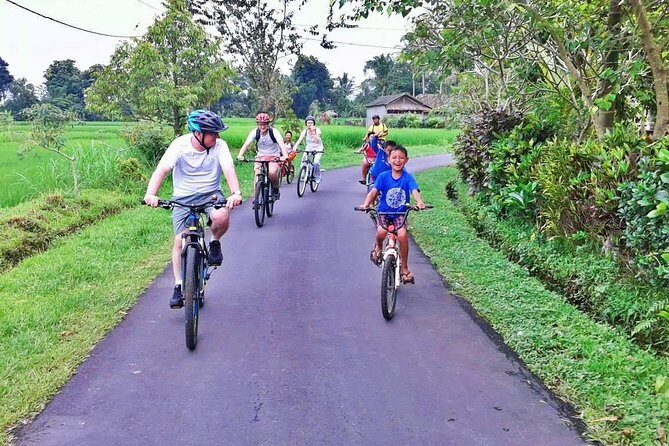
Ubud by bike is a shortcut to the real rhythm of Bali. You’ll pedal past Ubud Monkey Forest, then roll into quiet country lanes and rice fields where the day feels slower. I love that the route mixes town streets with out-of-the-way villages, and I love the frequent chances to stop for photos and refreshments. One thing to consider: there are some uphill stretches, so pick this if you’re comfortable getting a little breathless.

This is a small-group half-day ride (max 8), timed for a morning start. You’ll get all cycling equipment, young coconut water, bottled water, and snacks, and your guide keeps the route human and story-focused as you go.

Key Things That Make This Ride Worth Your Time

Ubud Eco Culture Cycling Exploration - Key Things That Make This Ride Worth Your Time

  • Monkey Forest photo moment without the hassle of changing plans for a full visit
  • Mostly downhill feel, with short climbs to wake your legs up
  • Young coconut water + snacks built into the experience
  • Village stops that you’d likely miss on your own
  • 15 km typical distance over a 2.5–3 hour morning pace
  • Max 8 riders for more attention and easier stopping for photos

Why Cycling Beats Walking in Ubud’s Back Lanes

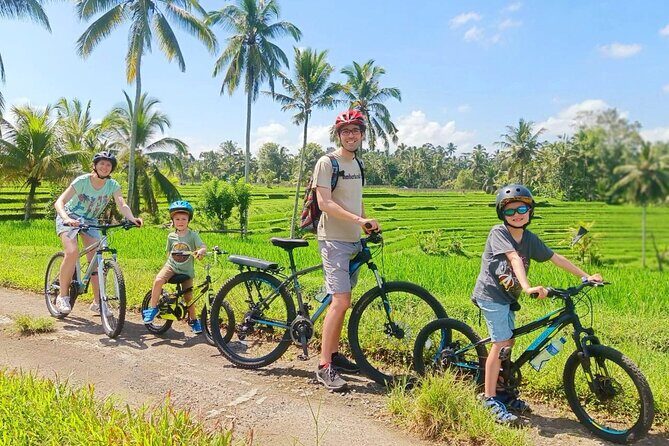
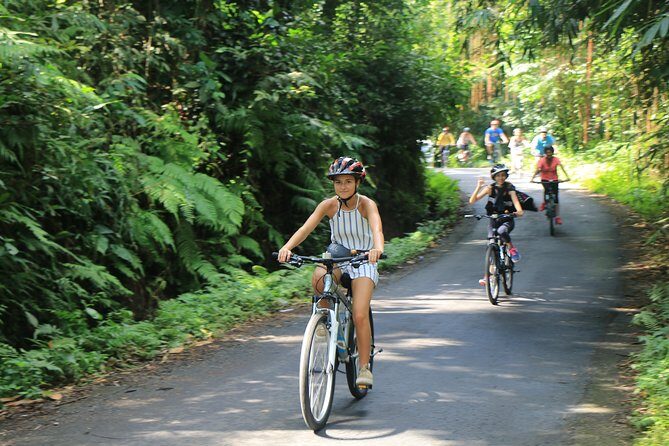
Ubud can be a loud place in the middle of the day. Cycling is different. You move fast enough to see more, but slow enough to notice details: small offerings by the roadside, families working in the fields, and the way roads narrow into lanes that don’t feel like tourist routes.

This tour is built around quiet country riding, plus short connectors that get you to the good stuff. You’ll get the classic Ubud sights, but you’ll also see everyday Bali from the seat of a bike, not from a sidewalk.

If you like breaks as much as you like movement, you’re in luck. There are regular pauses for refreshments and photo stops, so you don’t feel rushed through the best angles.

Price and Value: What $30.55 Buys You (and What It Doesn’t)

Ubud Eco Culture Cycling Exploration - Price and Value: What $30.55 Buys You (and What It Doesn’t)
At about $30.55 per person, this half-day bike tour is priced like a strong activity add-on: not too pricey for what’s included, and not so bare-bones that you have to pay again for basics.

What’s included is the part that usually costs extra on your own:

  • guided bike tour
  • all cycling equipment
  • young coconut water
  • ample bottled water
  • snacks

What’s not included matters too. There’s no lunch, and there’s no pick-up or drop-off to your hotel. So I’d plan a light breakfast, then eat a real meal after you’re back.

You’re also riding with a max of 8 people, which usually means fewer delays and more flexibility when you want to stop for pictures.

Meeting at Peliatan Soccer Field: The Easy Start

Ubud Eco Culture Cycling Exploration - Meeting at Peliatan Soccer Field: The Easy Start
Your morning begins at the SSB Garuda Peliatan Soccer Field in Peliatan (Ubud). The start time is 9:00 am. When you arrive, you’ll stretch, adjust the bike, and get a safety briefing.

This matters more than it sounds. A bike that fits you makes the whole ride more comfortable, especially when the route shifts from flat lanes to short climbs. It also helps you conserve energy for the sections where you’ll feel the road change.

This tour ends back at the same meeting point, so you don’t have to worry about being dropped somewhere unfamiliar.

Riding Sukma Street and Catching the Monkey Forest Moment

Ubud Eco Culture Cycling Exploration - Riding Sukma Street and Catching the Monkey Forest Moment
Once the ride starts, you’re cycling through Sukma Street, then you pass by the famous Ubud Monkey Forest around 10:00. You’re not sent into a long attraction visit here. Instead, it’s a smooth “see it, photograph it, and keep moving” kind of stop.

In real terms, that’s a good compromise. You get a major Ubud landmark without losing half your morning to lines, ticket stress, or walking heat. And because you’re riding, you see how the city feeds into the countryside.

From the way the ride is described, you’ll also experience contrast: some road segments feel busier than the back lanes, then the route eases into quieter lanes and green paths. That change of pace is one of the best parts of biking here.

Abangan Paddies and Junjungan Fields: Coconut, Breeze, and Short Climbing

Ubud Eco Culture Cycling Exploration - Abangan Paddies and Junjungan Fields: Coconut, Breeze, and Short Climbing
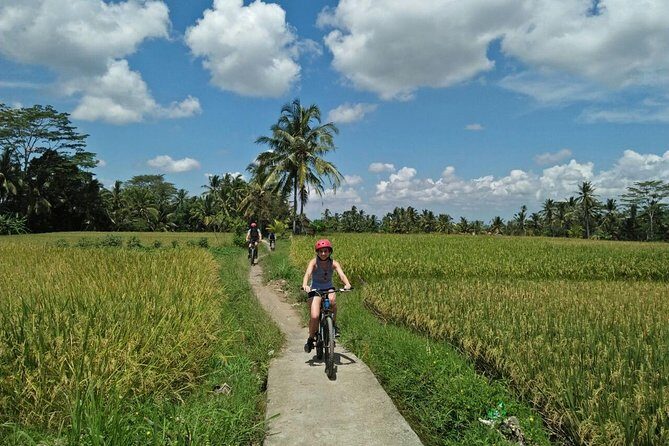
Around late morning, the route leans hard into rice country. You’ll pedal through Abangan paddy fields, with pauses to enjoy the view and take a cold refresh. Young coconut juice is part of the included break, and it’s the kind of stop that makes the ride feel like more than exercise.

Then you continue into the wider Junjungan paddy areas. Expect a lot of momentum here—mostly downhill, so you can relax your shoulders and let the bike do the work. One review even described the uphill parts as short stretches (around 50 meters max). That’s not “flat,” but it also doesn’t sound like a grinding endurance test.

If you’re planning what to wear and how to pace yourself, think like this:

  • Wear light active clothing
  • Use your breaks
  • Don’t sprint early downhill—save energy for the few climbs

You’ll also have an optional chance to visit traditional Balinese painters during the ride. If you’re into crafts and the working process behind art, it’s worth saying yes. If you’d rather just keep moving, you can stay with the group and enjoy the fields and villages.

The Village Side of Ubud: Jembawan and Local Life Up Close

Ubud Eco Culture Cycling Exploration - The Village Side of Ubud: Jembawan and Local Life Up Close
After the paddies, the route continues through the village area of Jembawan, and then you head back toward central Ubud for the return ride.

This is where the “eco culture” part becomes practical. Instead of seeing Bali only as scenery, you’re traveling through lived-in neighborhoods: small roads, local spaces, and the kind of sights you’d struggle to find on your own without knowing where to turn.

Some riders describe stops that include looking at temples and rice-field work up close, even getting a brief chance to help with simple field tasks when conditions allow. That kind of interaction can make the whole morning feel more personal—less like a sightseeing checklist, more like time spent in the rhythm of rural life.

The best advice: be flexible. If the guide offers an opportunity to see, taste, or learn something small along the way, take it. The meaningful moments here aren’t the big-ticket attractions—they’re the small stops that match how the area actually functions.

Guide Moment: How Mudita, Gustu, and Kadek Set the Tone

Ubud Eco Culture Cycling Exploration - Guide Moment: How Mudita, Gustu, and Kadek Set the Tone
A bike tour lives or dies on the guide. In this case, several named guides show up in people’s stories, including Mudita, Gustu, and Kadek. The common thread is simple: they know how to keep things moving without turning the ride into a lecture.

You’ll hear commentary about places you see and Bali heritage while still having time to breathe and look around. The vibe isn’t stiff. One rider described the guide as funny and kind, and another mentioned being able to take breaks whenever needed.

You may also get local food and fruit. Some riders mention trying unusual tropical fruits, including one described as having snake-skin on the outside. Even if you’re picky, I’d treat that as part of the point: you’re riding through local agriculture and daily life, so tasting what’s grown nearby makes sense.

If you’re the type who asks questions—about temples, farming, or everyday routines—this is a good tour for that. And if you’re more “quiet rider,” the guide still seems to set a friendly pace.

How Fit Do You Need to Be for This 2.5–3 Hour Ride

Ubud Eco Culture Cycling Exploration - How Fit Do You Need to Be for This 2.5–3 Hour Ride
The tour info asks for strong physical fitness, and I agree with the caution. This isn’t a casual spin in a bike park. You’ll cover about 15 km over roughly 2.5 to 3 hours.

That said, multiple descriptions point to an easier rhythm than you might expect. The ride can feel almost like cruising downhill for stretches, with short climbs when the route needs to change elevation.

Your best strategy is to ride at a steady effort:

  • Use the downhill to recover
  • Take the included coconut and water stops seriously
  • Don’t be shy about slowing down on the short uphills

Also, the tour isn’t positioned for young kids. It’s not recommended for children under 10. For most families, that means this works better as a couple or adult group activity, or for older teens who are genuinely comfortable on a bike.

What to Wear and Bring for Comfort and Safety

This is a sun-and-sweat kind of morning activity, even with breaks. The dress code is active wear (short and tee shirt) plus sport shoes.

Bring what the tour recommends:

  • a hat/cap
  • sunscreen
  • your usual basics for staying comfortable outdoors

Even though bottled water and snacks are included, sunscreen and a hat are non-negotiable. Ubud mornings can still hit hard once you’re riding between paddies and lanes where there’s less shade.

Timing That Works: A Morning Ride You Can Actually Fit

Starting at 9:00 am makes this a smart half-day choice. You’ll be done by late morning or early afternoon, which keeps your day flexible.

Because there’s no lunch included, plan a proper meal after the ride. Think of this as a morning activity that gets you moving, gives you culture and nature on bikes, and leaves you time to explore the rest of Ubud without rushing.

And since your ticket is mobile, you’re not juggling paper in the heat.

Should You Book This Ubud Eco Culture Cycling Exploration?

Book it if you want a morning that’s more than looking. This tour is a great fit when you like:

  • rural lanes and rice paddies as part of your sightseeing
  • frequent stops for photos and breaks
  • a small group pace with a guide who actually talks through what you’re seeing
  • the chance to try local fruit and learn how daily life connects to the scenery

Skip it (or reconsider your expectations) if:

  • you need a flat, easy ride with no uphill moments
  • you want hotel pick-up and drop-off
  • you’re counting on lunch being included

If you want a practical Ubud experience that feels closer to where people live, this bike route is one of the better ways to spend 2.5–3 hours—efficient, scenic, and tuned for getting off the most predictable paths.

See The Gate of Heaven at Lempuyang Temple in Bali

See The Gate of Heaven at Lempuyang Temple in Bali - Asah Hill: a short, satisfying ocean viewpoint stop (and it’s free)

Lempuyang’s Gate of Heaven is a big-photo mission. This private day trip strings together east Bali icons at a pace that’s yours, with Ubud (and south Bali) pickup plus a driver who covers the admission costs. You also get panoramic views of Mt. Agung, which is a huge part of why this temple is such a magnet for photographers.

What I like most is the practical mix: you get the temple morning, the historical water garden mid-day, then you’re not stuck in temples all day—there’s Virgin Beach time to unwind. I also really like that this is private transportation with an English-speaking driver/guide, plus bottled water in the car.

The one thing to plan for is crowds and waiting at Lempuyang. Even if you start early, the photo spot can mean a long queue, so you’ll want patience built in.

Key highlights you’ll actually feel

See The Gate of Heaven at Lempuyang Temple in Bali - Key highlights you’ll actually feel

  • Gate of Heaven at Lempuyang pairs Mt. Agung views with an iconic photo setup, but expect waiting
  • Tirta Gangga is a Karangasem royal-era water garden with pools and pavilions
  • Asah Hill gives quick ocean viewpoints (including a separated small island) with free admission
  • Virgin Beach is a quieter white-sand break with a couple hours to relax
  • Your private driver covers admission costs, so you’re not tracking extra tickets all day

Lempuyang Temple and the Gate of Heaven: photo spot energy, real queue time

Lempuyang Temple (Pura Penataran Agung Lempuyang) is up on the slopes of Mount Lempuyang, and that’s part of the drama. The Gates of Heaven area is famous for a reason: the whole composition is designed to frame the view, and that matters because you’re looking out toward Mt. Agung, Bali’s highest volcano. The site is also where your day’s “main event” happens, so it sets the tone for everything after.

The route matters, too. From the Ubud area, you’re looking at about a 2.5-hour drive to get there. You’re starting the day with time, so you’ll want to treat this like a morning commitment, not a quick stop.

Now, here’s the honest consideration: you can leave very early and still hit a line. One traveler noted they queued for hours even after departing at 5am to beat the rush. That tells you something important: the crowd flow is bigger than your personal plan, so your win condition is not “no lines.” Your win condition is “I stay calm and get my photos.”

A practical note on the famous shot: the iconic effect uses an angled arrangement (including a mirror effect), which is why your timing and positioning matter more than just showing up. If you want photos that match the legend, work with your driver/guide and be ready to move when staff and other visitors clear the area.

Tirta Gangga: the water garden where Karangasem history shows up in the details

See The Gate of Heaven at Lempuyang Temple in Bali - Tirta Gangga: the water garden where Karangasem history shows up in the details
After the temple, Tirta Gangga feels like the palate cleanser. This is the ancient and historical spot tied to the Karangasem kingdom a few hundred years ago, and it shows in the layout—pools, pavilions, and architectural planning that feels made for lingering.

You’ll spend about 1 hour here, which is enough time to stroll, take photos, and appreciate the setting without turning it into a second-day mission. The main value is atmosphere: it’s scenic and visually clean compared to some temple courtyards, and it’s easy to enjoy at your own pace because the gardens give you natural stopping points.

One small drawback: this stop is popular for photos, just not as queue-heavy as the Gate of Heaven. So you’ll likely still share the space with other visitors, but the vibe is calmer and more relaxed than the temple centerpiece.

Asah Hill: a short, satisfying ocean viewpoint stop (and it’s free)

See The Gate of Heaven at Lempuyang Temple in Bali - Asah Hill: a short, satisfying ocean viewpoint stop (and it’s free)
Asah Hill (Bukit Asah) is the quick-hit stop that keeps the day from becoming too temple-and-garden heavy. It’s only about 15 minutes, and you’re there for the view.

What you’ll notice right away is the ocean outlook and the way you can see a small island separated from the main island. This is the kind of stop that feels simple—then you realize the view does something special with light and distance, especially if the sky cooperates.

The big plus: admission is free. So you’re not losing money or time if you just want a quick photo break. The other detail worth knowing is that this area is described as the best camp zone in Bali with sea views, which hints at why the spot feels built for relaxing outdoors even if you only pass through quickly.

Virgin Beach: white sand downtime after temples

See The Gate of Heaven at Lempuyang Temple in Bali - Virgin Beach: white sand downtime after temples
By the time you reach Virgin Beach, your body will probably appreciate the schedule shift. This is a 2-hour break at a nice beach with white sand, and it’s described as not so crowded.

The name comes from the pale sands, and the practical benefit of a quieter beach is that you can actually do beach things: slow down, take in the clear blue sky, and let the day breathe. For many people, that’s what prevents an all-day tour from feeling like a photo assembly line. You’re not just “between stops.” You’re getting a real pause.

One consideration: beach time is only as good as the conditions. The tour depends on good weather, so if skies are harsh, your beach window might feel less comfortable. When the weather is right, Virgin Beach is a nice payoff after the earlier climbs and crowds.

The private-driver value: admission covered, car comfortable, and English support

See The Gate of Heaven at Lempuyang Temple in Bali - The private-driver value: admission covered, car comfortable, and English support
This tour is priced at $79.00 per person, and the value is less about the number on the receipt and more about how the day is built. You’re paying for a full private day with pickup, an air-conditioned vehicle, and a driver/guide who handles the admission costs.

That “admission covered” part is the quiet win. It means you don’t have to juggle extra ticket fees and payments while you’re already managing timing for the main Gates of Heaven photo stop. It also helps you budget the day more cleanly—your big uncertainty is time and crowds, not surprise fees.

Other practical touches you should care about:

  • Bottled water is included, which matters in east Bali heat.
  • Hotel pickup and drop are included from Ubud and the main south Bali hot spots.
  • You get a mobile ticket, so you’re not tracking paper in a backpack.
  • You’re traveling in an air-conditioned vehicle for a route that totals about 150 miles round-trip.

You should also know the tour is private: only your group goes with this driver. That changes how the day feels. You can move at your pace, ask for photos without fighting the flow, and avoid the stress of coordinating with strangers.

One logistical note: the booking requires a minimum of 2 people, so solo travelers may need to confirm availability or join another pair.

Timing and pacing: how a 10-hour day can feel easy or stressful

See The Gate of Heaven at Lempuyang Temple in Bali - Timing and pacing: how a 10-hour day can feel easy or stressful
This is an approx 10-hour full-day outing, and the mileage hints at why. You’re doing real driving, not just bouncing between nearby attractions. The day works best if you treat it like a schedule with three moods:

1) Morning focus (Lempuyang / Gate of Heaven)

2) Mid-day strolling (Tirta Gangga)

3) Afternoon recovery (Asah Hill quick viewpoint + Virgin Beach unwind)

The hardest part is usually the morning. Even with an early start, you can end up waiting for the Gate of Heaven photo area. That’s why your best move is to arrive ready for a waiting game, not a sprint.

In the schedule as designed, you also get built-in time buffers: Lempuyang includes about 2 hours, Tirta Gangga about 1 hour, Asah Hill 15 minutes, and Virgin Beach about 2 hours. That adds up to a day that feels full, but not frantic.

One thing missing that you’ll want to plan: lunch isn’t included (and alcoholic beverages aren’t included either). You’ll likely need to either arrange lunch on your own or plan to grab food near one of the stops. If you’re prone to getting hangry during long drives, bring a simple snack strategy so you can stay pleasant in the queue.

Which traveler should book this east Bali day?

See The Gate of Heaven at Lempuyang Temple in Bali - Which traveler should book this east Bali day?
This tour fits best if you want a tight east Bali highlight circuit without the headache of planning transport and admissions.

You’ll likely enjoy it if you:

  • Want the Gates of Heaven as your anchor stop, plus other major sights in one day
  • Prefer a private setup over joining a group bus
  • Like photographers’ viewpoints, especially Mt. Agung framing at Lempuyang
  • Want culture + history (Tirta Gangga) followed by a quieter beach break (Virgin Beach)

It may feel like overkill if you only want one attraction and hate long drives. Also, if you dislike waiting in general, Lempuyang will challenge you, since queues can still happen even with early departure.

Should you book this tour?

See The Gate of Heaven at Lempuyang Temple in Bali - Should you book this tour?
I think it’s a good buy if your priority is east Bali highlights done with less friction. The biggest reason is value: private transfers plus admission costs covered across multiple stops. You also get a day structure that balances a temple photo mission with calmer breaks.

Before you book, make one decision up front: commit to patience at Lempuyang. If you can accept that the photo moment may involve waiting, the rest of the day usually lands well—Tirta Gangga for scenic history, Asah Hill for a quick ocean fix, then Virgin Beach to reset.

FAQ

What is the tour price?

The price is $79.00 per person.

How long is the tour?

The tour is approximately 10 hours.

Where is the tour based and where do you pick up?

The tour is in Bali with pickup from Ubud and the main south Bali hot spots.

Is the tour private?

Yes. It’s a private tour/activity, and only your group participates.

Are entrance fees included?

Yes. Admission costs are covered by your private driver, and the itinerary lists admission tickets included for Lempuyang Temple, Tirta Gangga, and Virgin Beach.

What stops are included in the day?

You’ll visit Lempuyang Temple (Gate of Heaven), Tirta Gangga, Asah Hill, and Virgin Beach.

Is lunch included?

No. Lunch is not included.

Do you provide transportation and water?

Yes. The tour includes private transportation in an air-conditioned vehicle and bottled water.

Is there an admission fee for Asah Hill?

Asah Hill is listed as admission free.

Do I need good weather for the tour?

Yes. The tour requires good weather, and if it’s canceled due to poor weather you’ll be offered a different date or a full refund.
Mount Batur Jeep Sunrise & Natural Hot Spring

Mount Batur Jeep Sunrise & Natural Hot Spring - From Hotel Pickup to Sunrise Timing: How the Morning Works

Mount Batur Sunrise starts before your alarm. That’s the whole trick: you trade the steep climb for a jeep ride and still catch the sky’s big payoff. This is a sunrise-focused day around Kintamani that adds black lava views and a natural hot spring option, all with hotel pickup and drop-off.

Two things I really like: you’re not doing the hard hike, and you get real help with photos from your guide. The jeep route also gives you an easier way to enjoy Mount Batur’s setting, including a stop at a temple and time to see the volcanic terrain up close.

One possible drawback: it’s an early start, and that means you should be ready for cold mornings and a long sit in the jeep (even though it saves your legs). If you prefer a slower pace, you might feel the day is packed from pickup to return.

Key Highlights You’ll Actually Care About

Mount Batur Jeep Sunrise & Natural Hot Spring - Key Highlights You’ll Actually Care About

  • No summit hike required: you get sunrise views without trekking uphill
  • Hotel pickup and drop-off: less hassle, more sleep (until 3am sleep)
  • Black lava fields + a temple stop: you see more than just the sunrise
  • Floating temple visit: a unique cultural pause during the morning
  • Optional natural hot spring dip: add relaxation only if you want it
  • Guides help with photos: your sunrise memories come out better

Jeep Sunrise Over the Volcano: The Real Value

Mount Batur Jeep Sunrise & Natural Hot Spring - Jeep Sunrise Over the Volcano: The Real Value
If you’ve ever watched videos of Mount Batur sunrise, you know what happens next: people either look exhausted from the hike or they brag about catching the first light. This tour gives you the best middle ground—early sunrise, without the steep climb.

You’re getting a private scenic sunrise experience. In practical terms, that usually means less waiting around and more time spent in the right places. It also helps if your group wants photos at your pace, not the driver’s stopwatch pace.

I also like that the itinerary is built for people who don’t want to guess. You’re picked up, driven to the viewpoint area in time for sunrise, then guided through the key sights afterward. The day has structure, which matters on Bali when you’re juggling transport, timing, and heat.

From Hotel Pickup to Sunrise Timing: How the Morning Works

Mount Batur Jeep Sunrise & Natural Hot Spring - From Hotel Pickup to Sunrise Timing: How the Morning Works
This is a sunrise tour, so the day starts early. Based on how the experience runs in the field, pickup can happen as early as 3am in some cases, with a jeep staging area reached around 4am. You don’t need to panic—just plan on an alarm that feels rude.

Here’s the usual flow:

You’re collected from your hotel, transferred toward Mount Batur, and brought to the sunrise viewpoint area. There’s time to wait for light to build, and you’ll have a complimentary hot drink while the horizon slowly turns on.

Why this part matters: sunrise is not just pretty. It’s when Mount Batur looks most dramatic—sharp silhouettes, volcanic terrain in soft contrast, and a horizon that feels wide and open. Skipping the hike means your energy stays available for the later stops, rather than being spent just reaching the viewpoint.

What to expect right after sunrise: cool air, brightening views, and a window where you want your camera ready. Your guide is there to help you take photos, which is huge if you’re traveling as a couple or a small group.

Mount Batur by Jeep: What You’re Seeing (and Why It Looks Different)

Mount Batur sits at about 1717 meters above sea level, and that elevation is part of the “why.” Even when you’re not climbing, you’re still getting that higher viewpoint feeling—the sky looks closer and the view stretches farther.

Going by jeep also changes the experience. Instead of a slow, uphill grind, you get movement and viewpoints. You’re driven up to catch sunrise in time, and you’re able to spend more of the morning actually looking instead of burning time and energy on steep steps.

A well-run jeep sunrise day also avoids a common problem on volcano tours: missing the best moment because your transport is late. With this format, the schedule is the product. You’re paying for the timing discipline, plus someone to drive and coordinate for you.

Black Lava Fields: The Volcanic Part You Can’t Get From Photos

Mount Batur Jeep Sunrise & Natural Hot Spring - Black Lava Fields: The Volcanic Part You Can’t Get From Photos
After sunrise, the tour shifts from “sky moment” to “earth moment.” You’ll visit black lava fields, where the volcanic ground stands out as dark, textured, and different from what most people expect on Bali.

This stop is valuable because it makes the volcano feel real. Sunrise alone can look like a postcard. Lava fields add the science and the story behind the photo: you’re seeing the aftermath of eruptions and the harsh beauty of volcanic terrain.

A practical note: this is the kind of area where footwear matters. Even if the walking is limited, the ground can be uneven or dusty, so bring shoes you’re comfortable stepping on for short stretches.

The Floating Temple Stop: A Cultural Reset During the Morning

Next comes a floating temple visit. Temples on Bali aren’t just architecture—they’re part of how people live with their landscape and beliefs. This stop breaks up the day from purely “nature viewing” into something more local and meaningful.

Why I think this is worth including: it prevents the tour from feeling like only a sightseeing drive. You get context, and you also get a cultural rhythm to the morning. Many guides also use temple visits to explain practical parts of Balinese life—offerings, daily routines, and how people think about the natural world.

Your guide is specifically there to teach you about Balinese culture, so this stop isn’t just a photo stop. It’s also a chance to ask simple questions and get straight answers without doing homework.

Optional Natural Hot Spring: When You’ll Want to Add the Dip

Then there’s the hot springs. The natural hot spring stop is optional, so you can decide whether you want to include the dip after the morning sights.

This makes sense because not everyone wants the added time or the warm-but-muddy logistics that come with soaking. If you do include it, it’s a nice “reset” after sunrise and volcanic scenery—something soothing when you’re still running on early-morning adrenaline.

What to consider: if you’re sensitive to getting in and out of water, bring a towel and plan to change clothes if you can. The tour includes mineral water, which helps for the drive and waiting times, but the hot spring itself is a bonus you may want to prepare for.

Your Guide and Photo Help: Why Names Like Gede and Erman Come Up

A lot of sunrise tours live or die by the guide. On this one, the guide role is not background entertainment. You’re relying on them to time things, drive well, and help you capture the moment.

In the experience, guides such as Gede and Erman/Erma show up in feedback as friendly, engaging, and focused on making sure you get the right views. That kind of guide personality matters because sunrise is short. The best light lasts minutes, not hours.

You’ll also get help taking photos. If you’ve ever had trouble getting a group shot at a viewpoint—where everyone’s half in frame or squinting—this matters. A guide who knows where to stand and how to angle people saves you from doing ten awkward retakes.

Price and What $24.44 Buys You

At about $24.44 per person, this tour is priced like a value option, and the key is what’s included.

You get:

  • Hotel pick-up and drop-off
  • Entrance ticket
  • Mineral water
  • A private format where only your group participates
  • A guided sunrise and sighting route

When you compare this to the cost of getting to Mount Batur on your own, the pickup alone can make the math work. Bali has plenty of rides available, but early morning timing is the headache—someone still has to drive you, coordinate timing for sunrise, and get you back safely.

What’s not included:

  • Tips
  • Insurance

So the real “budget” question becomes: are you comfortable tipping, and do you want insurance coverage? If you’re already a light tipper, this tour will still be a good deal, but expect you’ll likely add something for the driver/guide who handles the early push.

What to Bring: Simple Stuff That Helps a Lot

This is a long day (about 8 to 10 hours), shaped around sunrise. That means you’ll be moving early, standing during sunrise, and spending hours in transit afterward.

Bring:

  • Warm layers for the morning chill (even if Bali is warm later)
  • A charged phone/camera plus a power bank if you’re filming a lot
  • Sunscreen for after sunrise (the sun ramps fast)
  • Comfortable walking shoes for short, uneven spots
  • If you’re doing hot springs: a towel and a change of clothes you’re okay with getting wet

And one more practical tip: eat something before pickup if you can. Sunrise tours often make breakfast feel like a later decision, not a morning plan.

Duration and Pacing: The Day Feels Long, But It Moves

Plan for roughly 8 hours on the main loop, with the full window stretching to about 10 hours depending on stops and whether you choose the hot spring.

The pacing is morning-heavy:

  • Sunrise setup and viewing
  • Then lava fields and a floating temple
  • Optional soak at the hot springs
  • Return to your hotel

The benefit of this pacing is that it’s efficient. You’re getting multiple “types” of experiences in one day: sky, volcano ground, culture, then relaxation. The downside is you won’t have much room to slow down, browse, or detour.

Who Should Book This and Who Might Skip It

You should book this if:

  • You want Mount Batur sunrise without a hike
  • You prefer hotel pickup over figuring out early transport
  • You like guided context for temples and cultural stops
  • Your group wants easier logistics and photo help

You might skip it if:

  • You hate early mornings and tight schedules
  • You want a long, unstructured day with lots of free time
  • You’re hoping for a slow “hang out” pace rather than a packed morning itinerary

If your priority is sunrise and you’d rather save your legs for enjoying the rest of Bali, this tour fits the bill.

Should You Book Mount Batur Jeep Sunrise & Natural Hot Spring?

My take: this is one of those rare value tours where the price lines up with what you actually need. You’re paying for a timed sunrise run, transportation, and real guiding. The optional hot spring is a smart add-on because it lets you choose relaxation without forcing it.

If you’re going to Bali with a short list—sunrise, volcano vibes, and a cultural stop—this is a clean way to hit those boxes without a workout you didn’t ask for.

If you’re deciding between hiking and jeep sunrise, choose based on your energy level. The jeep option is built for travelers who want the moment and the views, not the climb.

FAQ

How long is the Mount Batur Jeep Sunrise & Natural Hot Spring tour?

The tour typically lasts about 8 to 10 hours.

Is hotel pickup and drop-off included?

Yes. Hotel pick up and drop off are included.

Do I need to pay an entrance ticket for Mount Batur?

Entrance is included. The tour lists an entrance ticket as included.

Is the natural hot spring included, or is it optional?

It’s optional. The natural hot spring stop-off is offered if you want to take a dip.

What time should I expect to start for a sunrise tour?

Because it’s a sunrise tour, the start is very early. In at least some cases, pickup happens around 3am, with arrival at the jeep starting point around 4am.

Is this tour private?

Yes. It’s described as a private tour/activity, and only your group will participate.

Can I cancel for free?

Yes. Free cancellation is available if you cancel up to 24 hours before the experience’s start time.

Mount Batur Sunset Jeep Tour

Mount Batur Sunset Jeep Tour - The Mount Batur sunset window: what you do on the rim

A volcano sunset kicks off your afternoon. This Mount Batur tour is all about saving your energy: you get picked up, then your guide handles the driving while you focus on the big horizon views. You’ll also pass black lava areas and the hot springs route on the way in and out, which adds real variety beyond just chasing sunset.

Two things I really like: first, the pickup + drop-off means you’re not figuring out transport or parking, especially if you’re staying outside the main pickup zones. Second, the best part is the dedicated time on the rim at Mount Batur, when you can actually look around the caldera and time your photos without constantly moving.

One consideration: this is a longer day than it sounds. Total time runs about 7 to 9 hours, and if your pickup is delayed or clouds roll in, the sunset view can be underwhelming.

Quick hits before you go

Mount Batur Sunset Jeep Tour - Quick hits before you go

  • Guide-driven comfort: you’re chauffeured up while you rest and plan photos
  • Mount Batur timing: sunset viewing time is about 4:30–6:30 pm
  • Real volcano scenery: you’ll see the 1963 black lava and the caldera area
  • Hot spring route pass-bys: you’ll go by Batur Natural Hot Spring and Toya Devasya/Toya Bungkah
  • Short but scenic payoff: a 10-minute stop at Kintamani Highland for views of Mount Batur and the lake
  • Good-weather dependent: the experience needs decent weather for the sunset to land

A chauffeured 4WD-style climb, without the early-morning grind

Mount Batur Sunset Jeep Tour - A chauffeured 4WD-style climb, without the early-morning grind
The biggest selling point here is also the most practical one: you don’t have to wake up at sunrise. Instead, you’re going later in the day, which is perfect if your mornings get eaten by temple visits, rice terrace wandering, or just the very real task of staying upright on scooters.

Even though the core highlight is a sunset at Mount Batur, the tour is structured like a driving experience first, not a hike. You’re picked up from your accommodation and transported up the volcano area, with your guide handling the route and the vehicle. That matters because Mount Batur’s access roads can involve rougher tracks and turns, the kind that make you glad there’s an experienced driver behind the wheel.

It also helps that the tour is private in the sense that it’s only for your group. That usually means you’re not stuck waiting around behind a large bus crowd. You’ll still move with the rhythm of the schedule, but you’re not competing for attention.

The Mount Batur sunset window: what you do on the rim

Mount Batur Sunset Jeep Tour - The Mount Batur sunset window: what you do on the rim
The main event happens at Mount Batur. You arrive for the sunset period and stay for about 2 hours, roughly from 4:30 pm to 6:30 pm. In that window, you get time to settle, scan the caldera views, and look at the volcanic features up close.

What makes this stop special is what’s around you when you’re there. You’re not just looking at a sun disc in the sky. You’re seeing the huge caldera of Mount Batur Kintamani and walking around the area that includes black lava from 1963. That’s the kind of scenery that makes the volcano feel less like a postcard and more like a living landscape shaped by real events.

You also get admission included for Mount Batur for the sunset experience, which helps keep the total cost predictable once you’re on the ground.

Now, here’s the honest part. Sunset is weather-dependent. If you get clouds, you might still get dramatic skies, but you may not get the clean “sun over the horizon” moment. One review even flagged that the sunset was clouded out. In other words: this is a volcano tour, not a guarantee.

Passing the hot springs: fun detour, but don’t expect a full spa day

Mount Batur Sunset Jeep Tour - Passing the hot springs: fun detour, but don’t expect a full spa day
Along the way, you’ll pass a couple of hot-spring spots:

  • Batur Natural Hot Spring
  • Toya Devasya Hot Spring
  • Toya Bungkah

The word “pass” is important. Your itinerary describes these as drive-by stops, not a long, spend-the-afternoon soak session. So plan this as scenery and a change of pace, not a guaranteed hot bath.

That detour still has value. It breaks up the day between volcano viewing time and the later viewpoint at Kintamani Highland. It also gives you a better sense of why this area is so popular: you’re in a geothermal zone where you can see the same forces that shaped the volcano also powering hot springs.

If you want a deeper hot-spring soak experience, you might find you’ll need to book that separately on another day. Think of this tour as the route plus the views, not a full wellness program.

Kintamani Highland: the quick 10-minute view stop that pays off

After your Mount Batur time, you move to the Kintamani Highland area for a short stop—about 10 minutes—to see views of Mount Batur and the lake.

Ten minutes sounds almost too brief, but it fits the goal of the day: a late afternoon/early evening schedule where the rim-view is the main show. That quick stop can be great if you want one more look from a slightly different angle, or if you want something to do between driving segments without tiring yourself out.

Also, admission is included for this portion, which is nice because it avoids the “is this worth it?” feeling right at the end of the schedule.

In practice, keep your camera ready. Ten minutes goes fast when you’re spotting angles, pointing at the lake, and trying not to lose your group while you snap photos.

Price and value: why $32 can work if timing fits your day

At $32 per person, this tour sits in the value zone for Bali volcano experiences. The price makes more sense when you look at what’s included:

  • Pick up and drop off from your accommodation
  • Entrance fees for Mount Batur and Kintamani for the sunset experience
  • Mineral water for each person

For many people, the “freeing” part is the transportation. Hiring a private driver for a full half-day can easily cost more, and here you’re paying a flat per-person rate that includes the drive and the main admissions tied to the sunset viewpoint.

There’s also a practical timing advantage. Booking later in the day means you can keep your earlier hours flexible. If you’ve already planned Ubud activities, this can slot in without forcing an early sunrise start.

Where value can shrink a bit is when your location makes the day long. One review mentioned a pickup in Kuta and a long drive to the jeep. If you’re far from the main pickup area, expect the schedule to stretch.

So the sweet spot is: you’re staying in a place where pickup is straightforward, you’re okay with a long day, and you’re ready to accept that clouds can happen.

How the day feels: 7 to 9 hours, but not in the way you think

Mount Batur Sunset Jeep Tour - How the day feels: 7 to 9 hours, but not in the way you think
The total duration is listed at 7 to 9 hours, and that can trick your expectations. Even though you only spend around two hours at Mount Batur, the rest of the time is wrapped up in driving, getting positioned, and moving between stops.

This is also where you’ll feel the difference between a smoothly run tour and one that’s running late. Reviews include examples of late pickup—40 to 50 minutes in some cases—and limited communication on timings. That doesn’t mean the whole experience is like that, but it’s a real factor to consider if you’re trying to connect this with dinner reservations or another timed plan.

If you’re the type of person who can handle waiting without stress, you’ll likely enjoy the day. If you hate uncertainty and want a tight, minute-by-minute schedule, you might find it frustrating.

A small silver lining: because this is private for your group, there’s less crowd pressure. Even if there’s delay, you’re not stuck negotiating with a line of other vehicles at every step.

The guide matters: from safe driving to good photo moments

You’re not just paying for transport. You’re paying for someone to handle the climb route and the pacing. Reviews highlight that guides and drivers can be very friendly and helpful, especially when navigating dirt tracks up the mountain area.

One name that shows up clearly is Lanang, praised as an excellent driver and photographer for capturing memorable photos. That’s exactly the kind of value you’re hoping for on a sunset tour: someone who knows where to stand, when to reposition, and how to frame shots without you wasting time experimenting.

Even if your guide isn’t the same person, the lesson is the same. A good guide helps you make the most of the limited time. When the sunset window is only a couple hours, photo timing and viewing angles are everything.

Also, note that this tour can feel more like a private transfer plus photo time rather than a deeply structured, lecture-style tour. If that’s your preference, it’ll click well.

Who this is best for

Mount Batur Sunset Jeep Tour - Who this is best for
This Mount Batur sunset option is a smart fit if you:

  • Want sunset without an early sunrise wake-up
  • Prefer being chauffeured over hiking
  • Like seeing volcanic terrain like 1963 black lava and caldera views
  • Want a day that mixes sunset viewing with a geothermal route pass-by

It’s also a good match if you’re visiting Ubud but want a break from pure temple and terrace touring. The volcano day gives you a physical change of scenery and a dramatic payoff.

It may be less ideal if you:

  • Are extremely time-sensitive and can’t handle pickups that might run late
  • Need guaranteed clear-sky sunsets
  • Want to spend a long time soaking in hot springs during the tour (this one sounds more like pass-by stops)

Tips to get the most from your Mount Batur sunset ride

A few practical moves make a big difference on this kind of tour:

Bring layers. The summit area can feel cooler as the sun drops. Even if it’s warm earlier, that temperature shift is real.

Charge your devices before pickup. You’re using your phone for photos and videos, and the day is long enough that battery life can become annoying.

Accept the weather reality. If clouds cover the sunset, focus on the caldera and lava views anyway. The volcanic scenery is still the point, even when the sky doesn’t cooperate.

Plan your day around a long drive. You’re out for most of your day. Keep your next commitment flexible, especially if you’re staying farther from the most convenient pickup zones.

Should you book this Mount Batur Sunset Jeep Tour?

If you want a volcano sunset day with less effort and more comfort, I’d seriously consider booking. The value is strong for the included admissions and the hotel pickup/drop-off, and the Mount Batur rim time is long enough to enjoy the views instead of rushing through them.

My advice is to book with realistic expectations. Sunset can be clouded out, and timing can depend on pickup execution. If you’re flexible, you’ll likely come away impressed by the caldera, the 1963 lava fields, and the feeling of being up there as the day changes.

But if you’re the type who needs perfect timing and a guaranteed sunset moment, you may want to weigh the risk or choose a different style of volcano outing.

FAQ

What’s the duration of the Mount Batur sunset tour?

It runs about 7 to 9 hours.

Is hotel pickup and drop-off included?

Yes, pickup and drop-off service from your accommodation is included.

How long do we spend at Mount Batur?

You stay at Mount Batur from about 4:30 pm to 6:30 pm, which is around 2 hours.

Are entrance fees included?

Yes. Entrance fees for Kintamani and Mount Batur for the sunset experience are included.

Will we stop at hot springs?

You pass by Batur Natural Hot Spring and Toya Devasya Hot Spring / Toya Bungkah.

What’s included in the price besides the tour?

Mineral water for each person is included.

Is this a private tour?

Yes. It’s described as private, meaning only your group participates.

Do I need to book early?

The tour is commonly booked about 23 days in advance on average.

What if the weather is bad?

The experience requires good weather. If it’s canceled due to poor weather, you’ll be offered a different date or a full refund.
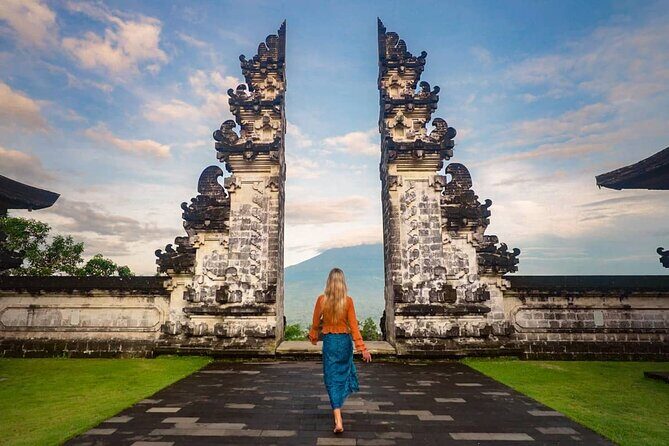
Can I cancel for a full refund?

Yes. Free cancellation is available up to 24 hours in advance for a full refund. Cancellation within 24 hours of the start time is not refundable.
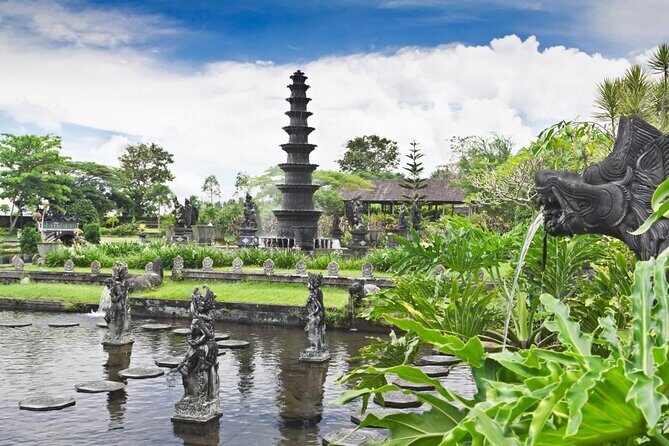
Favorite Sites of Ubud Daytrip

Favorite Sites of Ubud Daytrip - Lumbung Sari Coffee House: Free Samples and a Real Roast

Ubud in one packed day is a smart move. This trip strings together culture and nature in a way that feels efficient without feeling rushed, with stops built around Celuk’s craft makers, Ubud’s royal sights, and two of the area’s best photo landscapes. I especially like the mix of hands-on village work at Celuk and the calm, spiritual mood shift at Tirta Empul.

One thing to consider: the day is long (about 6–10 hours), and the waterfall and rice terrace are short stops. If you want lingering time for every view, you’ll need to accept that this is a “see the highlights, then move on” style day.

Key points I’d prioritize before you go

Favorite Sites of Ubud Daytrip - Key points I’d prioritize before you go

  • Celuk Village craft viewing: Watch gold and silver get shaped into beautiful objects using traditional methods.
  • Lumbung Sari coffee + tea sampling: A free taste set makes the stop feel less like a sales pitch.
  • Ubud Palace and the Traditional Art Market: Royal atmosphere plus shopping streets in one stretch of time.
  • Tegenungan Waterfall time-box: Only about 30 minutes, so you’ll want to arrive ready to photograph.
  • Tirta Empul’s holy spring water temple: A very different pace than the scenic stops, built for respect and observation.

From Kuta to Ubud: A 6–10 Hour Best-of Day Plan

Favorite Sites of Ubud Daytrip - From Kuta to Ubud: A 6–10 Hour Best-of Day Plan
This is a classic Bali “full-day hits list,” but it’s built with practical timing. You start in Kuta and spend roughly a half hour at Tegenungan, 45 minutes at Tegalalang, and 90 minutes at Tirta Empul—enough time to feel each place without exhausting the whole day. In between, you get two longer culture blocks: Celuk Village (about 1 hour) and Ubud’s palace/market area (about 2 hours).

The big value is door-to-door convenience. You get pickup and drop-off to your chosen Kuta address, in an air-conditioned vehicle, with parking fees covered. That matters because traffic and logistics in Bali can turn a “fun day” into a “waiting day” fast. Here, the day is structured so your time goes to the sights, not to figuring out transport.

Also, the tour includes chilled bottled water (and there’s complimentary cool water at the waterfall stop). That sounds small, but it helps when you’re out in the sun doing multiple exterior stops in one go.

Celuk Village: Watching Gold and Silver Makers Work

Celuk Village is one of those places where you get a real sense of skill. The focus isn’t just looking at jewelry—it’s watching how gold and silver processing turns into finished objects using traditional methods and designs. That’s a different vibe than shopping first and learning later.

What I like about this stop is that it’s craft-focused. You can watch the steps, ask questions, and connect what you’re seeing to the actual work process. If you’re into design, metals, or just how things are made, this hour gives you a stronger story than most “jewelry village” stops.

A quick practical consideration: if you’re sensitive to sales pressure, focus on watching and asking questions, not browsing. The setting is meant to show production, but it’s still a place where people sell. Keeping your priorities clear makes the time feel better.

Lumbung Sari Coffee House: Free Samples and a Real Roast

Favorite Sites of Ubud Daytrip - Lumbung Sari Coffee House: Free Samples and a Real Roast
Next comes the coffee plantation experience at Lumbung Sari House of Coffee. You’ll see how Balinese roasting happens and you’ll get included free samples of many types of tea and coffee.

This stop works for most people because it’s not only about drinking. You’re also getting a small food-and-culture window—how flavors get prepared and what roasting tastes like before you decide what you actually like. If you’re the type who usually says, yes, I’ll try it, but then regrets it later, the sampling is your safety net.

Plan around the fact that it’s a tasting stop, not a long break. It’s timed at about 1 hour. If you’re hungry, grab a snack before you arrive, because you’ll likely be moving on fairly soon. (Lunch is handled later during the Ubud market/palace block, and it’s not included.)

Ubud Palace and Traditional Art Market: More Than Souvenirs

Favorite Sites of Ubud Daytrip - Ubud Palace and Traditional Art Market: More Than Souvenirs
This is where the day leans into Ubud’s identity. In the traditional art market and the Royal Palace area, you’re not only shopping—you’re stepping into the place where royal culture and local creativity overlap.

You get about 2 hours here, which is the right length to do two things:

  • browse at a comfortable pace
  • still have time to actually look around instead of sprinting for the next stop

The tour also includes admission tickets for this block, and you’ll stop for lunch at a local restaurant during this time (lunch is not included in the tour fee). That’s important for budgeting. I’d arrive with a plan for what you want to eat and what you can spend, since you’ll have limited time to shop around once you’re seated.

One more practical tip: wear something you can move in. The palace and market areas can involve walking on uneven surfaces. Comfortable shoes make you feel more at ease while you browse.

Tegenungan Waterfall in Half an Hour: How to Make It Worth It

Tegenungan Waterfall is scenic, and it’s also time-boxed. You’ll have about 30 minutes at the waterfall, plus access to complimentary cool water, which is a nice touch after walking and sun exposure.

So here’s how to get the most from the short window:

  • be ready with your camera before you arrive at the best photo angle
  • move efficiently once you’re there, because 30 minutes disappears fast
  • bring a plan for photos first, then slow down if you still have time

The good news: the stop is built to fit the day. It’s long enough to appreciate the view and get photos, but not so long that it steals time from the temple and rice terrace.

If you’re visiting with friends, this is also an easy group stop—everyone can take turns at the best spots without turning the whole day into an argument over timing.

Tegalalang Rice Terrace: Quick Views, Smart Photo Spots

Favorite Sites of Ubud Daytrip - Tegalalang Rice Terrace: Quick Views, Smart Photo Spots
Then you head to Tegalalang Rice Terrace for about 45 minutes. This is one of those Ubud “must-sees,” but your experience will depend on how you use that time.

With a 45-minute window, you’ll want to focus on two things:

  • find a viewpoint that gives you depth (terraces layered behind the foreground)
  • take a few photos, then walk to another angle rather than staying still the whole time

This isn’t a leisurely “all afternoon in the fields” stop. It’s more like a guided snapshot of why the rice terraces are famous. That’s exactly what makes it work within the full-day schedule.

Also, since you’ll already have done Celuk, coffee, and market/palace, this stop acts like a reset. You’ll feel the pace slow down compared to indoor or craft-focused areas.

Tirta Empul Holy Spring Temple: Slow Down at the Water Rituals

Tirta Empul Temple is the spiritual centerpiece of the day. You’ll have about 1 hour 30 minutes here, and the focus is on the holy spring water temple experience.

This stop is different from every other location on the itinerary because it’s not primarily about scenery or consumption. It’s about sacred water and ritual space. Even if you’re just observing, your behavior matters more here—quiet attention and following guidance on site go a long way.

In terms of timing, 90 minutes is a fair amount. It allows you to watch the flow of visitors, step in (only if appropriate) when you’re guided to do so, and still have time to step away from the busiest moments for calmer viewing.

If you’re looking for the “spirit of Bali” part of Ubud, this is where that feeling lands. It also balances the day so it doesn’t feel like a nonstop photo tour.

Price and Value for a Ubud Daytrip at $32

Favorite Sites of Ubud Daytrip - Price and Value for a Ubud Daytrip at $32
Let’s talk value in plain terms. At $32, you’re not just buying transportation. You’re getting:

  • air-conditioned vehicle
  • bottled water (chilled)
  • parking fees
  • admission tickets included at each stop
  • pickup and drop-off direct to your Kuta address
  • a private setup for your group
  • and time in multiple high-demand Ubud locations (Celuk, coffee plantation, palace/market, waterfall, rice terrace, Tirta Empul)

For most people, the biggest value driver is that the entry costs are included. Temples and attractions can add up quickly when you buy everything separately. Pair that with the included water and air-con, and the day feels far more “all-in” than you’d expect for the price.

One more smart angle: this is positioned for people in Kuta who don’t want to organize transfers on their own. If you’ve ever tried to piece together Ubud transport mid-trip, you know how quickly it gets complicated.

If I had to flag one “value consideration,” it’s that lunch isn’t included. The tour schedules lunch during the Ubud palace/market block, but you’ll still need to budget for it. With that in mind, the $32 price works best when you plan your meal spending ahead.

Who This Tour Fits Best in Bali

This is a strong match if you want a high-coverage day from Kuta and you like a balanced mix of craft, food culture, and nature.

It also fits well if:

  • you’re traveling with a group and want shared timing (the tour lists group discounts)
  • you want private pickup and drop-off without coordinating multiple vehicles
  • you like structured stops with included tickets
  • you’re okay with short photo windows at the waterfall and rice terraces

If you’re the type who wants long, slow wandering—especially at scenic spots—then you might find the waterfall and rice terrace feel brief. In that case, you’d probably prefer a slower, more customized day. But for most visitors, the schedule hits a useful sweet spot.

Should You Book Favorite Sites of Ubud Daytrip from Kuta?

I’d book it if you’re aiming for an easy, well-rounded Ubud introduction and you’re starting from Kuta. The included admissions, air-conditioned vehicle, and direct address pickup make it feel like good planning rather than a gamble.

If you’re on the fence, ask yourself one question: do you want a guided highlight day or a slow personal exploration day? This one is clearly the highlight day. And if you get a guide who knows how to keep the group moving with good energy, the day can feel smooth even though it’s full.

Also, keep your lunch budget in mind since it’s not included, and wear shoes that handle walking around Ubud’s palace/market areas comfortably.

If that sounds like your kind of day, this is an excellent way to experience Ubud’s craft, spirituality, and famous views without turning the trip into logistics.

FAQ

How long is the Favorite Sites of Ubud Daytrip?

It runs about 6 to 10 hours, depending on timing and travel.

What are the main stops on the tour?

You’ll visit Celuk Village, Lumbung Sari House of Coffee, Ubud Traditional Art Market and the Royal Palace area, Tegenungan Waterfall, Tegalalang Rice Terrace, and Tirta Empul Temple.

Is pickup included, and where does the tour pick me up?

Yes. Pickup and drop-off are direct to any address in Kuta. You provide the address for the pickup point.

Is lunch included in the price?

No. Lunch is scheduled during the Ubud Traditional Art Market and palace area time, but it’s not included.

Are admission tickets included?

Yes. Admission tickets are included for the stops listed on the itinerary.

Is bottled water provided?

Yes. Bottled water is included, and it’s described as chilled. Cool water is also provided at the waterfall stop.

Does the tour run daily, and what are the hours?

The operating hours are Monday to Sunday, 8:30 AM to 8:00 PM.

Is this tour private?

It’s listed as a private tour/activity, meaning only your group participates.

What’s the cancellation policy?

You can cancel for a full refund up to 24 hours in advance of the experience start time.

Bike ride in the rice fields, Bali countryside

Bike ride in the rice fields, Bali countryside - Getting going: pickup, bikes, helmets, and that first snack

Rice fields, bikes, and real village rhythm. This Bali bike ride in the countryside feels personal because you’re moving through small roads, meeting locals along the way, and finishing with a lunch that looks out over rice and water. I especially like the friendly guides (including Gigi, Edi, and Katut, if you get them) who talk clearly and keep the ride feeling safe and unrushed. One thing to consider: the school visit only happens if school is in session that day, so your exact moments with kids may vary.

You’ll start with a small snack at a traditional Balinese house, then head out through quiet lanes where the scenery opens up to rice terraces and a mountain backdrop. It’s not an extreme workout either: about 80% is flat and downhill, so most people can handle it with a relaxed pace. Still, it requires good weather, so if rain hits, plan for schedule changes.

Key highlights before you pedal

Bike ride in the rice fields, Bali countryside - Key highlights before you pedal

  • Small-group feel (max 8) makes it easier to hear guide explanations and ride at a comfortable pace
  • Rice fields + mountain views as you glide through village roads and terrace paths
  • School stop when open to see daily Balinese school life (and sometimes exchange stationery)
  • Hands-on options in the fields if farmers are working during your route
  • Coconut break in the shade to cool off before you return to the saddle
  • Lunch included with views over rice fields and a river

A morning in Seminyak that feels far from Seminyak

Bike ride in the rice fields, Bali countryside - A morning in Seminyak that feels far from Seminyak
Starting in Seminyak, you’ll quickly trade hotel-area noise for a countryside pace. The ride is designed to feel like you’ve slipped off the main roads—no long bus tour first, just a short start in the morning with real village surroundings.

The whole format is built around low-friction experiences. You get on a bike quickly, follow a guide, and only stop when it makes sense: snack first, then views and villages, then a small break, then lunch. That rhythm matters because it keeps the experience from turning into a checklist.

Getting going: pickup, bikes, helmets, and that first snack

Bike ride in the rice fields, Bali countryside - Getting going: pickup, bikes, helmets, and that first snack
This experience runs about 3 hours and starts at 8:00 am. Pickup is offered, and you’ll use a mobile ticket, which keeps things simple.

At the starting point, you’re served a small snack in a traditional Balinese house. It’s a small detail, but it changes the mood. Instead of starting the ride like a sporting event, you start it like a guest.

On the bike side, you’re covered:

  • Recent adult and kids bikes
  • Helmets provided
  • Baby seats available

And you also get bottled water.

Because the bikes are set up for adults and kids, families can often ride together without everyone needing a different plan. It’s also a good sign for comfort—newer bikes usually mean fewer surprises.

The route through rice fields: flat, downhill, and full of quiet

Bike ride in the rice fields, Bali countryside - The route through rice fields: flat, downhill, and full of quiet
What I like most about this ride plan is the honesty about difficulty. You’re told up front that 80% is flat and downhill. That matters because Bali can feel hilly even when you’re only moving short distances. Here, the promise is that most of the work is done for you by the terrain.

As you pedal, you’ll pass small country roads that create that “are we really here?” feeling. You start crossing village lanes where it looks like you might be the only people on the road. Then the scenery opens up into rice fields, with a mountain in the background.

A practical way to think about it: even if you’re not used to cycling, you’re not spending most of your time fighting steep climbs. You’re spending most of your time going forward, taking in views, and letting the countryside move past you at a human pace.

Meeting school life: what to expect at the local school stop

Bike ride in the rice fields, Bali countryside - Meeting school life: what to expect at the local school stop
A local school visit is part of the plan, but it’s not guaranteed every day. It depends on whether school is in session on your ride date.

If the school stop happens, you’ll get a window into daily life for Balinese schoolchildren. One helpful detail: in past rides, stationery has been mentioned as part of the experience. That’s the kind of small, practical item that people can use right away.

This stop also changes the ride from scenery-only into something more human. Rice terraces are beautiful, but a school visit gives context: you see that this countryside is not a backdrop. It’s a place where everyday routines happen.

The main consideration here is simple: if school is not in session, you’ll still ride, but that specific moment may not occur. So I’d go in expecting the countryside and guide explanations first, and treat the school visit as a bonus.

Farmers in the fields: joining work when it lines up

Bike ride in the rice fields, Bali countryside - Farmers in the fields: joining work when it lines up
Another part of the experience is the possibility of participating with farmers in the rice fields if the timing works out during your tour.

This is where the trip earns its character. Rice field work has a steady logic to it, and seeing it up close helps you understand why the terraces look the way they do. If you’re lucky enough to catch farmers working, you’ll get more than pictures—you’ll see how life is organized around the land.

A realistic note: you can’t schedule “field work on demand.” That’s why the description is conditional. Still, the way the route is planned makes it more likely you’ll be in the right place at the right moment.

The coconut break: shade, cooldown, and breathing room

Bike ride in the rice fields, Bali countryside - The coconut break: shade, cooldown, and breathing room
After you’ve been riding through villages and rice views, the tour includes a short stop to drink a coconut in the shade.

It sounds simple, but it’s exactly the kind of break that makes cycling in Bali feel manageable. Heat and humidity can sneak up on you. A coconut stop gives you:

  • a quick cool-down
  • a taste of local refreshment
  • a pause to reset before the final stretch back

When a tour includes a break that’s both useful and local, it usually means the organizers know people get tired. That’s a good sign for overall pacing.

Lunch overlooking rice and river: why the meal is the payoff

Bike ride in the rice fields, Bali countryside - Lunch overlooking rice and river: why the meal is the payoff
Your walk ends with local lunch included, served with views over rice fields and a river.

This is the payoff moment. Up to then, you’ve been moving through lanes and terraces. At lunch, the pace slows, and you can actually take in the setting without pedaling for every second.

Lunch included also improves value. A countryside ride without food is always a headache. You’d have to guess where to eat and whether it’s worth the stop. Here, the meal is part of the plan, and it’s timed to finish the tour while your legs are done and your eyes are still full.

If you care about eating well in Bali, I’d treat this lunch as part of your day’s strategy, not an afterthought.

Price and what $78 really covers

Bike ride in the rice fields, Bali countryside - Price and what $78 really covers
At $78, this tour is priced like a proper guided countryside experience, not like a bare-bones bike rental.

For that money, you get:

  • lunch included
  • snacks at the start
  • bottled water
  • coconut included during the ride break
  • recent bikes (and helmets)
  • private transportation
  • family-friendly bike options (kids bikes, baby seats)

In other words, you’re not just paying for the bike. You’re paying for the whole package: guide-led route, safety through helmets, and the food moments that make the experience feel complete.

There’s also a small-group element: the tour has a maximum of 8 travelers. Fewer people usually means less waiting, fewer distractions, and easier communication with your guide when you’re crossing quiet roads.

Pickup limits and how shuttles work from nearby areas

Pickup is offered, but if you’re outside the immediate Seminyak area, additional shuttle charges may apply.

  • Shuttles to Sanur, Kuta, Jimbaran: additional 100,000 rp per car
  • Shuttles to Nusa Dua, Bingin, Uluwatu: additional 150,000 rp per car

So if you’re staying in those areas, it can be smart to factor the extra car cost into your total. If you’re staying in Seminyak, you’re likely to keep things simpler.

Who should book this Bali countryside bike ride

This tour fits best if you want:

  • a morning activity with a clear end point
  • a route that feels local and quieter than major tourist corridors
  • a guided experience where explanations matter
  • a mix of scenery and real-life stops like a school (when open)

It’s also a good choice for families who want bikes for kids and helmets sorted out, plus baby seats if needed.

Where it might not fit: if you’re looking for a long, all-day cycling challenge, this is only about 3 hours and focuses on village movement and included lunch rather than distance training. Also, because the experience requires good weather, you should be flexible with plans on the day.

Tips to make the ride easier (and more comfortable)

A few practical things will help you enjoy the ride more:

  • Wear breathable clothes and closed shoes that grip. Roads can be uneven.
  • Bring sun protection. You’re riding outside, then you’ll be in the shade for coconut—so cover for the sun time.
  • Expect a relaxed pace, not a race. The guides’ explanations are part of the value.
  • If you’re bringing kids, use the provided kids bikes and baby seats correctly from the start so the ride stays smooth.
  • If rain threatens, be ready for schedule adjustments. The tour requires good weather.

And a small but important mental trick: treat this as a guided countryside walk you’re doing on a bike. The goal is contact with village life, not max speed.

Should you book it?

If you want a Bali bike tour that’s more than scenery—one that includes a real village start, possible school time, a coconut cooldown, and lunch with views—I think this is a strong pick.

I’d especially book it when you:

  • prefer a manageable ride (mostly flat and downhill)
  • like small-group experiences (max 8)
  • want your day planned with food and logistics handled

If you’re only chasing big tourist landmarks, this won’t replace that. But if you want a countryside morning that feels grounded in how people actually live, it’s a very good use of time in Bali.

FAQ

What time does the bike ride start?

The tour starts at 8:00 am.

How long is the experience?

It’s about 3 hours (approx.).

How much does it cost?

The price is $78.

What’s included in the tour price?

Lunch, private transportation, snacks, bottled water, 1 coconut to drink during a break, and adult and kids bikes with helmets (baby seats available).

Is the school visit guaranteed?

No. The school stop happens only if there is school on the day of the ride.

Is the ride difficult?

It’s described as easy-to-moderate for most people, with about 80% of the route flat and downhill.

How big is the group?

There’s a maximum of 8 travelers.

Do I need to arrange transportation on my own?

Pickup is offered. Shuttles to Sanur, Kuta, and Jimbaran cost an additional 100,000 rp per car, while shuttles to Nusa Dua, Bingin, and Uluwatu cost an additional 150,000 rp per car.

What if the weather is bad?

The experience requires good weather. If it’s canceled due to poor weather, you’ll be offered a different date or a full refund.
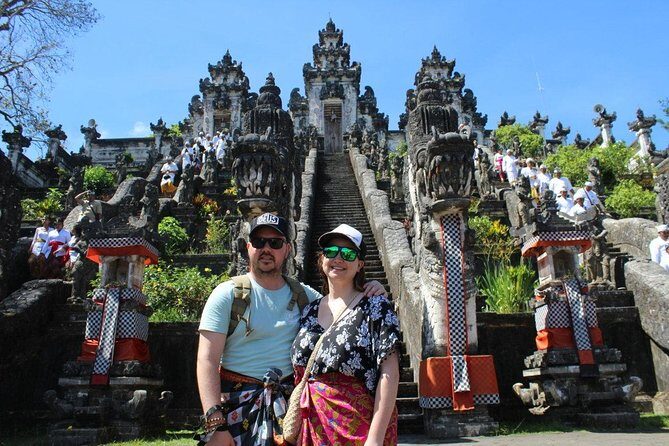
Can I cancel for free?

Yes. You can cancel up to 24 hours in advance for a full refund. If you cancel less than 24 hours before the start time, the amount paid is not refunded.
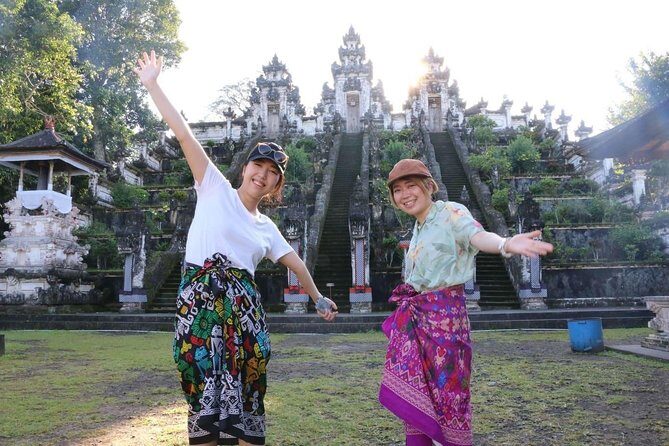
Ubud Hidden Gems Waterfall, Temple and Rice Terraces Private Tour

Ubud Hidden Gems Waterfall, Temple and Rice Terraces Private Tour - Tegalalang Rice Terrace: farming views and a slower stroll

Five waterfalls, one calm day in Ubud.

This private tour is built for people who don’t want a rushed circuit. You’ll move through rice terraces, a real water-purification ritual at Tirta Empul Temple, and waterfalls timed for that Bali “light through the cliffs” moment at Tukad Cepung.

I especially like the door-to-door pickup from Ubud and most of south Bali. And I love that entrance tickets are included, so you spend your time outside, not at ticket desks.

One consideration: this is a long 9.5-hour day with wet paths and uneven ground around waterfalls and temples. If you hate hills, stairs, or getting a little damp, wear grippy shoes and plan for a slower pace.

Key things to know before you go

Ubud Hidden Gems Waterfall, Temple and Rice Terraces Private Tour - Key things to know before you go

  • Private pacing: it’s only your group, so you’re not stuck with someone else’s agenda.
  • Tirta Empul water blessing: you’ll join the purification ritual at the sacred spring site.
  • Tukad Cepung light effect: sunlight filters through cliff openings—great for photos and quiet viewing.
  • A full waterfall sweep: Kanto Lampo and Tibumana add variety beyond the headline stops.
  • Tickets, water, parking included: guiding and entry fees are bundled, while lunch is on your own.

A private waterfall-and-temple day that doesn’t feel like a chore

In Bali, “seeing a lot” can turn into “rushing a lot.” This tour flips that. Because it’s private, your guide can set a realistic rhythm: time to pause for photos, time to step off the main flow when you want a quieter moment, and time to ask questions without feeling like you’re interrupting a packed schedule.

The big win is the combo of nature and spirituality in one loop. You start with traditional farming views at Tegalalang Rice Terrace, shift into a Hindu temple water-ritual at Tirta Empul, then spend the rest of the day with waterfalls—starting with Tukad Cepung’s signature sunbeam setting. It’s the kind of day where your phone gets used for photos, but you also end up paying attention to how locals relate to water and landscape.

Getting from place to place: pickup that saves your energy

Ubud Hidden Gems Waterfall, Temple and Rice Terraces Private Tour - Getting from place to place: pickup that saves your energy
If you’re basing yourself in Ubud (or staying in parts of south Bali), the pickup and drop-off is a major convenience. You’re not self-driving between spots, which matters because waterfall days can turn slippery fast—and driving while watching weather and crowds is not the fun part.

The tour also includes parking and mineral water, so you’re not constantly budgeting time and energy for tiny logistics. From what I see in the way guides are described by name—Agung, Gus, Wayan, Made, and Mr. Gusti Tirta—service tends to be hands-on: helping with tickets, keeping things moving, and making the day feel comfortable rather than chaotic.

Tegalalang Rice Terrace: farming views and a slower stroll

Ubud Hidden Gems Waterfall, Temple and Rice Terraces Private Tour - Tegalalang Rice Terrace: farming views and a slower stroll
Tegalalang Rice Terrace is one of those places that looks Instagram-famous from a distance—then gets even better when you’re walking through it. Expect an hour to stroll through the emerald-green terraces, take in how water and land work together, and learn the basics of traditional Balinese farming.

Why this stop works in the middle of a waterfall tour: it gives you a dry, photogenic reset before you head toward the damp jungle conditions. You also get a sense of why water is such a big deal in Bali. Even when you’re not thinking about irrigation systems, you can feel the relationship between steps of farmland and the flow of life-giving water.

Practical tips:

  • Go prepared for uneven footing. Terraces can be rickety under the best conditions.
  • If you’re a photographer, arrive with patience for angle hunting—views here change quickly as you move.

Tirta Empul Temple: the water blessing ritual and its meaning

Ubud Hidden Gems Waterfall, Temple and Rice Terraces Private Tour - Tirta Empul Temple: the water blessing ritual and its meaning
Tirta Empul Temple is where the day turns spiritual. You’ll spend about one hour participating in a purification ritual at this sacred Hindu water temple, known for its holy springs and intricate temple setting.

Even if you’re not religious, it’s worth approaching this stop with respect. The ritual is not just “something to watch.” It’s a lived practice tied to cleansing and sacred water. A private guide helps here because you’re more likely to understand what to do, when to follow, and how to move without turning the moment into a performance.

What I like about having a guide at Tirta Empul:

  • You can ask basic questions on-site.
  • You can follow the flow of the ritual more easily than if you were figuring it out alone.
  • You’ll avoid that awkward feeling of not knowing where to stand or when to step in.

Dress and behavior matter. Plan on shoulders and knees covered for temple areas, and expect a quiet, focused atmosphere around the spring pools.

Tukad Cepung Waterfall: why the light effect is worth timing

Ubud Hidden Gems Waterfall, Temple and Rice Terraces Private Tour - Tukad Cepung Waterfall: why the light effect is worth timing
Then comes the waterfall stop most people talk about for the right reason: Tukad Cepung. You’ll have about one hour here, and the point isn’t just the waterfall—it’s the way sunlight floods through cliff openings, creating a dramatic atmosphere and strong photo opportunities.

This is a great contrast to the open-air rice terraces. At Tukad Cepung, the air feels cooler and the setting is more enclosed. The waterfall area can also be visually busy, so the trick is to slow down, find your best vantage point, and let the “light moment” happen. If you’re hoping for pictures that look different from standard waterfall shots, this is one of your best bets that day.

Practical tips:

  • Expect getting a little wet. Even without bathing, spray can happen.
  • Be ready for slippery patches. Take your time on the path in and out.
  • Bring a camera that handles humidity or keep it covered. Condensation is real.

Kanto Lampo and Tibumana: two waterfalls, two moods

Ubud Hidden Gems Waterfall, Temple and Rice Terraces Private Tour - Kanto Lampo and Tibumana: two waterfalls, two moods
After Tukad Cepung, you continue to a pair of waterfalls that broaden the day beyond one signature scene.

Kanto Lampo Waterfall: closer to the cascade

Kanto Lampo is the stop where you get that close-to-the-water feeling. You’ll spend about one hour exploring its natural charm and getting refreshed by the spray.

This one tends to feel more active than Tukad Cepung. You’ll have moving water plus the energy of people trying to frame the right shot. If you like waterfalls with texture and depth—water hitting rock, foam patterns, and that “I’m right here” vibe—Kanto Lampo is a good match.

Tibumana Waterfall: calmer jungle time

Next is Tibumana Waterfall, typically a quieter experience because it’s described as tucked into a lush jungle setting and a bit less famous than the headline stops. You’ll have around one hour to enjoy the tranquil atmosphere.

This is your decompression stop. After Kanto Lampo’s lively spray, Tibumana gives your eyes and ears a chance to settle. It’s a nice moment if you’re traveling with someone who doesn’t want every stop to feel like a photo mission.

Practical tips for both:

  • Wear footwear you trust on uneven, damp surfaces.
  • Keep a small towel or tissue handy for drying hands and camera touches.
  • If you’re with a group, agree on meeting points in case you split for photo angles.

Guide quality and photo help: why it changes the day

Ubud Hidden Gems Waterfall, Temple and Rice Terraces Private Tour - Guide quality and photo help: why it changes the day
A waterfall tour lives or dies by how the guide runs the timing. With this operator, the guide component shows up again and again in the way people describe named guides like Agung Balibuddy, Gus, Wayan, Made, and Mr. Gusti Tirta.

Here’s what that usually means in real life:

  • You’re not left holding a ticket and guessing what to do next.
  • The guide helps with entry flow, and you spend more time in the right place at the right moment.
  • You get helpful cultural context, which makes temples feel less like scenery and more like a place with rules and meaning.
  • Many guides will help with photos, especially if you tell them what you want (wide shots, people shots, or “sunbeam” waterfall framing).

That last part is underrated. If you’ve ever tried to take decent waterfall photos yourself—kneeling, holding a phone, aiming for a moving target—you know why having a second set of eyes helps.

Transport, pace, and comfort: what a 9.5-hour circuit really means

Ubud Hidden Gems Waterfall, Temple and Rice Terraces Private Tour - Transport, pace, and comfort: what a 9.5-hour circuit really means
This is about 9 hours 30 minutes total, give or take based on traffic and weather. With five main stops and roughly an hour at each, the day is structured but not frantic.

The pace works best if you’re okay with:

  • walking between viewpoints,
  • stepping on wet surfaces,
  • and adjusting your speed to temple rhythms and waterfall crowds.

If you want a day that feels effortless, private guiding helps. If you expect a “sit and be chauffeured” day, this won’t match that. You’ll be moving through sacred and natural spaces, and that movement is the point.

Price and value: what $33 covers (and what it doesn’t)

At $33, this tour is priced like a value play—especially because the essentials are included: pickup/drop-off, guiding, parking, mineral water, and all entrance tickets.

That bundled structure is what makes it feel like good value. In Bali, you can easily spend more than you expect on ticket fees alone, then add transportation and small extras that stack up. Here, most of the “gotchas” are handled.

What isn’t included is straightforward:

  • Lunch is on you.
  • Personal expenses are on you.

For most people, that’s not a deal-breaker. It just means you should plan where you’ll eat nearby after the tour, or bring a snack if you get hungry between stops.

Weather and comfort planning for Bali waterfall days

This experience requires good weather. If it’s canceled due to poor weather, you’ll be offered a different date or a full refund. That’s important because waterfall lighting, access paths, and safety can change quickly with heavy rain.
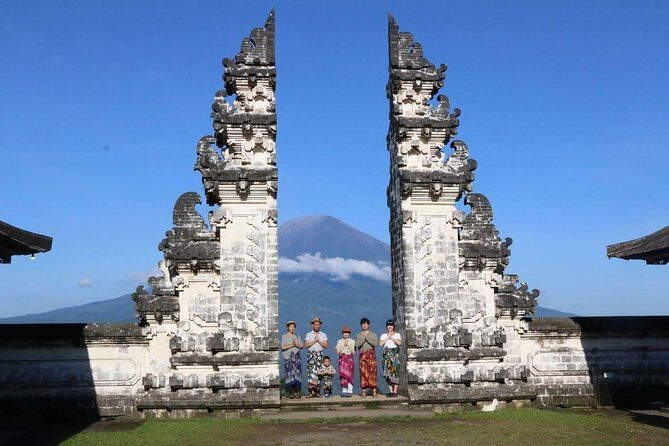
My advice if you’re booking:

  • Build flexibility into your schedule for that day.
  • Keep your footwear simple: grippy soles beat style every time.
  • Bring a light layer for temple airflow and a small waterproof cover for your phone if you’ll be shooting video.

Also, because it’s a private tour, you’re not locked into a fixed group timing. Your guide can help you adjust within the tour structure while still honoring the order of the day.

Should you book this Ubud private tour?

Book it if you want a private day that mixes culture and nature without the stress of self-drive. The combination of Tegalalang rice terraces, a Tirta Empul water purification ritual, and multiple waterfalls—especially Tukad Cepung with its cliff-filtered light—makes the day feel varied, not repetitive.

Skip it or rethink it if you:

  • dislike long days with uneven, damp ground,
  • need a strictly seated itinerary,
  • or have major mobility limitations around stairs and temple pathways.

If you’re traveling in a small group and you care about getting the timing right (for photos and for temple etiquette), this tour is a strong option for a calm, well-supported Bali day.

FAQ

FAQ

What are the stops on the tour?

The tour includes Tegalalang Rice Terrace, Tirta Empul Temple (for a purification ritual), Tukad Cepung Waterfall, Kanto Lampo Waterfall, and Tibumana Waterfall.

Is pickup and drop-off included?

Yes. Pickup and drop-off are included from addresses in Ubud and most of south Bali.

Are entrance tickets included?

Yes. All entrance tickets are included, and mineral water is provided.

Is lunch included?

No. Lunch isn’t included, so you’ll want to plan your meal separately.

How long is the tour?

It runs about 9 hours 30 minutes.

Is this tour private?

Yes. It’s a private tour/activity, and only your group participates.

What should I do if the weather is bad?

This experience requires good weather. If it’s canceled due to poor weather, you’ll be offered a different date or a full refund.
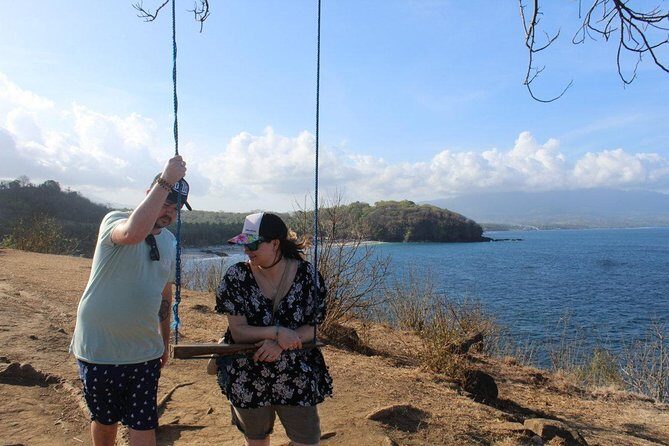
Is there a way to cancel for a refund?

Yes. You can cancel for a full refund if you cancel at least 24 hours in advance of the experience’s start time. If you cancel less than 24 hours before, the amount paid isn’t refunded.

Intermediate canyoning tour in Bali ” Maboya Canyon “

Intermediate canyoning tour in Bali " Maboya Canyon " - The all-day schedule: what happens from pickup to drop-off

Maboya Canyon turns Bali into an action movie. This intermediate canyoning trip in north Bali mixes jumps, slides, and rappels with a guided day that’s built around safety training, not guesswork. I especially like the small group size (max 8) and the fact that your instructor teaches you how to use the lanyard (safety rope) before you start going down.

The main thing to consider is physical effort. The day is about 11 hours, and you’ll do an approach hike, wear wetsuit gear all day, and then hike back out after the descent, so plan for a moderate fitness level and solid stamina.

Key highlights you’ll actually care about

Intermediate canyoning tour in Bali " Maboya Canyon " - Key highlights you’ll actually care about

  • Hotel pickup anywhere in Bali means no self-drive stress or hunting for a meeting point
  • Max 8 people keeps the day calmer and makes it easier for your guide to watch what you’re doing
  • Hands-on training first (lanyard use, abseil basics, and canyon hand signals) so you’re not thrown in blind
  • Real descent fun with multiple slides, jumps, and rappels through Maboya Canyon
  • GoPro footage for your device plus two meals, so you leave with content and fuel
  • Insurance included and full canyon gear provided (wetsuit, harness, helmet, canyoning boots)

First: What Maboya Canyon is (and who it fits best)

Intermediate canyoning tour in Bali " Maboya Canyon " - First: What Maboya Canyon is (and who it fits best)
Maboya Canyon is north Bali’s answer to the adrenaline crowd. The vibe isn’t just “walk somewhere pretty.” It’s movement: you hike in, then you go down the canyon using techniques like abseiling (rappelling), plus playful obstacles like slides and jumps. The trip is labeled intermediate, so it’s meant for people who can handle basic canyoning mechanics and don’t panic when things get a little steep and slippery.

What I like is how the day is structured so the fun doesn’t outrun the safety. Your instructor gives a briefing, then you suit up with proper canyon gear, then you practice key safety skills at the start point before the real descent. It’s the kind of approach that helps you feel confident fast.

This one is also ideal if you want the “canyoning in Bali” experience without turning it into logistics homework. You get round-trip transfers from any hotel in Bali, and the schedule is set up around pickup and drop-off rather than you needing to coordinate rides or parking.

If you’re dealing with a serious injury, low mobility, or you know you struggle with hikes, uneven footing, or controlled rappels, you might want a gentler option. But if you’re generally comfortable being active for hours, you’ll be in the right lane.

The all-day schedule: what happens from pickup to drop-off

Intermediate canyoning tour in Bali " Maboya Canyon " - The all-day schedule: what happens from pickup to drop-off
This trip is designed as a full-day outing, roughly 11 hours from hotel pickup to return. Here’s the flow, step by step, and what each step is doing for your experience.

1) Pickup and the Wanagiri base welcome

Your driver picks you up from your accommodation anywhere in Bali. That matters more than it sounds. In a day like this, you want your energy to go into the canyon, not into figuring out roads, meeting points, and timing.

You head to a local base in Wanagiri. There’s a welcome moment, plus a light breakfast with tea or coffee while you get organized. This is a smart start: you’re about to be in wet gear and doing a hike, so having food in your system helps.

2) Gear up with canyon-specific equipment

After the initial welcome, your instructor handles the briefing. Then you suit up with the required canyoning gear:

  • wetsuit
  • harness
  • helmet
  • canyoning boots

The tour emphasizes current gear and proper canyon setup. That’s not just comfort. It’s also how you keep the descent more controlled and predictable. The boots in particular are a big deal in wet conditions, since canyon floors don’t behave like sidewalks.

3) The approach hike to the start point (with views)

Then comes the approach hike to the start point. You’ll be walking into the canyon area, building up a sense of the route before you drop in. The best part here is that you don’t just feel transported; you get time to take in the area while you move.

This section also sets expectations. You’ll see the kind of terrain you’ll be dealing with, and you’ll start to understand why training at the start point matters.

4) Safety training: lanyard, abseil, and hand signals

Before you start descending, you get short training at the start point. This is the piece that makes the intermediate level feel manageable.

You’ll practice:

  • how to use the lanyard (safety rope)
  • how to abseil using your system correctly
  • hand signals used in the canyon

If you’re the type who likes to know the rules before you play, you’ll appreciate this. Guides Eddy and Harry (named in one of the guide experiences) are noted as making the day memorable and safety-focused. The combination of instruction plus real-time guidance is what keeps the fun from turning into chaos.

5) The descent: slides, jumps, and rappels

Now the canyoning fun kicks in. The descent includes several elements:

  • slides
  • jumps
  • abseils (rappels)

Think of it like a sequence of mini challenges. Instead of only “down, down, down,” you get different movement types, and that keeps the adrenaline from flattening into monotony. You’ll be dealing with water, rock texture, and gravity all at once, so having your instructor controlling pace and technique matters.

This is where the tour earns its “intermediate” label. You’re not just walking through wet scenery. You’re actively using your skills while going through obstacles.

6) Hike back out, then a big local lunch

When you finish the descent, you return by hiking. That climb-out matters because it reminds you how you got in: your legs are doing their part, even when the fun part is over.

Lunch then hits hard in the best way. There’s a big lunch featuring local food. It’s not just a token bite. It’s meal-recovery fuel after hours in a wetsuit and moving through water.

During lunch, you get your GoPro footage from the descent. That timing is smart: you’re relaxed enough to watch it, and you’re already sitting down.

7) Head back to your hotel

Finally, you head back to your accommodation with the same easy transfer setup. The point is that your day ends cleanly, without you needing to line up another transport plan.

Value and what you’re really paying for

Intermediate canyoning tour in Bali " Maboya Canyon " - Value and what you’re really paying for
The listed price shows as $0.00 per person, which may not reflect the real booking total (prices often vary by date and availability). So instead of obsessing over the number, I look at the value mix.

You’re getting:

  • round-trip transfers from any Bali hotel
  • an instructor who handles briefing and canyon start training
  • full canyon gear (wetsuit, harness, helmet, boots)
  • GoPro photos and videos for your own device
  • breakfast snack with tea or coffee
  • a big local lunch
  • insurance included
  • small group cap (8 max)

In other words, you’re paying for a guided, regulated day where safety training and equipment are built in. That’s the opposite of DIY canyoning, and it’s what makes an intermediate trip feel approachable. If you ever priced out “transport + guide + gear + insurance” separately, you’d likely see how the package makes sense.

Also, the GoPro footage is a real convenience. You’re not renting a camera setup, and you don’t have to scramble to capture every moment. You get the visual proof and the memories in a way that actually works with your day.

Transfers and timing: the real comfort factor

Intermediate canyoning tour in Bali " Maboya Canyon " - Transfers and timing: the real comfort factor
No one wakes up excited to play transport planner. This tour removes that stress by offering pickup from your hotel anywhere in Bali and dropping you back afterward.

The duration is about 11 hours, with operation hours from 7:00 AM to 5:00 PM. The start is typically early, and one guide experience included a pickup around 6 AM from Seminyak/Canggu area. That’s normal for north Bali trips because you’re covering distance and building in time for training and descent.

If you hate early mornings, this might be tough. But if you like getting the day moving and having the rest of your evening free, it’s a solid trade.

Gear, insurance, and why the setup matters

Intermediate canyoning tour in Bali " Maboya Canyon " - Gear, insurance, and why the setup matters
For canyoning, gear is not a “nice to have.” It’s the difference between a controlled descent and a painful learning curve.

You’re provided:

  • wetsuit
  • harness
  • helmet
  • canyoning boots

You’re also covered with insurance included. That won’t stop water and rock from being slippery, but it does reduce the risk burden that many people worry about.

The training is the other big piece. Learning how to use your lanyard and how to abseil before you go into the main descent is what keeps most people feeling safe. One of the biggest themes from guide experiences is the sense of being looked after the whole time, not just at the beginning.

Food and recovery: breakfast, lunch, and why it matters

Intermediate canyoning tour in Bali " Maboya Canyon " - Food and recovery: breakfast, lunch, and why it matters
You get a light breakfast at the base with tea or coffee, plus a snack-style setup. Then after the descent, you get a big local lunch.

That meal rhythm is practical. Canyoning is physical, wet, and demanding. If you show up hungry or skip food, you’ll feel it later. The tour’s meal plan helps you stay focused during the descent and comfortable during the hike back.

One extra bonus is the pacing: lunch is when the GoPro footage is shared. That means you can watch your highlights while you’re rehydrating and letting your legs recover.

GoPro footage: how it benefits you after the canyon

Intermediate canyoning tour in Bali " Maboya Canyon " - GoPro footage: how it benefits you after the canyon
This is one of the smartest inclusions. You get GoPro photos and videos, and the tour highlights that you can save them to your own device without extra charge.

What this does for you:

  • You get action shots without mounting your own camera setup
  • You can relive the jumps and slides clearly
  • You don’t have to worry about waterproofing your gear in advance

One small note from the included/excluded list: USB storage is not included. So if you’re the type who wants a thumb drive, you may need to bring your own solution. But the core idea is that the footage is meant for your device.

Weather and cancellations: plan for the water mood

Intermediate canyoning tour in Bali " Maboya Canyon " - Weather and cancellations: plan for the water mood
Canyoning depends on conditions, and the experience is noted as requiring good weather. If the trip gets canceled due to poor weather, you’ll be offered a different date or a full refund.
That’s the right approach for this type of activity. Rain can mean safer or worse conditions depending on the canyon and flow rate. The key for you is to be flexible with dates. If your schedule is fixed and you can’t shift anything, you might want a Plan B activity in Bali.

Who should book Maboya Canyon (and who should think twice)

You should book this tour if you:

  • want jumps, slides, and rappels in north Bali
  • feel comfortable with a moderate fitness day that includes hikes
  • like structured safety training and clear guidance
  • want a full package: transfers, gear, meals, and insurance
  • care about getting your descent footage without extra hassle

You might think twice if you:

  • struggle with longer active days or have balance concerns
  • get anxious about heights and controlled abseils (even with training)
  • want a low-effort scenic walk rather than an active canyon experience

This intermediate level is a sweet spot for many people who’ve done beginner canyoning or who are active and want to progress.

Quick practical tips for your day (so you feel good)

The tour includes a lot, so your job is simpler than DIY canyoning. Still, your comfort depends on a few basics.

  • Wear clothes that dry fast and are easy to change from.
  • Bring/keep your electronics secure and ready for the GoPro sharing moment.
  • If you’re unsure about your fitness, be honest with yourself about the hikes and slippery ground.
  • Hydrate before pickup if you can. You’ll be out for about 11 hours.

Also: the day includes wetsuit time, which can make temperature feel different than you expect. Don’t assume the weather just because it looks mild from town.

Should you book Maboya Canyon?

I think this is a smart booking if you want real canyoning action in Bali with minimal friction. The best part is the package design: small group size, hands-on lanyard and abseil training, canyon gear provided, insurance included, and the GoPro footage shared during lunch so you don’t wait around later.

If you’re chasing views only, there are plenty of waterfall days in Bali. But if you want water, movement, and controlled adrenaline, Maboya Canyon is built for that.

If you’re on the fence because you’re unsure about intermediate difficulty, focus on the training piece and the fact that you’re capped at eight people. That combination usually translates into a calmer, safer experience.

FAQ

How long is the Maboya Canyon intermediate tour?

It runs for about 11 hours (approx.), from hotel pickup to return drop-off.

Do I get picked up from my hotel anywhere in Bali?

Yes. The tour offers round-trip transfers and pickup from any Bali hotel.

What gear is included?

You’re provided with canyoning equipment, including a wetsuit, harness, helmet, and canyoning boots.

Do I get GoPro photos and videos?

Yes. GoPro photos and videos are included, and you save them to your own device. USB storage is not included.

How big are the groups?

The maximum group size is 8 travelers.

Is insurance included?

Yes, insurance is included as part of the package.

What if weather is bad?

The activity requires good weather. If it’s canceled due to poor weather, you’ll be offered a different date or a full refund.
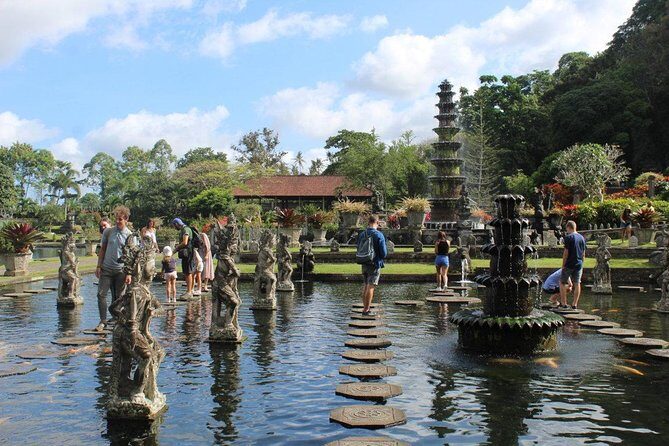
Celukan Bawang private North Bali Nature Tour

Celukan Bawang private North Bali Nature Tour - Price and what you actually get for $28

North Bali in one long day. This private full-day route strings together lake temples, waterfall country, and Banjar hot springs, which is perfect when you have limited time and want real nature time, not just driving past things. I especially like that it’s built for cruise schedules (with port pickup in many cases) and that your driver-guide can flex the day. One heads-up: it’s a long 12-hour day with lots of stops, and lunch and personal expenses are not included, so bring your budget and your patience for traffic.

What makes this tour feel practical is the way it’s organized around three different vibes: cool lake-and-mist sights (Ulun Danu Bratan and Wanagiri viewpoints), physical breaks in the form of waterfalls (including the Munduk area), and then a proper reset at the hot springs. I also like the personal touch from guides who speak good English and actively suggest where to go next, like Jimmy and Adi tailoring the route based on timing and what the group wanted to do.

If you’re the type who likes to move slowly, this might feel like too much. You’ll hike and wander at several points, and some stops involve natural footing around waterfalls and thermal pools—go at your pace and expect to get a little damp.

Key highlights that make this North Bali day work

Celukan Bawang private North Bali Nature Tour - Key highlights that make this North Bali day work

  • Port-friendly setup for cruise travelers with private transport and pickup coordination
  • Waterfall day, not just one photo stop including multiple falls plus the Munduk-area nature trek
  • Banjar Hot Springs with warm sulfur-rich water and dragon-spout stone pools
  • Lake Buyan and Lake Tamblingan views from Wanagiri’s Twin Lake viewpoint
  • Brahma Arama Vihara Temple as a major Buddhist stop in North Bali
  • Good driver-guide energy shown in past experiences with names like Jimmy, Adi, and Yudi

Why this North Bali tour feels built for real people (not a checklist)

Celukan Bawang private North Bali Nature Tour - Why this North Bali tour feels built for real people (not a checklist)
This isn’t a “see everything in Bali” fantasy. It’s a focused nature-and-culture route for the North Bali region: lake temples up in the cool highlands, waterfall trails, and then a long soak to undo the day. At about 12 hours, it’s long enough to feel like you actually visited North Bali, which matters for cruise travelers with tight shore time.

The value is easy to understand. At $28 per person, you’re mainly paying for transport and a driver who also acts as your guide, plus the small necessities like mineral water and parking. You get a private setup, which means you’re not stuck with a slow group timing or forced photo stops.

The one trade-off is that the day can be physically varied. Waterfall areas mean stairs, slick rock, and short walks. If you’re bringing kids, plan on a mix of movement and rest, and lean on your driver to time stops when it’s less crowded.

Price and what you actually get for $28

Celukan Bawang private North Bali Nature Tour - Price and what you actually get for $28
Here’s the deal: $28 per person is low for a full-day private route. In the price, you’ll typically get private transportation, mineral water, parking fee, petrol, and a driver-guide. You also get a mobile ticket, plus the option of group discounts (handy if you’re traveling with friends).

What’s not included matters. Lunch is not included, and personal expenses are on you. Also, admissions for major sights are not included, and the tour notes that admissions tickets aren’t included at stops like Ulun Danu Bratan (and several others in the day). So budget for entry fees if you want them, plus lunch if you don’t bring snacks.

If you’re weighing options, this tour is best when you want the convenience of a private driver for a long circuit. If you’re comfortable hiring a scooter or driving yourself, you might save money—but you’ll trade away the stress-free route planning, especially when weather and timing start changing.

Celukan Bawang to North Bali: the pickup that matters

If you’re arriving by cruise, this tour style is made for you. People have been met at the Celukan Bawang port by drivers like Jimmy and Yudi, with clear communication in advance and an English-speaking guide at the wheel. That port pickup piece is more than convenience. It helps you avoid the common shore-excursion headache: finding the right meeting point while the ship clock is ticking.

Even if you’re not on a cruise, the private transport angle still pays off. North Bali is spread out, and doing several stops in one day without arranging multiple rides saves energy. It also helps you stay flexible if a waterfall is muddy or if the sky changes over the mountains.

Ulun Danu Bratan: lake mist and the floating-temple feeling

Celukan Bawang private North Bali Nature Tour - Ulun Danu Bratan: lake mist and the floating-temple feeling
Ulun Danu Bratan is one of those stops where the setting does half the work. You’re looking at a temple that feels like it floats on Lake Beratan, framed by misty mountains and lush gardens. It’s a calm, atmospheric pause early in the day—great for photographs, but also worth it just for the quiet.

Practical bits: the tour doesn’t include admission tickets here, so expect an entry fee. Bring a light layer even if it’s warm elsewhere, because highland lake areas often feel cooler, and mist can make you chilly faster than you expect.

If your driver senses you’re short on time, this is the kind of place where a tight, focused visit works. You can still see the main temple views without turning it into a 2-hour wandering marathon.

Handara Iconic Gate: a grand entrance with a strong photo payoff

Celukan Bawang private North Bali Nature Tour - Handara Iconic Gate: a grand entrance with a strong photo payoff
Handara Iconic Gate is exactly what it sounds like: a famous gateway set against rolling green hills. The visuals are the headline, and it’s a good place to get a “wow, North Bali looks different” moment.

You should also treat it like a practical photo stop, not a deep cultural stop. Admissions aren’t included, and the gate’s main draw is how it photographs in different light. If the weather is foggy, it can look moody; if the skies clear, you’ll get brighter views into the hills.

A solid driver-guide will time this stop so you’re not arriving in the harshest crowd surges. Past experiences include guides adapting the plan based on conditions, so ask your driver what time they recommend and trust their read.

Munduk-area rainforest trekking and waterfall time

Celukan Bawang private North Bali Nature Tour - Munduk-area rainforest trekking and waterfall time
This tour is designed around nature walks toward waterfall country. The highlight is the rainforest trek to Munduk Waterfall described in the tour flow, paired with several additional waterfall stops later in the day.

That structure is smart. Instead of only one waterfall and then a long drive, you get a sequence: short walks, scenery changes, and repeated opportunities to cool off. It keeps the day from becoming monotonous road time.

Just plan for the reality of waterfalls: you might get wet, your shoes might get dusty or muddy, and the safest experience comes from wearing footwear with grip. If you want to do water-play at the later Aling-Aling stop, wear something that dries fast.

Banyuwana Waterfall: a quieter, natural pool kind of stop

Celukan Bawang private North Bali Nature Tour - Banyuwana Waterfall: a quieter, natural pool kind of stop
Banyu Wana Amertha Waterfall is described as a natural hidden gem surrounded by greenery, with crystal-clear water flowing into refreshing pools. This is the stop that fits the “nature lovers” side of the tour best: you can slow down, watch the water, and take a breather away from the busiest photo points.

Admission tickets aren’t included here either. Also, because you’re dealing with natural water and rock, treat it like a place where caution is part of the fun. If you’re bringing children, consider whether they need close supervision around pools.

This stop works well if you want a more peaceful tone before the higher-energy waterfall activities later.

Banyumala Twin Waterfalls: jungle highlands and a longer feel

Celukan Bawang private North Bali Nature Tour - Banyumala Twin Waterfalls: jungle highlands and a longer feel
Banyumala Twin Waterfalls is set up as a hidden paradise in the heart of Bali’s highlands, with twin cascades dropping into a more secluded area. The setting is rainforest and jungle-focused, so even if you’re not staying for a long hike, you’ll feel like you left the main tourist roads.

The time you spend here tends to feel more active than Ulun Danu Bratan or Handara Gate. That can be good if you want movement in your day. It can be tiring if you’ve already done several walks.

Your best move is to keep your pace comfortable. Let your driver-guide know if you want shorter trails or more time at viewpoint spots.

Wanagiri Twin Lake viewpoint: Lake Buyan and Lake Tamblingan

Wanagiri’s Twin Lake Selfie viewpoint gives you a wide panorama over Lake Buyan and Lake Tamblingan. It’s in the cool mountain region, so it often feels like a weather reset—windy at times, misty at times, and always scenic.

Admissions aren’t included here. The biggest practical factor is timing: if the weather clears, this is one of the most rewarding view moments of the day. If clouds sit low, you’ll get a softer, foggy look—still pretty, but different.

I like that this stop breaks up the waterfall sequence. After multiple wet, active moments, a viewpoint gives you a chance to dry off, catch your breath, and let the scenery do the work.

Tamblingan Lake and the Tamblingan Temple stop

On Tamblingan Lake, you visit Tamblingan Temple on the tranquil shores of Lake Tamblingan. Like Ulun Danu Bratan, the temple has a mist-and-rainforest feel, which makes it more than just a quick cultural checkbox.

This stop also helps balance the physical side of the day. If you’ve been walking in uneven ground around waterfalls, a slower temple stop can help you recover without losing momentum.

Admissions aren’t included. And if you want photos, be respectful about where you stand and when. Sacred spaces always reward quiet behavior.

Banjar Hot Springs: the day’s reset button

Then comes Banjar Hot Springs, and this is where the tour makes sense for tired legs. The warm, sulfur-rich water flows from ornate dragon-shaped spouts into stone pool areas, which creates a very distinct hot-spring look.

Admission tickets aren’t included. What you should bring is practical: a towel (or quick-dry options), a swimsuit or swim-ready clothes, and water shoes if you think you might need grip around pool edges. The water itself is the highlight, but the comfort setup matters.

I really like that hot springs land near the middle-to-late part of a long day. It’s not just a final “nice-to-have.” It’s the kind of stop that can make the later part of the day feel doable.

Aling-Aling Waterfall and the water-play options

Aling-aling waterfall is described as a favorite, with water activities like water jumping, water sledging, and swimming in a blue lagoon area. There’s also instruction mentioned for the water activities, which is useful if you’re not sure what’s safe or how it works.

Admission tickets aren’t included. Also, this is the point where you should decide early if you’re participating. If you’re not doing the water-play, you can still enjoy the waterfall scenery, but go prepared for the fact that the area may be active.

If your group includes kids, this stop can be a big win—but keep expectations realistic. Natural water features and fun activities come with a bit of risk management.

Lunch by the lake, plus coffee plantation time (the softer moments)

The tour’s flow isn’t only waterfalls and temples. It also includes a lakeside lunch, described as delicious and set in scenic calm. That matters on a long day because it gives you a real break, not just a snack in the car.

A local coffee plantation stop is also part of the overall experience. If you like learning how coffee is grown and processed in Bali, this can add local texture beyond the main attractions. If coffee isn’t your thing, it still helps break up the day and keeps it from feeling like a nonstop driving schedule.

There’s also mention of lunch in a traditional house setting. That type of stop can feel meaningful because it changes the pace and gives you a peek at everyday local life.

Brahma Arama Vihara Temple: Bali’s largest Buddhist monastery

One of the cultural anchors of the day is a visit to Bali’s largest Buddhist monastery. A past experience specifically mentions Brahma Arama Vihara Temple as part of the route, and it fits the “culture and spirituality” angle described for the tour.

It’s the kind of place that adds depth to your nature day. Hot springs, waterfalls, lake viewpoints—those are sensory and outdoor-heavy. A major monastery stop gives you a quiet contrast and a different way to understand what people value in Bali.

Admissions aren’t included for stops in this tour flow, so plan for that.

Your guide makes the difference: Jimmy, Adi, and Yudi in the real world

A big theme in the best past days is the guide’s attitude and flexibility. People have praised guides like Jimmy, Adi, and Yudi for being friendly, professional, and good at English. They’ve also been praised for adapting the plan based on what the group wanted and what timing/weather allowed.

This matters because North Bali can be weather-dependent. If rain hits or clouds sit low, viewpoints and visibility change quickly. A driver who can adjust saves your day.

Even small things show up in the feedback: coordinating by WhatsApp ahead of time, suggesting an extra waterfall stop when it fits, and creating a route that hits the main sights without turning the day into a rushed sprint.

If you want the best experience, don’t just ask what’s on the list. Ask what your driver recommends for your group’s energy level: gentle walks only, or you want more active waterfall time.

Who this tour suits best

This tour is a strong match if:

  • You’re on a cruise and need a full-day North Bali plan with private pickup and minimal hassle
  • You want real nature time: waterfalls, lake views, and hot springs
  • Your group includes mixed ages and needs a driver who can adapt (past days mention kids enjoying the pacing)
  • You value a route that balances culture and outdoors rather than only one theme

It might not be your best choice if you hate long days, want only one big activity, or dislike walking on uneven natural terrain.

Should you book Celukan Bawang private North Bali Nature Tour?

I’d book it if your goal is a smooth, pre-planned North Bali day with real variety: lake temples, iconic gates, waterfall hikes, and a hot-spring reset. The price is hard to beat for private transport across several distant stops, and the best part is the human side—guides who talk with you, coordinate in advance, and adjust the route.

I’d think twice if you want a super relaxed pace or you don’t want to handle extra costs for lunch and admissions. Also, if you’re sensitive to long drives, the 12-hour duration is the big factor to consider.

If you do book, set yourself up to enjoy it: wear grippy shoes, pack a rain layer, and decide early whether you want to jump or sled at Aling-aling. When you align your expectations with the day’s mix, this tour hits the sweet spot.

FAQ

How long is the Celukan Bawang private North Bali Nature Tour?

It’s listed at about 12 hours.

Is pickup included?

Yes. The tour includes pickup, and it’s designed for cruise travelers with port pickup mentioned in prior experiences.

What’s included in the tour price?

Private transportation, mineral water, parking fees, the driver as your guide, and petrol are included. A mobile ticket is also included.

Is lunch included?

No. Lunch is not included.

Are admission tickets included for the stops?

Admission tickets are not included for the stops listed.

Can I cancel for a full refund?

Yes, free cancellation is offered up to 24 hours in advance for a full refund.
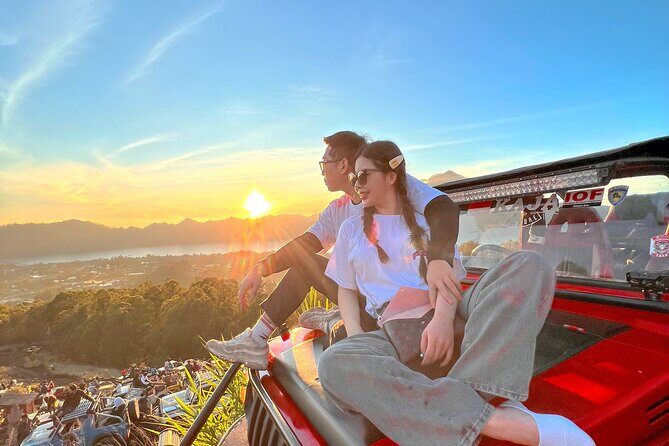
ATV Ride & Ubud Tour

ATV Ride & Ubud Tour - Tegalalang Rice Terrace: UNESCO views with real time to enjoy

Mud, monkeys, and rice views in one day. This Ubud combo is interesting because it strings together real adrenaline with two classic nature-and-culture stops, all in one smooth morning-to-afternoon flow. I like the 9 km jungle ATV trek with rain forest, rice paddies, bamboo forest, and mud play, and I also like that lunch and entrance fees are built into the price. One thing to consider: the ATV portion is messy by design, so if you hate getting dirty or want a fully relaxed day, this may feel too active.

The timing works for people who don’t want to babysit schedules. You start around 8:00 am and get hotel pickup in an air-conditioned minivan, then drop back off after the last visit. It’s also a private setup, meaning it’s only your group, not a big mixed crowd.

You’ll finish the day with two sights that feel very Ubud: Tegalalang Rice Terrace for UNESCO-style rice-terrace views and Sacred Monkey Forest for long-tailed monkeys. Guides such as Nyoman and Ketut are often praised for keeping things friendly and moving along at a good pace, which matters when you’re bouncing between adventure and wildlife.

Key points to know before you go

ATV Ride & Ubud Tour - Key points to know before you go

  • 9 km ATV track with jungle-rain-forest scenery plus rice paddies and bamboo forest
  • Mud time is part of the deal, so plan for clothes and shoes that can take a hit
  • One-day pairing: ATV + Tegalalang Rice Terrace + Sacred Monkey Forest
  • Lunch and entrance fees included, so you’re not constantly paying again
  • Hotel pickup and drop-off in an air-conditioned minivan saves energy and time
  • Private group format, so the day feels less chaotic

How the day is built: one morning, three different moods

This tour is built around switching gears. The first part is all action, riding an ATV on a long jungle trek. After you wash up as best you can and let your body recover, you get two “stop-and-stare” attractions that are easy to enjoy even if you’re not a hardcore photography person.

You start early at 8:00 am, which is a smart way to keep the heat and crowds more manageable at outdoor stops. The schedule also keeps variety front and center: dirt-and-speed for a few hours, then rice terraces for slow, scenic breathing room, then monkeys in a sanctuary setting.

Because it’s private, your group pace tends to feel more human. If you need a quick moment to catch your breath after the ride or linger a bit at the terrace viewpoint, that flexibility is usually easier than in a larger group day.

The ATV at Ubud Bali ATV Ride Real Adventure: 9 km of jungle and mud

ATV Ride & Ubud Tour - The ATV at Ubud Bali ATV Ride Real Adventure: 9 km of jungle and mud
The heart of this tour is the ATV ride with Balaji ATV and what they call the longest jungle trek at about 9 km. That distance matters because it’s not just a short loop around a base area. You’re out for about 3 hours, and the scenery changes as you go.

What you’ll likely notice on the track:

  • Rain forest scenery with open stretches for views
  • Rice paddies that make the ride feel more Bali than industrial
  • Bamboo forest sections that add texture and cover
  • Mud play, which is part of the fun and part of the mess

The tour also includes all ATV and safety equipment, which is a key value point. You’re not shopping around for gear or trying to figure out what you need at the last minute. You can focus on the riding and let their setup do the heavy lifting.

A practical note: “mud play” means your day will come with a bit of dirt management. Even if they provide guidance, you’ll want to bring (or plan) for shoes and clothing you can tolerate getting wet and muddy. If your main idea of adventure is a gentle scenic drive, you might want a lighter option instead.

Tegalalang Rice Terrace: UNESCO views with real time to enjoy

ATV Ride & Ubud Tour - Tegalalang Rice Terrace: UNESCO views with real time to enjoy
After the ATV, you shift into sightseeing mode at Tegalalang Rice Terrace. You get about 1 hour here, and that’s a useful amount of time. It’s long enough to walk viewpoints, grab photos, and enjoy the view without feeling like you’re sprinting to the next stop.

Tegalalang is known for its rice terraces, and the tour framing emphasizes the UNESCO heritage angle. The important part for you isn’t the label—it’s how the terraced design layers the view. When you stand at the right angle, you get that classic Ubud look: stepped fields, paths, and dramatic drop-offs created by the terrain.

Potential drawback: rice-terrace stops can be humid, and your body may still feel the ATV ride in your legs. The best approach is to keep your pace calm here. You don’t need to do every path; pick a viewpoint area and let the scenery do the work.

Sacred Monkey Forest Sanctuary: long-tailed monkeys and a caution for belongings

Next up is Sacred Monkey Forest Sanctuary, another 1 hour stop. The focus here is the natural habitat of long-tailed monkeys, which is why this place is one of Ubud’s iconic wildlife stops.

This is the part of the day where you go from “watch the land” to “watch the animals.” Even if you’ve seen monkeys before, this setting tends to feel more real because the monkeys are living in the sanctuary environment around visitors.

The main consideration is practical: monkeys can be curious about things that look edible or snack-like. Keep your personal items secure and avoid leaving tempting items lying around. If you have a bag, keep it closed. If you’re carrying water or snacks, plan to keep them with you rather than out in the open.

One more tip: bring patience. Wildlife viewing is never perfectly timed. You might see monkeys right away, or you might spend part of the hour moving slowly along paths until the action appears.

Lunch and entrance fees included: why the $100 price can make sense

At $100 per person, this tour doesn’t feel like the cheapest option on the page—but it can be good value for what it includes. Based on the details provided, your price covers:

  • ATV activity plus safety equipment
  • Lunch
  • Entrance fees / admission tickets for the stops
  • Hotel pickup and drop-off via air-conditioned minivan

Here’s why that matters. If you book ATV, terrace entry, and the monkey forest separately, you’ll usually end up paying multiple times and coordinating multiple vendors. Bundling reduces the friction. It also reduces the chance of a “surprise bill” at one stop when you thought something was already covered.

Also, you’re getting a full 8 hours (approx.) of structured time. That’s useful when you’re only in Ubud for a short stay and you want a day that already accounts for travel time between attractions.

If you’re someone who hates paying for extras at the last minute, you’ll likely like this format. If you want total freedom to linger in places without a schedule, a private but tightly timed combo might feel less flexible than you’d like.

Pickup, minivan comfort, and how to handle an early start

The tour includes pickup from Bali accommodations, using an air-conditioned minivan. That’s more important than it sounds. Ubud traffic and short hops between sites can eat time fast, and a climate-controlled ride helps you arrive at each stop with less fatigue.

Starting at 8:00 am also gives you a head start on the day. You’re not stuck doing the ATV in the middle of the hottest hours. And you’re not trying to catch monkey viewing at the end of the day when everyone’s tired and the light is flat.

One drawback to keep in mind: an 8-hour day is still a full day. Even with pickup and good pacing, you’ll want to be ready for a mix of walking (terrace paths) and sitting on the ATV portion. If you’re planning this right after a big day out, consider moving it to a day when you can rest the night before.

Guides and the human side of the day

A big part of getting a good experience on a combo tour is how the guide manages the flow between very different activities. In the information you were given, guides such as Nyoman and Ketut are repeatedly described as upbeat, helpful, and enjoyable to talk with.

That shows up in the small things: keeping you informed, helping you understand what to expect at each stop, and making sure the day doesn’t feel like a chaotic checklist. When you’re switching from ATV dirt to rice terrace views to monkey forest paths, those handoffs matter.

Even if you don’t care about conversation, a guide who communicates well reduces stress. You’ll spend more time enjoying each part and less time wondering what happens next.

Who should book this ATV + rice terraces + monkey forest combo

This is a strong fit if you want:

  • Adventure plus classic Ubud sights in one day
  • A plan that includes gear, lunch, and entrance fees
  • A private group day that feels less crowded
  • A mix of scenery: jungle/paddies/bamboo on the ATV, terraces for views, sanctuary wildlife for variety

It’s also a good match for families and groups who want one day that kids and adults can both enjoy. One of the accounts you were provided highlights that the day was especially fun for boys, which tells you this isn’t just a sit-and-watch itinerary.

Who might pause before booking:

  • If you want a totally low-effort day
  • If you hate getting dirty, since mud play is part of the ATV track
  • If your idea of wildlife viewing is strict distance and zero unpredictability, because monkey encounters bring natural chaos

Should you book this ATV and Ubud tour?

I’d book it if you’re aiming for a well-rounded Ubud day and you value convenience. You’re getting three top activities in one 8-hour (approx.) format, with pickup/drop-off, safety gear, lunch, and admission fees included. That’s the kind of deal that helps when your time is limited and you don’t want to micromanage multiple tickets.

I’d skip or switch to a different option if you’re sensitive to mess or prefer a slower pace. The ATV ride includes mud play, and that will change how you feel about the day’s comfort. Also, monkey forest visits are wildlife-first, so you’ll need a flexible mindset rather than expecting a perfectly controlled photo shoot.

If you do book, show up with the right attitude: one part speed, one part scenic strolling, one part animal watching. It’s a full day, but it’s built to keep the energy moving.

FAQ

What’s the duration of the ATV and Ubud tour?

The tour runs for about 8 hours (approx.). The ATV portion is about 3 hours, and each of the two attraction stops is listed as 1 hour.

What time does the tour start?

The start time is 8:00 am.

Is hotel pickup and drop-off included?

Yes. Pickup and drop-off are offered, using an air-conditioned minivan.

How much does it cost?

The price is $100.00 per person.

What’s included in the price?

The tour includes ATV and safety equipment, lunch, and entrance fees / admission tickets for the ATV ride, Tegalalang Rice Terrace, and Sacred Monkey Forest Sanctuary.

Is this tour private?

Yes. It’s described as private, and only your group will participate.

How long is the ATV ride and what’s it like?

The ATV ride is about 3 hours and includes a longest jungle trek of about 9 km, with panoramic views of rain forest, rice paddies, bamboo forest, and mud play.

What if the weather is poor?

The experience requires good weather. If it’s canceled due to poor weather, you’ll be offered a different date or a full refund.
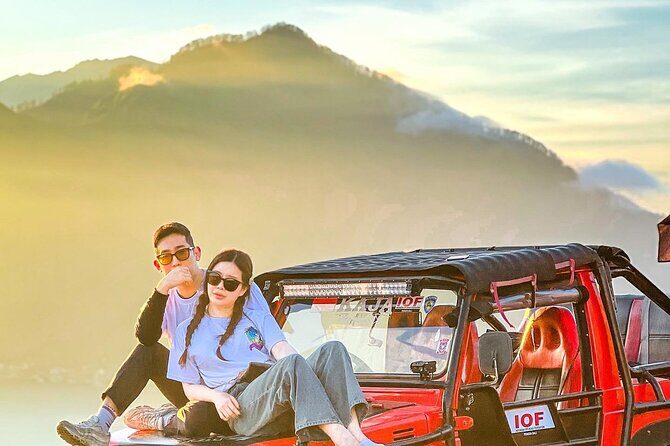
Can most people participate?

Most travelers can participate, and the start area is near public transportation.

Bedugul and Singaraja Tour

Bedugul and Singaraja Tour - Pasar Candi Kuning: fruit, flowers, and a peek at mountain life

Bali’s north coast feels quieter and wilder. This full-day route links the mountain Candi Kuning fruit-and-flower market with Lake Beratan and a rainforest waterfall walk, then continues on to Lovina and historic Singaraja. It’s a great way to see a very different Bali side without doing any of the driving yourself.

I also like that you get an English-speaking licensed guide, and I’ve seen praise tied to guides such as Anto and Windri for making the culture stops make sense. The one real trade-off is time: it’s about 10.5 hours, with lots of riding, and weather can throw a curveball if you hit rain on the day.

Key highlights before you plan your day

Bedugul and Singaraja Tour - Key highlights before you plan your day

  • Candi Kuning market altitude: Mountain produce and flowers, where the scenery and air change as you climb.
  • Lake Beratan and its lakeside temple: A crater lake setting with a temple locals use for offerings and honoring the water goddess.
  • Bedugul area at 850m (2,700 ft): Cooler mountain vibes compared with the coast.
  • Munduk twin lakes stop: A welcome scenic breather after the lake temple.
  • Lovina coast pass-by: You’ll see the famous black sand beach area and get a coastal lunch stop (own expense).
  • Gigit Waterfall rainforest walk: A nature break near the end of the day, with a stroll to the falls.

Getting from Kuta to North Bali without losing the day

Bedugul and Singaraja Tour - Getting from Kuta to North Bali without losing the day
This tour is built for one thing: covering serious territory in one day. You start around 8:30am with hotel pickup from major areas like Kuta, Seminyak, Sanur, Jimbaran, and Nusa Dua. Then you ride up through Bali’s central mountains, shift from coast heat into cooler highland air, and end back at your hotel.

If you’re the kind of traveler who hates planning, you’ll like this format. You don’t have to figure out routes between Bedugul, Lovina, and Singaraja. You just show up, follow along, and use the stops to break up the long drive.

The drawback is also simple: it’s a long day. Even if the itinerary feels “full,” your comfort depends on the driving pace and your tolerance for sitting. If you’re sensitive to motion or you get stiff fast, bring a light layer and plan to walk whenever you can during scheduled stops.

A practical note on comfort

Some reviews mention that the coach and AC are appreciated, but Bali can still feel hot. Pack like you’ll be doing both: airy coastal time and cooler mountain time. Comfortable shoes matter because the waterfall portion includes a walk on uneven ground.

Pasar Candi Kuning: fruit, flowers, and a peek at mountain life

Bedugul and Singaraja Tour - Pasar Candi Kuning: fruit, flowers, and a peek at mountain life
One of the most fun early stops is Pasar Candi Kuning. This is a fruit-and-flower market up in the mountains, where the scenery gradually turns more alpine: you start seeing cabbage, maize, and potatoes, plus mossy, green-covered edges to the roads.

What you’ll enjoy here is the texture of daily life. You’re not just photographing a famous spot. You’re watching vendors sell produce and blossoms that match the elevation. It’s also a nice reset before the temples and lake views, because it’s active and local.

What to watch for

Markets like this can mean steady selling and lots of people moving around. If you plan to buy anything, keep in mind you’ll also be spending the rest of the day in the car, so avoid anything fragile or heavy. If your goal is photos and wandering, you’re in good shape—just keep your pace slow and your expectations realistic.

Since this stop runs about an hour, it’s enough time to see the market vibe and grab a quick snack or drink if you want one. Lunch is not part of the included cost, so you’ll be paying for food later anyway.

Bedugul and Lake Beratan: the crater lake temple moment

After the market, the tour heads toward Bedugul, a mountain resort area about 850m (2,700 ft) above sea level. This matters more than it sounds. That altitude shift is why Bedugul often feels like a different Bali: cooler air, greener hills, and easier breathing if the coast is hot and sticky.

The big highlight here is Lake Beratan. The lake sits in a crater left by an extinct volcano (Mount Batukaru). Around it is the famous temple setting used by locals to honor the goddess believed to inhabit the lake.

Why Lake Beratan works on a tour

This stop is not just sightseeing from a viewpoint. You get to see a living religious site with a sense of everyday use by locals. In the earlier part of the day, you’re surrounded by agriculture and market energy. At the lake, it slows down. The water and temple views give your eyes a breather before you head onward to the waterfall.

Timing and weather check

If the weather is clear, you’ll likely enjoy the lake’s calm reflections more. If rain comes in, don’t panic—mountain weather changes fast—but visibility can drop. Bring a rain jacket you can stuff in a day bag. You’ll still get the temple and shoreline views, even if the photos come out moodier.

The Batukaru area and Munduk twin lakes stop

Bedugul and Singaraja Tour - The Batukaru area and Munduk twin lakes stop
The itinerary also includes time in the broader Mount Batukaru area, plus a ride up to Munduk Village to see the twin lakes.

This is the kind of stop that people either love or forget, depending on expectations. If you came for dramatic temple views and coastal beaches, the “in-between” mountain scenery can feel like transport. But if you enjoy seeing how Bali changes with elevation—farms, misty slopes, village edges—this is a good stretch of the day.

How to enjoy this portion

Use it as a contrast moment. Early on, you’re at a market. Then you’re at a lake temple. Next, you’re back to open scenery and viewpoints around the highlands. The twin lakes stop is a visual payoff for the drive up: it helps justify the earlier climb.

Wear layers here if you get cold easily. Mountain air can feel crisp compared with the coast, especially in the morning.

Lovina: black sand coast, coastal lunch, and long-drive reality

Bedugul and Singaraja Tour - Lovina: black sand coast, coastal lunch, and long-drive reality
Next up is the Lovina area, Bali’s former capital. The route passes by the famous black sand beach area and continues along the coast.

Lovina is not all about one big landmark on this tour. It’s more about getting that north-coast feel: sea air, coastal roads, and the contrast with the inland rice and mountain farming you saw earlier.

Lunch is on you

Lunch is a break in the plan, but it’s own expense. That means the quality and value will depend on what restaurant the guide selects that day and what the buffet setup looks like. In some cases, people loved the lunch setup and location along the coast; in other cases, the experience can fall flat if the place is busy or if service is rushed.

My advice: bring a little patience and some flexibility. If lunch is important to you, consider eating a light breakfast before pickup and plan for snacks during the day if you can.

A reality check on the driving

This is where the tour’s long format shows up. Reviews often call out the drive time and the fact that the bus ride takes up a lot of the day. If you get restless, bring something to pass time on the ride—offline music or a book—then treat each stop like a reset button.

Singaraja: Bali’s old capital without the big-tour feel

Bedugul and Singaraja Tour - Singaraja: Bali’s old capital without the big-tour feel
Singaraja is the historic town stop on the way home. It’s Bali’s former capital, so it has a different rhythm than the beach hubs to the south. On this tour, you’re getting a taste rather than a deep dive, but even a brief look can help you understand how north Bali lives and thinks.

In practice, the amount of time you get in town can vary with traffic and how the day runs. If you’re expecting a full city tour, aim for a lighter mindset: this is a stop to see the feel of the place, not to map every street.

What you should do during this part

Walk slowly, take in the architecture and street life, and use the guide’s explanations. Since you’re with an English-speaking licensed guide, this is a good moment to ask how Singaraja’s role as a former capital shaped local culture. If the weather is good, also use it as a chance to take photos before the day ends.

Gigit Waterfall: the rainforest walk that ties the day together

Bedugul and Singaraja Tour - Gigit Waterfall: the rainforest walk that ties the day together
The last nature payoff is the Gigit Waterfall stop. You head to a rainforest area where you take a stroll to the falls.

This portion is where many people feel the tour hits its stride, because you’re trading roads for greenery and a real walking moment. It’s also a good closing chapter: you start the day at a market and temple, then end with something you can’t replicate in a quick photo stop.

How to prepare

Bring shoes with grip. The walk is described as pleasant, but it’s still in a rainforest environment where ground can be slick. If you’ve got any knee issues, move slower and hold a steady pace.

If it rains, waterfall areas can get muddier. I’d rather you show up ready than spend the walk thinking about your feet.

One more practical tip: save your energy. This part often comes late in the day, so start the morning with a decent breakfast, and don’t treat this like a sprint.

Price and value: is $70.52 fair for this full-day route?

Bedugul and Singaraja Tour - Price and value: is $70.52 fair for this full-day route?
At $70.52 per person, the best value piece is what you don’t have to arrange. You get:

  • Hotel pickup and drop-off from selected areas
  • An air-conditioned vehicle
  • An English-speaking licensed guide
  • Entrance fees included for the stops that charge
  • A tour duration of about 10 hours 30 minutes, so you’re covering multiple regions in one run

What’s not included is the easy budget item that still matters: food and drinks. Lunch is own expense, so you’ll want to plan that extra cost.

When the price feels especially good

This tour makes sense if you want north Bali’s highlights without spending time hiring separate drivers for each leg. It’s also a solid pick if you like learning as you go—many guides on similar routes are strong at explaining religion, daily life, and why certain places matter.

When the price might feel less worth it

If you hate long car days, the included stops won’t fully solve the main problem. Also, this tour can include extra selling stops in some routes (metal shops and woodcarvers have shown up for some days). If you’re trying to avoid shopping pressure, go in with clear boundaries and stick to your plan.

Who should book this tour, and who should skip it

This is a good match for:

  • You want a one-day north Bali sampler: highlands, lake temple, north coast, and a waterfall walk.
  • You like road-trip style sightseeing where each stop is a chapter.
  • You prefer guided context over wandering on your own.

It’s not ideal if:

  • You’re short on time and want only beaches or only temples.
  • You hate sitting in a vehicle for most of the day.
  • You’re extremely sensitive to comfort and legroom. Some reviews mention vehicle comfort issues, so it’s worth being ready for the possibility your seat setup won’t be perfect.

A smart way to manage expectations

Think of this as a drive-heavy highlights tour. Plan your photos and walking, but don’t expect a relaxed pace like a small half-day private tour.

And if you see craft-shop-style stops added on your day, decide ahead of time how you’ll handle it. A polite no and moving on usually works best if you want to keep the focus on scenery and culture.

Should you book the Bedugul and Singaraja North Coast Tour?

Book it if you want to see Lake Beratan, Lovina, Singaraja, and Gigit Waterfall in one go, and you’re okay with a long day and some time on the road. The included guide, entrance fees, and pickup help make it efficient, and the mix of market-to-lake-to-rainforest is a nice balance.

Skip it (or look for a shorter alternative) if you’re mainly after a slow, beach-only vacation vibe, or if you already know you don’t enjoy waterfall walks and multi-hour transport days. If the weather looks iffy, pack rain gear and aim for flexible expectations. North Bali can be dramatic either way.

FAQ

What time does the Bedugul and Singaraja tour start?

It starts at 8:30am.

How long is the tour?

The duration is about 10 hours 30 minutes (approx.).

Where does hotel pickup happen?

Pickup is available from selected major hotels in Kuta, Seminyak, Sanur, Jimbaran, and the Nusa Dua area.

What’s included in the tour price?

The tour includes hotel pickup and drop-off, an air-conditioned vehicle, an English-speaking licensed guide, and entrance fees for the included stops.

Is lunch included?

No. Food and drinks are not included, and lunch is described as an own-expense stop.

How big is the group?

The tour has a maximum of 15 travelers (and a minimum of 2 people per booking is required).

Is free cancellation available?

Yes. You can cancel up to 24 hours in advance for a full refund.
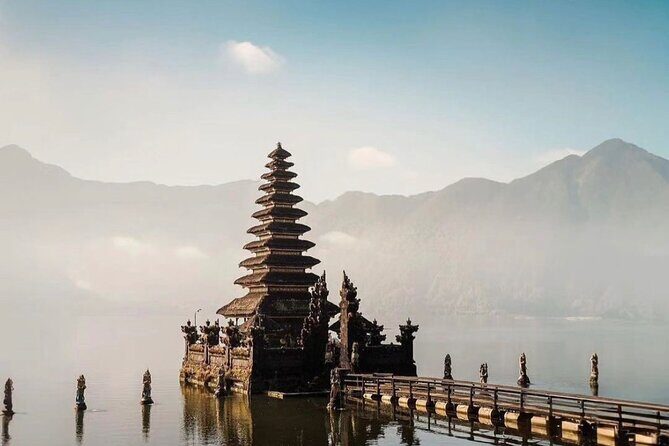
Canggu Silver Jewelry Making Class: Create Unique Silver Jewelry

Canggu Silver Jewelry Making Class: Create Unique Silver Jewelry - How the class flows: from your design to hammer-and-polish

Silver-making is a hands-on souvenir you can wear.

This Canggu workshop is interesting because you go from an idea to a finished piece using real silver, with help from working silversmiths. You also get a studio setup that makes the whole session easier: air-conditioning, free Wi‑Fi, and snacks while you create.

I especially like two things: the instruction is patient and personable, including teachers such as Imo; and you leave with a one-of-a-kind ring or pendant that feels truly personal, not generic. The process focuses on making skills, not just stamping out a product.

One drawback to consider: your silver amount is capped. You’re provided up to 2–5 grams for the basic session, and extra grams cost more (so plan your design accordingly).

Key highlights to know before you go

Canggu Silver Jewelry Making Class: Create Unique Silver Jewelry - Key highlights to know before you go

  • Real-silver jewelry from scratch: hammer, solder, shape, and polish in the studio
  • Wi‑Fi for inspiration: search ideas or share while you craft
  • One person, one piece: each participant makes only one jewelry item
  • You keep what you make: designs and finished pieces are yours to take home
  • Cap on silver weight: extra grams cost 85,000 IDR per gram beyond the included amount
  • Small class size: a maximum of 20 people

Canggu silver jewelry workshop near Berawa: what you can actually make

Canggu Silver Jewelry Making Class: Create Unique Silver Jewelry - Canggu silver jewelry workshop near Berawa: what you can actually make
This class is built around a simple idea: create a piece of jewelry you’ll want to wear long after your Bali photos fade. You’ll make your own design with guidance, then turn it into reality using silver and the classic tools of the trade.

Most people choose a ring or a pendant, and the workshop supports beginner-friendly designs. You can also customize with upgrades like adding a stone or gold plating, depending on what you want your final piece to look like.

You’re not buying a souvenir that someone else made off-site. You’re making the memory and the object at the same time, in the same chair, with the same tools.

Inside the air-conditioned studio: Wi‑Fi, snacks, and the real working vibe

The session takes place in a fully equipped studio in the Canggu area near Berawa Beach. It’s air-conditioned, which matters in Bali when you’re working with fine metal and your hands are busy. It’s also described as Instagrammable, but the practical point is this: it’s a comfortable workshop space, not a cramped craft table.

You’ll have free Wi‑Fi in the studio. That’s useful if you want to pull reference images for styles, check proportions, or share progress while you work.

And yes, you get snacks and mineral water. It’s not a theme-park perk; it helps because jewelry work takes focus, and you’re here long enough that hydration and a quick bite keep your momentum steady.

How the class flows: from your design to hammer-and-polish

Canggu Silver Jewelry Making Class: Create Unique Silver Jewelry - How the class flows: from your design to hammer-and-polish
The workshop is essentially a guided making process. You’ll start with your design, then move through the steps that get metal from flat and formless to shaped and finished.

Here’s the typical rhythm you should expect:

  • Design and setup: you plan what you want to create, then get help turning that plan into something workable
  • Forming and joining: you’ll hammer and shape, with soldering steps where needed
  • Finishing: you polish to improve the surface and make the piece look wearable and clean

The class timing can stretch from about 1.5 to 3 hours, depending on what you choose and how detailed your design is. If you pick something simpler, you’ll likely move faster. If you add details, you’ll spend more time on the finishing and getting it just right.

What makes this valuable is that you’re not just following a script. You’re actively working with the process—so the final ring or pendant feels like your work, not just your purchase.

Meet your instructor and learn the ring-making basics

Canggu Silver Jewelry Making Class: Create Unique Silver Jewelry - Meet your instructor and learn the ring-making basics
One of the most praised parts of this experience is the way the staff teach. You’ll get instructors who are described as kind, patient, and personally invested in helping you make something you’re happy to take home.

Imo is specifically mentioned by name, and the feedback highlights his patience and approach. That matters because silver jewelry making has tiny steps where a little guidance prevents a lot of frustration.

You’ll also get a better appreciation for craftsmanship. Even if you’re a total beginner, you’ll understand the order of operations: why certain steps come before others, and why polishing can make a big visual difference in the final look.

How much silver you get (and the cost if you want more)

Canggu Silver Jewelry Making Class: Create Unique Silver Jewelry - How much silver you get (and the cost if you want more)
This is the part to plan for before you fall in love with an overly ambitious design.

For the basic class, you take home silver in the range of 2 to 5 grams, and your design drives how much of that total you use. The info you’re given also notes that if your jewelry is under 5 grams, the usage can still be counted as 5 grams. In plain terms: the session assumes a minimum amount for billing, so don’t expect an automatic refund of silver weight if your design turns out smaller.

There’s also a clear extra-charge rule:

  • If you want more than 5 grams, the additional fee is 85,000 IDR per extra gram.

Another detail to keep in mind: the class doesn’t allow sharing silver with another person. So if you’re traveling as a duo and want a single larger piece, this might not fit how the workshop is set up. Each participant makes their own item using their own silver allocation.

The pricing structure can actually be good value—if you design within the included silver range. If you go bigger, costs rise fast, because silver pricing by weight is straightforward and transparent in the rules.

Optional upgrades: stones and gold plating

Canggu Silver Jewelry Making Class: Create Unique Silver Jewelry - Optional upgrades: stones and gold plating
If you want your jewelry to look more like something you’d see in a boutique window, upgrades are available. You can upgrade to add a stone or gold plating.

For gemstones, the cost is listed as an additional charge from IDR 100K to 500K, depending on the type and size. Since the exact stone selection isn’t specified in your details, plan for this to be a decision point at the studio rather than something you can fully price from home.

Gold plating is mentioned as an upgrade option, but no specific price is provided in the data you have. So treat it like a variable add-on: ask during the class planning moment so you know the total before committing.

My practical advice: if you’re on a budget, prioritize the upgrade that supports your design goal. A small stone can add color and meaning quickly. Gold plating can change the overall vibe more broadly. Pick one enhancement so the piece stays cohesive.

Group size and pacing: what it feels like hour-to-hour

Canggu Silver Jewelry Making Class: Create Unique Silver Jewelry - Group size and pacing: what it feels like hour-to-hour
The workshop has a maximum group size of 20 people. That’s big enough to meet other people, but small enough that you’re not lost in a crowd.

The class duration is listed as around 2 hours, with a range from 1.5 to 3 hours. That spread makes sense because metalwork isn’t like painting a picture. Your jewelry design affects the time needed for forming, soldering, and polishing.

So what should you do during the class? Stay focused and ask for help early. If something feels off—shape, fit, placement of details—getting adjustments while the metal is still workable saves time later.

Location and how to get there: Stellar Jewelry Classes Canggu

Canggu Silver Jewelry Making Class: Create Unique Silver Jewelry - Location and how to get there: Stellar Jewelry Classes Canggu
The meeting point is at Stellar Jewelry Classes Canggu, Jl. Pantai Berawa No.77a, Tibubeneng, Kec. Kuta Utara, Kabupaten Badung, Bali 80361. The experience ends back at the meeting point.

Because it’s in the Canggu area near Berawa, you can pair it with a beach walk afterward if your timing works. Also, note that there’s no shuttle included. You’ll want to plan your own ride or local transport to reach the address at the start time.

When you arrive, expect check-in and then getting straight into design and workspace setup. The class is hands-on, so it helps to arrive ready to work, not still hunting for a place to park.

Value check: is $41.85 worth it in Bali?

At $41.85 per person, this isn’t the cheapest activity in Bali, but it’s also not a luxury workshop. For your money, you’re paying for real silver, tools, instruction, plus the studio comfort that keeps you comfortable while working.

What you’re really buying is:

  • a finished wearable piece you designed
  • the experience of learning the steps (hammer, solder, shape, polish)
  • included extras like snacks, mineral water, and Wi‑Fi

If you’d otherwise shop for a ring or pendant, this can be the better value because you get something more personal. Jewelry shopping often ends with a piece you like but didn’t make. Here, the whole point is the making.

The value depends on your design. If you keep your piece within the included silver amount and skip expensive upgrades, you control costs. If you want heavier silver or multiple add-ons, the extra fees will change the math.

Who should book this class (and who might skip)

This workshop is a great fit for:

  • Couples and friends who want a shared activity and separate keepsakes
  • Solo travelers who like a calm, focused craft session
  • Gift shoppers who want a handmade item that isn’t mass-produced

It’s also a good option if you like crafts but don’t want a long, technical course. The session is short enough to fit into a typical Bali trip, but structured enough that you actually finish a real piece.

You might consider skipping if:

  • you want a very large silver piece and expect to exceed the included gram limits
  • you’re mainly looking for a quick photo-op rather than hands-on metalwork
  • you were hoping to pool silver between people (the class rules don’t allow sharing silver)

What to wear and bring so the workshop stays easy

The class is in a studio, but it’s still metalwork. Wear something comfortable that you don’t mind getting a little dusty, and choose closed-toe footwear.

Bring a simple plan for your design. Even a rough idea helps, and the free Wi‑Fi means you can search inspiration right there while you’re working.

If you’re doing an upgrade with a stone or plating, decide in advance what look you’re aiming for so you can make faster choices once options are shown.

Should you book the Canggu silver jewelry making class?

I think you should book this if you want a wearable souvenir with real effort behind it. The hands-on approach, the included snacks and studio comfort, and the fact that you take home your own silver jewelry make it one of the more meaningful activities in the Canggu area.

Book it now if:

  • you want something personal for yourself or a gift
  • you enjoy learning a craft step-by-step
  • you’re comfortable designing within the 2–5 gram silver range

Skip or adjust expectations if:

  • your design needs extra grams beyond 5, since 85,000 IDR per gram can add up quickly
  • you’re expecting a single shared item made from shared silver

If you’re deciding between this and generic shopping, I’d lean toward the workshop. It’s one of those activities where the final object is the highlight, not just the story you tell.

FAQ

How long is the Canggu silver jewelry-making class?

The class runs about 2 hours, with a stated range of 1.5 hours to 3 hours depending on the jewelry design.

Where does the class meet in Canggu?

The meeting point is Stellar Jewelry Classes Canggu, Jl. Pantai Berawa No.77a, Tibubeneng, Kec. Kuta Utara, Kabupaten Badung, Bali 80361, Indonesia.

What’s included in the price besides instruction?

You get all necessary materials and tools, plus snacks, mineral water, and free Wi‑Fi. You also take home the silver jewelry you make.

How much real silver do I get to take home?

Your piece takes home real silver, listed as 2 up to 5 grams depending on the design. The details also note that if your jewelry is less than 5 grams, usage may still be accounted for as 5 grams.

Can I make more than one piece during the class?

No. Each participant can make only one silver jewelry piece.

Is Wi‑Fi available during the workshop?

Yes. Wi‑Fi is available in the studio.

Can I add a gemstone or gold plating?

You can upgrade to add a stone or gold plating. Gemstone add-ons are listed as IDR 100K to 500K depending on type and size.

What if I want more than the standard silver amount?

If you need more than 5 grams of silver, there is an additional fee of 85,000 IDR per gram.

Is transportation included, like a shuttle?

No. Shuttle service is not included.

Can I cancel for a full refund?

Yes, free cancellation is offered up to 24 hours in advance for a full refund.
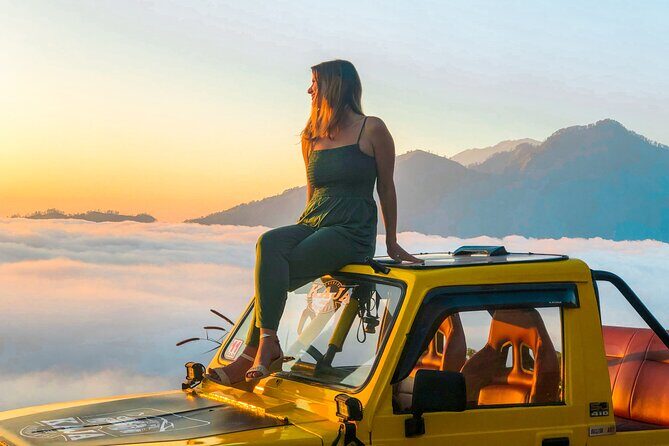
Are service animals allowed?

Yes, service animals are allowed.